6 Sage Green Home Decor Ideas For Bedroom And Bathroom That Feel Like A Spa
You want a bedroom and bathroom that feel calm, cloud-soft, and holy-quiet. You hate the visual noise: the mismatched towels, the harsh blue LED light, the way your nightstand feels like a junk drawer with a lamp. The dream? Sunlight that drifts like steam, natural textures you can actually touch, and a spa-level hush that lingers after you make the bed. These six sage green decor ideas solve the everyday annoyances with gorgeous, photogenic setups you can pull off in a weekend—on a realistic budget—and they’ll make your home camera-ready without a filter.
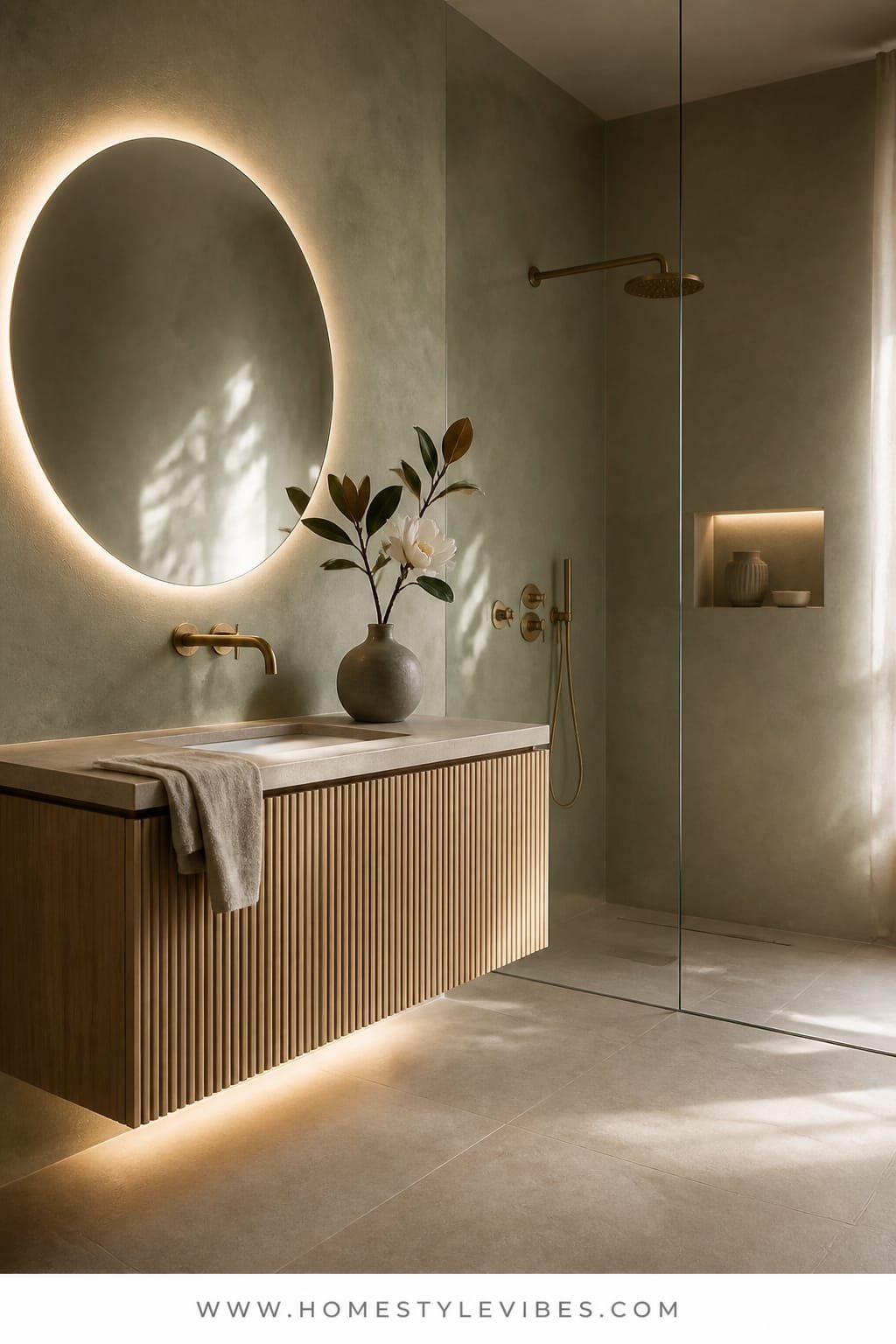
Expect gentle textures, a smarter layout, and lighting that smooths everything out. We’re talking pale woods, brushed brass, milky stone, and sage green walls that do what white paint never could: soften the room while hiding real-life scuffs and fingerprints. If your style lives between earthy and polished, if your mornings deserve quiet, and if you want rooms that look expensive but feel lived-in, start here. Sage green, done right, is a reset button.
1. Limewashed Plaster Walls with Dappled Morning Light and a Fluted Oak Vanity
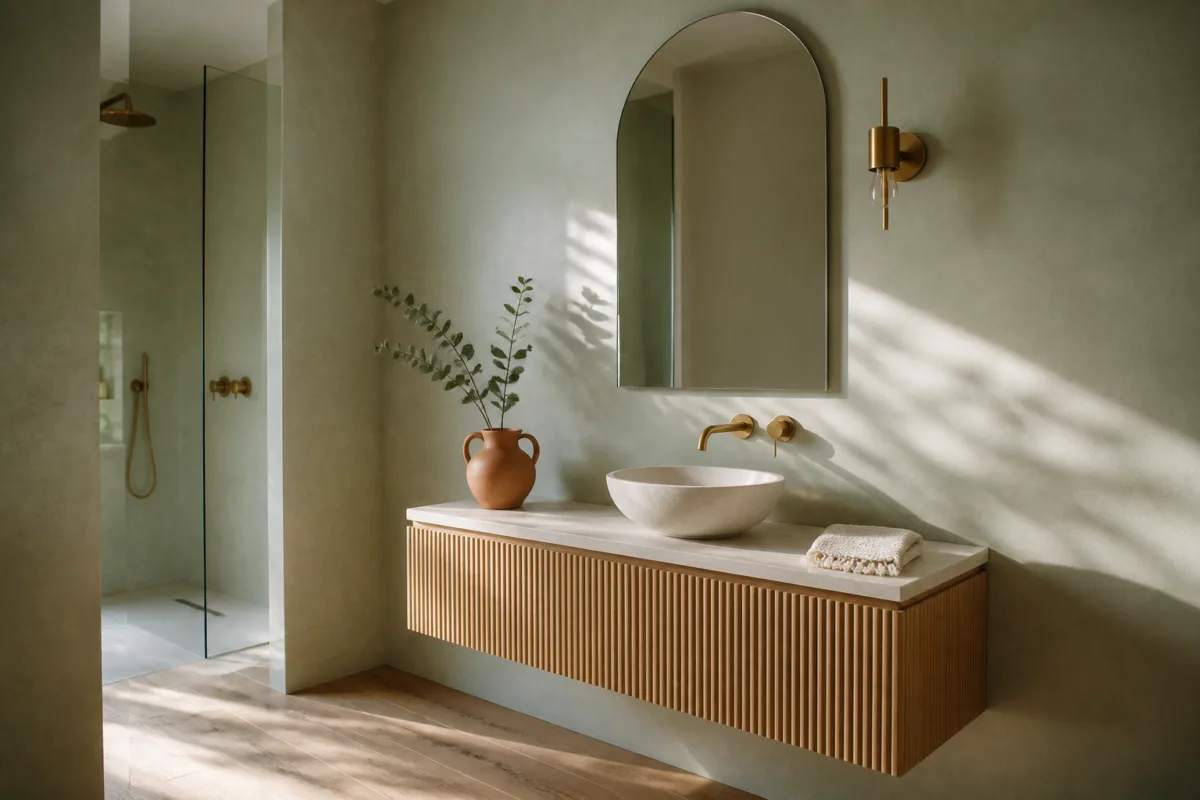
We’ve all been there: you repaint your bathroom a “safe” gray, swap the rug, add eucalyptus in the shower… and it still reads rental. Flat. A bit cold. This concept leans into sage green with limewashed plaster walls, so the color moves with the light. The texture does the heavy lifting. It’s the difference between a room that feels painted and a room that feels crafted.
The mood is hotel-spa meets modern Mediterranean. Limewash has that chalky, soft focus quality that makes steam look cinematic, especially in morning light. It hides small imperfections (hello, wonky drywall seams) and delivers organic shade shifts you can’t fake. In a bathroom, a fluted oak vanity keeps it grounded and tactile. You have warmth from wood, a whisper of stone at the sink, and brass that looks like jewelry—but for your faucet.
In real homes, this works because limewash forgives everyday life. It embraces patina. Small space? Even better. The mottled finish adds depth without clutter. Lighting stays gentle with frosted globes or diffused sconces at eye level—no sci-fi overhead glare casting weird shadows on your face. The fluted oak vanity breaks up boxy lines and photographs beautifully because the ribs catch the light, creating micro-shadows and depth.
Variations make this flexible: a budget-friendly version uses high-quality faux-limewash paint and a prefabricated fluted vanity front; a darker version pushes the sage to olive-limewash and pairs it with blackened bronze; a renter-friendly swap uses peel-and-stick “limewash” wallpaper on one wall and a freestanding bamboo shelf instead of built-ins.
Budget Breakdown:
- Limewash paint kit (2–3 liters): $120–$240
- Quality limewash primer: $45–$80
- Fluted oak vanity (36–48 in.): $650–$1,800
- Quartz or marble vanity top: $350–$900
- Brushed brass widespread faucet: $140–$400
- Frosted glass sconces (pair): $160–$450
- Oversized arched mirror: $120–$420
- Cotton-linen bath textiles in sage/ivory: $80–$180
Total Estimated Cost: $1,665 – $4,470
Best For: Small-to-medium bathrooms that need softness and dimension; anyone who loves Old World texture but wants modern function.
Key Design Elements:
- Main materials: limewashed plaster, oak, brushed brass, quartz
- Color palette: sage green walls, warm oak, creamy stone, soft brass
- Lighting strategy: eye-level sconces with frosted glass; dimmable overhead on warm temperature (2700–3000K)
- Furniture silhouettes: ribbed/fluted vanity, gently arched mirror
- Texture layers: chalky walls, smooth stone, ribbed wood, plush cotton
- Accent details: minimal brass hardware, eucalyptus stems, ceramic tray
How To Recreate This Look:
- Start with limewash: prime walls, then apply two irregular coats of sage limewash with a wide brush using crisscross strokes.
- Add the fluted vanity and pair with a creamy quartz top and an under-mount sink.
- Install brushed brass faucet and frosted-glass sconces at about 60–65 inches from the floor.
- Hang an arched mirror that fills the vertical space above the vanity.
- Style with a low ceramic tray, a single sprig of greenery, and thick sage-and-ivory towels.
Why This Looks Expensive: The limewash texture diffuses light and hides flaws, the fluted wood adds custom millwork vibes, and the restrained palette keeps everything intentional. The brass is warm, not shiny, which reads quietly luxurious.
Watch Out: Don’t choose a limewash that’s too cool or gray; it can read sterile under LED lighting. Test swatches at different times of day and commit only after you’ve watched them in morning and evening light.
Pro Styling Tip: Photograph with the sconces on and the overhead off—let side lighting graze the fluting to reveal texture and depth.
Keep scrolling—there’s a bedroom version of sage that makes early mornings feel like a weekend away.
2. Linen Upholstered Headboard with Soft Sage Glow and a Stone-Topped Nightstand
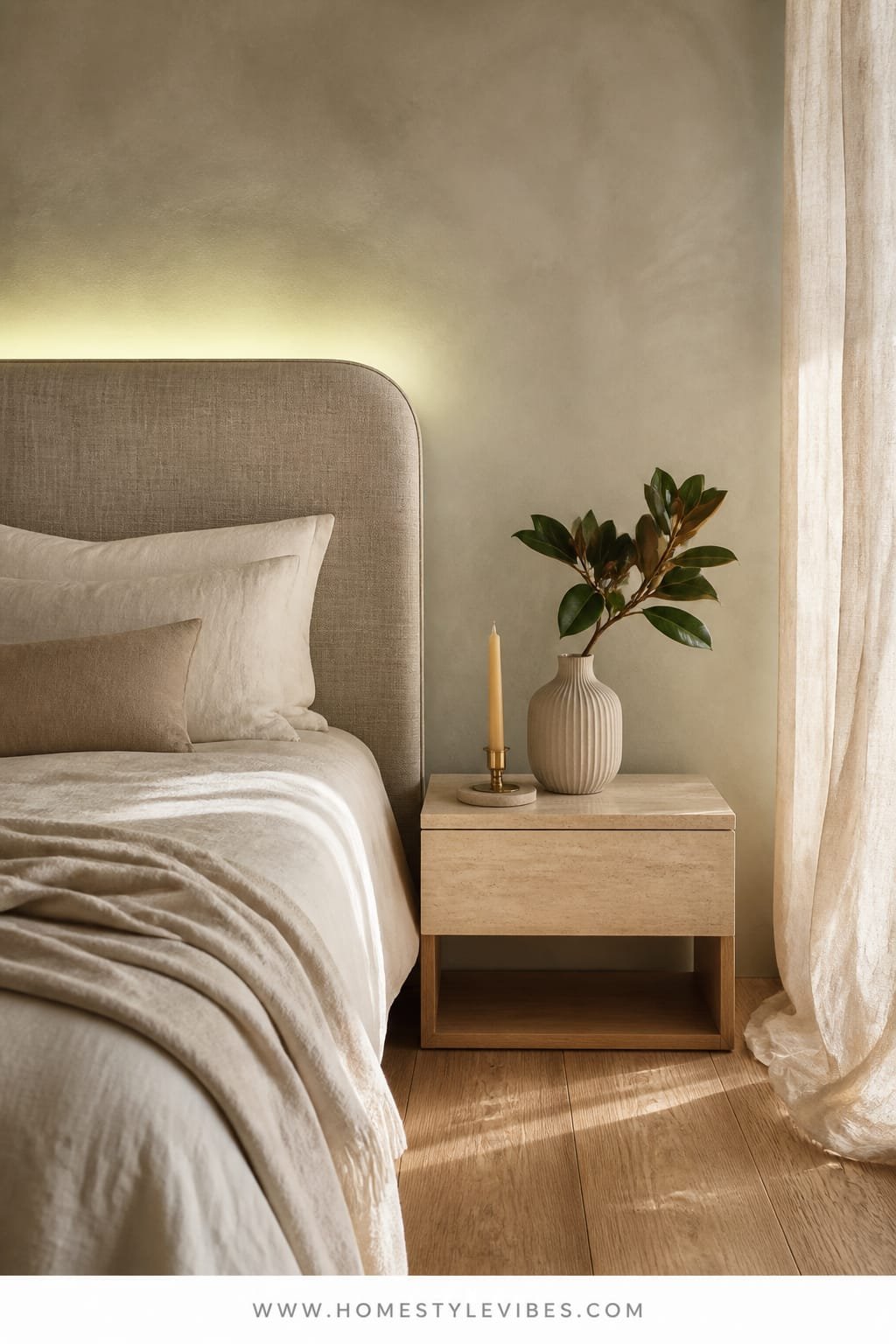
It’s that one corner that always feels off: your bed is technically “made,” but the scene never looks finished in photos. You’ve tried a million pillows. It still looks flat. This bedroom design uses a linen upholstered headboard, a gentle sage wall glow, and a stone-topped nightstand to create a restful focus without visual clutter.
The mood is airy coastal-meets-Japandi: textural, clean-lined, and calm. It works for small rooms because the palette and materials encourage restraint—you’ll naturally edit. A soft sage paint or a grasscloth accent behind the headboard gives dimension without shouting. Lighting stays low and layered: a warm cove light or two low-profile plug-in sconces keep your eyes from fighting with a harsh ceiling light at night.
Why it works: Linen’s matte weave catches daylight, the stone top gives that cool-to-the-touch spa feeling, and the sage green wall acts like cinematic backdrop. This setup photographs beautifully because of the subtle contrast between crisp percale sheets and nubbly linen. Steam your duvet, tuck the corners, and you’ll get that effortless hotel look.
Variations: Budget version swaps real stone for faux stone or a stone-look tray on a wood nightstand; small-space version uses a narrower headboard and petite wall sconces; renter-friendly approach uses removable sage wall panels (peel-and-stick) and a slipcovered headboard you can take with you; darker version bumps sage to gray-olive and leans into bronze hardware.
Key Design Elements:
- Main materials: natural linen, stone (marble or travertine), oak or walnut
- Color palette: soft sage, warm white, oatmeal, pale stone
- Lighting strategy: warm bedside sconces or cove tape-lighting; low glare; dimmers
- Furniture silhouettes: rounded upholstered headboard, slim nightstands with stone tops
- Texture layers: linen, percale, nubby throw, matte ceramic
- Accent details: understated brass knobs, ceramic carafe, a single potted fern
Budget Breakdown:
- Upholstered linen headboard (queen): $250–$800
- Stone-topped nightstand (each): $180–$600
- Plug-in wall sconces (pair): $120–$450
- High-quality percale sheet set: $120–$300
- Duvet + insert: $150–$400
- Sage paint or peel-and-stick panels: $60–$250
- Decor (ceramic tray, carafe, fern): $40–$140
Total Estimated Cost: $920 – $2,940
Best For: Primary or guest bedrooms that need softness and a calm focal point; apartment bedrooms with limited natural light.
How To Recreate This Look:
- Paint the wall behind the bed a soft, warm sage or apply peel-and-stick grasscloth in sage tones.
- Install or place a rounded linen headboard centered with at least 24 inches of space on both sides.
- Flank with stone-topped nightstands; keep heights within 2 inches of mattress height.
- Add warm bedside sconces on dimmers at shoulder height for reading.
- Style with crisp percale sheets, a linen duvet, a nubby throw at the foot, and a small ceramic catchall.
Why This Feels Designer: The mix of matte textures (linen, stone, ceramic) against a softly colored wall creates a layered quietude. The stone top introduces a subtle “hard” element that keeps the room from feeling sleepy.
One Thing To Avoid: Don’t overdo the pillows. Two sleeping pillows and two shams plus a lumbar looks considered. A mountain of 14 cushions reads chaotic and fussy in photos.
Pro Styling Tip: Leave 2–3 inches of negative space around decor on the nightstand—breathing room makes small vignettes read expensive on camera.
Pause here and exhale. Remember: this isn’t about recreating a showroom. It’s about building a space that actually feels like yours. If one idea resonates more than the others, that’s your starting point.
3. Honed Marble Ledge with Candlelit Warmth and a Freestanding Soaking Tub
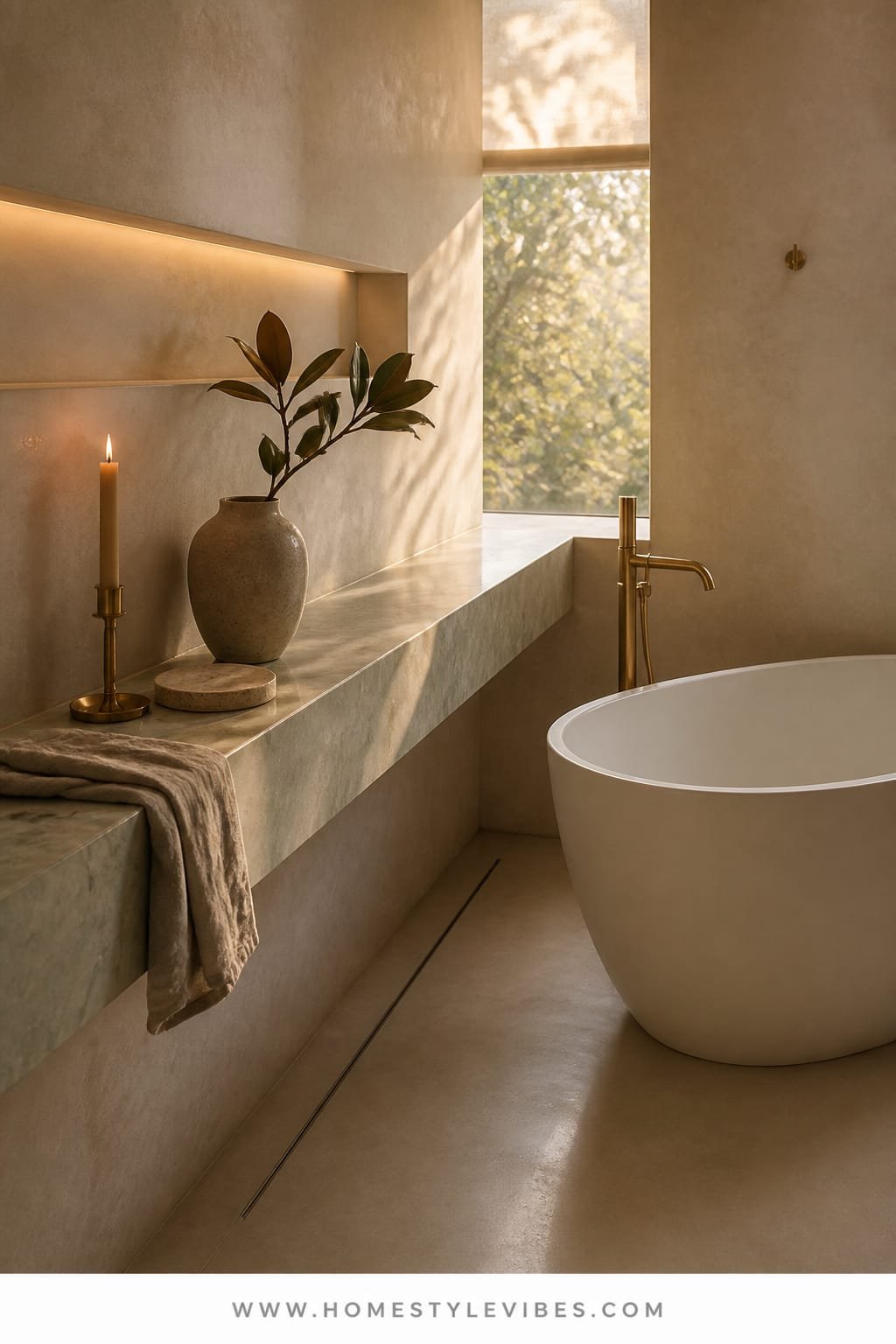
You want long baths that reset your nervous system. But your bathroom lights glare, the ledge is cluttered, and that built-in tub feels like a cold countertop. This design turns the bath zone into a ritual space: a honed marble ledge in sage undertones, warm amber candlelight, and a clean-lined freestanding tub that floats away from the wall. Suddenly there’s room to breathe.
The mood is ritualistic calm—think boutique spa. Honed marble avoids the clinical shine of polished stone and subtly reflects candlelight with a velvety glow. A slim marble ledge (or a tiled ledge with a marble top) doubles as display and function: salts, a single stem in a bud vase, a low dish for matches. Keep the rest minimal; restraint is the luxury here.
In real homes, this works because a ledge changes behavior. It corrals mess. Install dimmable wall lights or a pendant on a separate circuit so nighttime baths happen under a blanket of warm glow. For texture, bring in a woven bath mat in muted sage or natural jute. And yes, a freestanding tub reads sculptural, which photographs like a dream—clean silhouettes, soft shadows, zero boxy clutter.
Variations: Budget version uses a DIY plywood ledge with a stone-look slab top; small-bath hack places a narrow ledge over an existing built-in tub; renter-friendly version creates a movable bench in front of the tub with a stone tray on top; darker vibe introduces charcoal grout and bronze fixtures.
Budget Breakdown:
- Freestanding acrylic soaking tub: $800–$2,500
- Honed marble slab for ledge (6–8 ft): $350–$1,100
- Wall-mounted tub filler or floor-mount: $250–$1,200
- Dim-to-warm LED pendant or sconces: $160–$600
- Accessories (candles, tray, bud vase): $50–$160
- Sage woven bath mat: $40–$120
Total Estimated Cost: $1,650 – $5,680
Best For: Primary bathrooms with space for a freestanding tub or an alcove that can handle a slim ledge; night bathers who prefer candlelight over downlights.
Key Design Elements:
- Main materials: honed marble, acrylic/stone resin tub, brushed nickel or bronze
- Color palette: soft sage undertones, warm whites, pale gray veining, amber candlelight
- Lighting strategy: separate circuit, dimmable warm pendant/sconces at 2200–2700K
- Furniture silhouettes: oval or slipper tub, long thin ledge, low stool
- Texture layers: velvety stone, woven mat, soft cotton towel
- Accent details: single-stem greenery, match striker, small basket
How To Recreate This Look:
- Plan a 4–6 inch deep ledge along the tub wall; install with sturdy brackets or frame with tile, then top with honed marble.
- Select a clean, oval freestanding tub and position it 3–6 inches from the wall.
- Add a wall-mount or floor-mount tub filler aligned to the tub’s centerline.
- Install a dimmable pendant or sconces on a separate switch for bath time.
- Style the ledge with one candle cluster, a bud vase, and a single tray—edit to essentials only.
Why This Reads High-End: Negative space around the tub, a continuous stone line, and controlled warm lighting create that boutique-spa hush. Honed marble’s soft sheen makes water and flame look cinematic.
The Most Common Mistake: Overcrowding the ledge with bottles. Decant daily-use items into uniform pumps under the sink and keep the ledge ceremonial, not utilitarian.
Pro Styling Tip: On camera, turn the pendant to 30–40% brightness and light two candles—soft highlights on the tub curve equal instant editorial.
Not a bath person? The next idea brings the spa to your bedside with one simple anchor that changes everything.
4. Cane Cabinetry with Diffused Window Light and a Statement Upholstered Bench
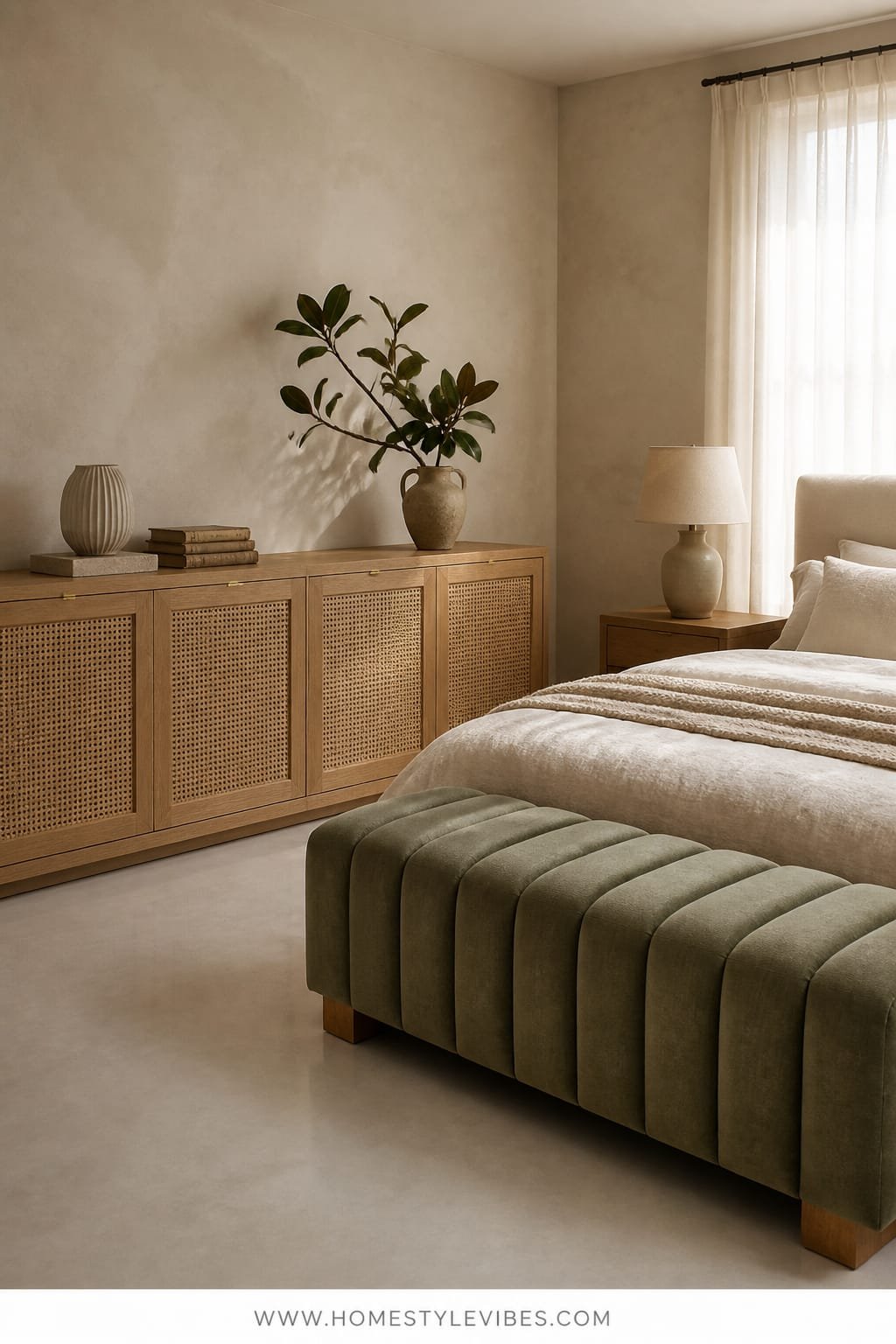
Bedrooms accumulate stuff. Chargers, hand cream, books you meant to read. The chaos creeps in until the whole room feels more storage than sanctuary. Cane cabinetry solves this quietly. It hides clutter, breathes, and brings that spa-plantation vibe without feeling theme-y. Pair it with diffused window light (sheer drapery mounted high) and a statement upholstered bench at the foot of the bed to anchor the whole layout.
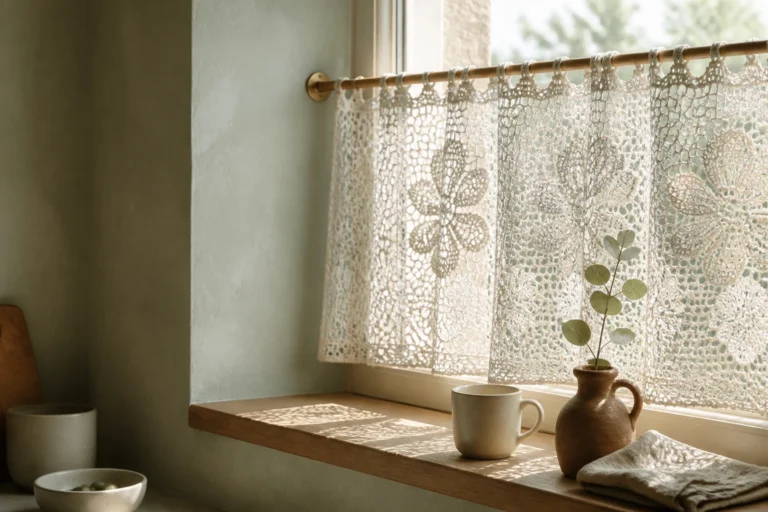
The mood leans calm organic. Cane fronts offer texture without heaviness, while sage green on surrounding walls or curtains provides a soft backdrop that makes the weave pop. Diffused light through sheers flattens harsh shadows and sprinkles softness across the room. A bench in a tactile bouclé or linen-blend invites slow mornings: coffee, robe, phone on silent.
Here’s why this works at home: hidden storage equals immediate calm. Cane can flex with traditional or modern silhouettes, and it forgives fingerprints. For resale, built-in or semi-custom cane cabinetry reads special. For renters, a standalone cane console or sideboard can slide in under a TV or along a blank wall. Photographs love the geometry: linear cabinet, soft bench curve, sheer drape—clean lines and layered textures create depth.
Variations: Budget route uses IKEA bases with cane door overlays; small-space version opts for a narrow cane console and a slimmer bench; darker version uses walnut frames with cane and a deeper sage; renter-friendly swaps include peel-and-stick frosted film on windows for diffused light and a freestanding cane wardrobe.
Budget Breakdown:
- Cane cabinet or console: $280–$1,200
- Sheer drapery + blackout liner set: $120–$500
- Upholstered bench (linen/bouclé): $180–$700
- Wall paint in soft sage: $60–$120
- Hardware (brushed brass or matte black): $40–$120
- Rug (natural jute or wool flatweave): $180–$800
Total Estimated Cost: $860 – $3,440
Best For: Primary or guest bedrooms where clutter kills relaxation; anyone craving hidden storage that still feels airy.
Key Design Elements:
- Main materials: natural cane, oak/walnut, linen/bouclé
- Color palette: sage, warm wood, off-white, muted black or brass accents
- Lighting strategy: high-mounted sheer drapery; side lamps with fabric shades
- Furniture silhouettes: long low cabinet, soft rectangular bench, rounded bedside lamps
- Texture layers: cane weave, plush upholstery, sheer linen, flatweave rug
- Accent details: framed botanical prints, ceramic lamp, simple greenery
How To Recreate This Look:
- Paint or anchor the room with a soft sage wall color to set the tone.
- Install drapery rods 2–4 inches from the ceiling and hang sheers to puddle slightly.
- Add cane cabinetry along the longest wall; keep decor minimal (one lamp, one book stack).
- Position a statement bench at the bed’s foot—48–60 inches wide for queen, 60–72 inches for king.
- Style with a neutral rug, one potted plant, and a trio of frames above the cabinet.
Why This Looks Intentional: Repeating textures (cane, linen, wood) within a tight palette reads curated. The bench anchors the bed visually and breaks up the sea of rectangles with soft upholstery.
Don’t Do This: Avoid short curtains. Floods at the window line ruin the spa vibe instantly. Floor-length or a slight puddle only.
Pro Styling Tip: Angle the bench a few degrees for photos, then straighten it—micro-adjustments help you find the most flattering lines for the shot.
Quick pause for perspective: you don’t need brand-new everything. Replace one visual culprit—bad light bulb color, short curtains, or a too-small rug—and watch the whole room settle down.
5. Zellige Tile Splash with Golden Hour Warmth and a Curved Brass Shower Rail
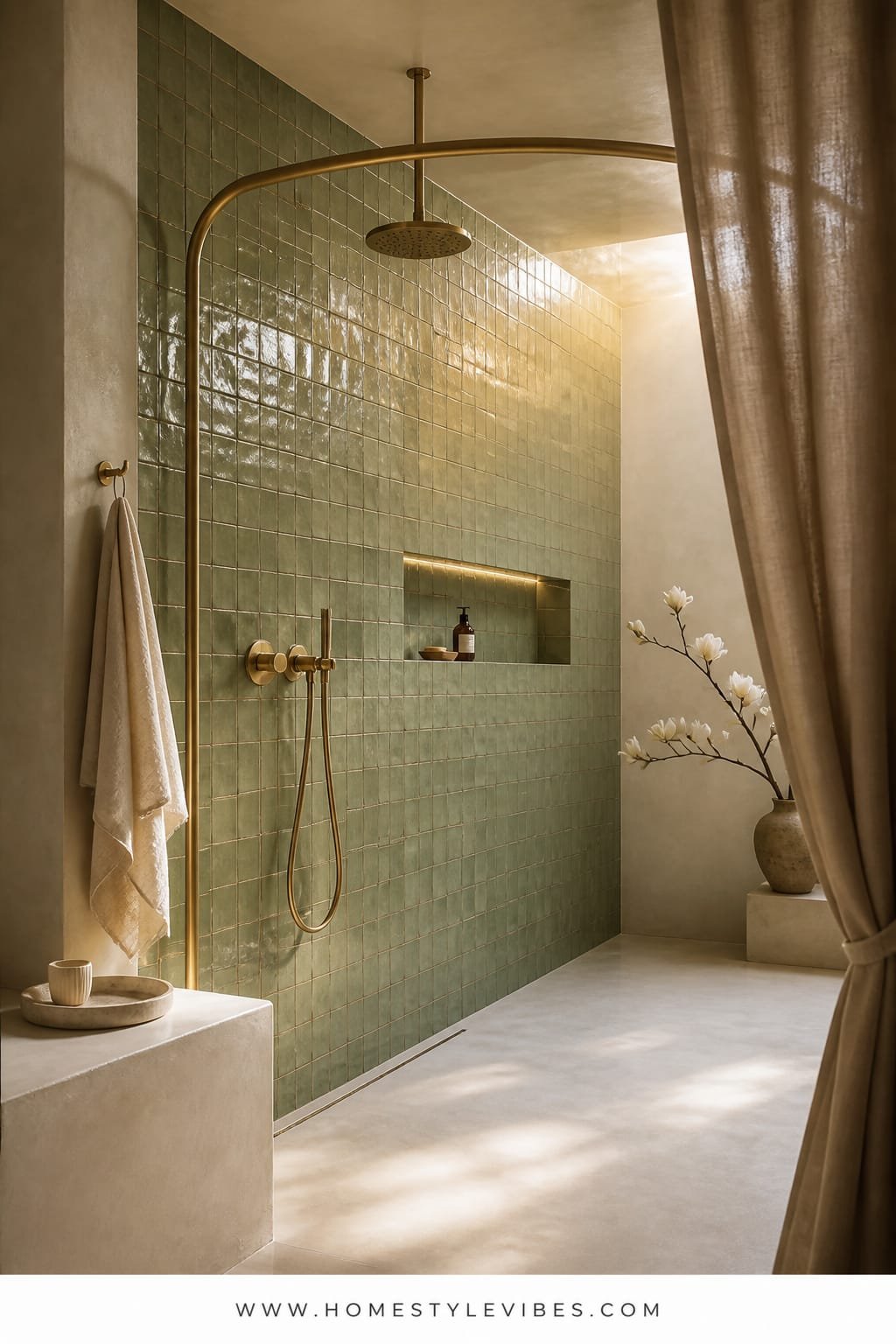
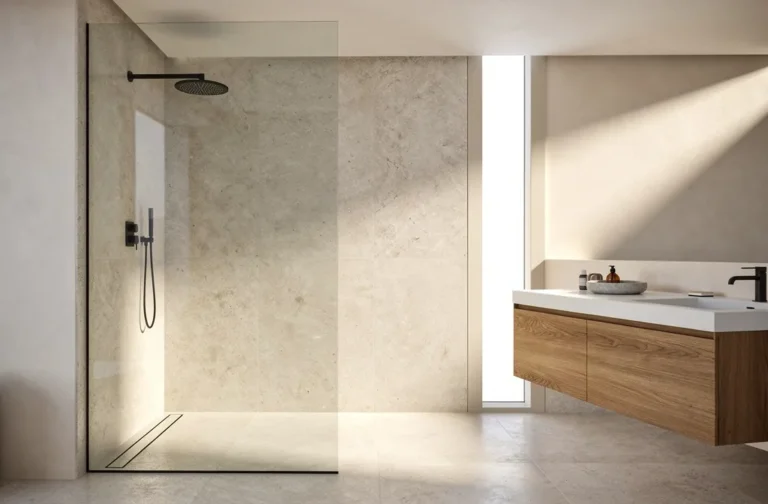
Showers should feel like a daily reset, but often they feel… utilitarian. Glare, generic tile, chrome that screams “builder basic.” Enter hand-cut zellige in a sage glaze. Each tile varies slightly in tone and sheen, catching golden light like water. Add a curved brass shower rail (yes, outside the tub world) and the whole stall gains presence without a full remodel.
The mood is Moroccan spa meets modern minimal. Zellige tile bounces light in tiny, irregular reflections, so the space comes alive even on cloudy days. A curved brass rail visually softens a boxy shower and subtly increases elbow room if used over a tub. Golden-hour bulbs (warm, dimmable) bring that sunkissed glow in the evening.
In real homes, this is a standout because zellige makes small showers feel crafted, not cramped. The variation hides water spots better than glossy subway. Maintenance is simple: good grout and a squeegee habit. Photographs capture micro-highlights across the tile grid, creating dimension that cheap tile can’t fake.
Variations: Budget-friendly version uses a zellige-look ceramic tile with uneven glaze; small-space hack tiles just the shower niche and the lower third of the wall; renter-friendly option swaps to a curved brass tension rod and a luxe linen shower curtain; darker mood uses olive zellige with oil-rubbed bronze fixtures.
Budget Breakdown:
- Genuine zellige tile (per sq ft): $12–$24
- Installation + grout (per sq ft): $10–$20
- Curved brass shower rail: $90–$280
- Brass shower set (handheld + valve): $220–$750
- Linen shower curtain + liner: $80–$220
- Golden-hour LED bulbs or dimmer setup: $40–$120
Total Estimated Cost: $1,250 – $4,200 (based on a 40–60 sq ft wet area)
Best For: Bathroom refreshes that need soul with minimal layout changes; design lovers who appreciate artisanal variation.
Key Design Elements:
- Main materials: zellige tile, brass, linen
- Color palette: sage tile blend, warm brass, creamy neutrals
- Lighting strategy: dimmable warm bulbs, indirect light near the shower for glow, not glare
- Furniture silhouettes: curved rail, round showerhead, rectangular niche
- Texture layers: rippled tile surface, soft linen curtain, woven bath mat
- Accent details: slim bottle shelf, eucalyptus bundle, brass hooks
Why This Looks Expensive: Hand-made texture, curated metal finish, and a curved line in a boxy space signal custom design. The restrained color pairing—sage and brass—feels timeless, not trendy.
How To Recreate This Look:
- Select a sage zellige blend with at least two tones for depth; order 10% extra for cuts and variation.
- Tile the shower from floor to ceiling or at least to 84 inches; center the niche along the main sightline.
- Install a curved brass rail or tension rod and a linen curtain with extra-wide panels for generous gathers.
- Swap in warm bulbs and put the circuit on a dimmer.
- Keep accessories minimal: one shelf, uniform bottles, a single eucalyptus bundle.
One Thing To Avoid: Don’t pair zellige with busy patterned floor tile unless the scale differs dramatically. Too much visual chatter kills the calm.
Pro Styling Tip: For photos, wet the tile lightly and kill the overhead can—it intensifies the tile’s depth without glare.
Almost there. The final idea is for the person who wants serenity the second they open their eyes—no project dust required.
6. Brushed Brass Picture Ledge with Early Morning Sun and a Low Platform Bed
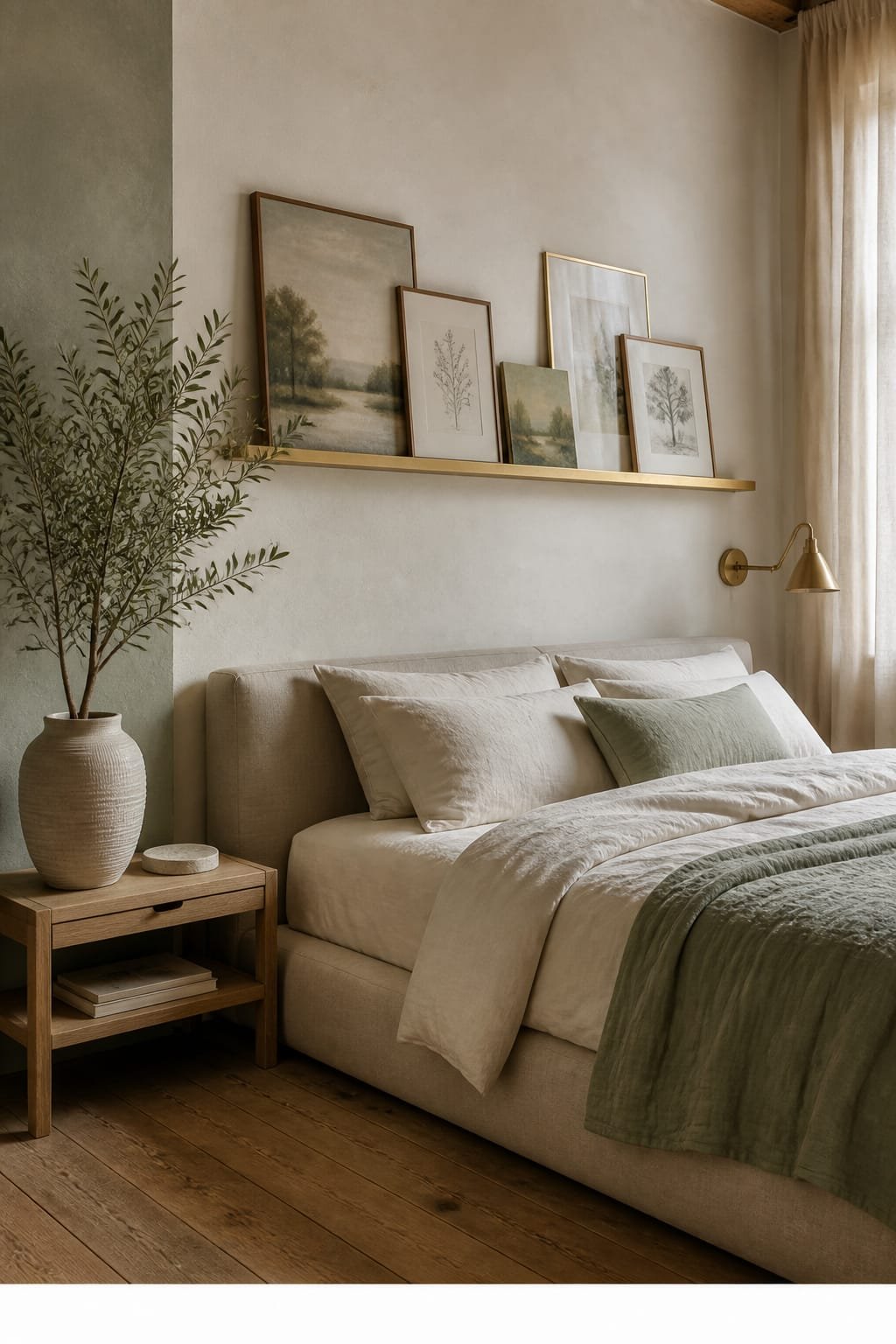
You’ve tried art above the bed, but it always feels too busy or too high. Or worse, it’s misaligned and now you’re living with extra holes. A brushed brass picture ledge solves the alignment anxiety and lets you rotate art seasonally without drama. Pair it with a low platform bed and light sage walls for an immediate Zen shift that actually sticks.
The vibe is Japanese-modern with a soft, gallery edge. A low platform bed lowers the sightline, which makes ceilings feel higher and mornings calmer. The brass ledge pulls in a tiny glint of sophistication at eye level, while early sun skating across a pale sage wall turns the whole headboard zone into a quiet focal point. It photographs beautifully because the ledge creates a clean horizon line for layered frames and objects, adding dimension without heaviness.
Why it works at home: it’s modular. Swap art, add a ceramic bowl, lean a small sprig—done. For small rooms, the lower bed expands the feeling of space, and a single ledge beats the chaos of a gallery wall. Maintenance is zero, and the components move with you. I tried this in my own bedroom last fall after a week of “frame-tetris,” and honestly, it was the first time the bed wall felt done.
Variations: Budget route uses an aluminum-look ledge sprayed with satin brass paint; renter-friendly option uses removable strips and a lightweight ledge; darker version uses a walnut bed with olive-sage walls and antique brass; tiny-room version pairs a 60-inch ledge with a full-size platform and one large art piece plus a mini.
Budget Breakdown:
- Platform bed (queen): $350–$1,200
- Brushed brass picture ledge (48–72 in.): $80–$320
- Art prints + frames: $120–$400
- Sage wall paint: $60–$120
- Textiles (lightweight quilt + two pillows): $140–$380
- Bedside plug-in pendants or sconces: $120–$450
Total Estimated Cost: $870 – $2,870
Best For: Minimalist bedrooms, renters, and anyone who likes to update art seasonally without new holes in the wall.
Key Design Elements:
- Main materials: brushed brass, oak or walnut, cotton-linen textiles
- Color palette: pale sage, warm wood, cream, muted black accents
- Lighting strategy: early morning natural light, low-level bedside pendants
- Furniture silhouettes: low platform, slim ledge, thin black frame profiles
- Texture layers: matte paint, crisp sheets, soft throw, subtle metallic glint
- Accent details: leaning frames, a tiny bud vase, a ceramic bowl for rings
How To Recreate This Look:
- Paint the bed wall a light sage with warm undertones.
- Mount a brushed brass ledge 8–12 inches above the headboard; ensure it’s level.
- Assemble a simple art mix: one large print, one medium, one small object (book, bowl).
- Place a low platform bed with a clean headboard or none at all; add a lightweight quilt.
- Install plug-in pendants low and dimmable for night reading.
Why This Looks Expensive: The horizontal ledge creates a strong visual line, the low bed introduces negative space above, and the metallic accent feels curated. The consistent frame profiles keep the vignette looking gallery-worthy.
Watch Out: Don’t overcrowd the ledge. Leave gaps between frames so the brass peeks through. Also, mind earthquake hooks or museum putty if you’re in a shake-prone area.
Pro Styling Tip: For photos, angle the largest frame 3–5 degrees and let a sliver of brass show beneath—it adds subtle shine that reads on camera.
Real talk: a friend of mine spent weeks agonizing over sage paint chips, taping a patchwork mosaic on her wall. The real culprit wasn’t the color; it was her ceiling can lights blasting 4000K on everything. We swapped bulbs to 2700K, and suddenly her “too blue” sage turned perfect. Lighting first. Always.
Quick Checklist
- Limewash or faux-limewash in a warm sage tone
- Fluted oak vanity or fluted-front furniture
- Arched mirror with frosted glass sconces
- Linen upholstered headboard in oatmeal or sand
- Stone-topped nightstands (marble or travertine)
- Percale sheets and a linen duvet
- Freestanding soaking tub with honed marble ledge
- Dim-to-warm lighting controls (2700K recommended)
- Cane cabinetry or a cane console for hidden storage
- Sheer drapery hung high to the ceiling
- Sage zellige or zellige-look tile in the shower
- Curved brass shower rail with a linen curtain
- Brushed brass picture ledge above a low platform bed
- Uniform pump bottles and a ceramic tray to reduce visual noise
- One potted plant or eucalyptus stem for life and movement
Frequently Asked Questions
How do I pick the right sage green for a small, dark bathroom?
Choose a warmer sage with a hint of yellow or beige in the undertone. Test swatches next to your tile and under your actual bulbs. If the room has no natural light, paint a poster board, move it around, and decide at night when you’ll use the room most.
My budget is tight—what’s the single change that makes the biggest difference?
Lighting. Swap bulbs to 2700K warm LEDs, add dimmers, and relocate light to eye level with plug-in sconces. Then add one texture moment: either a linen shower curtain or a stone tray on the vanity. Together, they make the room feel finished.
Can renters pull off a spa-like sage vibe without painting?
Absolutely. Use removable sage panels or a fabric-covered headboard, a linen shower curtain, a brushed brass picture ledge with Command strips, and a cane console. Layer in warm bulbs and sheers to shift the light quality.
Is sage green hard to maintain in steamy bathrooms?
No. Use a bathroom-rated paint with eggshell or matte scrub-proof finish. Limewash handles humidity well once sealed where needed. Vent properly and you’re fine—wipe splashes and leave the rest to patina.
What’s the most common mistake with sage green decor?
Pairing it with cool, blue-white lighting or too many competing patterns. Keep light warm and the palette restrained. Texture should do the talking, not loud prints.
Final Thoughts
Pick one idea and start. A ledge, a headboard, a real plan for lighting—any single shift can quiet the room and set the sage green tone. Luxury in a bedroom or bathroom isn’t about square footage. It’s about texture you can feel, light that flatters, and restraint that makes every object matter.
The truth is, sage green thrives when you let it lead softly. Choose materials that whisper—linen, cane, honed stone—and let warm light do the rest. If you’re torn between three pillows or two, choose two. If you wonder whether to add another object, don’t. The spa feeling arrives when you stop adding noise.
You’re closer than you think. Change the bulbs, hang the curtains high, pick your sage, and watch the room exhale. You’ve got this—seriously.
About the Author

Krisztina P.Rendes, Founder of Home Style Vibes
Founder of Home Style Vibes
Krisztina Puskásné Rendes created Home Style Vibes as a cozy-modern lifestyle space where homemaking meets inspiration. Her goal is to help women create beautiful, organized, and peaceful homes they truly love — without overwhelm. You’ll find here heart-driven content on home decor, cleaning tips, easy family recipes, organization and decluttering, DIY home projects, plants, and seasonal ideas — all designed to bring more calm, comfort, and style into everyday life.