5 Master Bath Ideas That Feel Like a Luxury Hotel Suite
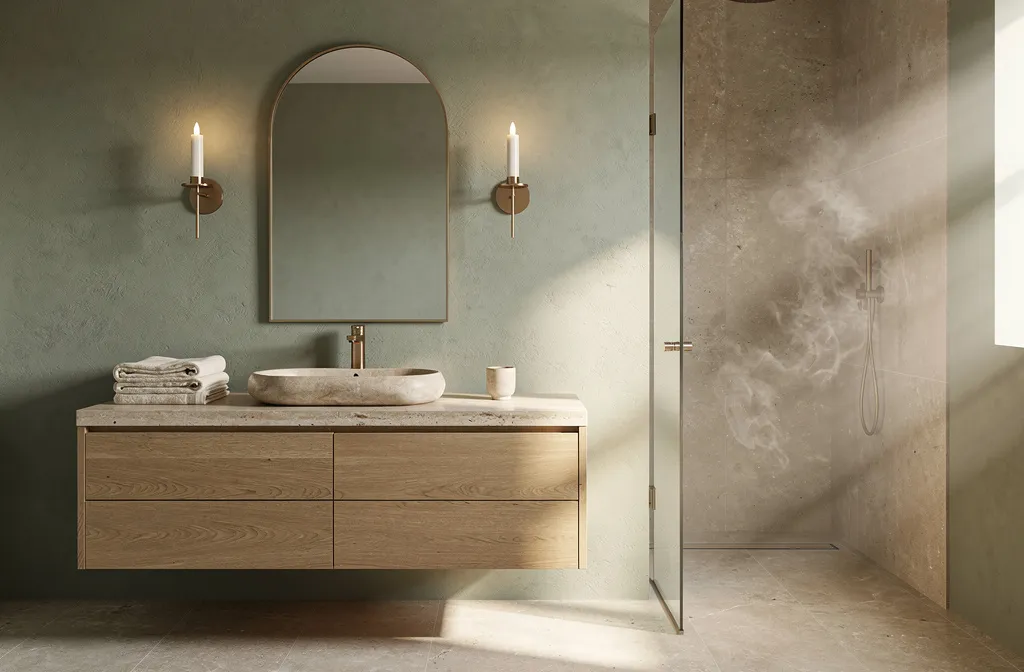
You want a master bath that feels like a luxury hotel suite—crisp towels, warm floors, spa-lighting, the works. You hate that yours still reads like a rental: echoey, cold, mismatched metals, and the lighting that makes you look tired even on a good day. Picture this instead: steam curling up against a soft limewash wall, brushed brass catching the glow of a dimmable sconce, a vanity that actually fits everything. These five ideas tackle the exact frustrations that kill bathroom joy—harsh light, flat textures, awkward storage—so your daily routine feels intentional, pretty, and yes, totally Pinterest-worthy.
Each concept is a complete look with practical steps and a realistic budget cap, from quick weekend updates to bigger swaps you can complete in a month. By the end, you’ll know which path fits your space, your budget, and your morning self. If you’re craving a space that photographs well and feels even better IRL, you’re in the right place. Consider this your permission slip to design like a hotel… for a life that includes toothpaste, toddlers, and Tuesday mornings.
1. Soft Spa Sanctuary With Fluted Stone and Candlelight Sconces
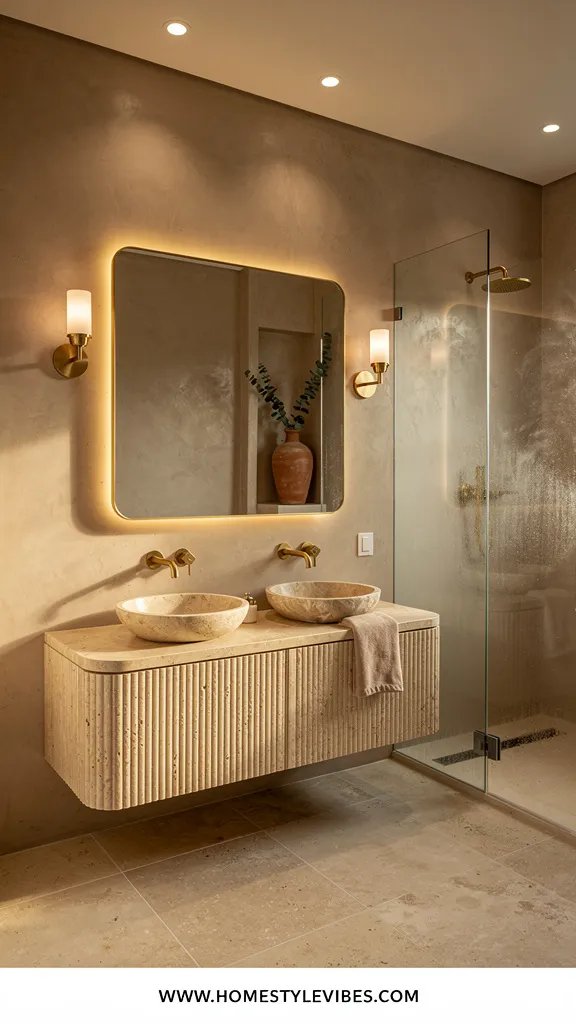
We’ve all been there: you tried a “spa” candle, swapped your towels, and still the bathroom feels clinical. The secret struggle? Flat surfaces and cold light. This Soft Spa Sanctuary leans into tactile surfaces and low, flattering lighting that makes steam look cinematic and your face look rested.
The mood is calm, warm, and sophisticated—think modern Mediterranean meets boutique spa. It works in real homes because the elements do double duty: fluted stone adds texture and hides water spots, warm wood softens echoes, and the mixed lighting creates depth so your space never feels like a dentist’s office again. Lighting sits center stage here: layered sconces at eye level with a soft 2700K glow, a dimmable overhead for cleaning, and under-vanity toe-kick lighting for that hotel-at-night look. Materials do the heavy lifting—fluted travertine-look tile, limewash paint in a creamy putty tone, and brushed brass hardware with a muted finish that doesn’t scream “new construction.”
This setup photographs beautifully because it introduces shadow play across the fluted textures, creates contrast between matte walls and soft-gloss tile, and frames the vanity face with warm light that flatters skin. For variations: choose a budget-friendly ceramic tile with a fluted face instead of real stone. In a small space, run vertical fluted tile just on the vanity wall for a focal moment. Prefer a moody version? Use a chocolate-lava microcement on the walls with antique brass. Renter-friendly swap: peel-and-stick fluted wall panels behind the vanity, paired with plug-in sconces with fabric shades.
Budget Breakdown:
- Fluted travertine-look tile or ceramic: $8–$22/sq ft
- Limewash or limewash-effect paint: $70–$150 per room
- Brushed brass sconces (pair): $160–$600
- Dimmable LED bulbs (2700K, high CRI): $20–$50
- Floating or furniture-style vanity in warm oak: $700–$3,500
- Under-vanity LED strip + transformer: $80–$200
- Brushed brass faucet + drain: $180–$650
- Thick Turkish towels + bath mat: $120–$300
Total Estimated Cost: $2,000 – $8,500
Best For: Primary bathrooms with at least one uninterrupted wall; anyone craving a soft, serene atmosphere and flattering morning light. Great for resale in homes where buyers respond to warm, timeless finishes.
Key Design Elements:
- Main materials: fluted stone or ceramic, limewash walls, warm oak, brushed brass
- Color palette: cream, putty, warm white, honeyed brass, soft oatmeal
- Lighting strategy: sconces at 60–66 inches high, warm 2700K bulbs, dimmable overhead, toe-kick glow
- Furniture silhouettes: rounded corners, fluted or reeded vanity face, integrated pulls
- Texture layers: ribbed tile, nubby bath mat, linen roman shade, matte walls
- Accent details: travertine tray, glass canister with wooden lid, a single sculptural branch
How To Recreate This Look:
- Start with the walls: choose a warm limewash or faux-limewash paint to set a soft, matte base.
- Add a fluted focal wall behind the vanity, or run fluted tile wainscoting to 42 inches for practicality.
- Layer lighting: install dimmable sconces with warm bulbs and a toe-kick LED under the vanity.
- Install a warm-wood vanity with curved edges, then top with a cream or light travertine-look counter.
- Style with plush towels, a nubby bath mat, a stone tray, and one slow-drama element (branch or candle).
Why This Looks Expensive: The mix of matte limewash and ribbed stone creates shadow depth that reads custom; the layered lighting and toe-kick glow mimic hospitality design. Brass that’s softly brushed, not shiny, looks collected rather than store-bought.
Watch Out: Don’t pick bright white bulbs or overly blue light; it flattens the textures and kills the mood. Also avoid mixing too many brass tones. Choose one finish family and stick with it.
Pro Styling Tip: For photos, dim the sconces to 60%, keep overheads low, and let window light rake across the fluted surface for natural drama.
Ready for something a touch bolder? The next idea swaps softness for sculptural lines and sensual contrast.
2. Black-and-Stone Monochrome With Steam-Safe Drama
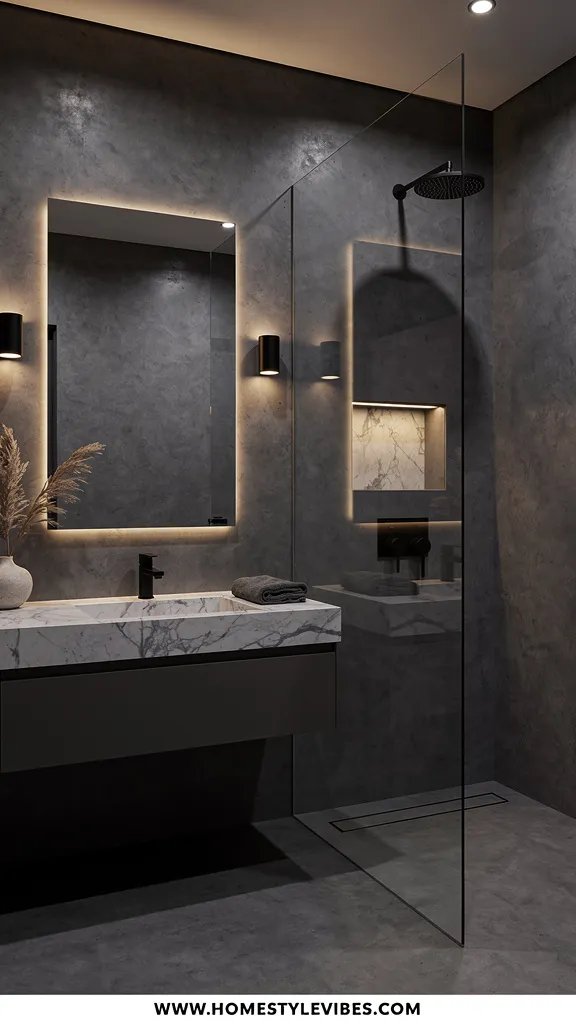
It’s that one corner that always feels off: the black hardware looked chic online but in your bathroom it feels flat and a little harsh. You’ve tried a darker vanity, but everything reads heavy instead of moody. This Monochrome concept fixes that with texture contrast—charcoal microcement walls, matte black fixtures, and a soft-veined stone that bounces just enough light to feel expensive, not gloomy.
The mood is boutique-hotel-after-dark: sexy, minimal, and grounded. It works in real homes because monochrome simplifies decisions and reduces visual clutter. You get the vibe with fewer pieces. Lighting sets the tone here: wall washers or a ceiling slot glow wash the microcement so you see brush strokes and movement, while a single minimal pendant over the tub adds a low, intimate pool of light. Materials dominate the story—think honed marble or porcelain with a warm gray vein, matte black metal that won’t fingerprint easily, and microcement or tadelakt walls that laugh at steam.
This look photographs beautifully because it creates high-contrast edges—black against stone, matte against subtle sheen—while maintaining a restrained palette. For variations: a budget version uses dark gray paint with a slight eggshell finish instead of microcement, and porcelain slabs instead of marble. Small space? Keep the ceiling white and paint only two walls dark to expand the room visually. Renter-friendly? Black framed shower screen, black plug-in vanity light, and charcoal waffle towels for instant tone.
Key Design Elements:
- Main materials: microcement or tadelakt, honed marble/porcelain, matte black metal
- Color palette: charcoal, warm gray, bone white, matte black
- Lighting strategy: wall washers or slot diffused lighting, one statement pendant, dimmers
- Furniture silhouettes: crisp, linear vanity, thin-edge counters, framed shower glass
- Texture layers: microcement movement, honed stone, ribbed towels, matte fixtures
- Accent details: small ebony stool, black soap pump, a single smoky glass vase
Budget Breakdown:
- Microcement/tadelakt application: $18–$45/sq ft
- Honed marble or porcelain: $10–$35/sq ft
- Matte black fixtures (set): $300–$1,100
- Recessed wall washer or slot trim: $120–$450 each
- Minimal pendant (damp rated): $160–$600
- Vanity with thin-edge counter: $900–$3,800
Total Estimated Cost: $2,200 – $10,000
Best For: Urban condos and contemporary homes; anyone who prefers a minimal wardrobe and wants their bathroom to match. Good for rooms with at least one natural-light source to keep the drama balanced.
How To Recreate This Look:
- Start with walls: specify microcement in a warm charcoal or paint two walls dark gray if on a budget.
- Add stone: choose a honed slab or large-format tile with a soft, warm vein for the vanity or surround.
- Layer lighting: install a wall washer aimed at your feature wall and a small pendant over the tub or vanity corner.
- Install matte black fixtures, but keep the lines thin and elegant—no bulky levers.
- Style with restraint: one ebony stool, folded charcoal towels, and a single smoky glass piece.
Why This Feels Designer: The power lies in restraint. Sticking to three materials in varied finishes gives clarity while microcement’s subtle movement adds life. Lighting that grazes textured walls delivers instant editorial polish.
One Thing To Avoid: Don’t mix cool gray with blue undertones and warm-veined stone. Undertone conflict is the fastest way to make a monochrome scheme feel accidental rather than curated.
Pro Styling Tip: For photos, place a small bowl of black soap in the brightest spot on the counter to pull the eye through the darkest and lightest points—hello, depth.
If one idea resonates more than the others, that’s your starting line. You don’t need to do everything. Choose one focal upgrade—lighting, wall texture, or vanity—and let the rest follow over time.
3. Warm Minimal Japandi Retreat With Floating Vanities
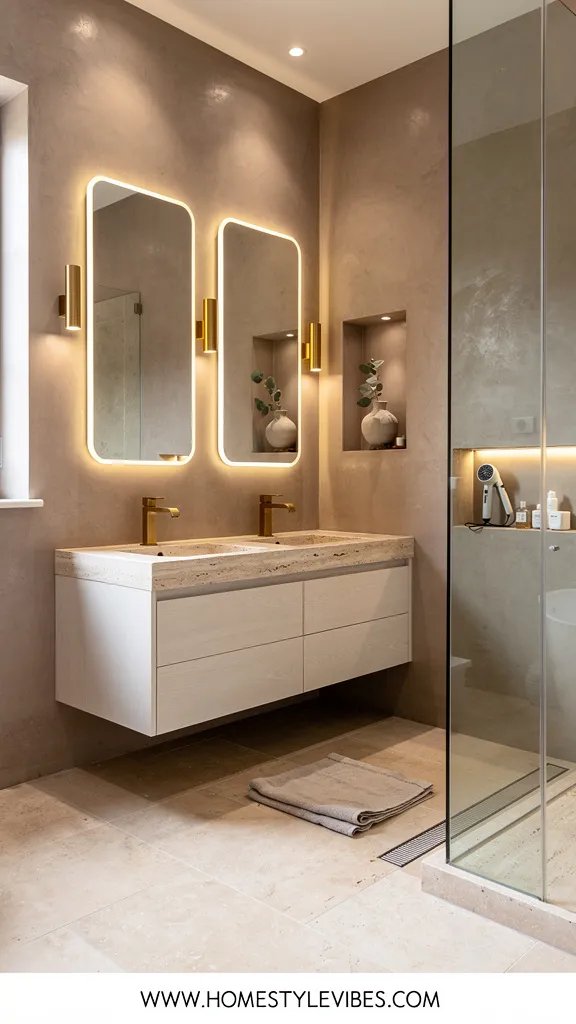
You’ve tried decluttering. Somehow, the counters still end up covered in skincare and hair tools by Thursday. The secret struggle is a layout that doesn’t support your daily flow. This Japandi Retreat fixes it with a floating vanity, calm palettes, and thoughtful storage niches so everything has a home—and your brain can finally take a breath.
The mood blends Scandinavian warmth and Japanese simplicity: quiet, sunlit, and purposeful. It works in real homes because floating vanities make small bathrooms feel lighter and easier to mop underneath. Hidden electrical outlets in drawers tame the tool tangle. Lighting matters here in two ways: an indirect LED behind the mirror sets the tone for nighttime winding down, while soft, frosted globes at eye level offer even, shadow-free task light. Materials keep things human: white oak with a matte finish, pale zellige or satin ceramic for a bit of shimmer, and a subtly grained quartz that reads clean without looking slick.
This look photographs beautifully thanks to repeated horizontals (the floating line, the long mirror), barely-there texture in the tile, and daylight bouncing across warm wood. For variations: budget-friendly uses a pre-made floating vanity and an IKEA Godmorgon hack with custom pulls. Small-space version runs a single long, shallow counter with a semi-recessed sink to keep floor area open. Renter-friendly swap: wall-mount a large, frameless mirror with a battery-powered backlight strip, add a slim bench, and upgrade hardware only.
Budget Breakdown:
- Floating vanity (custom or semi-custom): $800–$4,200
- Integrated drawer outlets + organizers: $120–$450
- Quartz counter (light, matte): $55–$90/sq ft
- Zellige or satin ceramic tile: $9–$25/sq ft
- Backlit mirror or LED strip: $120–$650
- Frosted globe sconces (pair): $140–$500
- Matte nickel or brushed stainless fixtures: $250–$900
Total Estimated Cost: $2,400 – $9,000
Best For: Medium to small primary baths that need better flow; people who love clean counters and morning routines that don’t involve hunting for the hairdryer.
Key Design Elements:
- Main materials: warm oak, matte quartz, satin ceramic, brushed stainless
- Color palette: pale oak, warm white, soft beige, cloud gray
- Lighting strategy: backlit mirror + frosted task lights + overhead on dimmer
- Furniture silhouettes: floating lines, rounded corners, thin-edge sinks
- Texture layers: soft grain, gentle tile sheen, ribbed cotton towels
- Accent details: low bench, ceramic catchall, a petite plant like a ZZ or pothos
Why This Reads High-End: The negative space under the vanity and the milky glow of a backlit mirror feel custom. Repetition of lines—mirror, vanity, shelf—creates visual calm that suggests thoughtful planning, not last-minute shopping.
How To Recreate This Look:
- Start with layout: choose a wall for a floating vanity and confirm stud placement for mounting.
- Add storage smartly: specify a drawer with built-in outlet and dividers for daily tools.
- Layer lighting: install a backlit mirror and frosted globes; set all on dimmers.
- Tile selectively: use satin ceramic in the splash zones and paint the rest a warm white.
- Style with restraint: one low bench, rolled towels, and a single ceramic vessel for brushes.
The Most Common Mistake: Over-styling the counter. Keep surfaces calm; stash extras inside the drawer you powered on purpose. If you can’t see clutter, your nervous system can chill.
Pro Styling Tip: For photos, angle the mirror so it reflects a neutral wall or plant, not a doorway—it keeps the scene serene and avoids random clutter photobombing your shot.
Remember, this isn’t about recreating a showroom. It’s about building a bathroom that actually supports your mornings. Start with one functional shift and layer in beauty after.
4. Mediterranean Sunlit Suite With Terracotta and Aged Brass
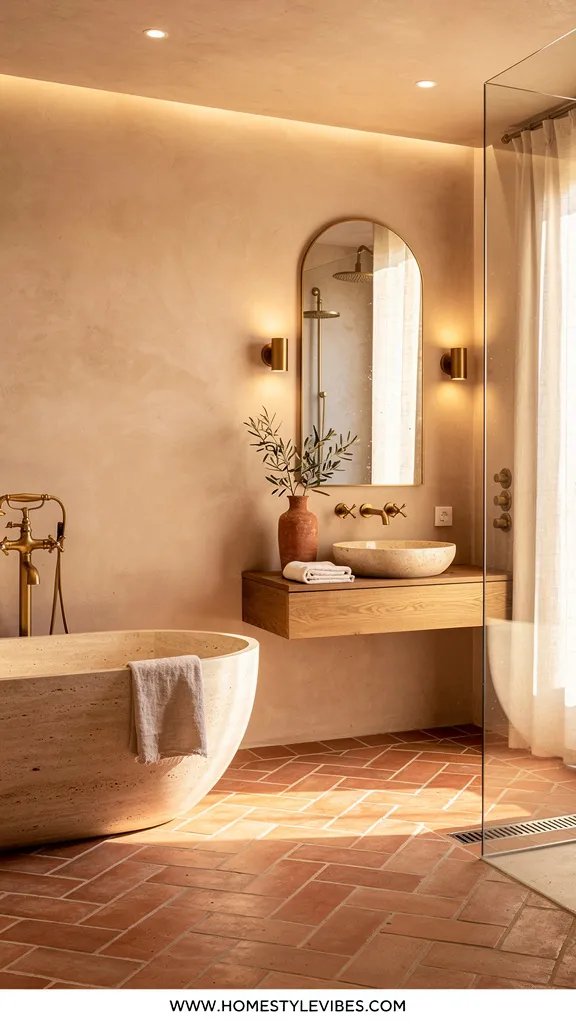
You want warmth and romance, but every “Tuscan” pin looks like a 2004 time capsule. You’ve tried a terracotta bath mat and a bronze faucet, and somehow it still feels themed. The fix? Keep it airy and edited: chalky plaster walls, soft terracotta tile in a modern pattern, aged brass that looks like it came with the house, and sheer linen that catches the light like a sail.
The mood here is vacation-morning-in-Mallorca: bright, tactile, sun-kissed. It works in real homes because these materials hide wear beautifully and patina with use. Terracotta floors never look too precious, plaster loves imperfection, and uncoated brass earns character over time. Lighting is simple and sunny: welcome the daylight with sheer linen or a woven shade, add a petite alabaster or opaque glass sconce for evening, and consider a skylight tube if your bath sits inboard. Materials bring it home—handmade tile, rough plaster or limewash, unlacquered brass, and pale oak or walnut.
This look photographs like a postcard because it balances warm, earthy tones with plenty of white space. The grout lines add delicate graphic rhythm, and brass picks up the sun, creating tiny highlights that feel alive. For variations: a budget route uses porcelain “terracotta” in a herringbone with off-white grout. Small-space version runs terracotta only on the floor and keeps walls bright white to stretch the room. Prefer darker? Choose burnt sienna floors with a walnut vanity and deeper plaster tone. Renter-friendly: linen curtain, cane tray, brushed brass cabinet knobs, and a faux olive branch in a clay pot.
Budget Breakdown:
- Terracotta or porcelain-look terracotta: $5–$18/sq ft
- Plaster/limewash walls: $70–$150 per room
- Unlacquered/aged brass fixtures: $350–$1,300
- Sheer linen shade or curtain: $60–$220
- Alabaster or opal glass sconces: $180–$750
- Wood vanity (walnut/oak): $900–$3,400
- Stone counter (Crema, light limestone-look quartz): $45–$95/sq ft
Total Estimated Cost: $2,100 – $9,500
Best For: Homes with good natural light, lovers of patina and lived-in charm, and anyone who wants a cozy, sunny vibe in all seasons.
Key Design Elements:
- Main materials: terracotta, limewash/plaster, aged brass, natural wood
- Color palette: warm white, sand, terracotta, walnut, sunlit brass
- Lighting strategy: maximize daylight; soft sconces for dusk; optional skylight
- Furniture silhouettes: arched or rounded mirrors, chunky wood vanity, simple lines
- Texture layers: plaster’s chalky surface, woven linen, matte tile, subtle wood grain
- Accent details: clay pot with herb or olive branch, cane or rattan tray, striped Turkish towels
How To Recreate This Look:
- Start on the floor: lay terracotta or a quality porcelain lookalike in herringbone or checkerboard.
- Add plaster: limewash walls in a warm white for a breezy, diffused glow.
- Install aged brass fixtures; if using unlacquered, embrace water spots as character.
- Choose a wood vanity with rounded edges and a light stone counter.
- Style with linen window dressing, a cane tray, and striped towels in cream/sand.
Why This Looks Intentional: The color story is tight—sunbaked neutrals with one hero tone (terracotta). The mix of rustic and refined (plaster with clean-lined vanity) avoids kitsch and keeps it feeling editorial.
Don’t Do This: Don’t pair bright, cool whites with terracotta; they clash. Stick to warm whites and creams so the flooring looks delicious, not dirty.
Pro Styling Tip: Photograph in morning light with curtains half drawn; the dapple creates soft shadows that show off plaster texture and tile pattern.
A quick honesty moment: plaster can be tricky to DIY. I’ve had a wall go patchy and weird on me, and I had to sand and reapply. It’s worth it, but test first on a small area. You’ll thank me later.
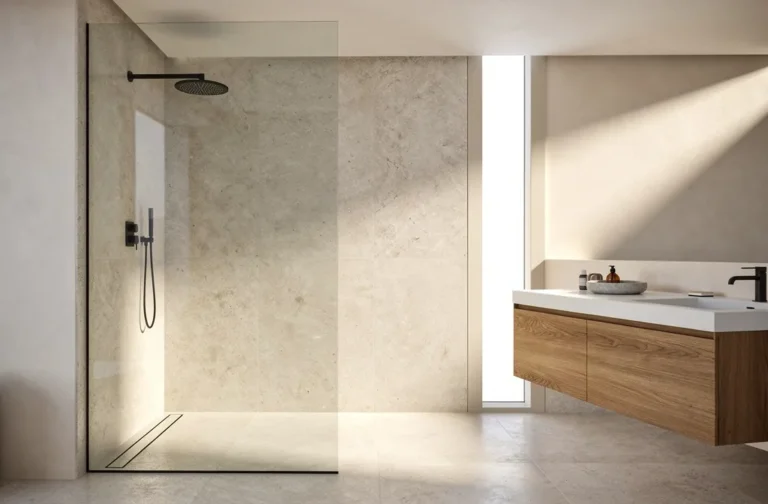
5. Glass-and-Chrome Riviera Suite With Marble-Look Slab Walls
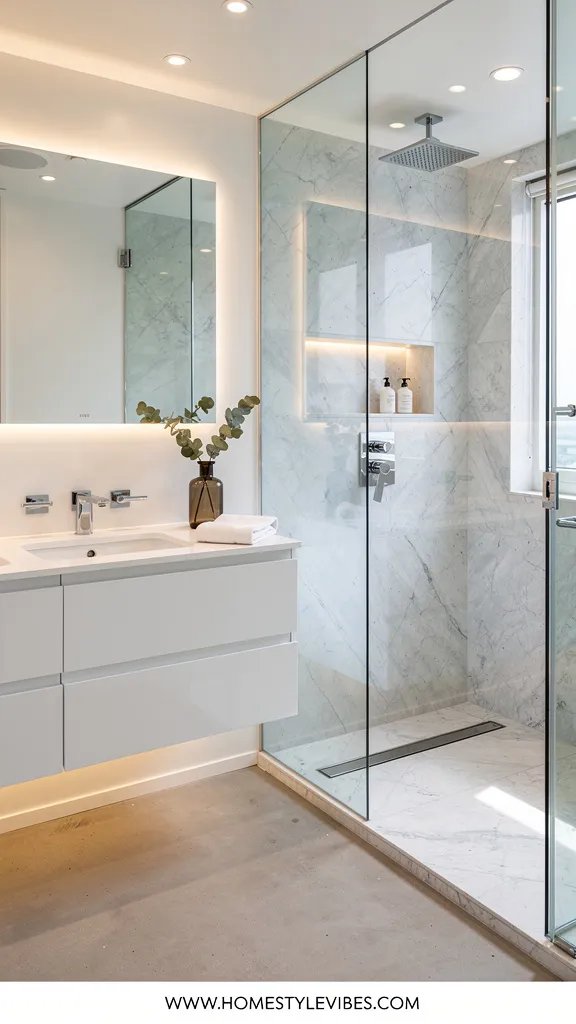
You love gleaming hotel bathrooms—the ones where the light bounces forever and the shower feels like a glass cube of serenity. You hate water spots, grout lines that never stay white, and that weird shadow cheap pendants cast on the ceiling. This Riviera Suite goes bright and crisp with large-format slab walls, a frameless shower, and chrome that sparkles without feeling cold.
The mood is crisp, modern classic—like a luxury ship cabin with better storage. It works beautifully in real homes because slab walls cut grout maintenance dramatically, chrome stays timeless for resale, and clear glass enclosures make even small rooms read bigger. Lighting here is precise: a ceiling-mounted linear fixture with high CRI for grooming, mirror-integrated lighting for face-forward tasks, and a small recessed spot aimed at the vanity splash to create a subtle highlight. Materials shine—marble-look porcelain slabs (or actual stone if budget allows), glossy white paint with a soft eggshell sheen, and crisp chrome hardware. Add one soft element, like a pale gray vanity or upholstered stool, to warm things up.
This look photographs like a magazine because it’s all about reflection control: shiny surfaces met with diffused, accurate light create that glassy clarity hotels nail. For variations: budget-friendly uses large-format 24×48 porcelain on walls with minimal grout and a good sealer. Small-space version uses a sliding glass door instead of a swing to save inches. Darker spin: choose a gray marble-look slab with white veining and pair with polished nickel for a softer, warmer shine. Renter-friendly: tension rod glass-look curtain, chrome hardware swap, and a peel-and-stick slab-look panel behind the vanity.
Budget Breakdown:
- Porcelain slab walls or large-format tile: $12–$45/sq ft
- Frameless glass enclosure: $1,000–$3,500
- Chrome fixtures: $250–$900
- Integrated-light mirror: $180–$800
- Linear ceiling fixture or track: $160–$700
- Vanity (painted pale gray or white): $600–$2,800
- Heated towel rail (chrome): $180–$650
Total Estimated Cost: $2,400 – $9,500
Best For: Anyone who priorities easy cleaning, bright mornings, and a universally appealing look for future buyers. Great in smaller primary baths where clear glass adds visual square footage.
Key Design Elements:
- Main materials: marble-look slabs, glossy paint, chrome, clear glass
- Color palette: cool white, soft gray, chrome, hint of stone veining
- Lighting strategy: high-CRI linear light, integrated mirror, focused vanity spot
- Furniture silhouettes: streamlined vanity with flat fronts, thin shaker or slab doors
- Texture layers: smooth slab, subtle vein movement, plush towels, low-pile rug
- Accent details: crystal soap dish, glass canisters, a single green stem in clear water
How To Recreate This Look:
- Start with walls: choose porcelain slabs or 24×48 tiles and plan minimal grout lines with a matching grout color.
- Add glass: install a frameless enclosure; keep hardware sleek and consistent.
- Layer lighting: combine an integrated-light mirror with a high-CRI linear overhead and a targeted spot.
- Select chrome fixtures for timeless shine; consider a heated towel rail for that hotel moment.
- Style sparingly: a single tray, clear canisters, white towels; let the materials be the star.
Why This Looks Expensive: Big surfaces with minimal seams read like custom stonework. Chrome’s crisp reflections amplify light, and the clear glass erases visual barriers, which screams “suite” rather than “standard.”
Watch Out: Poor glass maintenance kills this look. Keep a squeegee within reach and use a daily spray to prevent mineral spots. Also make sure the slab veining aligns at corners—misaligned patterns cheapen the effect.
Pro Styling Tip: For photography, angle the camera to capture the longest vein run across the slab—your eye will follow it and the room will look larger.
If you’re feeling decision fatigue, pause. Pick the idea that solves your most annoying problem—harsh lighting, clutter, cold floors—and start there. The rest becomes easier once the big pain point is gone.
Quick Checklist
- Choose a single metal finish and commit
- Set all vanity and sconce lights on dimmers
- Pick one hero texture (fluted stone, microcement, terracotta, or slab)
- Use high-CRI 2700–3000K bulbs for accurate skin tones
- Add toe-kick or backlit mirror lighting for hotel vibes
- Plan storage niches where clutter naturally lands
- Repeat lines and materials to create calm rhythm
- Match grout color to tile for seamless walls
- Install a heated towel rail or hook cluster near the shower
- Keep styling minimal: one tray, one plant/branch, stacked towels
Frequently Asked Questions
How much should I budget to make my master bath feel like a luxury hotel suite?
For a noticeable shift, plan $1,500–$3,000 for lighting, hardware, textiles, and a vanity mirror. For tile, vanity, and fixture updates, $5,000–$12,000 delivers a near-complete refresh. Full slab walls, custom vanities, and glass enclosures can reach $15,000–$25,000 depending on size and materials.
My bathroom is small—will these ideas make it feel cramped?
Choose floating vanities, clear glass enclosures, and a single hero material to reduce visual breaks. Vertical textures (fluting, tall mirrors) and wall-to-wall mirrors visually stretch height and width. Keep floors as continuous as possible for an airy feel.
I’m renting—what can I do now that still gives hotel vibes?
Swap hardware for cohesive metal, add a plug-in sconce or backlit mirror, bring in plush towels and a nubby mat, and use peel-and-stick fluted panels or stone-look sheets behind the vanity. Finish with a cohesive tray setup to corral daily items.
How do I maintain materials like terracotta, microcement, and unlacquered brass?
Seal terracotta with a breathable sealer and wipe spills quickly. Microcement needs a proper topcoat; clean with pH-neutral soap. Unlacquered brass patinas by design; polish occasionally if you prefer a brighter look, or embrace the mellowed finish.
What’s the most common lighting mistake in bathrooms?
Overhead-only light. It creates unflattering shadows. Add sconces at face height and keep bulbs warm (2700–3000K) with high CRI; your materials and your reflection will thank you.
Conclusion
Here’s the truth: a luxury hotel suite feeling in your master bath doesn’t come from a single expensive purchase. It comes from texture, lighting, and ruthless cohesion. Pick the idea that solves your biggest daily annoyance, then let your materials and lighting do the pretty work.
Start small if you need to—swap bulbs and add a backlit mirror this weekend. Next month, tackle the vanity or the wall texture. Luxury isn’t loud; it’s consistent. Warm light, layered surfaces, and controlled clutter make the room actually feel finished.
Trust yourself. You already know which of these five ideas fits your life. Choose it, commit to the palette, and give yourself the hotel moment you keep saving on Pinterest. You can absolutely pull this off—seriously.

About the Author

Krisztina P.Rendes, Founder of Home Style Vibes
Founder of Home Style Vibes
Krisztina Puskásné Rendes created Home Style Vibes as a cozy-modern lifestyle space where homemaking meets inspiration. Her goal is to help women create beautiful, organized, and peaceful homes they truly love — without overwhelm. You’ll find here heart-driven content on home decor, cleaning tips, easy family recipes, organization and decluttering, DIY home projects, plants, and seasonal ideas — all designed to bring more calm, comfort, and style into everyday life.