5 Fall Tablescape Ideas That Make Every Dinner Feel Like A Celebration
You want dinners that feel like a warm hug under golden candlelight. You hate how your table ends up looking random—like a grocery store pumpkin display and your everyday salad bowls had a chaotic little meet-cute. You crave that dreamy fall aesthetic: glowing candles reflected in amber glass, layered plaid napkins, dried florals spilling out of a burnished vase, the late-afternoon sun catching brass flatware. These five fall tablescape ideas fix the frustration by giving you complete, plug-and-play concepts you can copy in an evening—on a budget that stays under control—and they look insanely photogenic without heavy styling tricks.
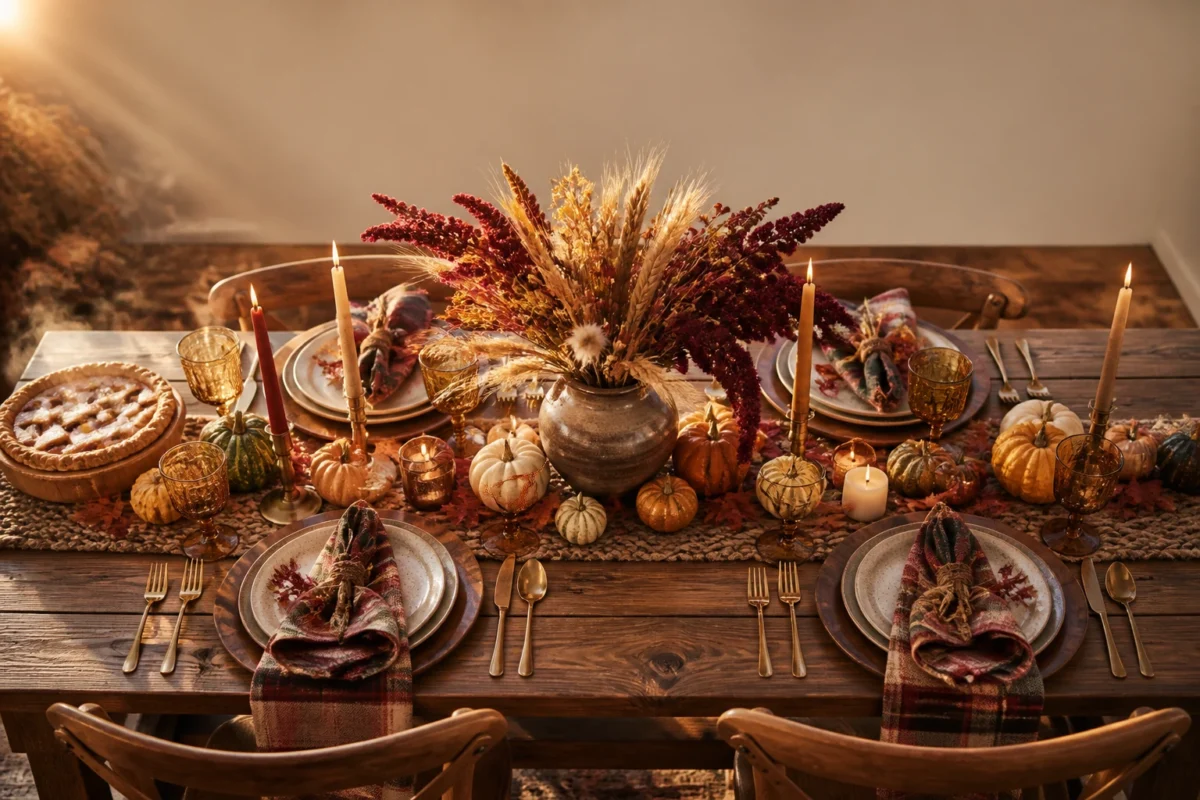
We’re talking saturated rust and burgundy tones, chunky woven runners, heirloom-style gourds, wheat and dried florals that last all season, and the kind of candlelit warmth that makes store-bought pie feel gourmet. Each idea solves a specific pain point (awkward table shape, tiny dining room, clutter-prone buffet), and each delivers that “Is this for a magazine?” feeling by focusing on balance, texture, and warm light that flatters everyone at the table. If you love the cozy-season vibe and want your home to feel abundant from September through Thanksgiving, you’re in the right spot.
1. Pumpkin Runner On a Farmhouse Table With Golden Glow Candles
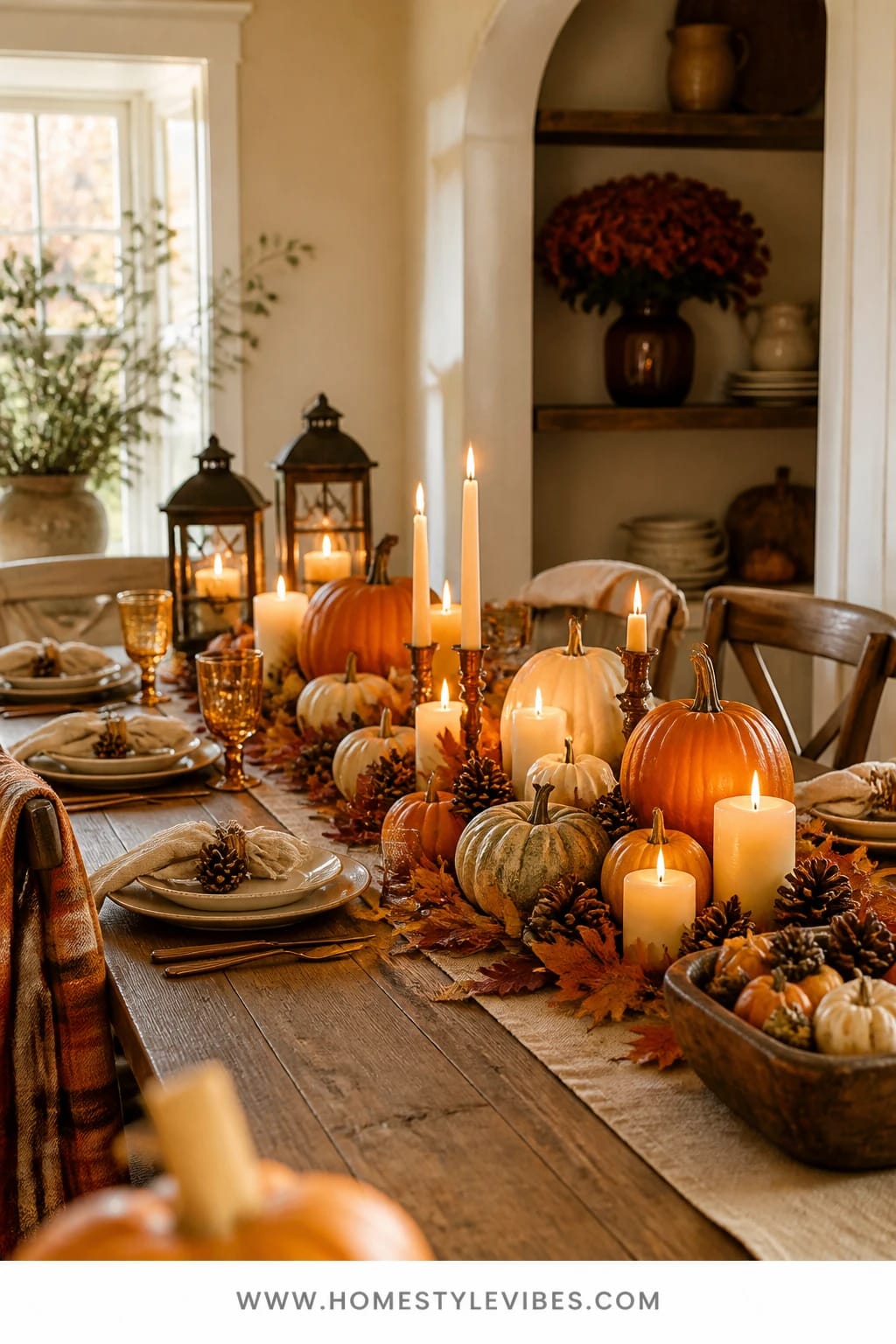
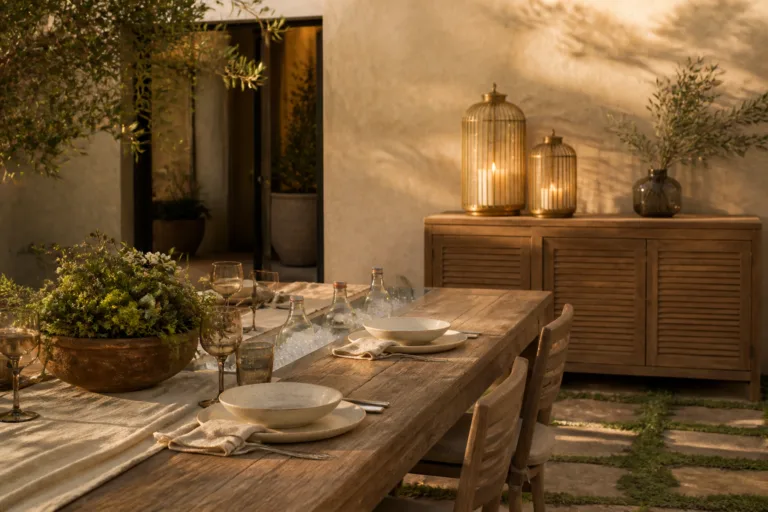
We’ve all been there: you love pumpkins, you buy a bunch, and then your table looks like you’re staging a produce stand. This pumpkin runner solves that by creating a clean, deliberate line of gourds down the center that reads purposeful—like a harvest parade with a golden, candlelit glow. The mood is classic harvest-table abundance with a warm, welcoming energy. It works in real homes because you can scale it to any table length, move it aside easily for family board games, and reuse the pumpkins on the porch or mantel later. Bonus: the candles do the heavy lifting on ambience, so dinner looks like a celebration even if it’s takeout lasagna.
Candlelight matters here. Opt for unscented tapers or pillars in antique brass or matte black holders so the light bounces off the pumpkin skins with a mellow sheen. Materials lean natural: warm wood table, linen or jute runner, real or faux heirloom pumpkins, a few sprigs of seeded eucalyptus, and amber glass bud vases tucked between gourds. Photos love this setup because the runner creates depth and a clear focal line. Foreground pumpkins blur into soft bokeh while the candle flames add that golden sparkle your phone camera actually captures well.
Variations: For a budget-friendly version, mix one or two real statement pumpkins with a set of lightweight, faux minis. Small-space? Halve the length and cluster pumpkins in three tight groupings instead of a full runner. Prefer neutrals? Use pale green and ghost-white pumpkins with taupe candles and a flax linen runner for a serene, Scandinavian fall feel. Renter-friendly swap: battery-operated taper candles to avoid dripping wax on a table you baby.
Budget Breakdown:
- Heirloom pumpkins (mix sizes): $15–$45
- Faux mini pumpkins (set of 8–12): $12–$30
- Linen or jute table runner: $18–$60
- Candle holders (brass or black, set of 4–6): $24–$80
- Unscented tapers or pillars: $8–$18
- Greenery (eucalyptus or olive stems): $8–$20
- Amber bud vases (set of 3): $12–$28
Total Estimated Cost: $97 – $281
Best For: Long farmhouse tables or rectangular dining tables. Perfect for early fall through Thanksgiving and for homes that like a classic, cozy harvest vibe with minimal fuss.
Key Design Elements:
- Main seasonal props: Mixed pumpkins, seeded eucalyptus, amber bud vases
- Color palette: Burnt orange, soft sage, creamy white, warm wood
- Lighting strategy: Staggered tapers at varying heights for a golden glow
- Textile layers: Linen runner, optional plaid napkins
- Natural elements: Real or faux gourds, fresh or preserved greenery
- Accent details: Brass or matte black candle holders, simple ceramic plates
How To Recreate This Look:
- Start with a natural fiber runner centered on your farmhouse table.
- Add 5–7 medium pumpkins spaced evenly, then tuck smaller gourds in the gaps.
- Layer eucalyptus stems loosely along the runner, weaving around pumpkins.
- Place candle holders in odd-number groupings, alternating heights for rhythm.
- Style with amber bud vases holding single stems for a touch of sparkle and color.
Why This Looks Expensive: Repetition and restraint. A single material story—pumpkins plus brass plus linen—reads curated. The varied candle heights create vertical movement, which feels designer-grade without complicated styling.
Watch Out: Too many colors. Stick to 2–3 pumpkin tones and one metal finish. Mix more than that and the table starts to look busy instead of bountiful.
Pro Styling Tip: For photos, lower the overhead light and let the tapers be the star; your camera will pick up the candlelit warmth and saturated pumpkin color beautifully.
Keep scrolling—next up leans into texture you can actually touch.
2. Plaid Napkins And Burnt Orange Layers On a Kitchen Island
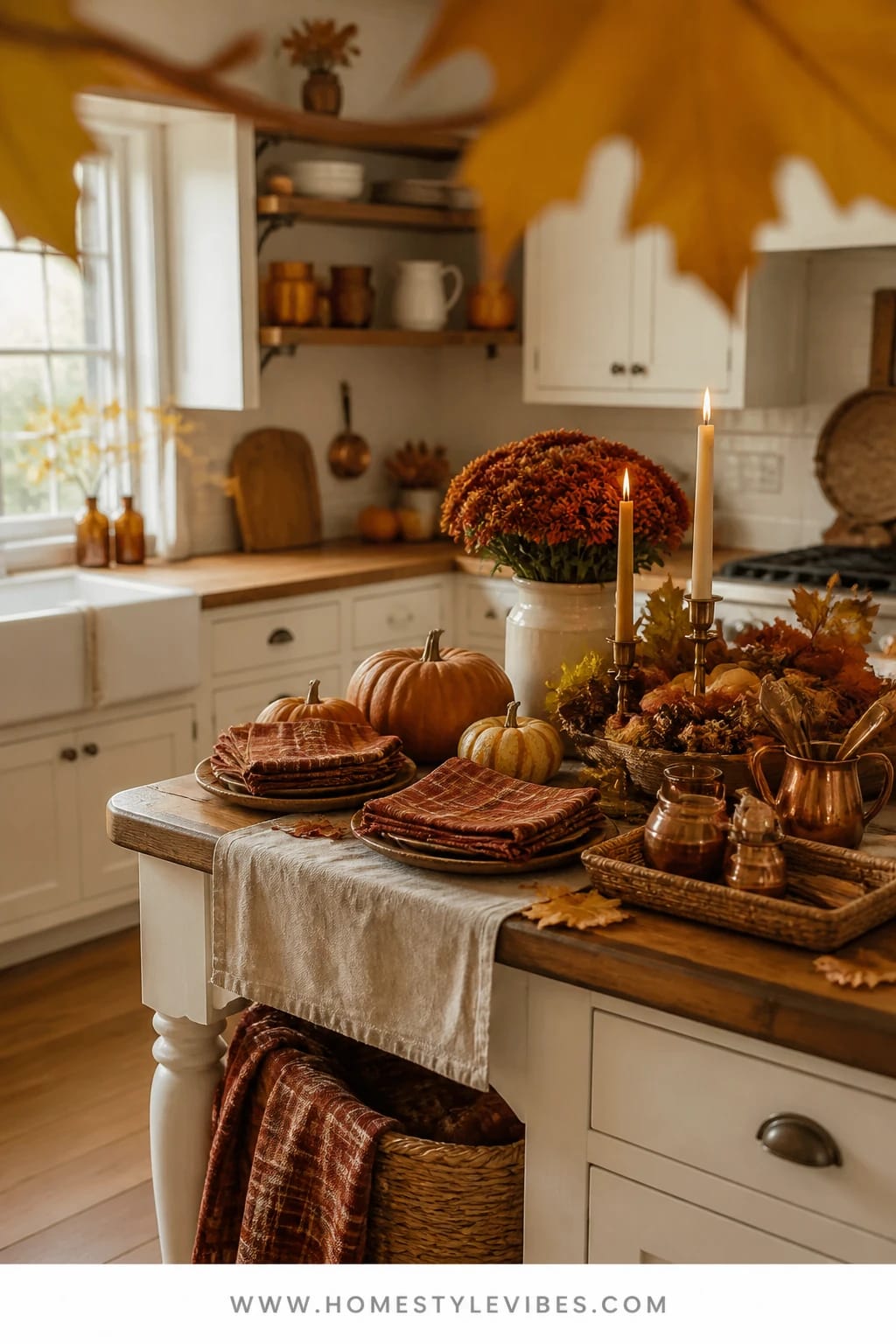
It’s that one spot that always feels off: the kitchen island that turns into a drop zone for mail, chargers, and a rogue apple that rolls around for days. You’ve tried a bowl of fruit, but it still looks like a waiting room. This idea creates a casual, everyday fall tablescape on the island using tactile layers—plaid napkins, a low runner, and shallow baskets—to make the surface feel styled without blocking the view or your food prep rhythm. The mood is relaxed, family-friendly, and fuss-free with a touch of harvest charm.
Here’s why it works in real homes: islands see traffic. Everything here is wipeable, low-profile, and easy to move. The lighting strategy is subtle—lean on your pendants, but warm them up with amber bulbs or dimmers so the plaid reads saturated and cozy. Materials do the talking: cotton or flannel napkins, a slim wood tray, a shallow rattan basket with mini gourds, and a single ceramic pitcher of dried wheat. It photographs well because the plaid brings pattern, the basket adds texture, and the low arrangement gives you that “lifestyle” angle without clutter.
Variations: Budget version? Skip the tray and use a cutting board you already own. Small-space? Style just a third of the island with a narrow runner and one cluster to keep your prep zone clear. Neutral palette? Go with cream-and-charcoal plaid and pale wheat for a softer, Nordic fall look. Renter-friendly swap: use command hooks for a seasonal hand towel in coordinating plaid as a side accent.
Key Design Elements:
- Main seasonal props: Dried wheat, mini gourds, plaid napkins
- Color palette: Burnt orange, oat, walnut brown, soft black
- Lighting strategy: Warm-dim pendants or amber bulbs for a candlelike effect
- Textile layers: Cotton or flannel napkins, slim runner
- Natural elements: Wheat bundles, real gourds
- Accent details: Rattan basket, ceramic pitcher, wood tray or board
Budget Breakdown:
- Plaid napkins (set of 4–8): $12–$38
- Shallow rattan basket: $10–$24
- Dried wheat bundle: $8–$18
- Ceramic pitcher or vase: $15–$40
- Mini gourds (6–10): $6–$18
- Narrow runner or tea towel used as runner: $8–$22
Total Estimated Cost: $59 – $160
Best For: Busy kitchens and open-concept spaces that need an easy, daily dose of fall without competing with cooking. Great from early September through late November.
How To Recreate This Look:
- Start with a slim runner or folded tea towel along one edge of the island.
- Add a wood tray or cutting board to define your styling zone.
- Layer a ceramic pitcher with dried wheat as the tallest piece.
- Place a shallow rattan basket in front, fill with mini gourds.
- Style with folded plaid napkins stacked or tucked into the basket for pattern.
Why This Feels Designer: It’s all about texture-on-texture. The matte ceramic next to rattan and flannel looks intentional, like you curated a mood board and then shopped your home.
One Thing To Avoid: Overly tall stems that block sightlines under pendants—keep arrangements under 12 inches on an island so it stays practical.
Pro Styling Tip: Angle the tray 10–15 degrees off square for photos; that slight tilt adds movement and keeps the scene from feeling rigid.
Before we dive into something richer and moodier, take a breath.
Remember, this isn’t about recreating a showroom. It’s about building a table that feels like your life: a little messy, very warm, and ready for second helpings.
3. Dried Florals And Burgundy Candles On a Farmhouse Table
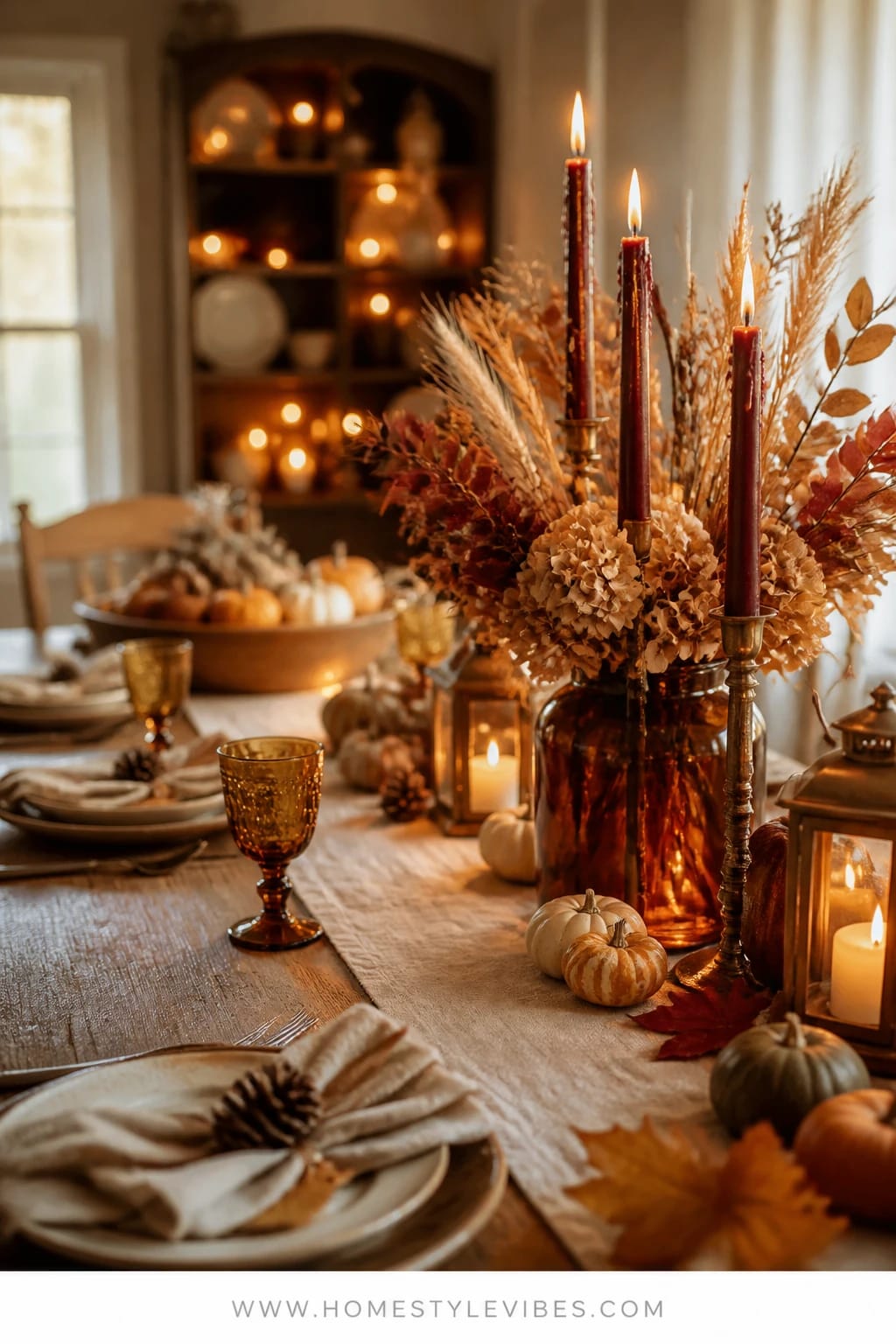
You’ve tried a single vase in the center and felt underwhelmed—like that one elegant friend who never brings a jacket and somehow isn’t cold. Pretty, but not enough for everyday cozy. This tablescape leans into dried florals and berry-toned tapers to create a grounded, moody fall moment that still feels approachable. The vibe is candlelit warmth meets old-world harvest, with textures that hold up month after month. Dried florals don’t wilt, which makes life easier if hosting sneaks up on you on a Tuesday.
In real homes, this works because it’s stable, low-maintenance, and visually lush without requiring fresh stems every week. The lighting comes from burgundy or oxblood candles, which cast a richer, deeper glow on wood tones and brass. Materials: dried hydrangea, wheat, bunny tails, preserved leaves in umber and rust; a low compote bowl or oval trough; layered linen with a soft crinkle. Photos love the saturated burgundy tapers and the papery texture of dried petals—it creates dimension that reads high-contrast in the best way.
Variations: Budget-friendly? Mix a grocery-store eucalyptus bundle with one hero dried bouquet. Small table? Use a narrow trough and two candles instead of four. Muted version? Keep florals in pale taupe and blush with cream tapers for a softer note that still reads autumn. Renter-friendly? Battery-operated tapers in deep burgundy give the hue without open flame.
Budget Breakdown:
- Dried floral bundle (hydrangea, wheat, bunny tails): $18–$48
- Low compote bowl or trough: $20–$60
- Linen tablecloth or runner: $24–$70
- Burgundy tapers and holders (set of 4): $22–$58
- Preserved leaves or fall garland accents: $10–$26
Total Estimated Cost: $94 – $262
Best For: Dining rooms that skew traditional or modern-farmhouse, mid- to large tables, and anyone who loves a moody, romantic take on fall from late September into Thanksgiving.
Key Design Elements:
- Main seasonal props: Dried florals, preserved leaves, burgundy tapers
- Color palette: Burgundy, rust, umber, cream linen
- Lighting strategy: Candle clusters at different heights, dimmed overheads
- Textile layers: Linen tablecloth with visible crinkle, soft napkins
- Natural elements: Dried hydrangea, wheat, bunny tails
- Accent details: Brass footed bowl, aged brass candle holders
Why This Reads High-End: Monochrome depth. Keeping the palette in the burgundy-rust family creates layers of tone-on-tone richness, which looks tailored and expensive to the eye and the camera.
How To Recreate This Look:
- Start with a linen tablecloth in cream or flax; leave natural wrinkles for texture.
- Add a low compote or trough centered; line with floral foam if needed.
- Layer dried florals starting with greenery, then hydrangea, then airy accents.
- Place 2–4 burgundy tapers in brass holders flanking the arrangement.
- Style with preserved leaves scattered like a soft crescent around the centerpiece.
The Most Common Mistake: Going too tall with the florals. Keep the arrangement under eye level when seated so conversation feels easy and the table doesn’t feel top-heavy.
Pro Styling Tip: Pull one or two stems out slightly toward the camera side for foreground depth—this little move makes photos feel immersive and less “flat.”
Short pause. If one idea resonates more than the others, that’s your starting point. You don’t need all five—choose the vibe that matches your week, your people, and your pantry.
4. Pinecones And Amber Lanterns Down a Window Ledge
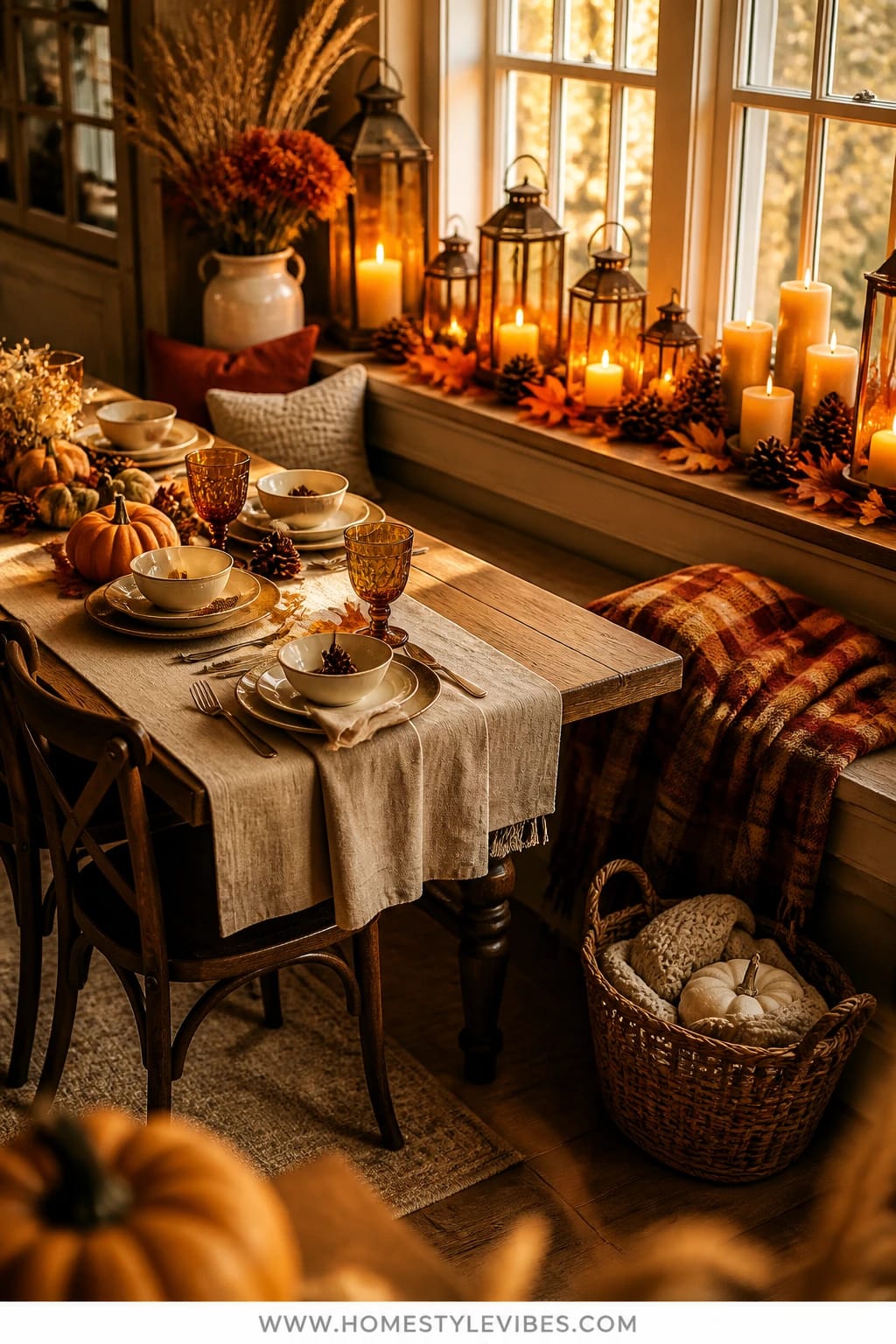
Let’s fix that awkward dining nook nobody sits in after sunset because it feels chilly and flat. Window ledges often get ignored or filled with random plants that give up by Halloween. This setup uses pinecones and amber lanterns to create a cozy perimeter of light along the window ledge that spills onto your table. The mood is alpine-cabin meets city-supper: relaxed, glowing, and just rustic enough without antlers. It’s a small-space hero because it pulls the visual weight off your table and spreads it into the architecture of the room.
Here’s why it works: lanterns act like little fireflies that draw the eye upward and outward, making a compact dining zone feel dimensional. Materials include amber glass lanterns or jars, a simple strand of micro string lights, gathered pinecones, and a couple of small mossy accents for softness. Photographs turn out beautifully because the backlighting from the window at dusk plus the amber glow gives you layered light sources that play nicely with skin tones and wood grain.
Variations: Budget version? Mason jars with tea lights and a bag of craft pinecones do the trick. Minimalist version? Keep it to three lanterns and a few oversized pinecones, all in a tidy line. For renters who can’t stick hooks anywhere, no problem—everything sits right on the ledge. Seasonal transition tip: swap pinecones for small ornaments after Thanksgiving and you’ve got December done.
Key Design Elements:
- Main seasonal props: Pinecones, amber lanterns, micro string lights
- Color palette: Amber, espresso brown, mossy green, matte black accents
- Lighting strategy: Low, layered glow along the ledge to edge-light the dining zone
- Textile layers: Add a wool throw on a chair to echo the warmth
- Natural elements: Foraged or craft pinecones, bits of preserved moss
- Accent details: Black metal or brass lantern handles, simple ceramic bud vase
Budget Breakdown:
- Amber lanterns or jars (3–5): $24–$80
- Micro string lights (warm white): $6–$16
- Pinecones (bag or foraged): $0–$12
- Preserved moss accents: $6–$15
- Tea lights or LED votives: $8–$20
Total Estimated Cost: $44 – $143
Best For: Small dining nooks with a window, apartment dining spaces, and anyone who wants candlelit warmth without crowding the tabletop. Great for chilly October nights through late fall.
How To Recreate This Look:
- Start with a clean window ledge; dust and wipe for a smooth surface.
- Add 3–5 amber lanterns spaced evenly, mixing heights if possible.
- Layer a micro string light behind the lanterns to create a soft backglow.
- Place pinecones in groups of three between lanterns; tuck in small moss bits.
- Style with one small bud vase on the end holding a single dried stem for balance.
Why This Looks Intentional: You’re framing the room. By styling the ledge, you create a visual “border” that makes the dining zone feel finished, not floating.
Don’t Do This: Avoid cool-white LEDs. They’ll wash out the amber tones and make the space feel clinical, not cozy.
Pro Styling Tip: Turn off overheads, keep just the lanterns and one nearby lamp on; your photos will glow with warm highlights and gentle shadow that feels like golden hour indoors.
I tried a version of this in my own dining nook last October. Honestly? We lingered after dinner, just sipping tea and listening to the tiny crackle of a woodwick candle. The room finally felt like a place to hang out, not pass through.
5. Leaf Garland And Candlelit Warmth Across an Entryway Console
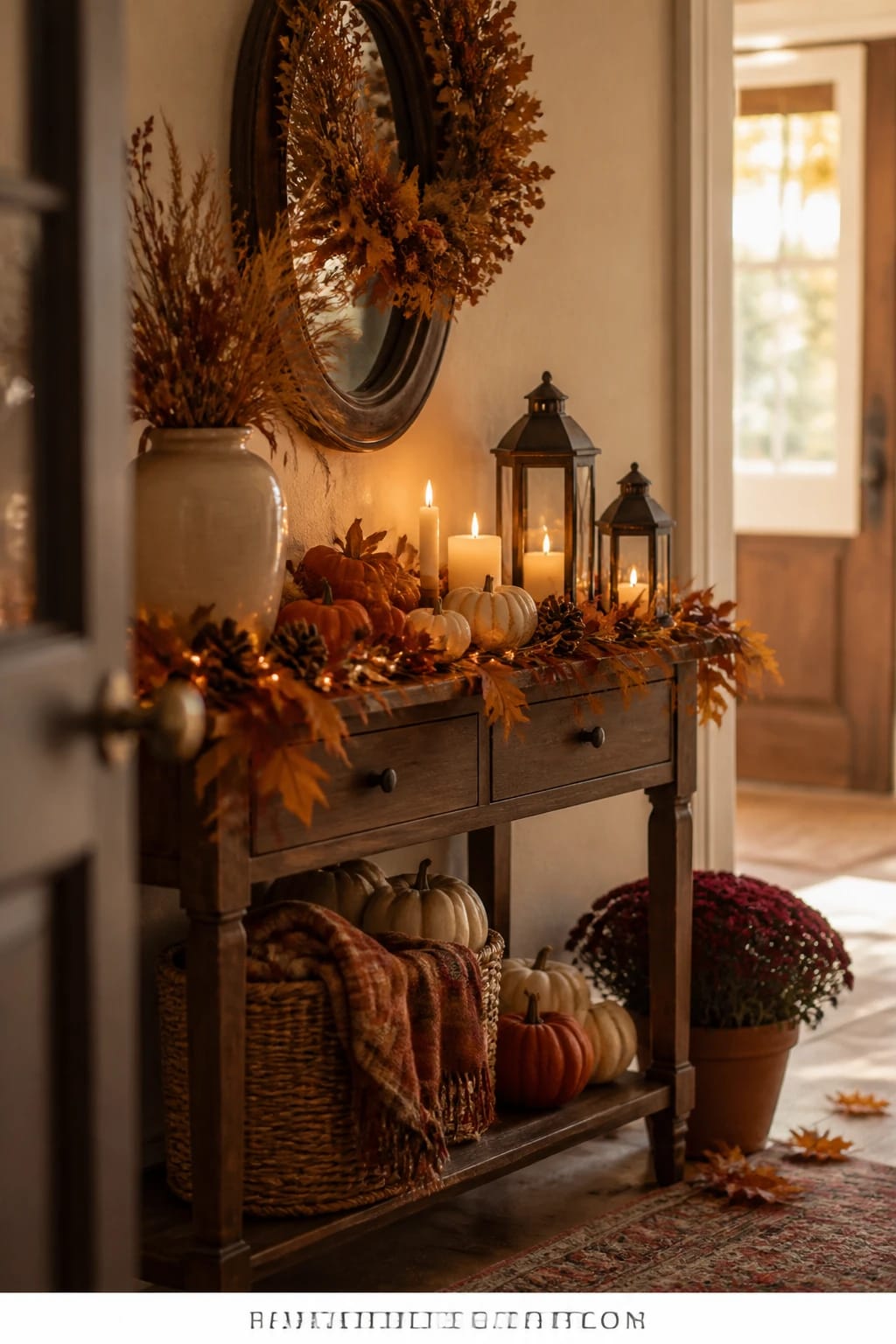
Every party starts near the door. And yet the entry console often gets ignored or stacked with keys. You’ve probably tried a bowl, a tray, maybe a mirror—and it still doesn’t say “festive.” This idea turns your entry into a mini fall tablescape with a leaf garland and candlelit warmth across the console, signaling celebration the moment guests step in. The mood? Welcoming, collected, and just dramatic enough to be worth a selfie before dinner.
This works in real homes because consoles are narrow and easy to style. A low-profile garland won’t interfere with daily life, and battery candles keep things safe around kids and wagging tails. Lighting is the secret here: cluster candles at two points along the garland to create a “heartbeat” rhythm of light that bounces off a mirror above the console. Materials bring richness without clutter: a faux or preserved leaf garland in rust and gold, a few brass candlesticks, a shallow bowl of acorns or mini pears, and one framed art piece leaned casually for that layered look. Photographs love the repetition from the garland’s leaves and the way candlelight skims their edges—instant atmosphere.
Variations: Budget-friendly? Use a single strand of affordable faux leaves fluffed with a handful of real branches from a weekend walk. Small space? Keep the garland to one-third of the console and balance with a lamp on the other end. Neutral lover? Choose a muted green-gold garland and ivory candles with black candleholders for contrast. Renter note: Command strips for the mirror or art, and everything else rests on the console—no holes needed.
Budget Breakdown:
- Faux or preserved leaf garland: $18–$48
- Brass or black candleholders (3–5): $24–$80
- Battery candles (set of 3–5): $16–$36
- Decorative bowl (wood or ceramic): $14–$40
- Fillers: Acorns, mini pears, or pine nuts: $6–$12
- Framed art or seasonal print: $12–$40
Total Estimated Cost: $90 – $256
Best For: Entryways or hall consoles, townhomes and apartments, anyone who wants a strong first impression without rearranging furniture. Perfect from early October through Thanksgiving weekend.
Key Design Elements:
- Main seasonal props: Leaf garland, acorn/pear bowl, battery candles
- Color palette: Rust, golden glow, espresso wood, ivory
- Lighting strategy: Candle clusters mirrored by a wall mirror or glossy frame
- Textile layers: Add a small plaid scarf under the bowl for softness
- Natural elements: Preserved or faux leaves, natural fillers in the bowl
- Accent details: Brass hardware, slim black frames, ceramic catchall
Why This Looks Expensive: Layered horizontals. The garland sits low, the candle flames float midline, and the mirror reflects everything at eye level. That triple layer reads styled and architectural.
How To Recreate This Look:
- Start with a clean console; place your mirror or art centered above.
- Add the leaf garland in a gentle S-curve across the surface.
- Layer 3–5 candleholders in two clusters—one left, one right—for balance.
- Place a shallow bowl near the center filled with acorns, mini pears, or pine nuts.
- Style with a small framed print leaned against the mirror and a ceramic catchall for keys so function meets pretty.
One Thing To Avoid: Don’t smother the surface. Leave a few inches of breathing room at the front edge so the garland doesn’t look like it’s trying to jump off the console.
Pro Styling Tip: For photos, light only the console candles and one nearby lamp; the shadow play on the leaves is deliciously moody and hides inevitable entryway scuffs.
Honest moment: I once tried to style a console with a wildly realistic real-leaf garland that shed like a stressed golden retriever every time the door opened. Beautiful for a day; chaos the next. Faux or preserved wins in entryways where doors move constantly, IMO.
Big picture reminder: your fall tablescape isn’t a performance. It’s an invitation. If a section feels like your people (game-night crew, soup-and-bread friends, the “just stop by” neighbors), go with that one and let it do the heavy lifting all season.
Quick Checklist
- Linen or jute runner
- Heirloom pumpkins in 2–3 tones
- Brass or matte black candleholders
- Unscented tapers or LED tapers
- Amber bud vases or lanterns
- Dried florals (hydrangea, wheat, bunny tails)
- Plaid napkins in burnt orange or neutral checks
- Shallow rattan basket for minis
- Micro string lights (warm white)
- Leaf garland in rust and gold
- Low compote bowl or trough
- Preserved eucalyptus or olive stems
- Decorative bowl for acorns or pears
- Dimmer switch or warm 2700K bulbs
- Simple ceramic plates to anchor color
Frequently Asked Questions
How can I keep costs down while still getting a full, abundant fall tablescape?
Choose one hero element and build around it. For example, invest in a good runner and brass candleholders, then use affordable pumpkins and foraged greenery. Repetition makes everything look cohesive, so multiples of a cheaper item can still feel generous.
Should I use real or faux pumpkins and florals for these ideas?
For main centerpieces at dinner, I prefer real pumpkins—they catch candlelight beautifully and feel authentic. For entryways, window ledges, or spots near heat sources, go faux or preserved to avoid wilting and that end-of-life slump by week three.
I have a tiny dining table. Which idea works best without crowding?
Go with the window ledge lantern line or the scaled-down pumpkin clusters from Section 1. Keep your centerpiece under 10 inches wide and leave at least 18 inches of clear space for plates and elbows.
Where do I store all this after the season ends?
Use clear under-bed bins for linens and faux elements. Nest candleholders in socks to prevent scratches. Compost real greenery and pumpkins or cook them if edible. Label one bin “Fall Tablescape” so next year’s setup takes fifteen minutes.
Are candles safe around kids and pets?
Use LED tapers or votives for high-traffic zones and real flames only when you’re at the table. Place open flame at least 8 inches from anything flammable and away from tail-swipe height. Battery options have come a long way—choose warm flicker styles for a convincing glow.
When should I start decorating for fall tablescapes?
Begin with neutrals and dried elements in early September, add pumpkins by late September, and bring in richer burgundy tones plus more candles for October and Thanksgiving. Build in layers so it never feels like a sudden theme park drop.
I rent and can’t damage walls. Can I still do the console and window ideas?
Yes. Everything sits on the surface—no hooks needed. If you want art or a mirror, use command strips. Choose battery candles for peace of mind.
Closing Thoughts
Start with one idea. If the pumpkin runner speaks to you, do that tonight with a grocery run and your favorite playlist. If your kitchen island needs a little plaid and order, stack those napkins, pour wheat into a pitcher, and call it done. Cozy comes from layers, warm light, and a sense of generous abundance—not from perfection.
The truth is, your fall tablescape is about how the room feels when you sit down: the candlelit warmth on your people’s faces, a rustle of dried leaves when someone reaches for the salt, the comfort of textures that say “stay a while.” Pick your favorite of these five fall tablescape ideas, commit to the color story, and let the glow do the rest. You’ve got this—and your next dinner is going to feel like a celebration, seriously.
About the Author

Krisztina P.Rendes, Founder of Home Style Vibes
Founder of Home Style Vibes
Krisztina Puskásné Rendes created Home Style Vibes as a cozy-modern lifestyle space where homemaking meets inspiration. Her goal is to help women create beautiful, organized, and peaceful homes they truly love — without overwhelm. You’ll find here heart-driven content on home decor, cleaning tips, easy family recipes, organization and decluttering, DIY home projects, plants, and seasonal ideas — all designed to bring more calm, comfort, and style into everyday life.