7 Sage Green Home Decor Ideas That Make Every Room Feel Calm And Beautiful
You want calm, grounded rooms that feel like a deep breath after a long day… but clutter, harsh lighting, and mismatched finishes keep pulling the vibe off course. You love that fresh-sage-meets-stone-aura on Pinterest. You hate when your space looks flat or sterile in real life. These 7 sage green home decor ideas repair that exact tension—rich texture, right-light moments, and small, wildly effective swaps you can do over two weekends without a five-figure budget. Expect soft edges, nuanced greens, and rooms that photograph beautifully because they’re actually designed to be lived in. Perfect if you crave an understated, nature-forward aesthetic that still feels pulled together for guests and cozy for Tuesday nights in.
1. Fluted Oak Entryway With Dappled Daylight and a Curved Console
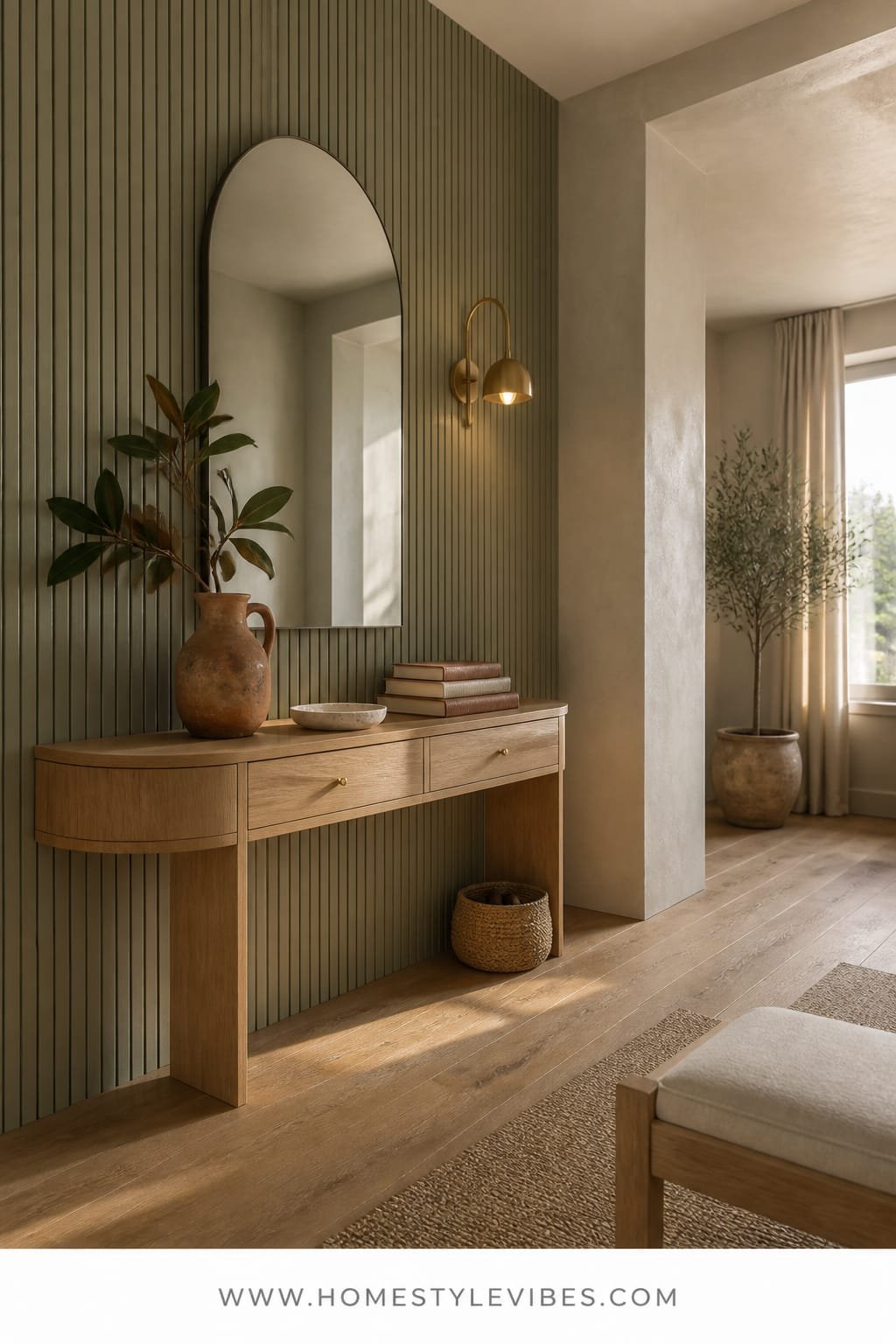
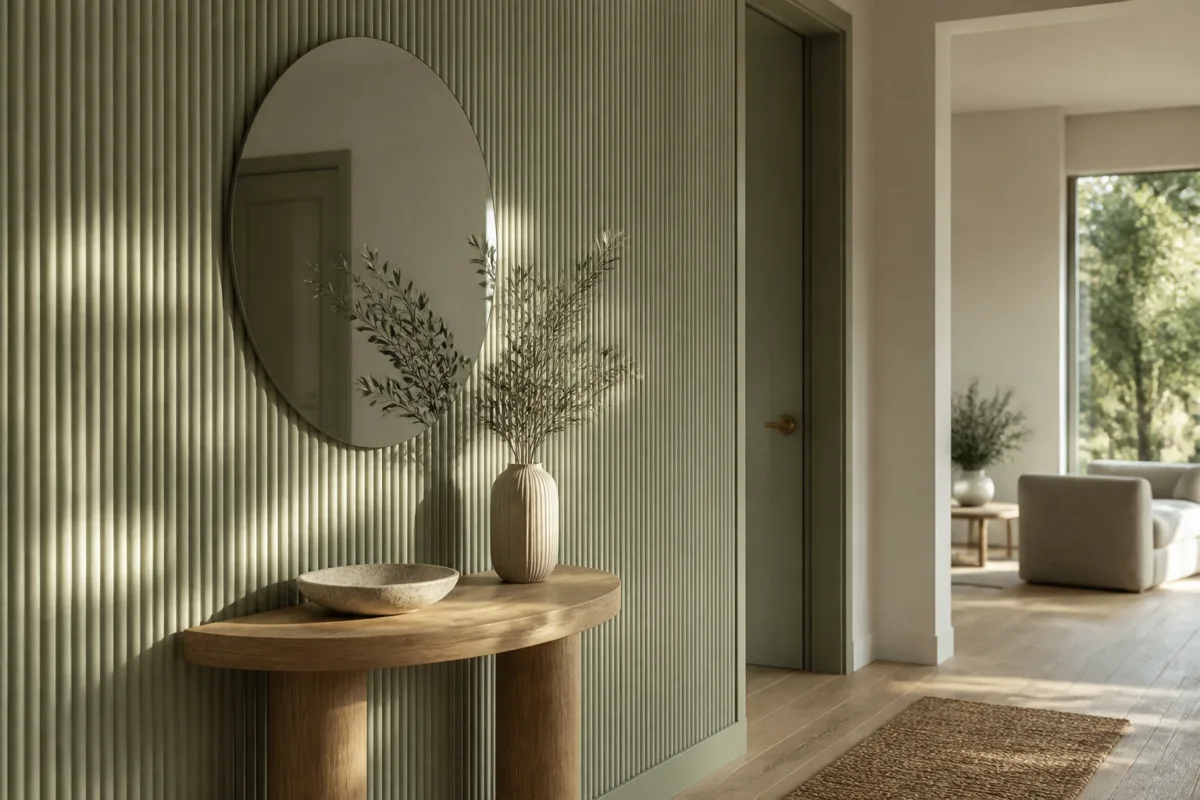
We’ve all had that entry that never feels “finished”—the place where bags land, keys vanish, and the first impression screams chaos. Here’s the fix: a fluted oak backdrop painted in a muted sage wash, designed to turn a drop zone into a quiet moment. The mood leans Nordic-warm meets Japandi-calm, so your shoes-and-mail corner finally matches the energy of the home you’re building beyond it.
This concept works in real homes because it prioritizes vertical texture (fluted panels) and one standout shape (a curved console) to bring softness to a tiny footprint. The fluting reads beautifully in photos, catching dappled daylight that sneaks in through side windows or a transom. Sage green here acts as a grounding neutral, not a “feature wall” screaming for attention. Small space? This is your ace—tall lines visually lift the ceiling, and the radius front of a curved console prevents hip bumps as you breeze past in a hurry.
Lighting matters more than you think at the front door. Replace the default drum shade that throws a weird shadow ring on the ceiling with a frosted globe or a ribbed glass semi-flush. That diffused glow spreads evenly across the oak, enhancing the wood grain and letting your sage green read earthy, not minty. This photographs like a dream because you’re stacking depth: fluting, curved furniture, a matte vase, and a single living branch with movement.
Variations? For renters, use peel-and-stick fluted-look panels and a slim, wall-mounted shelf instead of a console. On a tighter budget, paint only the lower third sage and add wood pegs above for storage. Want moodier? Shift the sage 2 steps deeper and add a bronze-framed mirror to punch up the contrast.
Budget Breakdown:
- Peel-and-stick fluted panels or MDF fluting: $120 – $450
- Sage paint (quality eggshell or matte): $40 – $75
- Curved console table (wood or stone-top): $250 – $1,200
- Ribbed glass semi-flush light: $90 – $300
- Oversized round mirror: $120 – $500
- Tray + catchall bowl + branch vase: $60 – $180
Total Estimated Cost: $680 – $2,705
Best For: Narrow entries or open foyers needing texture and softness. Ideal for busy households that want a stylish but functional landing zone.
Key Design Elements:
- Main materials: fluted oak or MDF, matte sage paint, ribbed glass
- Color palette: soft sage, warm oak, bone, bronze
- Lighting strategy: diffused overhead glow with reflective mirror bounce
- Furniture silhouettes: curved console with rounded corners
- Texture layers: fluting, matte ceramics, woven tray
- Accent details: key hooks, a single art print, leafy branch or olive clipping
How To Recreate This Look:
- Start with a clean backdrop: install fluted panels to chest height or full wall.
- Add a gentle sage wash or paint over the fluting; keep sheen low for a soft look.
- Layer a curved console and an oversized round mirror centered above.
- Install a ribbed glass semi-flush fixture for even light and a vintage nod.
- Style with a woven tray for mail, a ceramic bowl for keys, and a single tall branch for movement.
Why This Looks Expensive: The fluting delivers custom-millwork vibes, and the curved console reads bespoke. Pairing matte sage with warm wood feels designer because it nods to restraint: minimal palette, maximum texture.
Watch Out: Don’t push the console flush against the wall if your baseboards create a gap; shim the back legs so the piece sits parallel. Otherwise, it looks crooked in photos and in person.
Pro Styling Tip: Angle the mirror slightly to catch natural light and reflect the fluted detail—this builds depth in photos without adding clutter.
Scroll on—there’s a living room idea next that makes a sofa wall look intentional in under a weekend.
2. Linen-Wrapped Living Room With Soft North Light and a Deep-Seat Slipcovered Sofa
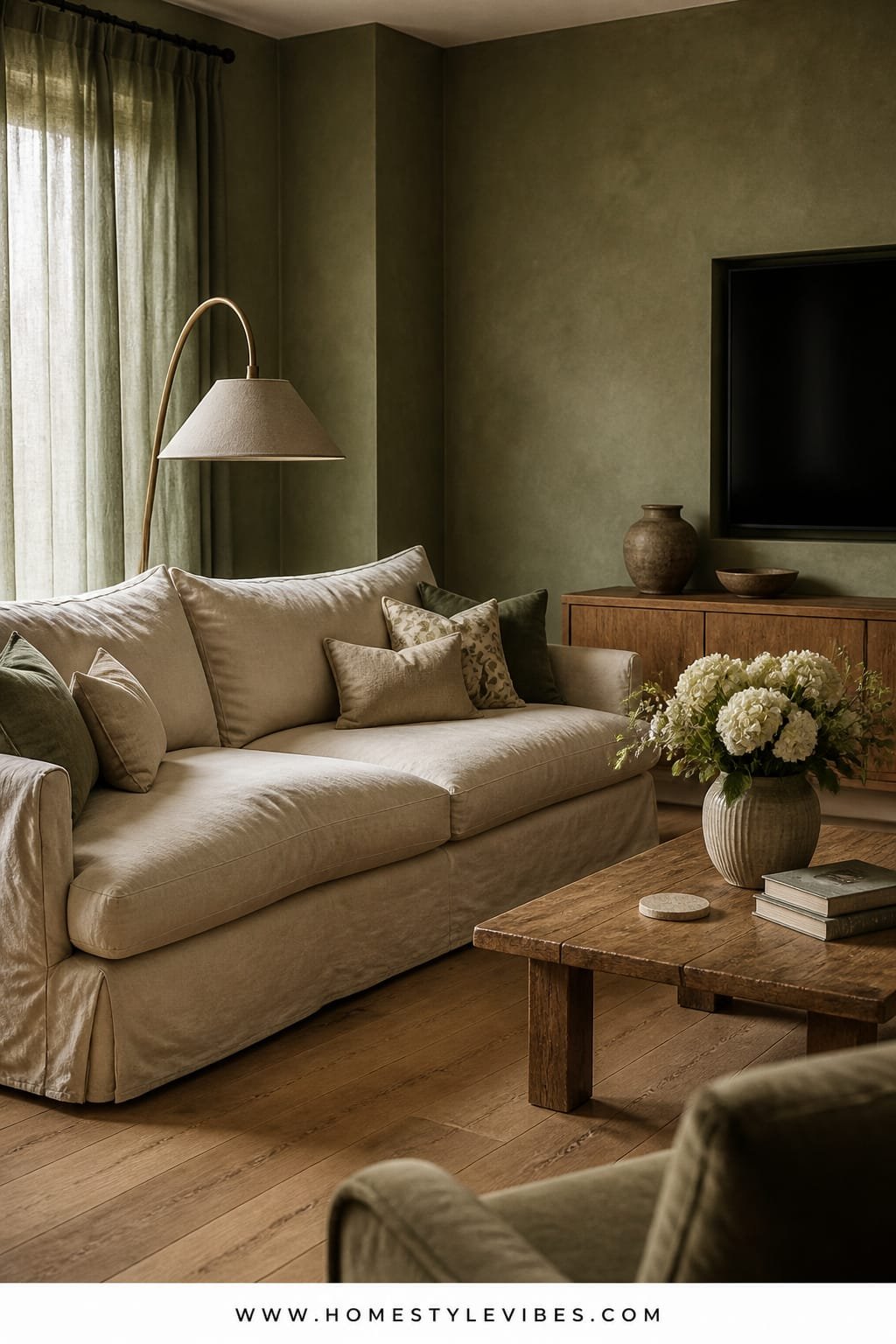
It’s that one corner that always feels off—the TV wall looks cluttered, the sofa reads heavy, and somehow the whole room feels busy and blah. A sage green linen-wrapped approach brings everything into focus. Think a mid-tone sage on the walls, a deep-seat slipcovered sofa in a warm bone, and linen curtains kissing the floor. Mood-wise, it’s coastal-calm without seashells, European countryside without the antique overload.
Here’s why this works: the slipcover’s relaxed texture pairs with sage to soften the energy of tech and hard lines. Linen diffuses north light like a gentle filter, turning cool daylight into something buttery. Small rooms benefit because the restrained palette creates flow, not visual noise. Family-friendly? Slipcovers wash. Also, a single art ledge behind the sofa makes rotating art and objects easy without punching 20 holes in your wall.
The photography magic comes from tonal layering: sage wall, bone sofa, stone coffee table, matte black lamp. It’s contrast by value, not color. And the texture reads even on a phone screen. Two variations: if your space is dark, glaze the sage with a hint of olive for more warmth and add sconces. If you rent, do a giant framed sage linen fabric panel instead of paint—it adds color and texture without breaking lease rules.
Budget Breakdown:
- Quality wall paint in sage: $60 – $110
- Slipcovered sofa (ready-made or custom): $900 – $3,500
- Linen curtains + brass rod: $180 – $650
- Stone or travertine coffee table: $350 – $1,800
- Art ledge + large-scale prints: $120 – $450
- Matte black floor lamp: $90 – $400
Total Estimated Cost: $1,700 – $6,910
Best For: Apartments or small living rooms that need calm texture and flexible styling. Great for households that need washable textiles and low-fuss upkeep.
Key Design Elements:
- Main materials: linen, painted plaster, stone
- Color palette: sage, bone, charcoal, soft sand
- Lighting strategy: diffuse drapery, floor lamp in a back corner for glow
- Furniture silhouettes: low, deep-seat sofa; drum or blocky stone table
- Texture layers: washed linen, coarse weave pillows, matte pottery
- Accent details: black metal lamp, subtle stripes on one pillow, olive stem
How To Recreate This Look:
- Start with paint: choose a mid-tone sage that doesn’t skew yellow under your lighting.
- Add a slipcovered sofa with a relaxed fit; opt for performance linen if kids or pets.
- Layer in full-length linen curtains mounted close to the ceiling to stretch height.
- Install a simple art ledge behind the sofa and curate 2-3 large prints with white mats.
- Style with a stone coffee table, matte ceramics, and one living plant to keep it fresh.
Why This Feels Designer: Restraint. One hero hue (sage), one hero texture (linen). The repetition of linen across curtains and sofa builds cohesion that looks custom and calm.
One Thing To Avoid: Short curtains. The 4-inch gap between rod and ceiling makes everything read cheaper. Hang your rod 2-4 inches from the ceiling line and let the fabric barely kiss the floor.
Pro Styling Tip: Layer pillows by texture, not just color—coarse linen + soft bouclé + a thin stripe adds instant magazine depth.
Pause for a second. If one idea resonates more than the others, that’s your starting point. You don’t need all seven to feel proud of your home—one well-executed concept can reset the entire vibe.
3. Honed Marble Kitchen Nook With Warm Task Lighting and a Spindle-Leg Bistro Table
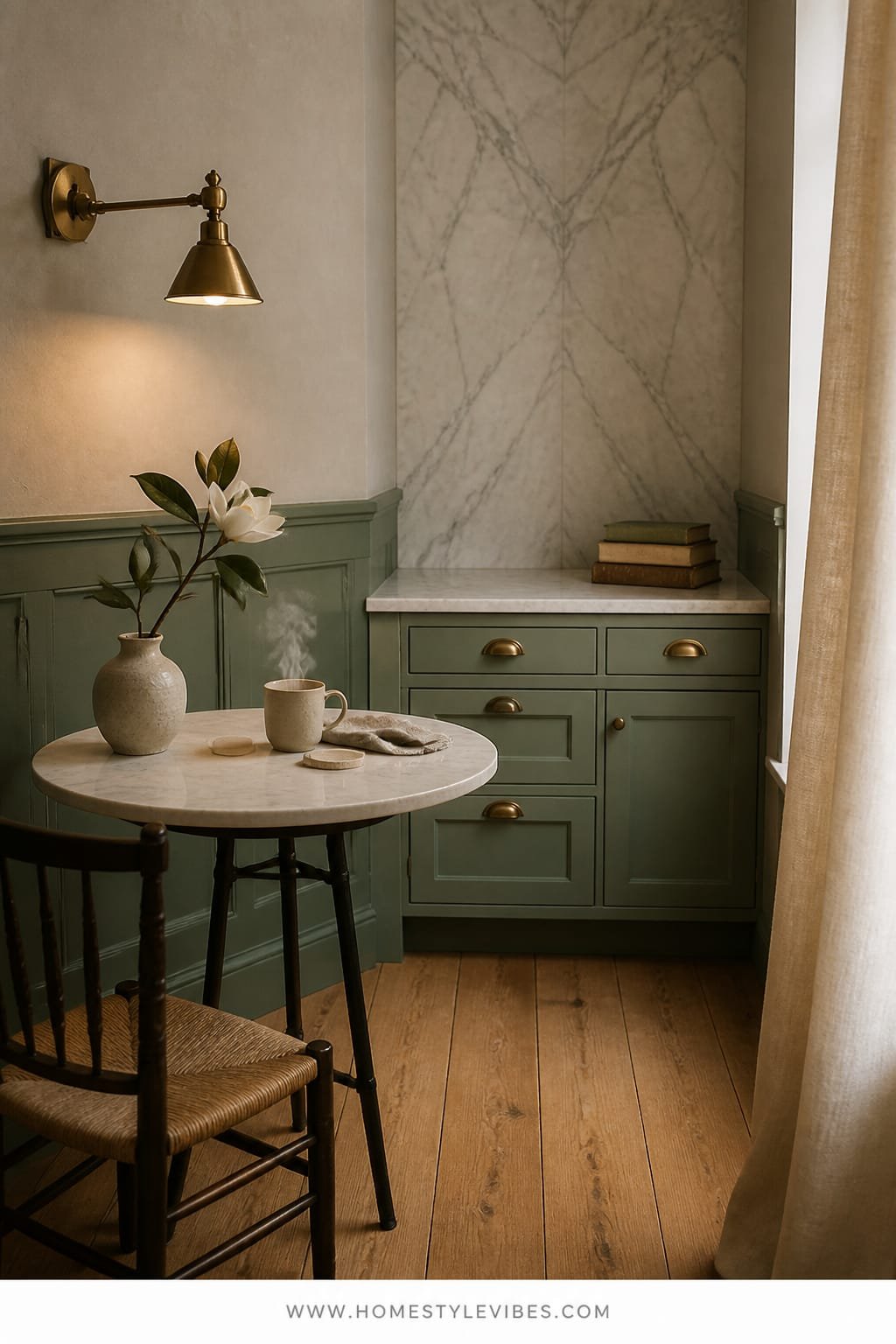
You’ve tried the cute breakfast nook. It still looks like a mismatched corner where stools go to die. A honed marble moment paired with sage cafe-style paint transforms that underused sliver into a calm ritual space. Mood: Paris-by-morning, cozy steam rising from your mug, soft radio in the background.
What makes this work in real homes is balance: sage millwork or wainscoting anchors the lower half of the wall, while a slim spindle-leg bistro table keeps things airy. Warm task lighting (think small shaded wall sconce or a mini pendant) cuts the dullness and flatness of overhead-only light. Honed marble, not polished, avoids glare and fingerprints—great for daily life and photos because it photographs velvety, not shiny-streaked.
Renter-friendly version: use a marble-look table and adhesive beadboard panels painted sage. Small-space tweak: swap chairs for a petite bench with storage underneath. Darker version: move the sage 3 tones deeper and use aged brass for the sconce to keep it cozy on gray days.
Budget Breakdown:
- Honed marble or marble-look bistro table: $220 – $900
- Beadboard/wainscoting + paint: $180 – $450
- Wall sconce or mini pendant: $80 – $350
- Two classic wood chairs or a storage bench: $160 – $600
- Small rug (jute/flatweave): $60 – $220
- Framed art print: $60 – $150
Total Estimated Cost: $760 – $2,670
Best For: Eat-in kitchens or awkward dining corners. Great for morning people or anyone needing a ritual zone that’s separate from work chaos.
Key Design Elements:
- Main materials: honed marble, beadboard, solid wood
- Color palette: earthy sage, cream, aged brass, inky black
- Lighting strategy: task-focused with dimmer for evenings
- Furniture silhouettes: spindle-leg table, shaker chair or basket-weave bench
- Texture layers: low-pile rug, linen napkins on a hook, ceramic sugar jar
- Accent details: petite vase, striped tea towel, understated art
Why This Reads High-End: Honed surfaces plus tailored millwork signal craftsmanship. The mini-scale statement light says “intentional,” not “builder basic.”
How To Recreate This Look:
- Start with beadboard or wainscoting at 36–42 inches and paint it a gentle sage.
- Add a honed marble or marble-look round table; keep diameter under 36 inches for small spaces.
- Install a dimmable sconce or mini pendant over the table for task glow.
- Bring in two classic chairs or a storage bench to stash linens and pet gear.
- Style with a small rug, a ceramic bowl of lemons, and one framed print to finish the moment.
The Most Common Mistake: Polished stone everywhere. It looks flashy in the store and chaotic under kitchen lights. Honed finishes photograph smoother and hide smudges.
Pro Styling Tip: Place the sconce or pendant slightly off-center relative to the table and balance it with a framed print on the opposite side—it reads lived-in and editorial.
4. Limewash Bedroom With Golden Hour Glow and a Low Upholstered Channel Headboard
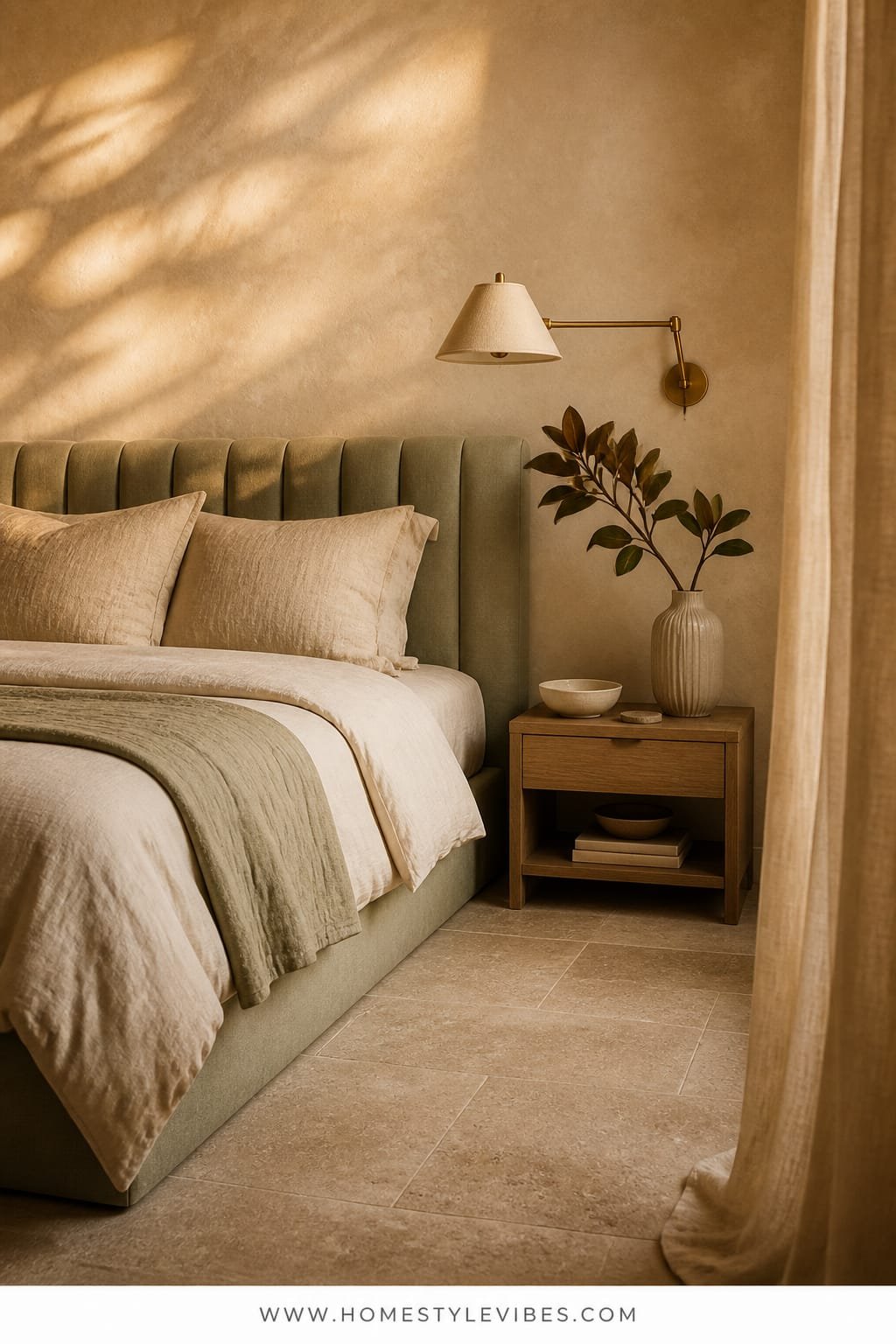
You want a hotel-spa bedroom that doesn’t feel cold, but your current setup is all angles and zero softness. A sage limewash wall treatment brings organic movement that instantly calms. Pair it with a low, channel-tufted headboard and layered bedding that breathes. The mood: modern Mediterranean with a serene, grown-up softness.
Why it works at home: limewash absorbs and reflects light unpredictably—in the best way. In golden hour it ripples; at night it cocoons. Low profiles keep sightlines clear, making small rooms look larger. Renter or not up for limewash? Use a sage textured wallpaper with a soft, clouded print or a DIY faux finish with a rag roller and diluted paint. For darker rooms, add a fabric-shaded sconce pair that throws warm pools of light onto the wall—this highlights the limewash movement and gives you that layered-hotel lighting effect.
Variations to try: If you prefer cooler tones, mix in stone-gray linen sheets with sage pillow shams. For a richer mood, choose a deeper, olive-sage and blackened bronze bedside lamps. On a strict budget, keep your existing bed frame and add a channel-tufted slipcover headboard cushion; it’ll change the silhouette without replacing furniture.
Budget Breakdown:
- Limewash kit or textured wallpaper: $120 – $600
- Channel-tufted headboard (low profile): $250 – $1,200
- Linen duvet + two shams: $150 – $450
- Fabric-shaded wall sconces (pair): $180 – $700
- Wool or jute area rug: $220 – $900
- Side tables with drawers: $160 – $600
Total Estimated Cost: $1,080 – $4,450
Best For: Primary and guest bedrooms that need softness and subtle movement. Perfect for light-sensitive sleepers who want dimmable, layered light.
Key Design Elements:
- Main materials: limewash plaster, linen, wool
- Color palette: sage, ecru, oat, blackened bronze
- Lighting strategy: bedside sconces + warm 2700K bulbs + low nightstand lamps if needed
- Furniture silhouettes: low headboard, clean-lined side tables, bench at foot
- Texture layers: channel tufting, washed linen, ribbed throw, nubby rug
- Accent details: softly framed landscape art, ceramic bedside tray, a single stem
How To Recreate This Look:
- Start with a sage limewash or textured wallpaper on the headboard wall.
- Add a low, channel-tufted headboard to maintain visual calm and open sightlines.
- Layer linen bedding in ecru and oat with a ribbed throw at the foot.
- Install fabric-shaded sconces at shoulder height for reading comfort and mood light.
- Style with a tray, a book stack, and one art piece with generous matting.
Why This Looks Intentional: Everything supports rest—no high-contrast chaos, just tonal shifts and softness. The channel headboard nods to custom upholstery without demanding attention.
Don’t Do This: Don’t cram nightstands that are too tall or deep. If you have to angle your lamp shade around a headboard corner, you’ll hate it and it’ll look awkward in photos.
Pro Styling Tip: Pull the bed 2–3 inches from the wall to cast a slim shadow line behind the headboard—micro-depth that reads luxe.
Remember, this isn’t about recreating a showroom. It’s about building a space that actually feels like yours. Start small, then layer over time—your eye will sharpen as your room settles in.
5. Zellige-Tiled Powder Room With Candlelit Warmth and a Rounded Pedestal Sink
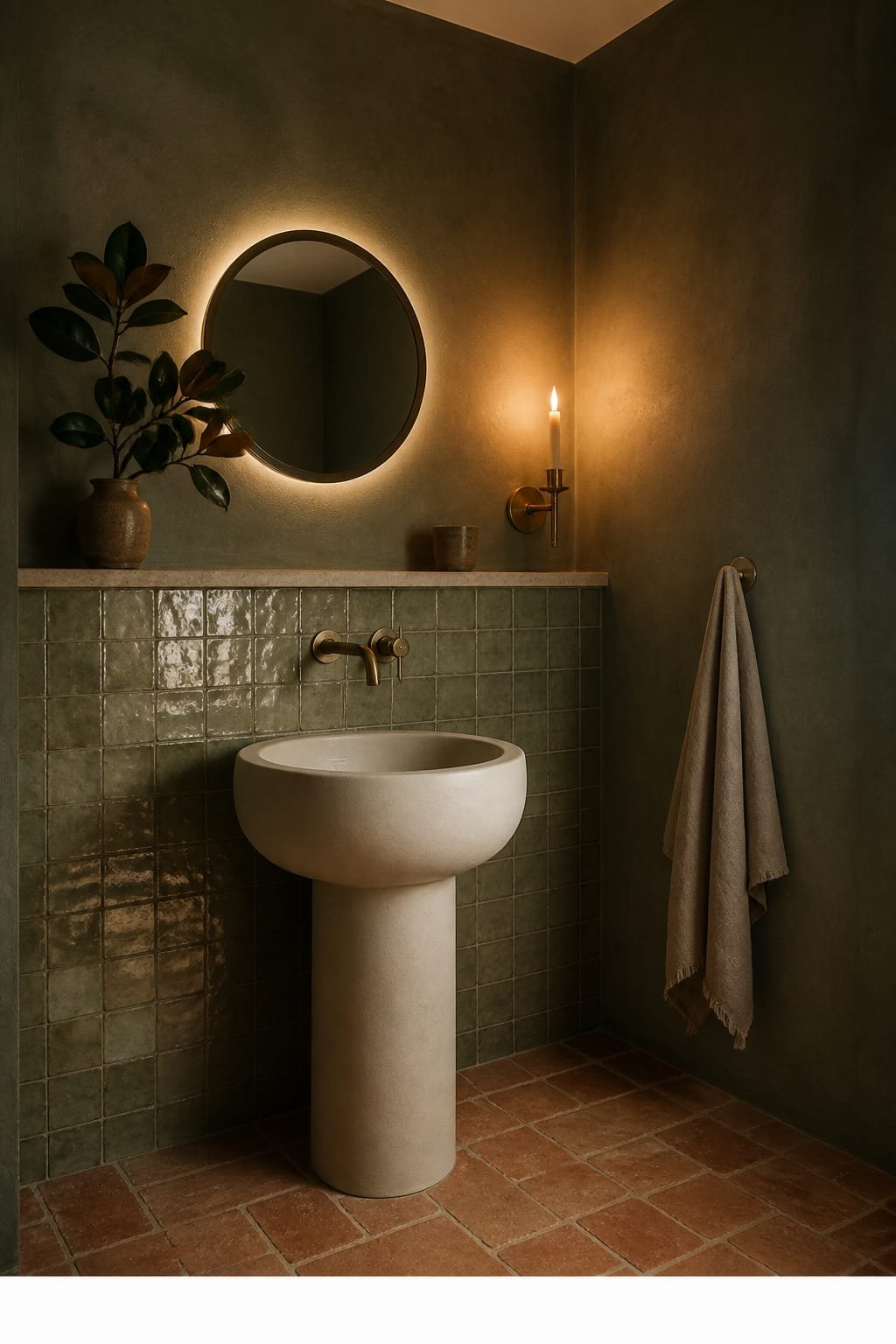
Small bathrooms can be the most stressful. You’ve added baskets, swapped towels, still not cute. A sage zellige-tiled half wall with a rounded pedestal sink is the kind of move that turns a pit stop into a secret jewel box. The vibe: moody, flicker-lit, spa-meets-cocktail-lounge.
Zellige’s uneven surface catches light in a way flat tile never will. In a powder room, that means shadows dance and highlights glint—amazing in candlelight or with a dimmable sconce. A rounded pedestal sink frees up floor space and kills that bulky-vanity look. Practicality? Absolutely—powder rooms see quick use, not storage marathons. Keep a recessed or slim medicine cabinet for essentials, and the rest is all mood.
Renter-friendly swap: paint walls sage and add a tall, arched mirror with a plug-in sconce. Budget version: use sage ceramic tile with a handmade look instead of true zellige. Darker take: choose a deeper olive zellige with unlacquered brass fixtures for patina drama.
Budget Breakdown:
- Zellige or handmade-look tile: $300 – $1,200
- Rounded pedestal sink: $180 – $650
- Wall-mounted faucet (or standard with exposed pipes): $140 – $600
- Arched mirror: $120 – $450
- Sconce pair + dimmer: $160 – $600
- Small accessories (tray, soap, candle): $40 – $120
Total Estimated Cost: $940 – $3,620
Best For: Tiny powder rooms or guest baths that need high-impact character with minimal footprint. Great for hosts who want a surprise moment.
Key Design Elements:
- Main materials: zellige tile, porcelain, brass
- Color palette: sage, cream, warm brass, charcoal grout
- Lighting strategy: sconces at eye level with dimmer; candles for hosting
- Furniture silhouettes: rounded pedestal sink, slim footed stool
- Texture layers: glossy irregular tile, matte wall above, linen hand towel
- Accent details: arched mirror, sculptural soap dish, tapered candle
Why This Looks Expensive: Glossy, irregular tile feels artisanal. The arched mirror and rounded sink stack soft shapes—an easy way to look custom without crazy plumbing tricks.
How To Recreate This Look:
- Start with a half wall of sage zellige or handmade-look tile; choose slightly darker grout for definition.
- Add a rounded pedestal sink to open the floor visually.
- Install arched mirror and warm-toned sconces on a dimmer for evening glow.
- Swap in a brass faucet and matching towel ring for warmth.
- Style with a linen hand towel, a stone tray, and a single candle for a flicker moment.
One Thing To Avoid: Overhead-only lighting. It throws harsh shadows and kills the magic. Powder rooms need eye-level light for faces and atmosphere.
Pro Styling Tip: Keep the vanity surface minimal—one tray, one candle, one small bud vase. Negative space is your luxury signal.
6. Concrete-Top Dining Room With Candlelight Sconces and a Live-Edge Farm Table
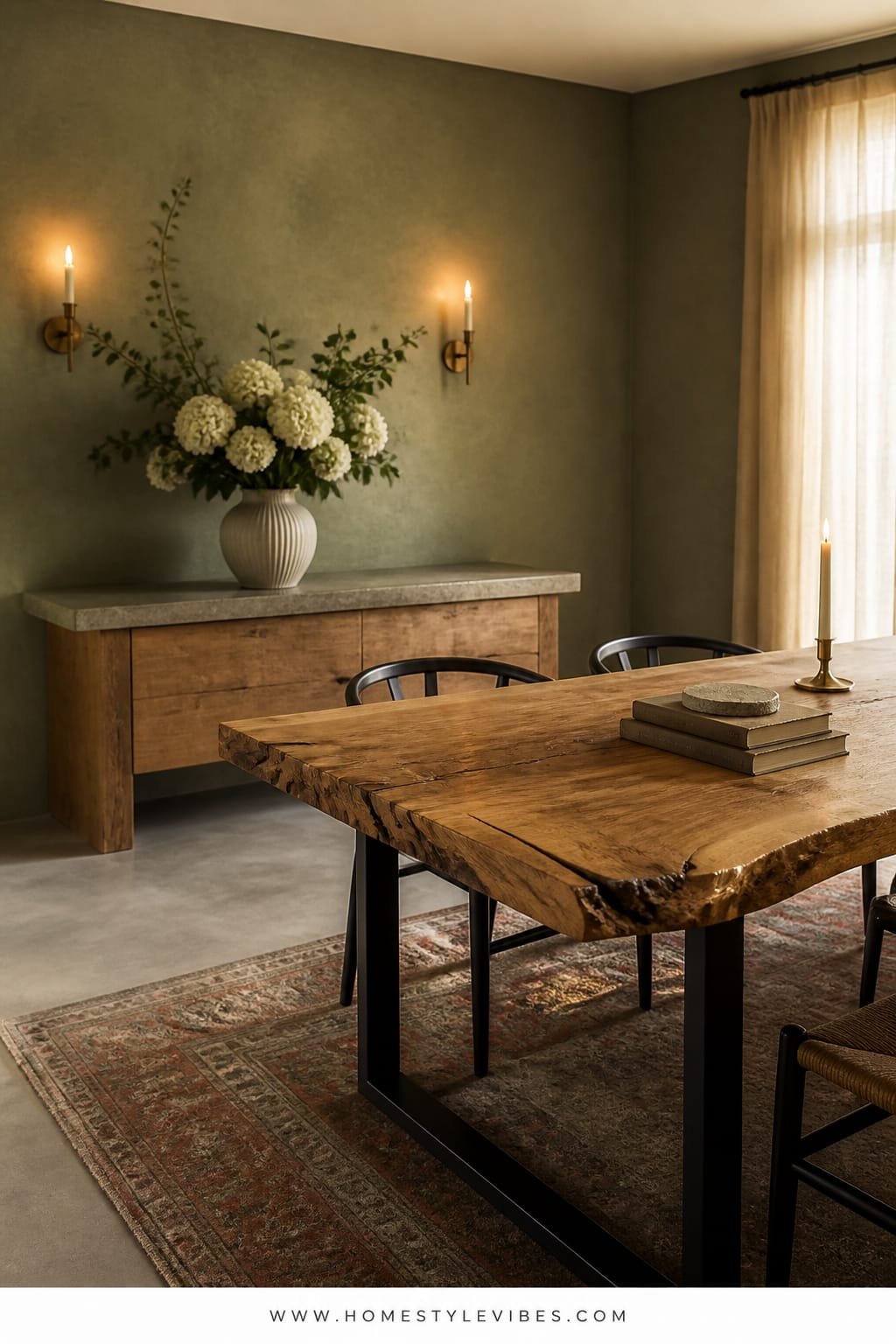
Dining rooms can feel stiff. You pull out the good plates twice a year and the rest of the time it’s a mail sorting station. A sage-painted envelope paired with a live-edge farm table and soft candlelight sconces turns the room into an everyday ritual space. The mood is warm farmhouse-meets-modern loft—substantial, yet casual.
Why this works: the live-edge table brings wild, organic movement. Sage on the walls softens its heft. Concrete accents—think a concrete-top sideboard or pedestal—ground the room without stealing the show. This setup appreciates wear; water rings on wood just add character, and a waxed concrete sideboard shrugs off real life. Photographs love this mix because the matte sage sets the stage while wood grain takes center.
Flexibility matters here. For small dining rooms, swap in a round pedestal table to keep sightlines open. For renters, paint only the lower third sage and add art above; it keeps resale-friendly white in play. On a budget, use a veneer live-edge lookalike—it still delivers the silhouette. Prefer moody? Choose deeper olive-sage and smoke the mirror above the sideboard.
Budget Breakdown:
- Live-edge dining table or veneer version: $600 – $3,500
- Dining chairs (set of 4–6): $300 – $1,800
- Sage paint for walls: $60 – $120
- Candlelight sconces or plug-in version (pair): $160 – $700
- Concrete-top sideboard or console: $350 – $1,600
- Wool or jute rug (8×10): $280 – $1,000
Total Estimated Cost: $1,750 – $8,720
Best For: Medium to large dining rooms that need warmth and daily usability. Great for households that host often and want effortless mood-set lighting.
Key Design Elements:
- Main materials: live-edge wood, concrete, wool
- Color palette: sage, natural oak/walnut, charcoal, smoked glass
- Lighting strategy: dimmable sconces at shoulder height; overhead light on a dimmer
- Furniture silhouettes: substantial table, open-back chairs, low sideboard
- Texture layers: wool rug, matte ceramic centerpiece, linen runners
- Accent details: iron candlesticks, smoked glassware, branch arrangement
How To Recreate This Look:
- Start by painting the walls in a mid-depth sage; keep baseboards crisp white for pop.
- Add a live-edge or live-edge-look table as the anchor.
- Install plug-in candlelight sconces for instant charm and dim for dinner.
- Bring in a concrete-top sideboard for storage and weight.
- Style with a long linen runner, iron candlesticks, and a branch-filled vessel.
Why This Feels Designer: It’s the cocktail of surfaces—organic edge, cool concrete, soft wool. The room looks curated because you’ve varied materials while keeping the palette restrained.
Watch Out: Chairs that are too visually heavy. If the table is thick and the chairs are chunky, the room reads crowded. Go for open-back or slim-profile chairs to balance mass.
Pro Styling Tip: Set three unscented candles in staggered heights, then add one low bowl of fruit—the simple, edible centerpiece always photographs beautifully.
Quick mindset reset: If your home is mid-renovation chaos, pick one zone to finish fully. Living with one polished corner does more for your sanity than five half-done projects.
7. Rattan-Lined Sunroom With Morning Light and a Tufted Sage Daybed
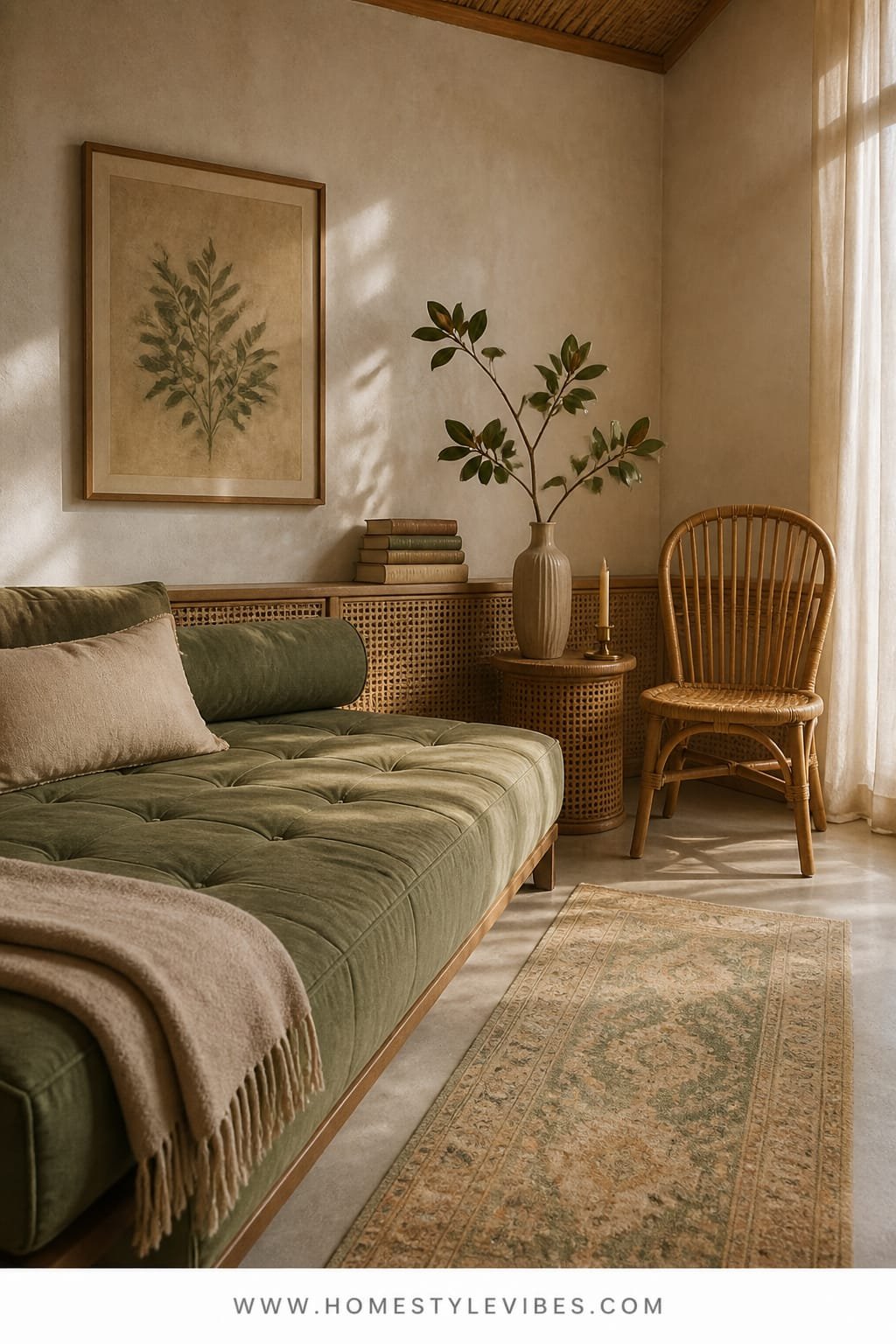
I know the sunroom struggle personally. Mine started as a plant graveyard and ended up as a sanctuary after one weekend pivot. The fix was simple: rattan texture to warm the space, a tufted sage daybed to invite naps, and a strict palette rule to keep the room from turning into a garage sale of orphan furniture. Mood-wise, think airy conservatory meets slow-Sunday reading nook.
Why it works for real life: sunrooms get bright, hot, and dusty. Rattan and performance fabrics handle that without begging for maintenance. A tufted daybed gives you seating and lounging without the formality of a sofa. Zone it with a flatweave rug so the room reads as a destination, not a hallway. Photography-wise, rattan’s woven shadows play beautifully in morning light, and the daybed’s tufting gives enough detail to read luxe on camera.
Small-space tweak: choose a slimmer chaise instead of a full daybed. Renter-friendly: add rattan through a folding screen and storage baskets if you can’t change furniture. Darker version: pair deeper sage cushions with black window trim for high contrast against all that light.
Budget Breakdown:
- Tufted daybed or chaise in performance fabric: $450 – $1,800
- Rattan lounge chair or folding screen: $160 – $700
- Flatweave rug (natural or stripe): $120 – $600
- Side table (stone or wood): $90 – $450
- Sheer linen or voile curtains: $120 – $450
- Planters + hardy plants (olive, rubber tree, pothos): $60 – $250
Total Estimated Cost: $1,000 – $4,250
Best For: Sunrooms, enclosed porches, or bright corners craving a lounge zone. Ideal for readers, nap-takers, or anyone craving a quiet phone-free space.
Key Design Elements:
- Main materials: rattan, performance upholstery, stone/wood side table
- Color palette: sage, natural straw, chalky white, muted black
- Lighting strategy: morning light filtered with sheers; floor lamp for evening
- Furniture silhouettes: low tufted daybed, airy rattan chair, petite table
- Texture layers: woven baskets, linen curtains, ceramic planters
- Accent details: striped lumbar pillow, soft throw, leafy greenery
Why This Looks Expensive: Cohesion. The repeated straw tone of rattan + soft sage upholstery keeps the scene quiet and considered. The daybed’s tufting whispers custom upholstery without the invoice.
How To Recreate This Look:
- Start with a flatweave rug to define the zone and reduce echo.
- Add a tufted sage daybed positioned to catch morning light.
- Layer in a rattan chair or folding screen to repeat the woven texture.
- Install sheer curtains to soften glare while keeping the view.
- Style with two planters (one tall, one tabletop), a striped lumbar, and a stone side table.
The Most Common Mistake: Too many mismatched plant pots. Keep to two materials—ceramic and woven—to avoid a chaotic greenhouse look.
Pro Styling Tip: Photograph in the morning and angle the rattan so the weave casts diagonal shadows—the subtle pattern reads editorial instantly.
Here’s a small truth from my own home: I once obsessively sampled seven sage paints for our living room and hated all of them—until I swapped a cool LED bulb for a 2700K warm bulb. Instantly perfect. The secret isn’t always the paint; it’s often your lighting.
Quick Checklist
- Choose a sage with undertones that match your light (test morning, noon, night)
- Repeat one texture at least twice (linen, rattan, fluted wood)
- Use dimmers to avoid harsh overhead-only lighting
- Anchor each room with one statement shape (curved console, channel headboard, live-edge table)
- Keep hardware and metals consistent within a room
- Add one living element (branch, plant, fresh herbs)
- Balance matte and gloss finishes for depth
- Mount curtains high and let them kiss the floor
- Stick to 3–4 main colors max per room
- Leave negative space on surfaces for a calm read
Frequently Asked Questions
How do I pick the right sage green for a room that feels dark?
Choose a sage with warm undertones (a hint of yellow or brown) and pair it with 2700K bulbs. Test large swatches on two walls and decide at night—the time you use the room most. Add warm metals and wood to prevent the color from reading cold.
What if my budget is tight—where should I spend first?
Prioritize lighting and one statement piece. A good dimmable sconce or pendant and a single hero item (curved console, tufted headboard, or live-edge table) will make the biggest visual difference. Style the rest with affordable textiles and simple ceramics.
I live in a rental. Can I get the sage look without painting?
Yes. Use large-scale art or fabric-wrapped panels in sage, peel-and-stick fluted strips, and sage textiles like curtains or a slipcover. Plug-in sconces and leaning mirrors also add the mood without a single screw hole.
Will sage green date quickly or hurt resale?
Sage acts like a neutral when paired with natural materials. Keep it mid-tone and pair with classic textures (linen, wood, stone). For resale, you can always revert walls to a soft white in a day, while the updated lighting and millwork still add value.
How do I prevent a room from feeling too matchy with sage?
Vary texture and depth: combine matte walls with glazed tile, nubby textiles, and one dark accent like blackened bronze. Keep sage as the thread, not the whole outfit—anchor with natural wood or stone for balance.
Conclusion
Pick one idea that tugged at you and start there. Maybe it’s the fluted oak entry you’ll knock out this weekend, or the limewash bedroom that finally lets you sleep deeper. Sage green doesn’t demand attention; it invites it—quietly, confidently—when you pair it with texture, light, and a single statement shape.
The truth is, luxury isn’t a brand label. It’s the feel of linen under palm, the way warm bulbs graze a textured wall, and the discipline to stop styling before the room gets noisy. Start small. Keep your palette tight. Let materials do the talking.
You’re closer than you think. Swap the bulb, hang the curtains high, try the sage you loved at 8 p.m., and watch your rooms soften. Calm and beautiful isn’t a fantasy—it’s a few good choices repeated well. And you’ve got this, seriously.

About the Author

Krisztina P.Rendes, Founder of Home Style Vibes
Founder of Home Style Vibes
Krisztina Puskásné Rendes created Home Style Vibes as a cozy-modern lifestyle space where homemaking meets inspiration. Her goal is to help women create beautiful, organized, and peaceful homes they truly love — without overwhelm. You’ll find here heart-driven content on home decor, cleaning tips, easy family recipes, organization and decluttering, DIY home projects, plants, and seasonal ideas — all designed to bring more calm, comfort, and style into everyday life.