7 Best Rugs for Living Room That Make Your Space Look Instantly Designer Now Today
You want that “designer living room” feeling—glossy light, layered textures, a rug that grounds the room like a gallery floor. But finding the right living room rug is… maddening. You’ve tried guessing sizes, juggling patterns, or buying whatever ships fast, and the room still feels unfinished. This guide solves that. Seven distinct rug-and-room concepts that fix the exact frustrations you keep bumping into, from awkward layouts to kid chaos to low light—each one photogenic, Pinterest-worthy, and doable within a weekend. Consider this your shortcut to a living room that finally looks pulled together, with options under $800 total if you’re strategic.
Expect practical details: color palettes that actually flatter your sofa, fiber choices that survive your friends’ red wine, and styling moves that make your rug read custom. If you’re drawn to rooms that look soft, lit from within, and expensive in a quiet way, you’re in the right place. Ready to find the best rug for the living room you actually live in?
1. Low-Contrast Luxe With a Hand-Knotted Wool Ground
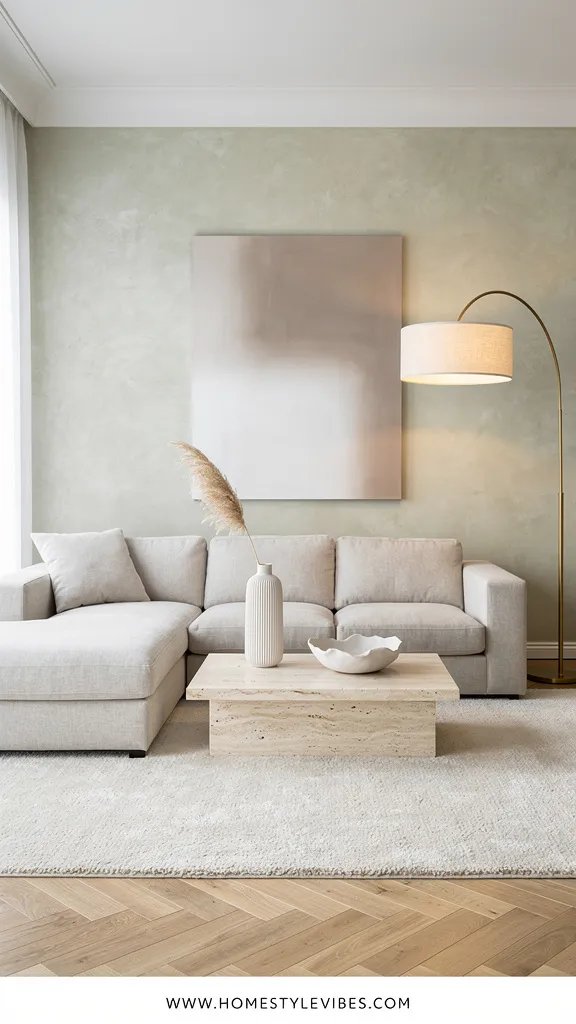
We’ve all been there: your sofa’s beautiful, your coffee table is sharp, but the room still feels like floating furniture in a big blank box. The secret struggle? Too much contrast and not enough nuance. This concept leans into a low-contrast, tonal wool rug that melts into your palette and makes the entire space read cohesive and calm—think hotel-lobby serenity without the stuffiness. It suits homes where you crave a soft-drift look: muted creams, pale stone, warm sand, and a glow that looks incredible under evening lamps.
Why it works in real homes: hand-knotted or tightly woven wool naturally resists stains, bounces back from dents, and hides everyday dust thanks to subtle variegation. It photographs beautifully because the pile absorbs light, creating depth and shadow—no shiny glare. In small spaces, a pale, near-solid rug expands the floor visually. In busy households, the gentle patterning (abrash, heathering, subtle Moroccan diamonds) masks the life you actually live.
Lighting tips: pair this with warm table lamps and layered perimeter lighting. Avoid overly cool bulbs that make the rug look gray and dead. If your living room runs dark, this is your best rug for the living room because it brings quiet brightness without screaming “white.”
Variations: If you’re on a tighter budget, choose a power-loomed wool blend with low pile and a hand-finished fringe. For renters, opt for an 8×10 to maximize floor coverage over questionable flooring. For pets and kids, look for cut-and-loop patterning that distracts from crumbs and paw prints. For darker rooms, pick a warm oat rather than icy beige.
Budget Breakdown:
- Hand-knotted wool rug (8×10): $900–$2,200
- Power-loomed wool blend (8×10): $350–$700
- Rug pad (thick felt + rubber): $80–$180
- Warm LED bulbs (2700K–3000K): $20–$60
- Linen or boucle pillows to reinforce palette: $40–$160
Total Estimated Cost: $490 – $2,600
Best For: Sofas in neutral upholstery, light-deprived rooms, open-plan layouts that need a soft anchor. Ideal if you want a soothing, sophisticated vibe that doesn’t feel precious.
Key Design Elements:
- Main materials: hand-knotted wool, felted rug pad, linen, oak or ash wood
- Color palette: oat, stone, cream, soft camel, with black accents
- Lighting strategy: layered lamps and wall lights; avoid overhead-only
- Furniture silhouettes: low, tailored sofas; rounded coffee table for softness
- Texture layers: boucle, linen, ceramic glazes, matte wood
- Accent details: thin black frames, ceramic table lamps, single leafy branch
How To Recreate This Look:
- Start with the largest neutral rug your room can handle (typically 8×10 or 9×12) so all front legs of seating land on it.
- Add a thick felt + rubber pad to create plushness and prevent slippage.
- Layer your sofa in complementary neutrals—two shades deeper or lighter than the rug.
- Install warm bulbs and add at least two lamps opposite each other for balance.
- Style with a rounded coffee table and soft-toned ceramics to keep the room gentle.
Why This Looks Expensive: Tonal layering telegraphs restraint and confidence. The hand-knotted variation creates micro-shadows that read custom in photos. Nothing is shouting; everything is whispering the same beautiful sentence.
Watch Out: Don’t go too white. Stark white reads sterile and highlights every crumb. Aim for oat, almond, or flax with subtle marbling.
Pro Styling Tip: Shoot during golden hour with lamps on; the pile will catch the light softly and the room will feel dipped in honey.
2. High-Contrast Graphic Flatweave With Sculptural Seating
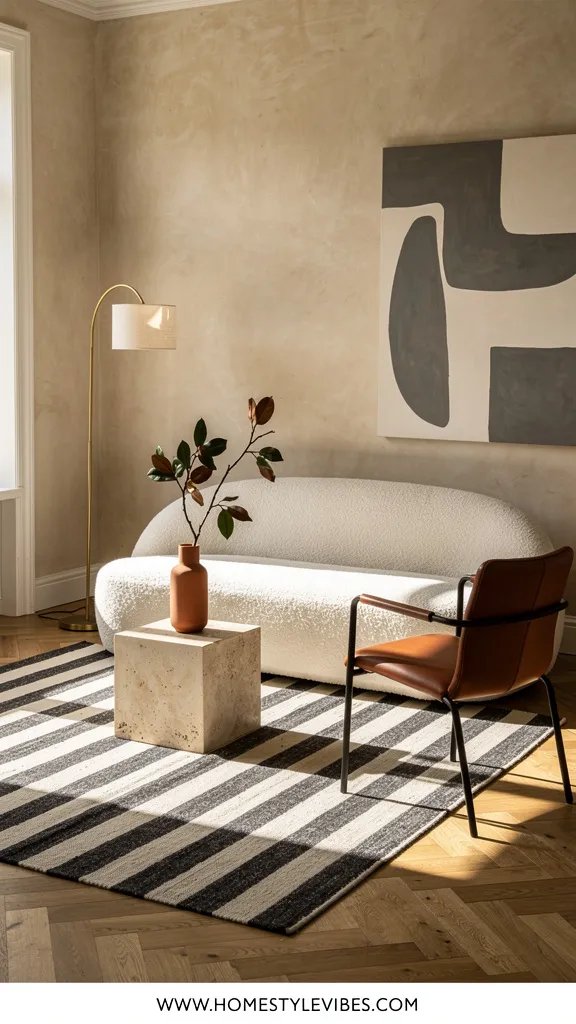
It’s that one corner that always feels off: you’ve got a colorful pillow, a cool chair, and yet the room looks timid. You’ve tried pattern—but in tiny doses—and it still reads “starter apartment.” Enter a bold, high-contrast flatweave (think cream and charcoal stripes, checkerboard, or herringbone). This style injects confidence and graphic clarity, especially in modern or eclectic rooms. The mood: editorial, a little Parisian, strong lines, softened by natural textures.
Why it works in real homes: flatweaves are durable, reversible, and lower pile so chairs glide easily—a win for dining-adjacent living spaces or rooms with rolling carts. Photographically, the hard-edged pattern gives your camera something to “bite” on. It defines zones instantly, and the crisp geometry makes your sofa look intentional rather than plopped.
Lighting notes: high-contrast rugs love daylight. If your room lacks it, try a high CRI bulb to keep blacks rich and creams warm, not dingy. A sleek floor lamp throws a great diagonal shadow across a striped rug—glorious in photos.
Variations: On a budget, choose cotton or jute-cotton blends. For small rooms, pick a narrow stripe to elongate. For a softer take, swap the black for forest green. Renter-friendly? Choose a 5×8 checkerboard under a small seating group and layer a sisal beneath to scale up when you move.
Key Design Elements:
- Main materials: wool-cotton flatweave, blackened metal, oak, linen
- Color palette: cream, charcoal/black, warm wood, olive or rust accents
- Lighting strategy: slim floor lamp + one table lamp to cut the shadows diagonally
- Furniture silhouettes: sculptural chairs, waterfall coffee table, tight-back sofa
- Texture layers: nubby linen, matte metals, smoked glass
- Accent details: graphic art, single bold vase, stack of hardcovers
Budget Breakdown:
- Wool-cotton flatweave (8×10): $250–$700
- Jute-cotton blend (8×10): $160–$350
- Low-profile rug pad: $40–$110
- Floor lamp (sculptural): $120–$350
- Sculptural accent chair: $180–$600
Total Estimated Cost: $560 – $2,110
Best For: Modern, eclectic, or artsy spaces that need structure. Great in apartments where the living room shares space with the dining table.
How To Recreate This Look:
- Start with a striped or checkerboard flatweave that contrasts your sofa.
- Add a slim floor lamp that directs light at an angle across the rug.
- Layer a single bold accent color in pillows or art to avoid chaos.
- Install a low-profile pad to keep edges crisp and doors clearing.
- Style with a sculptural chair and one strong coffee table shape—avoid busy legs.
Why This Feels Designer: Strong geometry signals intention. Pairing it with only one or two statement forms (not five) shows discipline. The negative space becomes part of the composition.
One Thing To Avoid: Don’t mix three competing patterns. Graphic rug + one patterned pillow is fine; three patterns read noisy and dilute the effect.
Pro Styling Tip: Photograph from a slightly elevated angle so the pattern compresses; you’ll get clean, magazine-like lines.
Keep scrolling—next up is the cozy rug that forgives everything you drop on it and still looks chic.
3. Textured Jute-Sisal Blend With Cloudy Sheepskin Layer
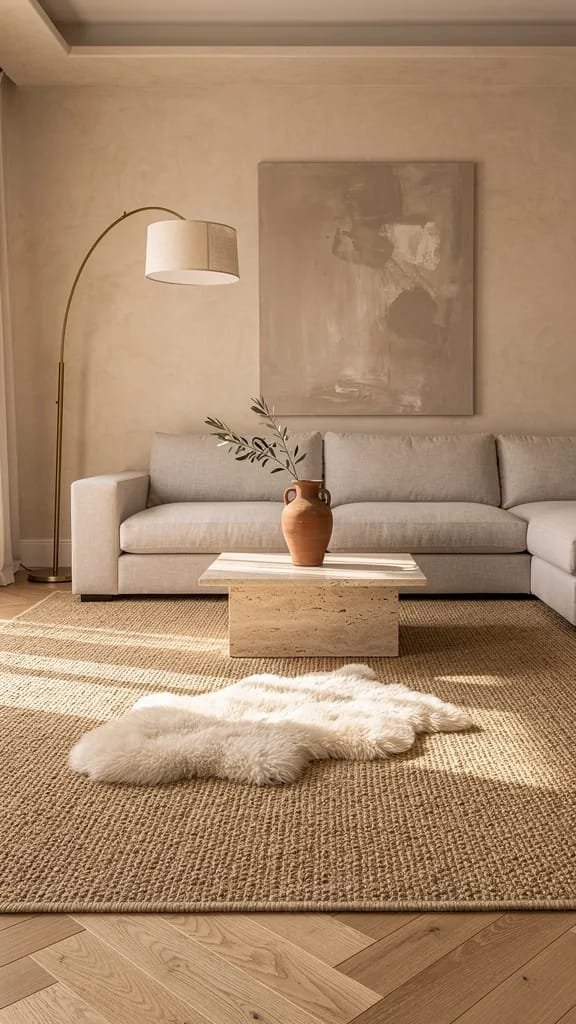
You want cozy. You also want clean lines and a grown-up vibe. The catch? Plush rugs can look shaggy after a few months, and all-jute can feel scratchy. This design blends a tight jute-sisal base (earthy, durable, structured) with a smaller cloudlike sheepskin or faux-sheepskin layer. It creates a modern Mediterranean-meets-Scandi living room that feels beachy but not boho, minimal but not cold.
Why it works in real life: high-traffic zones love sisal blends because they don’t flatten instantly. Add a plush topper under the coffee table or by the sofa for bare-foot comfort. It photographs beautifully because you get contrast—matte woven base + fluffy highlights. That layered texture creates depth and a subtle “glow” around furniture legs. If you’re nervous about stains, the jute-sisal mask is your best friend.
Lighting: natural light makes the weave sparkle softly; at night, a rattan or linen drum shade spreads gentle, diffused light that plays well with the textures. If your room leans dark, choose a lighter jute hue (wheat, barley) and a creamy faux-sheepskin rather than stark white.
Variations: Budget version uses a jute-cotton rug plus an IKEA sheepskin. Small-space version layers a 5×7 plush over a 6×9 jute to create zones. Darker version? Pick a tobacco or espresso jute with a camel faux-sheepskin—very moody, very “wine-at-9pm.”
Key Design Elements:
- Main materials: jute-sisal blend, faux or real sheepskin, white oak, plaster or limewash
- Color palette: wheat, ivory, camel, soft gray
- Lighting strategy: linen drum shade + table lamp with parchment shade
- Furniture silhouettes: slipcovered sofa, rounded-edge wood table, woven bench
- Texture layers: leather tray, matte pottery, wool throws
- Accent details: olive tree, low stack of natural books, woven coasters
Budget Breakdown:
- Jute-sisal rug (8×10): $180–$600
- Faux sheepskin (2×3 or 4×6): $25–$120
- Rug pad: $40–$110
- Linen drum pendant: $80–$300
- Throw pillows (wool or cotton): $30–$120
Total Estimated Cost: $355 – $1,250
Best For: Family-friendly rooms, rentals, and anyone who loves beachy, tactile comfort with minimal upkeep.
How To Recreate This Look:
- Start with a neutral jute-sisal that covers at least the front legs of all seating.
- Add a faux-sheepskin underneath the coffee table or by the main sofa seat.
- Layer linen pillows and a chunky wool throw in similar tones.
- Install a linen drum shade or floor lamp with a fabric shade to diffuse light.
- Style with a white oak tray, two ceramics, and a branch—keep it edited.
Why This Reads High-End: Layering textures within the same color family tells a story of intention. The soft-on-structured pairing feels curated, not random.
The Most Common Mistake: Skipping the pad. Without it, jute slips and ripples, and the layered sheepskin won’t sit right. A pad makes the entire composition behave.
Pro Styling Tip: Angle the sheepskin slightly to break up straight lines; it adds life to photographs and softens rigid furniture geometry.
4. Vintage Persian With Moody Walls and Brass Light
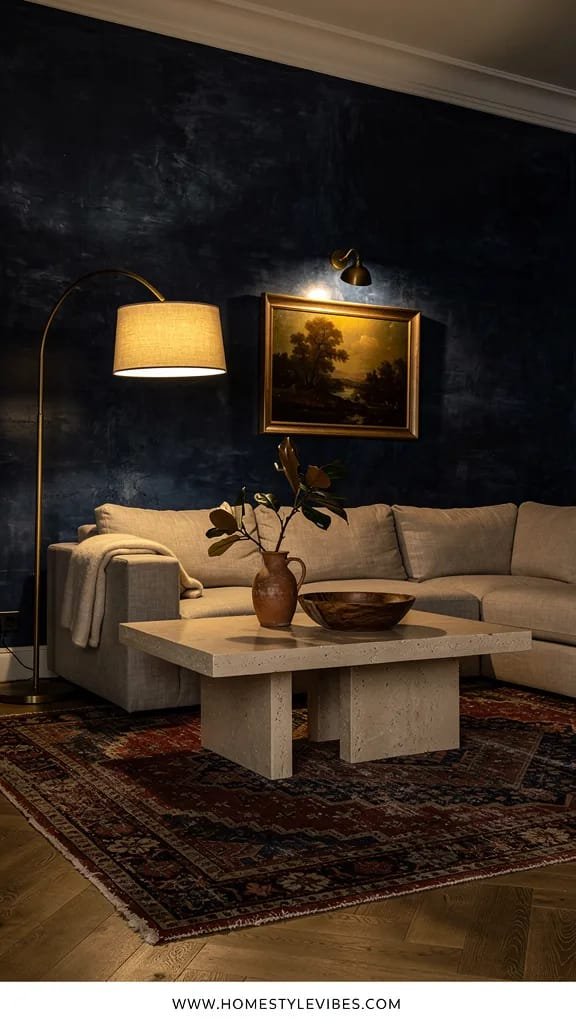
You’ve tried colorful rugs before, but they felt loud and juvenile. The fix isn’t less color; it’s older, deeper color. A vintage or vintage-wash Persian rug brings soul, history, and that “collected” feeling you keep pinning. Pair it with moody walls—inky blue, olive, or chocolate—and warm brass or aged bronze lighting. The vibe is library-salon-meets-modern sofa, perfect for late-night conversations and candlelight.
Real home benefits: many vintage rugs hide stains astonishingly well thanks to complex patterns and wool that’s already lived a life. They also handle pets better than you’d think because the low, tight pile resists snagging. Photographs love them: the abrash (natural tone variation) creates painterly richness that reads like a backdrop for every object in the room.
Lighting changes everything here. A brass pharmacy lamp or shaded sconces will pull gold out of the rug’s pattern and bounce warmth up the walls. Avoid cool LED strips that flatten the magic. If you prefer daylight, sheer curtains with a barely-there oatmeal tone soften glare without muting the rug.
Variations: On a budget, choose a power-loomed vintage-look rug with desaturated reds and blues. For small spaces, pick a rug with a border to visually contain the seating area. If you’re nervous about full moody walls, paint just the lower half or try a deep-toned limewash for movement.
Key Design Elements:
- Main materials: wool Persian or vintage-look rug, brass, walnut, velvet or heavy linen
- Color palette: oxblood, indigo, olive, camel, antique gold
- Lighting strategy: shaded sconces, brass floor lamp, candles
- Furniture silhouettes: bench-seat sofa, English roll arm or tight-back, marble side table
- Texture layers: velvet cushion, burnished leather, patinated metal
- Accent details: art with gilt frames, textured pottery, aged books
Budget Breakdown:
- Authentic vintage Persian (8×10): $1,200–$4,500
- Vintage-look power-loomed (8×10): $250–$700
- Rug pad: $60–$150
- Brass pharmacy lamp: $120–$420
- Paint or limewash: $60–$240
Total Estimated Cost: $490 – $5,460
Best For: Evening entertainers, book lovers, north-facing rooms that crave warmth. Also ideal if your sofa is neutral and you want personality without trendy throwaway pieces.
How To Recreate This Look:
- Start with a vintage or vintage-look rug that includes at least one color from your sofa or curtains.
- Add a brass floor lamp and dimmable bulbs around 2700K.
- Layer velvet or heavy linen pillows in two tones from the rug.
- Install deeper wall color or hang one large moody artwork to anchor.
- Style with mixed metals and a small stack of vintage books for patina.
Why This Looks Intentional: Repeating colors from the rug in two other places (pillows, art, books) ties everything together like a designer would. The lamp metals echo the rug’s warmth, not fight it.
Don’t Do This: Don’t pair a highly saturated Persian with high-gloss cool white walls and blue daylight bulbs. It will look harsh and mismatched—like the rug is yelling at the room.
Pro Styling Tip: Photograph with one light source on and others off; the directional glow creates dramatic shadows that flatter a patterned rug.
Halfway there and your living room is already looking more considered. Next: the performance rug I trust with wine, toddlers, and that friend who always wears shoes inside.
5. Performance-Woven Neutrals With Architectural Coffee Table
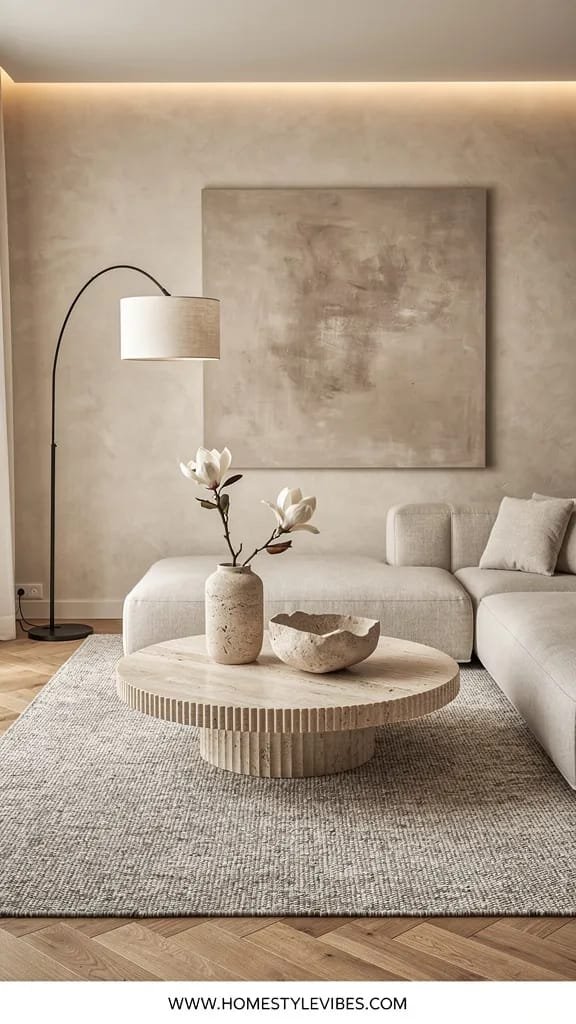
Let’s be honest: life is messy. I once watched a glass of cabernet somersault off a tray and land like a small meteor field on my living room rug. Performance-woven rugs (polypropylene, PET, or solution-dyed acrylic) saved my sanity. This concept uses a subtle, salt-and-pepper neutral rug with visible weave texture and pairs it with a bold, architectural coffee table—think fluted edge, double-tier, or stone cube—to keep the look elevated while still practical.
Why it works in real homes: these rugs clean easily, resist fading, and don’t absorb odors the way some natural fibers can. They shine in family rooms, dog-friendly zones, and rentals. The texture reads higher-end than a super-flat synthetic, and a sculptural coffee table keeps the room from feeling too casual. Photography-wise, the weave catches highlights that make the floor look tactile, not plastic.
Lighting: stay warm but bright. Overhead lights on dimmers plus a table lamp by the sofa is the sweet spot. Avoid super-shiny tables that reflect overhead hotspots and create goofy shadows—the kind you only notice once you snap a photo.
Variations: Budget choice is a flatwoven outdoor rug brought inside—surprisingly great under a heavy pad. For small spaces, pick a lighter neutral with dark flecks for visual interest without heaviness. Darker vibe? Go charcoal with a warm wood table and ivory upholstery to keep contrast balanced.
Key Design Elements:
- Main materials: performance polypropylene/PET, fluted or chunky wood, matte ceramics
- Color palette: driftwood gray, taupe, ivory, soft black
- Lighting strategy: overhead dimmer + task lamp; avoid harsh downlights
- Furniture silhouettes: deep, comfy sofa; architectural coffee table
- Texture layers: heavy-knit throw, ribbed pillows, matte glaze vases
- Accent details: oversized tray, coasters (because: life), simple greenery
Budget Breakdown:
- Performance rug (8×10): $180–$650
- Felt + rubber pad: $60–$150
- Architectural coffee table: $250–$1,100
- Throw pillows (textural): $40–$140
- Dimmable bulbs/switch: $25–$80
Total Estimated Cost: $555 – $2,120
Best For: Households with kids, pets, or frequent guests. Great for open-concept spaces where durability matters but you still want a curated look.
Why This Looks Expensive: The clean, restrained palette paired with one standout furniture shape reads designer. You’re not relying on color to impress—form and texture do the heavy lifting.
How To Recreate This Look:
- Start with a performance rug in a salt-and-pepper or heathered neutral.
- Add a thick pad to improve the hand feel and dampen sound.
- Layer an architectural coffee table that contrasts the sofa shape.
- Install a dimmer and swap bulbs to 2700–3000K.
- Style with a large tray, stacked books, and one strong vase for height.
Watch Out: Avoid ultra-slick synthetics that reflect like mirrors under light. Look for “matte” or “textured” in the product description and zoom in on weave detail before buying.
Pro Styling Tip: Keep the tray and books slightly off-center on the table to break symmetry; it feels casual and photographs naturally.
6. Micro-Stripe Wool With Curved Sofa and Soft Sconces
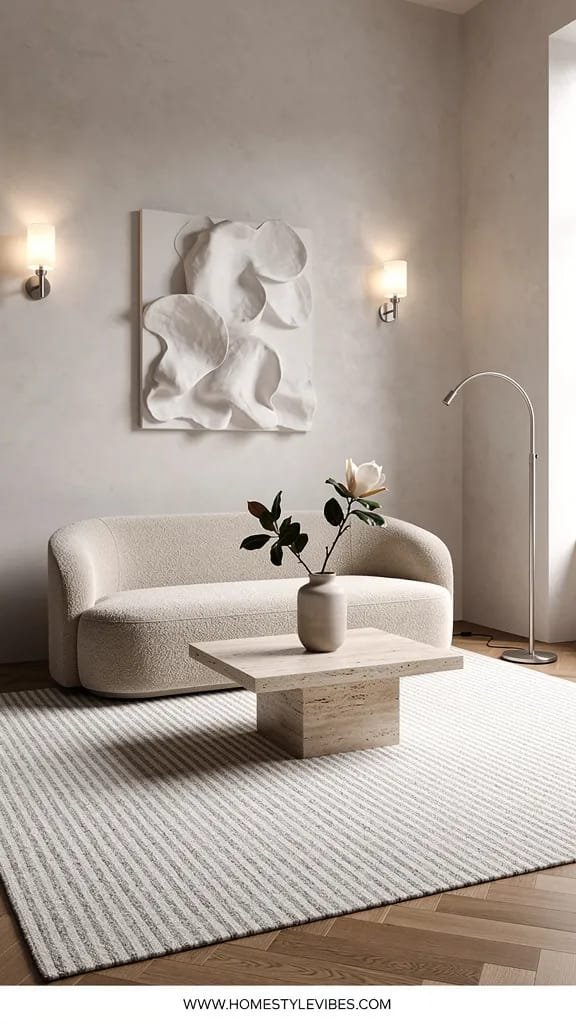
You crave calm but not boring. You want pattern that whispers. The micro-stripe wool rug—two close neutrals like ivory and stone—adds subtle movement that keeps the floor from reading flat, and it plays beautifully with curved seating. The mood is Japandi-soft: rounded edges, diffused sconces, textural ceramics. It’s a quiet layout that still feels styled and intentional.
Why this works: micro-stripes trick the eye into seeing a larger room because your gaze glides along the direction of the weave. Curves prevent it from feeling too linear. It’s also incredibly photogenic: the tiny lines create a moiré-like softness in pictures without going dizzying. If your living room is small or narrow, orient the stripe along the longest wall to elongate.
Lighting: wall sconces with fabric or glass shades create sideways light that wraps the rug in gentle shadows—flattering at night and still functional. If you rent, choose plug-ins. If you own, hardwire for a sleeker finish.
Variations: Budget-friendly? Choose a power-loomed micro-stripe with a cotton blend. Darker version? Go taupe and espresso stripe with a caramel leather sofa. Small-space swap: curved loveseat and a petite ottoman instead of a bulky coffee table.
Budget Breakdown:
- Micro-stripe wool rug (8×10): $400–$1,200
- Power-loomed stripe (8×10): $220–$550
- Rug pad: $60–$150
- Plug-in sconces (pair): $120–$300
- Curved ottoman or table: $180–$600
Total Estimated Cost: $580 – $2,850
Best For: Narrow living rooms, condos, and anyone who loves serenity with a whisper of pattern. Especially good for people who rearrange furniture often—the stripe guides layouts.
Key Design Elements:
- Main materials: wool, linen, oak, plaster
- Color palette: stone, ivory, warm gray, soft black accents
- Lighting strategy: side-mounted sconces for wraparound glow
- Furniture silhouettes: curved sofa or chair, pill-shaped ottoman
- Texture layers: ribbed pillows, crinkle linen, matte pottery
- Accent details: rounded frames, pebble-shaped trays, branchy greens
Why This Feels Designer: Micro-pattern + curved lines = sophistication. You’re controlling line and movement, which is exactly what pros obsess over.
How To Recreate This Look:
- Start with a micro-stripe that’s two close neutrals—easy on the eyes.
- Add a curved seating piece to counter the linear pattern.
- Layer plug-in sconces at shoulder height when seated.
- Install a thick pad so the rug reads plush, not flat.
- Style with rounded decor pieces—no sharp corners overload.
The Most Common Mistake: Running the stripe perpendicular to your main traffic path; it can make the room feel stubbier. Align stripes with the longest dimension.
Pro Styling Tip: When shooting photos, tilt the camera slightly to include both sconce glow and rug lines—texture plus light equals instant editorial.
One more to go—the antidote for echoey lofts, messy playrooms, and anyone who wants bold comfort with grown-up polish.
7. Plush Cut-Pile With Tonal Blocks and Black Accents
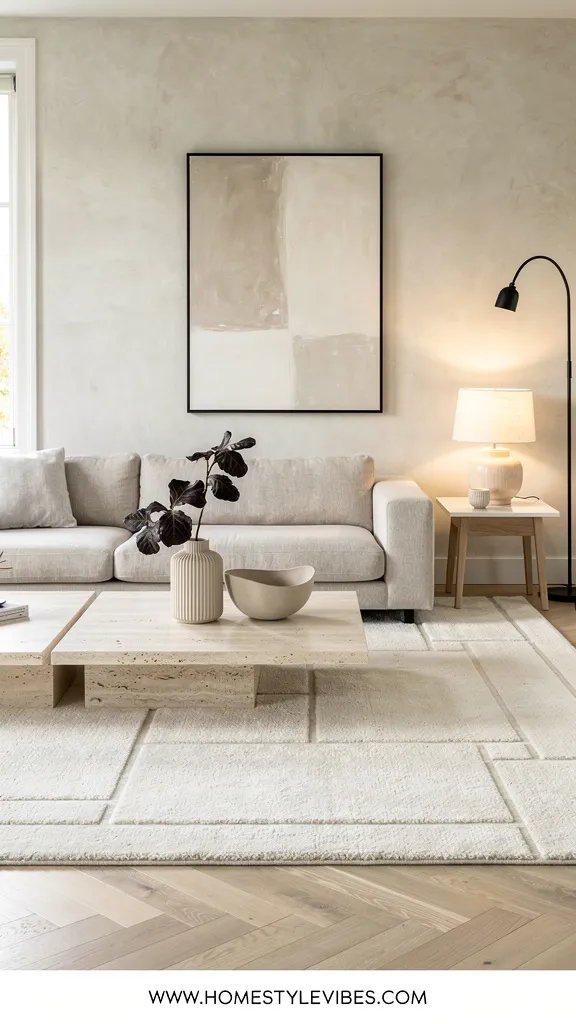
You love softness underfoot but fear the dorm-room look of plain shag. You’ve tried one fluffy rug and it made the room feel messy. This design uses a dense, low-to-medium cut-pile rug with subtle tonal block patterning—think cream with slightly darker rectangles or a carved geometric—to add dimension without loud contrast. Pair with black accents and structured furniture to keep the sweetness in check. The mood is modern cozy: soft enough for movie nights, sharp enough for company.
Why it works at home: kids can sprawl, pets can nap, and your knees will thank you when you’re reaching under the sofa for lost remotes. The tonal blocks hide wear patterns, and the pile bounces back if you use a quality pad. It photographs beautifully because the carved pattern creates shadows that read as detail, not dirt. Add two black accents—lamp and frame—and the whole thing feels tailored.
Lighting: aim for balanced warm light with table lamps on each side of the seating area. Avoid harsh downlights that cause spotlight circles on plush rugs. If possible, tilt lamp shades slightly forward for a soft forward wash—great in photos, great in life.
Variations: Budget option is a power-loomed polyester with carved effect. Renter-friendly? Go 8×10 under the front feet of furniture. Darker vibe? Choose a warm gray rug with deeper charcoal blocks and keep walls light for contrast.
Key Design Elements:
- Main materials: dense cut-pile (wool or performance poly), blackened metal, oak or walnut
- Color palette: cream, warm gray, camel, black accents
- Lighting strategy: twin table lamps + dimmer for soft spread
- Furniture silhouettes: structured sofa, squared armchair, simple-leg tables
- Texture layers: ribbed knit throw, boucle pillow, matte black ceramics
- Accent details: black frames, single sculptural object, discreet basket
Budget Breakdown:
- Carved tonal rug (8×10): $250–$1,100
- Rug pad (thick): $60–$150
- Table lamps (pair): $120–$400
- Black accents (frames/ceramics): $40–$120
- Throw + pillows: $50–$180
Total Estimated Cost: $520 – $1,950
Best For: Families, movie-lovers, and anyone who wants plush comfort that still reads polished. Works beautifully in medium to large rooms.
How To Recreate This Look:
- Start with a plush cut-pile rug with subtle tonal blocks or carving.
- Add a thick pad so the pile feels dense and stays springy.
- Layer two black accents (lamp, frame) to ground the softness.
- Install warm table lamps on opposite sides of the sofa for even glow.
- Style with structured shapes—no overly frilly decor—to balance plushness.
Why This Looks Expensive: Controlled contrast. Soft textures paired with crisp black details signal editorial polish. The rug’s carved pattern says custom, even when it’s not.
One Thing To Avoid: Avoid too many small decor items. Plush plus clutter equals messy. Go bigger with fewer pieces.
Pro Styling Tip: Brush the pile in one direction before photos; it creates a consistent nap that reads ultra-luxe on camera.
Quick Checklist
- Choose the largest rug your room can handle—front legs of all seating on the rug
- Match rug undertones to your sofa and wall color (warm vs cool)
- Use a felt + rubber pad for comfort and safety
- Pick matte, textured weaves for photo-friendly floors
- Repeat two rug colors elsewhere in the room
- Balance pattern with at least one solid, sculptural furniture piece
- Set lighting to warm 2700–3000K for rich tones
- Orient stripes along the longest wall to elongate the room
- Layer a small plush or sheepskin over a sturdier base for texture
- Use dimmers and fabric shades to avoid harsh rug shadows
- Vacuum with the beater bar off for wool and vintage rugs
- Spot clean immediately; blot—don’t rub
Frequently Asked Questions
How big should my living room rug be so it doesn’t look stingy?
Ideally, all front legs of your sofa and chairs sit on the rug. For most living rooms that means at least 8×10. If you have a sectional or a large open plan, 9×12 often looks best. When in doubt, size up—the floor will feel calmer and more expensive.
I’m on a budget. Which rug type looks the most “designer” for less?
A textured flatweave or a performance rug with a heathered, matte finish reads high-end without a high price. Look for subtle patterning (micro-stripes, herringbone) and avoid ultra-shiny synthetics. Layer a thick pad to improve the feel underfoot.
My living room is small. Won’t a patterned rug overwhelm it?
Not if you control scale. Choose small, tight patterns (micro-stripe, tiny checks) or vintage-wash rugs with soft, low-contrast designs. Orient stripes along the longer wall, and keep furniture shapes simple so the rug can do the quiet heavy lifting.
What about maintenance with pets and kids?
Go for performance fibers (polypropylene, PET) or tight-pile wool with variegation. Patterns hide fur and spills, and many performance rugs rinse clean. Keep a small handheld sprayer with warm water and mild soap on hand and blot immediately.
I rent and can’t change floors or lighting. Any tips to still get the look?
Use a large rug to cover most of the floor and plug-in sconces or floor lamps for warm, layered light. A neutral base rug with a smaller plush topper creates depth and feels custom without altering anything permanent.
The Gentle Finish
Pick one idea that made you nod. Not all seven. Maybe it’s the low-contrast wool that makes your room feel like a soft morning, or the vintage Persian that gives your evenings gravitas. Start with the rug, add a proper pad, repeat two colors elsewhere, and the living room will finally look like it knows what it’s doing.
The truth is, a designer look comes from texture, lighting, and restraint—less from chasing trends. Get the size right, choose fibers that match your life, and let light bounce where it flatters. That’s how rooms go from almost-there to quietly stunning.
You’ve got this. Roll out the rug, switch on the lamps, and watch your living room exhale. And when your friend asks why it suddenly looks so pulled together? Just smile and say, “It’s the rug.”

About the Author

Krisztina P.Rendes, Founder of Home Style Vibes
Founder of Home Style Vibes
Krisztina Puskásné Rendes created Home Style Vibes as a cozy-modern lifestyle space where homemaking meets inspiration. Her goal is to help women create beautiful, organized, and peaceful homes they truly love — without overwhelm. You’ll find here heart-driven content on home decor, cleaning tips, easy family recipes, organization and decluttering, DIY home projects, plants, and seasonal ideas — all designed to bring more calm, comfort, and style into everyday life.