6 Summer Home Decor Ideas with Lemons and Citrus That Look So Fresh
You want rooms that taste like summer—light, crisp, the color of sunshine on a white plate. You hate that heavy, dull, winter-afterthought feeling that hangs around even when the windows are open. You want fresh air, linen, and a bowl of lemons that looks like you meant it, not like you panic-bought produce at 9 p.m. These six summer home decor ideas with lemons and citrus will fix that—fast, photogenic, and practical. Think salted whites, chalky terracotta, market greens, and those glossy pops of yellow that make the whole house feel alive. With a $350–$1,800 budget per space and weekend-friendly timing, you’ll have a home that looks summer-ready on your feed and feels breezy in real life. Perfect for anyone craving a Mediterranean-meets-modern vibe for a kitchen, dining nook, porch, or entry.
1. Sunlit Citrus Console With Slim Black Accents
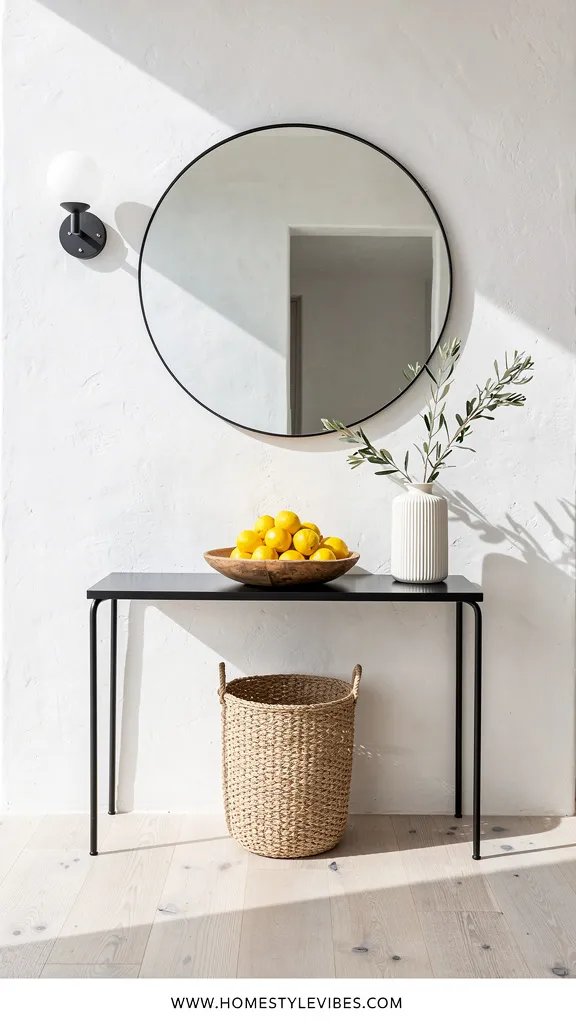
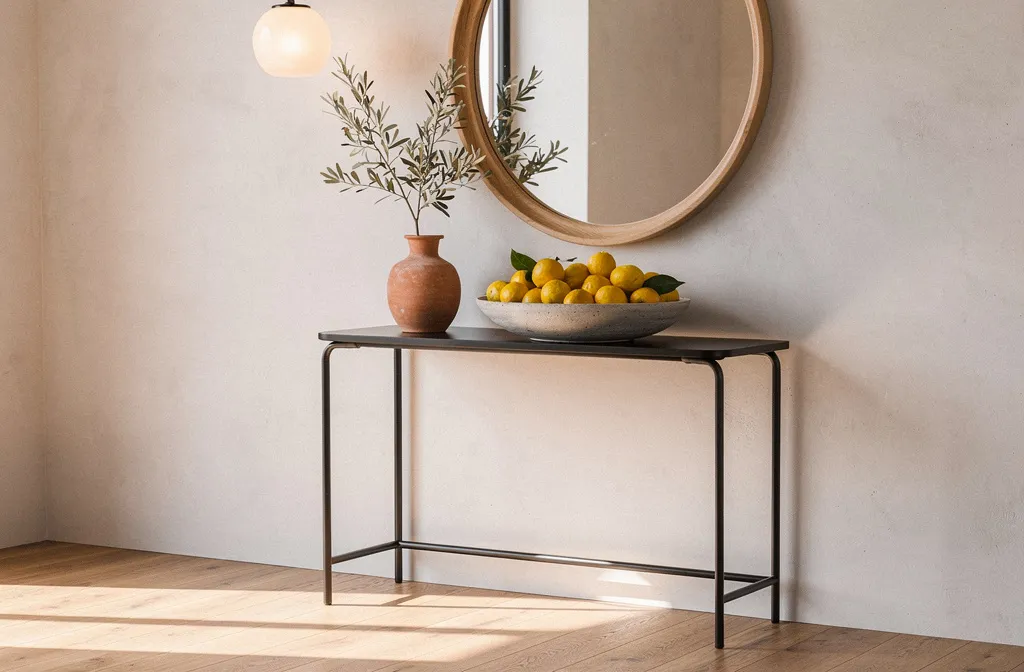
We’ve all been there: the entry console that always looks like a dumping ground—keys, random mail, a candle that never actually gets lit. You’ve tried rearranging the same five things, but it still reads “temporary.” This look resets the space with a tight edit: matte black lines, a restrained palette, and a purposeful bowl of lemons that turns into an instant focal point. It’s modern Mediterranean: white walls, a slim console, breathable negative space, and that punchy citrus color that announces summer the second you open the door.
Here’s why it works. In real homes, the entry gets low, uneven light. A mix of soft wall-wash lighting and a focused table lamp brings depth while avoiding harsh glares that show scuffs. The materials are simple: powder-coated black metal, pale oak or ash, chalky ceramic, a linen shade. It photographs beautifully because you get crisp contrast (black frame against white wall), layered textures (linen, ceramic, wood), and a single, high-saturation accent (lemons) that reads crystal clear on camera. For small spaces, this is brilliant—slim footprints, airy silhouettes, and nothing extra.
Try two variations if you’re tight on budget or space. Renter-friendly version: use removable wall hooks for a narrow framed art print and a small wall sconce with a cord cover; skip hardwiring. Small-space version: swap a full console for a 24-inch floating shelf in pale wood with one small bowl of lemons and a mini lamp. Darker home? Choose a honey-oak console and a parchment shade to soften harsh shadows.
Budget Breakdown:
- Slim black console table: $120–$350
- Linen shade table lamp (warm LED bulb): $45–$150
- Ceramic fruit bowl or low pedestal compote: $25–$90
- Lemons (real or high-quality faux): $8–$25
- Neutral rug runner (jute or flatweave): $60–$200
- Framed print or mirror: $70–$300
- Cord cover and adhesive hooks for renter-friendly lighting: $15–$35
Total Estimated Cost: $343 – $1,150
Best For: Small to medium entryways, modern or transitional homes, anyone craving a calm start/finish zone for the day with just-right contrast.
Key Design Elements:
- Main materials: black powder-coated metal, pale oak, linen, matte ceramic
- Color palette: soft white, oat, matte black, bright lemon yellow
- Lighting strategy: one warm table lamp (2700–3000K), optional wall-wash sconce, avoid bluish bulbs
- Furniture silhouettes: slim, linear console; round bowl for balance
- Texture layers: linen shade, jute runner, unglazed ceramic
- Accent details: small stack of neutral books, key tray, one leafy stem in a small bud vase
How To Recreate This Look:
- Start with a slim console centered on the wall; anchor it with a runner directly beneath.
- Add a linen-shade table lamp on one side for asymmetry and warmth.
- Layer a low ceramic bowl or compote in the middle and fill with lemons piled high (odd numbers read natural).
- Install a simple framed print or mirror hung with the bottom 6–8 inches above the console.
- Style with a thin key tray and a single leafy cutting in a bud vase—no clutter clusters.
Why This Looks Expensive: The restrained color palette and strong silhouettes do the talking. The black frame reads custom and chic, while the single, glossy pop of citrus looks intentional—not “decor store.” Negative space is your luxury piece here.
Watch Out: Don’t overfill the console top with small decor. Five tiny things fight with the lemons and make the whole setup look messy. Also, check lamp height—if the shade’s bottom sits below eye level, it throws awkward shadows.
Pro Styling Tip: Slide the bowl slightly off-center and let three lemons spill onto a book stack to create a diagonal line that photographs with natural movement.
Keep going—your living room shelf or kitchen window ledge is begging for the same crisp contrast and citrus glow.
2. Market-Day Kitchen: Linen, Olive Oil, and a Citrus Bar
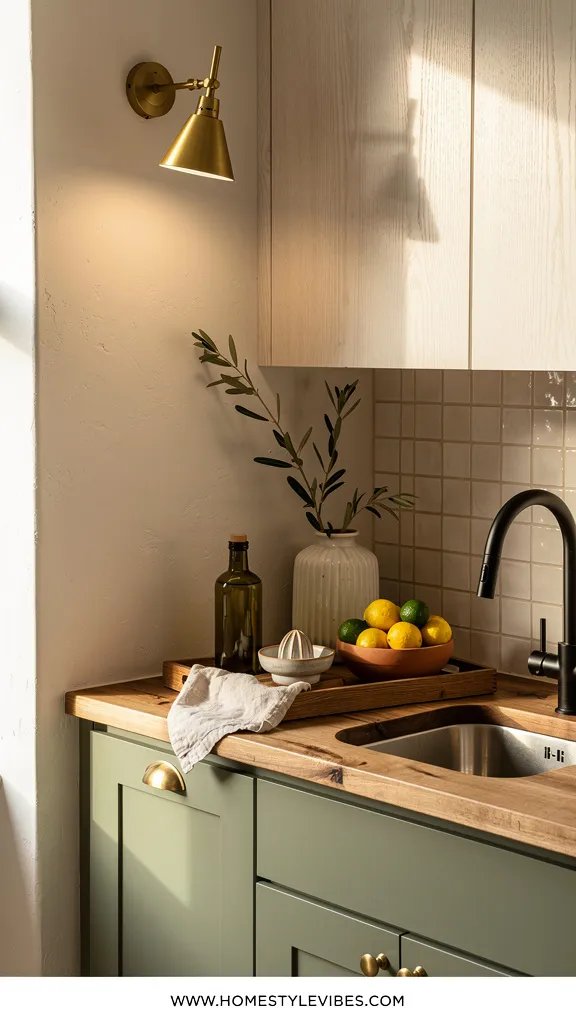
It’s that one corner of your kitchen that never looks styled—by the stove, next to the coffee, under the cabinet. You’ve tried canisters and cutting boards, but the vibe is still “random.” This design creates a mini citrus bar that feels like you just walked in from the farmer’s market. The mood is rustic-modern: linen, raw wood, olive glass bottles, matte stoneware, and a compact tray scene that looks composed but still easy to use daily.
In real homes, counters clutter fast. Corral pieces onto one tray and keep the rest clear. The materials do the heavy lifting: a strapped oak cutting board, a stoneware salt cellar, a linen towel draped just so, a pedestal for limes and lemons, and an amber bottle for olive oil. It’s family-friendly (practical items you use anyway) and photographs like a dream because you get height variation and layered neutrals with saturated citrus. Morning light gives soft shadows; under-cabinet LEDs add sparkle at night.
Three variations to try: Budget version—use a bamboo tray, thrifted clear bottle with pourer, and a simple bowl. Small-space version—mini 8-inch tray, one cutting board, two lemons. Darker kitchen? Choose lighter linens (ivory, not flax) and a pale stoneware finish to keep it airy.
Budget Breakdown:
- Wood or rattan tray (12–14 inches): $20–$65
- Stoneware pedestal bowl: $25–$70
- Olive oil bottle (amber or green) with pour spout: $12–$25
- Linen towel (stripe or solid): $10–$30
- Cutting board, oiled: $18–$60
- Salt cellar with spoon: $12–$35
- Fresh lemons, limes, oranges: $8–$18
Total Estimated Cost: $105 – $303
Best For: Any kitchen size, renters, busy cooks who want pretty but practical decor that works hard.
How To Recreate This Look:
- Start with a tray to define the vignette. Place it where light hits naturally—end of counter, near window, or under a cabinet light run.
- Add a tall element: cutting board leaning vertically or a small framed tile for height.
- Layer a pedestal bowl with mixed citrus. Keep lemons on top for bright impact.
- Install a pour spout on the oil bottle and set it front-right for ease of use.
- Style with a linen towel draped over the tray edge and a salt cellar tucked near the oil.
Key Design Elements:
- Main materials: oak or bamboo, stoneware, linen, glass
- Color palette: oat, natural wood, charcoal accent, citrus brights
- Lighting strategy: under-cabinet LEDs set to warm, morning window light for photos
- Furniture silhouettes: rounded bowl, rectangular board, slim bottle
- Texture layers: linen weave, matte ceramic, oiled wood, glossy citrus
- Accent details: a sprig of rosemary or basil in a bud vase adds scent and softness
Why This Feels Designer: Nothing is purely decorative. Every item earns its place, so the setup looks curated, not staged. It whispers “chef lives here,” even if you’re making toast.
One Thing To Avoid: Don’t crowd with multiple competing bottles and jars. Keep it to one oil, one salt, one focal bowl. Too many slim items make the vignette jittery.
Pro Styling Tip: Wipe citrus with a barely damp towel to reduce dust and catch a gentle, natural sheen on camera.
Take a breath. If your kitchen’s sorted, your dining nook could use that same market-day warmth—just shift the focus to textiles and shape.
3. Amalfi Breakfast Nook With Lemon-Stripe Textiles
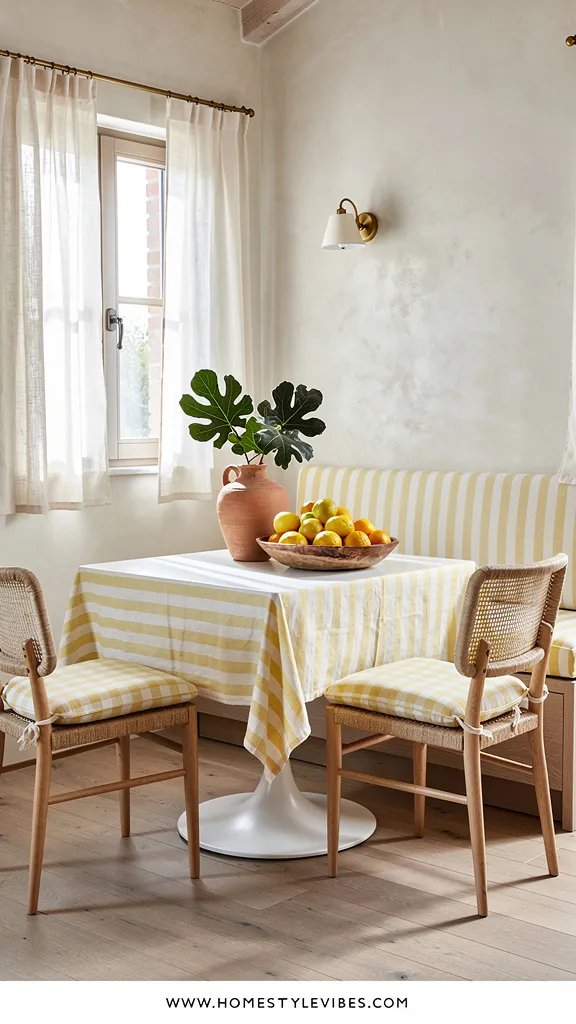
You want your mornings to feel like a slow vacation, but the breakfast nook is all hard edges and leftover chairs. You’ve tried cushions; they slide. You’ve tried flowers; they wilt. This design sets a summer tone with lemon-striped textiles, slipcovers, and small soft surfaces that absorb noise and sunlight. The mood is coastal-meets-Italian farmhouse: gingham or stripe linens, woven chairs, a white tulip table, and a bowl of citrus that seems to glow in the morning light.
Why it works in real homes: Textiles are flexible and renter-proof. They soften small spaces, hide mismatched chairs, and wash easily. Lighting matters here—sheer curtains reduce glare, while a dimmable pendant adds evening ambiance. Materials include cotton-linen blends, woven seagrass, slipcovered seat pads, and a matte ceramic centerpiece. It photographs beautifully because stripes add order and rhythm; the citrus adds focus and warmth against whites and woods.
Variations for your life: Budget-friendly version with cotton napkins as makeshift placemats and a $20 table runner in lemon stripe. Small nook? Choose a round table to keep pathways open. Darker paint? Layer creamy whites (not stark) and go for a stronger stripe to hold visual weight.
Budget Breakdown:
- Linen-blend table runner (lemon stripe or soft yellow): $18–$55
- Set of 4 chair cushions or slipcovers: $45–$160
- Woven chair or seat pads: $20–$80 each
- Sheer curtains (pair) for light diffusion: $25–$80
- Centerpiece bowl or handled terracotta pot: $30–$120
- Fresh lemons and limes: $10–$20
- Optional pendant shade upgrade (rattan or linen): $50–$180
Total Estimated Cost: $198 – $635
Best For: Small eat-in kitchens, apartments, families who want washable layers and morning cheer.
Key Design Elements:
- Main materials: linen-blend, seagrass, matte ceramic
- Color palette: cream, sunlit yellow, soft gray, natural wood
- Lighting strategy: sheer curtains for softened daylight; dimmable pendant at night
- Furniture silhouettes: tulip or round pedestal table; woven or slipcovered chairs
- Texture layers: stripe runner, soft cushions, woven seats, ceramic bowl
- Accent details: a tiny lemon tree in a terra-cotta pot if you’ve got the light for it
How To Recreate This Look:
- Start with a simple round table and pull chairs in tight to keep sightlines clean.
- Add a stripe runner down the center and anchor with a matte ceramic bowl full of mixed citrus.
- Layer seat cushions or slipcovers in a washable fabric to unify mismatched chairs.
- Install sheer curtains just below the ceiling line to stretch the wall height and avoid that awkward gap.
- Style with a carafe of water, two breakfast bowls, and one sprig of olive or eucalyptus for movement.
Why This Reads High-End: Coordinated textiles look custom, even when they’re ready-made. The stripe repeats around the room (runner, cushion piping, napkins), which is the secret to that “designed on purpose” feeling.
The Most Common Mistake: Too many small patterns in one nook. Pair a single stripe with solids. If you add gingham, keep it micro and in a calm color like gray or cream.
Pro Styling Tip: Angle the bowl of citrus slightly and let one lemon rest on the runner beside it—your camera sees that as a “moment” instead of a prop pile.
Real talk: you don’t need a full-room redo. One solid idea in a single zone can reset your morning routine. If a stripe runner and citrus bowl feel doable, that’s your move this week.
4. Courtyard Porch Vibes: Citrus Pots, Terracotta, and Limewash Glow
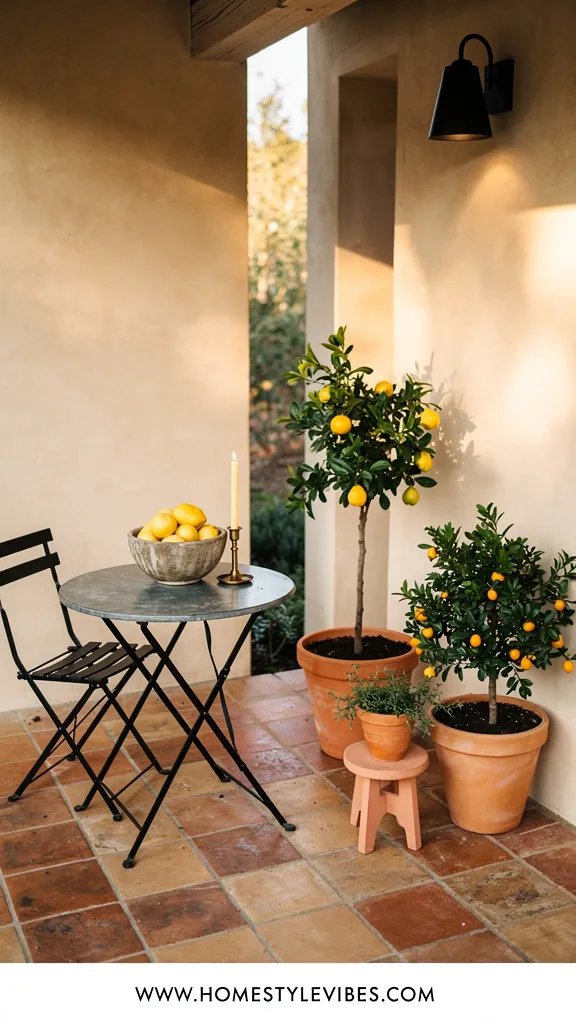
You have a porch or balcony that feels like a storage lot for folding chairs. You want that café-in-June mood, but outdoor spaces swallow decor unless you scale it right. This setup creates a tiny courtyard feeling: terracotta pots, limewash textures, a small bistro table, and citrus as living decor—potted kumquat, dwarf lemon, or simply bowls of fruit beside a candle. The mood is Mediterranean city break, not suburban patio set.
It works because the materials are honest and patina-friendly: terracotta, iron, stone, and limewash or limewash-effect paint on a single accent wall panel or privacy screen. Outdoor lighting changes the game—warm string lights can go brassy yellow if you’re not careful; choose soft white bulbs (2700K) for glow that flatters citrus tones. Photographs sing when you combine chalky limewash with the glossy fruit and one black metal accent for definition.
Live tree not an option? Faux potted citrus has come a long way—look for realistic leaf veining and a matte finish. Small balcony? Use one tall pot and one low bowl on a stool; the height variation keeps it from reading cluttered. Budget version: thrift terracotta, repaint a tired side table, and use a large ceramic mixing bowl as your fruit vessel.
Budget Breakdown:
- Terracotta pots (2–3 sizes): $15–$120
- Limewash or limewash-effect paint (small project size): $30–$80
- Bistro table and two chairs (iron or teak): $120–$450
- Outdoor string lights (2700K): $25–$60
- Potted citrus (real or faux): $35–$180
- Outdoor candle or lantern: $18–$60
- Fruit bowl for outside use: $20–$65
Total Estimated Cost: $243 – $1,015
Best For: Balconies, porches, small patios; anyone who wants an alfresco breakfast nook or evening wine spot that actually gets used.
Key Design Elements:
- Main materials: terracotta, limewash, iron, teak
- Color palette: putty, sand, olive, chalk white, citrus yellow
- Lighting strategy: string lights layered with a lantern for soft, non-harsh glow
- Furniture silhouettes: round bistro, folding chairs, slender metal legs
- Texture layers: rough pots, chalky wall, woven seat pad, glossy fruit
- Accent details: small outdoor rug in a muted stripe or check
Why This Looks Intentional: Repeating materials—terracotta and iron—tie the zone together. The limewash effect creates soft shadows that make even simple objects look artful.
How To Recreate This Look:
- Start with a round bistro table; center it on your rug or define the area with chair placement.
- Add two terracotta pots in different heights; tuck one in a corner to frame the seating.
- Layer a limewash effect on a board, privacy screen, or a small wall section for that sun-faded texture.
- Install string lights along the top edge of the space; keep lines straight for a clean look.
- Style with a bowl of citrus, a lantern, and two soft cushions. Keep the palette calm, let the fruit be the star.
Don’t Do This: Avoid bright plastic planters or blue-white LED string lights. They fight the mellow warmth and make the citrus look cartoonish.
Pro Styling Tip: Photograph during golden hour; angle the chair slightly away from the table so you catch light skimming those terracotta textures.
Small pause: You don’t need a perfect porch to enjoy summer decor. One pot, one chair, one bowl of lemons on a stool can feel like a little vacation. Start there if that’s what you have.
5. Fresh Pantry Moment: Citrus Wall Rails and Fluted Jars
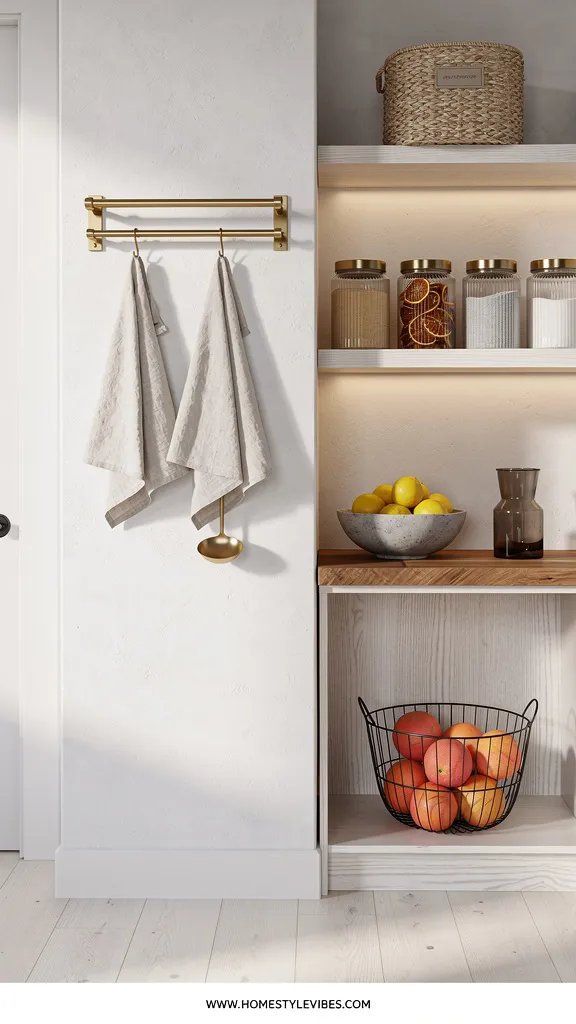
Your pantry or open shelving probably swings between chaotic and sterile. You tried matching containers, but it still lacks soul. This design leans into order with character: slim wall rails for tea towels or lightweight utensils, fluted glass jars with brushed brass lids, and labeled baskets. The citrus shows up as function—dried orange slices in a jar, a small bowl of lemons to grab for tea, maybe a wire basket filled with grapefruit. Think quiet luxury kitchen backdrop.
Why it works: Pantry organization can look too shiny or too farmhouse. Fluted glass bridges both—soft light diffusion, tactile texture, and clean lines. Brushed brass gives warmth without screaming “new!” Lighting is everything here; if you don’t have natural light, add an LED strip along the shelf underside. Photos love the repetition of shapes: rows of fluted jars, identical rails, and a single saturated yellow moment to break the monotony.
Variation ideas: Budget-friendly—mix two fluted jars with regular jars in the same lid finish and face the fluted ones forward. Renter-friendly swap—use removable adhesive rails and command hooks. Dark shelves? Choose clear labels with black text for clarity and a matte bowl to ground the citrus.
Budget Breakdown:
- Fluted glass jars (set of 6–8): $48–$160
- Brushed brass or matte black lids: $18–$50
- Wall-mounted rail with S-hooks: $25–$85
- Woven baskets or seagrass bins (2–3): $30–$120
- LED strip light (warm tone): $20–$45
- Ceramic or wire citrus bowl: $15–$60
- Label set or label maker: $12–$35
Total Estimated Cost: $168 – $555
Best For: Small kitchens needing unified storage; open shelving where aesthetics matter; anyone who actually cooks.
Key Design Elements:
- Main materials: fluted glass, brushed brass, seagrass, ceramic
- Color palette: warm white, oat, soft brass, citrus yellow-orange
- Lighting strategy: under-shelf LED strips; indirect light to avoid harsh glare on glass
- Furniture silhouettes: n/a—focus on linear shelving and vertical rails
- Texture layers: ribbed glass, woven bins, matte ceramic, paper labels
- Accent details: dried citrus slices, bay leaves, and a linen towel on the rail
How To Recreate This Look:
- Start by editing—decant only items you use weekly; hide the rest in labeled bins.
- Add fluted jars to the most visible shelf and line them up by height for rhythm.
- Install a slim rail under the lowest shelf; hang one linen towel and two small utensils.
- Layer an LED strip beneath the rail to wash the jars with warm light.
- Style with a small bowl of lemons at eye level; it’s both art and snack.
Why This Looks Expensive: Repetition equals luxury. Matching lids, consistent shapes, and a restrained color palette create a “custom pantry” impression, even on a budget.
Watch Out: Don’t over-label every single surface. Too many tags feel chaotic. Keep labels simple and typographic; avoid cursive if your shelves are dark.
Pro Styling Tip: Face all jar seams backward and align labels at the same height; micro-alignment photographs like millwork.
True story: A friend of mine spent weeks agonizing over paint colors before realizing the real problem was her kitchen storage lighting. We added a $25 LED strip and suddenly her “blah” shelves looked like a boutique grocer. Paint could never.
6. Lemon-Layered Living Room: Pillows, Art, and a Quiet Statement Mantel
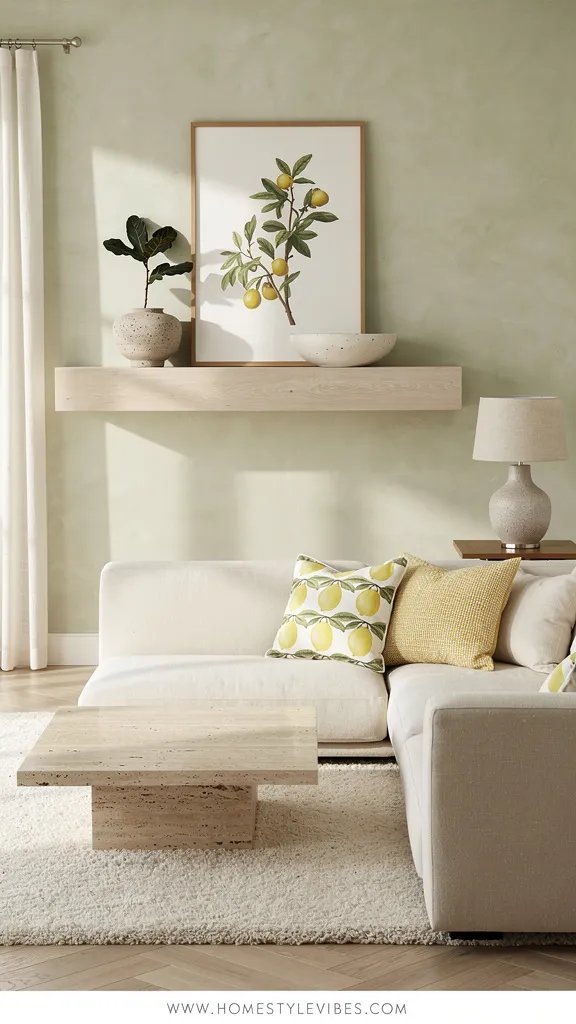
Living rooms are tricky. You add throw pillows and somehow it still feels like yesterday’s sofa wearing today’s laundry. You want summer freshness without buying a new couch. This design threads citrus through soft finishes and subtle art: a small-scale lemon print, woven pillows with soft yellow threads, and a mantel or shelf moment that gives your eye a place to land. The vibe is soft-modern with a whisper of classic—think framed sketch of citrus branches, boucle or tight-weave linen, bleached oak, and a low, sculptural bowl on the coffee table with three perfect lemons.
Here’s why it works in real homes: It leans on neutral furniture you already own, then controls color through accents that read tonal rather than matchy. Lighting makes or breaks it—add a dimmer to floor lamps and swap cool bulbs for warm. Materials like limewashed pots, fluted side tables, and matte frames keep glare down and texture up. When you photograph it, you’ll see gentle shadows, structured layers, and a few bright citrus notes that pop against creams and grays.
Variations for every situation: Budget version—swap pillow covers only and print a downloadable lemon sketch at home. Renter-friendly—use leaning art and command strips for the mantel. Darker room—choose richer yellow (saffron) and a deeper green accent to hold their own against charcoal or wood paneling.
Key Design Elements:
- Main materials: tight-weave linen, boucle, matte frames, bleached oak, ceramic
- Color palette: warm white, stone, soft yellow, muted olive, graphite accents
- Lighting strategy: layered—one floor lamp, one table lamp, and candlelight on the mantel
- Furniture silhouettes: clean-lined sofa, rounded side table, slim-armchairs
- Texture layers: nubby pillow, linen throw, limewashed pot, ribbed candleholder
- Accent details: framed lemon branch sketch, slim black candle snuffer, fresh lemons in a shallow bowl
Budget Breakdown:
- Pillow covers (set of 3–5): $45–$175
- Framed lemon botanical print or sketch: $30–$160
- Sculptural ceramic bowl for coffee table: $35–$120
- Limewashed pot with olive cutting: $25–$80
- Floor lamp dimmer and warm bulbs: $20–$45
- Fresh lemons: $8–$15
Total Estimated Cost: $163 – $595
Best For: Living rooms that feel unfinished; neutral couches craving a seasonal switch; houses with kids or pets since these are soft, movable changes.
How To Recreate This Look:
- Start with pillows: mix one textured neutral, one soft yellow, and one with a subtle stripe or micro-check.
- Add a framed lemon branch leaning on the mantel or on a shelf; keep the frame slim and matte.
- Layer a shallow bowl on the coffee table with 3–5 lemons; leave negative space around it.
- Install a dimmer on the floor lamp and swap bulbs for 2700K warm LEDs.
- Style the mantel with asymmetric height—tall vase on one side, two stacked books and a candle on the other; tuck a single lemon near the books for a tiny wink.
Why This Reads High-End: Restraint. You’re not shouting “lemon theme.” You’re placing a few decisive, high-contrast notes into a quiet, textural room. That discipline is what looks custom.
One Thing To Avoid: Don’t buy a whole set of matching lemon-print everything. One art piece or one pillow with a delicate motif is plenty. Let texture carry the rest.
Pro Styling Tip: For photos, pull the coffee table bowl 2 inches off-center and angle the floor lamp shade slightly—those tiny shifts create layered lines that the camera loves.
Confession: I once tried an all-yellow pillow swap and the room looked like a caution sign. The fix wasn’t fewer pillows; it was more texture and better bulbs. The truth is, summer style depends as much on lighting and finishes as it does on color.
Remember, this isn’t about recreating a showroom. It’s about making your rooms feel breezy and intentional with small, satisfying citrus moments that make daily routines feel lighter. If one idea resonates more than the others, that’s your starting point. You don’t need all six.
Quick Checklist
- Warm LED bulbs in the 2700–3000K range
- One strong matte bowl or pedestal for citrus
- A slim black element to add contrast
- Linen or linen-blend textiles in stripes or solids
- Terracotta pots for organic texture
- Fluted glass jars for pantry rhythm
- Sheer curtains to soften daylight
- Tray to corral kitchen essentials into a vignette
- Single framed citrus sketch or print
- Dimmable lamp for evening glow
- Removable rails or hooks for renter-friendly styling
- Real or realistic faux citrus plant
Frequently Asked Questions
How much should I budget to make a room feel “summer fresh” with citrus decor?
Plan on $150–$600 per zone, depending on what you already own. Spend first on one great vessel, warm bulbs, and a textile update. Those three items make the biggest visual difference for the money.
I have a very small apartment kitchen—where can citrus decor go without stealing counter space?
Use vertical space: a floating shelf with a pedestal bowl, a rail with a linen towel, or the windowsill. Keep your citrus in a compact footed bowl to maximize counter clearance and make it look intentional.
Will real lemons attract fruit flies or go bad too quickly?
Use what you’ll eat within a week and refrigerate the extras. If fruit flies show up, switch to high-quality faux lemons for styling and keep a small real batch in the fridge to swap in for photos or serving.
I rent and can’t paint or drill—how do I get the limewash and rail look?
Try peel-and-stick textured wallpaper panels for a faux limewash vibe and adhesive rails with S-hooks. They come off cleanly later and still give you that layered, European feel.
What’s the most common styling mistake with lemon decor?
Over-theming. You don’t need lemon-print everything. Choose one focal citrus moment per zone and let textures—linen, terracotta, matte ceramics—do the rest.
Wrap-Up: Your Summer Home, But Simpler
Pick one idea. A console bowl, a breakfast stripe, a porch pot—whatever made you pause while scrolling. Commit to warm lighting, a single strong vessel, and fewer, better accents. That’s the formula that makes rooms feel finished.
Luxury isn’t about piling in decor. It’s texture plus lighting plus restraint. Citrus works because it’s glossy, sculptural, and alive. It’s the punctuation mark in a sentence of soft whites and natural materials.
Start this weekend. Fifteen minutes to swap bulbs, twenty to style a tray, five to fill a bowl with lemons. You’ve got this—and your home’s about to taste like summer.

About the Author

Krisztina P.Rendes, Founder of Home Style Vibes
Founder of Home Style Vibes
Krisztina Puskásné Rendes created Home Style Vibes as a cozy-modern lifestyle space where homemaking meets inspiration. Her goal is to help women create beautiful, organized, and peaceful homes they truly love — without overwhelm. You’ll find here heart-driven content on home decor, cleaning tips, easy family recipes, organization and decluttering, DIY home projects, plants, and seasonal ideas — all designed to bring more calm, comfort, and style into everyday life.