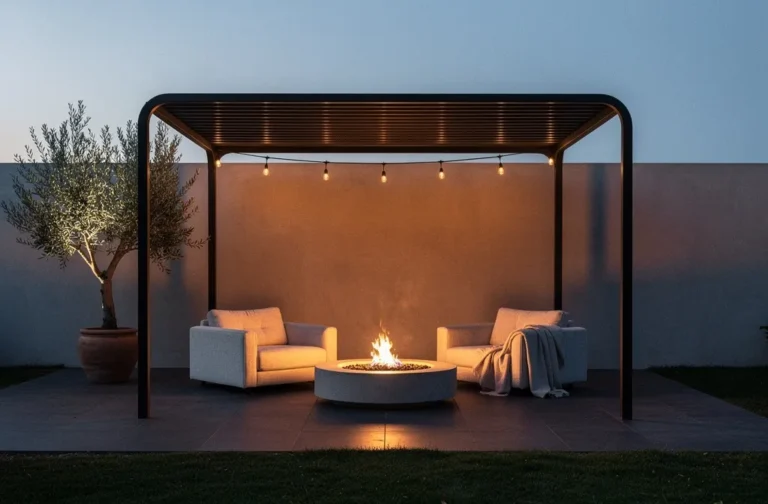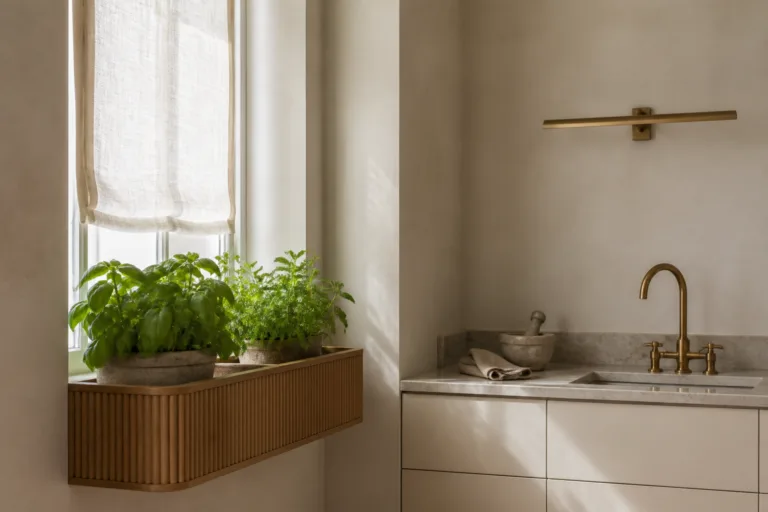
7 Home Garden Decor Ideas That Make Your Outdoor Space Look Stunning
You want a garden that glows at golden hour, where every chair feels like an invitation and the path home always looks magazine-ready. You hate the cluttered plant corner that never quite clicks, the cheap-looking lanterns, and the patio that somehow feels flat no matter how many cushions you buy. Picture this instead: textured stone underfoot, linen-soft light washing over sculptural planters, and a few clean-lined pieces that make your outdoor space finally feel finished. These 7 home garden decor ideas fix the real frustration—disconnected pieces that don’t talk to each other—and deliver a wild-to-wow transformation on a clear plan, a realistic budget, and in as little as two weekends.
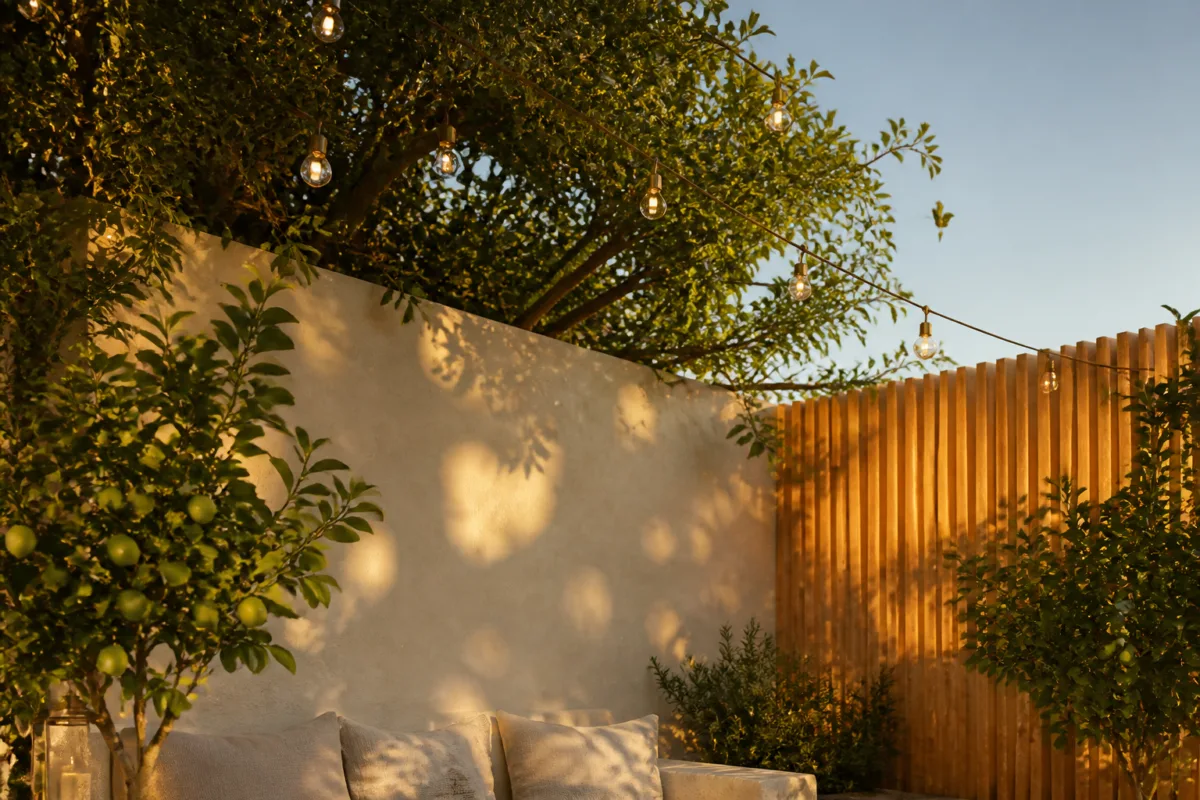
We’ll get specific about colors, materials, and silhouettes so you can picture the vibe instantly: warm woods, aged metals, citrus greens, plaster whites, and lush moody depth. Every idea photographs beautifully—Pinterest-crush levels—with intentional contrast, shadow play, and texture you can almost feel. Want an outdoor room that works for real life, pets, and weather? This is for the person who values beauty but refuses to babysit high-maintenance plants all summer. Let’s make your garden feel like a breath of fresh, linen-scented air.
1. Limestone-Look Pavers, Dappled String Light, And A Curved Bench Nook
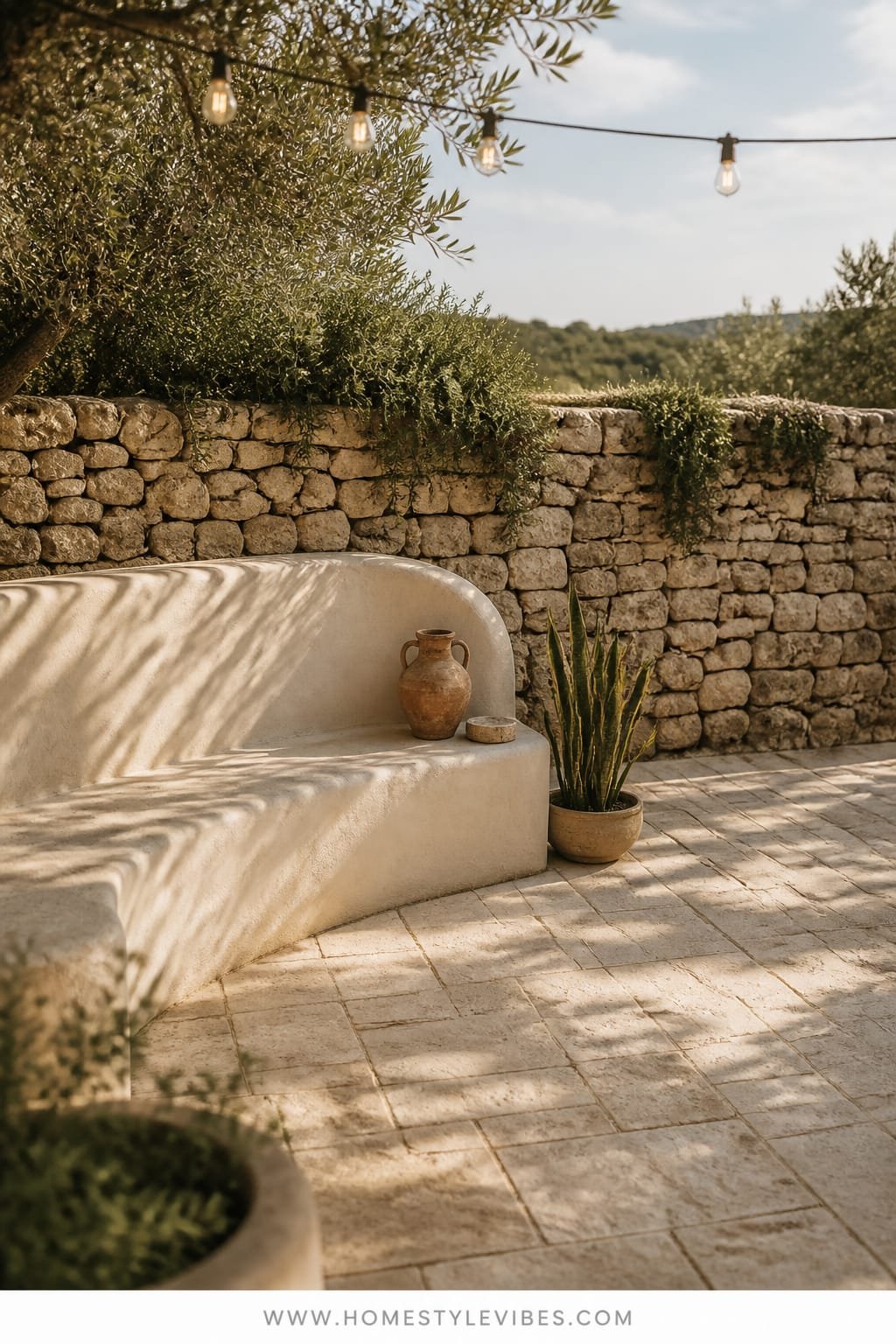
We’ve all been there: the patio technically “exists,” but it never feels cozy. You’ve tried more planters, a rug, even a new bistro set—still reads like a leftover corner. This concept fixes the vibe with three pillars: pale, limestone-look pavers for a clean foundation, dappled string lighting that softens everything at dusk, and a curved bench that creates a destination instead of a dead zone.
The mood leans warm Mediterranean courtyard—grounded but not fussy. Pale stone bounces light in the evening, the curved seating feels sculptural and friendly, and layered planters soften edges. The setup works in real homes because curves invite conversation and help small patios feel intentional. At night, string lights create flattering light that hides imperfections and highlights textures on planters and cushions.
Why this photographs beautifully: contrast between pale “stone” and deeper foliage, the gentle arc of the bench against square pavers, and soft shadows from the lights. It’s a no-fail recipe for visual depth without visual noise.
Variations to fit you: build the curve with modular outdoor benches for renters, or DIY with concrete blocks clad in stucco. Small space? Make a 5-foot arc with a single cushion. Prefer moodier? Swap to charcoal cushions and olive trees for richer shadows.
Budget Breakdown:
- Porcelain limestone-look pavers: $4–$9/sq ft
- Curved bench (modular or DIY): $250–$900
- Weather-resistant bench cushion: $120–$350
- String lights (commercial grade): $45–$120
- Planters (3 mixed sizes, textured): $120–$450
- Low shrubs/olive/scented herbs: $60–$200
Total Estimated Cost: $599 – $2,029
Best For: Small to medium patios that need a focal point; evening entertainers; folks who want an easy-maintenance “courtyard” feel.
Key Design Elements:
- Main materials: porcelain pavers, stucco or composite bench, performance fabric, terracotta/stone planters
- Color palette: warm stone, soft white, olive green, sand, charcoal accents
- Lighting strategy: overhead string lights with warm 2200–2700K bulbs
- Furniture silhouettes: curved bench, round side table, low planter clusters
- Texture layers: nubby cushion covers, matte pavers, rough terracotta, smooth leaves
- Accent details: citronella candle bowls, linen throw, iron lanterns
How To Recreate This Look:
- Start with the foundation: lay limestone-look pavers or a pale outdoor rug if renting.
- Add a curved bench—modular sections or a DIY stucco build with plywood form and cement board.
- Layer 3 planters in different heights beside the bench; mix one sculptural plant with two softer, spill-over greens.
- Install warm string lights from house eave to a shepherd’s hook or tree, keeping a gentle swag for that dappled effect.
- Style with a long bench cushion, two lumbar pillows, and a round side table for balance.
Why This Looks Expensive: Curves read custom, pale “stone” looks architectural, and the consistent warm light tone unifies the scene. Even budget pavers look luxe when the grout lines align and the seating feels built-in.
Watch Out: Don’t hang lights too high or too taut. If they’re stretched arrow-straight at 12 feet, you lose intimacy and cast weird, harsh shadows. Aim for an 8.5–10 foot height and a soft dip.
Pro Styling Tip: At dusk, light only the string lights and a single lantern; the shadow pooling under the bench makes the curve pop on camera.
Keep scrolling—next up is a wild contrast of matte and gloss that makes even a narrow side yard feel editorial.
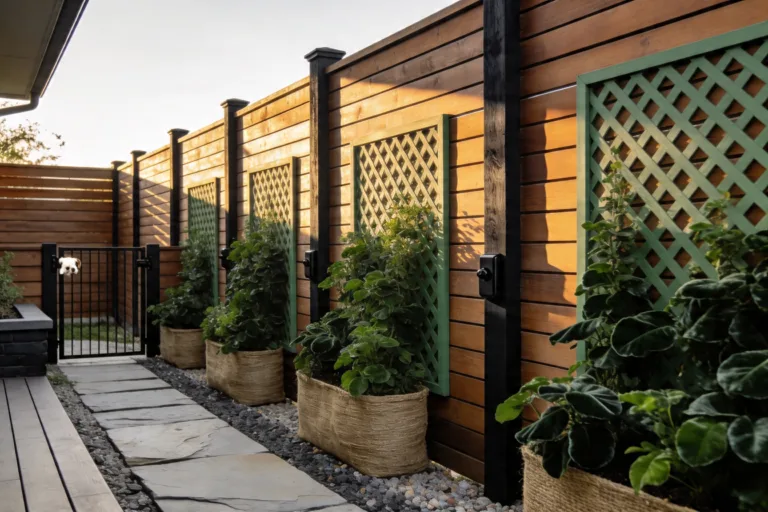
2. Charred Wood Screens, Low Sunset Glow, And A Slatted Daybed With Bolsters
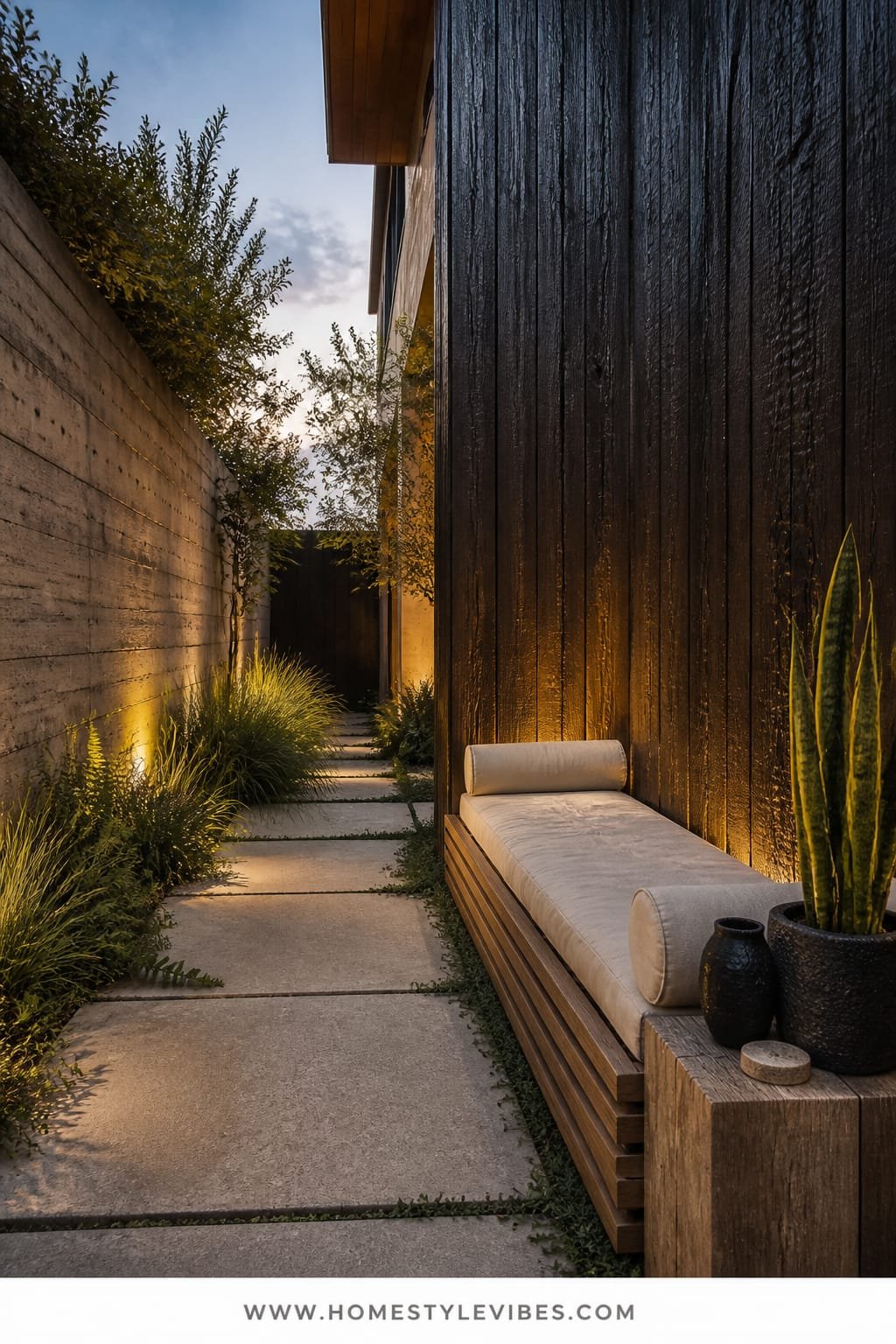
It’s that one long fence line that always feels like a corridor. You’ve tried hanging planters and string lights, but it still screams “utility.” Charred wood (yakisugi-style) screens give you dramatic texture, low warm lighting adds intimacy, and a slatted daybed becomes the lounge moment you’ve been missing.
Think moody Japanese-inspired garden meets urban townhouse. The dark vertical grain makes plants pop, while the daybed’s clean lines push everything modern. This works for privacy without building a whole new fence. Also: charred or charred-look boards resist weather better and hide scuffs, which is a real sanity-saver with kids and dogs.
Photographs love contrast: glossy leaves against matte blackened wood, a punch of creamy bolster cushions, and the soft line of an under-seat LED strip that creates floating shadows. Small space? This one shines in narrow yards because vertical lines elongate and the daybed functions like a bench by day and a nap haven by late afternoon.
Variations: Use charred-look paint-stain on cedar if true yakisugi isn’t available. Budget? A black exterior paint on standard fence boards plus a secondhand platform bed frame with outdoor slats works shockingly well. Renter-friendly? Free-standing panels set in planter bases.
Key Design Elements:
- Main materials: charred wood or black-stained cedar, powder-coated aluminum for brackets, outdoor slatted daybed
- Color palette: ebony, olive, creamy ecru, brushed steel
- Lighting strategy: low LED strip under bed frame, two ground spots grazing the screen
- Furniture silhouettes: linear daybed, round bolster cushions, rectangular screens
- Texture layers: charred grain, canvas cushions, polished stone side table, soft grasses
- Accent details: simple metal watering can, ribbed planters, narrow reed grasses
Budget Breakdown:
- Charred-look wood/screens: $250–$900 (size-dependent)
- Outdoor daybed/frame: $250–$1,200
- Outdoor cushions/bolsters: $120–$380
- LED strip and ground spots: $90–$260
- Planters and grasses: $100–$240
Total Estimated Cost: $810 – $2,980
Best For: Narrow side yards, townhomes, anyone craving a moody, modern garden lounge with low maintenance.
How To Recreate This Look:
- Define the wall: mount charred or black-stained vertical boards in panel sections.
- Place a slatted daybed 6–10 inches off the wall for airflow and LED routing.
- Add an under-seat LED strip facing inward to bounce light and create that “float.”
- Cluster two tall planters with feathery grasses and one low bowl with moss or thyme.
- Finish with two round bolsters in a creamy neutral and a small stone side table.
Why This Feels Designer: The tonal restraint—black, cream, olive—keeps the eye calm while subtle lighting adds drama. Everything has a strong silhouette, which reads high-end in photos and in person.
One Thing To Avoid: Over-accessorizing. If you add patterns, lanterns, throws, and side tables all at once, you kill the moody calm. Keep it spare.
Pro Styling Tip: Photograph at twilight with one ground spot grazing up the screen to catch the wood grain like velvet.
Pause and breathe. If one idea resonates more than the others, that’s your starting point. You don’t need all seven. One complete vignette that suits your life beats a dozen disconnected buys.
3. Honed Concrete Plinths, Morning Sun Wash, And A Sculptural Water Bowl
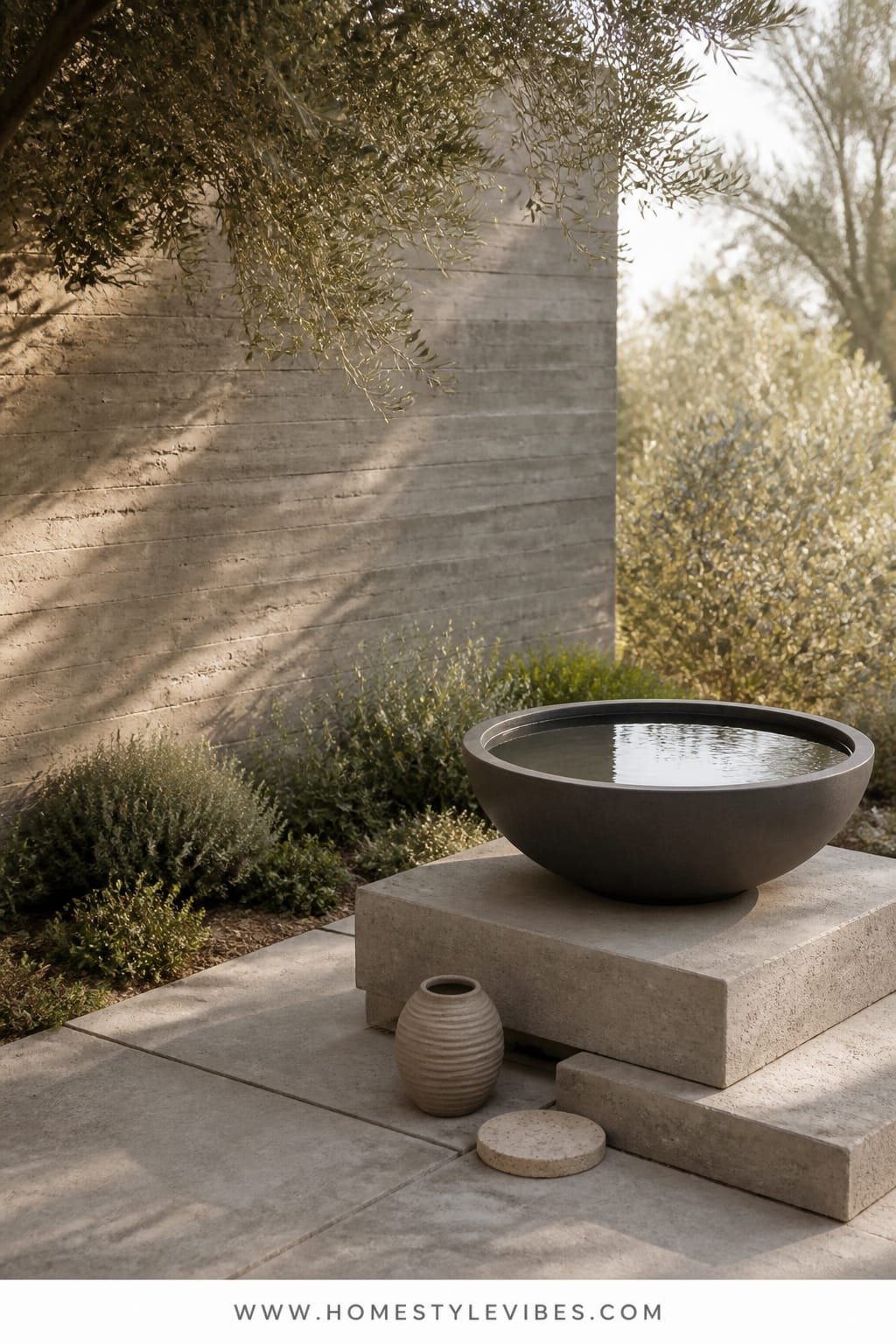
You love the idea of a focal point but keep buying small accents that vanish in daylight. The yard looks busy yet somehow empty. Here’s the fix: elevate a single moment. Honed concrete plinths give height and gravitas, morning light clears the visual clutter, and a statement water bowl becomes the quiet heartbeat of your garden.
The vibe is modern Mediterranean meets art gallery—clean, serene, grounded. This suits any garden that needs a visual pause. Concrete reads architectural, but a shallow water bowl softens it with ripple and reflection. Bonus: moving water attracts birds. My friend once agonized over plant colors for weeks before realizing the real issue was a lack of scale in the center; one large bowl on a plinth changed everything by lunch.
Photographs cling to reflection. Gentle ripples mirror the sky, while textured plinths catch shadows at sunrise. Use this in small courtyards to fake depth, or in larger spaces to anchor meandering paths. Maintenance stays light if you choose a bird-friendly solar bubbler and wipe the surface once a week.
Variations: Budget-friendly with a painted ceramic bowl on a cinderblock base skim-coated with concrete. Renter version: free-standing plinth and bowl on a gravel square you can reclaim later. Darker mood: charcoal plinth and bronze bowl with deep purple ajuga at the base.
Budget Breakdown:
- Concrete plinth or pedestal: $180–$600
- Large water bowl (stone, metal, or ceramic): $150–$700
- Solar bubbler: $25–$70
- Gravel base and edging: $90–$200
- Surround plants (3–5): $60–$180
Total Estimated Cost: $505 – $1,750
Best For: Entry gardens, center of patios, quiet corners that need one hero piece and minimal upkeep.
Key Design Elements:
- Main materials: honed concrete, ceramic or stone bowl, pea gravel
- Color palette: pale gray, cloud white, soft sage, bronze option
- Lighting strategy: natural morning light; optional subtle path lights for evening
- Furniture silhouettes: none needed; the bowl and plinth are the furniture
- Texture layers: smooth concrete, reflective water, fine gravel, delicate groundcovers
- Accent details: solar bubbler, two river stones, thyme cascading over edge
Why This Reads High-End: One large-scale sculptural element in a cleared visual field looks curated. The restraint tells a story of confidence, not budget.
How To Recreate This Look:
- Mark a 4×4 or 5×5 foot square; lay landscape fabric and fill with pea gravel.
- Center the concrete plinth; ensure it’s perfectly level for a calm water line.
- Place the bowl, add water, and test the solar bubbler placement for subtle movement.
- Plant a soft edging (thyme, sedum) that won’t block the view line.
- Style with two smooth stones inside the bowl to add a point of focus.
The Most Common Mistake: Picking a bowl that’s too small. If your patio chairs are standard size, you need a 24–32 inch diameter bowl for visual presence. Tiny reads like desk decor outside.
Pro Styling Tip: Shoot in early morning when the water reflects sky gradients; it gives you that “soft editorial” look even on a phone camera.
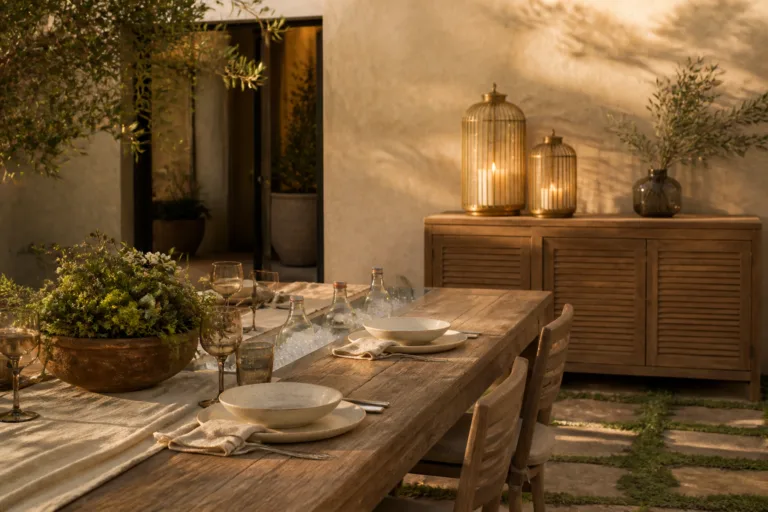
4. Aged Terracotta, Lantern Glow, And A Bistro Table With Marble Top
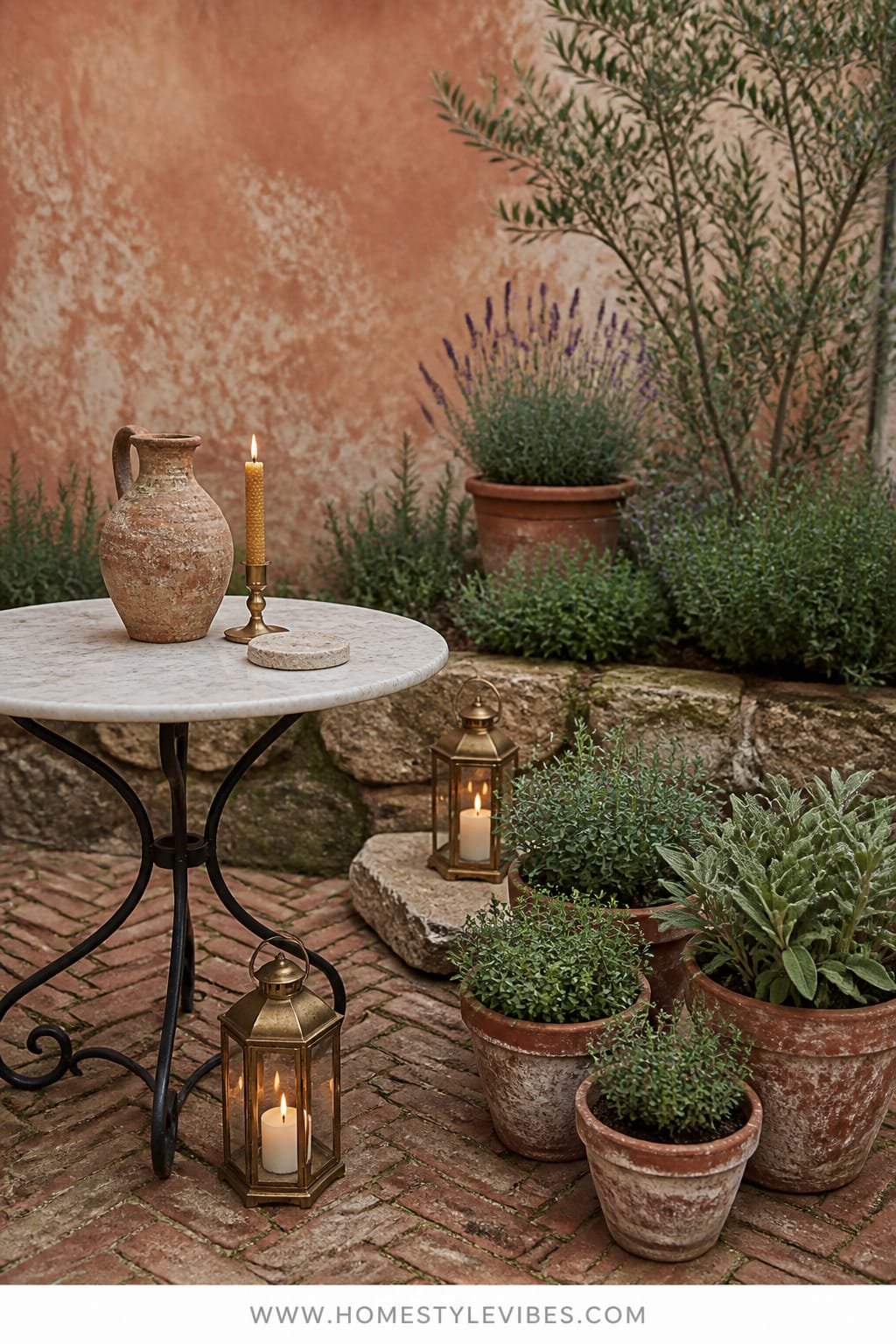
You crave charm but own a boxy patio that feels like an afterthought. You’ve tried colorful cushions, but it all looks random by month’s end. The fix is a European café rhythm: aged terracotta pots clustered with soft herbs, lantern glow to add romance, and a petite bistro table with a marble or marble-look top to whisper “stay for one more cup.”
We’re talking classic French courtyard energy. Terracotta gives you warmth and patina, which actually improves with a little weather. Lanterns layer portable light where you need it most—no wiring required. The bistro table introduces a focal height for florals or pastries and visually justifies two slim chairs without hogging floor space.
Why this works in real life: it’s compact, renter-friendly, and the plants are practical (you use them for dinner). Photographing the scene is easy because the color story is baked in—terra cotta amber, creamy marble, and herbaceous green look timeless in any light.
Variations: If you need kid-proof, go for marble-look porcelain on a bistro base and LED candles for safety. Small balcony? One chair pulled tight to the wall, one folding chair you tuck away. Darker mood: black iron chairs and deep green glazed pots mixed with unglazed terracotta.
Budget Breakdown:
- Bistro table (marble or marble-look): $130–$480
- Two café chairs: $120–$400
- Terracotta pots (4–6 mixed sizes): $60–$160
- Herbs (rosemary, thyme, mint, basil): $20–$60
- Lanterns and LED candles: $45–$150
- Outdoor rug (optional, 4×6): $60–$180
Total Estimated Cost: $435 – $1,430
Best For: Balconies, small patios, anyone who likes morning coffee outside and grows herbs for cooking.
Key Design Elements:
- Main materials: terracotta, iron, marble or porcelain top
- Color palette: warm clay, soft cream, olive/emerald greens, black or bronze metal
- Lighting strategy: 2–3 lanterns at knee level for a slow, romantic glow
- Furniture silhouettes: round bistro table, airy café chairs, round and tapered pots
- Texture layers: chalky terracotta, glossy leaves, cool stone top, woven rug
- Accent details: linen napkins, a tiny salt dish, citrus in a bowl
How To Recreate This Look:
- Place the bistro table slightly off-center to avoid a “centered stage” vibe.
- Cluster 4–6 terracotta pots around chair legs—vary widths and heights.
- Plant herbs and one trailing variety like oregano for softness.
- Position two lanterns on the ground and one on the table.
- Finish with two cushions in a neutral stripe for a café touch.
Why This Looks Intentional: Repeating materials (terracotta and iron) create cohesion, while the marble top introduces one elevated surface that lifts the entire arrangement visually.
Don’t Do This: Avoid too many bright colors on cushions here. The terracotta and greenery are the colors. Let them sing.
Pro Styling Tip: For photos, place a lemon or two on a saucer and a sprig of rosemary—tiny scale reads human and chic.
Quick breather: Remember, this isn’t about recreating a showroom. It’s about building a garden that fits your mornings, your dinners, your Sunday naps. Take the pieces that feel like you; skip what doesn’t.
5. Brushed Brass Accents, Twilight Uplighting, And A Deep-Seat Teak Sofa
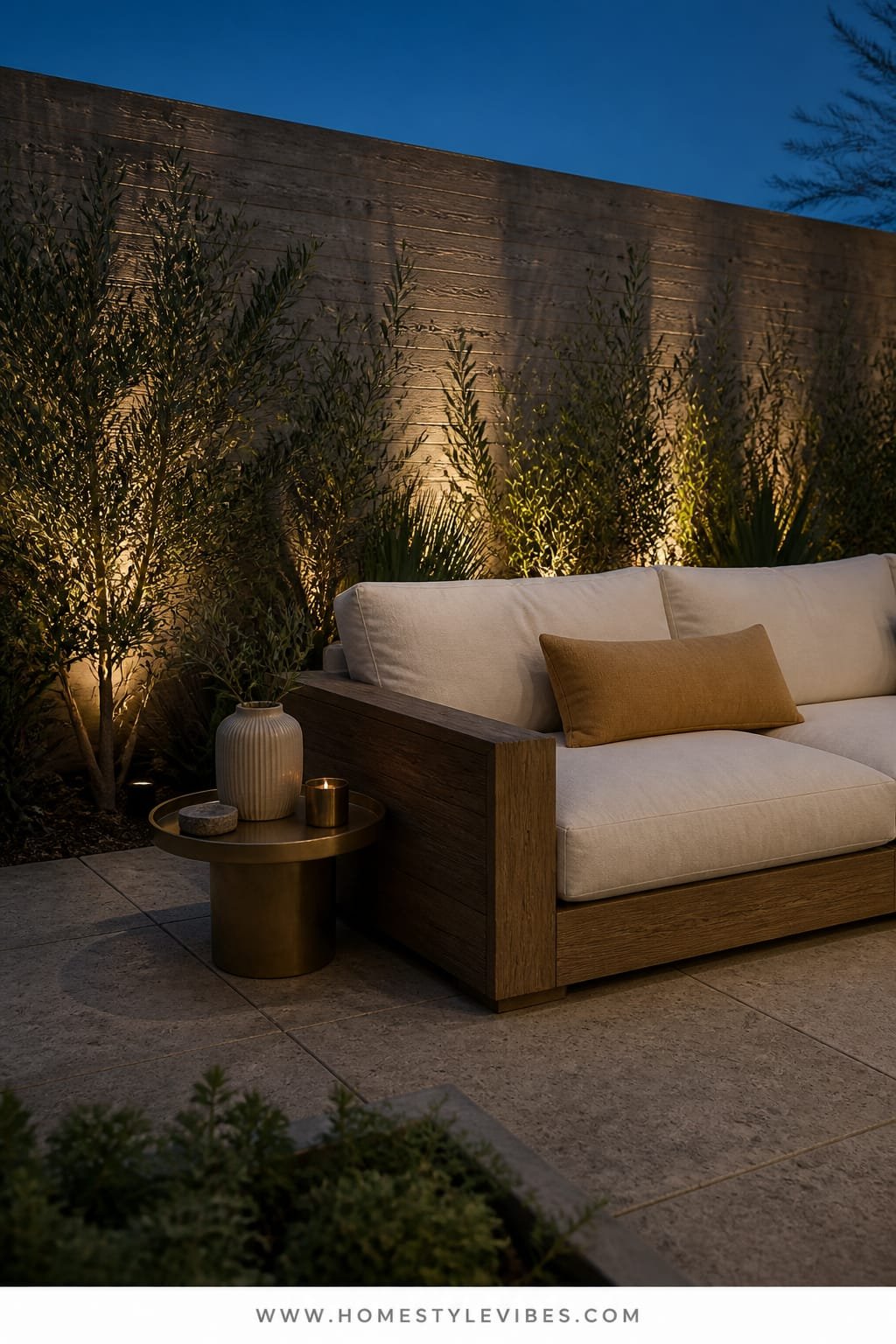
Maybe you’ve got furniture outside but it still feels like a starter set. The cushions blur into the background, and evenings read dull instead of dreamy. Here’s the upgrade path: brushed brass accents for subtle gleam, purposeful uplighting on greenery for architecture, and one deep-seat teak sofa that says, “We live here.”
This is warm ambient luxury, the hotel-lounge energy that makes people linger after dessert. Teak brings weight and natural oil richness, while brass handles, tray edges, or planters catch twilight like fireflies. Uplighting adds structure by carving plant silhouettes onto the fence or stucco—suddenly your backyard has “walls.”
Photos love this because the bulbs create depth and drama: shadow fingers behind plants, a single lit plane on the sofa arm, and glints on brass. In real homes, it’s shockingly comfy and family-friendly; choose performance fabric in sand or taupe, and spills vanish with a quick scrub. Renter? You can do 90% of this with portable lights and a stand-alone sofa.
Variations: Budget-friendly with acacia instead of teak and brass-look powder-coated aluminum accessories. Small space? One loveseat plus a pouf. Darker vibe? Charcoal cushions and aged-brass patina finishes.
Budget Breakdown:
- Teak sofa or loveseat: $650–$2,500
- Uplight fixtures (3–5): $120–$450
- Brass-accent planters/trays/handles: $80–$300
- Performance cushions: included or $150–$450
- Outdoor side tables (2): $120–$400
Total Estimated Cost: $1,070 – $4,100
Best For: Larger patios or decks; hosts who entertain at dusk; households that want comfort without sacrificing polish.
Key Design Elements:
- Main materials: teak, brushed brass, stone or ceramic side tables
- Color palette: honey wood, sand, taupe, olive, soft black
- Lighting strategy: plant uplights at 10–20 degrees; one lantern at coffee table height
- Furniture silhouettes: deep, low sofa; chunky arms; round or drum side tables
- Texture layers: slubbed cushions, smooth brass, ribbed ceramic, leafy shadows
- Accent details: brass watering wand, linen throw, weighted candleholders
Why This Looks Expensive: Material honesty—real wood grain, real (or convincingly brushed) metal—and purposeful light placement. You’re telling the eye exactly what to notice.
How To Recreate This Look:
- Place the sofa opposite your best plant grouping or fence area for a view.
- Install 3–5 uplights behind taller plants, angling to graze leaves and stop before window height.
- Add two side tables in contrasting textures (stone or ribbed ceramic).
- Style a brass tray with low candles and a small vase of clipped branches.
- Introduce a single patterned pillow—just one—for personality without clutter.
Watch Out: Don’t overlight. If everything is bright, nothing feels special. Keep your lumen count modest and prioritize glow over glare.
Pro Styling Tip: For photos, turn off overhead porch lights; rely on uplights and candles to shape drama and depth.
6. Limewash Stucco Planter Wall, Soft Overcast Light, And A Built-In Pizza Oven Ledge
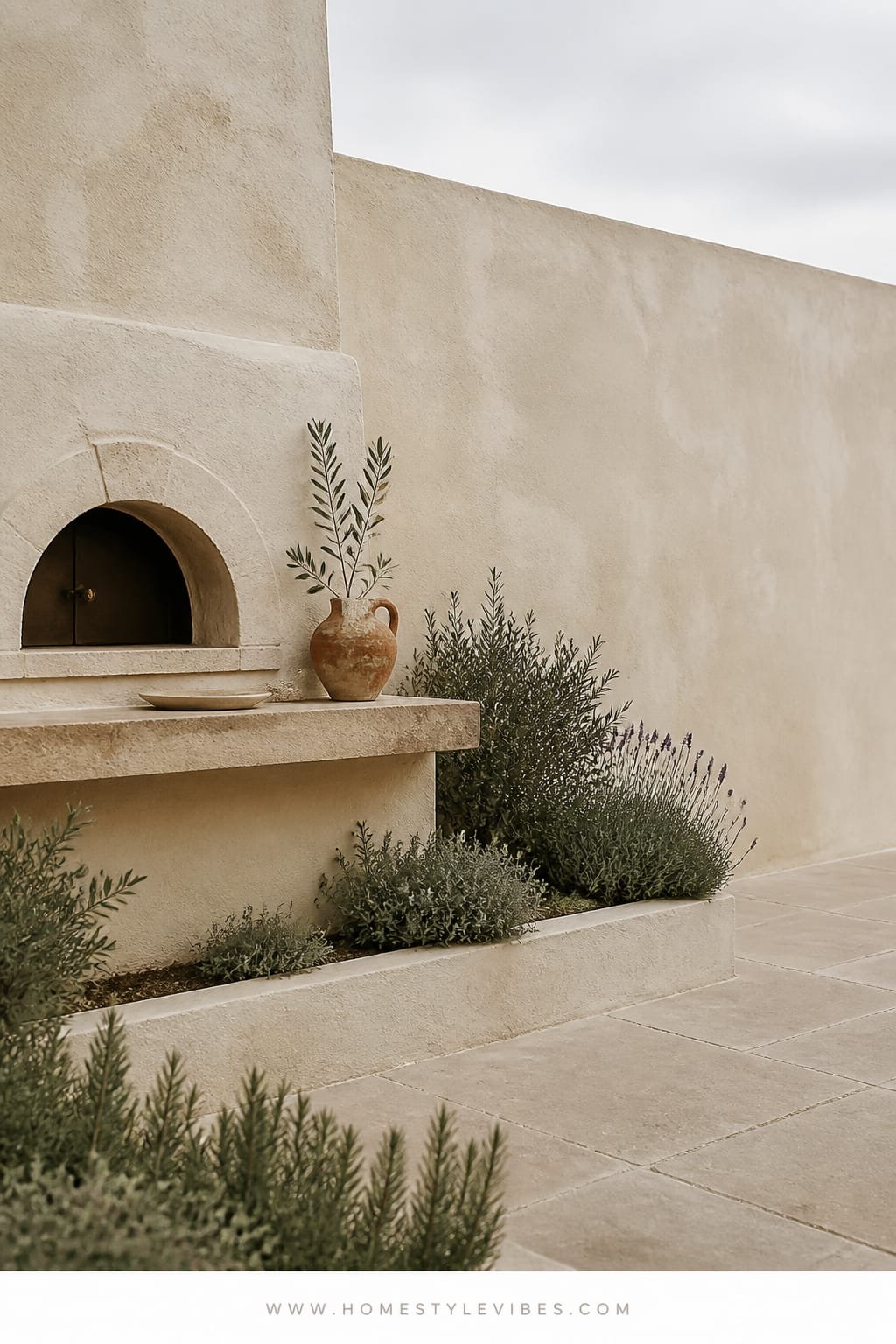
You’ve got a blank exterior wall that drags the whole yard down. It’s bland by day, worse by evening. Transform it with a limewash stucco planter wall—think textured plaster, not flat paint—paired with the soft diffusion of overcast light, and a built-in pizza oven ledge that turns Saturday nights into a ritual.
We’re in modern Mediterranean territory again, but this time it’s all about architectural texture and function. Limewash reads artisanal because it shows brush movement and natural variation. The planter wall lets you layer cascading herbs, while the oven ledge anchors the scene with purpose. Overcast or shaded light loves limewash; it rolls across the texture, creating subtle highs and lows that feel expensive.
Photographically it’s a dream: matte stucco swallows harsh glare, herbs add delicate shadows, and the oven opening becomes a perfect circular focal point. Real-life benefits? Storage under the ledge, cooking outside, and a wall that finally feels like part of the garden, not the boundary of it.
Variations: No oven? Install a deep ledge with a round cut-out for a planter or bowl. Budget? Faux stucco with masonry paint and sand additive. Renter? Freestanding planter shelf units in front of a painted backdrop panel.
Budget Breakdown:
- Limewash or mineral paint: $80–$220
- Stucco materials or skim coat: $200–$600
- Built-in ledge framing and stone top: $300–$1,200
- Pizza oven (portable or built-in): $300–$2,500
- Planter inserts and herbs: $80–$220
- Wall sconces (optional, warm): $120–$300
Total Estimated Cost: $1,080 – $5,040
Best For: Medium to large patios with a blank wall; hosts who love outdoor cooking; anyone who wants tactile, hand-applied texture.
Key Design Elements:
- Main materials: limewash stucco, stone or concrete ledge, terracotta inserts
- Color palette: chalky white, olive, basil green, soot accents
- Lighting strategy: let daytime diffuse light do the work; add two wall sconces for night
- Furniture silhouettes: simple benches or stools; keep nearby seating low and clean
- Texture layers: brushed plaster, rough terra cotta, glossy olive leaves, charred crusts (yes, pizza counts)
- Accent details: iron peel hook, linen tea towels, a ceramic oil bottle
Why This Feels Designer: Hand-applied textures beat flat paint every time. The ledge creates an architectural line that ties the wall to daily use—function as form.
How To Recreate This Look:
- Skim coat the wall for a light stucco texture; let it cure fully.
- Apply limewash in two to three coats, leaving gentle variation—don’t overwork it.
- Build a 12–18 inch deep ledge with proper supports; top with stone or concrete.
- Place a portable pizza oven or create a centered oven niche if building in.
- Layer herb planters on the ledge; tuck a small cushion on a nearby stool.
Don’t Do This: Avoid bright white LEDs on the wall. Cool light flattens limewash and shows every patch. Warm, dimmable only.
Pro Styling Tip: Shoot on a cloudy day; the wall will look like a Tuscan postcard without a single filter.
True talk: I once painted an exterior wall three times in one weekend because the sheen was wrong. The secret isn’t more decor—it’s better texture and the right light. Get those right and everything else becomes optional.
7. Corten Steel Edging, Golden Hour Backlight, And A Round Fire Bowl Hearth
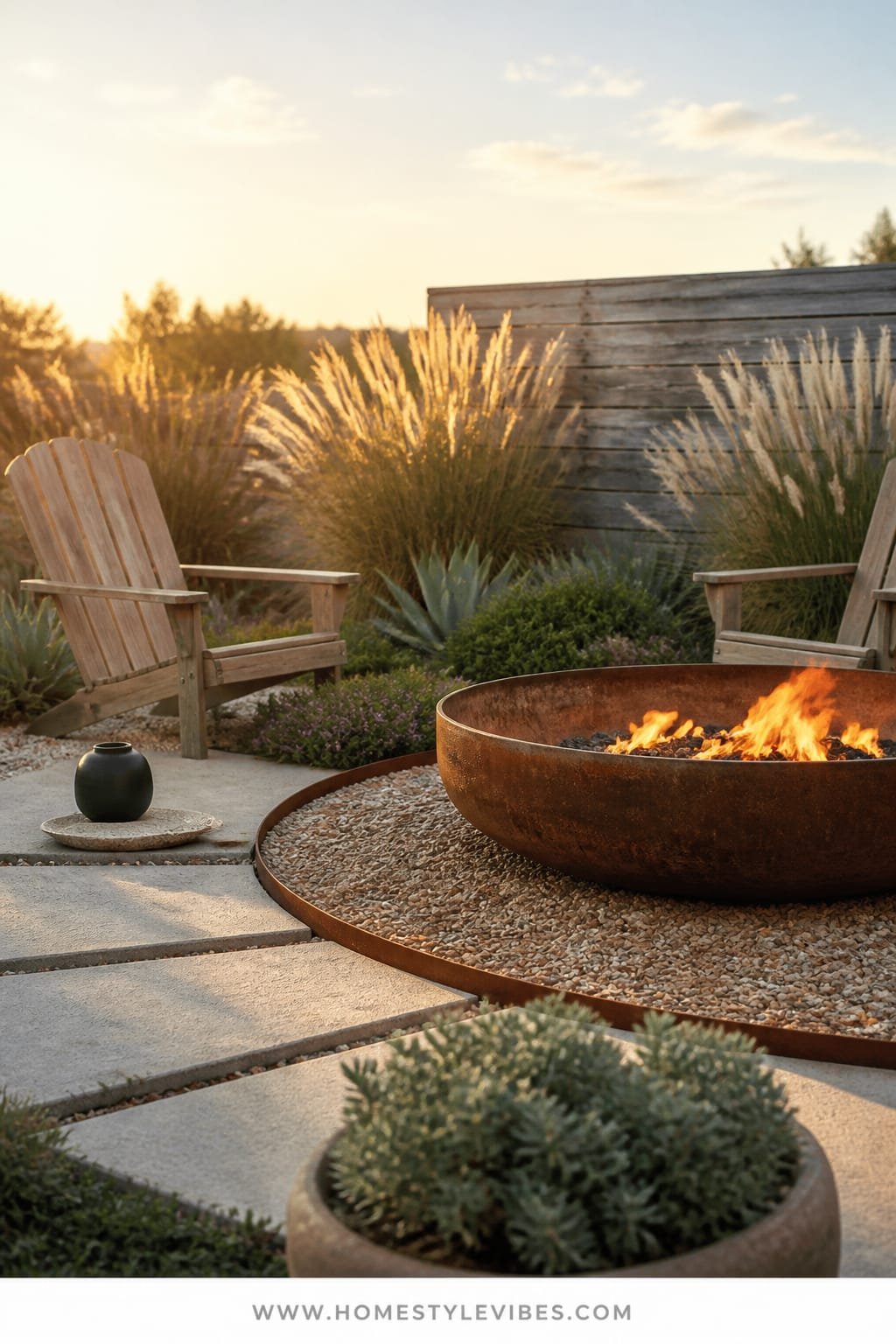
You want a backyard that feels like a destination, not a pass-through. But lawn edges bleed into beds and there’s no evening anchor. Enter corten steel edging that crisps up your planting lines, golden hour backlight that turns grasses into halos, and a round fire bowl that brings everyone outside even when the air nips.
The style leans modern meadow meets California casual. Corten’s rusted patina glows at sunset and hides soil smudges. Backlighting tall grasses like miscanthus or pennisetum creates drama for pennies, and the round fire bowl pulls chairs inward—instant conversation pit, zero built-in needed. Weather? You’ll use this 9 months a year with a blanket.
Photographs thrive on layers here: foreground chairs, mid-ground fire bowl, backlit plumes painting the sky. Everyday living wins, too: crisp edges make mowing fast, and the fire bowl doubles as a coffee table when covered. Renter? Use freestanding steel garden rings and a portable propane fire bowl.
Variations: Smaller yard? Choose a 28–32 inch bowl. Darker palette? Black powder-coated bowl with mauve grasses. Budget take: steel-look plastic edging hidden by mulch still cleans the lines (nobody will know from five feet away, trust me).
Budget Breakdown:
- Corten steel edging (40–80 ft): $200–$600
- Round fire bowl (propane or wood): $180–$900
- Gravel or paver pad for bowl: $120–$300
- Grasses and perennials: $120–$360
- Four outdoor chairs: $220–$900
Total Estimated Cost: $840 – $3,060
Best For: Medium yards with room for a circle of chairs; sunset lovers; low-maintenance gardeners who want strong lines and seasonal drama.
Key Design Elements:
- Main materials: corten steel, gravel/pavers, powder-coated metal or concrete fire bowl
- Color palette: rust, straw gold, charcoal, eucalyptus green
- Lighting strategy: rely on natural backlight; add a single low lantern for safety
- Furniture silhouettes: sling or strap chairs with a round profile
- Texture layers: rough gravel, feathered grasses, smooth metal, flickering flame
- Accent details: wool throw, marshmallow skewers, a low steel log holder
How To Recreate This Look:
- Lay a circular gravel or paver pad sized to your bowl plus chairs.
- Install corten edging to define nearby beds; keep lines confident and sweeping.
- Plant a mix of tall grasses behind the bowl to catch backlight.
- Place the fire bowl slightly off-center to avoid “perfect circle syndrome.”
- Add four chairs in a loose arc with a small, movable side table.
Why This Looks Expensive: Robust materials weather beautifully, and the strong geometry of circle + arc reads intentional. Backlit plants are nature’s special effects—you just frame them.
The Most Common Mistake: Undersizing the pad. If chairs teeter on the edge of gravel, the whole setup feels temporary. Give yourself at least 30 inches behind each chair.
Pro Styling Tip: For photos, light the fire just as the sun dips; you’ll capture flame plus sun glow on the corten patina—instant warmth.
Quick mindset reset: If you’re feeling choice overload, pick one dominant material you love—terracotta, teak, concrete, or corten—and build around it. Consistency beats quantity every single time.
Quick Checklist
- Limestone-look pavers for a bright, clean foundation
- Curved bench or modular seating to create a destination
- Commercial-grade warm string lights at 2200–2700K
- Charred or black-stained screens for contrast and privacy
- Slatted daybed with round bolsters for sculptural comfort
- Concrete plinth with a single large water bowl focal point
- Terracotta pot cluster with edible herbs
- Bistro table with marble or marble-look top
- Teak or acacia deep-seat sofa with performance cushions
- Uplights angled to graze plants, not blind guests
- Limewash stucco texture on feature wall
- Functional ledge for pizza oven or serving
- Corten steel edging for crisp, maintainable beds
- Round fire bowl sized to your seating circle
- One metallic accent family (brass or bronze) to repeat
Frequently Asked Questions
How much should I budget if I only pick one of these home garden decor ideas?
Plan $500–$1,200 for a compact, well-styled vignette like the terracotta bistro corner or the water bowl plinth. Larger builds like a teak lounge or pizza ledge can run $1,000–$3,000 depending on materials and lighting.
My patio is tiny. Which idea works best without crowding?
Go with the bistro setup or the curved bench nook in a shortened arc. Keep pots in three sizes, choose one cushion color, and let your wall or railing host the lighting to free up floor space.
I rent—what can I do without drilling or building?
Use freestanding panels for privacy, a portable daybed, lanterns instead of hardwired lights, and a gravel pad in a frame you can lift later. Terracotta clusters and a bistro table deliver big charm with zero commitment.
How do I keep outdoor spaces low maintenance while still looking polished?
Choose hardy plants (grasses, rosemary, thyme), stick to 2–3 materials repeated throughout, and install lighting you can automate. Avoid tiny decor items that migrate or break—think fewer, larger pieces.
What’s the most common design mistake in gardens that look “off” in photos?
Flat light and no scale change. Add one taller element (a plinth, a screen, or a tree in a large planter) and control your light temperature. Warm bulbs and a single statement piece usually fix 80% of the issue.
Conclusion
Consider this your permission slip to start small and start now. Pick the one idea that gave you a little spark—maybe it’s the charred screens with a slatted daybed, or that simple water bowl rippling in the morning light—and bring it to life this weekend. The truth is, outdoor luxury doesn’t come from buying more; it comes from better texture, calm color stories, and lighting that flatters everything it touches.
Focus on one dominant material, one consistent light quality, and one statement piece per zone. That’s the formula that makes a garden look stunning and live beautifully. You’ve got the eye, you’ve got the plan—go make the space that makes you want to linger outside just five more minutes, every single evening.
And if a lemon on a saucer shows up on your table next week, I’ll be quietly proud from here. Seriously—this is the part where your garden starts to feel like home.

About the Author

Krisztina P.Rendes, Founder of Home Style Vibes
Founder of Home Style Vibes
Krisztina Puskásné Rendes created Home Style Vibes as a cozy-modern lifestyle space where homemaking meets inspiration. Her goal is to help women create beautiful, organized, and peaceful homes they truly love — without overwhelm. You’ll find here heart-driven content on home decor, cleaning tips, easy family recipes, organization and decluttering, DIY home projects, plants, and seasonal ideas — all designed to bring more calm, comfort, and style into everyday life.