6 Tropical Home Decor Ideas For A Bedroom That Feels Like A Paradise Getaway
You want a bedroom that whispers salt air, warm breezes, and that delicious exhale you only find on vacation… but your reality looks like tangled cords, mismatched wood tones, and harsh lighting that makes everything feel flat. You crave creamy textures, dappled light, and the glow of warm wood against crisp white bedding—but clutter and “almost-right” decor keep blocking the vibe. These six tropical home decor ideas deliver photogenic, Pinterest-worthy rooms you’ll actually sleep better in—without going over $2,500 if you stick to the essentials and tackle one idea per weekend for six weeks. Expect lighter mornings, calmer nights, and a bedroom that finally feels finished.
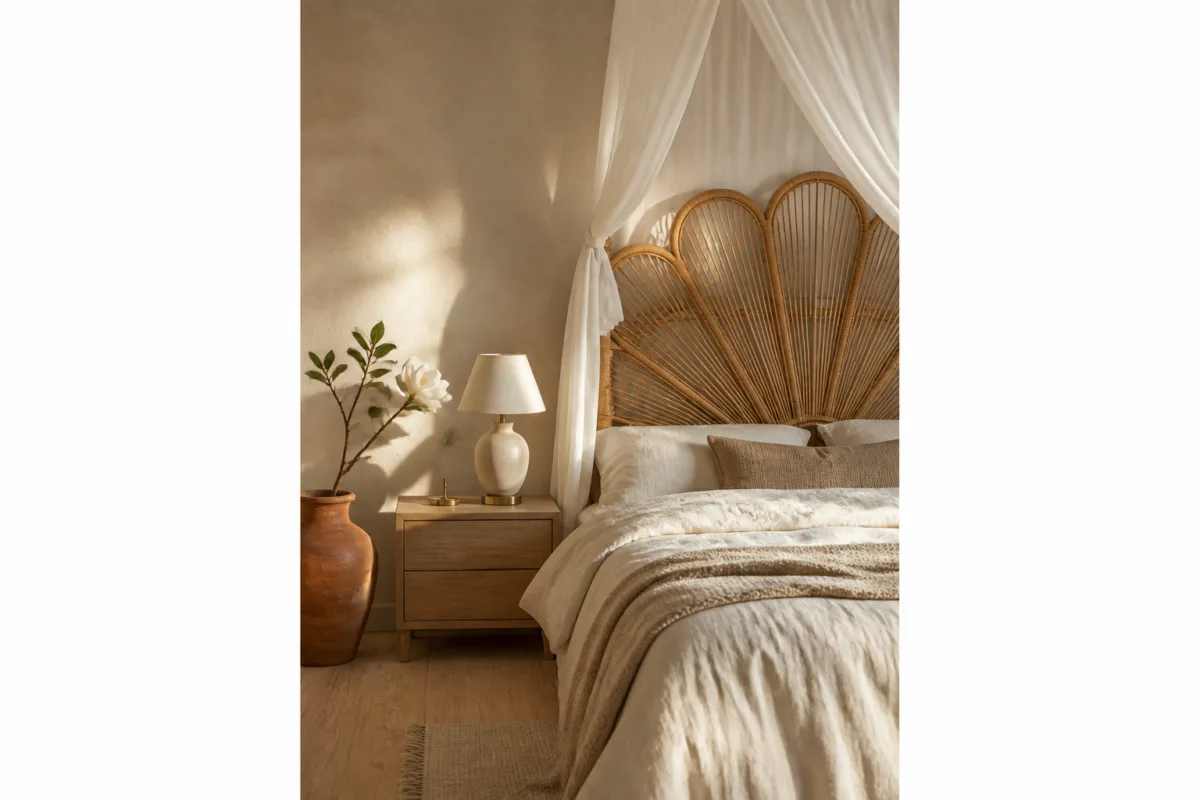
Each design below is a complete concept—color, light, furniture, textiles, and small styling moves—so you can pick the one that resonates and commit. If you love relaxed elegance, textures that feel like a slow morning, and a room that handles real-life mess without falling apart, you’ll feel right at home.
1. Rattan Headboard, Golden Hour Glow, and a Breezy Linen Canopy
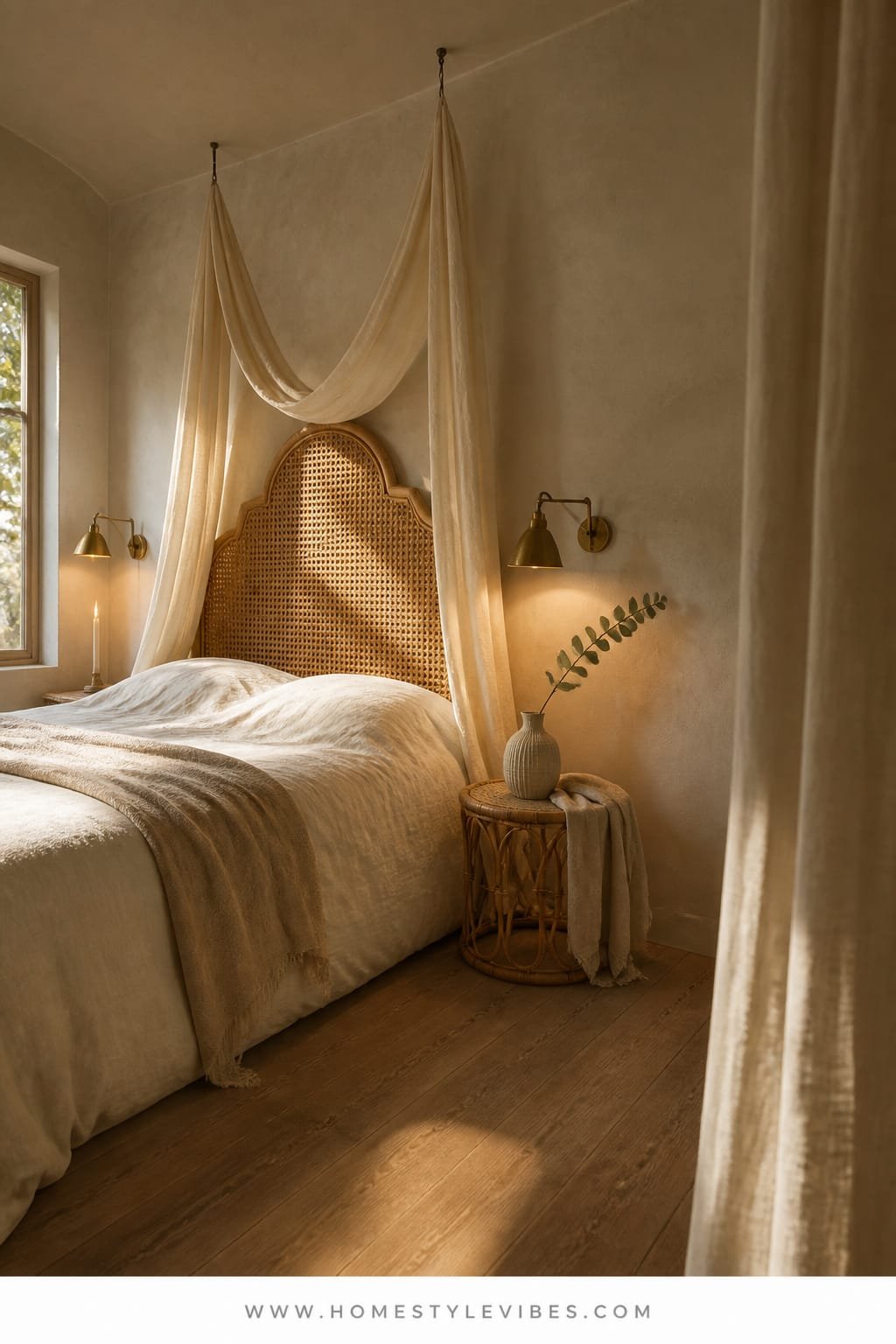
We’ve all been there: you stack cute pillows and swap a throw blanket, but the bed still reads “blah.” It’s that one corner that never looks calm, no matter how many times you smooth the sheets. This look solves that by letting three heroes do the heavy lifting: a sculpted rattan headboard, low-warm lighting that mimics golden hour, and a loose, airy linen canopy that dips and drapes like a sea breeze.
The mood feels hotel-spa with a hint of island bungalow. Why it works in real homes: the rattan adds curve and warmth even in small rooms, linen diffuses light so clutter recedes, and the lighting plan handles both 6 a.m. alarms and 10 p.m. wind-downs. Materials are honest and easy to maintain—vacuum the rattan once a month and toss the canopy in a gentle wash every season. It photographs beautifully because of the layered neutrals: matte linen, honey wood, and that soft shadow play you get when light filters through fabric.
Variations help this fit your life. On a tight budget, grab an arched rattan headboard (even secondhand), a pair of plug-in sconces with amber bulbs, and a simple curtain panel as your canopy. In a rental, suspend the canopy from removable ceiling hooks. Going darker? Choose espresso rattan and ecru linen, then switch bulbs to 2200K for a moody dusk feel.
Budget Breakdown:
- Rattan headboard: $180–$600
- Linen canopy panel or sheer curtain pair: $40–$180
- Plug-in sconces with warm-dim bulbs: $120–$300 per pair
- Matte white bedding set (duvet + shams): $90–$250
- Jute or seagrass rug: $120–$350
Total Estimated Cost: $550 – $1,680
Best For: Small to medium rooms that need warmth and softness; renters who want visual drama without renovations; anyone who prefers a low-stress, low-maintenance refresh.
Key Design Elements:
- Main materials: rattan, laundered linen, jute
- Color palette: honey, sand, cloud white, soft eucalyptus
- Lighting strategy: warm 2200–2700K bulbs, wall sconces, and a dimmable table lamp
- Furniture silhouettes: rounded headboard, slim nightstands, woven bench
- Texture layers: slubby linen, braided jute, cane weave
- Accent details: coconut or sandalwood candle, leafy palm in a clay pot, ceramic tray
How To Recreate This Look:
- Start with a rattan headboard that has curve or pattern to anchor the bed wall.
- Add a breathable linen canopy or two sheer panels suspended from the ceiling with discreet hooks.
- Layer a jute rug under the bed to add beach texture and ground the palette.
- Install plug-in wall sconces at eye level on both sides of the bed with warm bulbs.
- Style with crisp white bedding, two patterned pillows in a tropical leaf or batik print, and one ceramic catch-all tray.
Why This Looks Expensive: The canopy introduces height and softness, the rattan creates artisanal detail, and the warm lighting blurs imperfections. That trio says “custom,” even if everything came from big-box stores.
Watch Out: Don’t hang the canopy too low. Leave at least 18 inches above your headboard so the fabric reads organic and intentional, not droopy. Also, avoid pairing cool white bulbs with warm woven textures—they’ll clash and flatten the room.
Pro Styling Tip: Tuck the duvet just at the foot of the bed and let the sides fall loosely; the uneven linen edge catches light in photos and adds that lived-in resort feel.
2. Teak Nightstands, Cool Lagoon Palette, and a Sculptural Woven Pendant
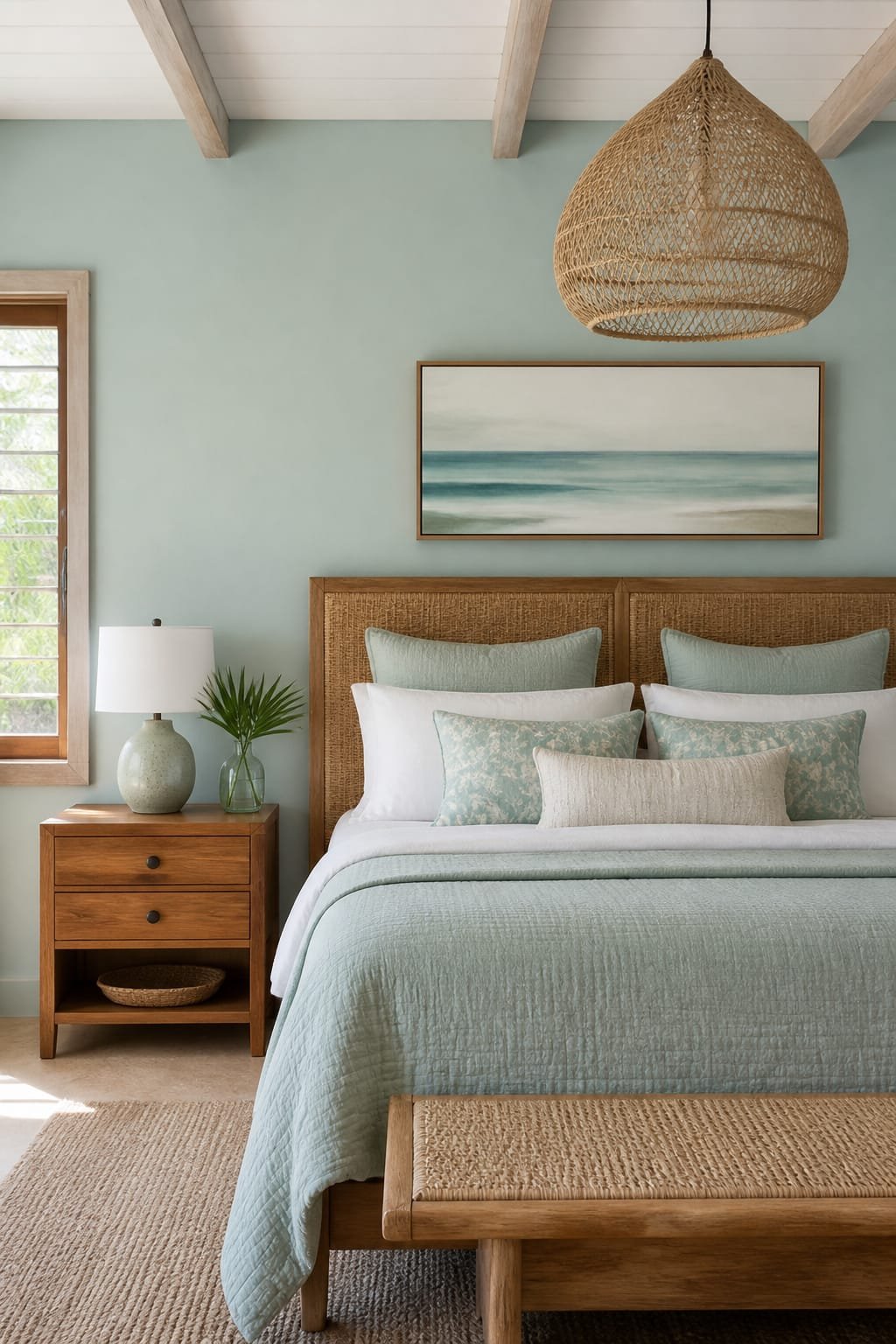
You want color, but the fear of “too bright” stops you every time. You’ve tried a teal pillow or two, and it just looked random. Here’s the fix: treat the color like water. Let teak be your shoreline, then bring in small ripples of lagoon tones—sea glass, aquamarine, pale jade. Finish with a sculptural woven pendant that casts soft, shell-like shadows across your ceiling.
The mood is coastal modern with a refined edge—nothing kitschy, zero seashell overload. In real homes, the lagoon palette plays nicely with beige carpeting, off-white walls, or even existing gray paint. The teak lends gravitas and avoids that “dorm room with bright pillows” trap. Lighting matters here: the woven pendant diffuses poorly lit corners and softens the room at night, which is key in bedrooms with just one window.
For small rooms, choose slimmer teak tables and a compact pendant. Budget version: go for a rubberwood nightstand in teak finish and a rattan pendant; paint a thrifted lamp base in a sea-glass gradient. Darker version: sub in deep indigo for accent pillows and a charcoal throw to ground the pastel blues.
Budget Breakdown:
- Teak or teak-look nightstands (pair): $250–$900
- Woven pendant + LED bulb: $70–$300
- Lagoon-tone pillow set + throw: $60–$180
- Neutral curtain panels (linen blend): $80–$220
- Vintage-style ceramic lamp: $60–$160
Total Estimated Cost: $520 – $1,760
Best For: Rooms with limited natural light; homes with warm floors that need a cool counterbalance; anyone craving a color story that still reads grown-up.
Key Design Elements:
- Main materials: teak, woven rattan, ceramic
- Color palette: lagoon blue, sea glass, driftwood, warm white
- Lighting strategy: central woven pendant + bedside task lamps
- Furniture silhouettes: boxy nightstands, rounded ceramic lamp bases
- Texture layers: open-weave pendant, linen curtains, soft knits
- Accent details: coral sculpture (resin or saved beach rock), slim brass pull handles
How To Recreate This Look:
- Start with a pair of teak nightstands to set the tone and color warmth.
- Add a woven pendant centered over the bed with a dimmable, warm LED bulb.
- Layer lagoon hues using two pillows, one throw, and a ceramic lamp base.
- Install airy curtains that kiss the floor to soften the window wall.
- Style with a small stack of coastal photography books and a simple dish in sea-glass green.
Why This Feels Designer: The restraint—only a few cool tones against rich wood—keeps it luxe. The pendant’s shadow pattern at night reads like boutique hotel lighting, not a basic overhead fixture.
One Thing To Avoid: Don’t scatter five different blue-greens. Cap your accents at two tones so the room looks serene, not splashy.
Pro Styling Tip: Offset the pendant slightly toward your reading side of the bed; asymmetry adds editorial drama in photos without spending a dime.
Pause and breathe. You don’t need to attempt all six ideas. If one detail—the canopy, the pendant, the teak—lights you up, start there. You’re building a personal retreat, not a showroom.
3. Cane Panels, Sunlit White Walls, and a Low Platform Bed with Textured Throw
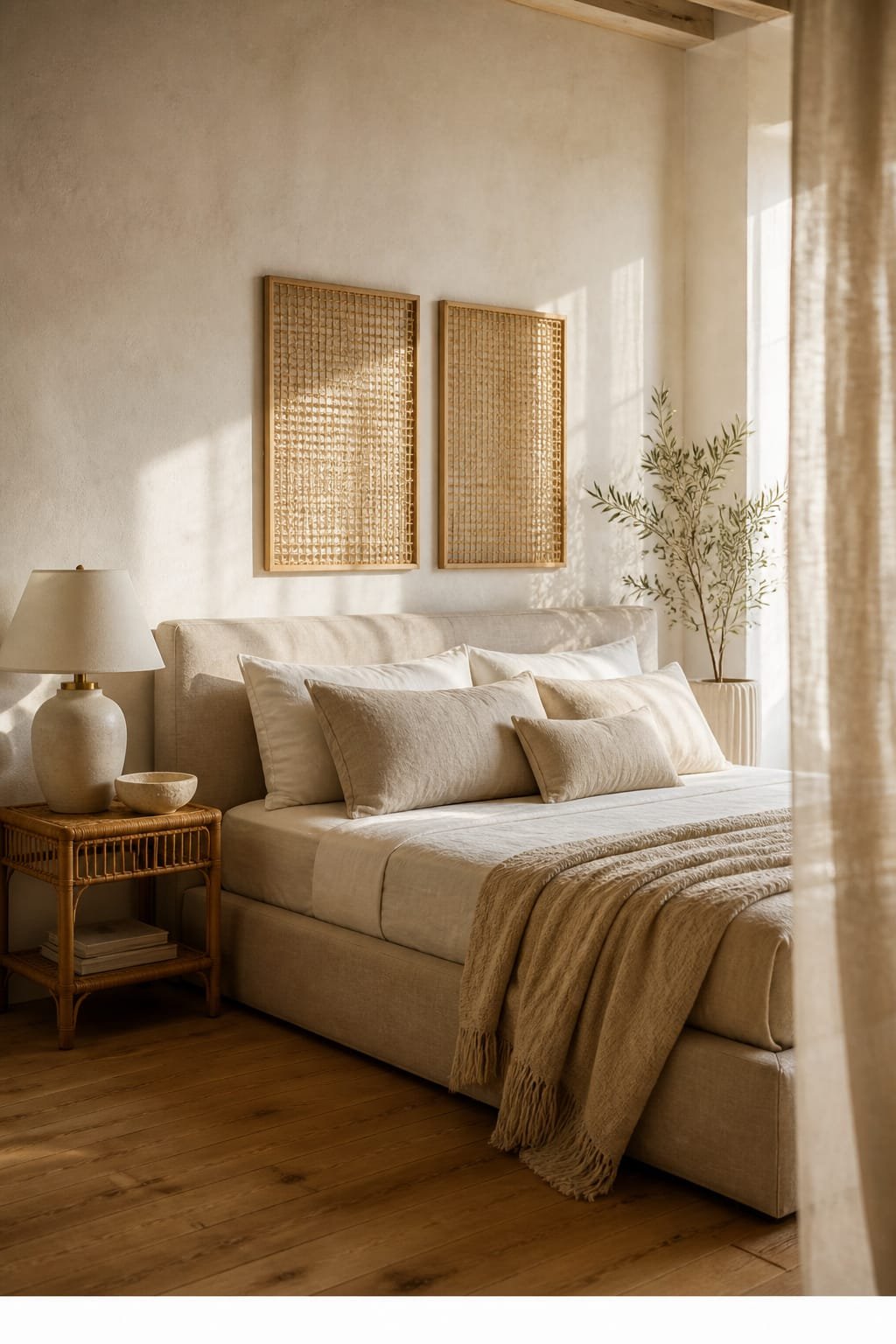
You love the tropical look, but clutter on the floor and too many leggy furniture pieces make the room feel jittery. I’ve been there—my last apartment had four tall pieces in a tiny bedroom and it felt like sleeping in a chair forest. This design calms the vertical chaos with a low platform bed, airy cane panels as art, and sunlit white walls that bounce light like a beach house.
The vibe is modern Mediterranean meets island resort. Low silhouettes mean your eyes travel horizontally, which reads spacious in small rooms. Cane panels add depth without heaviness; they create a glow when sunlight skims across them, so photos look dimensional even on overcast days. Maintenance? Dust and a quick vacuum brush—easy.
Renter-friendly alternative: use peel-and-stick cane print or hang framed cane sheets. On a budget, swap the platform bed for a standard frame and add a simple wood slat wrap or a wood-look bed skirt to mimic the low silhouette. Dark-room version: choose warm cream paint instead of crisp white and add a thicker textured throw in cocoa.
Budget Breakdown:
- Platform bed (wood or wood-look): $220–$850
- Cane panels or framed cane art (set of 3): $80–$300
- Paint (sunlit white, 1–2 gallons): $40–$100
- Heavy, textured throw (cotton-linen or boucle): $50–$180
- Low-profile nightstand or floor stool (pair): $120–$300
Total Estimated Cost: $510 – $1,730
Best For: Small bedrooms that need openness; minimalist lovers; anyone who wants a breezy, clutter-free reset.
Key Design Elements:
- Main materials: cane, solid wood, cotton-linen
- Color palette: sun-bleached white, warm sand, soft caramel, sage leaf
- Lighting strategy: maximize daylight; add floor-level warm lamps at night
- Furniture silhouettes: low platform bed, squat tables, rounded edges
- Texture layers: cane weave, slub cotton, chunky knit
- Accent details: terracotta bowl, thin black picture frames for contrast
Why This Reads High-End: The negative space—especially under the bed and around the panels—signals intention. Low profiles feel curated, and the cane adds craftsmanship without shouting.
How To Recreate This Look:
- Start by painting walls a sunlit white with a hint of warmth to avoid clinical glare.
- Add a low platform bed and center it to maximize visible wall around it.
- Hang three cane panels above the bed with equal spacing, about 6–8 inches apart.
- Layer a textured throw across the lower third of the bed for weight and softness.
- Style with a small terracotta bowl, one leafy stem in a simple vase, and a slim black-framed photo for contrast.
The Most Common Mistake: Hanging art too high. Keep the bottom of your central panel 6–8 inches above the headboard so it connects visually; big gap = cheap look.
Pro Styling Tip: Tilt one panel slightly forward with bumpers at the bottom to catch light and cast a soft shadow line—micro depth that pops on camera.
4. Mango Wood Dresser, Sunset Coral Accents, and a Rattan Dome Floor Lamp
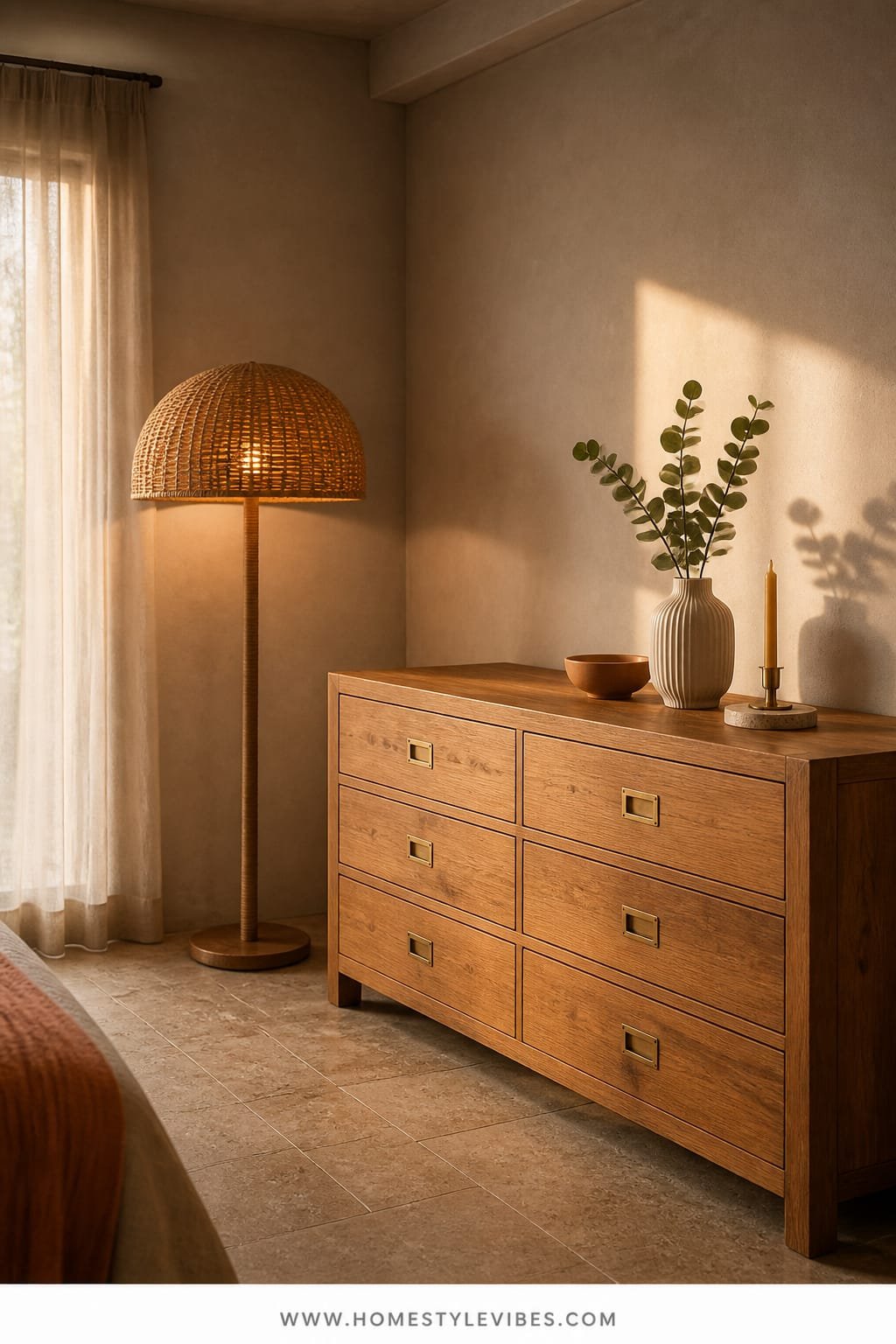
You’ve got the basics down but the room still lacks pulse. It’s that one corner by the dresser that always feels off, like a dead zone. Here’s your color-forward fix: a mango wood dresser with gorgeous grain, nuanced coral accents that feel like tropical sunset (not neon beach towel), and a rattan dome floor lamp that pools light like a lazy late afternoon.
The mood is warm-contemporary with tropical undertones. This works for family homes because the dresser doubles as a storage hero and the coral accents are easy to switch seasonally. Lighting shifts the tone at night—place the dome lamp so it grazes the dresser’s surface, creating a highlight line that looks rich in person and in photos.
Budget path: refinish your existing dresser with a light honey stain and swap hardware to antique brass. Small space? Choose a tallboy mango unit and slimmer lamp. Darker version: pick terracotta instead of coral and add a cocoa linen runner across the dresser top.
Key Design Elements:
- Main materials: mango wood, rattan, linen
- Color palette: coral, terracotta, toasted almond, ivory
- Lighting strategy: one floor lamp for pooled light + hidden LED strip under dresser lip for glow
- Furniture silhouettes: blocky dresser, rounded lamp dome, soft-edge mirror
- Texture layers: wood grain, linen runner, rattan weave
- Accent details: brass pulls, coral-hued ceramic, framed tropical botanicals
Budget Breakdown:
- Mango wood dresser: $450–$1,400
- Rattan dome floor lamp: $120–$380
- Coral textiles (pillows, runner, art mat): $50–$160
- Brass hardware upgrade (if refinishing): $40–$120
- Under-cabinet LED light strip: $20–$60
Total Estimated Cost: $680 – $2,120
Best For: Medium to large rooms; homes needing functional storage but craving color; spring and summer refreshers.
How To Recreate This Look:
- Start with a mango wood dresser or refinish your current one in a warm, light stain.
- Add a rattan dome floor lamp to the dresser’s left or right, overlapping light on the wood surface.
- Layer in coral via a linen runner, one throw pillow, and a small ceramic vase.
- Install a discreet LED strip beneath the dresser lip for a high-end backglow.
- Style with a round mirror above the dresser and two framed botanical prints stacked beside it.
Why This Looks Intentional: Repeating rounded forms (lamp dome, mirror curve, ceramic vase) ties the corner together. The subtle LED halo makes the piece feel custom, even if it’s an IKEA hack.
Don’t Do This: Avoid fluorescent coral or mixing three oranges. Pick one coral tone and repeat it in different textures for a sophisticated, sunset effect.
Pro Styling Tip: Leave 20–24 inches of blank wall on one side of the mirror; asymmetry plus negative space photographs like a magazine spread.
Remember, this isn’t about replicating a catalog. It’s about how your bedroom feels at 9 p.m. on a Tuesday, when the lamp is low, the sheets are cool, and nothing visual asks for attention.
5. Bamboo Paneling, Dappled Morning Light, and a Curved Upholstered Bench
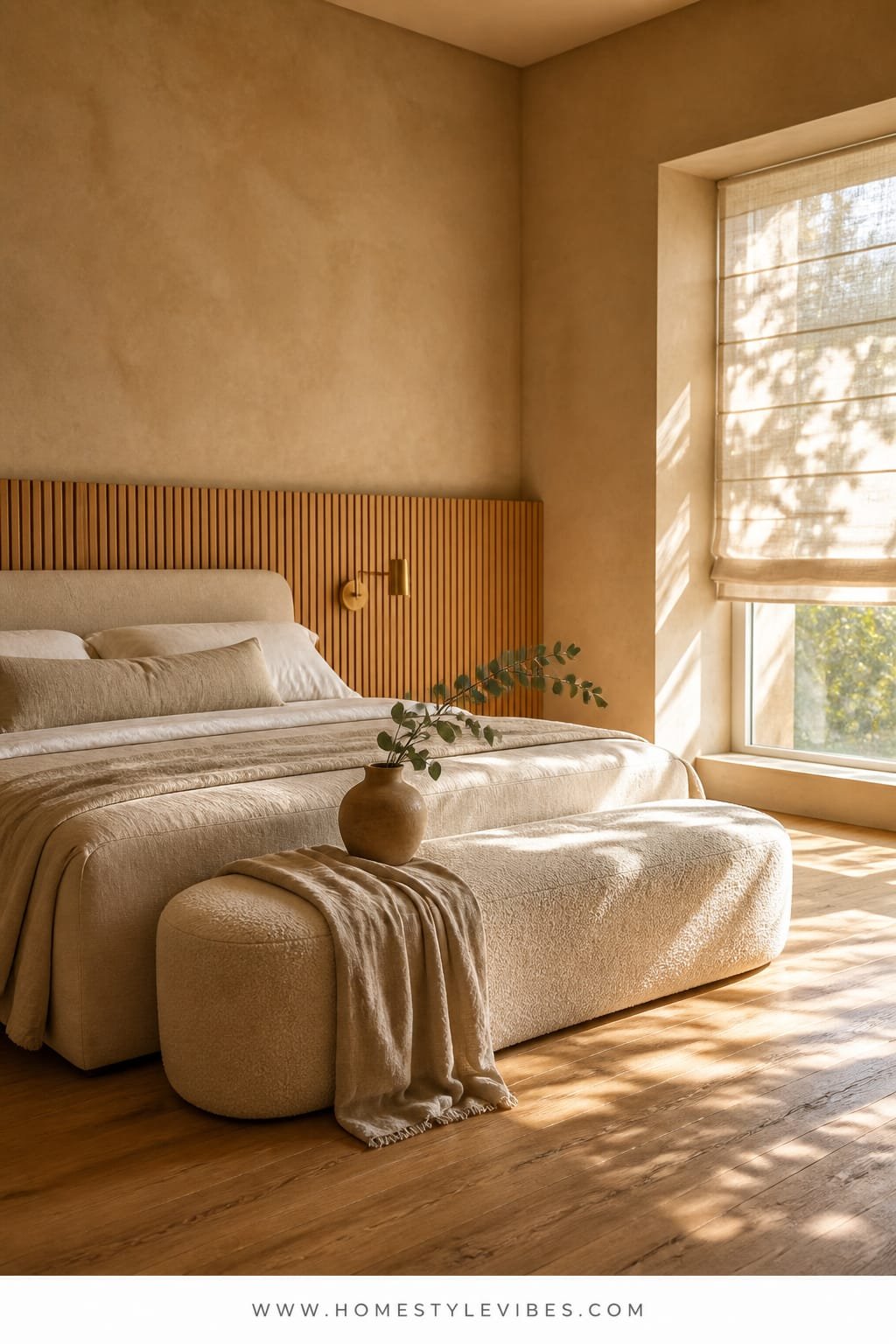
You’ve tried art, you’ve tried paint, but the wall still reads flat. The secret isn’t more decor—it’s relief. Bamboo paneling brings gentle vertical rhythm, especially on the lower third of a wall or as a headboard-width feature. Pair that with dappled morning light (sheer Roman shades or slatted blinds), and finish with a curved upholstered bench at the foot of the bed to soften the geometry.
The mood channels Japandi-tropical: calm lines, soft edges, honest materials. In real homes, bamboo paneling is surprisingly forgiving—minor scuffs blend in and it hides that outlet you hate. Light matters big time here; slatted light dances across the bamboo in the morning and turns the room into a slow-breath space. The bench earns its keep with seating, drop-zone duty, and a sculptural anchor.
Renter route: apply peel-and-stick bamboo planks or a panel of woven bamboo grass cloth. Budget variation: paint MDF strips in a bamboo tone to mimic the look. Dark version: choose espresso bamboo and a creamy boucle bench for contrast.
Budget Breakdown:
- Bamboo paneling or peel-and-stick planks: $120–$480
- Sheer Roman shade or wood blinds: $90–$350
- Curved upholstered bench: $180–$700
- Neutral bedding refresh (optional): $80–$220
- Small greenery (ZZ plant or palm): $20–$60
Total Estimated Cost: $490 – $1,810
Best For: Long, boring walls; rooms that need softness but not more stuff; people who love serene mornings.
Key Design Elements:
- Main materials: bamboo, boucle or linen upholstery, light-filtering textiles
- Color palette: straw, almond, oatmeal, deep olive
- Lighting strategy: layer sheers for dappled morning light; add a low-watt table lamp for evenings
- Furniture silhouettes: curved bench, slim nightstands, rounded lamps
- Texture layers: ribbed bamboo, nubby upholstery, smooth ceramics
- Accent details: black or bronze hardware, leaf-cut stems, woven tray
How To Recreate This Look:
- Start by paneling the lower third of your bed wall with bamboo or peel-and-stick alternatives.
- Add a curved upholstered bench at the foot of the bed to interrupt straight lines.
- Install sheer Roman shades or wood blinds to create dappled daylight.
- Layer a neutral duvet with one textured throw to add tactile interest.
- Style with a low plant, one woven tray, and a simple ceramic lamp with a fabric shade.
Why This Looks Expensive: Architectural rhythm beats scatter-shot decor every time. The paneling reads “custom millwork,” while the curved bench says “designed on purpose.”
Watch Out: Don’t run paneling too high in small rooms; keep it to one-third of the wall to maintain openness. And avoid high-gloss finishes—matte or satin feels organic.
Pro Styling Tip: Angle the bench slightly (5–10 degrees) for a candid, editorial moment; that tiny tilt adds life to photos and helps traffic flow.
6. Travertine Side Tables, Candlelit Warmth, and a Four-Poster Bed in Dark Wood
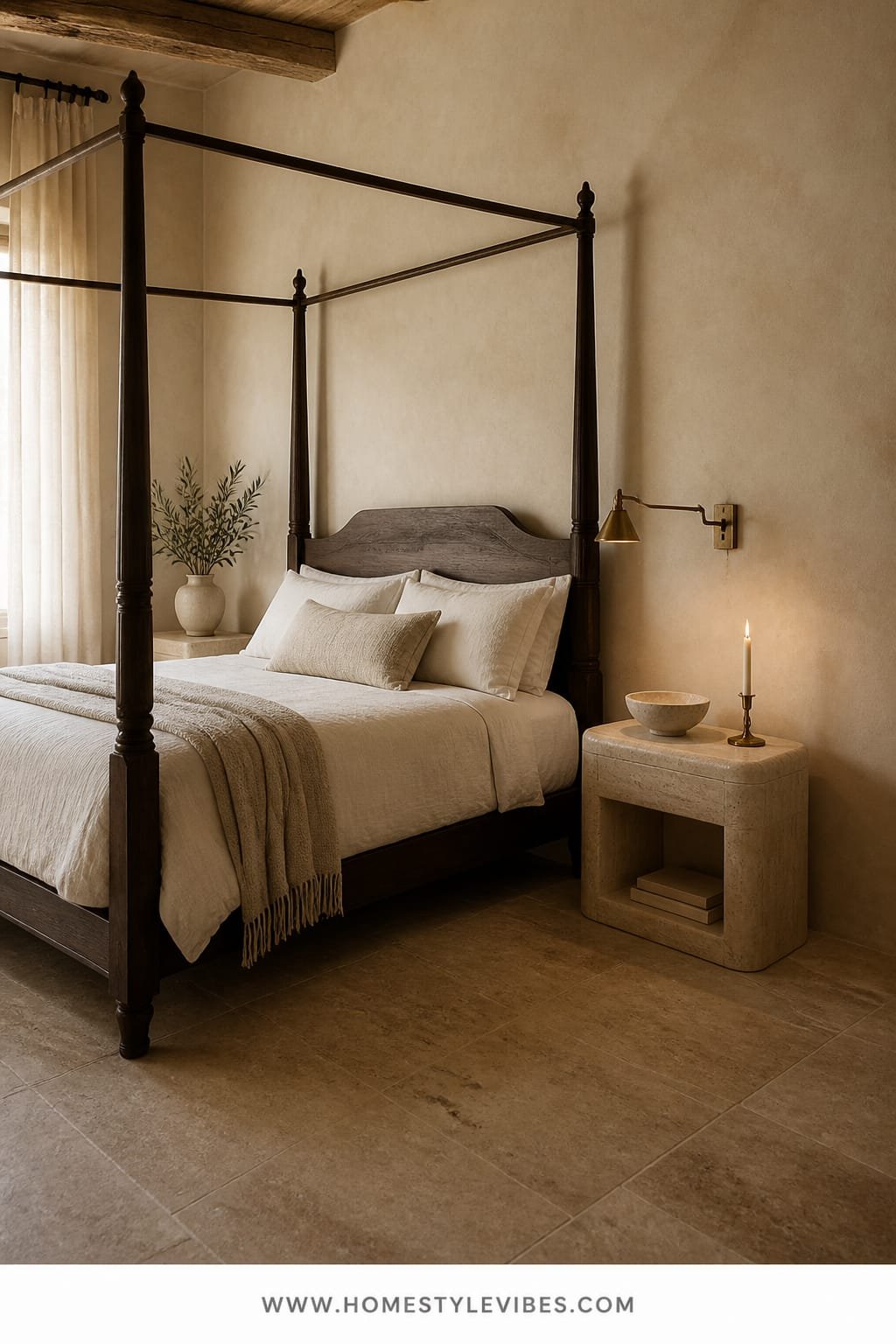
Sometimes you want drama—the kind that makes you walk in and whisper wow. You’ve tried dark paint, but it turned cave-like. Here’s the move: keep walls light and bring in contrast through a dark wood four-poster bed, ground it with creamy travertine side tables, and light the scene with candlelit warmth—think layered sconces and real candles for weekends.
The mood is tropical luxe with old-world notes. Four-posters create vertical theater and frame your bed like architecture. Travertine brings stone’s cool calm, so the room feels balanced rather than heavy. Candle-temp lighting (2200K) warms skin tones and gives evenings that vacation glow. Practical at home? Absolutely—travertine handles water rings better than you think if sealed, and the bed becomes a forever piece with strong resale value.
Small-space version: choose a slimmer canopy frame and petite stone cubes as tables. Budget take: go for wood-look side tables with a travertine tray topper and a secondhand poster bed refinished in espresso. Darker spin: add a midnight linen quilt and eucalyptus velvet pillows for plush contrast.
Budget Breakdown:
- Four-poster bed (solid or veneer): $650–$2,200
- Travertine side tables or stone cubes (pair): $240–$900
- Wall sconces or candle-style lamps (pair): $140–$420
- Textiles (linen quilt + velvet pillows): $120–$380
- Candles + brass holders: $30–$120
Total Estimated Cost: $1,180 – $4,020
Best For: Medium to large rooms; high or standard ceilings; anyone who wants a resort-suite feel for evenings and weekends.
Key Design Elements:
- Main materials: dark wood, travertine, linen, velvet
- Color palette: espresso, ivory, sand, eucalyptus green
- Lighting strategy: warm 2200K bulbs, dimmable sconces, candles
- Furniture silhouettes: tall poster frame, chunky stone tables, soft textiles
- Texture layers: honed stone, washed linen, matte wood grain
- Accent details: brass candleholders, leather-bound books, botanical ink prints
Why This Feels Designer: High-contrast materials and mixed finishes (stone, wood, metal, fabric) read collected and intentional. The posters create lines for light to skim, adding moody shadows that feel cinematic.
How To Recreate This Look:
- Start by placing a four-poster bed with 6–8 inches of clearance from each side wall to let it breathe.
- Add travertine side tables with sealed tops for everyday use.
- Install dimmable sconces near the headboard at reading height.
- Layer a linen quilt, velvet pillows, and an ivory sheet set for tactile contrast.
- Style with brass candleholders and two framed botanical prints in deep mats.
The Most Common Mistake: Oversized posters in tiny rooms. If your bed dominates the space, it will feel theatrical in a bad way. Keep the frame slim or choose a low canopy design for tighter footprints.
Pro Styling Tip: At night, turn off overheads, dim sconces to 30%, and light two candles; the mix of point and ambient light sculpts the bed and makes linens look richer in photos.
A quick story to keep it real: A friend of mine spent weeks agonizing over a green paint swatch before realizing her room’s issue wasn’t color—it was that weird shadow her cheap ceiling light cast at night. We swapped in a woven pendant with a frosted bulb and, honest truth, she texted me the next morning, “I slept like I was at a boutique hotel.” Lighting isn’t just practical; it changes how your nervous system reads a space.
Quick Checklist
- Choose one hero material: rattan, teak, cane, mango wood, bamboo, or travertine
- Set a warm lighting temperature: 2200–2700K bulbs
- Introduce one statement piece: headboard, pendant, dresser, bench, or four-poster bed
- Limit your color story to 3–4 tones
- Add one tactile layer: linen canopy, textured throw, boucle bench
- Use negative space: leave breathing room around the bed and art
- Hide cords with clips or baseboard routes
- Hang art at the right height: 6–8 inches above the headboard
- Soften windows with sheers for dappled light
- Repeat rounded forms for cohesion
- Introduce greenery: palm, ZZ plant, or one large leaf stem
- Dim overheads at night; rely on sconces and lamps
Frequently Asked Questions
How do I create a tropical bedroom on a tight budget?
Pick one hero element and let it carry the vibe. A rattan headboard plus warm bulbs and a jute rug can land the look under $400. Skip tiny decor buys; invest in one large woven or wood piece and upgrade your lighting.
My room is small. Will a canopy or four-poster bed overwhelm it?
Choose slim frames and keep fabrics light. Hang the canopy higher than you think and let it drape softly. For posters, leave at least 6 inches clearance on the sides; if that’s impossible, go with a low platform bed and a linen canopy instead.
I rent and can’t paint or drill much—any tips?
Use removable hooks for canopies, peel-and-stick bamboo or cane paneling, and plug-in sconces. Layer textiles (linen duvet, throw, curtains) and a woven pendant with a plug-in cord; these deliver major visual change without permanent alterations.
How do I keep woven and natural materials from looking messy?
Balance them with crisp elements: white bedding, clean-lined furniture, and consistent metals (all brass or all black). Vacuum rattan and jute monthly, trim loose fibers with small scissors, and avoid mixing five different weaves in one corner.
What’s the most common tropical decor mistake in bedrooms?
Too many bright colors with cool LED lighting. Keep your palette tight and bulbs warm. One saturated accent (coral or lagoon) plus three neutrals looks polished and restful.
Final Thoughts: Your Bedroom, Your Getaway
Pick one idea that sparks a little thrill—maybe it’s the rattan headboard with linen canopy or the travertine-and-poster-bed drama. Start there this weekend. Set a 90-minute timer, put on your favorite playlist, and commit to finishing that one move before adding anything else.
The truth is, luxury in a tropical bedroom doesn’t come from buying more decor. It comes from texture that begs to be touched, lighting that flatters skin and softens corners, and restraint that lets the room breathe. When wood meets linen, when stone meets warm light, your space stops shouting and starts humming.
You’re closer than you think. Swap the bulb, hang the canopy, edit the colors. Then stand back at 8 p.m., dimmed lights on, and let that quiet, vacation-level calm roll in. You’ve got this—seriously.

About the Author

Krisztina P.Rendes, Founder of Home Style Vibes
Founder of Home Style Vibes
Krisztina Puskásné Rendes created Home Style Vibes as a cozy-modern lifestyle space where homemaking meets inspiration. Her goal is to help women create beautiful, organized, and peaceful homes they truly love — without overwhelm. You’ll find here heart-driven content on home decor, cleaning tips, easy family recipes, organization and decluttering, DIY home projects, plants, and seasonal ideas — all designed to bring more calm, comfort, and style into everyday life.