The Summer Garden Aesthetic That Makes Your Outdoor Space Look Magical
You want an outdoor space that feels cinematic at golden hour—where friends linger, the air smells like thyme, and the whole scene glows like a memory. But weeds happen. Plastic furniture happens. Harsh glare and cluttered corners steal the mood before the first spritz hits the glass. Here’s the clear path: a soulful, texture-rich summer garden aesthetic you can create in a single weekend for under $300—photogenic, welcoming, and deeply you.
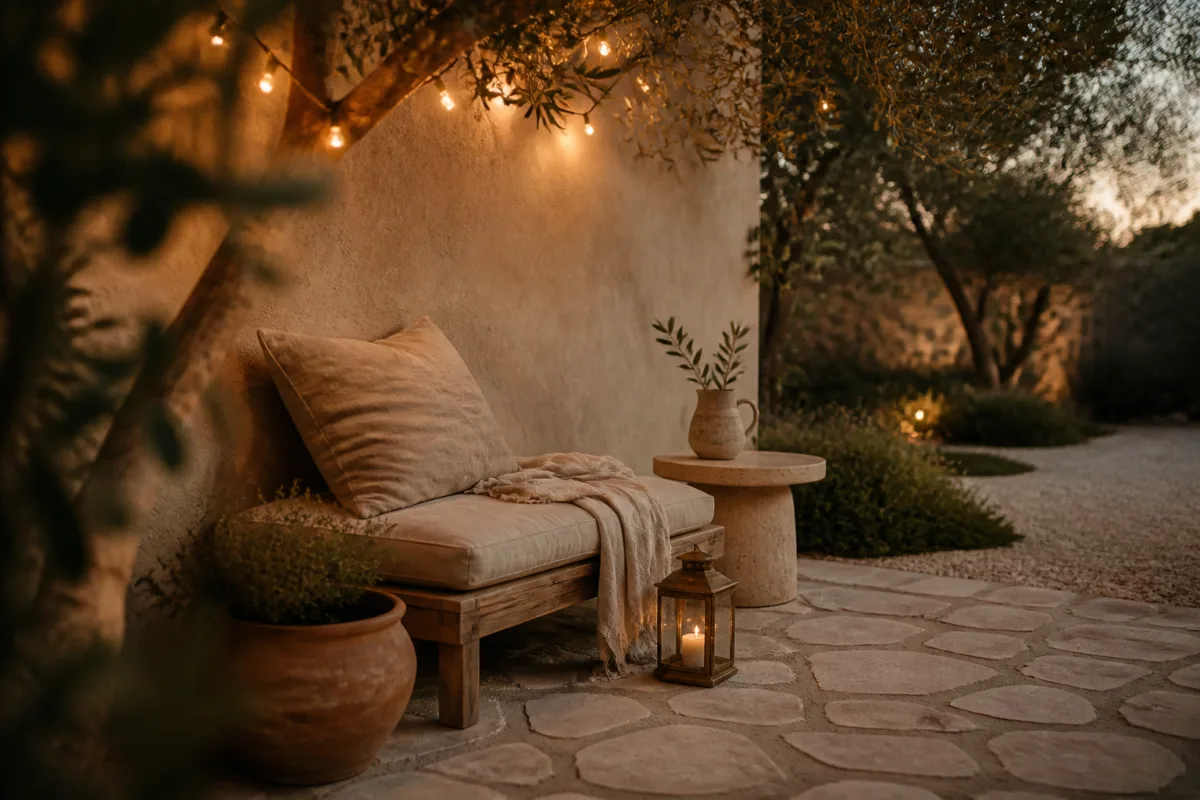
We’ll work with what you have, add the right layers, and skip what looks staged. The result? A backyard that feels magical without trying too hard—warm light, lived-in softness, natural materials, plants that feel integrated (not plopped), and a layout that reads editorial instead of catalog.
In This Post
Layered Lighting for Twilight Magic
Start with light—it’s the fastest route to instant enchantment.
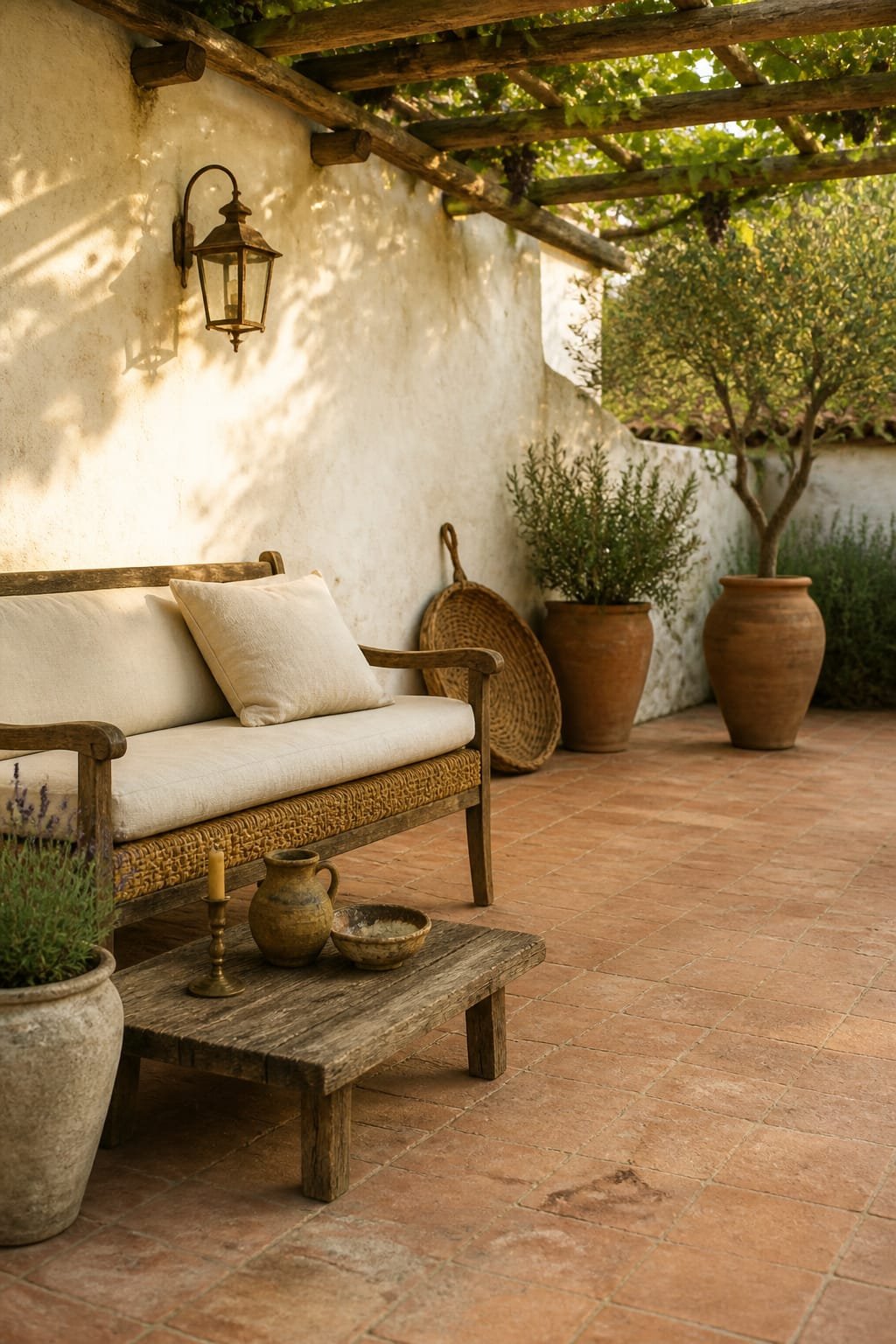
We’ve all been there: you add a single string of cold-blue LEDs and hope the vibe shows up. It doesn’t. The secret isn’t more lumens; it’s warmer layers and varied heights that create pools and paths of light. Think candles that flicker, bistro strings that hover, and solar lanterns that punctuate the edges. When light skims textures—linen, stone, foliage—everything softens and suddenly looks expensive.
Picture this at blue hour: a slim rattan bench tucked off-center beneath an olive tree in a clay pot; a linen throw creased where someone leaned an hour ago. A set of warm-white bistro lights arcs loosely from the fence to a weathered pergola beam, sagging just enough to feel casual. On the low stone side table, a ceramic hurricane with a beeswax pillar throws an amber halo across the terracotta tiles. You hear the muted clink of a brass tray as it meets the tabletop. Fireflies do their thing in the background. The whole scene feels like a postcard you stepped into.
Why This Feels Designer: Designers layer light the way a stylist layers jewelry—ambient, task, and sparkle. The warm 2200–2700K temperature reads elevated, especially when it grazes textured materials and leaves gentle shadows.
One Thing To Avoid: Harsh, cool 5000K bulbs and lights hung at rigid, even intervals. That’s how you get a patio that looks like a break room, not a summer garden dream.
Pro Tip: For photos, place a single candle or lantern in the foreground and let one light source live slightly out of frame—depth and glow guaranteed.
Textured Seating Nooks That Invite Lingering
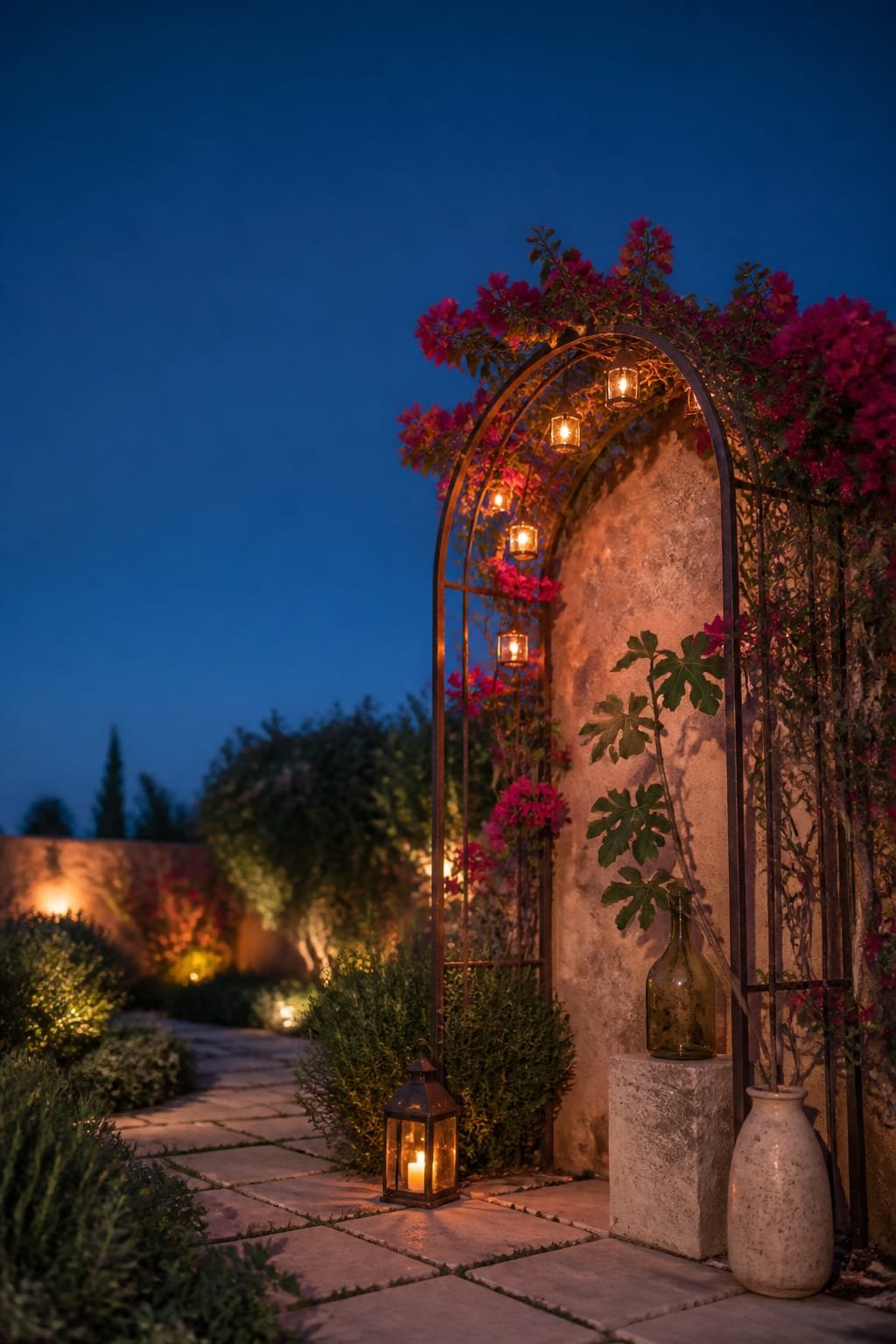
Create one anchoring seat and one supporting perch—never a matchy set.
This is the part most people get wrong: they buy a full patio set in one click, everything matches, and the space ends up with zero soul. Instead, mix materials and heights so it looks collected. Anchor with a solid piece—teak loveseat, wrought-iron bench—and layer with a smaller chair, a stool, or even a ceramic drum table. Add cushions in natural, washable fabrics and let the patina shine.
Scene it: A teak loveseat from World Market sits casually angled at 30 degrees to the back fence, not squared off. A vintage iron garden chair (Facebook Marketplace, $60) perches nearby, draped with a soft oatmeal linen cushion. Underfoot, a chunky jute rug defines the zone; its rough weave feels good under bare feet. A low travertine-look side table (CB2 or Target’s Studio McGee line) holds a stoneware mug beading with iced tea. Late afternoon light glides across the wood slats, catching the subtle sheen of unlacquered brass finials on the chair.
Why This Reads High-End: Intentional asymmetry and mixed textures suggest curation over convenience. Varied seat depths and arm shapes feel layered and lived-in—as if each piece has a story.
The Most Common Mistake: Overstuffed cushions in outdoor polyester that shines under the sun. That slippery look cheapens everything. Choose matte, stonewashed covers in linen-blend or solution-dyed acrylic that mimics linen.
Pro Tip: For an editorial shot, angle your hero seat off-center and leave “breathing room” on one side—empty space is luxury.
Quick mindset reset: This isn’t about matching a catalog image. It’s about building tiny pockets of comfort where you’ll actually sit, read, and talk. If you only do one nook now and another next month, you’re doing it right.
Planting for Atmosphere, Not Just Color
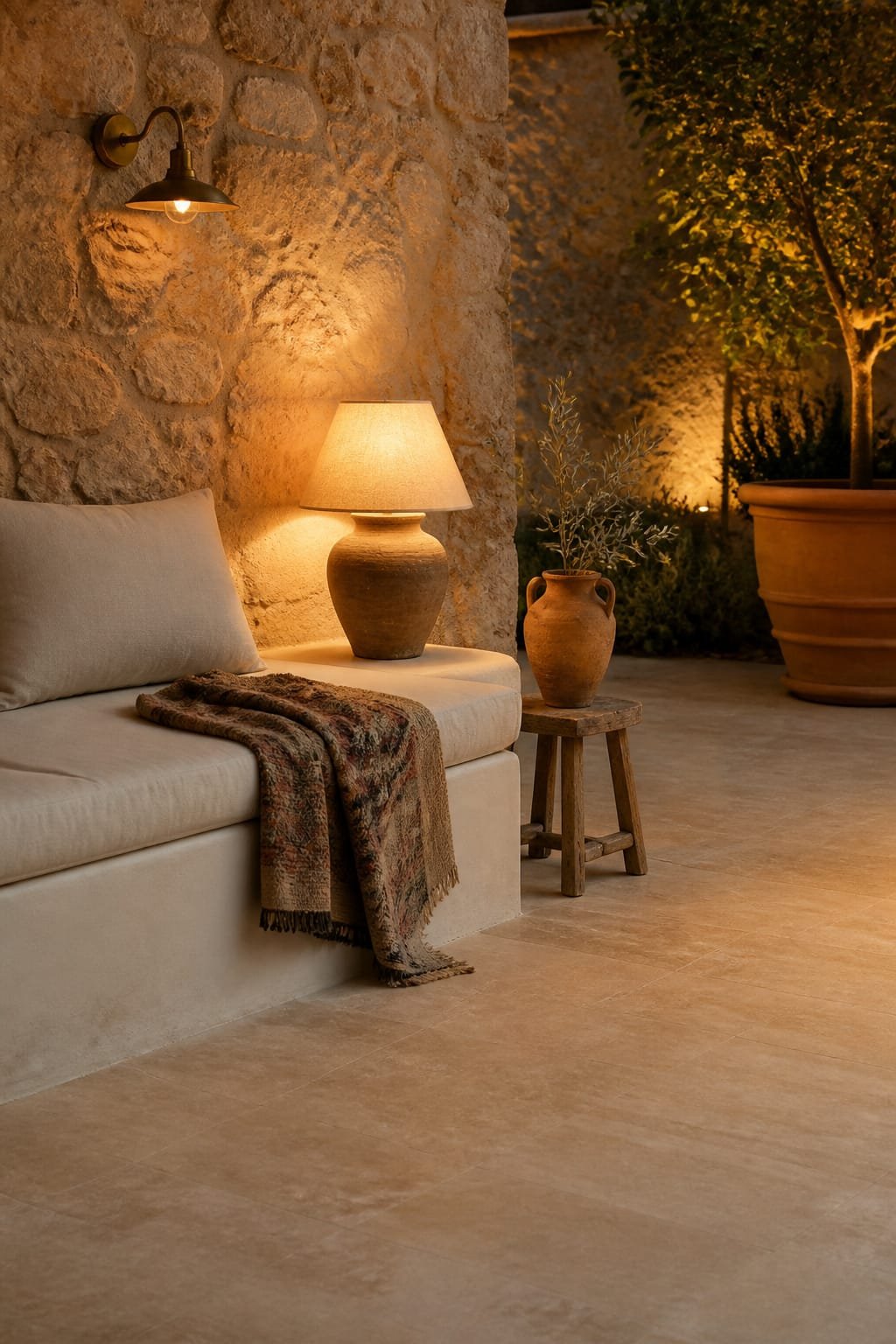
Shape the air with plants that sway, soften edges, and scent the evening.
It sounds obvious but here’s where it usually falls apart: we grab whatever’s blooming at the big-box garden aisle and line it up against the fence. Pretty for two weeks, flat by July. Instead, layer forms—tall airy grasses, mid-height herbs, low trailing greens—so the garden feels like a chorus. Scent matters. Movement matters. Flowers are the earrings, not the outfit.
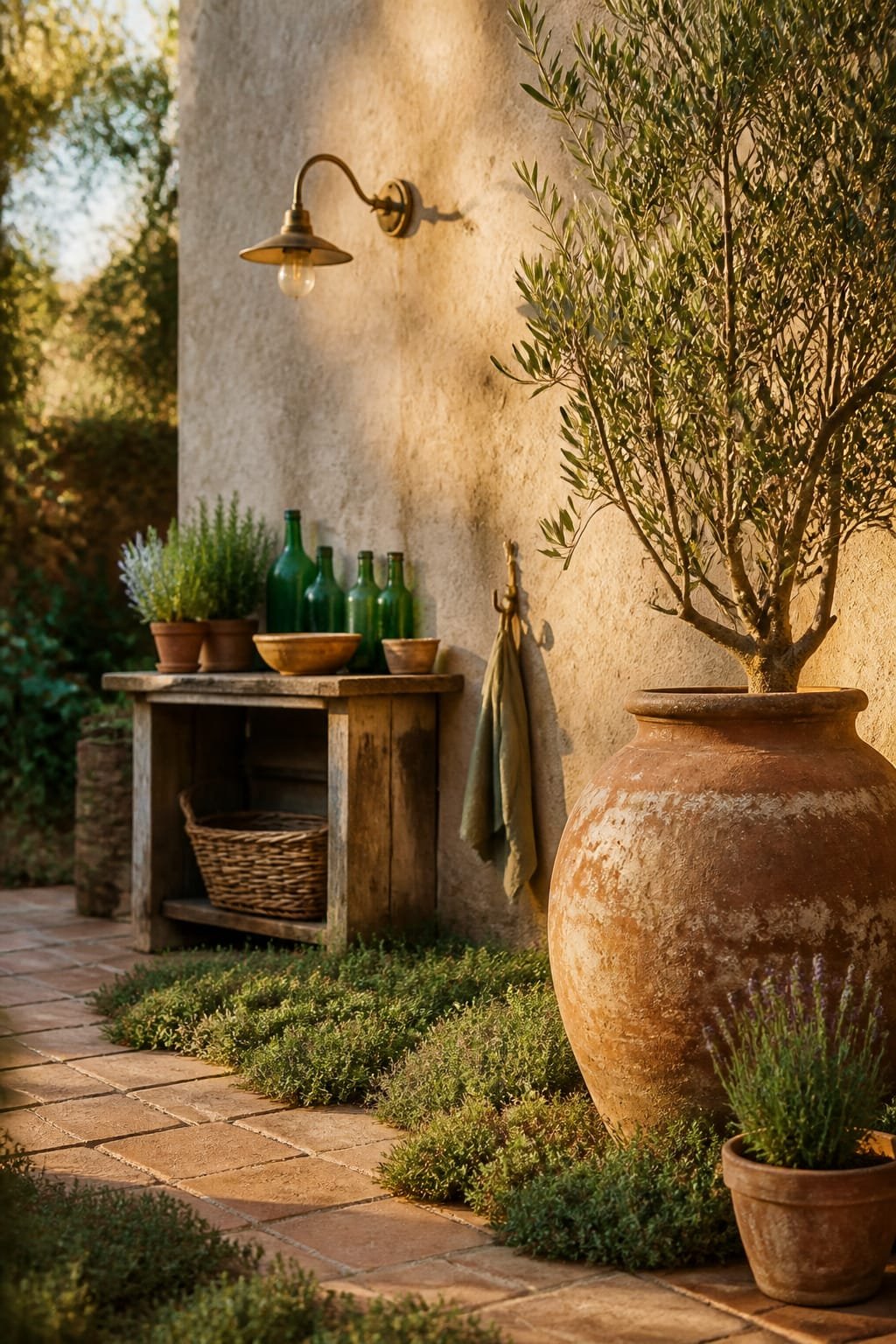
Visualize this: Along a weathered cedar fence, a staggered trio of terra cotta pots in 12, 14, and 18 inches. The largest holds a feathery olive tree; at its base, thyme spills over the rim, releasing fragrance when you brush by. To the left, a clay trough brims with lavender and trailing rosemary, softening the hard edge of a concrete step. A small galvanized tub (spray-painted matte ecru) hosts lemon balm and basil, the leaves catching the last warm streaks of sun. The air feels herbal, and every breath tastes like summer.
- Best overall: Lavender + rosemary + thyme trio—scented, drought-friendly, elegant.
- Best for beginners: Potted herbs from Home Depot or Lowe’s—cheap, forgiving, instant sensory payoff.
- Worth the splurge: Mature olive in clay (check local nurseries or Etsy for vintage pots)—a sculptural anchor.
- Skip this one: Uniform petunias edge-to-edge; they flatten the look and demand constant deadheading.
Why This Looks Intentional: Varying heights and textures make the planting read like design, not yardwork. Herbs and wispy grasses add atmosphere you can smell and hear in the breeze.
Watch Out: Overcrowding. Plants need air around them to sway and catch light; jammed pots look cluttered, not lush.
Pro Tip: Stagger pots so one sits partially in the shadow of another—light-to-dark gradients photograph like a dream.
Materials Matter: Terra Cotta, Stone, and Linen
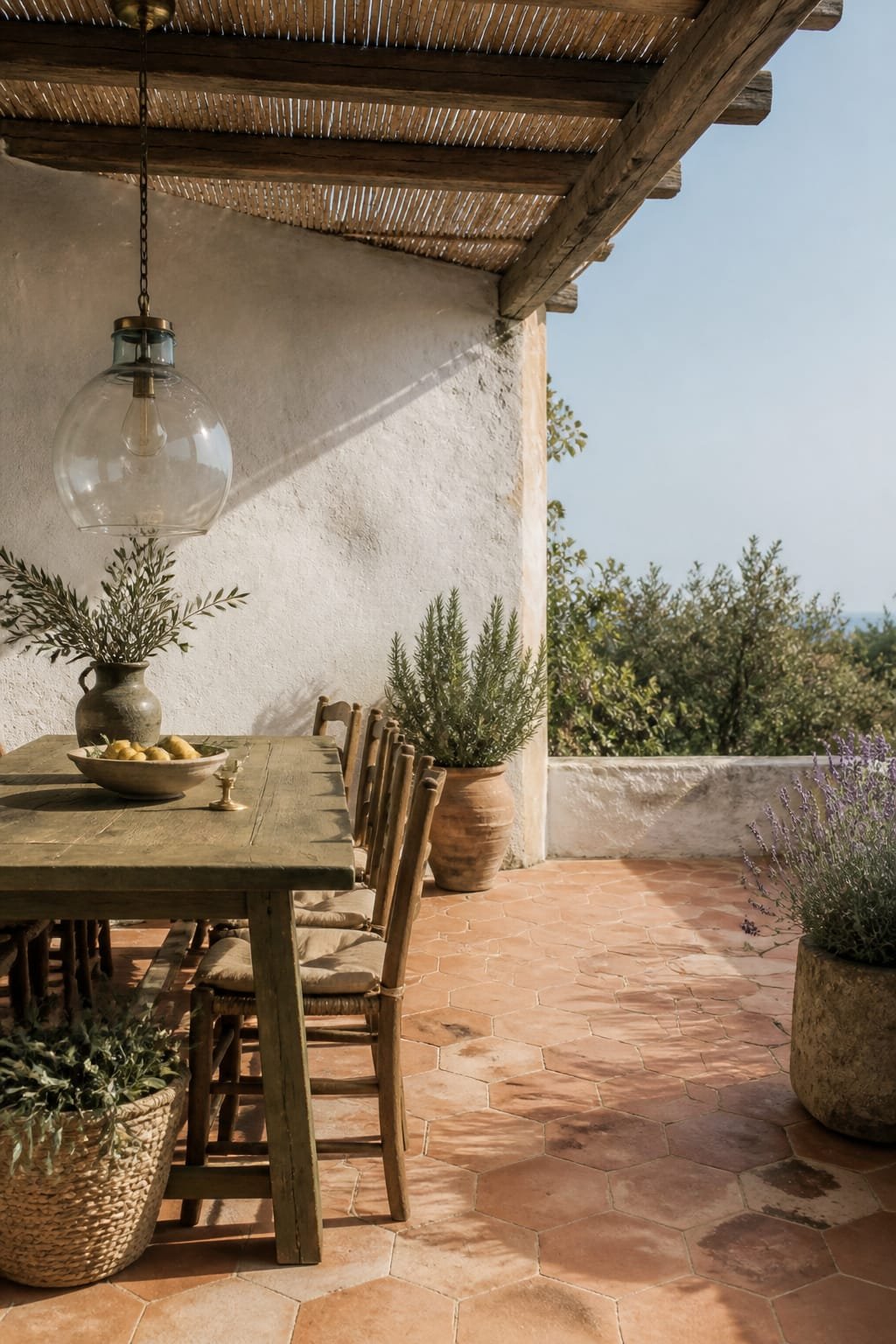
Choose tactile, natural finishes that age beautifully in the sun.
You’ve tried plastic planters and glossy side tables and it still feels flat. That’s because shine reflects light harshly and kills the softness we crave outdoors. Terra cotta, travertine, limestone, raw teak, and stonewashed linen do the opposite—they diffuse and warm the light, show gentle wear, and make the space feel grounded.
Scene moment: A low-profile coffee table made from a reclaimed oak pallet sits on thick pavers. On top, a hand-thrown ceramic bowl cradles ripe peaches with that velvet blush. A washed linen table runner (Pottery Barn’s flax, edges casually frayed) softens the wood. Nearby, a weathered copper watering can leans against a clay pot with faint lime streaks, and when you set it down you hear the quiet, satisfying thunk of metal touching stone.
- Budget pick: Unglazed terra cotta from Home Depot—patinas quickly and looks convincingly old within a season.
- Best for renters: Peel-and-stick stone-look pavers on a small balcony zone—define space without commitment.
- Worth the splurge: Travertine side table from CB2 or a vintage iron bistro table from Chairish—timeless silhouettes.
- DIY swap: Limewash a basic concrete planter with watered-down paint for a chalky, aged finish.
Why This Reads High-End: Natural materials telegraph quality and age with grace. Micro-imperfections—brush marks, knots, mineral pitting—add the character money can’t fake.
One Thing To Avoid: Shiny resin wicker and high-gloss finishes that glare in midday sun and photograph poorly at dusk.
Pro Tip: Mix one heavy piece (stone, solid wood) with one light, airy piece (rattan, linen) per vignette to balance visual weight.
Permission slip: Imperfection is the luxury. A water ring on a stone tabletop or a sun-faded cushion reads like summer memories, not mistakes. Let your materials earn their stories.
Pathways, Vignettes, and Asymmetric Composition
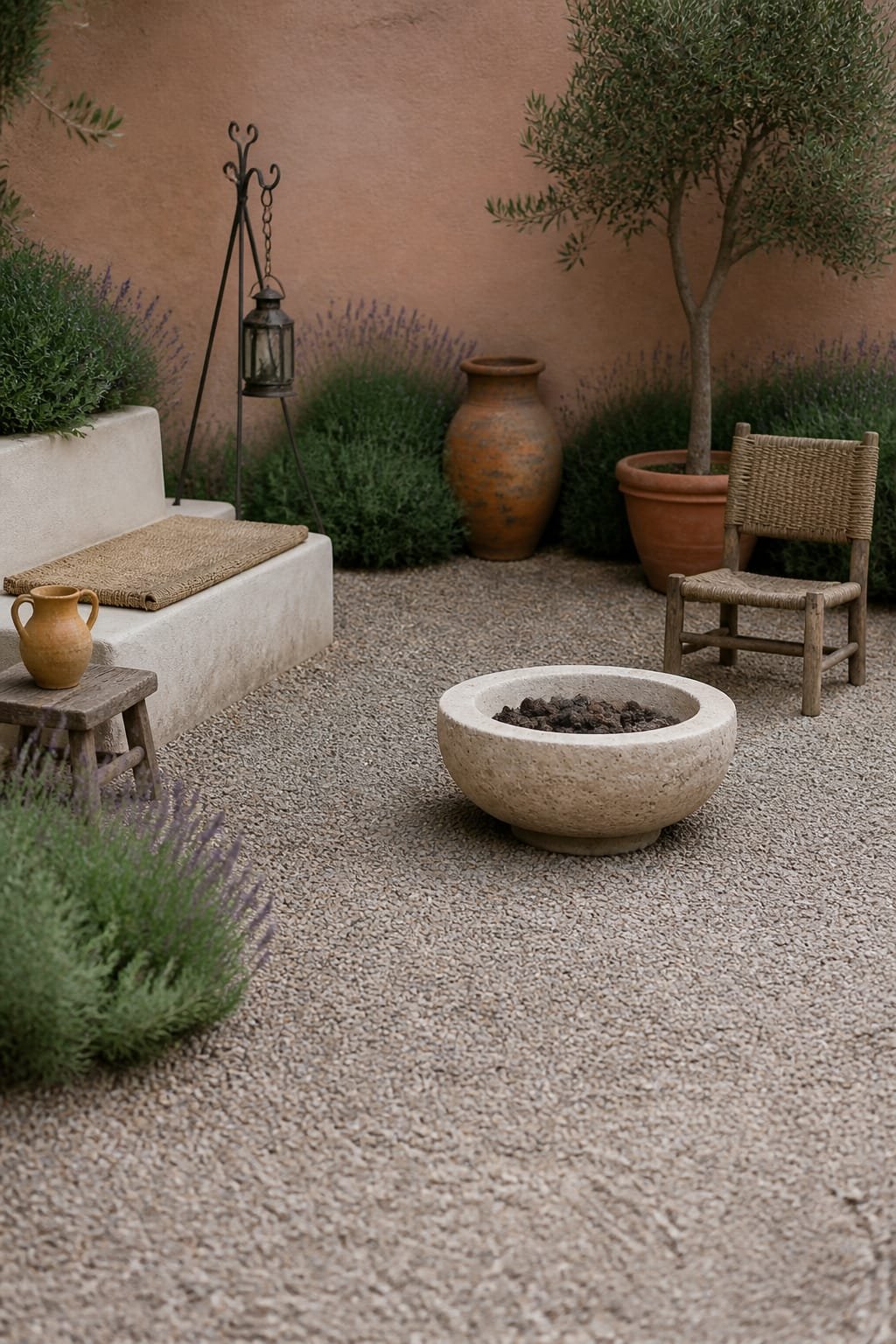
Design your garden like a series of frames, not one wide shot.
Here’s why this actually works: the eye loves discovery. When you cluster objects asymmetrically—one hero, a couple of supporting players, open negative space—you get a quiet confidence that feels editorial. Pathways lead somewhere (even if it’s a single chair). Every corner tells a small story.
Imagine an off-center gravel path (pea gravel from Home Depot) that curves behind your dining table, just enough to suggest a destination. On the right, a tall clay amphora stands like sculpture. To the left, a small stack of vintage bricks forms a plinth for a fern in a handled stoneware crock. Past the bend, a single sling chair in natural canvas faces a birdbath. The late sun skims the gravel, casting long, soft shadows that guide your feet without a word.
Build Micro-Scenes
- Anchor: one substantial piece (bench, large pot, statue)
- Support: two to three smaller items (stool, lantern, herb pot)
- Air: a patch of intentional emptiness to let light and shadow play
Why This Looks Expensive: Asymmetry and negative space read as confidence. It says you edited and considered every object—very designer.
Don’t Do This: Lining everything up along fences or walls like soldiers. It feels anxious and shrinks the space visually.
Pro Tip: For a scroll-stopping shot, place your hero piece on the left third of the frame and let the pathway pull the eye to the right with soft shadow falloff.
Tabletop Styling for Al Fresco Dinners
Set a table that feels generous without becoming fussy.
We’ve all overdone it—too many colors, too many plates, and somehow the vibe turns “event planner” instead of intimate dinner. The fix: earthy neutrals with one living accent. Keep your base simple: linen runner, stoneware plates, vintage flatware, and a low arrangement that guests can talk over. Add a single herb bundle at each place for scent and surprise.
Scene it at golden hour: A raw pine trestle table sits under a canopy of string lights. A flax runner drops casually over the edge, the slightest wrinkle catching warm light. Stoneware dinner plates from Crate & Barrel stack on woven chargers. Each setting gets a sprig of rosemary tied with cotton twine atop a folded napkin. In the center, mismatched bottles from Etsy hold olive branches and one cut garden rose. Beeswax tapers in brass candlesticks flicker, softening every edge; glasses catch the glow like tiny lanterns.
- Best overall: Stoneware + linen + greenery—timeless, photogenic, and effortless.
- Budget pick: World Market stoneware + Target Hearth & Hand linens—great textures under $100 for a table of four.
- Worth the splurge: Unlacquered brass candlesticks from Etsy—age beautifully and elevate even paper plates.
- Skip this one: Overly tall centerpieces; your conversations will suffer, and the table will feel try-hard.
Why This Looks Intentional: Repeating textures—linen, stone, brass—calm the eye, while fresh greenery adds life. The balance says “we considered you” without shouting.
Watch Out: Pattern overload. One patterned textile is enough; let the food and foliage be the color.
Pro Tip: Shoot just before sunset; candle flames read warmly and the sky glow backlights greenery for that editorial haze.
Small pep talk: If you’re hosting Friday night and only have 20 minutes, do candles + fresh herbs + a runner. That trio alone transforms a basic table—promise.
Shademaking With Soul
Throw shade the right way—portable, poetic, and renter-friendly.
Most of us default to pop-up canopies that scream tailgate. Functional, sure. Stylish? Not so much. You want shade that flutters, breathes, and changes the light quality to warm honey. Think canvas umbrellas, simple sun sails, climbing vines on a string trellis—nothing overly engineered.
Scene: A 9-foot natural canvas umbrella from West Elm tilts slightly, its wooden pole anchored in a weighted terracotta stand. Afternoon light filters through, casting the softest dapple onto the jute rug below. Along the fence, a taut line of natural jute twine runs between two eye hooks. From it, a cascade of twinkle lights shares space with a fast-growing jasmine vine in a large clay pot. When a breeze moves through, the leaves whisper and the shade dances over the table like water.
- Best for beginners: Classic linen-look umbrella with wooden pole—set it and forget it.
- Best rental hack: Sun sail clipped to existing posts with removable adhesive hooks; no drilling in siding.
- Worth the splurge: Freestanding pergola with reed or bamboo topper—texture heaven and soft filtered light.
- Skip this one: Bright white nylon canopies—harsh glare, hard shadows, instant “event tent” vibes.
Why This Reads High-End: Shade that modifies light temperature and shadow pattern feels architectural, not temporary. Natural fibers filter light into warm tones that flatter skin, food, and foliage.
The Most Common Mistake: Overshadowing the whole yard. Leave sunny pockets for contrast; the play of light and shade is the magic.
Pro Tip: Angle shade so it creates a diagonal slice of shadow across your seating—dynamic lines photograph beautifully.
Quick Checklist
- Warm 2200–2700K string lights, loosely draped
- One anchor seat + one supporting perch
- Unglazed terra cotta pots in staggered sizes
- Lavender, rosemary, and thyme for scent and texture
- Stone or wood tabletop with a washed linen runner
- Beeswax candles in brass or ceramic holders
- Jute or natural fiber rug to define a zone
- Asymmetric vignette: hero piece + 2 supports + negative space
- Canvas umbrella or sun sail for soft shade
- One vintage element from Facebook Marketplace to ground the scene
Frequently Asked Questions
How can I get this summer garden aesthetic on a tight budget?
Prioritize lighting, one natural-fiber rug, and three terra cotta pots with herbs. Hit Facebook Marketplace for a vintage side table or iron chair. You can build the rest slowly. Under $150 can still look magical if your light is warm and your textures are honest.
My space is tiny—like a city balcony. Will this still work?
Yes. Think vertical and vignette-based. One foldable bistro chair, a ceramic stool as a table, three stacked pots (olive branch cutting, lavender, thyme), and a short string of warm micro-lights along the railing. Keep one corner empty so the scene can breathe.
I don’t have a green thumb. Which plants are the least fussy?
Start with rosemary, thyme, and lavender in well-draining terra cotta. Water deeply but infrequently, and give them sun. Add a potted olive or dwarf citrus if you get 6+ hours of light. Skip thirsty annuals until you’re ready.
How do I maintain linens and cushions outdoors?
Choose removable covers in solution-dyed acrylic or a linen blend and wash on cold. Store cushions in a deck box or a lidded woven basket when rain’s coming. A quick lint roll and fabric refresh spray before guests arrive brings everything back to life.
What’s the fastest 30-minute upgrade before company arrives?
String warm lights, set out beeswax candles, place a linen runner, and clip rosemary sprigs at each setting. Sweep the floor and mist plants so leaves catch the light. Done.
The Gentle Finish
Here’s the truth: magical outdoor spaces aren’t built from big gestures. They come from small, soulful decisions—one warm light source, one honest material, one plant you brush as you pass. When the light drops and shadows lengthen, your garden tells the story back to you. It’s never sterile. It’s always alive.
Start with one move today. Coil a string of warm lights, bring out a linen throw, and tuck thyme into a clay pot. Tomorrow, add a chair at a slight angle and a candle in a heavy ceramic. By the weekend, you’ll step outside and feel it: that hush, that glow, that quiet confidence that says, this is ours.
Your summer garden aesthetic is not about perfection. It’s about creating a place you’re proud to invite people into—and proud to keep for yourself on the nights you need it most. You’ve got this. The magic is already waiting in the light.

About the Author

Krisztina P.Rendes, Founder of Home Style Vibes
Founder of Home Style Vibes
Krisztina Puskásné Rendes created Home Style Vibes as a cozy-modern lifestyle space where homemaking meets inspiration. Her goal is to help women create beautiful, organized, and peaceful homes they truly love — without overwhelm. You’ll find here heart-driven content on home decor, cleaning tips, easy family recipes, organization and decluttering, DIY home projects, plants, and seasonal ideas — all designed to bring more calm, comfort, and style into everyday life.