How To Create A Summer Garden Aesthetic For A Beautiful Food And Flower Garden
You want a summer garden that feeds your table and your soul — tomatoes still warm from the sun, bouquets that look like they wandered in from a meadow, paths that glow at golden hour. But there’s the reality: scraggly beds, plastic pots that crack, and a yard that never quite feels like the dreamy photos you save. This guide is your blueprint to build a beautiful, productive food-and-flower garden that looks intentional and feels effortless. Expect tactile materials, layered greenery, and a plan you can start this weekend for under a few hundred dollars if you shop smart.
In This Post
Map the Bones: Layout, Paths, and the Golden-Hour Flow
Before the pretty plants, design the path your feet — and your eye — will take.
We’ve all been there: you buy beautiful seedlings, tuck them into the ground, and somehow the garden still looks chaotic. The truth is, the frame makes the picture. Sketch a simple plan: an asymmetrical U-shape of beds hugging a small seating area, or three staggered rectangles marching to a focal point like a weathered bench or a fruit tree in a clay pot. Aim for a meandering path that invites you to wander, not a rigid grid that belongs at a big-box nursery.
Picture late afternoon when the sun slants warm and long. A narrow path of crushed pea gravel winds, irregular and soft, between two cedar beds. On the left, a low terracotta pot holds a rosemary shrub — you brush it and your fingers smell clean and herbaceous. On the right, a vintage iron chair from Facebook Marketplace anchors a tiny pause-point, a linen throw tossed over its back. The gravel gives a satisfying crunch; light kisses the top of ripening cherry tomatoes while the shade pools in the curve of a walnut-stained trellis. There’s space to breathe — nothing in perfect symmetry, everything slightly off-center so your eye lingers.
Why This Reads High-End: Intentionally planned negative space and a clear focal point feel editorial, not accidental. Asymmetric paths and a hero piece (a bench, an urn, a fruit tree) create that quiet, considered look you find in a European courtyard.
One Thing To Avoid: Don’t center everything. A dead-straight path with matching beds on each side reads catalog and flat. Shift your seating or focal piece to one side and let plants balance the other.
Pro Tip: For photos, rake your gravel so it shows gentle, irregular lines — they catch shadows at golden hour and add depth without clutter.
Raise the Bed: Terracotta, Cedar, and Textured Edges
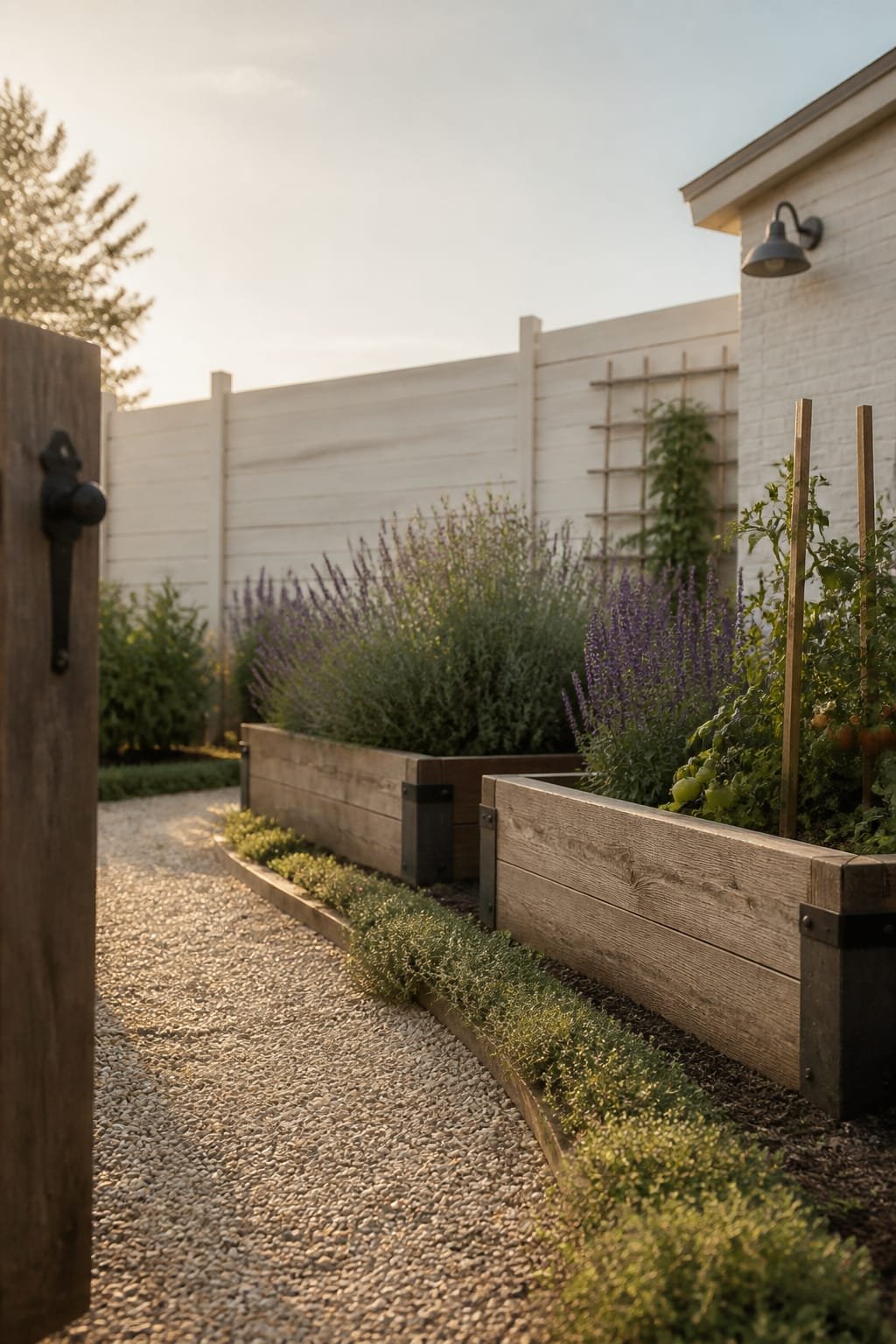
Containers and bed materials are the “furniture” of your garden — choose touchable textures.
This is the part most people get wrong: they default to flimsy plastic or shiny metal that glares in sun. Swap in materials that weather softly. Cedar raised beds from Home Depot or a DIY kit with corner brackets look warm and settle into the landscape. Terracotta pots in varied sizes bring earthy tone and wick moisture kindly around roots. If you’re renting or on a tight budget, use heavy-duty grow bags in a clay color and nestle them into a low border of salvaged brick — it reads intentional, not temporary.
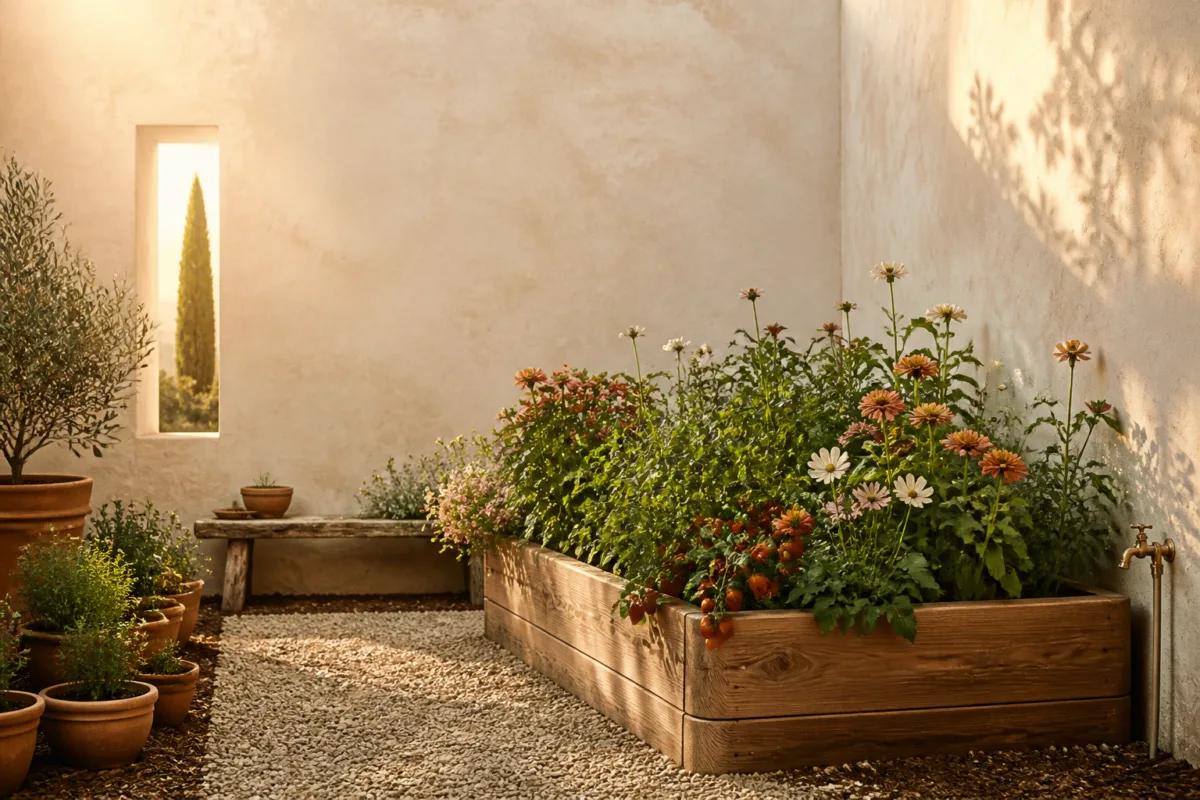
Scene it: Two cedar beds, 3 ft by 6 ft, sit slightly offset, not parallel. The nearest is edged with a row of repurposed old bricks from Craigslist, their faces chipped and warm, holding back a neat top layer of cocoa-brown mulch. At the bed corner, a tall hand-thrown stoneware pot from Etsy hosts a dwarf lemon tree, its glossy leaves catching a slice of sun. A muted green watering can rests on a flat river stone, and when you set it down, there’s a soft thunk against the rock that makes the whole space feel real and grounded. Linen twine hangs from a brass hook screwed into the bed corner — practical with a touch of soul.
Why This Looks Intentional: Repeating a small palette of materials — cedar, brick, terracotta, stone — creates cohesion. The patina improves with time, which is the mark of a grown-up garden, not a seasonal setup.
Don’t Do This: Avoid glossy lacquered planters and neon-colored plastics. They bounce harsh light and break the warm, natural story you’re building.
Pro Tip: Vary container sizes in odd numbers (1 tall, 2 medium, 3 small) and keep them within one color family; the height rhythm photographs like a still life.
Plant the Dual-Purpose Stars: Edible Meets Bouquet-Worthy
Choose varieties that cook beautifully and look like art in a vase.
You’ve tried planting a bit of everything, but the garden still feels mismatched and sparse in bouquets. Here’s why this actually works: dual-purpose plants knit your food and flower garden together, giving you edible abundance and the romance of cut stems. Think basil in purple and green, frilly kale that moonlights as foliage, and tomatoes you can trellis into sculptural moments. For flowers, pick cutting workhorses: zinnias, cosmos, dahlias, snapdragons, sunflowers. Mix in herbs that bloom like lavender and thyme — the bees will thank you, and your porch drinks will too.
Now, a summer day scene: The morning is soft and pale, the air still cool on a smooth slab of reclaimed bluestone you step across to reach the beds. In the first cedar box, drifts of ‘Queen Lime’ zinnias mix with chartreuse basil; you pinch a stem and that peppery-sweet scent lifts. Next to them, rainbow chard throws glossy, ribbed leaves that you’ll sauté tonight. A simple bamboo teepee supports a pair of ‘Sun Gold’ tomatoes, their fruit catching a shy beam through a linen-draped pergola. A single blue glass bottle holds a snip of cosmos on the side table — delicate, a whisper of movement when the breeze nudges past.
- Best overall: Zinnias + basil + tomatoes — continuous color, constant harvests, low fuss.
- Worth the splurge: Dahlias from a reputable seller (try Floret-adjacent growers on Etsy) — big drama, huge vases.
- Budget pick: Cosmos and sunflowers from seed — fast, forgiving, and photogenic.
- Skip this one: Fussy hybrid tea roses for beginners — they’re diva-level maintenance in summer heat.
Why This Feels Designer: Repeating color stories across edibles and blooms — chartreuse basil with lime zinnias, burgundy amaranth with purple basil — is a stylist’s trick that makes a garden read cohesive and lush.
The Most Common Mistake: Planting in soldier-straight rows with single heights. Your bouquets will look stiff, and your beds flat. Stagger heights and tuck foliage plants between bloomers.
Pro Tip: For arrangements, cut at dawn into a bucket with cool water, strip lower leaves, and let stems rest in shade — your vases will last and photograph with that dewy, fresh look.
Layer Heights and Texture: The Editorial Mix That Feels Designer
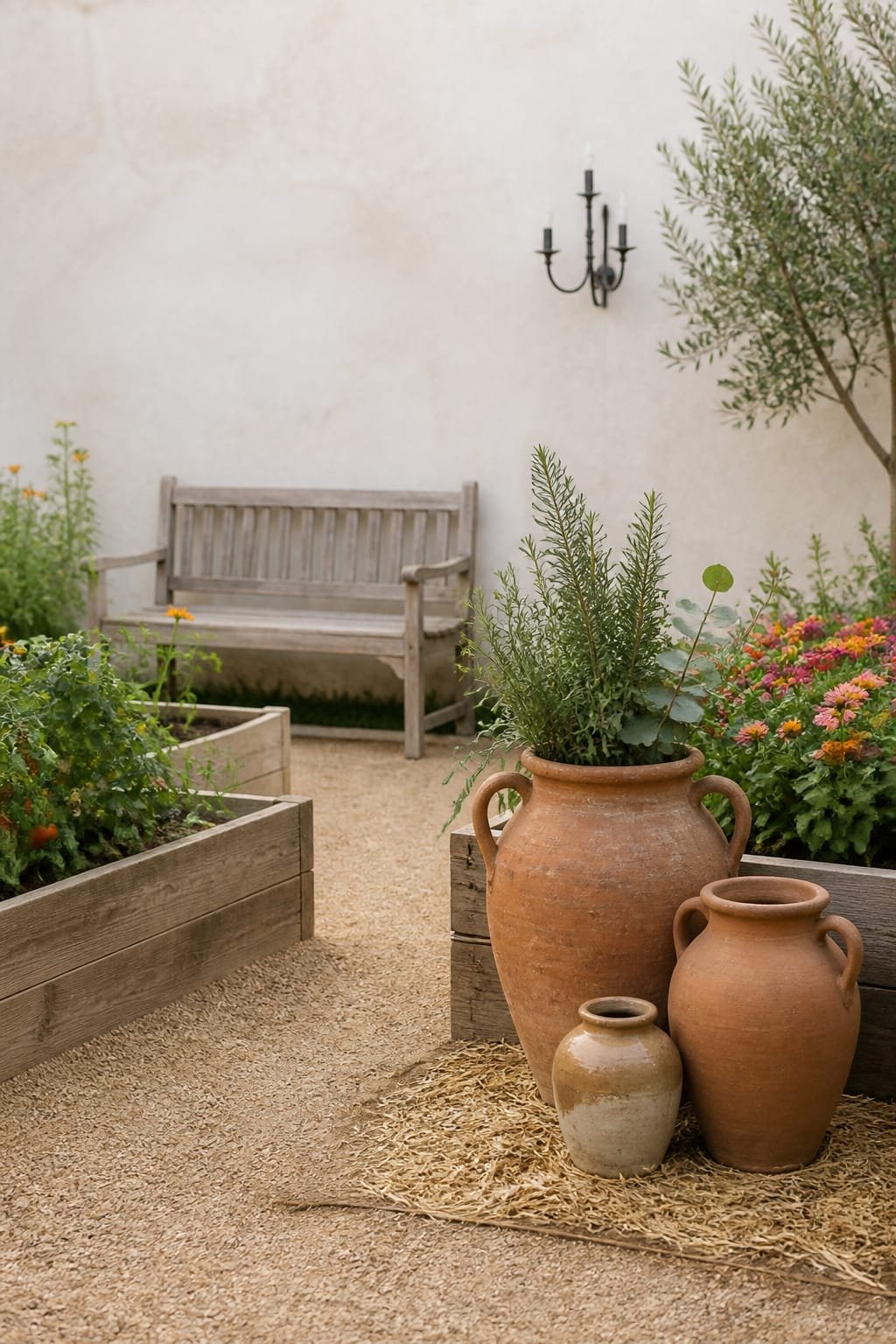
Height is the difference between “yard” and “garden.” Texture is the story.
It sounds obvious, but here’s where it usually falls apart: everything ends up the same height and leaf shape. You need a canopy, mid-story, and ground layer — just like a tiny woodland, but sunny. Use obelisks or a weathered ladder for beans; plant tall cosmos or sunflowers to move in the breeze; sneak in mounded herbs at the edges and a soft underlayer of straw mulch. Vary leaf shapes: frilly dill, broad squash, feathery cosmos foliage, shiny chard. The interplay looks painterly.
Scene-building: Blue hour settles and the heat drops. An iron obelisk from Amazon’s rustic lineup rises at the back of the bed, laced with runner beans in red bloom. In front, wavy kale leaves catch the last of the light, a gentle sheen along the ribs. Low at the path, thyme and creeping chamomile spill just enough to tickle your ankles as you pass, releasing a clean, green fragrance. A single strand of solar fairy lights is tucked beneath the obelisk crossbars — not a marquee, just a hint — and their warm pinpoints start to glow as the sky deepens.
- Best for beginners: Bamboo teepees for tomatoes/beans — cheap, sturdy, quick to set up.
- Worth the splurge: Powder-coated steel obelisk from Terrain or Gardeners — sculptural even in winter.
- Budget pick: Craigslist or Habitat ReStore for a vintage ladder — anchor it securely for climbing nasturtiums.
Why This Looks Expensive: Layered heights and mixed textures catch light at multiple points, creating shadow play and movement — the hallmarks of editorial gardens.
Watch Out: Overstuffing with only tall plants. You’ll lose depth and make maintenance miserable. Leave breathing room and keep edges low and soft.
Pro Tip: Place your tallest element off-center and slightly back; in photos it creates a dynamic “lead” that draws the eye through the frame.
This isn’t about perfection. It’s about rhythm. If you miss a layer this season, add it next weekend. Your garden is a living room under the sky — it gets better with small, steady edits.
Watering Rituals and Glow: Hoses, Cans, and Warm Evening Light
Make your irrigation beautiful and your evenings golden — it changes everything.
We’ve all been there: a neon hose snakes across your photo like a highlighter, and plastic sprinklers spray everything but the roots. Choose a slim, neutral hose (olive, clay, or sand) with unlacquered-brass fittings — Dramm and Flexzilla both have tones that disappear visually. Pair with a matte metal nozzle and a classic galvanized can for close work. For lighting, think candlelit garden, not stadium. Lanterns, low solar stakes in warm white (2700–3000K), and a single string of cafe lights transform the edges of dusk into your favorite time outdoors.
Close your eyes and drop into the scene: It’s 7:45 p.m., and the day’s heat finally lifts. You unspool a sage-green hose coiled neatly on a wall-mounted black metal holder from Crate and Barrel. As you water, the gentle patter against mulch is soft and sure; no harsh spray. Two rattan-wrapped lanterns sit on a flagstone, their candles pooling a golden halo that kisses the terracotta pot rims. Farther back, Edison bulbs draped casually between a fence post and a walnut trellis hum to life, softening every edge. The scent of tomato leaves and damp earth hangs in the air like a promise of dinner.
- Best overall: Pressure-compensating drip line on a simple timer — invisible and water-wise.
- Worth the splurge: Heavy-duty brass nozzle and hose pot — lasts for years, looks chic.
- Budget pick: Warm-white solar stake lights from Target — place them low to graze paths, not spotlight plants.
Why This Feels Designer: Concealed or sculptural utilities keep the romance intact. When function blends with form — brass, rattan, warm LEDs — the space feels curated, not cobbled together.
One Thing To Avoid: Cool-blue LEDs and motion-floods. They flatten color, kill mood, and rob your garden of that tender dusk magic.
Pro Tip: Light from below — aim lanterns and low stakes across gravel or brick so texture throws gentle shadows that read beautifully on camera.
Style the Garden Table: Harvest-to-Vase Moments You’ll Actually Use
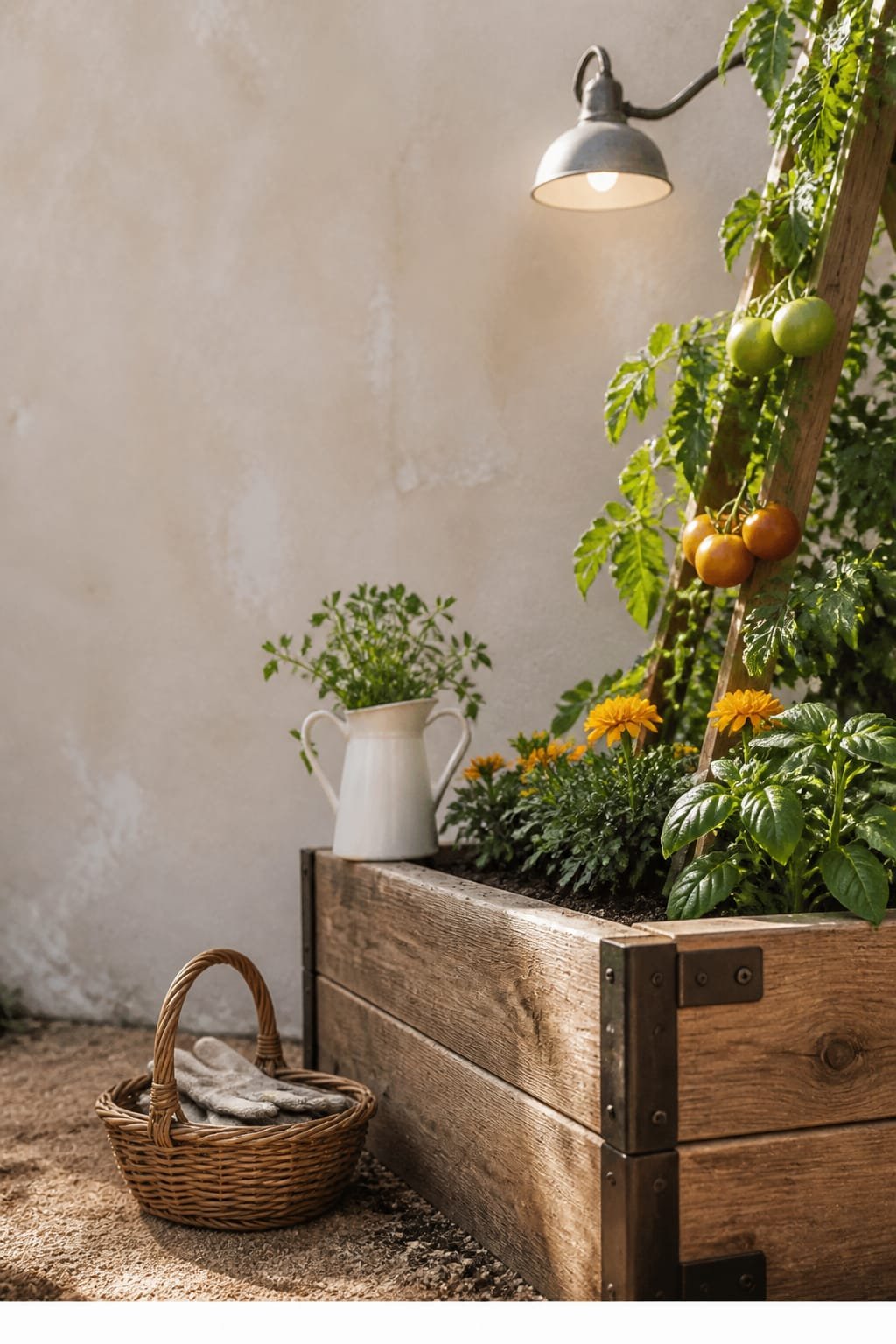
Set a simple station so you can cut, rinse, and enjoy without trekking inside.
It sounds fancy, but here’s where it becomes life-changing: a dedicated surface for micro-rituals. A narrow potting bench or a salvaged console under shade becomes your “garden bar.” Add a stoneware crock with shears, a low enamel basin for rinsing herbs, a stack of flour-sack towels, and a tall jug for instant arrangements. Suddenly you’re making mint tea and dahlia bouquets in the same breath — and nothing feels staged.
Scene moment: Morning sun is pale and kind. On a slim acacia bench from World Market, a hand-thrown ceramic bowl holds just-picked cherry tomatoes, their skins taut and warm. A vintage cutting board leans against the fence, knife marks telling stories. You set your stoneware mug down with a quiet clink beside a bunch of just-cut snapdragons standing tall in a matte cream pitcher from Target’s Hearth & Hand. The bench top shows the slight ripple of oiled wood grain, and a single olive sprig in a bottle adds sculptural calm. Off to the side, a jute rug underfoot telegraphs “place,” rough and grounding beneath bare feet.
- Best overall: Narrow potting bench with a lower shelf — storage for soil, top for styling.
- Worth the splurge: Large reclaimed stone or marble pastry slab — cool to the touch, perfect staging and prep.
- Budget pick: Thrifted console table sealed with exterior poly — style with an enamel washbasin from Amazon.
Why This Looks Expensive: A restrained palette of natural materials — acacia, stoneware, linen — and one tall vessel create a still-life quality. It reads intentional, calm, and very “editor’s backyard.”
The Most Common Mistake: Over-styling with dozens of small knickknacks. Clutter breaks the serenity and crowds your working surface. Keep only what you reach for daily.
Pro Tip: Always include one vertical element (tall jug, shears hung high) and one low, wide piece (bowl or basin) — the height contrast photographs like magic.
If this feels like “extra,” remember: rituals make habits stick. A beautiful station means you’ll snip, rinse, and arrange more — and your garden becomes part of your daily rhythm, not a weekend project you dread.
Low-Lift Maintenance: Weeds, Mulch, and Quiet Morning Checks
Ten minutes most mornings beats two hours of Saturday chaos, every time.
You’ve tried the all-at-once cleanup and felt defeated. Flip it: five to ten minutes at sunrise with a mug in hand. Pull baby weeds before they toughen. Deadhead zinnias, pinch basil, check for pests. Mulch is your best friend — shredded bark or straw keeps moisture, smothers weeds, and gives that finished, velvety look to beds. Keep a small bucket tucked behind the bench for clippings and a pair of comfortable, real-leather gloves so you’ll actually reach for them.
Quiet scene: The world is hushed, pale light slipping across the garden like a whisper. You walk the path with your coffee, cool steam curling your fingers. Dew beads on thyme and the crushed-stone path sparkles faintly. You snip two spent dahlia heads, pinch a basil tip — the scent hits sweet and peppery — and tuck a handful of mint into your pocket for later. Ten minutes and you’re done. The garden looks brushed and tended, not manicured — lived-in softness under the sky.
- Best overall: 2–3 inches of shredded hardwood mulch — clean finish, moisture retention.
- Worth the splurge: High-quality bypass pruners (Felco or ARS) — one smooth cut, fewer torn stems.
- Budget pick: Straw bales split and fluffed — great for veggie beds, light and forgiving.
Why This Looks Expensive: Consistent mulch tone and clean edges frame your plants like a mat around artwork. Even a simple bed looks curated when the ground plane is unified.
Watch Out: Colored or rubber mulches. They read harsh, heat soil, and clash with natural materials. Keep it organic and neutral.
Pro Tip: Edge beds with a shallow spade cut and brush debris away before photos — the crisp shadow line sells the shot.
Quick Checklist
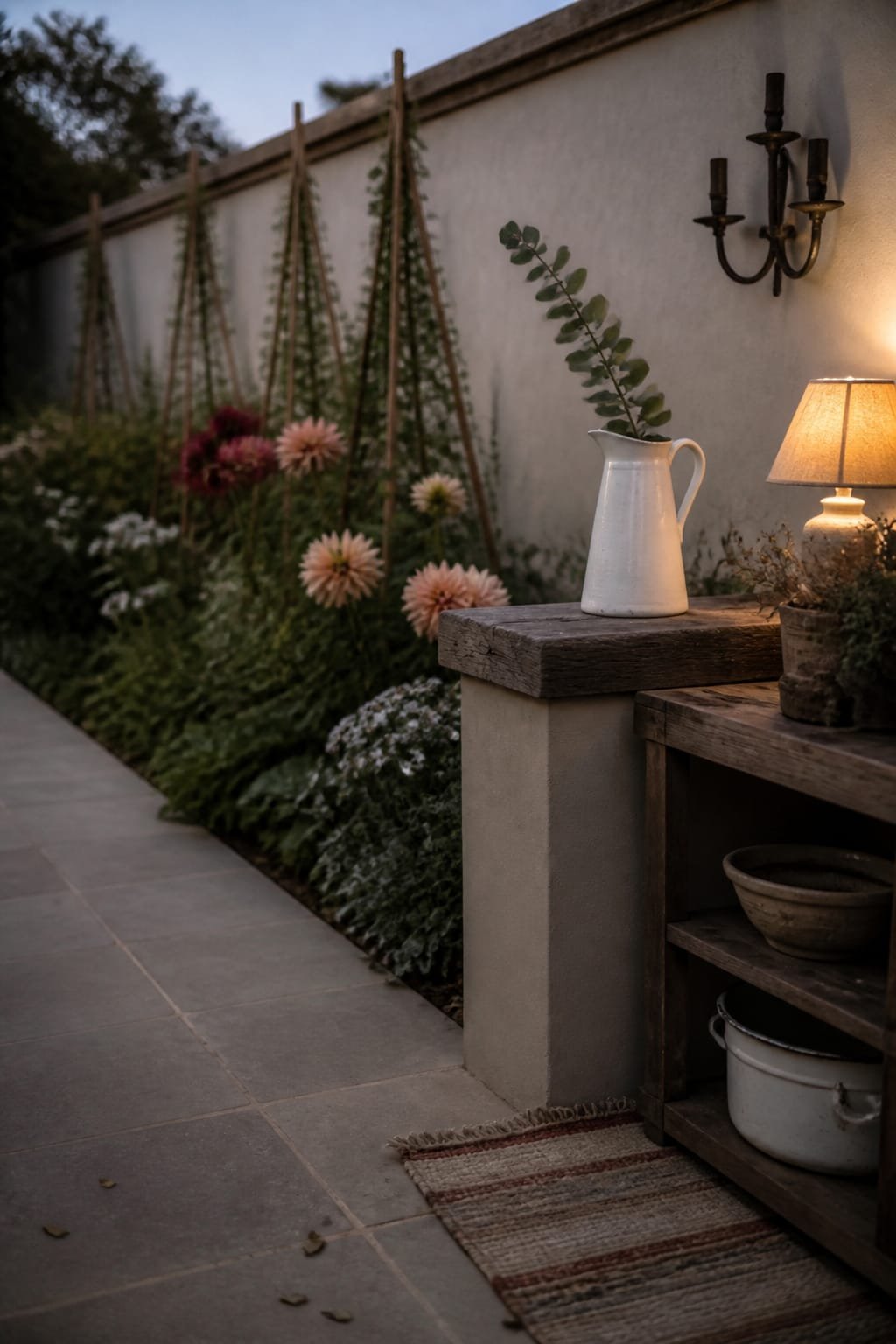
- Sketch an asymmetrical path with a single focal point
- Choose cedar, brick, terracotta, and stone as your core materials
- Install two raised beds, slightly offset
- Mix dual-purpose plants: zinnias, basil, tomatoes, kale, cosmos
- Add a tall structure off-center: obelisk, ladder, or bamboo teepee
- Lay 2–3 inches of natural mulch for finish and moisture
- Use a neutral hose with brass fittings and a galvanized watering can
- Layer warm-white lighting: lanterns, low solar stakes, one cafe string
- Set a narrow garden table with shears, basin, towels, and a tall jug
- Commit to a 10-minute morning walk-and-trim ritual
Frequently Asked Questions
How small can my garden be and still feel like a true summer garden aesthetic?
A single 3 ft by 6 ft bed plus three terracotta pots can deliver the look and the harvest. Add a pea-gravel strip for path texture, one off-center obelisk, and warm stake lights. Scale is less important than material consistency and layered heights.
I’m on a tight budget — what are the first three things to invest in?
Start with soil quality, mulch, and one good trellis. Healthy soil and clean mulch make anything look elevated, and a tall structure adds instant editorial impact. Containers and extras can be thrifted or added later.
Will this work on a shady patio or balcony?
Yes, with plant swaps. Choose leafy edibles (kale, lettuce, mint) and shade-tolerant flowers (impatiens, begonias). Use clay-colored grow bags and a slim bench to keep the look cohesive. Add lanterns and a single cafe string for the evening glow.
How do I keep the garden from looking messy mid-summer?
Mulch edges, deadhead weekly, and limit your color palette. Group containers in odd numbers and repeat plant varieties. A quick rake of the gravel and a wipe of the bench before guests arrive works wonders.
What if I’m a beginner and my dahlias or tomatoes fail?
Plant backups from seed that thrive with minimal fuss: cosmos, zinnias, sunflowers, and bush beans. The aesthetic holds because your materials and layout do most of the heavy lifting. Swap in new starts mid-season — no shame, just momentum.
Your Garden, Your Summer Story
Here’s the secret: a beautiful food-and-flower garden isn’t a single weekend makeover. It’s a rhythm. A path that crunches softly underfoot, a cedar bed that warms to honey in the sun, a jug of basil and zinnias on a humble bench. You’ll harvest tomatoes with one hand and tuck a bloom behind your ear with the other. That’s the summer garden aesthetic — not precious, just deeply lived.
Start small today. Sketch your flow, place one focal piece, and choose your core materials. Tomorrow, fill a bed. Next weekend, string the lights. Your garden will gather its own patina, and by August, you’ll look out at dusk and feel that quiet certainty: this is ours. You built a place where flavor and flowers meet, where candle glow and warm air make dinner late and conversations long. And you’ll be proud to call it home.

About the Author

Krisztina P.Rendes, Founder of Home Style Vibes
Founder of Home Style Vibes
Krisztina Puskásné Rendes created Home Style Vibes as a cozy-modern lifestyle space where homemaking meets inspiration. Her goal is to help women create beautiful, organized, and peaceful homes they truly love — without overwhelm. You’ll find here heart-driven content on home decor, cleaning tips, easy family recipes, organization and decluttering, DIY home projects, plants, and seasonal ideas — all designed to bring more calm, comfort, and style into everyday life.