6 Thrifted Home Decor Ideas For A Cottagecore Look On A Budget
You want breezy linen curtains, honeyed wood, and that “I foraged this” charm. You hate the chaos: mismatched hand-me-downs, harsh overhead lighting, and shelves that look more dorm than dreamy. Let’s fix that. These 6 thrifted home decor ideas for a cottagecore look on a budget will give you soft light, tactile layers, and photogenic vignettes you’ll actually love living with—without spending more than $250 per idea and in a single weekend per space. Imagine cream-dappled ceramics, muted florals, and warm brass that photograph beautifully—and work in real life for naps, tea, and messy toast crumbs. If you crave cozy, botanical, and gentle, especially in small spaces or rentals, this is your zone.
1. Reclaimed Pine Console With Dappled Window Light and Oversized Gilt Mirror
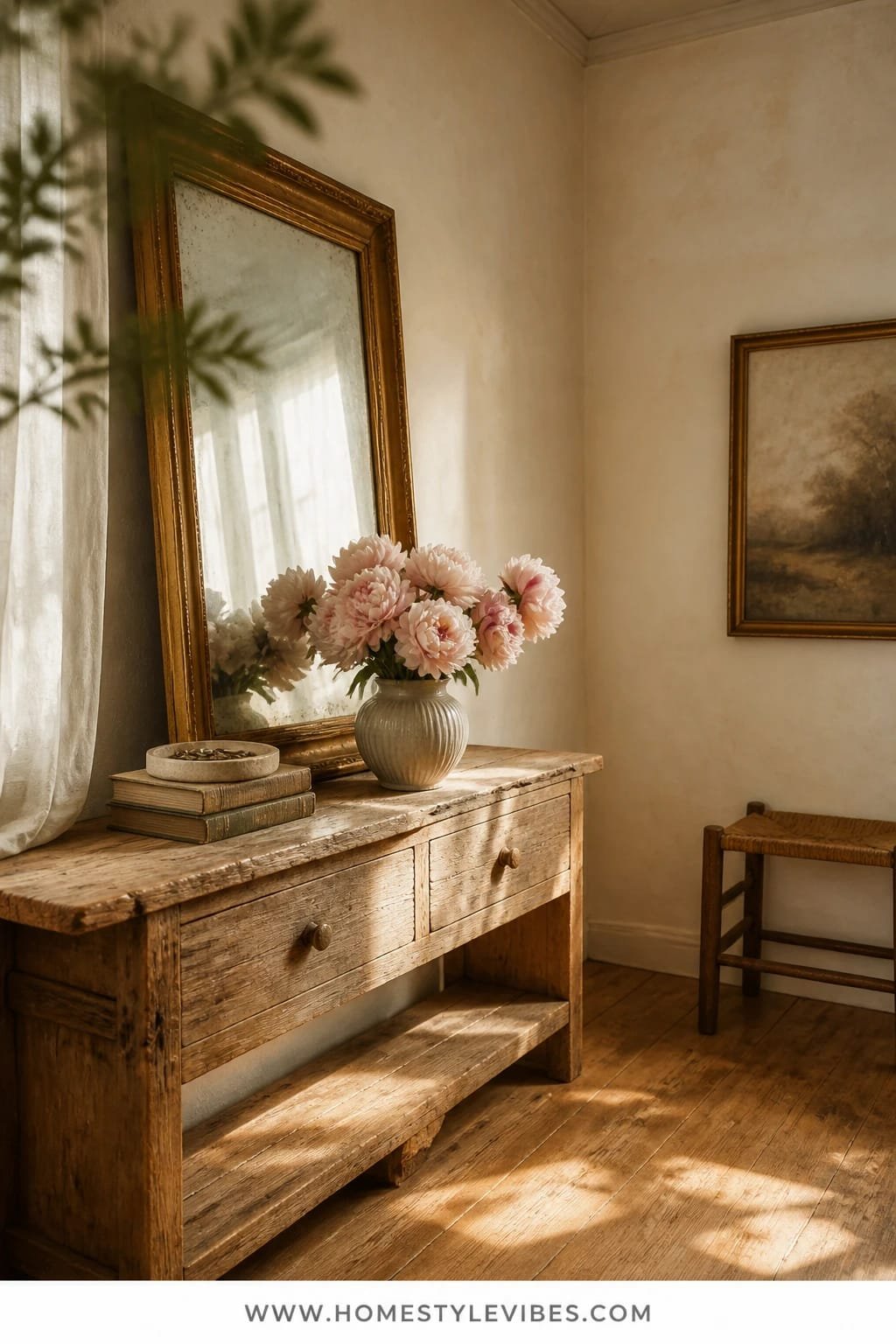
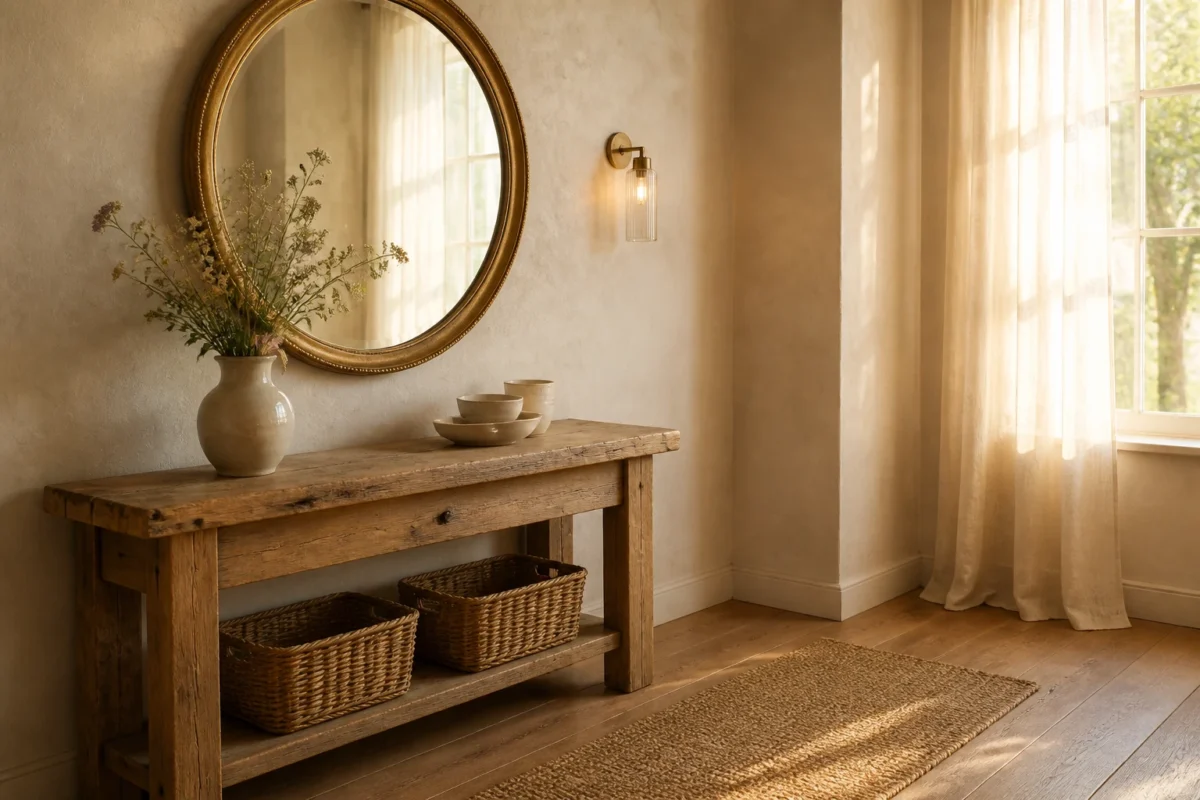
We’ve all been there: the entryway that never feels “finished.” Shoes pile, keys vanish, and nothing invites you in. This cottagecore design gives you a warm, storybook welcome. The mood is rustic-romantic with a practical backbone: a reclaimed pine console (thrift it, don’t overthink it), dappled natural light softened by sheer curtains, and one statement oversized gilt mirror that bounces glow like a summer afternoon.
Here’s why it works at home. The mirror visually doubles a narrow hall, the pine console hides everyday clutter in baskets, and the entire vignette photographs like a magazine thanks to contrast: warm wood, luminous glass, and a touch of sparkle from gold. It’s family-friendly, renter-approved, and ideal for tight spaces because vertical presence beats bulky storage. Light truly makes it sing—the reflection adds depth while the console’s matte texture grounds it.
Variations to keep it flexible: swap gilt for aged black if your space leans modern farmhouse. Go small-space with a narrow wall shelf and a tall arched mirror. For darker homes, add a vintage table lamp with a pleated shade to create that candlelit warmth after sunset. Renter-friendly? Lean the mirror, don’t hang it, and use felt pads to protect the wall.
Budget Breakdown:
- Thrifted pine console: $40–$120
- Oversized vintage mirror (gilt or aged frame): $50–$150
- Wicker or seagrass baskets: $10–$30 each
- Sheer curtain panel + tension rod: $15–$40
- Pleated lampshade table lamp (secondhand): $15–$35
Total Estimated Cost: $130 – $375
Best For: Narrow entryways, small apartments, and anyone who wants a fast glow-up that hides clutter and photographs beautifully.
Key Design Elements:
- Main materials: reclaimed pine, aged brass/gold, glass
- Color palette: warm honey, cream, soft sage or dusty rose accents
- Lighting strategy: dappled natural light + one warm lamp (2700K)
- Furniture silhouettes: narrow console, arched or rectangular oversized mirror
- Texture layers: woven baskets, linen runner, ceramics
- Accent details: botanical prints, dried stems, small tray for keys
How To Recreate This Look:
- Start with a secondhand console—sand edges lightly to remove splinters but keep patina.
- Add a large vintage mirror; lean it for an effortless vibe and depth.
- Layer a linen runner and place a ceramic vase with dried foxglove or eucalyptus.
- Install sheer curtains to soften incoming light and create glow on the wall.
- Style with a basket trio for shoes, a small key tray, and one pleated-shade lamp.
Why This Looks Expensive: Scale and restraint. The oversized mirror implies luxury, while a simple console with consistent textures feels curated, not cluttered.
Watch Out: Don’t hang the mirror too high. The top third of your reflection should meet eye level—too high kills intimacy and makes the ceiling line look awkward.
Pro Styling Tip: Angle the lamp slightly toward the mirror at dusk—this creates layered highlights that read romantic on camera.
Remember, this isn’t about recreating a showroom. It’s about building moments that feel like you, even when the sink’s full and the mail’s messy. One corner at a time still counts.
2. Painted Antique Hutch in Milk Paint With Candlelit Warmth and Floral China Display
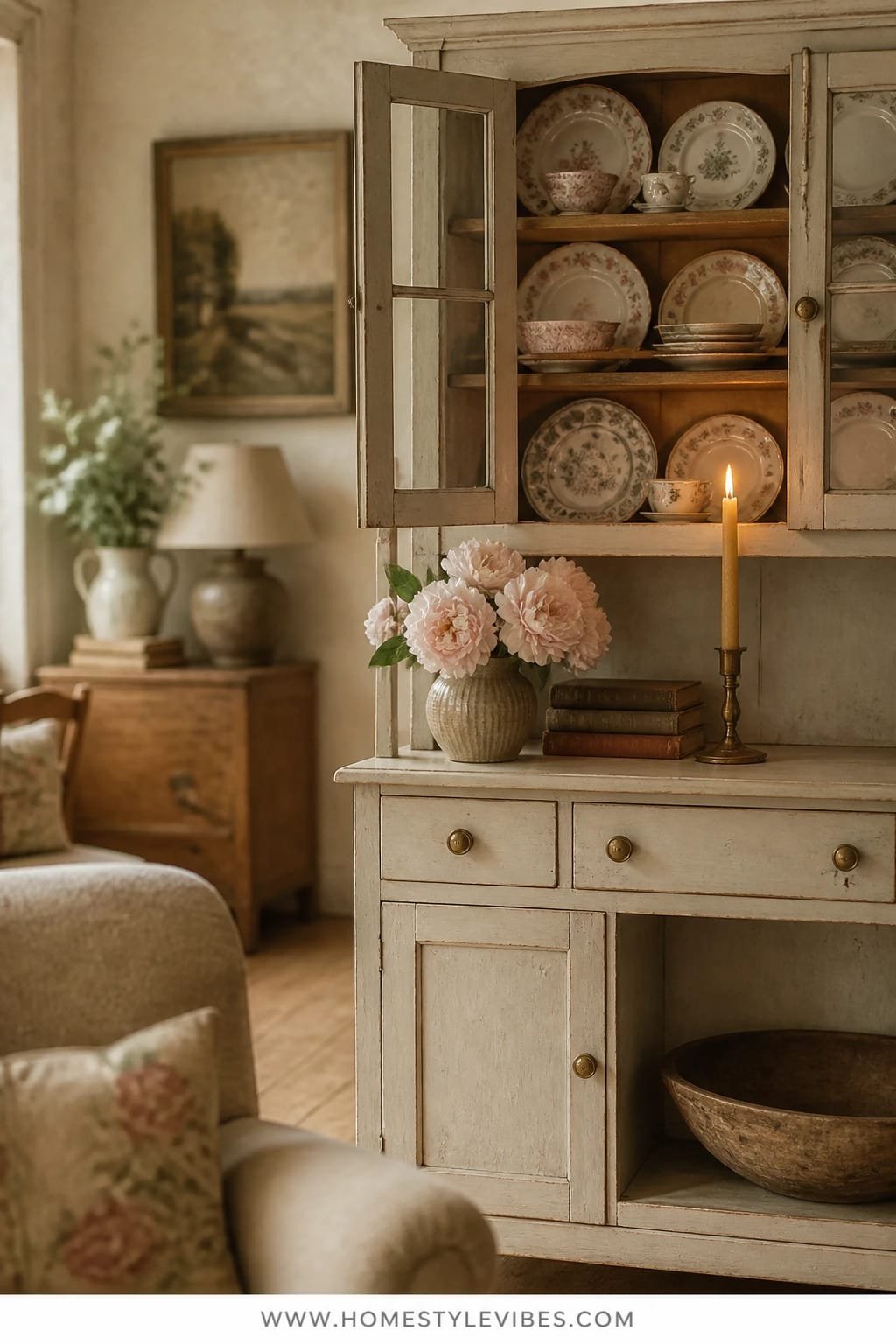
It’s that one wall that’s begging for soul. You’ve tried generic bookcases that sag and bins that never look tidy. A thrifted hutch, treated with milk paint and layered with pretty floral china, reads cottagecore from 20 feet away and turns a blank wall into a story. The mood leans English country: timeworn, romantic, and hardworking.
Why this works at home: Hutches handle storage and display simultaneously. Milk paint creates that velvety, chalky finish that survives dings and still looks intentional. Candlelight or warm fairy lights tucked along the shelves make plates glow and add dimension at night. It photographs beautifully because matte paint absorbs glare, while glazed ceramics catch light and pop against it.
Variations: Short on space? Use a half-hutch or hang a plate rack above a narrow cabinet. Need renter-safe? Line the hutch back with removable floral wallpaper or starch-mounted fabric to add pattern without commitment. Darker version: olive or deep inky blue milk paint with cream transferware for contrast.
Key Design Elements:
- Main materials: solid wood hutch, milk paint, glazed china
- Color palette: buttercream, pale sage, warm white, soft rose
- Lighting strategy: candles or fairy lights tucked at the back, 2200–2700K bulbs nearby
- Furniture silhouettes: classic hutch with crown molding or scalloped trim
- Texture layers: matte paint, glazed ceramic sheen, linen napkins
- Accent details: brass knobs, lace runner, pressed flowers in frames
Budget Breakdown:
- Thrifted hutch: $60–$200
- Milk paint + bonding agent: $25–$45
- Vintage floral plates/mugs: $2–$10 each
- Brass knobs or bin pulls: $10–$30
- LED taper candles/fairy lights: $10–$25
Total Estimated Cost: $107 – $310
Best For: Dining rooms, breakfast nooks, or living rooms that need storage and a “wow” focal point.
How To Recreate This Look:
- Start with a sturdy wooden hutch—wobbly legs can be shimmed but avoid warped shelves.
- Add milk paint in two coats; lightly sand edges for a kissed-by-time effect.
- Layer china by color family; stack bowls, stand plates, drape a linen napkin.
- Install warm fairy lights or stand LED tapers at the back corners.
- Style with a small stack of cookbooks, a basket of linens, and a tiny framed pressed fern.
Why This Feels Designer: Repetition and negative space. Unified tones and editing create a boutique look; not every shelf needs filling.
One Thing To Avoid: Don’t over-sand the paint. There’s a fine line between “antique” and “accident.” Distress edges only where real life would: handles, corners, shelf lips.
Pro Styling Tip: Stagger plate heights with clear stands; the tiering casts gentle shadows that read dimensional in photos.
If one idea resonates more than the others, that’s your starting point. You don’t need all six. One strong vignette often anchors the whole room’s vibe.
3. Linen-Draped Farm Table With Morning Light and Bentwood Chair Mix
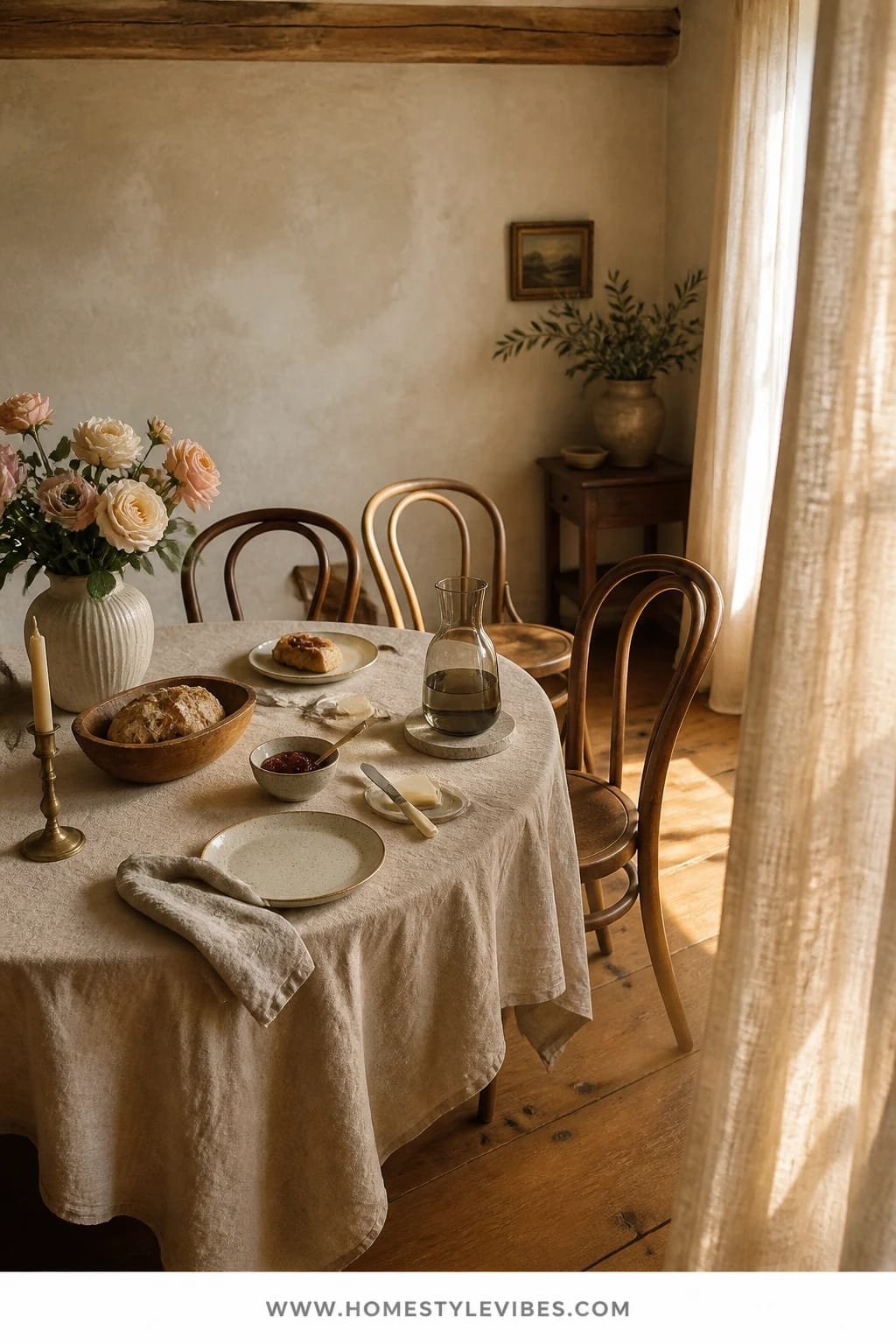
You’ve got a dining table that’s fine but never feels inviting. Harsh overhead lighting, chairs that squeak, and a surface that’s always covered in mail. A linen-draped farm table with mixed bentwood chairs and soft morning light turns “eat and run” into “linger and chat.” The mood is relaxed countryside breakfast—think strawberry jam, butter knives, soft clatter.
Here’s why it works. Linen introduces texture that softens hard surfaces, mixed chairs create patina-rich character, and a single warm pendant on a dimmer pulls the scene together. It’s easy to maintain—linen hides crumbs and washes well, and thrifted chairs handle life without fear of scratches. Photographs? Linen’s slubby weave creates gentle shadows; curved chair backs give rhythm.
Variations: On a tight budget, use a painter’s drop cloth (washed and bleached) as a forgiving tablecloth. For small spaces, try a square drop that reaches just to the seat height so chairs slide under without fuss. Darker version: charcoal linen with cream pottery and vintage silver for moody evenings.
Budget Breakdown:
- Secondhand farm table or simple wood table: $50–$180
- Mixed bentwood or spindle chairs (4–6): $10–$35 each
- Linen or washed drop-cloth tablecloth: $15–$60
- Vintage pendant or rattan shade: $20–$70
- Dimmer switch (renter plug-in dimmer): $12–$25
Total Estimated Cost: $127 – $490
Best For: Eat-in kitchens or dining corners where you want a cozy hub that suits breakfast through candlelit nights.
How To Recreate This Look:
- Start with a thrifted table; if it’s too shiny, scuff with a fine sanding pad for a matte, cottage feel.
- Add a linen/drop-cloth cover that drapes at least 8 inches—longer reads more romantic.
- Layer mixed chairs; keep a common tone (all wood or all painted) for cohesion.
- Install a warm pendant centered on the table, and add a dimmer.
- Style with a ceramic pitcher of wildflowers and a shallow bowl of lemons for color pop.
Why This Reads High-End: Thoughtful contrast: the crisp fall of linen against timeworn wood, plus unified chair tones. It looks like a collection, not a clearance aisle.
The Most Common Mistake: A too-small tablecloth. That skimpy drape looks accidental and exposes the visual noise underneath.
Pro Styling Tip: Light the pendant to 40% and place flowers slightly off-center; asymmetry feels human and photographs effortlessly.
True story: I tried this in my own dining nook last fall when everything felt cold. Swapping in a washed drop cloth tablecloth and dimming the pendant changed dinners from “scroll-and-eat” to “let’s talk.” Simple, real, better.
4. Woven Seagrass Headboard With Soft Sconce Glow and Vintage Quilt Stack
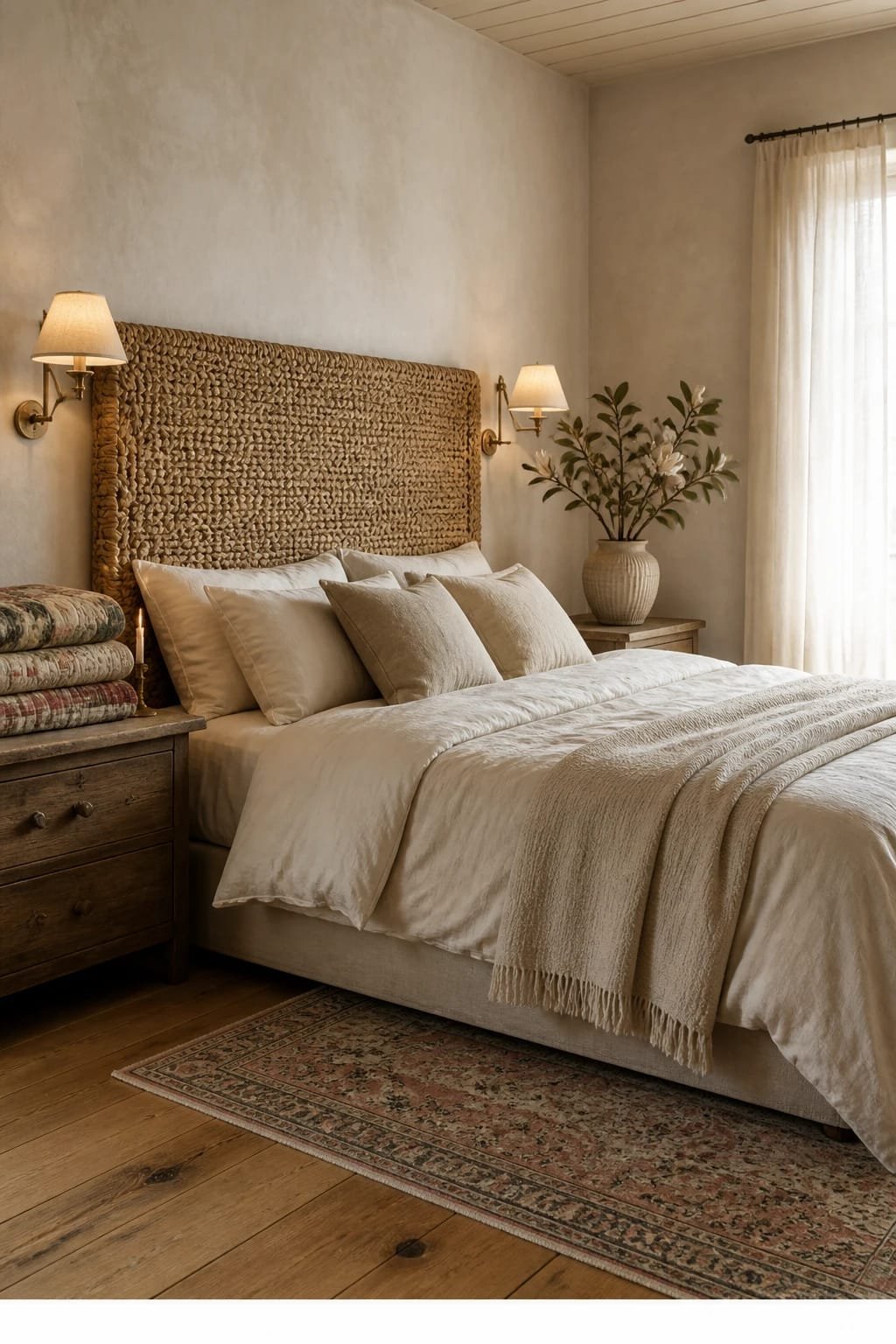
Your bedroom looks clean but flat—like a hotel that forgot the art. You’ve tried throw pillows and random lamps, but it still reads sterile. Enter a thrifted woven headboard, warm sconces, and a stack of vintage quilts. The mood hits cottagecore bedtime: restful, tactile, and a touch nostalgic.
Why this works in real homes: Woven texture adds instant depth without crowding small rooms; sconces free up nightstands; quilts add color in a removable way. Lighting is everything here—soft, ambient glow around the headboard makes the weave cast tiny shadows, giving depth even in tight spaces. It photographs like a dream because of the layered textiles and subtle glow halo.
Variations: No wired sconces? Use plug-in swing-arm lamps or even battery puck lights behind rattan shades. Dark room? Choose cream or pale honey headboard and lighter quilts. Minimalist lover? Go monochrome with tone-on-tone quilts in oat and cream.
Budget Breakdown:
- Thrifted seagrass/rattan headboard: $40–$150
- Plug-in sconces or battery-back sconces: $25–$80 each
- Vintage quilts (stack of 2–3): $15–$60 each
- Linen pillowcases: $12–$30
- Simple bed skirt (optional): $15–$35
Total Estimated Cost: $107 – $415
Best For: Small bedrooms or guest rooms that need softness and character without heavy furniture.
Key Design Elements:
- Main materials: seagrass/rattan, cotton quilts, linen
- Color palette: oat, cream, faded floral, muted blue or sage
- Lighting strategy: sconces at eye height, 2700K bulbs, layered with a tiny bedside candle
- Furniture silhouettes: curvy headboard, slim nightstands
- Texture layers: woven headboard, quilt stitching, washed linen
- Accent details: a small ceramic bedside dish, dried lavender, tiny wall art above one sconce
Why This Looks Intentional: Repetition of weave and stitch. The textures relate, so even mixed colors feel cohesive.
How To Recreate This Look:
- Start with a secondhand woven headboard; clean gently with a soft brush and vacuum.
- Add plug-in sconces at about 54–60 inches from the floor for flattering light when seated.
- Layer quilts: one folded at the foot, one casually stacked on a stool or bench.
- Install cord covers or paint cords the wall color—messy cords ruin the mood fast.
- Style nightstands with one low stack of books and a ceramic dish; skip clutter.
Don’t Do This: Avoid super cool bulbs. Cool light flattens the seagrass and makes the quilts read gray and sad.
Pro Styling Tip: Angle a sconce slightly toward the headboard to cast a soft half-moon shadow—instant dimension in photos.
A friend of mine spent weeks agonizing over paint colors before realizing the real issue was flat lighting. She added plug-in sconces and a woven headboard and texted me at 9 p.m.: “It finally feels like a hug.” Lighting first. Always.
5. Stoneware Crock Cluster With Golden Afternoon Light and Rustic Peg Rail
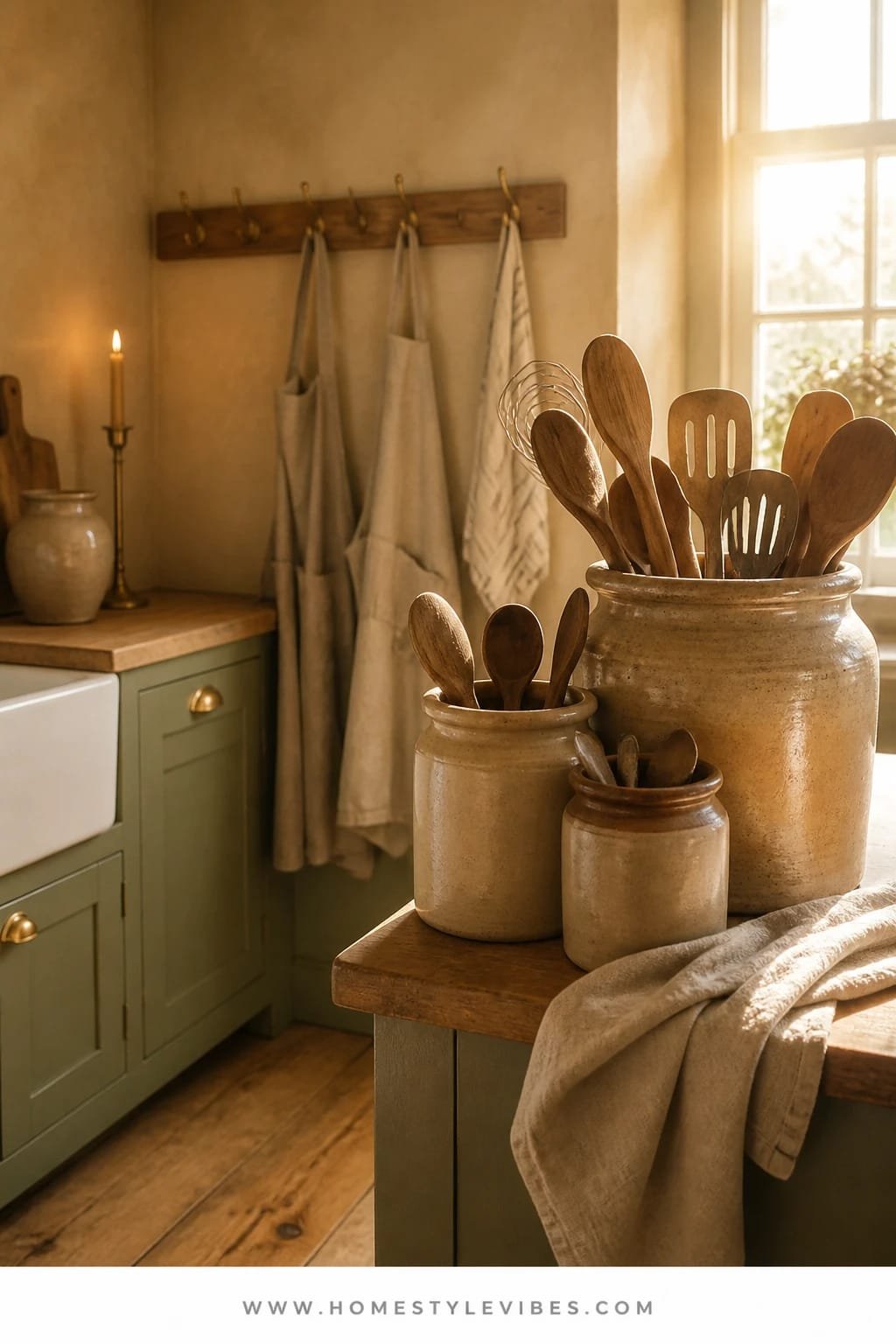
Open shelves and countertops can feel chaotic. Utensils sprawl, aprons flop, and there’s nowhere to corral everyday tools. A cottagecore fix you’ll actually use: thrifted stoneware crocks (for spoons and spatulas), a rustic wooden peg rail, and golden afternoon light that catches the glaze just right. The mood is functional farmhouse with quiet order.
It works because it puts essentials within arm’s reach while keeping visual noise collected. Crocks hide mess vertically, peg rails keep linens aired out, and the natural patina on wood balances the soft gleam of glazed stoneware. On camera, the combo of matte wood, slightly reflective glaze, and hanging textiles creates layers and gentle shadows that feel lived-in and clean.
Variations: Small kitchen? Use mini crocks in a cluster of three. Renter? Mount the peg rail with removable hooks or use a freestanding coat stand beside the counter. Darker palette? Choose charcoal crocks with natural linen towels for a moody heritage vibe.
Key Design Elements:
- Main materials: glazed stoneware, raw or stained wood, natural linen
- Color palette: ivory, soft gray, warm wood, muted stripes
- Lighting strategy: lean into side light; add a small lamp on the counter at dusk
- Furniture silhouettes: linear peg rail, cylindrical crocks
- Texture layers: smooth glaze, slubby linen, grainy wood
- Accent details: copper measuring cups, dried herbs, a simple cutting board stack
Budget Breakdown:
- Stoneware crocks (2–3): $8–$25 each
- Wooden peg rail: $12–$35
- Linen or striped cotton towels: $5–$12 each
- Small thrifted table lamp: $10–$30
- Dried herb bundle: $4–$10
Total Estimated Cost: $39 – $129
Best For: Small kitchens, rental galley spaces, and anyone who cooks daily and craves order without hiding everything.
How To Recreate This Look:
- Start with two crocks: one for wood utensils, one for metal; tall in back, short in front.
- Add a peg rail 5–6 inches above the backsplash or at an arm’s reach near the stove.
- Layer striped towels and one herb bundle; keep colors quiet and cohesive.
- Install a tiny lamp with a warm bulb to backlight the crocks during evening prep.
- Style with a cutting board stack to the side to frame the scene.
Why This Looks Expensive: Repetition of material (stoneware) in varying heights, plus controlled palette. Collections feel bespoke when edited.
Watch Out: Don’t crowd every peg. Leave negative space between towels and tools—crammed rails look like a closet, not a kitchen.
Pro Styling Tip: Photograph late afternoon with the lamp on and sunlight grazing from the side—the glaze will gleam, the wood will glow.
Remember, small daily wins matter. When your tools have a home, your counters breathe and your mind follows.
6. Botanical Gallery Wall on Limewash With Soft Skirted Chair and Brass Picture Light
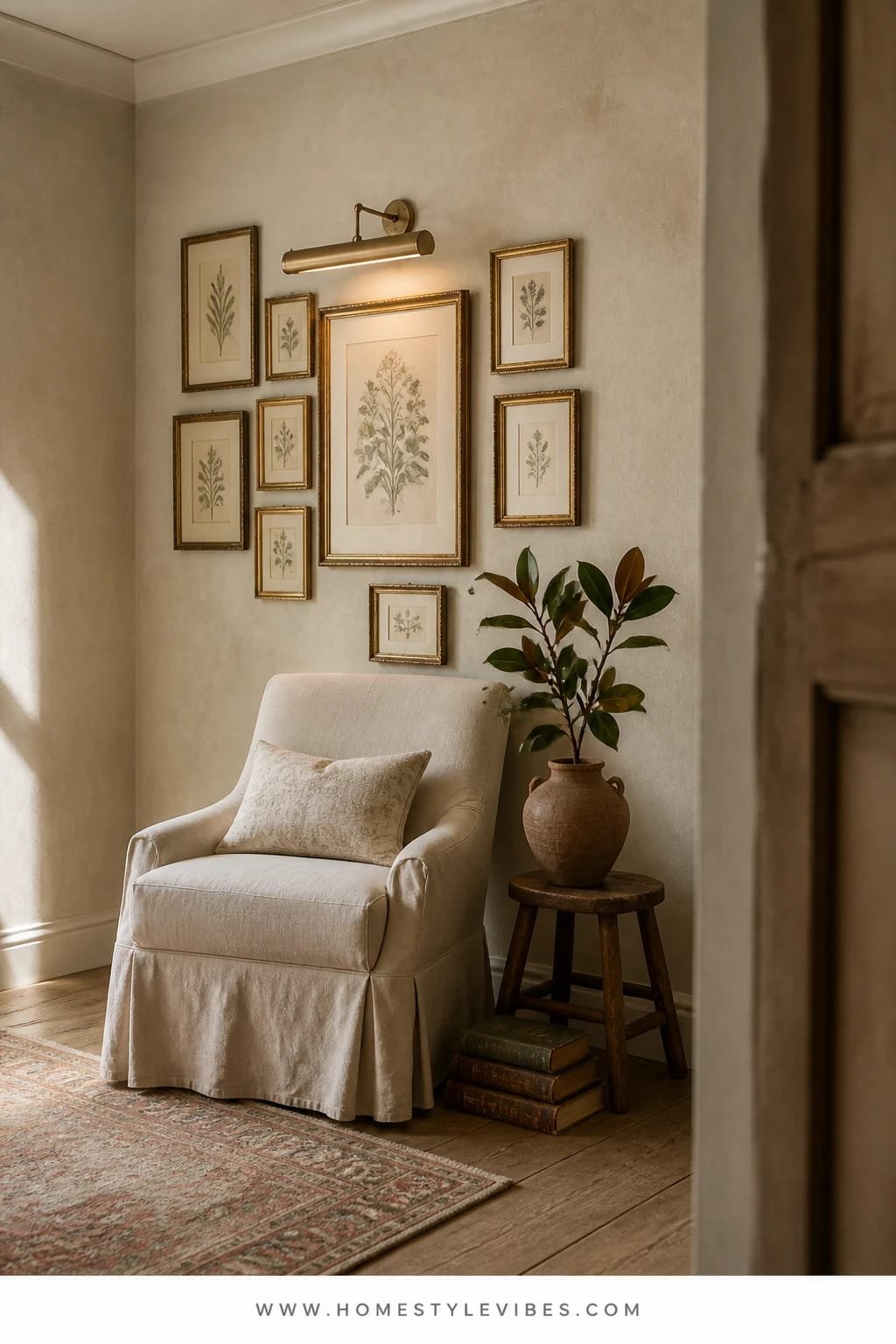
Blank walls haunt us. You’ve tried a single print that looks lonely or a big canvas that swallows the room. A thrifted botanical gallery wall over a limewash finish, anchored by a sweet skirted chair and a brass picture light, gives authentic cottagecore charm with editorial polish. The mood is library-meets-garden: gentle, layered, a whisper of history.
This works because multiple small frames create rhythm and allow you to curate over time. Limewash adds tactile softness and diffuses light, while the picture light focuses attention and brings warmth across the top row. It photographs beautifully thanks to matte wall texture, reflective glass highlights, and the sculptural softness of a skirted chair beneath.
Variations: Renter-friendly? Use peel-and-stick limewash wallpaper or keep the wall matte and hang art with removable hooks. For tiny rooms, cluster a 3×3 grid. Darker scheme? Deep moss limewash with cream mats and aged-black frames—stunning and cocooning.
Budget Breakdown:
- Vintage botanical prints or book pages (set of 6–9): $15–$60
- Thrifted frames with mats: $2–$8 each
- Limewash paint or limewash-effect kit: $35–$80
- Brass picture light (plug-in or battery): $25–$70
- Skirted chair or slipcover: $20–$60
Total Estimated Cost: $97 – $310
Best For: Living rooms, hallways, and bedrooms where you want soft focus and layered interest without bulky furniture.
How To Recreate This Look:
- Start with limewash: apply in sweeping, criss-cross strokes for clouds of tone.
- Add frames with consistent mats; keep outer sizes varied but mats similar for cohesion.
- Layer prints in a loose grid; start with the center and work outward.
- Install a brass picture light above the top row; warm bulbs only.
- Style a skirted chair below with a tiny stack of nature books on the seat.
Why This Feels Designer: Consistent matting plus a focused light source. It says “curated” rather than “random finds tacked up.”
One Thing To Avoid: Hanging frames too far apart. Keep 1.5–2 inches between frames so it reads as one composition.
Pro Styling Tip: Tilt the picture light head slightly forward so the top frame edges catch a glow line—this adds crisp definition in photos.
Real talk: limewash can feel intimidating. The first coat looks patchy and you’ll think you ruined it. Then the second coat dries and suddenly your wall has depth like a linen dress. Trust the process.
Quick Checklist
- Reclaimed pine console
- Oversized vintage mirror
- Sheer curtain panel
- Milk paint for antique hutch
- Vintage floral china and plate stands
- Linen or washed drop-cloth tablecloth
- Mixed bentwood or spindle chairs
- Woven seagrass headboard
- Plug-in or battery-operated sconces
- Vintage quilts in muted florals
- Stoneware crocks in varied heights
- Rustic wooden peg rail
- Small warm-glow counter lamp
- Botanical prints with matted thrifted frames
- Limewash paint or peel-and-stick equivalent
- Brass picture light
- Skirted chair or slipcover
- Warm light bulbs (2200–2700K)
- Dried stems or herbs for texture
- Wicker or seagrass baskets
Frequently Asked Questions
How do I keep thrifted pieces from looking mismatched instead of cottagecore?
Pick one or two linking elements—like wood tone and metal finish—and repeat them. For example, warm honey wood and aged brass across the console, frames, and lamp. Editing creates cohesion faster than buying matching sets.
I’m on a very tight budget. Which idea has the biggest visual impact under $150?
The stoneware crocks with a peg rail and a small lamp usually land under $130 and drastically reduce visual clutter. The entry console plus a large mirror can also be done around $150 if you hunt carefully.
My space is dark. Will cottagecore still look good without tons of natural light?
Yes—lean into warm lamps and sconces. Choose lighter materials (cream linen, pale woods, matte paint) and add reflective pieces like a large mirror or glazed ceramics to bounce whatever light you have.
I rent. How can I try these without drilling or painting?
Lean mirrors, use tension rods for sheers, try plug-in or battery sconces, hang art with removable hooks, and use peel-and-stick limewash wallpaper instead of paint. A skirted slipcover can transform an existing chair instantly.
What’s the most common cottagecore mistake you see?
Overdoing the pattern. Keep your largest surfaces quiet—walls, big upholstery—and use pattern in smaller, swappable items like quilts and china. Too many florals with no solids can read chaotic, not charming.
Conclusion
Pick one idea and start. Maybe it’s the gilt mirror catching morning light in your entry, or a linen-clad table that makes Tuesday dinner feel special. One finished corner is momentum—and proof that cottagecore isn’t clutter; it’s comfort with intention.
The truth is, luxury at home comes from texture, warm light, and restraint. Rough with smooth. Matte with a glint. A little glow where your eye wants to rest. Do that and your rooms feel finished without going maximal on the wallet.
You’ve got this. Brew tea, open a window, and give yourself a slow hour to move three things around. When the light hits just right and you catch yourself smiling, that’s the cottagecore look on a budget working hard for you—quietly, beautifully, every day.

About the Author

Krisztina P.Rendes, Founder of Home Style Vibes
Founder of Home Style Vibes
Krisztina Puskásné Rendes created Home Style Vibes as a cozy-modern lifestyle space where homemaking meets inspiration. Her goal is to help women create beautiful, organized, and peaceful homes they truly love — without overwhelm. You’ll find here heart-driven content on home decor, cleaning tips, easy family recipes, organization and decluttering, DIY home projects, plants, and seasonal ideas — all designed to bring more calm, comfort, and style into everyday life.