7 Vintage Home Decor Ideas For A Living Room That Feels Warm And Timeless
You want a living room that hugs you back—soft light, soulful textures, layered history. You hate how it currently reads flat and “fine,” especially at night when the lamps glare and the sofa looks like it wandered in from a waiting room. Picture this instead: buttery wood, aged metals, honest linen, and the kind of glow that makes your coffee table vignette look like a still life. These 7 vintage home decor ideas will solve that glare-and-bland frustration in one weekend-friendly sweep—with options to keep most designs under $1,200, and all of them completely doable over two or three evenings. Expect rooms that photograph beautifully, feel comforting on Monday nights, and make every guest ask, “Wait, how did you do this?” Perfect if you love warmth and nostalgia but still want a clean, modern life that doesn’t collect dust bunnies for sport.
1. Aged Oak Panel Wall With Honey Ambient Light And Tufted Chesterfield Sofa
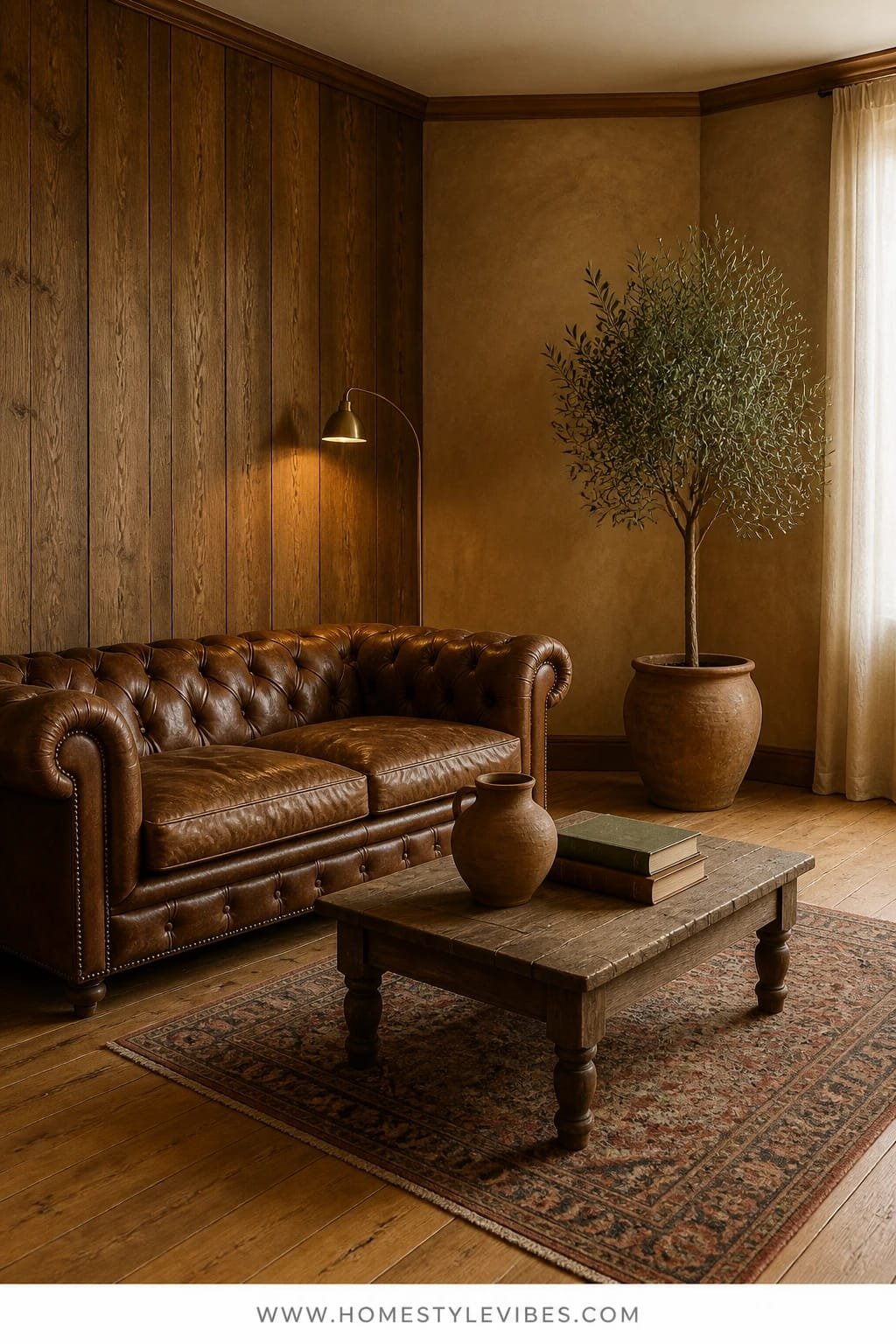
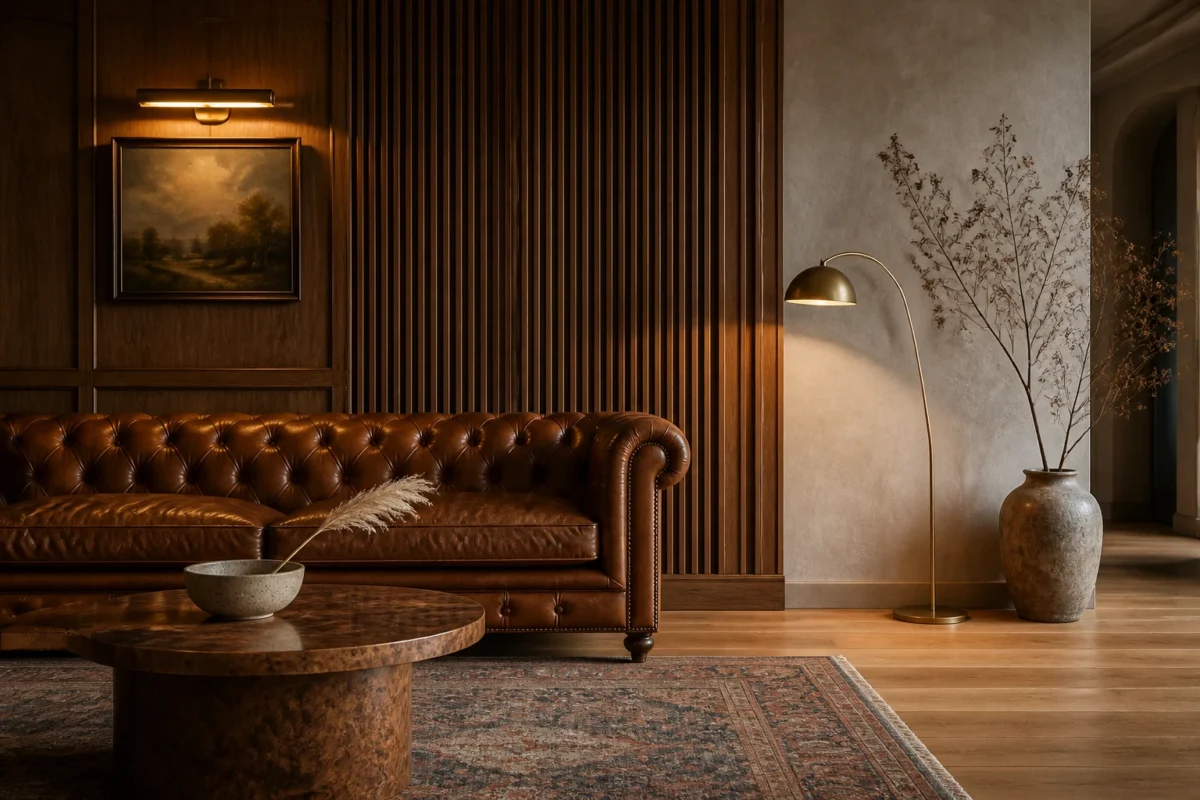
We’ve all been there: the longest wall is a dead zone. You’ve hung art, tried a console, but it still looks like a rental that forgot its personality. This design wraps the room in a soft, clubby atmosphere—think modern heritage—using one dramatic gesture: aged oak panels. Dimmed honey light warms everything, and a classic tufted chesterfield anchors the room like a vintage novel you actually read.
It works in real homes because the wood adds depth without chaos. The paneling doesn’t have to be custom; budget versions use peel-and-stick oak veneer or thin oak strips. Honey-toned lighting cures the 6 p.m. blue-gloom problem and makes leather read rich, not shiny. The chesterfield’s silhouette adds instant architecture, which helps resale and photographs like a dream: shadowy tufting, soft highlights on the arms, and a clean, warm backdrop for everything else.
Variations: Go budget with faux-wood slats and a secondhand chesterfield in distressed fabric. Small studios can panel just one-third of the wall height with a thin shelf ledge for art. Prefer darker? Try walnut stain and amber glass lamps. Renter-friendly swap: create a large-scale oak-look panel screen on casters and lean it behind the sofa.
Budget Breakdown:
- Peel-and-stick oak veneer or slat panels: $200–$600
- Dimmer switches and warm LED bulbs (2200–2700K): $40–$120
- Tufted chesterfield (linen or leather, vintage or new): $500–$1,800
- Brass floor lamp with linen shade: $120–$350
- Leather conditioner or fabric protector: $10–$25
Total Estimated Cost: $870 – $2,895
Best For: Medium to large living rooms with blank walls; anyone craving character without pattern overload; cozy evenings and fall-to-winter seasons.
Key Design Elements:
- Main materials: aged oak, antique brass, linen or leather
- Color palette: tobacco, caramel, olive, off-white, charcoal accents
- Lighting strategy: dimmable lamps, wall wash, warm bulbs only
- Furniture silhouettes: classic chesterfield, square coffee table, structured armchairs
- Texture layers: wool throw, nubby linen cushions, vintage rug
- Accent details: framed oil portraits, brass picture light, ceramic crock with branches
How To Recreate This Look:
- Start with the wall: install panels or veneer on your focal wall.
- Add a dimmer to every lamp and swap bulbs to 2200–2700K.
- Place the chesterfield centered on the panel wall; float it if possible.
- Layer a vintage-look rug with muted reds or olives beneath.
- Style with stacked books, a brass bowl, and an oil portrait under a picture light.
Why This Looks Expensive: Oak paneling plus tufting reads custom and historic; warm light erases harsh shadows so everything looks intentionally patinated rather than dingy.
Watch Out: Don’t mount the paneling too short. Either go full height or to a clean rail line around 36–42 inches; awkward heights scream DIY.
Pro Styling Tip: Aim your picture light to skim the panel texture—those micro-shadows will make your photo look editorial.
Keep scrolling—next up is a softer, airier vintage story for anyone allergic to heavy wood.
2. Limewash Plaster Walls With Morning-Lit Sheers And a Sculptural Cane Lounge Chair
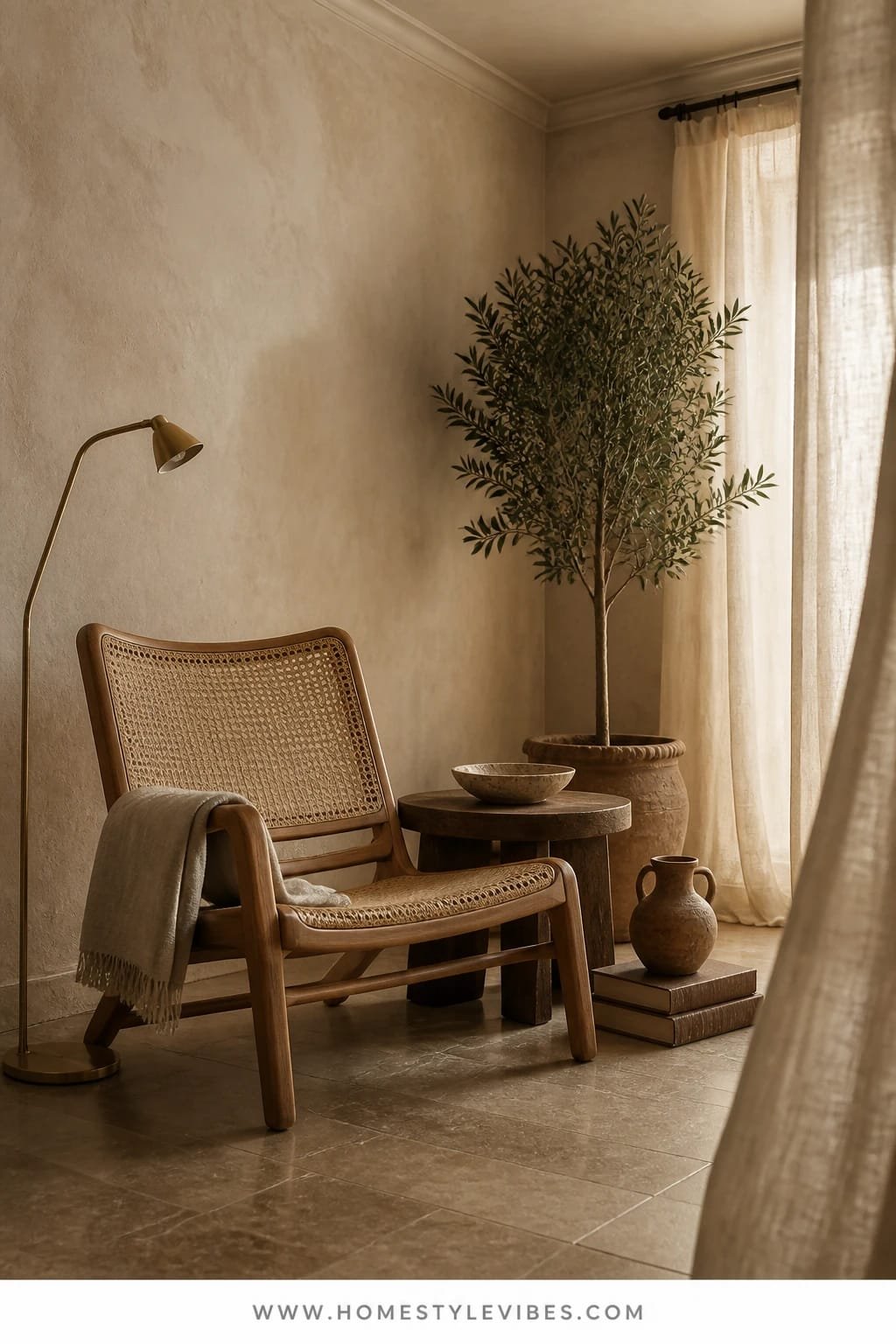
It’s that one corner that always feels off—bright in the day, flat in photos, and somehow still cold. Limewash brings soft movement to walls without pattern, while sheer curtains catch the morning sun like linen sails. The statement cane lounge chair adds easy vintage flair with breathable texture, making the whole room feel collected and calm—like a Mediterranean apartment, minus the echo.
This setup thrives in small spaces because texture does the talking. Limewash adds depth that doesn’t steal square footage, and cane furniture keeps the visual weight low. It photographs beautifully thanks to the way light grazes the plaster—gentle highs and lows that cameras love. Plus, the palette is foolproof: oatmeal, warm gray, soft sage, and a hit of inky black for spine.
Variations: For renters, use removable limewash-style paint or a textured wallpaper. On a tight budget, dry-brush regular matte paint with a wide brush to mimic cloudy movement. For a moodier vibe, choose a deeper taupe limewash and swap sheers for unlined flax curtains.
Budget Breakdown:
- Limewash paint or textured wallpaper: $120–$400
- Sheer linen curtains and rod mounted near ceiling: $120–$350
- Sculptural cane lounge chair: $250–$950
- Low, chunky side table (stone or plaster look): $120–$400
- Black accent lamp with linen shade: $80–$220
Total Estimated Cost: $690 – $2,320
Best For: Bright rooms that feel sterile; apartments needing softness without clutter; spring and summer light.
Key Design Elements:
- Main materials: limewash plaster, cane, linen
- Color palette: oatmeal, foggy gray, sage, black accents
- Lighting strategy: maximize natural light with high-hung sheers, add one warm black table lamp
- Furniture silhouettes: low lounge chair, slim-leg tables, rounded edges
- Texture layers: rough plaster, soft sheers, woven cane
- Accent details: black pottery vase, dried stems, vintage sketch in thin black frame
How To Recreate This Look:
- Start by limewashing the main wall; feather strokes in X-motions for movement.
- Install a rod 2–4 inches from the ceiling (close the “cheap gap”) and hang floor-kissing sheers.
- Add the cane lounge chair angled toward light.
- Introduce a grounding black table lamp and one black-framed artwork.
- Style a small stone side table with a low ceramic bowl and dried stems.
Why This Feels Designer: Controlled restraint. The combination of movement on the walls, whisper-light sheers, and one strong black note reads curated, not crowded.
One Thing To Avoid: Don’t pick a bright white sheer with blue undertones. Choose natural or warm white; blue-white makes the walls look chalky.
Pro Styling Tip: For photos, shoot when the light grazes the wall; catch the moment the curtain’s hem just kisses the floor for that soft, editorial line.
Remember, this isn’t about recreating a showroom. It’s about building a space that actually feels like yours. If one idea resonates more than the others, that’s your starting point—you don’t need all seven.
3. Reclaimed Pine Coffee Table With Candlelit Glow And Oversized Slipcovered Sofa
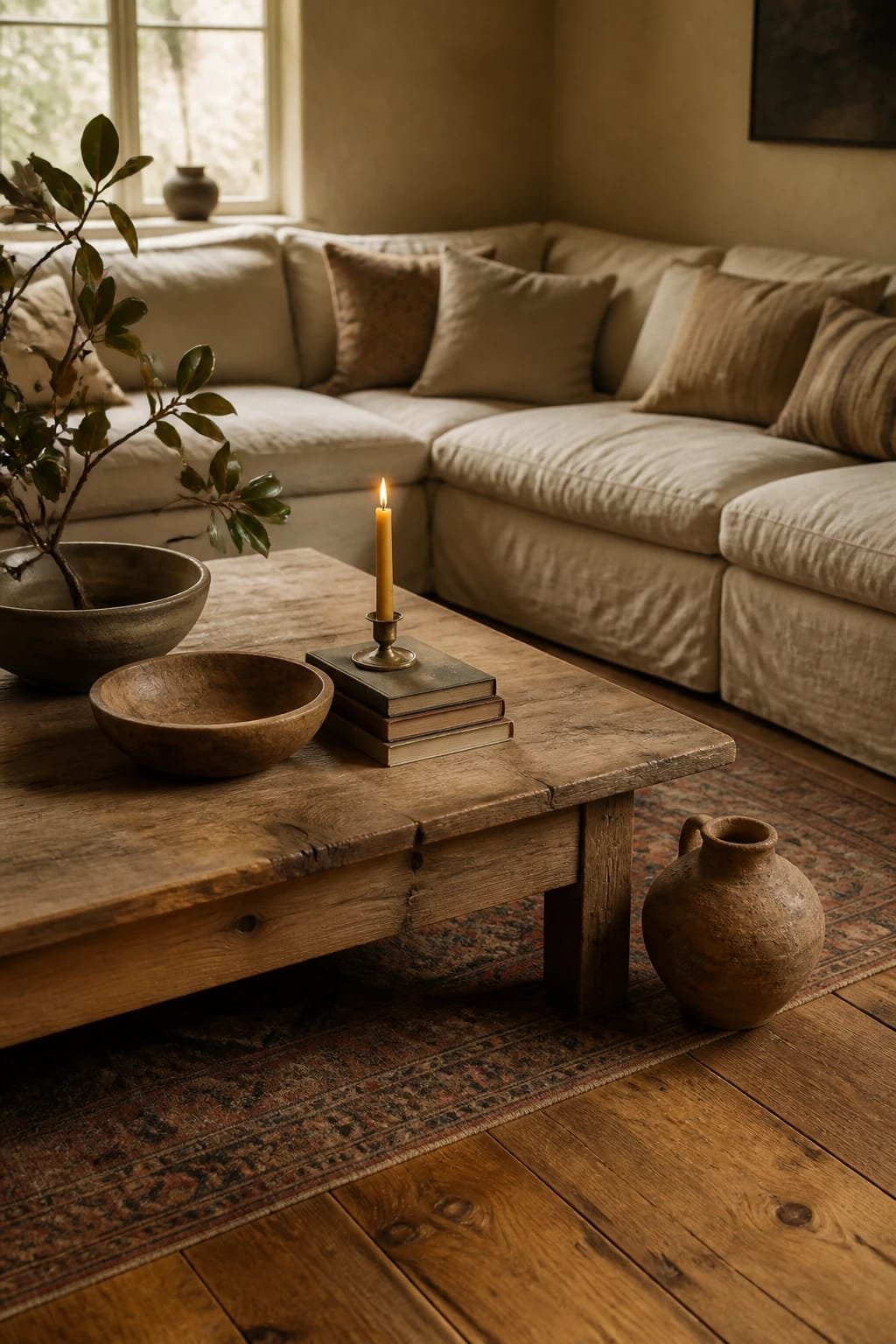
You’ve tried layering pillows, but the seating zone still feels scattered and a bit uptight. Enter a wide reclaimed pine coffee table—the kind with visible grain and a few nail scars that make stories easy. Pair it with a big, throw-me-a-blanket slipcovered sofa and soft candlelight. The mood is cottage-chic meets Paris flea market: unpretentious, relaxed, and oddly elegant.
Why it works: the chunky table visually anchors the space, while slipcovers soften edges and invite real life—dogs, wine, Sunday naps. Candlelit moments create focal pools of warmth that flatter skin and fabric. This combo photographs like a still life: matte wood, soft linen, flickering highlights, and a plume of wildflowers in a jam jar breaking the symmetry.
Variations: Budget version uses an IKEA slipcover hack and a DIY sanded pine table. Small space? Choose a 30–36 inch round pine table and a loveseat with a tailored skirt. For a darker take, use smoked pine and oatmeal slipcovers, with iron candlesticks for contrast.
Budget Breakdown:
- Reclaimed pine coffee table or DIY: $200–$900
- Oversized slipcovered sofa or loveseat: $550–$2,200
- Linen or beeswax candles + hurricane glass: $40–$120
- Vintage rug with muted pattern: $180–$600
- Flax throw blankets: $40–$120
Total Estimated Cost: $1,010 – $3,940
Best For: Families, pet owners, and serial snackers; spaces that need a soft landing zone that still looks elevated.
Key Design Elements:
- Main materials: reclaimed pine, linen slipcovers, beeswax
- Color palette: oatmeal, wheat, faded terracotta, soft indigo
- Lighting strategy: clustered candles for evenings, a low-watt lamp nearby
- Furniture silhouettes: big, relaxed sofa; chunky table; slim side chairs
- Texture layers: washed linen, rough wood, vintage weave
- Accent details: iron candlesticks, glass hurricane, wild stems
How To Recreate This Look:
- Ground the room with a vintage-pattern rug—faded is good.
- Bring in a slipcovered sofa; choose a skirt that just grazes the floor.
- Center a wide reclaimed pine table; leave 16–18 inches between it and the sofa.
- Add a candle cluster in mixed heights inside hurricanes for safety.
- Finish with two textured cushions in different scales; avoid over-piling.
Why This Reads High-End: Scale and patina. Oversized, tailored pieces and authentic wood grain look intentional, not accidental.
The Most Common Mistake: Too many small decor bits on the coffee table. Keep one tray, one floral, and a candle trio—done.
Pro Styling Tip: Snip your florals unevenly; a slightly wild arrangement gives motion and depth in photos.
4. Patinated Brass Gallery Rail With Dappled Afternoon Light And a Curved Settee
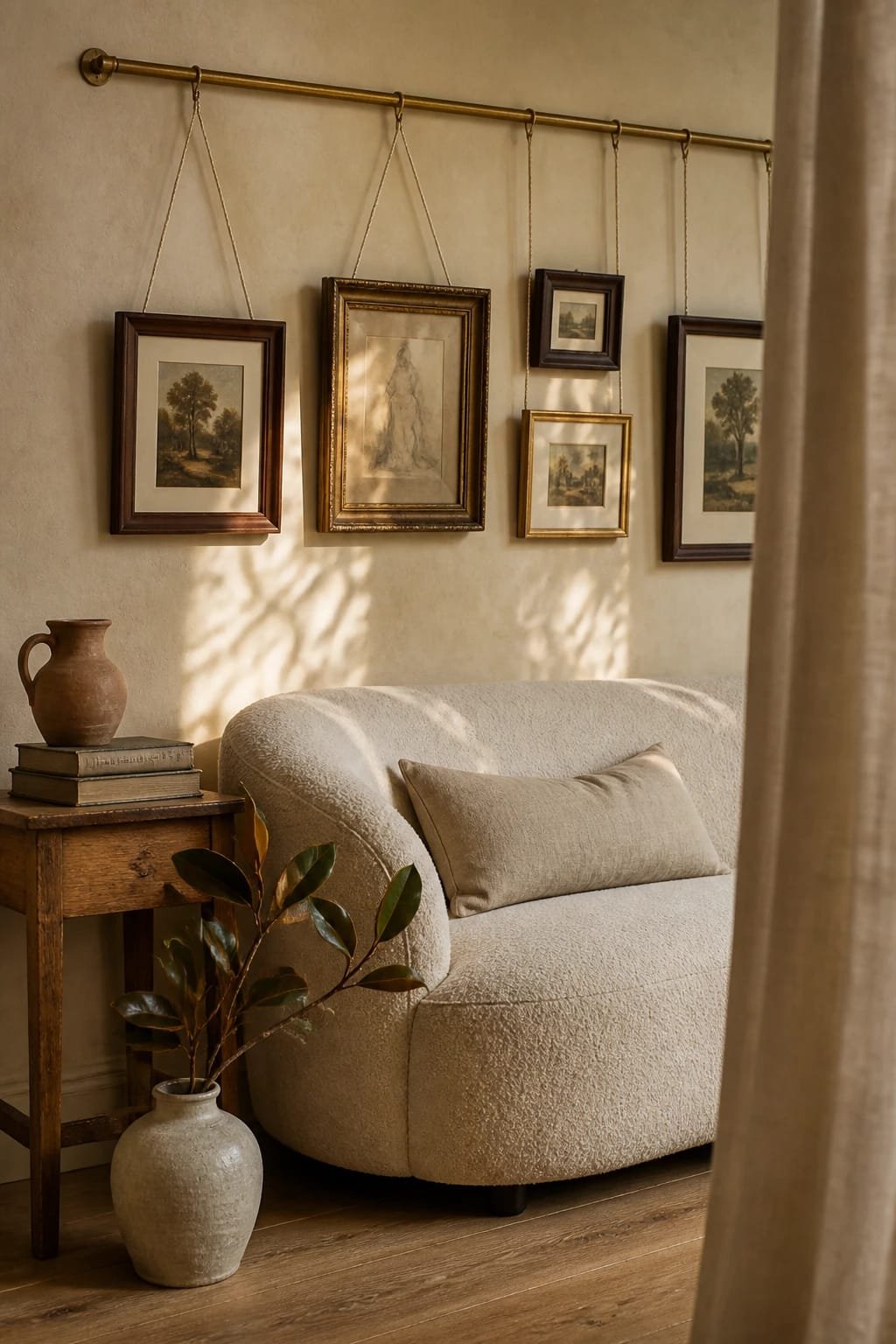
There’s always that art situation—frames at random heights, one too-high piece, and a blank stretch that makes you second-guess everything. A patinated brass gallery rail brings an old-world solution with modern flexibility: hang art on cords, shift pieces at will, and make a curated wall without new holes. Add a curved settee beneath for a charming, conversational spot that tucks beautifully into smaller rooms.
The vibe is European apartment meets collected library. Brass accents catch dappled afternoon light like jewelry. It suits real life because you can swap art in minutes—great for renters and commitment-phobes. Photographs brilliantly due to layered frames at varying depths, warm brass glints, and the soft contour of the settee breaking up the usual sofa-box shape.
Variations: Budget rail systems exist online, or DIY with brass rod, brackets, and thin chain. For drama, use deep-toned art and velvet on the settee. For breezier rooms, pick botanical prints and a linen-blend fabric.
Budget Breakdown:
- Brass gallery rail hardware + cord/chain: $120–$450
- Curved settee (vintage or new): $300–$1,400
- Assorted vintage frames: $80–$300
- Picture lights (optional): $90–$300 each
- Mat board cutting or custom mats: $40–$150
Total Estimated Cost: $630 – $2,600
Best For: Narrow living rooms, entry-living hybrids, and renters who want art impact without wall damage.
Key Design Elements:
- Main materials: patinated brass, wood frames, linen or velvet
- Color palette: cream, moss, ink, burnished metal
- Lighting strategy: capitalize on afternoon light; add small picture lights or a nearby sconce
- Furniture silhouettes: curved settee, rounded side table
- Texture layers: velvet or tight linen, textured mats, aged metal
- Accent details: braided cords, botanical or portrait art, a small kilim pillow
Why This Looks Intentional: The rail sets a horizontal “spine,” letting your eye read the wall as one curated line while the curve of the settee softens everything below.
How To Recreate This Look:
- Mount the brass rail level about 8–12 inches below the ceiling.
- Gather frames in two to three finishes; stick to one or two mat colors.
- Hang art with varied drop lengths to create rhythm.
- Place the curved settee below; anchor with a petite rug if space is tight.
- Add a single brass picture light or two small wall sconces for glow.
Don’t Do This: Avoid mixing too many art styles at once. Keep a theme—portraits, botanicals, or sketches—so the rail reads chic, not chaotic.
Pro Styling Tip: Stagger frame depths and sizes, then shoot at an angle so the brass catches light in tiny highlights.
Take a breath. You don’t have to get everything right the first time. Curating is a process—let your art wall evolve while the bones stay beautiful.
5. Terracotta Tile Hearth With Low Firelight and a Caned Sideboard as Media Console
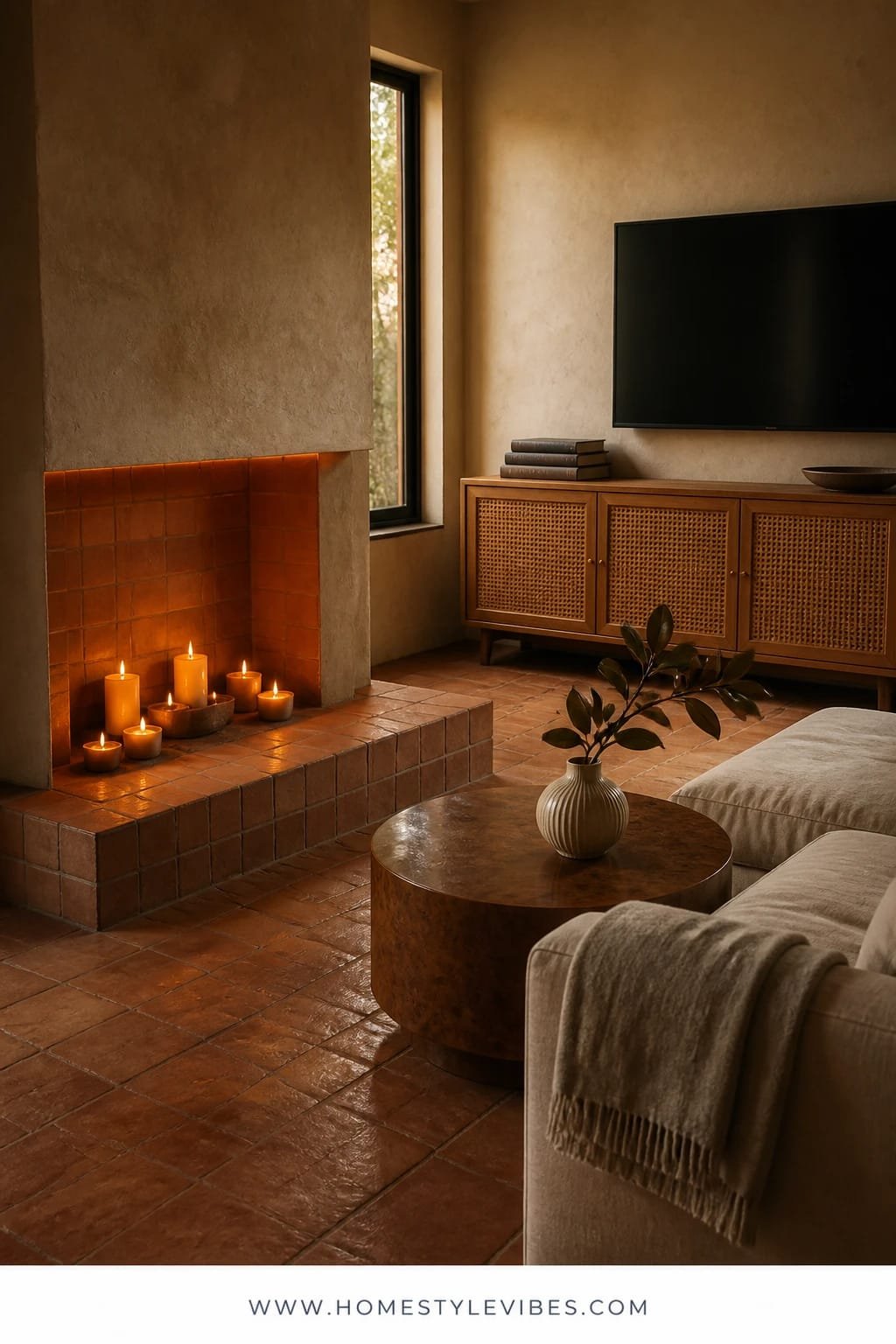
You want vintage heart, but the TV wall always bossed the room around. A caned sideboard softens tech with texture, while a terracotta hearth (real or faux) pulls focus to something warmer than pixels. Low firelight—electric, bioethanol, or candle clusters—creates evening magic and draws the eye away from a blank black screen.
This works because terracotta’s matte earth tone plays well with everything—oak, linen, even cool grays. Cane doors hide remotes while breathing so electronics don’t overheat. It all photographs beautifully: the checker of tile, the woven door repeat, warm flicker under the screen. Bonus: a caned sideboard gives off “vintage coastal” or “mid-century Italian” depending on the legs and hardware.
Variations: Budget option—peel-and-stick terracotta-look vinyl tiles on a platform or MDF. Small-space tweak—use a 48-inch sideboard and a narrower hearth tile border. Darker mood—choose oxblood terracotta and a walnut sideboard with smoked cane.
Budget Breakdown:
- Terracotta tile or peel-and-stick: $80–$500
- Caned sideboard: $280–$1,200
- Electric or bioethanol fireplace insert, or candle cluster: $100–$600
- Cable management and power strip: $25–$70
- Wall paint touch-up: $20–$60
Total Estimated Cost: $505 – $2,430
Best For: TV-centric rooms that need softness; renters using removable tiles; cozy winter evenings.
Key Design Elements:
- Main materials: terracotta, cane, painted plaster
- Color palette: clay, sand, olive, espresso
- Lighting strategy: low, warm firelight with discreet lamp glow
- Furniture silhouettes: flat-front sideboard, tapered legs, low-slung seating
- Texture layers: woven door fronts, matte clay, wool rug
- Accent details: stacked books, olive branches, ceramic pitchers
How To Recreate This Look:
- Center the sideboard on the TV wall; hide cables properly.
- Build a low hearth platform and tile the top and face with terracotta or vinyl.
- Place an electric insert or a candle cluster on or near the hearth.
- Style the sideboard with low stacks and one tall vase to offset the TV.
- Dim overhead lights; rely on the firelight and one side lamp.
Why This Feels Designer: You’re balancing tech with tactile materials, so the room reads layered and human, not appliance-forward.
Watch Out: Don’t mount the TV too high. Keep the center about eye-level when seated; too high defeats the cozy hearth vibe.
Pro Styling Tip: Photograph with the fire or candles lit and one lamp on; the triple glow adds depth that flattens less in pictures.
6. Burl Wood Pedestal Side Table With Golden Hour Window Light And a High-Back Wing Chair
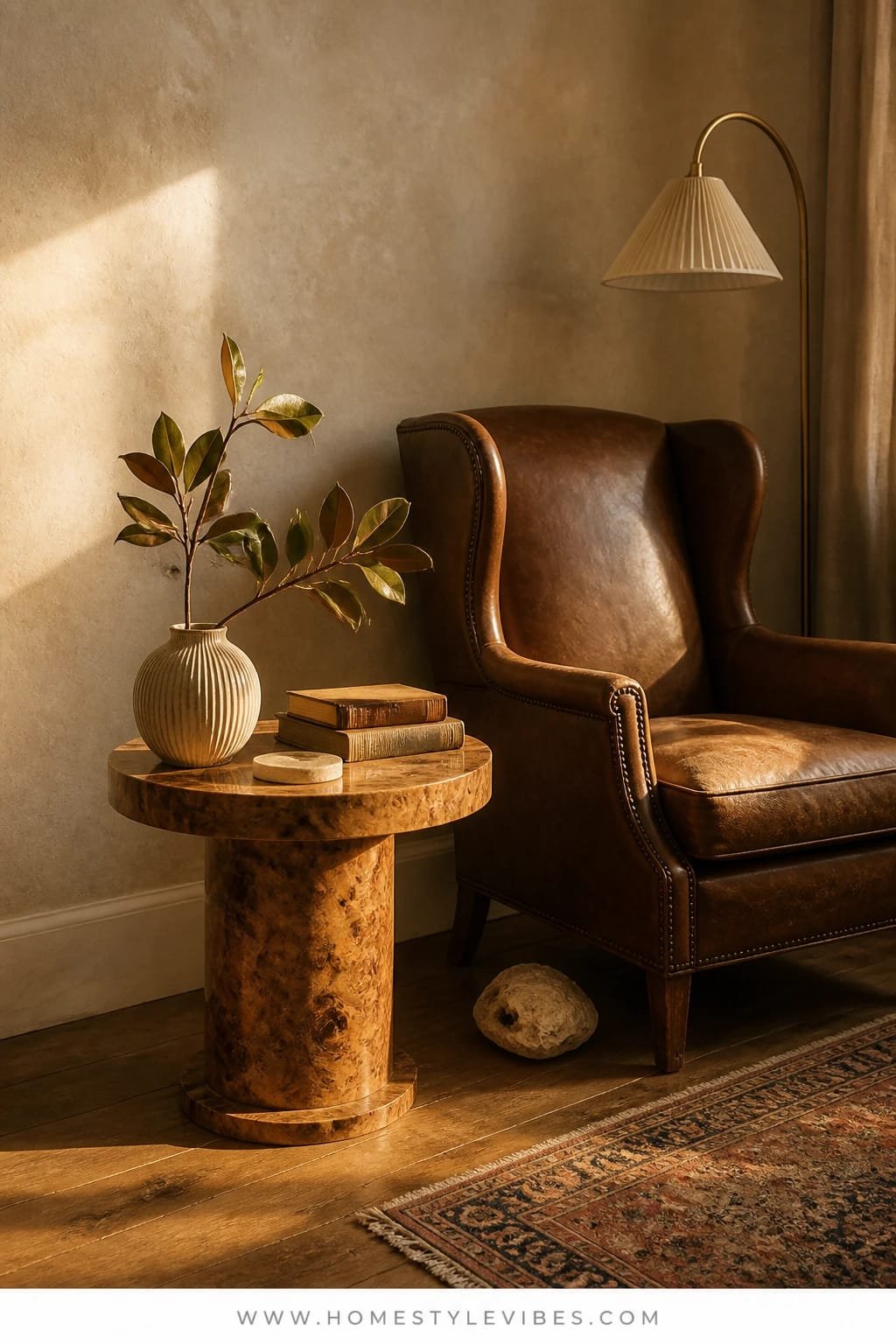
Ever feel like your reading nook is just… a chair and a lamp pretending to be a moment? A compact burl wood pedestal turns that corner into a jewel box, and a proper high-back wing chair brings that old-library hush. Catch the golden hour window light and suddenly even the dust motes feel cinematic.
Why it works: burl is nature’s marbling—instant vintage glamour without sparkle. The wing chair’s height adds architecture where none existed, which helps in homes with flat drywall and no molding. It photographs like a storybook scene: dramatic back height, tactile wood swirls, and warm slanting light across a page.
Variations: Budget burl options include veneer or secondhand finds; re-lacquer lightly to keep the grain visible. Tight space? Use a slim wing profile and a taller pedestal. Dark version: chocolate velvet chair, espresso burl, and a shaded sconce with a pull chain for that “found in a 1920s hotel” vibe.
Budget Breakdown:
- Burl pedestal or side table: $150–$700
- High-back wing chair (vintage or new): $250–$1,300
- Reading lamp or shaded sconce: $80–$350
- Small wool or jute accent rug: $70–$250
- Book stack and brass bookmark objet: $20–$60
Total Estimated Cost: $570 – $2,660
Best For: Corners that need height and mood; readers who actually sit down; anyone missing architectural interest.
Key Design Elements:
- Main materials: burl wood, velvet or tweed, aged brass
- Color palette: camel, sable, tobacco, cream
- Lighting strategy: lean into window light; add a focused reading lamp at night
- Furniture silhouettes: tall wing, petite pedestal, arched floor lamp
- Texture layers: velvet/tweed, burl gloss, woven rug
- Accent details: brass bookmark, match striker, tiny tray
Why This Looks Expensive: Burl is a heritage material. Even a small piece elevates the whole scene, while the wing chair’s shape reads bespoke.
How To Recreate This Look:
- Place the wing chair near a window at a 30–45 degree angle.
- Slide in the burl pedestal so the arm has landing space.
- Add a lamp that throws a soft cone of light onto the seat and book.
- Ground with a small rug to frame the scene.
- Style a brass object and one ceramic cup—done.
One Thing To Avoid: Don’t pick an overstuffed, bulky wing. Tall and lean looks timeless and keeps the corner from feeling crowded.
Pro Styling Tip: For photos, tilt the book slightly open on the pedestal so the burl pattern shows beside the crisp white pages—contrast magic.
Quick perspective shift: you’re not hunting perfection. You’re creating corners with purpose. One great vignette can change how the entire room feels and functions.
7. Checkerboard Wool Rug With Soft Lamp Glow And a Walnut Credenza
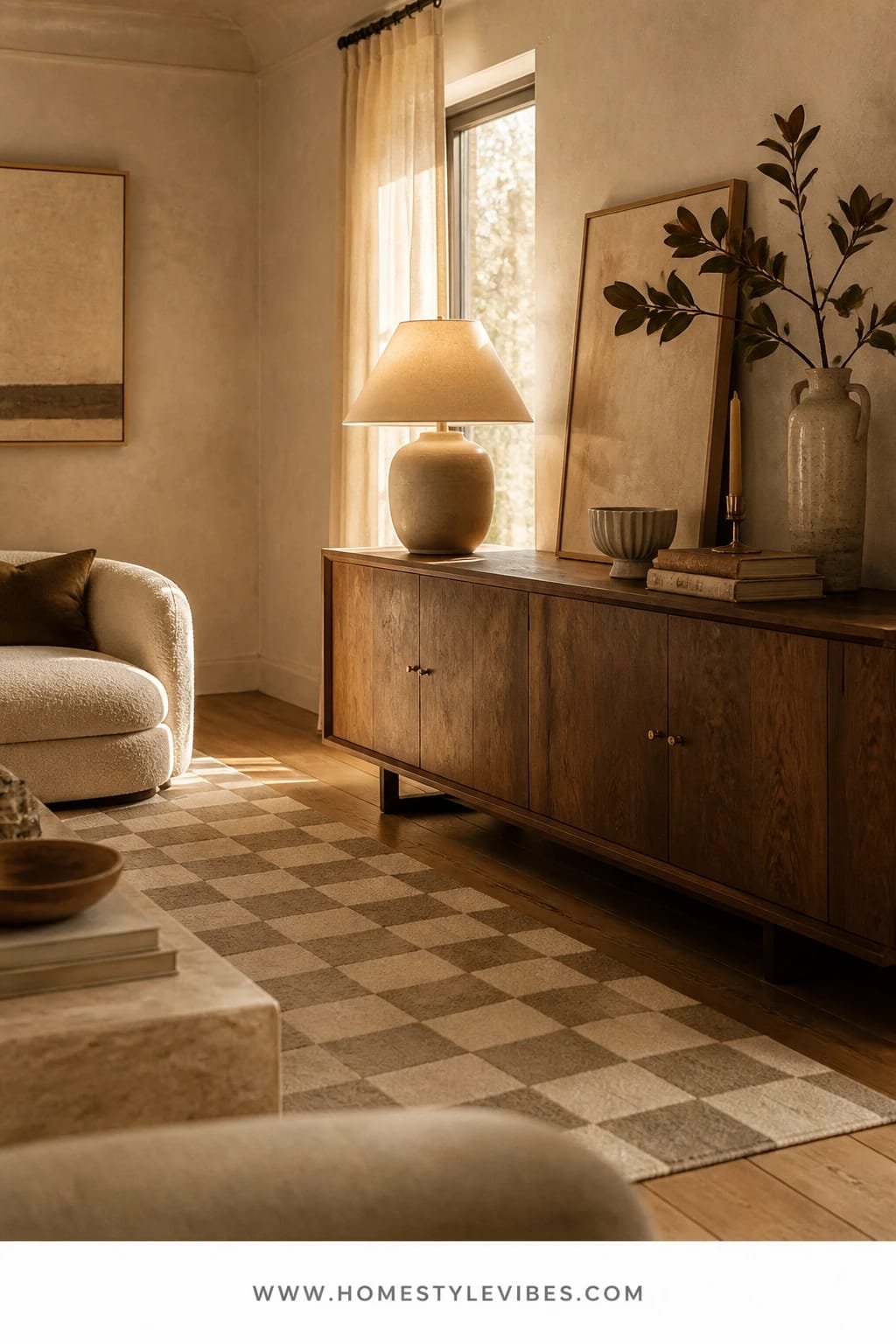
Maybe the room still lacks rhythm—like everything is politely sitting around waiting for a party. A checkerboard wool rug wakes the floor without screaming, and a long walnut credenza gives the eye a strong horizontal to anchor art, lamp light, and favorite finds. The vibe is vintage-modern with a hint of gallery cool—warm, graphic, and unfussy.
Here’s why it works: checkerboard adds subtle pattern that photographs crisply but still feels classic. Wool wears beautifully, soft underfoot, and plays well with vintage pieces. The walnut credenza slides into almost any style—mid-century apartments, 1920s bungalows, even new builds that crave soul. Lighting becomes simple: a pair of lamps at either end creates balance and glow without overhead glare. I tried this in my own living room last fall and honestly couldn’t believe the difference; everything finally looked finished, even on laundry day.
Variations: Budget rug in flatweave cotton, or checker in tone-on-tone beige if you’re pattern-shy. Small room? Pick a 5×8 and run furniture half-on for a bigger feel. Dark mode: charcoal-and-warm-gray rug with a smoked walnut credenza, aged brass pulls, and a moody ceramic lamp set.
Budget Breakdown:
- Checkerboard wool rug: $250–$1,200
- Walnut credenza (vintage or new): $350–$1,800
- Pair of table lamps with warm bulbs: $160–$600
- Framed vintage poster or landscape: $80–$300
- Tray for top styling: $25–$90
Total Estimated Cost: $865 – $3,990
Best For: Living rooms that need pattern but not clutter; open-plan spaces where you want a defined zone.
Key Design Elements:
- Main materials: wool, walnut, linen shades
- Color palette: cream, cocoa, walnut, inky accents
- Lighting strategy: twin-lamp symmetry for even glow
- Furniture silhouettes: long-low credenza, clean-lined sofa, rounded ottoman
- Texture layers: soft wool, satin walnut, matte ceramic
- Accent details: stacked art books, vintage bowl, one leafy plant
Why This Feels Designer: Scale and repetition. The credenza length plus lamp pair and checker pattern create a rhythm the eye reads as intentional and calm.
How To Recreate This Look:
- Roll out the rug first; center it so major furniture sits at least front-legs-on.
- Place the credenza opposite the sofa; aim for at least 70 inches long.
- Add two lamps at the ends; keep shades matching for cohesion.
- Hang one large art piece or a tight diptych above the credenza.
- Style with a tray, a bowl, and a plant—leave negative space.
The Most Common Mistake: Rug too small. If your sofa’s front legs aren’t on the rug, the room will feel like it’s floating apart.
Pro Styling Tip: Angle one lamp shade 5–10 degrees toward the camera when shooting; the inner glow looks warmer and more inviting.
Quick Checklist
- Aged oak or wood panel feature wall
- Limewash or textured plaster for movement
- Tufted chesterfield as a statement anchor
- Sheer linen curtains hung near the ceiling
- Reclaimed pine coffee table with visible grain
- Patinated brass gallery rail for adjustable art
- Terracotta tile or lookalike hearth platform
- Caned sideboard to soften tech
- Burl wood pedestal for a reading corner
- High-back wing chair for height and presence
- Checkerboard wool rug to add quiet pattern
- Walnut credenza with twin lamps for balance
- Warm bulbs at 2200–2700K and dimmers throughout
- One black accent for contrast and structure
- Beeswax candles or low firelight for evening glow
Frequently Asked Questions
How do I keep costs down while still getting that warm, timeless vintage look?
Pick one hero element first (rug, panel wall, or credenza) and keep everything else simple. Use secondhand sources for solid wood, choose removable limewash-style paint, and swap in warm bulbs and dimmers—those two tweaks do half the visual heavy lifting for under $100.
My living room is small. Which of these ideas won’t overwhelm it?
Go for limewash walls with sheers and a cane lounge chair, or the brass gallery rail with a curved settee. Both add depth and character without eating floor space, and the shapes stay visually light.
I rent. Which designs are truly renter-friendly?
Use a freestanding oak-look panel screen, removable textured wallpaper, a brass gallery rail mounted with minimal holes, peel-and-stick terracotta tiles on a platform, and a caned sideboard. All deliver vintage warmth without major alterations.
What about maintenance for materials like cane, terracotta, and burl?
Dust cane gently and avoid heavy stacking inside; terracotta likes a simple neutral cleaner and occasional reseal if real tile; burl needs a soft cloth and mild polish—no harsh abrasives. Keep drinks on coasters and you’ll be fine.
What’s the most common mistake when mixing vintage pieces?
Too many focal points competing. Choose one statement per zone (sofa, wall, hearth) and let supporting pieces go quieter. Also, mind your light temperature—cool bulbs make vintage wood look cheap and orange.
Conclusion
Pick one idea and start. Maybe it’s a checker rug that finally ties the seating together, or a limewash wall that makes your morning light look like a painting. Build around that single decision and let the rest come slowly—no frantic cart-filling required.
The truth is, that warm, timeless feel comes from texture, lighting, and restraint. You don’t need a room full of antiques; you need a few honest materials, one or two vintage moments, and light that flatters at night. I watched a friend spend weeks obsessing over paint chips before realizing the real problem was her LED temperature. She swapped to 2700K and—poof—the sofa fabric suddenly looked expensive instead of tired.
You’ve got this. Start small, edit often, and trust your eye. When the honey light hits the wood just right and the sofa looks like an invitation instead of furniture, you’ll know you nailed it. And IMO, that’s the best kind of timeless.

About the Author

Krisztina P.Rendes, Founder of Home Style Vibes
Founder of Home Style Vibes
Krisztina Puskásné Rendes created Home Style Vibes as a cozy-modern lifestyle space where homemaking meets inspiration. Her goal is to help women create beautiful, organized, and peaceful homes they truly love — without overwhelm. You’ll find here heart-driven content on home decor, cleaning tips, easy family recipes, organization and decluttering, DIY home projects, plants, and seasonal ideas — all designed to bring more calm, comfort, and style into everyday life.