7 Tropical Home Decor Ideas For A Living Room That Feels Like A Resort
You want that breezy, barefoot-on-polished-stone vibe every time you walk into your living room. But cluttered shelves, harsh lighting, and a patchwork of random décor keep stealing the magic. You crave sunlight filtering through sheer linen, lush greenery that actually looks intentional, and textures that whisper instead of shout. These 7 tropical home decor ideas solve the exact frustrations that block you from that resort-calm—the glare, the chaos, the not-quite-finished look—so you can create a photogenic, Pinterest-worthy living room that feels like a true escape.
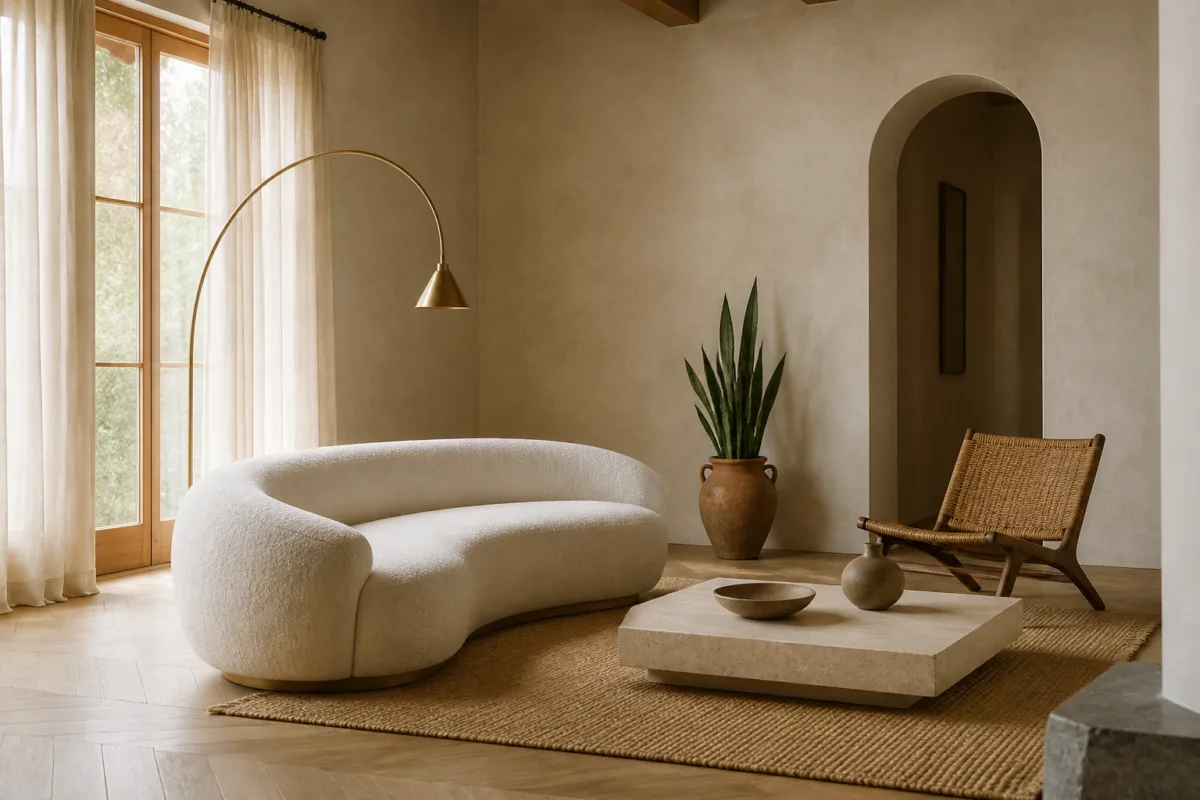
Expect tangible changes: better light distribution in under a weekend, color cohesion on a budget under $1,200 per idea, and rooms that finally photograph like you meant every detail (because you did). We’re going specific: color stories, furniture silhouettes, textiles that wear well, and light strategies designed for real-life rooms with kids, pets, and Netflix nights. If your vibe is transportive, serene, and quietly luxe, you’re in the right place.
1. Woven Rattan With Dappled Sunlight and a Curved Lounge Sofa
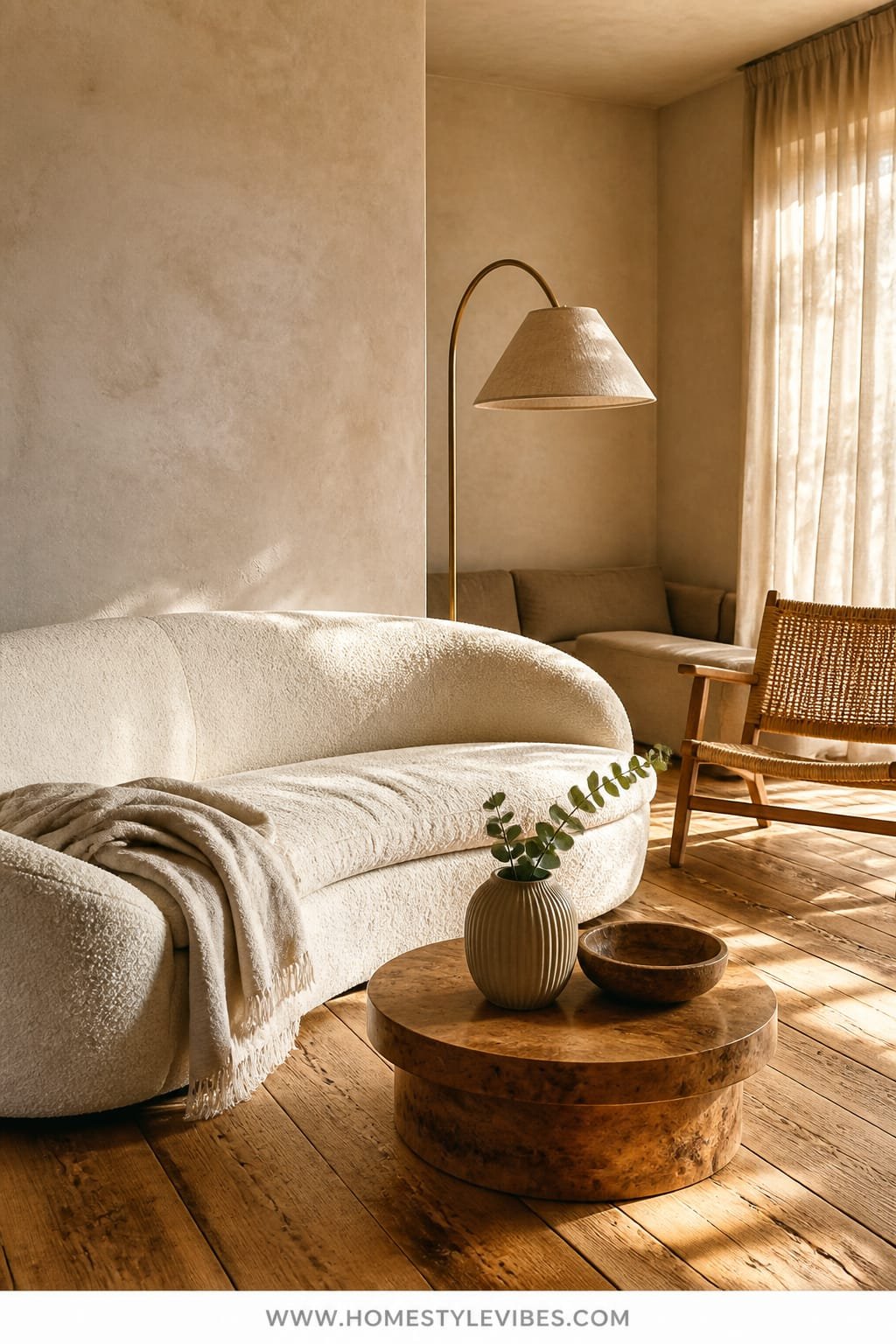
We’ve all been there—your living room gets light, but it feels flat and clinical, like a waiting room with nice intentions. You’ve tried new throw pillows, yet nothing softens the edges or brings warmth to the center of the space. This concept uses woven rattan as the tactile anchor, invites dappled sunlight through layered sheers, and crowns the room with a curved lounge sofa that practically says, “nap here.” The mood: resort-bungalow meets modern organic. It’s soft, grounded, and welcoming without skimping on polish.
Here’s why it works: rattan adds breathability and texture, the curved sofa eases traffic flow and “rounds out” visual tension, and dappled light (think woven shades or latticed curtains) turns plain walls into a subtle light show. Real-home-friendly? Absolutely. Rattan resists looking dusty when daily life happens; a performance fabric on the sofa protects against spills; and the curves mean fewer barked shins. Photographs come alive because shadows fall gently across nubby surfaces, and the eye pings between clean curves and airy grids.
Variations you can actually use: try a budget-friendly rattan coffee table with a glass top, or swap in a boucle ottoman for small spaces. Go darker with espresso-stained rattan and warm ivory upholstery if your room skews bright and needs grounding. Renter-friendly? Use freestanding woven panels or a single large rattan pendant; skip drilling and still get the same tactile rhythm.
Budget Breakdown:
- Curved lounge sofa (performance fabric): $900–$2,800
- Rattan coffee table or storage console: $180–$650
- Woven roman shades or layered sheers: $120–$480
- Large rattan pendant light: $120–$350
- Linen throw pillows and cotton slub blanket: $60–$200
- Indoor palm or bird of paradise in woven planter: $80–$220
Total Estimated Cost: $1,460 – $4,700
Best For: Medium to large living rooms with decent natural light; families who want a soft, beachy feel that still looks grown-up.
Key Design Elements:
- Main materials: rattan, linen, cotton slub, performance upholstery
- Color palette: warm sand, ivory, soft clay, muted olive
- Lighting strategy: woven shades for dappled light + rattan pendant for glow
- Furniture silhouettes: low-slung, curved sofa; rounded-edge tables
- Texture layers: woven baskets, slub textiles, palm leaves
- Accent details: cane-front cabinet, ceramic vases, matte brass pulls
How To Recreate This Look:
- Start with the sofa placement—float a curved sofa slightly off the wall to create softness and better traffic flow.
- Add a rattan coffee table or console to introduce the dominant texture.
- Layer dappled light: install woven roman shades and hang sheer linen curtains wider and higher than the window frame.
- Install a large rattan pendant; aim for a warm 2700–3000K bulb for that golden-hour glow.
- Style with a big-leaf tropical plant, a mix of linen and cotton slub pillows, and a cane-front cabinet for hidden storage.
Why This Looks Expensive: The gentle curves, controlled palette, and repeated woven textures feel intentional. The dappled light adds dimension that reads like designer-level nuance in photos.
Watch Out: Don’t choose a rattan piece with too-orange stain; it can skew “dated patio.” Look for neutral honey or espresso finishes instead.
Pro Styling Tip: Shoot photos in late afternoon; angle the camera to catch the light weaving across the sofa curve for natural depth and softness.
Keep scrolling. The next look leans into stone and surf-toned blues without the beach kitsch.
2. Travertine Texture With Cool Aqua Light and a Low Platform Coffee Table
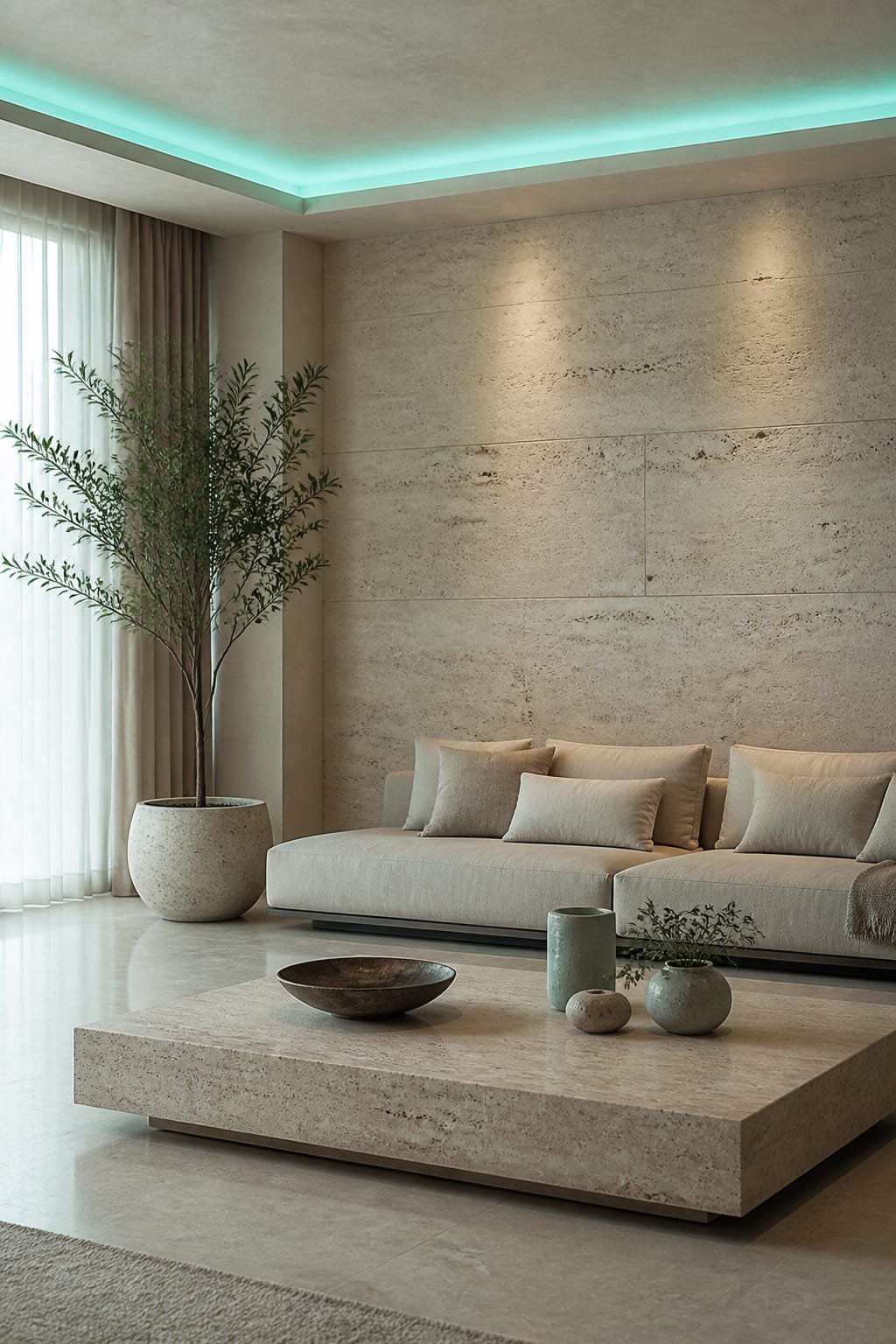
It’s that one corner that always feels off—flat rug, busy shelf, awkward ottoman. You’ve added “coastal” art, but it still looks random. This design locks into a refined tropical home decor language using travertine texture, a cool aqua cast in the lighting, and a low platform coffee table that anchors everything in calm geometry. The mood is Mediterranean resort-lounge: less seashell souvenir, more boutique hotel near the cliffside pool.
Why it works in real homes: travertine (real or faux) delivers subtle movement without chaotic veining; the low coffee table opens sight lines, ideal for smaller rooms; and a gentle aqua light—achieved with light filtering shades and cool-toned glass accents—keeps the space crisp. It photographs beautifully thanks to the juxtaposition of matte stone textures against glassy reflections. Family-friendly? Yes—choose a rounded platform table and add a medium-pile performance rug that can handle wet feet.
Options matter: for a budget-friendly path, use a travertine-look laminate console and a resin “stone” tray. If your space runs dark, warm it with sand-beige walls and stick to clear glass vs blue-tinted pieces. Renter-friendly swaps include peel-and-stick travertine-look vinyl for a niche or fireplace surround.
Budget Breakdown:
- Low platform coffee table (solid wood or veneer): $220–$900
- Travertine side tables or trays: $80–$450
- Performance rug in sand-beige: $180–$700
- Glass accents with cool aqua tint: $40–$180
- Sheer roller shades (light filtering): $140–$420
- Wall art in surf blues: $90–$360
Total Estimated Cost: $750 – $3,010
Best For: Small to medium living rooms seeking a breezy, airier feel; homes with modern or Mediterranean architecture.
Key Design Elements:
- Main materials: travertine (real or faux), glass, light oak
- Color palette: sand, limestone, surf blue, sea-glass green
- Lighting strategy: sheer roller shades for crisp light, table lamps with clear bases
- Furniture silhouettes: low platform table, straight-lined sofa, rounded edges on accents
- Texture layers: matte stone, linen, woven coasters
- Accent details: sea-glass bowls, brushed nickel hardware, white ceramics
How To Recreate This Look:
- Start by swapping your current coffee table for a low platform version to reset proportions.
- Add travertine texture via side tables, a mantel piece, or a display tray.
- Layer a sand-toned performance rug to ground the scheme.
- Install sheer roller shades to cool and diffuse sunlight; introduce a glass table lamp for sparkle.
- Style with surf-toned art, a sea-glass bowl, and a pale oak accent chair for warmth.
Why This Feels Designer: Restrained materials plus deliberate height control (low table, clean lines) signal intention. The aqua-toned highlights echo water—subtle and sophisticated.
One Thing To Avoid: Don’t mix heavy rustic wood with delicate travertine here; it drags the vibe back to farmhouse and fights the coastal clarity.
Pro Styling Tip: Place glass accessories where they’ll catch window light; that tiny glow reads as luxe on camera.
Quick breather: You don’t need all seven ideas. If one section is calling your name, that’s your starting point. Build slowly, let your eye adjust, and take a progress photo—you’ll see what still needs refining.
3. Tropical Hardwood With Warm Sunset Glow and a Sculptural Cane Armchair
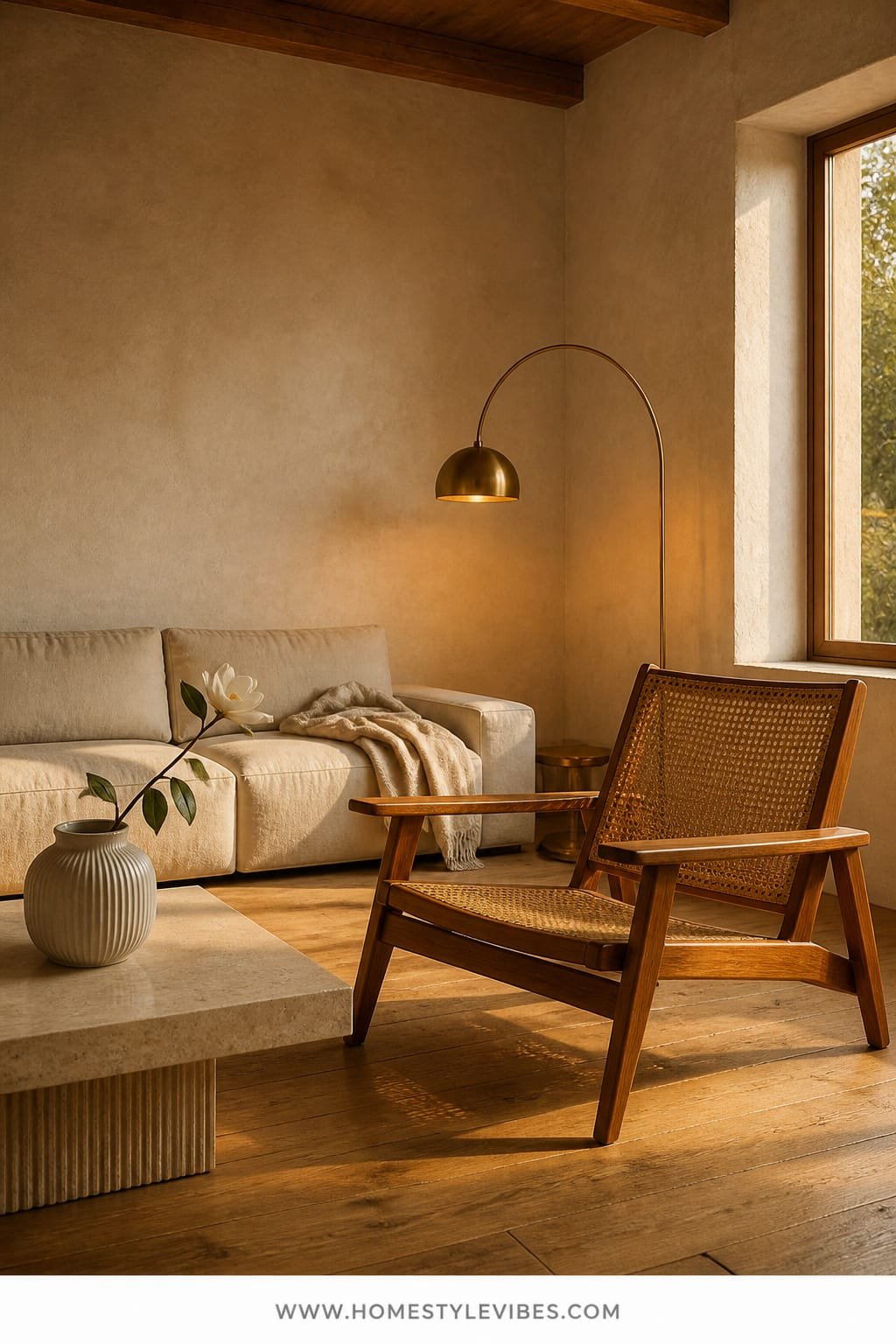
You love the idea of “tropical,” but your room ends up all beige and blah. You’ve tried palm prints; they looked loud. This design leans into tropical hardwood as the hero, warms the room with a sunset-toned lighting scheme, and punctuates with a sculptural cane armchair. The mood is cinematic: think slow ceiling fans, aged rum, and conversation that stretches past dinner. It’s rich without being heavy.
Real-life perks: hardwood warms acoustics (goodbye echoey living room), cane gives breathability, and the amber-toned light flatters skin and wood grain. For homes with kids or pets, choose a medium-tone wood finish—light enough to hide dust, dark enough to conceal scuffs. Why it photographs beautifully: the light catches the cane mesh, creating delicate moiré-like shadows that add visual interest.
Variations: small spaces can do a single hardwood console plus one statement cane chair; bigger rooms can add a matching cane bench. Darker version? Try walnut with rust linen drapes; renter-friendly version? Use plug-in wall sconces with amber bulbs and a freestanding wooden room divider.
Budget Breakdown:
- Hardwood media console or wall shelves: $350–$1,600
- Sculptural cane armchair: $260–$900
- Plug-in warm sconces or amber glass lamps: $80–$360
- Textured linen drapes (floor-to-ceiling): $180–$520
- Rust/terracotta pillows and throw: $60–$200
- Ceiling fan with wood blades (optional): $180–$600
Total Estimated Cost: $1,110 – $4,180
Best For: Homes craving warmth and mood; evening entertainers; rooms with medium to low natural light.
Key Design Elements:
- Main materials: tropical hardwood (teak, acacia), cane, linen
- Color palette: amber, rust, cocoa, warm white
- Lighting strategy: 2700K bulbs, layered lamps, optional dimmers
- Furniture silhouettes: simple rectilinear wood, one sculptural chair
- Texture layers: cane mesh, slub linen, soft woven rug
- Accent details: burnished brass, pottery in earthy glazes, low bowls
Why This Reads High-End: Consistent wood tone ties the room together. The cane chair acts like wearable jewelry—one strong piece with a perfect silhouette.
How To Recreate This Look:
- Start with a hardwood anchor—console or shelves—in a medium tropical tone.
- Add a sculptural cane chair angled slightly toward the sofa for conversational flow.
- Swap bulbs to 2700K and add dimmers; bring in amber or smoked glass lamps.
- Hang linen drapes from near-ceiling height to the floor to elongate the room.
- Style with brass trays, terracotta textiles, and a low ceramic bowl for keys or remotes.
The Most Common Mistake: Mixing three different wood tones in one small area. Keep to one dominant tone and one minor accent at most.
Pro Styling Tip: Aim a warm lamp so it grazes the cane back—those micro-shadows read like art in photos.
4. Limewash Plaster With Soft Morning Light and a Wide Teak Daybed
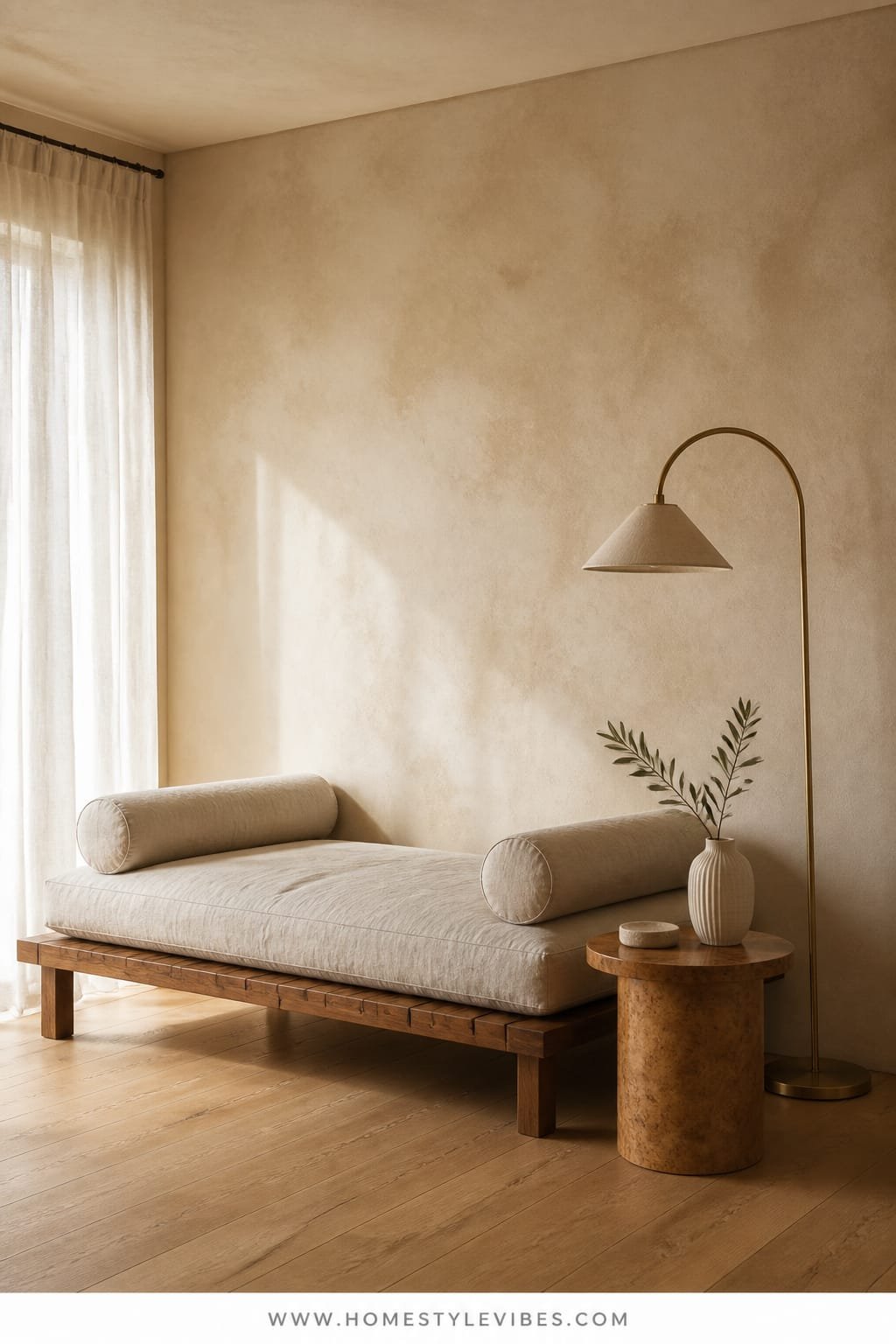
You’ve tried to make your living room calm, but every wall still looks like builder-grade flat. The space feels… fine. Not restful. Limewash is the texture that changes everything: soft, mineral, and uneven in the best way. Pair it with soft morning light—think sheer, milky curtains—and cap it with a wide teak daybed that functions as both seating and a lounging zone. The mood is spa-meets-island-retreat, ideal for Saturday coffee and afternoon reading.
Why it works at home: limewash hides minor wall imperfections and creates depth without patterns; a teak daybed provides flexible seating and doubles as a guest crash spot; morning-weight light is easy on the eyes and on your phone camera. If your room is small, the low profile of a daybed opens the view. Durable, wipeable seat cushions help this set-up survive actual life.
Personal note: I tried limewash in my own living room last fall and honestly couldn’t believe the difference. The room felt like it finally had a story. Even the boring corner plant looked considered against the velvety texture.
Budget Breakdown:
- Limewash kit (primer, paint, brushes): $150–$380
- Teak daybed (with cushions): $500–$1,800
- Sheer, milky curtains: $120–$360
- Neutral kilim or jute rug: $160–$700
- Oversized bolster pillows: $60–$240
- Ceramic side table: $80–$280
Total Estimated Cost: $1,070 – $3,760
Best For: Small to medium spaces that need softness; sunlit rooms that look harsh during midday.
Key Design Elements:
- Main materials: limewash plaster, teak, linen, jute
- Color palette: chalk white, oat, honey, faded eucalyptus
- Lighting strategy: diffuse sheers; avoid overhead glare in favor of sidelights
- Furniture silhouettes: low, linear daybed; round ceramic side table
- Texture layers: chalky wall, flat-weave rug, soft linen cushions
- Accent details: handmade pottery, thin-framed art, olive branches
How To Recreate This Look:
- Prep and limewash your feature wall—use cross-hatched strokes for cloudlike variation.
- Place a teak daybed against that wall to showcase the wood against the limewash.
- Hang milky sheers high and wide to bathe the room in soft light.
- Layer a jute or kilim rug under the daybed to add tactile grounding.
- Style with bolsters, a ceramic side table, and one large leafy branch for scale.
Why This Looks Intentional: Fewer elements, bigger moves. A textural wall and one statement furniture piece look curated rather than cluttered.
Don’t Do This: Don’t pair stark, cool-white trim with chalky limewash; it creates a jarring line. Warm up the trim or keep it soft.
Pro Styling Tip: Take photos at mid-morning when the limewash glows; step back to include negative space, which reads as serene luxury.
Perspective check: This isn’t about recreating a showroom. It’s about building a living room that lets you exhale at the end of the day. Use these ideas as puzzle pieces, not rules.
5. Fluted Wood With Golden Hour Backlighting and a Canopy-Style Indoor Palm
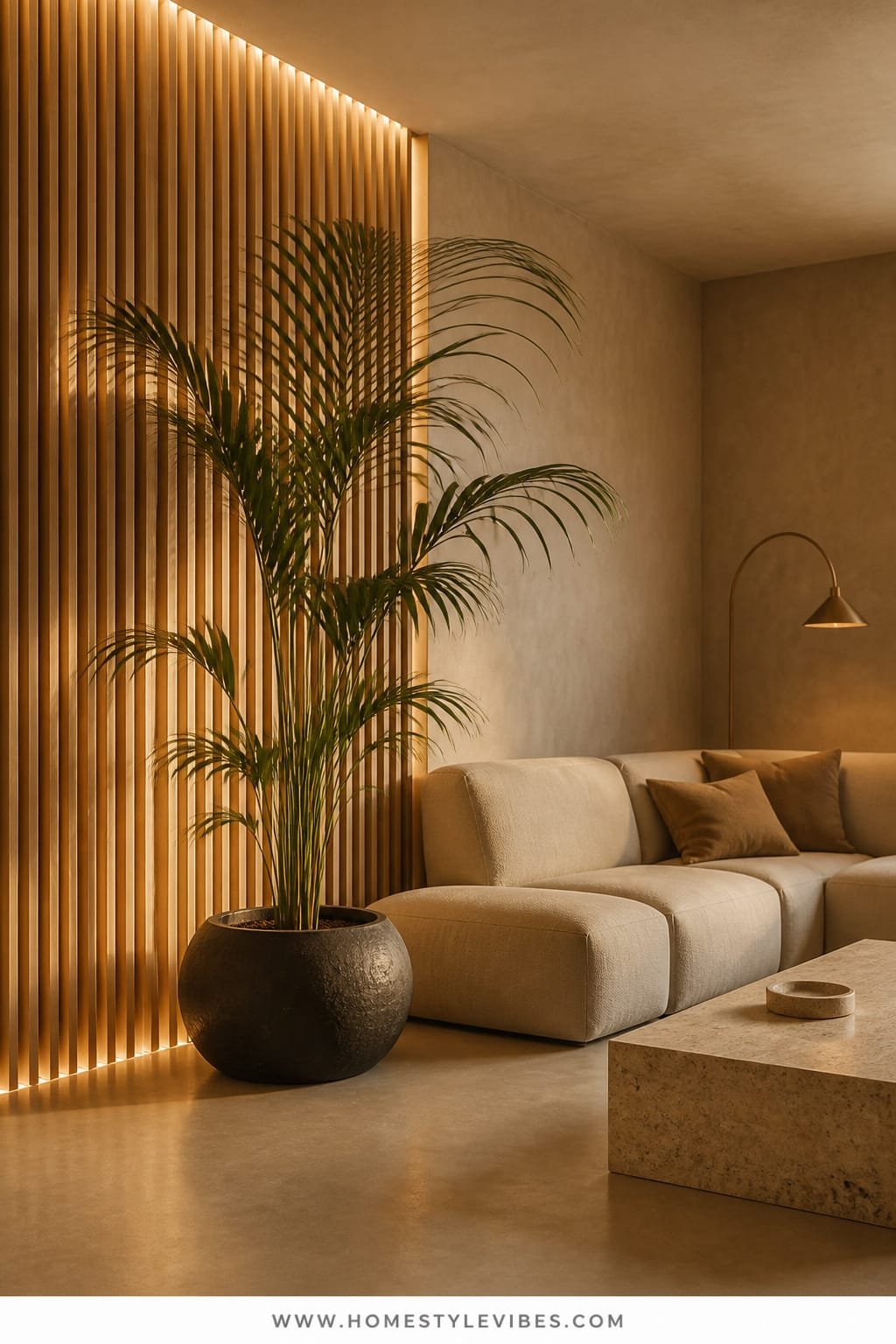
You’ve got a big blank wall and zero clue what to do with it. You’ve tried a gallery wall; it looked busy and small. Fluted wood paneling solves that—vertical lines add rhythm without clutter. Backlight it with golden hour LEDs, then bring in a canopy-style indoor palm (Kentia or Rhapis) for height drama. The hero moment is architectural, not knick-knack heavy. The vibe? Modern tropical loft with a warm, cinematic backlit glow.
This works in real homes because fluted panels absorb sound and hide small wall flaws. The palm draws the eye up, making ceilings feel taller. Backlighting adds dimension even at night, so the room never feels flat. In photos, the ribbed wood catches light and shadow like a designer trick—because it is. Renter-friendly version: mount a fluted wood art panel on a cleat and add plug-in LED strips behind it.
Another micro-story: A friend of mine spent weeks agonizing over paint colors before realizing the real problem was her lighting. We installed a fluted panel with soft backlighting behind her TV. Problem solved. The whole room looked suddenly “done.”
Budget Breakdown:
- Fluted wood panels (DIY or pre-made): $200–$1,100
- Warm LED strip lights + diffuser channels: $60–$220
- Kentia or Rhapis palm + planter: $140–$380
- Slim console or bench under panel: $180–$680
- Neutral ottomans for flexible seating: $120–$380
Total Estimated Cost: $700 – $2,760
Best For: Medium to large rooms with a bare wall; homes that need evening ambiance and a tall focal point.
Key Design Elements:
- Main materials: fluted oak or walnut, fabric ottomans, ceramic planter
- Color palette: honey wood, warm white, soft camel, deep green
- Lighting strategy: hidden LED backlighting (2700–3000K)
- Furniture silhouettes: slim console, rounded ottomans, tall palm
- Texture layers: ribbed wood, nubby ottoman fabric, matte ceramics
- Accent details: thin black metal frames, woven trays, simple candles
Why This Looks Expensive: Architectural rhythm always reads custom. The hidden light source implies built-ins even if it’s a weekend project.
How To Recreate This Look:
- Measure your focal wall; install fluted panels or a large fluted art panel centered at eye level.
- Add LED strips in aluminum channels behind panel edges for an even glow.
- Place a slim console or bench beneath it to create a purposeful vignette.
- Position a tall palm so fronds catch the backlight—instant depth.
- Style with two ottomans, a ceramic planter, and minimal decor to keep the focus on form.
Watch Out: Don’t skip diffuser channels for your LEDs; bare strips create harsh banding that screams DIY on camera.
Pro Styling Tip: Photograph at dusk; the palm silhouette against the backlit fluting reads magazine-worthy every time.
6. Breezy Linen With Cool White Daylight and a Floating Media Console
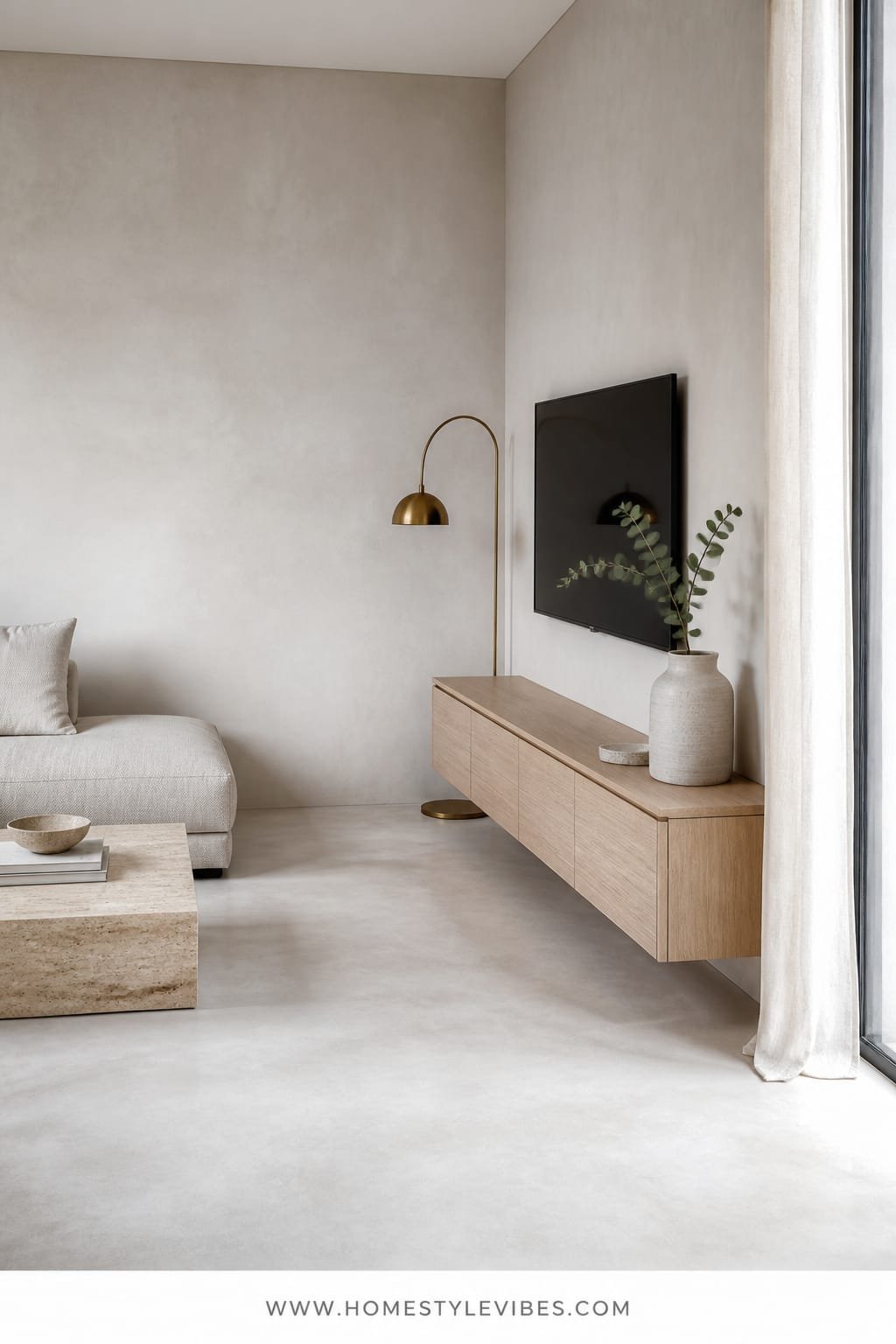
You’ve wrestled with cords and consoles and media clutter. You’ve replaced baskets, but the nest of wires always creeps back. This design cleans the line with a floating media console, so the floor breathes and the room looks lighter. Pair it with breezy linen everything—curtains, pillows, a linen-cotton blend sofa—and insist on cool white daylight during the day. The mood is fresh tropical modern: crisp, airy, and ruthlessly tidy.
Why it works: floating furniture makes small rooms feel bigger, and linen’s rumpled texture keeps it from feeling sterile. Use 4000K daylight bulbs during the day (if you must supplement natural light) and swap to 3000K warm in the evening. Photographs look exceptional because the floating shadow line adds depth, while the linen’s irregular weave keeps glare under control.
Variations: budget-friendly approach uses an IKEA hack for a floating effect with concealed rails. Darker room? Add a mirror opposite the window and choose bleached oak finishes. Renter-friendly? Use sleek legs that lift the console visually instead of mounting it, plus cable sleeves to corral the chaos.
Budget Breakdown:
- Floating media console (custom or modular): $280–$1,400
- Linen curtains and rods: $160–$520
- Linen or linen-blend pillow set: $60–$180
- Cable management kit and cord channels: $30–$120
- Neutral performance sofa (linen-look): $700–$2,200
- Matte woven rug (light oatmeal): $180–$700
Total Estimated Cost: $1,410 – $5,120
Best For: Small to medium living rooms, renters who crave visual lightness, and anyone fighting visible cords.
Key Design Elements:
- Main materials: linen, light oak, matte powder-coated hardware
- Color palette: oat, chalk, pale stone, soft sage
- Lighting strategy: daylight bulbs by day, warm ambient by night
- Furniture silhouettes: slim, wall-hung console; simple sofa; low-profile coffee table
- Texture layers: breezy linen, matte rug, paper lampshades
- Accent details: ceramic bowls, simple greenery, minimal black accents
Why This Feels Designer: Negative space is the secret. When you lift the console, you create a gallery effect that says curated, not cluttered.
How To Recreate This Look:
- Mount a streamlined console 10–12 inches above the floor; ensure studs or proper anchors.
- Run cable channels along the wall and paint to match—vanish the wires.
- Hang linen curtains near the ceiling and extend rods 8–12 inches past windows.
- Choose a linen-blend sofa and add a pale rug for tonal cohesion.
- Style with minimal ceramics and one leafy plant; keep decor intentional and sparse.
The Most Common Mistake: Hanging curtains too low and too narrow. Go high and wide to let light puddle in; it changes the entire posture of the room.
Pro Styling Tip: For photos, crack the sheers slightly so natural light spills in at an angle—linen texture will show up as a soft grain rather than a flat sheet.
Quick mindset reset: Perfection isn’t the goal. Feeling good in your home is. Pick pieces that help your daily life run smoother, then layer in the pretty.
7. Blackened Metal With Candlelight Warmth and a Carved Mango Wood Coffee Table
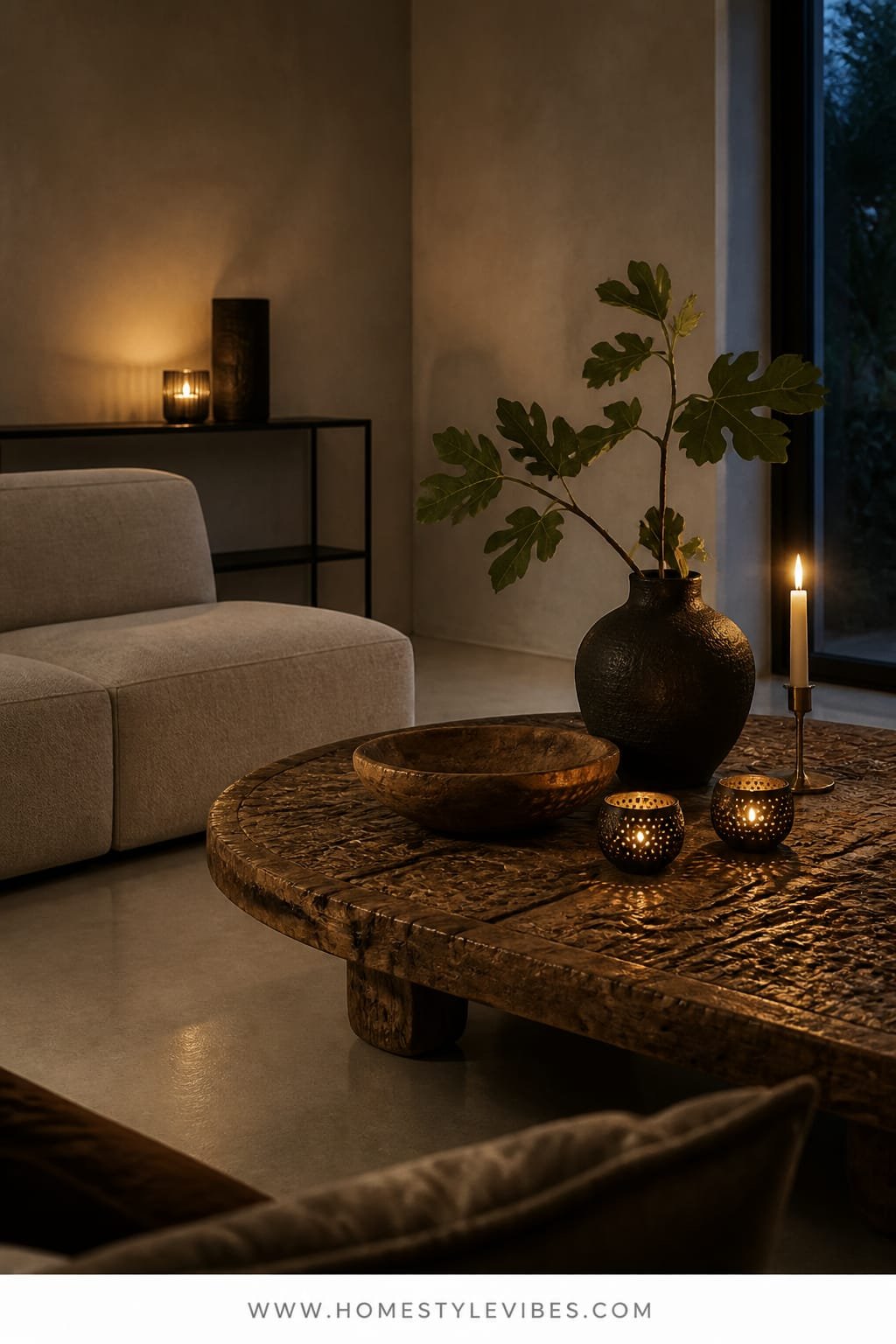
You’ve played it safe for years: all light, all soft, no contrast. It reads a little sleepy. If you want your tropical home decor to feel resort-luxe at night, lean into contrast with blackened metal accents, candlelight warmth, and a carved mango wood coffee table that brings hand-hewn soul. The mood? Boutique jungle bar—moody but not goth, earthy but not rustic.
Why this works in real homes: the black metal frames define edges and organize the eye; the carved table gives patina without fussy maintenance; candlelight (real or LED) flatters skin and wood grain like magic. It photographs beautifully because your highlights (candles) and lowlights (black frames) create dynamic range. That depth is what makes magazine shots look intentional.
Small-space version: limit black to frames and lamp bases; keep walls warm white and add just the carved table. Budget-friendly: find vintage black frames, repaint in matte black, and source a mango wood drum table. Renter-friendly: use plug-in picture lights in black to graze art after dark—no wiring needed.
Budget Breakdown:
- Carved mango wood coffee table or drum table: $220–$920
- Blackened metal floor lamp and picture light: $140–$520
- Candle cluster (pillars + hurricanes or LED): $40–$160
- Warm-toned throw pillows (ochre, clay): $60–$200
- Woven leather or seagrass accent chair: $180–$680
- Charcoal woven basket for throws: $40–$120
Total Estimated Cost: $680 – $2,600
Best For: Evening loungers, open-plan homes that lack definition, anyone craving depth and nighttime ambiance.
Key Design Elements:
- Main materials: blackened steel, carved mango wood, woven leather
- Color palette: warm white, charcoal, clay, deep green
- Lighting strategy: candle clusters, warm lamps, picture lights
- Furniture silhouettes: solid drum table, slim metal frames, low sofa
- Texture layers: carved wood grain, woven leather, soft wool throw
- Accent details: smoked glass, matte black hardware, big leafy plant
How To Recreate This Look:
- Center the carved mango wood table; let it be the star.
- Add blackened metal lamps or picture lights to define visual borders.
- Group candles in hurricanes on the table; vary heights for a layered glow.
- Bring in a woven leather or seagrass chair for organic tension.
- Style with a smoky glass vase and deep green plant to complete the palette.
Why This Looks Expensive: High-contrast elements feel editorial. The hand-carved surface adds artisan credibility that reads as custom, not mass-produced.
One Thing To Avoid: Too many black pieces in a small room—three strong black elements are enough. Let wood and greenery carry the rest.
Pro Styling Tip: Turn off overheads at night; use only lamps and candles. Your camera will pick up a warm gradient that flatters every material.
Quick Checklist
- Choose one dominant natural material (rattan, travertine, teak, limewash, fluted wood, linen, or mango wood)
- Commit to a consistent bulb temperature per room zone (daylight for tasks, warm for evenings)
- Float at least one major piece (sofa off the wall or a wall-hung console)
- Layer window treatments for texture and light control
- Use one tall tropical plant as a focal point
- Repeat wood tones—one dominant, one accent
- Anchor with a statement furniture piece (curved sofa, platform table, cane chair, daybed, carved table)
- Add a tactile rug that contrasts with your sofa
- Hide cords with channels or a floating console
- Style vignettes with odd-number groupings and mixed heights
Frequently Asked Questions
How can I get a resort feel on a tight budget?
Pick one big move per room: swap your coffee table for a textured natural material, or install layered sheers for dreamy light. Then add one tall plant and change bulbs to warm 2700–3000K at night. Those three shifts do the heavy lifting.
My living room is small. Which idea works best without crowding it?
Go for the floating media console with breezy linen. Lifting storage off the floor visually expands the room, and linen keeps things light. A low platform coffee table also helps your eye travel further.
I’m a renter—what can I do without drilling a ton of holes?
Use tension rods for sheers, plug-in sconces or picture lights, freestanding fluted panels, and peel-and-stick stone looks. Choose pieces with strong texture so the room reads finished without construction.
What about maintenance—are these materials fussy?
Choose performance fabrics for sofas, sealed wood or veneer for consoles, and hardy plants like Kentia palms or snake plants. Limewash is surprisingly forgiving; small scuffs blend into the texture rather than stand out.
How do I avoid the space looking theme-y or kitschy?
Keep the palette tight and the motifs subtle. Skip palm-printed everything. Use one tropical nod (a palm, cane, or mango wood) and surround it with simple shapes and neutral textures.
Conclusion
Start with the idea that made your shoulders drop as you read it. Was it the limewashed wall? The curved sofa with woven rattan? The fluted wood glow? Pick one move, make it big, and let the rest of the room adjust to it instead of piling on small decor that never adds up.
The truth is, the resort feeling comes from texture, lighting, and restraint. Not more stuff. Layer natural materials, choose a consistent light temperature, and repeat wood tones with intention. When you do, your living room stops feeling random and starts feeling like a calm destination you actually live in.
You’ve got this. One weekend, one statement piece, one beautiful light moment—and suddenly you’re coming home to somewhere that feels like vacation, every single day. Seriously—leave your shoes by the door and enjoy it.

About the Author

Krisztina P.Rendes, Founder of Home Style Vibes
Founder of Home Style Vibes
Krisztina Puskásné Rendes created Home Style Vibes as a cozy-modern lifestyle space where homemaking meets inspiration. Her goal is to help women create beautiful, organized, and peaceful homes they truly love — without overwhelm. You’ll find here heart-driven content on home decor, cleaning tips, easy family recipes, organization and decluttering, DIY home projects, plants, and seasonal ideas — all designed to bring more calm, comfort, and style into everyday life.