7 Stunning Succulent Arrangements That Look Like Living Art
You want a home that feels lush, sculptural, and low-fuss. You hate when plants look random, dusty, or like a last-minute grocery-store impulse. Imagine sculpted textures catching morning light, shadow play across matte ceramics, and a satisfying palette of viridians and silvery blues that reads more gallery than greenhouse. These seven succulent arrangements fix the “meh plant corner” problem fast with photogenic, doable designs you can build in a weekend for under $250 each—some under $60.
We’re talking real-life styling power: colors that flatter your furniture, vessels with serious presence, and textures that photograph like a dream. If you crave calm, layered beauty without babysitting a jungle, this list was made for you. Succulent arrangements are the definition of living art—quiet, sculptural, and a little bit mesmerizing. Perfect for design lovers, busy schedules, and anyone whose last plant gave up out of sheer neglect.
1. Honed Concrete Base With North-Light Glow And Asymmetric Shallow Bowl
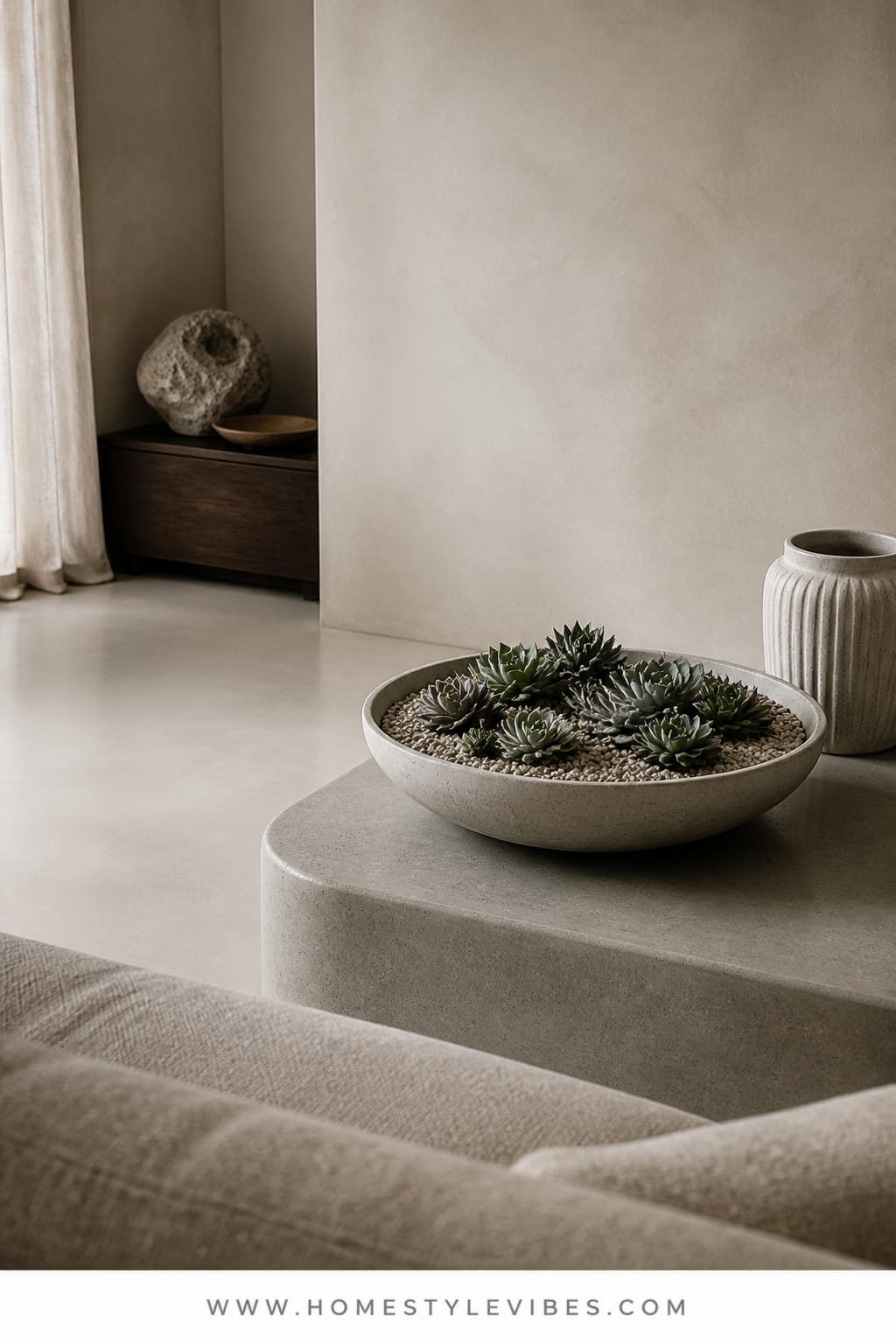
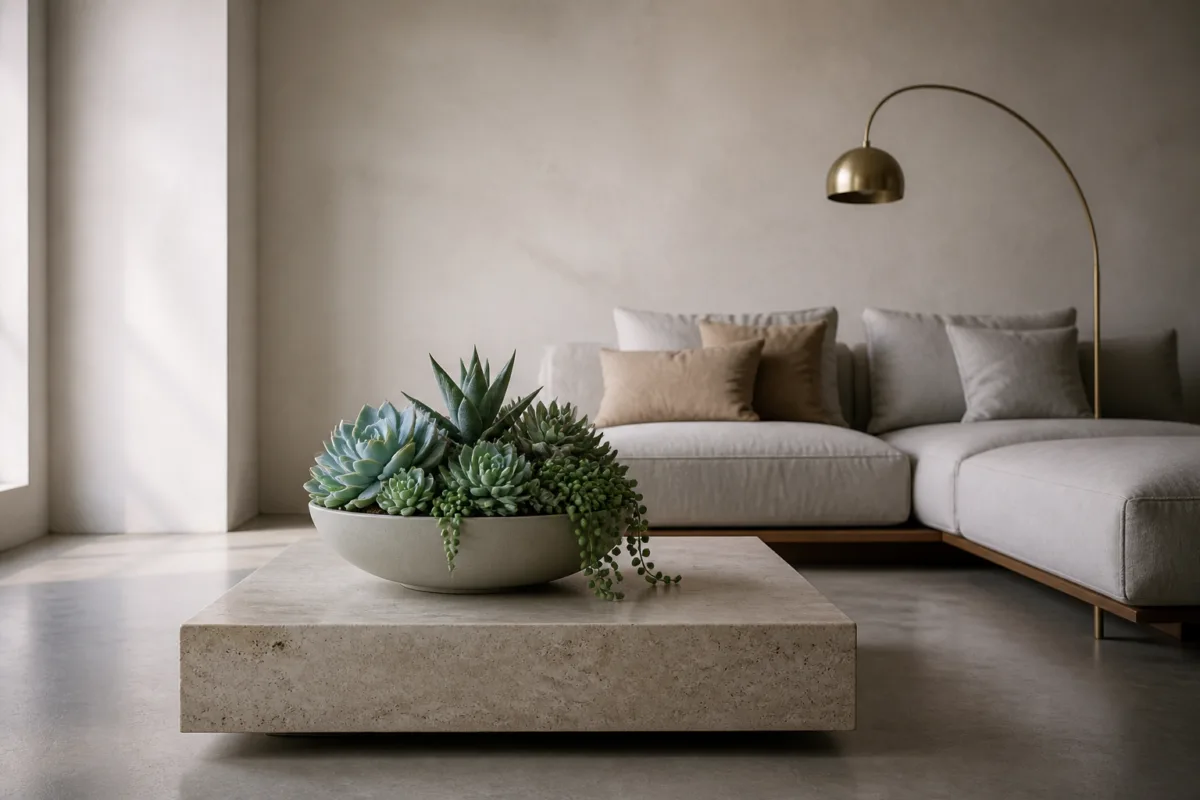
We’ve all been there: a coffee table centerpiece that never feels quite right—too busy, too tall, or just not “finished.” This arrangement leans into calm geometry and negative space. The honed concrete base grounds your styling with a soft stone texture, while north-facing or diffused light creates velvety shadows that make each rosette look sculpted. The asymmetric shallow bowl is the statement piece that reads like a modern sculpture—one sweep of curve and a low silhouette that never blocks sightlines.
The mood is Japandi-meets-gallery: serene, matte, and thoughtful. It works in real homes because succulents handle uneven watering, and the low bowl stays stable on busy family coffee tables. The concrete’s subtle speckle photographs beautifully against the smooth, waxy leaves. Think cool-toned echeveria, ghost plant, pearl-like string-of-pearls trailing a touch, and an accent of black river pebbles for clean contrast.
Try it two ways: a budget-friendly concrete-look resin bowl that’s lighter and renter-safe; or a small-space version using a 6–8 inch diameter dish styled with three compact echeveria and a tight gravel top. Prefer moodier? Use charcoal gravel and a single silvery-blue echeveria grouped with a black aeonium for drama.
Budget Breakdown:
- Honed concrete or concrete-look resin shallow bowl: $25 – $120
- Succulents (5–7 medium rosettes): $20 – $45
- Top dressing (black river pebbles or light gravel): $8 – $16
- Cactus/succulent soil + perlite: $10 – $18
- Felt pads or cork base for furniture protection: $5 – $10
Total Estimated Cost: $68 – $209
Best For: Coffee tables, console tables, or low media units in rooms with indirect light. Ideal for minimalists who love a calm, sculptural centerpiece.
Key Design Elements:
- Main materials: Honed concrete, black pebbles, glazed ceramic accents optional
- Color palette: Cool grays, slate, silvery greens, a touch of black
- Lighting strategy: North light or sheer-curtained windows for soft, shadowed contours
- Furniture silhouettes: Low-profile, clean lines, square or oval coffee tables
- Texture layers: Matte concrete + glossy leaf rosettes + smooth pebbles
- Accent details: A single off-center driftwood chip or lava rock for subtle asymmetry
How To Recreate This Look:
- Start with a shallow bowl 10–14 inches wide and add a mesh or coffee filter over the drainage hole.
- Mix cactus soil with 30% perlite; fill two-thirds of the bowl.
- Position your largest echeveria off-center; cluster two smaller varieties to one side.
- Backfill with soil; tap to settle. Add a clean black pebble top dressing.
- Style with one sculptural accent (driftwood chip) slightly tucked under a rosette.
Why This Looks Expensive: The restrained palette and low, asymmetric silhouette feel like a museum piece. Matte over gloss, plus precise spacing between plants, reads tailored instead of “stuffed.”
Watch Out: Don’t crowd the bowl. Negative space is crucial; leave visible gravel gaps for breathing room. Overfilling flattens the sculptural effect.
Pro Styling Tip: Photograph in the morning with light hitting at a 45-degree angle—rotate the bowl so shadows fall from largest rosette to smallest for a pleasing gradient.
Quick Tip: Dust the leaves with a soft makeup brush before photos. That tiny layer of dust kills the velvety glow and makes succulents look dull on camera.
2. Raw Terracotta Texture With Warm Golden Hour And Tiered Pedestal Tray
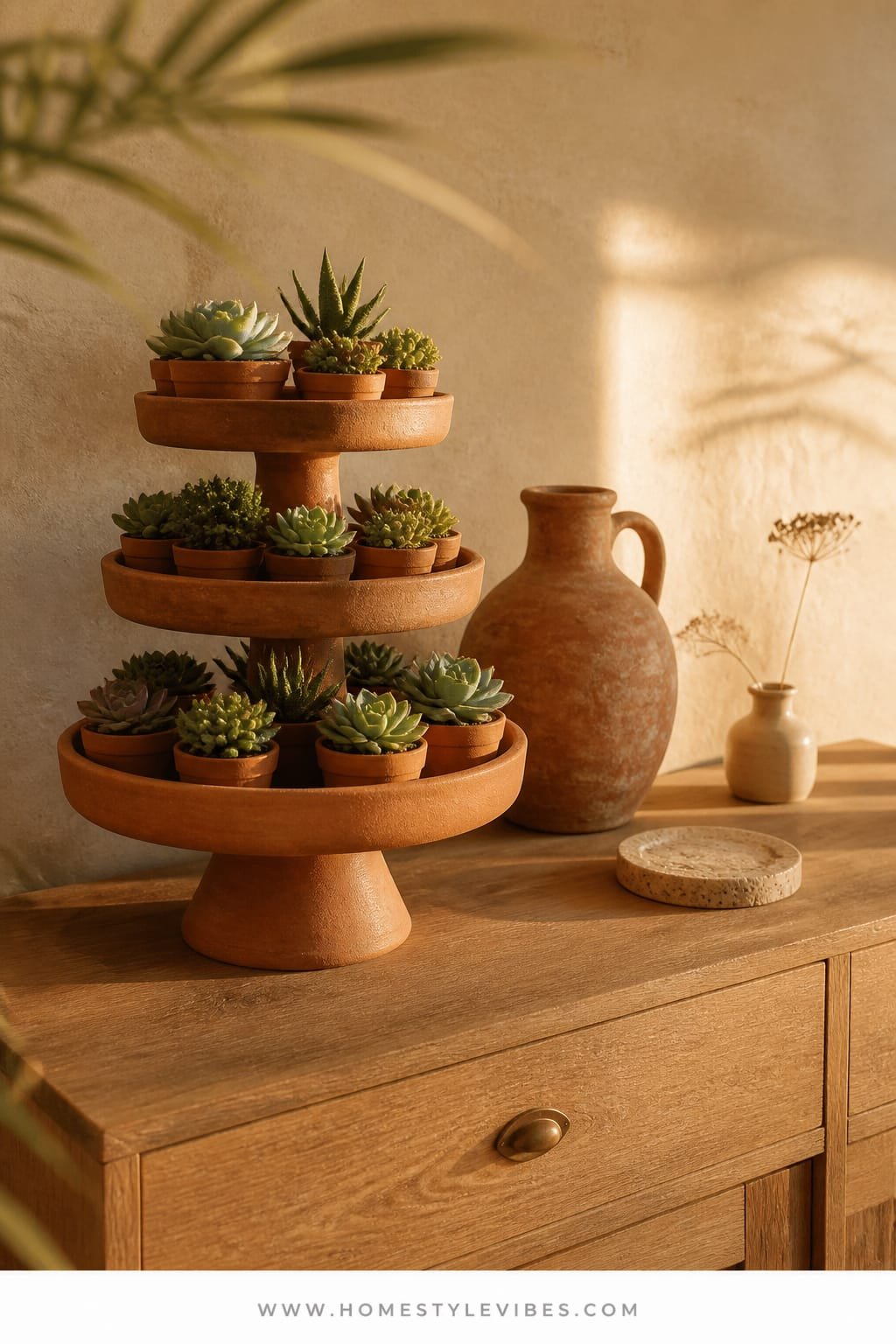
It’s that one corner that always feels off—too empty during the day, too dark at night. You’ve tried a lamp, you’ve tried a framed print, but it still looks flat. Enter raw terracotta with tiered height and warm light: a pedestal tray layered with small terracotta pots and mini succulents that catch late sun like jewelry. The material is the star—porous, earthy, and faintly chalky, terracotta brings Old World warmth that softens even modern rooms.
The mood skews Mediterranean-casual. Golden-hour lighting warms the clay and turns green leaves luscious. In real homes, this layout works because the tray corals your collection and keeps surfaces clean. It looks best near a west-facing window or lamp with a warm bulb. The textures—ribbed pots, rough clay, velvety leaves—photograph like a still life painting.
Variations? Renter-friendly swap: use a reclaimed wood cake stand instead of a fixed pedestal. Small-space version: one-tier tray with three pots staggered in height using discreet coaster stacks under one pot. For a darker, moodier look, try smoked terracotta or umber-toned pots with deep green haworthia and burgundy sedum.
Key Design Elements:
- Main materials: Raw terracotta, unfinished wood pedestal, natural fiber mat
- Color palette: Terracotta rust, honey light, deep greens, a touch of burgundy
- Lighting strategy: Warm white bulbs (2700K) or afternoon light for glow
- Furniture silhouettes: Round side table, soft-edge console, woven basket underneath
- Texture layers: Ribbed pots, matte clay, soft rosette leaves, brushed wood
- Accent details: Thin brass plant markers or a linen coaster stack for height play
Budget Breakdown:
- Pedestal tray or cake stand: $20 – $75
- Small terracotta pots (5–7): $15 – $40
- Mini succulents: $18 – $35
- Cactus soil + sand: $10 – $18
- Warm LED bulb or small task lamp: $10 – $45
Total Estimated Cost: $73 – $213
Best For: Corners that need warmth and height variation; cozy living rooms or kitchens that crave a collected, lived-in note.
How To Recreate This Look:
- Gather pots of different rib patterns and heights; keep all terracotta for cohesion.
- Plant varieties with contrasting leaf shapes: one rosette, one spiky haworthia, one trailing string-of-pearls.
- Arrange tallest in the back, shortest in front; angle leaves outward for a fan effect.
- Place the tray near warm light; swap to 2700K bulbs if your lamp looks too cool.
- Add a small brass marker to one plant—one gleam is plenty.
Why This Feels Designer: Staying loyal to one material family (terracotta) with varied textures reads curated, not random. The warm light coats everything in an amber wash that feels intentional.
One Thing To Avoid: Don’t mix glossy glazed pots with raw terracotta here. The sheen breaks the mood and looks like two different vignettes crashed into each other.
Pro Styling Tip: For photos, tilt one pot a few degrees off-axis and pull the tray 2 inches from the wall to catch a soft halo shadow—instant depth.
Did You Know? Terracotta wicks moisture, so succulents dry out faster and avoid root rot. You’ll water a bit more often, but you get healthier, tighter rosettes that hold their shape.
Remember, this isn’t about recreating a showroom. It’s about building a home that looks good on Tuesday at 3 p.m. with dishes in the sink. If one detail sings—like raw clay or black pebbles—run with that and ignore the rest.
3. White Plaster Finish With Soft Diffused Light And Elongated Wall Niche Planter
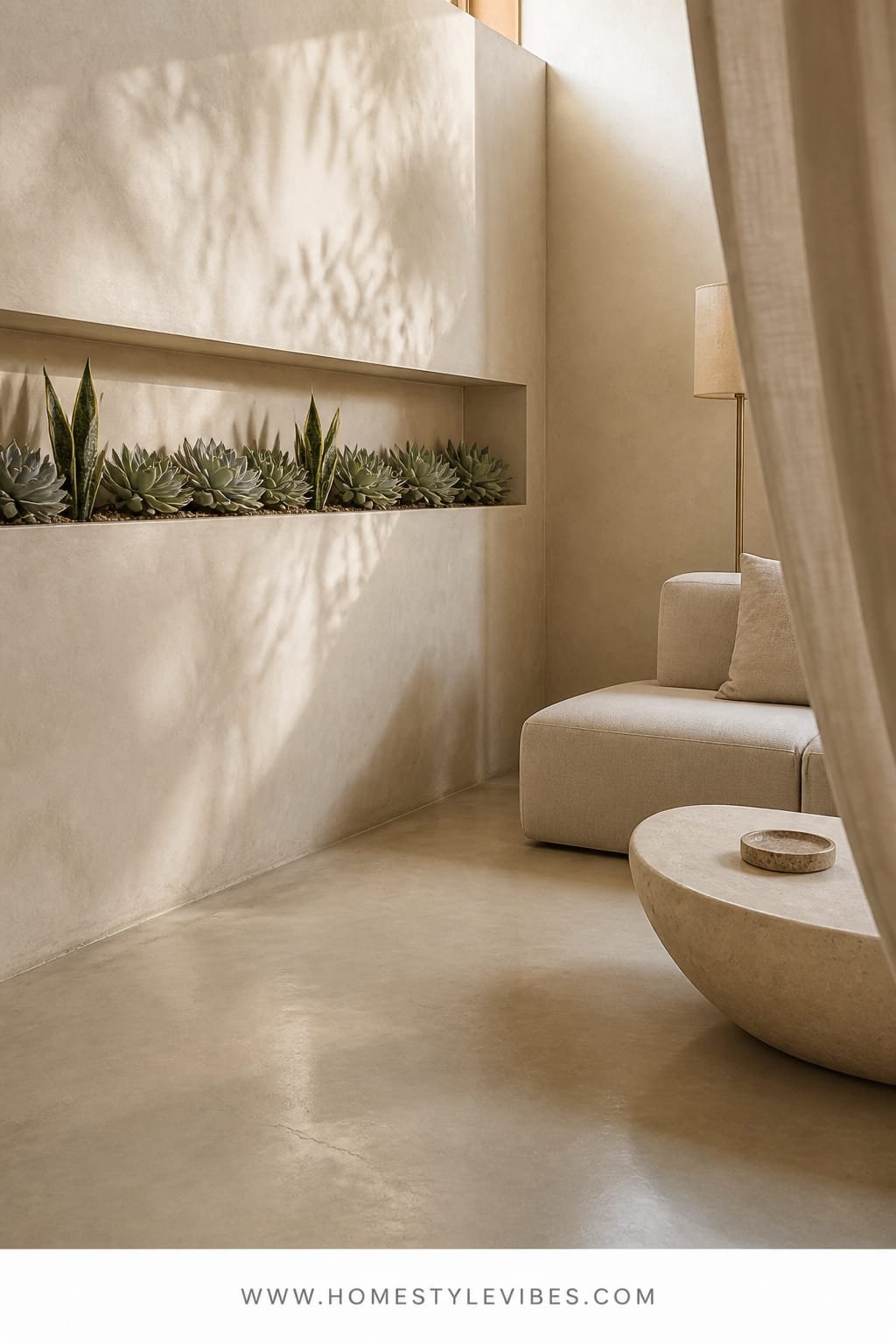
You want that gallery wall vibe, but framed art everywhere can feel heavy. A slim wall niche planter lined with white plaster offers a quietly dramatic alternative. Diffused light (think sheer curtains or a skylight) smooths the plaster and throws delicate leaf shadows that look like watercolor washes on the wall. The elongated trough creates clean rhythm—repeating forms of echeveria punctuated by a few upright sansevieria “spears.”
The mood is modern Mediterranean: airy, sandy, and soothing. It works in hallways or above a low console where floorspace is precious. Maintenance stays easy since the planter sits eye-level for quick checks, and plastered surfaces patina elegantly over time. Photos? Unreal. White-on-green contrast, leaf-edge shadows, and a long horizon line create a magazine-ready moment with minimal effort.
Variations: Budget-conscious? Use a simple white-painted MDF shelf with a narrow ceramic trough planter. Renter-friendly? Command-strip a floating shelf and style with a light resin trough (keep soil weight low). Darker version: limewash the wall a soft taupe and use blue-green agave pups for moody contrast.
Budget Breakdown:
- Wall niche build or floating shelf + trough planter: $40 – $300
- White plaster or limewash paint: $18 – $60
- Succulents (echeveria mix + 2 sansevieria): $25 – $60
- Lightweight cactus soil + pumice: $12 – $20
- Sheer curtain panel for diffused light: $15 – $45
Total Estimated Cost: $110 – $485
Best For: Narrow halls, entryways, or over-sofa moments that need linear sophistication without heavy frames.
How To Recreate This Look:
- Install a long floating shelf or use an existing niche; paint or plaster to matte white.
- Place a narrow trough planter; line the bottom with mesh to protect drainage.
- Plant low-profile succulents in repeating patterns; insert 2–3 tall “spears” at uneven intervals.
- Add a fine gravel top to cover soil and reflect light upward.
- Hang a sheer curtain or adjust blinds for soft, even light across the display.
Why This Reads High-End: Linear repetition plus a tactile wall finish screams custom. You’re creating architecture, not just placing a plant. The restrained color story feels deliberate.
The Most Common Mistake: Over-tall plants. Keep rosettes low and tight so the “horizon” stays clean; one or two verticals are enough to break monotony.
Pro Styling Tip: Shoot a low, slightly angled photo so the planter runs like a runway line through the frame—instant depth and drama.
4. Aged Brass Rim With Cool Morning Light And Cylindrical Glass Cloche
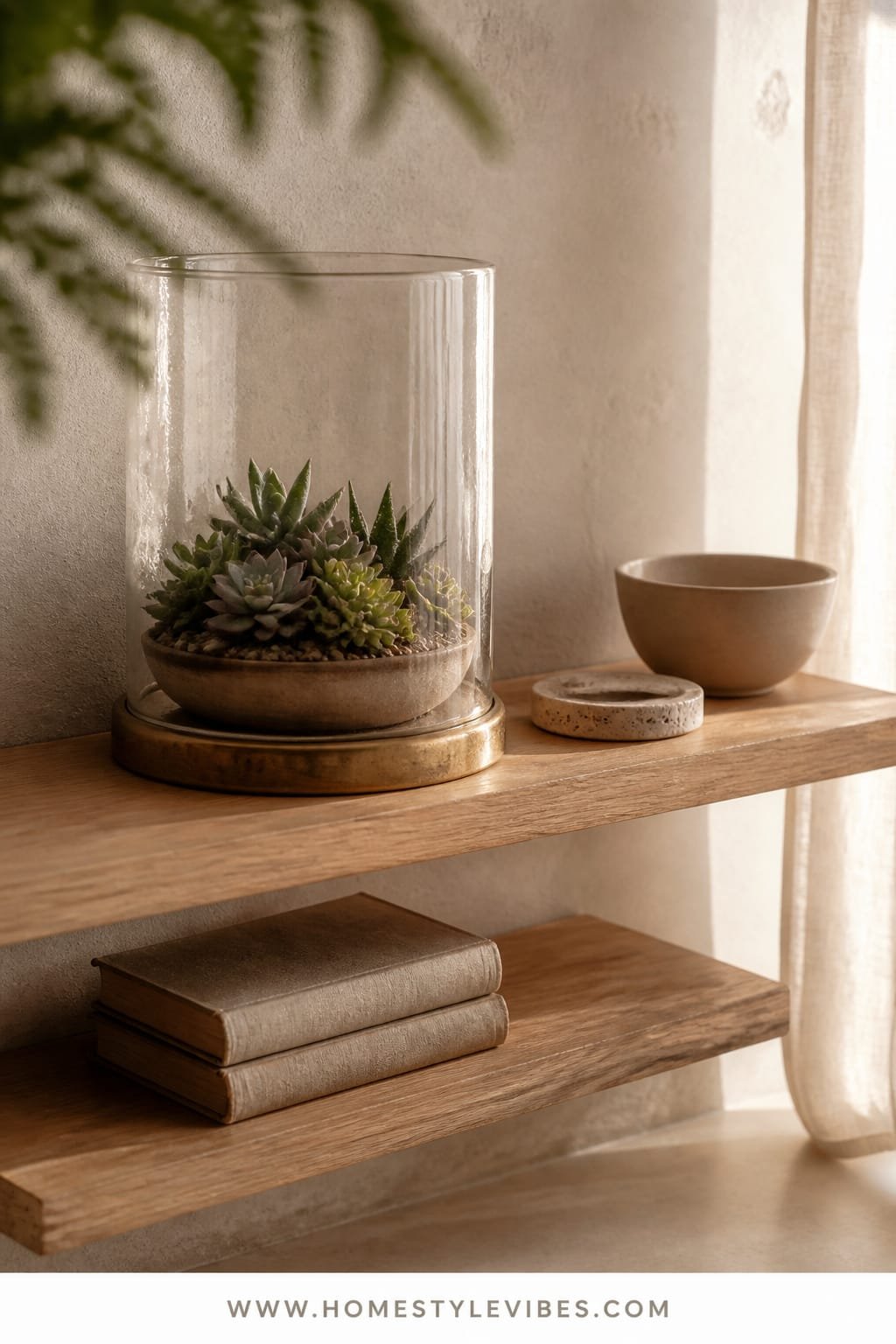
There’s always that shelf that swallows small decor whole. Tiny pieces disappear. You need a focal point with presence. A cylindrical glass cloche with an aged brass rim turns a compact succulent scene into something museum-worthy. Cool morning light cuts through the glass and highlights each leaf’s geometry, while the brass rim adds a refined ring that catches the eye from across the room.
This mood is quiet luxe—think boutique hotel shelf styling. It works especially well for small spaces because the cloche contains visual noise and keeps dust off leaves. It also protects from curious pets. A raised wood or stone coaster within the cloche adds height, and a single rare echeveria or haworthia with a minimal top dressing becomes the star. It photographs like a jewel—literally reflective, with controlled highlights.
Want options? Budget-friendly: use a thrifted glass dome or tall jar with a DIY brass-painted ring. Renter-friendly: set the cloche on a stacking book trio for lift without drilling. Darker room version: place a tiny puck light behind the cloche for a faint halo at night—keep it subtle.
Key Design Elements:
- Main materials: Clear glass, aged brass, smooth stone or wood base
- Color palette: Brass gold, clear, deep greens, gray or natural wood
- Lighting strategy: Cool daylight or a single backlight for edge highlights
- Furniture silhouettes: Slim wall shelves, built-ins, narrow consoles
- Texture layers: Glossy glass, patina brass, waxy leaves, matte gravel
- Accent details: A single quartz chip or small fossil for curiosity
Budget Breakdown:
- Glass cloche with brass rim: $25 – $120
- Single succulent specimen: $8 – $25
- Mini pot or shallow dish + gravel: $10 – $20
- Stone or wood coaster base: $8 – $18
- Optional LED puck or strip: $12 – $30
Total Estimated Cost: $63 – $213
Best For: Shelves and built-ins; households with pets or dusty rooms; anyone who loves a curated, contained vignette.
Why This Looks Intentional: The cloche frames the plant the way a mat frames artwork. The brass rim adds a single chic line that ties to other metals in the room, so the vignette never feels random.
How To Recreate This Look:
- Place a slightly raised base inside the cloche footprint to lift your plant into view.
- Plant a single specimen in a neutral dish; keep proportions modest.
- Top dress with fine gravel; avoid large stones that crowd the view.
- Set the cloche; leave slight airflow by propping the edge for the first week.
- Position to catch cool morning light; rotate weekly for even growth.
Don’t Do This: Skip humidity traps. Fully sealing the cloche in hot rooms can stress succulents. Leave a tiny gap if your climate runs humid.
Pro Styling Tip: Clean the glass with vinegar water and buff dry—any smudges show like neon in photos.
Quick Tip: If your shelf lighting makes weird zebra shadows, add a thin strip of parchment inside the shelf lip to soften the light. Cheap fix, big difference.
If one idea resonates more than the others, that’s your starting line. You don’t need all seven arrangements. One strong statement in the right spot beats five scattered maybes every time.
5. Textured White Ceramic With Dappled Window Light And Oversized Footed Bowl
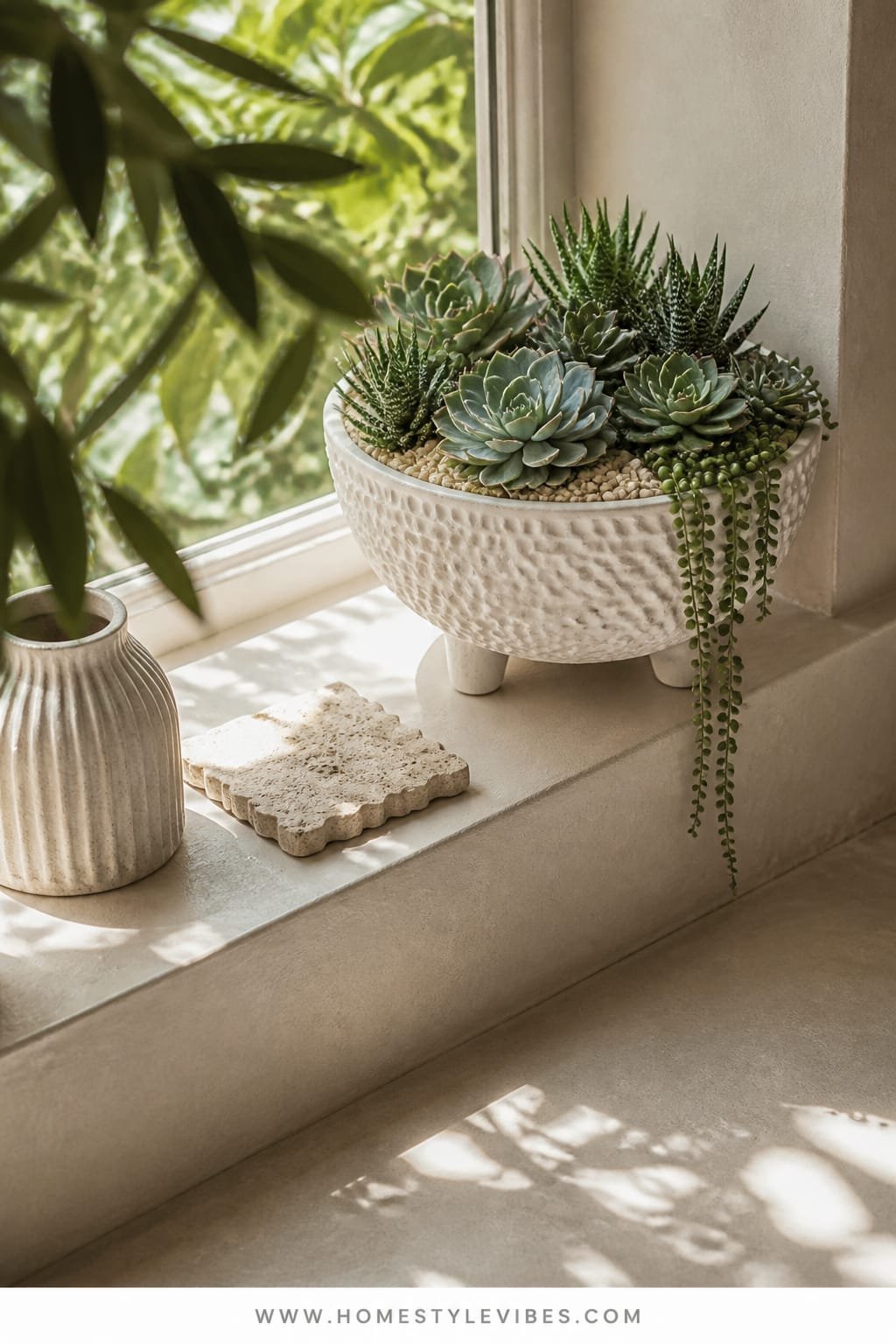
You’ve got a bright window ledge that bakes at noon, and every plant you place there fries. Succulents actually enjoy that sun, but the presentation matters. A textured white ceramic footed bowl with an oversized profile gives your arrangement breathing room and lifts it off the sill. Dappled light—filtered through a tree or patterned shade—adds a lively play across the textured glaze, making every leaf edge sparkle without scorch.
The vibe is sun-washed coastal. It works in real homes because the footed base reduces heat transfer from hot surfaces and the bowl’s volume prevents overcrowding roots. Photographing this is a joy: white ceramic bounces light back under the leaves, so you get that editorial underside glow without extra equipment.
Variations: Budget route—unglazed white cement planter on a low wooden trivet for the “footed” effect. Small-space version: an 8-inch footed compote dish with three minis. Monochrome look: stick to pale jade, blue-green, and silvery echeveria only, with white quartz chips on top.
Budget Breakdown:
- Oversized footed bowl: $35 – $140
- Succulents (7–9 mixed sizes): $25 – $55
- Soil + pumice: $12 – $20
- White quartz top dressing: $12 – $24
- Wood trivet or felt pads: $5 – $12
Total Estimated Cost: $89 – $251
Best For: Sunny kitchens, bright dining corners, window seats. Works beautifully against linen curtains and pale walls.
How To Recreate This Look:
- Choose a footed bowl at least 10 inches wide; ensure drainage or add a layer of chunky lava rock at the base.
- Mix soil light—succulents hate wet feet. Aim for fast drainage.
- Place the largest rosette at center-back; cluster two medium plants at mid-height; fill with ground-hugging sedum up front.
- Top with white quartz chips, keeping surface immaculate—no soil smudges.
- Set near dappled sun; rotate every two weeks to avoid lopsided growth.
Why This Looks Expensive: Scale and silhouette. The oversized footed form reads custom, while a tight palette and pristine quartz topping keep it gallery-clean.
Watch Out: Don’t mix too many colors. Limit yourself to three tones max, or the bowl looks busy instead of sculptural.
Pro Styling Tip: For a magazine shot, pull the bowl 4 inches off the window line so the rim casts a soft crescent shadow on the sill—adds subtle depth.
Did You Know? Succulents will stretch if they crave more light. If rosettes start “reaching,” slide the bowl 6–12 inches closer to the window for a week and watch them tighten up.
6. Charred Wood Accent With Moody Side Light And Rectangular Ikebana-Style Tray
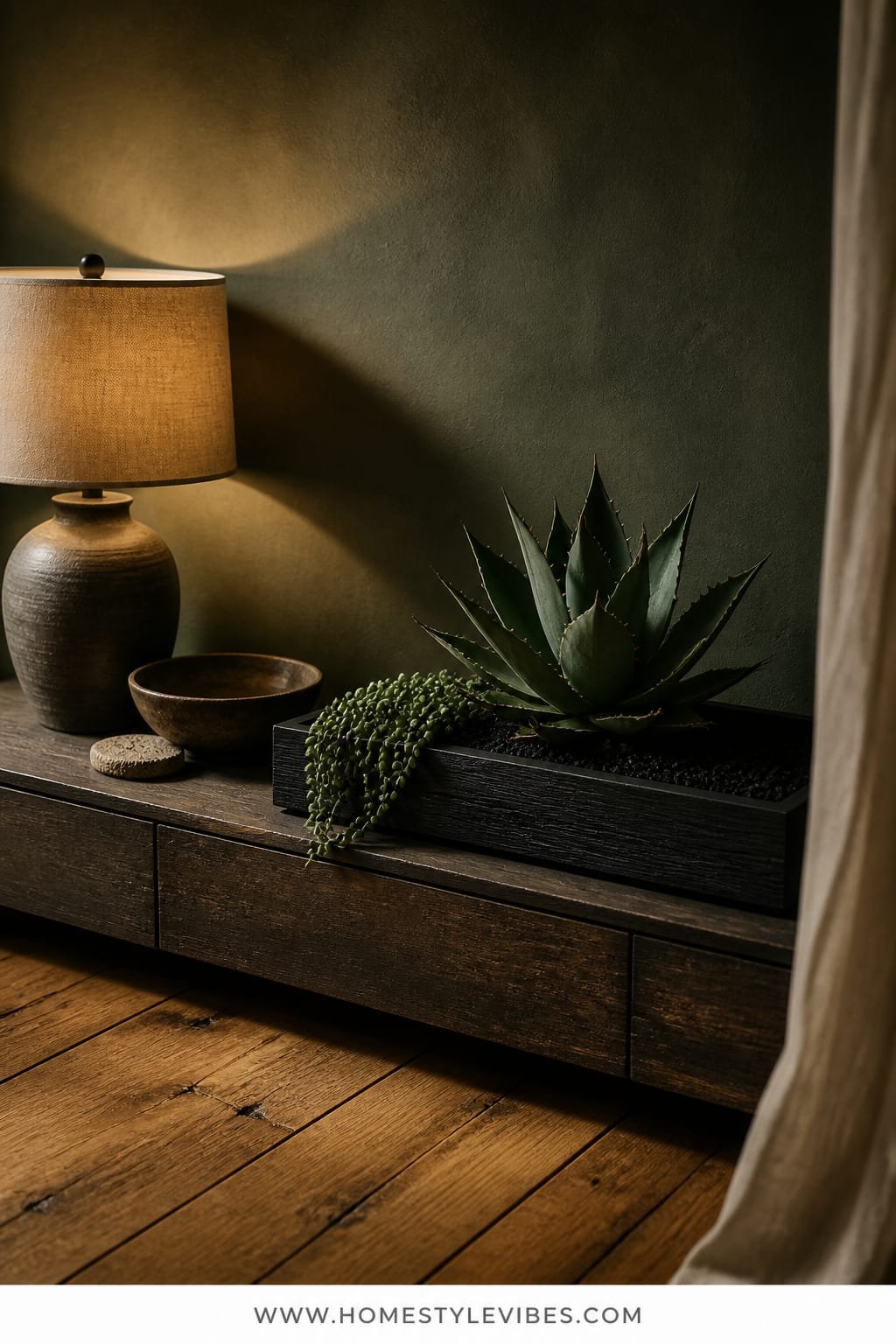
You crave drama, but neon planters and bright gravel feel gimmicky. This arrangement turns down the volume and cranks up the mood. A rectangular tray with a charred wood accent (shou sugi ban vibes) anchors a minimal, ikebana-inspired composition: one bold agave pup, one trailing senecio, and a negative-space expanse of dark substrate. Side lighting from a nearby lamp sculpts long shadows for an artful, evening-friendly look.
Think wabi-sabi meets modern art. It works in real homes because you’re committing to fewer plants, less fuss, and a show-stopping silhouette. Maintenance stays straightforward, and the tray format suits narrow consoles or mantlepieces. On camera, the contrast is delicious: pale leaf bloom against deep wood grain, elongated shadows stretching across the tray.
Try a thrifted rectangular baking dish painted matte black for a budget version. Small-space adaptation: go half-length with a single plant and a charred wood offcut as a companion sculpture. Darker palette? Use iron slag stones instead of gravel and a deep green haworthia for a near-monochrome study.
Key Design Elements:
- Main materials: Charred wood, matte ceramic or metal tray, dark gravel
- Color palette: Charcoal, black, pale green, muted blue
- Lighting strategy: Side-lit with a shaded lamp for cinematic shadows
- Furniture silhouettes: Long consoles, mantels, window ledges
- Texture layers: Scorched grain, matte substrate, powdery leaf coating, smooth stones
- Accent details: Single sculptural rock or small bronze figurine
Budget Breakdown:
- Rectangular tray or dish: $18 – $75
- Charred wood accent (DIY or purchased): $10 – $40
- Succulents (1–3 specimens): $10 – $30
- Dark gravel or black sand: $8 – $18
- Small bronze or stone accent: $12 – $35
Total Estimated Cost: $58 – $198
Best For: Statement mantels, moody dens, dining consoles where candlelight hits from the side.
Why This Feels Designer: Sparse composition and disciplined materials let each element breathe. You’re editing like a stylist, not stuffing like a nursery display.
How To Recreate This Look:
- Place the tray; mound a low ridge of soil offset to one side for asymmetry.
- Plant a single architectural succulent at the ridge’s high point; add a trailing plant at the opposite edge.
- Top with dark gravel, leveling to whisper-thin along the negative-space side.
- Nestle a charred wood piece near the main plant, never touching leaves.
- Position a lamp so light rakes across the surface from the side.
The Most Common Mistake: Over-decorating. One accent only. Two is already a crowd in this minimal language.
Pro Styling Tip: Shoot at dusk with the side lamp on and the room lights off—your shadows will read like brushstrokes.
Quick Tip: If your charred wood rubs off soot, seal it with a matte, plant-safe finish and let it cure fully before styling. No smudges on your pristine gravel, please.
Small confession? I once spent an hour fussing with a “perfect” tray only to realize the problem wasn’t the plants—it was the lamp height. Raised the shade by two inches, and suddenly the shadows behaved. Lighting is 50% of the look. Trust me.
7. Polished Stone Slab With Cool-White Under-Cabinet Light And Cascading Wall-Mount Pocket
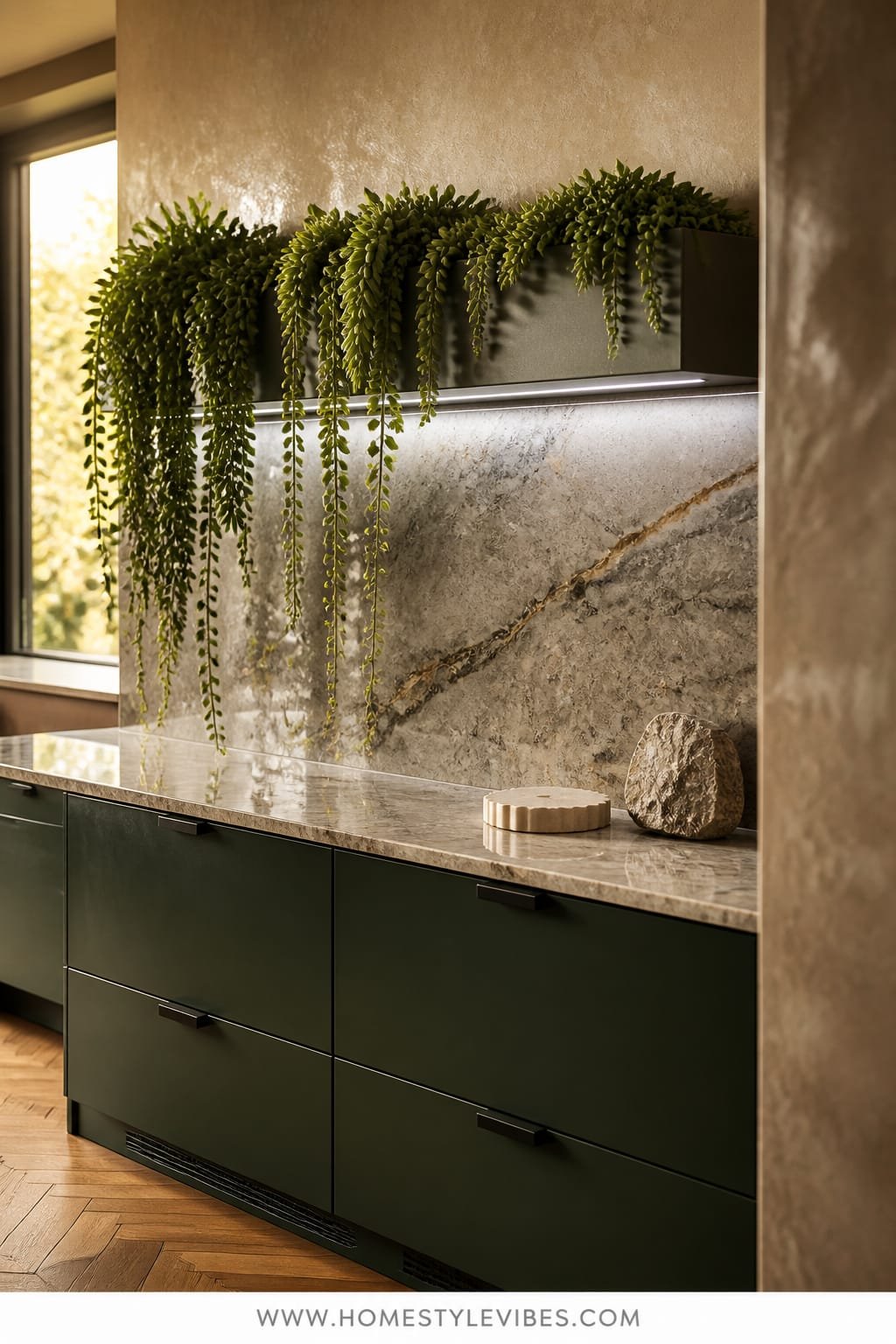
Not enough counter space, but you still want that lush, textural moment? A slim, wall-mount pocket planter over a polished stone slab backsplash turns a dead zone into a conversation piece. Cool-white under-cabinet light paints crisp highlights across glossy leaves and the stone below, while cascading varieties—like string-of-bananas and burro’s tail—soften the hard geometry of kitchens or bar nooks.
The mood is contemporary, a little glam. Real-home perk: your counters stay clear, and watering is easy with a removable inner sleeve in the pocket. Photos love the interplay of sheen: glossy leaves, reflective stone, and a subtle metallic hardware glint. The layering gives depth in tight rooms where you can’t spare a foot of floor.
Variations: Budget-friendly wall pocket in powder-coated metal. Renter-friendly version uses adhesive hooks and a lightweight resin planter with a small water tray. For a darker kitchen, switch to cool-toned blue-gray stone and a soft 4000K light—still crisp, less stark.
Budget Breakdown:
- Wall-mount pocket planter: $20 – $85
- Polished stone cutting board/slab as visual anchor: $25 – $120
- Succulents (3–5 trailing types): $18 – $45
- Under-cabinet LED strip (plug-in): $22 – $65
- Mounting hardware or adhesive system: $6 – $18
Total Estimated Cost: $91 – $333
Best For: Kitchens, bar nooks, or laundry rooms with limited surface area and a desire for a sleek, layered statement.
How To Recreate This Look:
- Mount the pocket planter centered over a polished stone slab on the backsplash line.
- Insert a removable liner with cactus soil and plant trailing succulents toward the front lip.
- Add a slim gravel or perlite top for a clean, professional finish.
- Install cool-white LED under-cabinet lights; place directly above the planter for crisp highlights.
- Angle one trailing vine to the left and one to the right to frame the slab like a curtain.
Why This Looks Expensive: Wall-mounted anything reads custom, and the polished stone “backdrop” acts like a frame. The light line introduces a designer detail most people forget.
Don’t Do This: Avoid mixed temperatures in the same zone (one warm, one cool bulb). The mismatch makes greens look sickly. Keep lighting consistent.
Pro Styling Tip: Wipe the stone with a little mineral oil pre-photo so it reflects a soft, continuous line of light—editorial vibes achieved.
Did You Know? Trailing succulents handle occasional neglect better than you think. Let the top inch fully dry; when in doubt, under-water and watch the leaves. Plump = fine. Wrinkled = time for a drink.
Real talk: not every idea suits every home. If your space runs cool and minimal, the charred wood tray might sing while terracotta feels too rustic. Pick the design that supports how you live—cooking, clutter, Netflix nights—and build your living art around that rhythm.
Frequently Asked Questions
How much should I budget for a succulent arrangement that looks like living art?
Plan on $60–$250 per arrangement, depending on vessel quality and plant size. Splurge on the vessel and top dressing; you can start with smaller, more affordable succulents and let them grow in.
I have terrible light. Will these still work?
Yes, but choose designs that thrive in indirect light, like the concrete bowl in north light or the cloche on a shelf with cool morning light. If your room skews dark, add a warm or cool LED accent matched to your palette.
What if I overwater? I’m nervous about maintenance.
Use pots with drainage or add a thick drainage layer. Water sparingly—only when the top inch is bone dry. Precision tools like a squeeze bottle help target the soil, not the leaves.
My space is tiny. Which arrangement works best?
Go vertical with the wall niche planter or the wall-mount pocket over a stone slab. For shelves, the glass cloche contains everything and adds presence without crowding.
I rent and can’t drill. What are my options?
Use trays, risers, and stands for drama without hardware. Command-strip a floating shelf for the niche look, or use an oversized footed bowl on a console for a major moment.
Final Thoughts
Pick one idea that makes your shoulders drop in a good way, and start there. Living art happens when texture, light, and restraint meet. You don’t need a jungle; you need a strong vessel, a thoughtful palette, and a little breathing room.
The truth is, luxury isn’t about price—it’s about finish. Matte against gloss, soft light against crisp edges, and the discipline to stop when it looks quietly complete. Start small this weekend, keep your color story narrow, and let light do half the heavy lifting.
You’ve got this. One bowl, one cloche, one niche—styled with intention—and your home reads collected, calm, and unmistakably you. Seriously, go plant that first rosette.
About the Author

Krisztina P.Rendes, Founder of Home Style Vibes
Founder of Home Style Vibes
Krisztina Puskásné Rendes created Home Style Vibes as a cozy-modern lifestyle space where homemaking meets inspiration. Her goal is to help women create beautiful, organized, and peaceful homes they truly love — without overwhelm. You’ll find here heart-driven content on home decor, cleaning tips, easy family recipes, organization and decluttering, DIY home projects, plants, and seasonal ideas — all designed to bring more calm, comfort, and style into everyday life.