6 Creative Succulent Arrangement Ideas For Indoor Display And Fairy Gardens
You want your shelves and windowsills to feel lush, styled, and a little bit magical. You hate that most indoor plant displays look flat, cluttered, or like a random haul from the nursery. Picture this instead: velvety rosettes, pebbled textures, and tiny, twinkly moments catching soft afternoon light—mini landscapes that calm your brain and make your space feel curated. These 6 creative succulent arrangement ideas will solve the “blah” factor in a weekend, on a realistic budget, and with a photogenic finish you’ll proudly pin and share.
We’ll tackle the hard stuff: weird corners that never look right, low-light rooms, small-space problems, and chaotic styling. Each idea blends high-low materials, soothing color palettes, and small-scale drama. Think stone, glass, aged wood, and a sprinkle of fairy-garden wonder. If you’re a texture lover who wants your home to feel thoughtful (not theme park), you’re my people.
1. Reclaimed Wood Trough with Dappled Morning Light and a Brass Misting Bell
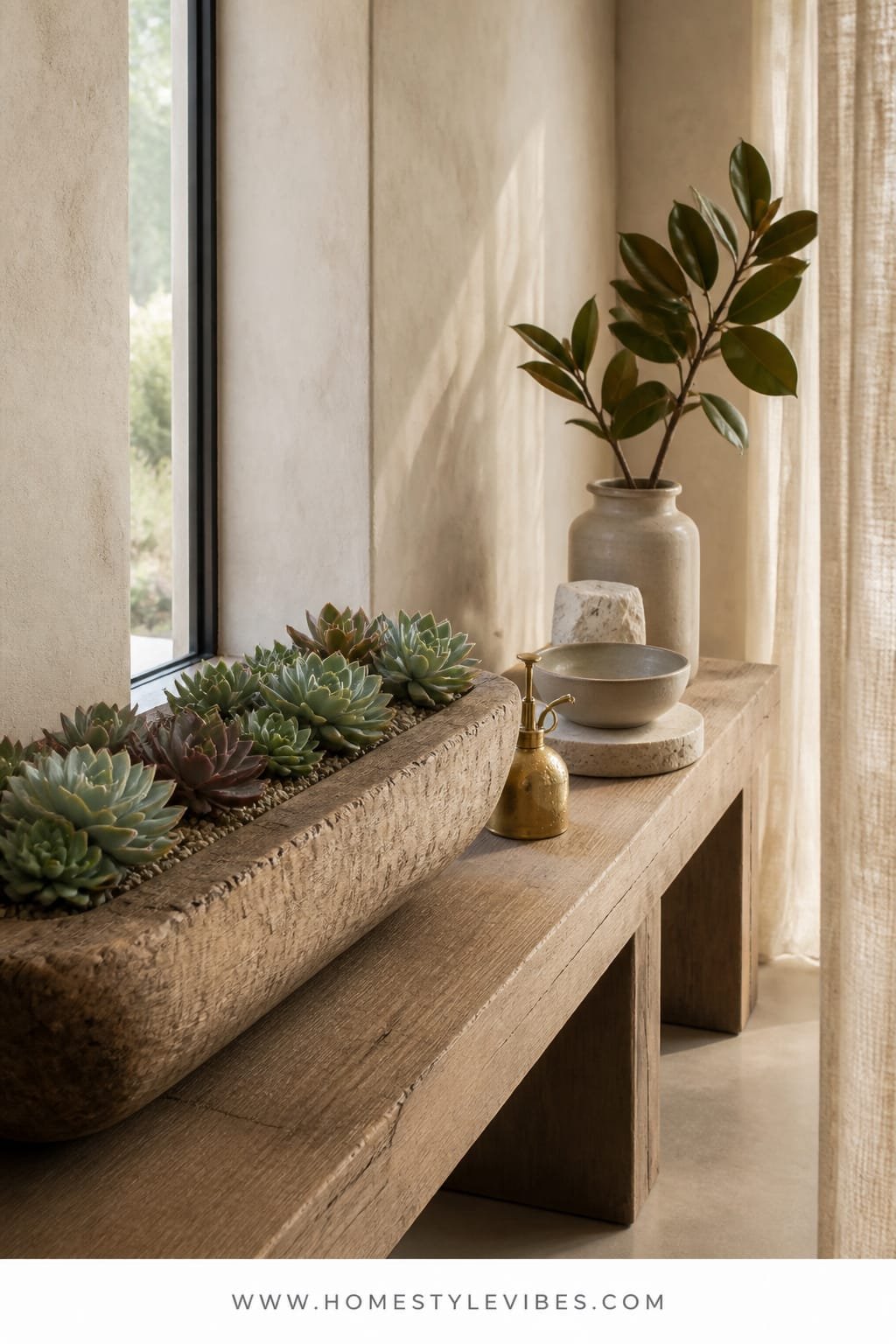
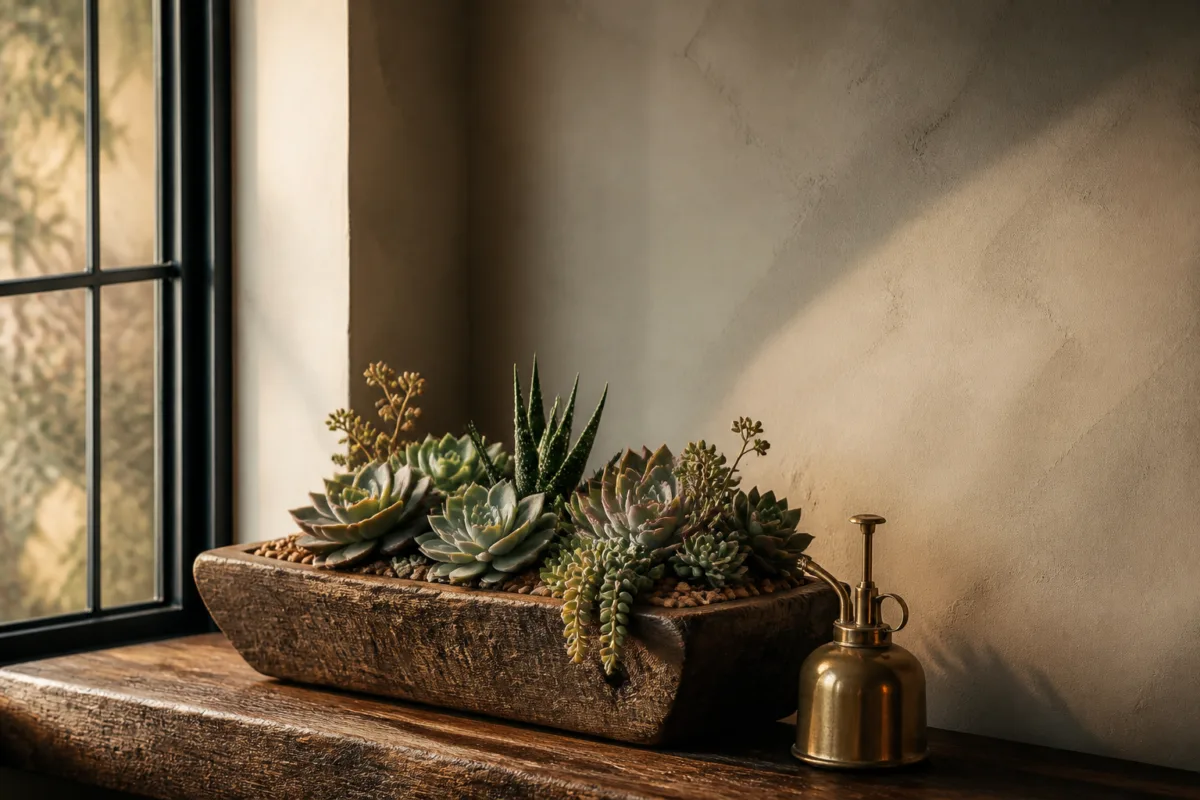
We’ve all been there: a long console or deep windowsill that feels like a runway for dust, cords, and abandoned mail. You’ve tried a bowl of succulents, but it still looks… tiny. A reclaimed wood trough solves the scale problem and turns that awkward stretch into a living vignette. The mood leans modern rustic—warm, tactile, and quietly confident. It works in real homes because succulents stay compact, like little sculptures you barely have to fuss over. With morning light, their rosettes glow; in shade, the trough reads like a vintage object with a secret garden inside.
Materials do the heavy lifting here: aged wood for character, matte stones for calm, and a small brass misting bell as your statement accessory. The trough’s linear form creates instant order and photographs beautifully: soft shadows along the wood grain, a gradient of greens, and a crisp rim of white pebbles to catch the eye. Layer taller species like Crassula ovata ‘Gollum’ at one end and trail a little Senecio herreanus to soften the edge—FYI, that gentle spill is the part that makes it feel intentional.
Variations? For a budget-friendly version, thrift a bread pan or shallow drawer liner and line it with plastic before planting. In a small space, style a half-length trough on a nightstand with a mini brass mister. For a darker room, choose jade and zebra haworthia, then rely on a slim grow-light strip tucked under the shelf lip—no ugly purple glow if you buy a warm-spectrum option. Renter-friendly swap: use preserved moss and faux succulents in high-traffic spots and keep the real babies on a bright sill.
Budget Breakdown:
- Reclaimed wood trough or bread pan: $20–$60
- Cactus/succulent soil + horticultural charcoal: $12–$22
- Assorted succulents (8–12 small): $32–$90
- Top dressings (white gravel, lava rock, or pea pebbles): $8–$18
- Brass misting bell: $18–$45
- Optional slim grow-light strip: $25–$60
Total Estimated Cost: $115–$295
Best For: Long consoles, bright windowsills, or fireplace mantels. Ideal for warm minimal or Scandinavian-leaning homes where texture and straight lines matter.
Key Design Elements:
- Main materials: Reclaimed wood, matte stone, brass accent
- Color palette: Sage, deep green, warm wood, white gravel trim
- Lighting strategy: Morning light or warm-spectrum slim grow-light
- Furniture silhouettes: Long, low consoles or sill ledges
- Texture layers: Rough wood grain, smooth rosettes, pebbled top dressing
- Accent details: Brass misting bell, small trailing succulent, minimal tray beneath
How To Recreate This Look:
- Start with a watertight trough or line a reclaimed container with plastic and a thin drain layer of gravel and charcoal.
- Add cactus soil, mounding slightly so plants sit at graduated heights.
- Layer succulents from tall to small, leaving gaps for air and growth.
- Install a warm-spectrum light strip beneath the shelf lip if natural light is weak.
- Style with a brass mister at one end and a crisp top dressing to unify the surface.
Why This Looks Expensive: The linear scale plus restrained color story reads “custom millwork.” A single, well-chosen brass piece signals intention, not impulse buy. The white gravel border adds that gallery-frame feeling.
Watch Out: Don’t cram too many varieties. Five to seven species max keeps it calm. Skip neon-colored pebbles that photograph poorly and date quickly.
Pro Styling Tip: Angle the trough so sunlight rakes across the wood grain; shoot from the lower corner to capture depth and plant silhouettes.
Quick Tip: Let soil dry fully before misting foliage. The brass bell is aesthetic; your plants want infrequent, deep watering at the base, not daily spritzes.
2. White Concrete Shallow Bowl with Cool North Light and a Matte Black Arc Lamp
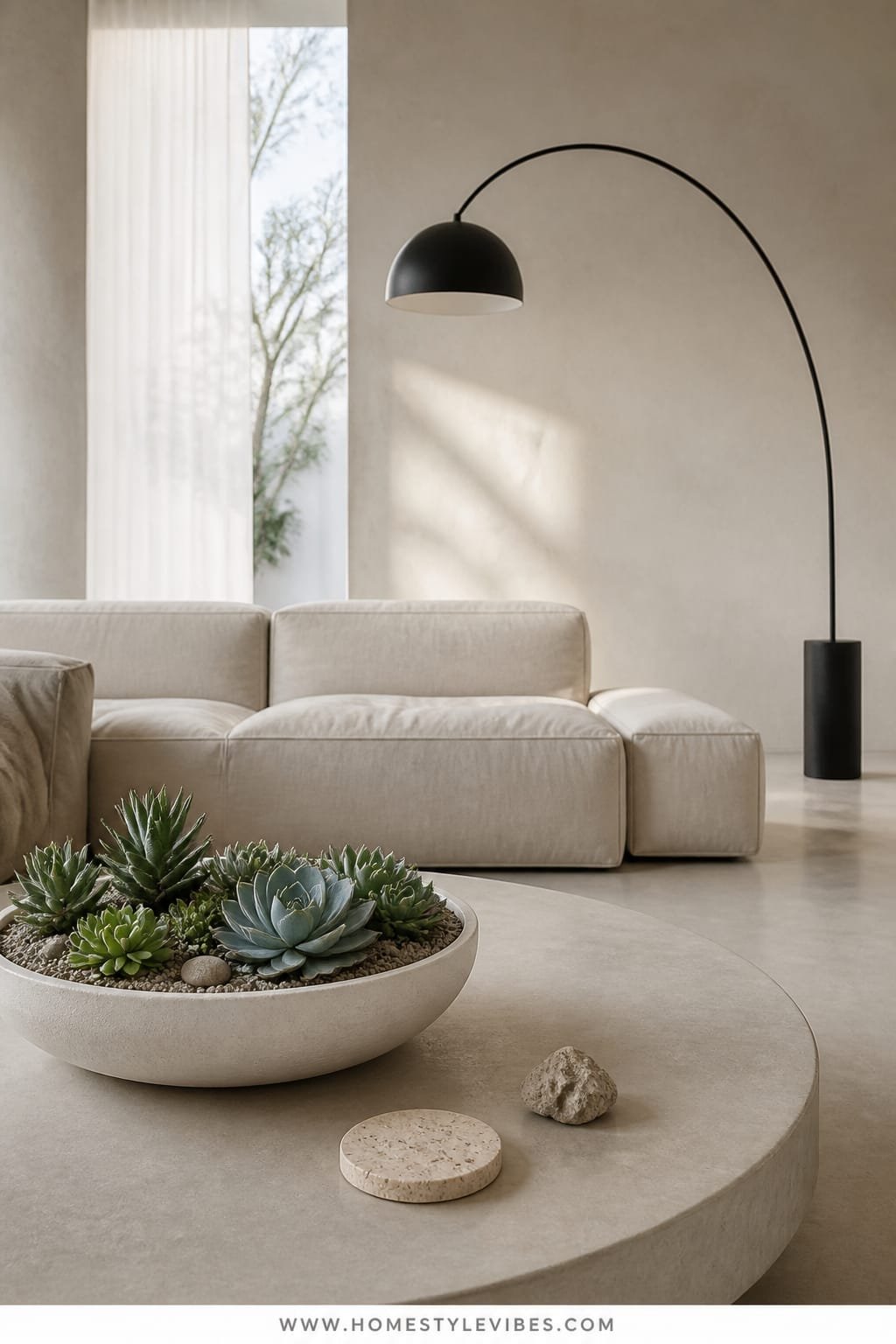
It’s that one coffee table that always feels off—too busy when styled, too bare when empty. You’ve tried coasters, books, a candle, and somehow it still reads “confused.” A shallow white concrete bowl creates a strong focal anchor. The mood is clean gallery-modern, almost spa-like, especially under cool north light. Concrete brings a tactile calm, while a matte black arc lamp nearby adds drama and frames the scene without clutter.
This works in real homes because the bowl’s front-and-center stance discourages small knickknacks from taking over. It photographs like a dream: stark contrast between concrete and glossy greens, plus the lamp’s swoop casting a chic, crescent shadow. Keep the palette minimal—three succulent varieties, max. A single Aeonium with two varieties of Echeveria gives you sculptural nuance without visual noise. If you crave warmth, add a subtle ring of sandy pea gravel.
Small-space version? Use a 10-inch bowl on a side table with a petite arc floor lamp alternative (or an adjustable black task light). Budget remix: substitute a plaster-look resin bowl and thrift a mid-century lamp. For renters, park the bowl on a large tray so everything moves as one unit on cleaning day. Dark-room variation: choose pale, powdery rosettes and use under-cabinet puck lights aimed at the bowl; cool bulbs make the concrete sing.
Key Design Elements:
- Main materials: White concrete, matte black metal, sandy gravel
- Color palette: White, black, gray-green, soft sand
- Lighting strategy: Cool indirect light or directed arc/task lamp
- Furniture silhouettes: Low, round coffee table or squared ottoman
- Texture layers: Velvety rosettes, fine gravel, smooth concrete
- Accent details: Single sculptural candle, linen-bound coffee table book
Budget Breakdown:
- White concrete bowl (12–16 in): $35–$120
- Succulents (3–5 premium rosettes): $24–$70
- Cactus soil + gravel top dressing: $12–$20
- Matte black arc/task lamp: $60–$180
- Optional tray and book: $25–$60
Total Estimated Cost: $156–$450
Best For: Clean-lined living rooms, minimal apartments, and anyone who needs a strong centerpiece that sits low and doesn’t block conversation.
How To Recreate This Look:
- Start with a sealed concrete bowl and add cactus soil, slightly domed.
- Add three main rosettes in a triangle layout—one facing each seating direction.
- Layer sandy gravel tightly to create a continuous, gallery-like surface.
- Position a matte black arc or task lamp to create a gentle shadow arc.
- Style with one book and a slim, smokeless candle—nothing else.
Why This Feels Designer: Limited palette, generous negative space, and a single architectural lamp. That trio says restraint. Restraint photographs as confidence.
One Thing To Avoid: Overstuffing the bowl. Leave breathing room so the rosettes don’t touch; crowded succulents can rot from poor airflow and look messy.
Pro Styling Tip: Take a test photo and rotate the bowl until the largest rosette faces camera with a slight tilt; that little rotation improves every shot.
Did You Know? Cool northern light keeps many succulents tighter and more compact. They’ll stretch far less than in warm, dim corners.
Remember, this isn’t about recreating a showroom. It’s about creating small, tactile moments that feel like you—calm, collected, and quietly fun. If one idea leans into your life more than the others, that’s your starting point.
3. Aged Terracotta Steps with Golden Afternoon Glow and a Wrought-Iron Mini Ladder
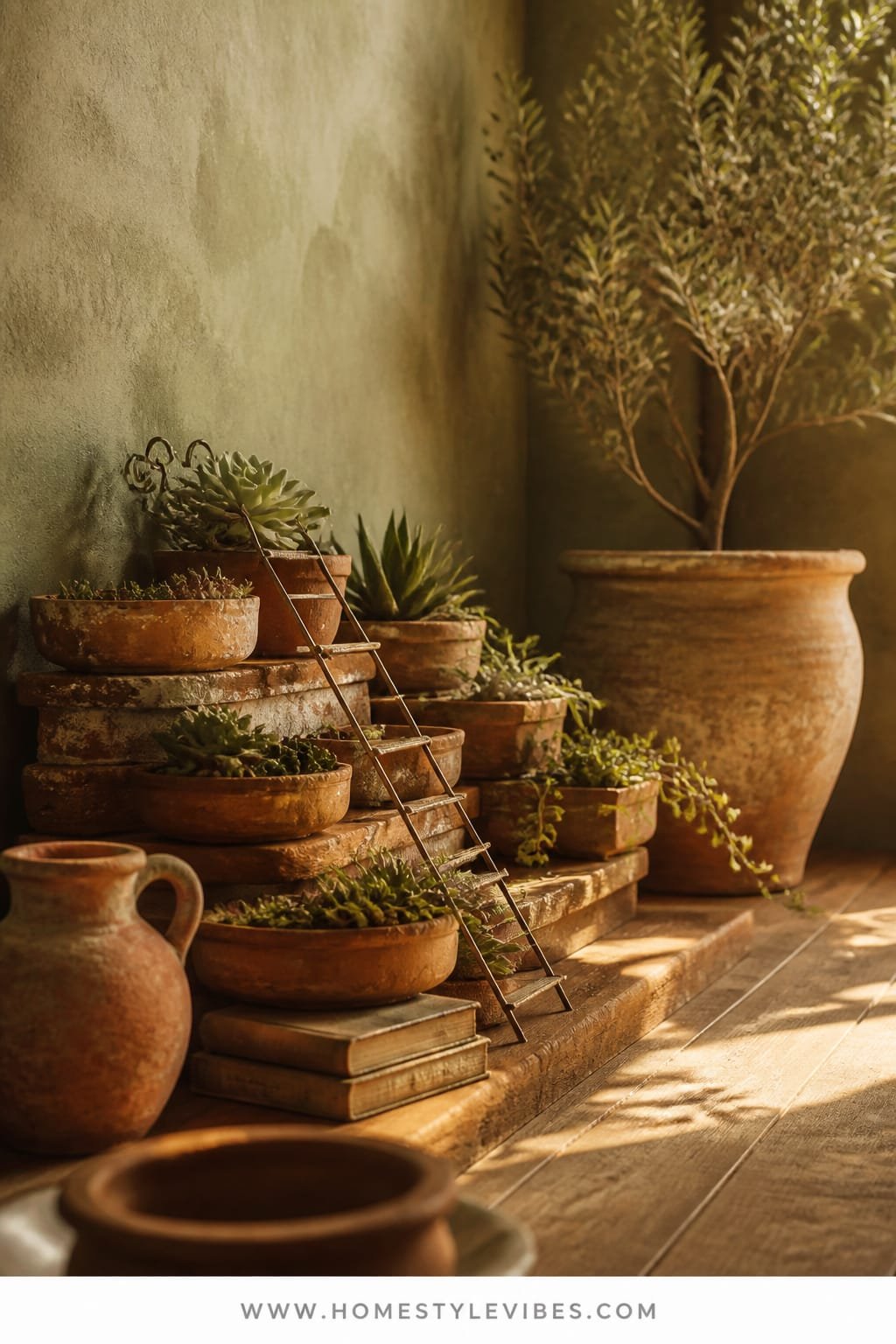
You want a story, not just a planter. Yet your bookshelf looks stiff, and every pot feels isolated. A terracotta “step” arrangement solves that by stacking shallow pots at mixed heights, like a little hillside village of succulents. The vibe is modern Mediterranean with a hint of cottage—sun-kissed, a little imperfect, and alive with patina. Late-day light brings out terracotta’s warmth, and a small wrought-iron display ladder or riser system becomes the architectural backbone.
Why it works at home: vertical interest plus warm material equals instant texture. Staggered heights let you play with form—tall aloe in back, plump echeverias mid-tier, trailing string-of-pearls draping forward. Photos sparkle thanks to shadow play between steps and that chalky terracotta surface. Mix rounded pots with a square one to avoid a “set of three” cliché. A few sun-faded spots and imperfect rims? Keep them. Real patina reads sophisticated, not sloppy.
Budget-friendly option: use thrifted clay saucers flipped upside down as risers, with your pots stacked on top—works brilliantly on a window ledge. Small-space version: a two-step ladder on a kitchen counter with mini pots and thyme tucked in. Darker room? Go heavier on matte black iron and choose green-on-green composition with just one pale-blue rosette for contrast. Renter perk: all portable, no holes drilled.
Budget Breakdown:
- Terracotta pots (4–6 mixed sizes): $20–$60
- Wrought-iron mini ladder or tiered risers: $30–$90
- Succulents mix (6–10): $36–$90
- Cactus soil + grit: $12–$20
- Top dressings (crushed granite, hen egg gravel): $10–$20
Total Estimated Cost: $108–$280
Best For: Sun-loving corners, bookcases that need dimension, kitchen windows that get a golden hour glow. Great for collectors and anyone who enjoys that curated, traveled feel.
Key Design Elements:
- Main materials: Aged terracotta, wrought iron, crushed stone
- Color palette: Warm clay, olive green, dusty blue-gray
- Lighting strategy: West-facing or late-afternoon sun; optional warm LED picture light
- Furniture silhouettes: Tiered ladder, shelf stacks, narrow consoles
- Texture layers: Chalky clay, waxy leaves, coarse grit
- Accent details: A vintage postcard or ceramic bird tucked behind the top tier
How To Recreate This Look:
- Start by assembling a small iron ladder or create tiers with reversed saucers.
- Add cactus soil to each pot; plant tall in back, medium mid-tier, trailing in front.
- Layer top dressings that differ slightly on each step for subtle variation.
- Install a warm LED picture light above the display if sunlight is limited.
- Style a single vintage token or postcard for a touch of personality.
Why This Reads High-End: Patina plus vertical composition implies time and intention. Terracotta’s honest texture beats glossy novelty planters every day of the week.
The Most Common Mistake: Uniform pot sizes. Mix heights and diameters or it looks like a stack of duplicates from aisle nine.
Pro Styling Tip: Photograph from a low side angle so the steps overlap slightly; you’ll get layered shadows and a sense of depth that feels editorial.
Quick Tip: Seal the inside of older terracotta with a breathable clay sealer to reduce salt stains on your shelves. Patina is charming; chalky drip rings are not.
4. Frosted Glass Terrarium with Soft Candlelight and a Mini Stone Footbridge
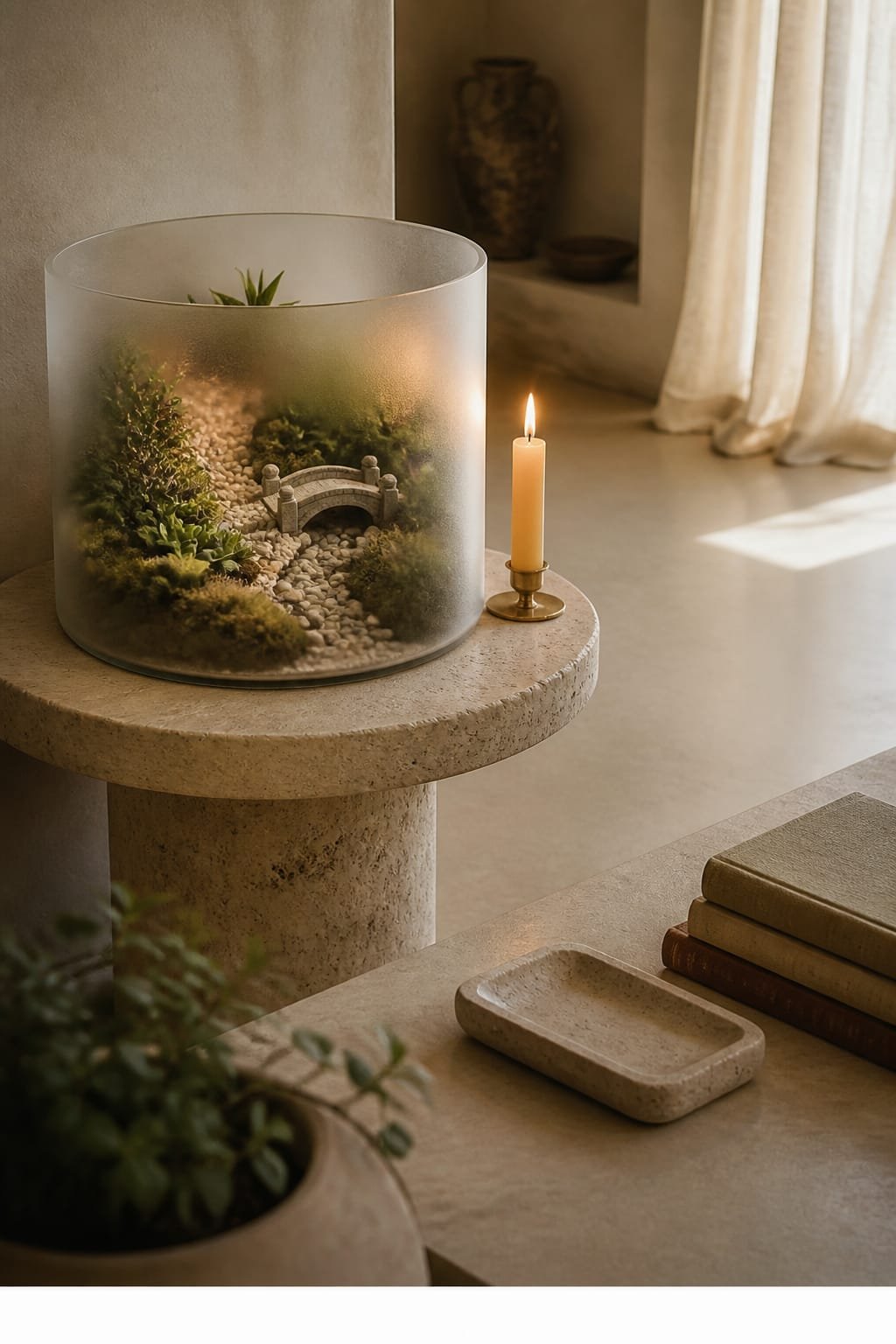
Some days, you need a tiny world to escape into. Yet every terrarium tutorial online looks fussy or ends up foggy and sad. A frosted glass vessel keeps things ethereal and forgiving. The mood veers hotel-spa meets storybook: soft candlelight nearby, muted edges through the frosted glass, and a miniature stone footbridge as your focal point for a fairy garden feel—no glittery overload, just a quiet scene.
Here’s why it works at home: frosted glass hides a bit of soil mess and makes the composition feel dreamy even if your plant spacing isn’t perfect. Lighting matters more than you think; place a low tea light or LED votive near the base to graze the frosted surface—instant ambiance without cooking your plants. Use drought-tolerant minis (haworthia, gasteria pups) and keep the layout simple: path, bridge, one “hero” plant, and two supporting actors. It photographs softly with a painterly glow, ideal for evening shots.
Small-space twist: pick a narrow cylinder and do a single-arch bridge with white sand. Budget route: thrift any glass vase and use a light frost spray. Renter-friendly? Absolutely. Move the whole scene in one go. For rooms without much light, place the terrarium near a bright wall and bounce light with a white card behind it—little trick I stole from a stylist friend.
Budget Breakdown:
- Frosted glass vessel: $18–$60
- Mini stone footbridge/stepping stones: $8–$25
- Succulent minis (3–5): $15–$35
- Cactus soil, charcoal, fine sand: $14–$24
- LED votives or tea lights: $8–$16
Total Estimated Cost: $63–$160
Best For: Nightstand ambiance, bathroom shelves, or entry consoles that need a soft, magical focal point without busy cables or bright fixtures.
How To Recreate This Look:
- Start with a clean glass vessel; frost if needed using a light, even spray.
- Add a thin charcoal layer, then cactus soil; carve a shallow path line.
- Place your bridge, then plant your hero succulent off-center for natural flow.
- Layer sand or fine gravel to define the path; add two small supporting plants.
- Position an LED votive outside the vessel, low and to one side, for grazing light.
Why This Looks Intentional: A single narrative element—the footbridge—anchors the scene. Keeping the color story muted allows light and shadow to provide the drama.
Don’t Do This: Overwater. Succulents in low-ventilation vessels need extra restraint. A medicine dropper once a week in peak summer is usually plenty.
Pro Styling Tip: Shoot at dusk with the votive on; tuck a white card opposite the light to bounce glow back into the vessel and avoid deep murky shadows.
Did You Know? Many succulents tolerate surprisingly low light if you reduce watering and resist moving them constantly. Stability encourages compact growth.
If one idea resonates more than the others, that’s your cue. You don’t need all six. Build one scene that makes you exhale when you walk in the door. Then, if the itch returns, build another.
5. Charcoal Slate Tray with Cool LED Rim Light and a Sculptural Driftwood Arc
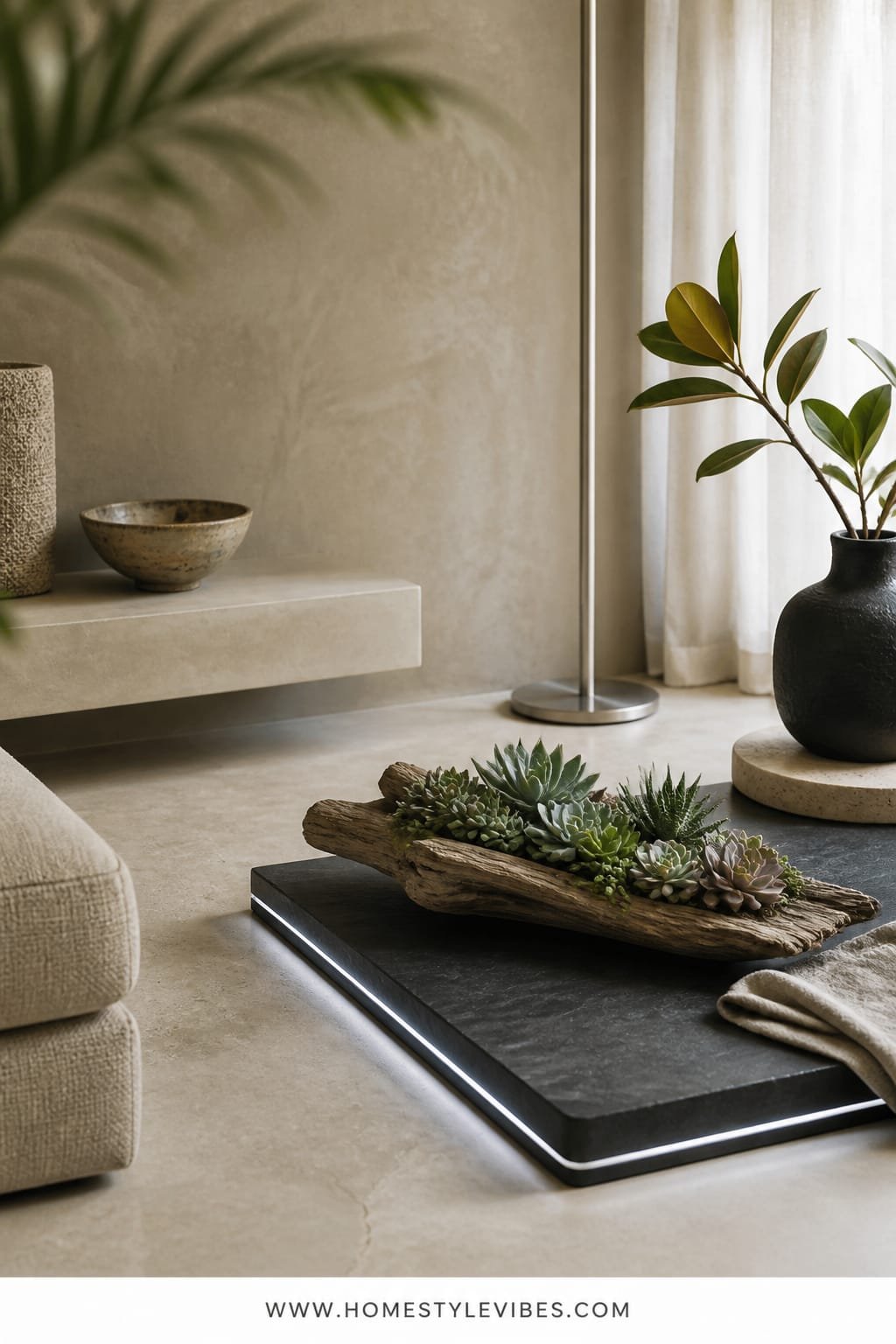
You’ve tried mixing random pots on a tray, but it never reads as a collection—more like leftovers. A charcoal slate tray with a slim LED rim light defines a stage, and a single arc of driftwood gives the plants a horizon line. The style is Japandi-adjacent: spare, textured, calm. Slate’s matte surface sharpens the succulents’ edges and makes colors pop, like makeup primer for plants. Cool LED light adds crispness and a touch of gallery vibes.
In real homes, this setup is space-savvy. A low-profile tray fits on narrow shelves or media consoles where you don’t want foliage blocking the TV. Driftwood builds a visual anchor without weight. It photographs with cinematic contrast: dark base, lit edges, organic curves. Keep varieties minimal—two repeated species in alternating sizes. That repetition is what makes it feel expertly edited instead of random.
Budget variation: swap real slate for a painted MDF board in charcoal chalk paint. Small-space take: a sushi slate with three tiny haworthias lined up like little soldiers. Darker room? Use a tunable LED strip set cooler for crisp leaf texture, then tuck the power cord in a cable channel. Renter-friendly and portable—clean, lift, move.
Budget Breakdown:
- Charcoal slate tray or board: $20–$70
- Driftwood arc: $10–$30
- Succulents (4–6 in repeated species): $20–$60
- Cactus soil + pumice: $12–$20
- Cool LED rim or strip light: $25–$80
- Cable tidy channel: $8–$15
Total Estimated Cost: $95–$275
Best For: Media consoles, floating shelves, and offices where you need a low, linear display that reads sharp on camera during calls.
Key Design Elements:
- Main materials: Slate, driftwood, pumice
- Color palette: Charcoal, silver-green, pale wood
- Lighting strategy: Cool rim light from behind or below
- Furniture silhouettes: Long, shallow trays, floating shelves
- Texture layers: Matte stone, ribbed leaves, weathered wood
- Accent details: Single black ceramic bowl for keys or clips
Why This Feels Designer: Repetition plus negative space. Showing restraint takes confidence—and it always reads as curated.
How To Recreate This Look:
- Start with a clean slate tray and add low nursery pots (or shallow bonsai pots) that visually sit below the driftwood line.
- Add a driftwood piece in a gentle arc; secure with museum putty if needed.
- Position repeated succulent varieties along the arc, alternating sizes.
- Install a cool LED strip behind the tray aimed forward to graze the leaves.
- Style one small black catchall to balance the composition.
One Thing To Avoid: Mixing more than two plant varieties. The driftwood already provides movement; varied plants can feel chaotic fast.
Pro Styling Tip: For photos, lower the LED intensity and increase side lighting slightly to avoid hotspots; the leaf ribbing will show up like fine pleats.
Quick Tip: If leaves look dusty, a soft makeup brush works better than a cloth. It cleans between ribs without scratching the bloom.
6. Vintage Teacup Cluster with Warm Edison Glow and a Porcelain Fairy Gate
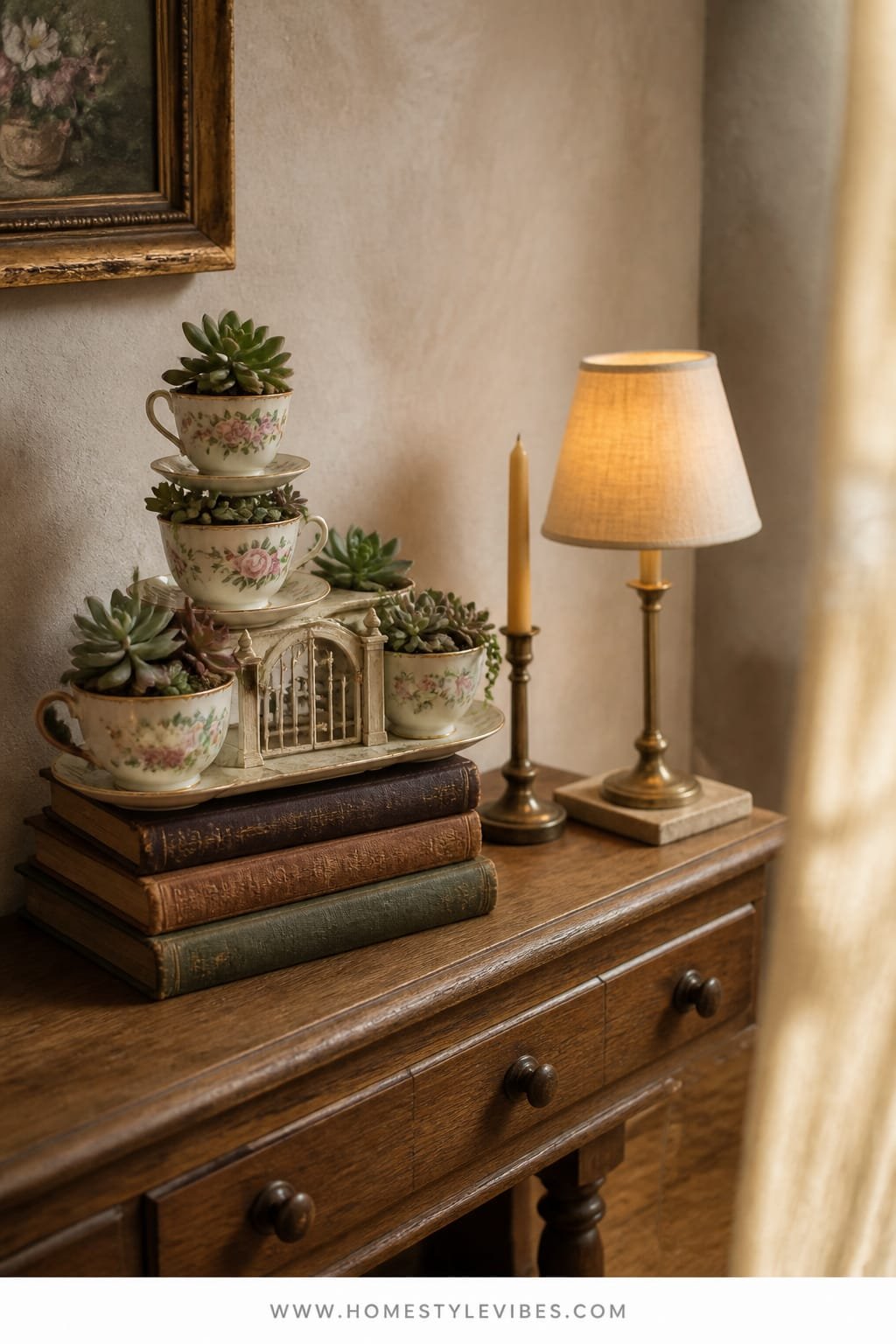
You’re charmed by fairy gardens but allergic to kitsch. Fair. Me too. A cluster of vintage teacups, each planted with a tiny succulent and connected by a little porcelain “fairy gate,” gives you that whimsical story without the glitter. The mood is cottagecore-meets-parlour chic: warm Edison bulb nearby, soft shadows, delicate florals on porcelain. Bonus: teacups are naturally shallow, which suits succulents just fine, and the saucers act like built-in catch trays.
Why it works in real homes: it’s modular. Start with three cups on a tray; add one more when you find a pattern that steals your heart. Photographing them is easy—cups create gentle repetition and the Edison glow adds warmth. Keep the palette interesting but cohesive: choose cups within a color family (blues and creams, or pinks and golds). The fairy gate, placed slightly off-center, anchors the narrative without screaming theme party.
Budget-friendly version: thrift mismatched cups and unify them with the same gravel top dressing. Small-space edit: two cups and a gate on a narrow bathroom shelf. Dark room? Choose cream-based porcelain and position near a table lamp; warm bulbs flatter porcelain and green tones. As a renter, you’ll love that these can land anywhere: entry table in spring, kitchen window in summer.
Budget Breakdown:
- Vintage teacups and saucers (3–6): $12–$60
- Porcelain or ceramic fairy gate: $8–$25
- Mini succulents (3–6): $12–$42
- Cactus soil + fine gravel: $10–$18
- Small tray: $10–$30
- Edison bulb table lamp: $40–$120
Total Estimated Cost: $92–$295
Best For: Romantic nooks, vanity tables, cottage-style kitchens. Anyone who wants a whisper of whimsy with grown-up restraint.
Key Design Elements:
- Main materials: Porcelain, fine gravel, brass/wood lamp base
- Color palette: Cream, soft pastels, green, warm amber
- Lighting strategy: Warm Edison glow to highlight porcelain and gold rims
- Furniture silhouettes: Round tray, petite cups, slim lamp
- Texture layers: Glossy glaze, gritty gravel, velvety leaves
- Accent details: A single pressed flower under glass, handwritten label
How To Recreate This Look:
- Start by checking teacups for drainage. If none, add a thin layer of gravel before soil and water sparingly.
- Add mini succulents, leaving a margin for tidy top dressing.
- Layer fine gravel in matching tone across all cups to unify mixed patterns.
- Place a small porcelain gate slightly off-center between two cups for story.
- Position a warm lamp nearby; adjust distance so cups glow without heat.
Why This Looks Expensive: Vintage porcelain plus consistent top dressing reads as a curated collection, not a random thrift pile. The warm light softens everything like a filter.
Watch Out: Overwatering is the villain here, especially without drainage. Use a teaspoon or syringe to deliver small sips right at the root zone.
Pro Styling Tip: For a magazine-style shot, arrange cups in a gentle curve and shoot from slightly above so saucer rims form a repeating arc.
Did You Know? Most succulents prefer clay or porous containers, but short-term, porcelain is fine if you manage moisture carefully. Less water, more airflow.
One quick personal note: I tried the teacup cluster in my own dining nook last fall. I worried it might skew precious. Turns out, that little gate became a conversation magnet—friends asked about it before the food. Design is funny like that; one small, sincere detail can hold a room together.
Quick Checklist
- Choose one dominant material per scene (wood, concrete, terracotta, glass, slate, porcelain)
- Set a single statement piece (misting bell, arc lamp, iron ladder, stone bridge, driftwood arc, fairy gate)
- Limit plant varieties to 2–5 per arrangement
- Use top dressing to unify mixed containers
- Control height with risers, steps, or driftwood arcs
- Dial lighting: warm for cozy, cool for crisp definition
- Photograph from a low angle to capture depth and shadow
- Water deeply but infrequently; ensure airflow
- Pick one narrative detail rather than many trinkets
- Keep cords hidden and trays portable for renters
Frequently Asked Questions
How much should I budget to create one full succulent arrangement from this article?
Plan on $100–$300 depending on materials and lighting. Terracotta and thrifted items are on the low end; concrete bowls, arc lamps, and custom glass land higher. Plants usually account for a third of the cost, so shop nursery sales or split larger succulents into smaller rosettes.
I have low light. Which idea works best without a bright window?
The slate tray with a cool LED rim light (Idea 5) and the frosted glass terrarium with candle-style lighting (Idea 4) adapt well. Add a warm-spectrum grow-light strip or a small task lamp aimed indirectly to avoid harsh glare.
How do I avoid overwatering in containers without drainage?
Add a gravel layer, use well-draining cactus soil, and water sparingly with a syringe or teaspoon. Wait until leaves slightly soften before watering again. In low light, stretch the intervals even longer to avoid root rot.
My shelves look messy when I mix planters. What am I doing wrong?
You likely need cohesion. Unify with a single top dressing color and limit plant varieties. Create a dominant line—a trough, a ladder, or a driftwood arc—so the eye follows a path instead of bouncing everywhere.
Are fairy garden elements always cheesy? I’m nervous.
Not if you use one refined focal element and keep the palette muted. A porcelain fairy gate or stone bridge paired with natural textures feels charming, not costume-y. The secret is restraint and believable scale.
Conclusion
Pick one idea you can build this weekend. Don’t collect parts for all six; choose the trough, the terracotta steps, or the slate tray—whatever your home can genuinely support. Once you’ve lived with it a week, you’ll know if you want to expand the story to a second nook.
Here’s the truth: luxury at home comes from texture, lighting, and restraint. Reclaimed wood next to velvety rosettes, a single brass accent, and shadows that graze instead of blast—these are the quiet decisions that make a room feel finished. Not the price tag.
You’ve got this. Your shelves want structure, your succulents want air and light, and your style wants a point of view. Start small, edit hard, and trust your eye. When that first arrangement makes you pause and smile, you’ll know you nailed it—seriously.
About the Author

Krisztina P.Rendes, Founder of Home Style Vibes
Founder of Home Style Vibes
Krisztina Puskásné Rendes created Home Style Vibes as a cozy-modern lifestyle space where homemaking meets inspiration. Her goal is to help women create beautiful, organized, and peaceful homes they truly love — without overwhelm. You’ll find here heart-driven content on home decor, cleaning tips, easy family recipes, organization and decluttering, DIY home projects, plants, and seasonal ideas — all designed to bring more calm, comfort, and style into everyday life.