6 Dark Academia And Gothic Victorian Home Decor Ideas For A Moody Vintage Look
You want a home that feels like a candlelit library in an old manor—velvet hush, aged wood, stormy walls. You hate that your space currently reads bright-but-bland, or worse, cluttered-and-chaotic. Dark academia and Gothic Victorian decor is a mood: dusky light, inky paints, burnished brass, and textures that look better after midnight. These six ideas fix the “I tried moody and it just looks gloomy” problem by layering smart lighting, tactile finishes, and one unforgettable statement piece in each room. Try one this weekend with a $500–$2,500 budget cap per concept, or commit to the whole set if you’re feeling brave. Each idea photographs beautifully—Pinterest bait in the best possible way—and they’re ideal for anyone craving serious atmosphere with everyday practicality.
Expect cozy, dramatic, and totally lived-in: the kind of interiors that smell faintly of old books and earl grey. If you’re an autumn person year-round, this is your love language.
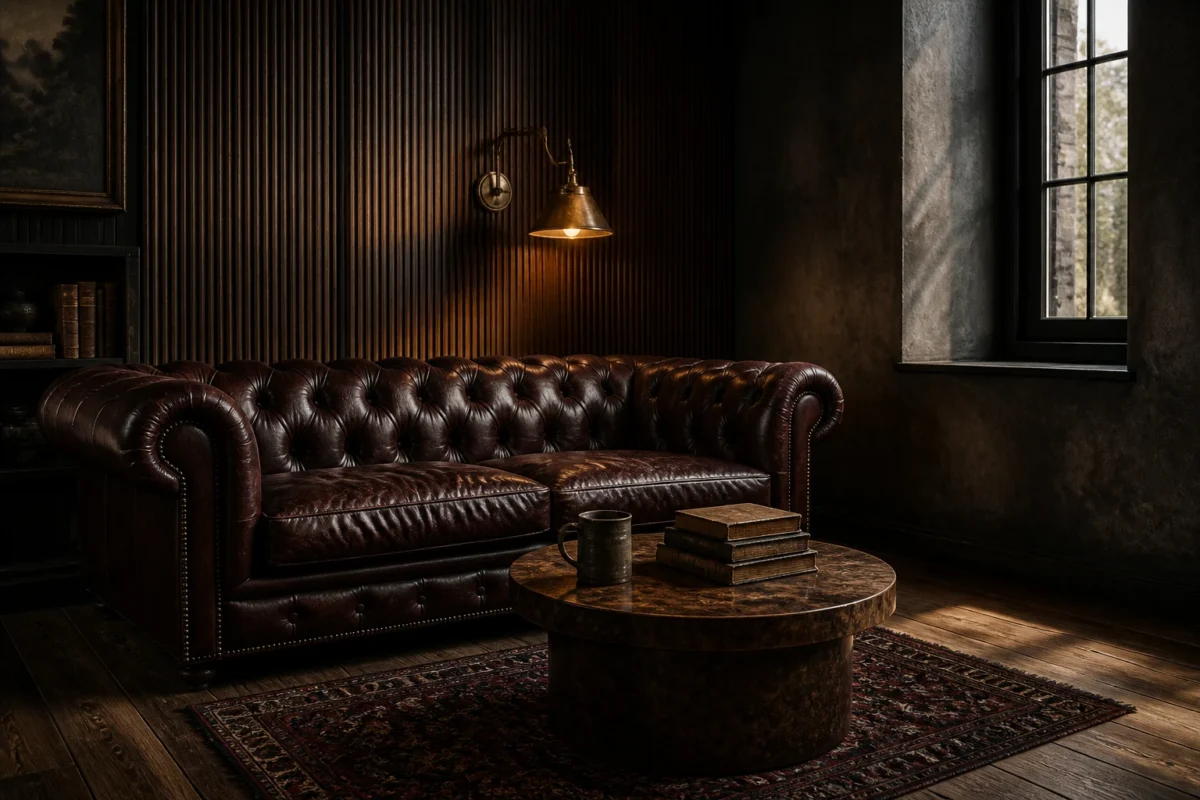
1. Oxidized Wood Paneling, Amber Lamplight, and a Tufted Chesterfield Library Nook
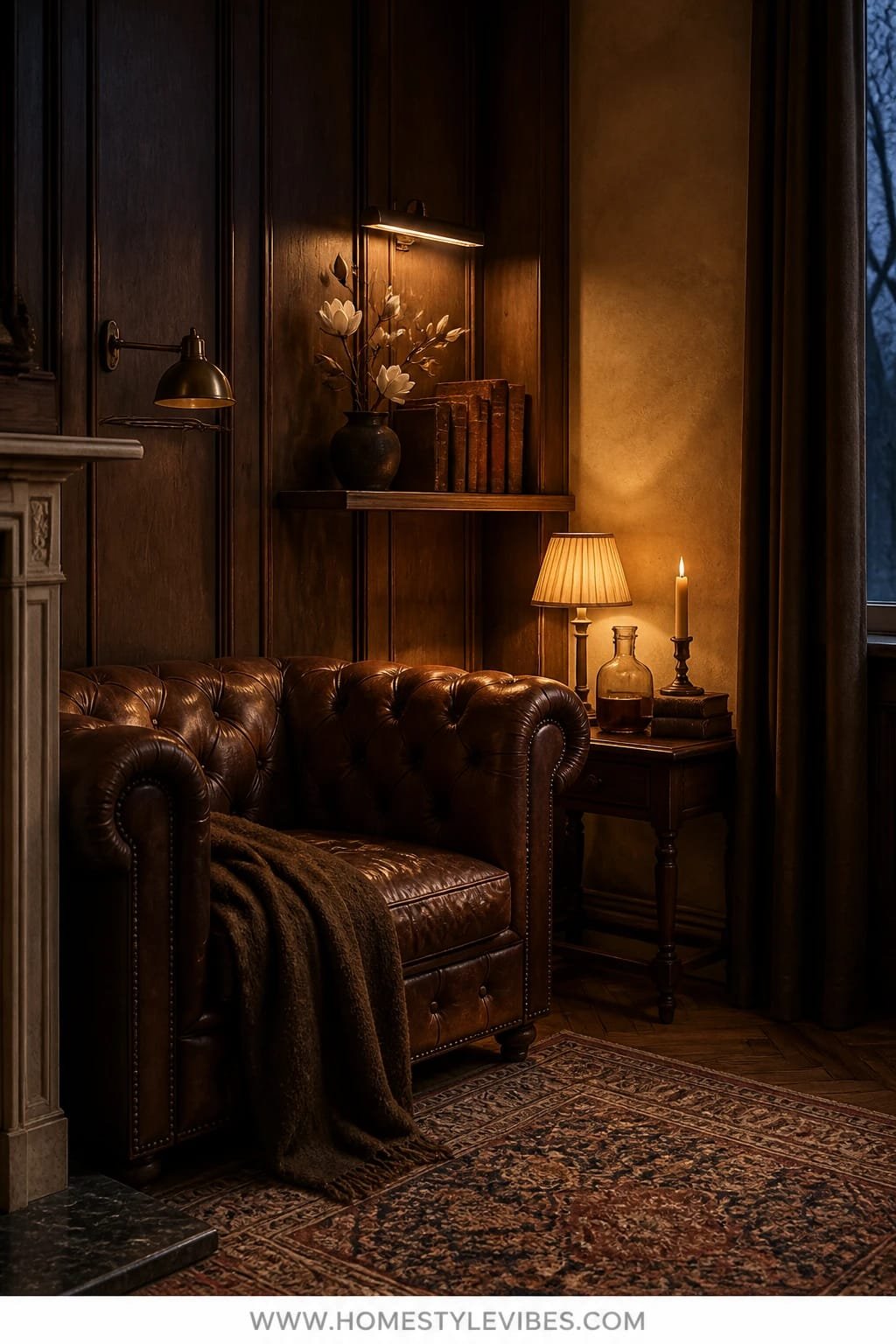
We’ve all been there: a corner that should feel like a snug reading nook ends up looking like a waiting room. You’ve tried a floor lamp and a throw blanket, but it still reads temporary. This design turns a dead corner into the heart of your home with oxidized wood paneling for depth, amber lamplight for warmth, and a tufted leather chesterfield as the focal point. The mood? Classic dark academia with a soft, clubby vibe that welcomes a book stack and a whiskey tumbler.
It works in real homes because paneled walls visually compress and ground a space, making even a small room feel intentional and anchored. Low, amber lighting softens shadows so nothing feels stark. The oxidized wood adds grain variation that photographs beautifully—think layered umber tones and little glints of brass from the lamp finial.
Variations: For renters, use peel-and-stick faux paneling in a deep walnut. On a budget, thrift a tufted sofa with good bones and recondition the leather with balm. If you want darker, add a black fringe shade on the lamp and swap a light rug for a charcoal Persian.
Budget Breakdown:
- Oxidized wood paneling or peel-and-stick alternative: $180–$900
- Tufted leather chesterfield (vintage or new): $600–$2,000
- Brass table lamp with amber shade: $85–$250
- Wool Persian-style rug (5×7): $150–$600
- Picture light or sconce for book art: $80–$220
Total Estimated Cost: $1,095 – $3,970
Best For: Small living rooms, dens, and apartments with one awkward corner; anyone who collects books, vinyl, or vintage maps.
Key Design Elements:
- Main materials: Oxidized or stained wood, oiled leather, aged brass
- Color palette: Walnut, oxblood, umber, inky navy accents
- Lighting strategy: One warm table lamp, optional picture light, no overhead glare
- Furniture silhouettes: Low-slung chesterfield, narrow side table
- Texture layers: Leather grain, wool rug, linen or velvet pillows
- Accent details: Brass bookmarks, antique frames, a dark ceramic ashtray repurposed for matches
How To Recreate This Look:
- Start with the wall: install wood paneling or a peel-and-stick version; stain in a deep walnut.
- Add the tufted chesterfield, slightly pulled off the wall to create breathing room.
- Layer a Persian-style rug underfoot with 6–10 inches visible around the sofa.
- Install a picture light over one strong piece of art or a framed botanical print.
- Style with a brass lamp, a stack of worn hardcover books, and a velvet pillow in oxblood.
Why This Looks Expensive: Repetition of warm metals and deep wood tones reads cohesive and custom. The chesterfield’s tufting multiplies shadows, which feels cinematic and tailored.
Watch Out: Don’t use cool white bulbs. They flatten leather and make wood read orange. Choose 2200–2700K bulbs and aim light toward textures, not faces.
Pro Styling Tip: For photos, place the lamp two feet behind the sofa arm and slightly higher than eye level to catch tufting dimples and create shadow depth.
Keep scrolling—the next idea is for anyone who loves black paint but fears the cave effect.
2. Honed Black Marble, Candlelit Sconces, and a Gothic Canopy Bed Sanctuary
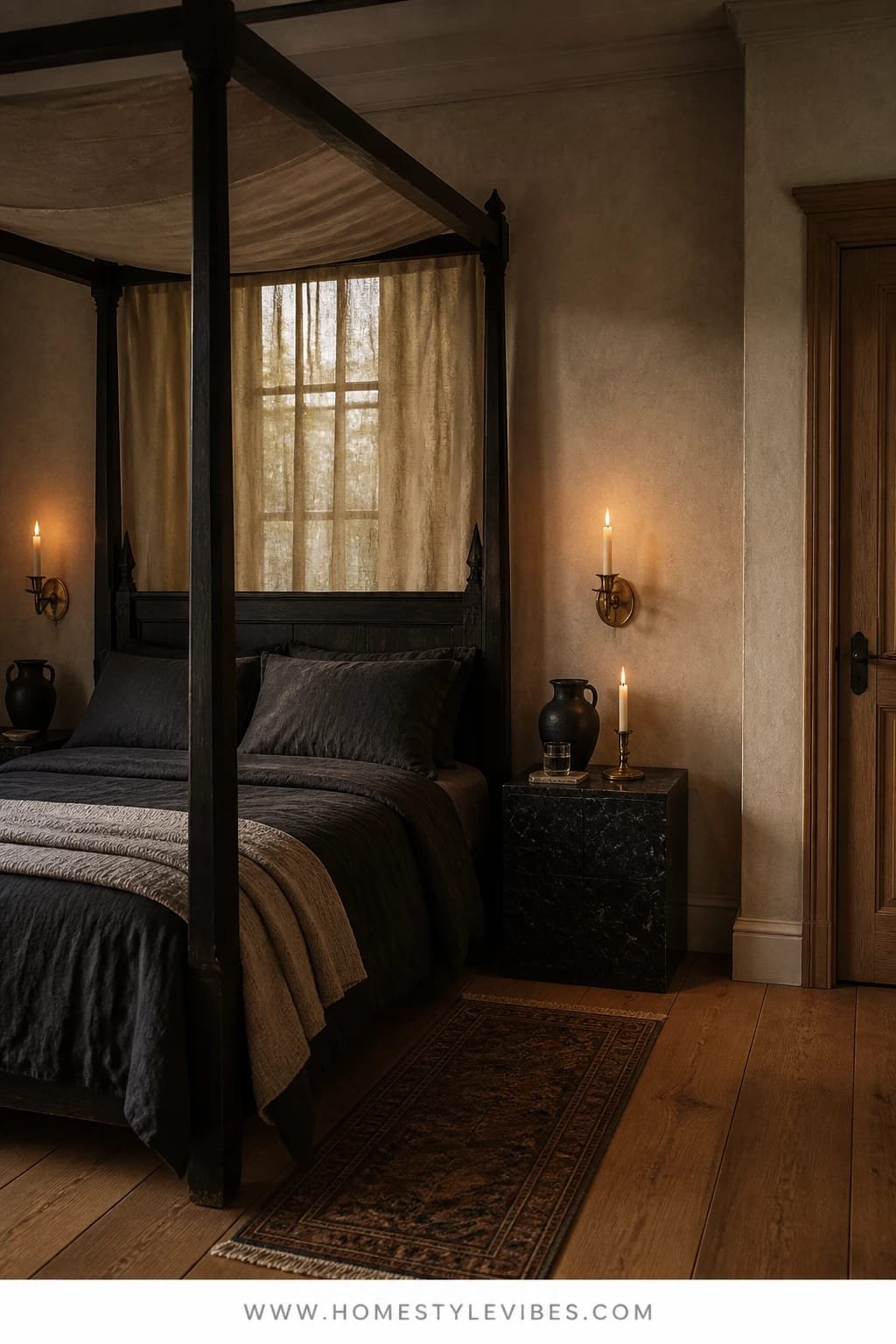
It’s that one bedroom that always feels unfinished—flat walls, too-bright lamp, zero romance. You’ve tried “moody” paint, but it somehow made the bed look smaller. Enter a layered Gothic Victorian bedroom anchored by honed black marble on the nightstands, candlelit sconces for glow, and a dramatic canopy bed. The vibe leans monastery-chic meets 19th-century novel—serene, shadowy, and impossibly photogenic.
This works in real homes because the vertical lines of a canopy add stature, lifting the ceiling visually. Honed marble softens light reflection, avoiding the dreaded glare that polishes create under bulbs. Sconces cast directional pools of warm light, sharpening the silhouette of the canopy and the drape.
Customize it: Small room? Choose a slim metal canopy with sheer black voile panels. Budget swap? Use black-painted MDF shelves with marble contact paper for the nightstand surface—seriously convincing in dim light. Renter-friendly? Plug-in sconces with fabric cords in black-brown look intentional and require no wiring.
Key Design Elements:
- Main materials: Honed black marble, wrought iron, linen voile
- Color palette: Iron black, sable, soft bone white, merlot accents
- Lighting strategy: Two candle-style sconces at 2700K; no overhead downlight
- Furniture silhouettes: Tall canopy bed, thin-framed nightstands
- Texture layers: Linen duvet, mohair throw, velvet shams
- Accent details: A cloche with dried florals, black candlesticks, framed antique etching
Budget Breakdown:
- Metal canopy bed: $450–$1,400
- Honed marble-topped nightstands or DIY: $180–$900
- Plug-in candle sconces: $120–$360
- Linen bedding set: $120–$350
- Velvet drapery or voile bed panels: $80–$260
Total Estimated Cost: $950 – $3,270
Best For: Primary or guest bedrooms craving calm; ceilings 8 feet or taller; night readers who hate overhead glare.
How To Recreate This Look:
- Start with a canopy bed; keep the frame slim and matte.
- Add honed black marble surfaces at the bedside for light absorption.
- Install plug-in sconces at 60–64 inches from the floor; use low-lumen bulbs for glow.
- Layer crisp linen sheeting, then a heavier mohair throw at the foot.
- Style with a black tray, two taper candles, and a single antique etching above the headboard.
Why This Feels Designer: Matte-on-matte textures—honed stone beside iron—create quiet luxury. The eye reads restraint, which is what signals intention and cost.
One Thing To Avoid: Overstuffing pillows. Three euro shams max. Otherwise, the canopy loses its power and the bed looks like a marshmallow with a hat.
Pro Styling Tip: Tug the duvet so it just kisses the floor at the footboard; that soft puddle looks editorial and elongates the frame.
Pause for breath—then we’ll bring in botanical wallpaper and a writing desk that begs for handwritten letters.
Remember, this isn’t about recreating a showroom. It’s about building a space that actually feels like yours. If one idea sings, start there and let the rest wait. You don’t need every bell and whistle to capture the dark academia energy.
3. Hand-Blocked Botanical Wallpaper, Dappled Daylight, and a Turned-Leg Writing Desk
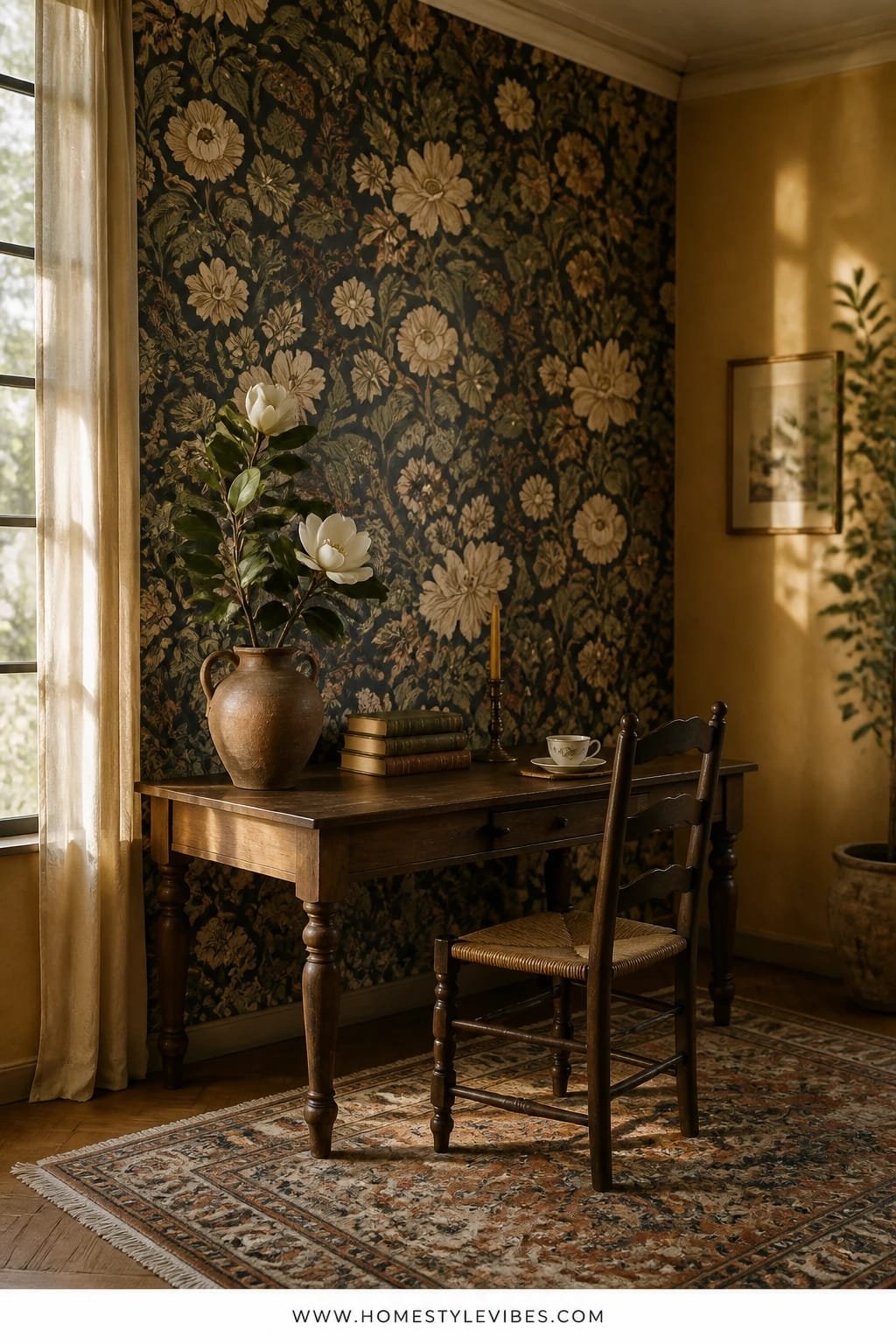
You love the dark academia aesthetic, but fear wallpaper commitment. Maybe you’ve ordered ten samples and taped them up for weeks (been there). This study or hallway vignette wraps your senses in inky florals balanced by soft, dappled daylight and a classic turned-leg writing desk. The feel is scholar’s nook meets conservatory—earthy, collected, and quietly romantic.
It works in real homes because the dense pattern swallows visual clutter. Your laptop, notebooks, and a stray teacup melt into the motif, so the space still photographs clean. Daylight, filtered through gauzy curtains, plays across the paper, making leaves and petals look almost hand-painted in shadow.
Options: For small spaces, do a single feature wall behind the desk and paint adjacent walls a color pulled from the pattern. On a budget, choose a digitally printed pattern with a matte finish; shiny paper looks cheap in low light. Renter-friendly? Use removable wallpaper and a freestanding cork board for pin-ups.
Budget Breakdown:
- Hand-blocked or matte botanical wallpaper: $250–$900 (depending on coverage)
- Turned-leg writing desk (vintage or new): $180–$700
- Gauzy curtains and black rod: $60–$220
- Desk lamp with green glass shade: $60–$180
- Leather blotter and brass letter opener: $40–$120
Total Estimated Cost: $590 – $2,120
Best For: Window-adjacent corners, small offices, under-stair alcoves; anyone who writes, sketches, or journals.
Key Design Elements:
- Main materials: Matte wallpaper, ebonized wood, antique brass
- Color palette: Black-green, sepia, moss, parchment
- Lighting strategy: Daylight plus one directional desk lamp
- Furniture silhouettes: Slender turned legs, oval-backed chair
- Texture layers: Gauze, waxed wood, leather accessories
- Accent details: Botanical prints, pressed ferns, porcelain inkwell
Why This Reads High-End: The paper’s matte finish absorbs light and looks custom. Pairing it with a simple, timeworn desk prevents trying-too-hard energy; the balance feels lived-in and expensive.
How To Recreate This Look:
- Start by measuring and applying wallpaper to a single wall or alcove; cut cleanly around outlets.
- Add a turned-leg desk; float it slightly off the wall by 2–3 inches.
- Install a black rod high and wide, then hang gauzy curtains to soften daylight.
- Layer a leather desk blotter, a vintage-style lamp, and one framed botanical.
- Style with a small stack of notebooks and a single trailing plant.
The Most Common Mistake: Choosing glossy wallpaper. It reflects lamp hotspots and kills the vintage illusion. Matte only, trust me.
Pro Styling Tip: Angle the desk lamp so its light skims the wallpaper—it pulls out the print’s texture and adds dimensionality in photos.
Ready for something a little more dramatic? Let’s lean into arches, fluting, and the kind of hallway that makes guests whisper “what is this place?”
4. Blackened Plaster Walls, Low-Slung Shadow Lighting, and a Gothic Hall Console with Claw Feet
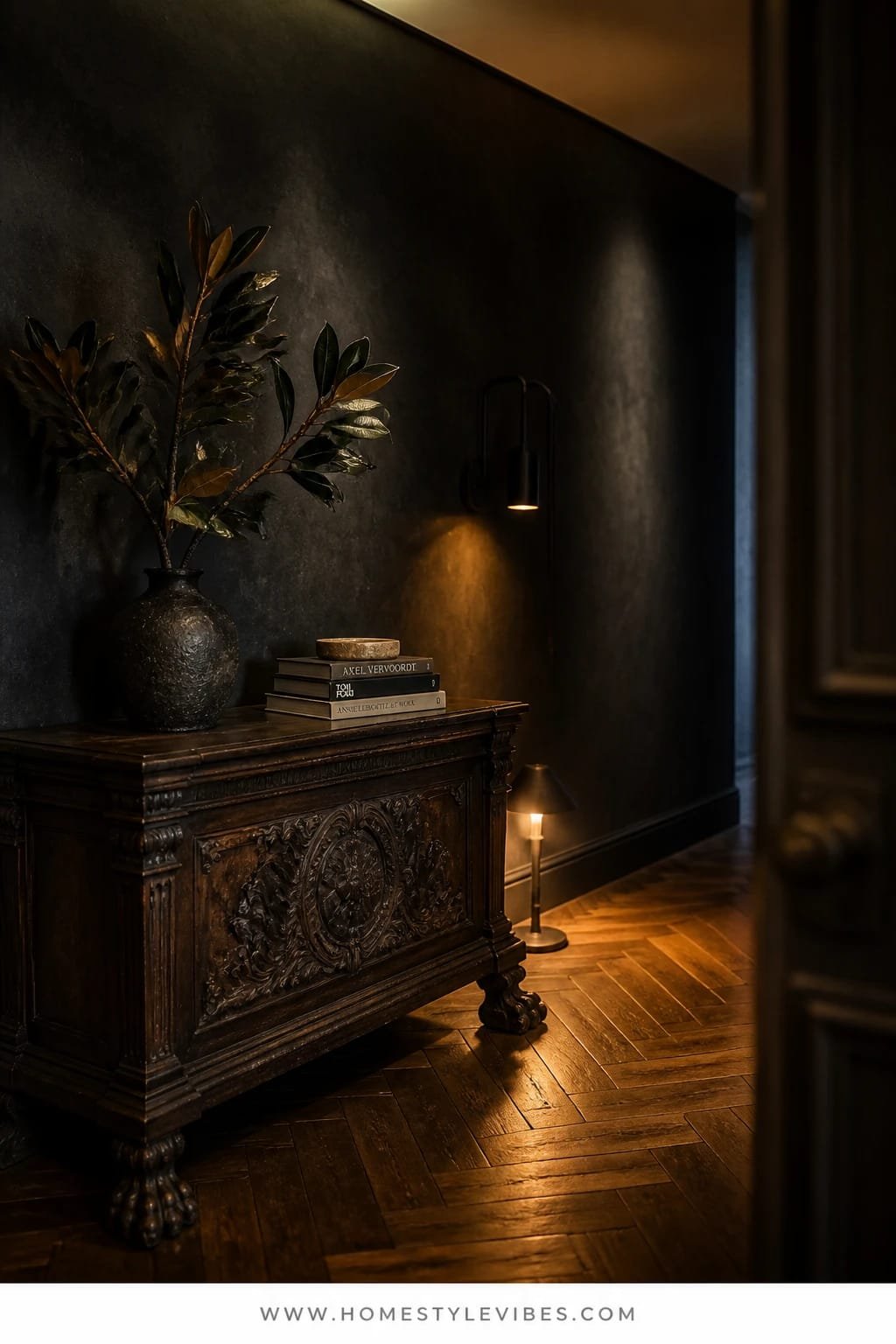
You want an entrance that sets the tone but your hallway feels like a pass-through—bright, bland, forgettable. You’ve tried mirrors and a runner, but it still lacks presence. Blackened plaster walls create movement and depth; low-slung shadow lighting pools on the floor; and a Gothic console with claw feet does the talking. The result? A moody Victorian entry that feels like stepping backstage at an old theatre.
This approach works in narrow spaces because textured plaster blurs imperfections and banishes the corridor-effect. Low lighting positions the glow at ankle height, sculpting dramatic shadows under the console and across the runner. It photographs like a scene: deep blacks, soft edges, a single highlight on an antique bowl.
Variations: Renter-friendly? Use limewash paint in a charcoal tint and skip the plaster. Budget? Hunt a heavy console at estate sales and refinish in black; add claw-feet appliqués if your piece is plain. For extra drama, paint the ceiling five percent lighter than the walls so the space feels taller without losing the mood.
Key Design Elements:
- Main materials: Blackened plaster or limewash, cast iron, aged oak
- Color palette: Charcoal, soot, coal black, hints of pewter
- Lighting strategy: Floor-level plug-in uplights or LED toe-kick under the console
- Furniture silhouettes: Ornate console with claw feet and narrow profile
- Texture layers: Nubby runner, stone catchall, patinated mirror
- Accent details: Iron hooks, umbrella stand, dried branches in a black urn
Budget Breakdown:
- Limewash/plaster kit: $120–$450
- Gothic console (vintage or new): $250–$1,200
- LED toe-kick or plug-in uplights: $40–$180
- Runner rug: $90–$320
- Patinated mirror: $120–$500
Total Estimated Cost: $620 – $2,650
Best For: Narrow entryways and long halls; anyone who wants drama without clutter.
How To Recreate This Look:
- Start by finishing walls in blackened plaster or charcoal limewash; allow tonal variation.
- Add a narrow Gothic console; center it on the longest wall.
- Install toe-kick LED under the console for shadow play or place two uplights on the floor.
- Layer a nubby runner and a patinated mirror above the console.
- Style with a stone bowl for keys, iron hooks, and a single sculptural branch.
Why This Looks Intentional: The console’s ornate feet ground the vignette while the lighting sculpts negative space. Less stuff, more atmosphere.
Don’t Do This: Overhead downlights. They wash the plaster flat and make the console feel squat. Keep the light low or use a dim wall sconce at chest height.
Pro Styling Tip: For photos, turn off other lights and let the uplights run solo; the shadows under the console become your star.
Take a sip of something dark and keep scrolling—the kitchen is waiting for fluted wood and stained glass attitude.
Design truth: big mood doesn’t require big square footage. It requires one brave material choice and lighting that flatters it. Start with the anchor, then let everything else play support.
5. Ebonized Fluted Wood, Warm Edison Glow, and a Leaded Glass Hutch Kitchen Moment
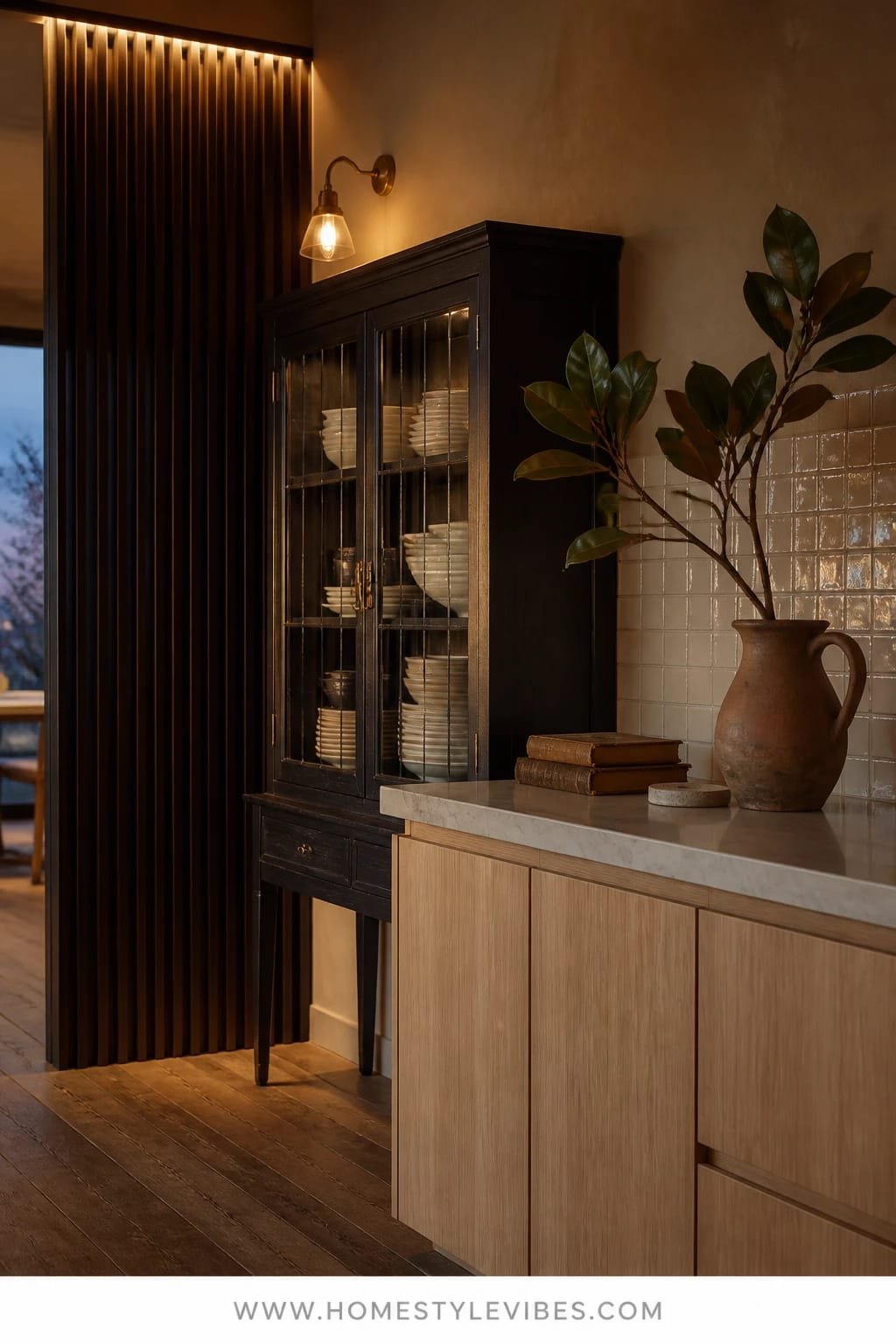
You crave a moody kitchen but fear it’ll feel heavy or dirty. You’ve painted a cabinet door black as a “test” and panicked. This idea isolates the drama to one focal wall: ebonized fluted wood paneling, a warm Edison bulb glow, and a freestanding leaded glass hutch. The mood hits Gothic Victorian with a practical twist—storage that looks like an heirloom display.
It works in real homes because it respects workflow. Keep base cabinetry light and wipeable; put the mood on a single elevation you see first when you enter. The fluting introduces vertical rhythm and shadow. A leaded glass hutch makes everyday plates look like curiosities in a museum (in the best way), and warm bulbs behind glass create jewelry-box sparkle that photographs like a dream.
Adapt it: Small kitchens can use a narrow hutch and panels only around it. Budget version? DIY fluted look with half-round molding painted ebonized black. Renter-friendly? Use a black bookcase with stick-on leaded film and place a plug-in picture light on top to backlight the glass.
Budget Breakdown:
- Fluted paneling or half-round DIY: $120–$500
- Leaded glass hutch (vintage or new): $300–$1,500
- Edison-style bulbs and fixture: $60–$240
- Black hardware for cohesion: $50–$180
- Marble or soapstone tray inside hutch: $40–$160
Total Estimated Cost: $570 – $2,580
Best For: Apartment galley kitchens or dine-in corners; collectors of ceramics or glassware.
Key Design Elements:
- Main materials: Ebonized fluted wood, leaded glass, iron or blackened steel
- Color palette: Pitch, smoke, cream ceramics, tarnished silver
- Lighting strategy: One exposed-bulb sconce near the hutch; optional puck lights inside shelves
- Furniture silhouettes: Tall hutch with crown detail, slim café table if space permits
- Texture layers: Ribbed wood, seeded glass, stone trays, linen napkins
- Accent details: Antique silver sugar bowl, black candlesticks, small oil painting
How To Recreate This Look:
- Start by paneling a hutch wall with fluted wood and painting it ebonized black.
- Add the leaded glass hutch; level it and secure to the wall for safety.
- Install a warm sconce with Edison bulb near the hutch; consider shelf puck lights.
- Layer stone or marble trays inside the hutch to stage ceramics.
- Style with grouped white plates, a tarnished silver piece, and one small painting leaned on a shelf.
Why This Looks Expensive: Vertical rhythm plus glass sparkle mimics bespoke millwork and antique cabinetry. Strategic lighting turns everyday objects into display pieces.
Watch Out: Don’t crowd the hutch. Negative space between stacks keeps it gallery-like; overloaded shelves tip into thrift store energy.
Pro Styling Tip: For photos, dim overheads, keep only the sconce and hutch lights on, and angle a plate stack so the glass catches a warm highlight without a harsh hotspot.
I tried a version of this in my own apartment kitchen last fall. The fluted paneling went up in a single afternoon, and the moment I clicked on the warm bulb, my thrifted bowls suddenly looked like treasures. It’s wild how lighting can make a $6 plate feel like inheritance.
6. Smoked Oak Bookcases, Moonlit Silver Accents, and a Velvet Wingback Conversation Circle
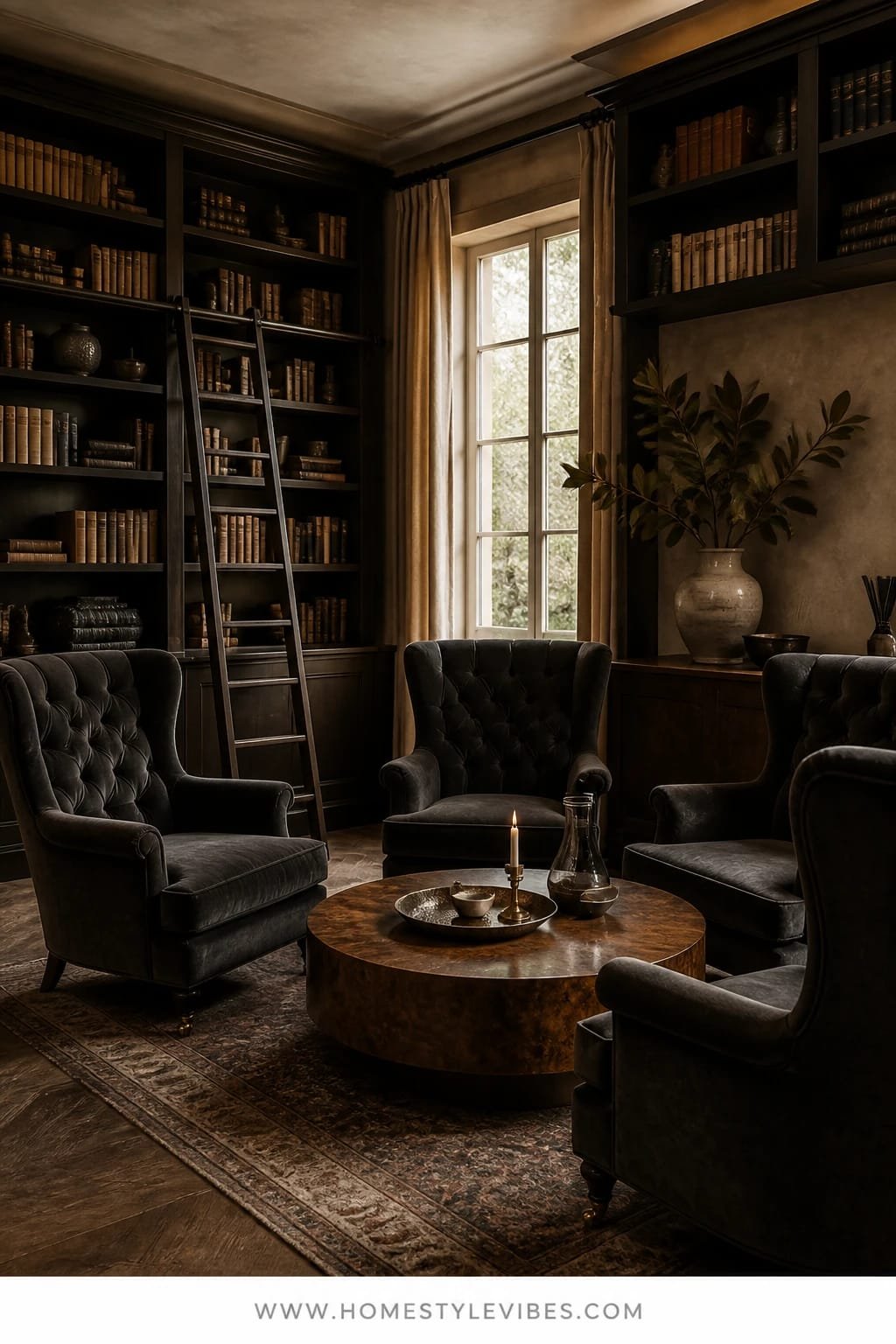
Living rooms can feel like TV shrines. You push the sofa to the wall, float a rug, and still can’t spark conversation. This design flips the script: smoked oak bookcases wrap the room, silver accents reflect “moonlight,” and plush velvet wingbacks form a tight conversation circle with a low, round table. The mood skews gentleman’s salon meets quiet parlor—intimate, hushed, layered.
Why it works: Encircling seating breaks the TV-first layout and brings people inward. Smoked oak reads softer than black yet supports the dark academia vibe. Silver accents—think pewter tray, mercury glass—bounce just enough light to keep the room from tipping into cave. It photographs beautifully because you get dark perimeter, light center, and curved lines softening the grid of shelves.
Variations: Condo scale? Two wingbacks and a petite settee with a 30-inch round table. Budget? Paint basic bookcases in a custom-smoked tone (mix black with warm brown). Renter-friendly? Use freestanding shelves and a neutral rug; lean art instead of drilling.
Budget Breakdown:
- Smoked oak bookcases or painted alternatives: $300–$1,800
- Velvet wingback chairs (pair): $500–$1,800
- Round wood or stone coffee table: $180–$900
- Pewter or silver accent pieces: $40–$200
- Wool or jute rug in deep neutral: $180–$600
Total Estimated Cost: $1,200 – $5,300
Best For: Medium living rooms; entertainers who love board games, records, and low-voice conversations.
Key Design Elements:
- Main materials: Smoked oak, velvet, pewter
- Color palette: Tobacco, soot, silver, eucalyptus green
- Lighting strategy: Low lamps at chair height; no single center downlight
- Furniture silhouettes: High-backed wingbacks, low round table, optional petite settee
- Texture layers: Velvet, wool rug, linen drapes, leather-bound books
- Accent details: Mercury glass votives, botanical oil painting, trailing ivy
Why This Feels Designer: The conversation circle telegraphs confidence. Most people default to wall-hugging; curating the center signals intent and hospitality.
How To Recreate This Look:
- Start by lining one or two walls with smoked oak shelves; stagger book heights for rhythm.
- Add two velvet wingbacks facing each other; pull them close—knee to table edge at 10–12 inches.
- Layer a round coffee table to soften all the right angles.
- Install two table lamps at wingback height; choose warm bulbs to bounce off silver accents.
- Style with a pewter tray, a stack of hardcover books, and a small bowl of matches beside votives.
The Most Common Mistake: Oversized coffee tables. If people can’t slide around the circle, the room becomes a museum. Keep diameter moderate for flow.
Pro Styling Tip: When shooting, remove one chair for the angle, then shoot through the gap so the circle reads; the silver accents will wink in the background.
A friend of mine spent weeks agonizing over the “perfect” dark paint for her living room before realizing the real problem was her layout. We pulled the chairs inward by 16 inches and set a low round table. Instantly cozy. Paint became secondary—proof that structure beats color every time.
Quick Checklist
- Oxidized or ebonized wood as your grounding material
- Matte finishes: honed stone, limewash, and velvet
- Warm 2200–2700K bulbs and dimmers
- One strong statement piece per vignette
- Fluted or paneled wall detail for shadow play
- Smoked or leaded glass for sparkle
- Layered textiles: mohair throws, linen shams, wool rugs
- Antique brass, pewter, or aged iron hardware
- Feature art with a picture light
- Ceiling-height drapery to elongate the room
Frequently Asked Questions
How do I try dark academia without committing to black paint everywhere?
Pick one wall and one statement piece. For example, line a single wall with fluted panels in deep brown-black and add a brass lamp. Keep adjacent walls warm taupe or clay so you get mood without full immersion.
Is this style doable in a small apartment without it feeling cramped?
Yes—go vertical. Use slim canopy frames, tall bookcases, and high-hung drapery. Keep floors visible by choosing leggy furniture and smaller round tables to maintain flow.
What’s the most budget-friendly upgrade that makes a big visual difference?
Lighting. Swap to warm bulbs, add a dimmer, and install one picture light above art or shelves. The right glow makes even thrifted pieces read rich and intentional.
I’m a renter—how can I get the look without damaging walls?
Use removable wallpaper, peel-and-stick paneling, plug-in sconces, and freestanding storage. Paintable renter-friendly options exist; return walls to neutral when you leave.
How do I keep dark rooms from feeling dusty or high-maintenance?
Choose matte finishes that disguise fingerprints and fabrics that spot-clean easily: linen, wool, and performance velvet. Keep a microfiber cloth and a natural polish for quick wipe-downs of wood and brass.
Conclusion
Dark academia and Gothic Victorian decor isn’t about going as dark as possible. It’s about curating texture, shaping light, and choosing one hero piece that sets the mood. Pick the idea that pulls at you—the canopy bedroom, the claw-foot console, the fluted kitchen wall—and start there. One weekend, one wall, one lamp.
The truth is, luxury comes from restraint. Matte finishes that drink in light. Warm bulbs that kiss the edges. Fabrics that invite touch. Do less, but do it with conviction, and your rooms will finally feel finished—daylight soft, night rich.
You’ve got this. Choose your corner, pick your anchor, and let the shadows do the pretty work. When the first lamp clicks on and the room hushes, you’ll know you nailed it.

About the Author

Krisztina P.Rendes, Founder of Home Style Vibes
Founder of Home Style Vibes
Krisztina Puskásné Rendes created Home Style Vibes as a cozy-modern lifestyle space where homemaking meets inspiration. Her goal is to help women create beautiful, organized, and peaceful homes they truly love — without overwhelm. You’ll find here heart-driven content on home decor, cleaning tips, easy family recipes, organization and decluttering, DIY home projects, plants, and seasonal ideas — all designed to bring more calm, comfort, and style into everyday life.