7 Small Kids Room Ideas That Maximize Space (Tiny Bedroom Hacks) That Wow
You want a sweet, sunlit kids room that actually calms bedtime and corrals the chaos. You hate tripping over plastic everything, the avalanche closet, and the bed that eats the floor plan. You imagine soft textures, filtered light, and toys that feel curated instead of loud—and these 7 small kids room ideas will fix exactly that frustration with clean layouts, layered storage, and room-for-growth moves. Give me a weekend, a $600–$2,500 budget window, and one tiny room; I’ll give you a space that photographs beautifully and works even better in daily life. If you love a pulled-together, Pinterest-worthy kid room that still feels playful, you’re in the right place.
1. Slim Loft Nook With Ladder Library Glow
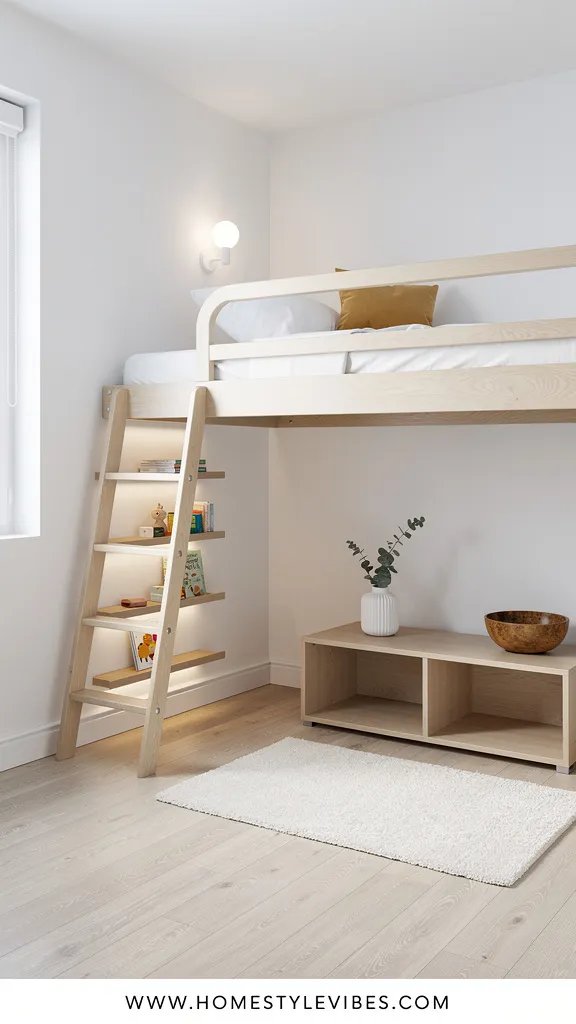
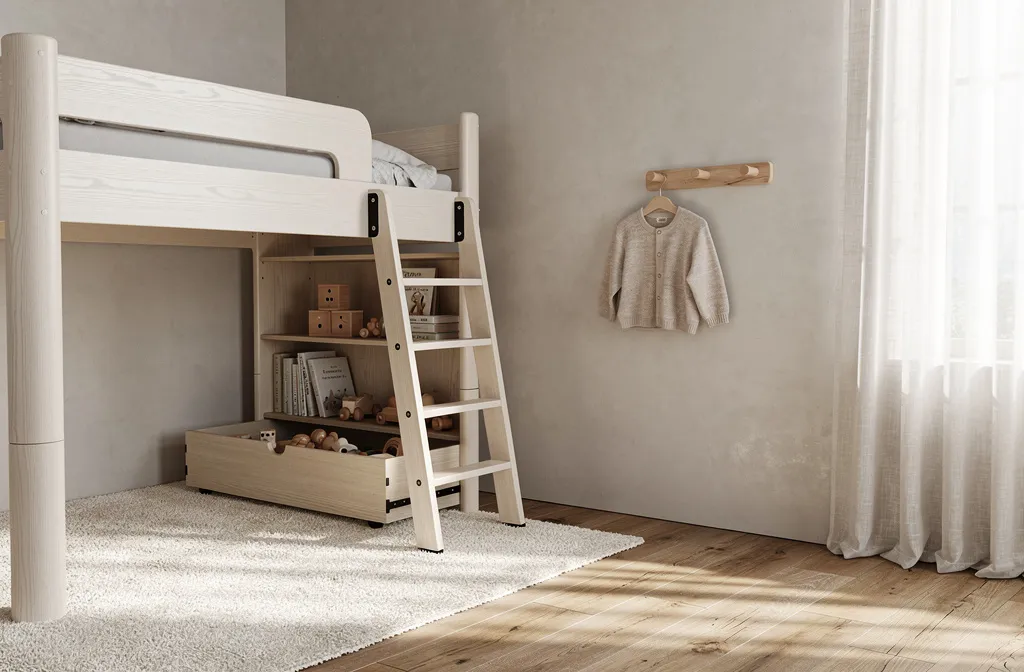
We’ve all been there: you push the twin bed against the wall, add a dresser that barely opens, and then wonder why there’s no floor left to play on. This layout answers that exact headache. By lifting the sleeping zone into a slim loft and tucking a petite “ladder library” along one side, you free up prime floor real estate for forts, puzzles, and dance parties. The result? A cozy, modern treehouse mood with a warm minimal vibe—light birch, soft white walls, and a single accent color so the room reads tidy even on a Tuesday afternoon.
It works in real homes because it compresses sleep vertically and spreads play horizontally. Kids get a sense of “my secret place,” and parents get storage that stretches up the wall instead of bulldozing the floor. Lighting matters a ton here: add a dimmable wall sconce inside the loft and a soft glow LED strip under the guardrail. At night, the room hums like a tiny boutique hotel for kids—no harsh glare, just honeyed light and calm shadows. Materials to lean on: Scandinavian birch plywood, powder-coated metal brackets, cotton-linen bedding, and a small wool rug to ground the play zone.
Why it photographs beautifully? Contrast and vertical rhythm. The ladder spines draw the eye up; the loft underside throws a gentle shadow that adds depth; and the repeated lines of book spines add visual texture without clutter. Try a single fluted panel for the loft face if you love a designer touch that still wipes clean.
Budget Breakdown:
- Pre-fab slim loft bed or modular bunk: $450–$1,200
- Wall ladder/bookshelf system: $120–$350
- Wall sconce with dimmer: $60–$180
- LED strip for under-loft glow: $20–$60
- Rug (wool or flatweave): $90–$300
- Neutral bedding + single color accent pillows: $50–$150
Total Estimated Cost: $790 – $2,240
Best For: Rooms under 9×10 feet; ceiling heights 8 feet or higher; families who need floor space for play or a mini desk. Works well in apartments with limited closets.
Key Design Elements:
- Main materials: birch plywood, powder-coated metal, flatweave wool
- Color palette: warm white, pale birch, one accent (sage, clay, or denim)
- Lighting strategy: sconce in loft + under-rail LED for a halo effect
- Furniture silhouettes: slim, lifted, linear ladder shelves
- Texture layers: cotton-linen, wool rug, matte wood grain
- Accent details: fluted panel face, bookends, fabric bins tucked on lower ladder rungs
How To Recreate This Look:
- Start with a slim loft bed that fits your ceiling height; confirm guardrail height and ladder angle for safety.
- Add a tall, narrow ladder-style bookshelf on the open side; anchor it to studs for zero wobble.
- Layer neutral bedding and one accent color so the room feels calm on camera and IRL.
- Install a warm white sconce inside the loft and LED strip under the rail to create depth.
- Style with 4–6 favorite books face-out and two fabric bins for small toys—nothing more.
Why This Looks Expensive: Repetition and restraint. The ladder lines, soft wood tones, and a single accent hue look curated. The layered lighting reads high-end on photos and feels cozy every night.
Watch Out: Don’t cram storage under the loft to the point kids can’t move. Leave a clear 4–5 foot play rectangle so the floor feels open. And double-check ladder spacing so tiny feet can climb safely.
Pro Styling Tip: Angle the ladder slightly into the room and place the rug edge just beneath it—this creates a diagonal line that adds depth in photos.
Keep scrolling—next up is a layout trick that hides the mess without losing personality.
2. Capsule Wardrobe Wall With Sliding Toy Gallery
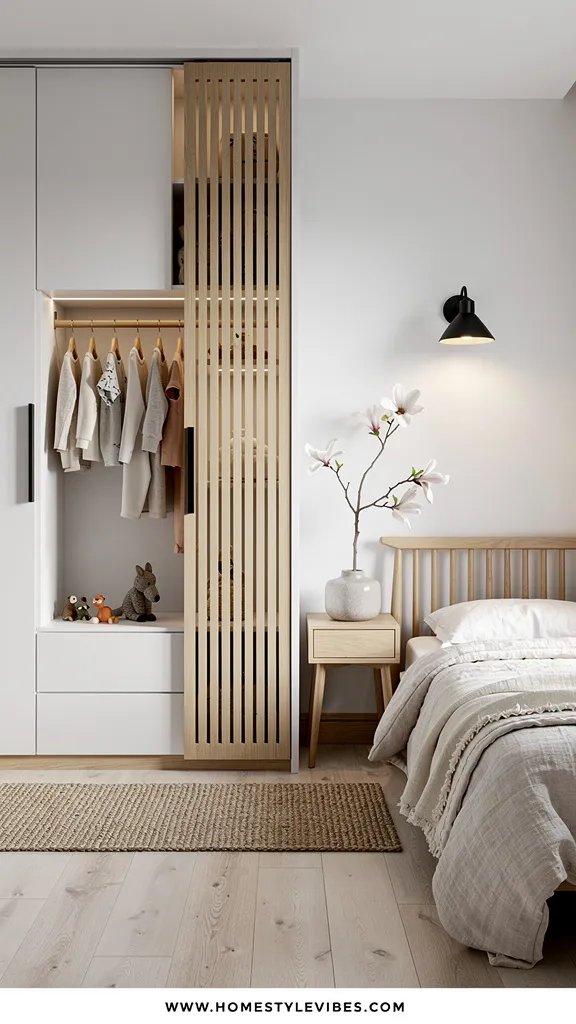
It’s that one corner that always feels off: the closet that won’t close because dress-up capes attack you and plastic bins slide open like tiny landmines. You’ve tried bigger baskets, but it still looks chaotic. The fix is a slim capsule wardrobe rail with a sliding toy gallery in front—think low-profile closet plus a shallow wall-mounted rail that glides across, hiding toys or clothes depending on the day. The mood is part mini boutique, part kid museum, and it’s shockingly easy to maintain.
Why it works? Depth control. Everything stays within 12–16 inches from the wall, and the sliding front layer becomes your visual pause—curate 6–8 pieces your child actually wears or loves. Lighting comes from a ceiling track or a two-head directional flush mount so you can spotlight the gallery and dim the rest. Materials favor rattan baskets, painted MDF panels, and brushed brass or black steel hardware for the rail. It photographs beautifully because of the layered reveal—peekaboo shelves behind a clean rail line with a soft textile curtain or framed peg-rail for rhythm.
Variations help you meet any budget: swap custom sliders for an IKEA curtain track and use a thick canvas panel; opt for a basic pine rail with leather loops for a softer look; or choose a lacquered panel for a modern edge.
Key Design Elements:
- Main materials: painted MDF, cotton canvas, rattan, brushed brass or black steel
- Color palette: warm white, oat, charcoal accents, one playful color (marigold or forest)
- Lighting strategy: directional track or flush-mount with adjustable heads
- Furniture silhouettes: super-shallow shelves, linear rails, low bench for shoes
- Texture layers: canvas or linen curtain, woven baskets, matte paint
- Accent details: labeled bins, framed kids art hung on the sliding panel
Budget Breakdown:
- Wall-mounted shallow shelves (DIY or pre-made): $120–$300
- Sliding track or curtain rail system: $40–$220
- Front gallery panel or canvas: $30–$180
- Woven bins and labels: $30–$120
- Directional ceiling light: $80–$250
Total Estimated Cost: $300 – $1,070
Best For: Narrow rooms, renters who need reversible storage, families who want fast morning routines and clutter control without a closed-door closet.
How To Recreate This Look:
- Start by installing shallow shelves (10–12 inches deep) inside the closet or along a free wall; anchor into studs.
- Add a front track or curtain rail and hang a framed peg-board, rail panel, or heavyweight canvas.
- Layer clothes on back hooks and toys in labeled bins at kid height.
- Install directional ceiling lighting to spotlight the front panel; aim one head at the shelves behind.
- Style the front with 6–8 capsule items: a favorite jacket, backpacks, hats—then rotate monthly.
Why This Feels Designer: The sliding reveal makes the storage feel intentional. The selective curation at the front reads like a styled boutique, giving visual quiet in a small kids room.
One Thing To Avoid: Don’t overfill the back shelves. Keep bins no more than 80% full so kids can actually put things away. Overstuffing ruins the slide and the look.
Pro Styling Tip: Choose one bold color on the front panel and repeat it once—on a hat or pillow—to create a clean visual loop on camera.
Remember, this isn’t about recreating a showroom. It’s about building a space that actually works with your family’s rhythm. If one idea resonates more than the others, that’s your starting point—you don’t need all seven.
3. Window Bench Daybed With Under-Seat Drawers and Curtain Canopy
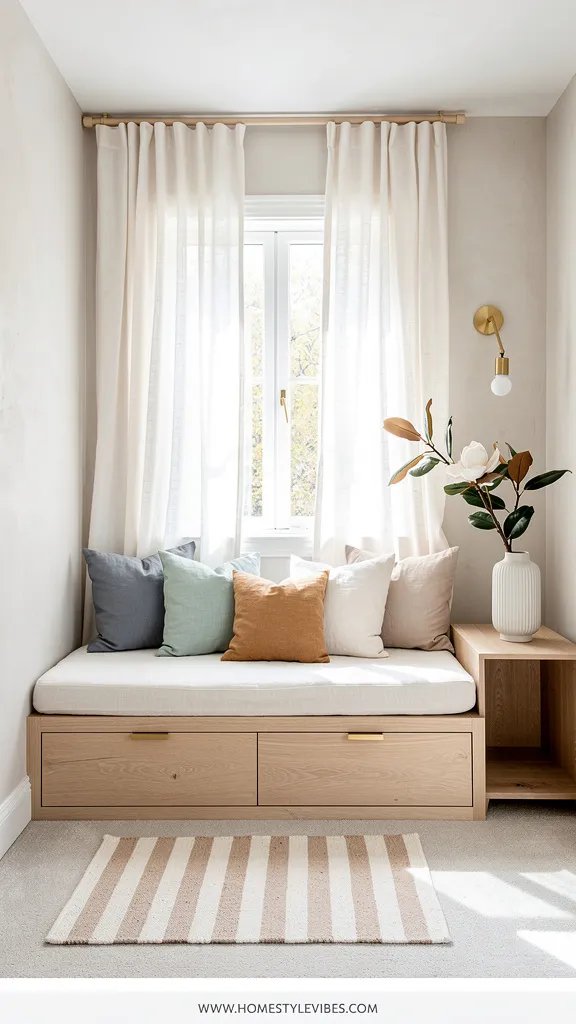
You want a dreamy reading nook. You hate the way a standard bed blocks the window and steals the only natural light. Here’s the fix: a low-profile daybed built as a window bench with deep drawers below and a soft curtain canopy up top. The vibe is coastal-modern meets storybook cottage: linen panels, pale oak, a touch of brass, and a cloud of pillows that can be zipped off and washed after an enthusiastic snack session.
This works like a charm in small kids rooms because it consolidates three zones into one: sleeping, reading, and storage. Lighting plays hero again—hang a simple brass or black curtain rod high and float long sheers from wall-to-wall, not just over the window. The trick? Extend the rod 6–10 inches closer to the ceiling to avoid that awkward gap that makes everything look cheaper. Add a wall-mounted reading light on a swing arm, and the room instantly gains depth and softness. Photos love it because the layered curtains filter light, the bench provides clean horizontal lines, and pillows add that squishy texture editors adore.
Two variations: for renters, grab a freestanding daybed with storage drawers and a tension-rod canopy in linen; for darker rooms, swap sheers for lighter, gauzy cotton in soft white and add a small uplight behind the bench to bounce light onto the curtains.
Budget Breakdown:
- Daybed with drawers or built-in bench: $300–$1,000
- Curtain rod (wide) + sheers: $80–$250
- Swing-arm wall light: $70–$180
- Pillows and washable covers: $60–$180
- Under-bed storage dividers: $20–$60
Total Estimated Cost: $530 – $1,670
Best For: Rooms with a single window; families who read before bed; kids who need a gentle wind-down zone that doesn’t feel cramped.
Key Design Elements:
- Main materials: oak veneer, linen or cotton sheers, brass or black metal
- Color palette: cloud white, oat, pale wood, one muted pastel (dusty rose, sky)
- Lighting strategy: high-mounted sheers to filter daylight, swing-arm task light for night
- Furniture silhouettes: low, linear bench-daybed, rounded pillows
- Texture layers: linen, washed cotton, nubby knit throw
- Accent details: subtle piping on pillows, framed art at kid eye level
How To Recreate This Look:
- Start with a daybed or build a bench under the window; ensure drawer faces sit flush and glide easily.
- Add a wide curtain rod close to the ceiling; hang sheers wall-to-wall to make the window feel grand.
- Layer three pillow sizes: two long bolsters, two squares, one playful shape.
- Install a swing-arm sconce 6–8 inches above the pillow line for reading.
- Style the drawers with dividers: pajamas on the left, books center, toys right—simple and sustainable.
Why This Reads High-End: Wall-to-wall sheers and an integrated bench make the architecture feel upgraded. The curtain canopy softens light and looks boutique on camera.
The Most Common Mistake: Hanging curtains at window height instead of near the ceiling. That gap can shrink the room. Lift the eye and the space instantly feels taller.
Pro Styling Tip: Tug the sheers into soft S-curves and leave 1–2 inches pooling—those shadows look rich in photos.
4. Pegboard Command Wall With Fold-Down Desk and Art Rail
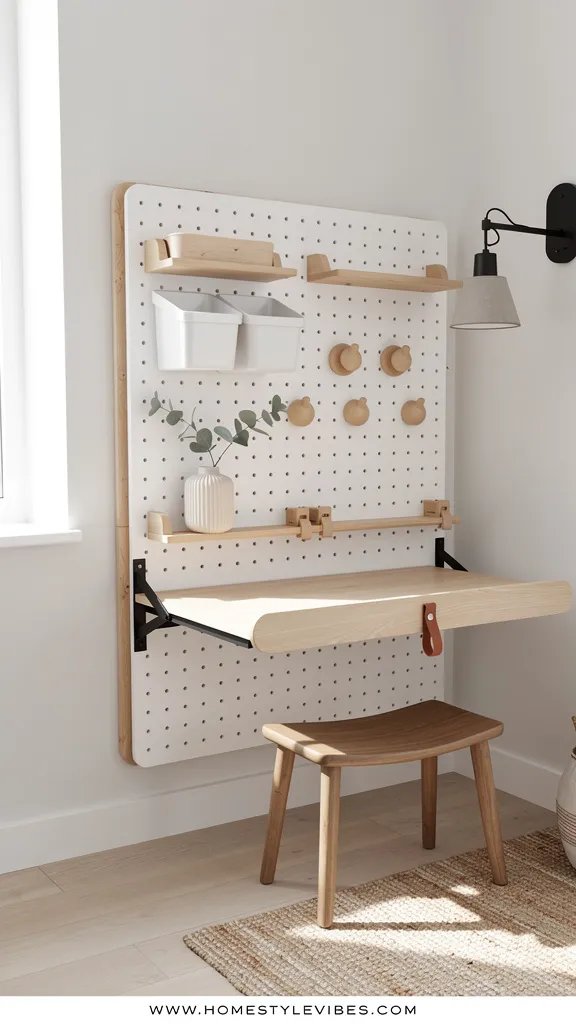
You’ve tried a standard desk, but it still looks cramped and turns into a paper pile. The solution is a full-height pegboard command wall that holds bins, shelves, and a fold-down desk for homework or drawing. When it folds up, the room resets to play mode. The mood is Scandinavian studio—clean lines, light wood, playful hooks—and it’s wildly renter-friendly if you choose modular panels.
Why it works: vertical surface area does the heavy lifting in tiny bedrooms. A fold-down desk gives kids a defined creative station that doesn’t hog floor space. Light it with a compact clip-on task lamp and a ceiling fixture with good spread so you don’t cast weird shadows—cheap pendants can throw an odd halo on the wall at night, which reads messy. Material mix matters: natural birch pegboard, powder-coated shelves, and a cork strip for pin-ups. The photos pop thanks to negative space, graphic grid holes, and a tidy color story in storage bins.
Variations: budget version with IKEA-style pegboards and a simple hinged plywood desk; darker version in walnut-stained birch with brass pegs; or a color-pop version with mint or clay powder-coated shelves.
Budget Breakdown:
- Large pegboard panels (2–3): $120–$280
- Fold-down desk hardware + plywood panel: $80–$220
- Modular shelves/bins/hooks: $40–$150
- Clip-on task light: $20–$70
- Cork strip + pushpins: $10–$30
Total Estimated Cost: $270 – $750
Best For: Small rooms with one free wall; families who want art supplies visible but controlled; kids who love to draw, build, and reset quickly after.
Key Design Elements:
- Main materials: birch pegboard, powder-coated metal, cork
- Color palette: birch, soft white, one accent (terracotta, mint, or navy)
- Lighting strategy: general ceiling light plus a direct task clip lamp
- Furniture silhouettes: slim, foldable, boxy bins
- Texture layers: wood grain holes, matte metal, cork
- Accent details: colored pegs, labeled jars, a slim art rail for rotating masterpieces
How To Recreate This Look:
- Start by mapping the panel height—hit at least 6 feet to maximize vertical storage.
- Add a fold-down desk at kid elbow height; test swing clearance with a chair or floor cushion.
- Layer bins by activity: drawing, building, stickers; keep the most-used items at shoulder height.
- Install a task light that clips to the panel or shelf; run the cord cleanly along an edge.
- Style with a narrow art rail and one hero poster—negative space keeps it calm.
Why This Looks Intentional: The grid gives built-in structure; a restrained color palette and one strong graphic print say “curated,” not chaotic.
Don’t Do This: Don’t scatter small hooks at random heights. Group them in vertical bands so everything aligns and looks tidy.
Pro Styling Tip: Color-code bins in two tones max and repeat that across three shelves—consistent color blocks photograph crisp.
Is this starting to feel more doable? Pick your favorite vertical move—loft, sliding gallery, or pegboard—and let that decision set the tone for the rest.
5. Underbed Rolling Zone: Play-Train Storage With Magnetic Map Wall
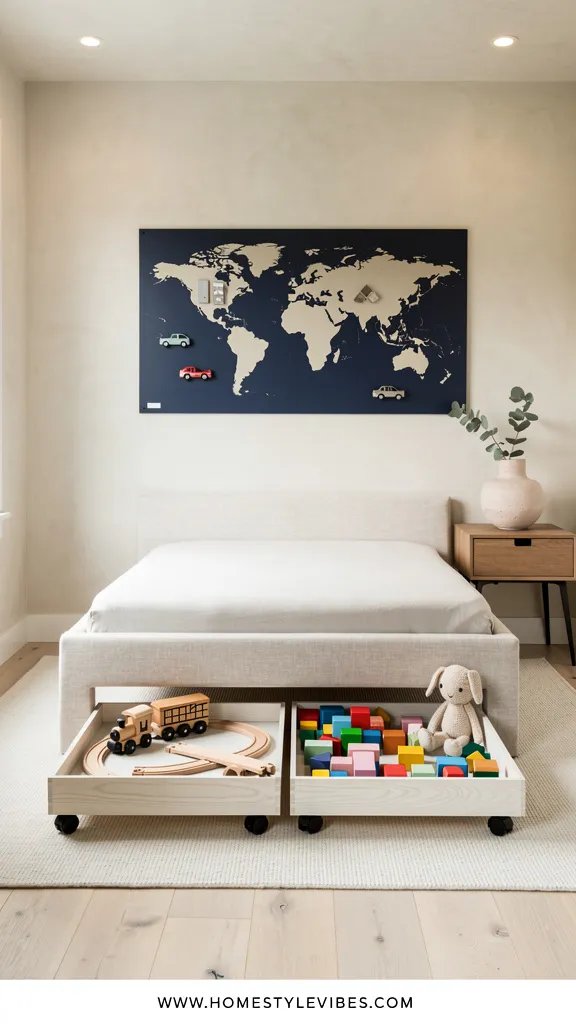
Ever watch a train set take over the entire floor right before guests arrive? I have, and I’ve done the frantic shuffle into the hallway. The underbed rolling zone solves that exact panic. Build or buy two low-profile rolling trays that glide under the bed—one for trains and tracks, one for blocks or dolls. On the wall above, install a magnetic map panel where kids can stick pieces, track their “travels,” or park a few metal cars. The room reads adventurous, practical, and a little museum-ish in the best way.
Why it works in real homes: the biggest footprint in a tiny kids room is the bed, so you put that footprint to work. Rolling trays make clean-up a 30-second ritual. A magnetic map panel (galvanized sheet wrapped in fabric or a painted magnetic board) turns a blank wall into purposeful play without messy shelves. Lighting-wise, keep the wall washed with a soft uplight or a small picture light; the tray handles catch a subtle highlight that looks refined in photos. Materials skew to painted plywood, felt-lined trays, and a canvas-covered steel sheet for the map—tactile and tough.
Variations: budget DIY with plywood and swivel casters; renter-friendly version with IKEA underbed boxes and peel-and-stick magnetic wallpaper; darker room option with a navy map and brass picture light for a moody, library feel.
Budget Breakdown:
- Underbed rolling trays (DIY or prebuilt): $80–$220 each
- Casters (low profile): $12–$30
- Magnetic map panel or wallpaper: $60–$240
- Small picture light or wall wash LED: $40–$150
- Fabric bins or felt liners: $15–$60
Total Estimated Cost: $207 – $700
Best For: Kids who love building sets; families short on closet space; rooms with standard-height beds.
Key Design Elements:
- Main materials: plywood, felt, galvanized steel or magnetic wallpaper
- Color palette: navy or forest with camel and cream accents
- Lighting strategy: gentle wall wash; optional picture light above the map
- Furniture silhouettes: low, rectangular trays with rounded pulls
- Texture layers: canvas, felt, matte paint
- Accent details: leather pull tabs, painted track outlines on tray bases
How To Recreate This Look:
- Start by measuring bed clearance; build trays 1 inch shorter in height than the gap for smooth glide.
- Add felt liners to soften noise and protect wooden tracks or cars.
- Layer a magnetic panel at child height; frame it with thin wood trim for a finished look.
- Install a small picture light; choose warm 2700–3000K bulbs for cozy color.
- Style trays with categories—tracks left, trains right—and stencil icons for quick kid-friendly sorting.
Why This Feels Designer: Fully utilized dead space plus a curated play wall reads intentional and clever. The low trays with matching pulls look custom.
Watch Out: Don’t overfill trays. Heavy trays are a pain for kids to pull and can scratch floors. Add felt pads under casters if you have hardwood.
Pro Styling Tip: Leave one tray pulled out by 8–10 inches in photos to show function and add a dynamic line across the floor.
6. Color-Blocked Alcove With Pocket Shelves and Half-Height Wainscot
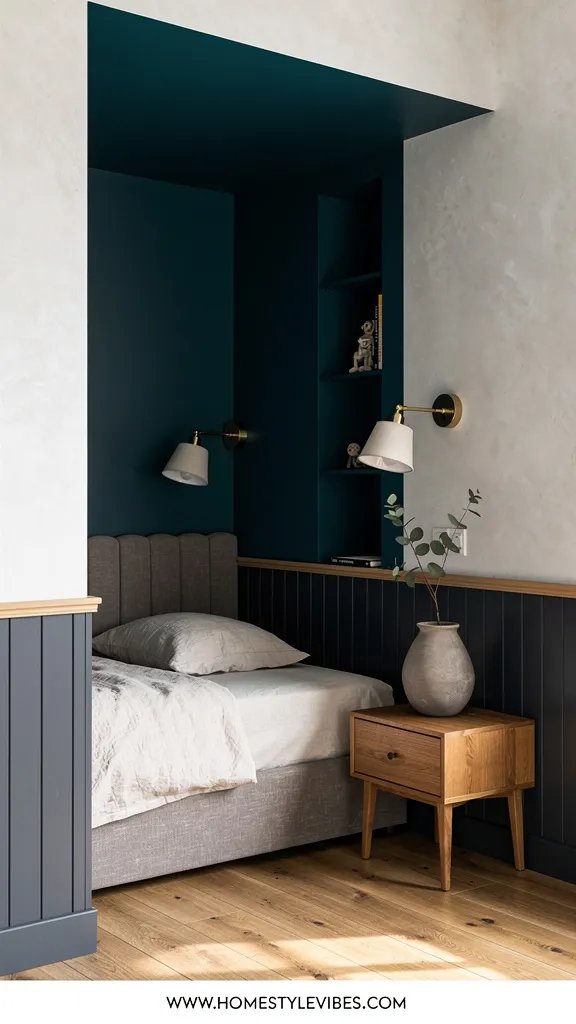
You’ve painted the room before, but it still feels busy. The secret isn’t more decor—it’s smarter color blocking. Paint a saturated alcove for the bed or reading chair, add slim pocket shelves between studs, and run half-height wainscot or beadboard around the rest of the room. The vibe is modern cottage meets boutique hotel: moody below, airy above, with a color-wrapped nook that gives kids a safe, snug visual boundary.
Here’s why it works: color blocking reduces visual noise and earns back calm. Pocket shelves harvest dead space inside walls (between studs) for small books and trinkets without stealing floor area. Half-height paneling stands up to kid life—scuffs hide on the lower color while the upper wall stays bright. Use warm white overhead light and a soft corner lamp to pull focus to the alcove; at night, that darker box of color cradles the bed and chills everyone out.
Two variations: a budget-friendly beadboard wallpaper and painted MDF shelves; or a luxe version with real wood paneling and a micro-limewash top for velvety light. For renters, try peel-and-stick color block panels and floating ledge shelves with 3M anchors—test first.
Budget Breakdown:
- Paint (two colors): $70–$140
- Beadboard/wainscot + trim: $120–$360
- Pocket shelves (DIY kits or custom): $80–$300
- Corner lamp or plug-in sconce: $40–$150
- Touch-up kit and caulk: $15–$30
Total Estimated Cost: $325 – $980
Best For: Rooms that feel chaotic or too bright; kids who sleep better with a darker cocoon; homes craving a bit of color but not visual clutter.
Key Design Elements:
- Main materials: beadboard or MDF, pine trim, drywall niche kits
- Color palette: deep alcove color (ink, pesto, terracotta) with warm white above
- Lighting strategy: overhead warm light + focused corner/sconce in alcove
- Furniture silhouettes: low-profile headboard, slim side table
- Texture layers: painted wood grain, soft throw, linen shade
- Accent details: brass or ceramic knobs, framed silhouette art
How To Recreate This Look:
- Start by mapping the alcove line; paint the back wall and ceiling of the niche for a full wrap effect.
- Add half-height wainscot around the room at 36–42 inches; cap with a simple ledge trim.
- Layer pocket shelves between studs; confirm no electrical runs before cutting.
- Install a plug-in sconce or corner lamp for a cozy reading glow.
- Style with two framed prints and a small plant for a lived-in, tidy feel.
Why This Looks Expensive: Architectural lines—wainscot and niches—suggest custom work. The color-wrapped alcove photographs like a designer set because of its built-in contrast and shadow play.
One Thing To Avoid: Don’t choose a bright primary hue for the alcove if sleep is a priority. Go muddy or muted—clay, olive, inky blue—so the room unwinds.
Pro Styling Tip: Pull the duvet edge down to expose the wainscot cap line—those horizontal bands read clean and editorial.
Quick honesty moment: picking paint colors for kids rooms can be maddening. A friend of mine spent weeks agonizing over pastels before realizing her real problem was cold, bluish lighting. Warm bulbs changed everything in a single evening. Color doesn’t live in a vacuum—light is the boss.
7. Low-Profile Triple Threat: Trundle, Tall Headboard Storage, and Ceiling Rail Curtains
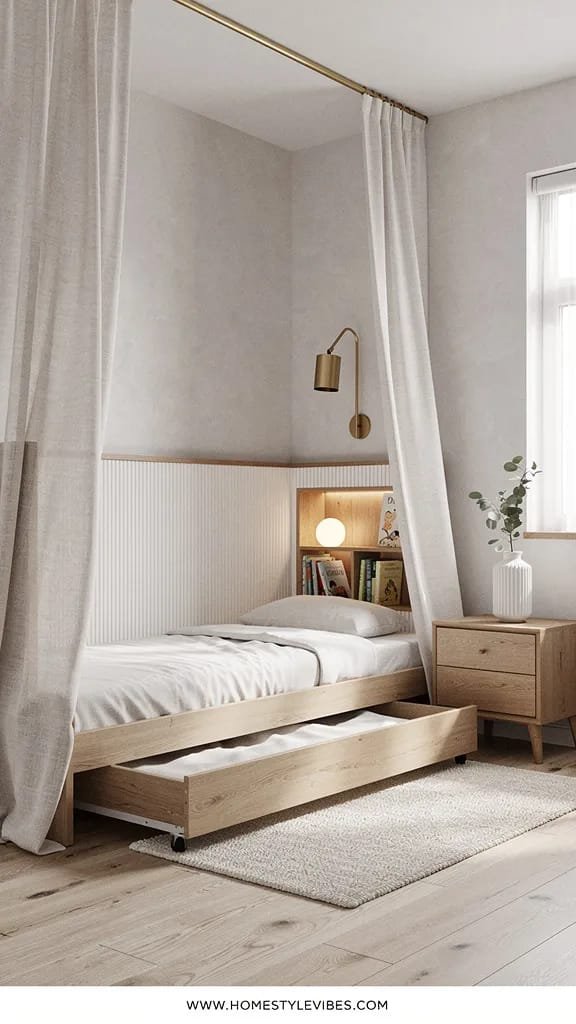
Here’s the small kids room idea that quietly outperforms almost everything when you host cousins or sleepovers. A low-profile bed with a trundle below, plus a tall headboard that doubles as storage, wrapped in ceiling-mounted curtains that float around the bed at night. The mood lands somewhere between Japandi calm and hotel-smart: textural wood headboard with cubbies, soft drapery that swishes, and a bed height that’s friendly for toddlers.
Why it works: sleeping for two in the footprint of one, a headboard that holds bedtime essentials, and ceiling rails that zone the bed without heavy walls. Lighting is simple—recessed puck lights inside the headboard for reading, and a perimeter LED crown at the ceiling for a faint, magical glow. Materials read tactile: fluted or slatted headboard wood, cotton percale sheets, and a wool-blend blanket. Photos love the curtain column effect and the rhythm of the headboard slats—lots of shadow and texture without visual noise.
Variations: budget-friendly with a basic trundle frame and an upholstered headboard with wall-mounted picture ledges; renter-friendly with ceiling 3M adhesive tracks (test weight limits) and a shallow headboard bookcase; darker mood with charcoal curtains and warm oak headboard for a snug cocoon.
Budget Breakdown:
- Bed frame with trundle: $280–$900
- Headboard with storage or fluted panel DIY: $100–$450
- Ceiling curtain track + curtains: $90–$280
- Puck lights + dimmer: $40–$120
- Bedding set: $50–$150
Total Estimated Cost: $560 – $1,900
Best For: Shared rooms, frequent sleepovers, or small rooms that need flexible guest sleeping without a second bed hogging space.
Key Design Elements:
- Main materials: slatted wood headboard, cotton curtains, metal track
- Color palette: natural oak or walnut, soft white, one earthy tone (moss or rust)
- Lighting strategy: headboard pucks for task, ceiling track glow for mood
- Furniture silhouettes: low bed, tall headboard, slim side ledge
- Texture layers: slats, percale, wool blend
- Accent details: leather pulls on trundle, small ceramic catchall
How To Recreate This Look:
- Start with a trundle bed; measure clearance to ensure rugs don’t block pull-out.
- Add a tall headboard with cubbies; wire puck lights with a dimmer for bedtime reading.
- Layer ceiling tracks to wrap two sides of the bed for a cozy zone.
- Install curtains that kiss the floor by 1/2 inch for a crisp line.
- Style with one patterned pillow and a textured blanket—keep patterns simple for a calm read.
Why This Feels Designer: Built-in-looking headboard storage plus ceiling-height drapery reads custom. The low bed and layered lights signal quiet luxury without fuss.
The Most Common Mistake: Forgetting the trundle handle clearance. Leave at least 3 inches between bed and nightstand, and avoid heavy pile rugs that snag wheels.
Pro Styling Tip: When photographing, close curtains by one-third—enough to frame the bed but still show the headboard detail.
Conclusion
Small rooms don’t need more furniture—they need smarter moves. Pick one of these seven small kids room ideas and start there. Maybe you raise the bed, slide a gallery wall, or paint a cocooned alcove. That single shift will change how the room feels to live in and how it looks every time you walk by with your coffee.
The truth is, rooms feel expensive when the textures are thoughtful, the lighting is warm and layered, and the color story holds back more than it shouts. Loft lines, soft curtains, wood grain, and a couple of brass details will make the space feel finished without crowding it. Restraint is your friend—choose one star move and support it with quiet, hardworking storage.
You’ve got this. Start with the idea that made your shoulders drop a little just now. In a weekend and under a clear budget, your tiny bedroom can work hard for your family and still look ridiculously photogenic. Seriously—wait until you see it at golden hour.

About the Author

Krisztina P.Rendes, Founder of Home Style Vibes
Founder of Home Style Vibes
Krisztina Puskásné Rendes created Home Style Vibes as a cozy-modern lifestyle space where homemaking meets inspiration. Her goal is to help women create beautiful, organized, and peaceful homes they truly love — without overwhelm. You’ll find here heart-driven content on home decor, cleaning tips, easy family recipes, organization and decluttering, DIY home projects, plants, and seasonal ideas — all designed to bring more calm, comfort, and style into everyday life.