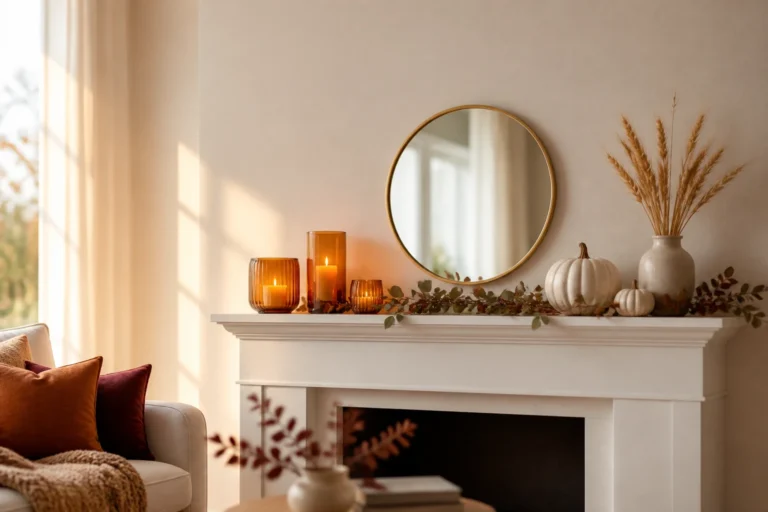
6 Spring Floral Home Decor Ideas That Make Your Living Room Feel Fresh
You want that first-warm-day feeling every time you walk into your living room—sunlight that glows, soft textures that invite you in, and florals that feel elegant, not fussy. But clutter creeps in, winter tones linger, and that one corner never looks as good as it does in your head. Here’s the fix: six spring floral home decor ideas that make your living room feel fresh—photogenic, airy, and layered—without a full remodel. Choose one concept, set a realistic cap of $600–$2,500 depending on your version, and see a real shift in a single weekend.
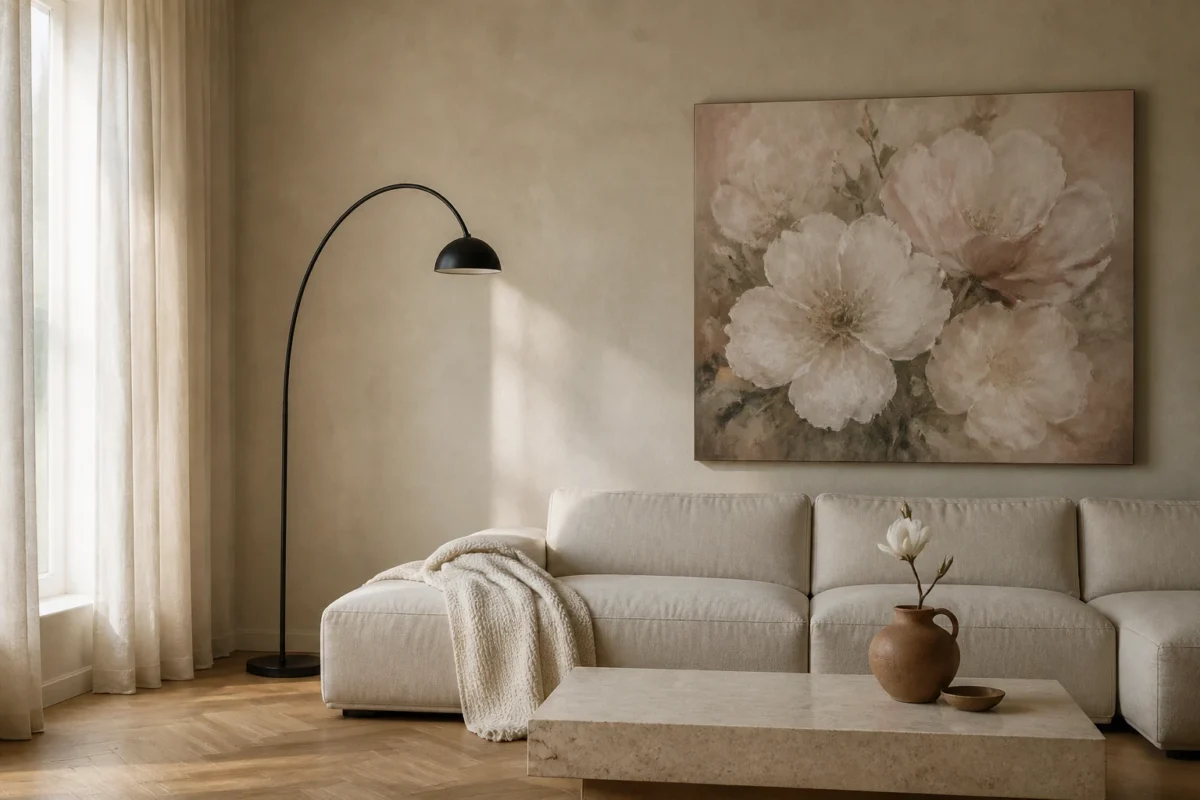
Expect bright botanicals, gentle hues, and thoughtful textures that actually solve pain points: odd lighting, tight layouts, and uninspired sofas. These designs love natural light, photograph beautifully, and add that “finished” feeling you keep pinning. If you crave a soft, botanical vibe that’s still grown-up and chic, these are for you.
1. Linen-Wrapped Gallery Wall With Dappled Morning Light And Oversized Floral Canvas
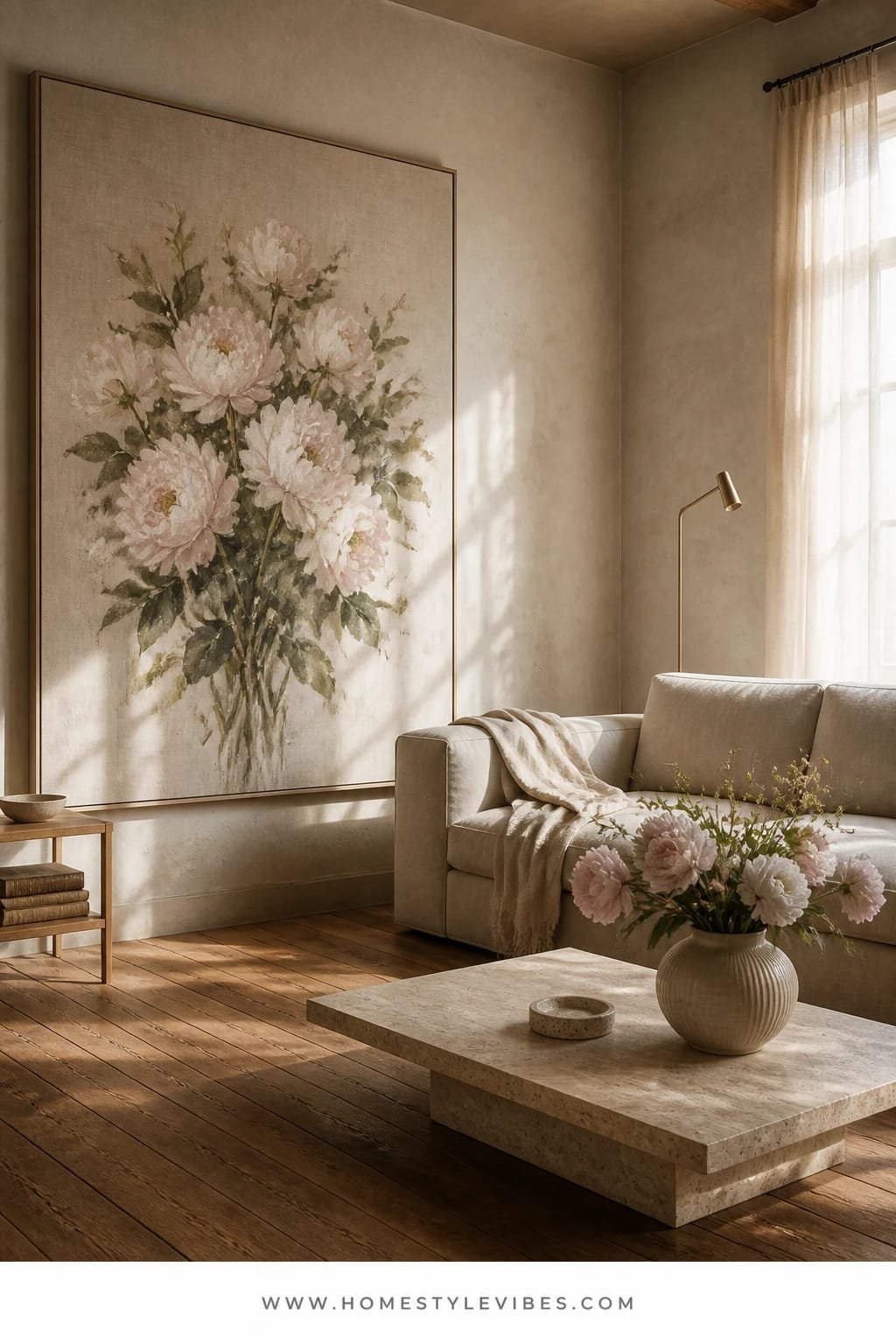
We’ve all been there: a giant blank wall staring back at you like an unfinished sentence. You’ve tried random frames, but it still looks piecemeal and a bit flat. This concept solves that with linen as the quiet hero, soft morning light as the mood, and one oversized floral canvas as the anchor. Think calm, contemporary cottage with restraint. It’s renter-friendly, modular for small spaces, and easy to maintain—dust with a microfiber cloth, rotate a stem here and there, done.
Here’s why it works in real homes: linen-wrapped mats or pinboards create texture without loud color, so your florals pop and your living room reads cohesive. Dappled light across the fabric adds shadows that photograph like a dream. The oversized canvas brings scale (and confidence), so everything else can stay understated. It’s especially strong in rooms with one dominant wall, where you need height and gentle drama.
Two ways to flex it: For a budget-friendly version, use poster-size prints with Ikea frames and wrap the mats with linen or linen-look fabric. For a darker room, choose a deep charcoal linen and a lighter floral to boost contrast. Renter-friendly swap: command strips for all the frames and a removable-wallpaper “linen texture” behind the gallery.
Budget Breakdown:
- Oversized floral canvas or print: $150–$600
- Linen or linen-look fabric for mats/pinboards: $30–$120
- Frames (6–10 in mixed sizes): $120–$350
- Removable wallpaper (linen texture, optional): $80–$200
- Picture lights (battery-operated): $40–$160 each
Total Estimated Cost: $420 – $1,430
Best For: Apartments or living rooms with one focal wall; anyone who wants a calm, gallery-forward look with botanical romance for spring.
Key Design Elements:
- Main materials: linen, natural wood frames, canvas
- Color palette: warm whites, soft taupe, blush or sage accents
- Lighting strategy: morning light plus small picture lights to add warmth at dusk
- Furniture silhouettes: low-profile sofa, simple wood coffee table
- Texture layers: woven basket, linen throw, nubby rug
- Accent details: a single ceramic vase with fresh stems, brass frame corners
How To Recreate This Look:
- Start with one oversized floral canvas centered at eye level above the sofa.
- Add two to four linen-wrapped mats or pinboards to flank the canvas.
- Layer smaller floral and botanical prints in warm wood or thin brass frames.
- Install battery-operated picture lights above 1–2 key frames.
- Style with a ceramic vase of tulips or ranunculus on the coffee table for a soft echo.
Why This Looks Expensive: Scale plus restraint. The oversized floral canvas and consistent linen texture read curated, not cluttered. Your frames feel intentional because they share a material language.
Watch Out: Don’t hang frames too high. Keep tops aligned or intentionally staggered by an inch for a designer asymmetry. Avoid too many flower types—stick to 2–3 varieties for cohesion.
Pro Styling Tip: Angle the blinds slightly to cast a soft stripe of light across the linen—those slivers of shadow create magazine-worthy depth on camera.
2. Fluted Oak Sideboard With Golden Hour Glow And Ceramic Blossom Table Lamp
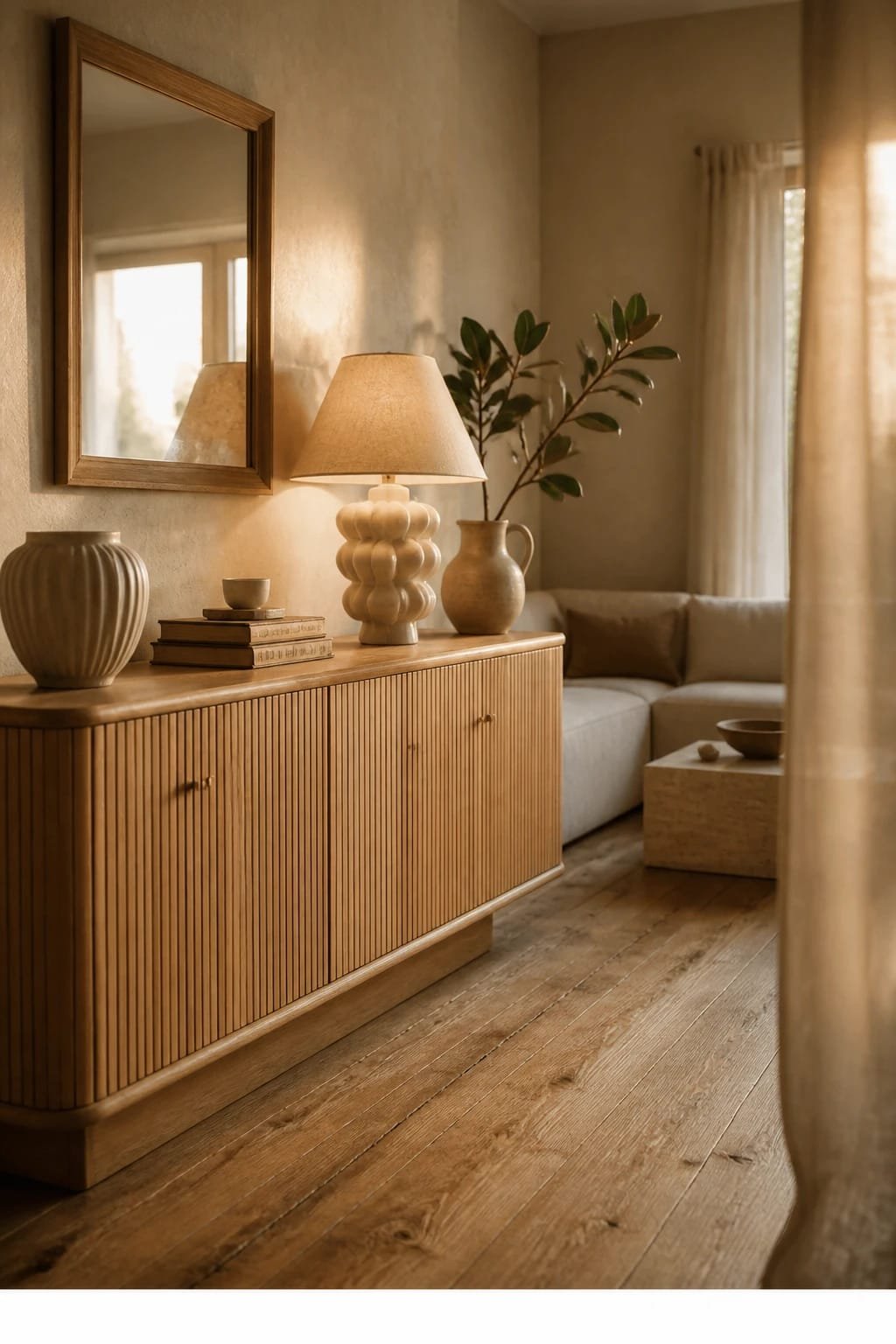
It’s that one corner that always feels off—near the entry, next to the window, or behind the sofa. You’ve tried a console table and a bowl, but it still looks thin. A fluted oak sideboard grounds the wall, warm golden hour bulbs soften the entire room, and a ceramic blossom lamp becomes your spring floral star without using a single petal. The mood leans modern organic: uncluttered, tactile, and quietly luxe.
In family homes, a sideboard pulls double duty: concealed storage for remotes and puzzles, plus a surface for florals that won’t get knocked over. Fluting adds shadows and movement so the piece photographs beautifully even in low light. Add a lamp with a petal-shaped base or subtle relief blossoms; it whispers spring without screaming garden party.
Variations: For a small space, choose a wall-mounted floating credenza with fluted fronts to free up floor area. For a renter move, swap hardwired sconces for matching ceramic table lamps. For a moodier read, pick smoked oak and linen shades in almond or parchment.
Key Design Elements:
- Main materials: fluted oak, cream ceramic, muted brass
- Color palette: honey wood, soft white, moss green accents
- Lighting strategy: layered—table lamp glow, hidden LED strip under lip for wash
- Furniture silhouettes: long, low credenza; simple round or oval mirror
- Texture layers: ribbed wood, linen shade, matte ceramic
- Accent details: single branch arrangement, stacked art books, narrow tray
Budget Breakdown:
- Fluted oak sideboard: $450–$1,800
- Ceramic blossom lamp: $120–$480
- Oval mirror: $90–$350
- LED strip lighting (plug-in): $25–$90
- Greenery/branch stems: $15–$60
Total Estimated Cost: $700 – $2,780
Best For: Medium to large living rooms, open-plan spaces needing an anchor, households that want storage that still looks chic.
How To Recreate This Look:
- Start with the sideboard centered on a clear wall; leave 6–8 inches on each side.
- Add an oval mirror above for softness; keep it 6–10 inches above the surface.
- Place a ceramic blossom lamp on one end; balance with a stack of books on the other.
- Install a warm LED strip under the sideboard lip to create a floating glow.
- Style a tall branch arrangement in a matte vase to reference spring height.
Why This Feels Designer: Vertical rhythm from the fluting plus warm uplight/downlight is what designers use to build depth without visual clutter. The lamp’s floral silhouette adds theme while keeping the palette restrained.
One Thing To Avoid: Don’t over-style the surface. Three groupings max: lamp, books+object, vase. Anything more and you’re in noise territory.
Pro Styling Tip: Tuck one art book slightly askew beneath the lamp base to add micro-contrast and capture a natural, lived-in moment on camera.
Pause before you scroll. Remember, this isn’t about recreating a showroom. It’s about building a room that feels like you at your sunniest. If one idea clicks, start there and let the rest wait.
3. Botanical Chintz Slipcover With Soft North Light And Curved Accent Chair
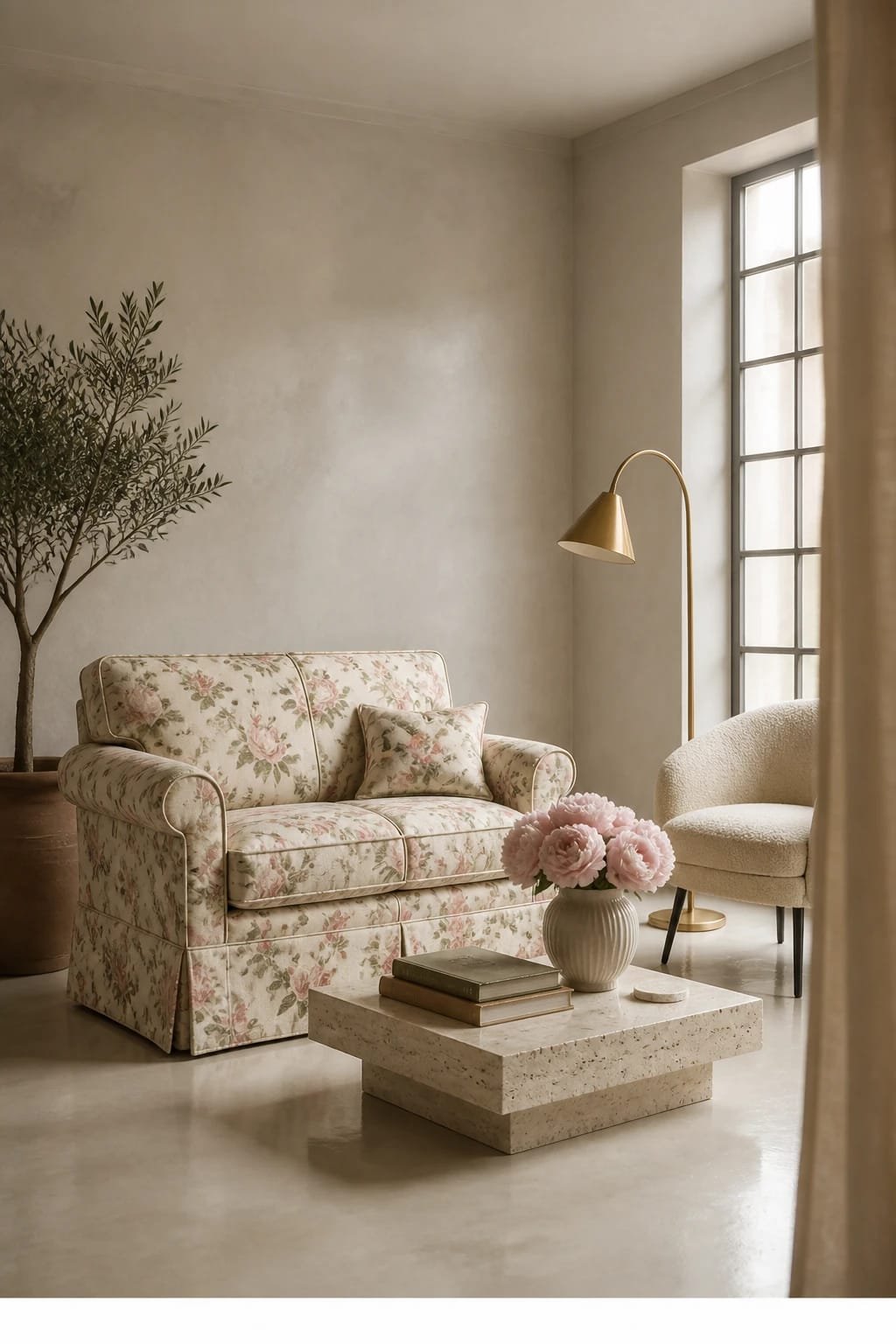
You love florals but fear grandma’s sofa. You’ve tried a cushion or two, but everything still reads half-committed. A tailored botanical chintz slipcover on one hero piece—paired with soft north light and a curvy, modern accent chair—brings the spring floral home decor fantasy into focus. Think English conservatory meets minimalist city flat. It’s cozy, witty, and timeless when edited well.
Why it works IRL: slipcovers are forgiving, washable, and great for families or pet owners. Chintz, when used on a single piece, supplies pattern and shine without crowding the room. North light is diffused and flattens glare, so the glossy chintz surface reflects gently, photographing crisp and bright. The curved chair modernizes the look so you don’t drift into costume drama.
Try these versions: For a small-space studio, slipcover a slipper chair instead of a sofa. For a budget-friendly fix, do a chintz bench cushion and matching throw pillow set. For a darker version, choose a navy or forest-grounded chintz with ivory blossoms, then pair with a pale chair to flip the contrast.
Budget Breakdown:
- Custom or semi-custom slipcover: $180–$900
- Curved accent chair (bouclé or linen): $220–$1,200
- Chintz bench cushion/pillows (alt option): $60–$220
- Sheer drapery panels to soften north light: $40–$240
- Plant stand with potted fern: $25–$90
Total Estimated Cost: $465 – $2,430
Best For: Pattern-curious decorators; pet and kid households that need washable elements; rooms with steady, indirect daylight.
Key Design Elements:
- Main materials: cotton chintz, bouclé or linen, brass feet
- Color palette: ivory ground with blush, sage, and soft coral blooms
- Lighting strategy: diffuse daylight, warm task lamp near reading chair
- Furniture silhouettes: one curved chair, one tailored slipcovered piece
- Texture layers: glossy chintz vs. nubby bouclé tension
- Accent details: fern on a stand, botanical book on side table
Why This Reads High-End: Tension is everything. Pattern on one piece plus an opposing texture on another looks edited and intentional. The single floral star feels confident, not timid.
How To Recreate This Look:
- Start with one hero: slipcover a bench, chair, or sofa in botanical chintz.
- Add a curved accent chair in a solid texture to balance the pattern.
- Layer sheers to calm the light and avoid harsh window shadows.
- Install a small brass floor lamp to warm up evening reading sessions.
- Style a fern or maidenhair plant to echo the botanical theme in 3D.
The Most Common Mistake: Mixing too many floral scales at once. Keep the chintz large-scale if your room is big; choose medium-scale for small rooms and skip additional floral pillows.
Pro Styling Tip: Angle the curved chair slightly toward the slipcovered piece; that small pivot creates a conversational posture that looks natural in photos.
4. Terra-Cotta Planter Cluster With Warm Sunset Light And Rattan Coffee Table
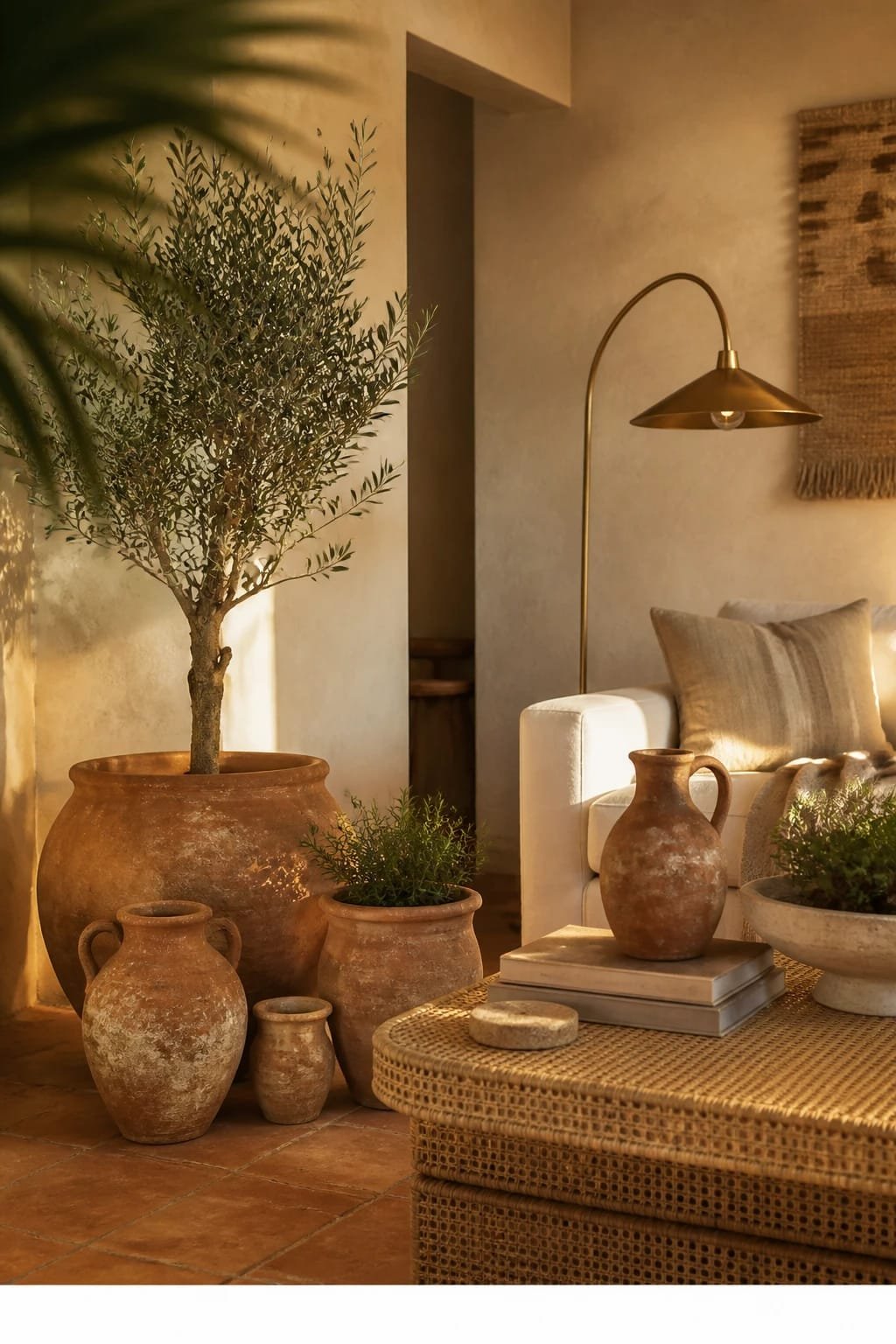
You want lush spring energy but don’t want to fuss with bouquets every week. You’ve tried one plant, but it looked lonely and… kind of sad. A cluster of terra-cotta planters in graduated sizes, highlighted by warm sunset bulbs, partnered with a rattan coffee table, gives you the fresh, indoor-garden vibe without the maintenance treadmill. The feeling: modern Mediterranean, sun-kissed and grounded.
Real home perks: the cluster strategy makes small plants feel impactful, letting you mix herbs, trailing vines, and a single flowering plant (anthurium or begonia maculata) for floral color that lasts. Terra-cotta adds matte texture and patina; rattan softens hard edges, great for family rooms. It photographs beautifully thanks to the repeating shapes and natural shadows across the pots’ rims.
Variations: On a tight budget, thrift terra-cotta and give them a limewash swish. For renters with low light, add high-quality faux stems to a real greenery base. Small-space version: use a narrow console and tuck the cluster underneath with a low uplight for drama.
Budget Breakdown:
- Terra-cotta pots (5–7 sizes): $40–$140
- Assorted plants (real or mixed faux): $60–$220
- Rattan coffee table: $180–$700
- Smart bulbs with warm preset: $30–$120
- Small uplight/spotlight for evening: $20–$60
Total Estimated Cost: $330 – $1,240
Best For: Sun-loving rooms or spaces with at least a few hours of daylight; households who like a relaxed, indoor-outdoor feel.
Key Design Elements:
- Main materials: terra-cotta, rattan, cotton-linen textiles
- Color palette: warm white, clay, olive, soft peach blooms
- Lighting strategy: sunset-tuned bulbs plus low uplight for plant drama
- Furniture silhouettes: rounded, open-weave coffee table
- Texture layers: woven basket trays, slub throw, ribbed pot rims
- Accent details: herb scissors in a small ceramic cup, terrarium-style mister
How To Recreate This Look:
- Start by selecting 5–7 terra-cotta pots in a tight color family; vary heights.
- Add 1 flowering plant, 2 trailing, 2 upright green, and 1 herb for scent.
- Layer a rattan coffee table in front; keep the surface clean and airy.
- Install warm smart bulbs to mimic sunset; add one low uplight behind the cluster.
- Style with a woven tray and a single floral-themed book to tie the story together.
Why This Looks Intentional: Repetition and rhythm. Echoing terra-cotta tones and rounded forms makes the composition read as a designed vignette, not random greenery.
Don’t Do This: Don’t scatter pots everywhere. Group them within a 3–4 foot footprint so the cluster reads as one sculptural element.
Pro Styling Tip: Slightly overlap pot silhouettes from the camera’s perspective to build layers and shadow play—flat rows kill the magic.
Quick mindset reframe: You don’t need to switch everything to spring. Swap one anchor—wall, lamp, chair, or table—and let the rest follow. Editing beats adding, every time.
5. Calacatta-Style Marble Mantel Moment With Cool Daylight And Floral Mantel Mirror
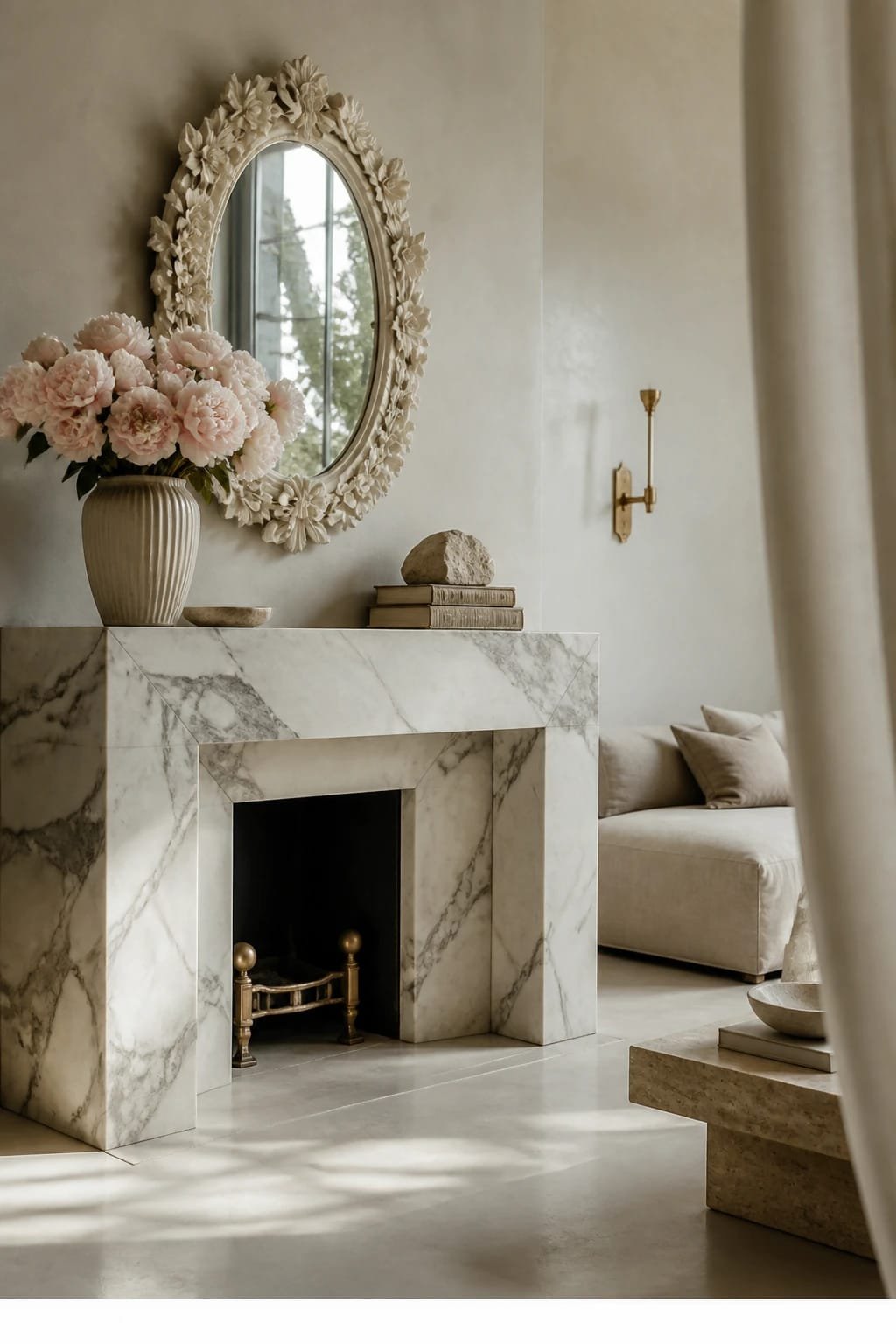
Ever feel like your fireplace is the moody grandparent of the room? Heavy, dark, and hard to style for spring. A calacatta-style mantel surround (real or peel-and-stick stone look), teamed with cool daylight and a floral-edged mirror, turns the hearth into a bright, sculptural focal point. The mood lands at “Paris apartment meets fresh greenhouse.” Crisp, refined, and endlessly photogenic.
Here’s why it works: the high-contrast veining creates visual energy without clutter, while the floral mirror adds the seasonal cue without needing constant fresh blooms. Cool daylight—hello, north or filtered east light—makes the white reads cleaner; at night, a pair of slender candlesticks provides warmth. It’s practical too: you’re refreshing a fixed architectural element, which improves perceived value and makes the room feel finished.
Options: For renters, do a removable tile decal or foam molding around the mantel face, then hang the mirror with removable hooks. For darker rooms, choose warmer-veined faux marble and swap the floral mirror for a gilded oval with subtle botanical relief.
Budget Breakdown:
- Calacatta-style surround (faux panels or decals): $120–$600
- Floral mantel mirror: $180–$900
- Slim candlesticks + taper set: $30–$120
- Removable molding/trim (if renter): $40–$150
- Accent vase with long stems: $20–$80
Total Estimated Cost: $390 – $1,850
Best For: Rooms with existing mantels that feel heavy; anyone chasing crisp, editorial spring photos; older homes that need a light touch without a gut renovation.
Key Design Elements:
- Main materials: marble-look surface, glass mirror, metal candlesticks
- Color palette: cool white, soft gray veining, pale greenery
- Lighting strategy: emphasize daylight, use candles at dusk, avoid harsh overheads
- Furniture silhouettes: slender-legged accent tables nearby to keep things airy
- Texture layers: polished stone look, glossy mirror, matte ceramic vase
- Accent details: single trailing vine, low stack of pale linen-bound books
Why This Looks Expensive: Architectural refresh plus one luxe material moment. Even faux marble reads elevated when seams are tight and styling stays lean.
How To Recreate This Look:
- Start by measuring and applying calacatta-style panels or decals with crisp edges.
- Center a floral-edged mirror above; keep a 6–8 inch reveal from the mantel.
- Add two slender candlesticks to frame the mirror; vary heights slightly.
- Layer a tall vase with a single branch or two; keep the stems airy.
- Tuck a pale book stack off-center for quiet asymmetry.
One Thing To Avoid: Avoid crowding the mantel with mini objects. Three to five pieces total is the sweet spot. Let the stone pattern do the heavy lifting.
Pro Styling Tip: Clean the mirror and stone right before photographing; glossy surfaces show fingerprints and kill that crisp “new” read instantly.
6. Painted Beadboard Half-Wall In Sage With Soft Afternoon Light And Floral-Tufted Ottoman
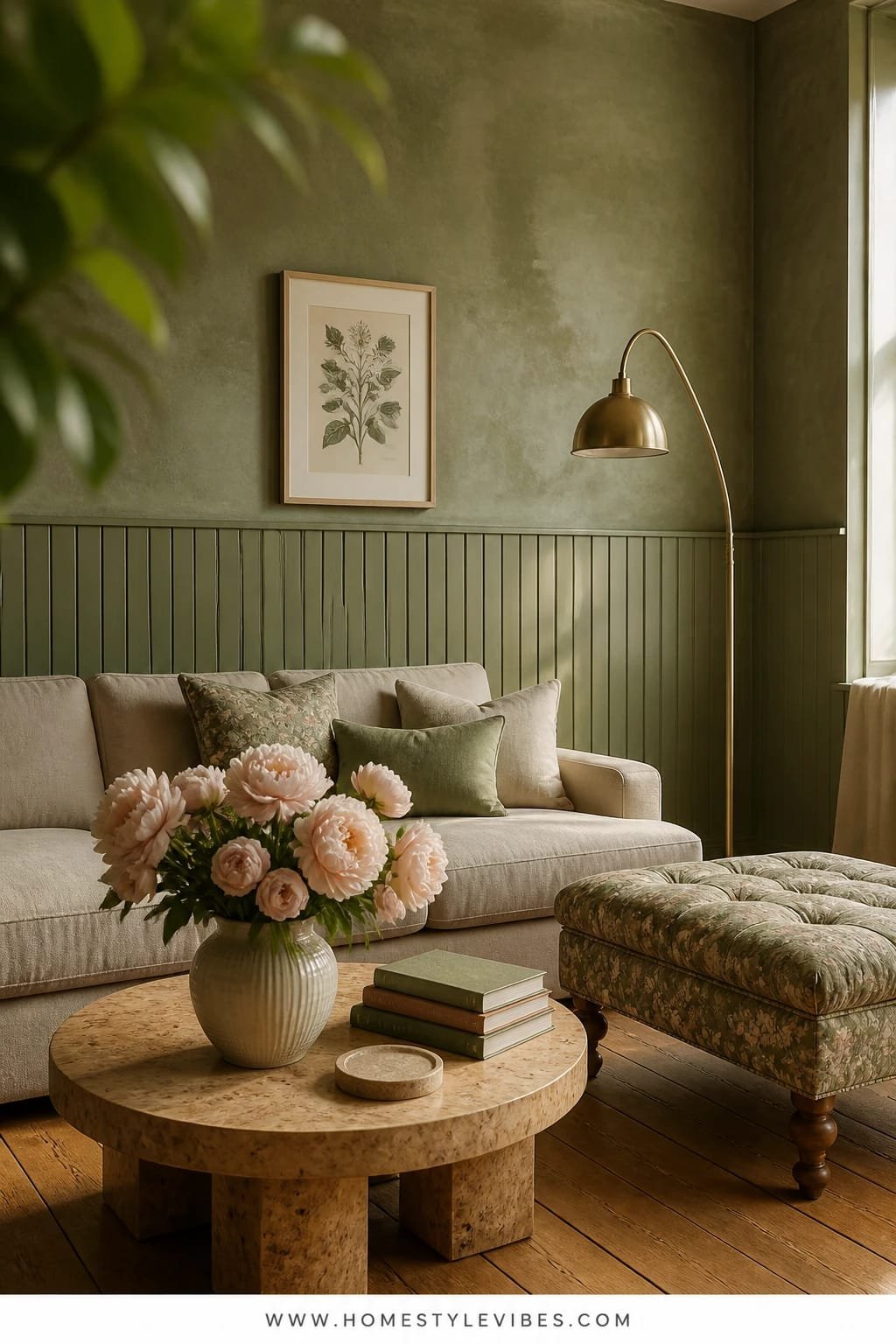
You’ve rearranged the sofa twelve times, and the room still lacks definition. Rugs help, but the perimeter feels forgettable. A beadboard half-wall painted in hushed sage, catching that easy afternoon light, and a floral-tufted ottoman at the center brings order and softness in one move. The vibe? Fresh country-meets-Scandi—structured but easygoing, perfect for spring lounging and weekend reading.
Why it works: beadboard creates vertical rhythm and instantly frames your art and sofa. Painting it sage adds gentle color that supports any floral accents you bring in—pillows, ottoman, or a throw. The floral-tufted ottoman acts as both coffee table and color story. Fabric-covered pieces photograph beautifully because the tufting creates natural highlights and shadows.
Variations: If you rent, use peel-and-stick beadboard panels and removable paint or colored vinyl. For tiny rooms, drop the half-wall to 32 inches and pick a smaller ottoman. Darker-room twist: go olive beadboard with a pale floral ottoman to keep contrast alive.
Budget Breakdown:
- Beadboard panels (real or peel-and-stick): $80–$280
- Paint + supplies: $40–$120
- Floral-tufted ottoman: $180–$900
- Throw pillows to echo ottoman colors: $40–$160
- Soft-drape side panels for windows: $60–$260
Total Estimated Cost: $400 – $1,720
Best For: Rooms that feel floaty or undefined; families who want a soft, multi-use center surface; afternoon-light spaces.
Key Design Elements:
- Main materials: beadboard, cotton-linen upholstery, painted wood
- Color palette: sage, cream, dusty rose, and soft gold accents
- Lighting strategy: maximize indirect afternoon light, avoid heavy drapes
- Furniture silhouettes: tight-back sofa, rounded ottoman, slim console
- Texture layers: stitched tufting, matte paint, woven throws
- Accent details: botanical prints in thin frames, ceramic coasters, fresh peonies
Why This Feels Designer: Architectural detail plus a single statement textile is the fastest way to make a living room feel “finished.” The half-wall gives your art and seating a stage.
How To Recreate This Look:
- Start by installing beadboard to 36–40 inches high; cap with simple trim.
- Paint in a soft sage with a matte finish for a velvety read.
- Anchor the center with a floral-tufted ottoman; choose a print that nods to your pillows.
- Hang two to three botanical prints above the beadboard in a tight row.
- Style the ottoman with a tray, a petite vase, and one hardcover for layering.
The Most Common Mistake: Painting beadboard in glossy finishes that show every seam. Matte or eggshell keeps it calm and smooth in photos and life.
Pro Styling Tip: When shooting, place the tray off-center and fold the throw over one corner of the ottoman—those diagonals add movement and keep the scene from looking staged.
Small confession: I once fought with beadboard seams for an entire Saturday. The fix was painfully simple—using a caulk with a smaller nozzle to keep lines clean. If you’re mid-project and annoyed, you’re not alone. Take a snack break, then come back with fresh eyes.
One more mindset nudge: You don’t need all six ideas. Pick the one that solves your loudest frustration—blank wall, heavy mantel, flat lighting—and do only that. Progress is better than perfection.
Quick Checklist
- Choose one floral hero: oversized canvas, chintz slipcover, or tufted ottoman
- Repeat one texture: linen, rattan, beadboard, or fluting
- Dial in light temperature: warm for cozy, cool for crisp whites
- Use scale strategically: one large piece beats five small ones
- Limit floral varieties to two or three for cohesion
- Group plants and objects; avoid scatter styling
- Keep mantel and sideboard surfaces edited to 3–5 items
- Mount curtain rods high to stretch the room visually
- Mix matte and glossy finishes for depth in photos
- Always test paint and light together before final decisions
Frequently Asked Questions
How do I get a spring floral look on a tight budget?
Pick one hero move. Frame a large floral print with a linen-wrapped mat, or thrift terra-cotta pots and cluster them near a window. Keep everything else neutral and simple so the hero does the work. $150–$300 can go far when you avoid scatter spending.
My living room is small. Which idea won’t overwhelm it?
Go for the linen-wrapped gallery with one oversized floral canvas, or the chintz on a single slipper chair. Both add vertical presence without eating floor space. Use lighter backgrounds and small-scale frames to keep the room airy.
I’m renting and can’t paint. What’s my best spring refresh?
Use removable beadboard panels, peel-and-stick marble surround for the mantel, and command-strip gallery walls. Add a ceramic blossom lamp and a floral ottoman to bring the theme without touching the walls permanently.
How do I keep florals from looking fussy or dated?
Limit yourself to one floral statement per zone and anchor it with solid, textured pieces. Pair chintz with bouclé, or a floral mirror with sleek candlesticks. Keep colors tonal and avoid mixing too many scales in one sightline.
Maintenance worries me—what’s easy to care for?
Slipcovers you can toss in the wash, faux stems mixed with one real plant, and matte-finish surfaces that don’t show fingerprints. Terra-cotta and rattan age nicely, and battery picture lights make upkeep easy.
Wrapping It Up
Pick one idea that solves your biggest annoyance and commit to it this weekend. Maybe it’s that blank wall that needs linen texture and a bold floral, or the heavy mantel begging for a bright stone look and a botanical mirror. Keep the palette tight, the surfaces edited, and the lighting thoughtful.
The truth is, spring luxury doesn’t come from buying more—it comes from texture, light, and restraint. One confident floral moment plus a clear material story makes your living room feel fresh and profoundly you. That’s the secret that never fails.
You’ve got this. Start with one step, take one photo, then adjust. By Sunday evening, you’ll sit down, catch that soft glow on your new floral moment, and think, “Okay. This feels like home.”

About the Author

Krisztina P.Rendes, Founder of Home Style Vibes
Founder of Home Style Vibes
Krisztina Puskásné Rendes created Home Style Vibes as a cozy-modern lifestyle space where homemaking meets inspiration. Her goal is to help women create beautiful, organized, and peaceful homes they truly love — without overwhelm. You’ll find here heart-driven content on home decor, cleaning tips, easy family recipes, organization and decluttering, DIY home projects, plants, and seasonal ideas — all designed to bring more calm, comfort, and style into everyday life.