6 Minimalist Luxury Living Room Ideas For A Calm Elegant Space
You want a living room that whispers calm—soft light sliding across stone, crisp lines, and those effortless “how does it look this expensive?” details. But clutter creeps in, the sofa never quite sits right, and the room feels flat instead of serene. Here’s the fix: six minimalist luxury living room ideas designed to tame chaos, add texture, and make your space look photogenic with zero visual noise. Each idea is realistic to execute—most under a set budget and within a weekend or two—and they’ll give you that glossy, Pinterest-worthy polish without sacrificing comfort.
Expect warm neutrals, natural materials, smart lighting, and furniture that earns its footprint. If you love hotel-lobby calm with real-life livability, you’re in the right place.
1. Travertine Calm With Dappled Afternoon Light And A Low Bench-Back Sofa
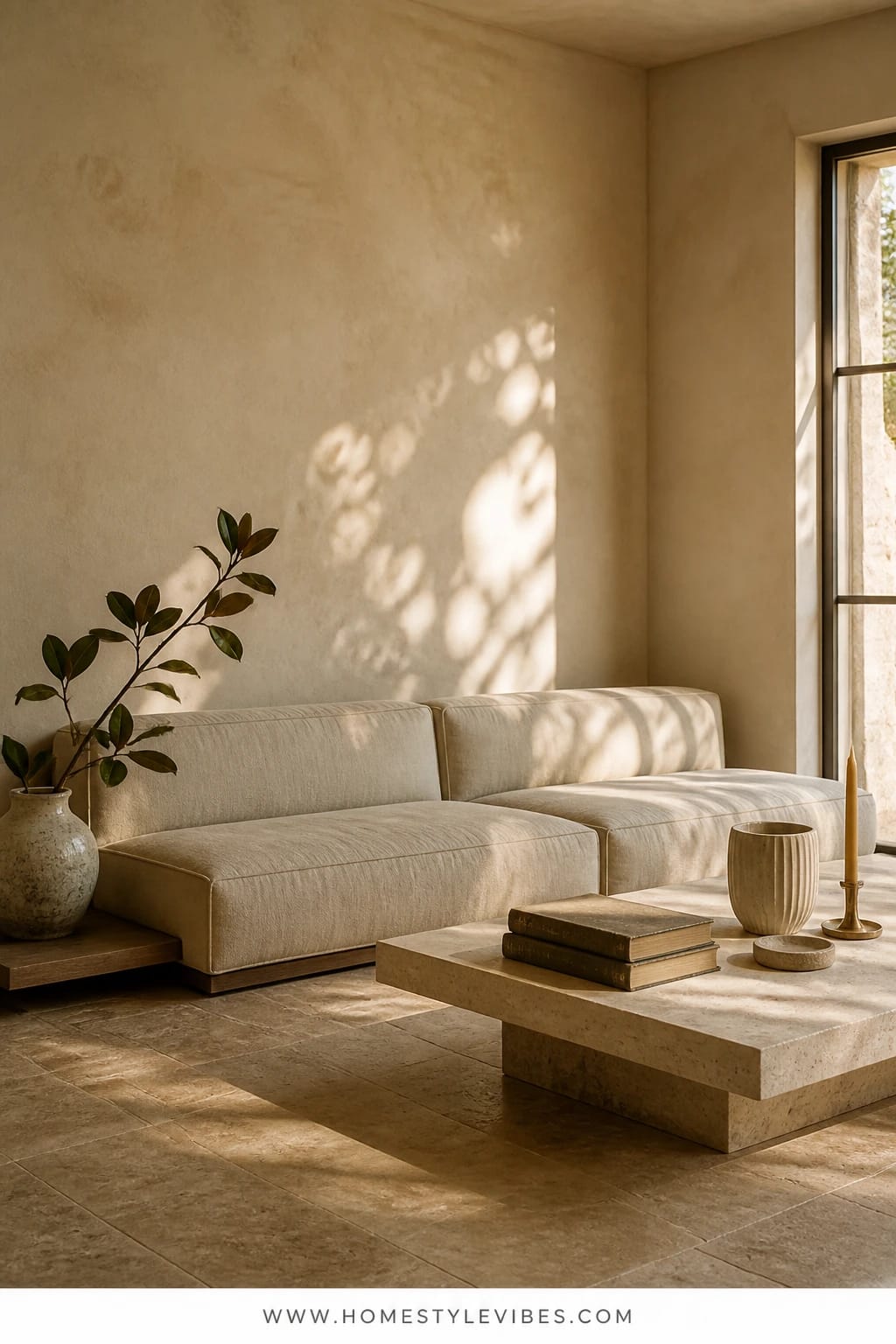
We’ve all been there: the living room looks fine during the day and oddly sterile by evening. You’ve tried cushions, throws, and random art, but it still reads unfinished and a bit “rental white.” This design leans into natural stone and low-slung silhouettes to create calm you can actually feel.
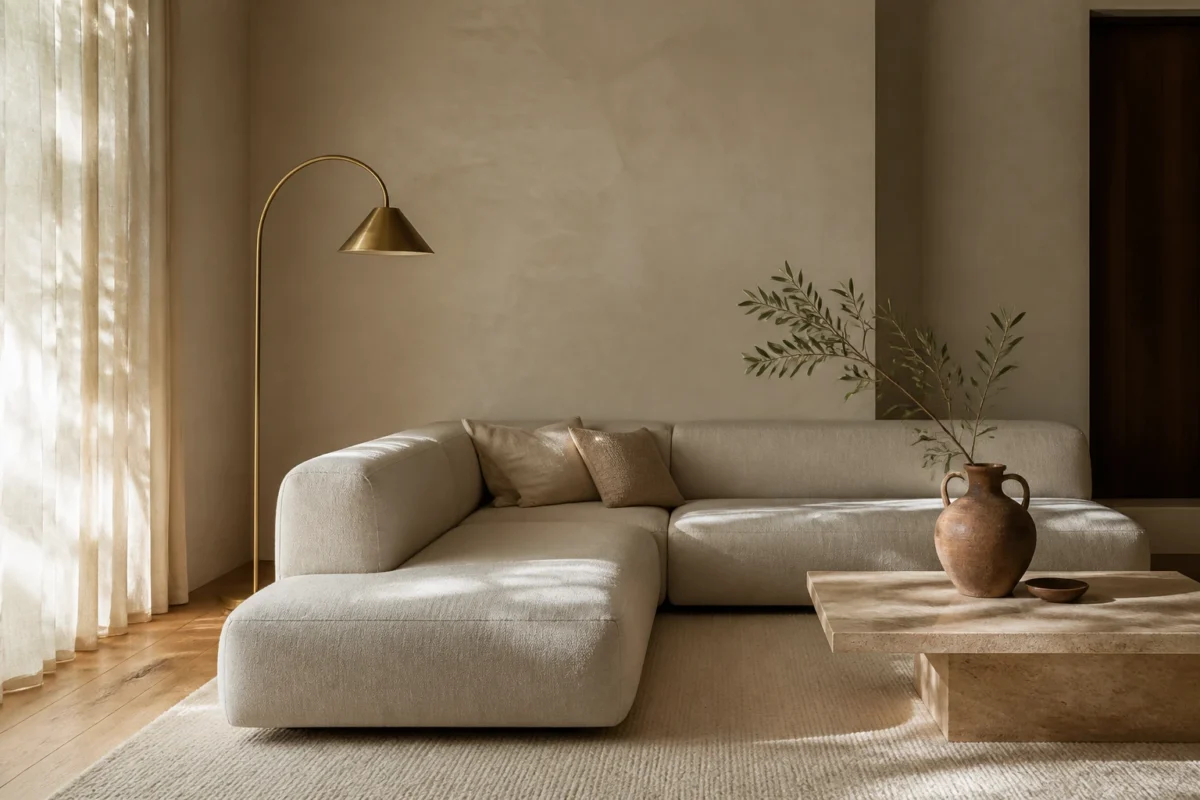
The mood: soft, grounded, and genuinely high-end. Picture a pale travertine coffee table that catches dappled afternoon light, a low bench-back sofa that stretches like a horizon line, and oatmeal linens that don’t scream for attention. It works in real homes because the low visual height lets small spaces breathe and creates an intentional “line of sight” that makes everything appear organized. Lighting is the secret sauce: indirect sources, a dimmable wall wash, and a single, subtle reading lamp make evenings feel intimate instead of underlit.
Materials do the heavy lifting here—travertine, unlaquered brass, and textured wool. Add a thick rug underfoot for warmth and a matte plaster wall to catch shadows. Why it photographs beautifully: the stone’s natural veining adds quiet movement, the sofa’s clean geometry gives clarity, and the layered lighting pulls out depth and softness. Variations: choose a rectangular travertine slab for classic symmetry, or a vintage travertine pedestal table for character. For small spaces, use a nesting travertine side table instead of a large coffee table. Renter-friendly swap: travertine-look porcelain or a microcement top over an inexpensive base.
Budget Breakdown:
- Low bench-back sofa (linen or performance fabric): $1,200–$3,800
- Travertine coffee or side table: $500–$2,500
- Wool rug (8×10): $450–$1,200
- Wall-wash sconce or track with dimmer: $180–$600
- Matte plaster or limewash wall treatment: $120–$450 (materials) or $800–$2,000 (pro)
- Brass floor lamp, minimalist style: $180–$700
Total Estimated Cost: $2,630 – $10,800
Best For: Medium rooms, open-concept homes that need quiet zones, anyone who wants warmth without clutter. Ideal if you crave a sophisticated, spa-like living area that’s still family-friendly.
Key Design Elements:
- Main materials: travertine, plaster, brass, textured wool
- Color palette: warm neutrals—ecru, sand, biscuit white, soft stone
- Lighting strategy: low ambient glow with wall wash, one focused reading light
- Furniture silhouettes: low-slung sofa, slab-style table, clean-lined media console
- Texture layers: nubby rug, linen cushions, stone veins, plastered walls
- Accent details: slim brass tray, a single ceramic vase, olive branches
How To Recreate This Look:
- Start with the sofa: choose a low bench-back in a performance linen to set the horizon line.
- Add the stone: a travertine coffee table or a pair of travertine side tables for flexibility.
- Layer a wool rug: pick a warm, solid tone or a subtle rib for mute depth.
- Install dimmable wall-wash lighting: a track or discreet sconces aimed at your feature wall.
- Style with restraint: one organic vase, a brass catchall, and two cushions—no more.
Why This Looks Expensive: Restraint plus natural materials. When you let one beautiful stone piece breathe and repeat soft textures, everything reads curated and intentional. The cohesive color story adds calm and polish.
Watch Out: Don’t pick a sofa that’s too tall. It kills the low horizon effect. Also, avoid busy travertine patterns that feel speckled—look for veining, not freckles.
Pro Styling Tip: Photograph in late afternoon when side light grazes the plaster; angle the camera low to emphasize the sofa’s long lines and shadow play across the travertine.
Keep scrolling—next up, a design that solves the “blank wall, wrong mood” problem in a single move.
2. Fluted Oak Warmth With Soft Uplighting And A Curved Modular Sectional
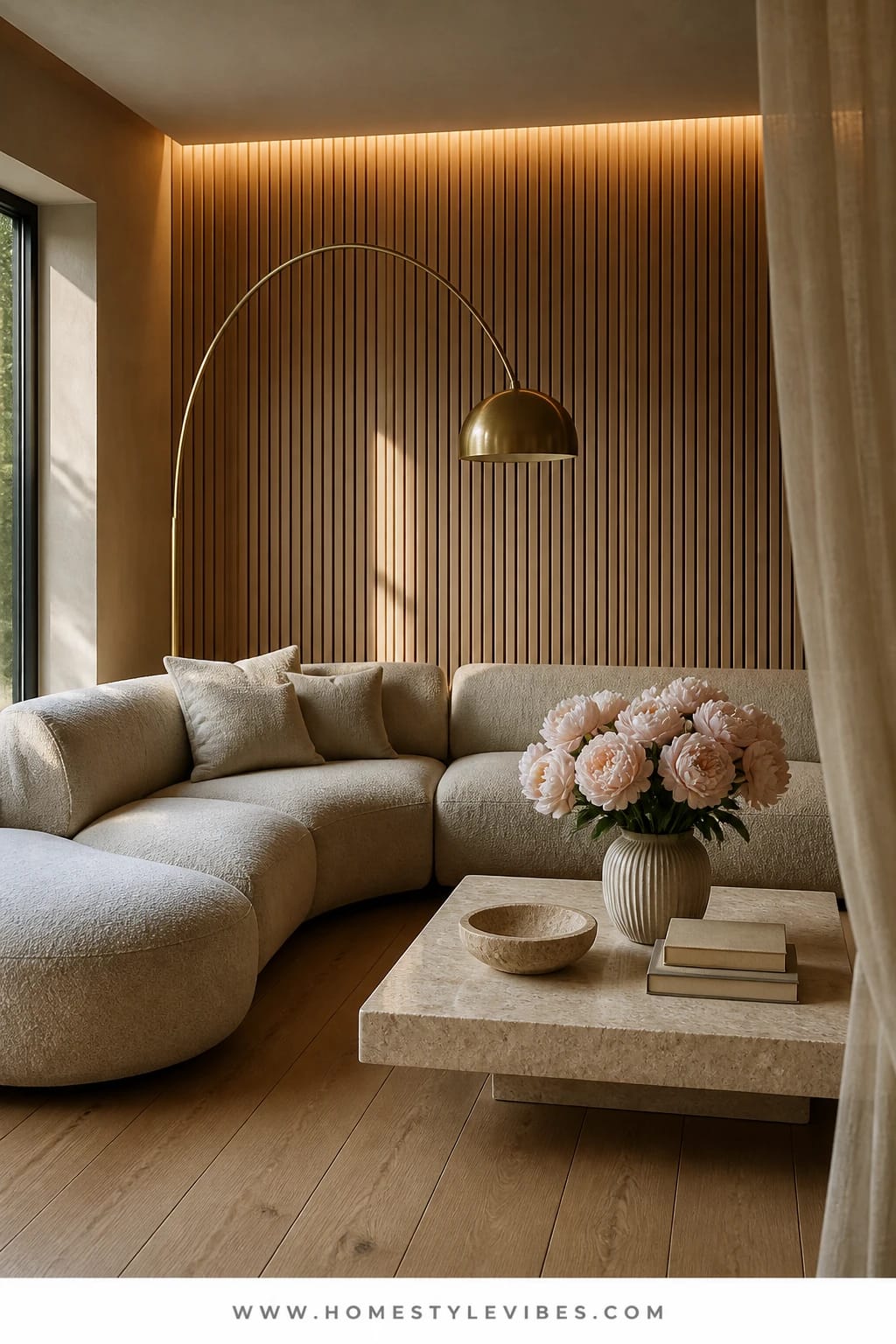
It’s that one corner that always feels off—the wall feels empty and the sofa floats like a raft. You keep adding art, but it still looks like pieces, not a whole. This design uses fluted oak as a quiet rhythm, uplighting to soften edges, and a curved sectional to anchor the room without hard lines.
The mood: modern organic with a hint of boutique-hotel comfort. It thrives in family homes because fluted oak panels hide small dents, the curved sectional seats more people, and the soft uplighting reduces glare for movie nights. Lighting matters here: a cove or discreet floor uplights create gentle vertical glow, which flatters wood grain and reduces harsh shadows that feel cold in minimalist spaces.
Why it photographs well: fluting adds vertical texture that catches light and creates depth without clutter. The curved sofa draws the eye inward, making the space feel intentional and social. Variations: budget-friendly MDF fluted panels painted to mimic oak; small-space version with a curved loveseat; darker version with smoked oak and warm white bulbs. Renter-friendly version: peel-and-stick reeded panels behind a freestanding console, plus battery-powered uplights tucked near the wall.
Key Design Elements:
- Main materials: fluted oak, boucle or chenille, matte black accents
- Color palette: warm honey oak, cream, soft taupe, black grounding points
- Lighting strategy: uplights at intervals, low table lamps, minimal overhead glare
- Furniture silhouettes: curved sectional, slim console, rounded nesting tables
- Texture layers: boucle upholstery, wood grain, wool or jute blend rug, ceramic lamps
- Accent details: matte black frames, a large statement branch, understated books
Budget Breakdown:
- Fluted oak panels or MDF reeded panels: $12–$45 per sq ft
- Curved modular sectional: $1,800–$6,500
- Uplights/cove lighting with dimmer: $150–$800
- Rug (9×12 wool/jute blend): $500–$1,400
- Matte black console: $250–$900
- Nesting tables (rounded edges): $200–$1,200
Total Estimated Cost: $2,912 – $10,845
Best For: Larger living rooms or open plans that need soft zoning, homes with kids or pets who need durable textures, anyone craving warmth without visual clutter.
How To Recreate This Look:
- Panel one feature wall with oak fluting; keep it simple and full height.
- Anchor with a curved sectional; float it slightly off the wall to maintain soft flow.
- Add uplights or install a cove lighting strip to graze the wood.
- Place a rounded nesting table set to echo the curve and maximize versatility.
- Style a low console against the fluted wall with two lamps, one sculptural branch, and three stacked books.
Why This Feels Designer: The curve-plus-flute combo reads bespoke. The lighting grazes the wood to show grain and depth, turning a wall into a feature without loud art.
One Thing To Avoid: Mixing too many wood tones. Stick to one dominant oak tone and repeat it. A rogue red oak side table can throw the entire palette.
Pro Styling Tip: For photos, turn off overheads and rely on uplights and table lamps; capture the fluted wall at an angle so shadows create rhythm.
Pause. Breathe. If two ideas are starting to spark, that’s enough. You don’t need all six. Pick the one that feels like home and build from there—small moves, big calm.
3. Honed Marble Serenity With North-Light Glow And A Sculptural Pedestal Chair
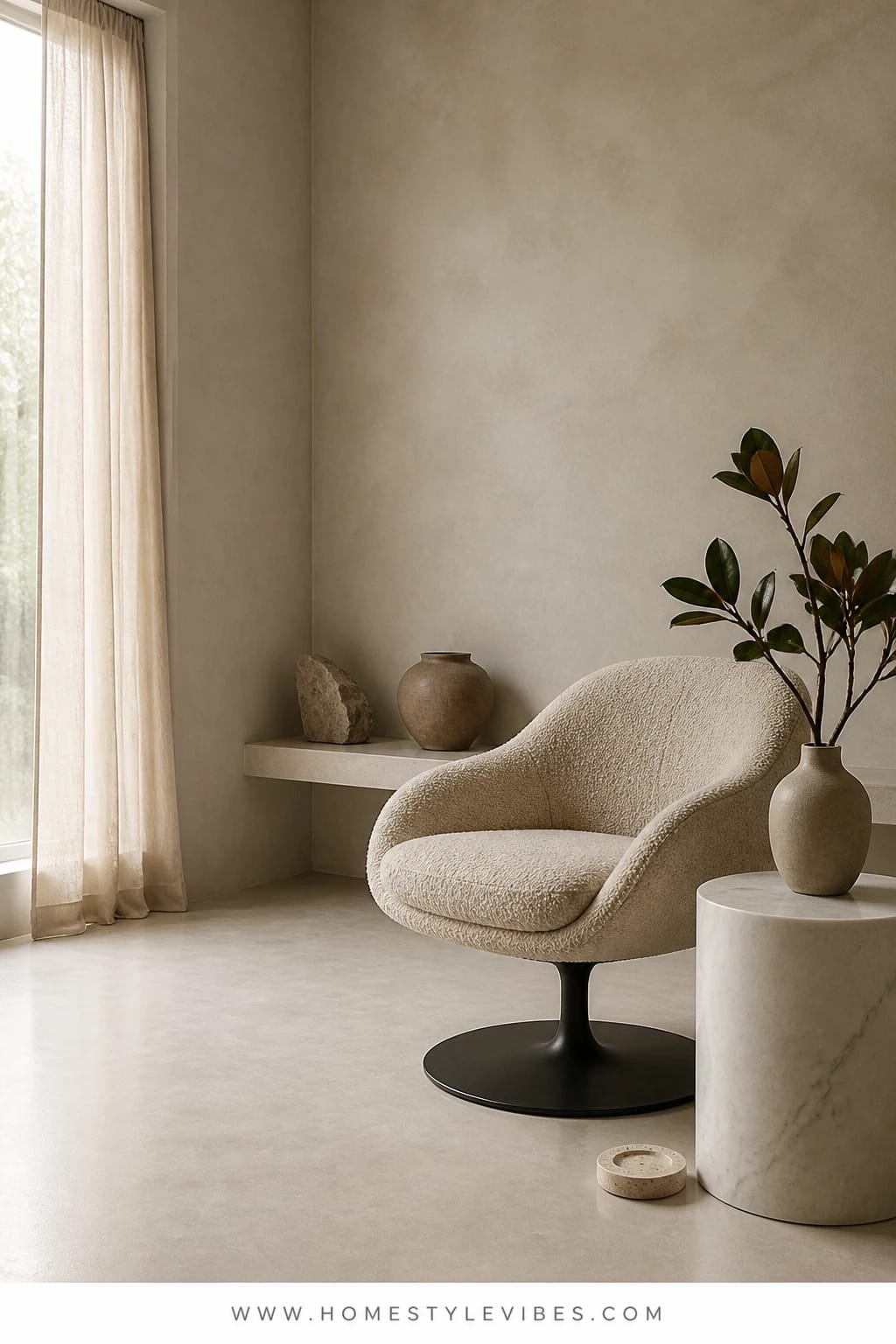
You’ve spent weeks ordering samples, but every piece looks a bit… shiny. The room feels more showroom than sanctuary. This concept leans into honed marble (matte, not glossy), celebrates cool north light, and introduces one sculptural chair on a slim pedestal base to give the scene a quiet focal point.
The mood: gallery-calm and minimal without feeling severe. Real-home win: honed finishes resist glare and fingerprints, north-facing spaces finally feel intentional rather than dim, and the single statement chair adds personality without crowding. If your room runs cool, this palette anchors it with texture, not heavy color. Add warmth with an oat-toned rug and a soft throw, and keep the rest of the furniture low profile.
It photographs beautifully because honed marble drinks light instead of reflecting it, which makes shadows nuanced and elegant. The pedestal chair adds instant sculpture and balances the room’s horizontals. Variations: swap real marble for quartz with a honed finish; choose a swivel pedestal base for compact layouts; darker version with soapstone-look surfaces and sable upholstery for moody drama; renter-friendly: marble-look side table and a single statement lounge chair with a black metal base.
Budget Breakdown:
- Honed marble table (coffee or console): $700–$3,200
- Sculptural pedestal chair: $600–$2,400
- Wool or tencel rug (cool neutral): $400–$1,100
- North-light friendly bulbs (high CRI 2700–3000K): $60–$180
- Neutral linen drapery: $200–$900
- Minimalist media cabinet (matte finish): $350–$1,400
Total Estimated Cost: $2,310 – $9,180
Best For: Apartments or townhomes with consistent cool light, design lovers who want sculptural impact without clutter, homes that favor art over knick-knacks.
Key Design Elements:
- Main materials: honed marble, matte lacquer, brushed nickel or blackened steel
- Color palette: cool whites, soft grays, pebble, charcoal accents
- Lighting strategy: bounce light with pale walls, add high-CRI bulbs, use a linear floor lamp
- Furniture silhouettes: slim-lined sofa, pedestal-base chair, slender console
- Texture layers: honed stone, tight-weave rug, linen drapes, wool throw
- Accent details: one large framed print with wide mat, glass bowl, single candle
How To Recreate This Look:
- Start with a honed marble piece—coffee table if you entertain, console if you need storage.
- Add a sculptural pedestal chair in a textured fabric; place it where light skims the backrest.
- Choose a slim sofa with tight arms to keep lines clean.
- Hang neutral drapery high to lift the room; keep the stack clear of the window glass.
- Edit decor to three essentials: one framed print, a glass bowl, and a single candle or incense holder.
Why This Reads High-End: Consistent sheen matters. Combining matte stone, matte paint, and low-luster fabrics avoids the visual “noise” of mismatched gloss, which is what usually makes rooms feel cheaper than they are.
The Most Common Mistake: Picking a marble with busy, graphic veining. For calm elegance, choose larger, softer veining that flows instead of spotty patterns.
Pro Styling Tip: Take photos from a slightly off-center angle so the pedestal base reads as negative space—this adds a gallery vibe and highlights form.
On the fence about curves vs. angles? The next concept shows how to make straight lines look soft—no round furniture required.
4. Linen-Limewash Softness With Golden Hour Backlighting And A Slim Stone Mantel
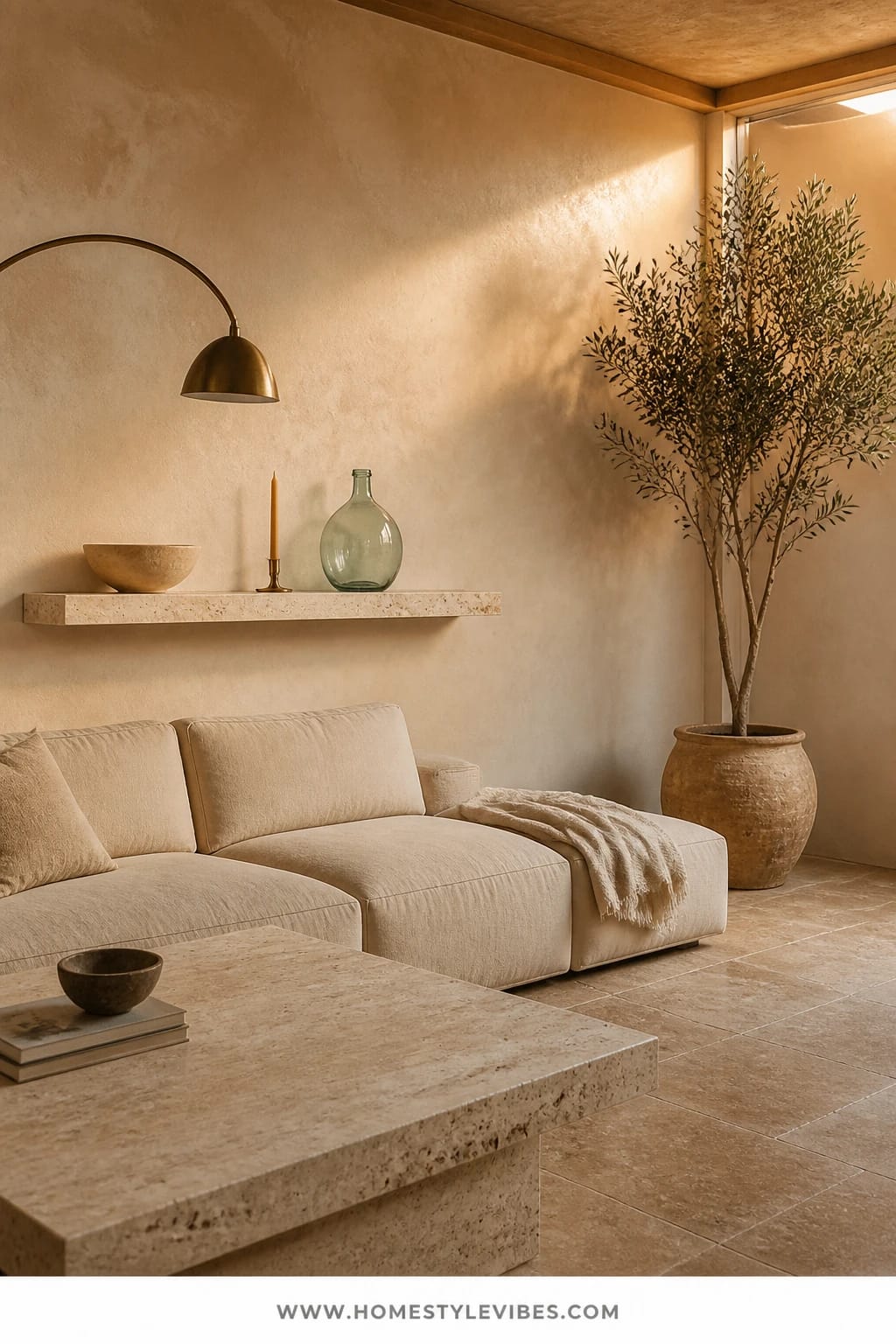
That wall behind your sofa feels like a blank billboard. You tried art, then a gallery wall, then shelves—and it still bossed the room around. This design anchors the space with a slim stone mantel (even a faux one), wraps the walls in a linen-limewash finish, and leans into golden hour backlighting for a dreamy hush.
The mood: modern Mediterranean meets Parisian apartment. It works in real homes because the mantel gives your sightline a timeless focal point without bulk, limewash covers old wall sins with a feathered texture, and the soft backlighting in the evening turns the whole room into a mellow cocoon. Bonus: it’s insanely photogenic. The limewash catches diffuse light, the slender mantel trims the room like a tailored blazer, and subtle backlighting creates that coveted rim glow around objects.
Variations: budget-friendly faux mantel in painted MDF; small-space version with a narrow mantel shelf and a shallow electric insert; darker version with warm taupe limewash and bone-colored upholstery; renter-friendly with a freestanding mantel surround and removable limewash-effect paint.
Key Design Elements:
- Main materials: limewash, linen, limestone or cast-stone mantel
- Color palette: warm ivory, pale wheat, soft taupe, burnished brass
- Lighting strategy: LED backlighting behind the mantel or console, soft table lamps
- Furniture silhouettes: straighter lines, slim arms, tapered legs
- Texture layers: limewash walls, linen upholstery, braided wool rug, ceramic vases
- Accent details: candle clusters, plaster art, a small bowl of citrus for color
Budget Breakdown:
- Faux or slim stone mantel: $350–$2,800
- Limewash paint kit: $150–$400
- Linen sofa or slipcover: $700–$2,200
- LED backlight strip with diffuser: $40–$150
- Rug (8×10 braided wool): $450–$1,200
- Brass table lamps (pair): $180–$700
Total Estimated Cost: $1,870 – $7,450
Best For: Homes with flat drywall that need organic movement, renters who can handle freestanding elements, anyone who wants gentle romance without clutter.
How To Recreate This Look:
- Limewash the main wall; apply in crisscross strokes to show tonal movement.
- Install or place a slim mantel centered; keep the profile delicate.
- Mount a diffused LED strip behind the mantel or console for a halo effect.
- Choose a tailored linen sofa; avoid overstuffing to keep lines crisp.
- Style the mantel with three items: one low bowl, one candle cluster, one small art piece leaning casually.
Why This Looks Intentional: The mantel frames the room and the limewash adds micro-texture across a big surface. Backlighting draws your eye softly to the center, making the whole space feel curated, not crammed.
Don’t Do This: Don’t shove the sofa right against the wall. Leave 3–5 inches of breathing room; the shadow line adds depth that reads as expensive.
Pro Styling Tip: Shoot during golden hour with only backlights and table lamps on; the limewash will glow like watercolor and your photos will look editorial.
Remember, this isn’t about recreating a showroom. It’s about assembling a room that fits your rhythms: where you drop your bag, sip tea, and actually exhale. One idea that feels good beats five that look trendy.
5. Blackened Steel Quiet With Diffused Skylight And A Monolithic Coffee Block
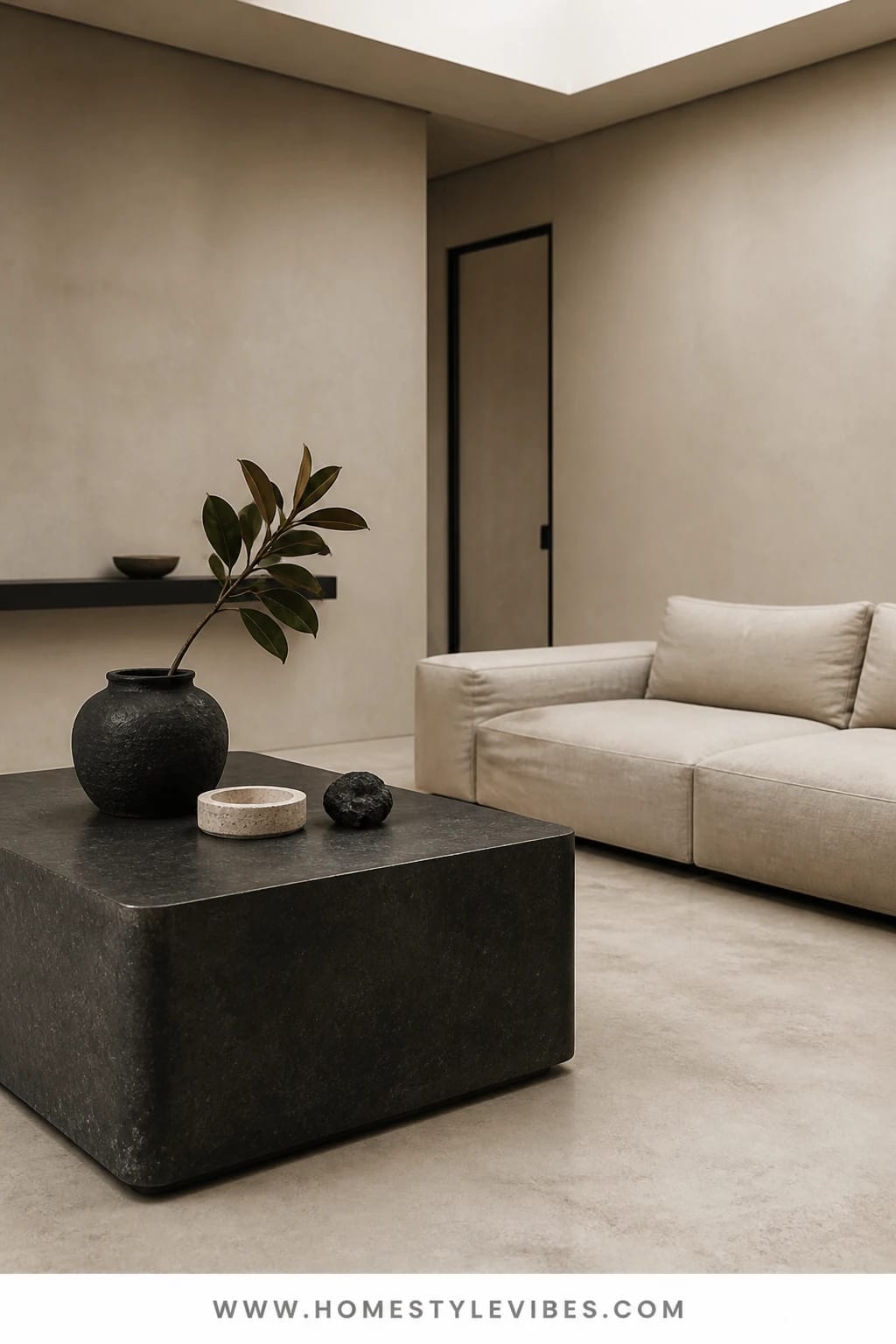
You love minimalism, you hate the starkness. The truth is, dark accents can read calm if they’re used as quiet anchors, not loud statements. This concept uses blackened steel sparingly—think a low shelf or framed doors—paired with diffused skylight (or a faux-skylight panel) and one monolithic coffee block that grounds the room like a sculpture.
The mood: refined, slightly moody, architecturally clean. It works for busy households because the monolithic table handles wear and tear, dark accents hide smudges, and diffused overhead light prevents the “spotlight” effect that makes rooms feel harsh. If you have a real skylight, add a diffuser to soften. If not, use a surface-mounted panel with a warm setting and dimmer for a believable faux glow.
Photographically, this approach is a gift: matte black frames create contrast lines that read crisp on camera, while the monolithic table gives scale. Variations: budget option in sealed microcement for the coffee block; small-space version with a square block and a slim loveseat; lighter version pairing blackened steel with pale oak for Scandinavian calm; renter-friendly with a black metal console and a portable light panel.
Budget Breakdown:
- Monolithic coffee block (stone, microcement, or wood veneer): $400–$2,200
- Blackened steel console/shelving: $300–$1,500
- Diffused skylight or panel light with dimmer: $120–$900
- Rug (flatweave wool): $350–$1,100
- Sofa (clean lines, performance fabric): $900–$3,200
- Accent chair (leather or linen): $400–$1,800
Total Estimated Cost: $2,470 – $10,700
Best For: Open plans that need visual discipline, lofts, or any room that suffers from glare. Great for pet owners—flatweave rugs and dark frames are forgiving.
Key Design Elements:
- Main materials: blackened steel, microcement or stone, flatweave wool
- Color palette: warm white walls, charcoal, soft gray, cognac leather accents
- Lighting strategy: diffused overhead glow plus one directional floor lamp
- Furniture silhouettes: straight arms, slim metal frames, blocky low table
- Texture layers: flatweave rug, matte metal, smooth stone, one leather accent
- Accent details: oversized vessel, low stack of design books, singular wall art
How To Recreate This Look:
- Introduce one monolithic table—square or rectangular—to anchor the seating.
- Add a blackened steel console or low shelf; keep it below mid-wall height.
- Install a diffused light source overhead and put it on a dimmer.
- Choose a straight-armed sofa and a single leather or linen accent chair.
- Limit decor to three gestures: one oversized vessel, one art piece, and a stack of books.
Why This Looks Expensive: Big shapes, small moves. When the table and console do the talking, you can keep everything else quiet—and that restraint reads as custom and confident.
Watch Out: Don’t mix glossy black with matte blackened steel; the mismatch can feel accidental. If finishes don’t match, separate them physically so they don’t compete.
Pro Styling Tip: For photos, create a triangle: sofa, chair, and table edges all visible. Let the black frames add crisp lines, then soften with a single textile draped casually.
Almost there. The last design is for the texture-lover who still wants clean lines and a soft, luxe hush.
6. Bouclé Cloud Texture With Candlelit Amber Hue And A Statement Arc Floor Lamp
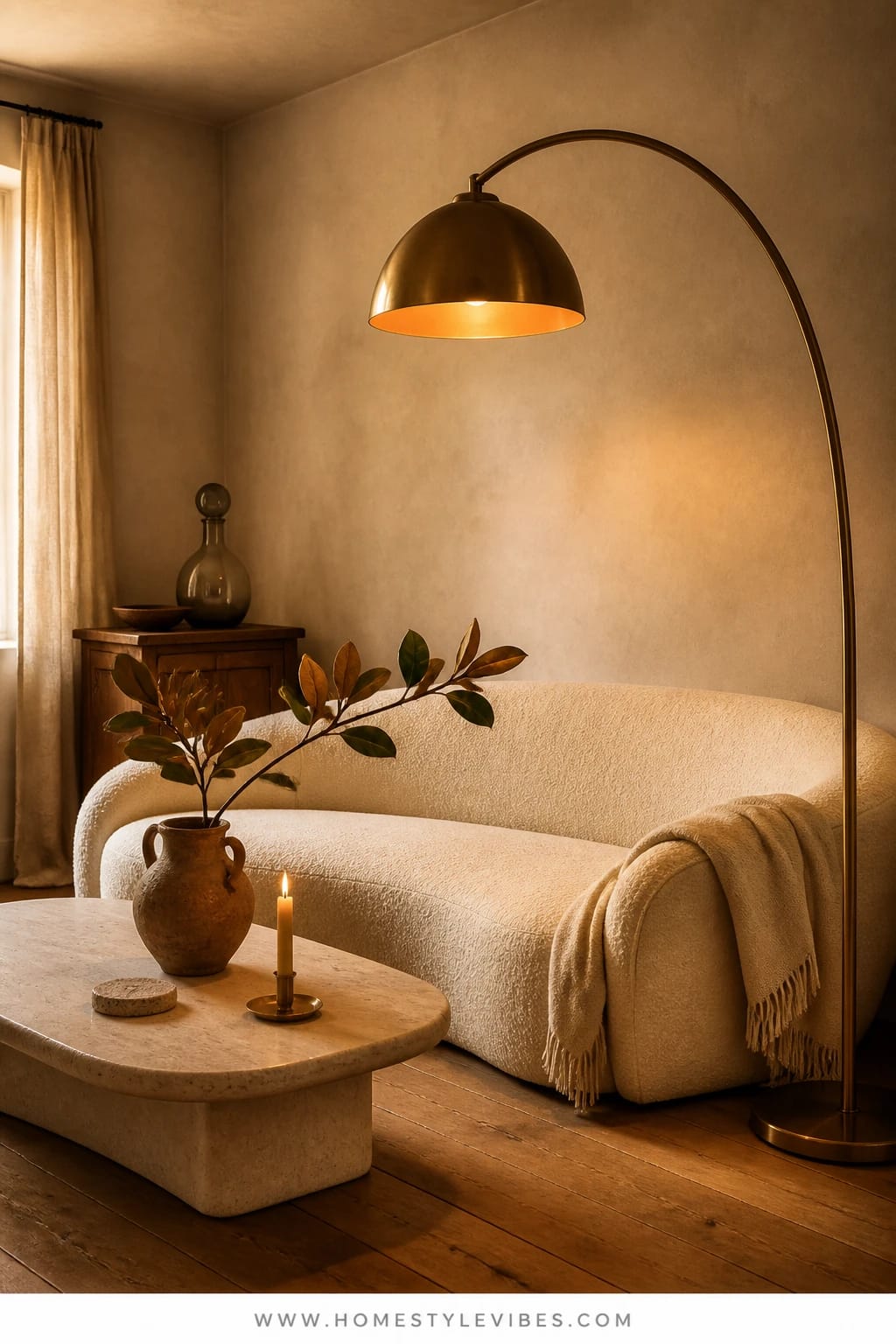
You’ve tried minimalism and ended up with a room that felt like a waiting room. This is the antidote: tactile bouclé, a candlelit amber hue in the evenings, and one grand arc floor lamp that frames the seating like a soft canopy. It’s still minimalist luxury—just with soul and touch.
The mood: cozy-contemporary, a little Paris loft, a little winter cabin. It works because bouclé reads plush without loud patterns, amber-hued bulbs or dimmers bring warmth at night, and the arc lamp doubles as sculpture and task light. In family homes, performance bouclé resists pilling and the arc lamp frees table space. It photographs beautifully: the looped texture drinks light, the arc creates height balance, and amber tone adds warmth that cameras love.
Variations: budget-friendly polyester bouclé or textured chenille; small-space version with a petite arc lamp and a 72-inch sofa; darker version with cocoa upholstery and cream rug; renter-friendly with plug-in dimmers and battery candles for that amber mood without rewiring. Personal note: I tried this combo in my own living room last fall, and honestly, the arc lamp changed how we use the space—we actually sit and read now instead of zoning out in the kitchen.
Budget Breakdown:
- Bouclé sofa or slipcover: $900–$3,200
- Arc floor lamp (statement scale): $250–$1,200
- Amber-toned bulbs and plug-in dimmers: $30–$120
- Plush rug (shorn wool or high-pile): $500–$1,600
- Side table in stone or wood: $180–$900
- Textile accents (throw, two pillows): $120–$450
Total Estimated Cost: $1,980 – $7,470
Best For: Cozy evenings, homes that double as work spaces by day and retreat by night, anyone who wants minimalist warmth that still feels huggable.
Key Design Elements:
- Main materials: bouclé, warm wood, stone side table
- Color palette: cream, camel, linen white, tiny hits of black
- Lighting strategy: arc lamp as centerpiece, amber bulbs, candle clusters
- Furniture silhouettes: rounded corners, soft edges, slender legs
- Texture layers: looped bouclé, plush rug, linen curtains, raw ceramic
- Accent details: single black line drawing, ceramic bowl, eucalyptus in clear glass
Why This Feels Designer: Height balance. The arc lamp adds a vertical gesture that balances low seating, so the eye moves through the scene instead of sinking. Plus, one hero texture (bouclé) repeated in small doses looks curated.
How To Recreate This Look:
- Choose a bouclé or textured sofa as your anchor—neutral, not bright white.
- Place a statement arc floor lamp so the shade hovers over the coffee table’s corner.
- Use warm-dim bulbs or a plug-in dimmer to shift the room to amber at night.
- Add a plush rug that contrasts slightly with the sofa for depth.
- Style with a ceramic bowl, one line drawing, and a soft throw—done.
The Most Common Mistake: Too many textures fighting. Pick one hero texture (bouclé) and keep everything else quieter—flat linen, smooth stone, simple wood.
Pro Styling Tip: For photos, tilt the arc lamp slightly off-center and let the shade intrude into the frame; it creates a “peek-in” editorial feel and draws the eye along the curve.
Micro-moment: Imagine sinking into that bouclé sofa at 8:42 p.m., arc lamp glowing, tea steaming, and your phone face-down for once. That’s the point of all this.
Quick reset before we wrap: you don’t need to get every decision right on the first try. Edit by subtraction. Remove one item, step back, and see if the room exhales. Nine times out of ten, it will.
Quick Checklist
- Pick one dominant natural material (travertine, fluted oak, honed marble, limewash, blackened steel, bouclé)
- Set your light temperature and dimmers before choosing paint
- Use one sculptural statement piece (sofa, chair, lamp, mantel, or coffee block)
- Keep a consistent sheen story: mostly matte with one soft gloss at most
- Anchor the room with a rug that’s at least front-legs-on for all seating
- Limit decor to three gestures per surface
- Repeat one tone three times (e.g., brass in lamp, tray, frame)
- Mount curtain rods close to the ceiling to add height
- Create one focal wall and let the others breathe
- Photograph with side light and lamps on, overheads off
Frequently Asked Questions
How can I do minimalist luxury on a tight budget?
Choose one material hero and one lighting upgrade. For example, pick a travertine-look side table and add dimmable wall lighting. Keep everything else simple and matte. Editing clutter is free and makes the biggest visual change.
My living room is small. Which of these ideas works best without feeling cramped?
Go with the low bench-back sofa and a travertine side table from Section 1, or the curved loveseat version from Section 2. Low lines and rounded corners open visual flow. Use a flatweave rug and wall-wash lighting to push the boundaries outward.
I rent and can’t install permanent lighting or wall treatments. What are my best options?
Use plug-in dimmers, battery uplights, and peel-and-stick reeded panels behind a freestanding console. A freestanding faux mantel with a LED strip behind it gives you the glow without drilling. When you move, it all comes with you.
How do I keep light fabrics looking good with kids or pets?
Choose performance textiles labeled with stain-resistant weaves, opt for slipcovers you can launder, and select rugs with mixed wool-nylon or indoor-outdoor fibers. Keep a fabric guard spray on hand and spot-clean quickly—set a simple rule: no pens on the sofa.
What’s the most common mistake when trying for a calm, elegant look?
Mixing too many finishes and textures at once. Pick one star material and let everything else support it. Also, avoid cool blue bulbs; they make neutrals look icy and sterile. Warm-dim lighting is your ally.
The Quiet Finish
Pick one idea that pulled at you—maybe the fluted oak rhythm, or that linen-limewash wall calling for a slim mantel—and try it in a single weekend. Start with the anchor piece and the lighting. When the light is right, every fabric, every stone, every line looks better.
Minimalist luxury isn’t about owning less; it’s about choosing well. Texture, lighting, and restraint do more for your living room than any pile of accessories. Trim the excess, let one beautiful material lead, and make the room actually feel finished.
You’ve got this. Start small, trust your eye, and enjoy the hush that follows. And when the afternoon light slides across your new stone table or brushes your limewashed wall, you’ll feel it: calm, elegant, yours.

About the Author

Krisztina P.Rendes, Founder of Home Style Vibes
Founder of Home Style Vibes
Krisztina Puskásné Rendes created Home Style Vibes as a cozy-modern lifestyle space where homemaking meets inspiration. Her goal is to help women create beautiful, organized, and peaceful homes they truly love — without overwhelm. You’ll find here heart-driven content on home decor, cleaning tips, easy family recipes, organization and decluttering, DIY home projects, plants, and seasonal ideas — all designed to bring more calm, comfort, and style into everyday life.