6 French Country And Cottagecore Wall Decor Ideas For A Charming Vintage Kitchen
You want a French country kitchen that feels like warm butter on toast: soft morning light, creamy textures, and walls with stories. But the bare expanse over your stove and that awkward blank corner keep making everything feel flat, uninviting, and a little “starter apartment.” You crave cottagecore wall decor that looks collected, not cluttered—romantic yet practical, sun-kissed not staged. These six ideas fix exactly that, with real-life budgets, renter-friendly swaps, and quick wins you can do in a weekend. Each one photographs beautifully, plays well with vintage cookware, and brings that charming vintage kitchen vibe home. Perfect for cozy cooks, small homes, and anyone who loves a little patina with their pie.
1. Limewashed Plaster Glow With Brass Rail and Copper Pots
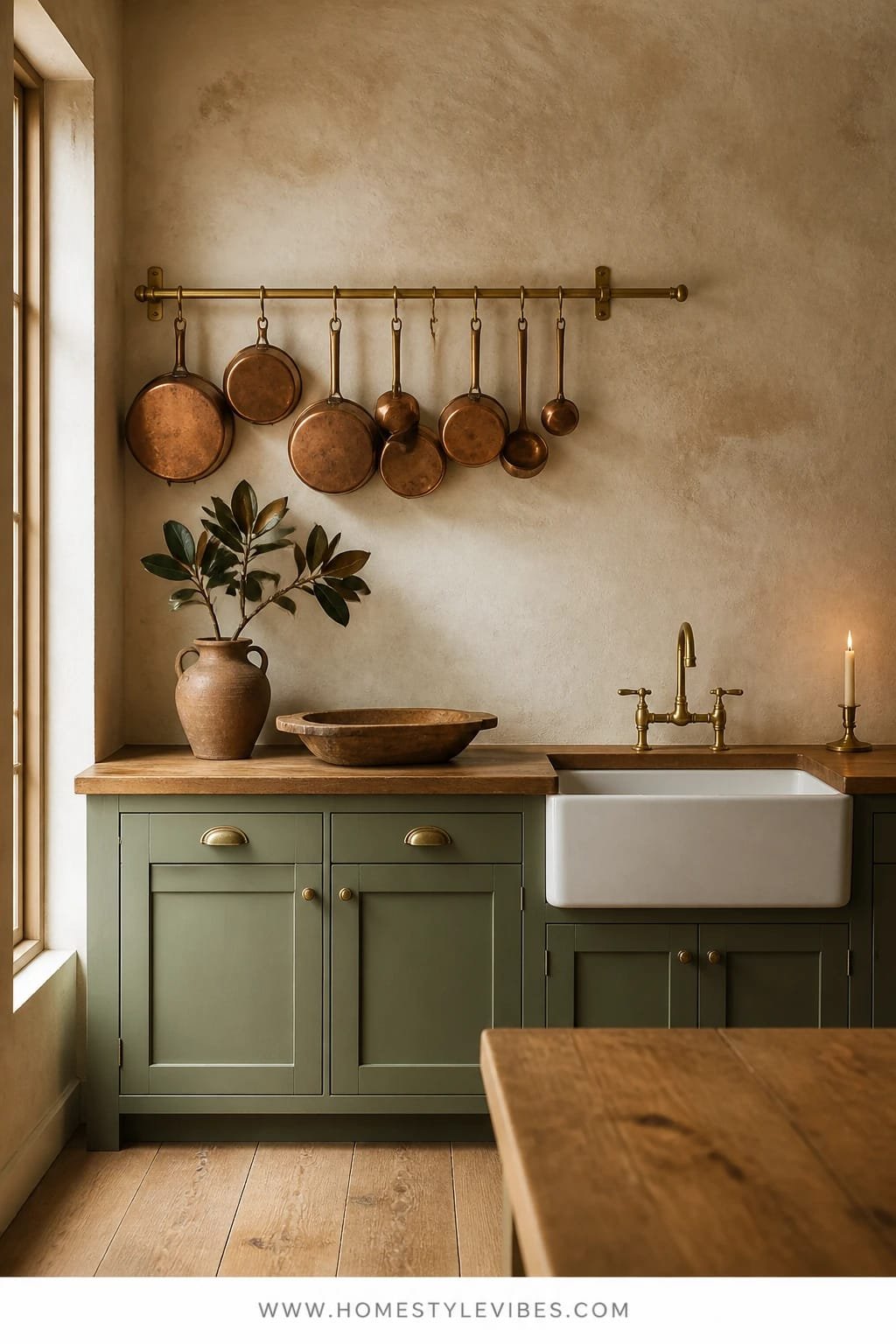
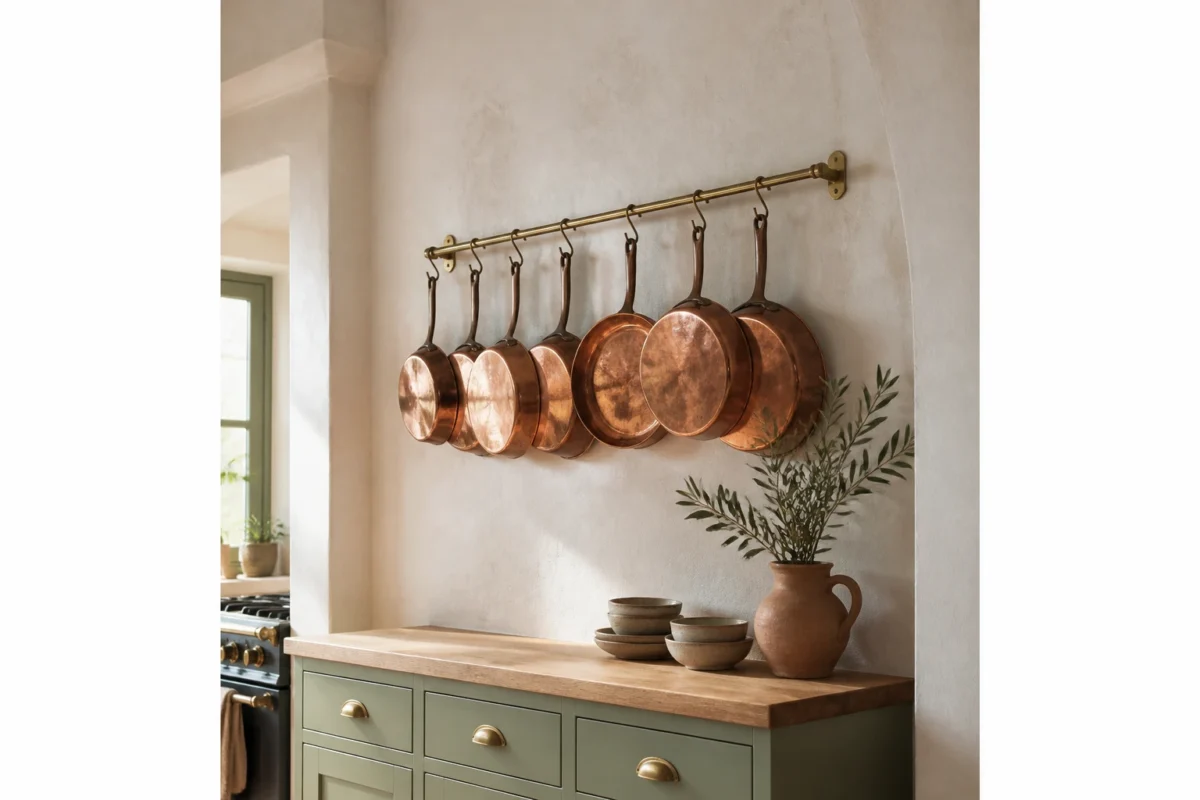
We’ve all been there: your kitchen walls look chalky and cold no matter how many cute tea towels you buy. The space needs soul, not more stuff. This French country and cottagecore wall decor strategy centers on limewash paint that diffuses light like candle glow, a brass pot rail that earns every inch of vertical space, and a curated row of copper that turns storage into art.
The mood leans farmhouse-French: earthy, soft, and quietly romantic. Limewash creates a cloudlike, tonal backdrop that hides small wall imperfections and photographs with delicious depth. Brass pulls warm light forward; copper reflects it. In small kitchens, this combo reads intentional and airy, not cramped. It’s practical too—pans you actually use sit within reach, and the wall finally feels finished.
Lighting matters here. Limewash deepens and brightens with the sun’s angle, so your kitchen shifts throughout the day in a way that feels alive. Evening sconces skim the plaster for gentle shadows—that’s the secret to magazine-worthy texture.
Try variations: swap copper for enamelware if you’re budget-watching, or choose a matte black rail for a darker, cottagecore-meets-rustic feel. For renters, use removable anchors and a peel-and-stick limewash-effect wallpaper to mimic the look.
Budget Breakdown:
- Limewash paint and primer: $80–$160
- Brass pot rail and brackets (3–6 ft): $120–$300
- Set of vintage copper pans (thrifted or refurbished): $150–$450
- Matching brass hooks: $20–$60
- Optional plaster touch-up kit: $25–$40
Total Estimated Cost: $395 – $1,010
Best For: Galley or small U-shaped kitchens craving warmth and texture; bright rooms with natural light. Ideal if you cook often and want practical, beautiful storage.
Key Design Elements:
- Main materials: Limewash plaster, solid brass, copper
- Color palette: Cream, oat, soft mushroom, warm metallics
- Lighting strategy: Skimming sconce light and morning sun for shadow play
- Furniture silhouettes: Turned-wood stools, shaker fronts, slim shelves
- Texture layers: Cloudy wall finish, patinated metal, woven potholders
- Accent details: A tiny sprig of rosemary, linen oven mitts, antique butter paddles
How To Recreate This Look:
- Start with limewash on a well-primed wall; work wet-on-wet in crosshatch strokes.
- Add a brass rail 14–16 inches above your stove backsplash or along a prep wall.
- Layer copper pans in descending size order; mix in a single colander for shape.
- Install one low-glow sconce that grazes the wall finish for shadow depth.
- Style with two linen mitts and one herb bundle to avoid clutter.
Why This Looks Expensive: Limewash and real brass patina whisper “heritage,” and the restrained palette keeps everything cohesive. The rail system reads custom—even if it took you 30 minutes with a drill.
Watch Out: Don’t hang the rail too high. Keep it within easy reach and aligned with nearby cabinets for a clean sightline. Also, avoid overly polished copper that glares; a soft patina photographs better.
Pro Styling Tip: Angle your sconce light at 30–45 degrees to rake across the plaster—those micro-shadows add instant depth in photos.
Keep scrolling. The next idea is pure cottage comfort with a secret storage twist.
2. Beadboard Paneling in Buttermilk With Dappled Morning Light and a Plate Gallery Rail
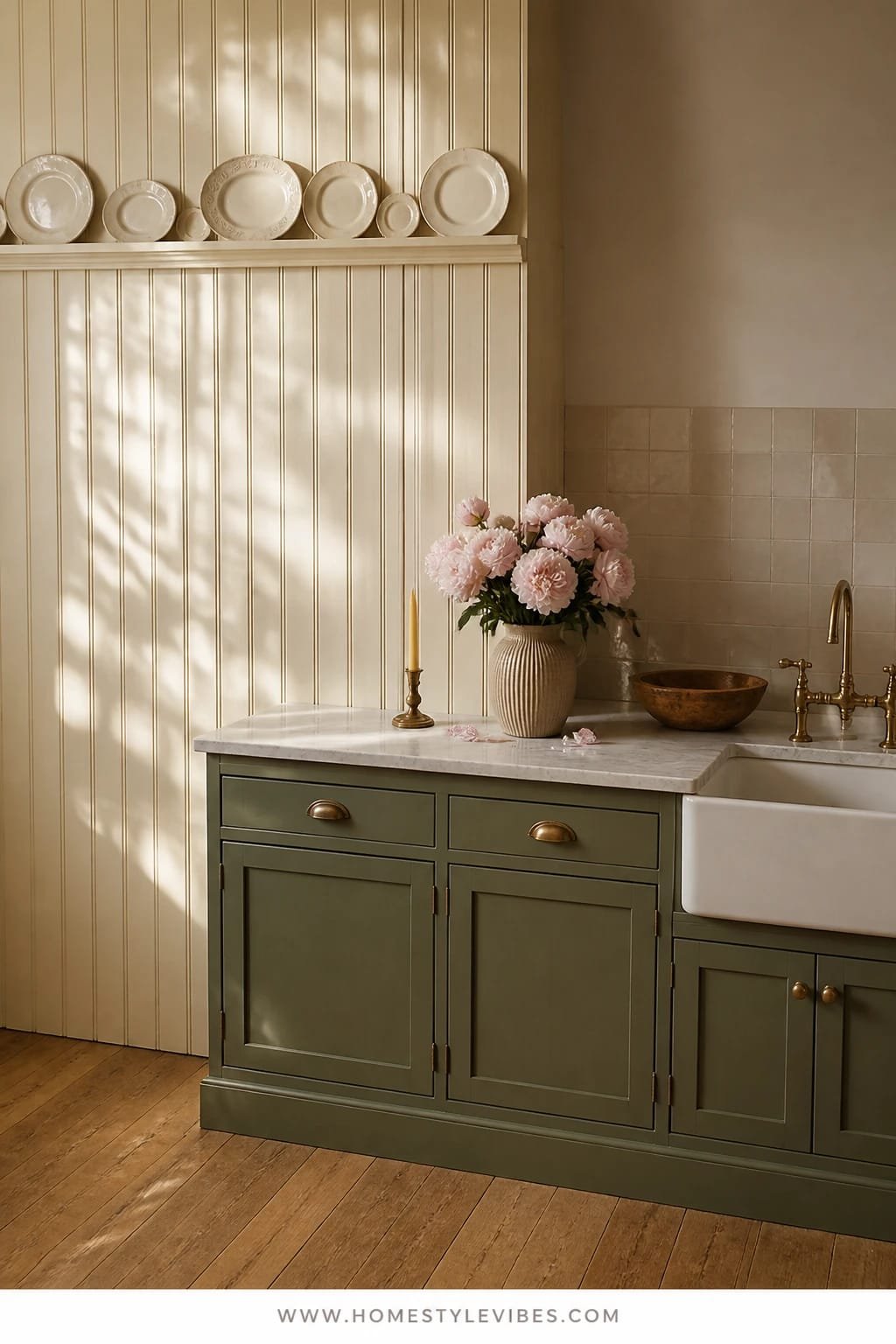
It’s that one wall that feels flat, no matter how many frames you hang. Beadboard rescues it in a single afternoon. Painted in a buttermilk cream and topped with a simple plate gallery rail, this French country and cottagecore wall decor adds vertical rhythm and a whisper of nostalgia without becoming fussy.
The vibe is cottage kitchen meets English pantry: friendly, tactile, and family-proof. Beadboard hides scuffs, makes even a tiny kitchen feel taller, and gives your plates a home that doubles as art. Dappled morning light (through a simple gauze curtain) turns the grooves into gentle stripes—so photogenic it’s almost unfair.
Practicality wins here. You can wipe splashes, shift plates seasonally, and even add a tiny hanging vase for wildflowers. For renters, half-height beadboard panels with removable adhesive work surprisingly well, and a tension-mounted rail can keep the landlord happy.
Key Design Elements:
- Main materials: MDF or pine beadboard, wood rail, ceramic plates
- Color palette: Buttermilk, soft gray-green, crisp white, terracotta specks
- Lighting strategy: Sheer window dressing to filter light; a warm 2700K bulb nearby
- Furniture silhouettes: Chunky farmhouse table, ladder-back chairs
- Texture layers: Ribbed paneling, matte ceramics, woven rush seats
- Accent details: Transferware plates, a single copper mold, micro florals
Budget Breakdown:
- Beadboard panels and trim: $120–$280
- Paint and primer: $60–$140
- Plate rail molding and brackets: $70–$160
- Vintage plates (set of 6–8): $60–$200
- Sheer curtain panel and rod: $45–$120
Total Estimated Cost: $355 – $900
Best For: Eat-in kitchens with one long blank wall; families who want wipeable surfaces and seasonal styling.
How To Recreate This Look:
- Start by installing beadboard to 48 inches high; cap with simple ledge trim.
- Add a plate rail 6–8 inches above the cap; ensure a slight lip to hold plates securely.
- Layer plates in odd numbers; mix patterns but keep a shared color thread.
- Install a gauze curtain to filter sun and create soft shadows on the grooves.
- Style with a single copper mold and a sprig of chamomile in a bud vase.
Why This Feels Designer: The plate rail adds dimensionality and function in one move. Repeating one color across plates, paint, and textiles reads cohesive, not cutesy.
One Thing To Avoid: Don’t jam the rail too close to the beadboard cap. Give the plates breathing room, about a hand’s height, so the composition doesn’t feel pinched.
Pro Styling Tip: Photograph with the curtain partially closed to catch that dappled light—ceramic glazes will glow instead of glare.
Pause for a breath. If you only pick one element from the first two sections, let it be texture first, then shine. That order always wins.
3. Honed Stone Shelf Ledge With Golden Hour Light and Framed Botanical Pressings
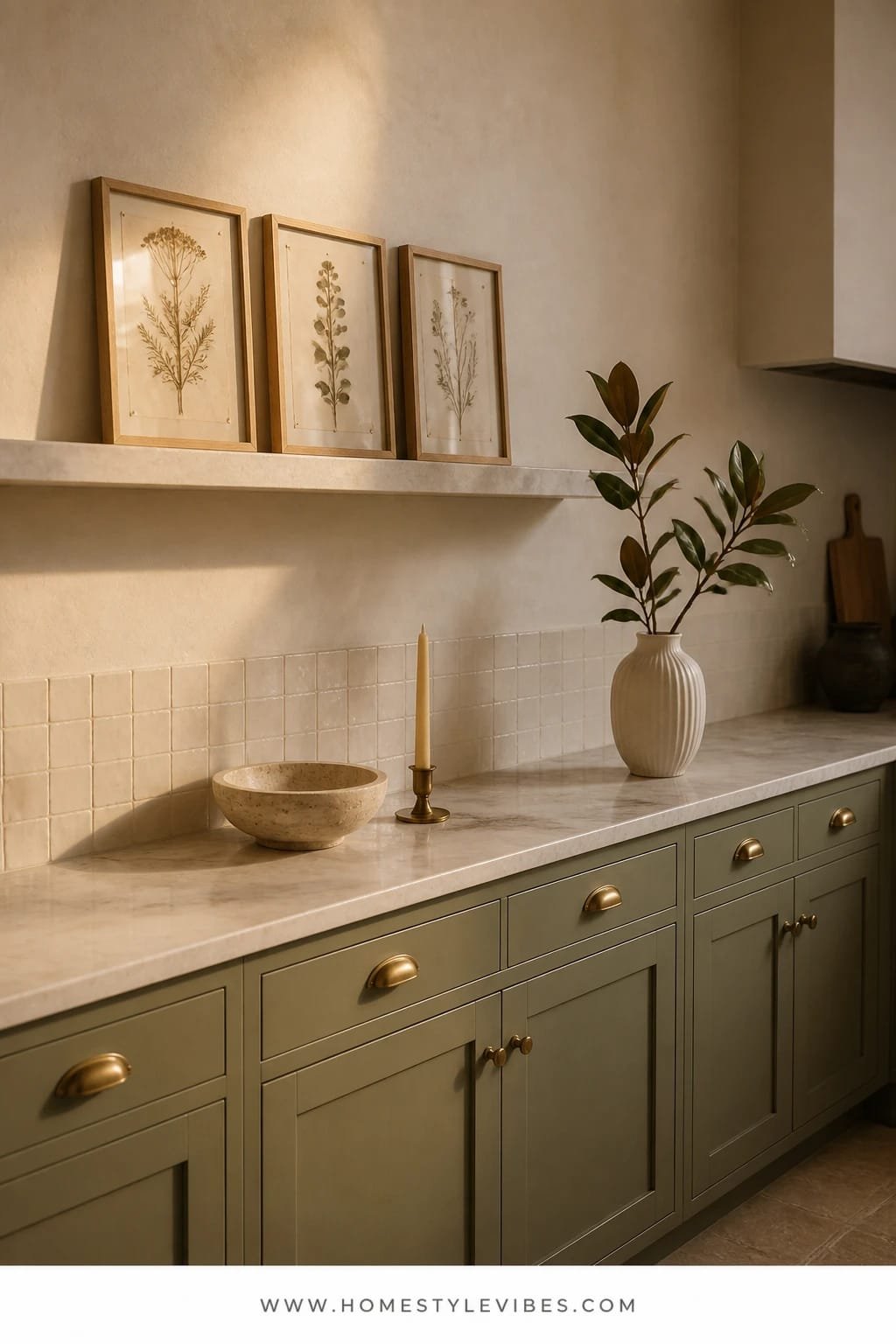
You’ve tried framed art on the wall, but it still looks like a hallway. The missing piece? A slim honed stone ledge that gives your art a perch, creates a clean horizon line, and adds subtle shadow play. Pair it with delicate botanical pressings in thin wood frames, and suddenly your kitchen whispers “vintage apothecary” without a single label jar.
This approach reads French country in the materials—stone and botanicals—but stays cottagecore in the sentiment: nature preserved, softened by time. It’s brilliant for small kitchens because the ledge is low profile, adds no visual bulk, and yet carries the room. Golden hour light slides across honed stone like cream, bringing gentle highlights to the edges for a luxe-but-quiet effect.
Bring personality with pressed herbs from your own garden. I did this with oregano and thyme last fall and felt absurdly proud every time I made pasta. Bonus: the muted greens complement oak cabinets and brass hardware without competing.
Budget Breakdown:
- Honed marble or soapstone ledge (36–60 inches): $180–$520
- Mounting brackets or hidden cleat: $30–$90
- Pressed botanicals and frames (set of 3–5): $80–$220
- Picture light or sconce: $90–$240
- Sealant and install supplies: $25–$50
Total Estimated Cost: $405 – $1,120
Best For: Compact kitchens that need visual polish; homeowners who love nature motifs and subtle color.
Key Design Elements:
- Main materials: Honed stone, thin oak frames, archival paper
- Color palette: Bone, sage, soft gold, muted charcoal veins
- Lighting strategy: Picture light or raking sconce to highlight the ledge edge
- Furniture silhouettes: Slim console, narrow stools, shaker fronts
- Texture layers: Matte stone, papery botanicals, linen runner nearby
- Accent details: Tiny brass label clips, a ceramic oil bottle, aged silver spoon
How To Recreate This Look:
- Start by sourcing a 4–6 inch deep stone ledge; honed finishes photograph best.
- Add hidden brackets set into studs for a clean, floating look.
- Layer framed botanicals, largest in the middle, edges slightly overlapped.
- Install a warm picture light to wash the wall and kiss the ledge front.
- Style with one small vessel and nothing else—negative space is part of the design.
Why This Reads High-End: Real stone, even in a slim profile, signals permanence. A dedicated picture light announces, “This wall matters.” Minimal styling lets materials do the talking.
The Most Common Mistake: Choosing polished stone. Go honed or leathered; high gloss reflects like a mirror and kills the soft, old-world vibe.
Pro Styling Tip: Keep frames within a tight color family and vary only the mat sizes to build quiet rhythm without visual noise.
Ready for a softer, storybook spin? The next one brings poetry to your pantry wall.
Remember, this isn’t about recreating a showroom. It’s about building a kitchen that carries your rhythms—grocery day, soup night, Sunday pancakes. If one idea sings, start there and ignore the rest for now.
4. Distressed Pine Plate Rack With Candlelit Warmth and Ironstone Bowls
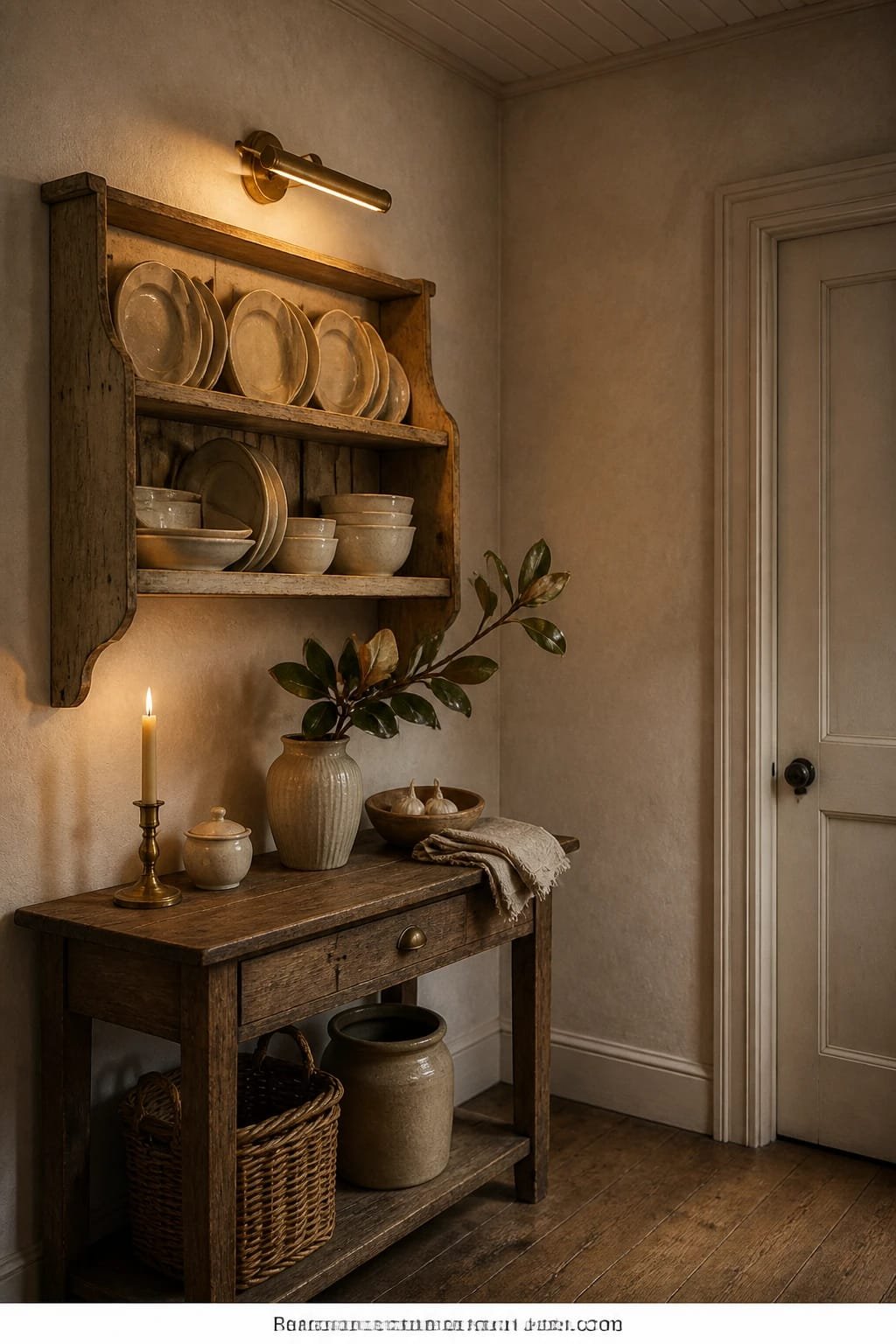
There’s always that awkward corner near the pantry door where art feels random and shelves feel clunky. A wall-mounted distressed pine plate rack threads the needle—functional, slim, and cottagecore as it gets. Load it with ironstone bowls and bread plates, and you create a living display you actually use.
The mood: cozy farmhouse with a hint of French brocante. Candlelight or a dimmable picture light transforms the rack into an evening vignette—soft glows, curved shadows on the wall, and a gentle reminder that kitchens can be romantic. For busy homes, this rack keeps breakfast plates at hand and frees cabinet space. In a narrow kitchen, it provides depth without jutting out too far.
Renter-friendly? Yes. Choose a freestanding leaning rack (there are slim designs that anchor with minimal screws), or go for a lightweight pine version that can move with you. For a darker version, use ebonized pine and creamy plates—it’s moody yet balanced.
Budget Breakdown:
- Distressed pine plate rack: $160–$420
- Set of vintage ironstone bowls/plates: $120–$300
- Battery-operated picture light or candle sconce: $40–$120
- Mounting hardware and anchors: $15–$30
- Beeswax candles (if using): $15–$30
Total Estimated Cost: $350 – $900
Best For: Narrow kitchens or awkward nooks; collectors who enjoy rotating dishes by season.
How To Recreate This Look:
- Start by choosing a rack height that aligns with adjacent cabinet rails for visual continuity.
- Add ironstone in sets of three; stack two shallow bowls for a tiered effect.
- Layer one unexpected item—like a vintage pudding mold—to break symmetry.
- Install a picture light or sconce above; set to a warm temperature.
- Style with a folded linen tucked over one rail for softness.
Why This Looks Intentional: The repetition of white-on-wood tells a simple story. When your everyday pieces become the decor, the kitchen feels coherent instead of crowded.
Don’t Do This: Avoid overloading every rail. Leave one shelf lightly styled to give the eye a place to rest; otherwise it reads cluttered in photos.
Pro Styling Tip: Angle a single bowl slightly off-center to create that effortless, lived-in energy that magazines love.
5. Textured Linen Pinboard Wall With Soft Afternoon Light and a Farmhouse Clock
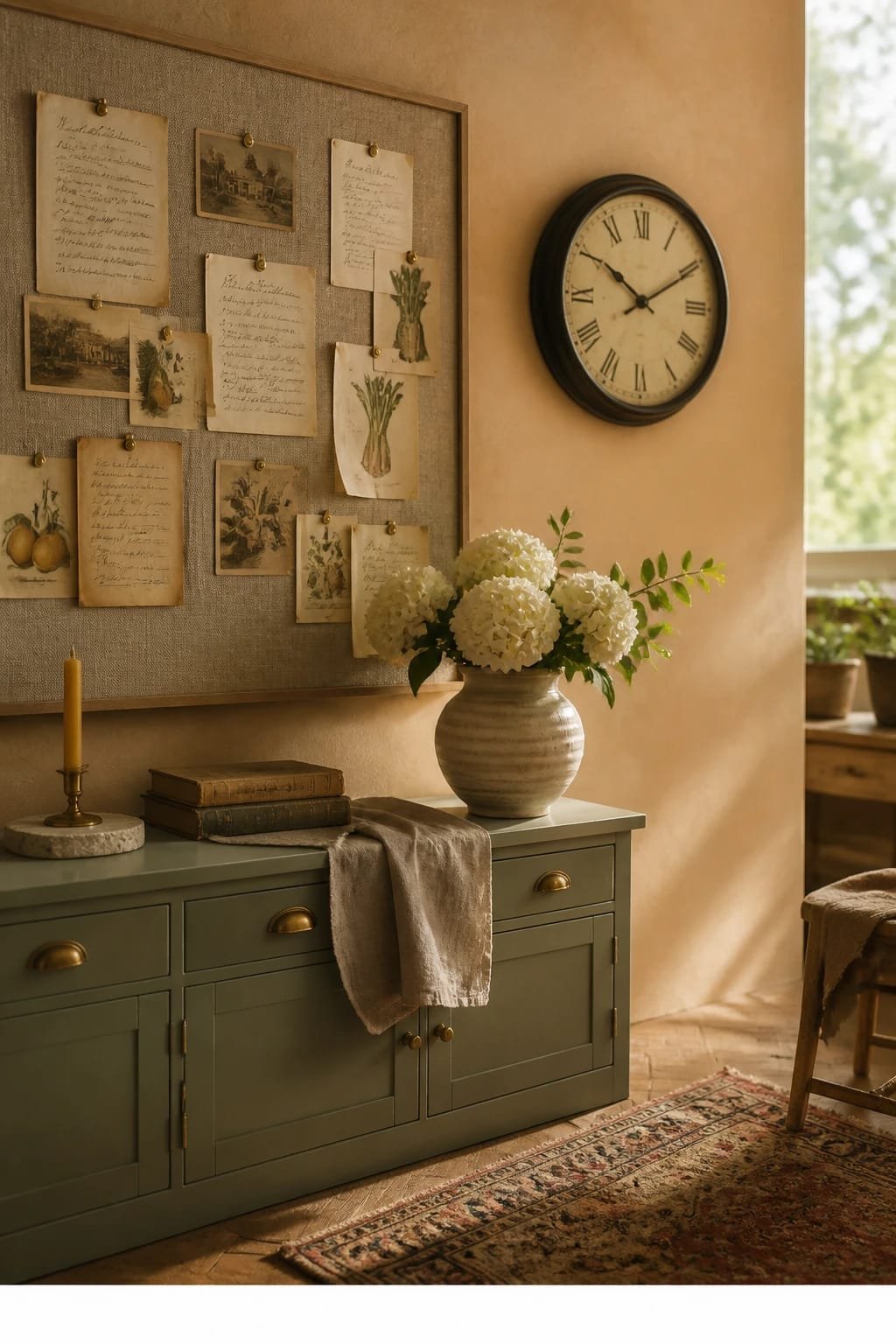
You’ve got recipes, postcards, and produce notes living on the refrigerator door like a collage gone wrong. Let’s give them dignity. A large linen-wrapped pinboard turns everyday paper into a design moment. Pair it with a classic farmhouse clock, and you’ve got a focal wall that’s both romantic and wildly useful.
This French country and cottagecore wall decor leans European pantry: punctuated, tactile, with a hint of schoolhouse charm. Linen’s nubby weave adds an organic layer that photographs beautifully under afternoon light. It’s renter-friendly, it’s budget-friendly, and it organizes your life without a spreadsheet.
I installed a similar board near my coffee zone. Every market list, dried orange slice, and kid doodle lives there now. The fridge looks cleaner, and my mornings feel less chaotic. Small tweaks, huge impact.
Key Design Elements:
- Main materials: Upholstery-weight linen, foam core or cork, wood frame
- Color palette: Natural flax, inky black or aged brass, parchment white
- Lighting strategy: Side light from a nearby window or a swivel-arm sconce
- Furniture silhouettes: Rustic console or baker’s rack below
- Texture layers: Linen, paper edges, jute twine ties
- Accent details: Brass pushpins, vintage shears, enamel timer
Budget Breakdown:
- DIY linen pinboard (36×48 in): $90–$180
- Farmhouse clock: $60–$180
- Brass pushpins and clips: $15–$40
- Swivel-arm sconce, plug-in: $70–$160
- Small shelf or ledge below (optional): $45–$120
Total Estimated Cost: $235 – $680
Best For: Busy households, renters, and anyone who likes tactile organization; great on a short wall by the pantry or coffee station.
How To Recreate This Look:
- Start with a large pinboard wrapped in natural linen; staple neatly at the back.
- Add a farmhouse clock centered above or offset for a modern twist.
- Layer recipes in clusters using brass pins—keep edges aligned for calm.
- Install a plug-in sconce to graze the linen and bring out texture.
- Style with a tiny hanging basket for pens and twine.
Why This Feels Designer: Overscaled elements in a simple palette look purposeful. The soft textiles against crisp paper create that editorial contrast you see in magazines.
Watch Out: Don’t choose bright white linen—it can blue-cast under cool bulbs. Go for warm flax and 2700K lighting to keep the look cozy, not clinical.
Pro Styling Tip: Pin items with a consistent margin and rotate one darker piece (a recipe on brown parchment) to anchor the composition.
Craving a shot of storybook whimsy? The final idea layers florals and patina like a Paris flea market morning.
If you feel overwhelmed, pick the wall you see first when you walk in. Make that one sing. The rest can wait—your brain will thank you every time you enter the room.
6. Antique Floral Wallpaper Panel With Soft Candle Scones and a Farmhouse Plate Ledge
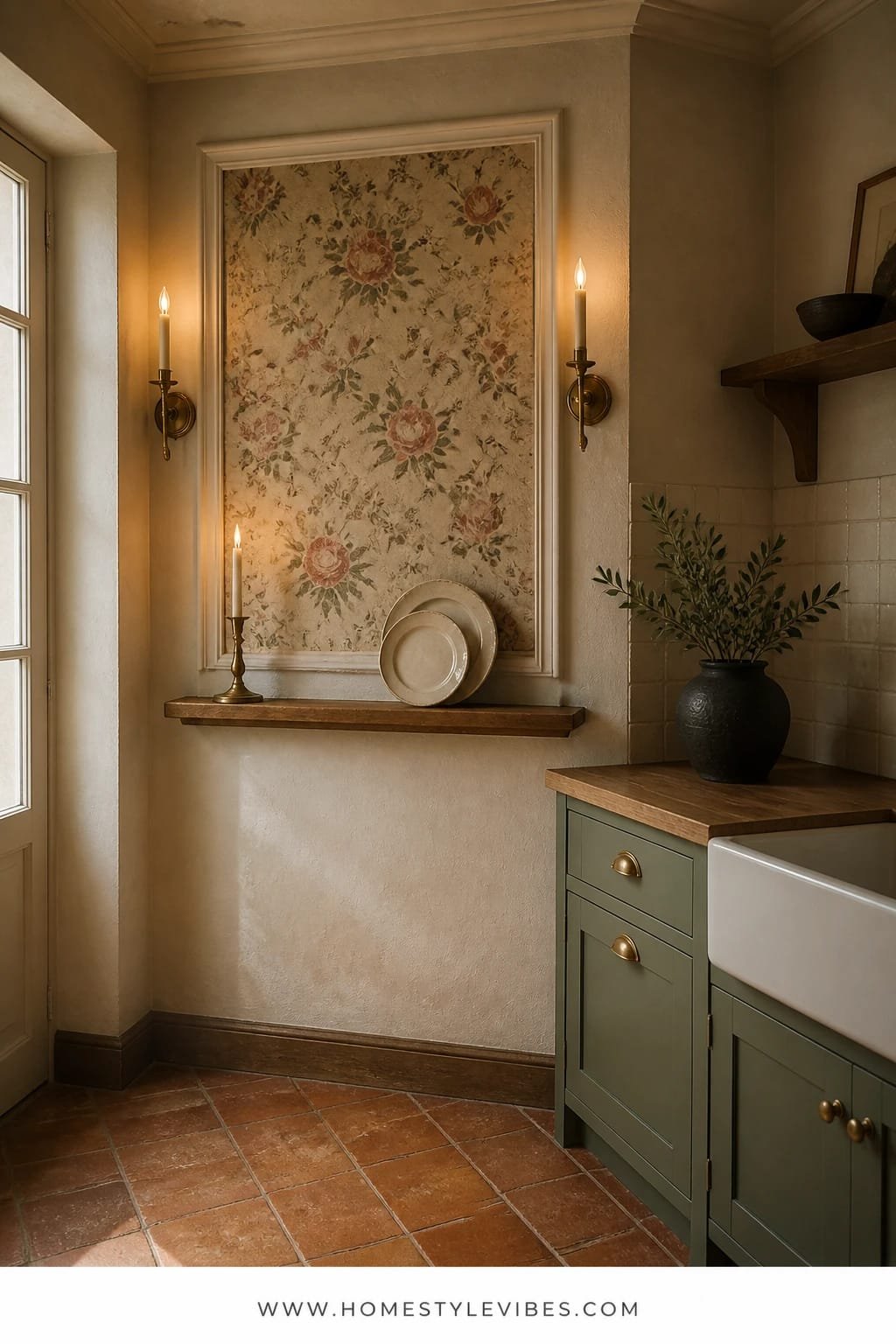
You’ve tested five beige paint swatches and everything still looks timid. Wallpaper—used sparingly—adds narrative without swallowing the room. Frame a single panel (or two) of antique-inspired floral wallpaper with simple molding, add soft candle-style sconces, and cap it with a farmhouse plate ledge. It’s cottagecore poetry meets French parlor, scaled for a real kitchen.
This move creates a “destination wall” that pulls the eye, even in a small space. By paneling just a section, you avoid overwhelm, control the budget, and get exactly the right dose of vintage charm. Sconces bring warmth and low-level glow so dinners feel slower and sweeter; the ledge grounds everything with a functional flourish.
Want a darker mood? Choose a charcoal ground with pomegranate florals for dramatic contrast. For renters, use removable wallpaper and foam molding with command strips. For minimalists, keep the florals tiny and the palette leaf-green and cream—still romantic, just quieter.
Budget Breakdown:
- Antique-style wallpaper (one or two panels): $80–$220
- Simple molding to frame panel: $40–$110
- Candle-style sconces (hardwired or plug-in): $120–$320
- Farmhouse plate ledge: $60–$160
- Removable install supplies or paste: $20–$40
Total Estimated Cost: $320 – $850
Best For: Feature walls behind a small table or above a sideboard; perfect for vintage lovers who still want restraint.
Key Design Elements:
- Main materials: Printed paper, painted wood molding, iron or brass sconces
- Color palette: Cream, leaf green, blush, soft charcoal accents
- Lighting strategy: Twin candle sconces at eye level for flattering warmth
- Furniture silhouettes: Petite farmhouse table, curved-back chairs
- Texture layers: Paper grain, painted wood, matte ceramic plates
- Accent details: Tiny gilt frame, dried peonies in a bud vase
How To Recreate This Look:
- Start by mapping your panel size with painter’s tape; aim for generous margins on all sides.
- Add wallpaper within the taped area; then frame it with simple molding.
- Layer a plate ledge horizontally beneath the panel to ground the composition.
- Install two candle-style sconces flanking the panel; use warm bulbs.
- Style with two plates and one small floral—stop before it gets busy.
Why This Looks Expensive: A framed wallpaper panel reads like custom art. The symmetry of sconces plus the linear ledge creates balanced tension—the kind your eye reads as considered.
One Thing To Avoid: Avoid mixing too many floral scales nearby. If the panel is delicate, keep tea towels and curtains solid or micro-striped so nothing fights.
Pro Styling Tip: Shoot the wall at a slight angle so the sconce light grazes the paper—texture shows up, glare stays low.
Here’s a quick mindset reset: you don’t need all six ideas. Even one thoughtful move—like a brass rail or a wallpaper panel—can make your kitchen feel charming and finished. Start small, stand back, and see what the room asks for next.
Quick Checklist
- Limewash paint for soft, cloudlike walls
- Solid brass rail with matching hooks
- Curated copper pans or enamelware
- Beadboard paneling in buttermilk
- Plate gallery rail with vintage ceramics
- Honed stone shelf ledge
- Framed botanical pressings
- Distressed pine plate rack
- Ironstone bowls and bread plates
- Linen-wrapped pinboard
- Classic farmhouse clock
- Swivel-arm or picture lights at 2700K
- Antique floral wallpaper panel
- Simple painted molding for framing
- Candle-style sconces with frosted bulbs
Frequently Asked Questions
How can I try these French country and cottagecore wall decor ideas on a tight budget?
Pick one wall and one material. Limewash-effect paint and a simple wood rail give huge impact for little spend. Thrift copper molds or plates, and keep quantities low—restraint reads richer than volume.
My kitchen is tiny. Which idea won’t make it feel crowded?
The honed stone ledge with botanicals or the brass pot rail works best in small spaces. Both stay shallow, add layered shadows, and keep floorspace clear. Use a tight palette so the wall feels calm.
I rent. What can I install without risking my deposit?
Use removable wallpaper panels, foam molding, command hooks for light rails, and a leaning plate rack. A plug-in sconce with cord covers gives you designer lighting without hardwiring.
How do I maintain materials like limewash and copper?
Seal limewash in splash zones with a breathable sealer and wipe with a damp cloth. Let copper develop a natural patina; polish only the parts you touch if you like a mixed finish. Honed stone needs periodic sealing—easy and quick.
What’s the most common mistake with vintage wall decor in kitchens?
Overstyling. Too many plates, too many florals, and clashing metal finishes create visual noise. Give each element negative space and repeat colors or materials at least twice for cohesion.
Wrap-Up: Your Charming Vintage Kitchen Starts With One Wall
The truth is, walls carry the room. Choose one of these French country and cottagecore wall decor ideas—limewashed plaster, a simple rail, a framed wallpaper panel—and give it your full attention. You don’t need a renovation; you need texture, warm light, and a point of view.
Here’s why this actually works: luxury in a kitchen isn’t about price tags. It’s about layered materials, flattering lighting, and restraint. One beautiful move done well will beat five scattered ones every time. I’ve seen it in my own home and in clients’ spaces—when the wall tells a story, dinner tastes better. Okay, maybe that last part is just me, but you’ll feel it.
Pick your favorite idea, set a weekend, and start. Your kitchen is about to glow—quietly, confidently, and exactly like you.

About the Author

Krisztina P.Rendes, Founder of Home Style Vibes
Founder of Home Style Vibes
Krisztina Puskásné Rendes created Home Style Vibes as a cozy-modern lifestyle space where homemaking meets inspiration. Her goal is to help women create beautiful, organized, and peaceful homes they truly love — without overwhelm. You’ll find here heart-driven content on home decor, cleaning tips, easy family recipes, organization and decluttering, DIY home projects, plants, and seasonal ideas — all designed to bring more calm, comfort, and style into everyday life.