5 Minimalist Fall Decor Ideas That Are Cozy Without The Clutter
You want a calm, neutral fall home that feels warm and lived-in. You hate the messy bins of knickknacks and the “Oops, I added eleven tiny pumpkins and suddenly my surfaces feel chaotic” feeling. This guide to minimalist fall decor keeps everything neutral and pared back—think cream, oatmeal, pale wheat, soft rust, and sage—while still giving you that quiet, cozy glow. These five ideas will help you build calm, airy warmth in real rooms with a $200–$400 cap per idea (or less), and each one photographs beautifully—like a soothing, Pinterest-worthy exhale you can actually live with.
Expect clean lines, simple seasonal props, and natural textures that whisper autumn rather than shout it. If you love the Scandinavian and Japandi vibe, these are your five anchors for the whole season, from September’s first cool mornings through Thanksgiving’s last slice of pie.
1) White Pumpkins And Soft Sage Glow On A Streamlined Entry Console
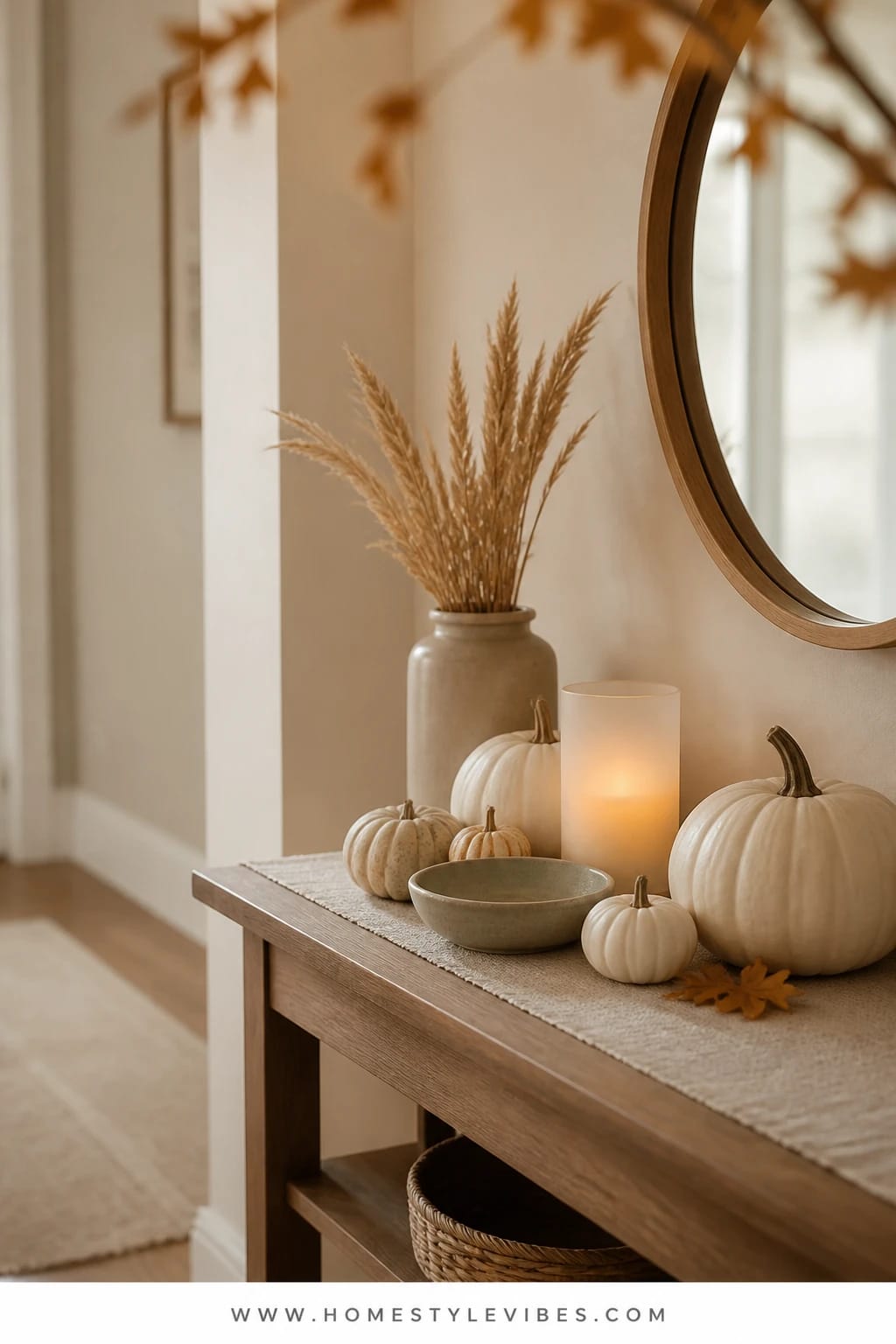
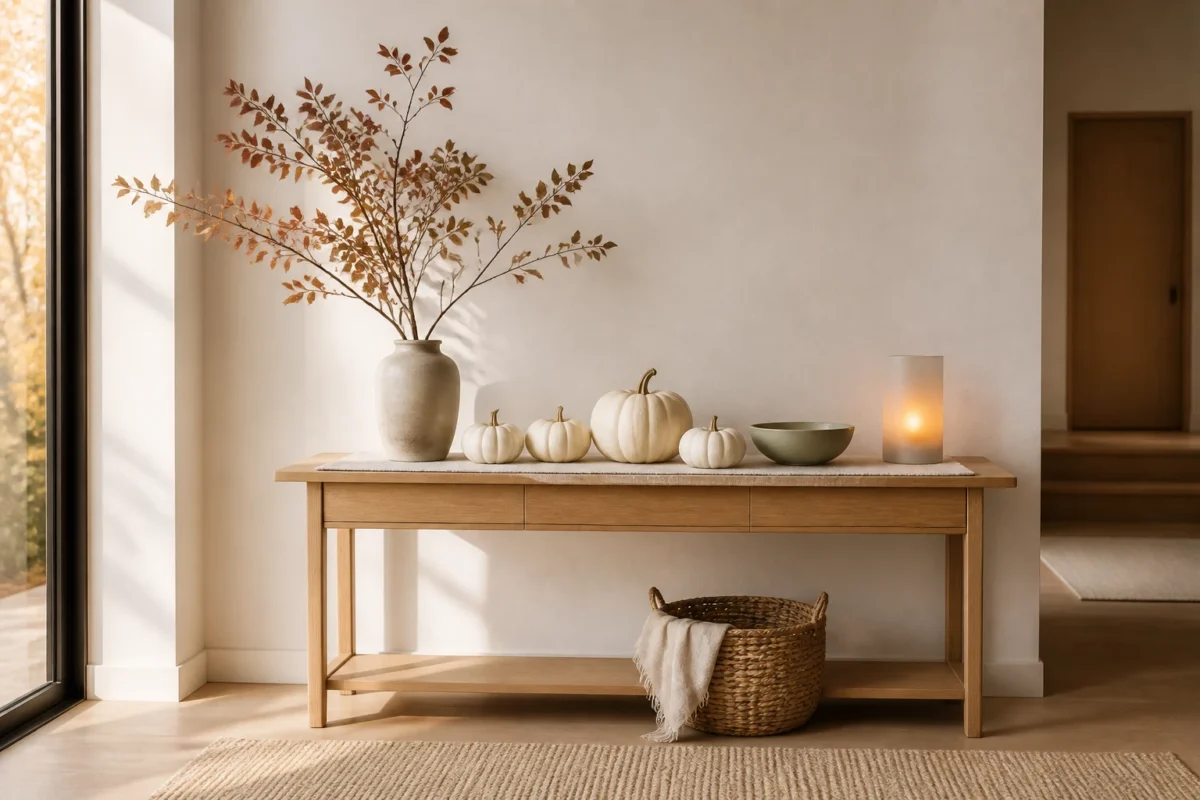
It’s that one corner that always feels off—the entryway console that either ends up as a dumping ground for keys and mail, or a crowded shrine of seasonal stuff that looks fussy the second you walk through the door. We’ve all been there. This minimalist fall decor idea calms everything down: a slim console, a restrained lineup of white pumpkins, a pale sage ceramic bowl, and a single soft-glow LED pillar in frosted glass. The mood reads as calm and airy, like a deep breath when you arrive home.
Why it works: your entry is a visual first impression, so simplifying the forms keeps it peaceful and practical. Neutral-toned pieces are low-maintenance, easy to dust, and simple to store. Swap a few stems or a bowl and you’re set year after year. Lighting is everything here—rather than a blaze of candles, use one or two soft lights at different heights. Think dimmable lamp or a frosted LED pillar candle that casts a quiet, diffused light at dusk.
Materials keep to the neutral minimal fall palette: white pumpkins (real or faux), pale oak or black console, sage-toned vessel, woven catchall tray, and a whisper of dried wheat or bleached bunny tails. Photo-wise, it’s beautiful because of the negative space. The eye rests on the clean lines, the matte whites, and the gentle glow that kisses the edges of the pumpkins. Depth comes from layering: console surface, a single framed line drawing on the wall, and one grounded bowl.
Variations: In a small space, scale it down to one medium white pumpkin, a mini frosted votive, and a 5×7 art print leaned against the wall. On a tighter budget, thrift a shallow wood bowl and repaint with limewash for that chalky, artisanal look. Prefer ultra-minimal? Skip the stems and just do two pumpkins with the lamp—done.
Budget Breakdown:
- Slim console table: $120–$250 (keep finishes minimal—oak, black metal, or white)
- Faux or real white pumpkins (2–5): $15–$45
- Sage ceramic bowl or tray: $18–$60
- Soft-glow LED pillar or frosted votives: $15–$40
- Small dried stem bundle (wheat, bunny tails): $8–$20
- Minimal line art print and simple frame: $20–$60
Total Estimated Cost: $196 – $475
Best For: A tidy entry or hallway console where you want calm function—houses with kids, pets, or mail chaos. Lovely from early September through Thanksgiving; the palette doesn’t scream “holiday week,” so it stays relevant longer.
Key Design Elements:
- Main seasonal props: 2–5 white pumpkins, dried wheat or bunny tails in a matte vase
- Color palette: white, cream, soft sage, pale oak, a trace of matte black
- Lighting strategy: one dimmable lamp or frosted LED candle for diffused, evening light
- Textile layers: a single woven catchall tray (keeps the surface tidy and tactile)
- Natural elements: dried stems, real pumpkins if you can source them
- Accent details: a single framed line drawing, slim metal tray, small stone dish for keys
How To Recreate This Look:
- Start with a bare console and edit down to only one piece of wall art above it.
- Add a lamp or frosted LED pillar on one end for soft, evening light.
- Layer a woven tray or stone catchall mid-console to corral daily items.
- Place 2–5 white pumpkins spaced with breathing room along the surface.
- Style with a matte vase holding a minimal dried bundle and a single sage-toned bowl.
Why This Looks Expensive: Repetition of a single motif (white pumpkins) in a clean palette feels intentional and curated. The negative space does the heavy lifting—nothing is crowded, so everything reads as design, not clutter.
Watch Out: Don’t mix too many finishes. Limit yourself to two wood tones max and one metal. Also, wipe pumpkins weekly—dust shows fast on matte whites.
Pro Styling Tip: For photos, dim the lamp slightly and angle it so the glow grazes the pumpkin curves—those soft highlights add depth without glare.
2) Oatmeal Linen And Wheat-Toned Branches On A Calm Dining Table
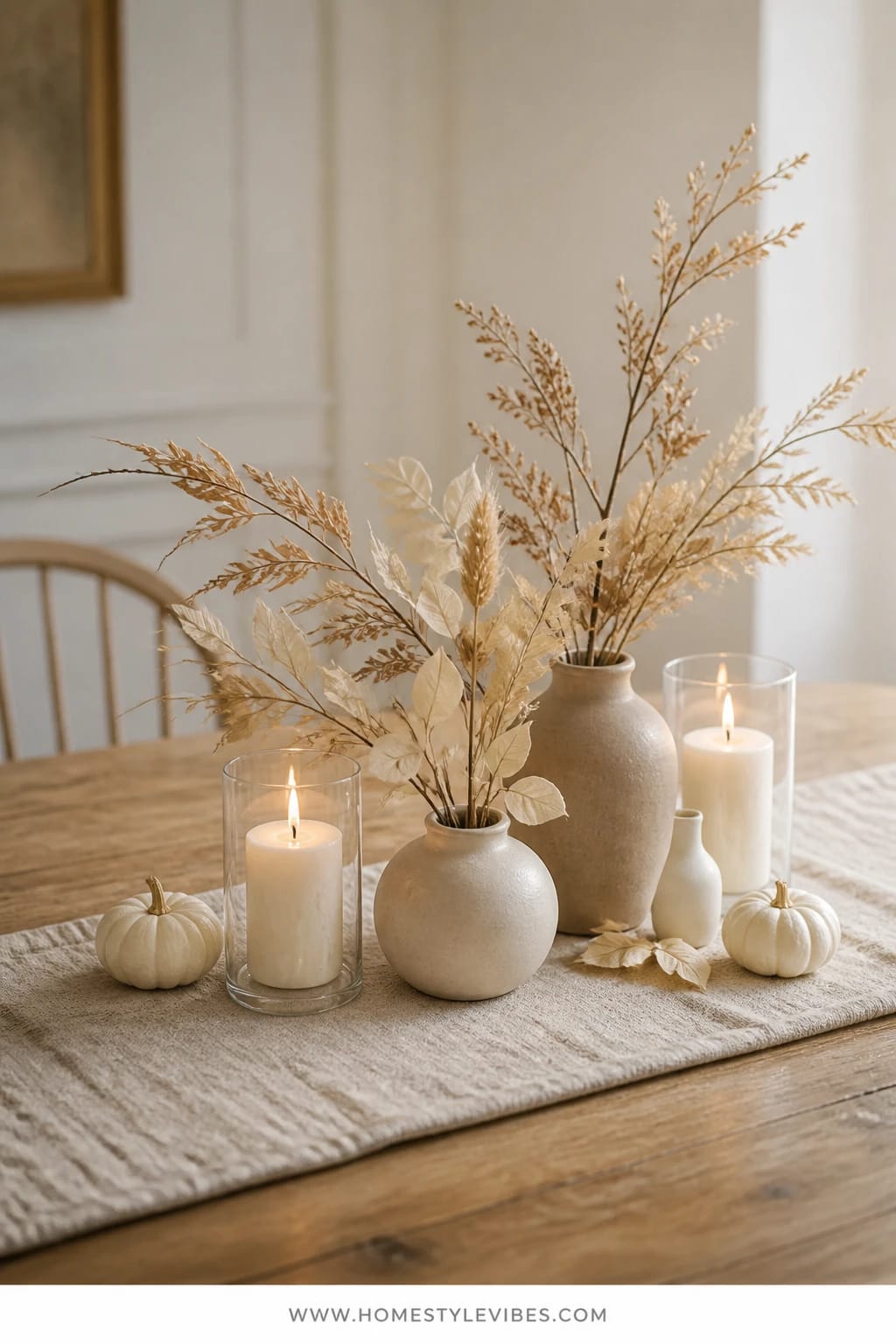
You’ve tried the big centerpieces that look gorgeous for one dinner and then block eye contact for the next six weeks. It still feels busy, right? Instead, build a low, linear tablescape that feels like soft air and quiet conversation. Picture an oatmeal linen runner, a staggered trio of stoneware bud vases, a few wheat-toned or bleached branches, and just two white pillar candles in clear glass. It’s light, breathable, and calm—exactly the kind of minimalist fall decor that lets the meal be the star without looking bare.
This approach works in real homes because it’s wipeable and compact. Kids can reach across it. You can move a vase in five seconds for homework time. The light plays beautifully at dinner—candles provide a gentle, golden hush without throwing harsh shadows. If you have a pendant, dim it to 50% for a layered glow: pendant for general light, candles for warmth.
Photographically, a restrained runner with spaced vases creates a rhythm that draws the eye down the table. Neutrals keep it timeless and easy to shoot; everything harmonizes rather than competes. You can run this setup from September through Thanksgiving—swap the branches for olive stems in early fall and bleached ruscus in November and you’re done.
Variations: For small round tables, use a square of washed linen and one elongated bowl with a single cluster of mini white pumpkins. Budget-friendly route: use glass milk bottles as vases, gather fallen branches (clean them well), and buy just two unscented pillars.
Budget Breakdown:
- Oatmeal linen runner (or DIY from fabric yardage): $25–$70
- Stoneware bud vases (3–5): $30–$90
- Bleached or wheat-toned branches/stems: $12–$40
- Unscented white pillar candles + clear holders: $15–$40
- Optional: single long wood bowl for mini pumpkins: $20–$60
Total Estimated Cost: $102 – $300
Best For: Dining tables used daily—open concept homes, families who multitask at the table, or anyone who wants a dignified but easy fall mood for every meal.
Key Design Elements:
- Main seasonal props: bleached branches, white pillars, a few mini white pumpkins (optional)
- Color palette: oatmeal, ivory, pale wheat, soft stone
- Lighting strategy: dimmed overhead pendant + two candles, or just candles for dinner
- Textile layers: washed linen runner or square
- Natural elements: foraged branches, dried stems
- Accent details: clear glass candle sleeves, matte stoneware vases
Why This Feels Designer: The linear repetition and low height keep sight lines open and sophisticated. Nothing shouts. The quiet symmetry reads as confidence.
How To Recreate This Look:
- Start with a neutral runner that contrasts gently with your table.
- Add three bud vases evenly spaced down the center.
- Layer in wheat-toned branches, trimming to keep everything under 8 inches tall.
- Place two white pillars in clear holders near the ends to bracket the arrangement.
- Style with one long bowl of 3–5 mini white pumpkins if you have the room.
One Thing To Avoid: Over-fragranced candles at the table—competes with food and can feel heavy. Unscented wins every time.
Pro Styling Tip: For photos, push chairs in and fan napkins in a relaxed S-curve on each plate—adds softness without clutter.
If one idea resonates more than the others, that’s your starting point. You don’t need all five. Let your rooms breathe and choose the one corner you see (and stress about) the most.
3) Pale Wheat Throws And Stone Hues On A Minimalist Sofa Scene
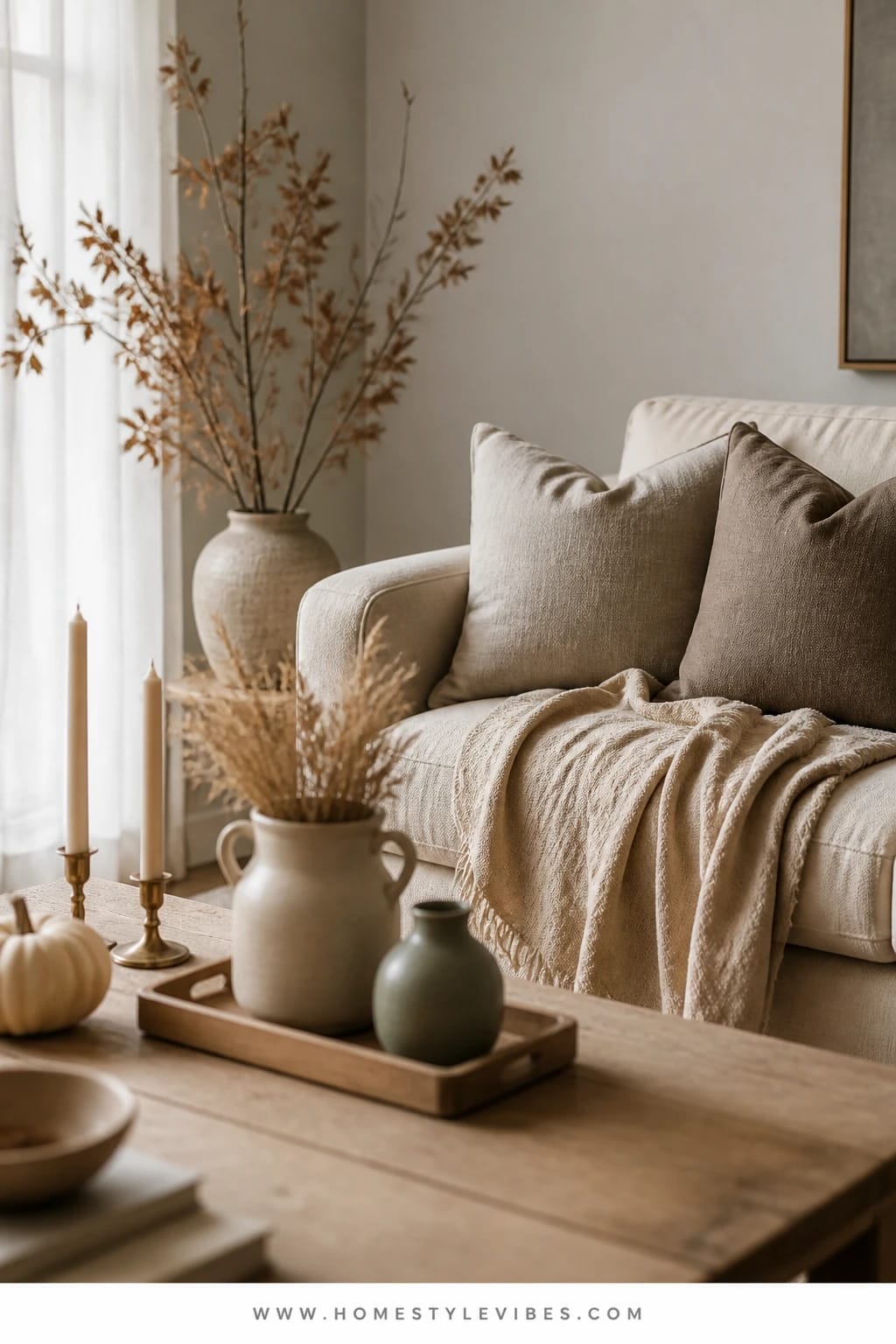
Let’s be honest: the sofa is where fall clutter loves to pile up. Extra blankets, five different pillow colors, a forgotten mug, and a stray pumpkin that looked cute for one day and then looked, um, random. This setup focuses on texture and tone, not quantity. A single pale wheat throw, two oversized pillow covers in pebble and taupe, a low-profile oak tray, and one small sage vase on the coffee table—suddenly your living room feels calm and soft without a single pumpkin overload.
The vibe: calm airy warmth with a lived-in finish. It’s grounded in neutral minimal fall styling—think oatmeal, taupe, stone, a whisper of sage. This works because large-scale pieces (pillows and throws) give the cozy feeling without eating up surface space. Washable fabrics are family-friendly; choose machine-washable covers and a spillproof tray finish. Lighting-wise, rely on natural morning light and a warm white 2700K floor lamp for evenings—cozy without the glare.
This photographs beautifully thanks to the tonal layering. You’re creating a soft gradient from cream to taupe across the sofa and coffee table. A matte ceramic vase and a single dried stem offer visual punctuation. It’s the quiet kind of pretty you notice when you sit down and exhale after work.
Variations: On a budget, just swap your pillow covers—two new covers can make a room feel finished. For small spaces, use a nesting coffee table so you can tuck one away; fewer surfaces keep the room from reading busy. If you prefer a bit of pattern, add a subtle herringbone throw in wheat and cream.
Budget Breakdown:
- Two oversized pillow covers (linen, cotton, or performance fabric): $30–$90
- Pale wheat throw (cotton or wool blend): $25–$80
- Low-profile oak tray: $20–$60
- Small sage ceramic vase: $12–$35
- Single dried stem (bleached reed, bunny tail): $6–$15
Total Estimated Cost: $93 – $280
Best For: Living rooms and family rooms that need softness without extra objects—especially good for homes with kids and pets where pillows are easier than tchotchkes.
Key Design Elements:
- Main seasonal props: neutral textiles, single dried stem, sage ceramic accent
- Color palette: cream, oatmeal, taupe, pebble, a hint of sage
- Lighting strategy: natural daylight + one warm floor lamp at 2700K
- Textile layers: oversized pillows, one throw, optional small lumbar for depth
- Natural elements: dried reed, pampas, or bunny tails
- Accent details: oak tray, matte vase, coasters in stone or cork
Why This Reads High-End: Scale and restraint. Two large pillows look more considered than four small mismatched ones. The tray corrals everyday items, which keeps the scene intentional.
How To Recreate This Look:
- Start by clearing the coffee table—edit down to one tray.
- Add two oversized pillow covers in tonal neutrals to your existing inserts.
- Layer a pale wheat throw across the back corner of the sofa with a casual fold.
- Place a small sage vase on the tray with a single dried stem.
- Style with a single book or remote box and stop there.
The Most Common Mistake: Mixing too many “almost” neutrals—if your sofa is warm beige, avoid cool gray pillows. Stay within one temperature family for the calm effect.
Pro Styling Tip: For photos, gently steam the throw edges so they fall in clean lines—wrinkles read messier than you think.
Remember, this isn’t about recreating a showroom. It’s about a home that gives you breathing room and a little quiet joy every time you sit down.
4) Soft Rust Stems And Neutral Books On A Clean, Balanced Bookshelf
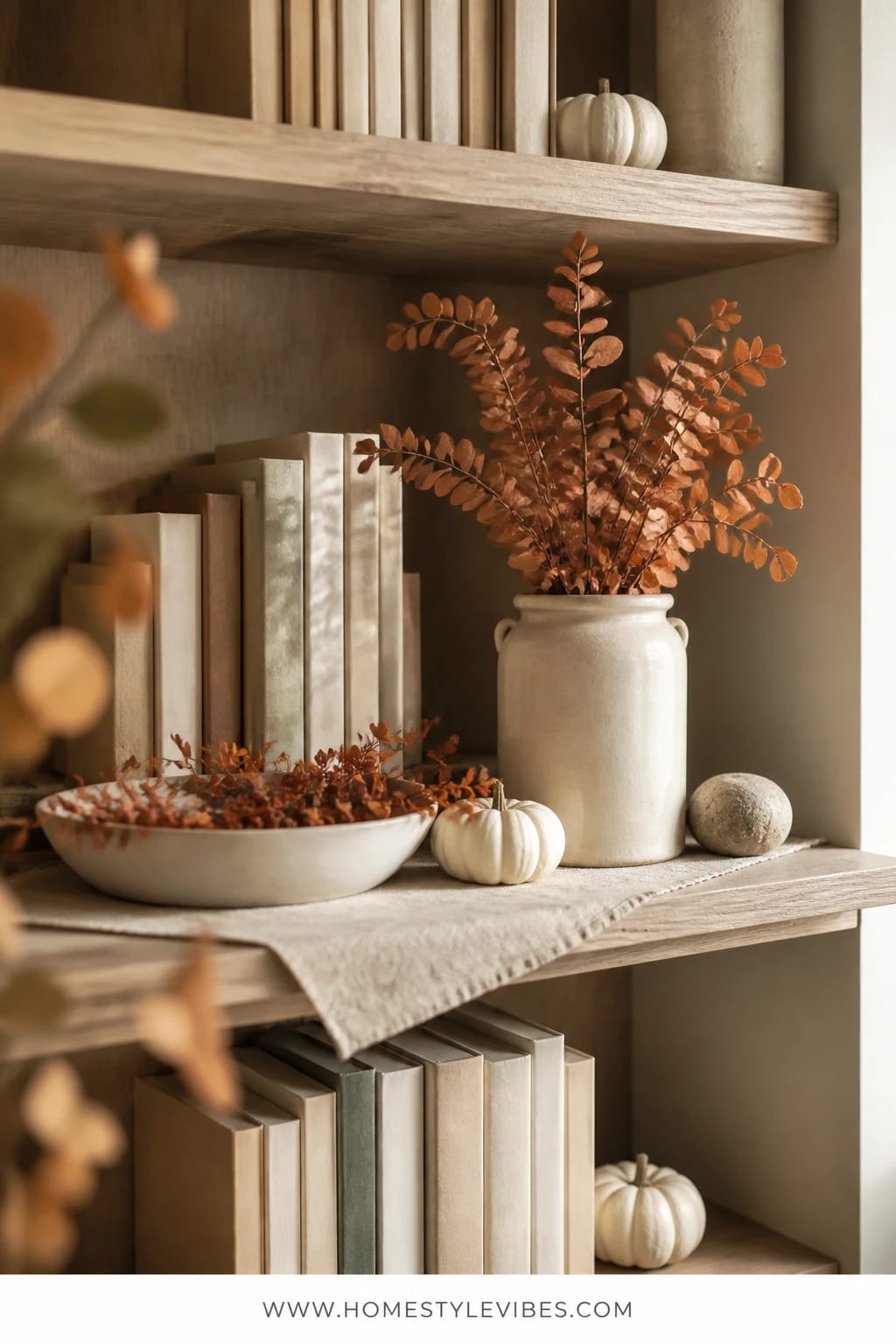
Bookshelves are sneaky clutter magnets. You try styling once, and a week later it looks like the library threw a party. This minimalist fall decor approach uses repetition, negative space, and soft rust accents to add warmth without busywork. Think a few rows of books grouped by neutral spine tones, a matte white bowl, a pair of soft rust faux stems in a slim vase, and one stone object for weight. That’s it—simple and serene.
The mood is refined and calm, with a touch of seasonal depth from those rust stems. It works because repeating materials (ceramic, stone, paper) and controlling color keeps the eye from darting everywhere. Lighting-wise, rely on daylight plus a subtle picture light or bookshelf puck to wash the shelf fronts with a warm, even glow. The effect is magazine-clean without feeling precious.
In photos, this reads beautifully because you’ve created intentional sight lines—groups in thirds, breathing room around each vignette, and just one accent color. From September through November, you can swap the rust stems for olive green or soft wheat to shift tone while keeping structure intact.
Variations: On a budget, shop your home first: pull neutral-spined books and remove dust jackets for a calmer palette. For small shelves, go ultra-simple—two stacks of books, one vase with rust stems, one bowl. Prefer all neutrals? Swap soft rust for sage eucalyptus.
Budget Breakdown:
- Faux soft rust stems (2–4): $12–$40
- Slim matte vase: $15–$35
- Neutral bowl or footed dish: $18–$60
- Stone or travertine object: $20–$70
- Optional picture light or puck lights: $25–$100
Total Estimated Cost: $90 – $305
Best For: Built-ins or standalone bookshelves that look messy fast; perfect for open-plan living rooms where shelves double as a backdrop during video calls.
Key Design Elements:
- Main seasonal props: soft rust stems, matte vase, stone object
- Color palette: cream, white, taupe, pale oak, soft rust accent
- Lighting strategy: daylight + warm picture light or low-lumen puck lights
- Textile layers: none needed—keep it crisp
- Natural elements: dried or faux stems, stone
- Accent details: footed bowl, bookends in travertine or matte black
Why This Looks Intentional: Purposeful editing and consistent spacing. When every shelf has a visual “rest” zone, the entire unit reads as design instead of storage overflow.
How To Recreate This Look:
- Start by emptying one shelf at a time—don’t panic, just one.
- Add a horizontal stack of 3–5 neutral-spined books on the left.
- Place a matte vase in the center with two rust stems at staggered heights.
- Set a stone object or bowl on the right with air around it.
- Repeat the rhythm on the next shelf, but swap object positions to keep it dynamic.
Don’t Do This: Overload with tiny trinkets. Small objects in multiples read as clutter on shelves. Choose fewer, larger accents for calm impact.
Pro Styling Tip: Leave at least a hand’s width of empty space around each grouping—negative space photographs like luxury.
When in doubt, subtract one thing. Minimalist fall decor is 70% editing, 30% styling. The secret isn’t more objects—it’s better spacing.
5) Cream Ceramics And Candlelight On A Japandi Kitchen Island
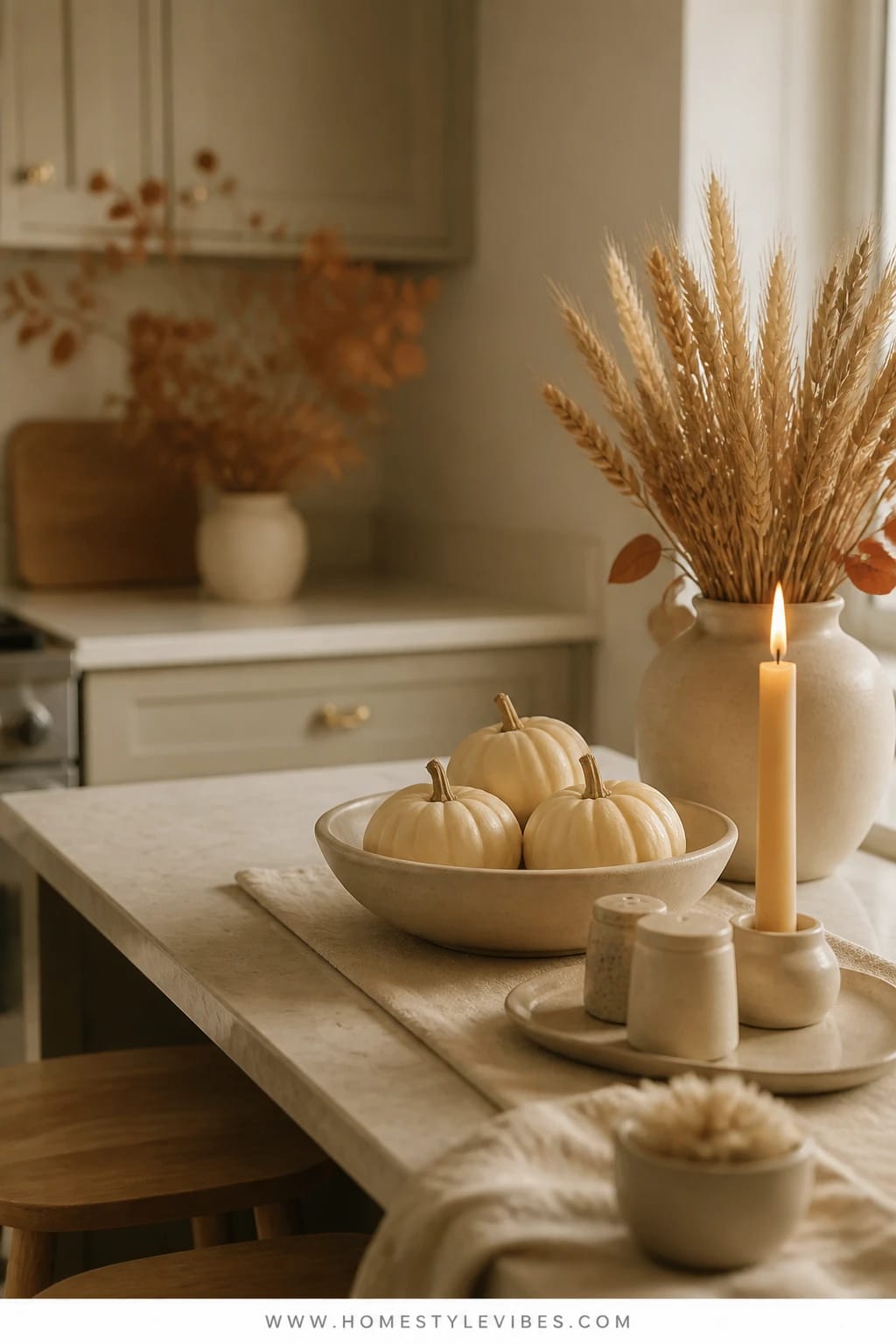
Kitchens get tricky. One minute you’ve got neutral calm; the next, it’s a pile of produce, school forms, and six random mugs. This island vignette is your anchor: a shallow cream ceramic bowl with a trio of pale pears or mini white pumpkins, a low matte tray for salt and pepper, and one warm LED taper in a stone holder. The mood is serene and slightly spa-like—quiet candle glow against clean countertops.
It works because it’s functional decor. The bowl can hold fruit you’ll actually eat. The tray corrals everyday items. The candle adds evening mood without spreading wax or scent. Keep the color palette tight: cream, pale stone, light wood. For lighting, rely on under-cabinet warm LEDs at dinner time for a soft wash; they bounce off the counter and make the textures look rich, not stark.
Why does this photograph so well? Low-profile objects create a horizontal line that calms the frame. The candle adds a small point of glow that draws the eye, and the matte textures prevent harsh reflections. You can keep this arrangement from September through Thanksgiving—swap pears for clementines in November and it still reads seasonal, not cluttered.
Variations: On a budget, thrift a shallow serving bowl and give it a chalky limewash finish. For smaller kitchens, scale to a single stoneware plate with two pears and a votive. If you’re fully scent-averse, choose an unlit taper for form and just use under-cabinet lights for glow.
Budget Breakdown:
- Cream ceramic shallow bowl: $18–$60
- Matte tray or board (oak or rubberwood): $15–$45
- LED taper + stone holder: $18–$40
- Everyday salt and pepper set or pinch bowls: $10–$30
- Seasonal produce or mini white pumpkins: $6–$15
Total Estimated Cost: $67 – $190
Best For: Busy kitchens where counters need to stay mostly clear; anyone who prefers décor that does a job while looking calm.
Key Design Elements:
- Main seasonal props: mini white pumpkins or pale pears, LED taper
- Color palette: cream, stone, light oak, soft white
- Lighting strategy: under-cabinet warm light + single candle glow at dusk
- Textile layers: optional pale linen towel under the tray for softness
- Natural elements: seasonal fruit, small dried sprig in a mini bud vase (optional)
- Accent details: pinch bowls, matte candle holder
Why This Looks Expensive: Restraint in materials—ceramic, stone, light wood—and a low profile that mirrors high-end editorial kitchens. Everything has a purpose, so nothing feels extra.
How To Recreate This Look:
- Start with a clean island—clear appliances and mail first.
- Add a matte tray or board slightly off-center to break symmetry.
- Layer a shallow ceramic bowl on top and fill with pears or three mini white pumpkins.
- Place an LED taper in a stone holder nearby, not touching the tray.
- Style with a pinch bowl set on the tray for function and a tiny bud vase if you want a hint of life.
Watch Out: Too many verticals (tall bottles, utensil crocks, florals) make the island read busy. Keep it low and horizontal for calm.
Pro Styling Tip: For photos, turn off your cool-toned overheads and rely on warm under-cabinet light—cool light makes neutrals look icy on camera.
Real talk: I once spent a week trying to make a kitchen vignette work with five cute little jars. It looked like a store display and made me twitchy. When I cut it back to a bowl of pears and one candle, the entire kitchen felt 10 degrees calmer—proof that less truly is more in here.
Quick Checklist
- Choose a single seasonal motif (white pumpkins or pears) and repeat it
- Stick to one warm-neutral palette: cream, oatmeal, taupe, soft rust, sage
- Use one light source per vignette: a dimmable lamp or a single LED candle
- Layer matte textures: linen, ceramic, stone, light wood
- Create negative space—leave intentional gaps around objects
- Limit finishes to two woods and one metal per area
- Favor larger, fewer objects over many small ones
- Keep surfaces functional with trays and bowls to corral daily items
- Swap stems seasonally (olive to wheat to bleached ruscus) without changing structure
- Photograph with warm lighting and minimal overhead glare
Frequently Asked Questions
How do I decorate for fall on a small budget without it looking sparse?
Focus on textiles and one seasonal anchor. Two new neutral pillow covers and a pale wheat throw change the mood instantly. Then add one group of white pumpkins or a single bowl of pears. The room reads finished because of scale and texture, not quantity.
Real or faux pumpkins and stems—what’s better for minimalist fall decor?
IMO, real pumpkins win for softness and subtle variation. That said, faux white pumpkins and bleached stems are great for low-maintenance and reusability. Mix sparingly: real on the table or island for warmth, faux on shelves and entry for durability and easy storage.
My space is tiny. How can I avoid clutter while still feeling seasonal?
Choose one location per room to style—a console, a coffee table, or a shelf. Keep it low and linear with three items: vessel + stems, small candle, single seasonal object. Leave the rest of the surfaces clear so your eye gets a place to rest.
Where do I store everything after fall without adding another clutter problem?
Stick to flat-pack items: pillow covers instead of whole pillows, dried stems stored in a garment bag, and one small box for faux minis. Aim for one lidded bin per year marked “Fall—Living Room” so you don’t spread decor across the house.
Are candles safe around kids and pets in these setups?
Use LED pillars and tapers for daily glow. If you love real flame, keep it to supervised windows of time and use weighted holders on stable surfaces away from traffic paths. Unscented is best around food and sensitive noses.
When should I start minimalist fall decor so it doesn’t feel too early?
Late August to early September is perfect for neutrals—start with textiles and a few stems. Add pumpkins in late September as temps drop. Keep the structure the same and just swap seasonal elements as the month shifts.
Closing Thoughts
Pick one idea that made your shoulders drop a little and start there. Maybe it’s the calm entry with white pumpkins and a soft lamp, or the kitchen island bowl that makes everyday life feel easier. Minimalist fall decor isn’t about doing less for the sake of it—it’s about creating space for warmth, texture, and a gentle, neutral palette to work their quiet magic.
The truth is, calm comes from restraint and repetition: soft textiles, simple ceramics, a touch of sage or soft rust, and warm, diffused light. Once your anchor is in place, you’ll feel more at home in your home—no bins of extras required. Brew something cinnamon-y, crack the window to that cool October air, and enjoy the kind of fall that feels like a soft sweater for your rooms. You’ve got this. Seriously.

About the Author

Krisztina P.Rendes, Founder of Home Style Vibes
Founder of Home Style Vibes
Krisztina Puskásné Rendes created Home Style Vibes as a cozy-modern lifestyle space where homemaking meets inspiration. Her goal is to help women create beautiful, organized, and peaceful homes they truly love — without overwhelm. You’ll find here heart-driven content on home decor, cleaning tips, easy family recipes, organization and decluttering, DIY home projects, plants, and seasonal ideas — all designed to bring more calm, comfort, and style into everyday life.