5 Thanksgiving Place Setting And Place Card Ideas Guests Will Love
You want a Thanksgiving table that makes guests pause, smile, and reach for their phones. You hate the last-minute scramble with wrinkled napkins and a Sharpie on a torn scrap of paper. Picture cozy bright autumn at its best: saturated rust and burgundy, the soft amber glow of candlelight, pumpkins tucked between plates, a whisper of plaid, and the kind of layered abundance that feels generous and welcoming. These five Thanksgiving place setting and place card ideas will fix the chaos, add warmth, and make your table photo-ready—without blowing the budget or requiring a prop closet the size of a garage.
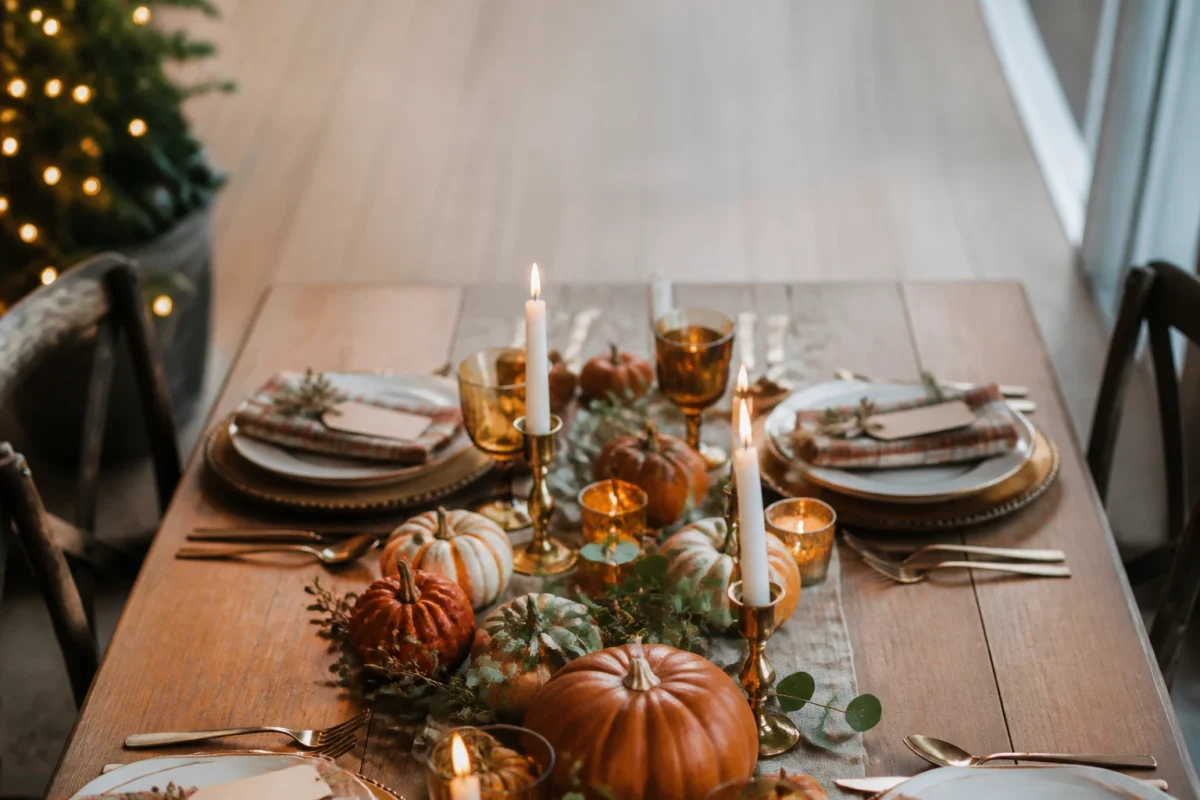
The truth is, this is about more than name tags. Done right, place settings quietly choreograph the flow of the meal, highlight the food, and set the mood from the second your people sit down. I’ll show you how to build each look with affordable pieces in 90 minutes or less, using colors, textures, and seasonal details that look great in real homes. You’ll get ideas that layer candle glow, warm wood, plaid, and pumpkins in ways that feel rich and generous on camera and in person. These are crowd-pleasers—great for family-style dinners, Friendsgiving, or when your in-laws show up early and you need a win.
Expect cozy, color-rich styling with practical tips. If you’re hosting anytime from late October through Thanksgiving weekend, you’re in the sweet spot. Ready for five totally distinct looks you can actually pull off on a Tuesday night prep? Let’s set the table.
1. Cranberry Card Tucked Into Wheat Napkins On A Warm Wood Dining Table
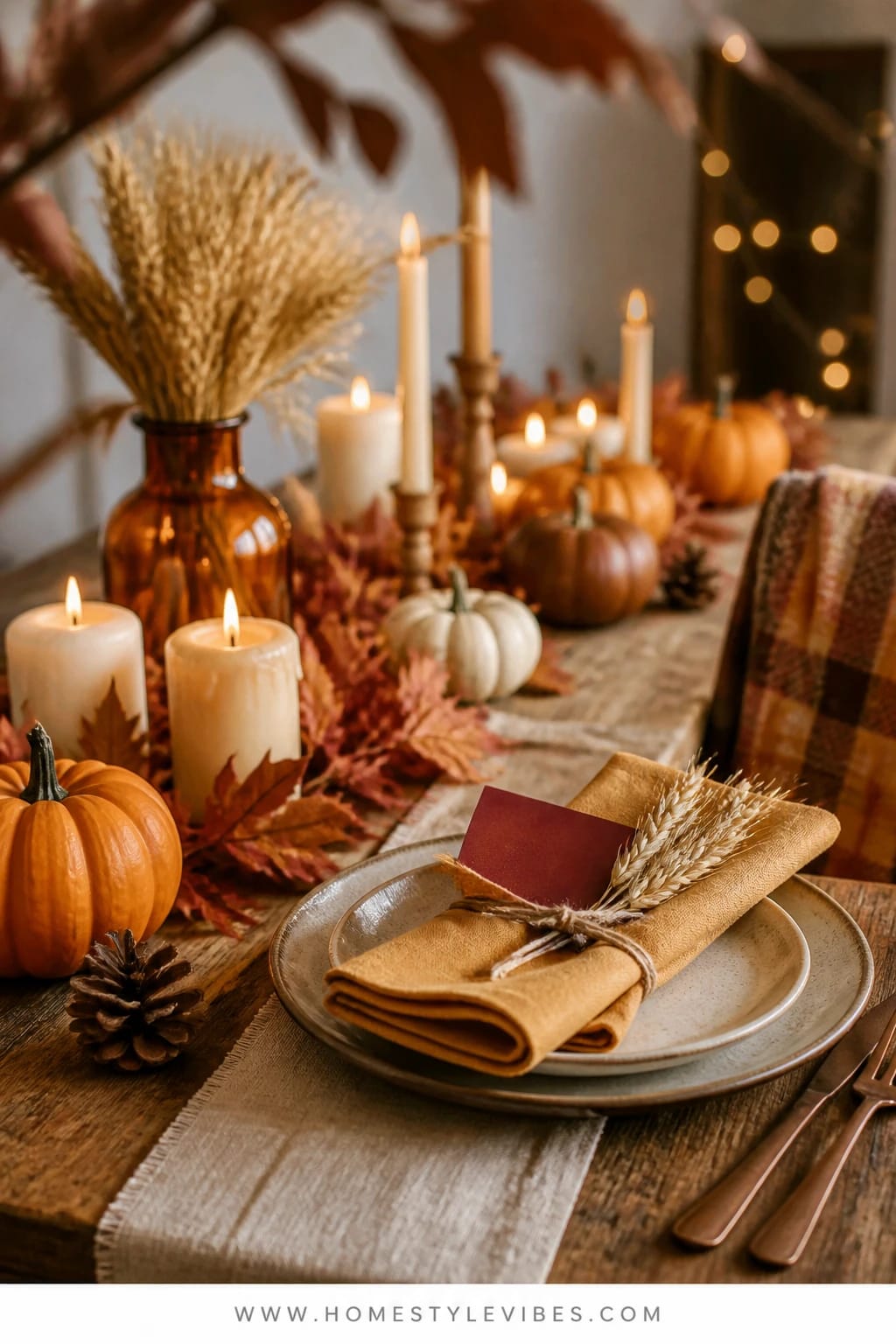
We’ve all been there: the table feels flat no matter how many pumpkins you buy. The secret isn’t more stuff—it’s layers that do a quiet dance together. This look leans into cozy bright autumn with a warm wood dining table, a whisper of harvest texture, and a juicy pop of cranberry at each plate. The mood is generous and easygoing: candlelight pooling over natural wood, the papery rustle of dried wheat, and a saturated color note that says “sit here, we saved you this spot.”
Why it works in real homes: you’re building on what you already own. Wood tables love this—scratches and all. The texture of wheat wraps a soft napkin (oatmeal, flax, or cream), then a cranberry place card slides right in. It looks styled but not fussy, so kids and pets can hover without wrecking it. Lighting is simple—two to three amber-glass votives per four seats pull a honeyed glow across the table, catching the wheat and making your cranberry cards read like little jewels in the photos.
It photographs beautifully because the palette is warm and tight: amber, wood, cream, cranberry. Depth comes from the wheat napkin ring’s shadow, and the cranberry card adds high-contrast punctuation that anchors the image. The look sits comfortably from late October through Thanksgiving, and it adapts well if your guest count doubles. Small space? You’re not adding bulk, just texture and color.
Variations:
- Budget-friendly: Replace wheat napkin rings with simple twine and a tiny sprig of rosemary.
- Small table: Use smaller, square napkins and a daintier place card (folded cardstock the width of two fingers).
- Muted vibe: Swap cranberry for tawny rust or deep sage and keep votives clear instead of amber.
Budget Breakdown:
- Cloth napkins (set of 4–6): $15–$35
- Dried wheat or rye stems: $6–$12
- Cardstock for place cards (cranberry red): $4–$8
- Amber-glass votives (set of 6): $12–$24
- Twine or raffia (optional): $3–$7
Total Estimated Cost: $40–$86
Best For: A standard dining room table or kitchen island used as a buffet with a place-setting zone; families who want warm, unfussy styling that wears well all day and looks great at golden hour.
Key Design Elements:
- Main seasonal props: dried wheat stems, amber votive candles
- Color palette: wood tones, cream/oatmeal, cranberry red, hints of amber
- Lighting strategy: low amber candle clusters every two place settings
- Textile layers: natural-fiber napkins, optional linen runner
- Natural elements: wheat, wooden table surface
- Accent details: twine or slim brass napkin rings, matte ceramic plates
How To Recreate This Look:
- Start with a bare wood table or a neutral runner; avoid high-contrast cloths that fight the cranberry.
- Add a plate stack: dinner plate, salad plate, then a cloth napkin folded into a simple rectangle.
- Layer a small bundle of wheat around the napkin’s center with twine or a slim ring.
- Place a cranberry cardstock place card tucked under the wheat bundle so the name peeks out.
- Style with two or three amber votives between settings, leaving space for platters.
Why This Looks Expensive: The monochrome wood-and-cream base with a single saturated accent reads intentional. Repeating the wheat motif at every seat creates rhythm, which is what designers lean on to make tables feel finished.
Watch Out: Don’t overdo the wheat—one small bundle per napkin is enough. Big bundles shed and look messy by dessert.
Pro Styling Tip: Angle the place cards five degrees toward the center of the table so candlelight hits the names and your photos catch that tiny glow line along the card’s edge.
2. Plaid Ribbon Place Cards With Mini Pumpkins On A Farmhouse Kitchen Island
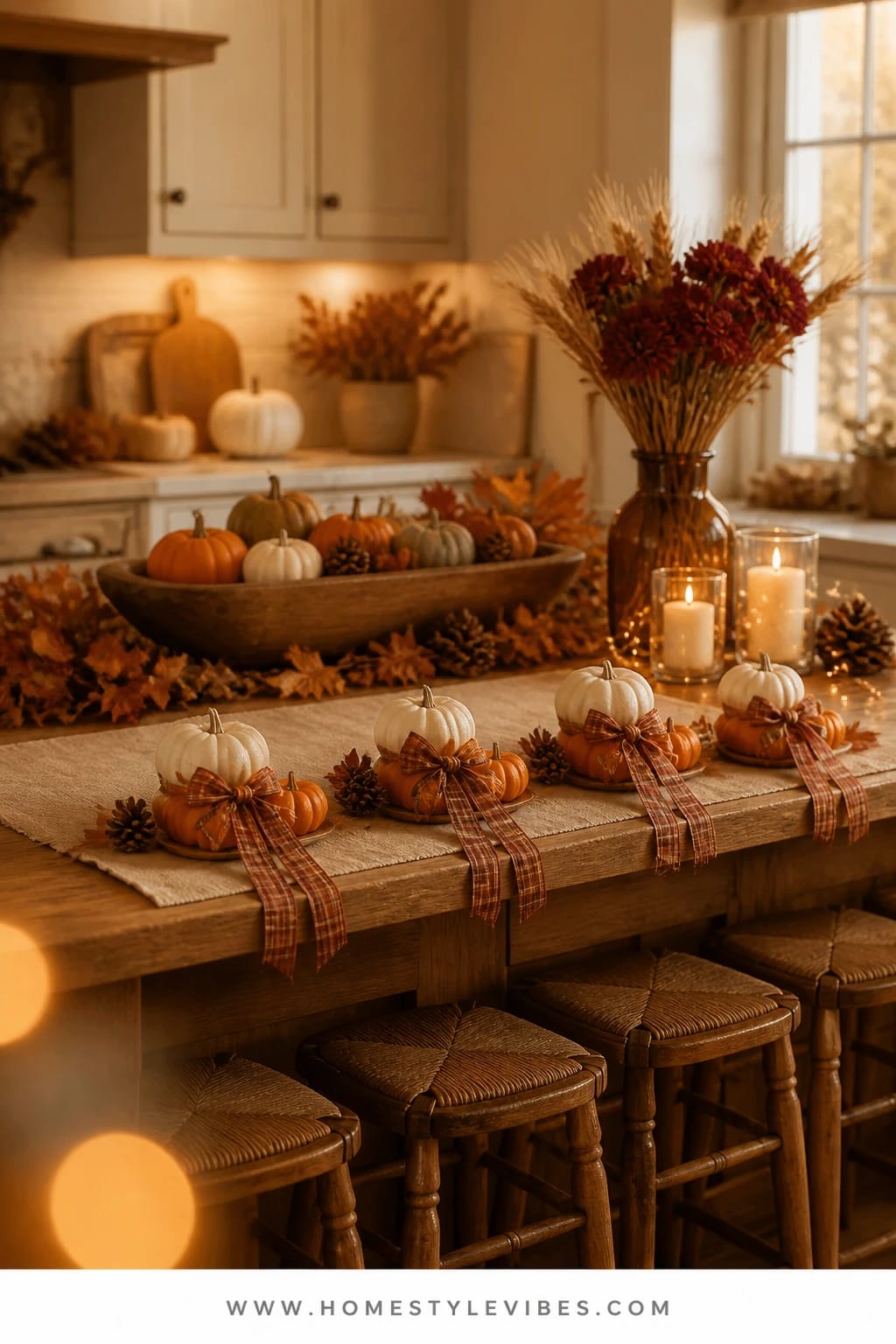
It’s that one spot that always feels off—the kitchen island that turns into a drop zone right before guests arrive. You’ve tried flowers. They wilt under the pendant lights and compete with the turkey. This idea dials straight into harvest charm: mini pumpkins as place markers tied with a thin plaid ribbon, clustered at each stool on your island or at the breakfast nook. The vibe is cozy bright autumn with a tiny wink—charming, graphic, and ridiculously photogenic.
Here’s why it works: pumpkins are simple, low-profile, and won’t block conversation. A plaid ribbon (think auburn and cream or burgundy and gold) instantly reads “fall” without shouting. Lighting from overhead pendants warms the pumpkin skin and throws a soft shadow over your counters. The result is clean, cheerful, and family-friendly. Everything stores easily in a shoebox post-holiday or heads straight to the compost.
Photographs love contrast, and this setup delivers: creamy island tops, warm orange pumpkins, crisp ribbon stripes, and the soft focus of pendant lights above. If you’re doing a Friendsgiving buffet, line the pumpkins along the island with names for serving order. If you’re doing a seated meal at the island, place one pumpkin at each stool with a small name tag tied around the stem.
Variations:
- Budget: Use paper ribbon or torn fabric strips from an old flannel shirt. Rustic, cute, basically free.
- Small-space: Use tiny faux pumpkins or clementines if the island is narrow—festive and snackable.
- Muted: Choose white pumpkins with a taupe or soft rust ribbon to quiet the color while keeping the structure.
Key Design Elements:
- Main seasonal props: mini pumpkins (real or faux), plaid ribbon
- Color palette: soft orange, cream/white, rust or burgundy from the ribbon, warm wood stools
- Lighting strategy: pendant lights on a dimmer; add two tea lights in glass if you need warmth
- Textile layers: optional runner down the island or individual placemats at stools
- Natural elements: pumpkins, eucalyptus sprigs (optional)
- Accent details: kraft paper tags, brass scissors left out artfully for a candid vibe
Budget Breakdown:
- Mini pumpkins (8–12): $8–$24
- Plaid ribbon roll: $6–$12
- Kraft tags (pack of 20): $3–$6
- Tea lights and holders: $5–$12
- Optional runner: $12–$28
Total Estimated Cost: $22–$82
Best For: Families who gather around the kitchen; island seating or a breakfast bar where you want fast, cheerful styling that doubles as a conversation starter.
How To Recreate This Look:
- Start with a wipe-down of the island and a neutral base: a runner or just the clean counter.
- Add a mini pumpkin to each place; pick similar sizes for a tidy look, or mix slightly for charm.
- Layer a plaid ribbon around each stem and knot it with a short tail (long tails get in the soup).
- Place a kraft tag with the guest’s name on the ribbon knot, or tie it separately with twine.
- Style with two to three tea lights along the island; dim pendants until the counter glows.
Why This Feels Designer: The repeating stripe of plaid at eye level creates a graphic line that unifies the island and stools, while the pumpkins add organic curves—balance is the designer move here.
One Thing To Avoid: Don’t mix too many ribbon patterns. One plaid and maybe a solid, max. Too many prints can read chaotic in photos.
Pro Styling Tip: Cut ribbon tails at a 45-degree angle and keep them to two inches—sharp, tidy, and less likely to dunk in gravy.
Keep scrolling—next up is the look for anyone obsessed with candle glow and layered color but short on time.
Remember, this isn’t about recreating a showroom. It’s about building a table that feels like your family—quirks, colors, and inside jokes included. If one idea sings, start there and skip the rest this year.
3. Amber Glass Name Flags With Rust Linen On A Candlelit Dining Table
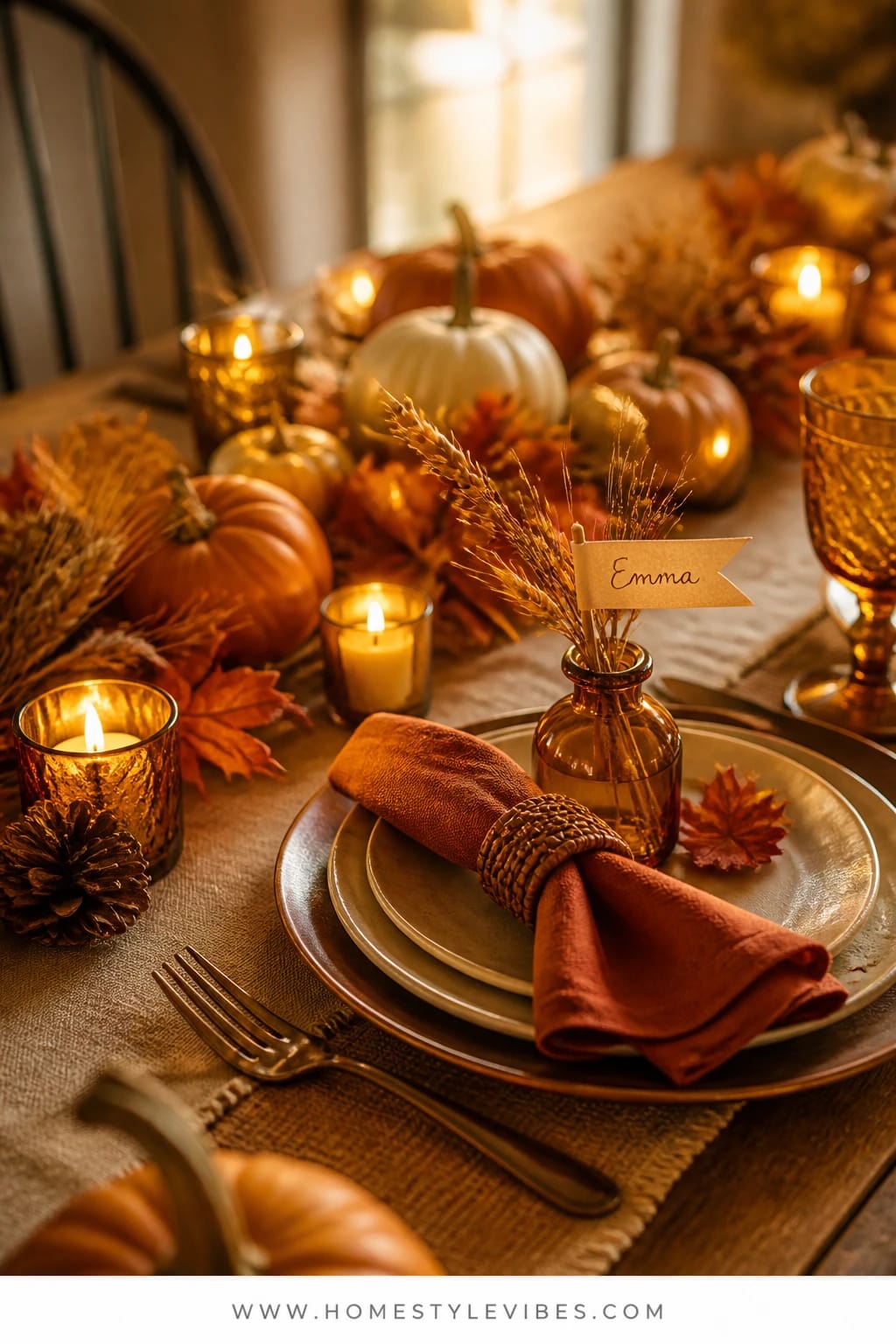
You want candlelit drama that still feels warm and generous. You’ve tried tall tapers, but they wobble, wax drips happen, and the whole thing skews fancy-fussy. This setup swaps in sturdy amber-glass bud vases with little name flags and a rust linen napkin at each plate. It’s moody in the coziest way—amber light catching glass, rusty linen soaking up candle glow, and low floral sprigs that won’t block the conversation.
Why it works: the amber glass multiplies warm light. Tea lights or low pillars reflect across each bud vase, adding that golden pool that flatters every plate of stuffing. It’s practical—bud vases stay put, and you can prep name flags a week ahead. The color story stays saturated but controlled: rust, amber, cream, and deep greens. This reads rich in photos without overpowering the turkey and pies.
Anecdote alert: I tried this last October when a friend texted “coming in 15!” and I hadn’t ironed anything. I tucked a strip of rust linen around each plate like a sash, slid in a sprig of olive, and stuck a name flag into an amber bud vase. Ten minutes. It looked like I’d planned it for a week. That soft, honeyed glow forgives a lot—wrinkles included.
Variations:
- Budget: Use recycled jars tinted with a drop of amber glass paint, or thrift mismatched amber goblets as vases.
- Small table: One central amber cluster and name flags glued to kraft stir sticks tucked at each plate.
- Muted: Swap rust linen for oatmeal and add a single burgundy stem for contrast.
Budget Breakdown:
- Amber bud vases (6–8): $24–$60
- Rust linen napkins (set of 6): $18–$42
- Cardstock for flags + skewers: $5–$10
- Tea lights or short pillars: $6–$20
- Eucalyptus/olive/herb sprigs: $4–$12
Total Estimated Cost: $57–$144
Best For: Dining rooms where lighting needs warmth; hosts who love a moody, candle-soaked glow that still reads cheerful and welcoming.
Key Design Elements:
- Main seasonal props: amber bud vases, rust linen, herb or olive sprigs
- Color palette: rust, amber, creamy whites, deep greens
- Lighting strategy: clusters of tea lights around each vase to amplify glow
- Textile layers: rust napkins, optional flax runner to soften the table
- Natural elements: olive/eucalyptus/herbs, wooden table
- Accent details: hand-cut name flags, small brass bowls of salt at each end
How To Recreate This Look:
- Start with your table bare or with a neutral runner; keep patterns minimal.
- Add plate stacks; fold rust napkins lengthwise and drape over the top plate with a soft curve.
- Layer an herb or olive sprig onto each napkin, angled toward the diner.
- Place an amber bud vase above each plate or slightly to the right; add a tiny floral or herb clipping.
- Style with a name flag tucked into each vase, then surround with two tea lights to bounce warmth.
Why This Reads High-End: Repetition of amber glass creates a visual throughline, while rust linen injects one saturated note. The low profile feels curated and confident—like a cozy bistro met harvest season.
The Most Common Mistake: Don’t overcrowd the vases. One or two stems per vase is enough; too many blooms steal oxygen from the food and the conversation.
Pro Styling Tip: Stagger vases slightly off-center from each plate so photos catch a zigzag rhythm of glass and flame—movement equals visual interest.
Halfway through and feeling inspired? Good. The next idea leans into texture and abundance without taking over your life—or your dishwasher.
4. Harvest Herb Wreath Place Cards With Oatmeal Linens On A Round Table
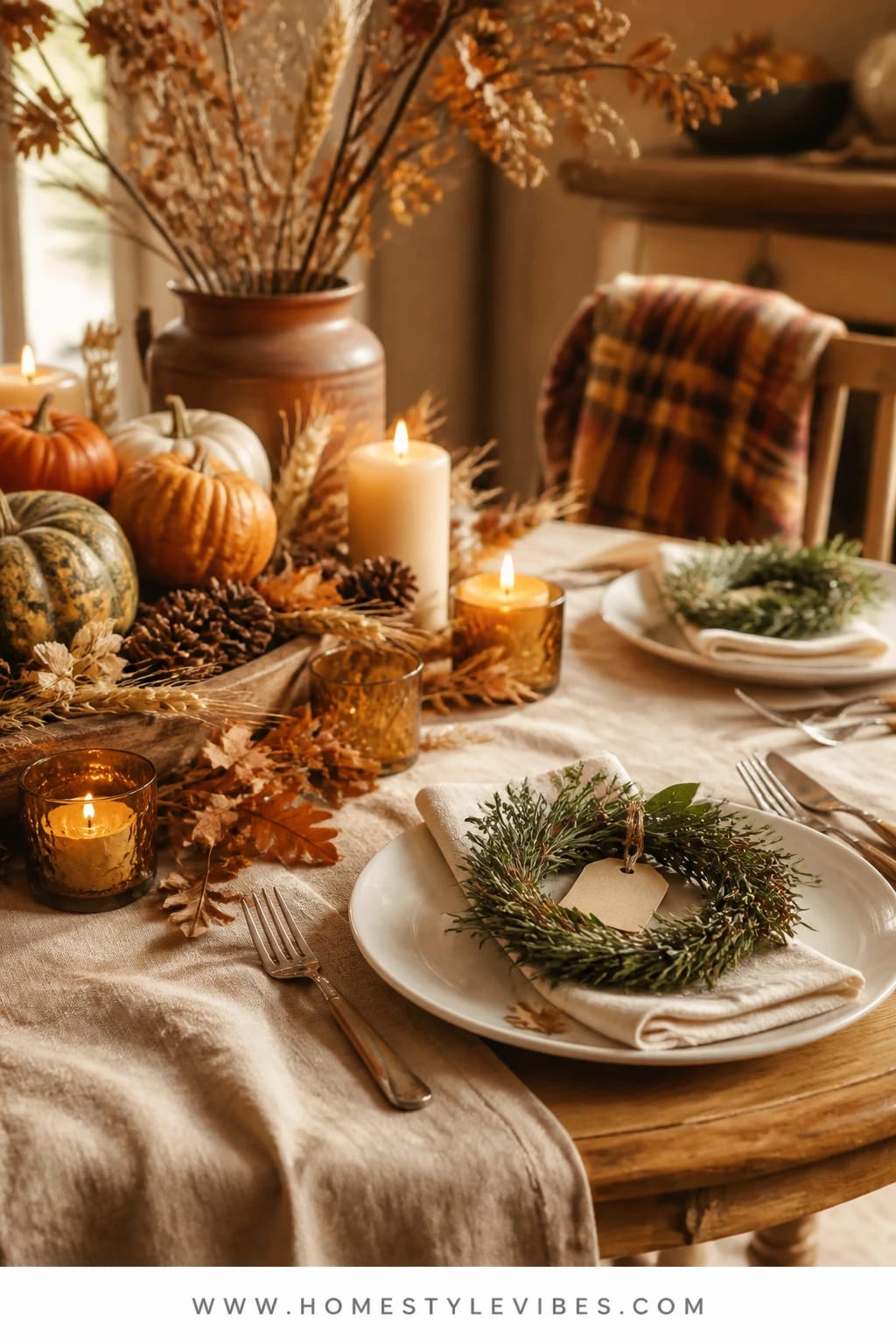
Round tables can feel tricky. Everything wants to slide toward the center and you end up with a bowl of rolls doing a slow spin like it’s on display. This look solves the round-table riddle with small, individual herb wreaths that double as place cards—clean, tactile, and wildly fragrant. Think cozy bright autumn with a breezy herbal freshness: rosemary, thyme, and bay leaves circled into palm-sized rings, tied with a tiny tag, resting on oatmeal-hued linen.
It works because it brings scale down to the plate and trades bulk for texture. Guests get their own little “moment” that smells amazing and won’t intrude on elbow room. Candlelight reads crisp against the muted oatmeal base, and the green rings add calm structure. If your dining area leans transitional or casual farmhouse, this slots right in and makes the room feel finished.
Photographs catch the delicate shadow a wreath throws across the napkin and the crisp white of a tag against green. The palette stays controlled—oatmeal, white, green, hints of brass—which means your food gets to be the star. And if you’re hosting across the season, these wreath cards look beautiful from early November straight through to winter when you swap in a sprig of cedar.
Variations:
- Budget: Use faux eucalyptus garland cut into mini rings; lasts for years.
- Small space: Keep the centerpiece minimal—one low bowl of pears—and let the wreaths do the styling.
- Warm-up: Add two rust taper candles in simple brass holders to stitch in that Thanksgiving color.
Key Design Elements:
- Main seasonal props: mini herb wreaths (rosemary, thyme, bay), brass candleholders
- Color palette: oatmeal, cream, deep green, soft brass accents
- Lighting strategy: a trio of low votives to avoid glare on a round table, plus two rust tapers if desired
- Textile layers: oatmeal napkins, a neutral round tablecloth or bare wood
- Natural elements: fresh herbs, seasonal fruit bowl as centerpiece
- Accent details: small white tags, fine jute string, matte ceramic plates
Budget Breakdown:
- Fresh herb bundles: $8–$18
- Jute string: $3–$6
- White cardstock tags: $3–$5
- Votives + holders: $8–$18
- Oatmeal napkins (set of 6): $15–$35
Total Estimated Cost: $37–$82
Best For: Round tables or cozy dining nooks; cooks who want fragrance at the place setting without floral petals near the gravy boat.
How To Recreate This Look:
- Start by trimming herb stems to 5–6 inches; bend into circles and secure with jute string.
- Add a small white tag with each name, tying it at the top of the wreath so it sits like a charm.
- Layer oatmeal napkins folded into soft squares on top of plates.
- Place wreaths centered on each napkin; let a few leaves overlap the edge for an organic feel.
- Style the table with a low fruit bowl and three votives equally spaced for even glow.
Why This Looks Intentional: Consistent texture and scale unify the table. The repetition of green rings around the table reads like a patterned border—quiet but striking.
Don’t Do This: Avoid strong floral scents with herbs. Competing fragrances (like scented candles) muddle the aroma and can mess with how food tastes.
Pro Styling Tip: Light candles five minutes before guests sit; the slight wax melt creates a softer, more flattering flame for photos and faces.
Feeling the calm set in? Good. Our last idea brings a layered harvest story to a classic dining table—with a place card move guests will still be talking about at dessert.
Also, permission to be imperfect: I once misspelled my cousin’s name on a tag and we laughed about it all night. A little humanity belongs at the table more than perfect penmanship ever will.
5. Gilded Leaf Place Cards With Burgundy Plaid On A Long Farmhouse Table
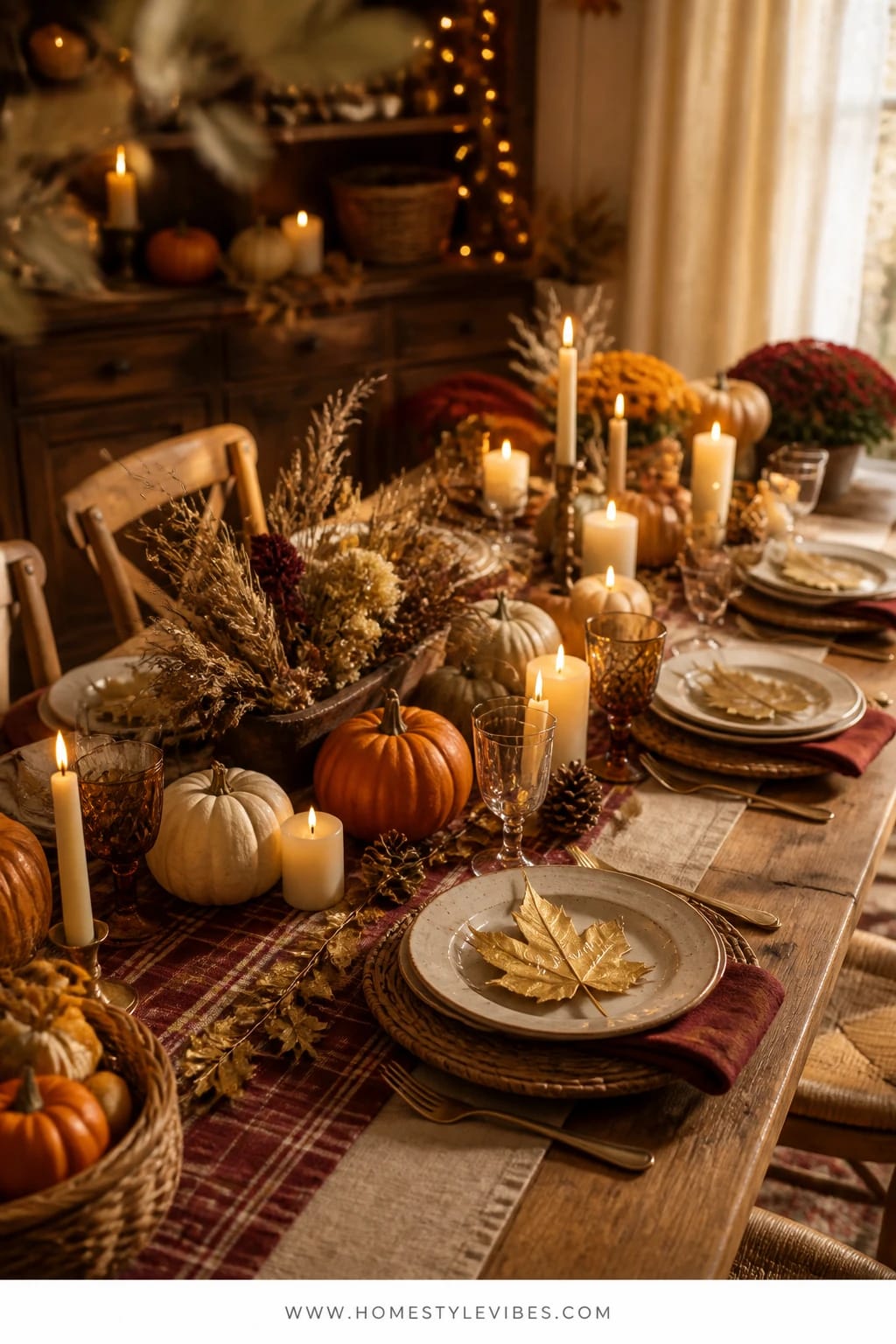
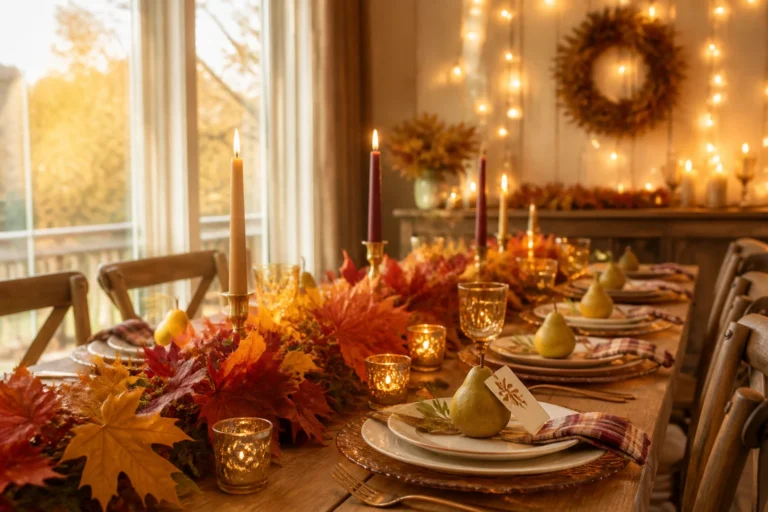
Sometimes you want the big, generous Thanksgiving moment—the long table, the bountiful spread, the feeling that you pulled fall right into the room. You’ve tried scattered leaves, but it always looked like yard cleanup. This idea takes the magic and leaves the mess: real leaves gilded with a brush of gold and hand-lettered names, layered over burgundy plaid runners and sprinkled between low candles on a long farmhouse table. Cozy bright autumn at full volume—in the best way.
Why it works: burgundy plaid anchors the length of the table and plays beautifully with warm candlelight. The gold-leaf shimmer on real leaves adds just enough glam without going formal. You’ll get movement from the plaid lines and a soft sparkle that lives right in those little pockets of light between plates. It’s also easy to scale—add more runners as the table grows, gild a few more leaves, and you’re done.
Lighting does the heavy lifting here. Keep candles low: tea lights in clear cups or stubby pillars in glass hurricanes. That allows the plaid to show, the leaves to catch light, and your serving dishes to glide in and out without weaving around tall tapers. On camera, the gold accents reflect dots of light like tiny stars—trust me, it’s gorgeous.
Variations:
- Budget: Use metallic paint pens on leaves instead of gilding medium. Faster, cheaper, still glows.
- Small-space: One narrow runner down a console table for a buffet, with gilded leaves marking dish names (“Sweet Potatoes,” “Gluten-Free Stuffing”).
- Neutral-leaning: Replace burgundy plaid with a soft wheat plaid and do a lighter, brushed gold edge on the leaves.
Budget Breakdown:
- Burgundy plaid runners (1–2): $18–$42
- Gilding kit or metallic paint pens: $6–$14
- Tea lights and glass cups (pack): $6–$16
- Cardstock backing (optional for fragile leaves): $3–$6
- Clear hurricanes (2–4): $24–$60
Total Estimated Cost: $57–$138
Best For: Long rectangular dining tables in homes that love a full, harvest-forward look; great for big families or Friendsgiving crowds who eat with their eyes first.
Key Design Elements:
- Main seasonal props: real leaves with gold detailing, burgundy plaid runner
- Color palette: burgundy, deep rust, warm gold, wood tones, creamy dishware
- Lighting strategy: low, abundant candlelight to reflect in gilded edges
- Textile layers: plaid runner(s), optional cream placemats
- Natural elements: real leaves, tiny clusters of red pears or cranberries down the center
- Accent details: slender brass salt-and-pepper mills, clear hurricanes
How To Recreate This Look:
- Start by laying a burgundy plaid runner down the table; ensure it’s centered and taut.
- Add your plate stacks with simple, light napkins so the plaid lines stay visible.
- Layer tea lights every 12–16 inches, with two or three short pillars in hurricanes for rhythm.
- Place gilded leaves at each setting with inked names; add a few extras dancing down the runner.
- Style with small clusters of cranberries or red pears for a natural, edible accent.
Why This Looks Expensive: The interplay of pattern (plaid) and sheen (gilded edges) creates visual depth that feels collected, not crafty. Repeating the leaf motif at each plate plus a few down the center pulls the whole scene together.
Watch Out: Don’t choose leaves that are too brittle. Slightly supple, freshly fallen leaves take paint better and won’t shatter during dinner.
Pro Styling Tip: Letter names slightly larger than you think—roughly the width of two fingers—so they read clearly in photos and from across the table.
If you’re wondering which route to take, consider your table’s bossiest feature—wood tone, shape, or lighting—and pick the idea that partners with it instead of fighting it. That alignment is the difference between “nice” and “wow.”
Quick Checklist
- Cloth napkins in cream, oatmeal, or rust
- Cardstock for place cards (cranberry, white, or kraft)
- Mini pumpkins or clementines
- Plaid ribbon or fabric strips
- Dried wheat or herb sprigs
- Amber-glass bud vases
- Tea lights and short pillars
- Burgundy plaid runner
- Gilding kit or metallic paint pens
- Fine jute string and twine
- Permanent markers or gel pens for names
- Low-profile center bowls (pears, cranberries)
Frequently Asked Questions
How can I keep costs down for these Thanksgiving place setting and place card ideas?
Pick one anchor element and build around it. For example, choose the mini pumpkins and use kraft tags with kitchen twine you already own. Thrift amber glass or reuse clear jars, and repurpose plaid from a scarf as a runner. Staying inside one color story makes even the simplest materials look intentional.
Real or faux pumpkins and florals—what’s better for a busy household?
For high-traffic tables, I like real mini pumpkins and hardy herbs. They hold up for a week and compost at the end. If your dining table bakes in sun or sits over a heat vent, go faux pumpkins and faux eucalyptus so you’re not dealing with soft spots by week three.
My dining area is small. Which idea works best without crowding?
The herb wreath place cards on oatmeal linens are ideal. They keep the styling on the plate level and avoid bulky centerpieces. Or try the amber glass name flags with a single cluster of vases off to one side—lots of glow, zero clutter.
What do I do with all these pieces after Thanksgiving?
Store napkins and runners in a shallow bin with cedar blocks. Keep small seasonal pieces—ribbon, tags, leftover faux florals—in a clear shoebox labeled “Fall Table.” Amber glass doubles as everyday bud vases, and leftover herbs head to the roasting pan.
Are candles safe around kids and pets at the table?
Use tea lights in heavy glass cups and keep them at least six inches from napkins. Consider battery-operated tea lights for the ends of the table where little hands reach. Place real flames in the center zone and keep wicks trimmed short to prevent big flickers.
When should I start decorating for Thanksgiving place settings?
Prep name cards and ribbons a week out. Assemble herb wreaths 1–2 days ahead. Set runners and plate stacks the morning of, then add perishables (pumpkins, greens, candles) one hour before guests arrive. Light candles five minutes before seating.
My handwriting isn’t great. Any alternatives for the place cards?
Print names in a clean font on cardstock and cut into flags or tags. Or stamp initials. Another option: assign seat numbers that correspond to a little “who’s who” card at the head of the table—quirky and fun.
Final Thoughts
Pick one idea and start there. Maybe it’s that cranberry card tucked into wheat on your warm wood table, or the plaid ribbon pumpkins lined up on the kitchen island like a little harvest parade. Keep your palette tight, lean into candle glow, and let texture carry the mood. That’s the heartbeat of cozy bright autumn—layered, warm, and a bit abundant.
These Thanksgiving place setting and place card ideas aren’t about impressing strangers. They’re about signaling to your people, “You matter. I saved you this spot.” Build the scene you’ll remember: the soft flicker on a name tag, the rustle of herbs when someone lifts a napkin, the happy clink of forks. Start with one plate today, then another tomorrow. By Thursday, you’ve got a table that feels like home—and that’s the whole point.
You’ve got this. Light the candles, tie the ribbon, write the names. The rest will fall beautifully into place.

About the Author

Krisztina P.Rendes, Founder of Home Style Vibes
Founder of Home Style Vibes
Krisztina Puskásné Rendes created Home Style Vibes as a cozy-modern lifestyle space where homemaking meets inspiration. Her goal is to help women create beautiful, organized, and peaceful homes they truly love — without overwhelm. You’ll find here heart-driven content on home decor, cleaning tips, easy family recipes, organization and decluttering, DIY home projects, plants, and seasonal ideas — all designed to bring more calm, comfort, and style into everyday life.