6 Sage Green Fall Decor Ideas That Feel Fresh And Unexpected
You want a fall home that feels calm, layered, and quietly gorgeous—like a deep breath after a long day. You hate that “pumpkin explosion” look where every surface shouts orange. You’re craving an airy, neutral minimal fall vibe with soft sage green, pale wheat, and textures that whisper, not scream. These six sage green fall decor ideas fix the overwhelm and bring that serene autumn feeling into actual rooms you live in—no magazine magic required, just smart styling and simple swaps.
Expect cozy, calm warmth that photographs beautifully: creamy pumpkins, muted eucalyptus, white ceramics, woven textures, and candlelight that glows like late-afternoon sun. We’ll keep the budget sane (most rooms under $250 to refresh) and the plan easy to pull off in a weekend. The frustration? Too much stuff and no cohesion. The cure? A focused palette, layered textures, and sage as the soft anchor. If you love Scandinavian restraint or Japandi serenity, these ideas will give you that Pinterest-worthy, understated fall story—perfect from September through Thanksgiving.
1) Soft Sage Pumpkins With Oatmeal Throws on the Living Room Sofa
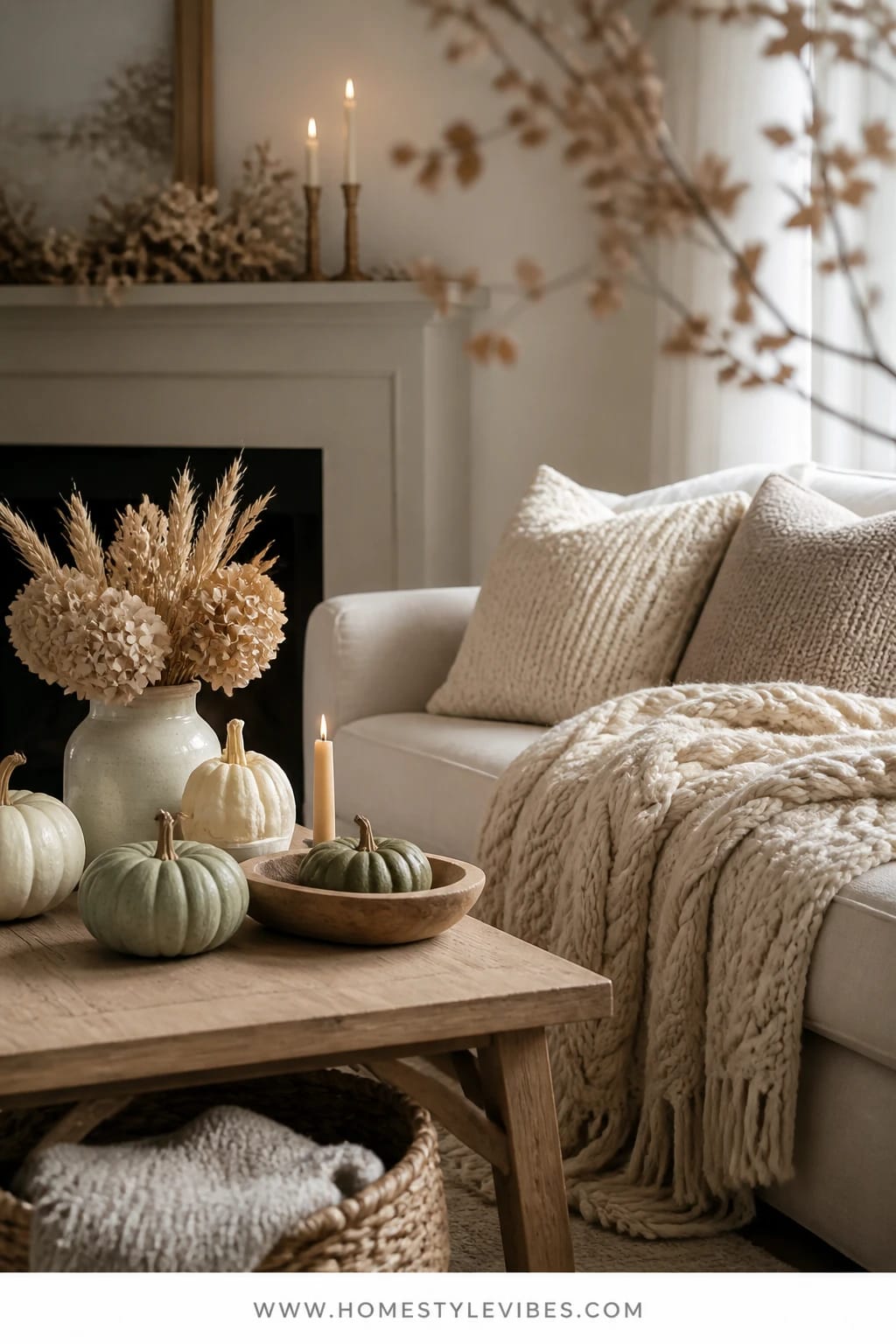
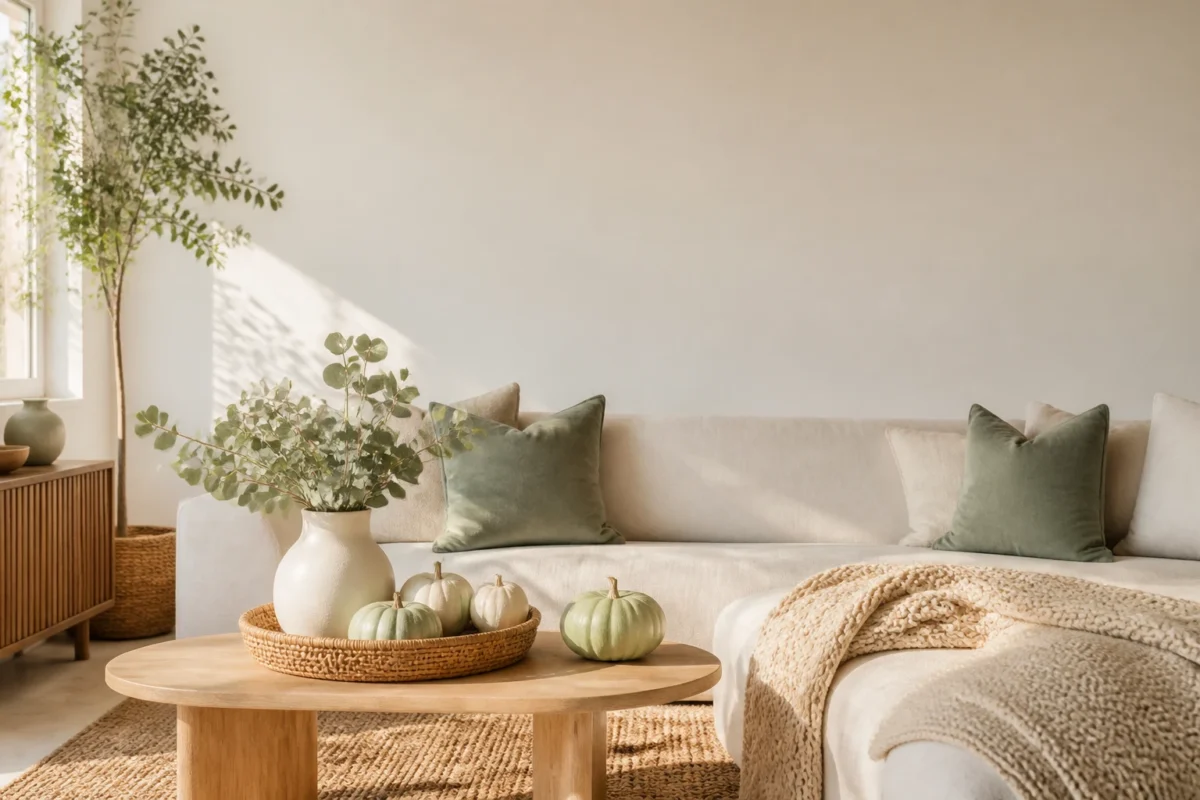
It’s that one corner that always feels off: the sofa looks tired, the pillows don’t relate, and the coffee table is either too empty or too cluttered. We’ve all been there, staring at a handful of mismatched pillows, wondering why the room still reads “late summer.” This setup creates a calm, airy warmth—neutral minimal fall in its purest form—by leaning on sage pumpkins, creamy textiles, and a quiet palette that feels fresh instead of fussy.
Here’s why it works in real homes: you’re updating what you touch every day—pillows, throws, a couple of pumpkins—so the change hits your eye and your comfort simultaneously. Soft window light finds those woven textures and pale greens, letting the tones sing without visual noise. In late afternoons, the golden light from a nearby window bounces off a white ceramic vase and warms the sage tones just enough. Photographs? They love the interplay of plush textiles and small, pale pumpkins that dot the scene like little commas of interest.
Materials stay light and tactile: oatmeal bouclé, stonewashed linen, white ceramic, a simple ivory candle, and a stack of sage green velvet or velvet-look pumpkins (faux or real, IMO real mini pumpkins win every time for texture). If your home leans small, this idea scales instantly. Swap two pillows and add a single drift of pumpkins on the coffee table’s tray, then pull in a throw. It’s plenty.
Variations you’ll love:
- Budget-friendly: Use pillow covers to re-dress your existing inserts and thrift a simple white pitcher for eucalyptus.
- Super minimal: One sage pumpkin on a low-profile tray, a single tall candle, and one nubby throw in pale taupe.
- Family-friendly: Opt for faux pumpkins and battery taper candles. They still give that warm “glow” in photos—without open flames near jumping kids or wagging tails.
Budget Breakdown:
- Sage pumpkin set (faux or mixed real minis): $15 – $45
- Pillow covers (2–4 in oatmeal/cream/soft sage): $30 – $90
- Throw blanket (oatmeal bouclé or chunky knit): $25 – $80
- White ceramic vase or pitcher: $12 – $40
- Faux eucalyptus stems (sage-toned): $12 – $28
- Battery candle or ivory pillar: $8 – $18
Total Estimated Cost: $82 – $301
Best For: Living rooms that get decent natural light and families who want a calm, neutral fall look without visual clutter. Great from early September through Thanksgiving, since the colors don’t shout “Halloween.”
Key Design Elements:
- Main seasonal props: Sage pumpkins (assorted sizes), ivory pillar candle, eucalyptus
- Color palette: Sage, oatmeal, cream, soft taupe
- Lighting strategy: Natural afternoon light; one warm (2700K) lamp in the evening
- Textile layers: Bouclé, linen, soft knit, subtle herringbone
- Natural elements: Real or faux eucalyptus, real mini pumpkins if you can
- Accent details: White ceramic vase, low wood or rattan tray
How To Recreate This Look:
- Start with your sofa: strip summer brights and add two oatmeal pillow covers and one sage pillow.
- Add a nubby throw, folded lengthwise and draped casually along the arm or back.
- Layer a low tray on the coffee table with 2–4 mini pumpkins in pale greens and whites.
- Place a white ceramic vase with a few eucalyptus stems to the side of the tray.
- Style with one candle (flameless or real) to add a gentle evening glow.
Why This Looks Intentional: You’ve kept the palette laser-focused, so even modest pieces read cohesive and curated. The pumpkins don’t dominate; they punctuate.
Watch Out: Don’t scatter pumpkins randomly across every surface. Group them in one or two places so the room feels edited, not busy.
Pro Styling Tip: For photos, place your candle slightly behind and to the side of the pumpkins so the warm light halos the sage tones without blowing out the highlights.
2) White Ceramics, Sage Eucalyptus, and a Minimal Mantel Glow
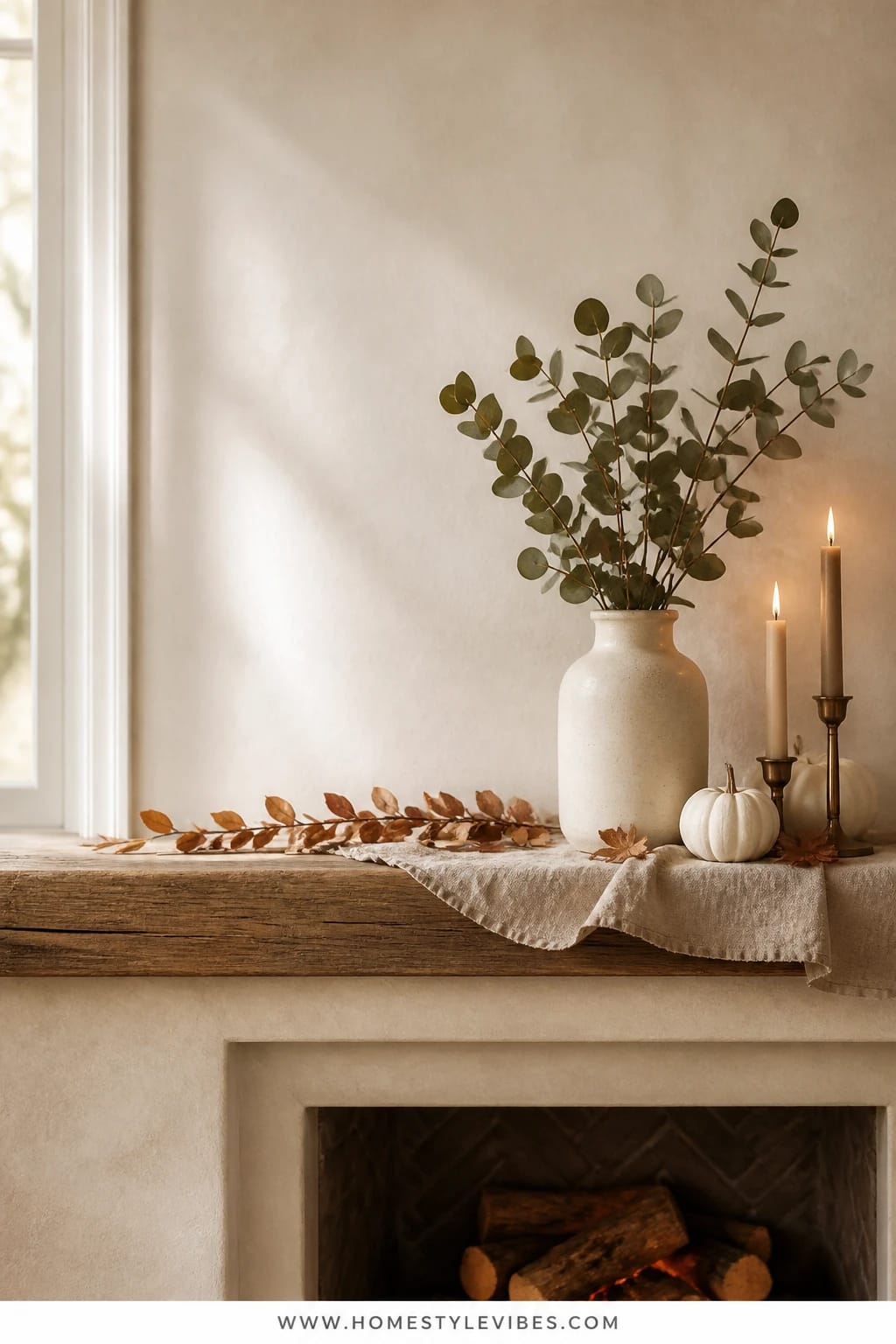
You’ve tried lining the mantel with everything—garlands, signs, mirrors—and it still looks busy or oddly flat. That’s the trap with mantels: too much small stuff, not enough calm moments. This idea pares it all back: a single off-white vessel, a loose cluster of sage eucalyptus, a few pale pumpkins, and two slender tapers. The mood is serene, softly lit, and photogenic in a heartbeat.
Why it works: negative space is your friend. The sienna of your brick or the soft cream of the wall becomes a “frame” for the sage moments. Light from nearby windows strokes the leaves, while candlelight warms their undertones at dusk. Because this is so restrained, it works in both small and large rooms and never feels like you tried too hard.
A friend of mine bought three garlands for her mantel before realizing the real problem was her lighting. One lamp added to the opposite corner and—boom—the whole scene made sense. Here, two taper candles do similar emotional heavy-lifting with almost no visual weight.
Key Design Elements:
- Main seasonal props: White ceramic vessel, sage eucalyptus, pale pumpkins, slim tapers
- Color palette: Sage, cream, white, soft sand
- Lighting strategy: Two taper candles at varying heights; ambient lamp on a nearby console
- Textile layers: None on the mantel—keep it crisp; use a neutral throw nearby if visible
- Natural elements: Eucalyptus stems (preserved or faux), a sprig of olive if you have it
- Accent details: Light brass or matte black candleholders in slim profiles
Budget Breakdown:
- Ceramic vessel (thrift or new): $10 – $45
- Eucalyptus stems (3–5): $15 – $40
- Faux or real pale pumpkins (2–4): $12 – $35
- Taper candle set + holders: $18 – $60
- Mirror or art you already own (optional): $0
Total Estimated Cost: $55 – $180
Best For: Mantels in living rooms or dens where you want subtle seasonal presence that won’t fight with the TV or existing art.
How To Recreate This Look:
- Start with a clean mantel; remove extra frames and décor.
- Add the ceramic vessel slightly off center and tuck in eucalyptus at a loose angle.
- Place two tapers on the opposite side, one slightly taller than the other.
- Layer two to three small pale pumpkins near the base of the vase as a low, soft cluster.
- Step back and adjust spacing to ensure negative space remains on both ends.
Why This Feels Designer: The restraint. Letting blank space exist gives the eye a place to rest, which reads custom and high-end.
One Thing To Avoid: Don’t add a busy garland and then try to “tone it down” with neutrals. Pick either a garland or stems. For a minimal look, stems win.
Pro Styling Tip: Photograph in late afternoon with candles lit; the backlight through the eucalyptus adds a gauzy depth you can’t fake with filters.
Ready for something that can handle weeknight dinners and Saturday slow mornings? The next idea moves to your table, quietly stunning without fuss.
3) Pale Wheat Runner, Sage Glass Votives, and a Simple Dining Table Lineup
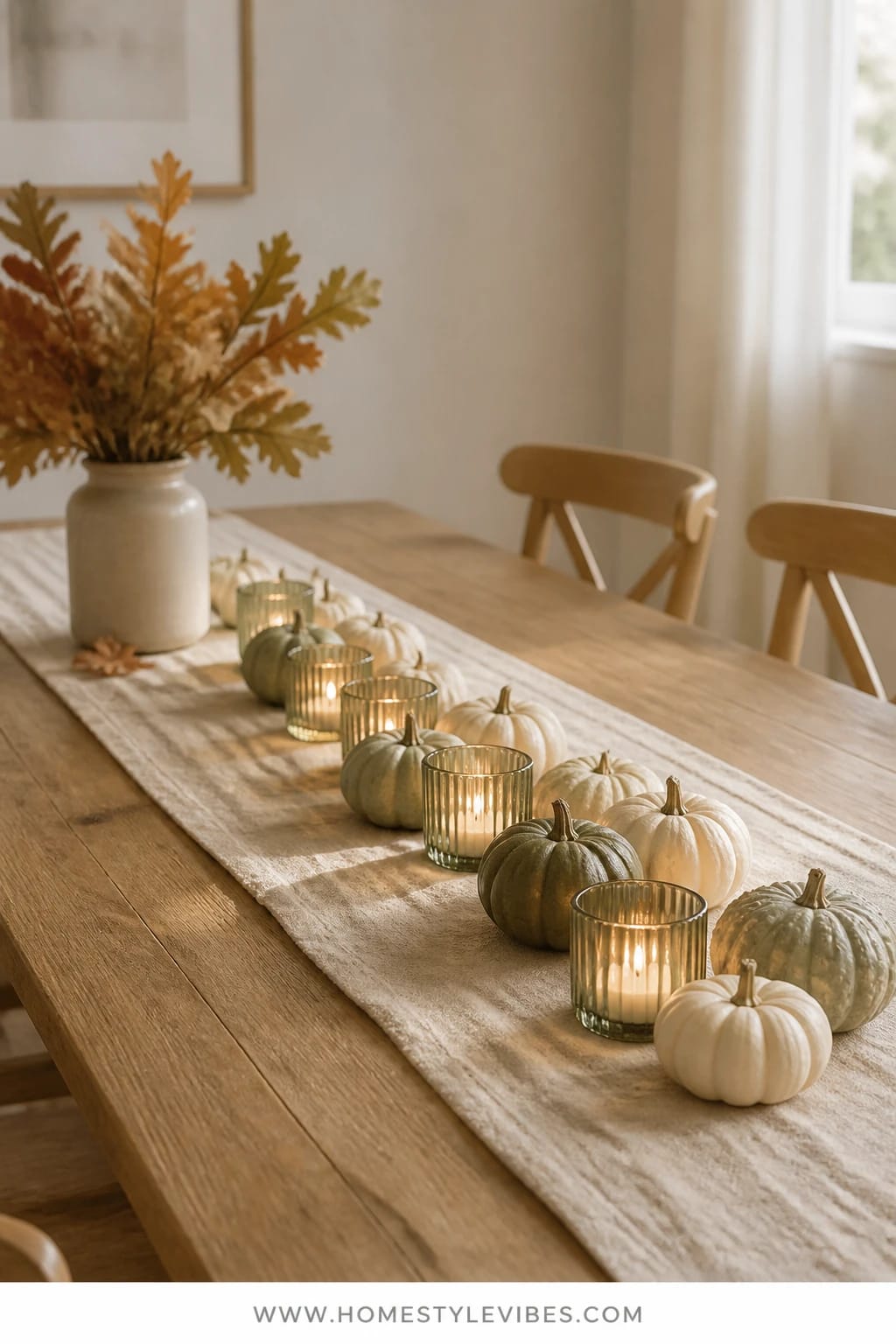
Hosting season approaches and the dining table turns into a question mark. Too tall? Too sparse? You need a centerpiece that works for Tuesday pasta and Sunday roast. This linear setup is unfussy: a pale wheat table runner, a line of sage-tinted glass votives, and a few white and sage gourds. The vibe is calm and inviting, like a Scandinavian fall supper—soft, warm, and utterly easy to clear.
It works because it keeps sightlines low. People see each other over the center, not around it. In the evening, the votives flicker at eye level and cast a buttery light across plates and flatware. Color stays within the neutral minimal fall spectrum—sage, oatmeal, cream—so everything from a black stoneware plate to your inherited white china suddenly plays nice.
Want to photograph it? This is your Instagram-friendly angle: a slightly elevated shot down the length of the runner, showing repetition of the sage votives and the pale pumpkins staggered between them.
Variations:
- Everyday version: Skip the runner, keep four votives and one oval platter with a single pumpkin.
- Thanksgiving upgrade: Add two soft taupe linen napkins at each place, tied with twine and a clipped eucalyptus sprig.
- Budget edit: Reuse juice glasses as votives, tint the water slightly with a drop of green food coloring and float tea lights—shockingly pretty and almost free.
Budget Breakdown:
- Pale wheat or flax linen runner: $18 – $55
- Sage glass votives (6–8): $24 – $72
- Pumpkins (mix of small white and sage): $12 – $40
- Simple tapered candles for nearby sideboard (optional): $12 – $25
Total Estimated Cost: $66 – $192
Best For: Dining rooms or eat-in kitchens that need a low, flexible centerpiece you can live with daily and love for gatherings.
Key Design Elements:
- Main seasonal props: Sage votives, white/sage pumpkins, pale runner
- Color palette: Sage, natural flax, cream, soft gray
- Lighting strategy: Low candlelight along the centerline; dim overheads to 40–60%
- Textile layers: Flax linen runner, optional linen napkins
- Natural elements: A few clipped olive or eucalyptus sprigs
- Accent details: Matte flatware, neutral ceramic plates
How To Recreate This Look:
- Start with a runner down the center of the table.
- Add votives in a gentle zigzag line to keep it from feeling too rigid.
- Layer in small pumpkins, spacing them evenly between votives.
- Place a few clipped stems along the runner, tucking ends under pumpkins.
- Style place settings minimally—two napkins color-matched to the runner look elegant and simple.
Why This Reads High-End: Repetition. A disciplined line of similar glass and shapes reads as intentional and custom, without needing expensive florals.
The Most Common Mistake: Oversizing pumpkins so plates don’t fit, or adding tall florals that block faces. Keep it low and linear.
Pro Styling Tip: If you shoot at night, switch bulbs to warm (2700K) and turn off that blinding can light directly above the table; candles need gentle ambient glow, not interrogation lighting.
Remember, this isn’t about recreating a showroom. It’s about building a space that actually feels like yours. If one idea resonates more than the others, that’s your starting point. You don’t need all of them.
4) Sage-Tinted Canisters and Neutral Wood on Open Kitchen Shelves
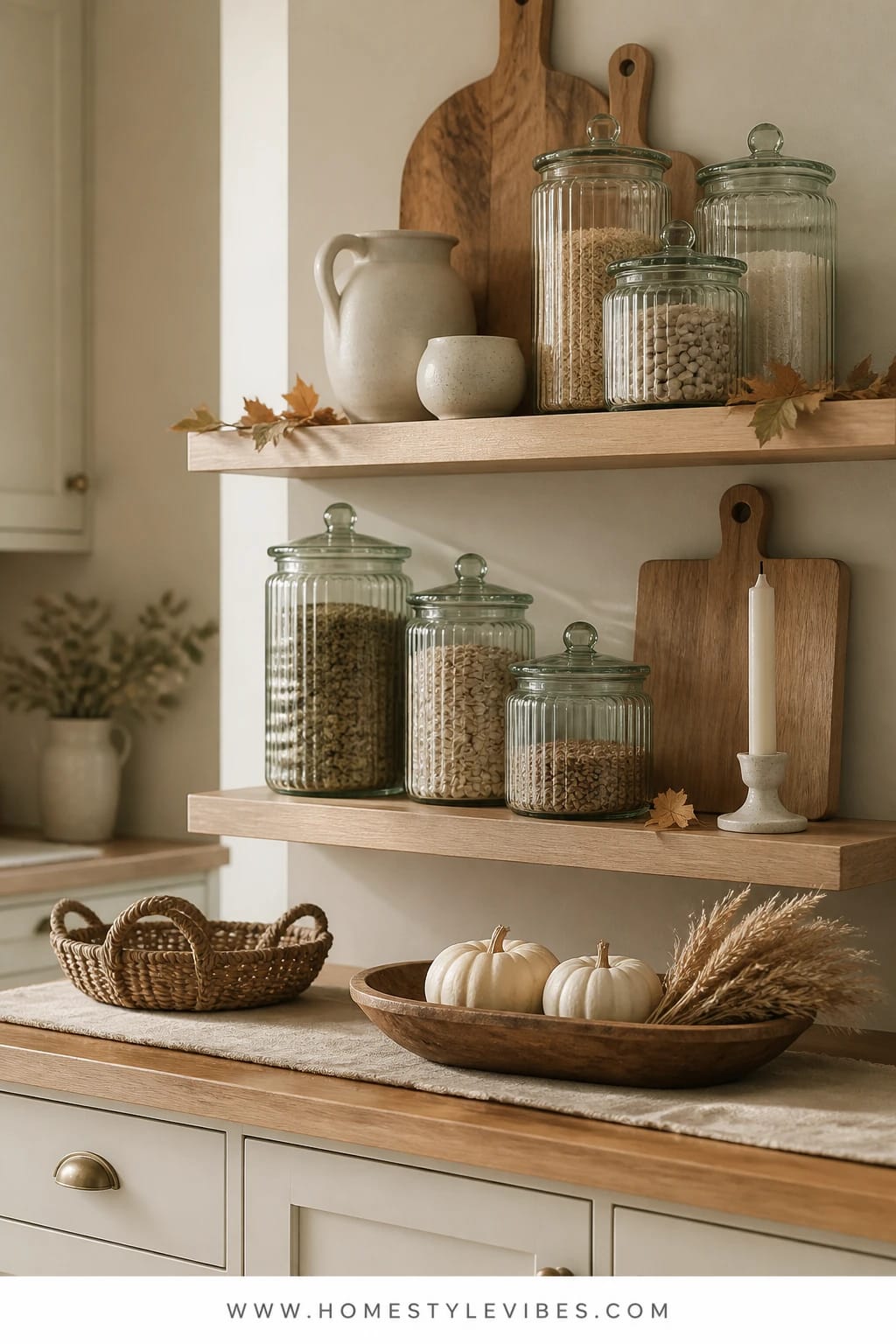
Kitchens can feel chaotic in fall when you add décor on top of everyday clutter. We’ve all stacked pumpkins on a shelf only to have it look like a farmers’ market crash-landed. The secret here isn’t more stuff—it’s a curated color story. Sage-tinted glass canisters, neutral wood boards, and one or two pale ceramic pieces create a functional, beautiful backdrop that still holds actual ingredients.
The mood stays calm and practical. Morning light makes the green glass glow, while evening under-cabinet lights keep the tone soft. Because you’re using useful items—flour, tea, oats—this look is family-friendly and zero-waste: everything earns its spot. Photographs love the repetition of shapes and those soft green highlights against creamy subway tile or warm wood.
Try these variations:
- Small-space edit: Three canisters max, one white mug set, one tiny pumpkin per shelf. Negative space is power here.
- More neutral: Choose clear canisters with sage labels instead of tinted glass; same vibe, lighter touch.
- Make-ahead: Pre-label ingredients before you style; it saves the midweek scramble when you’re halfway through a recipe.
Budget Breakdown:
- Sage-tinted or clear glass canisters (3–6): $24 – $96
- Neutral wood boards or risers (2–3): $18 – $60
- White ceramic bowl or pitcher: $12 – $40
- Mini pumpkins (3–5): $6 – $20
- Sage labels or label maker tape: $8 – $18
Total Estimated Cost: $68 – $234
Best For: Open shelves or a glass-front cabinet in kitchens where you want a subtle seasonal nudge that won’t interfere with cooking or daily life.
Key Design Elements:
- Main seasonal props: Mini pumpkins, sage-toned canisters
- Color palette: Sage, white, warm wood, soft tan
- Lighting strategy: Natural morning light; warm under-cabinet LEDs for evening
- Textile layers: One flax towel draped on a lower shelf or hanging from a hook
- Natural elements: A small pot of rosemary or thyme
- Accent details: Matte black or brass shelf brackets, minimal labels
How To Recreate This Look:
- Start by clearing the shelf; keep only daily-use items.
- Add two or three canisters at one end, grouped by height.
- Layer a small wood board behind them for warmth and dimension.
- Place a white pitcher or bowl on the opposite end for balance.
- Style with 1–2 mini pumpkins and a potted herb for a tiny hit of life.
Why This Looks Expensive: Functional items with consistent materials and a quiet palette read like a designer pantry—no filler décor needed.
Don’t Do This: Avoid rainbow packaging and random mugs breaking the palette. Decant, then hide bright boxes in a lower cabinet.
Pro Styling Tip: Angle one canister slightly for a touch of imperfection; it photographs more naturally than a straight military line.
Craving a bedside moment that says “early bedtime, soft pages, quiet nights”? Let’s head to the bedroom next.
5) Linen Sage Euro Shams, White Pumpkins, and a Calm Nightstand Scene
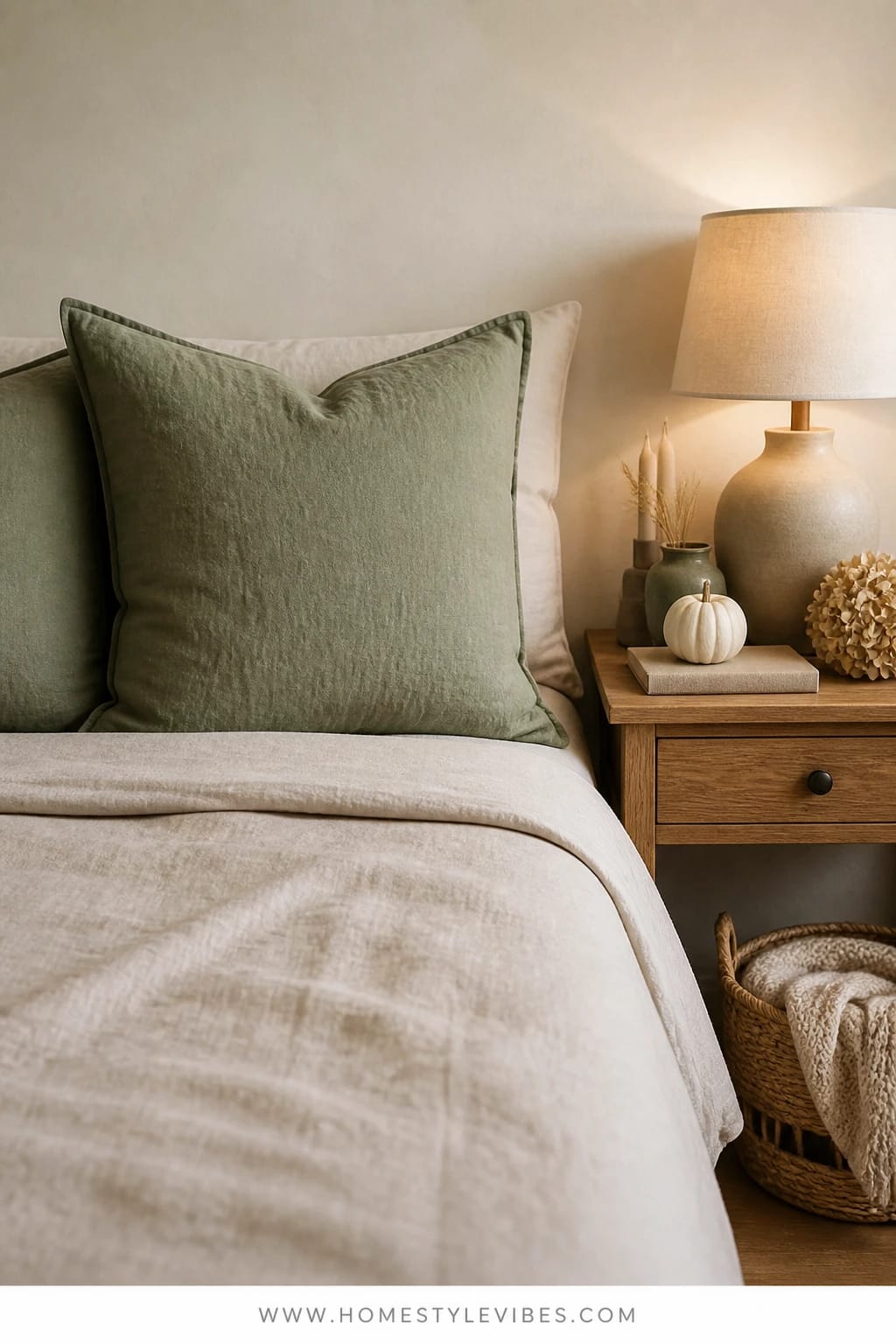
Your bedroom deserves fall, too—but it’s easy to overdo. I once scattered tiny pumpkins across a dresser like confetti and instantly regretted it. Bedding and a nightstand need very little to feel seasonal. Here, linen sage euro shams set the tone, while the nightstand holds a small white pumpkin, a linen-covered book, and a soft-glow lamp. Calm. Airy. Uncomplicated.
Why it works in real homes: bedding carries huge visual weight, so a single color shift to sage feels like a full refresh. In the evening, a warm bulb (2700K) behind a linen shade throws a cozy halo that whispers fall without heavy layers. This look transitions effortlessly from September’s lingering warmth to November’s coziness—just add a neutral throw at the foot of the bed when the air crisps up.
Need it pet-proof? Keep the pumpkin on a tray and use faux stems in a bedside bud vase. And if you’re worried about storage, euro shams fold flat and the pumpkin goes right into dinner the week of Thanksgiving. Multitask win.
Budget Breakdown:
- Linen sage euro shams (2): $36 – $110
- Neutral throw blanket: $25 – $70
- Small ceramic lamp or linen shade upgrade: $30 – $120
- White pumpkin (real or faux): $4 – $12
- Tray for nightstand: $12 – $30
Total Estimated Cost: $107 – $342
Best For: Primary or guest bedrooms where you want a hotel-soft vibe that still reads seasonal and soothing.
Key Design Elements:
- Main seasonal props: White pumpkin, small bud vase with sage-toned stem
- Color palette: Sage, white, linen beige, pale gray
- Lighting strategy: One bedside lamp with warm bulb; candle optional on dresser, never near bedding
- Textile layers: Linen shams, lightweight waffle or knit throw
- Natural elements: Single stem of eucalyptus in a tiny bud vase
- Accent details: Linen-covered or cloth-bound book, matte ceramic lamp base
How To Recreate This Look:
- Start by swapping in sage euro shams behind your standard pillows.
- Add a neutral throw folded at the foot or casually draped.
- Layer the nightstand with a small tray and a single white pumpkin.
- Place a lamp with a linen shade for soft diffusion.
- Style a single stem in a bud vase and a cloth-bound book for quiet texture.
Why This Feels Designer: Limiting the surface styling to three elements (lamp, tray, stem) creates a clean visual triangle that looks planned, not piled.
Watch Out: Don’t mix too many greens. One sage tone across textiles is soothing; multiple greens can feel messy fast.
Pro Styling Tip: For photos, tug the duvet edges taut and then “fluff drop” the pillows—crisp lines let those sage shams read as the star.
Feeling good? One more space that often gets ignored but sets your entire home’s tone: the entry. Let’s make that everyday pass-through quietly beautiful.
6) Slim Sage Branches, White Storage Baskets, and an Entryway Console Moment
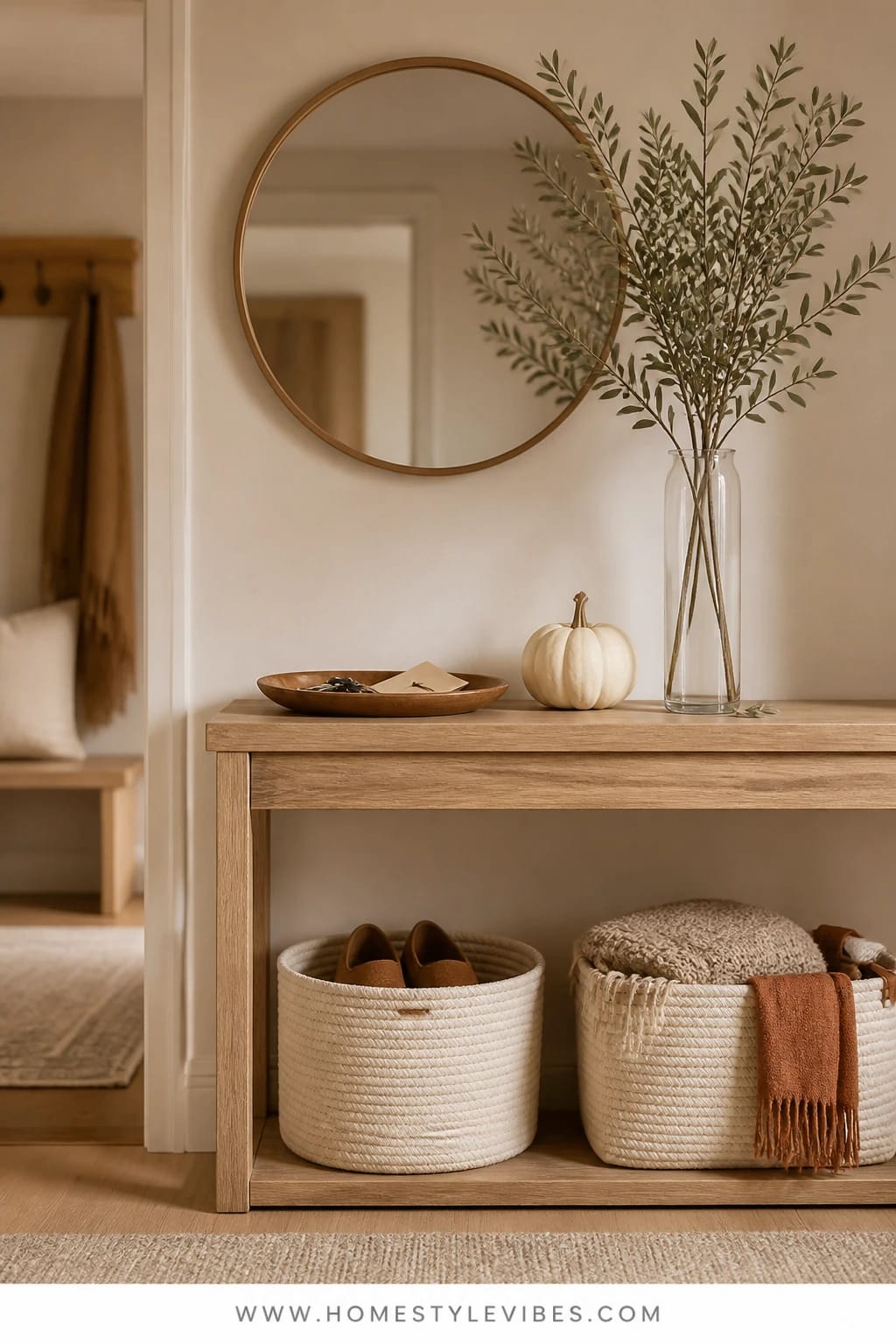
Entryways collect the chaos: keys, mail, rogue headphones, the mailer that never gets mailed. Yours can still look like a breath of October air—without losing function. The fix is a simple console story: a tall, slim glass vase with sage branches, a shallow tray for keys, and white baskets below for shoes or scarves. Add one small pale pumpkin, and it’s a minimal fall welcome that holds its own at 7 a.m. on a school day.
This idea works because it’s vertical where it needs to be (the branches draw the eye up) and contained where it counts (tray and baskets corral the mess). Natural daylight from the door catches those leaves, while a tiny lamp on dim sets a warm “you’re home” glow at night. It photographs beautifully thanks to height variation: tall branches, mid-height lamp, low pumpkin and tray. That rhythm creates depth even in a tight hallway.
Here’s a tiny truth: styling entries is trickier than you think. We expect showroom perfection from a space that has to survive mail dumps and wet umbrellas. It won’t always be pristine, and that’s okay. The goal is not perfection; it’s a beautiful baseline that rebounds quickly after real life hits.
Variations:
- Super small entry: Use a narrow wall shelf instead of a console; hang one small basket under it or use a single wall hook with a fabric catchall bag.
- Ultra minimal: Skip the lamp; keep just the vase and tray. The simplicity feels gallery-clean.
- Late-season shift: Trade the pumpkin for a single pinecone cluster in November without changing anything else.
Budget Breakdown:
- Tall glass vase: $15 – $40
- Faux or preserved sage branches (2–3): $18 – $48
- Shallow tray (ceramic or wood): $12 – $35
- Small table lamp (optional): $28 – $90
- White baskets for console base (2): $30 – $80
- Single small pumpkin: $3 – $8
Total Estimated Cost: $78 – $301
Best For: Hallway or foyer consoles that need storage without losing a clean, neutral fall aesthetic. Works from early fall through Thanksgiving.
Key Design Elements:
- Main seasonal props: Slim sage branches, single pale pumpkin
- Color palette: Sage, white, natural wood, soft tan
- Lighting strategy: Small lamp with warm bulb; mirror if you have one to bounce light
- Textile layers: None needed; keep coats nearby minimal
- Natural elements: Preserved or real branches
- Accent details: White or ceramic tray, woven baskets with lids if you prefer hidden storage
How To Recreate This Look:
- Start by clearing the console; tuck mail and extras in a drawer or basket.
- Add the tall vase slightly off-center and insert two or three slim branches.
- Place a shallow tray on the opposite side for keys and sunglasses.
- Layer a small pumpkin near the tray for a seasonal nod.
- Style two white baskets below the console; one for shoes, one for catchall items.
Why This Looks Expensive: Vertical elegance and hidden storage. Tall branches and uniform baskets read like custom millwork even when they’re not.
One Thing To Avoid: Don’t crowd the console with frames, bowls, and candles; one tray does all the heavy lifting to keep the look calm.
Pro Styling Tip: For photos, crack the door open an inch to let in cool daylight; it adds a soft side light that makes the sage leaves pop without glare.
If your brain’s whispering “This is a lot,” take a breath. You only need one small win to start. House decorating is a series of tiny choices that add up—swap two pillows, add a branch. Done.
Quick Checklist
- Oatmeal and cream pillow covers
- Sage green accents (pumpkins, shams, votives)
- White ceramic vessel or pitcher
- Eucalyptus or olive stems in muted green
- Pale wheat or flax linen runner
- Slim taper candles and warm bulbs (2700K)
- Sage-tinted or labeled canisters for kitchen shelves
- Low-profile trays for coffee table and entryway
- Neutral throws in bouclé, knit, or linen
- White baskets for hidden storage
- Small, photogenic real pumpkins (kept cool)
- One tiny herb pot (rosemary or thyme) for a fresh hit of green
Frequently Asked Questions
How do I keep the budget in check while adding sage green fall decor?
Prioritize textiles and one focal cluster per room. Swap pillow covers instead of buying new pillows, use a single vase with sage stems, and anchor everything with a runner or tray. One $60 refresh per room (pillows + stems) makes a visible difference without overspending.
Are real or faux pumpkins and florals better for a neutral minimal look?
Both can work. Real mini pumpkins offer unbeatable texture, but keep them away from heat to prevent that half-deflated look. Faux eucalyptus stems in sage tones are great long-term, while a single real branch adds life for special weekends.
My space is small—won’t even a few pumpkins feel cluttered?
Cluster, don’t scatter. One small grouping on a tray or mantel reads intentional. Keep everything low and within the sage, cream, and oatmeal palette so the eye reads it as one calm story, not visual noise.
Where do I store all this after the season?
That’s the beauty of neutral minimal fall decor: most pieces work year-round. Ceramic vessels, trays, and baskets stay. Pillow covers fold into a single drawer. Only a small bin for faux pumpkins and stems needs labeling for next year.
Are candles safe with pets and kids?
Go flameless on soft surfaces and within paw range. Battery tapers and votives in warm white mimic real candlelight and photograph beautifully. If you love real flame, keep it high on a mantel and never unattended.
When should I start decorating with sage green fall decor?
Early September is perfect for the neutral base—pillows, stems, ceramics. Add in pumpkins by late September or early October. Keep everything up through Thanksgiving, then transition to winter greenery without a full reset.
The Soft Finish
Start with the spot you see most: the sofa you sink into, the table you eat at, or the console you pass every morning. Keep your sage green fall decor gentle and edited—creamy textiles, quiet greens, warm light. The truth is, a calm fall home comes from restraint and texture, not piles of stuff. When you let sage, oatmeal, and soft light lead, rooms read serene and finished.
If you’re still unsure, pick one idea and try it this weekend. Layer a throw, tuck in a sprig, light a candle. Neutral minimal fall is about careful simplicity—calm, texture, and a palette that breathes. You’ve got this. Your home’s about to feel like that first cool evening with the window cracked, the linen curtains rustling, and dinner simmering on the stove—quiet, warm, and exactly right.

About the Author

Krisztina P.Rendes, Founder of Home Style Vibes
Founder of Home Style Vibes
Krisztina Puskásné Rendes created Home Style Vibes as a cozy-modern lifestyle space where homemaking meets inspiration. Her goal is to help women create beautiful, organized, and peaceful homes they truly love — without overwhelm. You’ll find here heart-driven content on home decor, cleaning tips, easy family recipes, organization and decluttering, DIY home projects, plants, and seasonal ideas — all designed to bring more calm, comfort, and style into everyday life.