6 White Pumpkin Porch Decor Ideas For An Elegant Fall Entrance
You want that effortless, elegant fall porch that whispers calm and looks incredible in every photo. You hate the cluttered, candy-corn chaos that shows up the minute you put one orange pumpkin by the door. If your heart leans toward soft neutrals, quiet texture, and the refined charm of white pumpkins, these 6 ideas will finally make your entrance feel pulled together—think creamy gourds, pale wheat, sage greens, and oatmeal textiles in under a weekend and without blowing past a $300 budget.
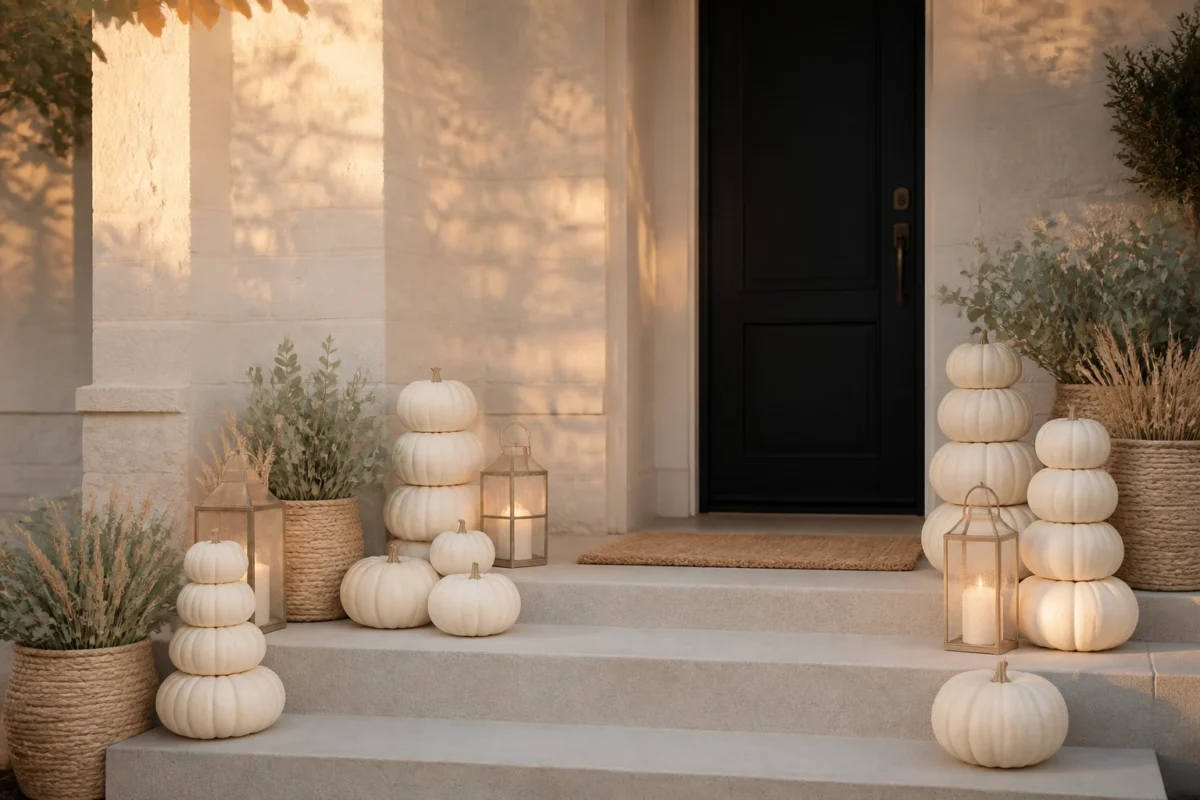
We’re talking Neutral Minimal Fall: creamy stacks of white pumpkins, a hint of sage eucalyptus, pale woven baskets, and warm-but-subtle lighting that flatters your house color. Every idea here solves a specific frustration—awkward steps, narrow stoops, the “my door is dark” problem—and turns your porch into a calm, photogenic welcome. Expect polished curb appeal that looks intentional from September through Thanksgiving. If you love Scandinavian-Japandi simplicity with a soft autumn soul, you’ll love this.
1. White Pumpkin Columns With Soft Oatmeal Lantern Light on the Porch Steps
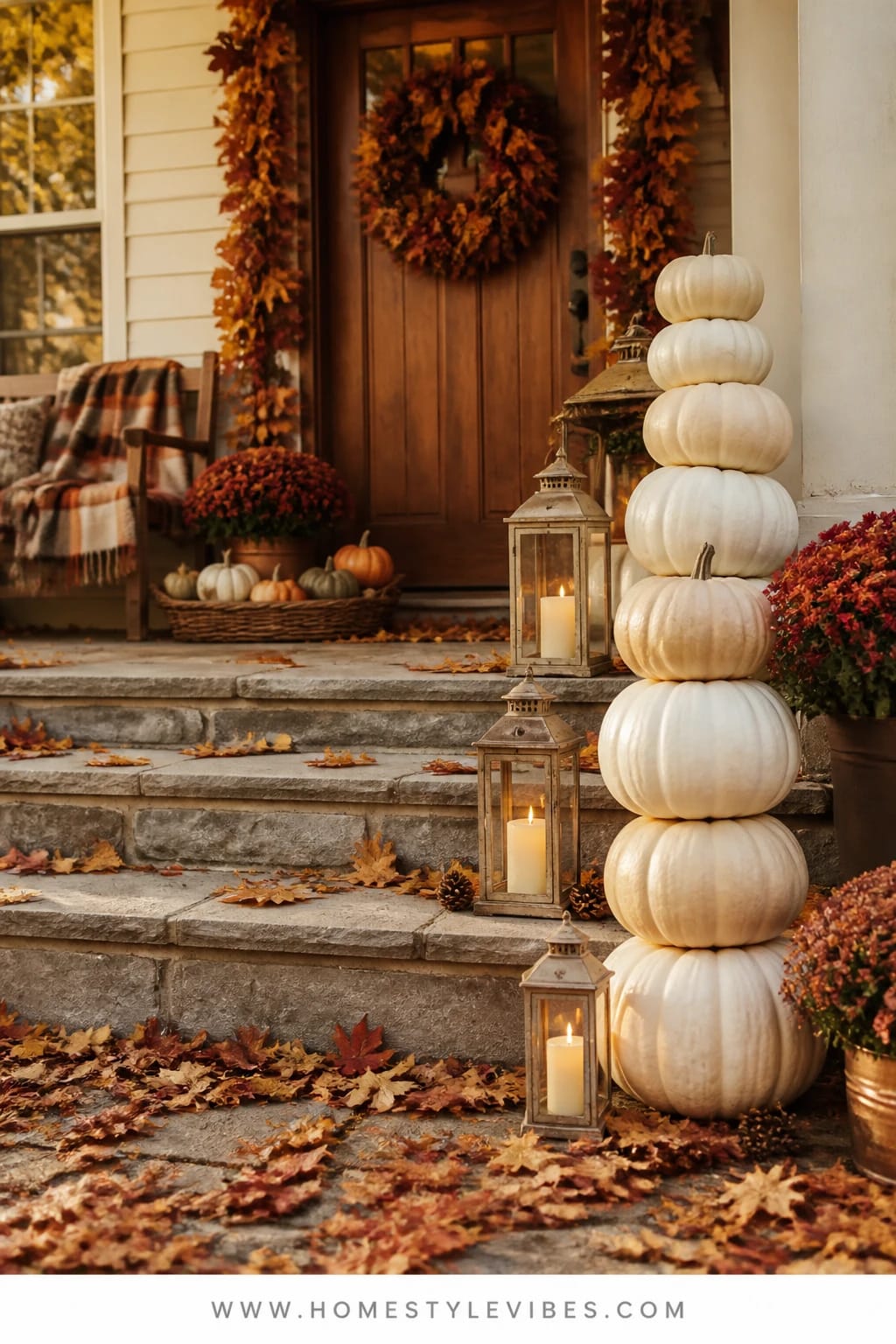
It’s that one corner that always feels off—the staggered steps leading to your door. You’ve tried placing a pumpkin on each tread, but it somehow reads scattered, not serene. This idea creates a structured rhythm using white pumpkin “columns” and neutral lanterns to guide your eye up the stairs. The mood is calm and airy, a quiet drumbeat of creamy shapes and pale light that feels welcoming and put-together.
Here’s why it works in real homes: vertical repetition = visual order. Stacking white pumpkins of varying sizes tight to the step edges creates a soft frame that feels architectural, but not stiff. The lanterns add warm, low light without overwhelming the porch—think candlelit glow through frosted glass or soft ivory pillar candles. If you’ve got curious pets or kids, switch to battery pillars with a realistic flicker; you still get the ceremony without the stress.
Lighting matters a lot here. Steps catch the last of the golden afternoon light, and the lanterns extend that warmth into evening without hard shadows. It photographs beautifully because the eye follows the stepped verticals right to your door. In images, the columns read as clean lines with gentle curves and creamy highlights—very Pinterest, very “saved to my inspiration board.”
Variations to try: For a budget-friendly version, alternate real white pumpkins with two or three faux lookalikes in the middle of each stack—no one notices once they’re layered. If your steps are shallow, place one pumpkin per step, but in graduated sizes from largest at the base to smallest near the door, and tuck a single tiny lantern every other tread so the rhythm stays consistent.
Budget Breakdown:
- Real white pumpkins (8–12 total): $40–$90
- Neutral lanterns (2–4 in ivory/black/soft taupe): $50–$120
- Battery pillar candles (remote-timer): $20–$40
- Optional eucalyptus sprigs for tucking: $8–$18
Total Estimated Cost: $118 – $268
Best For: Homes with visible front steps, townhouses with narrow stoops, or any entry that needs visual order and a welcoming glow from September through mid-November.
Key Design Elements:
- Main seasonal props: White pumpkin stacks, neutral lanterns, subtle eucalyptus
- Color palette: Cream, soft oat, pale wheat, a kiss of sage
- Lighting strategy: Low, warm lantern light on alternating steps
- Textile layers: None needed; simplicity keeps it serene
- Natural elements: Real pumpkins, eucalyptus or olive clippings
- Accent details: Matte-finish lanterns with frosted glass, minimal metal
How To Recreate This Look:
- Start with clean, swept steps to keep the lines crisp.
- Add a large white pumpkin at the outer edge of the lowest step on each side.
- Layer medium and small pumpkins above, keeping stacks tight to the edges for a “column” effect.
- Place lanterns on alternating steps, slightly inset to avoid tripping hazards.
- Style with a few sprigs of sage eucalyptus tucked at the base of select stacks for softness.
Why This Looks Expensive: Repetition and restraint. The consistent palette and repeating forms read like intentional architecture, not random decor. Your brain registers order and calm, which always feels high-end.
Watch Out: Don’t overcrowd every step. Negative space between stacks is what keeps this minimal and elegant. Also, avoid bright brass lanterns here—stick to matte or lightly brushed finishes.
Pro Styling Tip: Angle your lanterns so the candle flame sits in the camera’s line of sight; that soft glow dot makes every porch shot look magazine-ready.
2. Creamy Heirloom Pumpkins, Pale Wheat Grass, and a Natural Fiber Doormat at the Front Door
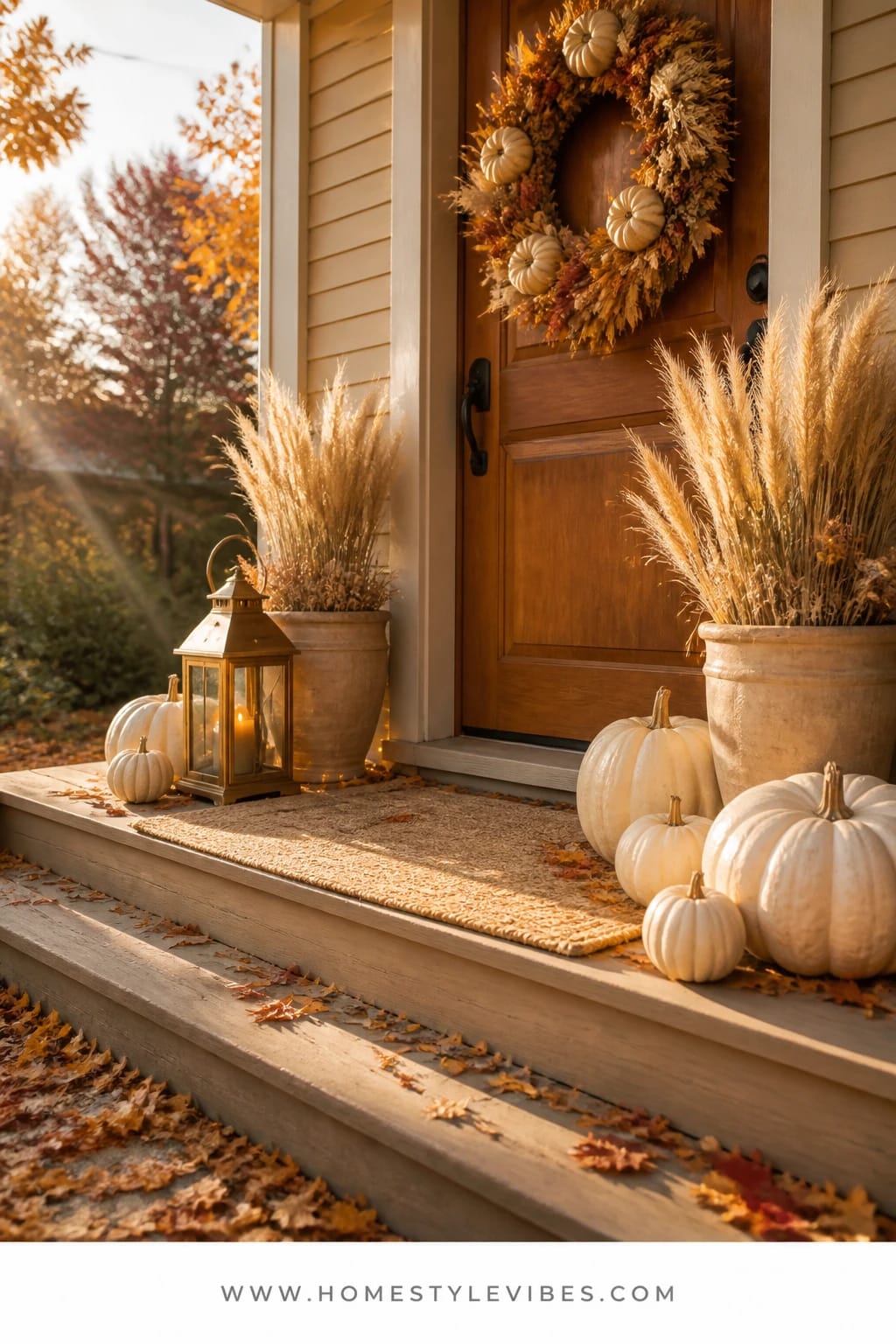
We’ve all been there: a beautiful front door, but the landing feels bare and flat. You tried a patterned rug and it fought your house color, or the typical orange pumpkins felt loud. This setup leans into texture and tone-on-tone. Creamy heirloom pumpkins nestle around a pale natural fiber doormat, flanked by tall wheat grass in simple clay or stone-colored planters.
The mood: calm, modern, and quietly welcoming. Every texture earns its spot—matte gourd skin, papery wheat plumes, and the tight weave of a coir mat in an oatmeal shade. For family homes, this is ridiculously practical. The mat handles muddy boots, the grasses need almost zero care, and the pumpkins last longer because they’re not crowding each other or baking in direct sun.
Light here should be soft and indirect. Morning light makes wheat glow with a halo effect, while later in the day the pale tones bounce light back and feel gentle on the eyes. It photographs beautifully because you’ve got height variation (tall grass, mid-height door handle, low pumpkins), plus an inviting foreground from the mat texture. Pro tip: place one pumpkin slightly crossing over the edge of the mat to break the rectangle in photos.
Try these variations: On a tight budget, use two substantial planters you already own and add wheat or pampas stems from the craft store—go for bleached or soft natural tones, never stark white. If your door is black or deep charcoal, this neutral minimal fall palette will sing even louder with the contrast.
Key Design Elements:
- Main seasonal props: White heirloom pumpkins, wheat or pampas grass
- Color palette: Cream, oatmeal, soft flax, light stone
- Lighting strategy: Indirect daylight to keep tones creamy, not washed out
- Textile layers: Coir or jute doormat in pale tan
- Natural elements: Dried wheat plumes, real pumpkins
- Accent details: Unglazed or matte planter finishes, simple door hardware
Budget Breakdown:
- White heirloom pumpkins (4–6): $30–$60
- Natural fiber doormat: $15–$40
- Dried wheat or pampas stems: $12–$35
- Planters (reuse or buy two neutral ones): $0–$120
Total Estimated Cost: $57 – $255
Best For: Suburban entries with a single landing, modern or farmhouse exteriors, and anyone who wants a low-maintenance look that lasts through Thanksgiving.
How To Recreate This Look:
- Start with a fresh pale coir mat centered at the door.
- Place two neutral planters flanking the mat and add dried wheat or pampas stems.
- Cluster 2–3 white pumpkins on each side, mixing sizes for balance.
- Pull one smaller pumpkin forward to overlap the mat corner slightly.
- Step back and adjust spacing so you see negative space around each pumpkin.
Why This Feels Designer: It’s the discipline. Limited colors, a few strong textures, and confident spacing. The restraint reads as taste, not minimal for minimal’s sake.
One Thing To Avoid: Don’t add a colorful wreath on the door with this setup. Keep the door either bare or choose a subtle dried olive or bleached ruscus wreath to maintain the neutral story.
Pro Styling Tip: For photos, mist the wheat lightly right before shooting—those plumes catch light better when they’re not dusty.
Want one more textural trick before you scroll? Try one pale stone with a smooth finish and one planter with a rougher texture to add quiet contrast.
3. Soft Sage Eucalyptus, White Pumpkins, and a Minimal Bench Vignette by the Railing
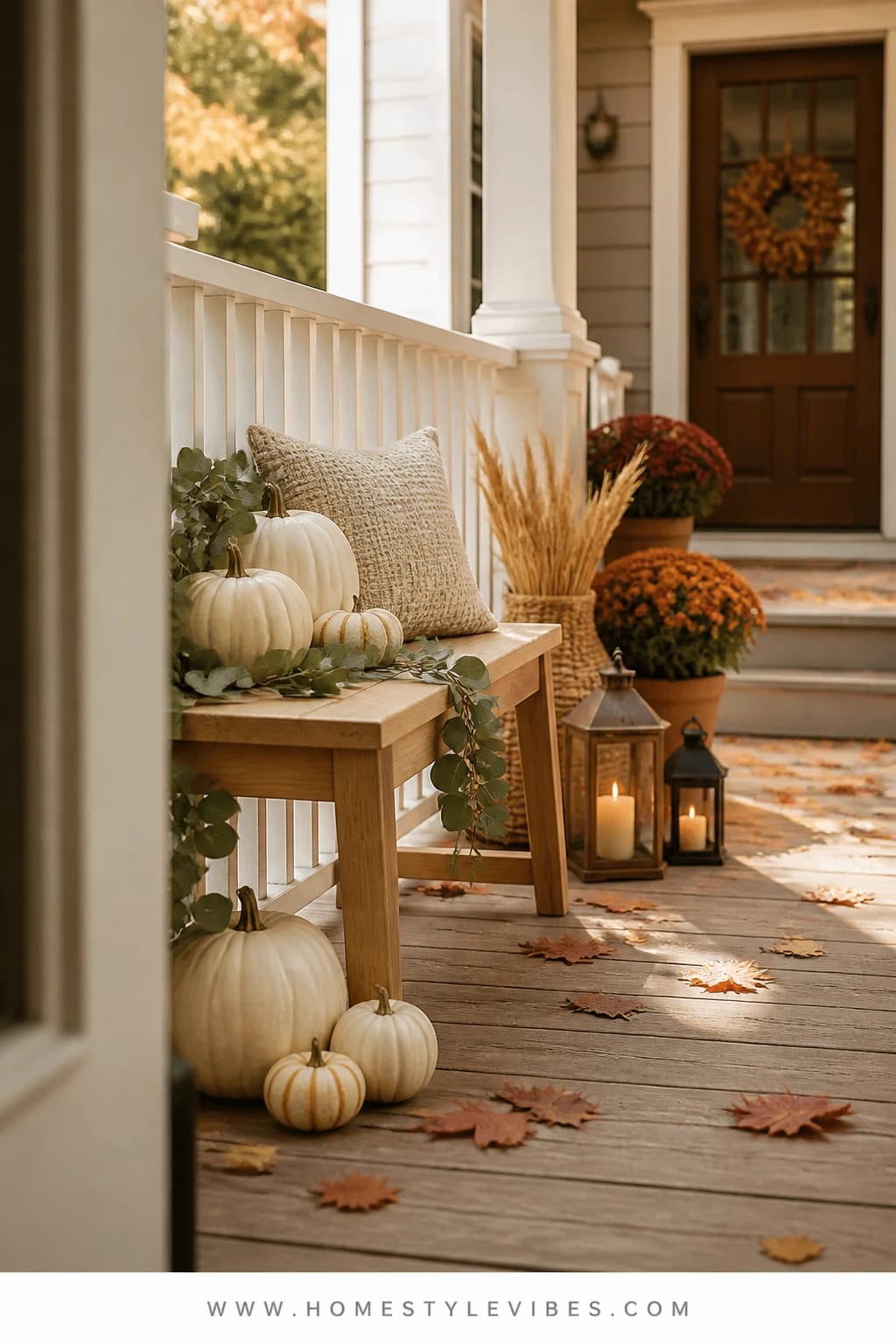
It’s that empty railing zone—too narrow for chairs, too visible to ignore. You’ve parked a random planter there before and it just looked lonely. Bring in a slim, minimal bench in light wood or black metal as your anchor. Layer a few white pumpkins, a soft sage eucalyptus garland draped casually along the bench edge, and a single cushion in a nubby oatmeal fabric.
The mood is calm and intentional, like a quiet pause before you enter the house. Why it works: benches do for porches what consoles do inside—they define a spot and make small things feel deliberate. This look is kid and pet friendly because everything is low and soft. Garland reads lush without being frilly, and if you choose faux eucalyptus with a matte finish, it’s practically maintenance-free.
Lighting: benches near railings often get filtered light. That’s perfect for minimal fall styling because it keeps whites creamy and avoids glare. In photos, the gentle curve of eucalyptus against the straight bench line makes a subtle “S” shape that’s pleasing to the eye and quietly high-end.
Variations: For tiny porches, use a small stool or a narrow plant stand instead of a full bench. On a stricter budget, cluster 3–5 mini white pumpkins and skip the cushion, letting the eucalyptus do the softening.
Budget Breakdown:
- Narrow bench (36–48 inches): $60–$150
- Faux eucalyptus garland (matte finish): $15–$40
- White pumpkins (3–5 mix of sizes): $20–$45
- Neutral cushion or lumbar pillow: $15–$35
Total Estimated Cost: $110 – $270
Best For: Narrow porches or rail-adjacent spots that need one well-edited focal point through early fall into Thanksgiving.
Key Design Elements:
- Main seasonal props: White pumpkins, eucalyptus garland
- Color palette: White, sage, oat, black or light wood
- Lighting strategy: Filtered daylight to keep greens muted and soft
- Textile layers: One nubby pillow in oatmeal or cream
- Natural elements: Real pumpkins, faux or fresh eucalyptus
- Accent details: Minimal bench lines, matte black or natural oak finish
How To Recreate This Look:
- Start by placing the bench parallel to the railing, centered on the visual space.
- Add the cushion to one side for asymmetry and softness.
- Lay the eucalyptus garland so it drapes off one corner with a gentle curve.
- Cluster a medium and a small white pumpkin near the cushion, plus a few minis at the garland’s tail.
- Adjust spacing so the bench still reads as one clean line, not cluttered.
Why This Reads High-End: Clean lines with one soft, organic element. The eucalyptus curve against the bench’s straight edge feels composed and editorial.
The Most Common Mistake: Using shiny faux greenery. Go for matte-finish, silvery-sage faux branches or real eucalyptus for that soft, believable look.
Pro Styling Tip: Tuck a single pumpkin halfway under the bench to create depth in photos—your eye reads layers, not a flat lineup.
Remember, this isn’t about recreating a showroom. It’s about building a porch that honestly feels like you. If one idea resonates most, that’s your starting point—you don’t need all six to get an elevated neutral vibe.
4. Layered Jute Rug, Ivory Lanterns, and White Pumpkin Cluster by the Front Door Corner
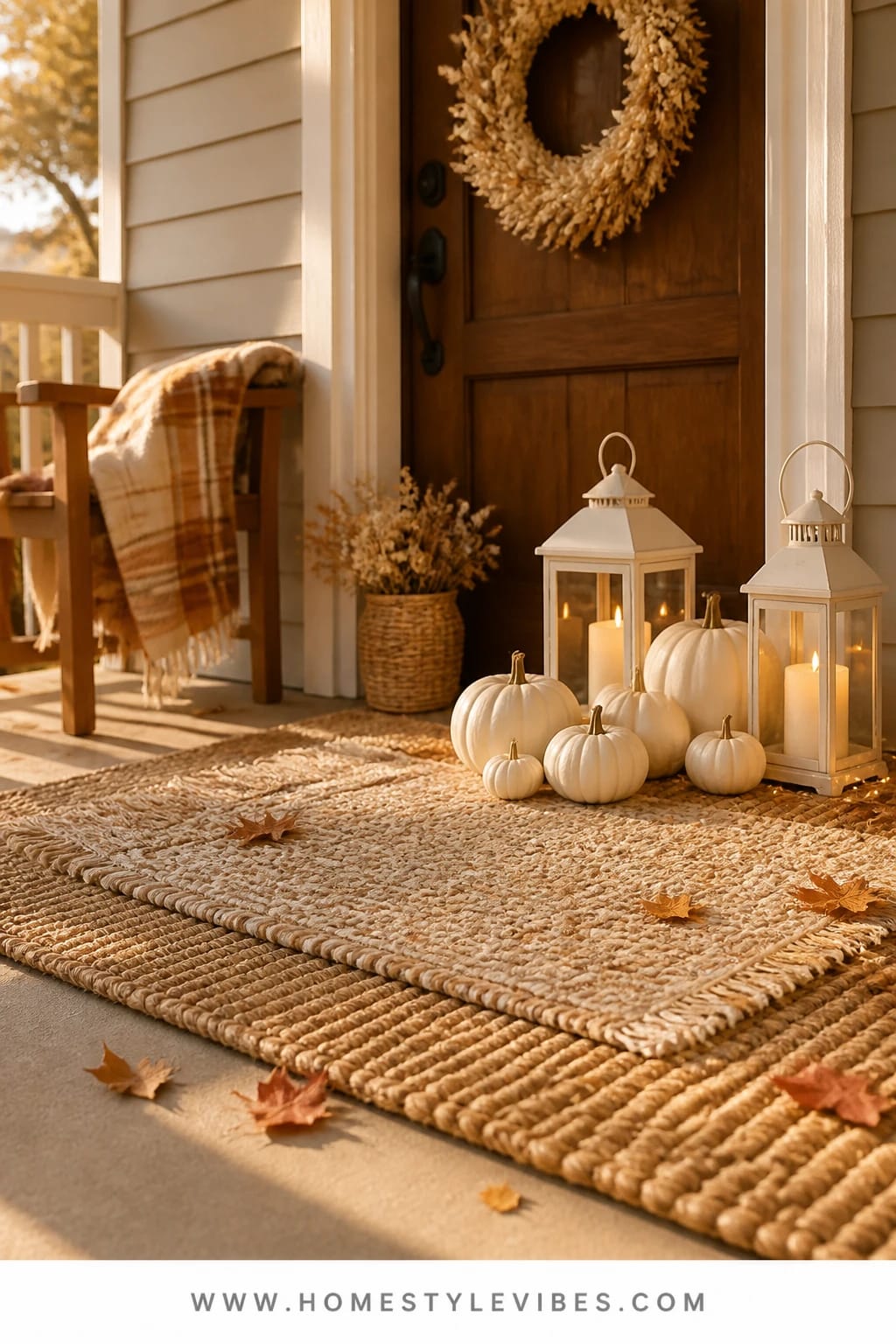
You want warmth underfoot, but every layered rug tutorial you try looks messy and fussy. Same. The secret is choosing two rugs in related tones with obvious size difference, then letting a single clustered arrangement of pumpkins and lanterns anchor the corner. A large jute or sisal base with a smaller, low-contrast woven rug on top creates soft texture without pattern noise.
The vibe is Scandinavian porch calm: muted, tactile, and quietly inviting. This setup shines in real life because the rugs warm up concrete or stone, the lanterns cue “welcome,” and the pumpkin cluster feels abundant but controlled. It’s also easy to store—roll the rugs, stack the lanterns, compost the pumpkins at the end of the season.
Light plays off the woven textures. Early evening light hits the jute and gives you that beautiful, sandy glow. At night, lanterns reflect softly on the rug’s weave. Photos come out beautifully because layered rugs provide a textured “stage” and the corner cluster gives a defined focal point.
Try these variations: In a high-traffic entry, choose an indoor/outdoor woven top layer that’s hose-friendly. If your house color skews cool gray, pick a top rug with a slightly cooler oat or soft gray-beige to avoid clashing.
Budget Breakdown:
- Large jute/sisal rug (4×6 or porch size): $60–$140
- Smaller woven top rug (2×3 or 3×5): $25–$80
- Ivory or matte lanterns (2–3): $40–$90
- White pumpkin cluster (4–7): $35–$75
Total Estimated Cost: $160 – $385
Best For: Larger stoops or wide doorways that can handle layered rugs and a defined corner vignette, from late September through Thanksgiving dinners.
Key Design Elements:
- Main seasonal props: White pumpkin cluster, ivory lantern trio
- Color palette: Oatmeal, cream, pale flax, soft stone
- Lighting strategy: Evening lantern glow; keep overhead lights dim
- Textile layers: Jute base, woven neutral top rug
- Natural elements: Real pumpkins; optional dried olive branches in a vase by the door
- Accent details: Matte ceramic or simple glass lanterns with soft edges
Why This Looks Intentional: The layered rugs define the “room” at your threshold, so every element—pumpkins, lanterns—has context. Your brain reads it as a designed zone, not just decor sprinkled around.
How To Recreate This Look:
- Start by laying the large jute rug centered on your door.
- Place the smaller woven rug slightly forward and offset by 1–2 inches for a crafted, not rigid, look.
- Position two lanterns on the corner of the top rug, with a third slightly behind for depth.
- Cluster 4–7 white pumpkins starting at the rug corner and spilling gently onto the jute.
- Finish by dimming any harsh porch lights and using warm bulbs or candlelight instead.
Don’t Do This: Avoid a bold patterned top rug here—it steals the attention from your white pumpkins and breaks the neutral minimal fall story.
Pro Styling Tip: In photos, shoot from a low angle so the rug textures lead the eye to the pumpkins; the layered weave becomes an elegant runway.
5. Frosted Glass Sconces, White Pumpkin Planters, and a Soft Taupe Wreath Framing the Entry
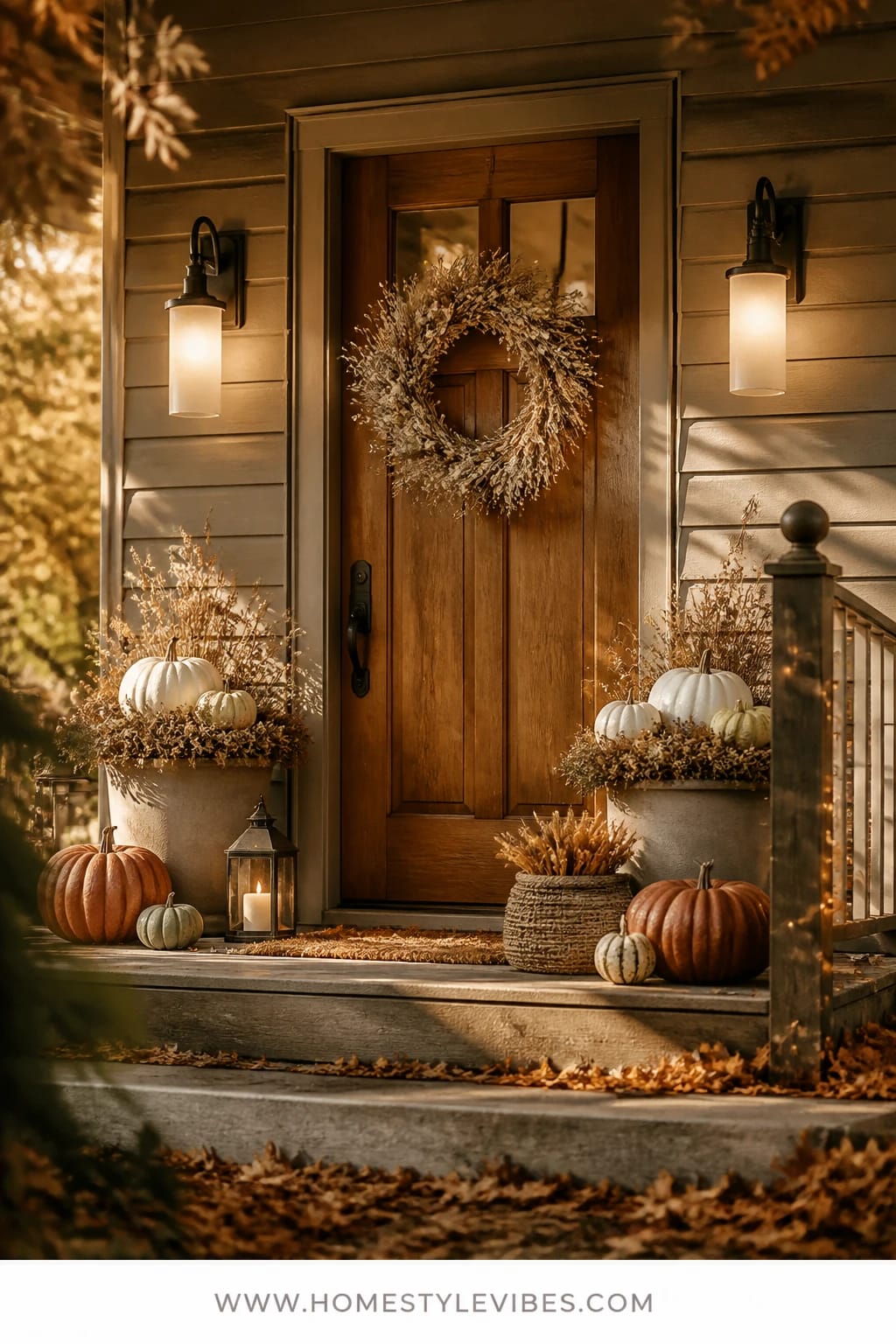
Sometimes the door looks isolated—nice hardware, but no “frame.” You’ve tried wreaths in trendy colors and regretted them by October 10. This idea gives your entry a tonal frame: swap in frosted glass bulb covers or install softly diffused sconces if you can, use two planters with white pumpkins tucked into the surface, and hang a taupe or bleached botanical wreath that doesn’t fight the porch story.
The mood is tailored and warm. Diffused light feels soft on skin and siding, while white pumpkin planters add sculptural interest. To make planters work with pumpkins, don’t just plop—mound soil or moss so the pumpkins sit slightly “proud,” like elevated pearls. That height difference photographs beautifully and gives an upscale look.
Why this works in real life: it’s basically maintenance-free. The wreath won’t wilt, the pumpkins sit cozy on top, and the light feels flattering every single evening. If you already have clear glass sconces, adding a frosted bulb or a soft-white LED brightens without glare.
Variations: For small entries, use one substantial planter off-center and place a single, quietly elegant wreath. If you can’t change fixtures, try frosted LED bulbs in your existing sconces—cheap, quick, and it keeps the neutral vibe intact.
Budget Breakdown:
- Frosted bulbs or sconce shades: $10–$80
- Planters (reuse or buy): $0–$140
- White pumpkins for planters (4–6 mixed sizes): $25–$55
- Taupe/neutral wreath (dried florals, ruscus, or bleached grasses): $25–$120
- Moss or filler: $6–$12
Total Estimated Cost: $66 – $407
Best For: Traditional or contemporary homes where the entry needs a tonal frame from early dusk onward, perfect for evening guests and weeknight deliveries.
Key Design Elements:
- Main seasonal props: White pumpkin-topped planters, neutral wreath
- Color palette: Cream, taupe, soft gray-beige, sage-tinged greens
- Lighting strategy: Diffused sconce light with frosted bulbs
- Textile layers: Minimal—let the wreath and pumpkins provide texture
- Natural elements: Real pumpkins, dried botanical wreath
- Accent details: Matte planters, moss topping, subtle ribbon in taupe or linen
Why This Looks Expensive: Diffused, flattering light and a perfectly scaled wreath say “custom.” The planters with pumpkins lifted on moss add a floral-designer touch.
How To Recreate This Look:
- Start by installing frosted bulbs or adding a frosted diffuser to your sconces.
- Fill planters to the top and mound slightly; add moss or pea gravel as a finished layer.
- Nestle white pumpkins into the moss so they sit high and secure.
- Hang a neutral wreath centered on the door, keeping the ribbon slim and tonal.
- Step back at night to check the light level; aim for soft-almost-candlelight, not bright spotlight.
Watch Out: Don’t go oversized with the wreath—keep it within 50–70% of door width so the look stays minimal and proportional.
Pro Styling Tip: Photograph at blue hour; the frosted sconces give a beautiful, quiet glow that makes whites look velvety, not blown out.
Quick personal note: I tried the frosted-bulb tweak last October and honestly couldn’t believe the difference. My black door finally looked luxe at night instead of harsh. One small swap, big mood shift.
6. Neutral Basket Trio With White Pumpkins, Sage-Tinted Olive Branches, and a Soft String Light Canopy at the Porch Seating
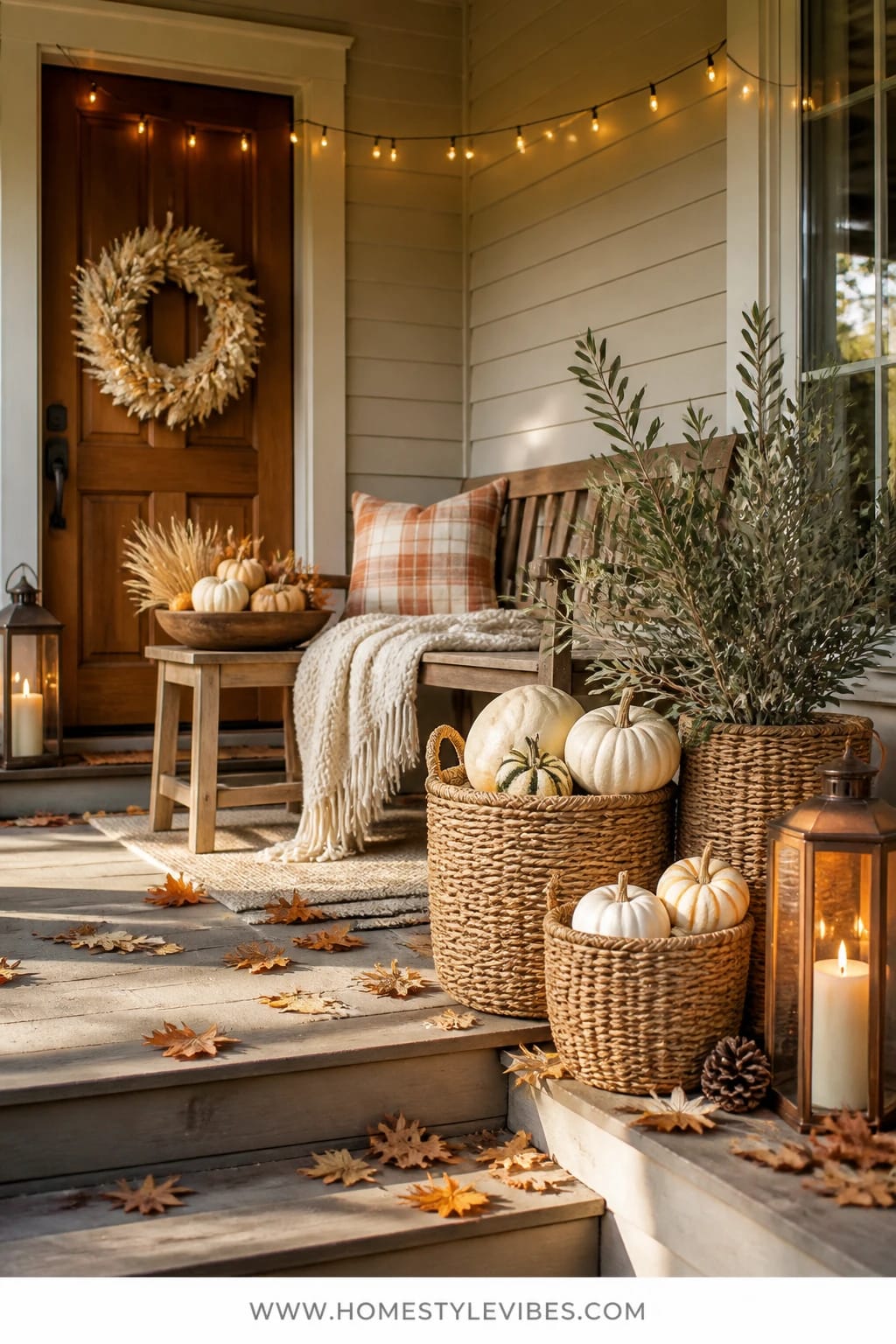
You’ve got a little seating nook but it never feels finished after summer. Throw pillows help, but by October, the whole thing reads “half done.” Create a neutral basket trio at one side of the seating with white pumpkins cozy inside, add olive branches with a sage cast for gentle movement, and drape one strand of micro string lights overhead for a delicate canopy effect.
The feeling is intimate and spa-calm—like a slow-breath moment every time you unlock the door. Baskets keep everything contained and easy to move for cleaning, olive branches add life without color noise, and the lights give a soft, low-ceiling vibe that’s insanely photogenic after sunset.
Why this works for real homes: baskets corral chaos. They also protect pumpkins from wet concrete and early frost. String lights on a timer mean hands-free glow. It’s family-friendly, too; keep the lights high and the pumpkins tucked so traffic flows. Storage after the season is simple—nest baskets, coil the lights, compost pumpkins, done.
Variations: In very small spaces, use one larger lidded basket with the lid propped open slightly and pumpkins peeking out—cute and tidy. If olives aren’t your vibe, choose bleached ruscus or soft fern stems, but keep them matte and muted.
Budget Breakdown:
- Neutral baskets (set of 2–3): $35–$120
- White pumpkins (4–8 mixed sizes): $30–$80
- Olive branches (faux or fresh): $12–$45
- Warm micro string lights (outdoor-rated): $15–$35
- Neutral throw for chair/bench: $20–$50
Total Estimated Cost: $112 – $330
Best For: Porches with a small seating zone, bungalow stoops, or cottage entries where you want quiet romance and a soft glow from early evening through Thanksgiving weekend.
Key Design Elements:
- Main seasonal props: White pumpkins in baskets, olive branches
- Color palette: Cream, oat, warm taupe, sage
- Lighting strategy: One subtle strand of warm micro lights overhead
- Textile layers: A single neutral throw in nubby knit or waffle weave
- Natural elements: Real pumpkins, olive or eucalyptus stems
- Accent details: Matte wire or woven baskets, slim black hooks for lights
How To Recreate This Look:
- Start by positioning your seating, then place baskets to one side to create a “story corner.”
- Add a folded throw to the chair or bench to pull your eye to that zone.
- Nestle pumpkins into baskets with a little kraft paper or burlap at the bottom for lift.
- Tuck olive branches between pumpkins so stems arc gently outward.
- Drape one string of micro lights overhead, secured with removable outdoor hooks, keeping the swoop subtle.
Why This Feels Designer: The quiet canopy. That single swoop of micro light reads edited, not holiday-festive, and the contained baskets keep the composition clean.
Don’t Do This: Skip colored bulbs and avoid wicker that skews too orange. Aim for cool-leaning natural fibers or driftwood tones for true neutral minimal fall.
Pro Styling Tip: For photos, shoot from the seating angle toward the baskets so the light canopy frames the shot like a halo.
Promise yourself this: one beautifully finished corner beats five half-styled surfaces. Pick the zone you actually use or see most from the street. That’s where your effort pays off daily.
Quick Checklist
- White pumpkins in at least three sizes
- Matte or frosted lanterns with warm LED pillars
- Neutral coir or jute doormat
- Layered rugs in oatmeal and flax tones
- Eucalyptus or olive branches in soft sage
- Dried wheat or pampas for height
- Neutral wreath in taupe or bleached botanicals
- Bench or stool to anchor a narrow area
- Neutral baskets for clustering and containment
- Micro string lights for a subtle canopy
- Moss or gravel to lift pumpkins in planters
- Frosted bulbs for diffused porch lighting
Frequently Asked Questions
Are real white pumpkins worth it, or should I use faux for my porch?
Real white pumpkins look richer in texture and color variation, especially up close. If budget matters, mix them: use real for the prominent spots (top step, by the mat) and tuck a few high-quality faux in the back or middle of stacks. Outdoors, good faux pieces save you from last-minute grocery runs before guests arrive.
How do I keep the neutral palette from looking washed out on a beige house?
Add subtle contrast. Choose whites with a creamy undertone, anchor with black or natural wood lanterns, and include sage eucalyptus to break the beige-on-beige effect. Also, swap bright bulbs for 2200–2700K warm LEDs so the tones read cozy, not pale.
I have a tiny stoop—can I still do white pumpkin porch decor without clutter?
Yes. Pick one anchor: a narrow bench vignette, a single basket trio, or a clean doormat with a small pumpkin cluster. Keep your palette tight (cream, oat, sage), and let negative space do the heavy lifting. One thoughtful composition beats multiple micro-displays on a small stoop.
What’s the best way to store all of this after the season?
Compost real pumpkins or chop and add to your yard waste bin. Nest baskets, roll rugs with a sheet of kraft paper to prevent snags, and store faux greenery in clear bins with silica packs. Label by zone—“Front Door Wreath + Lanterns”—so next fall you can set up fast.
Are candles safe on porches with kids and pets?
Go battery-operated outdoors. Remote-timer pillars with a realistic flicker give you the glow without stress. If you love the scent of real candles, keep them inside near a window and use unscented LED outside to avoid attracting pests.
When should I put up neutral fall porch decor?
Late September is ideal, but you can start earlier if you choose durable elements like faux eucalyptus and lanterns first, then add real pumpkins once temps dip below 75°F most days. This stretched approach keeps everything fresh through Thanksgiving.
Conclusion
Choose one of these white pumpkin porch decor ideas and start with what you already own. Maybe it’s the lanterns and steps today, then the bench vignette next weekend. Neutral minimal fall is all about calm texture, soft light, and a few confident moves that make the entrance actually feel finished.
The truth is, an elegant fall entrance doesn’t come from doing more. It comes from editing on purpose—creamy whites, sage greens, natural fibers, and a warm glow that welcomes you home every single evening. You’ve got this. Grab the pumpkins, switch the bulbs, and enjoy that quiet, beautiful moment when your porch finally looks like the season you love.

About the Author

Krisztina P.Rendes, Founder of Home Style Vibes
Founder of Home Style Vibes
Krisztina Puskásné Rendes created Home Style Vibes as a cozy-modern lifestyle space where homemaking meets inspiration. Her goal is to help women create beautiful, organized, and peaceful homes they truly love — without overwhelm. You’ll find here heart-driven content on home decor, cleaning tips, easy family recipes, organization and decluttering, DIY home projects, plants, and seasonal ideas — all designed to bring more calm, comfort, and style into everyday life.