4 Fall Vegetable Garden Layout Ideas For Small Backyards
You want a lush, photogenic fall vegetable garden—coppery leaves, heirloom kale ruffles, tidy paths, and lantern glow at dusk. You hate the chaos: pots crammed in a corner, soil splashing onto concrete, and that one sad tomato cage listing like a ship in a storm. This guide delivers four small-backyard layouts that feel abundant, warm, and achievable, even if you’re working with a narrow side yard or a postage-stamp lawn. Each plan gives you a cozy fall aesthetic—think amber lanterns, rust-striped cabbages, pumpkin accents—and a clear path to build it in a weekend for under $350.
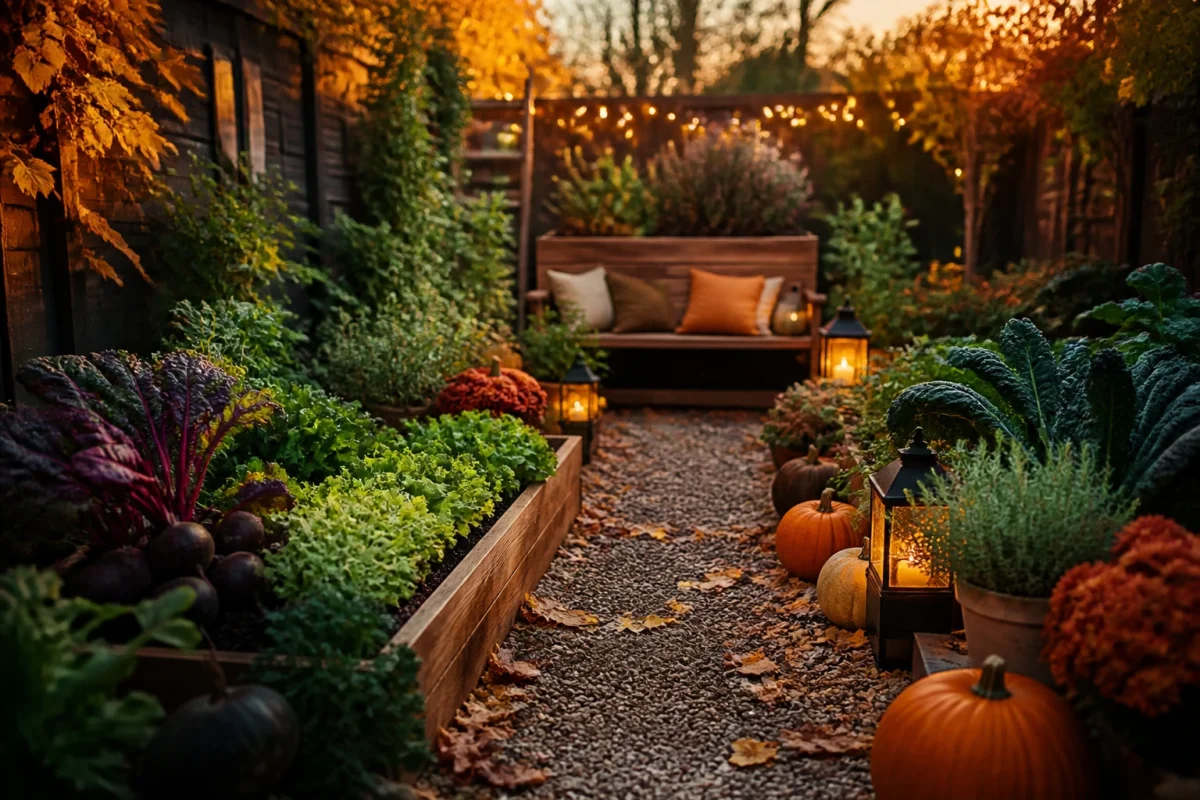
These 4 fall vegetable garden layout ideas for small backyards focus on beauty and function: smart footpaths, layered textures, warm light, and crops that actually thrive in crisp weather. Expect burgundy beets, frilly lettuce, bronze mums, and kitchen herbs you’ll still snip at Thanksgiving. They photograph beautifully (Pinterest who?) and they’re genuinely easy to live with. If you love a golden-hour glow and the quiet joy of pulling carrots while supper simmers, these are for you—especially from late September to mid-November.
1. Pumpkin-Edged Golden Glow Along the Garden Bench
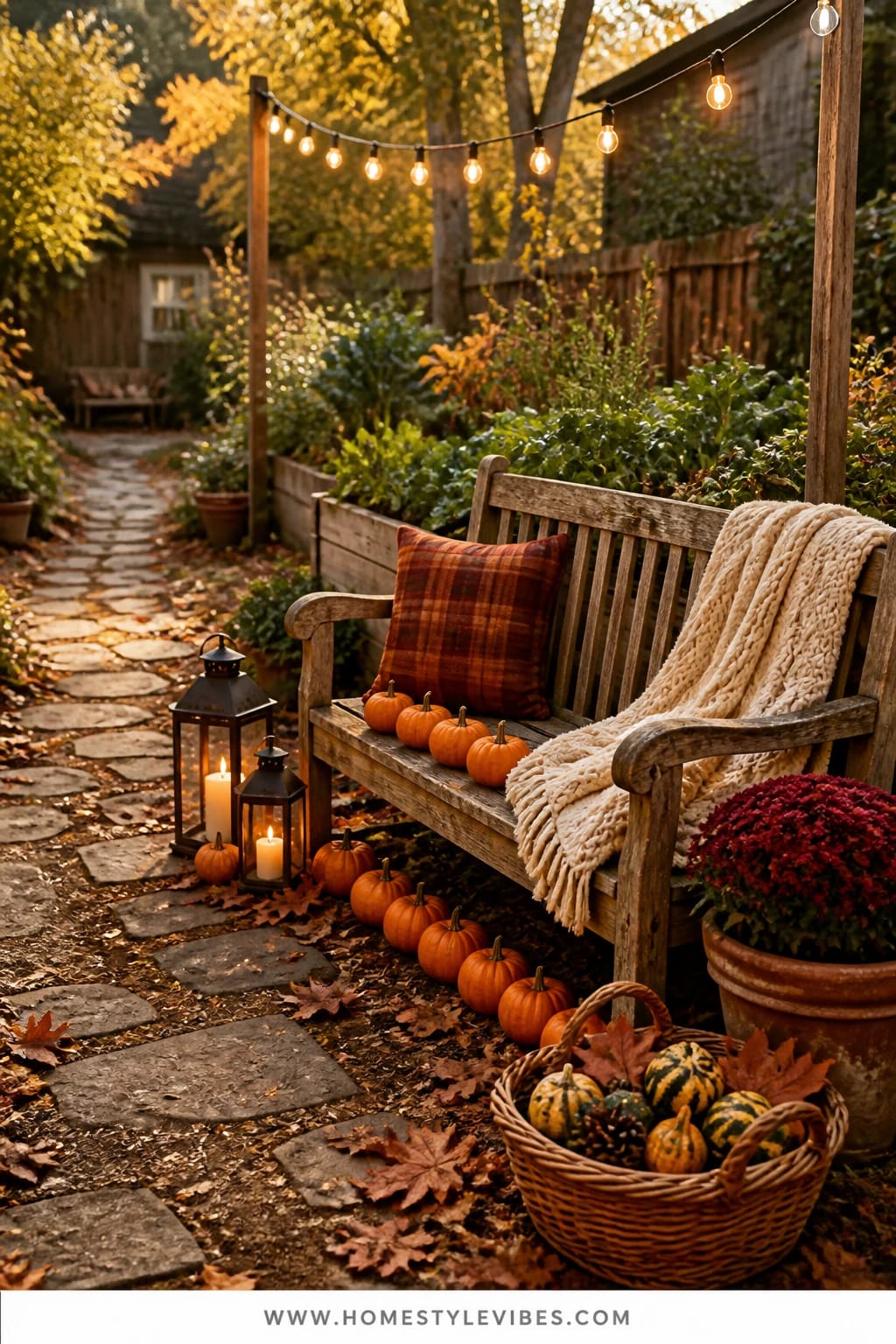
We’ve all been there: a narrow backyard with a lonely garden bench that never feels inviting. You’ve tried tossing a pillow on it, but it still reads “afterthought.” This layout wraps the bench in productivity and warmth: a slim vegetable bed or series of low planters behind it, a line of small pumpkins hugging the front edge, and lanterns casting an amber path at sundown. The mood is cozy-cabin-meets-cottage-potager. It’s intimate and practical—you sit, sip something cinnamon-y, and reach back to harvest chives or cut baby kale for dinner.
Why it works in real homes: it claims a tight footprint and turns dead space into a mini fall harvest zone. The bench becomes your anchor, planters define order, and pumpkin edging gives you immediate seasonal charm without a lot of fuss. Warm lighting from two or three lanterns makes the greens glow deeper and the pumpkins look storybook. Materials stay grounded: warm wood on the bench, woven baskets for tool stashing, copper or brass lanterns for that old-world glimmer, and a palette of greens, rusts, and soft creams. Photos love this setup because of the clear foreground (pumpkins), the midground (bench), and the textured backdrop of greens that carry saturated color at dusk.
Two variations keep it flexible: budget-friendly? Use repurposed food-safe buckets with drilled drainage instead of new planters and paint them a matte charcoal for a high-end vibe. Small-space version? Go vertical with a narrow trellis behind the bench and let peas or scarlet runner beans climb, which frames your photos beautifully. Prefer muted tones? Swap orange pumpkins for pale buff or white varieties and choose bronze mums in low bowls for a more neutral look that still whispers fall. Transitioning the look from early September to Thanksgiving is simple: start with sun-loving chard and basil, then swap basil for cold-hardy parsley or thyme as nights drop.
Budget Breakdown:
- Lanterns (2–3 medium, metal or wood): $20–$35 each
- Battery or rechargeable LEDs with warm temperature (2700K–3000K): $10–$20 total
- Small pumpkins (8–12): $1–$5 each
- Planters or low raised bed kit (6–8 feet total): $40–$120
- Fall seedlings (kale, lettuce, parsley, chives): $3–$6 per pack
- Quality potting mix + compost: $15–$40
- Outdoor pillow/throw in rust or plaid: $15–$30
Total Estimated Cost: $150 – $350
Best For: Narrow side yards or small patios with an existing bench or the space to add one. Ideal from late September through November, especially for people who love sunset garden sits and low-maintenance harvests.
Key Design Elements:
- Main seasonal props: pumpkin edging, lantern cluster, bench cushions in warm tones
- Color palette: rust, cream, deep green, and a touch of charcoal or black
- Lighting strategy: low lanterns at both ends of the bench plus one behind for backlight
- Textile layers: weatherproof rust pillow, small plaid throw
- Natural elements: kale, chives, parsley, baby lettuces, mums in clay bowls
- Accent details: copper or brass lantern handles, woven basket for tools and twine
How To Recreate This Look:
- Start with the bench as your anchor and clear a 2–3 foot zone in front and behind it.
- Add a low raised bed or line of planters behind the bench; fill with rich potting mix and compost.
- Layer in seedlings: kale at the back, lettuces in front, chives at the corners.
- Place small pumpkins in a tidy line along the bench’s front edge, varying sizes for rhythm.
- Style with two or three lanterns and a rust-toned pillow; switch on warm LEDs at dusk.
Why This Looks Expensive: Repetition and restraint. The consistent pumpkin edge creates a custom-built feel, and the warm metallic touches on lanterns read heirloom—even if you bought them on sale.
Watch Out: Don’t overcrowd the planters. Cramped kale looks stressed and ruins the polished vibe. Give each plant 10–12 inches and resist “just one more” syndrome.
Pro Styling Tip: For photos, kneel and shoot from pumpkin level at golden hour so the lanterns backlight the greens and your bench feels like a cozy destination.
2. Rust Plaid Lantern Path Framing the Front Door Garden Bed
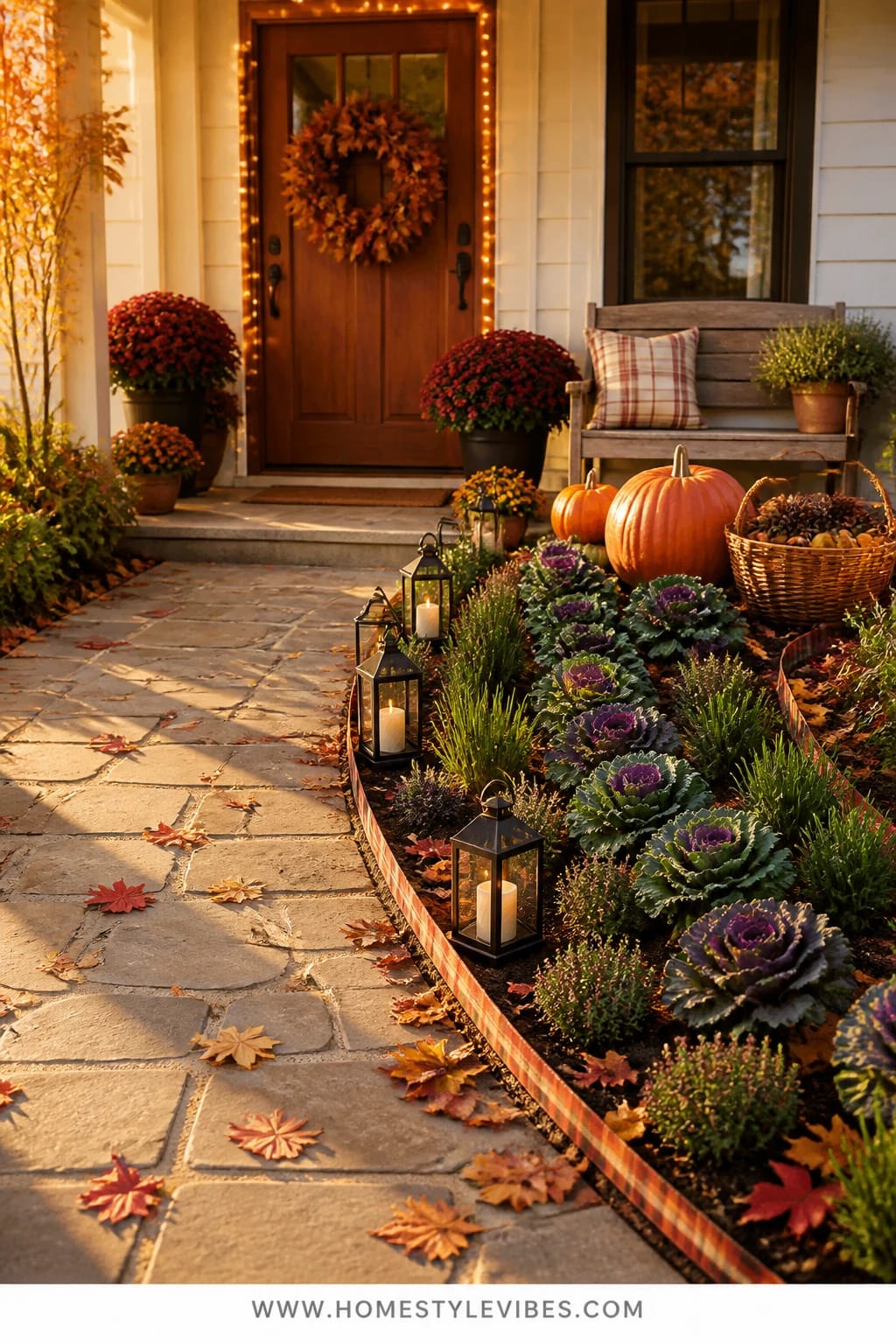
It’s that entrance bed that always looks messy once summer fizzles. You’ve tucked random herbs here and there, but by October the whole thing reads tired. This layout gives you a crisp, linear fall vegetable garden that doubles as a welcome moment: a shallow L-shaped bed hugging the front door path, pocketed with veggies and edged with a rust plaid ribbon finish and a row of lanterns. The vibe is “small English kitchen garden meets cozy autumn porch party.” You get harvests of thyme, dwarf cabbages, and ruby chard, plus a visual runway of warm light guiding guests in.
Why it works: we’re using layout as the heavy lifter. A clear edge and repeated lanterns provide order; rust plaid ribbon tied around stakes hints at seasonality without clutter. The front door bed becomes a tiny produce runway that photos adore because of the leading lines and the layered heights—low lettuces, medium mums, taller herb standards. It’s family-friendly and pet-aware since all lighting is enclosed and set off the walkway. Storing it later is easy: lanterns and ribbon go in a single bin, and your herbs roll right into winter with covers.
Two paths you can take: go budget with burlap ribbon and thrifted lanterns in matte black, or lean luxe with weighted brass lanterns and wool plaid ribbon. For a neutral read, choose green and white cabbages, white pumpkins in twos, and soft beige ribbon. For maximum color pop, pile in burgundy beets, ‘Redbor’ kale, and rust-tinted mums. This setup transitions beautifully: early fall, keep basil in a sunny pocket; by late October, swap to hardier thyme or oregano.
Key Design Elements:
- Main seasonal props: rust plaid ribbon, lantern line, cabbages and chard
- Color palette: rust, burgundy, deep green, cream
- Lighting strategy: lanterns spaced evenly along the bed’s outer edge to frame the path
- Textile layers: plaid ribbon bows and a small outdoor mat with coordinating tones
- Natural elements: dwarf cabbages, ruby chard, thyme, beets, white pumpkins
- Accent details: low black edging or stone pavers to define the garden line
Budget Breakdown:
- Lanterns (4–6 small/medium): $12–$25 each
- LED candles (multi-pack): $15–$30
- Rust plaid ribbon or burlap: $6–$20
- Fall seedlings (cabbage, chard, thyme, beets): $3–$6 per pack
- Edging (paver stones or metal edging): $30–$80
- Compost/topsoil refresh: $20–$50
- Doormat in coordinating tones: $15–$30
Total Estimated Cost: $160 – $360
Best For: Small backyards that feed into a side gate or rear entry, or any home where guests cut through a narrow garden path. Ideal for late afternoon arrivals and early October parties.
How To Recreate This Look:
- Start by defining the bed’s shape in a clean L or rectangle, 12–24 inches deep.
- Add edging to create a crisp line that looks tidy even on leaf-strewn days.
- Layer plants by height: thyme standards or small topiary at back, chard and beets mid, cabbages and mini pumpkins front.
- Place lanterns evenly along the path side, 18–24 inches apart.
- Style with rust plaid ribbon knotted around two or three subtle stakes for a hint of pattern.
Why This Feels Designer: Intentional repetition and a strong edge line. Designers love a simple geometry repeated—lantern-lantern-lantern—because it quiets visual noise and makes color pop.
One Thing To Avoid: Mixing too many plant types. Limit yourself to 3–4 varietals for cohesion—otherwise the bed looks like clearance day at the nursery.
Pro Styling Tip: At dusk, shoot with the lanterns lit and the front door cracked open so you catch a peek of indoor glow; the warm-cool contrast makes greens look richer.
Pause and breathe for a second. If one idea already has your wheels turning, start there. You don’t need a whole backyard overhaul—one corner that feels finished will reset your entire fall mood.
3. Amber String Light Arc Over the Patio Table Kitchen Garden
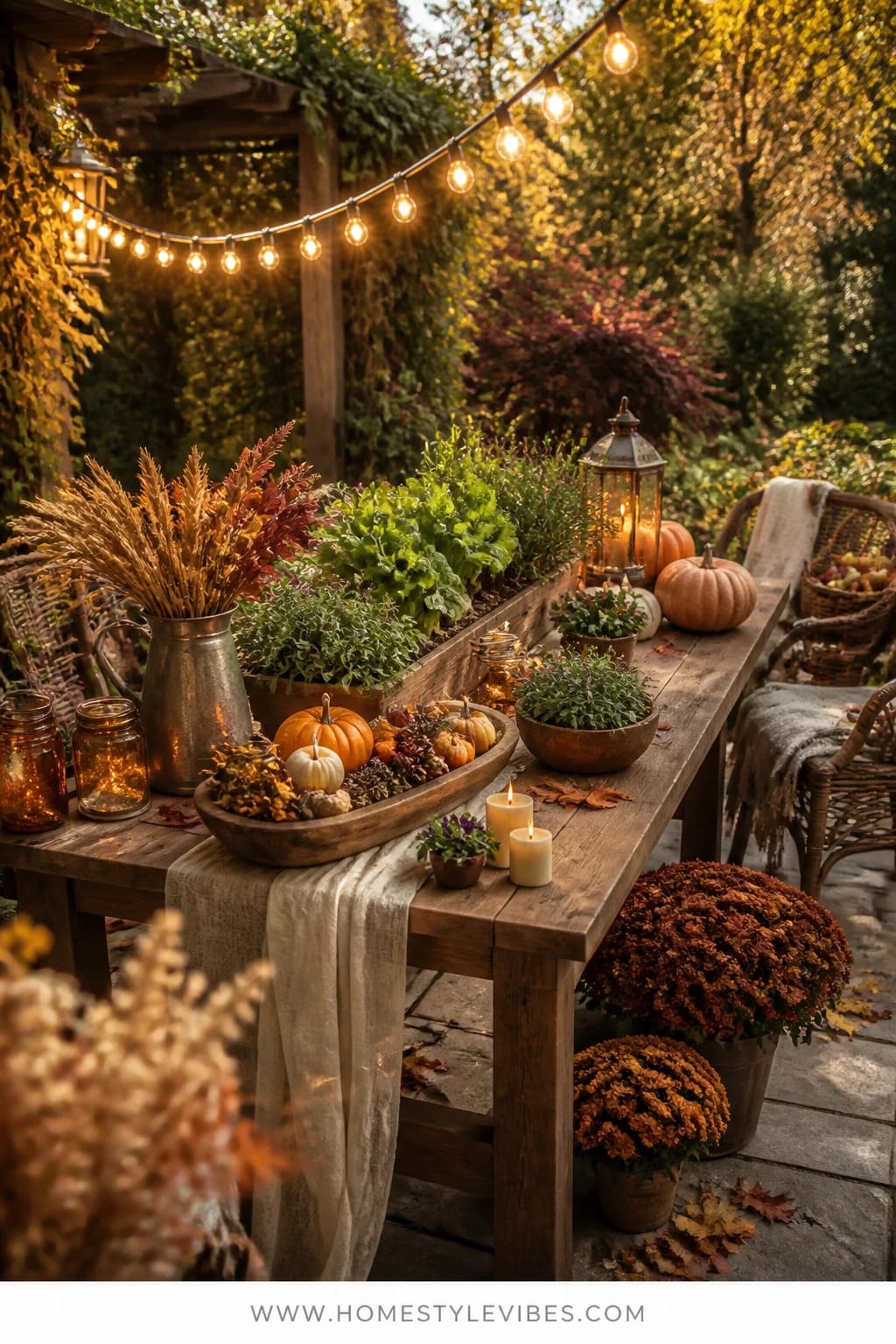
Some patios feel like concrete deserts by October—chairs pushed back, herb pots half-fried from August, and zero magic. You’ve tried tossing a pumpkin on the table, but it looks awkward and lonely. This layout turns your patio table into a working fall kitchen garden under a soft amber canopy. Picture a curved string-light arc overhead, a low trough planter running the centerline of the table, and little clusters of dill, parsley, baby romaine, and edible violas tucked into bowls. The mood is golden-hour bistro meets harvest supper. It works because the table becomes your raised bed: everything is within arm’s reach, a dream for weeknight salads.
It’s realistic for small backyards since you’re not giving over lawn space: you’re styling what you already own. Lighting does the heavy lifting here. Soft amber string lights make greens gleam and create a halo that flattens harsh shadows—your photos will feel cinematic. Materials skew warm and tactile: terra-cotta bowls, a weathered wood table, amber glass bud vases, and a single copper watering can that looks like sculpture. Storage is easy: after Thanksgiving, consolidate the bowls into one large tub and roll the string lights up (I clip the plug end with a clothespin so I don’t spend ten minutes hunting it later—learned that the hard way).
Variations help it flex: small table? Choose a single narrow planter and two herb bowls flanking it. Budget route? Upcycle food cans with drilled holes and wrap them in jute twine for texture. Neutral tone lover? Keep everything green and white: romaine, sage, white violas, and pale pumpkins in a trio. If you want a color-forward moment, go burgundy mustard greens, purple basil (early fall), and rust napkins clipped with little pinecones for dinner nights. This one glides from September to Thanksgiving—start with softer herbs and swap to cold-tolerant lettuces and parsley when nights cool.
Budget Breakdown:
- Outdoor-safe amber string lights (1–2 strands): $20–$45
- Center trough planter (metal or wood): $25–$60
- Small terra-cotta bowls (4–6): $3–$8 each
- Seedlings (romaine, dill, parsley, violas): $3–$6 per pack
- Potting mix + compost: $15–$30
- Clips/hooks for string lights: $8–$15
- Napkins in rust or burgundy (set of 4): $12–$24
Total Estimated Cost: $120 – $275
Best For: Small patios or decks with a dining table. Perfect for people who cook often and want herbs and salad greens within grabbing distance, especially in the early evening.
Key Design Elements:
- Main seasonal props: amber string lights, edible violas, trough planter centerpiece
- Color palette: deep green, amber, rust, and a hint of burgundy
- Lighting strategy: one graceful arc of warm string lights overhead to create a “room” outdoors
- Textile layers: rust napkins, a narrow linen runner for softness
- Natural elements: dill, parsley, romaine, violas, petite pumpkins in two sizes
- Accent details: amber glass bud vases, copper watering can, small wood boards for serving
Why This Reads High-End: It’s the balance of lushness and negative space. The single long planter feels custom, and the string-light arc creates architectural definition—like you built a tiny conservatory over your table.
How To Recreate This Look:
- Start by mapping two attachment points for string lights so they form a soft arc over the table.
- Add a central trough planter and fill with a mix of leafy greens and a few upright herbs.
- Layer terra-cotta bowls with edible violas and parsley at intervals along the runner line.
- Place 3–5 mini pumpkins loosely between bowls; keep sizes varied but not cluttered.
- Style with rust napkins and one or two amber bud vases for glow; flip on lights at dusk.
The Most Common Mistake: Hanging lights too high or too low. Aim for roughly 7–8 feet above the table center so you get intimacy without bumping your head or killing the glow.
Pro Styling Tip: For photos, turn off harsh porch floods and let the string lights do the work—your greens read saturated and your copper accents catch the warm sparkle.
Remember, this isn’t about recreating a showroom. It’s about building a tiny, useful sanctuary that makes you want to step outside, breathe cool air, and clip herbs with bare hands. If one layout makes your shoulders drop an inch, that’s your sign.
4. Burgundy Mum Cluster Beside the Garden Bench With Leaf Garland Path
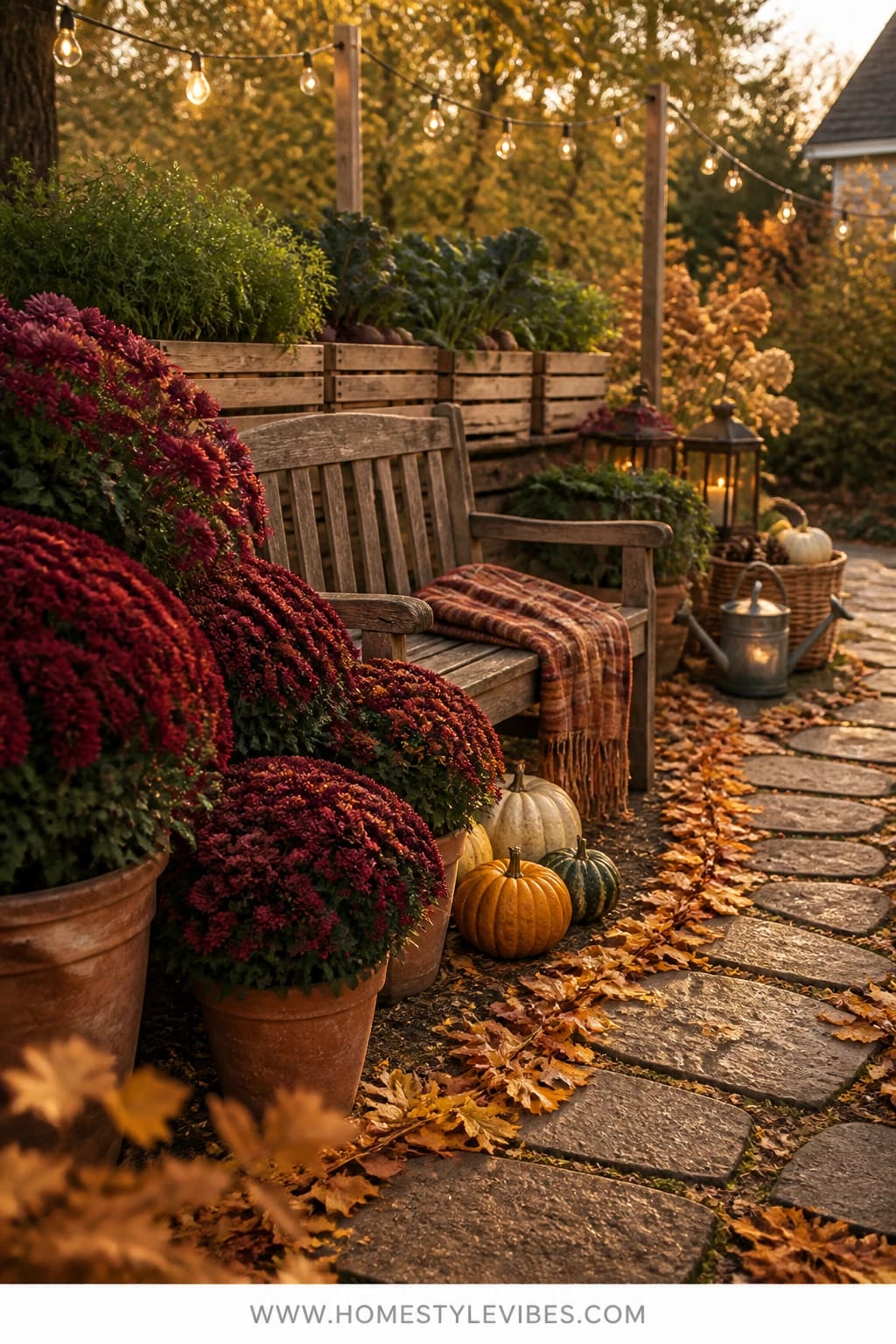
Sometimes the back corner by the bench turns into a dumping ground: spare pots, a tangle of hose, the broken trowel you swear you’ll fix. You’ve staged it a dozen times and it still looks meh. This layout is a reset: cluster burgundy mums in varying heights beside the garden bench, weave a simple leaf garland low along a stepping-stone path, and tuck a set of modular planting crates for carrots, beets, and turnips behind the scene. The mood hits harvest-table abundance with a woodland whisper. It works because your eye floats from deep color (mums) to texture (garland) to utility (crates)—and it feels purposeful, not plopped.
Lighting is softer here: a pair of candlelit lanterns or low solar stake lights that create a golden breadcrumb trail across the path. Materials lean earthy: rough wood crates, terra-cotta, iron-handled lanterns, woven leaf garland in russet tones, and a wooly throw on the bench that practically begs for a 4 p.m. sit. It photographs beautifully thanks to layered heights and the rich burgundy pull that anchors the scene. Practical bonus: root veggies love fall, and crates make spacing easy for small backyards without digging beds.
I’ll be honest: spacing carrots in shallow crates requires patience, and I still grumble through thinning. But when you tug up that first crisp, candy-sweet carrot in October? Worth it. For a muted version, swap burgundy mums for bronze or soft cream and choose a more natural leaf garland with subtle color shifts. On a tight budget, gather a few fallen branches and wire on preserved leaves yourself—beautiful and personal. This layout handles the whole season: early fall, plant radishes for a quick win; later, rely on carrots and beets that sweeten with the chill.
Key Design Elements:
- Main seasonal props: burgundy mums, leaf garland, modular planting crates
- Color palette: burgundy, rust, forest green, and warm wood
- Lighting strategy: low candlelit lanterns or solar stakes to rim the path with a golden glow
- Textile layers: wool throw in a deep berry or rust check
- Natural elements: carrots, beets, turnips, preserved leaf garland, pinecones
- Accent details: iron or black metal handles, labeled crate tags for that market feel
Budget Breakdown:
- Modular crates or shallow raised boxes (2–3): $15–$35 each
- Mum clusters (3–5 pots, various sizes): $6–$18 each
- Leaf garland (faux or preserved): $12–$30
- Lanterns or solar path stakes (2–4): $10–$25 each
- Seeds (carrot, beet, turnip, radish): $2–$5 each
- Potting soil/root veggie mix: $15–$30
- Wool throw: $20–$35
Total Estimated Cost: $120 – $280
Best For: Small backyards with a forgotten corner near a bench or along a stepping-stone path. Great for families who want kid-friendly harvests and a quiet afternoon perch.
How To Recreate This Look:
- Start by clearing clutter and laying a simple stepping-stone or bark-mulch path.
- Add two or three shallow crates behind the bench zone; fill with loose, sandy mix.
- Layer seeds in rows with proper spacing; mark rows with simple wood tags.
- Place mums in a tight cluster by height—tall at back, short at front—for impact.
- Style with a low leaf garland weaving along the path edge and two lanterns near stepping stones.
Why This Looks Intentional: It’s all about concentrated color and a clear flow. The deep burgundy cluster acts like a period at the end of a sentence; the garland underlines the path so the whole corner reads composed.
Don’t Do This: Avoid scattering single mums like confetti. Group them so they read as one bold shape; otherwise the effect gets lost and everything looks spotty.
Pro Styling Tip: For photos, sprinkle a few pinecones near the garland and shoot from a slight overhead angle so you catch the mum color block and the subtle line of the path together.
True story: last October, I styled a friend’s tiny yard with the mum cluster idea. We spent $180, thinned a ridiculous number of carrots, and still wound up with an evening nook that made her text me sunset photos for weeks. The secret wasn’t fancy planters—it was color, light, and a reason to sit down.
Quick Checklist
- Choose one anchor location: bench, path edge, or patio table
- Pick a tight fall color palette: rust, burgundy, cream, deep green
- Repeat one seasonal prop for cohesion: pumpkins, lanterns, or mums
- Add warm lighting: lanterns, string lights, or solar stakes
- Plant cold-hardy edibles: kale, chard, romaine, carrots, beets, thyme
- Use quality soil and compost for healthy growth
- Create a clear edge or line for visual order
- Vary heights for depth: low greens, mid mums, taller herbs
- Layer a textile touch: rust pillow, plaid ribbon, or wool throw
- Plan a quick refresh swap for late October
Frequently Asked Questions
How can I keep costs down while still getting a lush fall vegetable garden look?
Focus on one anchor feature and one repeated element. For example, use thrifted lanterns in a line and invest in good soil plus 6–8 seedlings. Upcycle containers (drilled buckets, food cans wrapped in jute) and buy smaller pumpkins in bulk—they read just as charming when repeated.
Real or faux pumpkins and florals—what’s best for these layouts?
IMO, real pumpkins win every time for texture and color. Use real veggies and mums for life and scent; add a single quality faux piece (like a durable leaf garland) where longevity matters. Keep faux items to longer-lasting elements you’ll store and reuse.
My backyard is tiny. Which layout works in the smallest footprint?
The patio table kitchen garden or the bench-backed planter line both thrive in tight spaces. They use furniture you already own and keep planting within a foot or two of the edges. Start with a single trough planter and two lanterns—you’ll be surprised how finished it feels.
What about storage after Thanksgiving?
Consolidate lighting and ribbons into one tote, wipe lantern glass, and label cords. Compost spent annuals and refresh perennials for winter. Stack planters and crates by size; tuck spare soil bags in a lidded bin to keep them dry for spring.
Are candles safe around pets and kids?
Use enclosed lanterns with battery LED candles for safety. They still give a warm 2700K–3000K glow without open flame. Place them just off pathways and anchor cords if you’re using plug-in string lights.
When should I start my fall vegetable garden in a small backyard?
Late August to mid-September for planting, depending on your zone, with top-ups in early October. If it’s already late, choose starts (kale, parsley, chard) and quick crops (radishes) so you see growth within weeks.
I rent and can’t dig—what’s my best move?
Stick to modular planters and crates on patios or hardscapes. Everything here translates to container gardening: troughs, bowls, buckets with good drainage, and a few lanterns. No digging required, and you can take it all with you.
Your Cozy Finish
Pick the one idea tugging at you right now. Maybe it’s the pumpkin edge that makes your bench feel like a destination, or that soft arc of string lights turning a plain patio into a tiny autumn bistro. Start small, repeat one element, and let warm light do half the styling work.
The truth is, fall abundance doesn’t come from owning every seasonal prop—it comes from layering texture, choosing a rich color story, and giving your garden a glow that invites you to linger. Line a path, cluster your color, plant what you’ll actually eat, and let it get a little wild around the edges. That’s the charm.
You’ve got this. One evening, one corner, one warm lantern at a time—and suddenly your small backyard looks like the cozy, harvest-ready retreat you’ve been dreaming about.
About the Author

Krisztina P.Rendes, Founder of Home Style Vibes
Founder of Home Style Vibes
Krisztina Puskásné Rendes created Home Style Vibes as a cozy-modern lifestyle space where homemaking meets inspiration. Her goal is to help women create beautiful, organized, and peaceful homes they truly love — without overwhelm. You’ll find here heart-driven content on home decor, cleaning tips, easy family recipes, organization and decluttering, DIY home projects, plants, and seasonal ideas — all designed to bring more calm, comfort, and style into everyday life.