6 Italian Lemon Table Decor Ideas for the Most Beautiful Summer Dinner Party
You want an Italian lemon table that feels like Capri at sunset—sun-warmed stone, a whisper of sea salt in the air, and big bowls of ripe citrus glinting in candlelight. But your dining table keeps reading… beige. Flat. More “Wednesday night leftovers” than “summer dinner to remember.” Let’s fix that. These 6 Italian lemon table decor ideas bring sunlit textures, playful pattern, and a sense of easy ceremony to your summer dinner party—on realistic budgets and timelines. We’ll solve the glare, the clutter spiral, and the “something’s missing” ache with ideas that are incredibly photogenic, built for real homes, and totally Pinterest-worthy. If you love a Mediterranean vibe, host often, or just need one gorgeous tablescape for a birthday or engagement dinner, this is for you.
1. Amalfi Farmer’s Market Citrus Spread With Olive Linen and Terracotta
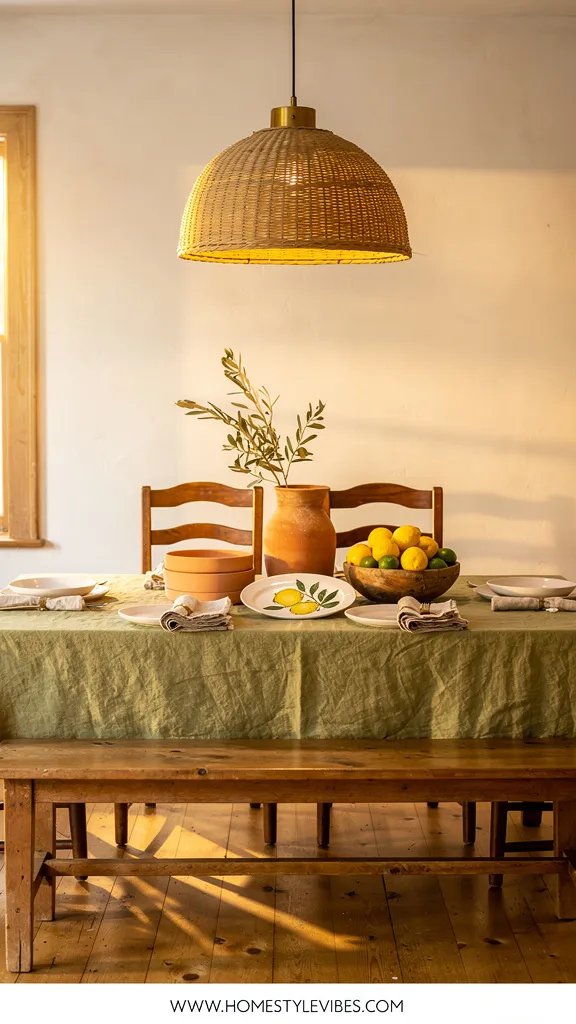
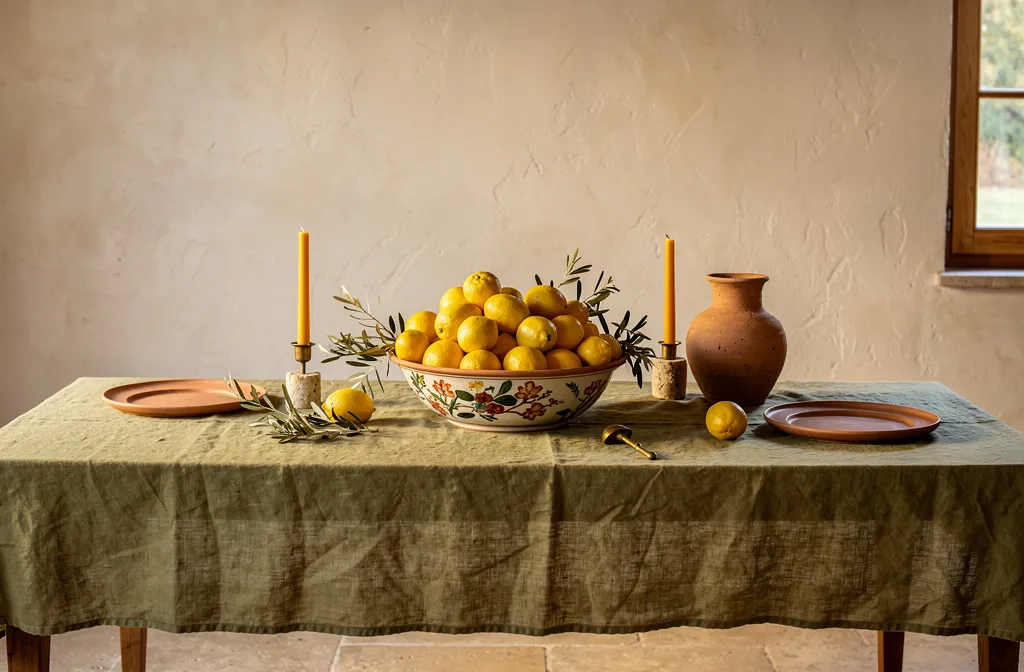
We’ve all been there: you set the table with a white runner and your nice plates, but it still looks thin—like a hotel breakfast that never learned how to flirt. This “Amalfi Farmer’s Market” spread brings the joy back. Think a foundation of olive-green washed linen, terracotta serving pieces, hand-painted lemon ceramics, and mountains of real citrus. It’s generous. It’s fragrant. It makes everyone lean in.
The mood? Rustic Mediterranean with an elegant backbone. Perfect if your dining area runs small or you’re eating outdoors. Washed linen absorbs glare and photographs like a dream, while terracotta adds weight and warmth so the lemons pop. Candlelight gets soft and romantic against matte ceramics and the subtle nap of linen, avoiding that cheap overhead shadow that makes noses look… sharper than anyone asked for. Why it works in real homes: it’s forgiving. Stains blend, chips look intentional, and you can layer or subtract pieces without breaking the look.
Materials here skew tactile: stoneware, terracotta, raw wood, and brushed brass. The palette rides olive, cream, sun-bright yellow, and tomato-red accents from vine-ripened cherry tomatoes on the stem. It photographs beautifully because it balances matte and gloss—juicy lemon sheen against muted clay—and creates depth via height: stacked platters, a pedestal bowl, and low bud vases. Variations include a budget version that swaps hand-painted ceramics for plain white bowls wrapped with a lemon-print fabric napkin, a renter-friendly version using a folded throw blanket as a runner, and a small-space version that corrals everything into one large tray to keep surfaces tidy.
Budget Breakdown:
- Olive washed linen tablecloth: $45–$120
- Terracotta serving bowls and platters: $9–$25 each (3–5 pieces)
- Lemon-print ceramic salad plates (set of 4–6): $40–$120
- Brass candlesticks + beeswax tapers: $25–$70
- Fresh lemons, limes, and tomatoes: $18–$35
- Small bud vases (3–5): $15–$40 total
Total Estimated Cost: $152 – $410
Best For: Cozy patios or modest dining rooms that need warmth. Hosts who like a relaxed, generous table with low maintenance fabrics and durable pieces.
Key Design Elements:
- Main materials: washed linen, terracotta, stoneware, raw wood
- Color palette: olive, cream, sun-yellow, tomato red, hints of brass
- Lighting strategy: soft candlelight plus one shaded lamp nearby; avoid harsh overheads
- Furniture silhouettes: simple table, wooden chairs with woven seats or cushions
- Texture layers: matte linen, rough clay, glossy citrus skin
- Accent details: beeswax tapers, small herb sprigs (oregano, thyme), twine-tied napkins
How To Recreate This Look:
- Start with an olive or sage linen cloth and let it hang at least 10 inches on each side for that market-stall drape.
- Add a natural terracotta platter as your centerpiece base and pile it with lemons and limes—go generous.
- Layer in ceramic salad plates (lemon-print or white) and set them slightly off angle so it feels casual, not fussy.
- Install brass candlesticks at varying heights, then place 3–5 bud vases with tiny herb sprigs to break up the yellow.
- Style with a pedestal bowl or cake stand at one end for height, and add cherry tomatoes on the vine for a pop of red.
Why This Looks Expensive: Purposeful abundance reads luxe. When you repeat one hero element (lemons) in different scales and vessels, it looks collected—not random. The matte-to-gloss texture balance is what stylists use for editorial shots.
Watch Out: Don’t spread the fruit too thin. Sparse citrus looks like a forgotten prop. Cluster it and keep pathways clear for plates and elbows.
Pro Styling Tip: Tuck a few lemon leaves under the outer citrus ring so green shadows halo the fruit—your photos will get instant depth without extra clutter.
Keep scrolling—next up is a design made for tiny tables that still want that Italian lemon table drama.
2. Sorrento Balcony Bistrot: Two-Seater Lemon Layer With Striped Awning Vibes
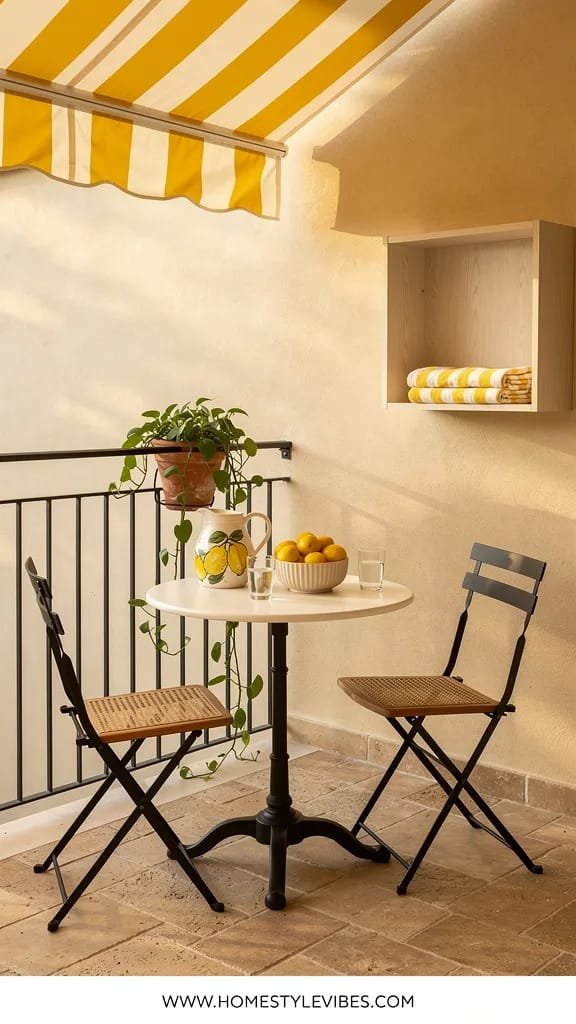
It’s that one corner that always feels off: the tiny café table on your balcony or kitchen nook that begs for charm but turns cluttered with salt shakers and a wilting basil plant. Enter the Sorrento bistrot setup—compact, fresh, and frankly adorable. The secret is vertical striping and deliberate miniatures that read intentional, not accidental.
This creates a spritely, seaside mood: think Amalfi awnings, limoncello spritzes, and conversations that stretch until the moon pops up. Perfect for renters and small spaces, because most of the pieces fold or stack. Lighting matters a lot in small nooks; hang a plug-in rattan sconce or clip-on lamp with a warm bulb to cut the cool shadows you get from overheads, then add one tea light for that candle flicker. Materials stay crisp—enameled metal, stripe cotton, rattan—and lemons star as both decor and garnish.
Photographs love this look because stripes add rhythm and scale reference, making the table feel styled instead of crowded. Two variations keep it realistic: a budget version using a striped dish towel as a mini runner and grocery-store pillar candles; and a moody version using navy-and-cream stripes with Meyer lemons for a softer pop. Renter-friendly swap: removable adhesive hooks support a lightweight linen café curtain behind the table to mimic an awning backdrop.
Key Design Elements:
- Main materials: enameled metal bistro table, rattan chair seats, cotton stripes
- Color palette: lemon yellow, cream, navy or grassy green, natural rattan
- Lighting strategy: one warm plug-in sconce + a single tea light; dim overheads
- Furniture silhouettes: small round top, folding café chairs
- Texture layers: smooth enamel, airy stripe fabric, woven rattan
- Accent details: lemon napkin rings, mini bud vase with a single chamomile stem
Budget Breakdown:
- Folding bistro set: $90–$220
- Striped table runner or towel: $10–$35
- Small rattan tray: $15–$30
- Plug-in rattan sconce or clip-on lamp: $25–$80
- Fresh lemons: $6–$12
- Mini bud vase + chamomile or daisies: $8–$15
Total Estimated Cost: $154 – $392
Best For: Tiny balconies, kitchen corners, weekday date nights, or a solo morning espresso ritual that actually feels special.
How To Recreate This Look:
- Start with a round bistro table and one striped runner placed off-center to create movement.
- Add a rattan tray to hold salt, olive oil, and lemons so nothing sprawls.
- Layer in a single bud vase and one candle—the restraint makes it chic.
- Install a plug-in sconce or lamp to the side to soften shadows and mimic café light.
- Style with lemon slices in a shallow bowl, napkins tied with twine and a lemon leaf, and a chilled spritz glass ready to go.
Why This Feels Designer: Scale discipline. Using just a few, repeating elements in a tight color story prevents visual noise. The off-center runner and tray create asymmetry that reads styled, not stiff.
One Thing To Avoid: Matching every stripe in the exact same width. Mix a bold runner with finer-striped napkins or a solid cushion so it doesn’t feel like a theme park.
Pro Styling Tip: Angle one chair five degrees out and place the spritz at the edge—your photo gets a leading line that invites the eye (and your dinner guest) in.
Quick mindset check before we go bigger and bolder.
Remember, this isn’t about recreating a showroom. It’s about building a table that actually feels like yours. If one idea resonates more than the others, that’s your starting point—edit, adapt, and ignore the rest.
3. Capri Blue + Lemon Chinoiserie Mix With Gilded Edges
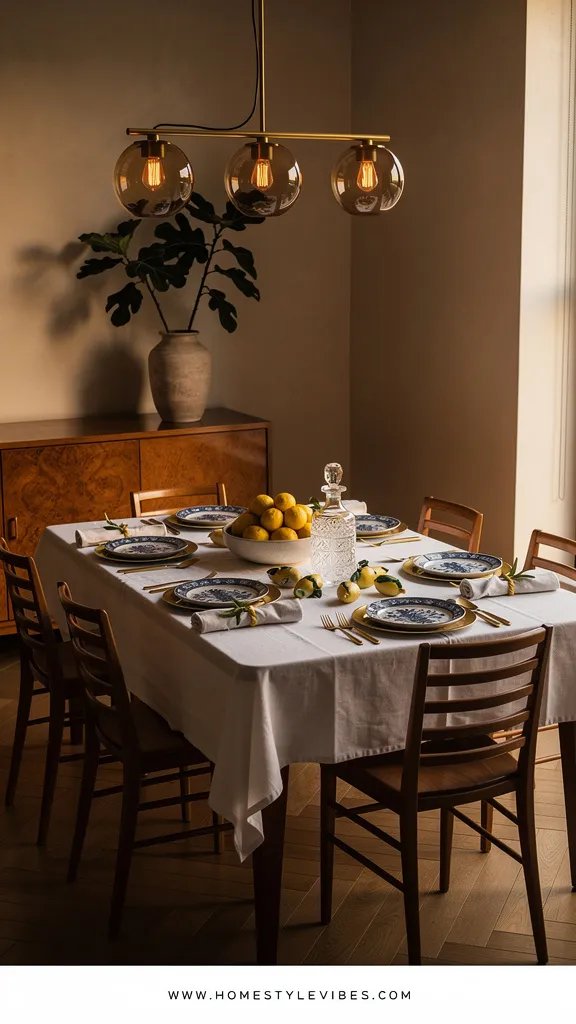
You’ve tried all-white dinnerware and “a pop of yellow,” but it still looks like a catalog page that forgot the soul. This look leans into pattern play: classic blue-and-white chinoiserie with Italian lemon motifs and just enough gold to make it party-ready. It’s a high-low mix that feels collected over time, not bought in one anxious click.
The vibe skews elegant-meets-travel-memoir—perfect for dining rooms that want to read more formal without going stiff. Blue-and-white ceramics anchor the eye, while lemon clusters keep it Mediterranean and bright. Lighting thrives on dimmed overheads with two low lamps or sconces nearby; cool light can turn blue plates gray, so keep bulbs warm. Materials include porcelain, glass, linen with a crisp hand, and little gilt moments on flatware or rimmed glassware. It photographs beautifully because the blue dishes offer strong contrast with yellow fruit and white linen, and the gold catches candlelight in tiny, flattering pinpricks.
Variations: a budget-friendly set that uses thrifted blue-and-white bowls and plain white plates with lemon place cards; a darker version with navy linen and pale Meyer lemons; a renter-friendly swap using peel-and-stick blue toile wallpaper as a temporary runner. IMO, this layout wins every time for holiday-adjacent summer dinners when you want a bit more polish.
Budget Breakdown:
- Blue-and-white porcelain bowls or ginger jars (2–3): $30–$150 each (thrift or new)
- White dinner plates: $2–$8 per piece (thrift) or $40–$100 per set
- Gold-rimmed glassware (set of 4–6): $35–$120
- Linen napkins, crisp white: $20–$60
- Fresh lemons and lemon leaves: $12–$20
- Brass or gold flatware (optional): $45–$160
Total Estimated Cost: $184 – $610
Key Design Elements:
- Main materials: porcelain, crisp linen, clear glass, brass
- Color palette: cobalt, white, lemon yellow, soft gold
- Lighting strategy: warm bulbs, layered lamplight, low candles
- Furniture silhouettes: classic wood table, upholstered or cane chairs
- Texture layers: smooth porcelain, structured linen, reflective metal
- Accent details: lemon place cards, blue toile runner, tiny ginger jar vases
Why This Reads High-End: Repeating motifs in different scales—large ginger jar, medium salad bowl, small ramekin—creates a visual hierarchy. Gold accents add micro-reflections that feel luxe without shouting.
How To Recreate This Look:
- Start with a white or navy linen tablecloth that hits mid-calf on the table legs (too short looks like a bedsheet).
- Add a blue-and-white runner or two ginger jars as bookends for the centerpiece zone.
- Layer white dinner plates, blue salad bowls, and crisp napkins with a lemon leaf tucked under the fork.
- Install low brass candlesticks and place one lemon at each setting as a tactile favor—write names on leaves with a gold paint pen.
- Style with a handful of lemon leaves around the ginger jars and a few scattered porcelain pieces for rhythm.
The Most Common Mistake: Over-patterning. If your runner is busy, keep plates simple. If you go bold on the plates, choose a solid runner. Let one element sing while the others harmonize.
Pro Styling Tip: Elevate one ginger jar on a stack of two flat, linen-covered books for a gentle step-up that adds shadow play in photos.
4. Lemon Grove Rustic Luxe: Stone Charger, Linen Fringe, and Herb-Tied Bundles
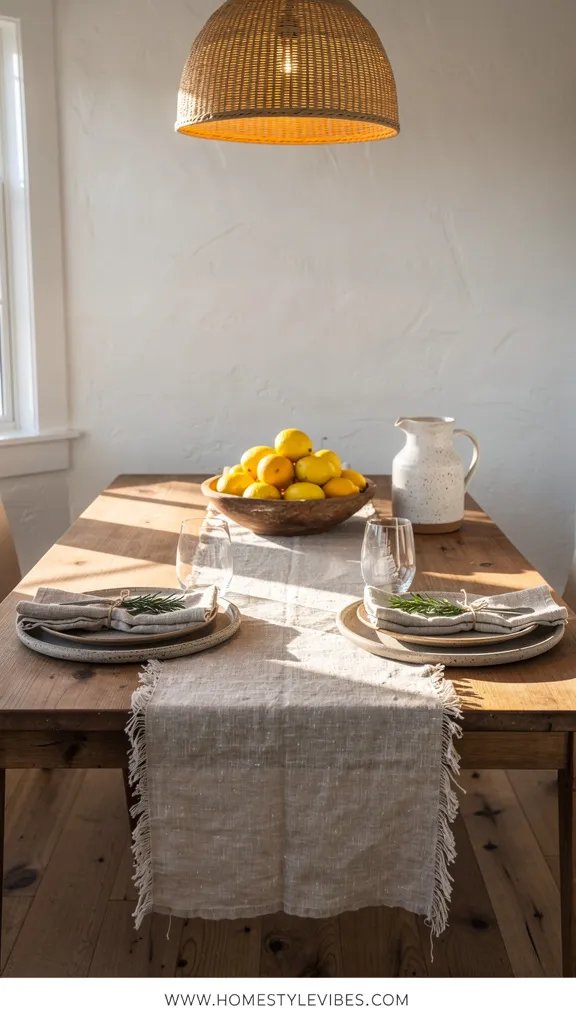
You want relaxed, but your table always slides into messy—like the party ended before it started. The Lemon Grove Rustic Luxe look solves that by pairing sturdy materials (stone, wood, linen) with tidy, thoughtful gestures (herb-tied napkins, controlled citrus clusters). It’s sensual without being sweet.
The mood is modern farmhouse with Mediterranean confidence. Why it works in real homes: everything pulls double duty. Stoneware chargers hide scuffs, a raw-edge runner looks intentional even if you cut it from linen by hand, and herbs become both decor and garnish. Lighting leans warm and low: tea lights in shallow stone bowls, a single shaded lamp at sideboard height to throw that soft, cinematic glow across the table. Materials are heavy on texture: honed stone tiles used as chargers, mango wood boards, frayed linen, blackened steel flatware. In photos, the layers read beautifully because matte textures soak light and lemons reflect it—contrast in action.
I tried this in my own dining room last fall and honestly couldn’t believe the difference when I swapped shiny plates for matte chargers. The entire setup felt grounded, like the table finally had a spine. For variations, try a budget solution using large slate tiles as chargers and a canvas drop cloth as a tablecloth; a darker version with charcoal linen and pale yellow variegated lemons; or a small-space take that uses a single oversize board as a centerpiece anchored with two citrus pyramids.
Key Design Elements:
- Main materials: honed stone, raw wood, frayed linen, blackened steel
- Color palette: oatmeal, charcoal, sun-yellow, olive, soft black
- Lighting strategy: tea lights in stone bowls, lamp on sideboard, dim overhead
- Furniture silhouettes: sturdy wood table, simple chairs with leather or woven seats
- Texture layers: matte stone, soft linen, rough wood grain
- Accent details: herb bundles (rosemary, thyme), black flatware, ceramic pitchers of water
Budget Breakdown:
- Stone tiles as chargers (8–12): $2–$7 each
- Raw edge linen runner (DIY or buy): $20–$60
- Black flatware (set of 4–6): $35–$120
- Wood boards and serving pieces: $20–$90
- Fresh lemons + herb bundles: $18–$30
- Tea light holders (stone or ceramic): $12–$40
Total Estimated Cost: $107 – $340
Best For: Family-style dinners, outdoor patios, anyone who hates fussy tables but loves texture and richness.
How To Recreate This Look:
- Start by laying a raw-edge linen runner down the center—let threads hang a bit for soul.
- Add stone tile chargers at each place setting to anchor the visual weight.
- Layer simple white or cream plates and black flatware for contrast.
- Install tea lights in shallow stone bowls along the runner, spaced unevenly for a natural rhythm.
- Style with citrus clusters near each light source and herb-tied napkins at 10 o’clock on each plate.
Why This Looks Intentional: The material story is consistent. When everything speaks the same textural language—matte, tactile, grounded—the table looks considered, not random.
Don’t Do This: Avoid glossy plates on glossy chargers. You’ll get glare and your photos will flatten. Keep one of the two matte.
Pro Styling Tip: Sprinkle a pinch of flaky salt on the wooden board near the lemons—tiny crystals catch candlelight and add micro texture on camera.
Pause and breathe. If your cart is getting full, remember you can borrow. A neighbor’s wooden board, your aunt’s linen napkins—mixing sources only makes it look more layered.
5. Limoncello Cocktail Station: Tile-Top Moment With Citrus Barware and Ice Bucket Drama
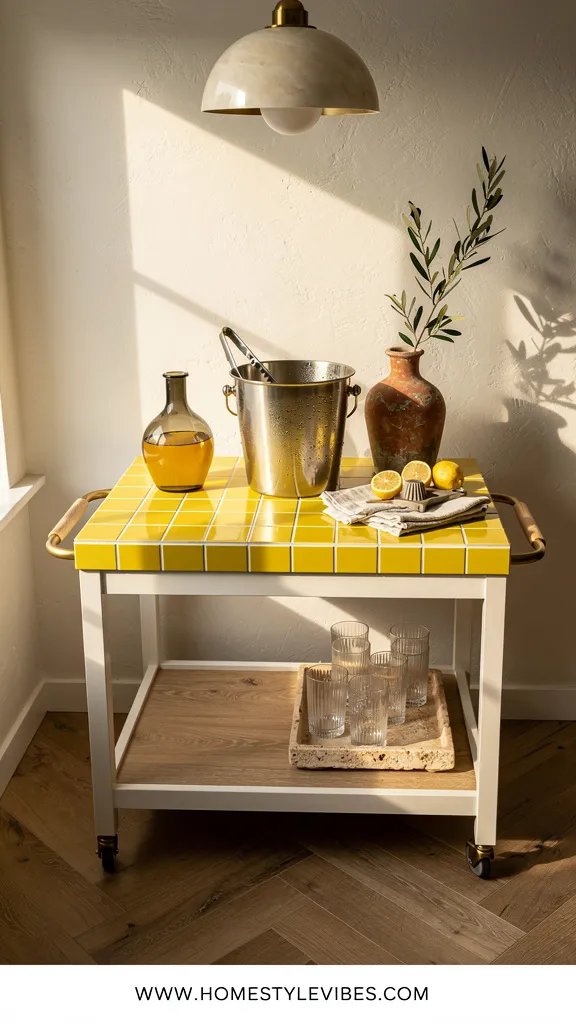
You’ve got the dinner table handled, but the drink station turns into a bottlenecked chaos zone with half-sliced fruit and wet napkins. Let’s stage it like a tiny Italian cocktail bar. A modular station with a tiled top, proper barware, and a heroic ice bucket makes you look like you planned this for weeks—truth: you didn’t.
The mood reads festive, resort-y, and a little theatrical. It works in real homes because you can set it up on any console, kitchen cart, or even a sturdy side table. Lighting is key here: one directed lamp or spotlight on the ice bucket and glassware gives the sparkle you see in magazines. Materials pop: ceramic tiles (loose or trivet-style), cut glass, polished steel, lemon branches in a tall vase. It photographs beautifully thanks to the geometry of tiles, the clarity of glass, and the saturated yellow of stacked citrus.
Variations include a budget cart using thrifted crystal-look glasses and a metal mixing bowl as an ice bucket; a small-space version on a tray with a single signature cocktail; and a renter-friendly tile “topper” made from six loose tiles laid inside a frame. For a darker, evening vibe, switch to smoked glass, black napkins, and use only lemon peels as garnish—so chic.
Budget Breakdown:
- Bar cart or console: $60–$250 (or use what you have)
- Loose ceramic tiles or trivets: $15–$45
- Cut-glass tumblers and coupes (set of 6–8): $40–$160
- Stainless or brass ice bucket: $25–$120
- Bottle of limoncello + sparkling water: $20–$45
- Tall vase + lemon branches: $15–$40
Total Estimated Cost: $175 – $660
Best For: Parties of 6–14, open-plan apartments, and anyone who loves a serve-yourself vibe that still feels organized.
Key Design Elements:
- Main materials: glazed tile, cut glass, polished metal, fresh citrus
- Color palette: white tile, chrome or brass, lemon yellow, touches of green
- Lighting strategy: one spotlight or lamp aimed at glass and ice for sparkle
- Furniture silhouettes: slim cart or minimal console
- Texture layers: glossy tile, faceted glass, smooth metal
- Accent details: lemon peels, sugar rim dish, tiny citrus tongs
How To Recreate This Look:
- Start by topping your cart or console with loose ceramic tiles arranged grid-style.
- Add a dramatic ice bucket front and center—keep tongs visible, not buried.
- Layer glassware in two clusters: tumblers on the left, coupes on the right, with a sugar-rim dish in between.
- Install a focused lamp or spotlight aimed at the ice bucket to catch the glint.
- Style with a tall vase of lemon branches and a shallow bowl of whole lemons to echo the theme.
Why This Looks Expensive: Repetition and symmetry. Doubling glassware clusters with a hero element (ice bucket) in the center mimics hotel bar layouts. The tile grid adds architecture without renovation.
Watch Out: Skip paper napkins at the cart. They turn soggy and sad. Use small linen or cotton cocktail napkins and rotate a dry stack in every 30 minutes.
Pro Styling Tip: Twist a few lemon peels and hang them on glass rims before guests arrive—those tiny curls look amazing in photos and tell people what to drink without a sign.
6. Coastal Italian Linen-and-Majolica Feast With Bread Boards and Taper Glow
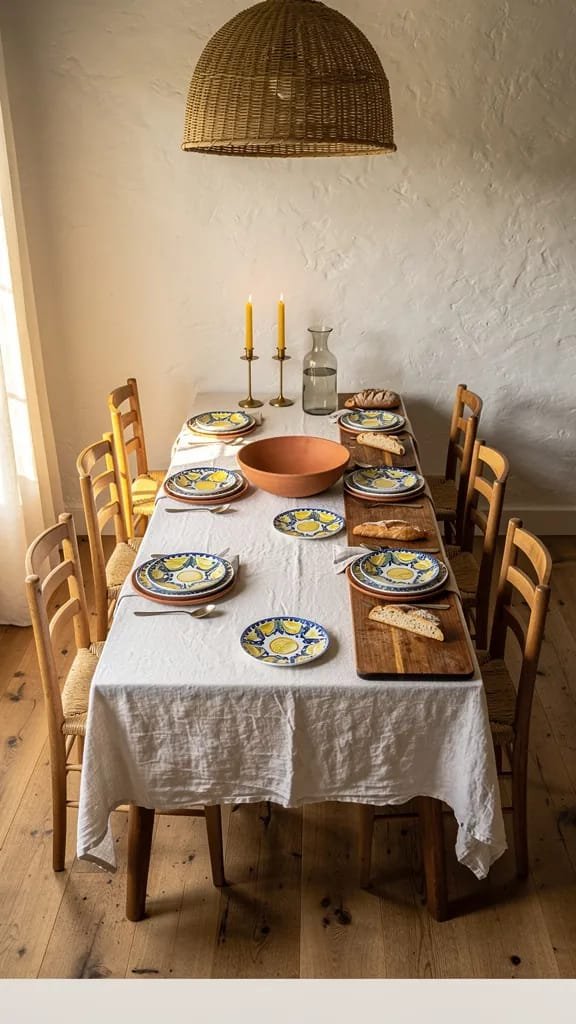
You plan a beautiful dinner, but when the serving bowls hit the table, everything gets crowded and the styling disappears. This feast setup solves the layout problem by zoning: bread boards carry the rustic energy, majolica gives you pattern, and a linen base keeps it light. It’s meant for big bowls of pasta, grilled fish, and salads that actually get eaten.
The mood channels coastal Italian—think Positano meets a little cliffside trattoria. It works in real homes because the zones make passing dishes easy: bread and oil on boards near each guest, main platters down the center, small lemon bowls bridging gaps. Lighting loves this look: two rows of staggered tapers create a runway of glow without blinding anyone. Materials include pale linen, dyed beeswax tapers (soft butter yellow), painted majolica plates, and generous wooden boards. The look photographs beautifully thanks to layered height (tapers, wine bottles, pedestal bowl), color contrast (yellow fruit, blue-green majolica), and directional shadows from the candle lines.
Variations: a budget-friendly spin with paper-thin lemon-printed paper placemats over a plain cloth; a renter-friendly option where you tape a lemon-stamped kraft paper runner down the center; and a small-space adaptation that uses half-sized boards and two petite taper clusters instead of full rows. I’ll be honest: spacing tapers can be tricky. I’ve measured, mis-measured, and set off a mini wax avalanche mid-toast. Move them after the food lands and you’ll be fine.
Budget Breakdown:
- Pale linen tablecloth: $45–$120
- Majolica-style dinner or salad plates (set of 4–8): $60–$240
- Assorted wooden bread boards (3–5): $30–$120
- Beeswax tapers (10–12): $25–$70
- Brass or ceramic taper holders (10–12): $50–$180
- Fresh lemons and olive branches: $18–$40
Total Estimated Cost: $228 – $770
Best For: Sit-down dinners of 6–10, open tablescapes with family-style platters, and anyone who loves a classic Italian lemon table with a little painterly flair.
Key Design Elements:
- Main materials: linen, majolica ceramic, beeswax, wood
- Color palette: pale linen, lemon yellow, sea blue, olive green, warm brass
- Lighting strategy: two staggered taper rows for a soft runway of light
- Furniture silhouettes: long table preferred, or extend with a leaf
- Texture layers: smooth ceramic, soft linen, grainy wood
- Accent details: lemon-studded salt dish, olive oil in a small ceramic cruet, scattered olive leaves
How To Recreate This Look:
- Start with a pale linen cloth and press it lightly so it’s smooth but not stiff.
- Add two uneven lines of tapered candles down the center, leaving platter zones open between clusters.
- Layer majolica plates at each place setting and set bread boards within arm’s reach of every two guests.
- Install a pedestal bowl with whole lemons as your height anchor near the table’s middle.
- Style with olive branches tucked around the pedestal base and a tiny salt dish topped with a lemon zest pinch.
Why This Feels Designer: Zoning the table like a floor plan eliminates clutter. You control where eyes land—candles, lemons, patterned plates—so it reads edited, not busy.
One Thing To Avoid: Overcrowding the center with décor. Leave true negative space for platters, or you’ll end up stacking dishes over candle wax. Ask me how I know.
Pro Styling Tip: Trim taper wicks to ¼ inch and light them 20 minutes before guests arrive—the softened wax and shorter flames look perfect in photos by the time dinner starts.
Perspective shift: you don’t need to buy everything new to get a beautiful Italian lemon table. Borrow a board, thrift a jar, clip two branches from your backyard. The mix is the magic.
Quick Checklist
- Olive or sage washed linen cloth
- Terracotta or stoneware serving pieces
- Fresh lemons in varied sizes
- Brass or ceramic candlesticks with beeswax tapers
- Bud vases with herb sprigs
- Striped runner or towel for small tables
- Blue-and-white porcelain accents
- Gold-rimmed glassware or cut glass
- Stone tiles or matte chargers
- Blackened steel or brass flatware
- Wooden bread boards
- Ceramic tiles to top a bar cart
- Polished ice bucket and proper tongs
- Lemon leaves and olive branches
- Plug-in sconce or lamp with warm bulb
Frequently Asked Questions
How many lemons do I actually need for a centerpiece that looks full?
Plan on 12–18 lemons for a standard 72-inch table if you’re clustering in the center. For a runner-style spread, 20–24 looks lush without swallowing your platters. Mix sizes for dimension.
I’m on a tight budget. What’s the one purchase that makes the biggest visual difference?
A good linen tablecloth in olive, cream, or pale flax changes everything. It kills glare, adds texture, and makes even basic plates look intentional. After that, buy real beeswax tapers.
My dining area is tiny. How can I do an Italian lemon table without it feeling crowded?
Choose one focal point. For a two-seater, use a small rattan tray with a bowl of lemons and a single candle. Keep plates and glassware minimal, and angle the runner off-center to free elbow room.
Are real lemon branches messy or hard to source?
They can drop leaves if they’re very dry, but they’re usually sturdy for a night. If you can’t find branches, use lemon leaves from a florist or even faux stems mixed with real fruit—no one will clock it in the evening glow.
What’s the most common styling mistake with a lemon tablescape?
Flat layouts. Everything at the same height reads dull. Add a pedestal bowl, vary candle heights, and cluster fruit instead of lining it up. Contrast and levels are your friends.
Final Thoughts
Pick one idea tonight—just one. Maybe it’s the olive linen and terracotta from the Amalfi spread or the blue-and-lemon chinoiserie mix that feels a little dressy. Set it up, light the candles, and watch your table shift from “functional” to “where everyone lingers.”
The truth is, luxury on a summer table comes from texture, lighting, and restraint. Matte next to gloss. Warm shadows instead of overhead glare. A bold gesture—like a mountain of lemons—supported by quiet, hardworking pieces. You don’t need more stuff; you need the right rhythm.
So pour the limoncello, tie a sprig of rosemary to a napkin, and invite people you love to lean in. You’ve got this. And trust me, your Italian lemon table will look even better after the first toast.

About the Author

Krisztina P.Rendes, Founder of Home Style Vibes
Founder of Home Style Vibes
Krisztina Puskásné Rendes created Home Style Vibes as a cozy-modern lifestyle space where homemaking meets inspiration. Her goal is to help women create beautiful, organized, and peaceful homes they truly love — without overwhelm. You’ll find here heart-driven content on home decor, cleaning tips, easy family recipes, organization and decluttering, DIY home projects, plants, and seasonal ideas — all designed to bring more calm, comfort, and style into everyday life.