7 Italian Summer Home Decor Ideas That Bring the Amalfi Coast Into Your Home
You want that Amalfi Coast feeling: sunlit walls, a bowl of lemons on the counter, and breezy linens that look like vacation. But your reality is harsh: dim corners, heavy fabrics, and a room that never styles right in photos no matter how many times you fluff the pillows. Think crisp whites, ocean-touched blues, chalky limewash, warm terra-cotta underfoot, and a whisper of something citrus in the air. These 7 Italian summer home decor ideas fix the frustration with bright, photogenic texture and real-life ease—most with a weekend timeline and a $1,500 cap per project.
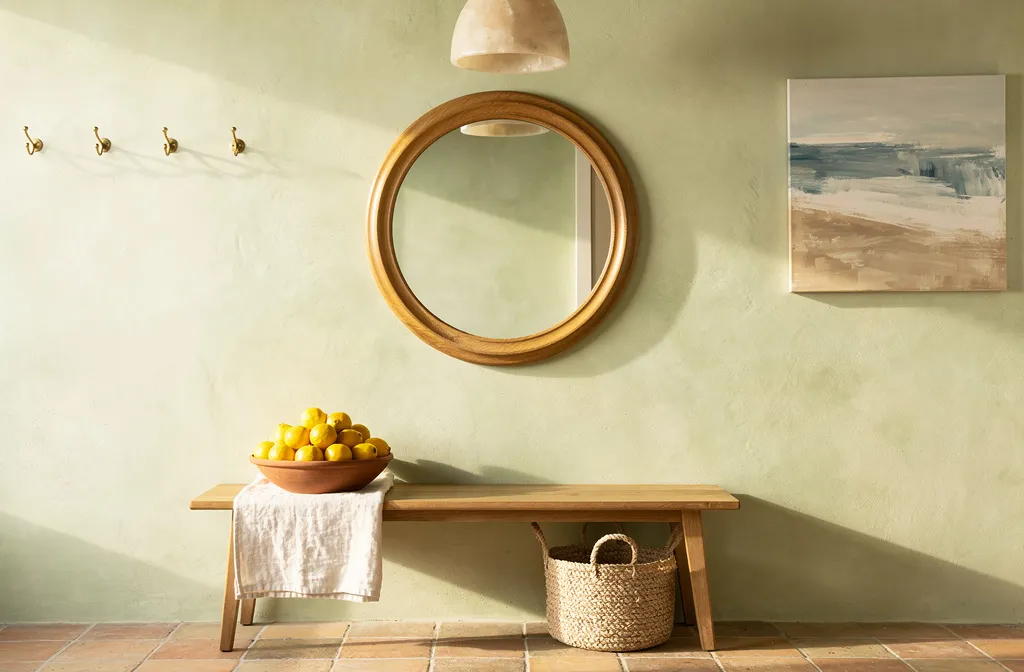
Expect rooms that feel like open windows and chilled limoncello. Expect deeply livable choices that work in small apartments and family homes. And expect a home that looks stunning on your camera roll—because yes, these are Pinterest-power moves. If you swoon over sunbleached patios, old-world stone, and clean-lined furniture that never tries too hard, you’ll feel right at home here.
1. Sun-Bathed Entry With Citrus Bench and Limewash Glow
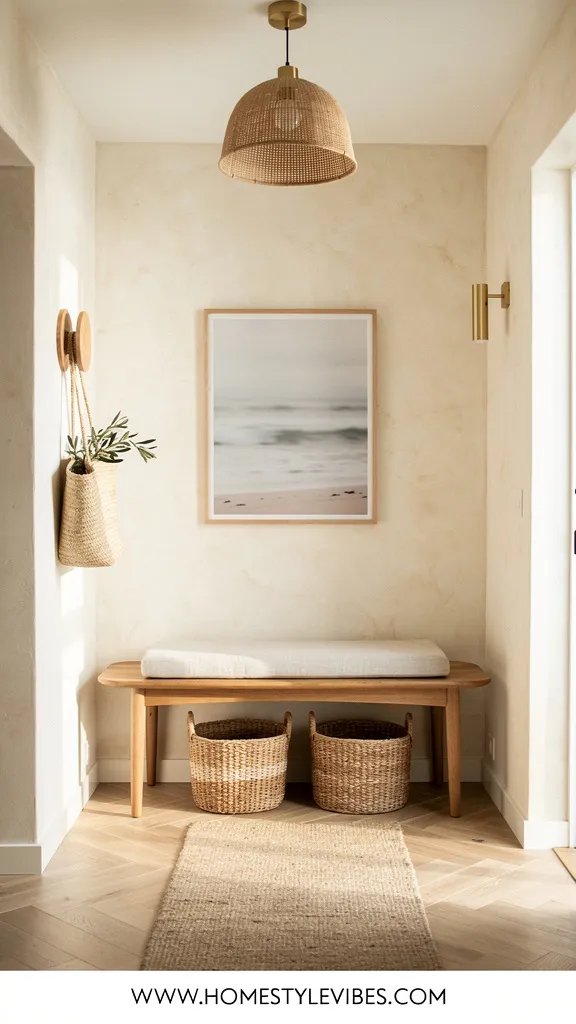
We’ve all been there: you want that “wow” when you open the door, but your entry always reads tired—too dark, too cluttered, or too beige. This concept creates a bright, Amalfi-style welcome with limewash walls, a simple wood bench, handwoven baskets, and a single framed coastal print. The mood is breezy and intentional, like you just stepped in from a morning walk through Positano.
It works beautifully in real homes because entries are compact—small changes have huge payoff. Limewash catches light in a soft, chalky way, so even if your foyer faces north, you still get movement on the wall. Materials lean authentic: limewash, raw wood, woven seagrass, matte black or unlacquered brass hooks. This setup photographs beautifully thanks to the contrast between crisp white trim, textural walls, and natural tones that ground the scene.
Variations keep it flexible: for a budget version, swap limewash for a flat mineral paint and DIY a vintage bench from Facebook Marketplace. If you rent, go for peel-and-stick limewash-look wallpaper and removable hooks. Small space? Choose a narrow bench and a sconce with a slender profile—give your eye vertical drama with a high-mounted mirror.
Budget Breakdown:
- Limewash paint and brush kit: $80–$150
- Solid wood bench or vintage alternative: $120–$450
- Woven baskets (2–3): $40–$120
- Wall hooks (matte black or brass, set of 4): $30–$90
- Framed Amalfi coastal print: $50–$200
- Hardwired or plug-in sconce: $80–$260
Total Estimated Cost: $400 – $1,270
Best For: Narrow foyers, renters who want removable upgrades, or anyone craving an instant “I live well” moment the second the door opens.
Key Design Elements:
- Main materials: limewash, raw oak or teak, woven seagrass, linen
- Color palette: chalky white, stone, sun-kissed tan, Amalfi blue accents
- Lighting strategy: one directional sconce to rake subtle shadows across the limewash
- Furniture silhouettes: slim bench, rounded basket edges, simple frame lines
- Texture layers: nubby cushion, straw hats, cane-wrapped vase
- Accent details: brass or black hooks, ceramic bowl of lemons, small olive tree
How To Recreate This Look:
- Start with walls: apply limewash in crisscross strokes for movement.
- Add a slim bench: leave it bare or add a linen cushion in a stripe.
- Layer storage: tuck woven baskets beneath for shoes and scarves.
- Install a sconce: place it just above eye level to graze the wall.
- Style with one framed coastal print, a bowl of lemons, and a simple mirror.
Why This Looks Expensive: Intentional restraint. One oversized print, one sconce, and tone-on-tone textures read curated—not cluttered. Limewash’s depth mimics historic plaster, which always looks custom.
Watch Out: Don’t hang the mirror too low. The gap between the mirror and ceiling is what makes entries feel squat and cheap. Aim to center the mirror at 60–62 inches from the floor.
Pro Styling Tip: Photograph mid-morning with the sconce off and a small bowl of lemons catching side light—shadows on the limewash add magazine-grade depth.
2. Capri-Blue Living Room With Stripe Story and Stone Moments
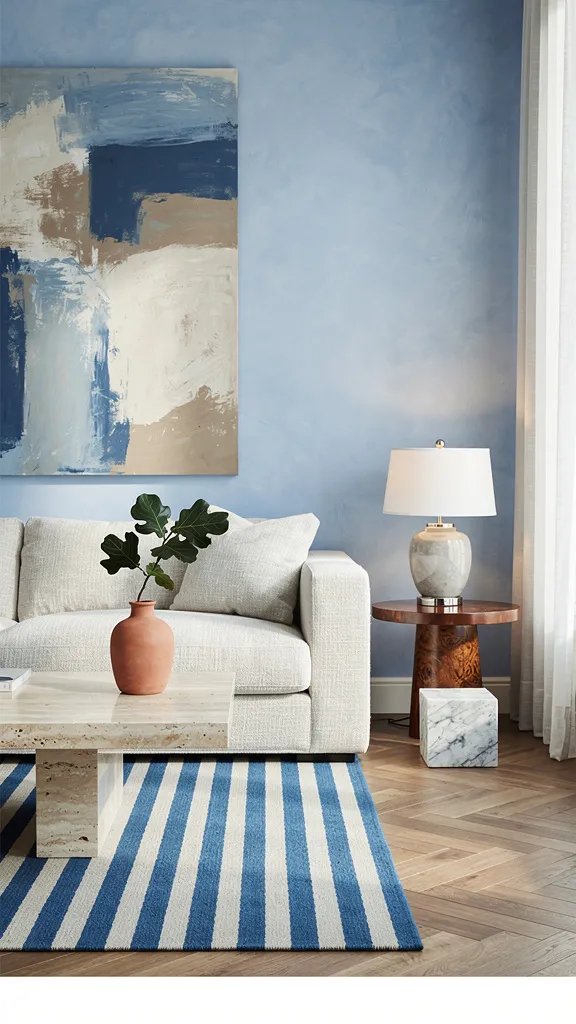
It’s that one living room that always feels off—flat, shy on personality, and somehow smaller than it is. You’ve tried throw pillows, but it still looks random. This design layers classic Italian coastal stripes with chunkier textures and a whisper of stone to make the room feel sunny, dialed-in, and big. The mood lives between chic boutique hotel and family-friendly lounge.
Here’s why it works: stripes draw the eye horizontally, which relaxes the room and adds rhythm. Blue-and-cream tones cool the space visually during a heatwave. A carved stone side table adds weight, making the space feel anchored. Lighting matters—use at least three sources: a floor lamp for height, a table lamp with a linen shade for warmth, and candlelight for evenings. In photos, stripes, stone, and linen give contrast and tactile depth.
Variations keep this flexible. Renter-friendly swap: removable striped slipcovers and peel-and-stick linen-look wallpaper on one wall. Small-room version: use a slim-legged sofa and one bold striped lumbar pillow instead of a full suite. Darker home? Choose a softer denim-blue and mix in warm camel leather for balance.
Key Design Elements:
- Main materials: Belgian linen, woven jute, honed stone, ceramic
- Color palette: Capri blue, cream, sand, a tiny hit of terracotta
- Lighting strategy: 3-point system—floor lamp, table lamp, soft candles
- Furniture silhouettes: low, bench-cushion sofa; rounded stone side table
- Texture layers: striped pillows, jute rug, fringed throw, cane tray
- Accents: lemon branches in a matte ceramic vase, vintage-style coastal art
Budget Breakdown:
- Jute rug (8×10): $200–$650
- Linen pillow covers (3–5): $60–$250
- Stone or stone-look side table: $130–$600
- Floor lamp with linen shade: $120–$400
- Ceramic vase + faux lemon branches: $40–$150
- Striped throw or slipcover: $60–$300
Total Estimated Cost: $610 – $2,350
Best For: Medium living rooms, family spaces that need durable layers, summer hosting season.
How To Recreate This Look:
- Start with a neutral rug: use jute or a flatweave in a sand tone.
- Add a low, comfy sofa: keep cushions simple; choose a bench seat if possible.
- Layer stripes: two square blues, one long lumbar in cream-and-blue ticking.
- Introduce stone: a side table or sculptural bowl on the coffee table.
- Finish with lighting: a floor lamp behind the sofa, a table lamp near a chair, and candles at dusk.
Why This Feels Designer: Repetition with a twist. You repeat blue and cream through pillows, art, and books, but shift scale and texture so nothing matches exactly. That “near-miss” coordination looks custom.
One Thing To Avoid: Don’t go all-in on tiny stripes. Mix scale—one wide, one medium, one faint. Uniform stripes make the room buzz in a not-great way.
Pro Styling Tip: Angle one pillow slightly and let the throw “fall” in a loose S-curve—creases catch light and read relaxed-luxe on camera.
Curious how this gets even lighter and breezier? The next idea opens the windows—figuratively and literally.
Remember, this isn’t about recreating a showroom. It’s about building rooms you can actually live in—wine spills, naps, and late-night pasta included. If one idea sings louder than the rest, follow that; you don’t need all seven to get the Amalfi Coast vibe.
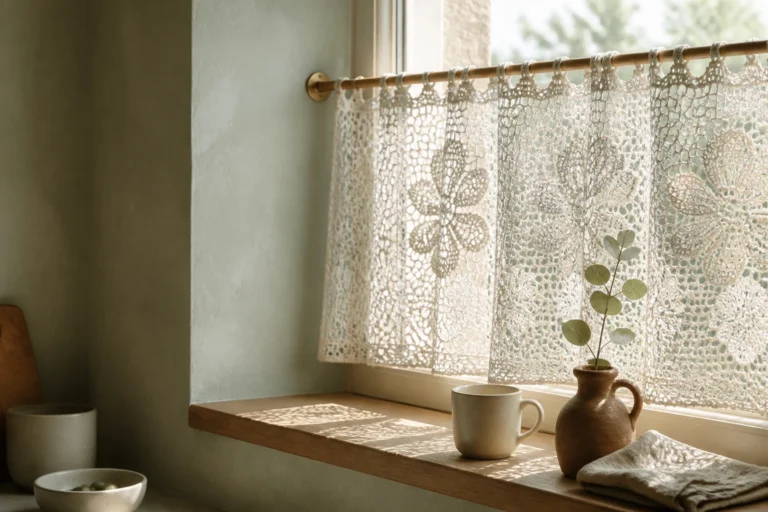
3. Riviera Kitchen Nook With Citrus Tile and Café Curtain Ease
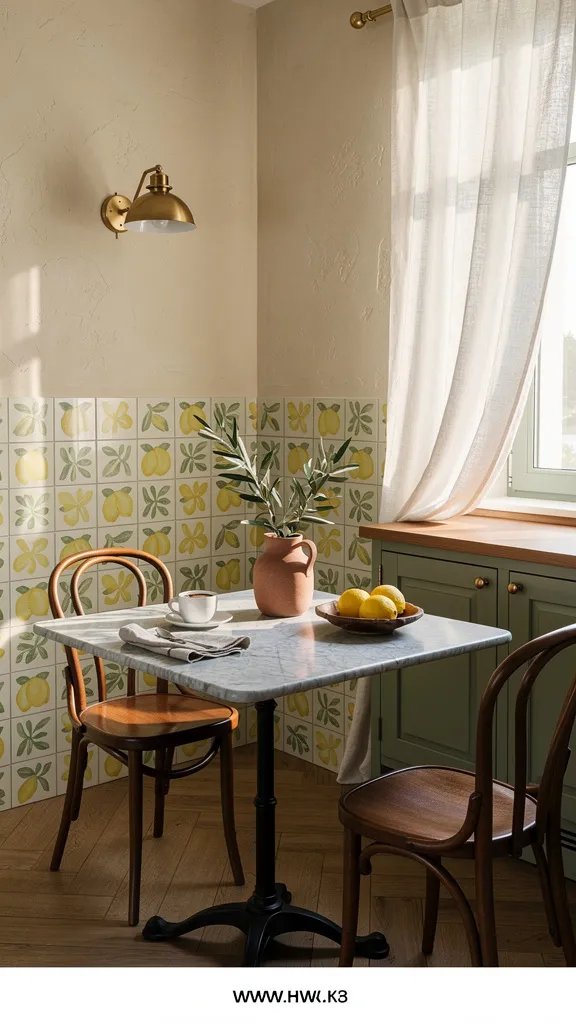
You love your kitchen, but that corner nook never quite lands. It either reads cafeteria plain or cluttered overnight. This design borrows from Italian seaside cafés: bistro moment, breezy café curtains, a splash of citrus tile, and a small marble bistro table for morning espresso. The mood is cheerful yet refined—like sunlight in a cup.
In real homes, this works because you’re enhancing a small footprint rather than overhauling cabinetry. Café curtains soften harsh light while keeping privacy. A single accent tile panel (think backsplash rectangle behind a coffee station) gives a wink of pattern without overwhelming. Photos love the crisp mix of matte marble, playful tile, and tiny brass details.
For rental or budget versions, use peel-and-stick tile and a painted round table. If your space skews darker, lean into richer cream curtains and a deeper green in place of lemon-yellow tiles. Small-space hack: foldable bistro chairs that tuck tight under a narrow table.
Budget Breakdown:
- Marble or marble-look bistro table: $140–$480
- Bistro chairs (pair): $120–$360
- Café curtain rod + clips: $25–$80
- Linen café curtains: $40–$160
- Accent tile or peel-and-stick panel: $60–$300
- Brass sugar bowl, espresso cups, small tray: $30–$120
Total Estimated Cost: $415 – $1,500
Best For: Condo kitchens, breakfast corners, renters who want quick charm upgrades.
Key Design Elements:
- Main materials: marble, glazed tile, linen, rattan/bentwood
- Color palette: cream, soft white, lemon, Amalfi blue or herb green
- Lighting strategy: sheer-filtered daylight; warm under-cabinet lamp at night
- Furniture silhouettes: petite round table, ladder-back or bistro chairs
- Texture layers: linen curtains, ribbed glass sugar pot, patterned tile
- Accents: citrus bowl, vintage café poster, petite olive oil bottles
How To Recreate This Look:
- Start with the table: choose a round top to keep circulation easy.
- Add café chairs: rattan or bentwood for that classic shape.
- Install café curtains halfway up the window for softness and privacy.
- Create a mini-tile feature behind your coffee station or along a small splash zone.
- Style a tray with cups, a brass spoon, and a lemon or two for that instant Amalfi nod.
Why This Reads High-End: It’s all about proportion and restraint—one tile moment, one window treatment, one special table. Restaurants do this well: fewer elements, better materials.
The Most Common Mistake: Hanging café curtains too low. Mount them right at the window’s mid-rail or slightly higher so the top line feels intentional, not droopy.
Pro Styling Tip: Shoot your nook in late afternoon with the curtain diffusing sunlight; let the coffee foam or a croissant crumb catch the glow for that lived-in luxury shot.
4. Breezy Bedroom With Linen Canopy and Sea-Salt Palette
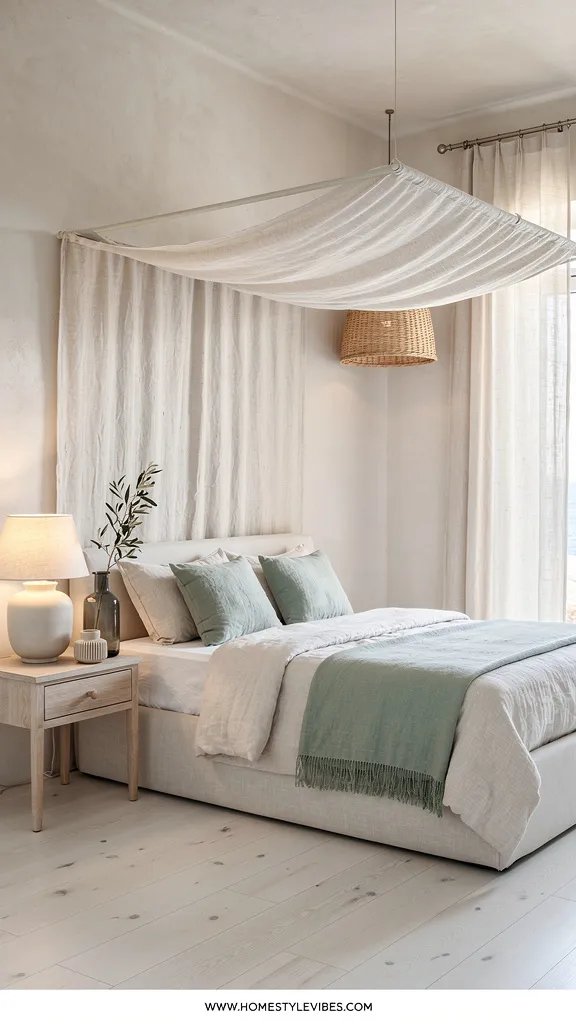
Night after night, your bedroom refuses to feel restful. You’ve bought the fancy sheets, but it still feels like a laundry pile with walls. This approach pulls cues from cliffside villas: off-white walls, a floaty linen canopy, woven pendants, and quiet sea-glass colors. The mood is hotel-spa meets barefoot nap time.
Why this works in real homes: beds dominate bedrooms; if the bed looks styled, the room feels done. A linen canopy or ceiling-mounted panel visually expands height, softens acoustics, and filters morning light in the prettiest way. Keep materials organic—washed linen, oak, cane, shell or alabaster lamps. Photos love the drape lines, subtle shadows, and a hint of gleam from mother-of-pearl or satin piping.
Variations stretch the concept. Budget route: DIY a canopy with ceiling hooks and curtain panels. Small room? Use a single panel behind the headboard rather than a full canopy. Darker vibe: swap white for warm ivory and add terracotta at the foot of the bed for an earthy coastal mood.
Key Design Elements:
- Main materials: washed linen, light oak, cane, alabaster or shell
- Color palette: sea-salt white, driftwood, sea-glass blue, soft sage
- Lighting strategy: warm bedside lamps, dimmable overhead, candlelight rhythm
- Furniture silhouettes: low platform bed, rounded nightstands
- Texture layers: gauzy canopy, nubby throw, soft wool rug
- Accents: tiny bowl of seashells, ceramic carafe, sprig of olive
Budget Breakdown:
- Linen canopy or curtain panels + hardware: $120–$420
- Linen bedding set: $160–$450
- Woven or alabaster bedside lamps (pair): $140–$480
- Wool or flatweave rug (5×8): $150–$450
- Light oak nightstand(s): $180–$700
Total Estimated Cost: $750 – $2,500
Best For: Primary bedrooms craving softness, guest rooms that need instant “ahh,” summer refreshes.
How To Recreate This Look:
- Start with the bed wall: mount a canopy rod or ceiling hooks to create a soft linen frame.
- Add layered bedding: crisp white base, one sea-glass pillow, one textured throw.
- Swap lamps: choose warm, diffused shades that hide glare points.
- Ground with a pale rug that extends 24 inches from the bed sides.
- Finish with a carafe, a small olive branch, and one art piece with horizon lines.
Why This Looks Intentional: Vertical softness from the canopy meets horizontal calm from the rug and art. Your eye reads a balanced “T” shape that feels composed, not fussy.
Don’t Do This: Avoid shiny satin sheets. They reflect light harshly at night and fight the matte serenity. Washed linen or cotton-linen blends feel modern and photogenic.
Pro Styling Tip: Light the bedside lamps only and shoot from the doorway—the gentle falloff of light along the canopy creates a luxe gradient.
Quick breather: if all of this sounds like a full renovation, it isn’t. Choose one focal idea per room. The secret isn’t doing more; it’s choosing the right “one big move.”
5. Terracotta Courtyard Balcony With Olive, Rope, and Candlelight
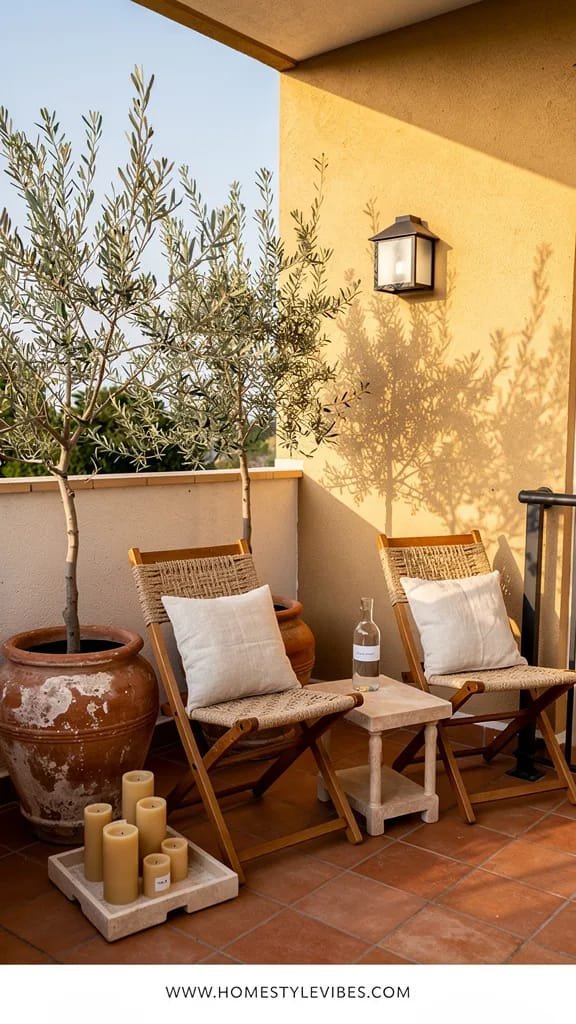
You’ve got a balcony or small patio, but it feels like a storage zone for folding chairs. You want to sit out with a spritz at sunset without tripping over the broom. This idea turns tight outdoor spaces into a mini Italian courtyard using terracotta pots, rope-strapped chairs, and lanterns. The mood is slow-evening romance with minimal fuss.
It works in real life because it prioritizes vertical greenery and portable furniture. A pair of large terracotta planters cheat the feeling of architecture; rope chairs read coastal without nautical kitsch. Lighting matters: mix string lights with one or two lanterns at different heights to avoid that harsh shadow cheap pendants cast on the wall. Photos love the warm terracotta against twilight blues and candle flicker on textured pots.
Choose your version: budget route with painted concrete pots and solar lanterns. Small-space hack: one bistro table and a single oversized planter; skip the second chair and add a pouf. For a moodier vibe, add charcoal cushions and bronze lanterns.
Budget Breakdown:
- Terracotta or fiber-clay planters (2 large): $120–$300
- Olive tree or rosemary/thyme cluster: $40–$180
- Rope or woven chairs (pair): $160–$600
- Outdoor bistro table: $80–$250
- Lanterns + string lights: $40–$160
- Outdoor cushions: $40–$140
Total Estimated Cost: $480 – $1,630
Best For: Balconies and small patios; evening loungers who love to host a friend for an hour at golden hour.
Key Design Elements:
- Main materials: terracotta, rope, teak or powder-coated metal, linen-blend outdoor fabric
- Color palette: clay, olive, sand, charcoal accents
- Lighting strategy: layered—string lights high, lanterns low, candles on the table
- Furniture silhouettes: slim bistro table, low-slung chairs with rounded arms
- Texture layers: rough clay, woven rope, smooth glass, soft cushion
- Accents: striped outdoor throw, brass bottle opener, ceramic plate for snacks
How To Recreate This Look:
- Start with planters: choose one large statement pot and one medium for asymmetry.
- Add greenery: an olive tree or rosemary/thyme mix for fragrance and movement.
- Bring in seating: two rope chairs and a compact round table.
- Layer lighting: drape string lights overhead and place lanterns near planters.
- Style the table: a votive, two tumblers, and a small bowl of olives—done.
Why This Looks Expensive: Scale and simplicity. Big planters plus minimal furniture feel architectural. You’re prioritizing form and shadow over accessories.
Watch Out: Don’t undersize the planters. Tiny pots make outdoor rooms look chintzy. Go at least 16–18 inches in diameter for the main planter.
Pro Styling Tip: Snap photos five minutes after sunset—the sky turns cobalt, the lanterns glow, and the terracotta warms up on camera.
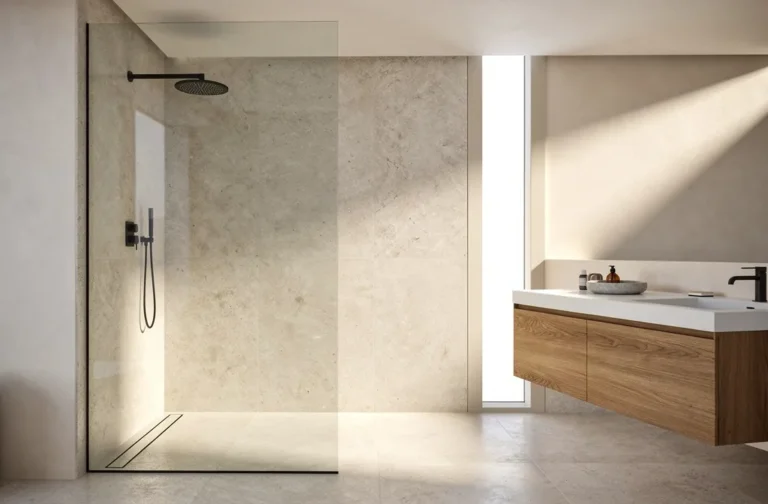
6. Amalfi Bath Refresh With Zellige Sparkle and White-on-White Calm
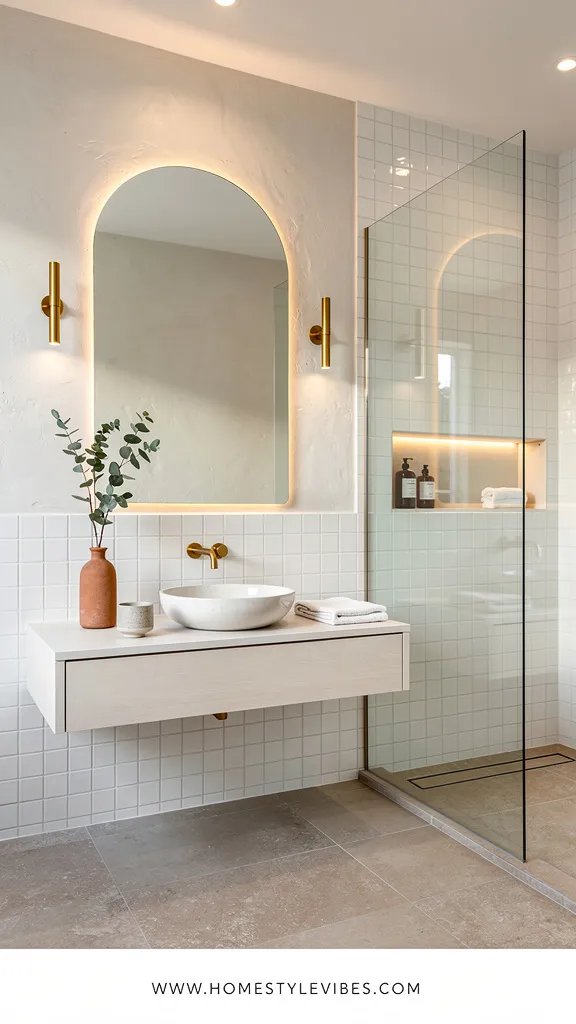
A bathroom can betray you. Harsh light, builder-grade mirrors, and storage chaos make morning routines feel frantic. This refresh creates a clean, coastal bathroom that glows without a full gut: think white-on-white palette, handmade-look tile, an arched mirror, and soft brass. The mood is fresh rinse after a swim—clean, calm, and a little sunlit glam.
Why it works: white keeps it airy, while variation in handmade-look tiles adds life. An arched mirror softens straight lines and nods to Mediterranean architecture. Lighting is critical—pair a dimmable overhead fixture with flanking sconces at eye level to avoid unflattering shadows. In photos, the micro-gleam of zellige-style tile plus matte walls gives you delicious contrast.
Variations: budget approach with peel-and-stick zellige-look tile in the shower niche or behind the sink. Renter move: swap the mirror, switch to a plug-in sconce, and add a linen shower curtain with curtain clips for a custom look. Darker bath? Use warm ivory and antique brass to avoid a sterile vibe.
Key Design Elements:
- Main materials: zellige or zellige-look tile, linen shower curtain, unlacquered or brushed brass
- Color palette: warm white, soft ivory, pale stone
- Lighting strategy: sconces at 60–65 inches high; soft overhead on dimmer
- Furniture silhouettes: arched mirror, slim vanity, curved faucet
- Texture layers: ribbed towel, waffle bathmat, glass canisters
- Accents: eucalyptus sprig, shell dish, small framed coastal sketch
Budget Breakdown:
- Arched mirror: $80–$280
- Pair of sconces: $160–$520
- Zellige or peel-and-stick tile panel: $120–$800
- Linen shower curtain + rings: $40–$140
- Brass hardware (towel bar, hooks): $60–$220
- Textiles (2 towels, bathmat): $60–$180
Total Estimated Cost: $520 – $2,140
Best For: Bathrooms with decent bones that need warmth and glow; morning routines that deserve less glare and more calm.
How To Recreate This Look:
- Start with mirrors and lights: swap to an arched mirror and install side sconces.
- Add a linen curtain: full-length if you can—avoid high-water hems.
- Tile a focal zone: backsplash rectangle or shower niche in zellige-look tile.
- Warm up hardware: choose brass or brushed bronze, keep finishes consistent.
- Curate surfaces: one candle, one plant, and decanted bath salts in glass.
Why This Feels Designer: Consistency plus material nuance. Everything reads white, but each surface has a different texture, so the room looks layered, not clinical.
One Thing To Avoid: Don’t mount sconces too high. If they sit above your forehead, you’ll get raccoon-eye shadows. Keep them around eye level.
Pro Styling Tip: For photos, warm up the bulbs to 2700K and crack the curtain just enough to let a sliver of daylight rake across tile—instant spa glow.
Perspective shift: when in doubt, remove something. Italian summer style breathes. Empty inches are not wasted space—they’re part of the rhythm.
7. Lemon-Grove Dining with Stone Runner and Botticelli Blues
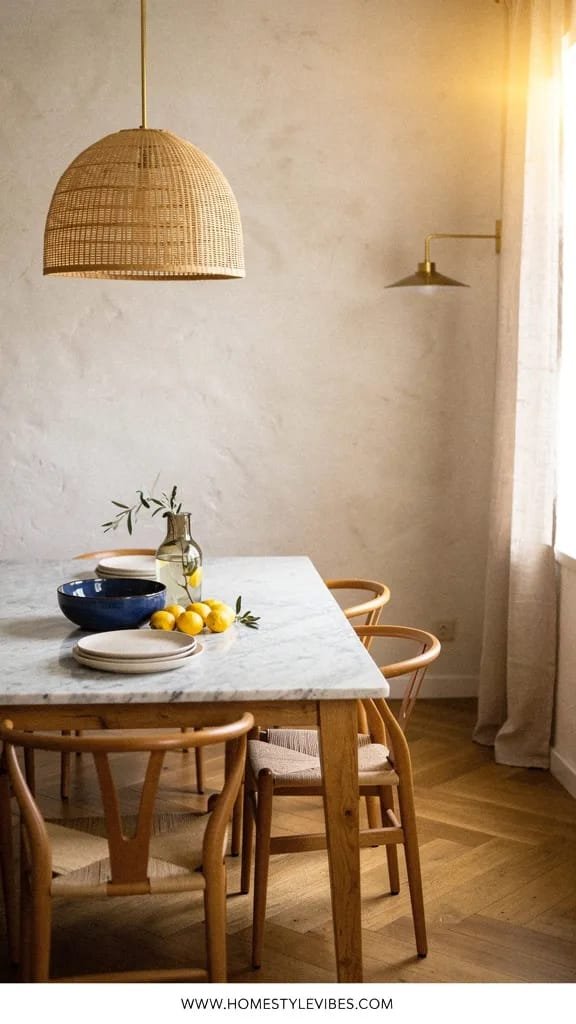
Hosting stresses you out because the dining room never feels finished. The table is fine, but the center reads empty or, worse, fussy. This design channels Amalfi lemon groves with a stone table runner, hand-thrown ceramics, and deep coastal blues. The mood is convivial and sun-kissed—long lunches, simple food, everyone lingers.
It works because you’re building a tablescape with tactile weight. A stone slab as a runner grounds everything; layered ceramics bring human warmth; a carafe of lemon water adds color that costs basically nothing. Lighting? Dim overheads and bring in two table lamps on a nearby console or a pair of wall sconces—side lighting flatters faces and food. Photos love the stack of plates, the matte-meets-gloss finish play, and the hit of acid yellow from lemons.
Try a budget version with a travertine tile strip or a thrifted marble cutting board array as your “runner.” Small dining room? Keep chairs light and open-backed, and let the center display do the heavy lifting. Dark-wood tables pair beautifully with Botticelli blues and cream linens; if your walls are cool, add a warm nude or sand-colored tablecloth to balance.
Key Design Elements:
- Main materials: travertine or marble, ceramic stoneware, washed linen
- Color palette: Botticelli blue, cream, sand, sunlit lemon
- Lighting strategy: overhead dimmed to 30–40%, candles and side lamps on
- Furniture silhouettes: simple plank table or pedestal, slender chairs
- Texture layers: stone runner, linen tablecloth, crinkled napkins
- Accents: lemon branches, olive oil bottle, small bowl of sea salt
Budget Breakdown:
- Stone runner or tiles: $60–$260
- Ceramic dinnerware set (service for 4–6): $120–$480
- Linen tablecloth + napkins: $80–$260
- Candlesticks + candles: $30–$120
- Console lamp pair or sconces: $160–$520
- Centerpiece bowl + lemons: $20–$80
Total Estimated Cost: $470 – $1,720
Best For: Dinner parties, open-plan dining where the table is also a design focal point, summer gatherings that spill late.
How To Recreate This Look:
- Start with the base: drape a linen cloth or runner.
- Add the stone: lay a travertine slab or a row of marble tiles end-to-end.
- Stack plates: dinner, salad, then a shallow bowl—ceramic with a hand-thrown edge.
- Place citrus: a low bowl of lemons and two branches in a vase at asymmetrical points.
- Light it right: candles down the center and side lamps or sconces glowing.
Why This Looks Expensive: You’re mixing honest materials—stone, linen, ceramic—then repeating them with intention. The weight of the stone runner telegraphs “custom” instantly.
Don’t Do This: Skip tiny centerpieces that get lost. One low, broad statement beats five mini vases that read cluttered.
Pro Styling Tip: Pull chairs back two inches for photos and angle the tablecloth so one corner dips more than the others—creases catch shadows and add motion.
I have to admit something: arranging centerpieces used to stress me out. I’d fuss for 30 minutes, then sweep it all off and start again. The stone-runner trick finally cured me—once the slab goes down, everything snaps into place, like a stage set for dinner.
One more nudge before you pick your favorite: if you only choose a single upgrade, make it a texture move. Italian summer style lives in the feel—linen, clay, stone, rope—more than in a color swatch.
8. Positano Gallery Wall With Collected Frames and Salt-Sprayed Color
Okay, bonus idea because I know you’re scrolling for that artsy moment. You’ve tried a gallery wall before, but it ended up chaotic and too small for the wall. This Amalfi-inspired gallery uses a tight color story—sandy neutrals, sea blues, citrus notes—and a mix of frame finishes that look collected, not new-new. The mood is travel journal meets seaside studio.
It works in real homes because you handle scale first: go larger than you think, hang lower than your instinct (center at 58–60 inches), and keep frame profiles simple. Lighting is key—add a picture light or a nearby floor lamp so the wall doesn’t die at night. Photographs beautifully when you include negative space and vary orientation; your eye gets to breathe.
Budget option: thrift most frames and print art at home or via a local shop. Renter version: Command strips and lightweight frames. Darker variant: add charcoal paper sketches and brass frames to warm up the mix. Pro move: include a small vintage plate or ceramic tile among the frames for texture.
Budget Breakdown:
- Frames (6–10 mixed sizes): $120–$450
- Art prints/photos: $40–$200
- Picture light/floor lamp: $90–$320
- Hanging hardware/strips: $15–$40
- One ceramic accent piece: $20–$80
Total Estimated Cost: $285 – $1,090
Best For: Long hallways, behind sofas, stair landings; anyone who loves storytelling on walls.
Key Design Elements:
- Main materials: wood frames, brass accents, matte paper, ceramic
- Color palette: stone, cream, navy, Capri blue, lemon
- Lighting strategy: picture light or off-angle lamp to graze texture
- Silhouettes: slim frame profiles, one thicker outlier for tension
- Texture layers: matte paper, linen mats, ceramic plate/tile
- Accents: one handwritten note or ticket stub for heart
How To Recreate This Look:
- Start with the anchor: hang your largest piece slightly off-center.
- Add a vertical pair on one side and a horizontal pair on the other.
- Mix frame finishes: mostly wood, one brass, one painted white.
- Insert a plate or tile using a plate hanger for a touch of relief.
- Light it: picture light up top or a lamp casting side glow at night.
Why This Feels Designer: Intentional spacing and repeated colors. You’re not random; you’re telling one story in different chapters.
The Most Common Mistake: Floating a too-small cluster in a giant wall. Push edges out; as a rule, cover at least two-thirds of the sofa width or stair landing area.
Pro Styling Tip: For photos, tilt one frame by a hair and include a shadow line from a nearby plant—it adds life and “caught in the moment” energy.
Micro-story moment: a friend of mine spent weeks agonizing over paint colors before realizing the real problem was her lighting. Once we added a picture light over her gallery, the art glowed—and suddenly her “iffy” paint looked perfect. Lighting first, always.
If one idea resonates more than the others, that’s your starting point. Truly. The Amalfi Coast aesthetic is about simple pleasures layered well: good light, honest materials, and a hint of citrus joy.
Quick Checklist
- Limewash a small entry wall
- Pair linen pillows with one stone accent table
- Hang café curtains at window mid-rail
- Add a linen canopy panel above the bed
- Use two oversized terracotta planters outdoors
- Swap to an arched mirror with side sconces in the bath
- Lay a travertine slab as a dining table runner
- Create a gallery wall with repeated sizes and one ceramic piece
- Place lemons in a matte bowl for instant color
- Keep lighting warm, layered, and dimmable
- Choose matte textures over glossy in high-light zones
- Mount rods and art a bit higher to elongate the room
Frequently Asked Questions
How do I get the Amalfi Coast vibe on a tight budget?
Pick one high-impact move per room. Limewash or mineral paint in the entry, a jute rug plus two striped pillows in the living room, or a linen shower curtain and arched mirror in the bath. Add lemons, a thrifted ceramic bowl, and warm bulbs—those tiny shifts make the biggest visual difference.
My space is small. Which of these ideas won’t overwhelm it?
Go for the café-curtain kitchen nook, the entry limewash plus bench, or a single linen canopy panel behind the headboard. Choose slim silhouettes and one large focal moment instead of many small items. Small rooms read better with fewer, bigger gestures.
I rent and can’t tile or hardwire fixtures. What can I do?
Use peel-and-stick tile for a backsplash rectangle, plug-in sconces with cord covers, and Command strips for gallery walls. Try removable wallpaper for a limewash effect and swap hardware on cabinets with renter-safe options you can store and replace when you move.
How do I keep white and linen from staining or looking dingy?
Pre-treat with fabric protector, use washable slipcovers, and embrace off-white or ivory instead of bright white in high-traffic areas. For marble or stone, seal surfaces and use coasters—patina is lovely, but big stains aren’t.
What are the most common mistakes when aiming for Italian summer style?
Too many small accessories, shiny finishes everywhere, and ignoring lighting. Choose matte textures, limit accessories to a few strong pieces, and layer lighting with at least two sources in each room. Also, size up planters and art; tiny pieces make everything feel cheap.
The Wrap-Up
Choose one idea and start this weekend. Maybe it’s a limewashed entry that greets you with warmth, or a linen-canopy bedroom that finally feels like rest. You don’t need a full renovation to channel the Amalfi Coast—you need light, texture, and one brave gesture per room.
The truth is, luxury isn’t a price tag. It’s layered materials, soft shadows, and restraint. Let stone feel like stone, linen breathe like linen, and light fall where faces glow. Edit once, then stop. That’s the coastal secret.
Open a window, slice a lemon, and style one corner. You’ve got this—and your home is about to look quietly spectacular, like summer in Italy decided to stay a while.

About the Author

Krisztina P.Rendes, Founder of Home Style Vibes
Founder of Home Style Vibes
Krisztina Puskásné Rendes created Home Style Vibes as a cozy-modern lifestyle space where homemaking meets inspiration. Her goal is to help women create beautiful, organized, and peaceful homes they truly love — without overwhelm. You’ll find here heart-driven content on home decor, cleaning tips, easy family recipes, organization and decluttering, DIY home projects, plants, and seasonal ideas — all designed to bring more calm, comfort, and style into everyday life.