6 Egyptian Home Decor Ideas That Bring Ancient Luxury Into Your Modern Space
You want rooms that glow with gold light at sunset and feel layered with history. You hate how quickly “luxury” can turn cheesy—hieroglyph wallpaper, anyone? Imagine creamy limewash walls catching candlelight, stone textures under bare feet, and a restrained palette that whispers old-world opulence without shouting “theme party.” These six Egyptian home decor ideas solve the overdone clichés and show you exactly how to make your home feel finished, editorial, and yes—ridiculously photogenic on Pinterest. You can pull off a noticeable shift in under two weekends with a $1,200–$3,500 budget per room, depending on the section you choose.
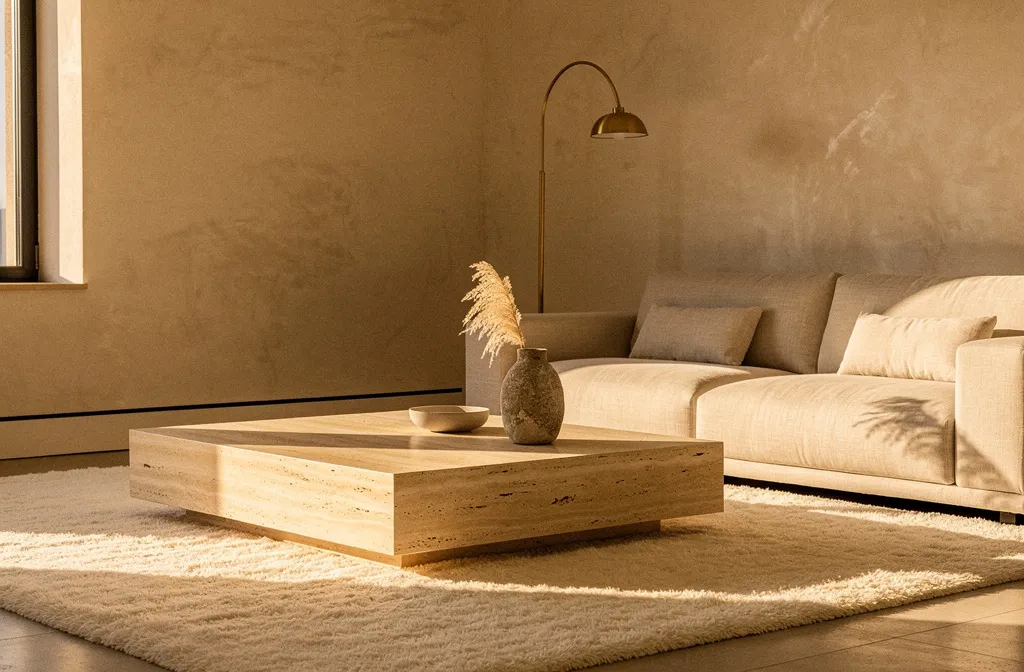
Lean into texture, shadow, and quiet gold accents for a modern Egypt-inspired home that feels sophisticated, calming, and travel-memoir chic—perfect for design lovers who crave story-rich spaces.
1. Limestone Calm: Sand-Toned Living Room With Monolithic Coffee Table
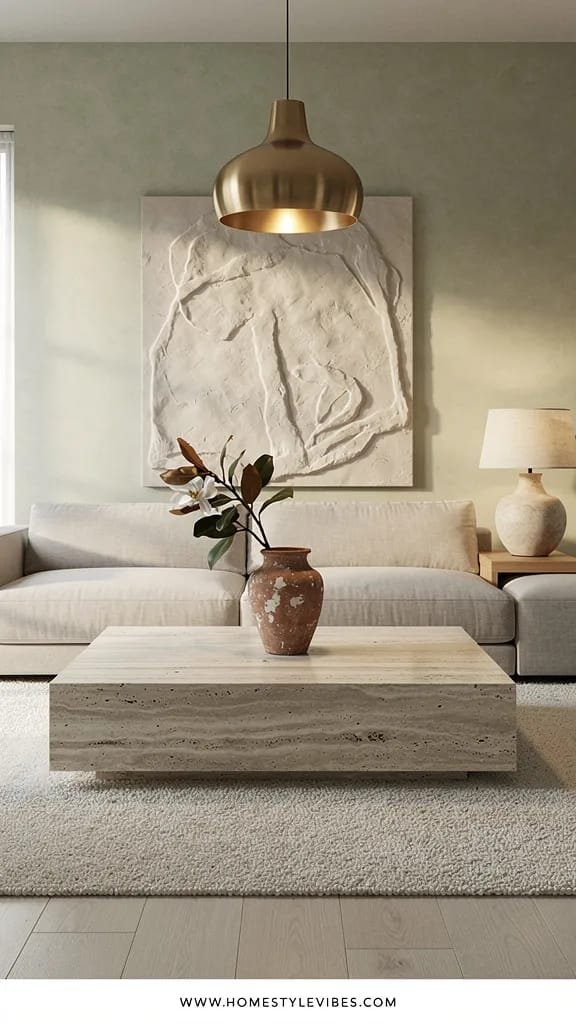
We’ve all been there—your living room feels fine on paper, but something’s still off. The sofa’s neutral, the rug’s neutral, and somehow everything looks flat and… polite. This design builds drama the Egyptian way: with stone, shadow, and scale. Think limestone hues, a monolithic coffee table that feels carved from a block, and a few antiquity-inspired shapes that signal history without cosplay.
The mood: museum-quiet meets warm minimal. It works in real homes because the palette simplifies visual noise, so small spaces read larger and brighter. A mix of gentle downlighting and a single strong accent lamp creates cinematic contrast that highlights textures—limewash walls, travertine, raw linen—so your photos look like a magazine spread. The materials skew tactile: honed stone, bleached oak, plaster, and brushed brass. Why it photographs beautifully: low-contrast color with high-contrast light adds depth, while a statement table gives your camera a hero to focus on.
Variations you’ll love: For renters, use a faux-limewash paint technique and a stone-look coffee table in composite or microcement. For darker rooms, add a brass uplight behind the sofa to bounce warm light on the wall. On a tighter budget, use a pale jute rug and a butcher-block coffee table finished in matte lime wax—surprisingly convincing.
Budget Breakdown:
- Limewash or faux-limewash kit: $90–$250
- Monolithic stone or microcement coffee table: $350–$1,200
- Neutral linen slipcover or sofa: $400–$1,800
- Jute or wool flatweave rug (9×12): $280–$800
- Brushed brass accent lamp: $120–$450
- Textural throw pillows in sand/ivory: $60–$180
Total Estimated Cost: $1,300 – $4,680
Best For: Apartments and townhomes with meh lighting; anyone craving serenity without true-white sterility. Great for spring-fall when natural light shifts warm.
Key Design Elements:
- Main materials: limewash, travertine or microcement, linen, bleached oak, brushed brass
- Color palette: sand, ecru, ivory, soft clay, pale khaki
- Lighting strategy: dimmable floor lamp + one focused table lamp, indirect brass uplight
- Furniture silhouettes: low, blocky, monolithic coffee table; clean-lined sofa with rounded corners
- Texture layers: nubby throw, lumpy ceramic vase, matte stone tray
- Accent details: minimal art with papyrus-like paper, palm frond in a tall vase
How To Recreate This Look:
- Start with walls—apply limewash or a faux version in a sand tone for movement.
- Add a monolithic coffee table; choose honed stone or microcement for that carved look.
- Layer a large jute or low-pile wool rug to anchor the room in earthy texture.
- Install a warm-white uplight behind the sofa and a single brass lamp for sculptural glow.
- Style with one oversized vessel, a low stack of art books, and a palm frond—keep it spare.
Why This Looks Expensive: The blocky stone coffee table and limewash walls create a custom, architectural feel. Simplicity in palette reads as restraint, which screams “curated,” not “catalog.”
Watch Out: Don’t clutter the table. Three items max. And please, avoid bright white lampshades—they glare and kill the softness you worked for.
Pro Styling Tip: Shoot photos late afternoon when the sun is low; the shadows from your monolithic table will give you that museum-grade depth.
2. Gilded Nile: Brass, Indigo, and Papyrus Dining Nook
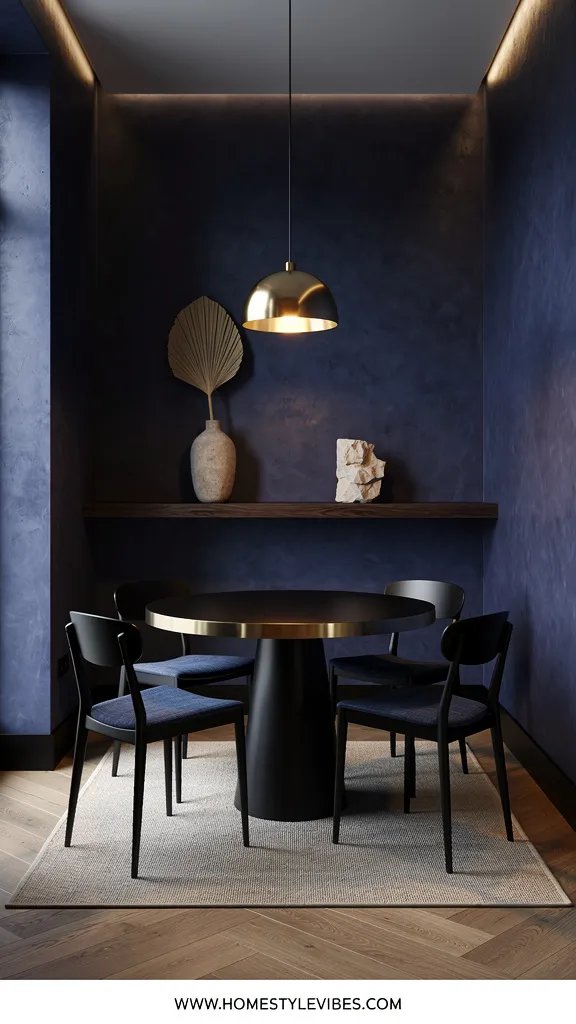
It’s that one corner that always feels off—your dining area lacks presence. The table’s fine, the chairs are fine, but dinners feel like you’re in a waiting room with cutlery. Enter Egyptian home decor through color and metal: deep indigo, matte black, and brushed brass, with papyrus references that feel clean and modern rather than literal.
The mood leans intimate, artful, and slightly moody. This works beautifully for smaller dining spaces, because a rich wall color brings the edges in just enough to feel cozy, while brass accents rebound warm light and keep the room from collapsing into darkness. Materials: textural linen, plaster pendants, blackened wood, and brass. It photographs well because dark walls flatten glare and let metallics pop. The interplay of indigo linen and softly glowing brass makes food look five times more appetizing, too—seriously.
Variations: If you’re renting, skip paint and go for floor-to-ceiling indigo drapery to “wrap” the nook in color. On a budget, spray existing hardware in satin brass and swap in smoked-glass hurricane candles. If your space skews very small, use a round pedestal table in black ash to keep walkways easy.
Key Design Elements:
- Main materials: blackened wood, brushed brass, indigo linen, papyrus-fiber baskets
- Color palette: midnight indigo, brass, ivory, matte black, olive leaf
- Lighting strategy: single brass or plaster pendant on dimmer + candlelight for shadow play
- Furniture silhouettes: round pedestal table, slim-curved dining chairs, low-profile sideboard
- Texture layers: linen runner, papyrus placemats, stoneware plates
- Accent details: papyrus-style framed print, olive branches in a low bowl
Budget Breakdown:
- Indigo paint or drapery: $80–$450
- Round pedestal table (36–48 inches): $250–$1,200
- 4–6 dining chairs in black/ivory: $280–$1,400
- Brass or plaster pendant: $120–$650
- Papyrus mats + linen runner: $40–$120
- Brass candlesticks: $30–$150
Total Estimated Cost: $800 – $3,970
Best For: Condo dining corners, breakfast nooks needing drama, winter hosting when you want warmth and glow.
How To Recreate This Look:
- Paint or drape one wall in deep indigo to create a visual anchor.
- Add a round black pedestal table to circulate energy and keep sightlines clear.
- Install a brass or plaster pendant at 30–36 inches above the tabletop, on a dimmer.
- Layer indigo linen runner, papyrus placemats, and matte stoneware in sand or ivory.
- Style with brass candlesticks, a small bowl of green olives, and a papyrus-style print.
Why This Feels Designer: The combination of a bold, enveloping color with controlled metallic accents shows restraint. The eye reads a clear focal point—table and pendant—which signals intention and good taste.
One Thing To Avoid: Don’t mix too many brass tones. Keep finishes near identical or purposely contrast brass with matte black for clarity, not chaos.
Pro Styling Tip: For photos, light the candles, dim the pendant to 40%, and shoot from a low angle so the pendant and table create a golden halo over deep blue.
Remember, this isn’t about recreating a showroom. It’s about building a space that feels like yours. If one section speaks to you, start there and live with it for a week. Then layer in the next move.
3. Desert Temple Bath: Stone Niches, Honeyed Light, and Ritual Storage
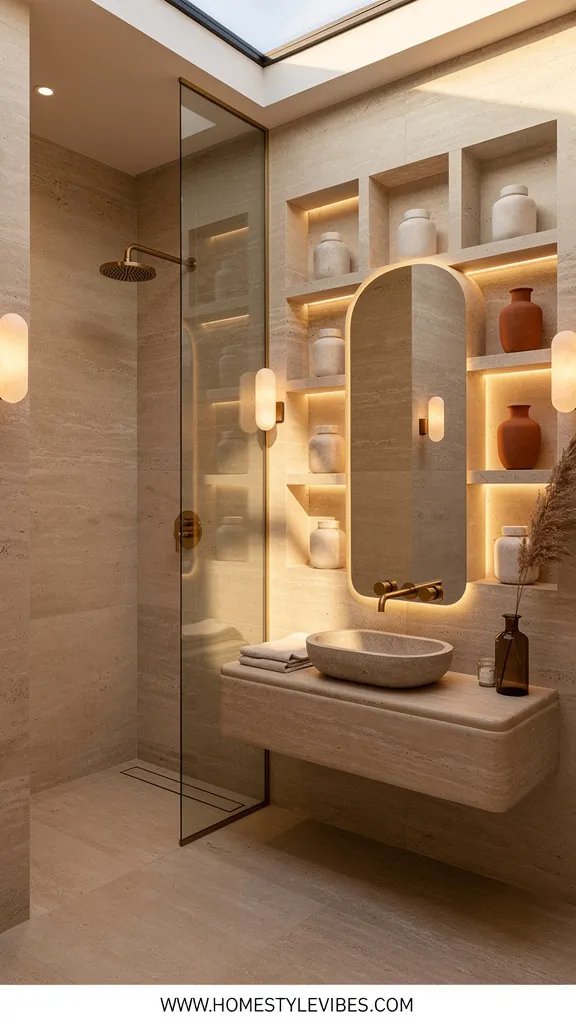
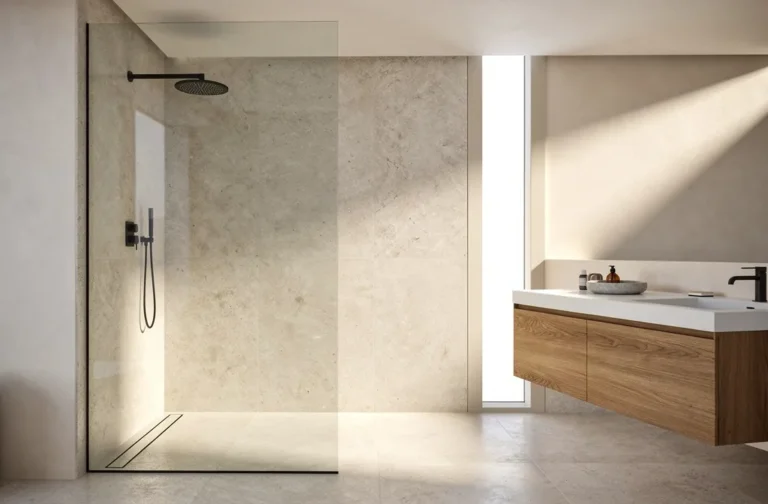
You’ve tried every basket system and those acrylic organizers that promise tidiness, but your bathroom still looks chaotic by 8 am. This concept channels the hush of an ancient temple: carved niches, soft honey light, matte stone, and tight editing. It turns daily routines into a ritual—Egyptian home decor through practicality and calm.
The mood lands at hotel-spa meets archaeological site (in a good way). It works for family homes because the storage is built in: shelves, niches, and lidded jars that keep the visual field clean. Lighting carries the story: warm LEDs under a ledge glow like torchlight on stone. The materials: tadelakt or microcement, travertine, brushed brass, and oiled wood. Photos love it because soft edges and matte surfaces kill glare and add dimensional shadows; water beads on tadelakt look like tiny jewels, FYI.
Variations: Renter-friendly? Use peel-and-stick stone-look film on the vanity and a freestanding, arched shelf to mimic a niche. Small windowless baths benefit from a single narrow brass sconce and a mirror with integrated backlight so you don’t over-brighten the walls.
Budget Breakdown:
- Microcement or tadelakt finish (materials + pro labor varies): $400–$2,000
- Brass sconce + dimmer: $120–$450
- Arched niche shelf unit or built-in: $150–$900
- Stone or stone-look vanity top: $180–$850
- Lidded jars, alabaster tray, handwoven towels: $80–$240
Total Estimated Cost: $930 – $4,440
Best For: Primary or guest baths where steam and clutter need taming. Works in small spaces because matte and curves calm visual busy-ness.
Key Design Elements:
- Main materials: microcement/tadelakt, travertine, alabaster, brass, oiled oak
- Color palette: warm sand, pale peach, cream, antique gold
- Lighting strategy: backlit mirror + single brass sconce + under-ledge LED
- Furniture silhouettes: arched shelving, simple slab vanity, rounded stool
- Texture layers: soft Turkish cotton, stone soap dishes, ribbed glass
- Accent details: reed diffuser in amber glass, palm-print towel subtly folded
How To Recreate This Look:
- Choose a warm sand wall finish—microcement for seamless matte texture.
- Install an arched niche or bring in an arched shelf to display daily essentials.
- Swap your vanity top for honed stone or a stone-look slab with rounded edge.
- Add a brass sconce at eye level and a backlit mirror for diffuse, flattering light.
- Decant soaps into amber bottles; corral items on an alabaster or stone tray.
Why This Reads High-End: Seamless materials and curved architecture feel custom. Hidden light sources create glow instead of hot spots, a hallmark of thoughtful design.
The Most Common Mistake: Over-accessorizing the niche. Leave one-third of each shelf empty so your eyes rest. It’s the negative space that makes it serene.
Pro Styling Tip: Before photos, run hot water to mist the air; microcement reads deeper in tone with humidity and looks extra lush on camera.
4. Pharaoh’s Library: Low-Slung Reading Den With Stone Plinths and Papyrus Hues
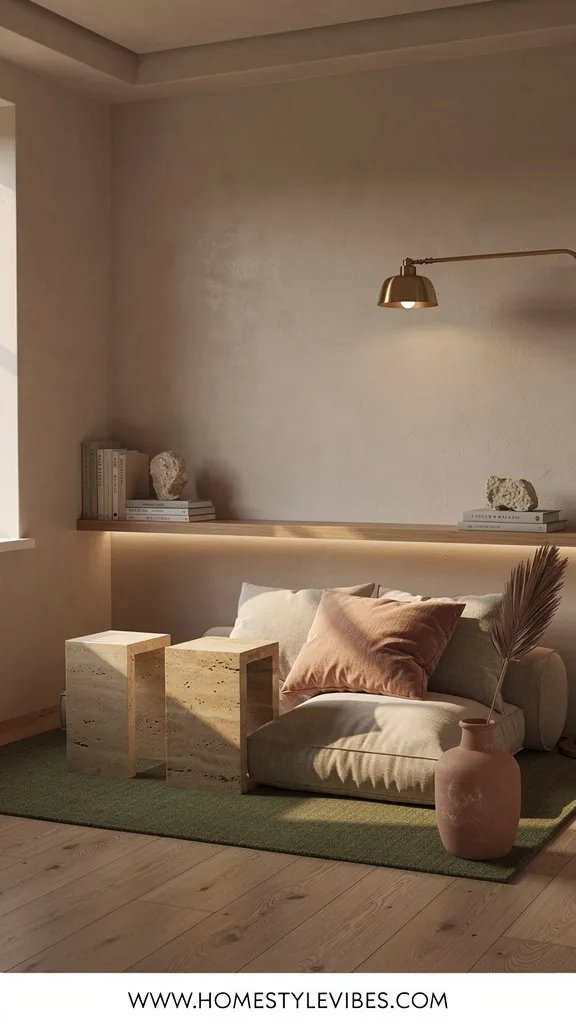
That spare room never clicks. You’ve parked a desk there, then a treadmill, then nothing. This idea turns it into a low-slung reading den inspired by ancient gathering rooms—floor cushions, stone plinth side tables, and a palette of papyrus, clay, and olive. It’s a cocoon for deep reading and real rest, not scrolling.
The mood aims for scholarly and sensorial. It works in small or awkward rooms because everything stays low, which increases the feeling of height and lowers visual clutter. Lighting goes soft: picture a floor lantern, a shaded table lamp, and zero overheads. Materials lean earthy: canvas, raw silk, stone, rustic wood. Photos come alive with height variation: stack a few stone plinths, add one tall earthenware urn, and ground with a textured rug—depth for days.
Personal story: I tried a version of this last fall when I couldn’t get my office to feel right. I put the desk in the closet (yes, really), added a floor mattress with a linen cover, two stone plinths, and a brass pharmacy lamp. I read more in two weeks than I had in two months. The room finally earned its keep.
Budget Breakdown:
- Floor mattress or thick daybed cushion: $200–$650
- Linen or raw silk cover + cushions: $120–$380
- Stone plinth tables (or DIY concrete): $160–$700
- Large textured rug (8×10): $240–$750
- Brass pharmacy lamp or lantern: $90–$320
- Open shelving for books: $120–$500
Total Estimated Cost: $930 – $3,300
Best For: Spare rooms, attics with sloped ceilings, anyone craving a quiet “offline” zone.
How To Recreate This Look:
- Lay down a chunky rug in papyrus or soft camel for warmth.
- Add a floor mattress or low daybed and pile on linen and raw silk cushions.
- Bring in two stone plinths at different heights to act as side tables.
- Install a brass pharmacy lamp for directional reading light; skip ceiling fixtures.
- Style a single tall urn with dried grasses; stack 3–5 favorite books per plinth.
Why This Looks Intentional: The low profile and repeated stone forms look curated, not random. Restraint with color keeps the emphasis on shape and texture.
Don’t Do This: Don’t choose slick shiny fabrics. Reflective surfaces kill the grounded vibe. Stick to matte textures for that scholarly warmth.
Pro Styling Tip: Shoot from the doorway at knee height so plinths look monumental and the cushions feel lush and enveloping.
If the boldest pieces feel scary, borrow just one element first. A plinth side table or a linen mattress cover can reset the entire mood. Start small, then build.
5. Sun Court Entry: Column Shadows, Reeded Doors, and Obelisk Lighting
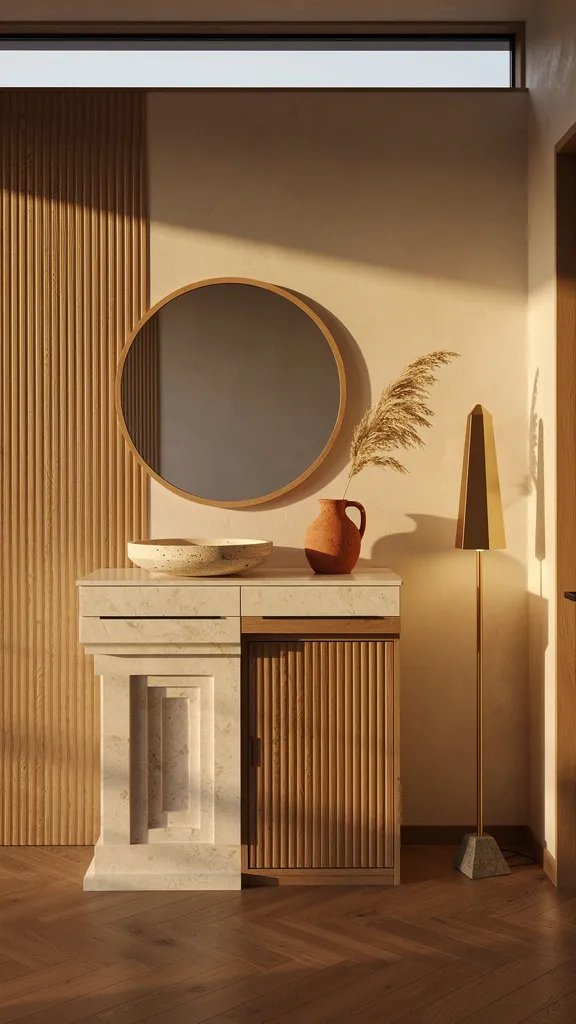
The entry is the daily pinch point. Shoes everywhere, keys doing hide-and-seek, and zero drama in the first five feet of your home. This concept nods to temple forecourts: subtle “columns” created with reeded wall panels or vertical battens, a slender obelisk-style floor lamp, and a console that feels like a carved altar—practical, not precious.
The mood is crisp, ceremonial, and super functional. It works in family homes because storage hides in plain sight: a reeded cabinet door, a stone bowl for keys, a shoe drawer beneath. Lighting earns its keep with a tall, narrow lamp that casts elongated shadows—Egyptian home decor thrives on that interplay. Materials: reeded wood, black stone, aged brass, sisal. Your entry photos look strong thanks to vertical rhythm (reeded texture), a single striking lamp, and strong shadow casts at dusk.
Variation ideas: Small-space or rental? Add self-adhesive reeded strips to an IKEA cabinet, plus a slim black console shelf. Darker version: paint the wall deep olive and use a bone-inlay mirror for subtle pattern that still feels period-appropriate. Budget-friendly: spray existing handles aged brass and add a narrow sisal runner with black bounds.
Key Design Elements:
- Main materials: reeded wood panels, black stone, brass, sisal
- Color palette: olive, warm sand, black, antique gold
- Lighting strategy: obelisk-style floor lamp or narrow table lamp with rectangular shade
- Furniture silhouettes: slim console with blocky legs, vertical-panel cabinet
- Texture layers: sisal runner, matte stone catchall, ribbed ceramic umbrella stand
- Accent details: small scarab-inspired tray, framed line drawing on papyrus-style paper
Budget Breakdown:
- Reeded panels or adhesive strips: $80–$320
- Slim console or shelf: $120–$600
- Obelisk-style lamp: $140–$450
- Sisal runner: $60–$240
- Black stone bowl + brass hooks: $50–$180
- Mirror with aged brass frame: $120–$450
Total Estimated Cost: $570 – $2,240
Best For: Narrow hallways, apartment entries that need presence and storage. Great year-round, extra cozy at twilight.
Why This Looks Expensive: Vertical rhythm + tailored materials present like custom millwork. The obelisk lamp’s geometry adds a sculptural element that feels designed, not store-bought.
How To Recreate This Look:
- Add reeded panels or adhesive strips to create “columns” behind the console.
- Install a narrow console with block legs slightly inset from the edges.
- Place an obelisk or rectangular-shade lamp to the side for asymmetrical interest.
- Lay a sisal runner with black binding to lead the eye inward.
- Top with a black stone bowl for keys and one framed papyrus-style sketch.
Watch Out: Don’t push the console flush against the wall if baseboards force a gap. Either scribe a notch or add felt spacers so it sits truly parallel—those small angles make everything look cheaper.
Pro Styling Tip: Photograph at dusk with only the entry lamp on; the vertical shadows across the reeded wall will read like subtle columns on camera.
6. Golden Oasis Bedroom: Canopy Veil, Alabaster Glow, and Carved Wood
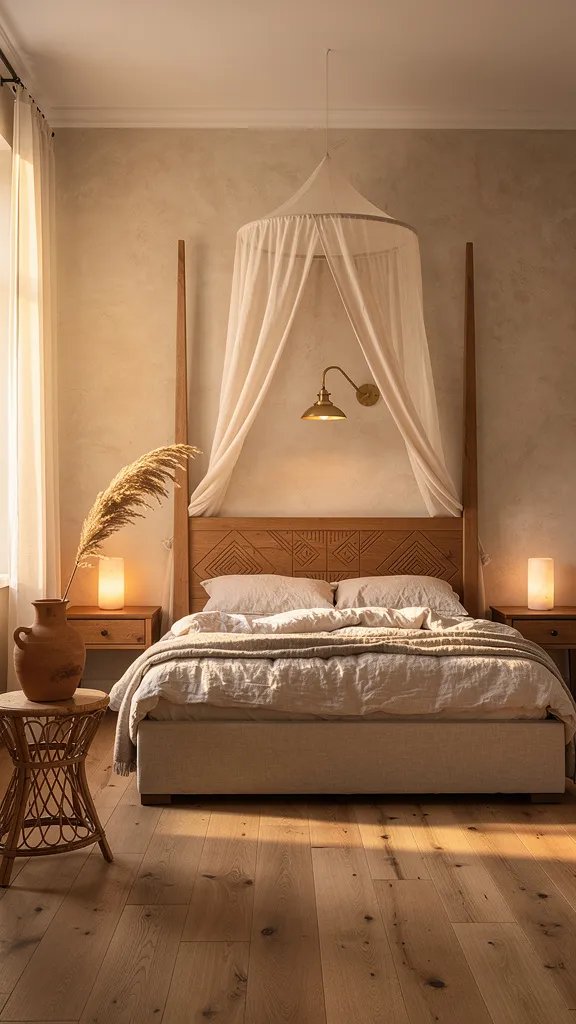
Bedrooms are tricky. You want romance and calm, but you end up with a beige box that feels like a hotel room after a conference. This concept gives you a modern Egyptian sanctuary: a gauzy canopy that filters morning light, alabaster bedside lamps for that ancient glow, and a carved wood headboard that nods to glyphic geometry without being literal.
The mood is romantic, quiet, and cinematic at sunrise and dusk. The setup works in small rooms because the canopy draws the eye up and softens corners, while a low, carved headboard keeps the room grounded. Materials spotlight: alabaster or alabaster-look lamps, carved oak or cedar, flax linen, and a whisper of brushed gold. Photographs? Gorgeous. The veil catches light; the lamps glow like little moons; the carved wood creates pattern without adding color noise.
Micro-moment: Picture slipping into bed after a hot shower, windows cracked, canopy moving just slightly like a breath. There’s a glass of cold water on the alabaster lamp base and the outline of the headboard’s carvings flickers on the wall. That’s the vibe.
Variations: Renter-friendly canopy with ceiling command hooks, or use a wall-mounted half-canopy ring above the headboard. Budget-friendly headboard hack: apply carved wood panels or decorative screens to a simple upholstered frame. Darker version: saffron duvet with olive pillows and bone piping, paired with blackened bronze lamps.
Budget Breakdown:
- Canopy hardware or ring + voile: $80–$280
- Carved wood headboard or panel screens: $250–$1,200
- Alabaster or alabaster-look lamps: $160–$700
- Linen bedding set: $140–$480
- Brushed gold hardware for nightstands: $30–$120
- Vintage kilim or wool rug: $220–$900
Total Estimated Cost: $880 – $3,680
Best For: Primary and guest bedrooms, especially rooms with one good window and tricky corners. Perfect for warm seasons when airy fabrics matter.
Key Design Elements:
- Main materials: carved oak/cedar, alabaster, flax linen, brushed gold
- Color palette: ivory, sand, pale gold, olive, saffron accent
- Lighting strategy: alabaster bedside lamps + dimmable warm overhead
- Furniture silhouettes: low headboard, slim nightstands, curved bench at foot
- Texture layers: gauzy canopy, linen duvet, wool kilim
- Accent details: brass tray, palm-leaf fan, small ceramic amphora
How To Recreate This Look:
- Mount a canopy ring or discreet hardware and drape voile to pool slightly at the floor.
- Install or attach a carved wood headboard; keep it lower than standard for balance.
- Add alabaster lamps with warm bulbs (2700K) to keep the light honeyed.
- Layer flax linen bedding in ivory with two olive or saffron pillows.
- Ground the bed with a vintage kilim and a curved bench for softness.
Why This Feels Designer: The interplay of soft fabric, carved pattern, and mineral glow gives you three distinct textures. Designers chase that triangle: fabric, wood, and stone in harmony.
The Most Common Mistake: Hanging the canopy too low. You’ll feel trapped. Keep the drape high and light, with at least 12 inches between fabric and headboard top.
Pro Styling Tip: For photos, switch off overhead lights and rely on lamps only; shoot right before sunset so the canopy reads luminous, not flat.
Quick reset for your mindset: You don’t need every element from every section. Pick the details that feel like your personal mythology—maybe it’s the stone plinth, maybe it’s the alabaster glow—and let the rest wait their turn.
Quick Checklist
- Choose a sand or papyrus wall tone in matte or limewash
- Anchor rooms with one monolithic element (table, plinth, or headboard)
- Use warm, indirect lighting with one sculptural lamp
- Repeat a metal finish—preferably brushed brass or aged gold
- Layer matte textures: linen, stone, wood, microcement
- Introduce one deep tone (indigo or olive) for contrast
- Add a single palm, papyrus basket, or dried reed for organic height
- Edit shelves to two-thirds full for breathing room
- Prioritize honed and matte finishes over glossy surfaces
- Photograph at golden hour to capture depth and shadows
Frequently Asked Questions
How can I try the Egyptian look on a small budget?
Start with paint or drapery in sand or indigo, swap one lamp for a brass or alabaster-look piece, and bring in a stone-look tray. Three focused changes under $300 can make the room look finished.
Will these ideas work in a tiny apartment?
Yes. Go for low-slung furniture, a monolithic coffee table in microcement, and renter-safe reeded panels. Keep the palette tight so the room reads calm and spacious.
What’s the easiest lighting upgrade for this style?
A single uplight or obelisk-style lamp on a dimmer. Warm bulbs (2700K) and indirect light create that golden, ancient-luxury vibe instantly.
How do I avoid making it look like a theme room?
Skip literal motifs and stick to materials and forms: limestone tones, carved wood, brass, alabaster, low profiles, and vertical rhythm. Use one reference piece at a time—like a papyrus print—never a whole wall of hieroglyphs.
I rent—what are my best swaps?
Faux-limewash paint that’s removable, adhesive reeded strips on existing furniture, freestanding plinths, plug-in sconces, and floor-to-ceiling drapes in indigo or sand to set the mood without construction.
Conclusion: Your Ancient-Modern Home, One Layer At A Time
Pick one idea that made your shoulders drop in a good way. Maybe it’s the limewash and monolithic coffee table, or the alabaster glow by your bed. Start there this weekend. Then live with it for a week and notice how the room behaves—how the shadows move, how the textures calm your brain, how dinner looks richer under brass light.
The truth is, luxury isn’t about buying more. It’s about texture that asks to be touched, lighting that flatters the room, and restraint that leaves space for breath. Egyptian home decor thrives on those three. Stone, fabric, and glow—get those right and everything else becomes easy.
You already have the eye. Now you have the blueprint. Go make your modern oasis—quiet, golden, and completely yours.

About the Author

Krisztina P.Rendes, Founder of Home Style Vibes
Founder of Home Style Vibes
Krisztina Puskásné Rendes created Home Style Vibes as a cozy-modern lifestyle space where homemaking meets inspiration. Her goal is to help women create beautiful, organized, and peaceful homes they truly love — without overwhelm. You’ll find here heart-driven content on home decor, cleaning tips, easy family recipes, organization and decluttering, DIY home projects, plants, and seasonal ideas — all designed to bring more calm, comfort, and style into everyday life.