5 Egyptian Bedroom Ideas for a Room That Feels Impossibly Luxurious
You want a bedroom that feels like slipping into a cool linen robe after sunset, fragrant with incense and soft lamp light. You hate the flat, lifeless look that happens when you pile on “luxury” pieces and still end up with a room that photographs like a motel. The secret to an Egyptian bedroom that actually feels impossibly luxurious? Texture over clutter, light over shine, and a few bold gestures that tell a cohesive story. These five Egyptian bedroom ideas will fix the “nice but not special” problem in one weekend or two, with a budget cap you control and pieces that look incredible on camera and even better at 11 p.m. when you’re barefoot and tired. If you love rich shadows, linen crinkles, and sun-warmed neutrals, you’re in the right place.
1. Desert Temple Serenity With Carved Stone Nightstands
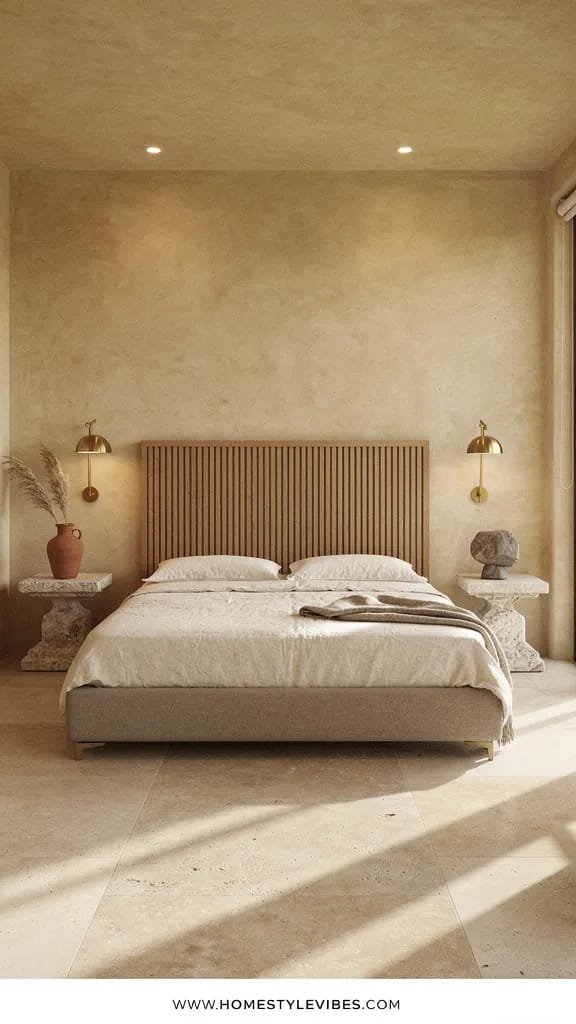
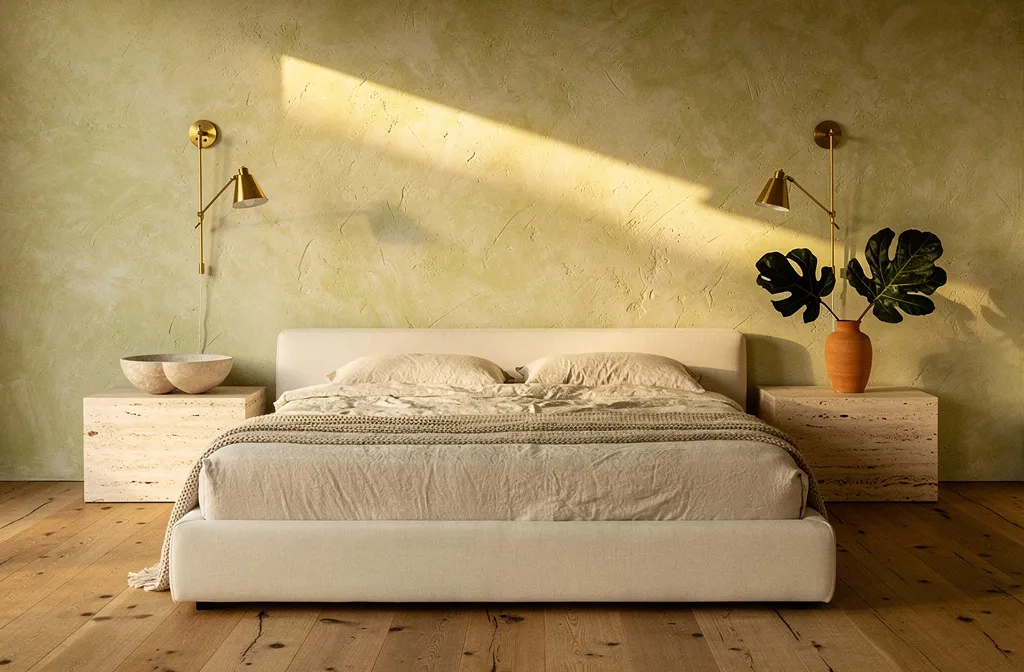
We’ve all been there: you buy the pretty bedding, add a plant, and somehow the room still feels like it’s waiting for personality to arrive. This design creates a meditative, temple-like calm with grounded materials and nothing fussy. The mood is serene and grounded—think soothing hotel-spa energy with ancient richness underneath. It works in real homes because the palette runs neutral and forgiving, yet the tactile depth keeps it from reading bland. Lighting stays low and layered: warm sconces, a soft pool from a linen-shaded floor lamp, and candlelight that dances across stone. The materials are everything here—limestone, travertine, matte plaster, and raw-washed linen—so your space feels calm without feeling empty.
Instead of chasing “Egyptian theme” via hieroglyph wallpaper, this look leans into honest materials and sculptural forms. Carved stone nightstands anchor the bed and photograph beautifully because stone absorbs light differently than wood; it gives you velvet shadows and a quiet glow. A tall, simple canopy bed in oiled oak or blackened brass gives height and drama without ornate details. If you’re a renter, you can still get the vibe with plaster-finish paint and stone-look resin pieces. Shoot this room in morning light and watch the micro-shadows pop against a limewash wall—texture on texture without noise.
Budget Breakdown:
- Carved stone or stone-look nightstands: $350–$1,600 each (resin/alabaster look at the low end, real travertine at the high end)
- Simple canopy bed (oak or brass): $600–$2,200
- Limewash or plaster-effect paint: $80–$250
- Linen duvet and two sets of pillowcases: $120–$480
- Matte brass wall sconces (pair): $140–$480
- Low-pile jute or sisal rug: $180–$650
- Candles, incense, carved stone dish: $30–$120
Total Estimated Cost: $1,500 – $5,800
Best For: Medium to large bedrooms that need a calming reset. Perfect for warm climates or anyone who loves tactile neutrals and minimal dusting. Great if you keep clutter to a minimum and want a look with strong resale appeal.
Key Design Elements:
- Main materials: limestone/travertine, limewash, linen, oiled oak, matte brass
- Color palette: sand, ecru, antique white, bone, soft camel
- Lighting strategy: warm dimmable sconces at 2700K, one linen-shaded floor lamp for ambient fill, candlelight for ritual
- Furniture silhouettes: simple canopy bed, blocky stone nightstands, low-profile bench
- Texture layers: limewash walls, linen bedding, jute rug, stone surfaces, raw wood
- Accent details: carved stone dish, alabaster candle holder, papyrus-inspired artwork in slim frames
How To Recreate This Look:
- Start with the walls: use a limewash or plaster-effect paint in a sand tone for immediate depth.
- Add a simple canopy bed in warm wood or blackened brass for height and shadow play.
- Layer linen bedding in ecru and bone, mixing slightly different tones for lived-in richness.
- Install dimmable matte brass sconces; set them slightly lower than eye level when seated to keep the light intimate.
- Style with carved stone nightstands, an alabaster candle, a jute rug, and one framed papyrus-inspired print.
Why This Looks Expensive: Real (or convincingly faux) stone next to limewash reads like custom work. The canopy provides architectural presence while everything else stays restrained. It’s the contrast of humble linen with “weighty” stone that announces intention.
Watch Out: Don’t crowd the stone pieces. One big sculptural object beats three small ones. And avoid cool white bulbs; they flatten the material story instantly.
Pro Styling Tip: For photos, angle a floor lamp toward the wall so it grazes the limewash—those soft shadows give the room a moody, editorial dimension.
Keep scrolling—next we get richer, moodier, and a little bit royal.
2. Gilded Nile Nightfall With Alabaster Glow
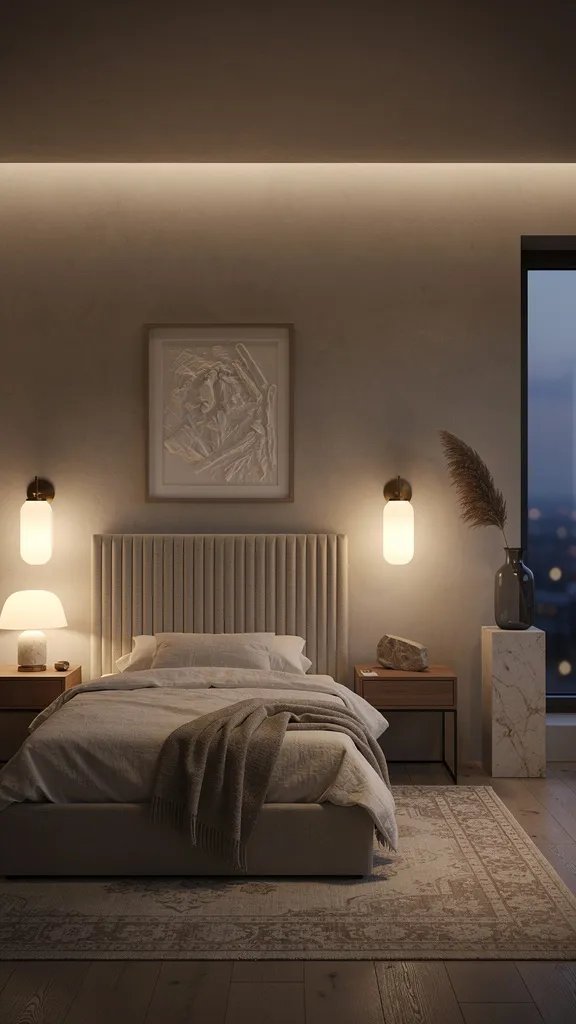
It’s that one corner that always feels off: you’ve got the art, some throw pillows, and yet at night the room looks… flat. This design solves that with luminous alabaster lighting and small hits of gold that catch the eye like moonlight on water. The mood reads intimate and regal—think Cleopatra meets contemporary boutique hotel. It works for real homes because you can dial the gold from whisper to wow, and alabaster fixtures bring softness without glare. Lighting drives this entire concept: glowing discs, warm pools, layered sources at different heights. Materials lean luxurious—brushed brass, glossy ebony wood, deep indigo textiles, and alabaster—but they’re balanced with velvety matte walls so the shine never screams.
I tried alabaster lamps in my own bedroom last fall and honestly couldn’t believe the difference. They don’t just light a room; they make it feel like it has a pulse. Photograph this setup in the evening at a low ISO and watch the alabaster turn the walls into a gentle gradient. Your eye reads “expensive” because the highlights are controlled and the reflections are clean.
Key Design Elements:
- Main materials: alabaster, brushed brass, ebony-stained wood, velvet, mohair
- Color palette: indigo, onyx, aged gold, warm ivory
- Lighting strategy: multiple alabaster sources (pendant or flush mount, bedside lamps, one uplight), all at 2700K or lower
- Furniture silhouettes: low-profile upholstered bed, slim brass legs on nightstands, rounded corners
- Texture layers: matte paint, velvet throw, silk-trim cushions, moody rug with a subtle sheen
- Accent details: thin brass picture frames, a single sculptural vase, incense burner with onyx chips
Budget Breakdown:
- Alabaster flush mount or pendant: $250–$1,200
- Pair of alabaster bedside lamps: $300–$900
- Upholstered bed (indigo or charcoal): $500–$1,800
- Brushed brass nightstands or hardware upgrade: $180–$700
- Velvet throw and cushions: $120–$420
- Matte paint in deep charcoal: $60–$140
- Rug with subtle sheen (viscose-blend or low-sheen wool): $250–$1,100
Total Estimated Cost: $1,660 – $6,260
Best For: Night owls, small to medium rooms that thrive after dark. Great for apartments that need warmth without visual clutter. If you love evening reading or rituals, this lighting plan is your friend.
How To Recreate This Look:
- Start with walls: paint in a deep matte charcoal or midnight blue to absorb light softly.
- Add an alabaster ceiling fixture and two alabaster bedside lamps; install dimmers on all of them.
- Bring in a low-profile upholstered bed (indigo or charcoal) with rounded corners.
- Swap hardware to brushed brass and choose a rug with a slight sheen to bounce micro-highlights.
- Style with a velvet throw, one sculptural vase, and a single art piece in a thin brass frame.
Why This Feels Designer: You’re controlling reflectivity. Matte walls drink light; alabaster diffuses it; brass adds sparkle. That triad creates dimensionality most bedrooms miss.
One Thing To Avoid: Don’t mix too many different gold finishes. Aim for brushed brass and maybe one aged gold accent. Three gold tones and your eye gets confused.
Pro Styling Tip: When photographing, turn off overheads and use only the alabaster lamps—your camera will catch that milky glow and the room will feel cinematic.
Ready for texture and storytelling? The next idea brings in mythology without kitsch.
Remember, this isn’t about recreating a showroom. It’s about building a space that actually feels like yours. If one idea resonates more than the others, that’s your starting point—you don’t need all of them.
3. Papyrus & Sand: Textured Neutrals With Story Layers
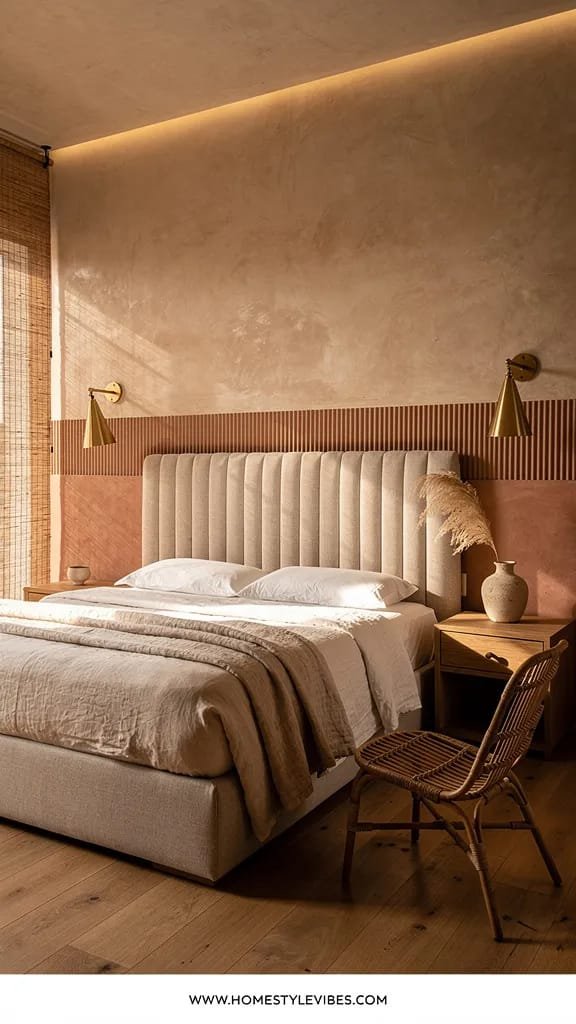
You’ve tried “all neutral everything,” but it still looks flat and a little dentist-office. Texture is the difference between boring and breath-stealing, and this Egyptian bedroom idea leans into it with papyrus textures, woven reeds, ribbed plaster, and a gentle sand-to-clay palette. The mood is warm, intellectual, collected—like a study carved into a sun-baked wall. It works in homes of any size because the visual interest sits in surfaces rather than clutter. Light the room with soft wall washes and a shaded table lamp; watch as gentle shadows form in every ripple and crease.
I helped a friend who spent weeks agonizing over paint colors before realizing her real problem was lighting and texture. We added a ribbed plaster headboard wall, swapped a glass lamp for a pleated linen shade, and layered a papyrus screen in a corner. Suddenly, even her beige felt expensive. Because the materials do the talking, this look photographs with gorgeous depth; you get micro-shadows along flutes and a quiet contrast between matte plaster and nubby textiles.
Budget Breakdown:
- Ribbed or fluted plaster wall (DIY with panels): $200–$1,200
- Papyrus or woven reed screen: $120–$480
- Linen + cotton-blend bedding with stitched detail: $150–$450
- Warm sand paint or limewash: $60–$250
- Textured rug (wool, jute-wool blend): $220–$950
- Pleated linen lampshade and ceramic base: $80–$280
- Pressed botanical or papyrus-inspired art: $40–$200
Total Estimated Cost: $870 – $3,810
Best For: Small rooms, renters, and anyone overwhelmed by too much “stuff.” The palette is timeless and easy to maintain. Pets and kids won’t make it look chaotic because the story lives in surfaces, not delicate objects.
Key Design Elements:
- Main materials: ribbed plaster, papyrus/reed, nubby linen, ceramic, wool
- Color palette: sand, dune, camel, parchment, warm ivory
- Lighting strategy: shaded lamps, wall grazers, no exposed bulbs
- Furniture silhouettes: rounded corners, slim legs, shallow depth to keep small rooms airy
- Texture layers: fluting, woven reeds, slub linen, loop-pile wool
- Accent details: pressed botanical art, low ceramic bowls, straw or rope baskets
How To Recreate This Look:
- Start by choosing a sand-toned paint or limewash—two shades lighter than you think to keep it soft.
- Install fluted panels behind the bed for that ribbed-plaster effect; paint to match the wall.
- Layer linens: use a nubby duvet, a smooth cotton sheet, and a stitched coverlet at the foot.
- Add a papyrus or reed screen to soften a hard corner or hide a messy dresser top.
- Style with a ceramic lamp and pleated shade, a wool-blend rug, and one simple botanical print.
Why This Reads High-End: Every surface has a subtle story. The fluting captures shadows, the linen catches light in little highs and lows, and the reed screen adds an artisanal note. Minimal cost, maximum texture.
The Most Common Mistake: Over-matching textures. If your rug is chunky, choose smoother bedding. If your headboard wall is ribbed, keep nightstands simple. You need a rhythm, not a chorus shouting at once.
Pro Styling Tip: For photos, crumple the top duvet slightly with your hands and leave one corner folded back—creases read like luxury linen in magazines.
Curious how to incorporate color and pattern without losing the calm? The next one leans into azure and motif like a pro.
Perfection isn’t the point. The truth is, even designers fiddle with pillow spacing and curtain height. If something feels almost right, live with it for a week; your eyes will tell you what to tweak.
4. Blue Lotus Courtyard: Ancient Motif, Modern Geometry
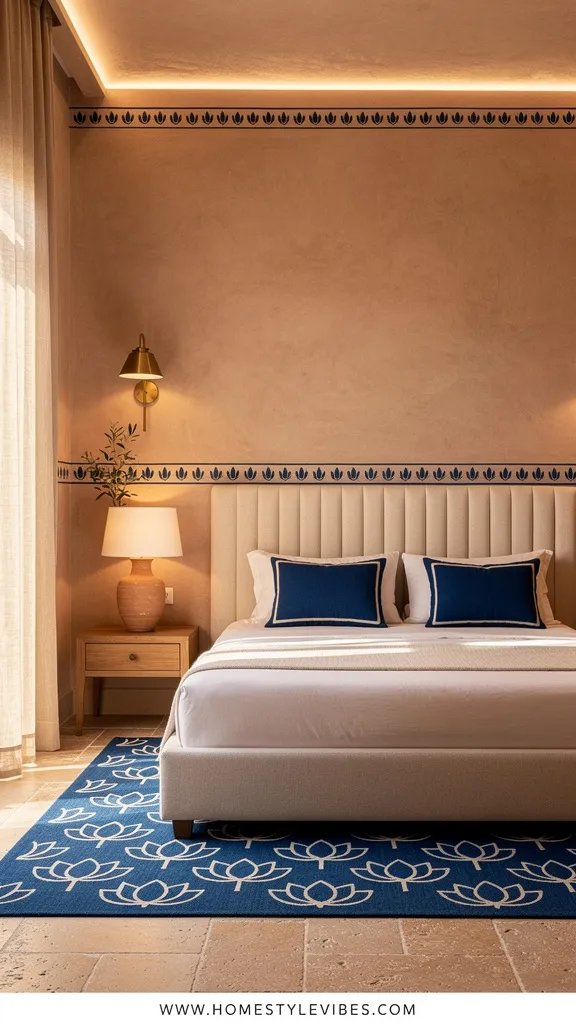
Your Pinterest board loves pattern, but your real bedroom looks chaotic when you try it. This Egyptian bedroom idea borrows the lotus and geometric borders of antiquity and translates them into crisp, modern lines. The mood is vibrant yet composed—courtyard breezes, tiled fountains, cobalt against warm stone. It works in real homes because pattern shows up in controllable doses: a band of stenciled trim, tailored throw pillows, one graphic rug. Lighting stays bright and joyful during the day, then switches to warm pools at night so the blue never turns cold.
Materials matter: honed stone, hand-thrown ceramics, natural linen, and painted wood. For renters, removable wallpaper or a painted border around the room gives that heritage nod without commitment. This look photographs beautifully because you get high-contrast moments—cobalt next to sand—framed by clean negative space. A low bench in pale wood beneath a window can hold a tray with a single bloom, like a modern altar to the everyday.
Budget Breakdown:
- Removable wallpaper or stencil kit for lotus border: $60–$260
- Indigo linen or cotton duvet/pillows: $120–$420
- Graphic rug in blue/ivory: $200–$1,000
- Pale wood bench or end-of-bed chest: $180–$700
- Matte ceramic lamps (pair) with tapered shades: $140–$520
- Sheer curtains in ivory: $50–$180
- Wall paint in warm ivory or stone: $60–$140
Total Estimated Cost: $810 – $3,220
Best For: Bright rooms, coastal homes, city apartments that need life. Great for people who want color but not a circus. Easy to refresh seasonally by swapping the blue pieces for rust or olive.
Key Design Elements:
- Main materials: linen, painted wood, matte ceramics, honed stone
- Color palette: cobalt/indigo, warm ivory, sand, a whisper of black for outlines
- Lighting strategy: daytime sheers for diffused sun; at night, two lamps and a small uplight near the pattern to make it glow
- Furniture silhouettes: simple lines, rounded corners avoided to keep the geometry crisp
- Texture layers: smooth paint, soft linen, tight-pile rug, matte ceramic
- Accent details: lotus or geometric border, black picture rail, a single blue vase
How To Recreate This Look:
- Start with a warm ivory wall to prevent the blue from feeling icy.
- Apply a lotus or geometric border as a 4–6 inch band around the room or just above the headboard.
- Add indigo bedding and two coordinating pillows—keep the patterns related, not matching.
- Choose a graphic blue-and-ivory rug that echoes the border’s geometry.
- Style with matte ceramic lamps, a pale wood bench, and sheer curtains to flood the room with soft daylight.
Why This Looks Intentional: The motif repeats at different scales: thin border, medium rug pattern, small pillow details. That repetition tells your brain, “This is designed,” not “We randomly bought blue things.”
Don’t Do This: Avoid mixing five different blues. Pick two: a true indigo and a softer sky. The high/low pairing keeps it fresh, not collegiate.
Pro Styling Tip: For photos, pull the sheers an extra 3–4 inches past the window frame to diffuse harsh sunlight and get that hazy courtyard glow.
We’ve layered calm, glow, and pattern. Now let’s go for unapologetic drama—the kind that turns a Tuesday night into a ritual.
5. Obsidian Oasis: Dark Walls, Burnished Bronze, and Palm Shadows
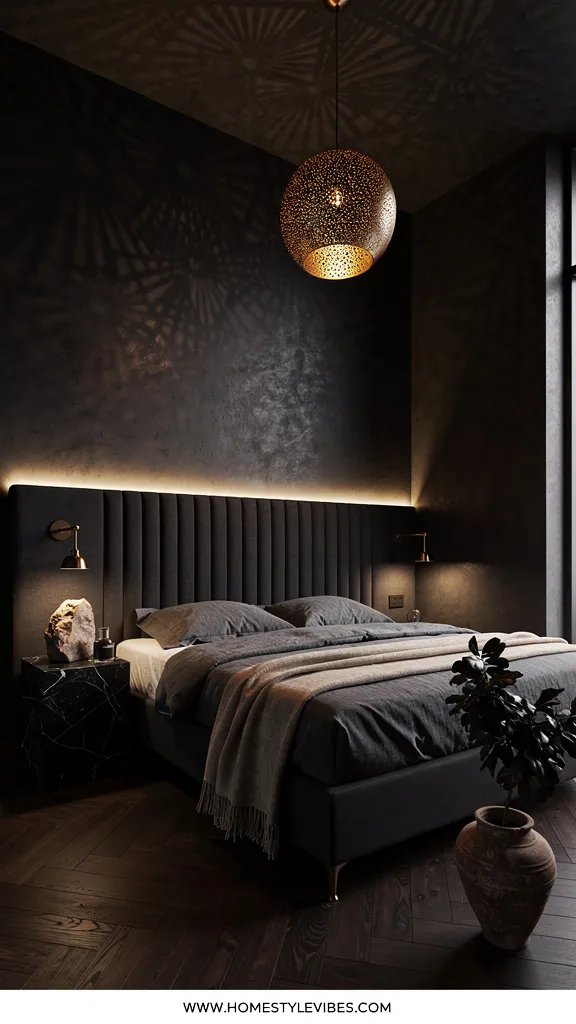
You want moody luxury, but your last attempt just felt like a cave. This Egyptian bedroom idea leans into darkness with control: obsidian walls, bronze accents, and a palm-leaf shadow that flirts across the ceiling. The mood is opulent, quietly mysterious, like a private lounge by the Nile at midnight. It works in real homes because you’re balancing three essentials—gloss, matte, and soft texture—so the room has depth instead of deadness. Lighting earns top billing: a dappled pendant that throws subtle shadows, a pinpoint picture light over a single artwork, and a pair of bronze swing-arm lamps for precision.
Materials punch hard: black limewash or ultra-matte paint, burnished bronze, rift-sawn oak stained near-ebony, suede or faux suede, and maybe a hint of carved wood. Renter-friendly swaps exist—peel-and-stick black textured panels behind the bed, bronze spray paint for dated hardware, a palm-leaf cutout pendant that casts those dreamy patterns. This style photographs like a magazine spread because the highlights are strategic: a bronze rim here, a glass of water glinting there, and soft shadows that make the bed look like it’s floating.
Budget Breakdown:
- Black limewash or ultra-matte paint: $80–$260
- Burnished bronze swing-arm lamps (pair): $180–$720
- Dappled pendant or palm-cut shade: $120–$480
- Ebony-stained wood bench or nightstands: $200–$1,000
- Suede or microfiber headboard: $250–$1,200
- Heavy linen or velvet curtains: $180–$900
- Framed artwork with picture light: $140–$540
Total Estimated Cost: $1,150 – $5,100
Best For: Larger rooms or any space with controllable, layered lighting. Ideal for night lovers, city views, and anyone craving a cocoon that still feels curated.
Key Design Elements:
- Main materials: ultra-matte paint or limewash, bronze, ebony wood, suede/velvet
- Color palette: obsidian, bronze, tobacco, warm ivory accents
- Lighting strategy: one shadow-pattern pendant, two swing-arms, one picture light—everything on dimmers
- Furniture silhouettes: squared edges, low slung, refined thickness (no chunky rustic)
- Texture layers: matte wall, soft headboard, dense curtains, smooth bronze hardware
- Accent details: palm motif in shadow only, not print; a single onyx or smoky glass vase
How To Recreate This Look:
- Paint or limewash walls in deep black or charcoal with a warm undertone to avoid cold blue reflections.
- Install a palm-cut pendant or dappled shade; check the shadow spread at night and adjust height.
- Add a suede or microfiber headboard for soft contrast; keep the silhouette clean.
- Bring in burnished bronze swing-arm lamps and a picture light over one strong artwork.
- Finish with heavy linen curtains and an ebony-stained bench; swap hardware to bronze for cohesion.
Why This Looks Expensive: Dark, ultra-matte walls swallow cheap reflections while bronze introduces intentional highlights. Controlled glints read like jewelry, not bling. The palm shadow becomes your signature detail—subtle, not theme-park.
Watch Out: Don’t leave the ceiling stark white; a soft warm ivory or the lightest charcoal ties the room together and prevents a jarring horizon line.
Pro Styling Tip: Shoot at dusk with only the pendant and swing-arms on—your camera will catch the patterned shadow on the ceiling and the bed will look like a sanctuary.
If you made it this far, take a breath. Luxury isn’t a shopping list; it’s restraint, texture, and light working together. Start with one move: paint, a lamp, or a single sculptural piece. That’s enough to change how the room feels tonight.
Quick Checklist
- Limewash or plaster-effect paint in sand or charcoal
- One sculptural stone or stone-look piece
- Dimmable warm lighting at multiple heights
- Linen bedding in mixed neutral tones
- A motif repeated at two or three scales
- Matte and gloss contrast for controlled highlights
- Natural fibers: jute, wool, papyrus, reed
- Simple silhouettes with one statement proportion
- Hardware swaps to brushed brass or bronze
- Sheers hung high to diffuse daylight
- One signature detail: alabaster, lotus border, palm shadow
- Negative space around key pieces
Frequently Asked Questions
How can I try an Egyptian bedroom look on a tight budget?
Focus on one upgrade with big visual payoff: paint or limewash, a pair of warm bulbs with dimmers, or a single stone-look nightstand. Add linen pillowcases and a jute rug, then layer a motif via a stenciled border. You’ll get 70% of the vibe for a fraction of the cost.
My room is small. Will dark walls or heavy textures make it feel cramped?
Not if you control sheen and scale. Use ultra-matte paint and keep furniture low and simple. Choose one textured hero (ribbed wall or stone nightstand) and keep the rest smoother. Add sheers to soften daylight and a mirror opposite the window for a single, large highlight.
I rent and can’t paint. What’s my move?
Hang a large linen panel behind the bed, use peel-and-stick textured panels for a headboard zone, swap in warm LEDs, add a papyrus screen, and change hardware to brass or bronze with permission. Removable wallpaper borders can deliver the motif without damage.
How do I keep gold/brass from looking tacky?
Choose brushed or burnished finishes and limit yourself to one primary metal. Pair with matte walls and natural textures so the metal becomes a controlled highlight, not the main course. Keep lines simple and avoid overly ornate shapes.
What’s the biggest mistake people make with an Egyptian-inspired bedroom?
Going literal with too many themed elements at once—hieroglyph prints, scarab statues, pyramids everywhere. Pick one nod to history and ground it with honest materials and modern silhouettes. The room should whisper, not shout.
You’ve Got This
Pick one of these Egyptian bedroom ideas and start with the move that fixes your biggest frustration. If the room feels flat, go for limewash or fluting. If nights feel harsh, invest in alabaster or warm-dim lighting. If your neutrals feel boring, reach for papyrus texture or a cobalt border that frames the whole scene.
The secret isn’t more decor—it’s the right texture under the right light with just enough shine to catch your breath. Let stone feel heavy, linen feel crinkled, and brass catch the last glint at dusk. Keep a little negative space so your eye can rest. That’s what reads luxurious in person and on camera.
Tonight, swap the bulbs, straighten the curtain rod up to the ceiling line, and light one candle in a carved stone dish. You’ll see it—the room finally looks finished, and it’s all yours. Seriously, you’ve got this.

About the Author

Krisztina P.Rendes, Founder of Home Style Vibes
Founder of Home Style Vibes
Krisztina Puskásné Rendes created Home Style Vibes as a cozy-modern lifestyle space where homemaking meets inspiration. Her goal is to help women create beautiful, organized, and peaceful homes they truly love — without overwhelm. You’ll find here heart-driven content on home decor, cleaning tips, easy family recipes, organization and decluttering, DIY home projects, plants, and seasonal ideas — all designed to bring more calm, comfort, and style into everyday life.