5 Front Porch Flower Pot & Planter Ideas That Instantly Boost Curb Appeal (Small, Rustic & Modern)
You want that front porch feeling—soft sunrise light on fresh greenery, a door that quietly says “you’re home,” and flower pots that look curated, not chaotic. But the truth? Clutter creeps in, planters don’t match, and your entry reads more “random assortment” than “intentional welcome.” Let’s fix that. These five front porch flower pot and planter ideas focus on small, rustic, and modern styles with real-life solutions that actually work on busy weeks and modest budgets.
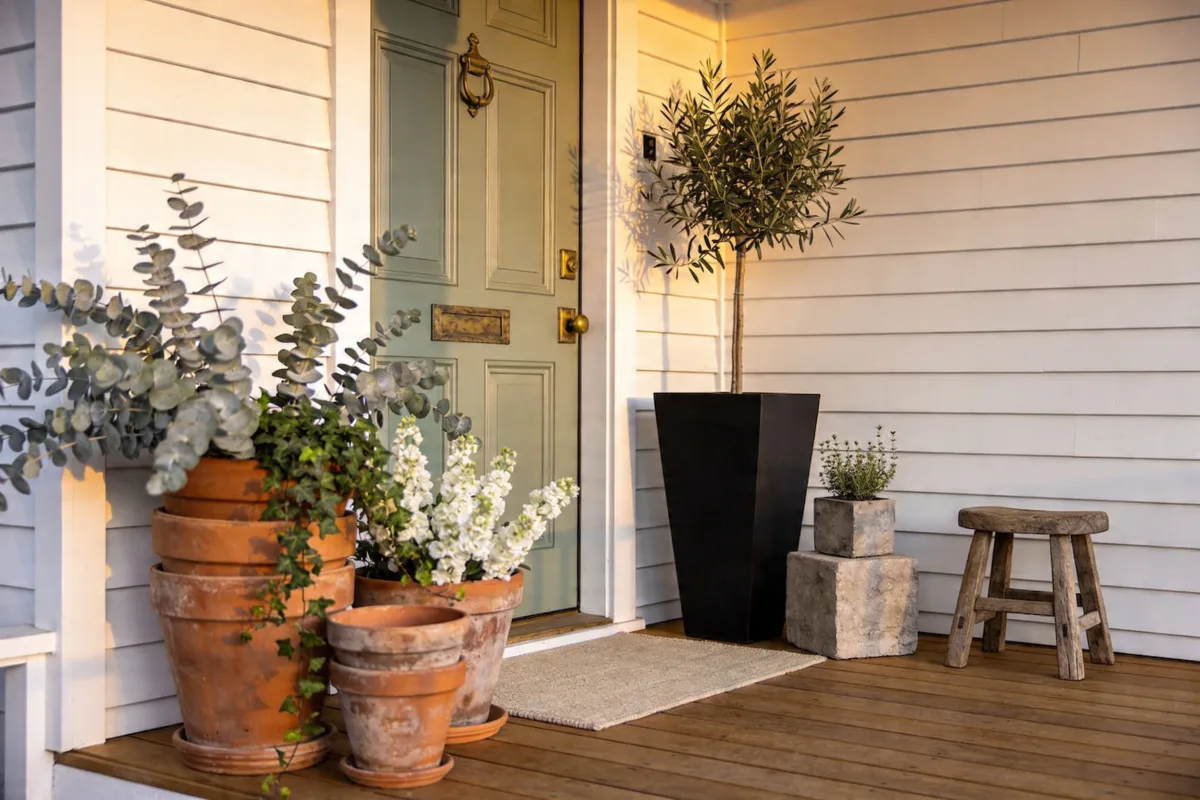
We’ll get into real textures (terracotta, raw stone, matte black metal), the right heights for layered depth, and the tiny color decisions that make your home look pulled-together from the curb. Expect easy, under-$300 versions, renter-friendly swaps, and options that photograph beautifully for that Pinterest-worthy moment. If your vibe leans cozy cottage, clean-lined modern, or somewhere in between, at least one of these will feel like it was made for your porch.
1. Warm Rustic Porch with Layered Terracotta Story
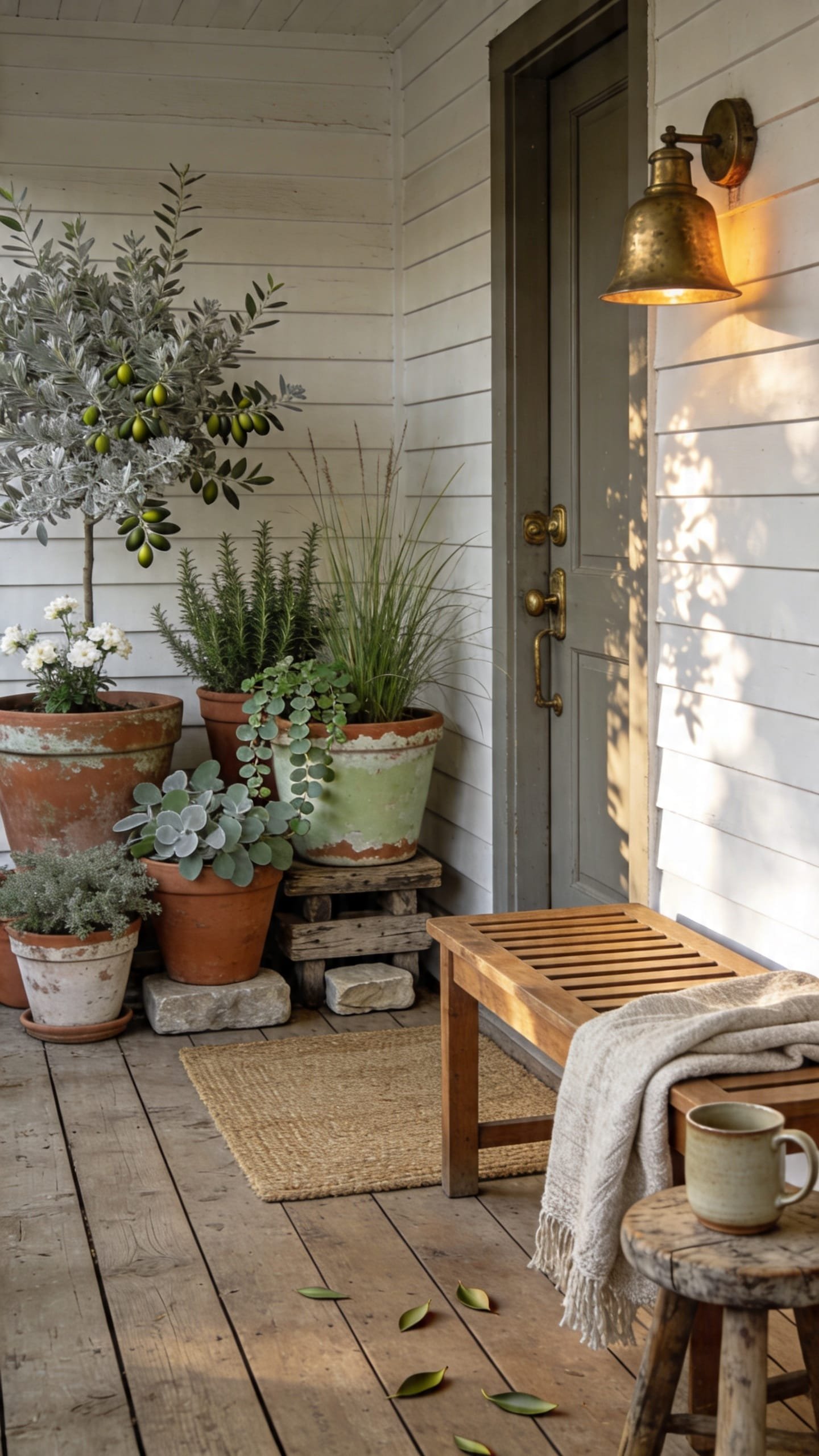
We’ve all been there: you buy a few terracotta pots because they’re “classic,” and suddenly your porch looks flat and orange. This design solves the monotony by layering patina-rich terracotta with tactile wood and silvery greens that bounce warm light. Think of this as a modern farmhouse moment that’s not cutesy—rustic, grounded, and honest.
The mood is slow and sun-dappled. Terracotta reads warm at every time of day, and when you pair it with a linen door mat, a simple teak bench, and a few rustic metal details, the whole front entry hums with that wine-country porch energy. It works for small porches because you’re stacking heights: tall olive or bay laurel in the back, medium rosemary or lavender at mid-level, and low thyme or trailing silver dichondra at the edges. You get dimension without visual clutter.
Why does this shine in real homes? Maintenance is easy—Mediterranean herbs thrive on neglect—and resale appeal stays high because the palette is timeless. Light hits the matte clay and gives you natural contrast; in photos, the subtle white salt blooms on terracotta catch shadows and read like texture. I once did this on a rental with a sad cement stoop, swapping in a vintage-looking wood stool as the plant stand. It made the whole entry feel like a mini courtyard, and my neighbor actually asked if I’d resurfaced the concrete. Nope, just layered the right tones.
Budget Breakdown:
- Terracotta planters (mix of 3 sizes): $60–$140 total
- Olive tree or bay laurel (2–4 ft): $35–$80
- Herbs: rosemary, lavender, thyme: $12–$36
- Trailing silver dichondra or licorice plant: $8–$18
- Teak or acacia outdoor bench or stool: $70–$180
- Linen-look outdoor mat: $20–$50
- Aged metal watering can (decor + function): $25–$45
Total Estimated Cost: $230 – $549
Best For: Cottage, farmhouse, or Mediterranean-inspired homes and porches that get partial to full sun. Great for compact stoops that need warmth and texture without visual chaos.
Key Design Elements:
- Main materials: terracotta (preferably unglazed), teak or acacia wood, aged zinc or iron accents
- Color palette: warm clay, olive green, dusty lavender, soft gray-green
- Lighting strategy: warm white (2700–3000K) sconces or string lights to intensify terracotta’s glow
- Furniture silhouettes: simple bench or narrow stool, curved pots, clean-lined doormat
- Texture layers: rough clay, linen weave, woody herb foliage, trailing softness
- Accent details: vintage watering can, woven basket catch-all, small bell chime in aged brass
How To Recreate This Look:
- Start with a trio of terracotta pots in small, medium, and tall—avoid matching shapes; go for siblings, not twins.
- Add a taller evergreen like olive, bay laurel, or dwarf cypress in the largest pot to anchor the scene.
- Layer in herbs with scent (rosemary, lavender) in the medium pot; fill the smallest with thyme or oregano.
- Install warm-white porch lighting to give terracotta its honeyed glow at dusk.
- Style with a narrow teak bench or wood stool, a neutral mat, and one aged metal accent to ground the palette.
Why This Looks Expensive: Consistency. The clay tone repeats across heights, and the foliage stays in a tight color family (greens with soft gray). Restraint—two to three plant types—keeps it curated. The layered heights create a gentle “stair-step” effect that reads custom, not big-box.
Watch Out: Don’t overwater terracotta; salts will bloom too aggressively and can look messy. Also, avoid neon flowers here—electric pink fights the warm clay and can cheapen the vibe.
Pro Styling Tip: Angle the largest pot slightly toward the street so the plant’s silhouette creates a diagonal line; it adds depth and photographs more dynamically from the curb.
Keep scrolling—if earthy isn’t your vibe, the next one is crisp, modern, and wildly satisfying for small spaces.
2. Matte Black Modern Porch with Sculptural Planters
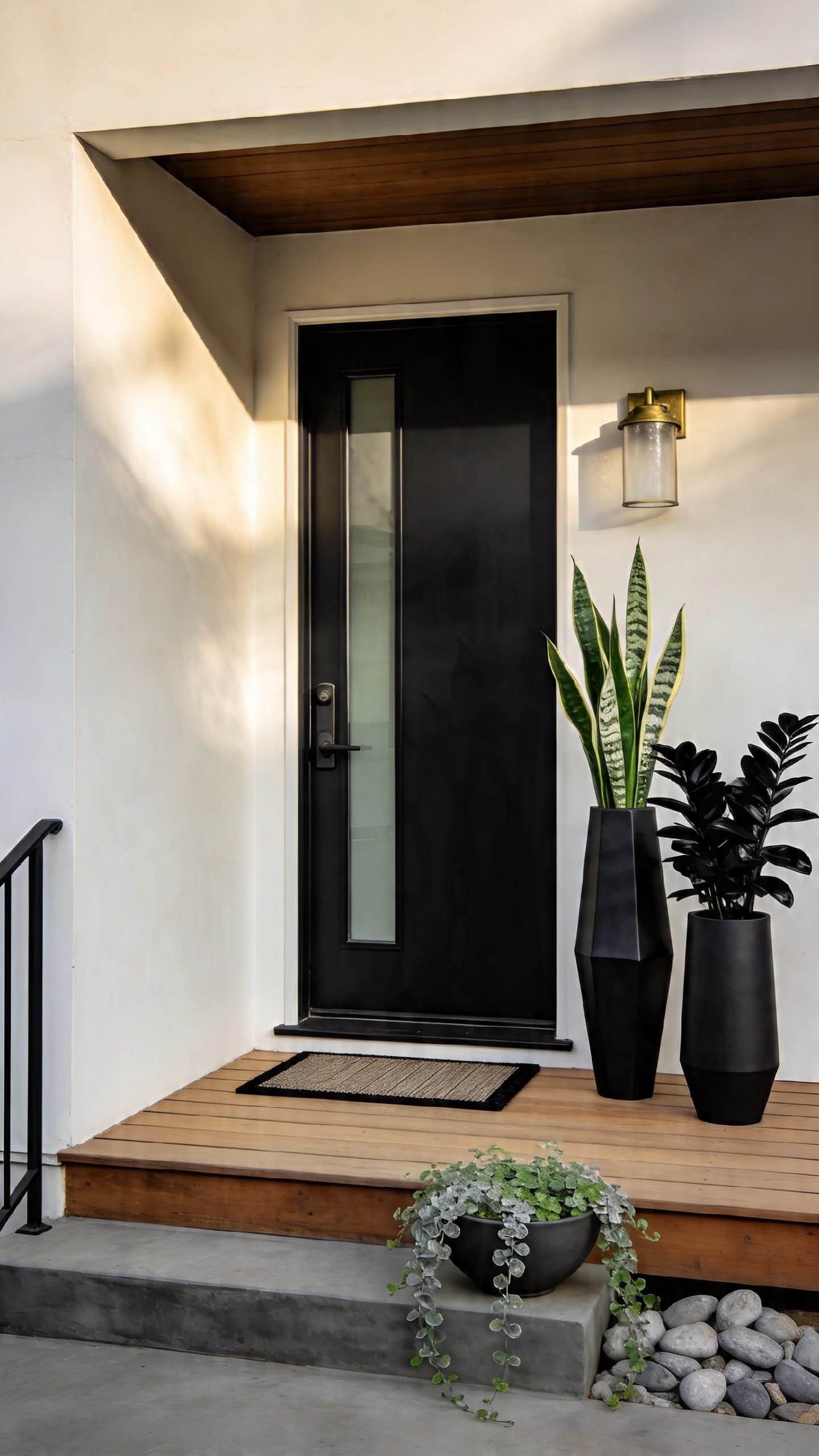
It’s that one corner that always feels off: you tried a bright planter or two, but your sleek exterior begs for restraint and your plants look like afterthoughts. This look embraces clean lines with matte black or charcoal planters, high-contrast foliage, and crisp geometry. It’s unbelievably photogenic—matte surfaces kill glare and let your plants be the artwork.
The mood is calm and gallery-like, modern without the “cold” feeling. Pair tall, slender planters with architectural plants—snake plant, ZZ, or upright grasses (festuca, carex). If you’ve got shade, go for dark-leaf begonias or black mondo grass to deepen the palette. This is the porch equivalent of a tailored blazer: sharp, flattering, and low-maintenance. It works for small porches because verticality is doing the heavy lifting; you’ll use a skinny pair flanking the door and one low, wide bowl to break the repetition.
Lighting matters here more than you think. Soft, indirect lighting helps matte planters show form without shining like plastic. If your porch faces a strong afternoon sun, matte finishes prevent hot-spot reflections. I did a version of this on a modern bungalow: matte black cylinders with narrow rims and a light-wash teak chair. The whole entry felt intentional—neighbors asked for the planter source, not the plant, which told me the composition was working.
Budget Breakdown:
- Matte black fiberstone or lightweight concrete planters (set of 3): $120–$260
- Architectural plants (snake plant/ZZ/ornamental grass): $45–$120
- Low, wide bowl planter: $40–$100
- Decorative black river stones or pumice top-dress: $12–$30
- Simple outdoor chair or stool in light wood: $80–$200
- Slim LED path stake lights (optional): $35–$90
Total Estimated Cost: $292 – $800
Best For: Contemporary or mid-century homes, shaded or partial-sun entries, homeowners who prefer structured, clean visuals with minimal fuss.
Key Design Elements:
- Main materials: matte fiberstone, lightweight concrete, teak or powder-coated metal
- Color palette: charcoal, black, deep green, light oak, touches of stone gray
- Lighting strategy: concealed warm LEDs or subtle wall sconces for soft shadows
- Furniture silhouettes: slim, rectilinear, low-profile pieces
- Texture layers: matte planters, smooth stones, glossy plant leaves
- Accent details: black river stones, minimal door hardware in brushed nickel or black
Why This Feels Designer: Repeating the matte finish across planters and hardware creates a single visual sentence. The negative space around each planter is deliberate—your eye rests between objects, which is a pro move.
How To Recreate This Look:
- Start with two tall, narrow matte black planters and position them symmetrically or slightly staggered if the doorway is wide.
- Add one low, round bowl planter filled with cascading ivy or dark mondo grass to soften the geometry.
- Layer architectural plants with clear forms—snake plant for height, ZZ for density, grass for movement.
- Install subtle pathway or step lights that cast sideways shadows, not overhead glare.
- Style with a light wood chair and a neutral cushion to break up the black and add approachability.
One Thing To Avoid: Overfilling planters with too many species. Two plant varieties across the entire setup look disciplined and luxe. Also, skip glossy plastic—matte or lightly textured reads higher quality.
Pro Styling Tip: Top-dress the soil with black river stones in the front planters and pumice in the bowl—micro-contrast helps photos look crisp and editorial.
Pause here. Take a breath. If one idea is calling your name already, that’s your green light. You don’t need all five concepts—just the one that fits your porch, your climate, and your morning coffee ritual.
3. Small Porch, Big Welcome: Staggered Steps with Mixed Metals
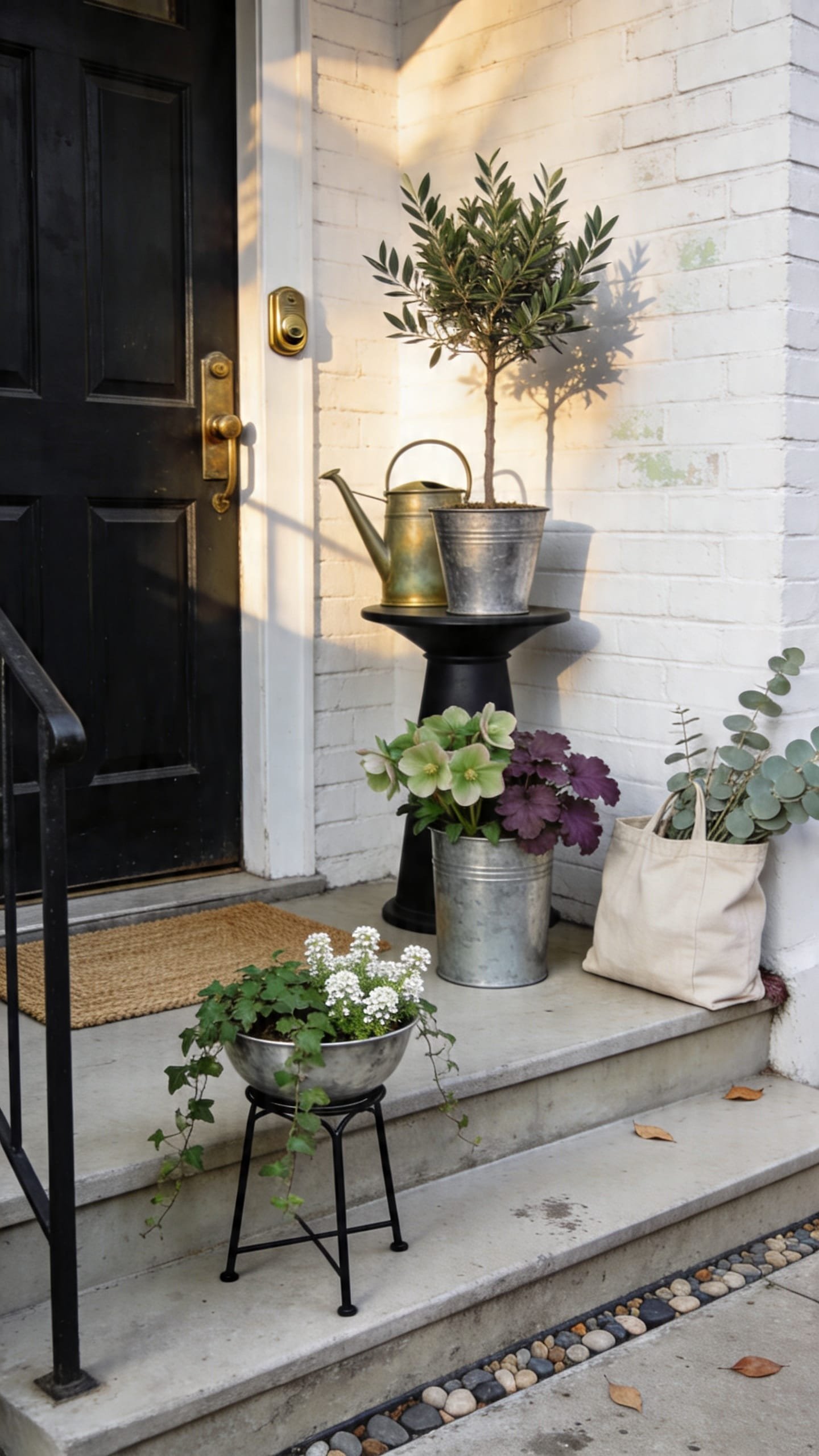
You’ve tried a cute doormat and a couple of tiny pots, but it still looks… underwhelming. This design uses staggered heights and mixed metals (think galvanized zinc, aged brass accents) to build a compact, sculptural entry that sings from the sidewalk. It’s perfect for shallow stoops or porches with only one corner to play with.
The mood leans European market stall meets city townhouse—chic but approachable. You’ll create a vignette that steps upward: a low plant stand at the front, a medium galvanized tub to the side, and a tall, narrow planter with a wispy plant like foxtail fern or a columnar juniper at the back. Soft variegated foliage brings the prettiness without needing blooms. Why does this work? Because it literally redirects your gaze away from the cramped footprint and into a layered vertical story. Buyers and guests read it as “cared for,” which helps resale perception instantly.
Lighting adds a subtle twinkle with a small lantern or a battery candle inside an aged brass hurricane. In shade, mixed metals add reflection and depth; in sun, they pick up a gentle glimmer that keeps the display lively. Quick honesty moment: mixing metals can go wrong fast if you mix finishes randomly. Keep it to two: cool silver (galvanized) and one warm note (aged brass). Repeat each at least twice somewhere in the composition and it looks intuitive instead of chaotic.
Budget Breakdown:
- Galvanized tub or oval planter: $25–$60
- Tall narrow planter (lightweight metal or fiber cement): $60–$160
- Small plant stand or riser: $20–$45
- Plants: foxtail fern or columnar juniper, variegated ivy, heuchera: $30–$90
- Brass or brass-look lantern/hurricane: $35–$120
- Coco coir or natural fiber doormat: $20–$45
Total Estimated Cost: $190 – $520
Best For: Narrow porches or city stoops; renters who need portable styling; shady entrances that benefit from reflective surfaces.
How To Recreate This Look:
- Start by placing the tallest planter in the back corner closest to the doorframe for height and anchoring.
- Add a galvanized tub to the opposite side and plant with mixed foliage in a single color palette (all greens or greens with cream).
- Layer a small plant stand in front with a compact plant like heuchera for fullness.
- Install a compact lantern on the ground next to the tub for nighttime glow.
- Style with a simple doormat and repeat metal accents—maybe a small zinc watering can or a brass doorbell cover.
Key Design Elements:
- Main materials: galvanized metal, aged brass, fiber cement
- Color palette: soft silver, deep green, cream variegation, natural fiber tan
- Lighting strategy: small lantern glow to reflect softly off metal surfaces
- Furniture silhouettes: no large furniture; use a plant stand as your “furniture moment”
- Texture layers: ribbed metal, smooth leaves, trailing variegated ivy, coir mat
- Accent details: discreet brass hardware, compact lantern, miniature house number plaque
Why This Reads High-End: Purposeful height staggering and repeated finishes make it feel composed. The guidance “repeat each metal twice” is the secret—your eye connects the dots and reads continuity.
The Most Common Mistake: Overcrowding. If leaves press against the door swing, it feels messy and stressful to use. Keep at least 6 inches of clearance on the latch side so the ritual of walking in feels easy.
Pro Styling Tip: Turn the galvanized tub so its seam faces the wall; seams photograph clunky and break the illusion of a vintage find.
Curious about a softer, storybook vibe? Wait until you see the cottage mix that turns even a basic vinyl-sided porch into a moment.
Remember, this isn’t about recreating a showroom. It’s about building a front porch that feels like you and welcomes you back from the longest day with a deep exhale. If one section is clicking, start there and ignore the rest until you’re ready.
4. Soft Cottage Porch with Painted Pots and Trailing Blooms
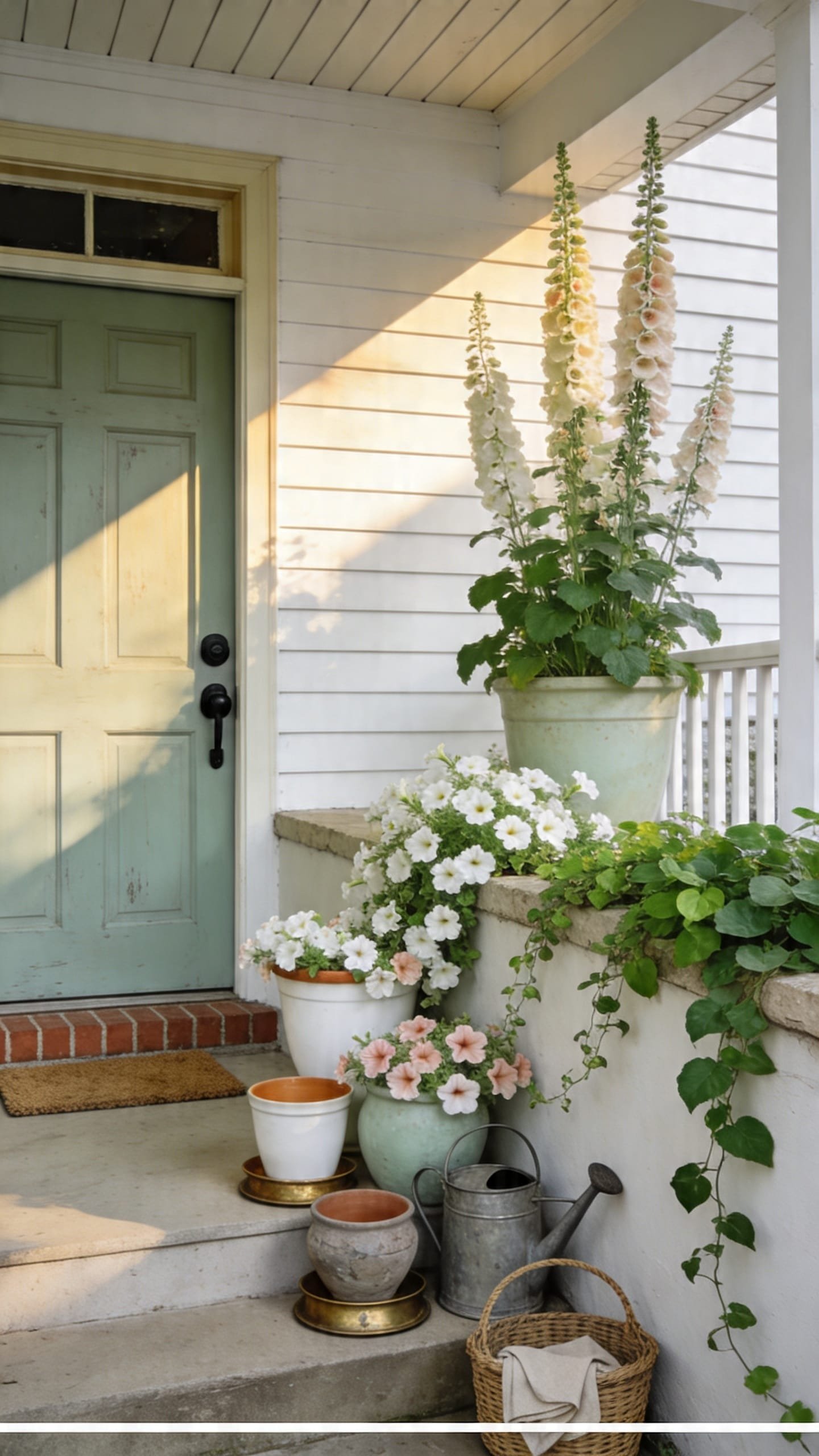
You love color. You hate the chaos that happens when ten different flower shades compete at the door. This look channels cottage charm with a controlled palette—two colors plus green—and a handful of hand-painted or limewashed pots for softness. It turns simple blooms into a lush, romantic welcome without looking like a craft project exploded.
The mood is cheerful and nostalgic: imagine petunias or calibrachoa spilling over a low wall, with a few tall foxgloves or delphiniums in back for that storybook height. Limewashed or chalk-painted clay pots add texture that feels sun-faded rather than brand-new. It works because you set a rule around color—say, blush and plum—or blue and white—and then you play with plant shape instead of random colors. A friend of mine spent weeks agonizing over which flower combinations to buy every spring before realizing the real problem was her palette. Once we chose “buttercream and berry,” the porch went from noisy to poetic overnight.
Lighting here should be warm and a touch romantic—think frosted bulb sconces or even a small, weather-safe fairy light string tucked into a wire cloche for evenings. The materials pull weight: limewash knocks back any too-bright paint, straw baskets add rustic touch, and an old cutting board becomes a “tray” for small pots so they read as a unit. Pro tip: choose at least one fragrant pick—sweet alyssum or heliotrope—because scent sells the cottage fantasy better than any paint ever will.
Budget Breakdown:
- Clay pots (assorted sizes) for painting: $40–$90
- Limewash or chalk paint + sealer: $25–$55
- Blooming annuals (petunia, calibrachoa, alyssum): $24–$72
- Two taller perennials/annuals (foxglove, delphinium, snapdragon): $16–$40
- Small straw basket planters with plastic liners: $20–$60
- Wire cloche or lantern string lights: $18–$40
Total Estimated Cost: $143 – $357
Best For: Entryways craving charm; homes with neutral or white siding; spring through early fall when blooms thrive.
Key Design Elements:
- Main materials: limewashed clay, straw baskets, galvanized hooks
- Color palette: two flower colors plus green—blush and plum, or blue and white are easy wins
- Lighting strategy: frosted warm sconces or mini string lights for candlelike glow
- Furniture silhouettes: petite bistro stool or narrow vintage chair
- Texture layers: chalky pots, soft petals, trailing vines, woven straw
- Accent details: enamel house numbers, a vintage-style bell, ribbon ties for small pots
How To Recreate This Look:
- Start by painting or limewashing 3–5 clay pots in soft, related tones; vary opacity for patina.
- Add a consistent plant palette—choose two main bloom colors and repeat them across all pots.
- Layer a taller flowering plant in the back, medium mounded blooms in the middle, and trailing vines at the front.
- Install a small hook for a hanging straw basket or a wall-mounted half-basket with liner if space is tight.
- Style with a bistro stool to corral two mini pots and a wire cloche with fairy lights for dusk ambiance.
Why This Looks Intentional: The color limit. Keeping florals to two hues prevents visual noise, while the limewashed finish ties every container together like a soft filter.
Don’t Do This: Avoid neon brights fighting each other. Also, don’t skip sealing painted pots—water drips will streak the finish and it won’t be a cute patina, trust me.
Pro Styling Tip: Photograph from a low angle so trailing blooms overlap the rim of the pot; you’ll get that layered, abundant look without needing dozens of plants.
5. Modern Mediterranean Entry with Stone Troughs and Silvery Greens
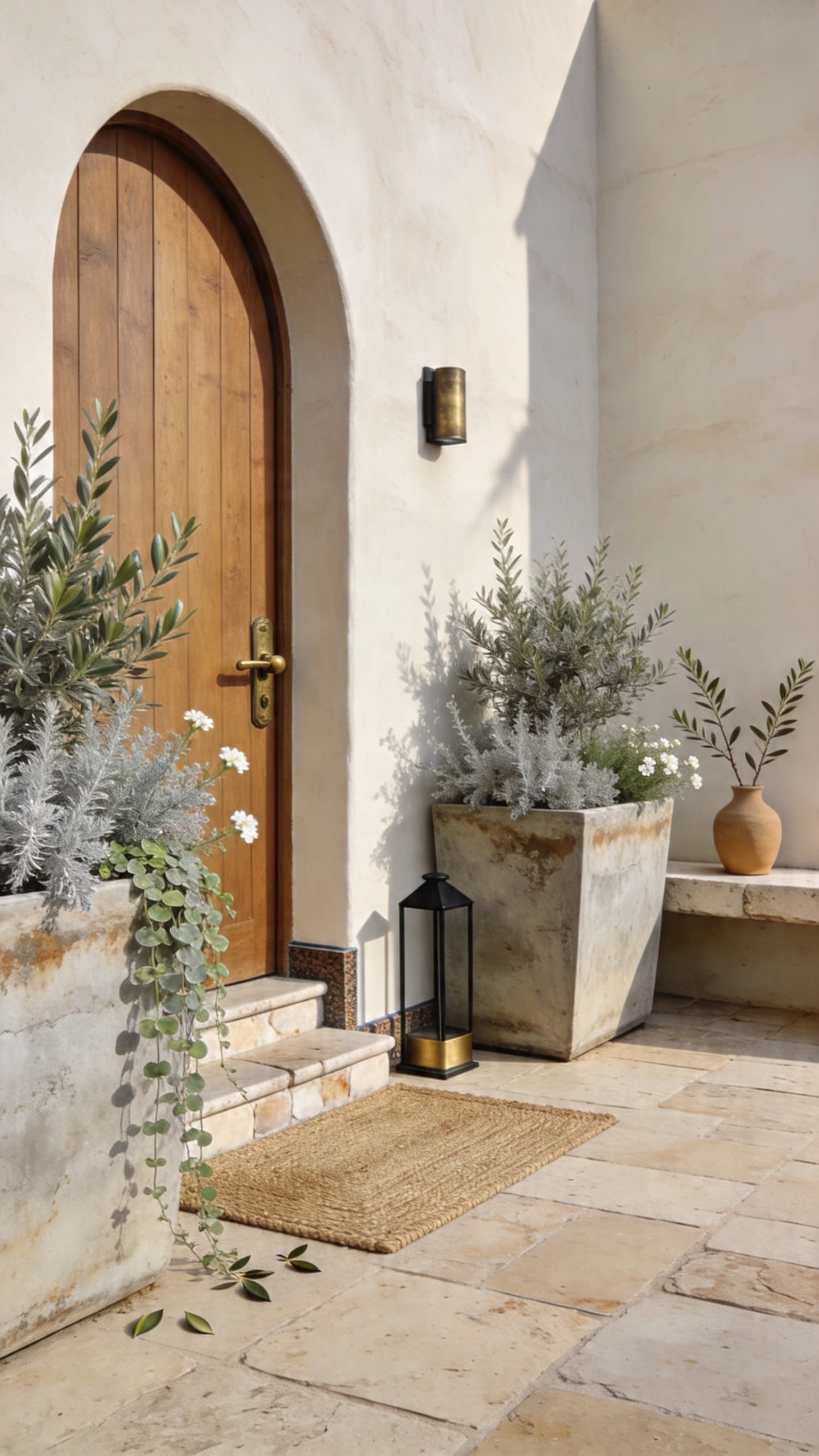
Let’s admit it: drought-friendly often gets a bad rap for looking sparse. You’ve tried succulents in tiny pots and it looked like a plant sale table. This concept fixes that with larger-scale stone or faux-stone trough planters, generous plantings of silvery greens, and minimal blooms. The result is refined, coastal, and quiet-luxe—like a boutique hotel in Mallorca.
The mood balances cool stone with soft, sun-faded foliage. Materials dominate here: tumbled stone, limewash walls, brushed brass numbers, and a woven jute runner underfoot. Lighting is bright but diffused; late afternoon sun throws long shadows that ripple across planted mounds. Why it works: scale. Two or three long troughs make a statement where ten small pots would create clutter. And the foliage picks—olive, artemisia, lavender, senecio—give movement and tone-on-tone texture that photographs like a dream.
I tried a version of this last fall at my own place. After one messy summer of random pots and sad petunias, I surrendered to scale. Two faux-stone troughs with olive and lavender, plus a slim bench, turned my porch into a quiet landing zone. No neon, no visual yelling. Just calm. Was finding the right trough size tricky? Yes. The 32-inch length looked toy-like; the 40-inch finally felt grounded. That little moment taught me: when in doubt, go bigger at the entry.
Budget Breakdown:
- Stone or high-quality faux-stone trough planters (2): $200–$600
- Plants: olive or dwarf olive, lavender, artemisia, senecio: $60–$180
- Jute or woven outdoor runner: $40–$120
- Brushed brass house numbers or plaque: $35–$120
- Slim wood or metal bench: $90–$250
- Drip irrigation kit or self-watering inserts (optional): $35–$90
Total Estimated Cost: $460 – $1,360
Best For: Sun-kissed porches, stucco or limewashed exteriors, homeowners in dry climates who want serenity and easy upkeep.
Key Design Elements:
- Main materials: stone or faux-stone, brushed brass, woven jute, warm wood
- Color palette: limestone, dove gray, silvery green, brass gold
- Lighting strategy: warm sconces or under-bench LED strip to graze stone texture
- Furniture silhouettes: long, slim bench; rectangular troughs; airy profiles
- Texture layers: stone grain, soft herb foliage, brushed metal, woven fiber
- Accent details: brass numbers, slim wall-mounted mailbox, discrete drip line
How To Recreate This Look:
- Start with two trough planters sized to fit your porch length—aim for at least 36–40 inches long for presence.
- Add silvery greens: one structural (olive), one mounded (lavender), one trailing or low (senecio) for variation.
- Layer a jute runner to warm up the stone tone and invite bare feet on summer mornings.
- Install brushed brass numbers and a minimal sconce; keep lines simple to let foliage be the texture.
- Style with a slim bench and keep accessories minimal—one ceramic bowl or small stack of outdoor books is enough.
Why This Looks Expensive: Material honesty and scale. Larger troughs read custom and architectural. Brass repeats subtly, and the palette stays tight, which always feels high-end.
Watch Out: Don’t choose troughs that are too shallow; roots need space. Aim for at least 10–12 inches of planting depth for perennials like lavender to thrive.
Pro Styling Tip: For photos, water just before shooting—stone darkens slightly, foliage gets a fresh sheen, and shadows pop for that editorial vibe.
If one idea resonates more than the others, that’s your starting point. You can always layer a second style later with planters or accents, but start with one clear story and let your porch breathe.
Quick Checklist
- Pick one color story and repeat it across all planters
- Vary planter heights: tall anchor, mid-size support, low trailing piece
- Match finishes across two or more elements (matte black planters + black hardware)
- Use warm-white lighting to flatter clay, stone, and foliage
- Top-dress soil with gravel, stones, or bark for a finished look
- Leave 6 inches of door clearance to avoid daily frustration
- Choose larger planters for presence instead of many small pots
- Limit plant species to 2–3 to avoid visual noise
- Repeat metals twice (galvanized + brass) for cohesion
- Seal painted pots and use liners in baskets to prevent stains
Frequently Asked Questions
How much should I budget to refresh my front porch planters if I’m starting from scratch?
Plan on $200–$400 for a basic setup with three planters, soil, and plants that look intentional. If you want premium materials like stone or fiberstone, $500–$900 creates a genuinely custom feel. Spend most on the two largest planters—they make the biggest visual impact.
My porch is tiny—where do I put pots without blocking the door?
Use one tall, narrow planter at the hinge-side back corner and a low bowl on the latch side at least 6 inches from the swing. A small plant stand can add height without taking floor space. Avoid wide planters near the threshold; go vertical instead.
I’m a renter and can’t drill into walls or add irrigation. Any renter-friendly ideas?
Focus on freestanding planters, plant stands, and a great doormat. Use self-watering inserts or hidden saucers to protect floors. For lighting, choose battery-powered lanterns or magnetic motion lights to avoid hardwiring.
What plants look good year-round without tons of care?
Evergreen picks like dwarf olive, boxwood, rosemary, and snake plant (if shaded and protected) hold structure in every season. Layer in seasonal color with one or two annuals in spring/summer, then swap to ornamental kale or pansies in fall.
Why do my planters look messy in photos even when they look okay in person?
Usually it’s scale and top-dressing. Pots are too small for the space, and visible soil reads unfinished. Choose bigger planters, group in threes, and cover soil with stones or gravel. Check light: shoot during golden hour for softer shadows and richer color.
Closing Thoughts
Pick one idea that sparks something—terracotta warmth, matte black modern, mixed metals, cottage color, or Mediterranean calm—and start. One strong vignette at your front door beats five half-finished attempts any day. Give yourself two hours, a simple shopping list, and a single color story. You’ll be surprised how quickly the entry starts to feel intentional.
The truth is, curb appeal isn’t just plants. It’s texture that begs to be touched, lighting that flatters at dusk, and restraint that lets a few great pieces do the talking. When clay meets wood, or stone meets silvery green, your porch stops trying so hard and starts whispering, “Welcome.”
You’ve got this. Choose your palette, choose your planters, and make the front porch actually feel finished. Every time you turn the key, that little moment of pride is worth it—seriously.

About the Author

Krisztina P.Rendes, Founder of Home Style Vibes
Founder of Home Style Vibes
Krisztina Puskásné Rendes created Home Style Vibes as a cozy-modern lifestyle space where homemaking meets inspiration. Her goal is to help women create beautiful, organized, and peaceful homes they truly love — without overwhelm. You’ll find here heart-driven content on home decor, cleaning tips, easy family recipes, organization and decluttering, DIY home projects, plants, and seasonal ideas — all designed to bring more calm, comfort, and style into everyday life.