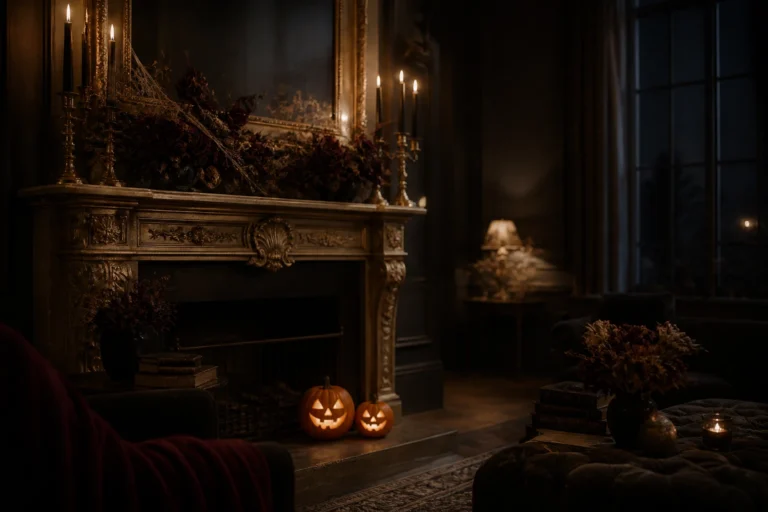
7 Flower Vase Arrangement Ideas To Instantly Refresh Any Room At Home
You want rooms that feel alive, pulled-together, and photogenic. You hate when bouquets look droopy by day three or awkwardly perched on the table like a guest who arrived too early. Imagine sun hitting glass, petals casting soft shadows on limewash, and an arrangement that makes the whole room feel finished. These seven flower vase arrangement ideas are designed to solve the exact frustrations you’ve had—flat centerpieces, cluttered consoles, awkward heights—with smart styling and simple tweaks you can do today on a budget under $120 per idea, in under 30 minutes each. Consider this your flower vase arrangement toolkit for real life: beautiful, flexible, and easy to maintain. People who crave that effortless, magazine-ready vibe (without the florist bill) will love this.
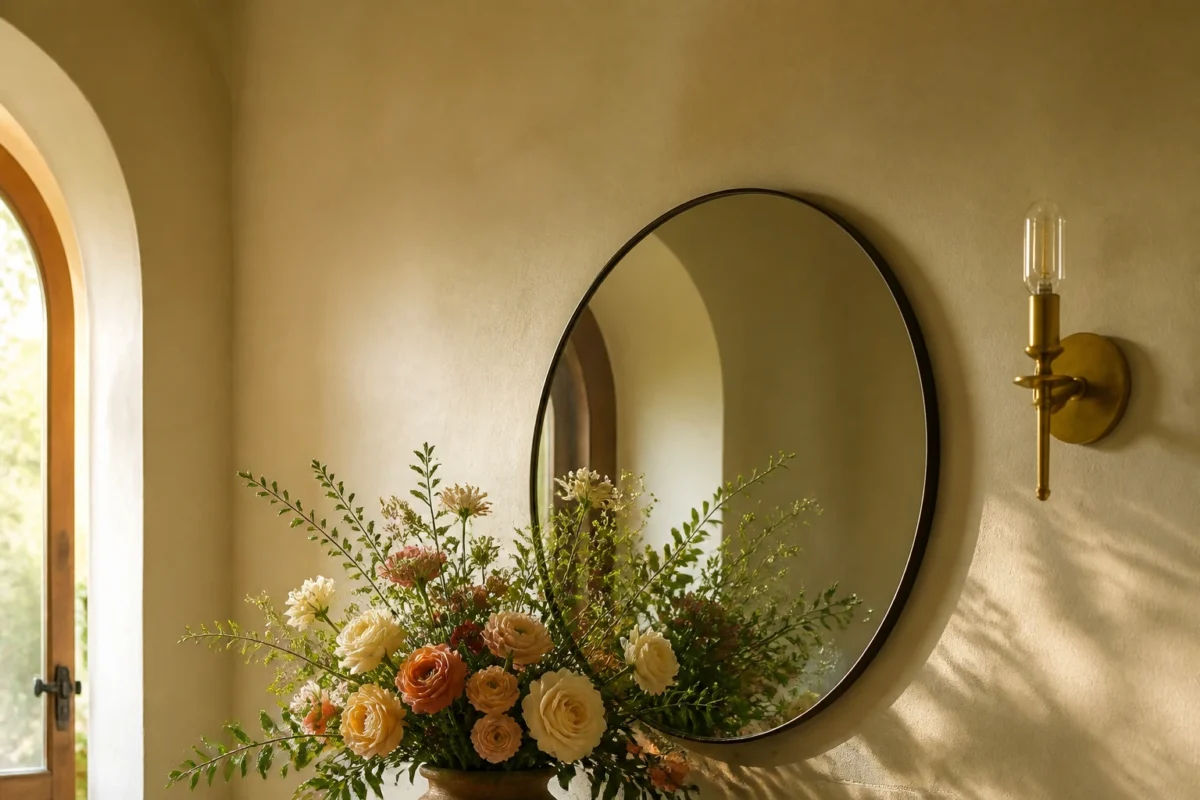
1. Sculpted Terracotta With Warm Morning Light And A Curved Console Moment
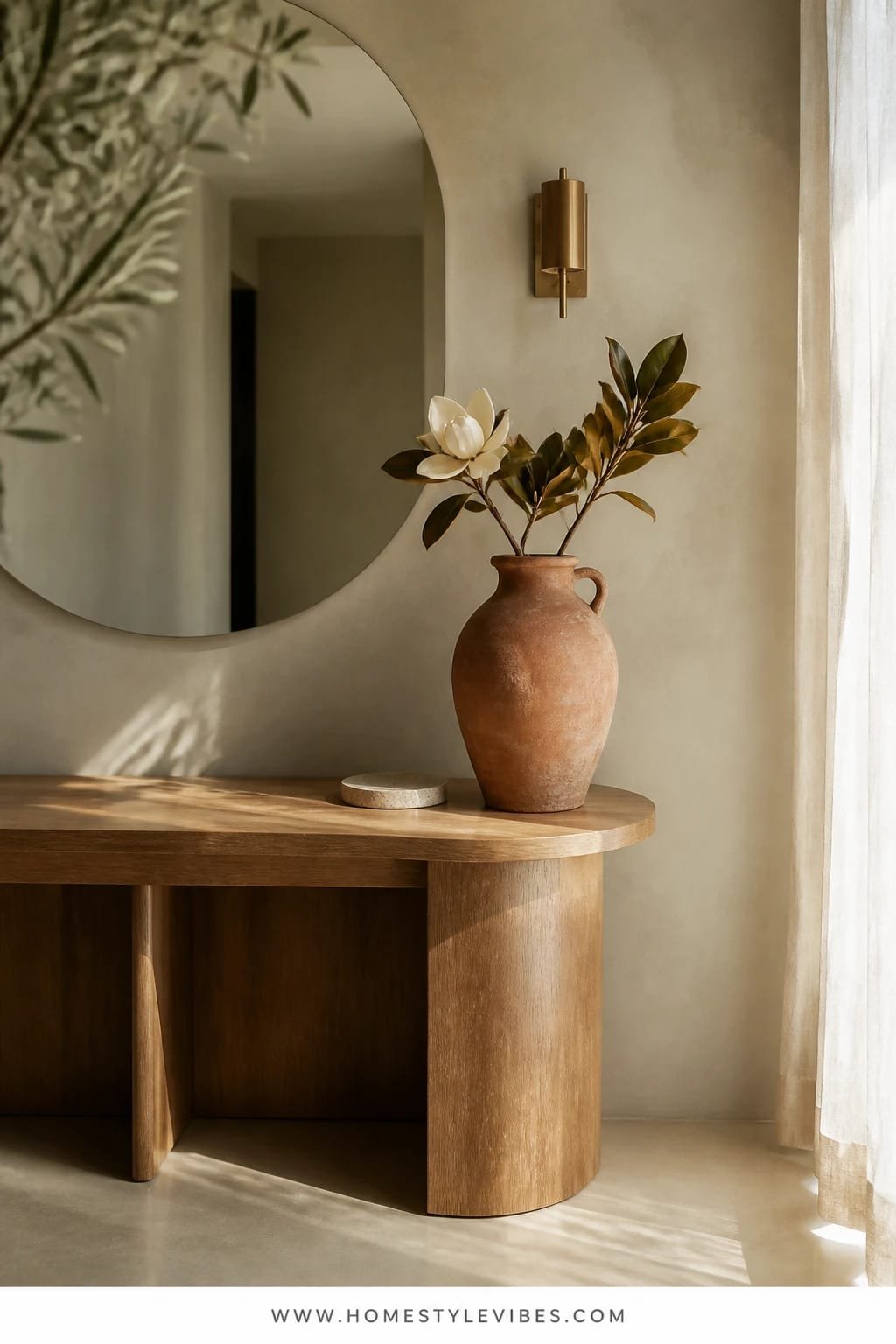
We’ve all been there: a hallway console that collects mail, keys, and random charger cords, with a lonely vase that looks more like an afterthought than a design choice. This setup leans into earthy terracotta with a soft, sculpted profile to ground the space, paired with early warm light that kisses the petals and a curved console that echoes the vase shape. The mood sits between modern Mediterranean and calm, collected entryway—welcoming, tactile, and instantly tidy-looking.
Why this works in real homes: terracotta brings a sun-baked, textural base that masks dust and fingerprints better than glossy glass. Warm light (ideally from a nearby window or a lamp with a 2700K bulb) deepens the clay tones and gives even supermarket flowers a painterly glow. On camera, the curved console and rounded vase create a soft silhouette that photographs beautifully—no harsh lines, just layers of gentle shadow and texture. For small spaces, the narrow footprint keeps the look practical; for families, the heavy material stays stable when tiny hands zoom by.
Try two variations. Budget-friendly: a thrifted terracotta pot (seal the inside with a watertight liner) and a loose mix of eucalyptus and white chrysanthemums. Small-space: one branch of olive or pittosporum with two garden roses. Renter-friendly swap: add a peel-and-stick sconce above the console to amplify that warm morning beam feeling, even at night.
Budget Breakdown:
- Sculpted terracotta vase: $25–$70
- Greenery bundle (eucalyptus/olive): $8–$18
- Blooms (2–6 stems of roses or chrysanthemums): $10–$25
- Curved console styling (tray/catchall): $12–$40
- Warm bulb or clip light: $10–$20
Total Estimated Cost: $65 – $173
Best For: Narrow entryways, small living rooms, or hallways that need a soft focal point. Works year-round; especially great in fall when terracotta feels cozy.
Key Design Elements:
- Main materials: terracotta, ceramic, linen tray
- Color palette: clay, warm white, olive green, soft gold
- Lighting strategy: 2700K bulb or morning-facing window
- Furniture silhouettes: rounded console, soft-edged tray
- Texture layers: matte vase, leafy greenery, linen catchall
- Accent details: brass key bowl, slim candle, one framed print with warm mat
How To Recreate This Look:
- Start with a sculpted terracotta vase that fits the scale of your console—about one-third the console height.
- Add greenery first for structure; cut stems at an angle and crisscross for a grid.
- Layer 3–6 blooms, tallest at the back, one hero bloom off-center for an editorial angle.
- Install a warm bulb in a nearby lamp or a small clip light hidden behind the console to simulate morning light.
- Style with a linen or rattan tray, a small brass bowl, and one slim candle to echo the shapes.
Why This Looks Expensive: The matte terracotta plus restrained flower count reads curated, not busy. The curved console echoes the vase, creating repetition—a designer trick that subconsciously signals intention.
Watch Out: Overstuffing the vase. If stems crowd the rim, the arrangement feels heavy. Leave breathing room between heads so light can pass through.
Pro Styling Tip: Pull one leaf outward toward the camera and tuck one blossom slightly lower than the rim—this adds foreground and depth in photos.
Keep scrolling—next we’ll make your dining table feel like a boutique hotel without fuss.
2. Fluted Glass Under Cool Daylight With A Slim Dining Table Runner
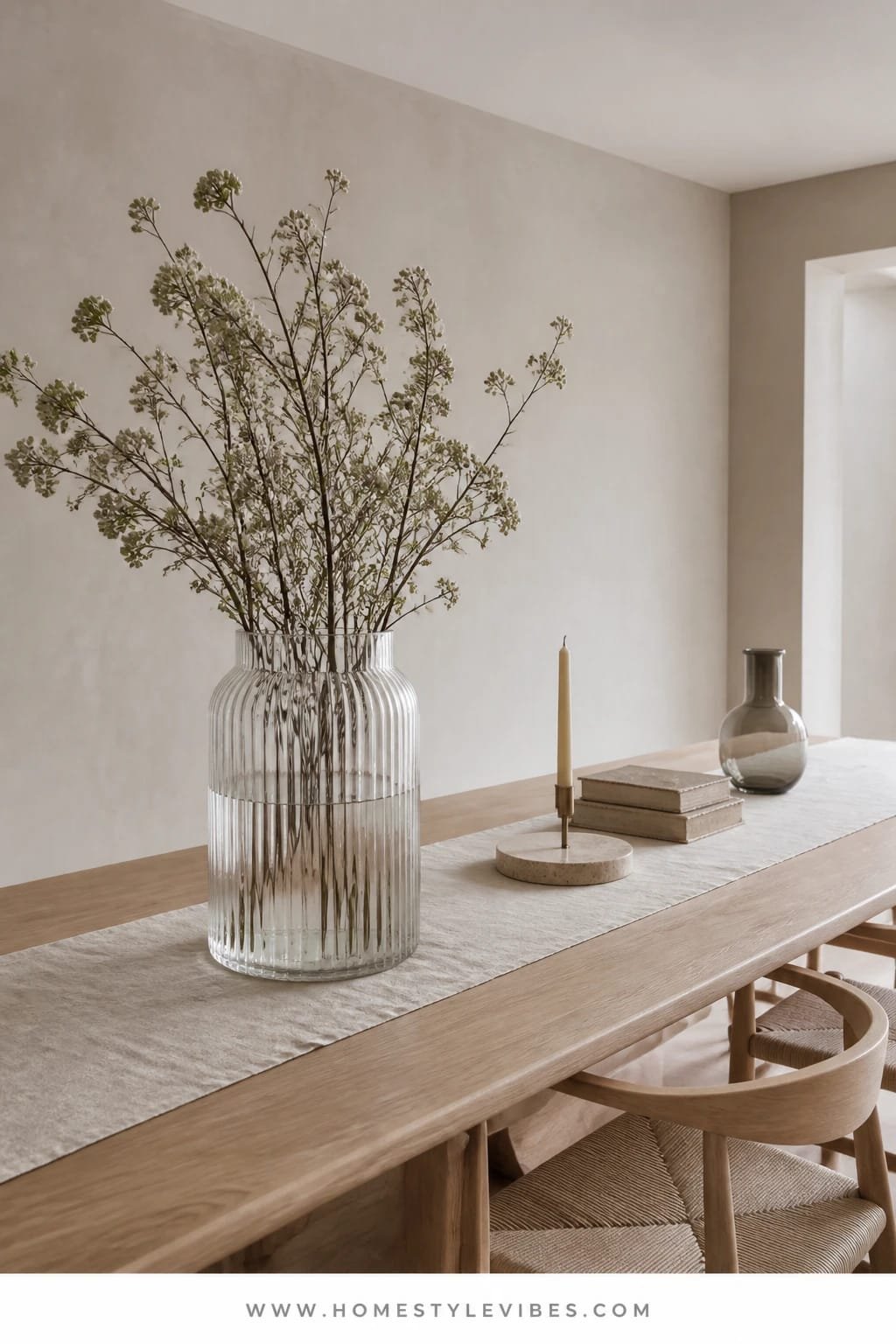
It’s that dining table that never looks “done.” You’ve tried oversized centerpieces and endless candles, but it still looks flat or too formal. A fluted glass vase under cool, even daylight adds crispness and gentle distortion that makes stems look like art. Pair it with a slim runner to visually lengthen the table and create a tidy landing strip for everything else.
This mood leans polished-Japandi: clean, calming, and not too precious for everyday meals. Clear fluted glass keeps things airy in small dining rooms and works for resale-minded folks because it suits nearly every style. The ridges refract light, so your stems look architectural even if they’re just Trader Joe’s tulips. Photographing this is a dream—the flutes catch highlights, the runner adds a linear frame, and cool daylight keeps whites crisp instead of yellow.
Variations you can swap in effortlessly: Budget version with supermarket tulips or carnations in a single color. Darker version for evening: same vase, but with inky anemones and deep plum ranunculus, plus a charcoal runner. Renter-friendly: adhesive cord cover to bring a portable lamp to the table edge for a clean glow at night.
Budget Breakdown:
- Fluted glass vase: $18–$45
- Stems (10–14 tulips, ranunculus, or anemones): $12–$40
- Slim linen or cotton runner: $20–$60
- Clip-on LED for evening ambiance: $12–$25
Total Estimated Cost: $62 – $170
Best For: Compact dining rooms, eat-in kitchens, and open-plan spaces where sightlines matter.
Key Design Elements:
- Main materials: fluted glass, linen, porcelain plates
- Color palette: cool whites, soft greys, one accent hue from the flowers
- Lighting strategy: north-facing window or 3000K LED for crispness
- Furniture silhouettes: slim runner, low-profile tableware
- Texture layers: ribbed glass, nubby linen, matte ceramics
- Accent details: two short candlesticks, one salt cellar
How To Recreate This Look:
- Place a slim runner centered on the table—length should stop 6–8 inches from each end.
- Fill the fluted vase one-third with water and add a splash of flower food.
- Trim stems so bloom heads sit just above the fluted rim; keep most at one height for graphic impact.
- Add two short candles staggered on the runner; keep them low so the vase shines.
- For evening, click on a cool-white LED nearby to maintain clarity.
Why This Feels Designer: The linear runner frames the composition while the fluted glass adds controlled complexity—clean lines plus subtle texture is the sweet spot.
One Thing To Avoid: Mixing too many flower colors. Stick to one hue family so the glass texture stays the star.
Pro Styling Tip: Rotate the vase a few degrees so the flutes catch a diagonal highlight—this photographs as movement.
Quick Tip: Imagine three zones—vase center, support elements within 6 inches, and empty space beyond. That negative space is what keeps everything looking intentional, not cluttered.
3. Matte Black Ceramic With Dappled Afternoon Light And A Low Coffee Table Bowl
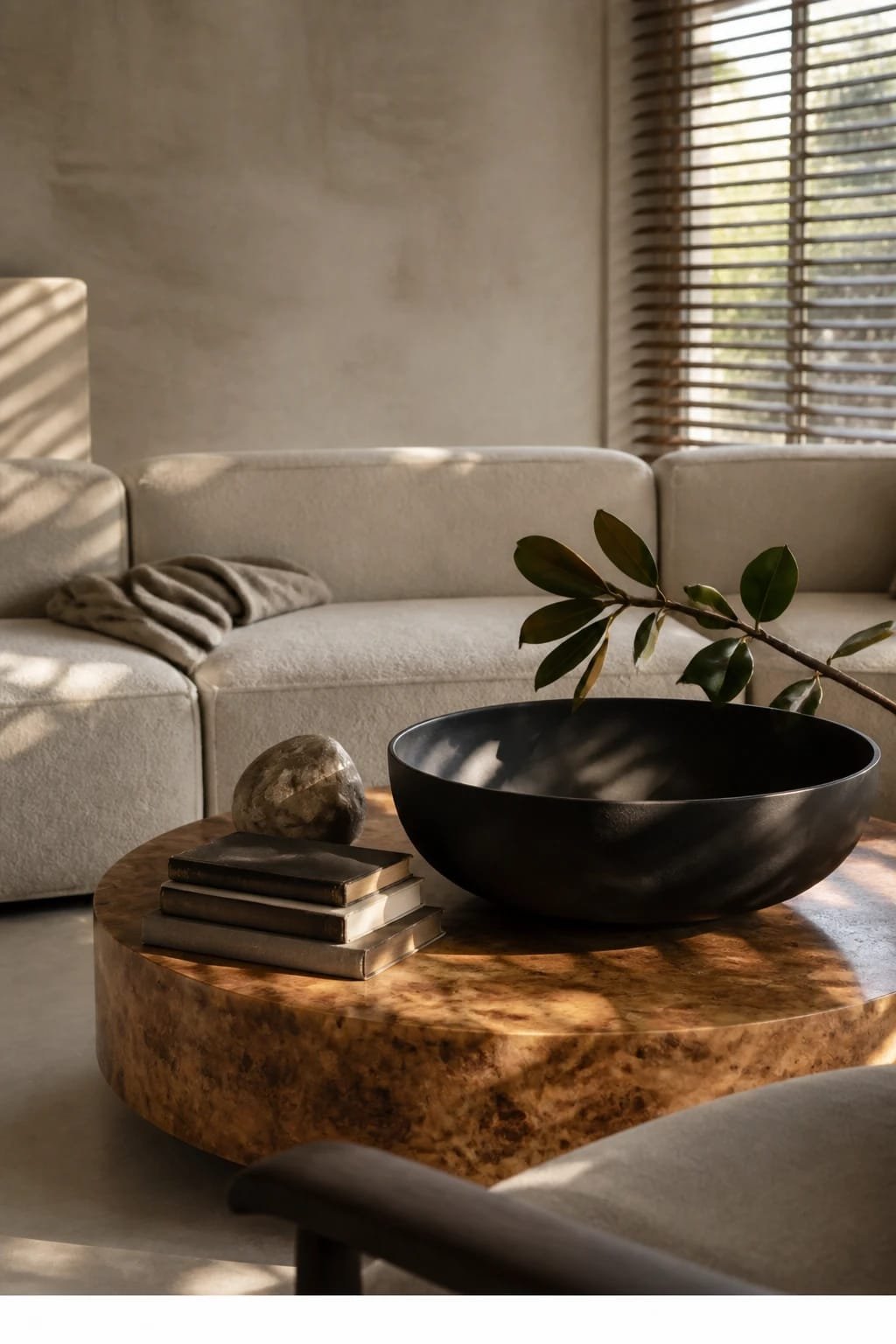
You’ve got a gorgeous coffee table, but the arrangement either blocks conversation or looks tiny and lost. A low, wide bowl in matte black ceramic changes the game: it hugs the surface, reads as sculptural, and lets you chat across the table without peeking around peonies. Dappled afternoon light (through blinds or a leafy tree) adds a play of shadows that makes even simple greenery look dramatic.
The vibe is editorial and a touch moody—think boutique-hotel lounge without the velvet rope. Black ceramic anchors lighter sofas and rugs, which is perfect for families because the bowl is hard to tip. Photos love this setup because the low arrangement creates a horizontal plane of interest; the matte finish avoids glare; the light adds micro-contrasts that scream high-end.
Two easy versions: Budget-friendly with a bowl of mixed greenery (leatherleaf fern, ruscus) and three focal blooms. Small-space move: a mini footed bowl with just camellia leaves and one dahlia. Darker scheme: moody scabiosa, deep burgundy ranunculus, and black calla lilies, with one trailing jasmine vine for motion.
Budget Breakdown:
- Matte black low ceramic bowl: $24–$65
- Greenery bundle: $8–$15
- Feature blooms (3–7 stems): $12–$35
- Florist frog or chicken wire: $6–$12
Total Estimated Cost: $50 – $127
Best For: Living rooms with low seating and light upholstery; rooms with afternoon sun; minimalists who still want drama.
Key Design Elements:
- Main materials: matte ceramic, metal frog, soft greenery
- Color palette: black, deep green, one accent bloom color
- Lighting strategy: filtered afternoon light through slats or sheer curtains
- Furniture silhouettes: low, wide coffee table; square or round
- Texture layers: matte pottery, glossy leaves, velvet or linen throw
- Accent details: small stack of art books, stone coaster set
How To Recreate This Look:
- Place a frog or chicken wire inside the bowl to support stems.
- Build a base with greenery that sits just above the rim; let one piece drape slightly.
- Add 3–5 focal blooms off-center in a loose cluster; vary head heights by one inch.
- Position near a window with slatted blinds or leaves outside for dappled light.
- Style the table with two art books and a stone object to echo the bowl’s weight.
Why This Reads High-End: Low bowls feel curated because they need intention; the negative space above them makes the room feel breathable and styled.
The Most Common Mistake: Using too-tall stems. If blooms sit more than 3 inches over the rim, you lose the sleek, loungey feel.
Pro Styling Tip: Slightly tilt one bloom toward the light source—your camera will pick up the petal translucency for a subtle glow.
Mindset Reset: You don’t need a florist’s kitchen or endless buckets. One thoughtful vase, the right height, and good light will outperform a chaotic armload every time.
4. Honed Marble Pedestal In Soft Candle Glow With A Single Hero Branch
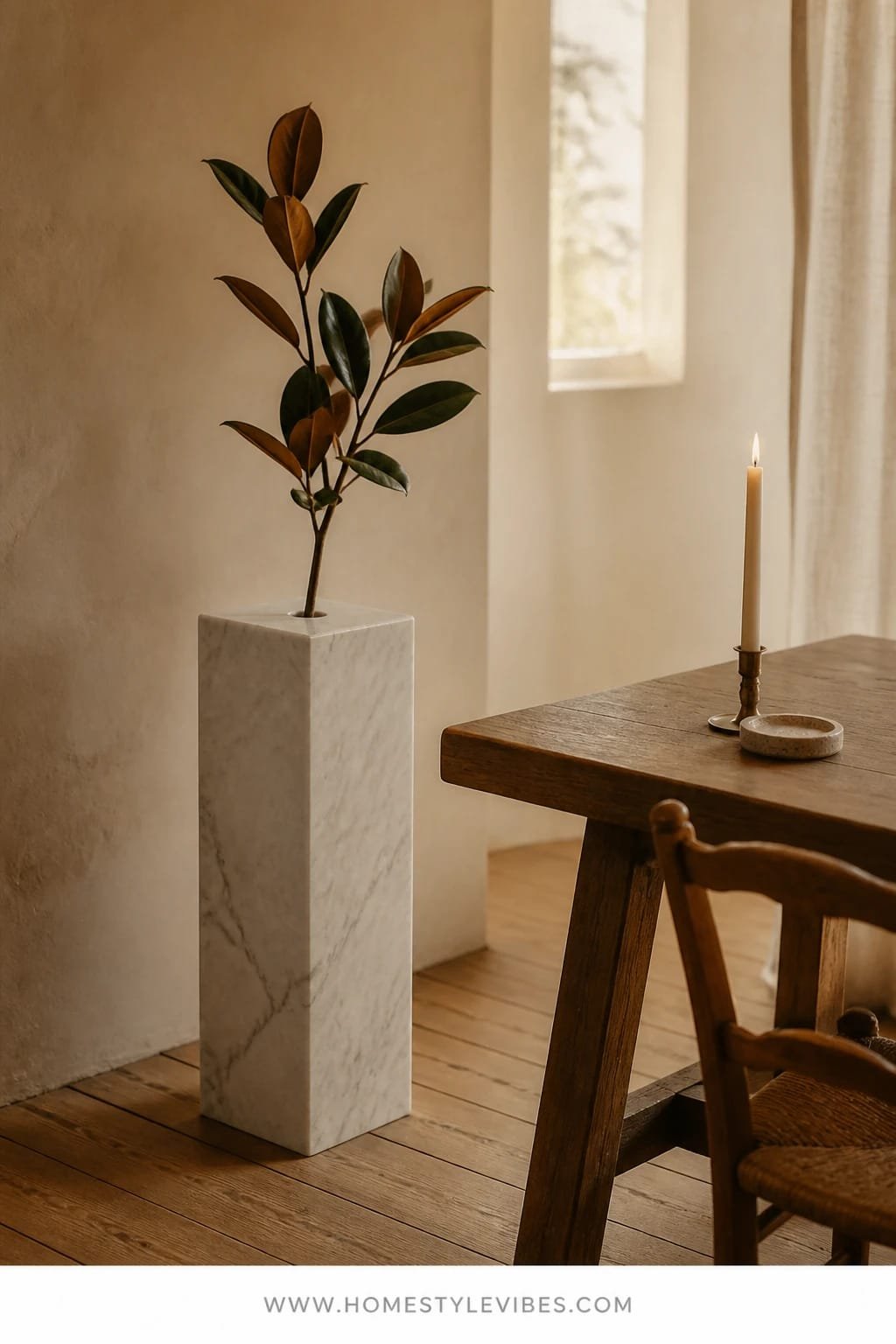
You’ve tried full bouquets, but the dining room still feels chaotic. Enter the single-branch moment: one dramatic magnolia, quince, or forsythia stem placed in a narrow opening on a honed marble pedestal. Candle glow makes the marble read velvety, not flashy, and the solitary branch says, “Yes, someone with impeccable taste lives here.”
This arrangement suits busy households because less water means fewer spills and fewer dying stems to babysit. It photographs like a still life—light catching the marble veining, crisp branch lines slicing through the scene. Small dining rooms benefit because vertical lines draw the eye up without blocking views. For families, keep the pedestal centered and weighted; honed surfaces hide water spots better than polished.
Variations: Budget version uses a thrifted stone candlestick as a mini pedestal. Renter-friendly alternative: a small stack of hardcover books with a linen napkin on top to protect them. Seasonal switch: cherry blossom in spring, olive in summer, maple in fall.
Budget Breakdown:
- Honed marble pedestal or base: $35–$110
- Narrow-neck vase (glass or ceramic): $12–$45
- Single hero branch: $8–$22
- Taper candles and holders: $10–$30
Total Estimated Cost: $65 – $207
Best For: Dining rooms or sideboards that need vertical interest and calm energy; low-maintenance households.
Key Design Elements:
- Main materials: honed marble, ceramic, natural branch
- Color palette: ivory stone, deep green/brown branch, soft cream candlelight
- Lighting strategy: candles plus dimmed overheads to reduce glare
- Furniture silhouettes: sleek pedestal, slim vase, long table
- Texture layers: velvety stone, matte branch bark, linen runner
- Accent details: tiny dish of matches, one small bowl of seasonal fruit
How To Recreate This Look:
- Center a honed marble base on your table or sideboard to create a stage.
- Place a slim vase on top; fill one-third with water.
- Insert a single, sculptural branch; trim so the highest point sits well below any pendant light to avoid awkward shadows.
- Add two taper candles at varying distances to create a triangle.
- Dim overhead lights to 30–40% and let candlelight define the scene.
Why This Looks Intentional: One striking element framed by stone and flame reads like an art installation. Editing, not excess, telegraphs confidence.
Don’t Do This: Pair a busy table runner with heavy veining. If your marble has drama, keep textiles quiet.
Pro Styling Tip: Nudge the branch slightly off-center over the marble base—this asymmetry makes photos feel dynamic, not rigid.
Did You Know? Cutting woody branches under water prevents air bubbles from blocking hydration. Use pruning shears and re-cut every 3–4 days for longevity.
5. Clear Cylinder With Bright Midday Light And A Kitchen Island Fruit Bowl Duo
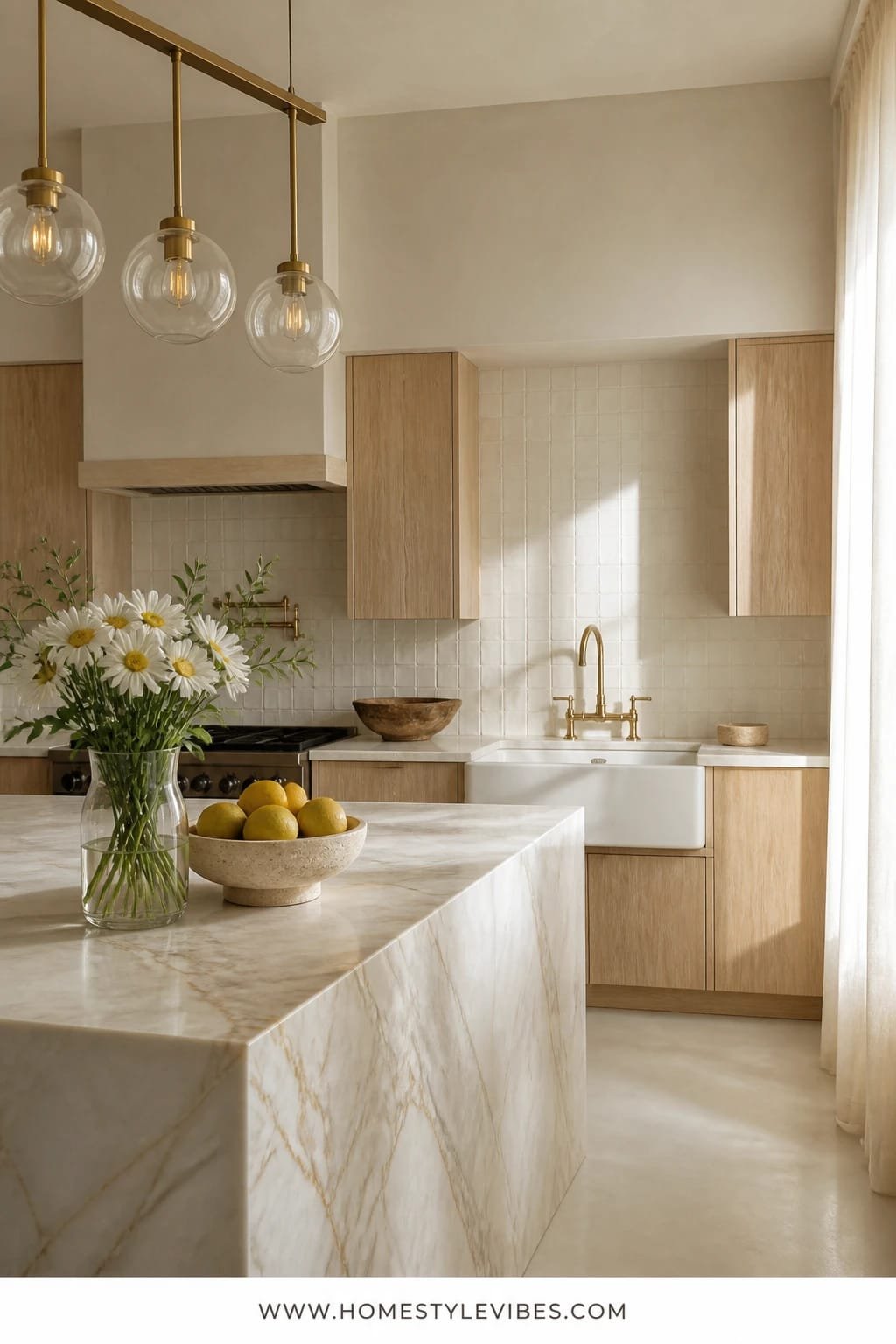
It’s the kitchen island catch-all problem. You’ve got mail, snacks, and yesterday’s water bottle. A clear cylinder vase paired with a fruit bowl creates a purposeful duo that visually corrals the chaos. Midday light bouncing off countertops turns even humble daisies into a fresh, “I just cleaned” signal—even if you didn’t.
The mood: fresh, unfussy, and family-friendly. Why it works: clear glass feels hygienic in kitchens, and the cylinder’s straight sides support stems in a tidy fan that won’t flop onto your cutting board. Photographs love the reflections off water and glass; fruit adds color and scale. Choose flowers that mirror your fruit tones for cohesion—lemons with yellow tulips, limes with green hydrangea, pears with blush roses.
Variations: Budget version uses one citrus type and supermarket mums. Small-space alternative: half-height cylinder near the sink with mini carnations. Darker kitchen? Use white flowers with glossy leaves and slide the duo under a task light at 3000K for a clean pop.
Budget Breakdown:
- Clear cylinder vase: $12–$28
- Stems (7–12): $10–$30
- Fruit bowl (ceramic or wood): $18–$55
- Seasonal fruit: $6–$15
Total Estimated Cost: $46 – $128
Best For: Busy kitchens, rental apartments, households that need one reliable styling move that always reads fresh.
Key Design Elements:
- Main materials: clear glass, ceramic or wood, fresh fruit
- Color palette: white + one citrus/brights accent
- Lighting strategy: midday sun or bright task lighting for sparkle
- Furniture silhouettes: simple cylinder, shallow bowl
- Texture layers: glossy glass, watery reflections, smooth fruit skin
- Accent details: striped dish towel, cutting board standing upright
How To Recreate This Look:
- Place the fruit bowl first, slightly off-center on the island.
- Fill the cylinder with water to just below halfway for clean stem lines.
- Trim stems so blooms sit at varying heights but stay within 1.5x the vase height.
- Cluster fruit in a single color family; avoid rainbow chaos.
- Angle the duo toward the brightest light source for reflections.
Why This Feels Designer: The repetition of color between fruit and flowers creates an instant palette. Your eye reads it as planned styling, not random groceries.
Watch Out: Cloudy water. Change it every other day and remove any leaves below the waterline to prevent bacteria and that weird smell you pretend not to notice.
Pro Styling Tip: Slip a single citrus leaf or herb sprig into the arrangement—tiny, unexpected greenery adds freshness in photos.
Micro-moment: You walk in with groceries, drop the bag on the island, and the yellow tulips echo the lemons in the bowl. Instantly, the whole kitchen looks cleaner. Even if the sink says otherwise.
6. Recycled Glass In Golden Hour With A Bookshelf Stagger And Brass Bookend
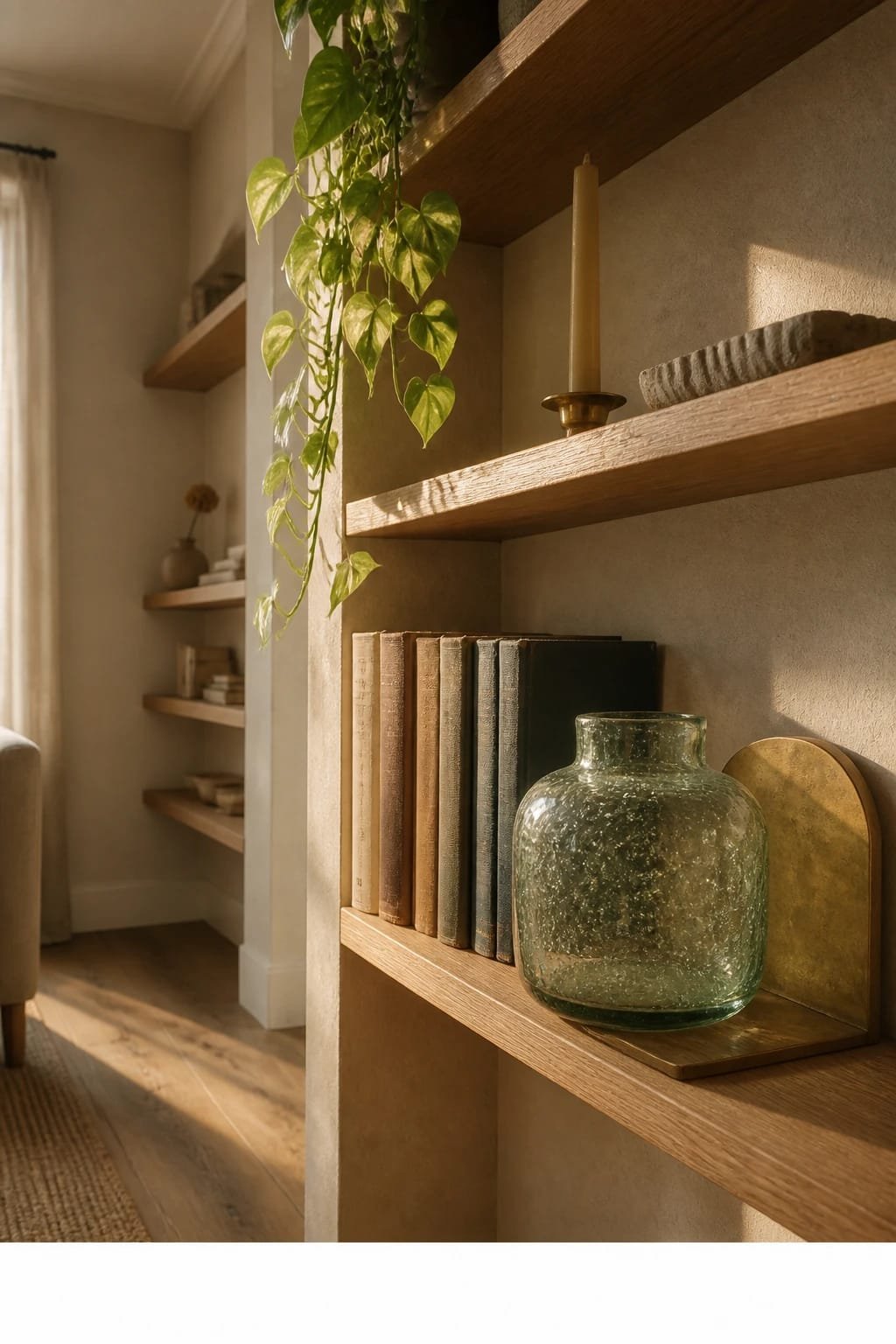
You’ve styled your shelves, but the top right corner never quite sings. A squat recycled-glass vase with softly bubbled texture, placed beside a brass bookend, adds weight and sparkle without stealing the show. Golden hour light makes the bubbles glow and creates tiny lens flares on camera—subtle magic that makes your shelfie pin-worthy.
Real-life friendly? Absolutely. Recycled glass hides hard-water spots better than pristine crystal and reads artisanal, not fussy. On a shelf, lower arrangements work best—no petals smushed on the underside of the next shelf. The brass bookend balances the organic glass with a sharp note, giving you contrast and clarity. If you’ve got kids, the squat profile is more stable than a tall vase perched on a high ledge.
Variations: Budget: thrift a chunky glass jar and tie a linen ribbon around the neck. Darker scheme: smoky recycled glass with inky scabiosa and a blackened-brass bookend. Renter-friendly: adhesive felt pads under the vase to prevent scratches and sliding.
Budget Breakdown:
- Recycled glass vase: $16–$42
- Short-stem flowers (ranunculus, anemones, or spray roses): $10–$28
- Brass bookend (single): $18–$45
- Linen ribbon or small tray: $6–$18
Total Estimated Cost: $50 – $133
Best For: Bookshelves, media units, or office credenzas where a touch of organic shine makes the vignette feel finished.
Key Design Elements:
- Main materials: recycled glass, brass, linen
- Color palette: sea-glass green, warm brass, soft white or blush blooms
- Lighting strategy: angle shelves to catch late-afternoon light or use a picture light at 2700K
- Furniture silhouettes: squat vase, sculptural bookend, stacked books
- Texture layers: bubbled glass, metal sheen, paper edges
- Accent details: slim photo frame, one tiny ceramic dish
How To Recreate This Look:
- Stagger 2–3 stacks of books; leave one small open zone for the vase.
- Position the brass bookend to visually anchor the glass piece.
- Trim stems short so blooms rest just above the rim—keep it compact.
- Rotate the vase until bubbles catch the warm light.
- Add one small frame for height variation and call it done.
Why This Looks Expensive: Mixed materials—glass, metal, paper—create layered richness. The low profile signals restraint, which always reads luxe.
One Thing To Avoid: Overcrowding the shelf. If you can’t slide your hand between items, you’ve lost the negative space that makes each piece shine.
Pro Styling Tip: Place one bloom lower than the rim, peeking out—it adds a quiet “found” feeling that photographs as effortless.
Perspective Check: If one idea resonates more than the others, that’s your starting point. You don’t need all seven; you need the one that fixes the thing that bugs you most.
7. Textured Stoneware In Soft Overcast Light With A Nightstand Globe Lamp
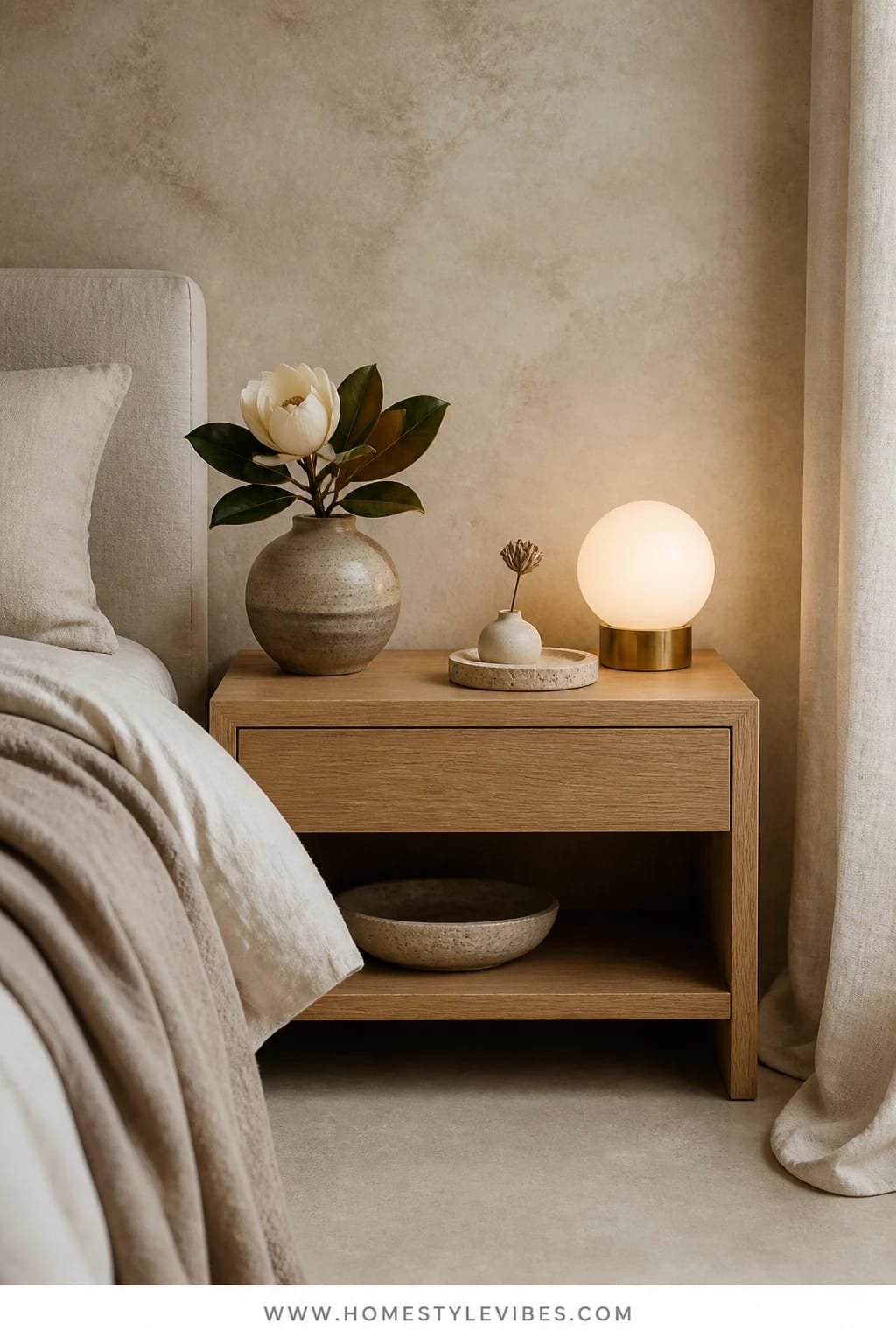
Your bedroom nightstand is a water bottle graveyard. You’ve tried a tiny vase, but it looks like hotel lobby leftovers. A small textured stoneware vase with a mini arrangement, lit by a soft globe lamp, makes the corner feel like a boutique retreat you actually live in. Overcast-style light (diffused, no harsh glare) lets petal colors go creamy and serene—perfect for winding down.
The mood: spa-adjacent Japandi with a whisper of romance. Stoneware’s subtle grit and glaze play nicely with linen sheets and walnut headboards. Why it works: a smaller profile keeps sightlines clear and avoids pollen explosions on your book. Photos love the lamp’s round silhouette paired with the vase’s tactile surface—two shapes, two textures, one calm moment. Personally, I tried this in my own bedroom last fall with a mini bunch of lisianthus and honestly couldn’t believe how much calmer my brain felt at night.
Variations: Budget-friendly: baby’s breath cluster with one garden rose. Dark room: white hydrangea mini cluster for reflectivity. Renter move: battery-powered globe lamp with a warm 2700K glow. Petite nightstand: single bud vase with a sprig of waxflower and one ranunculus.
Budget Breakdown:
- Textured stoneware bud vase: $10–$28
- Mini stems (3–6): $8–$20
- Globe lamp (plug-in or battery): $25–$70
- Linen coaster or small tray: $8–$18
Total Estimated Cost: $51 – $136
Best For: Small bedrooms, guest rooms, or anyone craving calmer bedtime energy without committing to a full bouquet.
Key Design Elements:
- Main materials: textured stoneware, linen, glass globe
- Color palette: oat, warm white, soft blush or creamy green
- Lighting strategy: diffused lamp light; keep overheads off
- Furniture silhouettes: round globe, squat vase, rectangular nightstand
- Texture layers: stoneware grit, linen weave, soft petal sheen
- Accent details: slim book stack, ceramic ring dish, water carafe
How To Recreate This Look:
- Place the globe lamp at the back corner to create backlight and reduce glare.
- Center a linen coaster; set your stoneware vase on it for a framed feel.
- Trim mini stems short; keep overall height below two-thirds of the lamp’s height.
- Angle one stem toward the lamp so petals catch a soft halo.
- Add a ring dish and a single book to finish the vignette—no clutter allowed.
Why This Feels Designer: Tone-on-tone textures with controlled scale. Nothing screams for attention; everything whispers in harmony, which is exactly what bedrooms need.
The Most Common Mistake: Mixing too many petite objects. Keep it to three: lamp, vase, one functional item. More than that and it gets fussy fast.
Pro Styling Tip: For photos, turn the lamp slightly away from the camera to avoid a hotspot and let the vase live in that soft gradient.
Quick Tip: Snap a phone pic before you call it done. If something looks off in the photo, it’s off in real life. Adjust height, remove one stem, or shift the vase two inches. Tiny moves, big payoffs.
Quick Checklist
- Choose one dominant material for your vase: terracotta, glass, ceramic, or stoneware
- Match light quality to mood: warm morning, cool daylight, dappled afternoon, or candle glow
- Set a focal height rule: above-rim but below sightline for conversation areas
- Edit flower colors to one hue family for cohesion
- Use greenery for structure before adding blooms
- Create negative space around the arrangement
- Echo a shape from nearby furniture or decor
- Repeat one color elsewhere (fruit, book spine, tray)
- Control glare with matte finishes or diffused light
- Refresh water and re-cut stems every 2–3 days
Frequently Asked Questions
How do I keep simple supermarket flowers from looking cheap in these vase arrangements?
Stick to one color family, trim stems at staggered lengths, and remove any leaves below the waterline. Use fewer stems and give them space—air between blooms looks intentional. A well-chosen vase (matte terracotta, fluted glass) does a lot of the heavy lifting.
What’s the best flower vase arrangement idea for a very small apartment?
Go for Section 7’s stoneware bud vase with a mini arrangement. Keep it under 8 inches tall and place it near a soft lamp. You’ll get the vibe without sacrificing surface area.
I’m a renter with limited natural light. Which setup will still look good?
Try the honed marble pedestal with a single branch (Section 4) or the nightstand globe lamp scene (Section 7). Use warm 2700K bulbs to mimic twilight and lean into texture over color for depth.
How do I maintain branches or flowers so they last longer?
Re-cut stems under water every 2–3 days, change water frequently, and avoid direct sun or hot spots. For woody branches, split the ends a half inch so they drink better. Keep fruit away from arrangements if possible—ethylene can speed up wilting.
What’s the most common mistake people make with flower vase arrangements on coffee tables or dining tables?
Going too tall. Keep coffee table arrangements under 12 inches total and dining centerpieces low enough for clear sightlines. Also, avoid mixing too many colors; two tones max usually looks cleaner.
The Gentle Finish
Pick one idea and try it this week. Start where the frustration is loudest—maybe it’s the dining table that always feels half-dressed, or the nightstand that never feels calm. You don’t need perfect peonies or a florist’s toolbox. You need a clear point of view: one great vase, thoughtful lighting, and just enough stems.
The truth is, what reads as luxury is texture plus lighting plus restraint. Matte against gloss. Soft petals catching a warm edge of light. A curve echoed by a console. When you edit down and let the materials do the talking, everything else breathes.
You’ve got this. Choose your favorite flower vase arrangement idea, trim a few stems, and watch the room click into place. Seriously—ten minutes, one vase, and your home will feel like it finally exhaled.

About the Author
Krisztina P.Rendes, Founder of Home Style Vibes
Founder of Home Style Vibes
Krisztina Puskásné Rendes created Home Style Vibes as a cozy-modern lifestyle space where homemaking meets inspiration. Her goal is to help women create beautiful, organized, and peaceful homes they truly love — without overwhelm. You’ll find here heart-driven content on home decor, cleaning tips, easy family recipes, organization and decluttering, DIY home projects, plants, and seasonal ideas — all designed to bring more calm, comfort, and style into everyday life.