6 Best Room Decor Ideas for a Bedroom That Looks Straight Off Pinterest Now
You want a bedroom that looks serene on Sunday morning, golden and glossy at 4 p.m., and cozy enough at night that your shoulders finally drop. But clutter creeps in, the lighting is harsh, and the bedding never photographs like those Pinterest boards you saved at 1 a.m. Think whisper-soft textures, layered light, and intentional styling that makes your room look finished at every hour—these six bedroom decor ideas will solve what’s actually stopping you. In two weekends and under a realistic budget cap per concept, you’ll create a bedroom that looks straight off Pinterest and feels like your favorite boutique hotel. If you love spaces that are calm, styled, and quietly luxe, this one’s for you.
1. Cloud-Soft Neutrals With Quiet Contrast
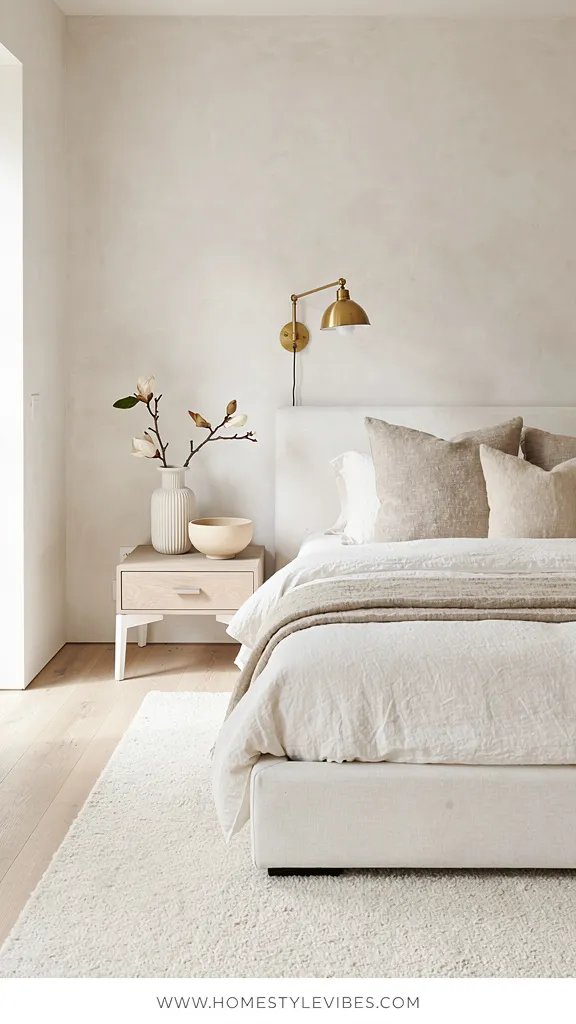
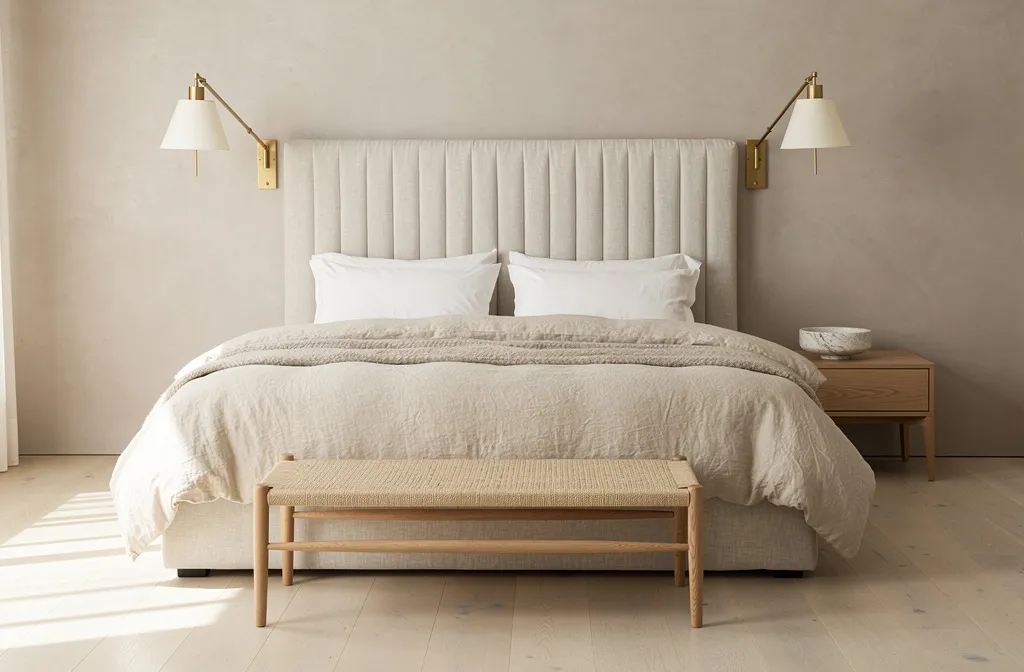
We’ve all been there: you tried all-beige everything and it somehow still looks flat, not finished. The struggle? You wanted calm, but you ended up with “rental vanilla.” This design solves that by using soft neutrals layered with quiet contrast—think oat, mushroom, warm white, and a touch of deep espresso—to create dimension without drama. It’s the vibe of a sunlit hotel room at noon: tranquil, light, and collected.
What’s special here is restraint. Instead of ten throw pillows and four blankets, we use fewer, better pieces: a padded headboard with subtle texture, a thick duvet with a crisp cotton percale cover, and a woven bench that adds a grounding moment at the foot of the bed. This works beautifully in small bedrooms because the palette elongates the walls and lets natural light bounce everywhere. Photograph it and you’ll see: the delicate contrast between soft white bedding and a taupe linen headboard reads editorial, not bland.
Lighting matters more than you think. Warm, diffused light turns beiges from “blah” to buttery. A linen drum shade, glass lamps with warm bulbs, and a picture light above simple art add that glow. Materials dominate: linen, bouclé, matte ceramic, and ash wood. The star is texture, not color. It looks Pinterest-perfect because it captures shadow depth: a pleated lamp casts a soft fan on the wall, the boucle chair throws a fuzzy outline, and the nubby rug adds grounding weight.
Variations you’ll love:
- Budget-friendly: Swap a custom headboard for a wall-hung linen panel and affordable percale sheets. Add chalky spray paint to thrifted lamps for a matte ceramic look.
- Small-space: Use a bed with hidden storage and skinny nightstands. Choose sconces instead of table lamps to free surfaces.
- Darker version: Keep the neutrals but anchor with a dark espresso bed frame and chocolate velvet pillow shams for richer contrast.
- Renter-friendly: Use Command hooks for a picture light and peel-and-stick grasscloth behind the bed for subtle depth.
Budget Breakdown:
- Linen headboard or wall panel: $180–$600
- Percale duvet and shams: $120–$300
- Woven bench or ottoman: $120–$350
- Linen drum pendant or table lamps: $80–$280
- Matte ceramic accessories: $30–$120
- Neutral textured rug (8×10 or appropriate size): $200–$800
- Picture light and simple art: $70–$250
Total Estimated Cost: $800 – $2,700
Best For: Small to medium rooms that get some natural light; anyone wanting calm, camera-ready softness without stark white overload.
Key Design Elements:
- Main materials: Linen, bouclé, ash or oak wood, matte ceramic
- Color palette: Warm white, oat, mushroom, espresso accents
- Lighting strategy: Layered—overhead diffuser + bedside lamps + picture light
- Furniture silhouettes: Rounded corners, upholstered headboard, slim nightstands
- Texture layers: Nubby rug, waffle throw, pleated lamp shades
- Accent details: Woven bench, soft-edge frames, branchy greens in a matte vase
How To Recreate This Look:
- Start with a neutral rug that’s visibly textured, not flat.
- Add a padded or linen-wrapped headboard in a tone deeper than your walls for quiet contrast.
- Layer crisp percale bedding with a waffle or honeycomb throw in a slightly deeper neutral.
- Install a linen drum shade overhead; swap in warm 2700K bulbs everywhere.
- Style with a woven bench, a matte vase with a sculptural branch, and one framed print under a small picture light.
Why This Looks Expensive: The palette whispers, the textures do the talking. Limiting color allows quality materials and subtle contrast to read as intentional, like a boutique suite. The eye sees continuity, which always feels high-end.
Watch Out: Don’t match every neutral exactly. If the bed, rug, and walls are the same tone, the room goes flat. Aim for a gradient from warm white walls to taupe headboard to darker wood accents.
Pro Styling Tip: When photographing, turn off overheads, use only lamps, and pull the duvet tightly with a single visible fold; the shadow line will add that editorial crease you love on Pinterest.
Keep scrolling. The next look solves the “nice pieces, chaotic layout” problem you didn’t realize was the reason your bedroom never feels finished.
2. The Symmetry Suite: Hotel-Quiet Layout With Framed Light
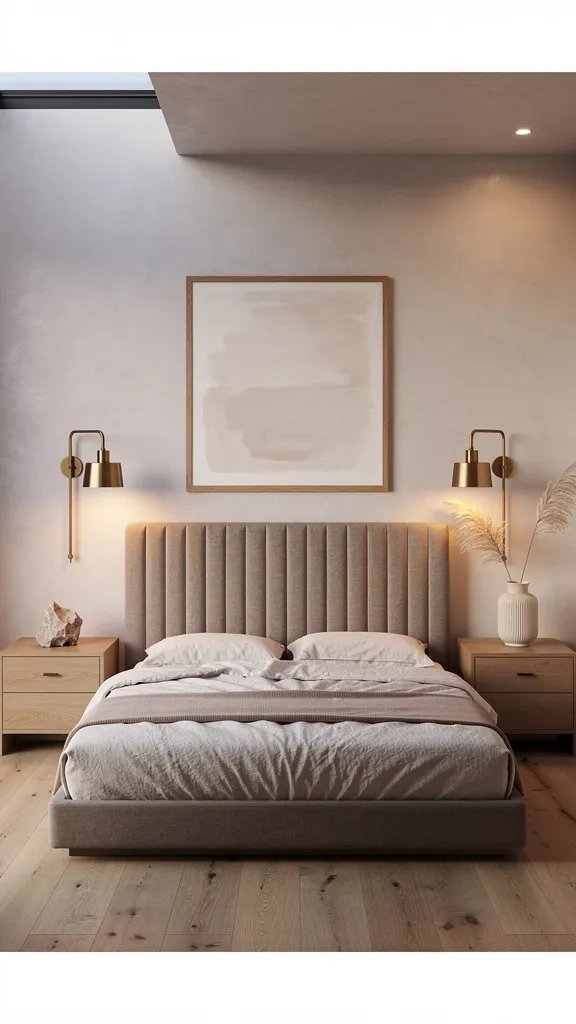
It’s that one corner that always feels off. You have great pieces, but the placement feels… twitchy. The Symmetry Suite solves layout anxiety by giving the eye a calm, central anchor: the bed, perfectly balanced with mirrored nightstands, rhythmic lighting, and a framed focal point over the headboard. It’s the timeless, “I could be on vacation right now” mood.
Why it works? Symmetry reduces visual noise. In real homes, that means fewer micro-decisions and easier maintenance. At night, warm pools of light from matching lamps or hardwired sconces create a hotel-level hush. Materials lean slightly polished here—brushed brass, lacquered wood, crisp cotton, and a touch of stone or marble. On camera, the rhythm of pairs reads sophisticated and intentional. Depth comes from flanking shadows and a strong vertical moment at the center wall (molding, art, or a fabric panel).
Variations you’ll love:
- Budget-friendly: Match nightstands with thrifted finds painted the same color. Use plug-in sconces to mimic custom lighting.
- Small-space: Use shallow nightstands (12–14 inches deep) and narrow sconces. Hang curtains wider than the window to visually expand the wall.
- Darker version: Deep wall color behind the bed (ink, merlot, moody green) with brass picture lights and ivory bedding for contrast.
- Renter-friendly: Fake wall paneling with peel-and-stick molding and paint. Use plug-in picture lights above framed prints.
Key Design Elements:
- Main materials: Brushed brass, lacquered or painted wood, stone or faux-marble accents
- Color palette: Ivory, graphite, soft beige, brass, optional deep accent color
- Lighting strategy: Pairs—matching lamps or sconces + a picture light over art
- Furniture silhouettes: Clean lines, medium profile headboard, symmetrical nightstands
- Texture layers: Crisp cotton, subtle velvet for pillows, smooth stone tops
- Accent details: Framed art pair or one oversized piece, fresh flowers, a tray
Budget Breakdown:
- Matching nightstands (new or vintage): $160–$700
- Plug-in sconces or table lamps (pair): $90–$400
- Headboard or bed frame: $250–$900
- Large art or framed pair: $120–$480
- Tray, vase, and small styling pieces: $60–$200
- Optional peel-and-stick molding: $50–$180
Total Estimated Cost: $730 – $2,860
Best For: Anyone who wants hotel calm with minimal effort; narrow rooms that benefit from visual order.
How To Recreate This Look:
- Center the bed on the longest uninterrupted wall. Confirm equal space on both sides (at least 18 inches).
- Place matching nightstands and align lamp or sconce heights to just below eye level when seated.
- Hang a single large piece or a balanced pair above the headboard. Keep the bottom edge 6–9 inches above the headboard.
- Introduce a tray to gather nightly essentials and a small floral or branching stem for height variation.
- Finish with floor-length curtains hung close to the ceiling and extended 8–12 inches past the window.
Why This Feels Designer: Symmetry is a visual exhale. It guides the eye and suggests custom planning, even when the pieces are affordable. The consistent heights and mirrored shapes trick the brain into reading the room as refined.
One Thing To Avoid: Don’t push lamps right up to the wall. Leave 2–3 inches so the light throws a soft halo; otherwise, you’ll get harsh shadows that look cheap in photos.
Pro Styling Tip: Angle the art’s picture light slightly downward to graze the frame—this creates a subtle vignette that looks stunning on camera.
Pause for a breath. If order and neutrals soothe your soul, stick with one of the first two. If you crave soul and story, the next design might be your north star.
Remember, this isn’t about recreating a showroom. It’s about building a space that actually feels like yours. If one idea resonates more than the others, that’s your starting point. You don’t need all of them; you need the right one for your life.
3. Collected Artisan Calm With Textural Layers
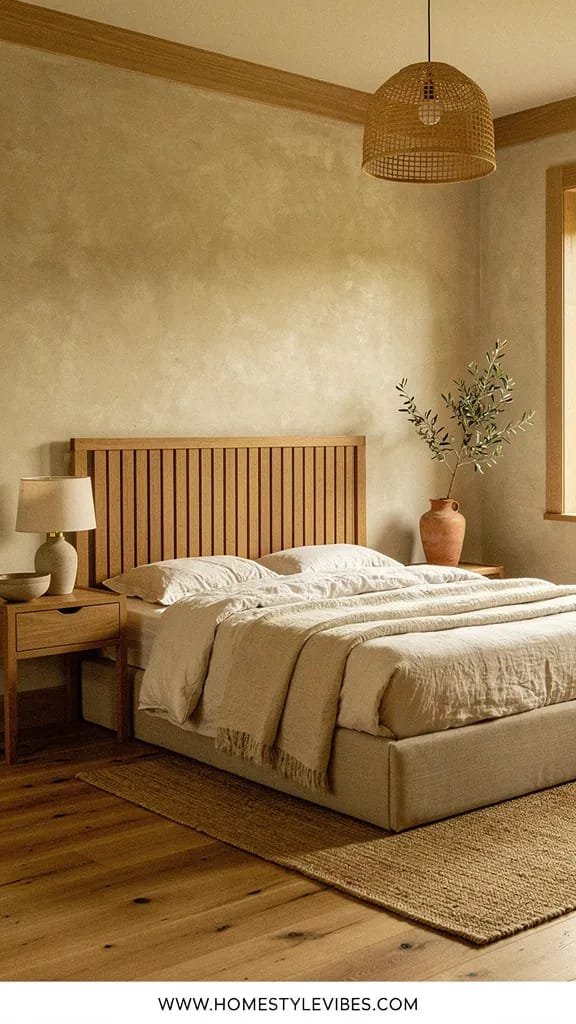
You’ve tried the trendy stuff, but it still looks generic. That’s because a bedroom feels personal when it tells a story—and stories live in texture, patina, and imperfect, handmade pieces. This design leans into modern Mediterranean-meets-Japandi calm: limewash walls, sculptural wood, woven pendants, and artisanal ceramics that look like they came from a weekend market (even if they didn’t).
The mood is warm, grounded, and soulful. Limewash or textured paint softly shifts with the light; every hour, the walls look a little different. It’s gorgeous on camera: micro-shadows in the plaster, grain in the wood, a clay vase with a matte finish. In real homes, this setup is easy to live with—durable materials, forgiving finishes, and timeless shapes. The palette stays earthy: sand, clay, smoked oak, olive, and bone. It looks “Pinterest” because it prioritizes materials over trends.
Variations to try:
- Budget-friendly: Create a faux-limewash effect with two tones of matte paint and a ragging technique. Thrift wood stools and use them as nightstands.
- Small-space: Use a leggy wood bed to keep sightlines open and a single oversized woven pendant to define the zone.
- Darker version: Choose a tobacco or olive limewash with bone bedding and aged-brass accents.
- Renter-friendly: Use removable textured wallpaper on the bed wall and bring in texture via textiles—chunky throw, nubby euro shams, and a jute rug.
Budget Breakdown:
- Limewash kit or matte paint (gallon): $60–$160
- Solid wood or wood-look bed: $300–$1,100
- Woven pendant light: $90–$300
- Artisan-look ceramics and bowls: $60–$220
- Jute or wool-blend rug: $180–$700
- Linen or gauze curtains: $80–$280
Total Estimated Cost: $770 – $2,760
Best For: Design lovers who want warmth and soul; spaces with decent natural light that highlight wall texture.
Key Design Elements:
- Main materials: Limewash, smoked oak, jute, clay, linen
- Color palette: Sand, clay, olive, bone, aged brass
- Lighting strategy: Single statement pendant + warm bed lamps + candlelight moments
- Furniture silhouettes: Rounded edges, spindle details, tripod stools
- Texture layers: Loose-weave blankets, slub linen, woven shades
- Accent details: Hand-thrown vases, stacked books, a vintage tray
How To Recreate This Look:
- Choose a limewash or faux-limewash finish for the headboard wall. Keep trims clean and simple.
- Add a simple wood bed with visible grain. Avoid glossy stains.
- Layer natural textiles: gauze curtains, linen bedding, and a chunky throw at the foot.
- Install a woven pendant on a dimmer and add warm, low-glare bulbs.
- Style nightstands with one ceramic piece, one book stack, and a single branch—no clutter.
Why This Reads High-End: Natural texture signals quality. Limewash and linen communicate materiality that doesn’t date quickly. The pieces look curated, not bought in a set—always a designer tell.
The Most Common Mistake: Mixing too many wood tones. Stick to two: one primary (bed, nightstands) and one accent (picture frame, stool). Beyond that, the room starts to feel noisy.
Pro Styling Tip: For photos, slightly underexpose by a third stop to capture the limewash’s tonal shifts and avoid blowing out the highlights on white bedding.
Ready for a little boldness? The next design is for the color-curious who still want it to feel grown-up and moody, not loud.
4. Moody Color Cocoon With Velvet Geometry
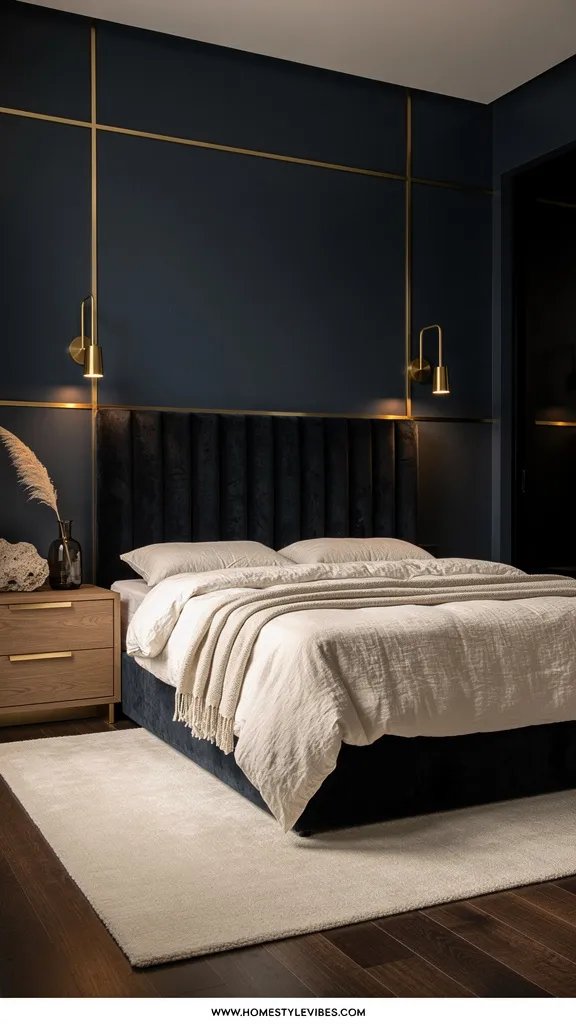
You want drama, but you fear the cave effect. You tried a dark wall once and it looked patchy and heavy. Here’s the fix: go all in—walls, trim, and doors in the same saturated shade—then punctuate with geometric shapes, velvet, and gleaming metal. The result is a cocoon that reads couture, not claustrophobic.
This look thrives on painterly shadow and material contrast: matte walls + velvet headboard + a few polished brass lines. Lighting becomes sculptural—think two slender, dimmable sconces and a small globe pendant. In smaller rooms, this works surprisingly well because tonal walls make edges disappear, which visually expands the space. On Pinterest and in person, the play between deep color and soft-gloss textiles creates that moody magazine vibe.
Try these versions:
- Budget-friendly: Deep paint + velvet pillow shams instead of a full headboard. Add brass peel-and-stick trim to frame art.
- Small-space: Choose a channel-tufted headboard in the same color family as the wall; it blends instead of crowding.
- Lighter twist: Use a muted mid-tone (blue-gray, eucalyptus) and add ivory linen drapes for balance.
- Renter-friendly: Temporary wallpaper in a deep tone on the bed wall, plus plug-in brass sconces.
Key Design Elements:
- Main materials: Matte paint, velvet, brass, smoked glass
- Color palette: Ink, oxblood, forest green, or cocoa; accents in ivory and brass
- Lighting strategy: Sconces for vertical lines + a small globe or semi-flush for glow
- Furniture silhouettes: Channel tufting, squared frames, slim profiles
- Texture layers: Velvet, wool throw, silk or sateen pillowcases
- Accent details: Brass picture light, smoked-glass tray, dark wood frames
Budget Breakdown:
- Premium interior paint (2 gallons for walls/trim): $100–$180
- Velvet headboard or velvet pillows: $80–$700
- Brass sconces (plug-in or hardwired): $120–$420
- Globe pendant or semi-flush: $80–$260
- Window treatments (lined): $120–$450
- Accent decor (tray, frames): $50–$160
Total Estimated Cost: $550 – $2,170
Best For: Night owls, city apartments, and anyone who wants a luxurious, cocooning bedtime ritual.
Why This Looks Intentional: Painting walls, trim, and doors the same deep tone eliminates visual breaks. It reads custom and architectural, even without molding. The limited palette feels edited, which always looks expensive.
How To Recreate This Look:
- Pick a saturated hue in matte or eggshell and commit to walls, trim, and doors.
- Anchor with a velvet headboard or velvet shams in the same color family.
- Install slim brass sconces and use dimmable, warm bulbs.
- Balance with ivory bedding and one dark wood accent (frame or nightstand).
- Keep decor minimal: one piece of art, one tray, one vase with deep green foliage.
Don’t Do This: Avoid glossy paint unless your walls are perfectly smooth. High sheen highlights every imperfection and kills the cozy mood.
Pro Styling Tip: Before shooting, tilt your lampshades slightly forward (a quarter inch) so light grazes the bedding and you get that cinematic highlight on the duvet fold.
Quick palate cleanse: if moody isn’t your thing, the next idea is crisp, tailored, and unbelievably practical when storage is tight.
Honest moment: selecting deep paint is tricky. I once painted a bedroom “charcoal” that turned purple at night. Always test swatches in morning and evening light, and check how your bulbs shift the tone. Seriously—it saves repainting.
5. Light-Lifted Scandinavian Serenity With Floaty Storage
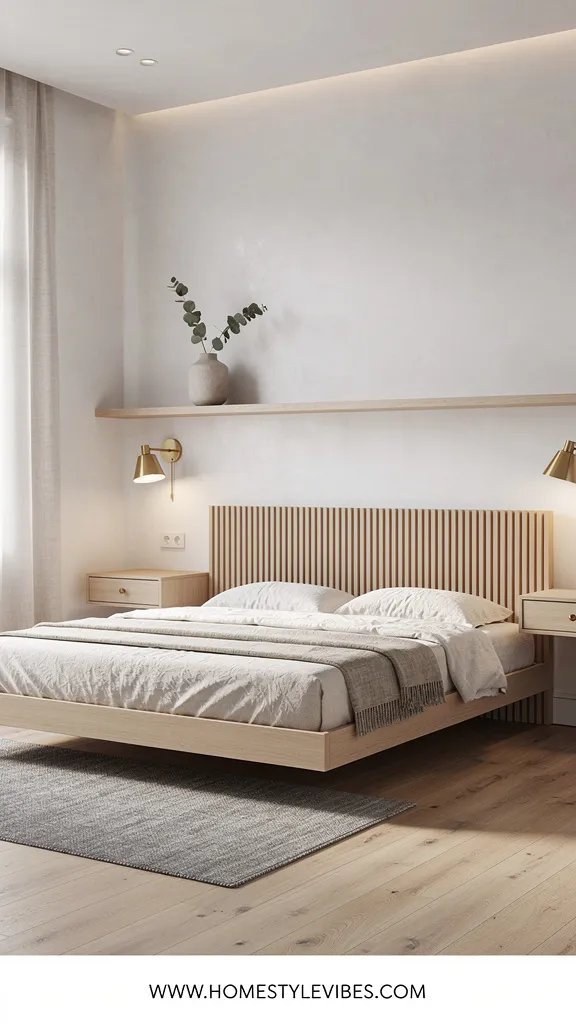
You’ve decluttered, but the room still feels crowded. The real issue? Visual weight. This Scandinavian-inspired setup leans into airy lines, wall-hung storage, and a tight palette of warm white, pale oak, and soft gray to make the room feel bigger and brighter instantly. It’s calm, efficient, and insanely photogenic because everything appears to float.
Here’s why it works in real homes: shallow furniture and wall-mounted pieces free floor space, which tricks the eye. Pale oak reads warm, not sterile, and matte finishes absorb glare. Lighting is all about bounce—paper lantern pendants glow like moons, and anglepoise lamps put light exactly where you need it. If you have a smaller primary or a studio, this layout is a win IMO because it doubles as smart storage without feeling “storage-y.”
Variations to consider:
- Budget-friendly: IKEA hacks—wall-mount cabinets with custom wood handles and add oak contact paper to tops for warmth.
- Small-space: Narrow bed frame with visible legs and wall-to-wall curtain to hide awkward windows or a radiator.
- Cozier twist: Add a sheepskin throw and a chunky moss-knit pillow to soften the minimalism.
- Renter-friendly: Use tall, narrow bookcases and secure them with tension rods; opt for peel-and-stick sconces.
Budget Breakdown:
- Wall-mounted nightstands or cabinets: $120–$500
- Minimal bed frame with legs: $200–$800
- Paper lantern pendant: $30–$120
- Curtains (linen-blend, floor length): $90–$300
- Neutral rug (flatweave or low pile): $150–$500
- Storage baskets and organizers: $40–$160
Total Estimated Cost: $630 – $2,380
Best For: Small rooms, rentals, or anyone craving clean lines and lightness without feeling cold.
Key Design Elements:
- Main materials: Pale oak, painted MDF, linen-blend, paper, powder-coated steel
- Color palette: Warm white, soft gray, pale oak, charcoal accents
- Lighting strategy: Diffuse ceiling lantern + adjustable task lamps + mirror bounce
- Furniture silhouettes: Slim legs, rounded corners, wall-mounted storage
- Texture layers: Flatweave rug, linen bedding, sheepskin accent
- Accent details: Simple line art, ceramic cup as catchall, small olive tree
Why This Feels Designer: Negative space is curated. The floating effect and consistent pale woods read architectural, even if you DIY the storage. Restraint communicates confidence.
How To Recreate This Look:
- Paint walls a warm white with a matte finish to reduce glare.
- Choose a bed with visible legs and a simple profile; avoid bulky footboards.
- Mount shallow nightstands or cabinets 10–14 inches above the floor.
- Hang a paper lantern pendant and add one adjustable lamp per side of the bed.
- Style with one neutral art piece, a small plant, and low-profile bedding layers.
Watch Out: Don’t scatter small decor across every surface. Cluster items in odd numbers and leave breathing room. Too many little things kill the airy effect.
Pro Styling Tip: For photos, slide the rug forward so 60–70% sits under the bed and 30–40% peeks out; it frames the bed and adds a clean grid in wide shots.
We’re ending on something joyful and completely different—color, pattern, and personality done in a way that still reads chic. Ready?
If your shoulders just relaxed reading about clean lines, great. If you still want your bedroom to feel like a curated escape with subtle glam, you’ll love the last idea.
6. Pattern-Play Heritage Chic With Curated Color Pops
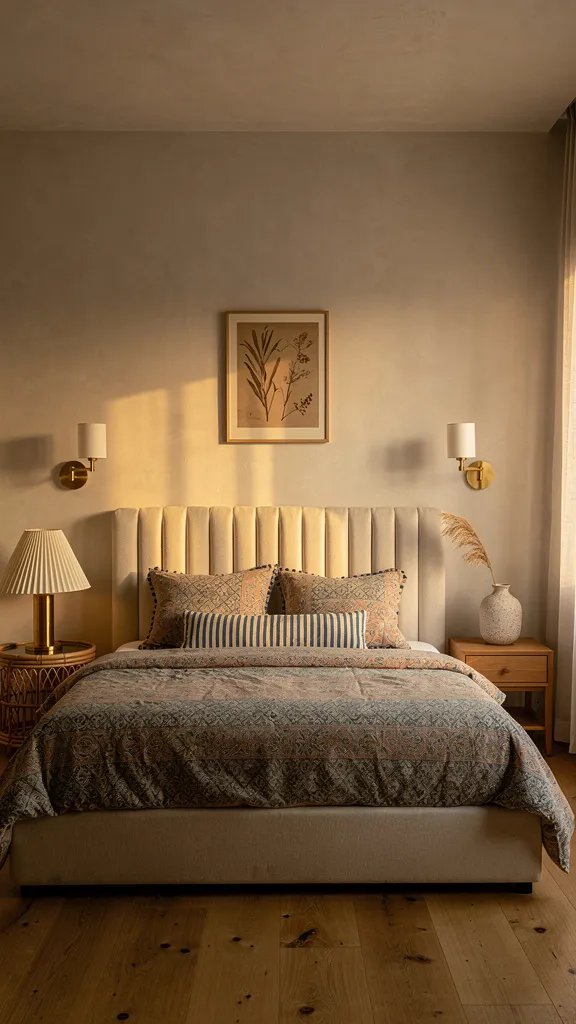
You love color and prints, but every time you try them, the room feels juvenile or chaotic. The secret isn’t adding more—it’s controlling the palette and repeating patterns with intention. This design balances heritage details (piped pillows, pleated lamp shades, traditional florals or stripes) with modern editing to create a bedroom that feels charming, layered, and extremely photogenic.
Here’s why it works: we anchor with one “hero” pattern—maybe a block-printed duvet or a bold stripe on the curtains—then echo its color in 2–3 places only. Everything else goes quiet. Think sage-and-ivory floral bedding, a stripe on a single lumbar pillow, and artwork that borrows the same green. Lighting leans cozy: pleated fabric shades and a petite chandelier or semi-flush. Materials mix: carved wood, cotton percale, brass, and a velvet accent. In photos, this reads polished because your color story is coherent—no random extras to steal the scene.
Variation ideas:
- Budget-friendly: Use a printed duvet and DIY piped edges on basic pillows with contrast bias tape. Add a pleated shade to an existing lamp.
- Small-space: Keep patterns vertical (striped curtains, tall headboard) to add height. Use a single bold lumbar on a made bed—no pillow pile.
- Darker version: Deep, moody floral with aubergine or navy accents and antique brass frames.
- Renter-friendly: Peel-and-stick patterned headboard decal or a textile hung as art with copper clips.
Key Design Elements:
- Main materials: Cotton percale, velvet accents, brass, carved or painted wood
- Color palette: Choose one hero color + one support + lots of ivory
- Lighting strategy: Pleated shades for softness + small chandelier glow
- Furniture silhouettes: Classic lines, maybe a spindle bed or painted dresser
- Texture layers: Crisp bedding + velvet accent + woven basket for depth
- Accent details: Piping, trim, framed fabric swatch, fresh flowers
Budget Breakdown:
- Patterned duvet or quilt: $80–$260
- Curtains (striped or floral): $100–$380
- Pleated lampshades (pair): $50–$160
- Vintage frames or art: $60–$240
- Velvet accent pillow: $25–$90
- Paint or dresser hardware swap: $30–$120
Total Estimated Cost: $345 – $1,250
Best For: Pattern lovers, cottage or pre-war apartments, and anyone who wants personality without losing polish.
Why This Looks Expensive: Pattern control and repetition read curated, not chaotic. Piping and pleated shades add couture details for surprisingly little money. The mix of old and new suggests collecting over time.
How To Recreate This Look:
- Pick your hero pattern first (duvet or curtains). Limit yourself to one hero and one supporting pattern.
- Repeat the hero color in two small accents: a velvet pillow and a mat in framed art.
- Keep furniture classic and simple; if needed, repaint a dresser to match your support color.
- Add pleated lamp shades and warm bulbs to soften the scene.
- Style the nightstand with a small stack of vintage books and a bud vase pulled from your color story.
Don’t Do This: Avoid mixing multiple large-scale patterns. Pair one large-scale with a small-scale companion (thin stripe, tiny dot) and keep the rest solid.
Pro Styling Tip: When photographing patterns, step back and center on the bed. Slightly angle one curtain panel to show depth and avoid a flat, wallpaper-y look.
Micro-story time: a friend spent weeks agonizing over which green to use in her floral quilt, before realizing the real problem was her lighting. We swapped her cool bulbs for warm, and suddenly the print looked rich, not acidic. Lighting is the unsung hero of every “Pinterest-worthy” bedroom, period.
If one design here made your shoulders drop or your pulse quicken, that’s your clue. Start there. You can borrow elements from others later, but give one concept room to breathe.
Quick Checklist
- Choose one core mood: serene neutrals, symmetry, artisan texture, moody cocoon, airy Scandi, or heritage pattern
- Pick a lighting temperature: 2700K for lamps, 3000K for overheads
- Limit your palette to 3–4 tones with one accent
- Anchor with a properly sized rug
- Hang curtains high and wide
- Repeat one material at least twice (wood tone, brass, linen)
- Style surfaces in clusters, not scatter
- Mind contrast: light bedding vs. darker headboard or wall
- Edit pillows to a clear story (sleeping set + 2 euros + 1 lumbar)
- Declutter wiring and use cord covers or clips
- Add one living element: a branch, plant, or fresh flowers
- Photograph with lamps on, overheads off for softness
Frequently Asked Questions
How much should I budget to make my bedroom look “Pinterest-worthy” without overspending?
Pick one design concept and allocate $600–$1,500 for the key moves: paint or wall treatment, a rug that fits, a lighting swap, and 2–3 styling pieces. Skip endless small decor buys and focus on the big elements that change the room’s bones.
I have a tiny bedroom. Which design from this list works best and why?
Go with the Light-Lifted Scandinavian Serenity or the Symmetry Suite. Both prioritize visual order and negative space. Use wall-mounted storage, slim frames, and a large rug to unify the floor and make the room feel larger.
I rent and can’t do major renovations. What’s my best path?
Focus on plug-in lighting, peel-and-stick wall treatments, curtains hung high, and a rug to define the zone. Section 1, 3, and 6 include renter-friendly swaps that deliver the biggest visual payoff without permanent changes.
I’m scared of dark paint. Will it make my room feel smaller?
If you paint walls, trim, and doors the same deep tone (and use warm lighting), the edges blur and the room can feel bigger. Test a large swatch at night with your bulbs to ensure the color reads right before you commit.
What are the most common mistakes that make a bedroom look messy in photos?
Too-small rugs, low-hung curtains, mismatched bulb temperatures, and too many small decor items. Fix those, and your existing furniture will look far more intentional.
Conclusion
Pick one idea and start. Maybe it’s the limewash wall you can finish in an afternoon, or that pair of plug-in sconces that finally give your bed a sense of place. The truth is, the “Pinterest look” isn’t about owning fancy things—it’s about consistent texture, layered lighting, and a clear story.
When you strip away the filler and focus on a few strong moves, your bedroom becomes a place your nervous system trusts. Luxury lives in the quiet details: the crisp edge of a duvet, the soft shadow under a picture light, the weight of a wool throw at your feet. Keep your palette tight, your surfaces clean, and your lighting warm, and you’ll wonder why you waited so long.
You’re closer than you think. Choose the concept that feels like home, gather your materials, and begin. I can’t wait to see your “after”—it’s going to look straight off Pinterest and feel even better in real life.

About the Author

Krisztina P.Rendes, Founder of Home Style Vibes
Founder of Home Style Vibes
Krisztina Puskásné Rendes created Home Style Vibes as a cozy-modern lifestyle space where homemaking meets inspiration. Her goal is to help women create beautiful, organized, and peaceful homes they truly love — without overwhelm. You’ll find here heart-driven content on home decor, cleaning tips, easy family recipes, organization and decluttering, DIY home projects, plants, and seasonal ideas — all designed to bring more calm, comfort, and style into everyday life.