6 Elegant Fall Tablescapes For Dinner Parties And Special Occasions
You want an autumn dinner that feels effortless and glowing, where the table hums with amber candlelight, layered linens, and the kind of harvest abundance that makes everyone linger. You hate the scramble: mismatched plates, a centerpiece that blocks conversation, and a table that looks flat in photos no matter how many pumpkins you buy. These six elegant fall tablescapes solve that exact tension with cozy bright autumn color, gentle candle glow, and styling tricks that actually work in real dining rooms. In 60 minutes or less and under $200 each (often less), you’ll create a beautiful, photogenic setup that looks like a magazine but lives like a home—rich rusts, burgundies, golden tones, real branches, plaid, and just enough sparkle.

Expect saturated color, tactile linens, sculptural gourds, and that signature warm glow that makes skin look beautiful and soup taste better. If you love cozy bright autumn and hosting at home—from early September through Thanksgiving—this is your sweet spot.
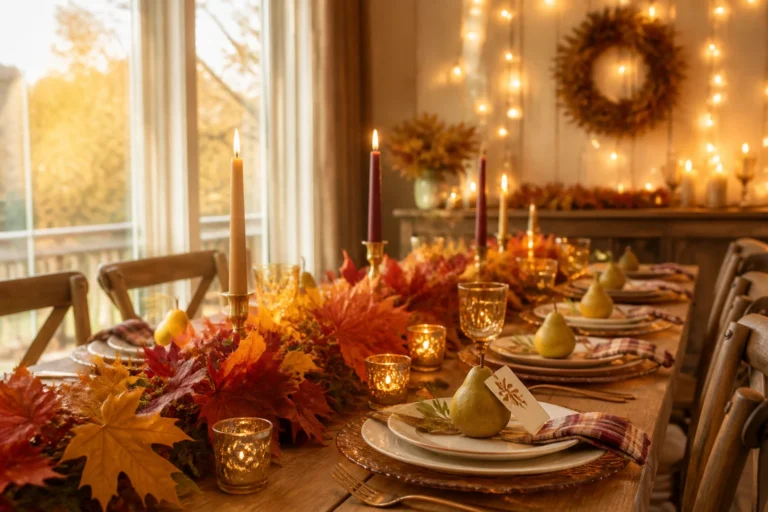
1) Golden Maple Leaves, Amber Candles, and a Classic Dining Table

We’ve all been there: you clear the dining table, lay down a runner, and still…it looks sparse. The center feels like a highway with no traffic. This idea fixes the “flat middle” problem with a lush, low leaf garland and the kind of amber candlelight that turns Tuesday pasta into a special occasion. The mood is warm and generous—cozy bright autumn with soft rust, golden maple, and creamy neutrals that flatter every dish you serve.
Why it works in real homes: the centerpiece sits low so conversations flow; you can scale the garland length to any table, and most pieces store easily. Lighting is the hero—small clusters of amber votives mixed with a few medium pillars create a layered glow that photographs like a dream. The garland gives depth and color saturation; the votives provide those tiny burnished reflections you see in Pinterest shots.
Variations: go budget-friendly with foraged branches paired with a $12 bag of preserved leaves and tea lights in thrifted amber glasses. For a small table, switch to a narrow runner and three mini clusters (leaf sprig + single pumpkin + votive) spaced evenly.
Budget Breakdown:
- Preserved maple leaf garland: $20–$60
- Amber glass votives (set of 6–8): $18–$40
- Cream runner (linen or cotton): $25–$70
- Mixed mini pumpkins/gourds: $10–$20
- Pillar candles (unscented): $12–$24
Total Estimated Cost: $85 – $214
Best For: A traditional dining room or kitchen table where you want immediate warmth from early October through Thanksgiving; great for family-style meals and weeknight dinners that need a little glow-up.
Key Design Elements:
- Main seasonal props: preserved maple leaf garland, mini pumpkins, amber votives
- Color palette: rust, gold, cream, soft brown
- Lighting strategy: layered candlelight—votives low, a few pillars mid-height
- Textile layers: neutral runner under layered plates and napkins
- Natural elements: branches with real leaves or preserved leaf sprays
- Accent details: brass or antique gold candle plates, simple ceramic serving bowls
How To Recreate This Look:
- Start with a cream runner and anchor the center with a preserved leaf garland (or two for fullness).
- Add low amber votives in odd-number clusters, then tuck in mini pumpkins and gourds.
- Layer dinner plates with a smaller salad plate to add height and interest at each setting.
- Place a single leaf on each napkin for a simple, consistent note at every seat.
- Style with brass details—coasters, a small bowl, or flatware—to catch candlelight.
Why This Looks Expensive: The candle glow bouncing off amber glass and brass creates that high-end sheen. Repeating gold and rust in small doses feels intentional and finished without being fussy.
Watch Out: Overfilling the center makes serving difficult. Leave 8–10 inches of empty runner at each end and create small “service landing spots” between clusters.
Pro Styling Tip: Position one votive near the table edge so the glow catches in photos as a warm foreground blur, adding depth instantly.
2) Plaid Napkins, Burnished Brass, and a Candlelit Kitchen Island

It’s that one surface that always gets ignored: the kitchen island. You line up appetizers, set a cheese board, and somehow the area still feels like prep, not party. This design turns your island into a real fall tablescape—tight, functional, and crazy photogenic—using plaid, brass, and strategic candle placement that won’t crowd the snacks.
The mood is harvest-happy: warm plaid napkins, a compact runner or butcher paper, and tall candleholders that add vertical detail without stealing space. Why it works: zoning. Put tall items at the ends, keep the food in the center lane, and repeat color in three places—napkins, a plaid ribbon tie, and a patterned tea towel on the oven handle—to unify the view from any angle.
Variations: on a small island, switch to a single pedestal with a stacked arrangement (pumpkin + small vase + candle). For a tighter budget, use brass thrift-store candlesticks with mismatched tapers in shades of rust and cream.
Key Design Elements:
- Main seasonal props: plaid napkins, brass candlesticks, a compact pumpkin cluster
- Color palette: burgundy, amber, navy stripe in the plaid, cream
- Lighting strategy: pair two tall tapers with a line of low tea lights for layered glow
- Textile layers: narrow runner or butcher paper for easy cleanup
- Natural elements: a single branch of turning leaves in a slim vase
- Accent details: small brass trays for nuts or olives, wooden boards
Budget Breakdown:
- Plaid cotton napkins (set of 6): $16–$38
- Vintage brass candlesticks (set of 3–5): $20–$60
- Assorted taper candles: $8–$18
- Runner or butcher paper roll: $8–$20
- Mini pumpkins, apples, or pears: $8–$15
Total Estimated Cost: $60 – $151
Best For: Open-plan kitchens and casual hosting; great for happy hour, dessert stations, or a make-your-own-chili bar in late October.
How To Recreate This Look:
- Start with a slim runner or a crisp strip of butcher paper down the island.
- Add two groups of brass candlesticks at either end, staggered heights.
- Layer a wooden board in the center for snacks; tuck a plaid napkin under one corner for pattern.
- Place a small cluster of pumpkins or apples at two points to guide the eye.
- Style with salt bowls and small brass trays so guests can reach easily.
Why This Feels Designer: Intentional height play. Tall tapers, a mid-height vase, and low bowls create a rhythm that reads styled, not accidental.
One Thing To Avoid: Don’t scatter tiny items evenly across the whole island. Instead, create two or three purposeful zones so you have clear negative space for serving.
Pro Styling Tip: If your island sits under pendants, dim them to 40–50% and let candles be the star; the camera loves that warm-to-dark gradient.
Remember, this isn’t about recreating a showroom. It’s about hosting in a way that actually matches how you live: snacks within reach, candles out of the elbow zone, and color that flatters food instead of fighting it.
3) Harvest Centerpiece Bowl, Soft Rust Linens, and a Round Dining Nook Table

You’ve tried a vase with flowers on your round table, but it looks top-heavy and awkward from certain angles. The fix? A wide, low harvest bowl filled with seasonal produce and foliage that nestles into the curve of a round table so every seat gets the same beautiful view. The mood is generous and intimate—cozy bright autumn with soft rust linens, butternut squash glow, and a centerpiece that invites passing and sharing.
Why it works: round tables crave a circular focal point. A low bowl holds shape without towering over plates. Lighting plays backup here—tucked tea lights in petite glass cups give a sparkle without overpowering the hero piece. Photographs sing because you get a sculptural mound of color with no odd angles or stems poking weirdly into frame.
Variations: for a smaller table, use a footed compote. For a more neutral vibe, swap colorful squash for white pumpkins and eucalyptus with a single fig branch for depth.
Budget Breakdown:
- Large shallow bowl or dough bowl: $28–$120
- Assorted squash, pears, and pomegranates: $15–$30
- Soft rust linen napkins (set of 4–6): $24–$58
- Tea lights + clear cups: $6–$12
- Eucalyptus or magnolia clippings: $8–$18
Total Estimated Cost: $81 – $238
Best For: Breakfast nooks and cozy dining corners from late September through mid-November; works for brunches and date nights alike.
Key Design Elements:
- Main seasonal props: wide harvest bowl, mixed produce, eucalyptus
- Color palette: soft rust, olive green, butternut, cream
- Lighting strategy: low, twinkly tea lights tucked around the base
- Textile layers: round placemats or a small circular topper
- Natural elements: pears, squash, pomegranates, flexible leafy stems
- Accent details: ceramic salt cellar, simple water carafe
Why This Reads High-End: The scale matches the table shape perfectly. When the container echoes the table lines, everything feels custom. Repeating soft rust in both napkins and a single ribbon around the bowl tightens the palette.
How To Recreate This Look:
- Start with a low, wide bowl centered on the table.
- Add a leafy base layer (eucalyptus or magnolia), working around in a circle.
- Layer produce from largest to smallest; leave pockets of green peeking through.
- Place tea lights in three small glass cups around the bowl perimeter.
- Style each setting with a soft rust napkin and a simple place card tucked under the fork.
The Most Common Mistake: Using a tall bouquet that creates a visual wall across the table. Keep the height below eye level so you get connection and comfort.
Pro Styling Tip: Add one slightly “imperfect” fruit on top—like a pear with a curved stem. A bit of asymmetry reads organic and beautiful in photos.
If one idea resonates more than the others, that’s your starting point. You don’t need all six. Pick the one that solves your specific struggle—flat center, ignored island, awkward round table—and build from there.
4) Burgundy Runner, Mixed Taper Candles, and a Buffet Console Spread

Serving buffet-style but worried it feels like a cafeteria line? A console or sideboard can absolutely hold court with a full fall tablescape—one that looks intentional, invites grazing, and doesn’t crowd the main dining table. This idea leans into saturated color and candlelight: a burgundy runner, a parade of tapers in mismatched holders, and low platters so guests can help themselves without dodging décor.
The vibe is lively and generous—cozy bright autumn dialed up with deep reds, soft golds, and twinkle. Why it works: vertical rhythm. Vary the candle heights across the console, then keep serving pieces low, wide, and mostly neutral. The flame line guides the eye and makes the spread feel abundant. On camera, the burgundy runner plus the candle chorus delivers color depth and a warm shimmer that reads “celebration.”
I tried this layout last October for a lasagna night, and honestly I couldn’t believe the difference. Guests moved easily, the food stayed center stage, and the photos had that candle-glow sparkle I usually only get at restaurants.
Budget Breakdown:
- Burgundy table runner: $22–$58
- Assorted taper candles (12–16): $18–$36
- Mixed candleholders (thrift or new, 8–12): $30–$85
- Low platters and bowls (borrow or mix-and-match): $0–$60
- Scatter of mini pears or cranberries for garnish: $6–$12
Total Estimated Cost: $76 – $251
Best For: Dining rooms with a sideboard, or a hallway console outside the kitchen; perfect for Friendsgiving, wine-and-cheese nights, or dessert spreads late in the season.
Key Design Elements:
- Main seasonal props: burgundy runner, taper candle parade, low platters
- Color palette: deep burgundy, soft gold, cream, hints of sage
- Lighting strategy: a continuous line of flickering tapers for cinematic glow
- Textile layers: runner over wood for contrast and warmth
- Natural elements: pears, cranberries, clipped olive or bay for garnish
- Accent details: brass trays, matte ceramic serving pieces for balance
Why This Looks Intentional: Repetition of shape (candles) with variation in height tricks the eye into reading the whole console as one styled moment. The burgundy runner acts like a stage.
How To Recreate This Look:
- Start with a runner sized to your console; leave at least 2 inches of wood showing on each side.
- Add candleholders first—tallest at the ends, shorter toward the center for a soft arc.
- Layer in low, wide platters and bowls aligned under the candle line.
- Place small clusters of fruit or herbs as edible garnish between dishes.
- Style a small framed menu or place a chalkboard at one end for charm and clarity.
Don’t Do This: Avoid colored serving pieces competing with the runner. Keep servers neutral so the food and candles stay in charge.
Pro Styling Tip: Angle one platter slightly toward the dining table. That tiny tilt shows off texture in photos and invites the first brave guest to dig in.
5) Wheat Sheaves, Honeyed Glassware, and a Farmhouse Dining Table

Sometimes your table feels too busy the minute you add pattern. If your eye wants calm but your heart wants fall, this look nails it: tonal, textural, and warmly understated. Think wheat sheaves bound with velvet ribbon, honey-tinted stemware that glows under candlelight, and a restrained palette that still whispers harvest.
The mood is refined cozy: quiet color, layered texture, and a gentle, golden light. Why it works in family homes: easy to clean, low breakage risk, and most items store compactly. For lighting, keep it soft—two or three medium pillars plus the throwback gleam of honeyed glass. Photos come out beautifully because the palette stays cohesive; nothing shouts, everything complements.
Variation for small spaces: one larger wheat sheaf instead of two, paired with a slim row of votives. Budget-friendly swap: repurpose clean wine bottles as candleholders with twine wraps and use standard clear glasses; add warmth with amber napkin rings.
Budget Breakdown:
- Wheat sheaves (2–3): $18–$45
- Velvet ribbon in caramel or rust: $6–$12
- Honey-tinted glassware (set of 6): $28–$72
- Neutral linen tablecloth: $30–$90
- Pillar candles + glass hurricanes: $24–$58
Total Estimated Cost: $106 – $277
Best For: Traditional or farmhouse dining rooms, Sunday roasts, and adults-only dinners where quiet elegance feels right from October to Thanksgiving.
Key Design Elements:
- Main seasonal props: wheat sheaves, amber-toned glassware, velvet ribbon
- Color palette: wheat, caramel, cream, soft rust
- Lighting strategy: medium-height pillars inside glass for a tender, diffused glow
- Textile layers: linen tablecloth + textured napkins
- Natural elements: dried wheat, oat stems, or barley
- Accent details: wood chargers, brushed brass flatware
How To Recreate This Look:
- Start with a linen tablecloth; smooth it lightly but leave natural texture.
- Add two wheat sheaves at thirds along the table; tie with velvet ribbon tails.
- Layer pillars in simple hurricanes between sheaves.
- Place wood chargers, then dinner plates; top with folded napkins and a single wheat stem.
- Style with honeyed glassware and a tiny bowl of flaky salt at center.
Why This Looks Expensive: Tonal layering. Similar shades and materials in different textures read as considered and serene—the hallmark of designer tables.
Watch Out: Don’t over-accessorize. Skip busy place cards and patterned plates here; let the glass and wheat do the talking.
Pro Styling Tip: Angle one velvet ribbon tail to cross the table runner line—it adds a soft diagonal that photographs elegantly.
Real talk: I once tried mixing bright plaid, copper chargers, and patterned salad plates in one go. Too much. Editing is your friend. The truth is, the most beautiful fall tablescapes often come down to color restraint plus texture abundance.
6) Cranberry Florals, Warm String Lights, and a Dining Room Hutch Turned Dessert Bar

Your hutch or dining cabinet is a background player most of the year. Come fall, make it the star with a dessert bar that doubles as a cozy bright autumn vignette. Picture cranberry-hued florals, a hint of garland, and warm micro string lights tucked along the shelf edge—soft sparkle without competing with the main table. It’s practical (guests can graze at will) and wildly photogenic.
The mood: festive, sweet, and welcoming. This works in real homes because it clears space on the dining table for plates and conversation while still delivering a high-impact fall moment. Play with light: tea lights in short glass cups punctuate the shelves, and a discreet strand of warm white lights gives that “golden hour” vibe even at 8 p.m. Color saturation comes from cranberry florals and a few pops of rust ribbon or plaid cake napkins.
Variations: small-space version uses the top of a bar cart or bookshelf. Budget tweak: faux florals mixed with fresh eucalyptus and a handful of real cranberries tucked into bowls for life and gloss.
Budget Breakdown:
- Faux or fresh cranberry-toned florals + eucalyptus: $24–$68
- Warm white micro string lights: $8–$16
- Tea lights + glass cups: $6–$12
- Garland or leafy branch for shelf edge: $10–$28
- Cake stand + dessert plates: $20–$60
Total Estimated Cost: $68 – $184
Best For: Dining rooms with a hutch, side cabinet, or open shelves; perfect for birthdays, Friendsgiving pies, or after-dinner coffee in November.
Key Design Elements:
- Main seasonal props: cranberry florals, warm string lights, dessert stands
- Color palette: cranberry, rust ribbon, gold accents, cream ceramics
- Lighting strategy: micro lights for twinkle, dotted tea lights for warmth
- Textile layers: plaid cake napkins, runner on the hutch surface
- Natural elements: eucalyptus, seeded stems, fresh cranberries in bowls
- Accent details: gold dessert forks, simple label tags or chalk markers
Why This Feels Designer: Treating the hutch like a styled backdrop adds depth to the whole dining room. When lights and florals echo the main table’s palette, the room reads cohesive and polished.
How To Recreate This Look:
- Start by clearing and wiping shelves; line the base with a runner or kraft paper.
- Add micro lights along the back edge; hide the battery pack behind a plate.
- Layer a garland or leafy stems on the main surface, then place a cake stand off-center.
- Arrange desserts at varied heights; add tea lights in safe cups between them.
- Style with cranberry florals in a mid-height vase and label each dessert with a small tag.
One Thing To Avoid: Don’t use cool-white LEDs. They make desserts look flat and gray. Warm white only for that bakery-window glow.
Pro Styling Tip: Leave one small empty plate and fork “in action” at the edge—it tells a story and photographs as a lived-in, irresistible moment.
Quick Checklist
- Unscented candles in multiple heights
- One dominant seasonal element (leaves, wheat, florals, or pumpkins)
- Warm metallic accents: brass or antique gold
- Layered textiles: runner, napkins, optional cloth
- A consistent color story (repeat each color at least three times)
- Low, conversational centerpieces
- Height variation across the table or surface
- Dedicated serving “landing spots” to keep décor functional
- Warm white lighting only—no cool LEDs
- At least one organic, slightly imperfect element for life
Frequently Asked Questions
How do I keep costs down for these fall tablescapes without losing the elegant look?
Pick one hero: either the candles, the runner, or the centerpiece vessel. Splurge there and thrift the rest. For color, repeat two shades (rust and cream, or burgundy and gold) at least three times each. Consistent repetition reads polished even with budget pieces.
Real vs. faux pumpkins and florals—what’s best for dinner parties?
For centerpieces that sit near heat or stay up for weeks, use faux greens with a few real accents like pears or mini pumpkins. For one-night dinners, real stems and produce look incredible under candlelight. IMO, real pumpkins win for texture, but keep them away from heat vents.
My dining room is small. How can I make these ideas work without crowding?
Scale down the centerpiece height and footprint. Use a single low bowl or three mini clusters instead of a full garland. Leave at least a hand’s width of clear table in front of each place setting for comfort. In tight rooms, emphasize verticals with two tall tapers to draw the eye up.
What about storage after the season—how do I avoid a décor avalanche in the closet?
Choose flat or collapsible pieces: fabric runners, napkins, faux garlands that can coil, and stackable votives. Store candleholders in shoe boxes wrapped in paper towels. Label bins by color family (rust/amber, cranberry/gold) so you can style faster next year.
Are candles safe around kids and pets? Any alternatives?
Use hurricanes for pillars and keep tapers at least 6 inches from foliage. For little hands and wagging tails, try high shelves and battery-operated tea lights on the table. If you go flameless, choose warm-dim LEDs and mix in real candles on safe, supervised surfaces like the hutch or console.
When should I start decorating for fall tablescapes?
Begin with neutrals and soft rust in early September, add pumpkins and deeper tones by October, and bring in cranberry and extra candlelight for November gatherings. Think of it as layering the season rather than restarting each month.
Closing Thoughts
Pick one idea that solves your biggest friction—maybe it’s the flat dining table that needs amber glow, or the ignored kitchen island craving plaid and brass. Start there. Add one or two seasonal elements you love and stop before it feels crowded. That’s the sweet spot.
Cozy bright autumn styling is all about layered textiles, warm light, and harvest abundance—color you can almost taste, candlelight that makes everyone look gorgeous, and textures that invite touch. Give yourself permission to edit, to play, to try that velvet ribbon or that moody burgundy runner, and to keep what makes you smile when the candles crackle and dinner’s almost ready.
You can do this—truly. Set the glow, add the layers, repeat your colors, and watch your home feel alive with the season. Dinner’s waiting, and your table is ready to shine.

About the Author

Krisztina P.Rendes, Founder of Home Style Vibes
Founder of Home Style Vibes
Krisztina Puskásné Rendes created Home Style Vibes as a cozy-modern lifestyle space where homemaking meets inspiration. Her goal is to help women create beautiful, organized, and peaceful homes they truly love — without overwhelm. You’ll find here heart-driven content on home decor, cleaning tips, easy family recipes, organization and decluttering, DIY home projects, plants, and seasonal ideas — all designed to bring more calm, comfort, and style into everyday life.