6 Thanksgiving Table Decor Ideas That Will Impress Every Guest
You want a Thanksgiving table that stops your sister-in-law in her tracks and makes your photos look like a magazine. You hate the last-minute scramble with wrinkled runners, mismatched candles, and that awkward space between place settings that never quite looks full. You picture glowing candlelight, layered plaid, pumpkin-lined centerpieces, golden afternoon light catching the rim of a wine glass—and you want it to feel abundant, warm, and doable without a design degree. These six Thanksgiving table decor ideas will fix the specific “why does my table look flat?” frustration and give you a fully styled vibe in under two hours per setup, for less than $200 per table.
We’ll focus on sensory details like rust-hued linens, amber glass, soft plaid, dried grasses, copper accents, and real or faux pumpkins that won’t roll off the runner. Each look is distinct and photogenic—seriously Pinterest-worthy—and I’ll show you variations for small tables, tighter budgets, and a calmer neutral mood when you want it. If you love that warm, collected farmhouse feeling, these are for you. Early November through Thanksgiving weekend is the sweet spot to bring them to life.
1. Plaid Pumpkin Farmhouse Table With Amber Candlelight
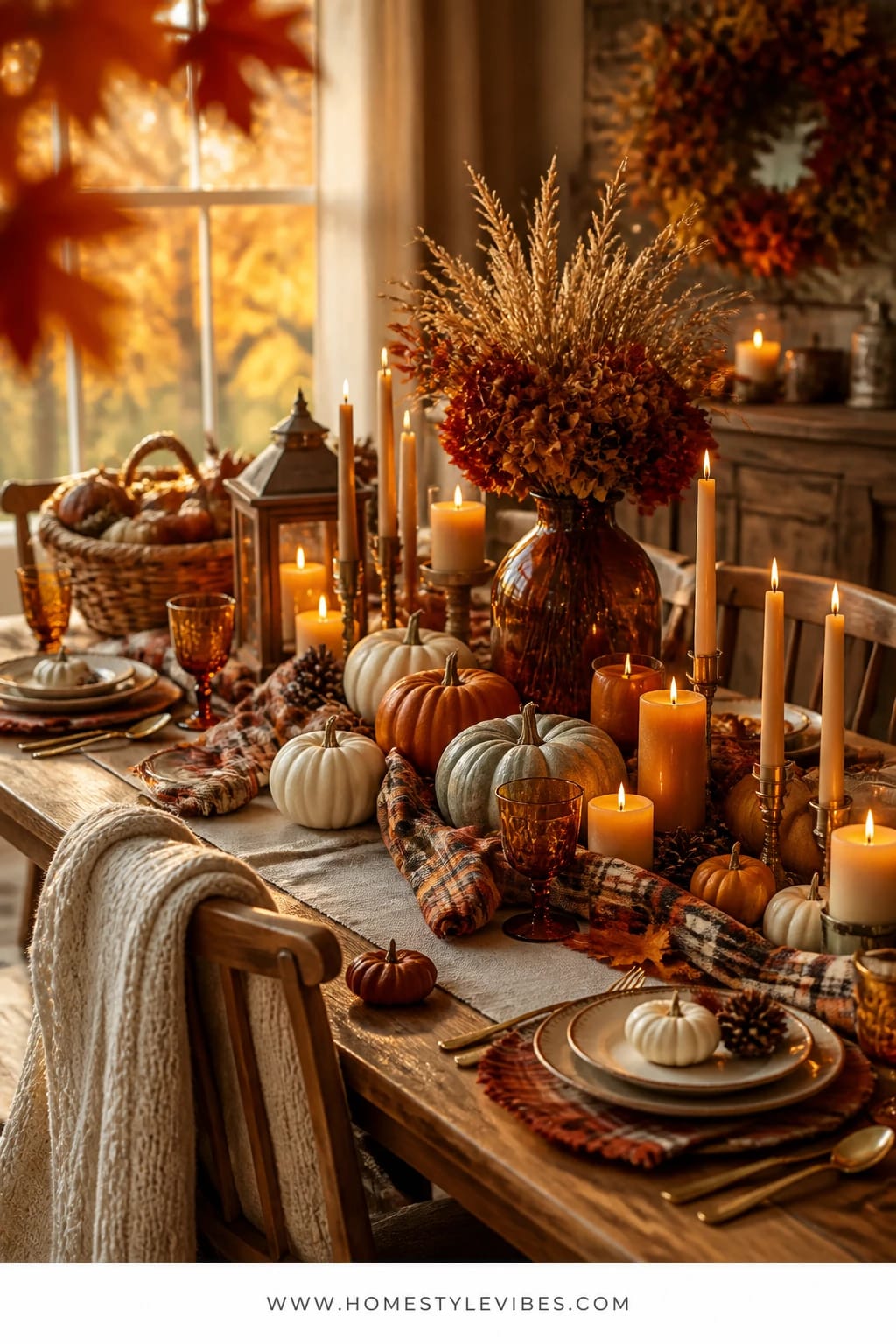
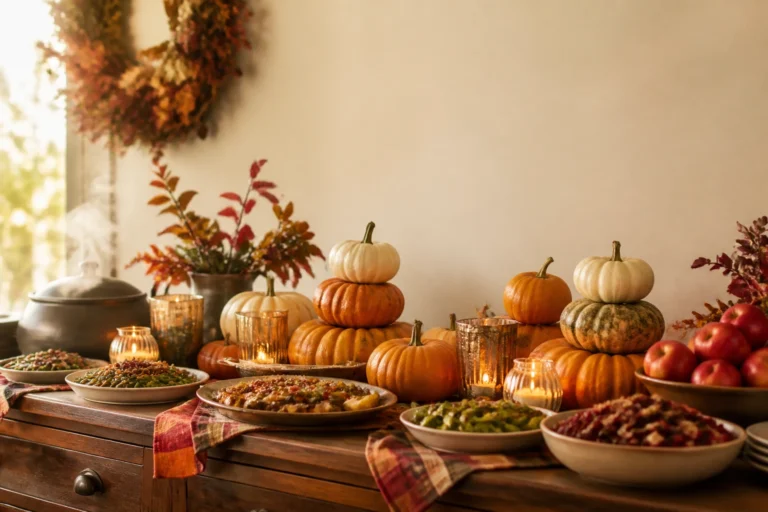
We’ve all been there: you spread a runner, drop a pumpkin in the center, and then… it looks lonely. This idea turns that flat feeling into harvest-table abundance with plaid as your anchor, pumpkins in staggered sizes, and a thread of amber candlelight that makes everything read cozy. The mood is fireside dinner at a country inn—relaxed, generous, and photograph-ready from any seat. It works in real homes because plaid hides crumbs and kid smudges, pumpkins stack safely when nestled against napkin folds, and amber glass gives instant warmth even if your overhead light is cold. On a practical note, it stores easily—fold your plaid, wrap the candles in tissue, call it a day.
Lighting matters here. The amber glass throws a soft golden cast that makes skin tones look healthy and food extra delicious. I learned this the hard way last year when a friend used bright white tapers that made the turkey look gray—never again. Materials and props? Warm wood cutting boards, plaid runner or throw, mini pumpkins and gourds, a few dried florals or wheat, amber votives, and brushed brass or copper flatware if you have it.
Why it photographs beautifully: saturated plaid gives depth, pumpkins add sculptural layers, and candle glow creates highlights and shadow play for dimension. Two variations to consider: 1) Budget-friendly: use a plaid scarf as your runner and dollar-store votives in brown glass. 2) Neutral mood: swap bold plaid for cream-and-gray checked fabric, white pumpkins, and clear glass votives for a quieter, candlelit warmth that still reads fall.
Budget Breakdown:
- Plaid runner or scarf: $15–$40
- Assorted pumpkins/gourds (real or faux): $10–$40
- Amber glass votives (6–10): $12–$30
- Dried wheat or grasses: $8–$20
- Brass/copper-look flatware rentals or budget set: $20–$60
- Cloth napkins (set of 6–8): $15–$35
Total Estimated Cost: $80 – $225
Best For: A classic farmhouse table or any wood table you want to feel cozier; perfect from early November through Thanksgiving when you want a warm, full look that’s easy to clean and reshuffle.
Key Design Elements:
- Main seasonal props: Mini pumpkins, gourds, dried wheat
- Color palette: Rust, amber, cream, and warm wood
- Lighting strategy: Low amber votives in clusters down the center
- Textile layers: Plaid runner or blanket-weight scarf
- Natural elements: Real gourds, dried grasses in short bud vases
- Accent details: Amber glass, brushed brass flatware, wood boards
How To Recreate This Look:
- Start with a plaid runner or folded throw draped end-to-end, leaving 8–12 inches of wood visible at each side.
- Add an asymmetrical line of mini pumpkins, offset to one side so the runner peeks through.
- Layer amber votives between pumpkins, staggering heights if possible with tiny risers like saucers.
- Place 2–3 bud vases with dried wheat or grasses at intervals to break the line visually.
- Style with cloth napkins in a warm neutral and, if you have it, a wood board as a landing pad for bread or a cheese starter at one end.
Why This Looks Expensive: Plaid plus amber reads collected and intentional, and the repetition of materials—glass, brass, gourds—creates a visual rhythm that feels designed. The trick is scale variation: tiny votives, medium pumpkins, taller stems.
Watch Out: Too many patterns will fight each other. Keep plates and napkins mostly solid so the plaid can lead. Also, don’t skip candle trays if your runner is fuzzy; wax drips are forever.
Pro Styling Tip: For photos, turn off overheads, light only the votives, and shoot from a low angle so the amber glow halos the pumpkins and punches up color saturation.
Still scrolling? Good. The next look leans nostalgic but not fussy—perfect if you love heirlooms and a bit of story.
Quick Tip: If your real pumpkins sit near a heat vent, they’ll get that sad half-deflated look by week three. Keep them a foot away from direct heat and rotate every few days.
2. Dried Floral Harvest Centerpiece With Burgundy Glow On A Farmhouse Table
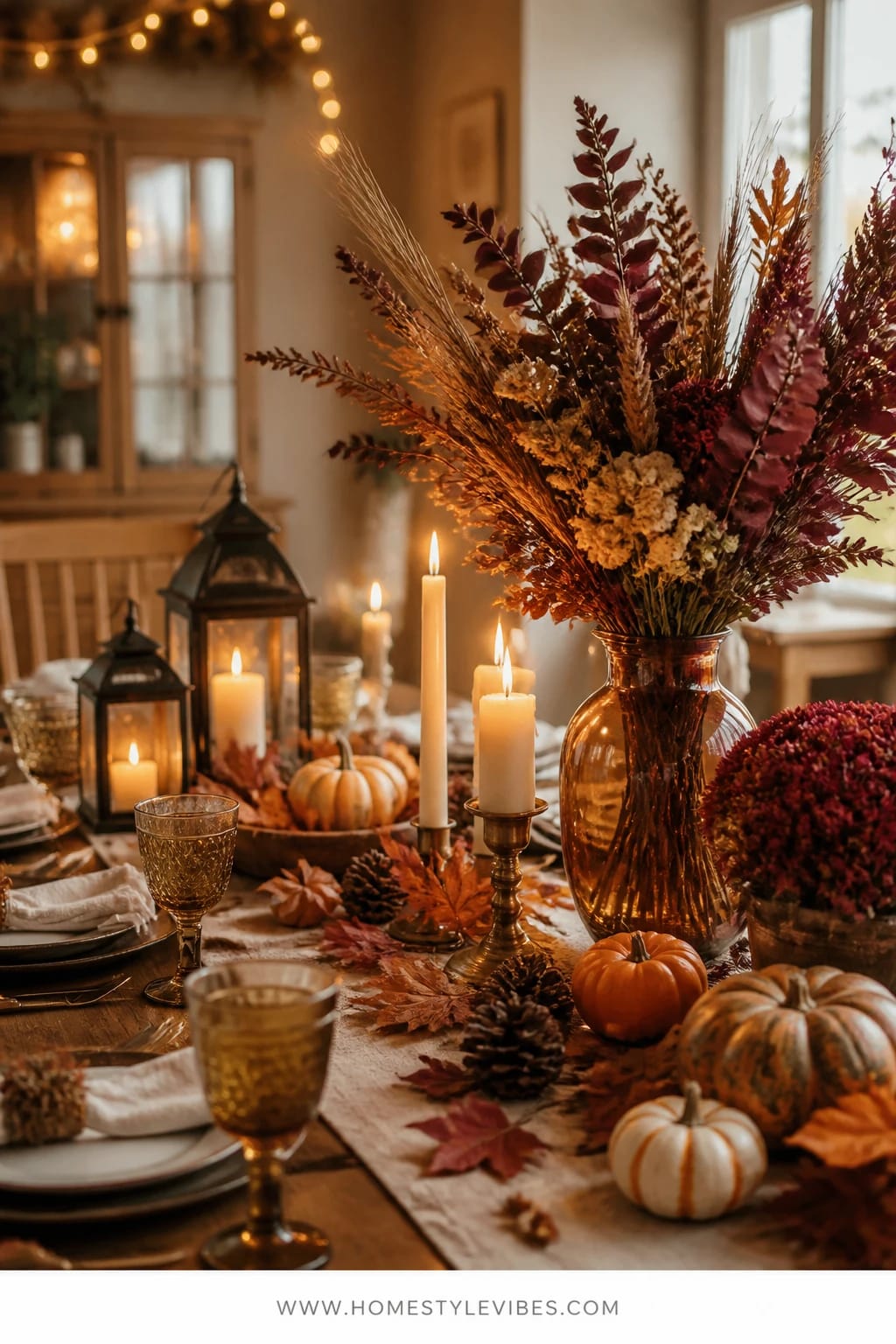
It’s that one centerpiece that always feels off—too small, too perky, too store-bought. This approach embraces dried florals for a grounded, moody harvest moment with burgundy accents and a soft glow that works day or night. The vibe is “harvest supper at dusk”—deep, romantic, and serene. Dried florals are the hero because they last the whole season, survive curious pets, and travel easily to the sideboard when the turkey arrives. I did a version of this on my own table last October, and honestly, I couldn’t believe how dramatic it looked for how little I spent.
Why it works: you get height and structure without the maintenance or water spills. Burgundy candles or glass bring warmth and focal points. Add copper or wood chargers for that weighty, finished feeling. For small spaces, a compact oval bowl keeps stems contained. For a neutral version, choose bleached ruscus, taupe bunny tails, and a single maroon taper for depth.
Photographs love this setup because the dried textures catch light in papery highlights, and the burgundy glow adds moody contrast. It shifts easily from September to Thanksgiving—just add or subtract richer tones as the weeks pass.
Budget Breakdown:
- Dried floral bundle (pampas, wheat, bunny tails): $20–$45
- Low trough, dough bowl, or oval vessel: $20–$60
- Burgundy tapers and holders (4–6): $18–$40
- Copper or wood chargers (set of 6): $30–$70
- Linen table runner (neutral): $18–$35
Total Estimated Cost: $106 – $250
Best For: Medium to long farmhouse tables; hosts who want longevity and low maintenance; moody, candlelit dinners with soft music and red wine.
Key Design Elements:
- Main seasonal props: Dried grasses, seed pods, bunny tails
- Color palette: Cream, wheat, taupe, with burgundy hits
- Lighting strategy: Burgundy tapers at varying heights
- Textile layers: Neutral linen runner under the vessel
- Natural elements: Pampas, wheat, dried eucalyptus
- Accent details: Copper chargers, vintage brass candleholders
Why This Feels Designer: Low, architectural florals create a sculptural focal point that never competes with sightlines. Contrasting heights between dried stems and tapers give a curated, not-cluttered vibe.
How To Recreate This Look:
- Start with a neutral runner to ground the center of the table.
- Add a low, elongated vessel and fill it loosely with dried stems, angling taller pieces toward the ends.
- Place burgundy tapers in mismatched brass holders flanking the centerpiece.
- Layer wood or copper chargers under simple white plates to anchor the place settings.
- Style with cloth napkins in wheat or rust, and tuck a single dried stem under the napkin ring.
One Thing To Avoid: Don’t pack the dried florals tightly—air pockets are your friend. Too dense reads dusty. Keep the center low so people can chat across the table without bobbing and weaving.
Pro Styling Tip: Angle a lamp just outside the frame for soft side light during golden hour; it deepens the burgundy tones and highlights the papery texture.
Ready for something lighter and a little playful? The next section brings in lanterns and a breezy sense of movement.
Did You Know? Mixing two metals—like copper and brass—feels collected if you repeat each at least twice. One lonely copper piece looks accidental; two or three looks intentional.
3. Lantern-Lit Kitchen Island With Burnt Orange Accents And Pinecones
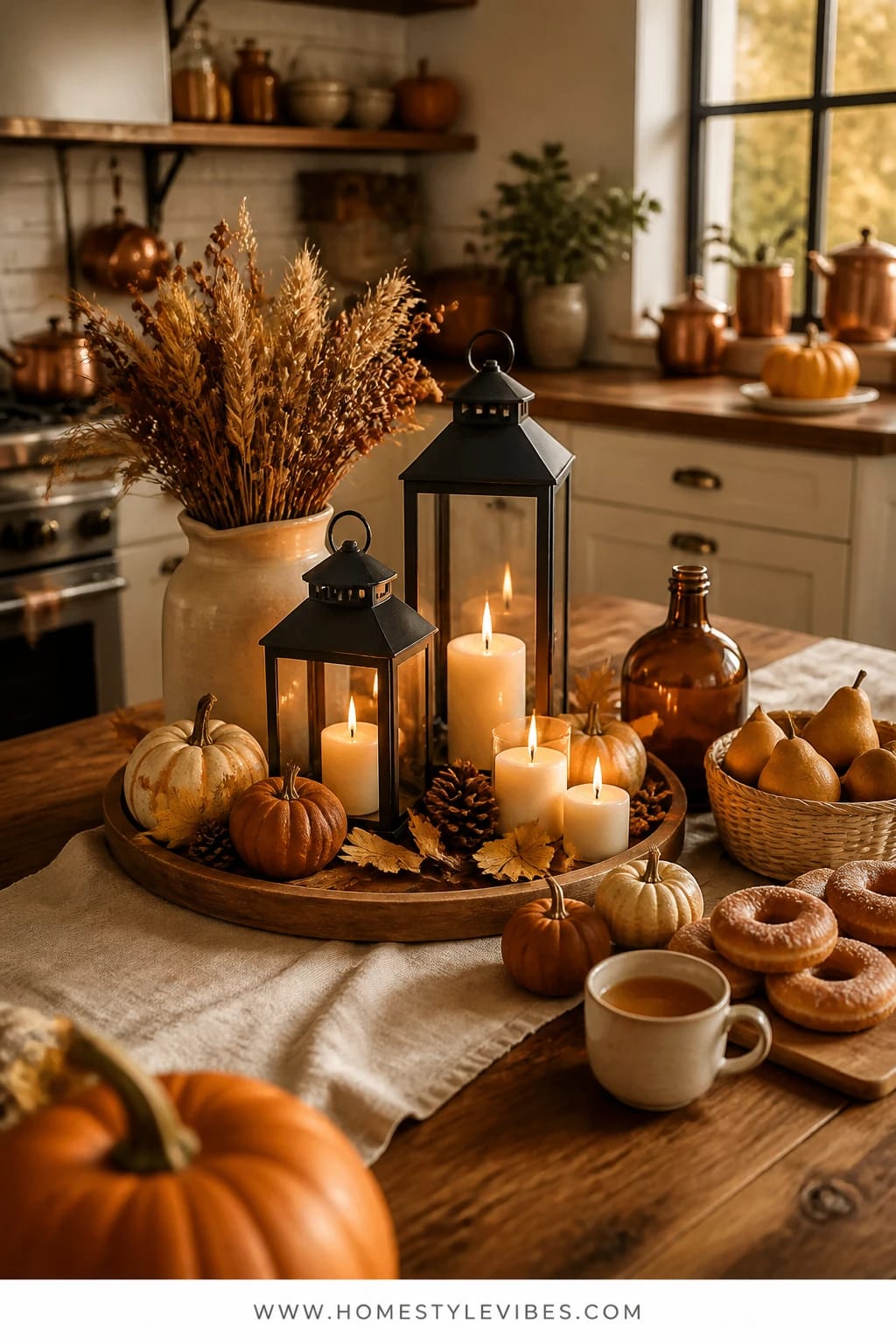
You’ve tried setting a tray on the island, but it still looks like a dumping zone for keys and rogue mail. This design corrals the clutter and turns your kitchen island into a welcoming landing strip for appetizers, cider, or dessert. The mood is crisp-morning freshness meets candlelit warmth—cozy but functional, since you need that countertop back in five minutes. It shines in real homes because everything lives on a tray you can whisk away when the pies come out. Plus, lanterns feel sturdy and pet-friendly compared to a forest of tapers.
Lighting strategy centers on lanterns with flameless pillars that glow golden for hours without melting into puddles. Burnt orange accents—think napkins, mini gourds, a ribbon, or a patterned tea towel—play against natural pinecones for texture and scent. I love a shallow wood bowl of pinecones tucked beside the lantern; it reads “fall” without screaming it.
This setup photographs beautifully thanks to glossy glass reflections in the lanterns and the mix of matte pinecones and shiny fruit (tuck in a few russet apples or clementines). Two variations: 1) Budget-friendly: thrift two lanterns and use battery tea lights inside. 2) Small-space: skip the tray, line up a single narrow lantern with a compact bowl of pinecones and one stack of plates.
Budget Breakdown:
- Two medium lanterns: $30–$80
- Flameless pillar candles (2–3): $15–$35
- Large tray or wood board: $20–$60
- Pinecones (bag): $6–$12
- Burnt orange napkins/tea towel: $10–$20
- Assorted mini gourds or apples: $5–$15
Total Estimated Cost: $86 – $222
Best For: Busy kitchens, households with kids and pets, hosts who need flexible decor that moves in seconds.
Key Design Elements:
- Main seasonal props: Lanterns, pinecones, mini gourds
- Color palette: Burnt orange, cream, warm wood, matte brown
- Lighting strategy: Flameless pillars for constant glow
- Textile layers: Patterned tea towel lining the tray
- Natural elements: Pinecones, apples, or pears
- Accent details: Leather tie or ribbon on lantern handles
How To Recreate This Look:
- Start with a wide tray or board centered on the island.
- Add two lanterns of different heights with flameless pillars inside.
- Layer a tea towel in burnt orange or a fall pattern under a low bowl of pinecones.
- Place a small stack of dessert plates and a serving fork for easy grazing.
- Style with three mini gourds or apples to bring in color pops.
Why This Reads High-End: The tray gives instant boundaries and looks tidy. Mixed textures—glass, metal, wood, and natural filler—create depth that looks styled, not scattered.
The Most Common Mistake: Lanterns that are too tall on a high island feel top-heavy. Keep the tallest around 14–16 inches and pair it with a shorter friend.
Pro Styling Tip: Wipe lantern glass with a microfiber cloth before photos—fingerprints catch light and ruin that clean glow.
Quick pause before we move to the dining room again. Here’s your gentle reminder:
Remember, this isn’t about recreating a showroom. It’s about building a table that actually feels like yours. If one idea resonates more than the others, start there and ignore the rest for now.
Quick Tip: Renter with strict rules? Command hooks under the table edge can hold a discreet string of fairy lights for a hidden golden shimmer.
4. Candles And Leaf Garland Down A Window Ledge In Golden Glow
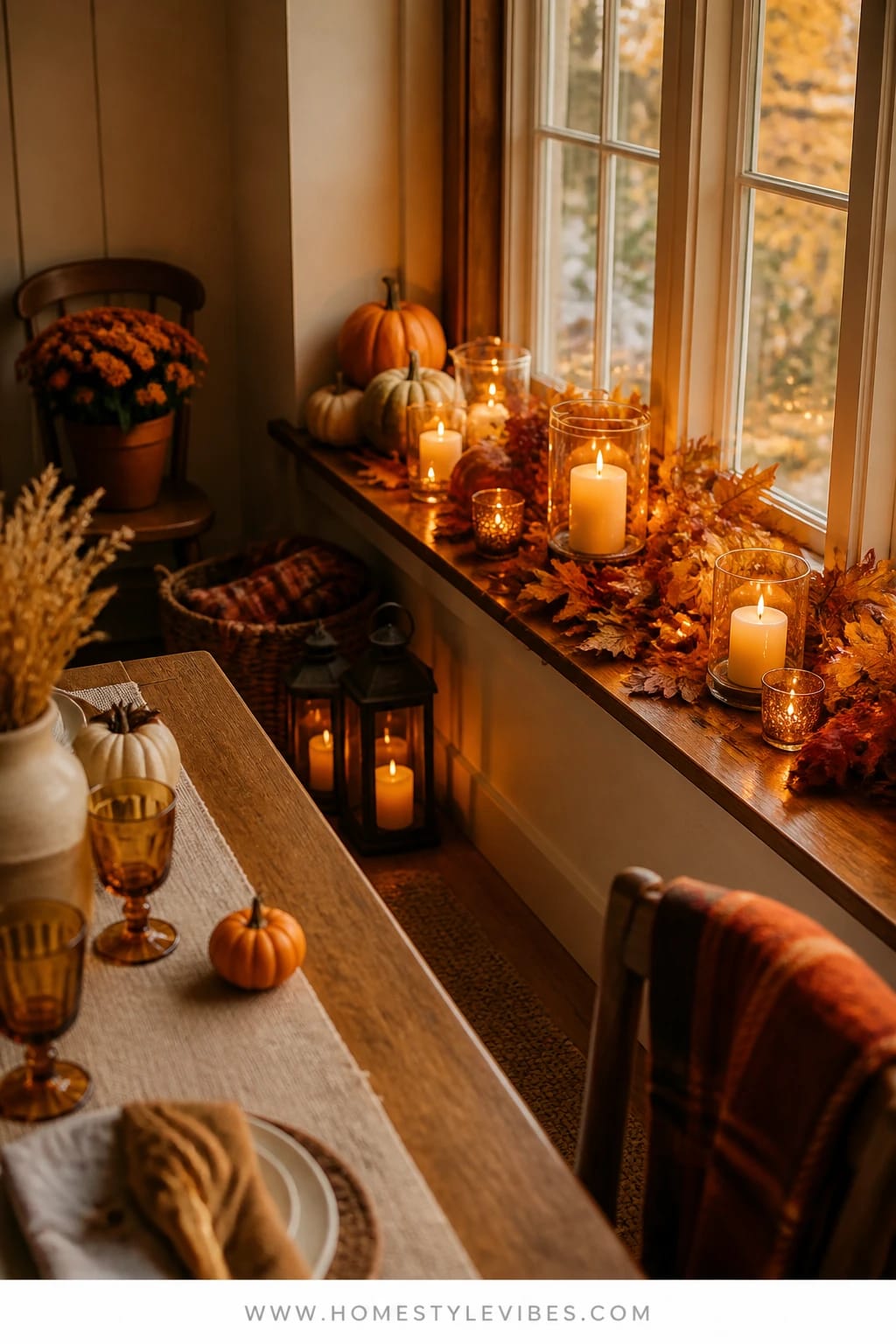
Here’s the secret problem: the dining table looks good, but the rest of the room feels bare. A window ledge styled with a leaf garland and layered candle glow extends the scene so your Thanksgiving table doesn’t float in a void. The mood is golden-hour romance, like the sun decided to stick around for dessert. It works in real homes because it turns a narrow, awkward space into a feature, and everything tucks away easily after the season. Bonus: if your table sits near the window, this becomes a sparkling backdrop in every photo.
Warm lighting does the heavy lifting. Think flameless taper candlesticks at alternating heights, battery tea lights tucked into the garland, and if you’re lucky, a slant of actual sunset bouncing off the glass. Materials include a flexible leaf garland (rust and olive tones), slim brass holders, and a couple of amber bud vases with a single dried stem. The color story: rust, olive, soft amber, and the natural wood or white of your ledge.
Two variations: 1) Budget-friendly: one long faux garland plus thrifted clear bottles as candleholders. 2) Minimalist: a single, high-quality garland with just three candles in a tight color palette (all brass or all matte black holders). This translates from September into December with a quick leaf-to-evergreen garland swap.
Budget Breakdown:
- Faux leaf garland (quality matters here): $20–$60
- Flameless tapers (4–8): $18–$40
- Candleholders (mix of heights): $20–$50
- Amber bud vases (2): $10–$20
- Optional micro string lights: $8–$15
Total Estimated Cost: $76 – $185
Best For: Dining rooms or breakfast nooks with a ledge or deep sill; hosts who want a layered backdrop behind the main tablescape for group photos.
Key Design Elements:
- Main seasonal props: Leaf garland, flameless tapers
- Color palette: Rust, olive, amber, and soft gold
- Lighting strategy: Multiple small points of glow at different heights
- Textile layers: None needed—let the garland be the texture
- Natural elements: Dried stems in amber glass
- Accent details: Brass or black candleholders, micro lights if desired
Why This Looks Intentional: Repeating a few elements—leaves, candles, glass—down the line creates a rhythm that frames the room without shouting. The window reflection doubles the candle glow, which reads luxe in the evening.
How To Recreate This Look:
- Start by measuring your ledge and selecting a garland that slightly overhangs for a relaxed drape.
- Add candleholders in an alternating high-low pattern, then insert flameless tapers.
- Layer the leaf garland around the bases, leaving candle cups visible for safety.
- Place two amber bud vases at asymmetrical points with single dried stems.
- Style with a discreet micro light strand woven under the leaves for an extra golden shimmer.
Don’t Do This: Crowding the ledge. If your sill is shallow, choose slim holders and avoid bulky garland. Nothing kills the mood like a candle tipping into the salad below—trust me, I’ve caught one mid-fall.
Pro Styling Tip: For photos, shoot at twilight so the outside reads slate-blue; the warm interior glow against cool outdoors makes the leaves pop.
Want something a little grander for the main event? The next look is a true holiday moment with just a few power pieces.
Did You Know? Candle flames look best in groups of three or five. Our eyes read odd-number groupings as more natural and balanced.
5. Pumpkin And Mums Runner On A Farmhouse Table With Rust Accents
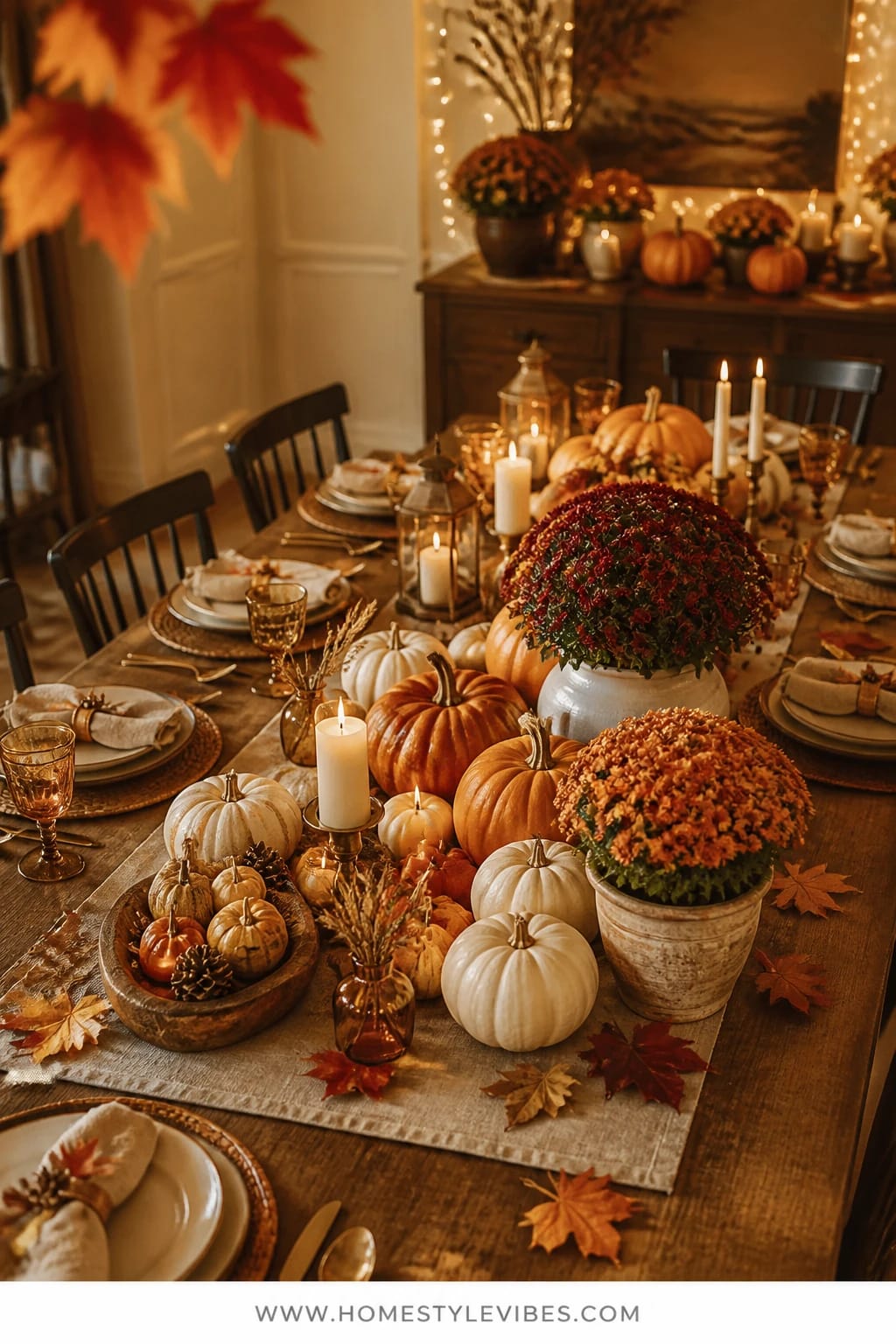
Sometimes your table feels too long, like the middle could host a small town. You line up a few items and still get awkward gaps. This idea solves the void with a lush, low runner made from pumpkins, potted mums, and rust accents that connect the dots. The mood is abundant—like the harvest came to dinner. It works because everything stays low for conversation, the potted mums last weeks, and the entire runner moves easily to the buffet for carving. Here’s the truth: a continuous line of elements looks finished because your eye can’t find a “start” or “end”—it just reads full.
Lighting plays supporting role: tuck short votives between pumpkins so the glow bounces off petals and skin. Materials include mixed pumpkins (smooth and warty, IMO the warty ones add charm), 2–3 small mum plants in simple pots, rust-toned napkins, and a basic linen runner. I learned to avoid orange mums beside orange pumpkins because it can flatten in photos; rust or burgundy mums give contrast.
Two variations: 1) Budget-friendly: cut mums from a grocery store bouquet and cluster in small jars instead of potted plants. 2) Small table: use one mini mum, three pumpkins, and two votives—still a runner, just scaled down. Neutral version: white pumpkins, white mums, taupe runner, and brass candle cups.
Budget Breakdown:
- Runner (linen or jute): $15–$35
- Mini and medium pumpkins (6–10): $15–$45
- Potted mums (2–3 small): $10–$24
- Votives (6–10): $10–$30
- Rust napkins (set of 6–8): $15–$35
- Simple terracotta or ceramic pots: $10–$25
Total Estimated Cost: $75 – $194
Best For: Long farmhouse tables or rectangular dining tables; hosts who love a cheerful, garden-fresh look that thrives all month.
Key Design Elements:
- Main seasonal props: Pumpkins, potted mums
- Color palette: Rust, cream, soft green, warm terracotta
- Lighting strategy: Low votives tucked between petals and stems
- Textile layers: Linen or jute runner for texture
- Natural elements: Real pumpkins, live mums
- Accent details: Terracotta pots, simple glass votives
How To Recreate This Look:
- Start with your runner centered, leaving overhang if you like a casual feel.
- Add two potted mums off-center—one toward each end—to anchor the line.
- Layer mixed pumpkins between the mums, alternating size and color.
- Place votives in the negative spaces, keeping flames a few inches from petals.
- Style with rust napkins at each setting and a single leftover leaf or mini pinecone on top.
Why This Looks Expensive: Repetition with variation—the line feels intentional, while size and color differences add character. The live plants bring that florist-level fullness you can’t fake.
Watch Out: Overwatering mums near your linens is a recipe for water rings. Place a coaster or small saucer under each pot inside the runner line.
Pro Styling Tip: Angle one pumpkin slightly askew and push a votive just behind it; the shadow line adds depth in photos so the runner doesn’t read flat.
Quick breather. If your brain’s spinning, take this with you: you only need one strong idea to make the whole room feel intentional. Choose your anchor—plaid, dried florals, lantern light—and let everything else support it.
Quick Tip: Swap in a cheese board or bread basket at one end of any runner. Functional pieces mix with decor and make the table look generous, not staged.
6. Pinecone And String Light Tablescape On A Bookshelf Backdrop With Candlelit Warmth
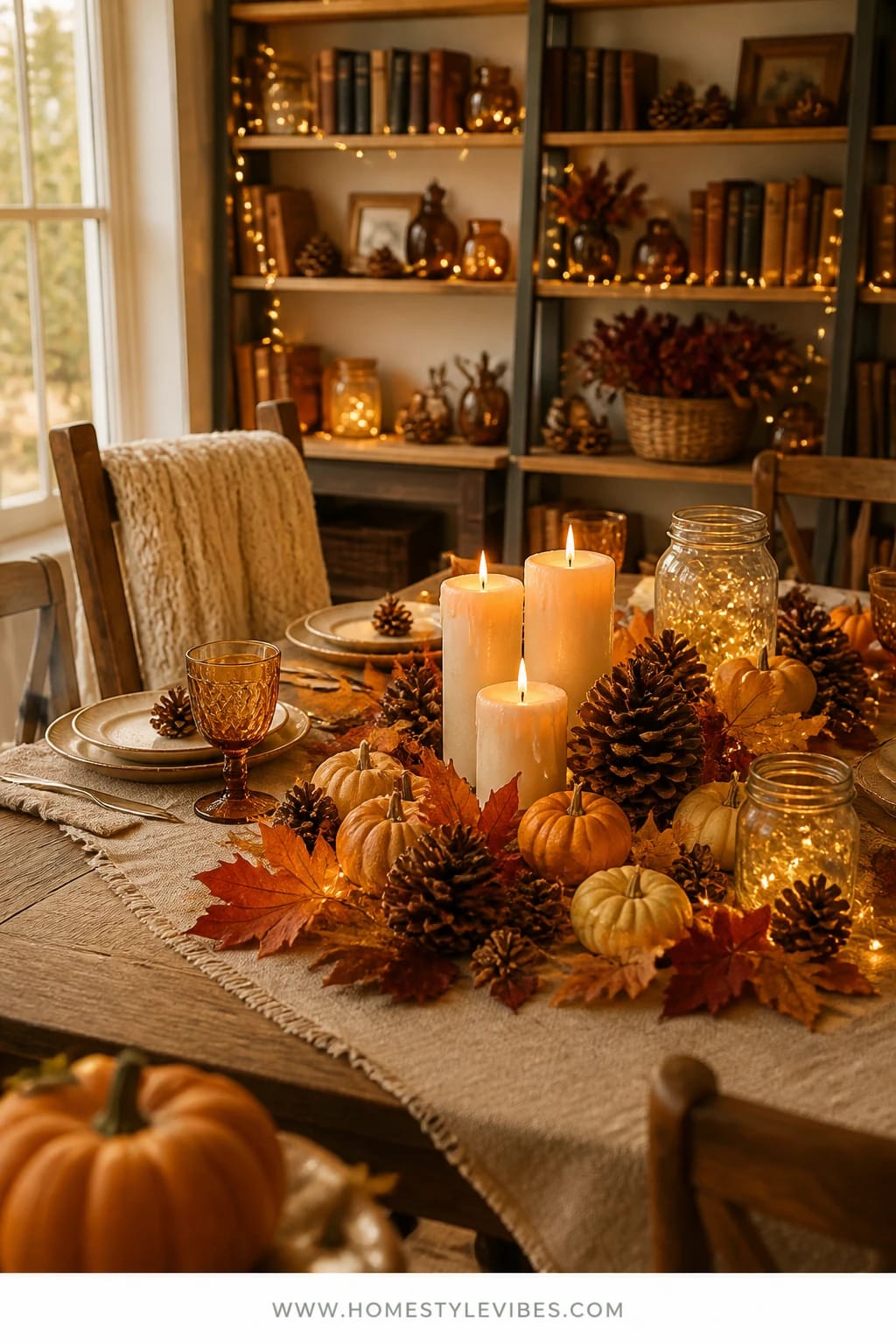
You set the table beautifully, but your dining room’s bookshelf steals focus—and not in a cute way. This concept treats the shelf as your stage set and mirrors the table decor with pinecones and warm string lights for cohesive glow. The mood is intimate library dinner: twinkle against wood, candlelit warmth at the table. It’s real-life friendly because you probably already own half of this—books, a few vases, a strand of lights—and string lights store in a mason jar afterward. Also, the shelf styling stays up from early fall through Thanksgiving without a single water change.
Lighting leads the way. We drape a micro string light along one or two shelves and repeat pinecones in small bowls or low trays that echo the table’s centerpiece. On the table itself, keep candles lower and warmer than usual so the shelf isn’t the only star. I like a copper bowl of pinecones in the center with a ring of tea lights around it—simple, textured, glowy.
Photographs love the built-in depth: foreground table, midground centerpiece, background shelf twinkle. Two variations: 1) Minimalist: one shelf with a single light strand and three pinecones in a shallow dish. 2) Color shift: add a few burgundy books or rust pottery pieces to pick up your napkins or runners so everything talks to each other.
Budget Breakdown:
- Micro string lights (2 strands): $10–$24
- Pinecones (bag or foraged): $0–$12
- Low copper or wood bowl: $15–$45
- Tea lights or small votives (10–12): $10–$20
- Neutral runner or placemats: $15–$35
- Optional: a few thrifted rust pottery pieces: $6–$20
Total Estimated Cost: $56 – $156
Best For: Rooms with bookshelves, hutches, or built-ins; evening meals where twinkle plus candlelight sets the mood without turning off every lamp.
Key Design Elements:
- Main seasonal props: Pinecones, micro string lights
- Color palette: Candlelit warmth, copper, cream, and wood tones
- Lighting strategy: Background twinkle, foreground candle clusters
- Textile layers: Neutral runner or placemats to calm the scene
- Natural elements: Pinecones and maybe a sprig of cedar late in the season
- Accent details: Copper bowl, rust or amber pottery on shelves
Why This Feels Designer: Repeating materials across the room unifies the shot. When your background carries the same textures as the table, the whole space reads curated and balanced.
How To Recreate This Look:
- Start by clearing one bookshelf shelf to create breathing room.
- Add a micro light strand snaked casually along that shelf, hiding the battery pack behind books.
- Place a small bowl of pinecones on the shelf and echo it with a larger bowl on the table.
- Layer a neutral runner on the table to calm visual noise from the books.
- Style with a ring of tea lights around the table bowl, leaving 3–4 inches of safe space between flame and wood.
The Most Common Mistake: Using cool-white string lights with warm candles creates color clash. Choose “warm white” lights so your twinkle and candle glow live in the same family.
Pro Styling Tip: For photos, place a single pinecone near the plate in the foreground and focus past it—instant depth and that magazine-y layered abundance.
Micro-story moment: a friend of mine bought three different garlands for her shelves and still hated the look. The problem wasn’t the garland at all—it was the blue-tinted string lights. We swapped for warm white, moved two books, and suddenly the whole room looked like a holiday postcard.
Did You Know? If one strand of string lights dies right before Thanksgiving, snip the dead section and tuck the remaining lit part into a bowl or vase. It reads intentional and no one will know.
Quick Checklist
- Plaid runner or scarf
- Amber glass votives
- Mini pumpkins and gourds
- Dried floral bundle
- Burgundy taper candles
- Copper or wood chargers
- Lanterns with flameless pillars
- Large tray for kitchen island
- Pinecones (bag or foraged)
- Leaf garland for window ledge
- Micro string lights (warm white)
- Potted mums (small)
- Rust or burnt orange napkins
- Neutral linen table runner
- Bud vases for dried stems
- Brass or black candleholders
- Terracotta pots and saucers
- Simple white plates
- Microfiber cloth for glass and lanterns
- Matches or lighter
Frequently Asked Questions
How do I keep the budget in check if I love several of these Thanksgiving table decor ideas?
Pick one anchor investment (like amber glass votives or a quality garland) and reuse it across looks. Then layer in inexpensive seasonal items—pumpkins, pinecones, a plaid scarf—so the base pulls double duty all month.
Are real or faux pumpkins and florals better for these setups?
IMO, real pumpkins win for texture, but dried florals beat fresh for longevity. If you go faux, keep them matte and mix in at least one real element—like pinecones or a potted mum—to avoid that plastic-y shine in photos.
My dining area is tiny. Which idea works best without swallowing the table?
Try the lantern-lit kitchen island if you have an island, or the window ledge garland to move most decor off the tabletop. On the table, stay narrow: one small bowl of pinecones with two votives gives warmth without sacrificing plate space.
What do I do with all this decor after Thanksgiving?
Store by material: glass with glass, textiles in a labeled tote, and a small box for battery candles and remotes. Dried florals and garlands live in a long under-bed bin. You’ll reuse 80% next year without thinking.
How do I handle candles with pets or kids around the table?
Use flameless pillars and tapers for safety, then add one or two real votives during dinner within your line of sight. Keep anything flame-related at least 6 inches from florals and 10 inches from curious paws.
When should I start decorating for Thanksgiving specifically?
Set your base in early November—runner, garland, dried florals—and add pumpkins, mums, and candles the week of. Light everything and do a quick photo test the night before to catch gaps or wobbly holders.
I’m a renter with strict rules—any damage-free tricks?
Lean decor whenever possible: garlands along ledges, trays on islands, and string lights tucked into bowls or bookshelves. Use clear removable hooks under shelves or the table edge for hidden micro lights.
Wrap-Up: Your Cozy, Abundant Thanksgiving Starts With One Idea
Here’s the part no one says out loud: you don’t need fifty pieces to make a Thanksgiving table feel rich and welcoming. You need one strong idea—plaid and amber glow, dried florals with burgundy light, lanterns and pinecones—and the nerve to repeat it generously. Cozy comes from warm light that flatters faces, textiles that ground the scene, and abundant seasonal elements that feel layered rather than sprinkled.
So pick your favorite from these six Thanksgiving table decor ideas and start tonight. Lay the runner, test the candles, tuck in a few pumpkins or pinecones, and take a quick phone photo to spot empty patches. Adjust, breathe, and let it be imperfect. The little flicker of candlelight, the rustle of dried stems, the rust napkin under a vintage fork—that’s what people remember when they talk about “how good it felt” at your table.
You’ve got this. Light the candles, pour something warm, and enjoy the glow you just made. Your guests will notice—and yes, your photos will be gorgeous.

About the Author

Krisztina P.Rendes, Founder of Home Style Vibes
Founder of Home Style Vibes
Krisztina Puskásné Rendes created Home Style Vibes as a cozy-modern lifestyle space where homemaking meets inspiration. Her goal is to help women create beautiful, organized, and peaceful homes they truly love — without overwhelm. You’ll find here heart-driven content on home decor, cleaning tips, easy family recipes, organization and decluttering, DIY home projects, plants, and seasonal ideas — all designed to bring more calm, comfort, and style into everyday life.