6 Best Wall Colors for Bedroom with Small Space That Make It Look Bigger Now
You want a bedroom that feels open, breathable, and Instagram-level pretty. You hate that cramped, shadowy feeling that makes your small space look like a storage closet with a comforter. You picture soft morning light on fresh sheets, smooth walls that glow, and textures that feel like “quiet luxury” without a fancy budget. These six wall color ideas fix that exact frustration—each one is a complete design concept you can pull off in a weekend for under $1,200 in paint, lighting, and simple styling.
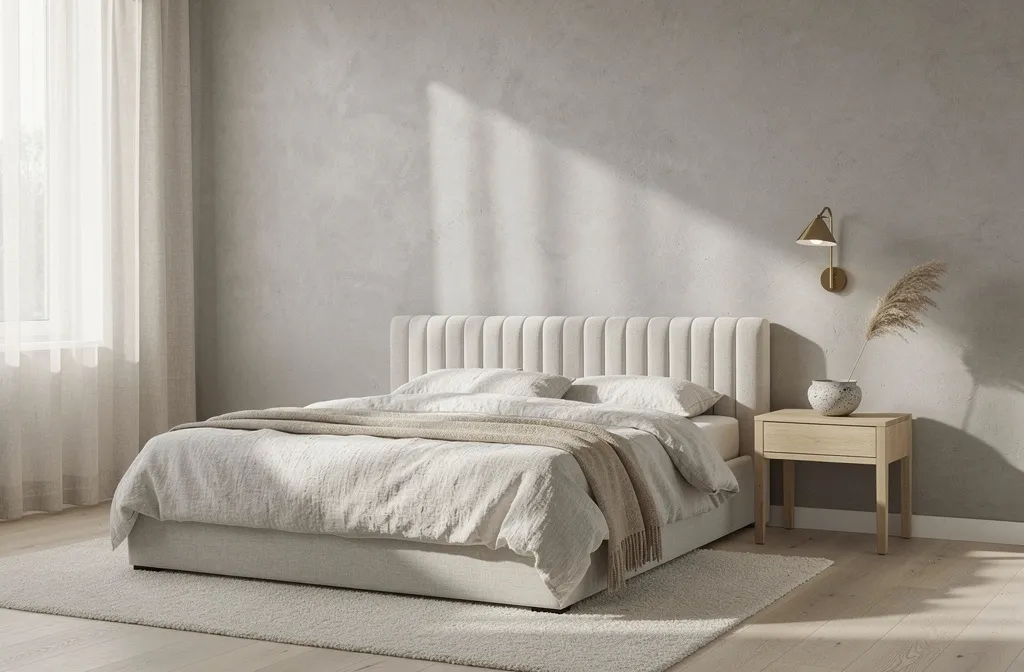
Every look here earns its keep in a small bedroom: the right wall color, the right sheen, the right partners in crime (curtains, bedding, rug). Expect honest advice, renter-friendly swaps, and two versions for different budgets. If you love neutral, we’ll treat it with nuance. If you want subtle moodiness, we’ll keep the room feeling airy. And yes, these are total Pinterest candy—clean, photogenic, and satisfying from every corner. If you crave calm mornings and gentle evenings, you’ll find your bedroom’s new backbone here.
1. Soft Greige Cloud With Linen + Brass Accents
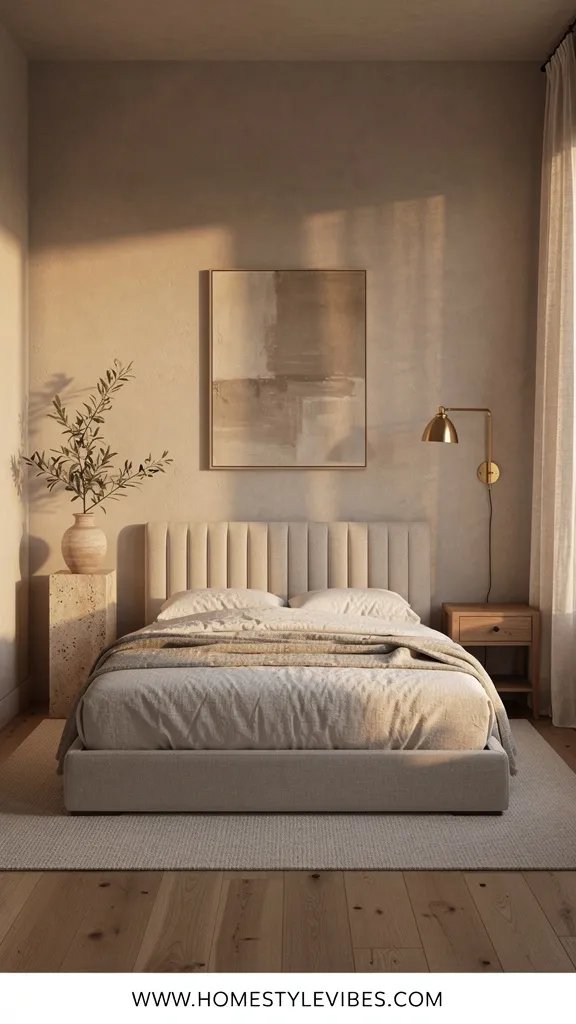
We’ve all been there—staring down a tiny bedroom that either reads “cold rental white” or “beige cave.” You paint it gray, it turns blue. You try beige, it turns pink. Meanwhile, the room looks smaller than it is. This greige isn’t a compromise; it’s a quiet chameleon that stretches walls outward without shouting for attention. Imagine a misty, featherlight greige that shifts with the light—never flat, always warm—paired with a touch of brushed brass and slubby linen.
The mood? Calm hotel-suite meets Sunday-morning croissant. It works because greige bridges warm and cool undertones, so existing floors and trim instantly feel more intentional. In smaller bedrooms, the color subtly blurs corners, which makes the room feel wider. Add soft, warm light bulbs at 2700–3000K and you get that candlelit glow without the darkness. Materials lean natural: linen for bedding, sand-toned wool for the rug, and a brass swing-arm lamp for a wink of glam. It photographs beautifully due to tonal layering—greige walls, cream bedding, oat throw, and a hit of brass that catches light just enough.
Try this two ways: Budget-friendly uses a mid-price paint and IKEA linen dupe. Renter-friendly? Paint only one long wall and match your bedding to it; add peel-and-stick brass-look hooks for jewelry and scarves to bounce light. Want a darker, cocoon version? Choose a slightly deeper greige on the same strip and increase lamp count to three for balance.
Budget Breakdown:
- Paint (quality, eggshell): $45–$85 per gallon
- Two brass swing-arm plug-in lamps: $80–$180 each
- Linen-blend duvet + two shams: $70–$160
- Wool or wool-blend area rug (5×7): $120–$300
- Neutral blackout curtains + simple brass rod: $60–$150
Total Estimated Cost: $375 – $875
Best For: Small bedrooms with mixed undertones in flooring. Works beautifully in apartments with warm wood trim or rental-grade carpet; perfect year-round, especially if you crave softness without stark white.
Key Design Elements:
- Main materials: Linen, wool, brushed brass, matte ceramic
- Color palette: Feather greige walls, cream bedding, oat rug, brass accents, eucalyptus green stems
- Lighting strategy: Warm temperature bulbs at 2700–3000K, layered task lamps at both bedsides
- Furniture silhouettes: Rounded edges on nightstands, low-profile bed frame
- Texture layers: Slubby linen duvet, chunky knit throw, ceramic lampshade
- Accent details: Brass picture light over a tonal art print, ribbed glass tray, tall branch in ceramic vase
How To Recreate This Look:
- Start with a soft greige paint (test 3 samples on different walls; view morning and evening).
- Add linen or linen-blend bedding in a creamy off-white, not stark white.
- Layer a warm, sand-toned rug under at least 2/3 of the bed to visually “float” it.
- Install plug-in brass swing-arm lamps to free nightstand space.
- Style with one tall vase and a single framed art print with a brass picture light above.
Why This Looks Expensive: The subtle greige reads custom because it harmonizes with both cool and warm items already in the room. Brass in small doses looks curated, not flashy, and linen texture adds a quietly luxe wrinkle that photographs as depth.
Watch Out: Don’t choose a greige that leans purple in afternoon light. Always test samples next to your baseboards; undertones flare near white trim.
Pro Styling Tip: Angle the picture light slightly downward to create a soft halo on the art—your wall will glow in photos and at night.
2. Airy Powder Blue With Crisp White Trim + Rattan Notes
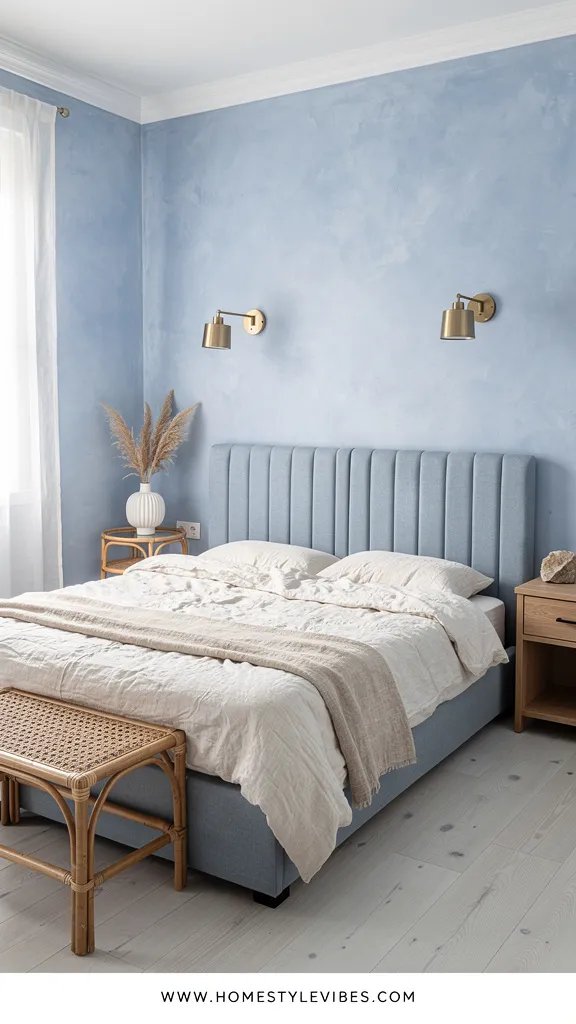
It’s that one corner that always feels a bit… stale. You’ve tried white-on-white, but the room feels flat and clinical. Powder blue flips the script: it reflects light like water and brings a beachy, spa-level calm—even if your view is a fire escape. Paired with bright white trim and a touch of rattan, the space feels breezy and expansive, like you opened a window in your wall.
Expect an uplifting, coastal-Japandi hybrid vibe. Powder blue bounces daylight, while cool undertones recede visually, making walls feel further away. Consider semi-gloss for trim to sharpen edges and frame the blue, then add rattan and light oak for warmth so it never goes icy. You’ll get gorgeous photos because of the color contrast—blue walls, white bedding, natural textures—plus the way rattan scatters light softly. Easy to live with, easy to clean, and, IMO, wonderful for resale because it reads fresh, not trendy.
Variations include a renter-approved approach with only the headboard wall painted and removable wallpaper in a tiny ticking stripe inside the closet; budget-friendly with cotton percale sheets and a thrifted rattan mirror; and a moody evening version with dimmable sconce bulbs so blue drifts toward slate at night.
Key Design Elements:
- Main materials: Cotton percale, rattan, light oak, lacquered white trim
- Color palette: Powder blue walls, high-chroma white trim, sandy neutrals, inky navy accents
- Lighting strategy: Mix a paper lantern overhead with bedside cones; keep bulbs at 3000–3500K for crispness
- Furniture silhouettes: Slim profile nightstands, spindle bed or simple upholstered headboard
- Texture layers: Woven rattan mirror, striped throw, waffle blanket
- Accent details: Blue-and-white ceramic dish, small navy stripe pillow, fresh greenery
Budget Breakdown:
- Paint (premium washable matte): $55–$95 per gallon
- Trim paint (semi-gloss white): $30–$70
- Rattan mirror or tray: $30–$150
- Cotton percale duvet set: $60–$140
- Paper lantern pendant: $20–$60
Total Estimated Cost: $195 – $515
Best For: North-facing rooms that need cheer; small bedrooms with limited natural light but a desire for freshness. Great for spring/summer lovers and anyone who wants crisp bedding vibes.
How To Recreate This Look:
- Start with powder blue walls and bright white trim; keep edges razor-sharp with good tape.
- Add a paper lantern overhead to diffuse light evenly; upgrade to a dimmer if possible.
- Layer crisp white sheets and one navy-striped lumbar for contrast.
- Introduce rattan with a mirror or tray; repeat it once as a basket or lamp base.
- Finish with a light oak stool as a nightstand and a small leafy plant.
Why This Feels Designer: The exacting contrast between cool blue and bright white trim frames the room like a postcard. Repeating rattan twice creates cohesion that looks considered, not random.
One Thing To Avoid: Skipping the white trim refresh. Dingy trim next to blue makes everything look tired. Fresh semi-gloss white is non-negotiable here.
Pro Styling Tip: Place the rattan mirror where it catches side light from the window to create a soft, dappled reflection that reads airy in photos.
Curious how color can cozy up, not close in? The next idea leans warmer without losing that bigger-room effect.
3. Almond Cream Monochrome With Tone-on-Tone Textiles
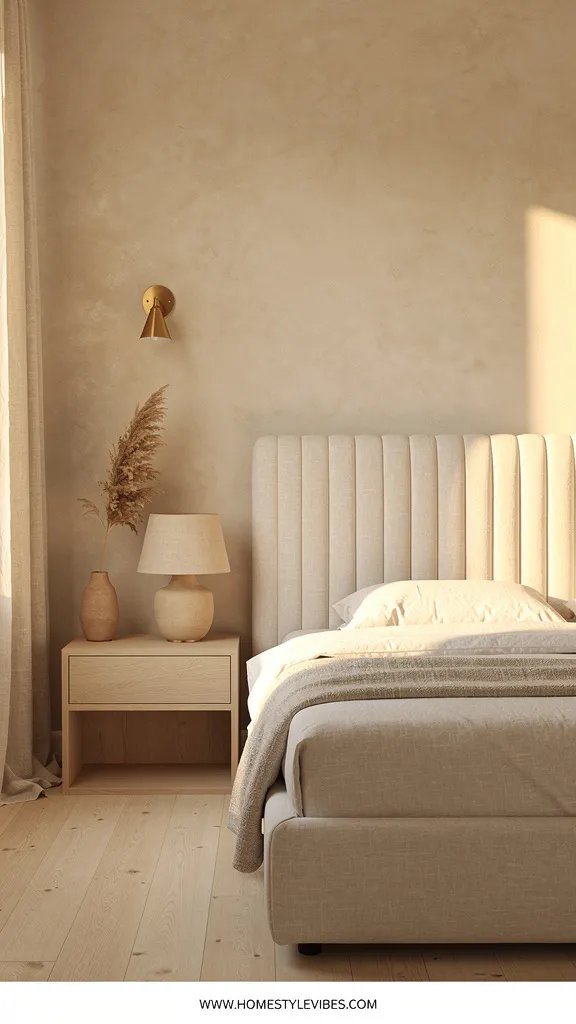
You want warmth, but every beige you try looks builder-basic. You add decor, and suddenly it’s cluttered. Almond cream is the secret sauce: a toasted neutral with a hint of golden warmth that flatters wood, makes your bedding look pricier, and expands the room by erasing harsh contrast lines. Everything whispers, nothing shouts.
The mood is “quiet luxury desert retreat.” Almond cream swaddles the space, so you go monochrome: walls, drapes, and bedding all within two shades. This softens visual breaks and makes the room feel taller and calmer. Lighting? Pivot to warm-white bulbs, and add a ribbed glass lamp so light spills in soft rings. Photographs beautifully because of tone-on-tone texture: nubby cotton, velvety throw, and a plaster-like matte paint finish that absorbs glare.
Real-life perks: Monochrome hides small-scale mess. Family-friendly because warm undertones forgive a stray scuff better than white. If you’re a renter, paint just the main walls and leave the ceiling white for a gentle lift. A darker version? Go for a toasted almond headboard and slightly deeper walls to lean cozy for winter.
Key Design Elements:
- Main materials: Nubby cotton, boucle, ribbed glass, natural oak
- Color palette: Almond cream walls, ivory drapes, camel throw, warm oak
- Lighting strategy: Layer two warm bedside lamps with a low-glow nightlight or LED strip behind the headboard
- Furniture silhouettes: Upholstered headboard, waterfall side table or rounded corners
- Texture layers: Boucle pillow, chenille throw, subtly patterned rug
- Accent details: Unlacquered brass knobs, ceramic bowl, dried palm fronds
Budget Breakdown:
- Paint (flat or matte for velvety effect): $45–$85 per gallon
- Blackout drapes in ivory: $80–$180
- Ribbed glass table lamp: $50–$120
- Boucle pillow + chenille throw: $40–$120
- Neutral patterned rug (5×7): $120–$280
Total Estimated Cost: $335 – $785
Best For: South-facing rooms where sunlight warms the palette; anyone who wants cozy without closing in. Great for creating a cohesive, serene backdrop for minimal decor.
How To Recreate This Look:
- Start with almond cream on all walls; consider color-drenching the baseboards for a custom look.
- Add ivory drapes hung high and wide to frame the window and hide narrow casing.
- Layer a subtly patterned rug to create floor softness without visual noise.
- Install warm bedside lamps with ribbed or frosted glass shades.
- Style with tone-on-tone bedding, one camel throw, and a petite brass tray.
Why This Reads High-End: Monochrome done right looks intentional and calm. Slightly varying textures within a tight palette feels boutique—like a curated capsule wardrobe for your bed.
The Most Common Mistake: Introducing a bright white element that clashes—like a stark white pillow. Keep whites creamy so the palette stays cohesive.
Pro Styling Tip: Snap photos with blinds tilted up, not down; the softer upward light mimics studio bounce for that velvety wall texture.
Remember, this isn’t about recreating a showroom. It’s about building a small bedroom that supports your mornings and quiets your nights. If one idea resonates more than the others, that’s your starting point. You don’t need all of them—just the one that makes you breathe easier.
4. Misty Sage With Matte Black Moments + Stone Texture
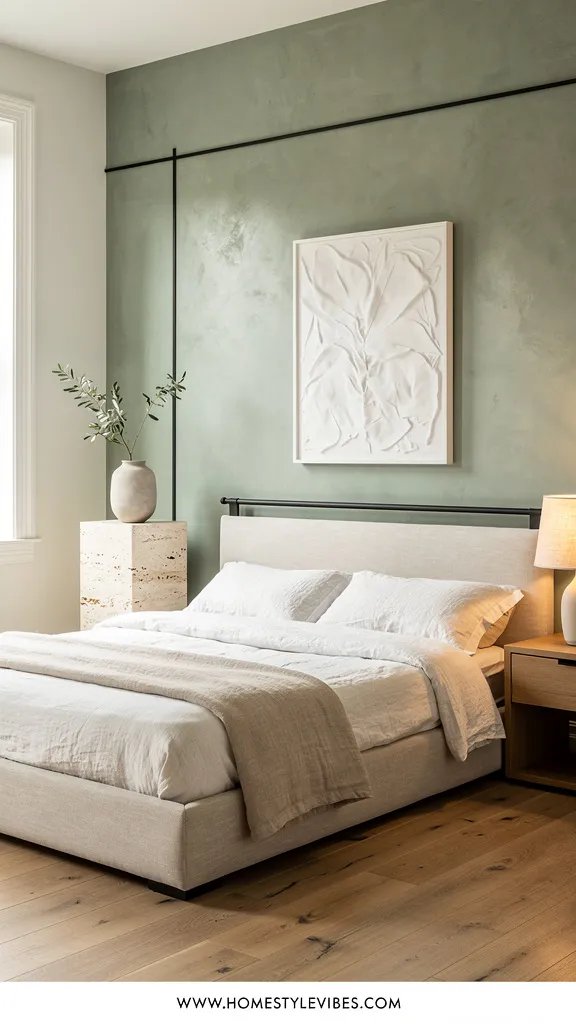
You’ve tried white. You’ve tried beige. The room still feels like a “before” photo. Misty sage is the subtle color that reads like fresh air—green enough to feel alive, gray enough to stay sophisticated. It’s the “I slept like a human again” wall color for small bedrooms, especially where you want calm without boring.
The vibe blends modern Mediterranean with soft Japandi. In real homes, sage works magic because it pairs with both warm woods and cool stone textures. Add a single matte black line—a sconce, a frame, a slim curtain rod—and you create contrast that gives the eye structure. Lighting leans warm and low; think fabric shades that diffuse. Photogenic? Absolutely. The soft green absorbs shadow, while black accents carve definition, and a stoneware lamp base adds earthy dimension.
Two variations: Budget-friendly with DIY limewash effect using a sea sponge and two complementary sage tones; renter-friendly with peel-and-stick sage panels behind the bed. For a deeper look, paint ceiling and walls the same misty sage to erase edges, then punch in two matte black lamps for clarity.
Budget Breakdown:
- Paint (washable eggshell or limewash alternative): $50–$120
- Matte black plug-in sconces: $60–$160 per pair
- Stoneware lamp or ceramic base: $40–$120
- Neutral linen bedding: $70–$160
- Peel-and-stick sage panels (renter): $35–$90
Total Estimated Cost: $255 – $650
Best For: Small rooms with orangey floors that need visual cooling; people who love nature tones and quiet evenings. Ideal for fall/winter coziness without heaviness.
Key Design Elements:
- Main materials: Stoneware, linen, matte black metal, rattan or seagrass
- Color palette: Misty sage walls, black accents, creamy bedding, sandy rug
- Lighting strategy: Two warm bedside lamps or sconces plus a hidden LED strip behind headboard
- Furniture silhouettes: Slim profile bed, rounded nightstands to soften corners
- Texture layers: Gauzy curtain panels, nubby throw, fluted ceramic vase
- Accent details: Black gallery frame with botanical print, olive branches
How To Recreate This Look:
- Start with misty sage on walls; sample next to floors to ensure it neutralizes warmth.
- Add a sandy seagrass or jute rug for earthy grounding.
- Layer creamy bedding with a light taupe throw—skip busy patterns.
- Install slim matte black sconces to frame the headboard.
- Style with one stoneware lamp and a single botanical print in a black frame.
Why This Looks Intentional: The soft green sets a nature-inspired baseline, while deliberate black lines bring structure. It’s the contrast that quietly edits the room and makes it feel finished.
Don’t Do This: Avoid shiny black finishes; they glare under warm bulbs and can feel harsh. Stick to matte or satin black for quiet depth.
Pro Styling Tip: Shoot photos during golden hour—sage drinks in that warm light and turns the room into a restful postcard.
Ready for something a bit moodier that still opens up a small footprint? The next one is cozy, not cavelike.
5. Smoky Taupe Feature Wrap With Charcoal Linen + Bronze
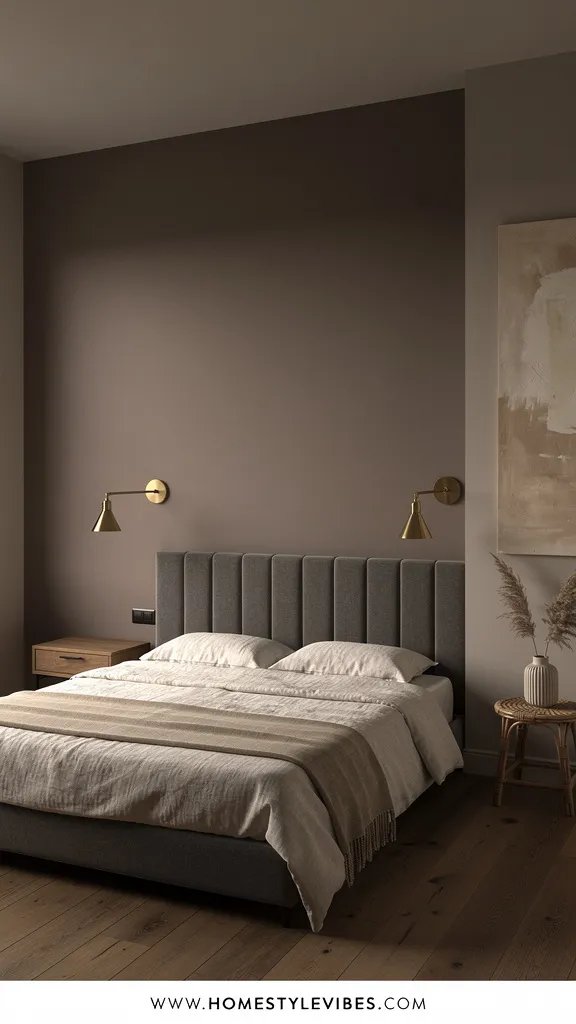
You crave depth, but dark paint in a small room scares you. We’ve all been there—bold choice, instant regret. Smoky taupe is the grown-up compromise: moody enough to feel hugged, complex enough to read expensive, and light enough to still bounce a glow. Use it as a “feature wrap”—paint the headboard wall and return it onto the side walls by 12–18 inches. It frames the bed like built-in architecture without closing in the whole room.
The mood skews boutique-hotel-meets-library. Why it works in real homes: the feature wrap creates a focal zone, so your eye edits out the chaos. Taupe’s red-violet undertone plays beautifully with bronze and charcoal; the trick is balancing light with two or three sources at staggered heights. In photos, that smoky taupe reads velvety, while bronze pulls gold flecks from the paint and charcoal linen anchors the bed.
Variations include a budget version with a single gallon and two bronze pull lamps; a renter edition where you “wrap” with extra-wide peel-and-stick panels; and a darker version for night owls—deepen the taupe by one shade and add a white mat in art to keep edges crisp.
Key Design Elements:
- Main materials: Charcoal linen, oiled bronze, walnut wood
- Color palette: Smoky taupe walls, charcoal bedding, white mat art, walnut nightstands
- Lighting strategy: Bronze table lamp + sconce + a concealed LED behind bed for gradient light
- Furniture silhouettes: Low, tailored headboard; slim nightstands with thin legs
- Texture layers: Linen duvet, velvet lumbar, wool rug
- Accent details: Bronze pulls, smoky glass tray, hardcover stack with neutral spines
Budget Breakdown:
- Paint (one gallon, premium): $55–$95
- Bronze lamp or sconce: $70–$180
- Charcoal linen duvet set: $90–$220
- Wool-blend rug: $140–$320
- Art print with white mat + bronze frame: $60–$150
Total Estimated Cost: $415 – $965
Best For: Night readers, small city bedrooms that feel overlit during the day, or anyone who wants cozy evenings without sacrificing a sense of space.
Why This Feels Designer: The partial wrap tricks the eye into seeing custom millwork. The restrained palette—taupe, charcoal, bronze—lets textures take the lead, which always reads high-end.
How To Recreate This Look:
- Start by painting the headboard wall smoky taupe; wrap 12–18 inches onto both adjacent walls.
- Add charcoal linen bedding for weight; keep sheets light ivory to prevent heaviness.
- Layer a wool-blend rug in soft gray; float it under the front 2/3 of the bed.
- Install a bronze lamp on one side and a plug-in sconce on the other for asymmetry.
- Style with one white-matted art piece above the nightstand and a smoky glass catchall.
One Thing To Avoid: Don’t pair smoky taupe with orange-toned pine furniture; it will fight. If that’s what you own, add a walnut-colored gel stain or cover tops with linen runners.
Pro Styling Tip: For photos, turn on only the sconce and one lamp, then open the curtains slightly—mixed light temperatures create cinematic depth on taupe.
If your room faces a brick wall or another building, the final concept is the bright, flexible fix that still feels intentional.
6. Clean Warm White With Black-White-Textured Layers
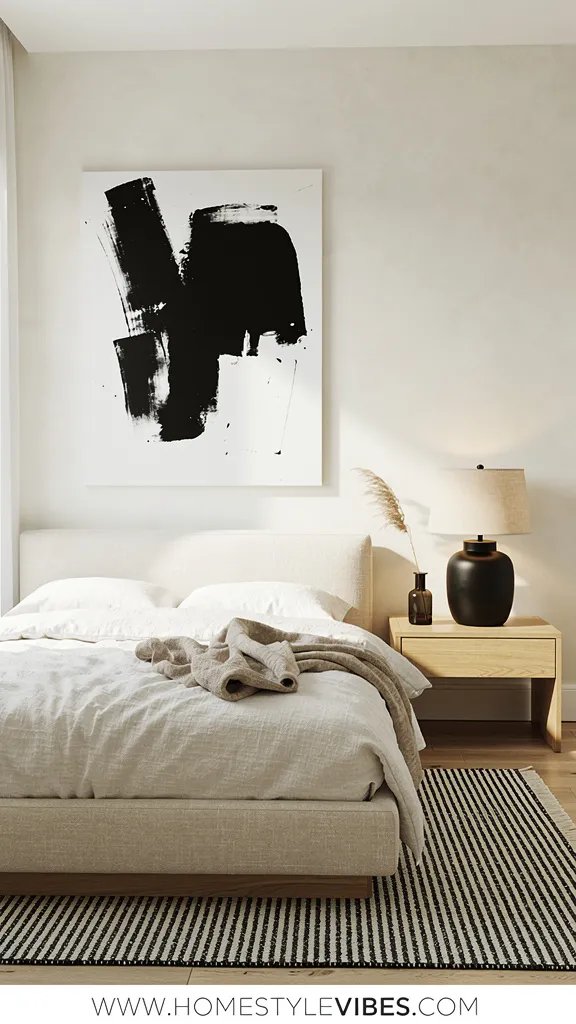
Maybe you love white walls but hate that “rental glare.” You want crisp, light-loving walls that don’t feel stark. Clean warm white is the move: a white with the tiniest kiss of yellow/gray so it glows instead of glares. The result is museum-bright but human—perfect for small bedrooms that need maximum visual square footage.
The mood reads gallery-clean with soft edges. In real homes, warm white is forgiving of shadows, so corners blur and the room appears bigger. Pair it with a high-contrast palette—black frames, a black-and-ivory pillow—but keep everything textural: chunky knit throw, woven shade lamp, slub cotton sheets. The space photographs like a magazine because white sets the exposure, black defines shapes, and texture stops it from looking flat.
Variations: Budget edition with one gallon of quality paint and thrifted black frames; renter-friendly where you leave walls white and just swap bulbs to warmer tones, then add black curtain rods and ivory curtains. Darker version? Use warm white on three walls and soft putty on the headboard wall for a hint of depth.
Budget Breakdown:
- Paint (premium warm white, eggshell): $55–$95
- Black metal curtain rod + rings: $35–$90
- Ivory blackout curtains: $70–$160
- Chunky knit throw: $35–$120
- Set of three black frames with white mats: $50–$120
Total Estimated Cost: $245 – $585
Best For: Tiny bedrooms with low light; minimalists who still want softness. Great for year-round brightness and a flexible base for swapping accessories.
Key Design Elements:
- Main materials: Slub cotton, chunky knit, blackened steel, light oak
- Color palette: Warm white walls, black accents, oak, and natural fibers
- Lighting strategy: 2700–3000K bulbs; one overhead diffuser plus two task lamps
- Furniture silhouettes: Simple, clean lines; low or platform bed to increase breathing room
- Texture layers: Knit throw, jute or sisal rug, pleated shade lamp
- Accent details: Black trays, white-matted art, oversized green branches
How To Recreate This Look:
- Start with a warm white that’s not too yellow; sample next to bedding to confirm harmony.
- Add a black curtain rod hung high, with ivory curtains that just kiss the floor.
- Layer a jute or sisal rug for grit and texture; keep it simple and large.
- Install matching white-matted frames over the bed or along one wall in a clean row.
- Style with one bold black accent—like a lamp base or tray—and one oversized green branch.
Why This Looks Expensive: The black-and-white tension feels editorial, while texture keeps it tactile. Light oak introduces warmth, avoiding a sterile vibe.
Watch Out: Don’t choose cool daylight bulbs; they’ll make warm white look dingy. Stick to warm bulbs to keep the “glow” you want.
Pro Styling Tip: For photos, pull the duvet tight, then pinch the top two inches into soft waves—micro-shadows give the white dimension.
Quick perspective check: You don’t need a hundred new things. A small bedroom comes alive when you pair the right wall color with two or three textures and calm lighting. If you fix paint and bulbs first, the rest falls into place—seriously.
Two quick personal notes. First: a friend of mine spent weeks agonizing over paint colors before realizing the real problem was her lighting—ugly cool bulbs that made every color look like a hospital hallway. We swapped to warm LEDs, and her existing paint suddenly looked perfect. Second: I tried almond cream in my own small bedroom last fall and honestly couldn’t believe the difference in how the morning light pooled across the wall; the room felt like it exhaled.
Quick Checklist
- Test 3–4 paint samples on different walls and view morning and evening
- Choose washable matte or eggshell for walls; semi-gloss only for trim
- Keep bulbs at 2700–3000K for warmth and flattering skin tones
- Hang curtain rods near the ceiling to elongate walls
- Use one bold contrast (brass, black, or bronze) repeated twice
- Pick a large rug to visually float the bed
- Limit patterns to one small-scale and one stripe or solid
- Repeat a texture twice (linen, rattan, wool) for cohesion
- Hide cords with cable covers painted to match the wall
- Style nightstands with one tall item and one low item for height variation
Frequently Asked Questions
How do I pick the right undertone if my floors are orange or red-toned?
Test colors that lean slightly cool or neutral to counter warmth—misty sage, soft greige, or warm white with a bit of gray. Paint swatches right next to the floor and baseboards to see the real interaction.
What if I’m on a tight budget—where should I spend first?
Invest in good paint and warm bulbs. Then add window treatments that hang high and wide. Those three moves make the biggest visual difference in a small bedroom.
I rent—can I still get the bigger-room effect without repainting everything?
Yes. Paint just one wall, use peel-and-stick panels behind the headboard, swap to warm bulbs, and add high-hung curtains. Also, use a large rug to unify the floor—huge payoff for renters.
Won’t darker colors make my small bedroom feel smaller?
Not if you control contrast and layer lighting. A deeper tone like smoky taupe on a feature wrap with soft lamps can blur edges and create depth, which often feels larger than choppy, bright walls.
How do I avoid my neutral walls looking dull in photos?
Layer texture: linen, knit, ribbed glass, and wood. Add one high-contrast detail (black frame or brass lamp). Shoot during indirect daylight with warm lamps on—micro-shadows add depth to neutrals.
Final Thoughts
Start with one idea—the wall color that makes your shoulders drop when you look at the swatch. Then pair it with warm lighting and two honest textures you love touching. That’s all you need to make a small bedroom breathe.
The truth is, luxury in a small space comes from texture, light, and restraint. Choose the right paint, soften your bulbs, repeat one material twice, and stop three accessories earlier than you think. Your room will finally feel finished.
Pick your shade, clear an afternoon, and go for it. You’ve got this—and your small bedroom is about to look bigger, calmer, and way more you.

About the Author

Krisztina P.Rendes, Founder of Home Style Vibes
Founder of Home Style Vibes
Krisztina Puskásné Rendes created Home Style Vibes as a cozy-modern lifestyle space where homemaking meets inspiration. Her goal is to help women create beautiful, organized, and peaceful homes they truly love — without overwhelm. You’ll find here heart-driven content on home decor, cleaning tips, easy family recipes, organization and decluttering, DIY home projects, plants, and seasonal ideas — all designed to bring more calm, comfort, and style into everyday life.