6 Laminate Countertops That Look Exactly Like Quartz and Marble—Stunning Dupes You’Ll Love
You want that crisp, luminous stone kitchen—the kind with veining that looks hand-painted and light that bounces beautifully at 4 p.m. You hate the five-figure quotes, the lead times, and the fear of staining an investment slab with one rogue glass of sangria. Here’s the truth: you can get the quartz-and-marble look with premium laminate countertops that are convincing, durable, and honestly stunning in photos. These six ideas fix the “stone envy” problem with specific finishes, smart styling, and a realistic budget cap—most of these projects land under $4,000 for an average kitchen and can come together in a long weekend.
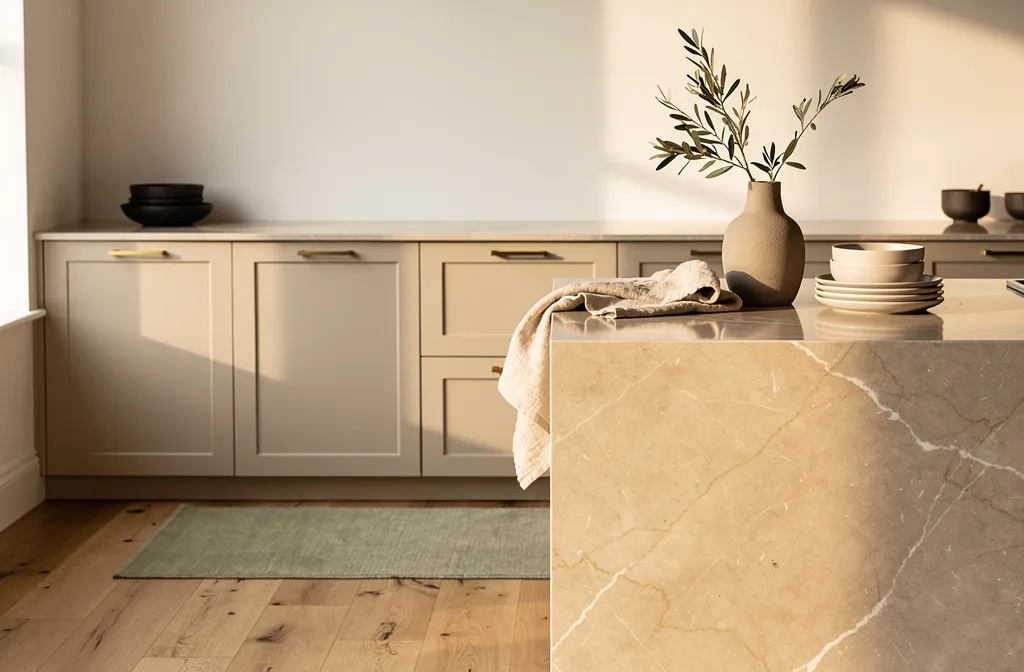
We’ll dial in color, texture, cabinet tone, hardware, and lighting so your laminate reads like high-end stone instead of “college rental.” Expect bright whites, soft putty tones, moody charcoal veining, and those subtle reflective finishes that make everything feel intentional. Each section brings a complete, distinctive design—family-friendly, renter-savvy, photogenic, and built to handle real life. If you love a Pinterest-ready kitchen that doesn’t require a second mortgage, this is your guide.
1. Warm Minimal Kitchen With Floating Marble Island Glow
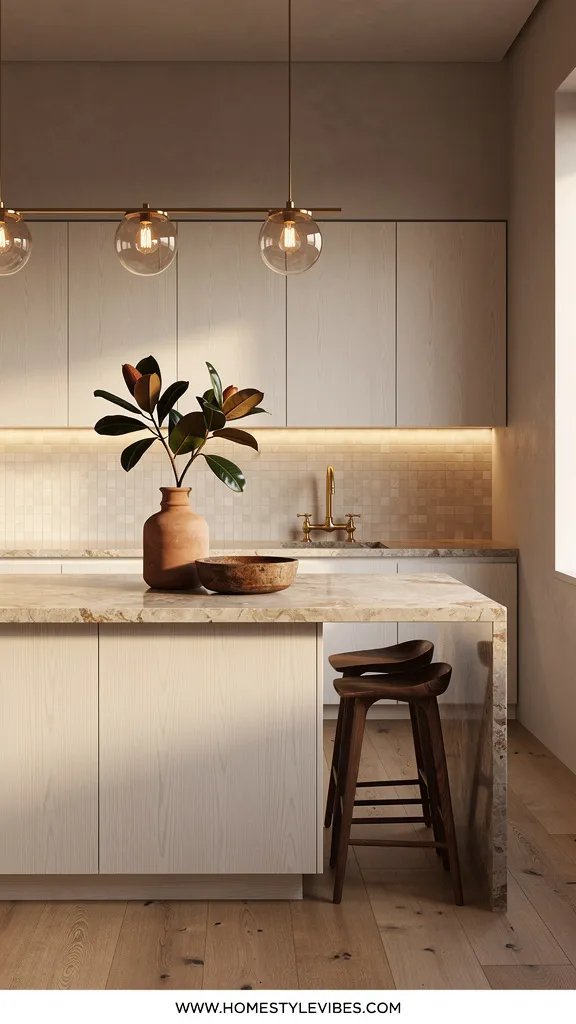
We’ve all been there: the kitchen feels 90% right, but the island looks like an afterthought. You tried painting the cabinets, you swapped the handles, and it still reads “builder basic.” This design leans on a high-luxe marble dupe laminate with soft cappuccino and pearl veining to create that floating-stone illusion—no actual stone required. It’s warm minimalism, not sterile minimalism, which means cozy lighting, quiet textures, and a countertop that steals the show without shouting.
This mood is calm, glowy, and collected—think quiet mornings with a latte and late-night dinners where the counter throws back just enough shimmer to make your plates look fancy. It works beautifully in real homes because the materials are forgiving: matte-warm cabinets hide fingerprints, the laminate resists stains and chips, and the restrained palette boosts resale because it feels timeless. Lighting is key here. Layer hidden LED strip lighting beneath the island overhang and under the uppers so the “stone” edge glows. That glow is what tricks the eye into seeing thickness and luxury.
Materials carry the weight: mid-tone oak or walnut slab cabinetry, brushed brass or soft black hardware, creamy-beige paint on the walls, and a marble-look laminate with subtle veining and a clean bullnose or square edge. The photographs sing because of contrast and shadow—warm wood against a cool, luminous surface, with the under-cabinet lights creating crisp shadow lines that add depth. Small kitchens benefit most; the “float” effect makes everything feel lighter and more considered.
Budget Breakdown:
- Marble-look laminate countertops with square edge: $25–$45/sq. ft. installed
- Warm wood cabinet refacing or paint + new doors: $1,200–$3,500
- Under-cabinet and island LED strips with dimmer: $120–$350
- Brushed brass or matte black pulls: $80–$220
- Warm white paint (gallon + supplies): $50–$120
Total Estimated Cost: $2,000 – $5,000
Best For: Small to medium kitchens or open-plan condos; anyone who wants a glow-up that photographs like stone and feels cozy at night.
Key Design Elements:
- Main materials: Marble-look laminate, slab-front oak or walnut cabinets
- Color palette: Cream, warm walnut, soft brass, putty veining
- Lighting strategy: Hidden LEDs under counters and toe-kicks for “floating” effect
- Furniture silhouettes: Simple waterfall stools, rounded edges to soften minimalism
- Texture layers: Linen runner, tonal stoneware, ribbed glass canisters
- Accent details: Brass pot filler lookalike faucet, a bowl of green pears for color
How To Recreate This Look:
- Start with the counters: choose a marble-dupe laminate with soft beige veining and a square profile for a modern edge.
- Add warm slab cabinetry or paint existing doors a walnut tone; swap in long, thin pulls.
- Layer LED strips under uppers and the island lip; put them on a dimmer to get that evening glow.
- Install a deep, single-bowl sink with a tall arched faucet in brushed brass or matte black.
- Style with a linen runner, stacked cutting boards, and a single glazed vase with olive branches.
Why This Looks Expensive: The “glow line” under the countertop creates a false sense of thickness and mimics stone’s reflective depth. Warm wood next to a cool, silky surface feels curated, not catalog.
Watch Out: Don’t choose laminate with high-contrast, pixellated veining. Up close, it reads printed. Look for soft, fluid veining and a satin finish for a believable stone impression.
Pro Styling Tip: For photos, turn off overheads and use only the under-cabinet LEDs—side light creates elegant shadows that make the laminate veining pop.
2. Quiet Luxury Galley With Calacatta-Dupe Drama
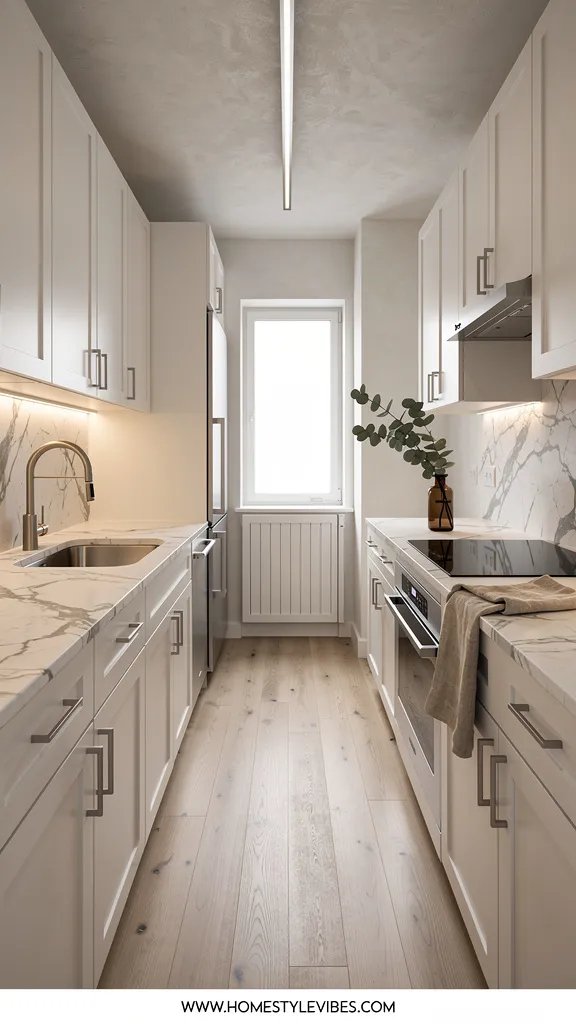
It’s that one corridor kitchen that always feels narrow and dark, no matter how many times you repaint the walls “Swiss Coffee.” You’ve tried open shelves, you’ve tried a runner, and it still feels like a hallway pretending to be a kitchen. Here, we counterbalance the tight footprint with a bold Calacatta-style laminate: large, swooping gray-on-ivory veins that read editorial without the worry of etching or a four-figure fabrication bill.
The vibe is quiet luxury: soft white cabinets, a touch of nickel, muted textiles, and brave veining that gives the eye something to follow. It works in real homes because large-scale pattern expands narrow spaces, and laminate’s light weight makes installation simpler in older houses. Keep lighting cool and crisp during the day with high-CRI bulbs, then dim to candlelight warmth for evening. A slim wall sconce at the end of the galley adds that “architect picked this” feeling.
Why does it photograph so well? The strong veining gives you natural leading lines. Pair with satin nickel or soft black to keep it from looking harsh. I used a similar layout in a friend’s 1920s bungalow galley—she spent weeks agonizing over white paints. Turned out, the real issue was flat, lifeless counters. Once the Calacatta-dupe laminate went in, the space finally had rhythm.
Key Design Elements:
- Main materials: Calacatta-look laminate, painted shaker cabinets
- Color palette: Ivory whites, soft grays, satin nickel, eucalyptus green accents
- Lighting strategy: High-CRI LED cans, a single statement sconce at the corridor’s end
- Furniture silhouettes: Slimline stools, shaker with thinner rails for a lighter read
- Texture layers: Woven rug runner, ribbed ceramic utensil jar, linen café curtains
- Accent details: Framed mini art leaning against the backsplash, simple soapstone-hued soap dispenser
Budget Breakdown:
- Calacatta-look laminate: $30–$50/sq. ft. installed
- Cabinet paint + pro spray finish: $700–$2,000
- Satin nickel hardware: $90–$250
- Wall sconce + electrician: $180–$450
- Runner + textiles: $120–$300
Total Estimated Cost: $2,000 – $4,800
Best For: Narrow or windowless kitchens that need visual width and light reflectivity; older homes where slab weight is a concern.
How To Recreate This Look:
- Start with a Calacatta-dupe laminate with large, fluid veining; request aligned patterns on L-shapes.
- Paint cabinets a soft ivory (not stark white) to keep things warm; consider a satin sheen.
- Add elegant satin nickel hardware to soften the contrast with the countertops.
- Install a wall sconce at the end of the galley for a focal point and warmer evening light.
- Style minimally: a small framed print, wood spoon crock, and an herb pot for life.
Why This Feels Designer: Big-vein patterning paired with understated cabinets creates tension and restraint—the hallmark of professional kitchens.
One Thing To Avoid: Don’t overfill counters in a galley. Too many canisters chop up the veining and make the run feel cluttered.
Pro Styling Tip: Shoot the kitchen from slightly off-center so the veins lead into frame, not straight out—it creates depth and a sense of movement.
Remember, this isn’t about recreating a showroom. It’s about making your real kitchen finally feel finished. If one detail sings to you—the sconce, the big veining—that’s your anchor.
3. Modern Mediterranean With Honed Carrara Softness
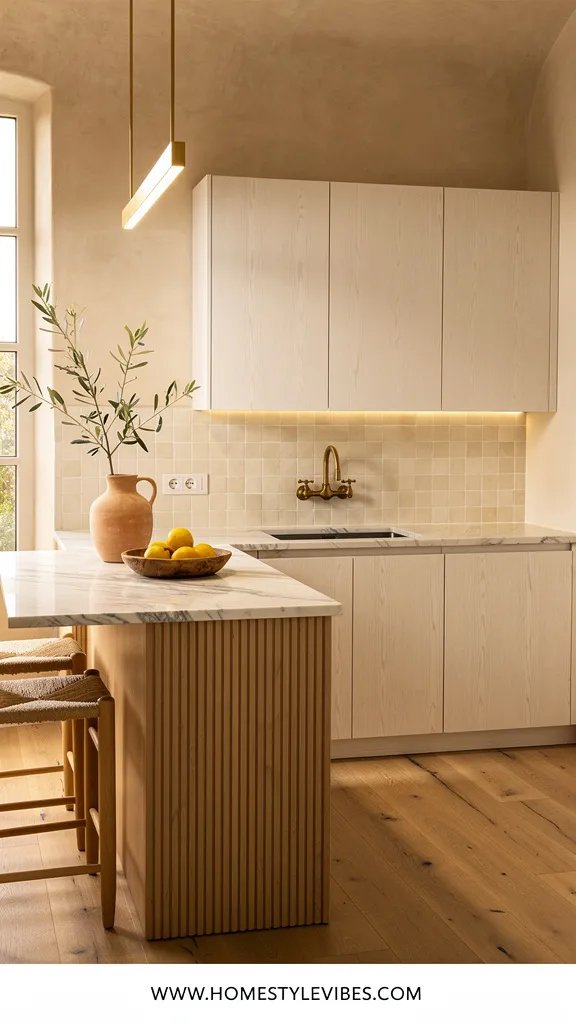
You want breezy, lemon-grove vibes, but your kitchen feels like a utility room. You tried adding a few terra-cotta pots, yet the whole thing still reads “pantry.” The fix? A honed Carrara-look laminate with whispery gray feathering and a matte finish that diffuses light like real stone. Pair it with plastery walls, pale oak, and burnished brass to get that sun-washed Mediterranean calm.
This mood is restful and tactile. It works in family homes because the surfaces forgive mess—nothing glossy to smudge every five minutes. Lighting should feel coastal: indirect, warm, and soft. Think glass pendants with wavy imperfections and a couple of candles in the evening. Photos love this one because of the layered neutrals—matte counters, limewash walls, quiet wood grain—creating gentle shadow play without any hard glare.
Two variations make it versatile: For a budget-friendly version, paint your existing backsplash in a limewash-effect paint and add Carrara-dupe laminate only on the main run, leaving the island wood-topped. For small spaces, keep the palette very tight—two wood tones max—and use a simple white café curtain to soften the window without eating visual space.
Budget Breakdown:
- Honed Carrara-look laminate: $28–$48/sq. ft. installed
- Limewash-effect paint and sealer: $120–$240
- Burnished brass hardware: $120–$300
- Glass pendants: $150–$400
- Open wood shelf (single run): $120–$280
Total Estimated Cost: $1,700 – $4,000
Best For: Sunlit kitchens, cottage or Spanish-style homes, and anyone craving a softer, less reflective take on “stone.”
Key Design Elements:
- Main materials: Honed-look laminate, limewash walls, pale oak
- Color palette: Cloud white, soft gray, pale oak, brass, terracotta accents
- Lighting strategy: Gentle glass pendants, candles, minimal task lights
- Furniture silhouettes: Rounded edges, simple wood stools with rush seats
- Texture layers: Linen café curtains, woven trays, matte ceramics
- Accent details: Bowl of lemons, olive oil decanter, micro art above the range
How To Recreate This Look:
- Start by installing a matte-finish Carrara-dupe laminate; pick the softest, least-contrasted veining.
- Add a limewash-effect on the backsplash or walls; seal it for wipeability near the stove.
- Layer in burnished brass handles—nothing too shiny—to keep it old-world.
- Swap in a pair of wavy-glass pendants with warm bulbs.
- Style sparingly: lemons in a shallow bowl, a terra-cotta pot with rosemary, linen tea towels.
Why This Reads High-End: Matte surfaces and restrained veining mimic honed marble’s quiet luxury. The layered, not glossy, finish avoids the “laminate shine” giveaway.
The Most Common Mistake: Pairing cool chrome with warm plaster and oak. It fights the palette. Stick to brass or black to keep the Mediterranean mood cohesive.
Pro Styling Tip: For photos, crack a window curtain just enough that sunlight stripes the counter—soft streaks signal real stone texture on camera.
If you’re feeling choice overload, zoom in on one texture you love—matte counters, plaster walls, or wavy glass. Build around that. Consistency beats complexity.
4. Black-Swan Island With Charcoal Vein Sophistication
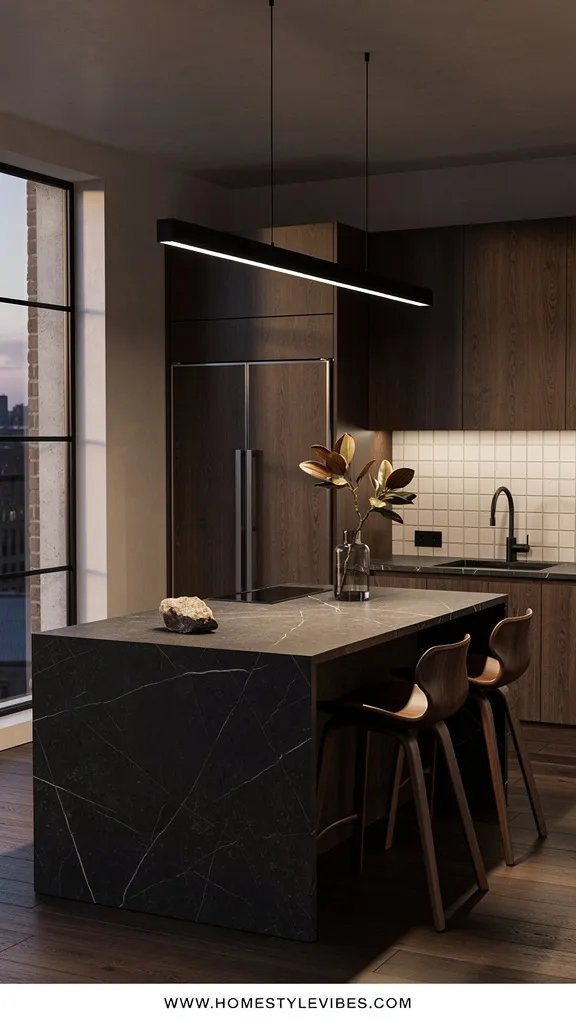
Ever crave dark drama but worry it’ll swallow the room? You painted the island navy once and then panicked because the whole kitchen felt like a cave. This concept flips the fear into a flex: a deep charcoal, almost-black marble-dupe laminate with ghostly white veining. It’s moody yet polished—perfect for open-plan spaces where you want an anchor that doesn’t feel heavy.
The mood lands between modern and classic—a bit of Parisian apartment meets downtown loft. It works in real homes because the dark counter hides crumbs (yes), fingerprints (mostly), and tiny scratches far better than glossy black stone. Balance the darkness with pale perimeter cabinets and warm metallic accents. Lighting matters: aim for a warm pool of light over the island using small-diameter domes. Avoid cheap pendants that cast those weird double-shadows on the ceiling—once you notice it, you can’t unsee it.
Why it photographs beautifully: extreme contrast. Light cabinets, dark island top, soft reflective hardware. Add a single branch in a tall vase for height, and you’re done. For variations, try a budget-friendly paint on the island base in soft charcoal while keeping the perimeter white, or a renter-friendly version with peel-and-stick marble-look film on a small coffee bar to test the color before committing.
Budget Breakdown:
- Charcoal marble-look laminate: $30–$55/sq. ft. installed
- Island base paint + primer: $80–$200
- Small-diameter dome pendants: $180–$480
- Matte brass bar pulls: $90–$220
- Tall sculptural vase/branch: $40–$120
Total Estimated Cost: $1,800 – $4,500
Best For: Open-plan kitchens that need a visual anchor; night-owls who love mood lighting; homes blending classic trim with modern accents.
Key Design Elements:
- Main materials: Dark veined laminate, pale perimeter cabinetry
- Color palette: Charcoal, soft white, matte brass, ebonized wood
- Lighting strategy: Focused domes over island, warm 2700K bulbs
- Furniture silhouettes: Low-back stools, slim frames to keep sightlines
- Texture layers: Charcoal linen napkins, smoked glass, blackened steel tray
- Accent details: Single dramatic branch, black pepper mill, matte ceramic fruit bowl
How To Recreate This Look:
- Choose a dark marble-dupe laminate with fine white veining; keep the edge profile squared.
- Paint the island base charcoal; leave perimeter cabinets soft white for crisp contrast.
- Hang two or three small-dome pendants centered precisely (measure from counter edges, not ceiling flaws).
- Add matte brass pulls; avoid too many finishes fighting for attention.
- Style minimally: one tall branch, one tray, done.
Why This Looks Intentional: Intentional contrast and restraint make dark counters feel sophisticated, not gloomy. Everything has a job and a visual weight.
Don’t Do This: Don’t skip under-cabinet lighting. Dark tops can look flat at night without soft task lights to define edges and textures.
Pro Styling Tip: Photograph with one pendant off-axis and the under-cabinet lights on low—the gradient makes the veining look deeper and more stone-like.
5. Japandi Serene With Vanilla Quartz Illusion
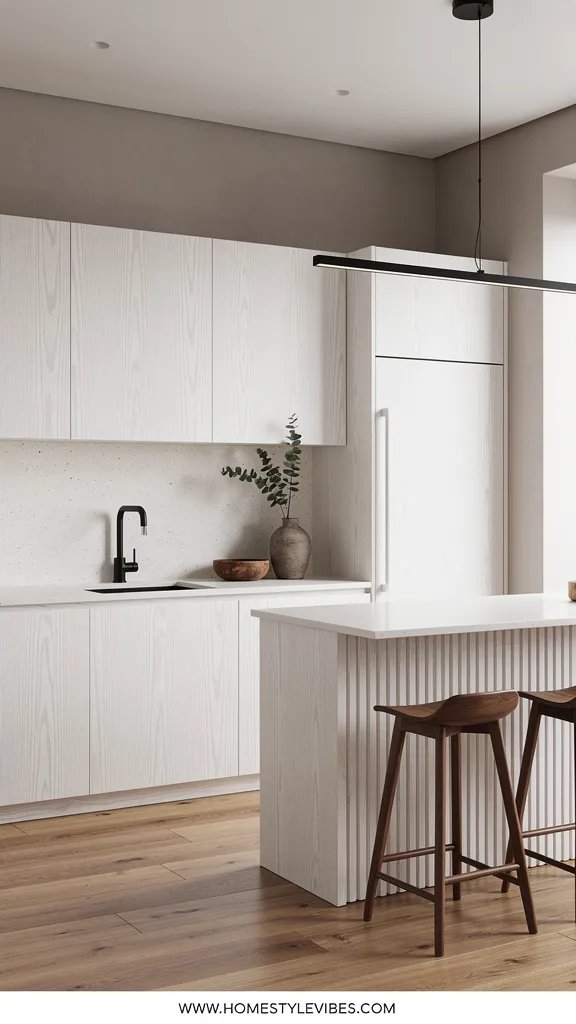
You crave a soft, spa-like kitchen, but clutter keeps creeping back after every purge. You buy baskets, label jars, swear this time it’ll stick—and two weeks later the counter is a mail depot again. This Japandi-inspired approach uses a whisper-white quartz-look laminate with barely-there specks to create visual calm and encourage tidy habits. It’s easy to wipe, hides tiny crumbs, and plays beautifully with pale ash woods and putty-colored walls.
The mood is serene and functional: nothing fussy, everything tactile. It works in real homes because drawers swallow the mess and the neutral palette forgives everyday life. Lighting should be soft and linear—consider one slim bar pendant over the island and discreet puck lights inside key cabinets. Photographs love the clean planes and negative space; the quiet “quartz” surface reads crisp even on a cloudy day.
Two variations: For a renter-friendly twist, try a removable laminate countertop over a standalone IKEA island and keep your original perimeters; it gives you a focal point without major demo. For a darker version, swap in cocoa-stained wood and bone-colored walls, but keep the counters whisper light to maintain that airy spa feeling.
Key Design Elements:
- Main materials: Vanilla quartz-look laminate, ash or beech wood
- Color palette: Bone, sand, ash wood, black accents for punctuation
- Lighting strategy: Linear bar pendant, cabinet pucks on motion sensors
- Furniture silhouettes: Flat-front cabinets, rounded-edge stools
- Texture layers: Nubby linen towels, paper-cord stools, matte porcelain dishes
- Accent details: Single sculptural teapot, branch of eucalyptus, stone mortar
Budget Breakdown:
- Quartz-look laminate: $25–$45/sq. ft. installed
- Linear bar pendant: $150–$400
- Hardware in matte black: $80–$200
- Drawer organizers + bins: $100–$250
- Stools with paper-cord seats: $160–$500 (pair)
Total Estimated Cost: $1,500 – $3,800
Best For: Minimalists and families who want calm visuals; small kitchens that benefit from light-reflecting counters.
How To Recreate This Look:
- Install a low-contrast quartz-dupe laminate; choose a satin, not glossy, finish.
- Keep cabinets flat-front in pale wood or paint them bone; choose discreet black pulls.
- Hang a slim linear pendant over the island and add motion-sensor pucks inside deep cabinets.
- Reduce visual noise: decant only what you actually use; hide the rest in drawers.
- Style with a single teapot, one wood board, and a small branch in a stone vase.
Why This Feels Designer: The power of restraint. Pale-on-pale layers with just one sharp black accent make the laminate read like curated stone, not a compromise.
Watch Out: Don’t pick a speckled pattern with high-contrast flecks. It can look “office break room.” Keep the pattern soft and nearly solid.
Pro Styling Tip: When shooting, leave more negative space than you think—empty counter equals expensive in photos.
Small confession: I once chased the perfect “white quartz” look and forgot to plan storage. The counters were spotless—until mail arrived. Systems beat surfaces. Build the hidden bins first.
6. Coastal Classic With Waterfall-Look Marble Edge
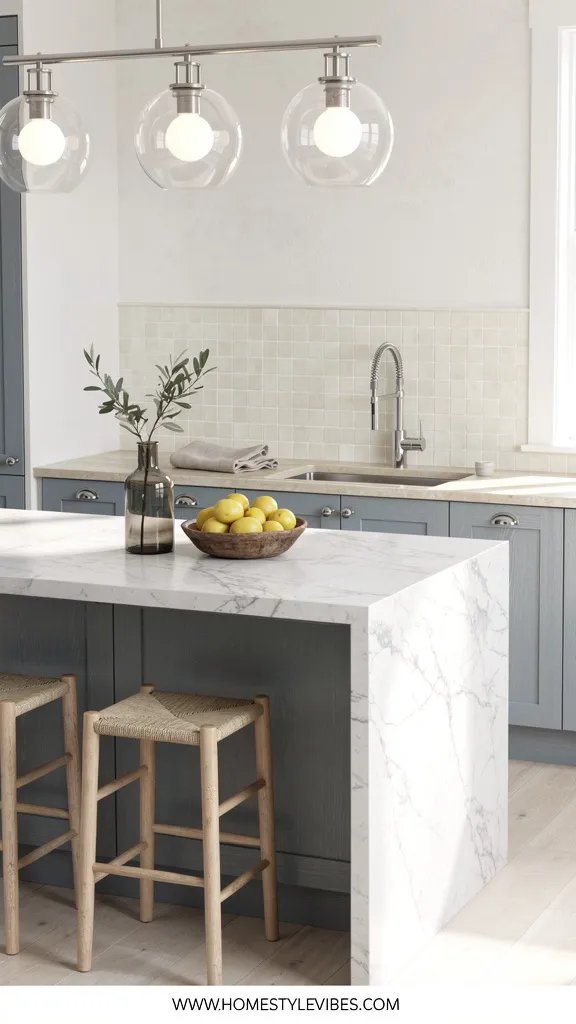
You want the drama of a waterfall island, but the quote could fund a beach vacation. You considered skipping it, but the kitchen still feels unfinished, like a book without a last chapter. This design uses marble-look laminate with a wrapped edge that mimics a waterfall profile—clean, continuous, and wildly convincing when installed with care. Pair it with coastal-classic elements: beadboard panels, polished nickel, blue-gray accents, and wide-plank floors.
The mood is fresh and crisp, like sea air in the morning. Perfect for homes that straddle traditional and modern. It works because the waterfall effect adds sculptural presence without the cost or weight of stone, and laminate stands up to sandy hands and lemon slices. Lighting should sparkle: glass bell pendants, a bit brighter than you think, with dimmers for dinner. It photographs beautifully because that long vertical “stone” edge catches light from top to bottom—instant editorial moment.
Variations: For a small space, try a half-waterfall on the public-facing side only. Budget-friendly? Use the waterfall dupe on the island and a simpler white laminate on perimeters; most guests won’t clock the difference. Renter-friendly? A freestanding butcher-block island wrapped on one side with peel-and-stick marble film for a temporary trial (yes, it’s extra, and yes, it’s fun).
Budget Breakdown:
- Marble-look laminate with mitered “waterfall” wrap: $40–$70/sq. ft. installed on island
- Beadboard paneling for island base: $120–$280
- Polished nickel hardware: $120–$320
- Glass bell pendants + dimmers: $220–$600
- Blue-gray paint for accents: $50–$120
Total Estimated Cost: $2,200 – $5,600
Best For: Families and entertainers who want a conversation-piece island; traditional homes craving one modern moment.
Key Design Elements:
- Main materials: Marble-look laminate with mitered fall, beadboard base
- Color palette: Crisp white, blue-gray, polished nickel, natural oak
- Lighting strategy: Clear glass bells, bright but dimmable
- Furniture silhouettes: Classic stools with upholstered seats
- Texture layers: Stripe runner, seagrass basket, glossy subway tile
- Accent details: Hydrangeas in a pitcher, chrome pepper mill, framed coastal sketch
Why This Looks Expensive: The crisp miter at the “waterfall” edge sells the stone illusion. Continuous patterning down the side tricks the eye into seeing a thick, monolithic slab.
How To Recreate This Look:
- Work with a fabricator who can miter and wrap the laminate over the island side; align veining down the fall.
- Panel the island base in beadboard and paint it a coastal white; add polished nickel latches or pulls.
- Install clear glass bell pendants; set dimmers to hit 40–60% for evening sparkle.
- Keep perimeters simple; let the island play the lead.
- Style with hydrangeas, a striped runner, and one polished tray for aprés-dinner drinks.
Don’t Do This: Don’t choose a busy backsplash that competes with the waterfall veining. Let the island breathe; balance matters.
Pro Styling Tip: For photos, angle a small reflector (a white foam board works) at the waterfall edge to amplify that glossy line top to bottom.
Quick reality check: getting a crisp miter on laminate is a craft. Expect to interview two or three fabricators. It’s worth the extra week—I learned this the hard way on a client island that needed a redo because the pattern didn’t meet at the corner. Imperfect corners scream “faux” louder than anything else.
Quick Checklist
- Choose laminate with low-contrast, fluid veining for a believable marble look
- Opt for satin or matte finishes to avoid plastic gloss
- Align veining direction across seams and edges
- Use under-cabinet LEDs to create depth and glow
- Select hardware finishes that match your palette’s warmth
- Keep countertops styled minimally to showcase pattern
- Ask fabricators about mitered build-ups for thicker edges
- Use high-CRI bulbs to keep whites clean and natural
- Balance strong veining with quiet cabinetry
- Plan storage first so surfaces stay clear
- Test samples under your actual kitchen lighting
- Photograph with side light to enhance natural shadows
Frequently Asked Questions
How close can laminate really get to looking like quartz or marble?
Very close if you choose the right pattern and finish. Look for large, fluid veining and a satin or honed-like surface. Aligning veining at seams and using good lighting makes most guests assume it’s stone.
What’s a realistic budget for swapping to laminate countertops in a medium kitchen?
For 40–50 square feet, expect $1,200–$2,500 for materials and fabrication, plus any hardware, lighting, or paint updates. Most complete looks in this guide land between $2,000–$5,000 total.
Will laminate hold up to daily wear, kids, and cooking?
Yes, with normal care. Use cutting boards and trivets, wipe spills promptly, and avoid dragging heavy cast iron. High-quality laminates resist stains and micro-scratches well.
I have a tiny kitchen. Which laminate stone look helps the space feel larger?
Choose a soft, low-contrast Carrara or quartz dupe in a matte finish. Big, calm patterning reflects light and reduces visual clutter. Keep styling minimal and add under-cabinet lighting.
I rent—can I still try a stone-look countertop?
Consider a freestanding island with a laminate top or a temporary countertop solution on a coffee bar. Confirm with your landlord before altering fixed surfaces, and keep receipts to remove and take it with you later.
The Wrap-Up
Pick one idea that keeps tugging at you and start there. Maybe it’s the floating marble glow, the dark-swan island, or that calm Japandi quartz look. You don’t need a full gut to get the stone kitchen you’ve been pinning for years—just the right laminate, smarter lighting, and edited styling.
The truth is, “luxury” comes from texture, lighting, and restraint. When you let a convincing laminate countertop be the quiet star, everything else clicks into place. Your kitchen stops apologizing for itself and starts feeling like it finally knows who it is.
Trust yourself, grab a few samples, and stand with them in your real light at 8 a.m. and 8 p.m. If one sings, that’s your sign. You’ve got this—and your new countertops are about to photograph like a dream, seriously.

About the Author

Krisztina P.Rendes, Founder of Home Style Vibes
Founder of Home Style Vibes
Krisztina Puskásné Rendes created Home Style Vibes as a cozy-modern lifestyle space where homemaking meets inspiration. Her goal is to help women create beautiful, organized, and peaceful homes they truly love — without overwhelm. You’ll find here heart-driven content on home decor, cleaning tips, easy family recipes, organization and decluttering, DIY home projects, plants, and seasonal ideas — all designed to bring more calm, comfort, and style into everyday life.