6 Laundry Room Ideas With A Sink That Are Both Practical And Pretty
You want a laundry room that actually makes chores feel calmer and quicker. You hate the cluttered counters, the drippy handwash sweaters with nowhere to land, and that industrial “utility closet” vibe that’s the opposite of soothing. Picture sunlight softening over warm wood, tile with a subtle crackle, a sink that’s deep and sculptural, and finishes that make the room Pinterest-famous without the preciousness. These six laundry room ideas with a sink turn the daily rinse-and-repeat into something serene and streamlined—most can be done for under $4,000 and over a weekend or two, so real-life schedules win. If you crave a space that photographs beautifully and fixes your actual pain points—like drip-drying, stain-treating, and stashable storage—this lineup nails it for small homes, busy families, and anyone who wants pretty and practical to finally hold hands.
Each concept creates a distinct mood, uses specific materials, and gives you a step-by-step plan. We’ll talk colors, fixtures, textiles, and how to cheat good lighting even in a windowless room. Expect high contrast, layered texture, and those tiny details that make a room feel finished. If you love a space that works hard, looks even better, and never feels overdone, these are for you.
1. Fluted Oak Cabinetry With Soft Northern Light And A Deep Apron-Front Sink
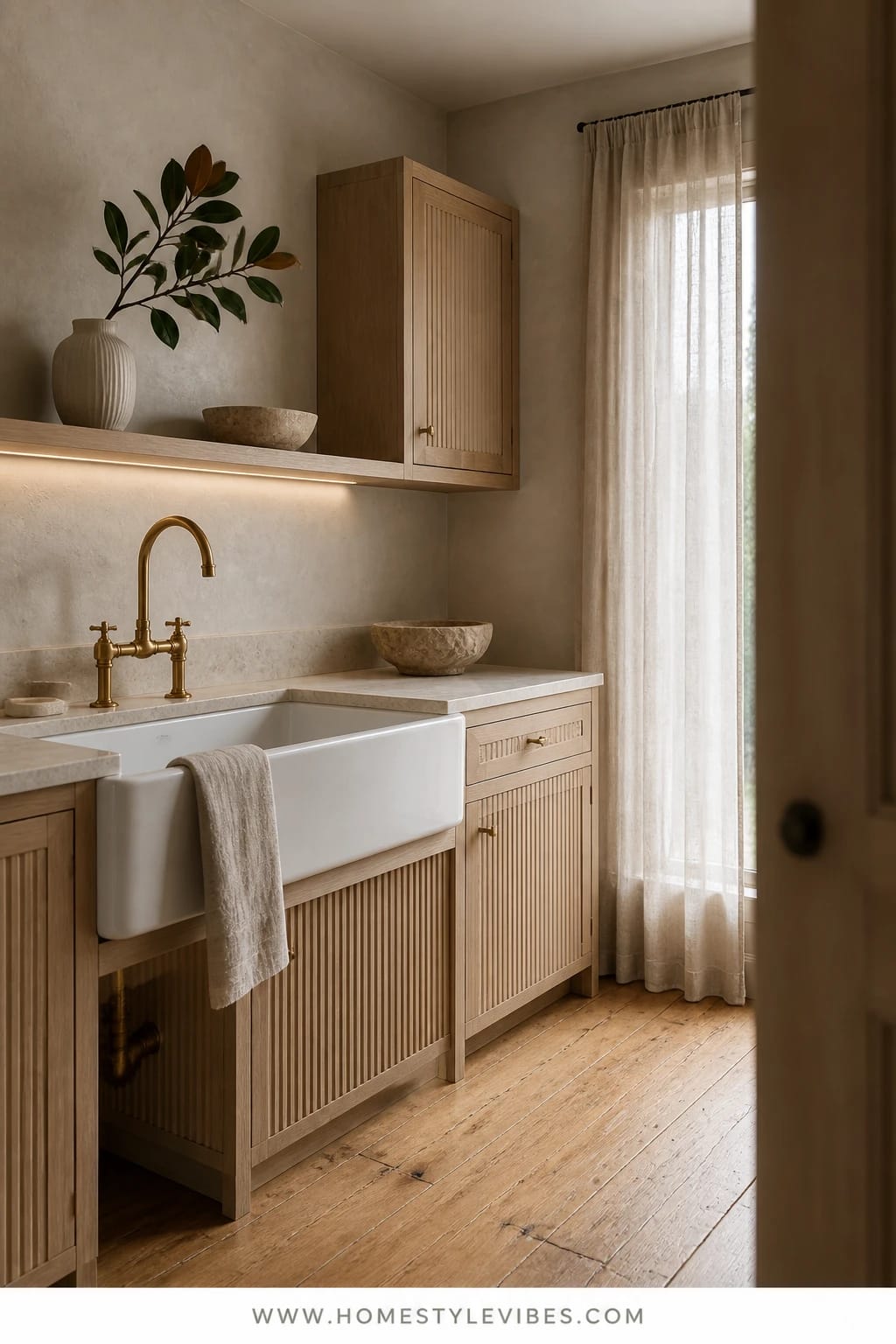
We’ve all been there: the laundry room that becomes the family’s dumping ground. Lost socks, half-folded towels, and a sink that’s too shallow to soak anything but a teaspoon. This design meets that chaos with calm. Fluted oak fronts add rhythm and warmth, the light reads silvery and soft (think north-facing calm or diffused LED strips), and a substantial apron-front sink makes stain-treating and sweater-soaking feel intentional instead of makeshift. The mood? Japandi farmhouse—grounded, textural, and easy to live with.
Here’s why it works in real homes: fluted wood hides fingerprints and tiny nicks, an apron sink contains splash, and the shallow open shelf above the counter keeps detergent and brush caddies accessible without visual clutter. The sink becomes the hero, not an afterthought. Lighting matters: diffuse it. A simple valance or frosted window film, plus under-cabinet lighting at 2700–3000K, gives the room that edited, magazine softness. Photographs glow because of contrast—the creamy sink against warm oak, the subtle shadow lines in the flutes—and the layered matte finishes that prevent glare.
Variations help this travel across budgets and footprints. Budget-friendly: swap solid oak for oak-veneer fronts or even fluted peel-and-stick panels on flat cabinet doors. Small-space version: one base cabinet run with a 24-inch farmhouse sink, a single upper shelf, and a wall rail with S-hooks for brushes. Renter-friendly swap: a freestanding utility cabinet with fluted adhesive slats and a drop-in stone-composite sink into an IKEA base—returnable and modular if you move. For a darker version, use smoked oak stain, pebble-gray counters, and antique brass hardware for gentle shine.
Budget Breakdown:
- Apron-front fireclay sink: $350–$850
- Bridge or single-hole pull-down faucet in brushed brass: $180–$600
- Fluted oak or oak-veneer cabinet fronts: $600–$1,400
- Laminate or quartz countertop (42–72 inches): $180–$900
- Under-cabinet LED strips + dimmer: $60–$180
- Open oak shelf + brass brackets: $90–$260
- Hardware (pulls/knobs): $40–$120
Total Estimated Cost: $1,500 – $4,000
Best For: Narrow galley laundry rooms or mudroom-laundry combos where warmth and easy cleaning matter. Great in homes mixing organic modern with traditional bones.
Key Design Elements:
- Main materials: fluted oak, fireclay, quartz/laminate
- Color palette: warm honey wood, soft white, brass, muted gray
- Lighting strategy: diffused task lighting under cabinets, soft overhead at 2700–3000K
- Furniture silhouettes: simple slab-base with textured fronts, apron-front sink as focal
- Texture layers: wood flutes, matte counters, linen hand towels
- Accent details: brass rail with S-hooks, ceramic jar for clothespins, small potted herb
How To Recreate This Look:
- Start with an apron-front sink—measure first and notch the base cabinet properly.
- Add fluted fronts or panels; align grooves across doors for a seamless read.
- Layer a simple countertop in matte quartz or durable laminate with squared edges.
- Install under-cabinet LED strips and a dimmer; aim for even wash, not hotspots.
- Style with a rail-and-hook system, a linen towel stack, and one sculptural brush.
Why This Looks Expensive: Consistent vertical texture creates rhythm, while the apron sink adds heft and heritage. The light reads controlled and soft, which always signals intention over accident.
Watch Out: Don’t let the flutes run into mismatched hardware heights. Align pull centers and keep handle finishes consistent so the lines stay crisp.
Pro Styling Tip: For photos, place a folded linen towel half-in, half-out of the sink to show depth, and let the under-cabinet light skim the flutes for gentle shadow play.
Keep scrolling—wait until you see how tile pattern can make drying clothes faster and prettier.
2. Zellige Splash With Warm Edison Glow And A Curvy Wall-Mount Faucet
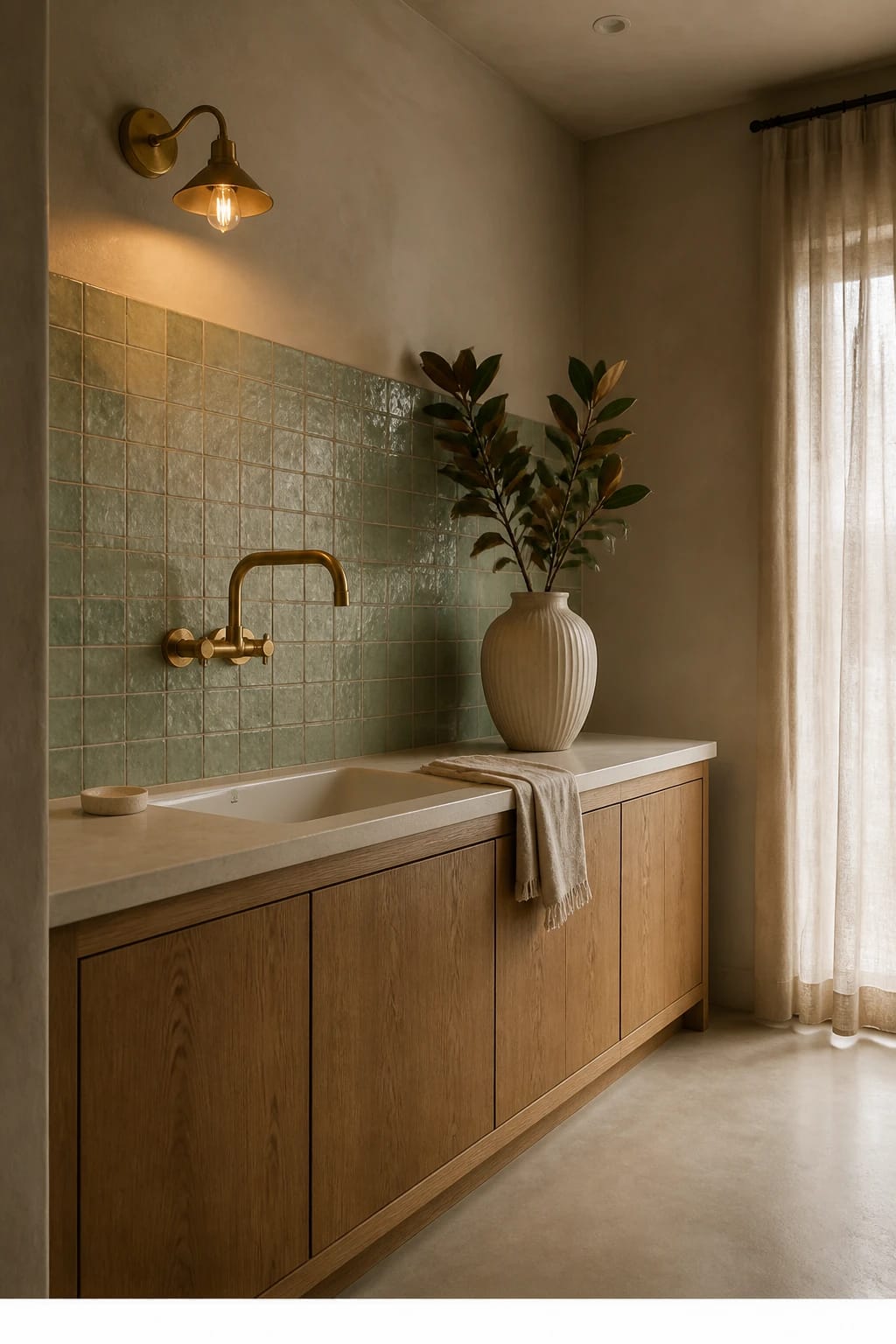
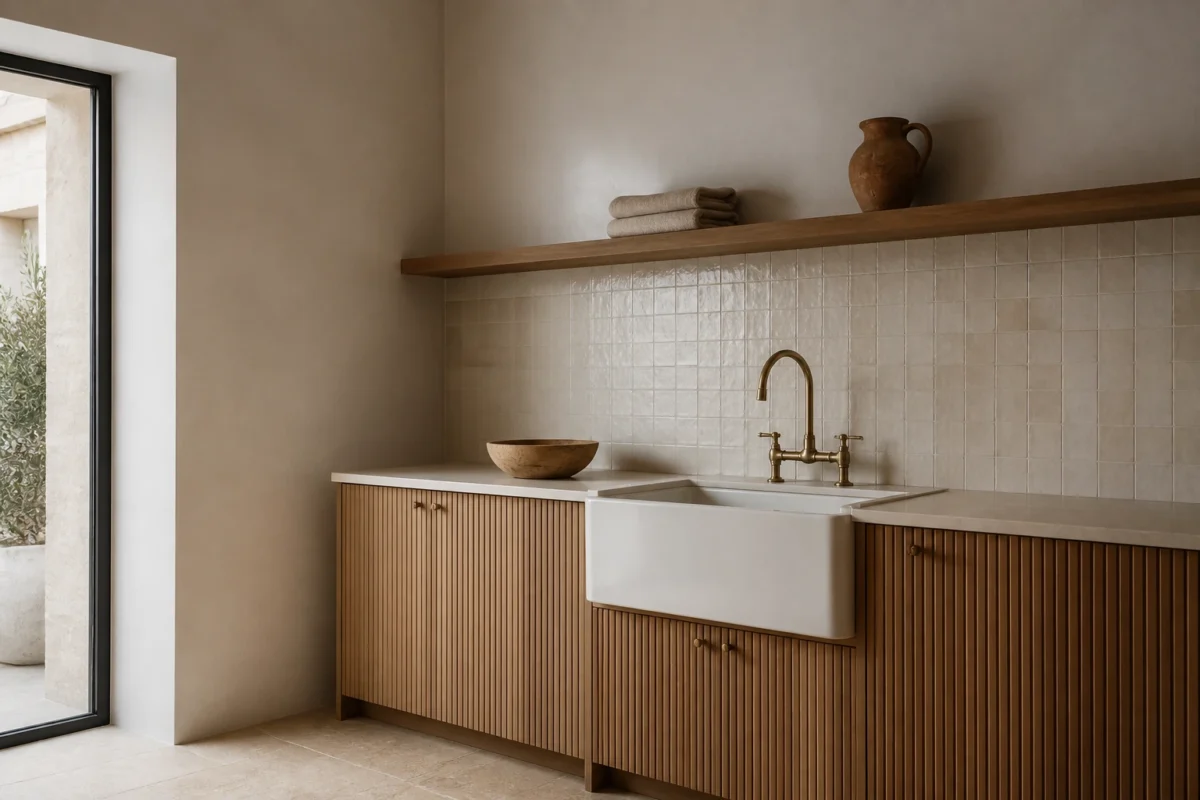
It’s that one corner that always feels off: the splash zone behind your sink looks stained, and the lighting throws harsh shadows that make the room feel clinical. Enter hand-cut zellige tile in a soft putty or sea-glass tone. Pick a curved wall-mount faucet so the tile remains uninterrupted and sculptural. Then use a warm Edison-style glow—don’t worry, modern LEDs in vintage silhouettes exist—to bathe everything in a cozy, clean light that hides water spots and adds romance to stain-treating.
This creates a mood that’s mid-century coastal-meets-Paris-apartment: imperfect, glossy, alive. In small spaces, the glossy tile bounces light while the warm bulbs add dimension. The faucet floats like jewelry, freeing the counter for baskets and brushes. Why this wins in real homes: wall-mount faucets make sink cleanup painless, and zellige’s wabi-sabi surface shrugs off minor splashes. Photos love the micro-variations in tile tone and the lenticular reflections that make even a tiny room look layered.
Variations keep it flexible: Budget version uses ceramic subway in a stacked layout with a slightly imperfect grout. Renter version: use peel-and-stick zellige-style panels behind the sink (just keep them away from direct, constant water streams). For a deep, moody vibe, try moss green tile with a blackened brass faucet and amber filament bulbs, paired with walnut accessories.
Key Design Elements:
- Main materials: zellige tile, plaster or paint, brass/blackened brass faucet
- Color palette: putty, sea-glass, warm brass, creamy white
- Lighting strategy: Edison-style warm LED sconces or pendants at 2200–2700K
- Furniture silhouettes: thin floating shelf, slim counter run
- Texture layers: glossy tile, linen towels, wire baskets
- Accent details: soap block on a stone dish, a little olive tree cutting in water
Budget Breakdown:
- Zellige tile (8–12 sq ft): $150–$480
- Wall-mount faucet: $160–$550
- Waterproof grout + sealer: $40–$90
- Pair of warm LED sconces: $120–$300
- Floating shelf + brackets: $70–$180
- Accessories (linen towels, stone soap dish): $40–$120
Total Estimated Cost: $580 – $1,720
Best For: Laundry nooks or utility corners that need pretty protection and easy wipe-down surfaces. Perfect if you crave patina over perfection.
How To Recreate This Look:
- Start with the tile: do a tidy ledger board, keep grout lines thin, and embrace slight lippage.
- Add the wall-mount faucet; confirm valve depth before you tile.
- Layer warm sconces at eye height; use a dimmer.
- Install a shallow floating shelf for soft goods and a brush cup.
- Style with linen towels, a stone tray, and a single greenery stem for softness.
Why This Feels Designer: The faucet leaves the counter uncluttered, and the tile’s irregular gloss looks artisanal. Paired with controlled warm light, it reads collected, not catalog.
One Thing To Avoid: Cold, blue bulbs. They flatten the tile’s depth and make grout lines look dirty. Stay in the warm spectrum for the glow you want.
Pro Styling Tip: Angle the sconces slightly toward the tile so the light grazes the surface and catches every ripple—your photos will look editorial.
Pause and imagine this: a single brass lever, a deep sink, and a counter that actually stays clear. Next up, clever drying that doesn’t eat your space.
Remember, this isn’t about recreating a showroom. It’s about building a room that matches your laundry rhythm—your kid’s soccer socks, your silk blouse, your dog’s muddy paws. If one idea hits you right in the gut, start there and let the rest wait.
3. Powder-Coated Steel Cabinets With Crisp Daylight And A Pull-Out Spray Utility Sink
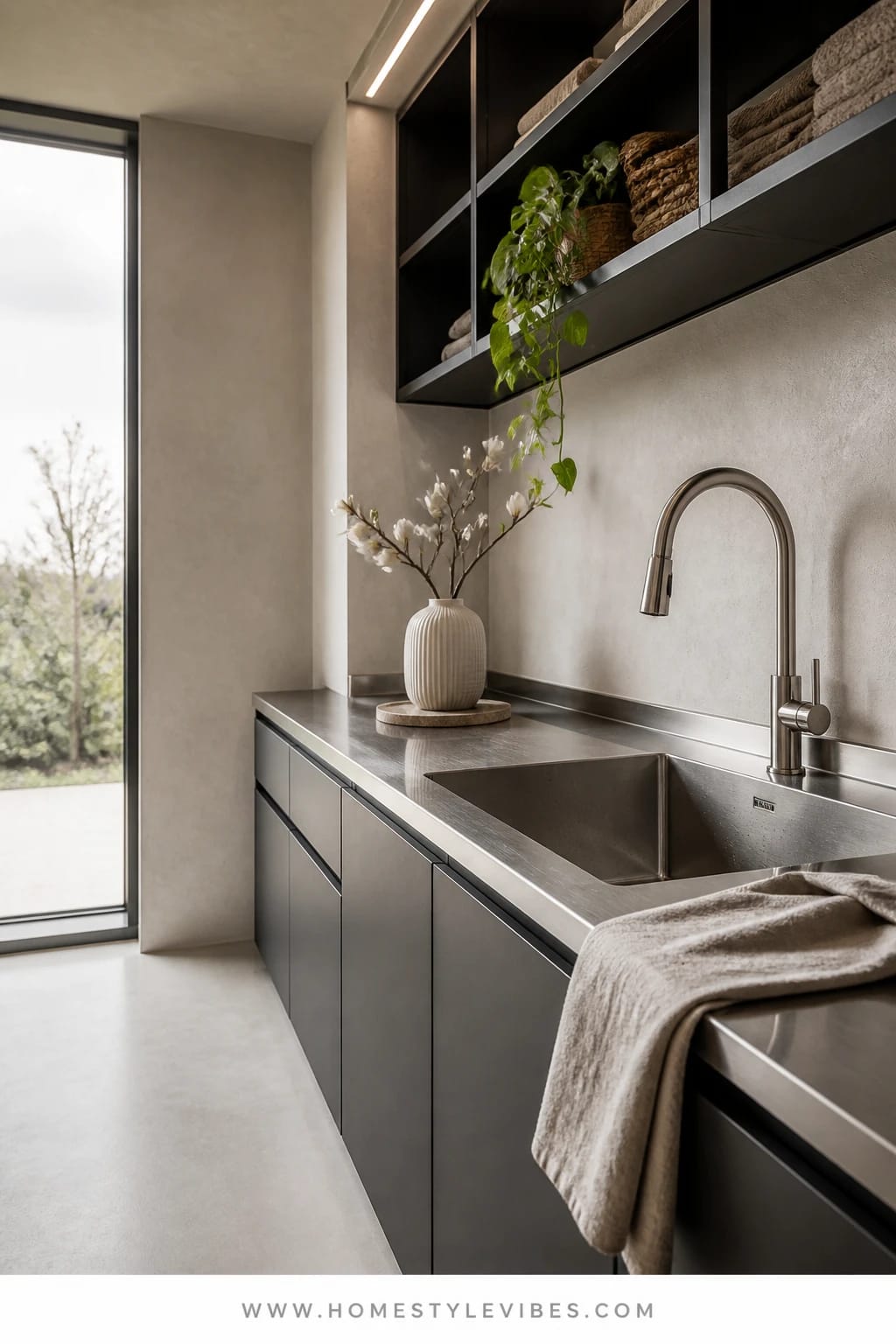
You’ve tried to keep the light colors pristine, but scuffs happen and cleaning days turn into “why is this so hard?” loops. Powder-coated steel brings a sleek pro-kitchen feel with wipe-clean durability. Pair it with bright, crisp daylight LEDs to see stains clearly, and a stainless utility sink with a pull-out spray that actually reaches the corners. This is the “I mean business” laundry room, but it still looks good—think boutique hotel back-of-house chic.
Why it works in family homes: metal fronts laugh at crayons and muddy paw prints. The crisp light helps you see true whites and color correction. Stainless sinks are forgiving, and the built-in spray proves its weight the first time you rinse sneakers or a paint tray. Photography-wise, the reflective steel edges add fine lines of highlight for a very “finished” look.
Variations: Budget version swaps steel doors for high-gloss laminate in a gray-white. Small-space approach: just one tall steel pantry cabinet for tools, a 25-inch single-basin stainless sink, and a narrow rolling cart. Dark version: graphite steel with a matte black faucet and 4000K light for a cooler, gallery effect. Renter-friendly: use a freestanding stainless sink base with a simple adjustable shelving unit beside it.
Budget Breakdown:
- Powder-coated steel doors/panels: $800–$1,800
- Stainless utility sink + pull-out spray faucet: $220–$650
- 4000–5000K LED ceiling panel or track: $140–$360
- Wall rail with organizers: $60–$140
- Stainless or quartz counter: $250–$900
- Rubber floor mat runner: $40–$120
Total Estimated Cost: $1,510 – $3,970
Best For: High-traffic laundry rooms, makers, gardeners, and pet households. Great if you want low-maintenance and ultra-durable finishes.
Key Design Elements:
- Main materials: powder-coated steel, stainless, quartz
- Color palette: cool gray, white, black accents
- Lighting strategy: high-CRI daylight LEDs for color accuracy
- Furniture silhouettes: flat-panel cabinets, integrated handles
- Texture layers: brushed steel, rubber mat, waffle-weave towels
- Accent details: magnetic hooks, labeled bins, a single framed print to soften
Why This Reads High-End: Professional materials with tight lines and integrated hardware scream custom millwork without the fussy upkeep. The even, crisp light eliminates shadows and looks intentional.
How To Recreate This Look:
- Start with a stainless, single-basin sink at least 10 inches deep.
- Add a pull-out spray faucet with a magnetized dock for clean recoil.
- Install powder-coated fronts or high-gloss alternatives; keep reveals consistent.
- Switch to high-CRI LEDs; layer under-cabinet task lights for no-shadow stain work.
- Style with a rubber mat, labeled bins, and one soft art piece to break the severity.
The Most Common Mistake: Mixing too many metal finishes (chrome, nickel, brass) in one tiny room. Pick two max, and keep the tone consistent for a crisp read.
Pro Styling Tip: For photos, wipe everything with a microfiber to remove streaks and leave one subtle water droplet trail at the sink lip—it reads authentic without messy.
4. Soapstone Countertops With Dappled Window Light And A Vintage Bridge Faucet
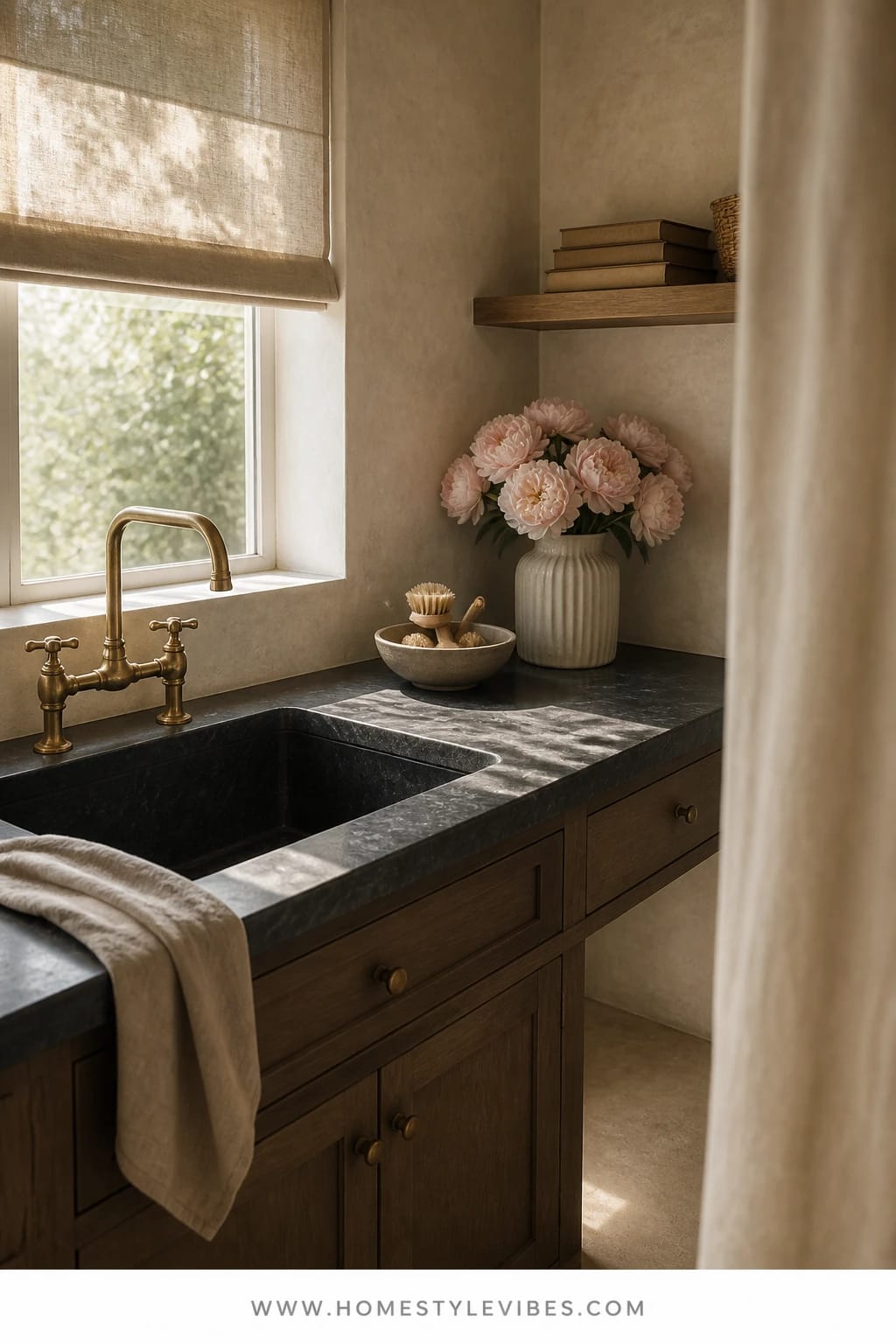
It’s always the pile of things “waiting”: the antique tablecloth soaked in oxygen bleach, the sweater that must lay flat, the tomato sauce splatter you’re pretending you don’t see. Soapstone gives you a forgiving, velvety counter with real depth, dappled light from a simple roman shade adds mood, and a vintage-style bridge faucet finishes it like jewelry. The vibe is modern heritage—easy to live with, quietly romantic, and textured in a way that makes even mess look softer.
Why it works in real homes: soapstone is non-porous and takes a beating. It patinas (in a good way), and a farmhouse or undermount sink in white fireclay or enameled cast iron gives you contrast. Bridge faucets are surprisingly ergonomic for quick temp shifts. This setup photographs beautifully because soapstone’s soft sheen kills glare, while the faucet shape adds a strong silhouette against the window or tile, and that dappled light creates shadows you can almost feel.
Variations: Budget option uses honed black granite or laminate in a “soapstone” texture. Small-space iteration: a 36-inch run with one deep sink and a wall-mounted drying rack that folds flat. Dark and moody version: charcoal paint on lower cabinets, unlaquered brass faucet, and natural linen for the shade.
Budget Breakdown:
- Soapstone countertop (4–7 linear feet): $650–$1,900
- Farmhouse or undermount sink: $300–$900
- Vintage-style bridge faucet: $220–$700
- Roman shade in linen: $90–$250
- Wall-mounted drying rack: $120–$280
- Cabinet paint + hardware: $120–$300
Total Estimated Cost: $1,500 – $4,330
Best For: Traditional or transitional homes, windowed laundry rooms, anyone who loves tactile materials and a timeless feel.
Key Design Elements:
- Main materials: soapstone, fireclay, brass
- Color palette: charcoal, warm white, antique brass, natural linen
- Lighting strategy: natural light softened by a roman shade, warm task sconce near sink
- Furniture silhouettes: shaker or beadboard lower cabinets, classic bridge faucet
- Texture layers: honed stone, linen, woven basket, ceramic canisters
- Accent details: oil-and-wax finish on stone, little marble tray for brushes
Why This Looks Intentional: Contrasts are calibrated: matte stone vs. glossy sink, vintage curves against crisp lines, soft window light on layered neutrals. Nothing shouts; everything hums.
How To Recreate This Look:
- Start by selecting a honed, dark surface—soapstone or look-alike.
- Add a deep white sink for classic contrast.
- Install a bridge faucet in unlacquered or brushed brass.
- Hang a linen roman shade to filter light; mount a small sconce over the sink.
- Style with woven baskets, a natural bristle brush, and two lidded ceramic jars.
Don’t Do This: Avoid glossy, blue-white overhead light; it kills the moody softness and makes brass look garish. Keep bulbs warm and dimmable.
Pro Styling Tip: Wipe soapstone with a touch of mineral oil before photos—then buff. It deepens the veining and makes the faucet gleam by contrast.
Confession time: I once spent a week obsessing over a paint swatch only to realize the real culprit was my cold overhead bulb. Swap one bulb, and the “wrong” paint suddenly looked perfect. Lighting really is the boss.
If this all feels like a lot, zoom out. You don’t need every layer. Choose one focal material and one lighting move. That’s often enough to make the room feel finished.
5. Terrazzo Floor With Bright Skylight Wash And A Stainless Trough Sink
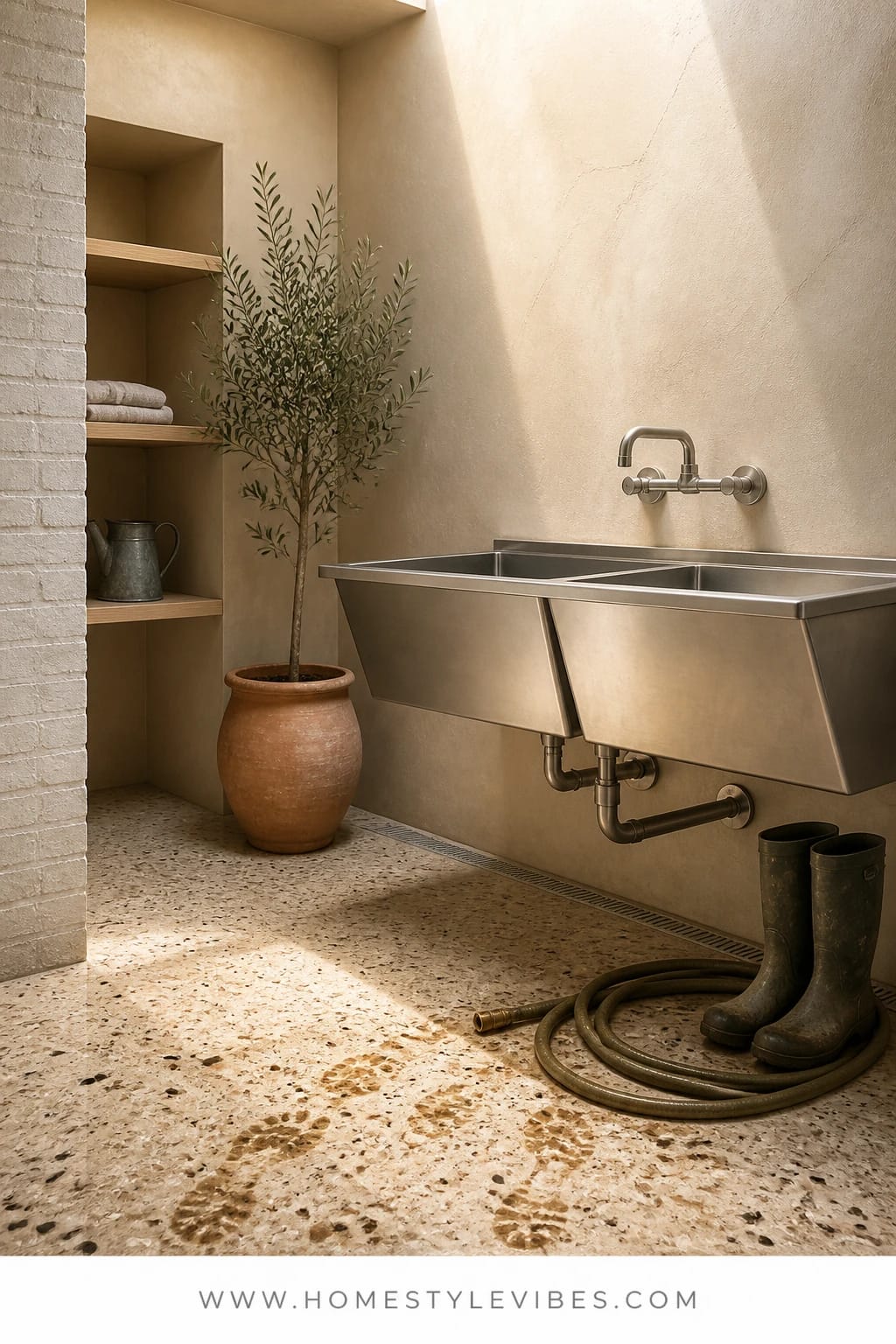
There’s always that dripping athletic gear and wet dog situation with nowhere to go. A terrazzo floor laughs at puddles. Bring in a wash of light from a skylight or a bright faux-skylight panel, and anchor the wall with a stainless trough sink that can handle boots, paint rollers, and garden harvests. The mood here is modern Mediterranean-meets-urban loft: fun, functional, and graphic without feeling cold.
Why it works in real homes: terrazzo hides dust bunnies and rogue lint with its speckle, and it’s a breeze to mop. The trough sink doubles as a pet-wash station or a lay-flat space for delicates with a mesh tray. A linear drain and splash apron keep water where it should be. Photography benefits from terrazzo’s confetti effect—it adds energy and scale, especially under a big, diffuse glow.
Variations: Budget-friendly uses terrazzo-look porcelain tile or sealed epoxy flake floors. Small-space version: a 30-inch trough with a fold-down drying table over it. Dark version: charcoal base terrazzo with white and amber chips, black faucet, and oak bench for warmth. Renter-friendly: skip the trough; use a large stainless utility sink on a freestanding frame and a portable drying rack that slides behind the door.
Budget Breakdown:
- Terrazzo or terrazzo-look tile (40–80 sq ft): $480–$2,000
- Stainless trough sink: $350–$1,100
- Commercial-style faucet with sprayer: $180–$520
- Faux-skylight LED panel: $160–$420
- Fold-down drying rack/table: $140–$380
- Waterproof baseboard or splash apron: $60–$180
Total Estimated Cost: $1,370 – $4,600
Best For: Active households, pet owners, garden lovers, and anyone who wants surfaces that forgive everything.
Key Design Elements:
- Main materials: terrazzo, stainless steel, tile baseboard
- Color palette: soft white, multicolor chips, brushed steel, light oak accents
- Lighting strategy: skylight or faux-skylight for even daylight, task bar over sink
- Furniture silhouettes: trough sink, slim wall bench, fold-down table
- Texture layers: speckled floor, ribbed mat at entry, canvas baskets
- Accent details: wall hooks, labeled jars for clothespins and Oxi powder
Why This Feels Designer: Industrial utility reinterpreted with joyful pattern. The trough sink feels custom, and the terrazzo’s scale ties the whole room together.
How To Recreate This Look:
- Start with flooring—select terrazzo or a durable terrazzo-look.
- Add a wall-mounted or frame-mounted trough sink; verify wall blocking.
- Install a bright, diffuse overhead light panel; add a task bar near the sink.
- Mount a fold-down drying rack for flexible surface area.
- Style with a simple oak bench, canvas baskets, and a long runner for softness.
The Most Common Mistake: Busy counters on top of busy floors. Keep the counter simple and mostly clear so the terrazzo can sing without visual chaos.
Pro Styling Tip: For photos, place a single striped towel draped over the trough and angle the camera so the skylight reflection softens across the steel surface.
6. Limewash Walls With Golden Hour Sconces And A Sculptural Utility Sink Cabinet
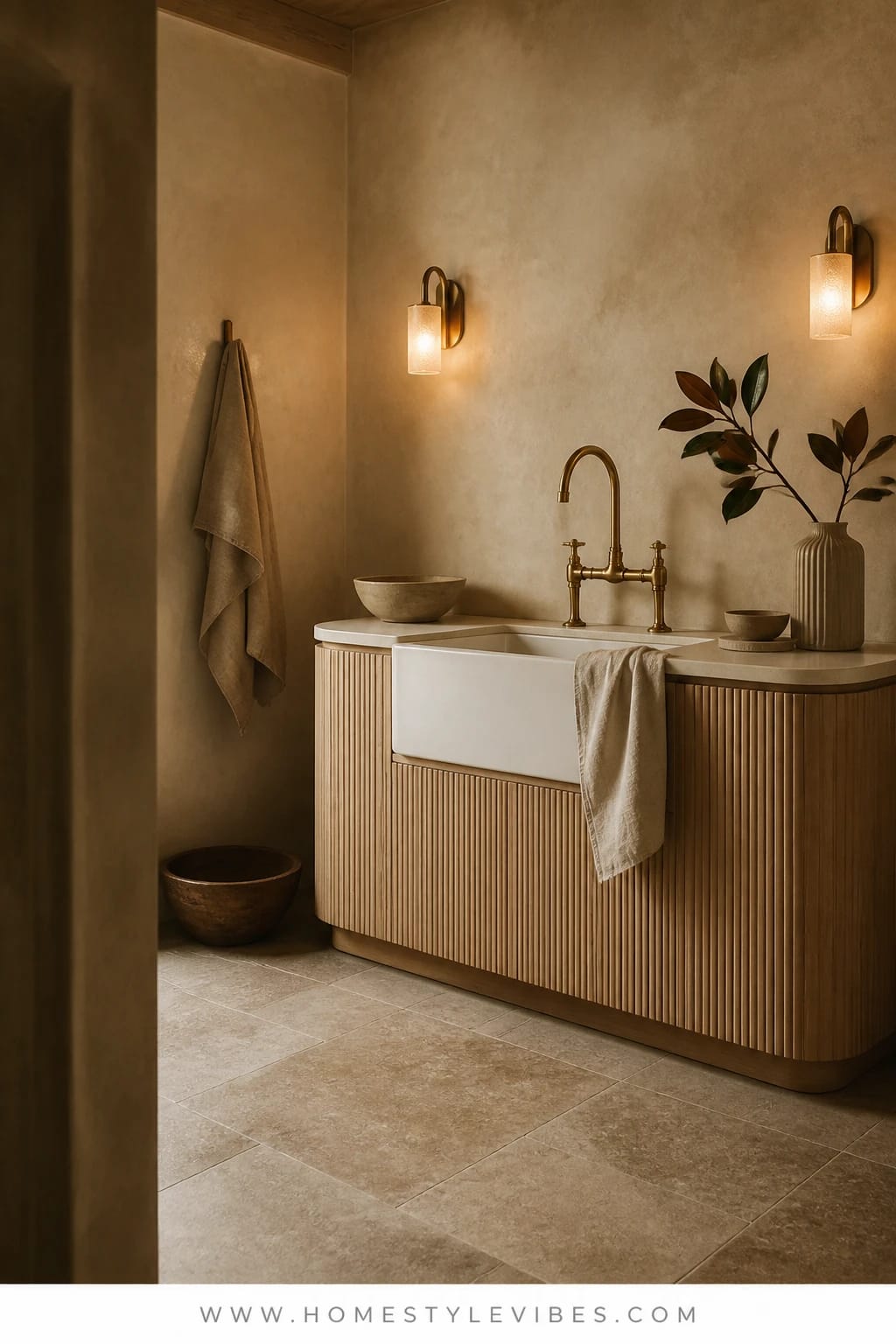
You want cozy, but your laundry room feels like a beige box. Limewash adds soul instantly, golden-hour sconces bring mood without needing windows, and a sculptural utility sink cabinet turns a necessity into a statement. The overall feel is European atelier: soft, layered, and quietly dramatic. Each pass of the brush creates movement on the walls, so even in a small room you get depth and character.
Why it works for real life: limewash hides scuffs with color movement; you can patch-blend easily. A freestanding or custom-faced utility sink keeps hoses and buckets out of sight. Brass or milk-glass sconces warm the complexion of the room (and your linens), which is great if your laundry area sits in a basement with no natural light. On camera, the limewash reads like soft clouds and the sculptural sink base forms a strong anchor.
Variations include a budget version with mineral-paint “limewash” effect and a stock sink base wrapped in beadboard. Small spaces can use a narrow pedestal utility sink with a skirted front in washable linen. Dark version: smoky taupe walls, aged brass sconces, and a soapstone-look counter edge. Renter-friendly: use removable limewash-effect wallpaper and a wraparound sink skirt with Velcro to hide the base.
Budget Breakdown:
- Limewash paint + primer: $160–$360
- Pair of warm sconces + dimmer: $150–$420
- Utility sink with custom or skirted base: $180–$900
- Counter ledge or small shelf: $60–$180
- Hardware and hooks: $50–$140
- Skirt fabric + rod (if used): $40–$120
Total Estimated Cost: $640 – $2,120
Best For: Windowless rooms, basements, and anyone craving warmth and softness on a modest budget.
Key Design Elements:
- Main materials: limewash, utility sink, brushed brass or milk-glass
- Color palette: warm taupe, cream, brass, natural flax
- Lighting strategy: wall sconces at face level, indirect glow, dimmable
- Furniture silhouettes: sculptural sink cabinet or skirted pedestal, slim shelf
- Texture layers: plastery walls, washed linen, matte ceramics
- Accent details: framed textile swatch, vintage hook rail, woven hamper
Why This Looks Expensive: Layered wall movement plus warm, directional sconces creates depth and forgives imperfections. The sink base becomes a statement, not a compromise.
How To Recreate This Look:
- Start by prepping walls; apply a mineral primer and two limewash coats with a crosshatch motion.
- Add warm sconces on a dimmer about 60–66 inches off the floor.
- Build or buy a utility sink base; wrap in beadboard or a linen skirt to conceal lines.
- Install a small ledge shelf for stain sticks and a ceramic tumbler for brushes.
- Style with linen towels, a woven hamper, and one framed textile for softness.
One Thing To Avoid: Don’t pair limewash with high-gloss trim in the same tone; the sheen mismatch can look accidental. Use eggshell or matte trim for harmony.
Pro Styling Tip: Angle one sconce slightly toward the wall and one outward; the twin shadows add cinematic depth in photos.
Micro-story: A friend of mine spent weeks agonizing over “the perfect greige” for her laundry room. When we limewashed instead, she texted, “I don’t care what the color is called. It feels like a hug.” That’s the real win.
If your head’s buzzing, breathe. Pick one anchor: sink style, tile, or wall finish. The rest can layer in over time as you live with the room and notice what you actually reach for.
Quick Checklist
- Choose a deep sink that matches your laundry habits (soak, scrub, or spray)
- Dial bulb warmth to 2700–3000K for cozy, or 4000K for color accuracy
- Commit to one hero material (wood fluting, zellige, soapstone, terrazzo, or limewash)
- Keep counters mostly clear; add a wall rail or floating shelf
- Use consistent hardware finishes for a cohesive read
- Add under-cabinet or task lighting to kill shadows at the sink
- Layer one soft textile (linen roman shade, towel, or skirt) for warmth
- Include one sculptural moment (bridge faucet, trough sink, apron-front)
- Plan hidden storage for detergents and stain sticks
- Photograph with grazed light to show texture and depth
Frequently Asked Questions
I’m on a tight budget. Which upgrade from these laundry room ideas with a sink makes the biggest impact fast?
Swap your faucet and add task lighting. A curved wall-mount or bridge-style faucet immediately looks intentional, and under-cabinet LED strips change the whole mood. If you can swing one more item, a small backsplash of tile or peel-and-stick behind the sink prevents stains and adds polish.
My laundry room is tiny. Can I still add a deep sink without losing counter space?
Yes—choose a 24–25 inch single-basin sink and add a custom cutting board or perforated drying tray that fits on top. It becomes usable counter space when you’re not soaking. Wall rails and fold-down racks also save horizontal space.
How do I keep natural materials like soapstone or limewash looking good with daily use?
For soapstone, a light mineral oil treatment every few months deepens color and hides micro-scratches. For limewash, keep a small container of diluted paint; dab and feather with a damp brush to patch scuffs. Both finishes reward patina, so don’t stress over perfection.
I rent—what can I realistically do without permanent changes?
Freestanding stainless sink bases, adhesive fluted panels on existing cabinets, removable limewash-effect wallpaper, peel-and-stick tile behind the splash zone, and plug-in sconces with cord covers all add style and function. Take them with you when you move.
What’s the most common design mistake in laundry rooms with sinks?
Inconsistent lighting and cluttered counters. Cold bulbs make everything look harsher. Add warm task lighting and give every item a home—rail with hooks, closed bins, or a single open shelf with a strict edit. The sink needs landing zones, not piles.
Closing Thoughts
Pick one idea that made your shoulders drop a little—the fluted oak with a deep apron-front sink, the zellige glow, the soapstone calm, the terrazzo energy, the pro-grade steel, or the limewash embrace. Start there. Make one decision this week, and the rest will fall into place as you live in the room and feel what’s still missing.
The truth is, luxury in a laundry room doesn’t come from price tags. It comes from texture you want to touch, light that flatters everything it hits, and restraint that keeps the room from shouting. One hero material, one lighting strategy, and a sink that actually does its job—that’s the formula.
You’ve got this. Your daily rinse-and-repeat can feel calmer, prettier, and a little bit proud. Choose your anchor, grab a dimmer switch, and let the room finally work for you—beautifully and on purpose.

About the Author

Krisztina P.Rendes, Founder of Home Style Vibes
Founder of Home Style Vibes
Krisztina Puskásné Rendes created Home Style Vibes as a cozy-modern lifestyle space where homemaking meets inspiration. Her goal is to help women create beautiful, organized, and peaceful homes they truly love — without overwhelm. You’ll find here heart-driven content on home decor, cleaning tips, easy family recipes, organization and decluttering, DIY home projects, plants, and seasonal ideas — all designed to bring more calm, comfort, and style into everyday life.