Lemon Macarons: Easy Zesty French Cookie Recipe with Bright Lemon Buttercream Filling
Lemon macarons taste like sunshine wrapped in a delicate little shell. They look fancy, but you can absolutely nail them at home with a bit of patience and a few smart tricks. Today we’re making crisp, chewy lemon macarons with a bright, tangy buttercream that pops. Ready to shock your friends (and maybe yourself) with bakery-level cookies from your own kitchen?
What Makes Lemon Macarons So Good
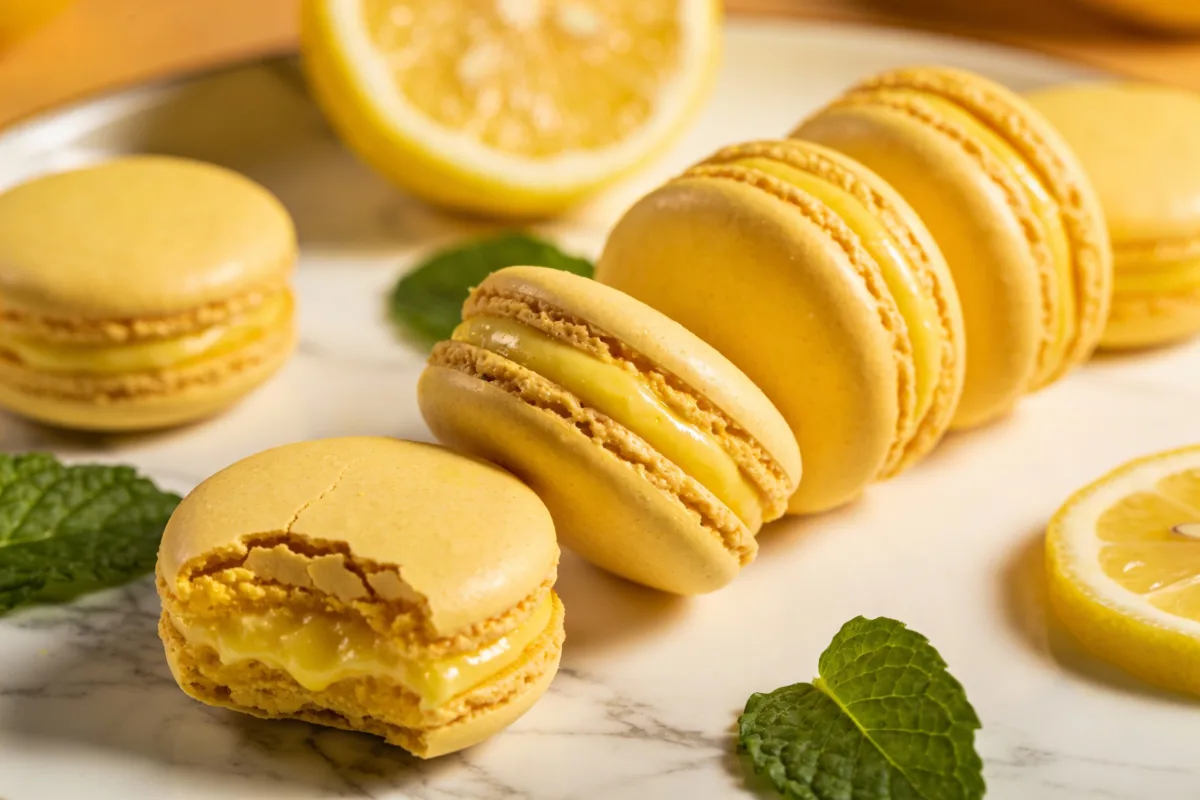
Lemon macarons hit every note: sweet, tart, fragrant, and delightfully dainty. The shells stay crisp on the outside and chewy in the center, while the buttercream delivers a zesty punch. It’s balance, but fun.
Plus, the color! You can tint your shells the softest pastel yellow or go full sunshine. Just use gel food coloring so you don’t mess with the batter consistency. A little goes a long way—no neon highlighters here.
Ingredients You’ll Need
For the macaron shells (French meringue method):
- 110 g almond flour (super fine, skinless)
- 110 g powdered sugar
- 100 g egg whites (about 3 large), room temp
- 90 g granulated sugar
- 1/4 tsp cream of tartar (optional but helpful)
- 1/2 tsp pure vanilla extract
- Fine zest of 1 small lemon (no pith)
- Yellow gel food coloring (optional)
For the bright lemon buttercream:
- 115 g unsalted butter, room temp
- 220–260 g powdered sugar, sifted (adjust for thickness)
- 2–3 tbsp fresh lemon juice
- 1 tsp lemon zest
- Pinch of salt
- 1/4 tsp vanilla extract (optional)
Equipment:
- Kitchen scale (non-negotiable, IMO)
- Stand mixer or hand mixer
- Fine mesh sieve
- Piping bags + round tip (about 1/2-inch)
- 2–3 baking sheets + parchment or silicone mats
The Game Plan: Step-by-Step
Short version? Whip, fold, pipe, dry, bake, fill. But let’s keep it real and make it foolproof.
- Prep your dry mix. Sift almond flour and powdered sugar together twice. Toss in the lemon zest and rub it in with your fingertips to release the oils. If you see large almond bits, toss them—no chunky shells allowed.
- Whip the meringue. Beat egg whites to foamy, add cream of tartar, then gradually stream in granulated sugar. Beat to stiff, glossy peaks. Mix in vanilla and a dot of yellow gel if using.
- Macaronage (the fold). Add dry mix to the meringue. Fold with a spatula, pressing batter against the bowl to deflate slightly. Stop when it flows like thick lava. If you draw a figure 8, it should ribbon and settle in about 10–15 seconds. Under-mix and you get volcano tops; over-mix and you get pancake flats. Balance, my friend.
- Pipe. Transfer to a piping bag with a round tip. Pipe 1.25–1.5-inch circles, spacing well. Hold the bag vertical and stop squeezing before lifting. Tap the trays hard on the counter 4–6 times to pop bubbles. Use a toothpick to pop any remaining surface bubbles.
- Rest. Let shells sit until they form a dry skin, 20–45 minutes depending on humidity. When you touch lightly, no batter should stick to your finger. If it does, wait longer. Patience equals feet (those cute ruffles).
- Bake. Preheat to 300°F (150°C). Bake 14–18 minutes, one tray at a time. They’re done when the tops don’t jiggle if you nudge them. Cool completely before removing from the parchment/mat.
Pro Tips for Macaron Success
- Weigh everything. Cups can betray you. Scales never lie.
- Aged egg whites can help stabilize the meringue, but room temp works fine.
- Avoid oil and moisture. Clean bowl, dry tools, and don’t add liquid extract to shells beyond a tiny bit of vanilla.
- Rotate trays halfway through baking if your oven runs hot or uneven.
- Shells stick? Pop the tray back in the oven for 2–3 minutes. They’ll release as they set.
Bright Lemon Buttercream Filling
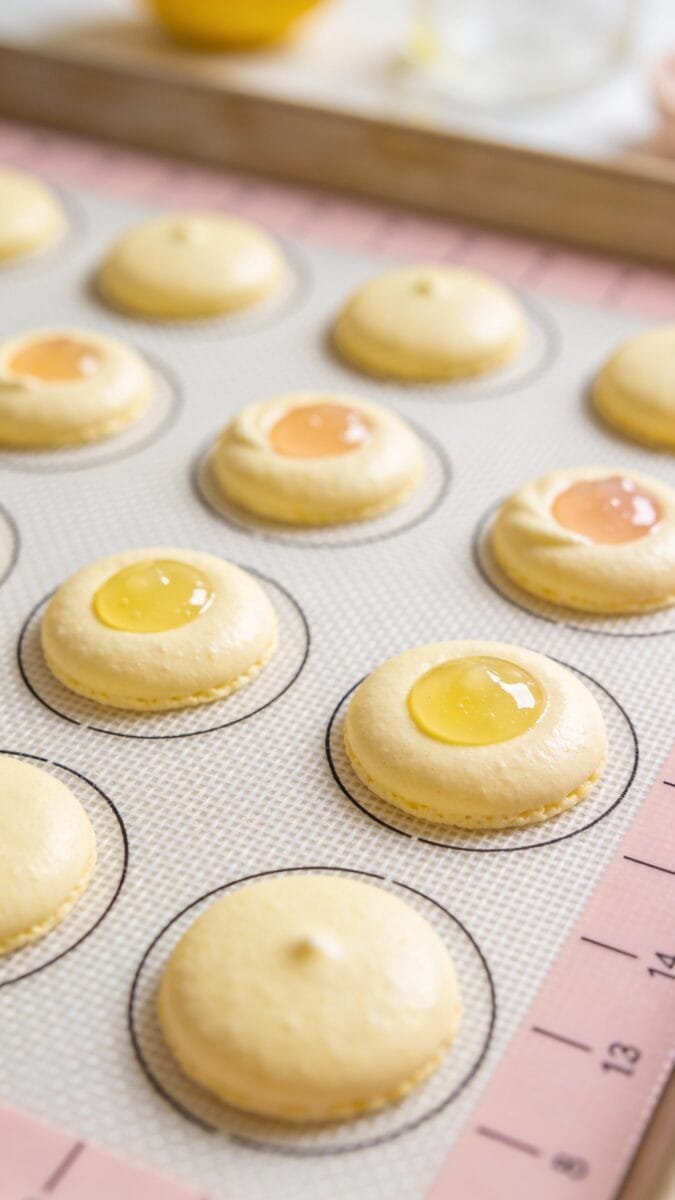
This filling tastes like a lemon bar married frosting. Zippy, smooth, and not cloying.
- Cream butter until pale and fluffy, 2–3 minutes.
- Mix in powdered sugar gradually. Start with 220 g, then adjust for stiffness.
- Add lemon zest, 2 tbsp lemon juice, salt, and vanilla if using. Beat until silky. If too thick, add another teaspoon of lemon juice. If too loose, add a bit more powdered sugar.
- Taste test. You want bright lemon flavor you can feel in your cheeks. If it’s timid, add a little more zest. FYI, zest brings flavor without thinning.
Optional: Lemon Curd Center
Want mega-lemon? Pipe a ring of buttercream and spoon a tiny dot of lemon curd in the middle. Don’t overfill or the curd will ghost out the sides when you sandwich.
Assembling Your Macarons
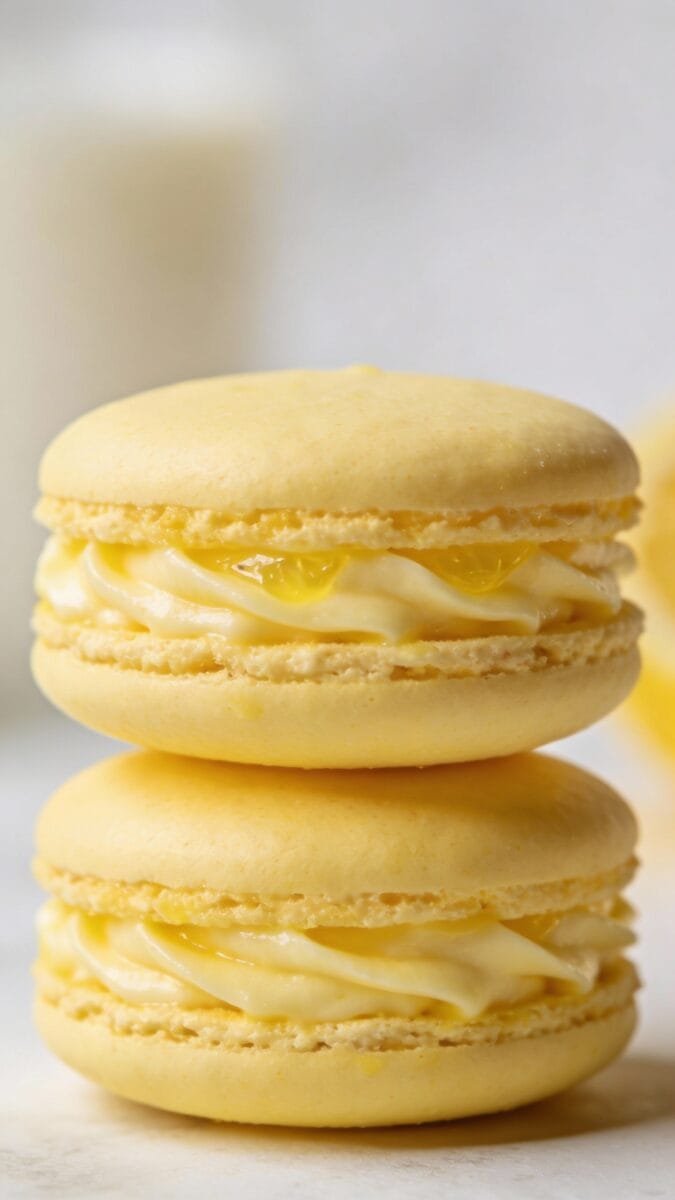
Pair shells by size. Pipe a quarter-sized dollop of buttercream onto the bottom of one shell. Top with its twin and twist gently to spread the filling to the edges.
Now the hardest part: mature them in the fridge for 12–24 hours in an airtight container. The shells absorb moisture from the filling and become perfectly chewy. You can eat them right away, but the next day? Chef’s kiss.
Color and Decoration Ideas
- Pastel yellow shells with a sprinkle of micro lemon zest on top before baking.
- White shells + lemon-yellow dusting using edible luster dust post-bake.
- Drizzle of white chocolate and a tiny shard of candied lemon peel for drama.
Common Mistakes (And How to Dodge Them)
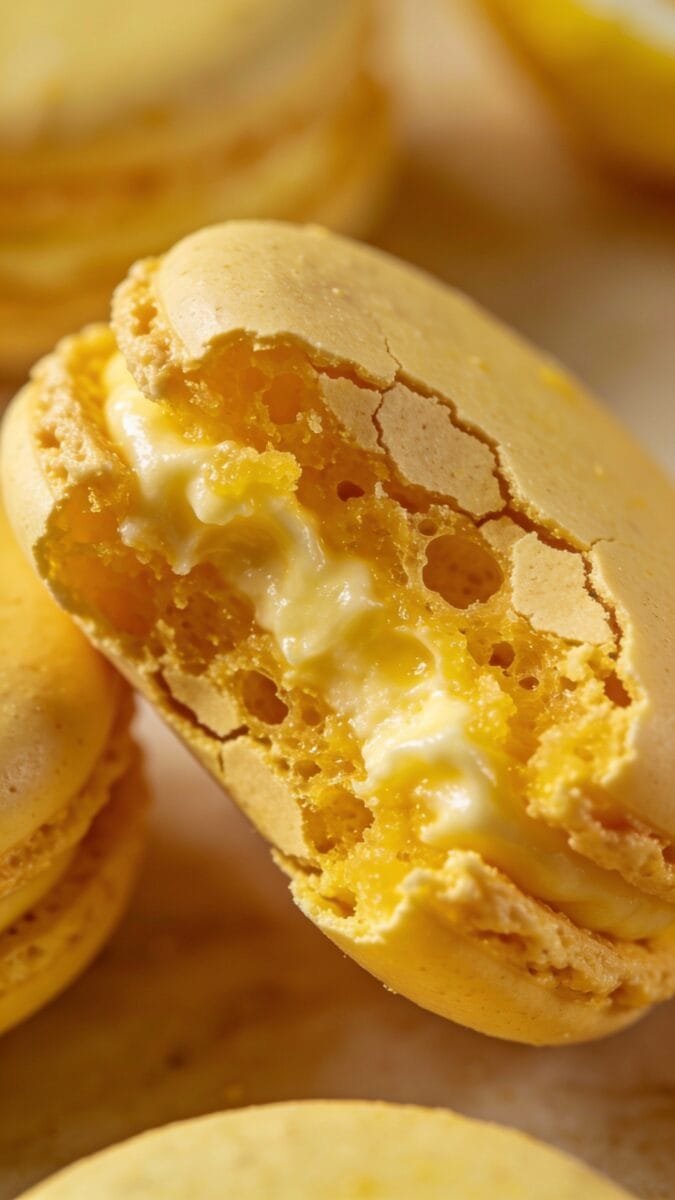
- No feet: Batter too wet or shells didn’t rest long enough. Check your macaronage and resting time.
- Cracked tops: Air bubbles or too hot oven. Bang trays well and lower the temp by 10–15°F.
- Hollow shells: Over-whipped meringue or too hot oven. Whip to stiff peaks, not cotton-ball dry. Try a longer bake at a slightly lower temp.
- Lopsided shells: Uneven piping or a fan blowing. Pipe straight down and avoid drafts.
Make-Ahead, Storage, and Freezing
Shells: Store plain shells in an airtight container at room temp for 2–3 days or freeze up to 2 months. Separate layers with parchment.
Filled macarons: Keep in the fridge 3–5 days. For best texture, always mature overnight first. Bring to room temp for 15–20 minutes before serving.
Buttercream: Refrigerate up to a week or freeze up to 2 months. Rewhip after thawing to restore fluff.
Flavor Tweaks
- Lemon-lavender: Add a tiny pinch of culinary lavender to the buttercream. Tiny. Don’t make it taste like soap.
- Lemon-raspberry: Add a dot of raspberry jam in the center with the buttercream.
- Meyer lemon: Slightly sweeter and floral; reduce powdered sugar a touch to keep it balanced.
FAQ
Can I skip the cream of tartar?
Yes. It just stabilizes the meringue. If you beat to proper stiff peaks and keep your bowl oil-free, you’ll be fine. IMO, it’s a nice safety net for beginners.
My batter spreads too much—what did I do wrong?
You probably over-mixed during macaronage or added too much liquid coloring. Next time, stop folding when the batter ribbons slowly and use gel color. If it’s already loose, chill the batter 5–10 minutes before piping to help a bit.
How do I know when the shells are done baking?
Gently nudge the tops—if they shift, keep baking. Also look for dry, matte tops and sturdy feet. If the bottoms peel off gummy, they need a couple more minutes.
Can I use bottled lemon juice?
Fresh tastes brighter and cleaner. Bottled can work in a pinch, but it sometimes tastes flat. Zest helps a lot either way, so don’t skip the zest.
Do I need to age egg whites overnight?
Not required, but it can help relax the proteins and whip more consistently. If you forget, bring them to room temp and whip with patience. You’re good.
Why did my shells brown?
Your oven runs hot or the rack sits too high. Bake in the middle, reduce the temp by 10–15°F, or stack an empty baking sheet under the pan to shield the heat.
Conclusion
Lemon macarons feel fancy but they don’t demand wizard-level skill—just intention and a few good habits. You sift, you whip, you fold, you wait, and boom: zesty little cookies that taste like pure sunshine. Try them once, tweak to your oven, and watch your success rate climb. And when you bite into that bright lemon buttercream tomorrow after they’ve matured? FYI, that’s your victory lap.