Lemon Blueberry Sourdough Bread: Soft, Tangy Loaf with Fresh Berries and Bright Lemon Zest
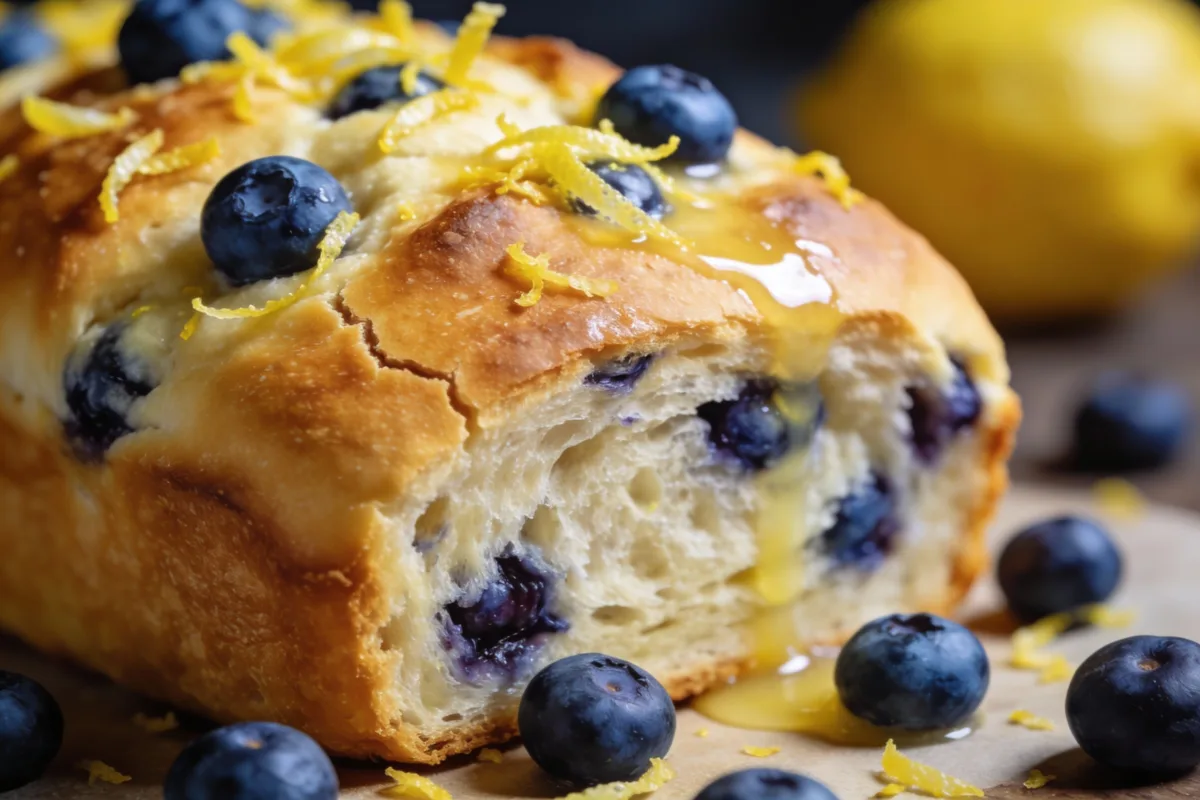
This loaf sings. Bright lemon zest, juicy blueberries, and that signature sourdough tang—every slice tastes like summer brunch. You’ll get soft, tender crumb vibes with pops of berries, not a dense brick pretending to be bread. Bonus: your kitchen will smell like a bakery and a citrus grove had a very happy baby.
Why Lemon + Blueberries + Sourdough Just Works
Citrus lifts sourdough’s gentle tang, and blueberries bring sweetness and moisture. Together, they balance like a good playlist—no one flavor hogs the spotlight. Plus, the acidity from lemon and starter helps keep the crumb tender.
You also get a loaf that toasts beautifully. The crust stays thin and crisp, while the inside stays plush. Add butter, honey, or cream cheese and you’re basically a brunch legend. FYI: this makes killer French toast too.
The Flavor Blueprint
Let’s map the key players so you can tweak to your taste:
- Ripe starter: Aim for a lively, bubbly starter at its peak. It gives better rise and rounds out the tang.
- Lemon zest: Zest only, no pith. It perfumes the dough without making it sour.
- Lemon juice: A little goes a long way. Too much can tighten gluten, so use it wisely.
- Blueberries: Fresh berries work best. Frozen can bleed, but they still taste great if that’s what you have.
- Sweetener (optional): A touch of honey or sugar helps balance the tang, IMO.
Choose Your Flour Adventure
I like a base of strong bread flour for structure and a bit of whole wheat for flavor. Try:
- 80% bread flour for chew and rise
- 20% whole wheat for depth and color
You can go 100% bread flour if you want a fluffier crumb. No flour police here.
What You’ll Need (and Why)
- Active sourdough starter: Doubled in 4–6 hours after feeding? You’re good.
- Flour + water + salt: The usual suspects—keep it simple.
- Lemon zest + a splash of juice: Brightness unlocked.
- Blueberries: Dry them well so they don’t flood your dough.
- Honey or sugar (optional): Helps caramelize the crust and balance the tang.
Gear Check
- Digital scale (seriously, measuring cups are chaos)
- Banneton or a well-floured bowl
- Dutch oven or a baking stone + steam setup
- Lame or sharp knife for scoring
Method: From Starter to Slice
This is a relaxed timeline. You can shorten or stretch as needed, but don’t rush the dough—good bread hates impatience.
1) Mix and Autolyse
- Combine flour and water until shaggy. Rest 30–60 minutes. This hydrates flour and makes gluten without you doing much. We love minimal effort.
2) Add Starter, Salt, Lemon
- Mix in your active starter, salt, lemon zest, and a teaspoon or two of lemon juice. Add honey if using.
- Pinch and fold until cohesive. The dough should feel tacky but not soup-like.
3) Bulk Fermentation with Folds
- Let the dough rest at warm room temp (75–78°F) for 3–4 hours.
- Perform 3–4 sets of stretch-and-folds every 30 minutes for the first 2 hours.
4) Add Blueberries (Gently!)
- On the last fold, scatter blueberries over the dough and fold them in like delicate treasure. Don’t mash them unless purple swirls are your aesthetic.
- If the berries weep, dust them lightly with flour before adding.
5) Pre-Shape and Bench Rest
- Turn out the dough, pre-shape into a loose round, rest 20–30 minutes. It should relax and slightly puff.
6) Final Shape and Cold Proof
- Shape tightly into a boule or batard, pop into a floured banneton, seam up.
- Cover and refrigerate 8–16 hours. Cold proofing tightens the structure and deepens flavor.
7) Bake with Steam
- Preheat your Dutch oven at 475°F for 45–60 minutes. Hot-hot.
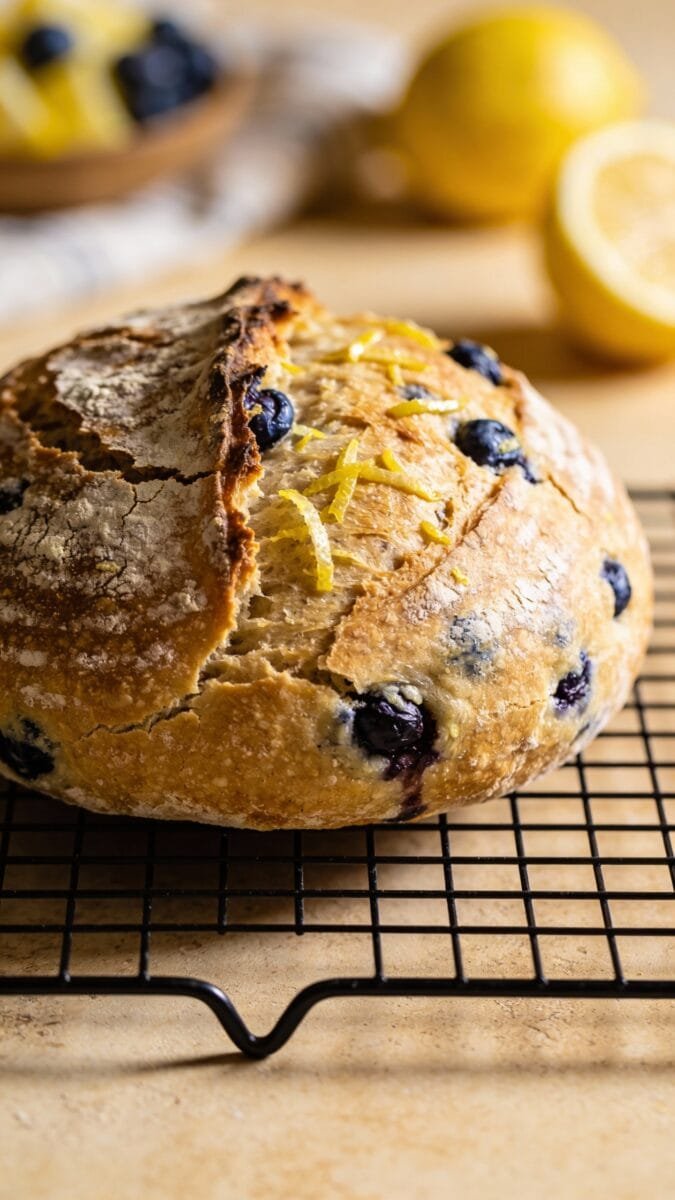
- Score the dough, bake covered 20–25 minutes, then uncover and bake 15–20 more until deep golden with bursting blueberries and caramelized edges.
- Cool completely before slicing. I know. But slicing too soon squashes the crumb and releases steam—aka flavor.
Tips for a Soft, Tangy Crumb
- Hydration sweet spot: Aim for medium hydration (70–75%). Lemon juice and berries add moisture, so don’t drown the dough.
- Manage the fruit: Pat blueberries dry. Toss in a teaspoon of flour to absorb surface moisture.
- Don’t over-acidify: Lemon zest does most of the flavor lifting. Keep juice minimal so gluten stays happy.
- Gentle handling: Overmixing bursts berries and gray-things your crumb. Fold, don’t knead.
- Proof with patience: Underproofing = tight crumb. Overproofing = collapse city. Look for a puffy, jiggly dough that springs slowly back when poked.
Flavor Upgrades and Variations
Because bread loves a remix:
- Poppy seeds: Add 1–2 tablespoons with the lemon zest for a speckled, nutty vibe.
- Vanilla: A teaspoon makes it taste like blueberry muffin meets artisan loaf. Dangerous, in a good way.
- Herbal twist: A whisper of thyme or basil pairs surprisingly well with lemon and berries.
- Citrus remix: Swap lemon for Meyer lemon or orange zest for a softer, floral note.
- Glaze it: After baking, brush with a light lemon-honey syrup for shine and extra zing.
Serving Ideas
- Toast with mascarpone and a drizzle of honey
- Griddled slices for French toast with lemony whipped cream
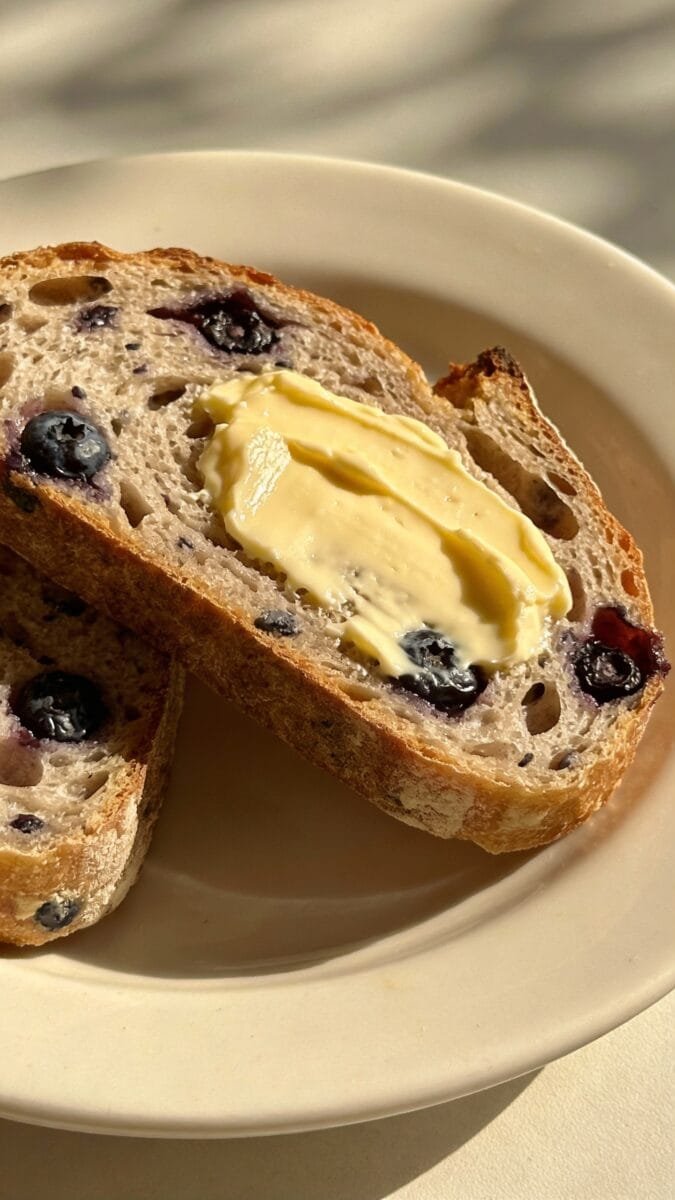
- Thick slab + salted butter + a sprinkle of lemon zest, IMO perfection
Make-Ahead and Storage
You can refrigerate the shaped dough up to 18 hours for a slower, brighter flavor. I sometimes bake two loaves and freeze one.
For storage:
- Day 1–2: Keep cut side down on a board or wrap in a clean towel.
- Day 3–4: Move to a paper bag inside a loose plastic bag to balance moisture.
- Freezer: Slice, wrap tightly, and freeze up to 2 months. Toast straight from frozen. Magic.
FAQ
Can I use frozen blueberries?
Yes. Don’t thaw them fully—use them slightly frozen to reduce bleeding. Toss in a little flour and fold in gently at the last set of folds. The crumb may streak a bit, but flavor stays on point.
How do I know my starter is ready?
Your starter should double after feeding, smell pleasantly tangy, and pass the float test. If it lags, give it a few consistent feedings at room temp before baking. Weak starter = flat loaf, which is a bummer.
Can I make this sweeter?
Absolutely. Add 20–30 grams of honey or sugar to the dough. It boosts browning and balances the lemon. Just don’t go full cake—too much sugar slows fermentation and tightens the crumb.
What if my dough gets too sticky?
Wet hands, light oil on your countertop, and shorter folds help. Resist the urge to dump in flour. Stickiness often settles after a rest. If it’s a true puddle, chill it for 20 minutes, then continue.
Do I need a Dutch oven?
It helps a lot, but you have options. Preheat a baking stone or steel and bake with steam: add a pan of boiling water on the bottom rack for the first 15–20 minutes. You’ll still get solid oven spring.
Why did my berries sink to the bottom?
Probably added too early or the dough felt too slack. Add berries at the final fold, and aim for medium hydration. A gentle but tight final shape also helps keep them suspended.
Conclusion
Lemon blueberry sourdough hits that sweet-tangy-bakery note with hardly any fuss. You get a soft loaf, bright citrus aroma, and juicy bursts in every slice. Bake it once and you’ll start zesting lemons on autopilot—fair warning. Now go preheat that oven and make your kitchen smell like victory.