Growing Strawberries At Home: Beginner’s Guide To Juicy Berries In Pots, Beds And Small Spaces
You want juicy strawberries at home. Not “one tiny berry that tastes like disappointment,” but actual sweet, red, snack-while-you’re-standing-at-the-sink strawberries. Same. And honestly? Growing strawberries doesn’t need a backyard farm vibe. You can pull this off in a pot, a raised bed, even a small space where your neighbors already side-eye your Amazon boxes. 🙂
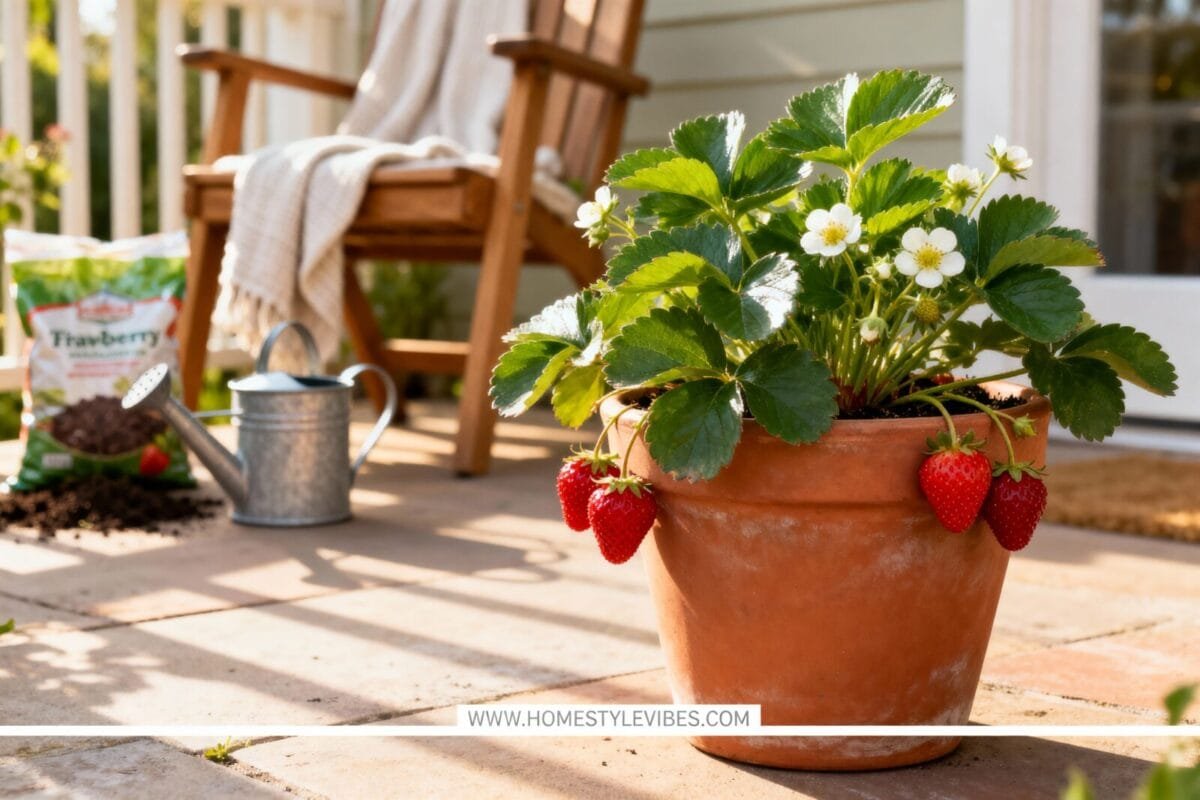
Last spring, I decided I’d “just try a few plants.” Two weeks later I was crouched on the patio in mismatched socks, my 1-year-old daughter crawling around my feet like a determined little inspector, and my husband going,
“You’re planting fruit… in that pot?”
Yup. And it worked. Not perfectly, but it worked.
So here’s the easy, step-by-step way to get berries in pots, beds, and small spaces—without turning your life into a full-time gardening documentary. And yes, we’ll talk about the stuff nobody says out loud, like why your plants look fine until they suddenly… don’t.
Why It Works
- You control the soil (aka the whole game). Strawberries love fluffy, well-draining dirt. When you choose it, you stop guessing and start winning—at least that’s what worked for us.
- Small spaces actually help. A pot near your door means you notice droopy leaves fast, instead of realizing it three days later when everything looks… crunchy.
- You get faster feedback. In containers, watering and feeding changes show up quickly, so you can adjust without waiting a month.
- It fits real life. You can do this in 15-minute pockets of time. Like, while pasta water boils or while your kid crawls off with a spoon (my daughter’s current hobby).
- It tastes better because you pick it ripe. Store berries get picked early. Home berries get picked when they smell like actual strawberries, not like… vaguely red air.
Okay, deep breath. Back to it. Because once you know why this works, choosing the right setup feels way less confusing.
What You Will Need
The container choice that saves you weeks of stress
If you go with pots, pick something at least 10–12 inches wide and roughly the same deep per plant. Bigger works too. Strawberries don’t need a swimming pool, but they do want room for roots and steady moisture.
FYI: I like fabric grow bags for beginners because they drain well and you can move them. Beds win for “set it and forget it” energy, but pots win for small-space control. IMO, start with pots if you’ve never done this before.
The soil combo that doesn’t turn into a soggy mess
Use a good-quality potting mix (not garden soil from the ground). If you want to get fancy, mix in a couple handfuls of compost per pot. You want it light and airy, not heavy and packed.
And yes, I learned this the annoying way. I once used dense dirt because it was “right there,” and my plants sulked for weeks. They stayed alive, but they acted like I offended them personally.
Sunlight, but make it realistic
Strawberries want 6–8 hours of sun for best fruit. If you only get 4–6, you can still grow them, but you’ll probably get fewer berries. Ever wondered why some people get bowls of fruit and you get, like, three? Sun usually explains it.
If your space gets brutal afternoon heat, give them morning sun and a little shade later. I used to think strawberries could “handle it.” Actually… scratch that. What I meant is—strawberries can handle it, but you’ll handle the constant watering less happily.
Water + a simple feeding option
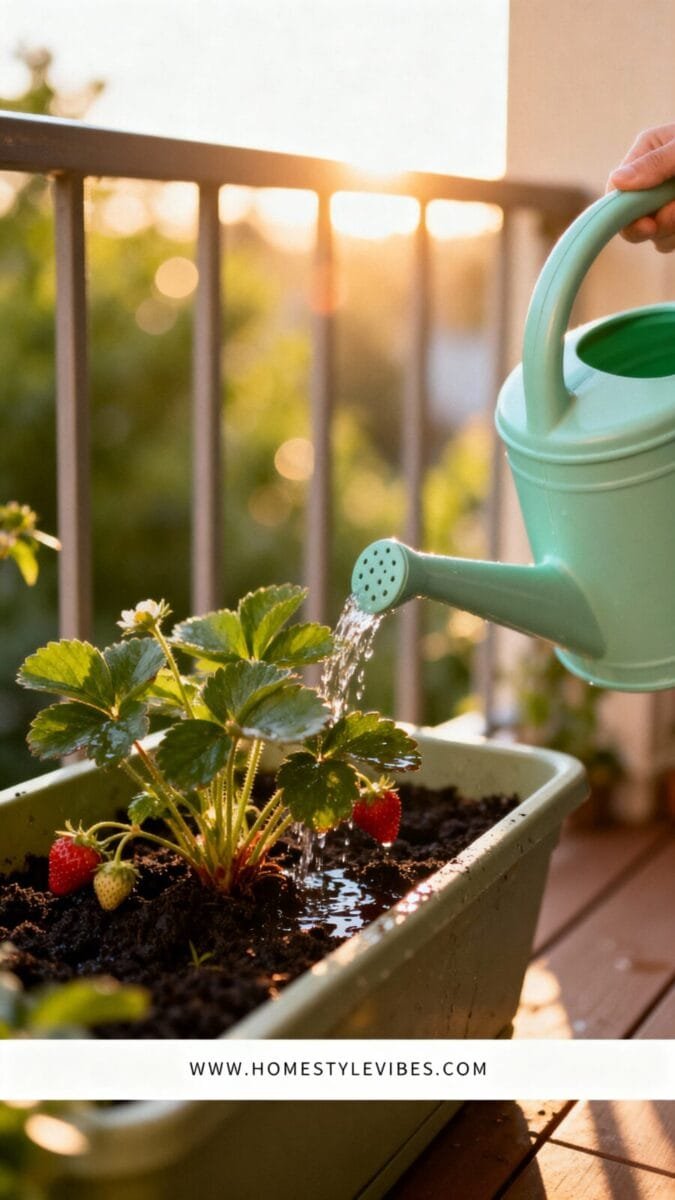
Strawberries like consistent moisture. Not swampy. Not bone dry. Just evenly damp soil, like a wrung-out sponge. Water when the top inch feels dry.
For feeding, a balanced fertilizer works, or you can use compost and a gentle berry-friendly feed. Keep it simple. Overfeeding can give you gorgeous leaves and fewer berries (rude, honestly though…).
Quick reality check: You’ll lose a few berries to birds or curiosity hands. That’s normal. The goal isn’t perfection—it’s a steady little harvest you actually enjoy.
Okay, let’s pause for a sec… because the planting part matters more than people admit, and it’s where most “I tried strawberries and failed” stories begin.
Step by Step Instructions
…because strawberries don’t wait for your schedule. One day they look fine, and the next they flop dramatically like they just watched a sad movie.
The “pick your spot” move that makes everything easier
Put pots where you’ll see them daily. By the door, near the grill, next to the spot where you drink your iced coffee—whatever. Visibility fixes half your problems.
I’m serious. I once tucked a pot “somewhere sunny” and forgot it existed. Three days later the leaves looked crispy and sad, and the potting mix smelled like hot dust. Ugh.
Planting crowns without overthinking it
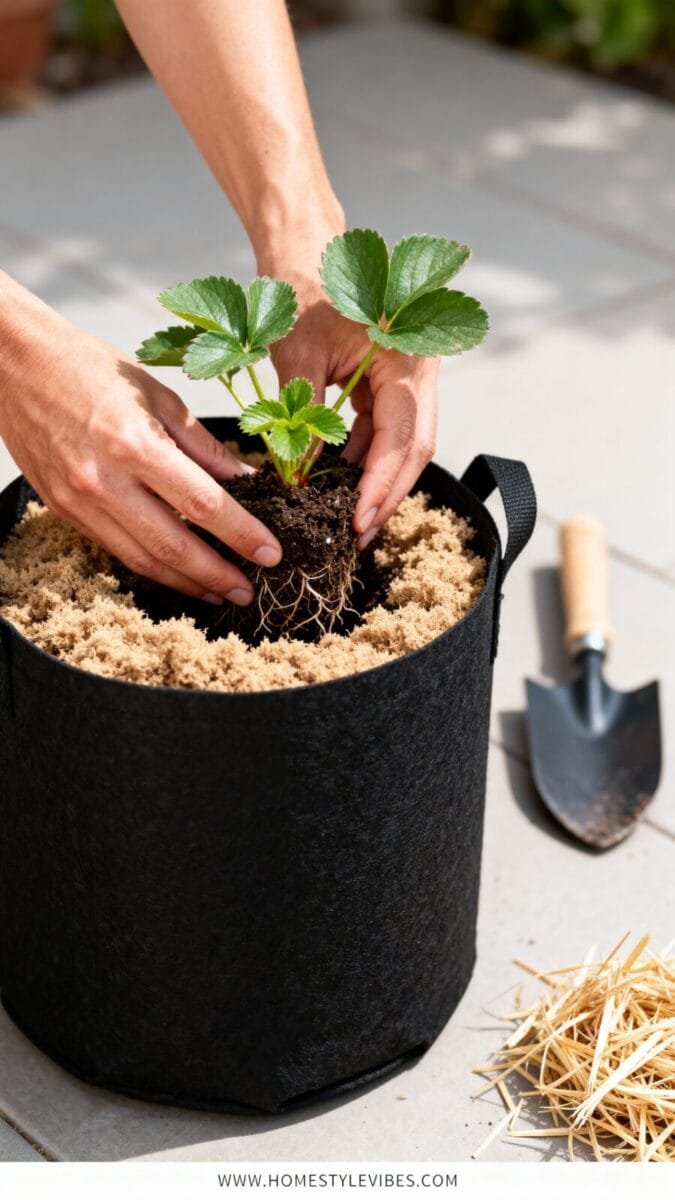
Most strawberries come as small plants or bare-root crowns. If you have bare roots, soak them in water for 20–30 minutes first. Then plant so the crown sits right at soil level—don’t bury it, don’t leave it floating.
Hold on—wait, this part sounds tiny, but it matters. If you bury the crown, it can rot. If you set it too high, roots dry out. And yes, I messed this up at first. I planted one too deep and acted shocked when it got mushy. Like… girl.
Watering right after planting (the not-so-glam part)
Water slowly until you see water come out the bottom. Then stop. Let the pot drain fully.
And don’t splash the leaves nonstop. Wet leaves + warm weather can invite fungal problems. You can water at the base and keep things calmer.
Last Friday night, I ran to Aldi for potting mix and a “quick” strawberry run (ha). My tap-to-pay said no at checkout. Twice. The receipt smelled like cinnamon from my latte, and I stood there sweating like I’d committed a crime over $12 of plants. So yeah, if your strawberry journey starts with a minor embarrassment, you’re in excellent company.
Now, once your plants settle in, you’ll see new growth pretty fast. And when you spot that first little white blossom, you’ll want to pick up your phone, text someone “LOOK,” and then—because… I mean, you’ll see, it gets kind of addictive, and next thing you know you’re checking the flowers every morning like they’re tiny little countdown clocks, and that’s when you’ll want to start thinking about how to keep those blossoms turning into actual berries (instead of drying up and falling off, which feels personal, not gonna lie).
The little pollination nudge that helps in small spaces
If you grow in a balcony or indoors near a bright window, pollination can get weird. Outdoors, bees usually handle it. In tighter spaces, you can help by gently tapping flowers or brushing them with a soft paintbrush every couple of days.
Sounds silly. But I tried it last summer and I got more berries. No idea why it feels so satisfying, but it does.
Mulch and cleanup without turning into a garden robot
In beds, add straw mulch to keep berries clean and reduce splash-up. In pots, you can tuck a little straw on top too. It also helps the soil stay moist longer, which you’ll appreciate on hot days.
And snip off dead leaves when you see them. You don’t need to obsess. Just keep airflow decent.
Okay, deep breath. Back to it.
How to Store
The “don’t wash yet” habit that keeps berries from going mushy
Once you harvest, keep berries dry until you eat them. I know you want to rinse them immediately because they’re cute and you’re excited (same), but water speeds up mold.
Store them in the fridge in a shallow container lined with paper towels. Don’t pile them deep. They bruise easily, and bruised berries go downhill fast.
Freezing without ending up with one strawberry brick
Hull and dry the berries, then freeze them in a single layer on a baking sheet. After they freeze solid, toss them into a freezer bag. That way you can grab a handful for smoothies or baking without chiseling them apart.
Next up, let’s talk about the fun part: choosing varieties and setups that match your space and patience level.
Options, Variations You Can Try
The variety choice that changes how often you harvest
June-bearing strawberries give one big harvest (usually early summer). Everbearing and day-neutral types give smaller harvests over a longer period.
I used to think June-bearing was “better” because you get a big payoff. Actually… wait, no, I take that back. If you want snack-sized harvesting all season, everbearing/day-neutral feels more rewarding day-to-day, especially with kids around. My daughter can’t talk yet, but she absolutely knows the sound of a container opening, and she will crawl at top speed for berries. Yes, really. Every. Single. Time.
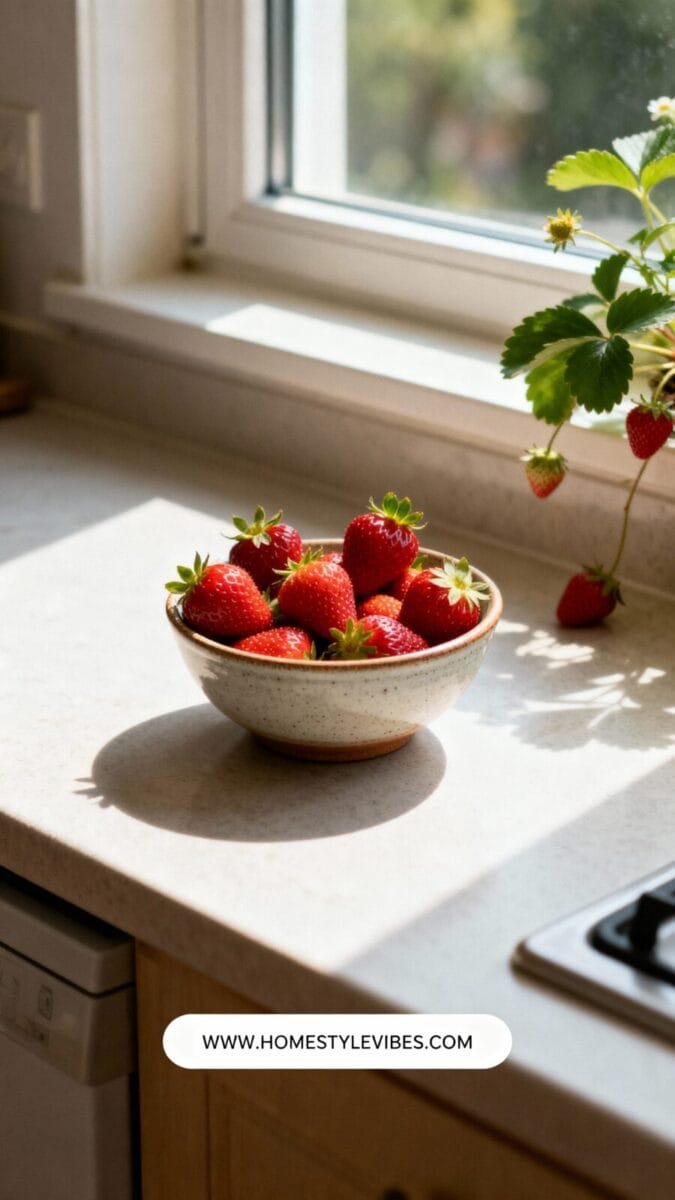
Pots vs beds vs hanging setups (my honest take)
Pots work best when you want control and flexibility. Beds work best when you want bigger harvests and less daily babysitting. Hanging baskets look adorable, but they dry out quickly, so you’ll water more—sometimes twice a day in summer.
So yeah, pick the one that matches your life. Not your Pinterest fantasy life. Hey, don’t roll your eyes — I’ve been there too.
Now that you’ve got your setup picked, the next thing to tackle is what usually ruins the party: the small mistakes that sneak up fast.
Common Mistakes
The mistakes that steal your berries (and how to fix them fast)
- Letting pots dry out once. Strawberries bounce back, but repeated drying can reduce fruit. Check soil daily in hot weather. (Annoying, yes.)
- Burying the crown. Keep it at soil level. If you already buried it, gently lift and re-set it.
- Overwatering “just in case.” Soggy roots lead to sad plants. Let the top inch dry before you water again.
- Too much nitrogen. You’ll get lush leaves and fewer berries. Ease off feeding and let the plant focus on fruit.
- Ignoring pests until it’s chaos. Check undersides of leaves for aphids, watch for slugs, and protect ripening fruit from birds.
And here’s my tiny rant (because I care, okay): people act like gardening only “counts” if you do it perfectly. Nah. If you grow one sweet berry you didn’t buy at the store, that counts. If you learn that your balcony gets less sun than you thought, that counts. If you forget to water and your plant survives anyway, that also counts. Gardening doesn’t need to be this precious hobby where you feel guilty all the time. It’s food. It’s messy. It’s life. And it should feel good, not like homework.
I mean, really—really works better when you keep it simple and consistent.
Alright, let’s answer the questions everyone secretly Googles at midnight.
FAQ
How long does it take to get strawberries?
If you buy established plants, you can often harvest within a few weeks to a couple months, depending on variety and season. If you start from bare roots, give it a little longer while roots settle in.
Do I need to remove flowers the first year?
Some people pinch early flowers to help roots grow stronger. You can do that if plants look weak. But if you bought healthy plants and you want berries now, you can let some flowers go. I’ve done both. It depends on your patience level (mine varies by the hour).
Why are my berries small?
Usually: not enough sun, inconsistent water, or the plant needs feeding. Sometimes plants just adjust after transplanting. Give it a couple weeks before you panic.
Can I grow them indoors?
You can, but you’ll need strong light and you’ll probably hand-pollinate. Indoors also dries soil differently. It’s doable, just a little more hands-on.
And now, the nicest part: wrapping this up so you feel confident, not overwhelmed.
Wrapping Up
You don’t need a giant yard to grow strawberries at home. You need a sunny spot, decent potting mix, steady watering, and a setup you’ll actually notice every day. Start small. One pot is enough. Then scale up if you love it.
And if you mess up the first round—welcome to the club. I’ve had plants thrive, I’ve had plants sulk, and I’ve had one pot where the soil dried out so fast I swear it evaporated out of spite. Also, one of my berries came out a little wonky and lumpy and still tasted amazing, so honestly, perfection feels overrated.
Sometimes you’ll feel like you’re doing everything right and the berries still disappear (birds, kids, husbands “just tasting,” etc.). Keep going anyway. The first time you pick a warm, sun-sweet berry and it actually smells like summer, you’ll get why people become strawberry people.
Anyway… you got this. Just keep an eye on the watre, don’t bury the crown, and if your strawberrries look dramatic for a day, don’t panic… because next week you might be eating them straight off the plant and thinking, wow, I really did that, and then—