Living Room Designs with Plants: 7 Cozy Green Ideas for a Fresh, Modern Home
Picture low, warm lamplight hitting a matte limewash wall, a velvet sofa sunk in beside a stone coffee table, and an oversized fig tree casting delicate, lacy shadows. Greenery doesn’t just decorate a room; it wakes it up—like opening a window to fresh air on a slow Sunday morning.
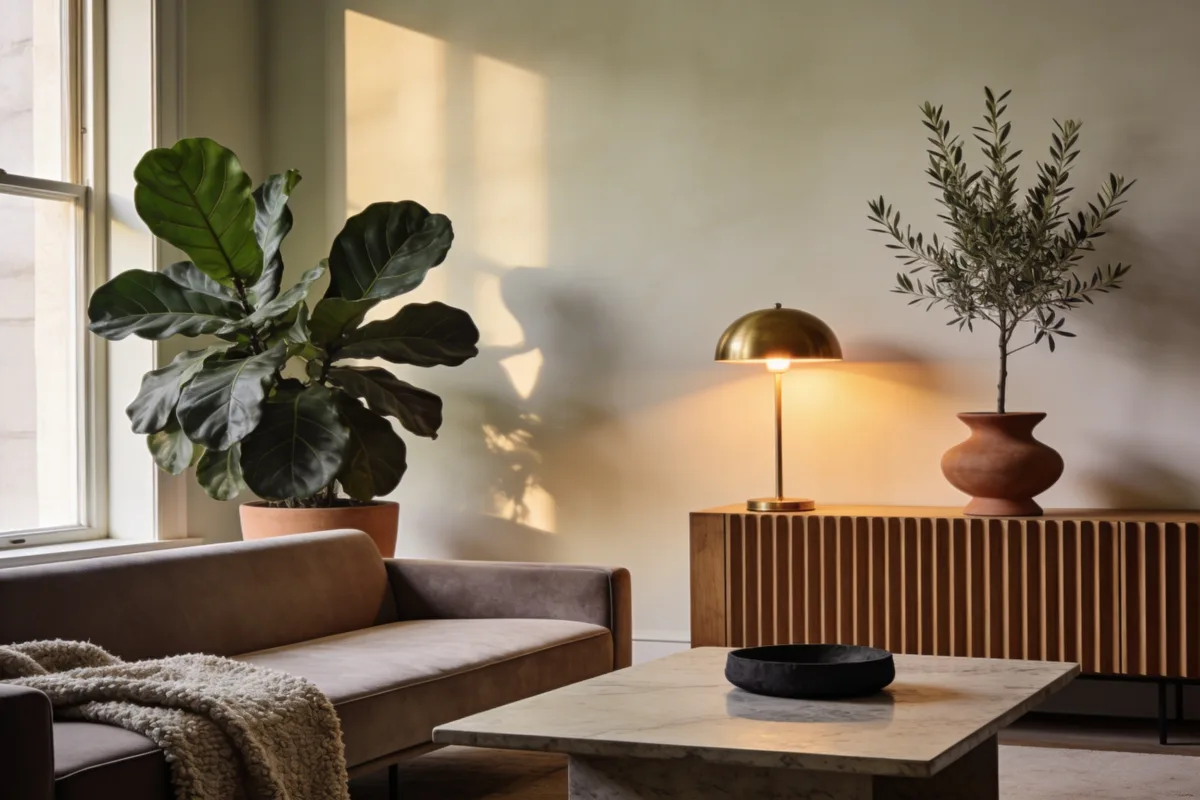
These plant-forward living room ideas elevate a space because they layer texture, height, and movement in ways paint simply can’t. Expect creamy neutrals against moody charcoals, fluted wood next to nubby bouclé, terracotta with brushed brass—all bound together by leafy silhouettes and a bit of wild, earthy charm.
Each idea here shows how plants transform a living room into a photogenic, Pinterest-favorite retreat: think dramatic contrasts, sculptural pots, and botanical vignettes you’ll want to photograph every time the sun shifts. If you love cozy spaces that still feel clean and modern—or you just want your home to vibe like your favorite boutique hotel lobby—grab a cup, sink into the cushions, and let’s green up your living room with style.
1. Sun-Kissed Mediterranean Lounge With Olive Trees and Terracotta Glow
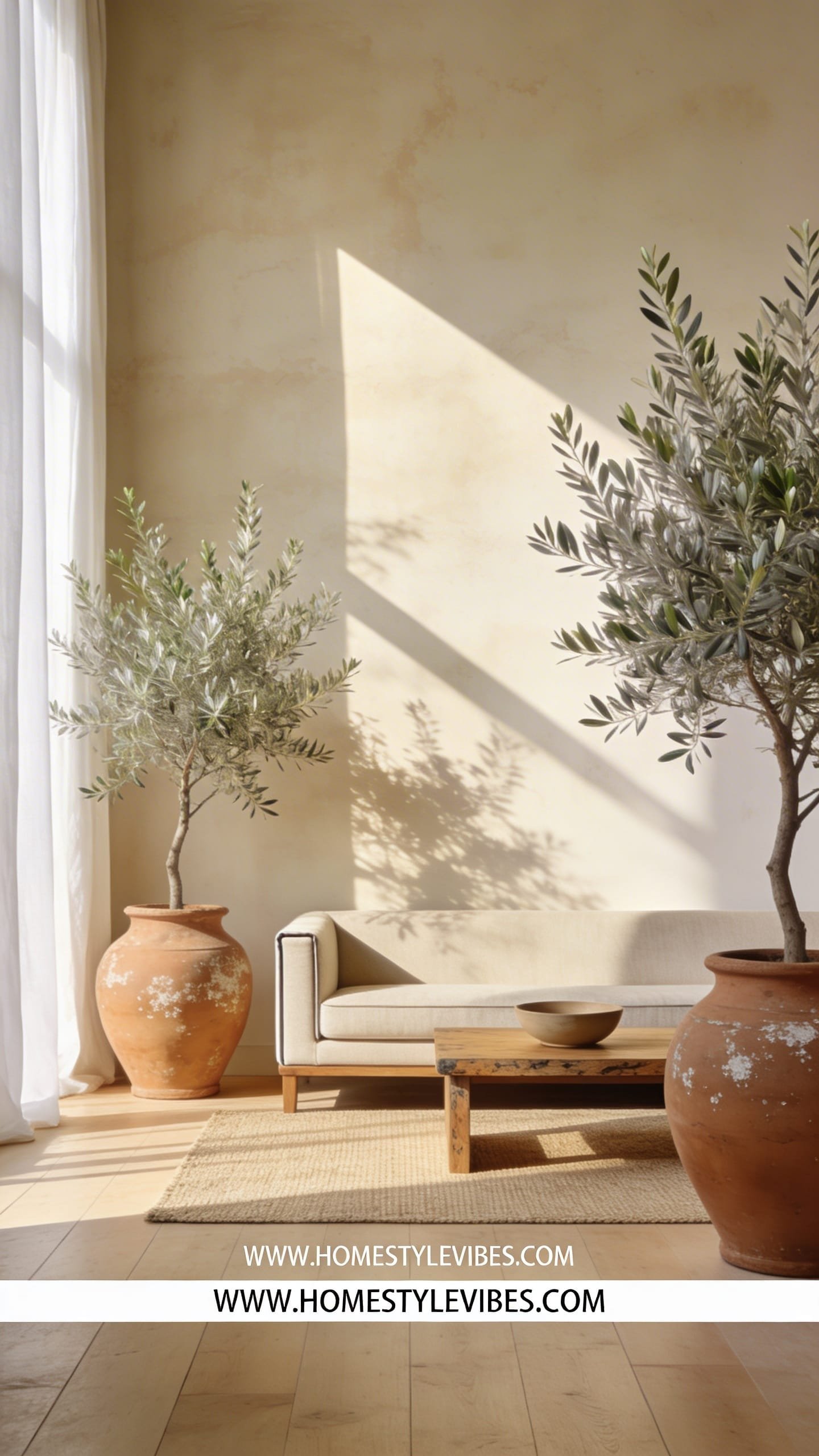
Warm, earthy, and effortlessly elegant, this living room channels a modern Mediterranean vibe with soft limewash walls, sun-weathered woods, and silvery olive trees in sculptural terracotta planters. It creates a breezy, vacation-at-home mood, perfect for anyone who loves that barefoot, slow-living energy without losing a refined edge. You’ll see sunlight doing most of the heavy lifting here—bouncing off pale plaster finishes and highlighting subtle plant textures to make everything look intentionally curated.
This design works beautifully in real homes because it thrives on imperfection. Limewash ages beautifully and hides minor wall dings; terracotta pots only look better as they patina; and olive trees hold their shape with minimal fuss. If your space runs small, scale down to dwarf olives or swap to olive-toned myrtle or rosemary topiaries for similar structure in a tighter footprint. For renters, choose removable limewash-effect paint and place a textured jute or sisal rug to ground the room without touching the walls. Want a darker version? Swap sand-colored textiles for rich camel velvet, and add amber or smoked glass accents for a duskier Mediterranean dusk feel.
Photographs of this setup sing because of soft shadows and layered, sun-kissed tones—like light lace dancing over olive leaves. The dominant materials—terracotta, travertine, raw linen—create just enough grit so the plants read as alive, not polished props. The overall effect feels timeless and—FYI—surprisingly low maintenance.
Key Design Elements:
- Main materials: Limewash plaster, terracotta, travertine, raw oak, natural linen
- Color palette: Sand, bone, warm white, olive green, terracotta orange, muted bronze
- Lighting strategy: Sheer drapes for diffused daylight, warm cone sconces, rattan or linen drum pendant
- Furniture silhouettes: Low-profile sofa, chunky wood coffee table, woven accent chairs
- Texture layers: Nubby linen, boucle pillows, jute rug, ceramic vases with matte glazes
- Accent details (hardware, decor pieces, plants): Olive trees (or rosemary topiaries), terracotta amphorae, patinated brass trays
How To Recreate This Look:
- Start with a warm white or pale sand limewash effect on the main walls for movement and depth.
- Add a low, natural-oak sofa with linen slipcovers and a travertine or stone coffee table.
- Layer in a jute rug and terracotta planters with dwarf olive trees or olive-toned myrtle.
- Install a rattan pendant and two warm sconces to create a sun-warmed evening glow.
- Style with ceramic vessels, striped throw pillows, and a brass tray for herbal sprigs.
Why This Looks Expensive: Natural stone, limewash, and patinated terracotta all read high-end because they age gracefully and catch light in nuanced ways. Paired with restrained color, the materials quietly flex without screaming “new.”
Common Mistakes To Avoid: Don’t overpack with small pots. Two or three larger terracotta planters look far more intentional than ten tiny ones. Also, avoid stark blue-white bulbs; they kill the Mediterranean warmth.
Pro Styling Tip: Angle the olive trees near a window so late-afternoon sun grazes the leaves, creating soft, layered shadow bands on your limewash wall for instant magazine drama.
Scroll for mood shift: the next look leans lush and moody, like a velvet-robe evening with jazz murmuring in the background.
2. Moody Velvet Den With Fiddle-Leaf Drama and Brass Accents
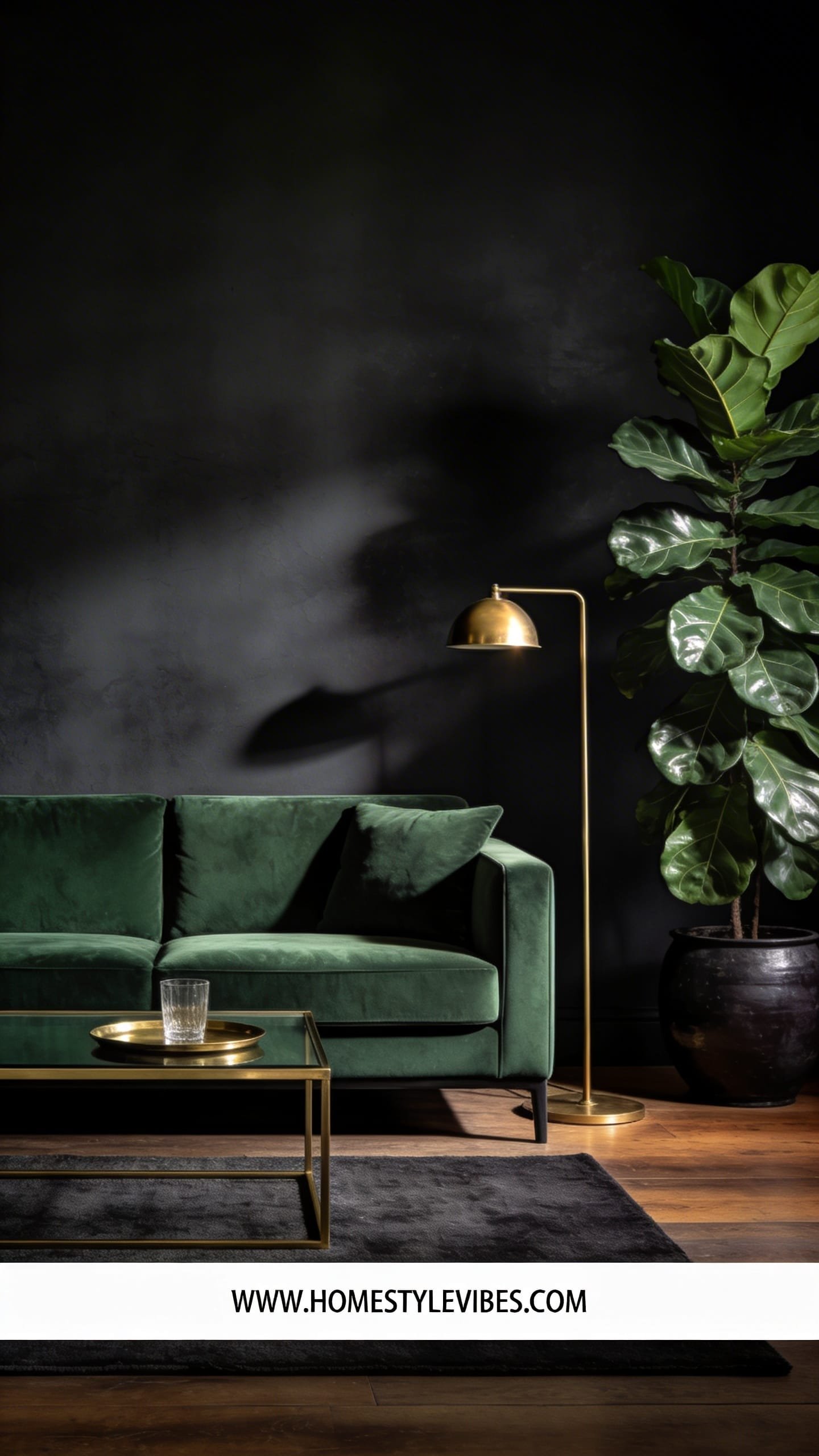
This is your cinematic, after-dark living room: deep charcoal walls, an emerald velvet sofa, gleaming brass accents, and a dramatic fiddle-leaf fig anchoring the corner like a sculpture. The vibe says modern speakeasy—cozy yet luxe—where plants play up the shadows and crisp silhouettes. It works in homes that want warmth without beige overload and suits apartment dwellers who need atmosphere after sunset.
Why it works: darker paint collapses visual clutter and makes plants pop in a high-contrast way. The fiddle-leaf’s large, glossy leaves reflect ambient light, adding dimensional highlights you just can’t fake. If maintenance worries you, swap the fig for a rubber plant or ZZ Raven for a similar glossy-leaf impact. For small spaces, use a set of stacked pedestals with a medium plant and trailing vines to keep the floor clear. Renters can paint one accent wall or use peel-and-stick in graphite to test the mood.
This setup photographs like a magazine spread because of dramatic shadow play and textural contrast: velvet absorbs light, brass catches it, and plant leaves bridge the two. Layer a vintage Persian rug for history, and you’ll get that lived-in, intention-rich look that editors love.
Key Design Elements:
- Main materials: Velvet upholstery, brass metalwork, smoked glass, dark-stained wood
- Color palette: Charcoal, inky navy, emerald, brass, oxblood, touches of ivory
- Lighting strategy: Dimmable lamp triad (table, floor, picture light), warm 2700K bulbs, candles
- Furniture silhouettes: Tuxedo sofa, drum side tables, slender-legged lounge chairs
- Texture layers: Velvet, wool rug, leather-bound books, ribbed glass
- Accent details: Fiddle-leaf fig or rubber plant, brass trays, stacked art books, smoked glass vases
How To Recreate This Look:
- Start with one moody wall in charcoal or inky navy to create depth behind your main seating.
- Add an emerald or deep-toned velvet sofa and a vintage-look rug with reds or blues.
- Layer brass via a floor lamp, picture light, and a tray; add smoked or amber glass vessels.
- Install dimmable, warm bulbs and place a tall plant—fiddle-leaf fig or rubber plant—in a textured pot.
- Style with hardcover books, moody art, and a few ivory accents to keep it from feeling too heavy.
Why This Looks Expensive: Velvet plus brass screams old-world glamour, while a restrained palette feels curated. The single, sculptural plant reads as art, not clutter.
Common Mistakes To Avoid: Don’t scatter ten small lamps—use fewer, stronger light sources. Avoid super-shiny chrome, which fights against the warm vibe.
Pro Styling Tip: Pull the plant 8–12 inches from the wall so uplight from a nearby lamp skims the leaves, creating layered highlights that photograph like a movie still.
Ready for something softer? The next idea goes airy and architectural with sculptural cacti and clean lines.
3. Desert-Modern Calm With Sculptural Cacti and Sand-Toned Neutrals
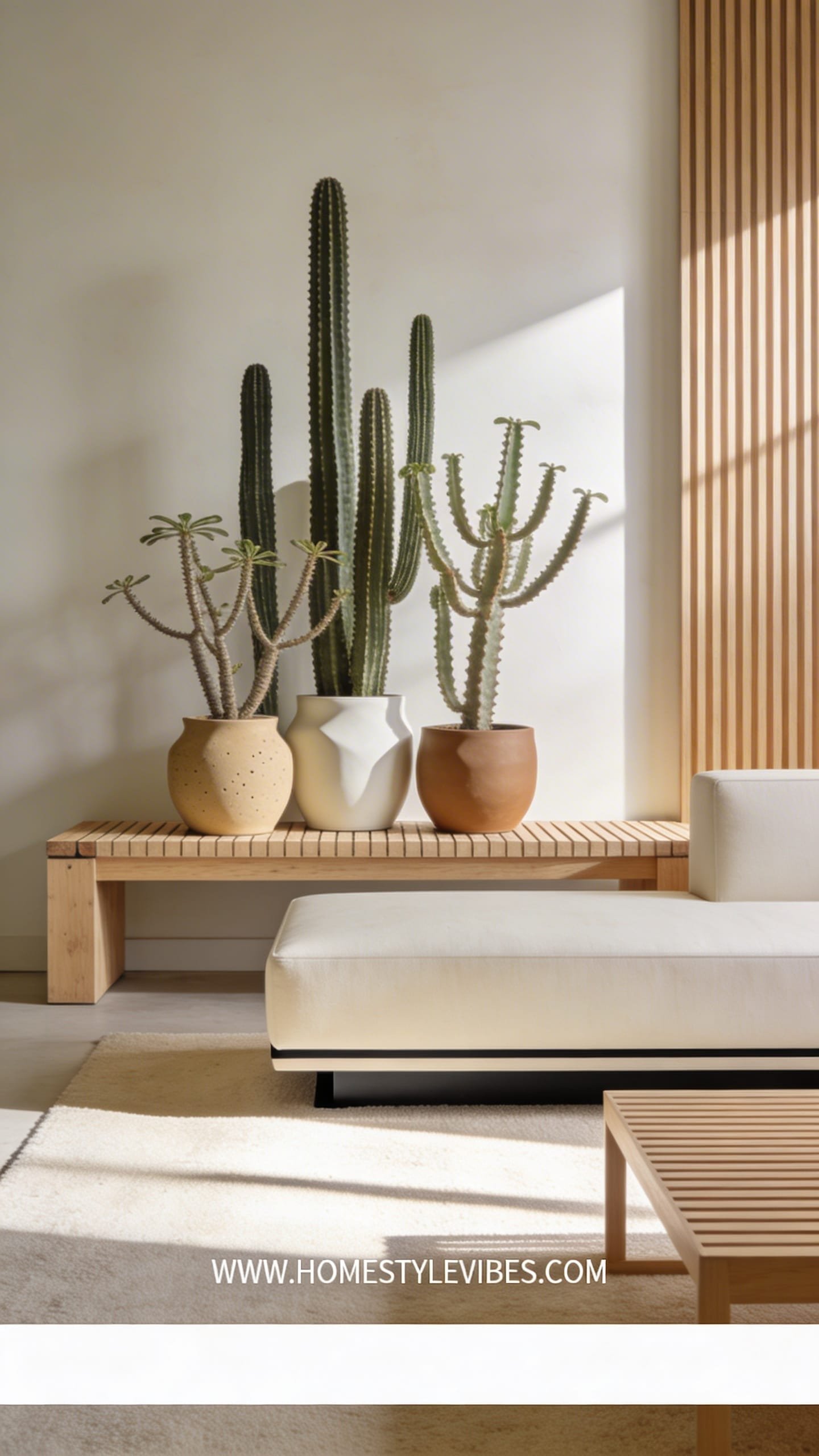
Think Joshua Tree gallery meets minimalist loft: pale putty walls, creamy rugs, slatted wood, and hero-worthy cacti standing tall in matte, sculptural planters. The mood is serene, gallery-clean, and sun-drenched. If you crave a clutter-free living room with major character, this one delivers—no excess, just strong shapes and soft light.
In real homes, this design wins because it accommodates busy schedules. Cacti and euphorbias ask for bright light and minimal watering; they also behave well in warm apartments where other plants sulk. A small-space version uses three planters in varying heights instead of a large specimen, keeping the look punchy. For renters, a low platform shelf or bench can display smaller succulents without drilling a single hole. Want a darker twist? Try toffee leather seating and spice-toned pillows against taupe walls.
This photographs beautifully thanks to high-contrast forms: spiky silhouettes against smooth plaster, matte pots beside soft wool, sand tones catching golden-hour light. Every edge reads clean and intentional, so the plants feel like art installations—no cactus kitsch allowed.
Key Design Elements:
- Main materials: Lime-plaster or matte paint, bleached oak, stone composite, wool pile rug
- Color palette: Bone, sand, taupe, toffee, sage, matte black accents
- Lighting strategy: Sheer drapery for strong daylight; minimalist sconces with warm, diffused glow at night
- Furniture silhouettes: Low, wide sofa; angular accent chair; thin metal legs; platform displays
- Texture layers: Woven wool, clay planters, ribbed throw, matte black metal
- Accent details: Tall cactus (totem, organ pipe, euphorbia), sculptural vessels, framed line drawings
How To Recreate This Look:
- Start with warm, matte walls (bone or soft taupe) to set a calm foundation.
- Add a low-profile sofa in performance fabric and a pale wool or jute rug.
- Layer sculptural cactus in matte clay or concrete planters in three heights.
- Install minimalist sconces and keep window treatments sheer for maximum daylight.
- Style with a clean-lined coffee table, a few ceramic objects, and one matte-black accent for contrast.
Why This Looks Expensive: The gallery edit—few pieces, strong silhouettes—reads high-end. Matte finishes avoid glare and make sunlight feel buttery and soft.
Common Mistakes To Avoid: Don’t crowd cacti with trailing plants; let negative space work. Also, avoid glossy, bright-white paint that washes out subtle textures.
Pro Styling Tip: Photograph at golden hour with blinds half-closed to cast graphic stripes across the cacti for instant architectural drama.
Love structure but want a cozier, wood-forward vibe? Next up: Japandi calm with mossy greens and pale oak.
4. Japandi Retreat With Mossy Greens, Pale Oak, and Bonsai Moments
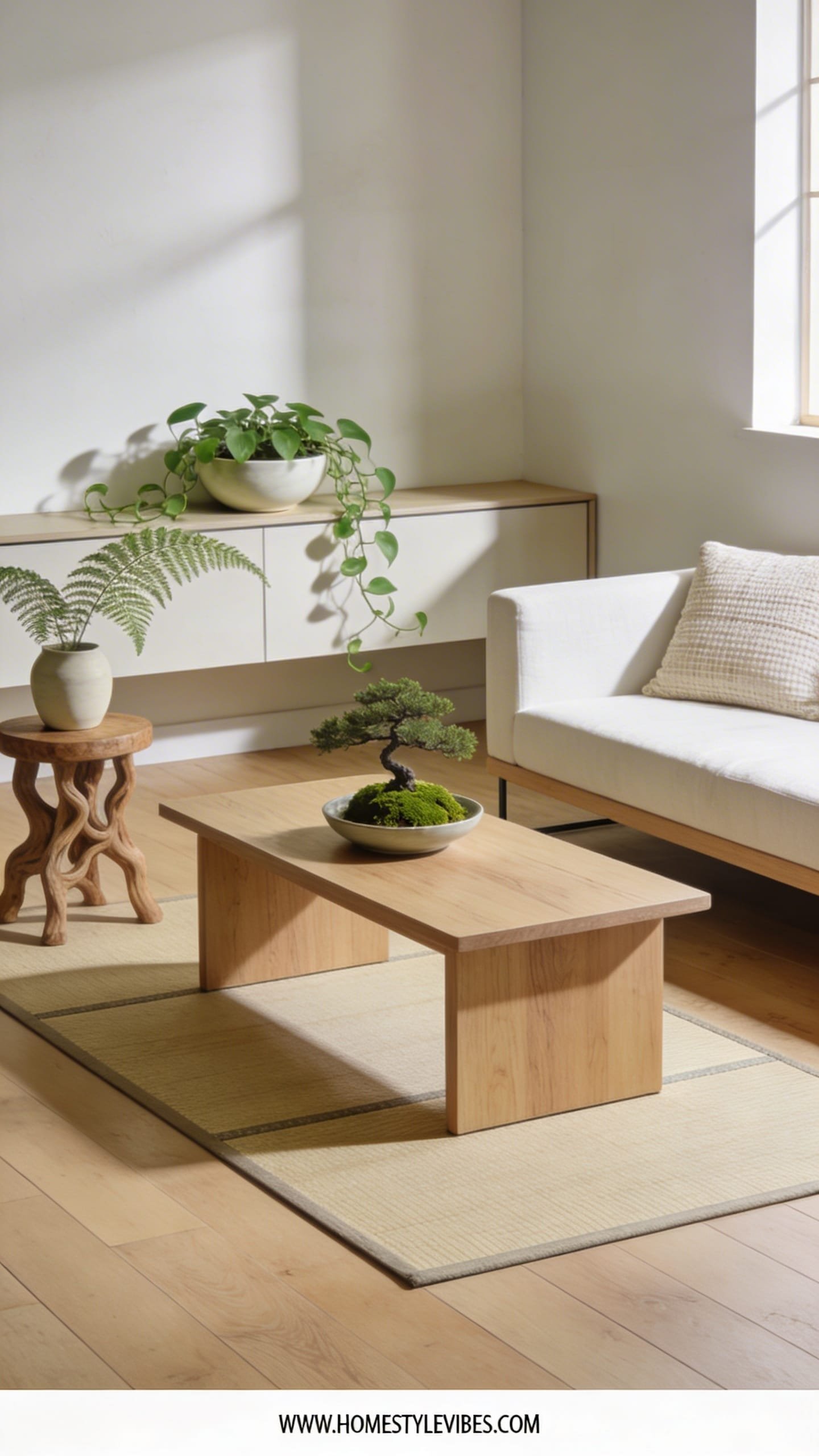
This living room merges Scandinavian simplicity with Japanese restraint: pale oak floors, low furniture, off-white walls, and curated green moments that feel meditative. The mood is calm, tactile, and balanced—perfect for anyone who likes a quiet home that still showcases thoughtful design. Plants here feel like punctuation marks: a mossy bonsai on the coffee table, a sculptural fern on a stool, perhaps a trailing pothos in a pale ceramic bowl.
It works in real homes because you can keep it minimal and still cozy. Focus on two or three standout plant placements rather than a jungle. Small spaces benefit from floor cushions and armless lounge chairs that keep sightlines open. If you rent, stick to freestanding shoji-inspired screens and neutral rugs to establish the vibe without structural changes. A darker version? Swap off-white for warm greige and add smoky bronze accents with deep green velvet pillows.
Photographically, this design thrives on contrast between soft matte surfaces and textured greens. Fluted wood elements—like a media console—create vertical rhythm that looks amazing behind a trailing plant. Light becomes a character: filtered daylight through linen curtains creates hazy, restful shadows, while a paper lantern casts a soft evening halo.
Key Design Elements:
- Main materials: Pale oak, ash, fluted wood panels, ceramic stoneware, paper lanterns
- Color palette: Warm white, soft greige, moss green, charcoal accents, natural wood
- Lighting strategy: Diffused daylight; paper lantern pendant; low table lamps with fabric shades
- Furniture silhouettes: Low sofas, armless chairs, rounded edges, slim legs
- Texture layers: Linen, cotton gauze, soft wool, ribbed ceramics, tatami-inspired weave
- Accent details: Bonsai, bird’s nest fern, trailing pothos, shallow ceramic bowls, washi paper art
How To Recreate This Look:
- Start with a warm off-white wall and a pale oak or light wood rug base.
- Add low seating with clean lines and a round or oval coffee table.
- Layer in a bonsai centerpiece and one sculptural fern in a ribbed ceramic pot.
- Install a large paper lantern and swap heavy drapes for semi-sheer linen curtains.
- Style with fluted wood accents, a woven throw, and minimal, nature-inspired artwork.
Why This Looks Expensive: Restraint always reads luxury. Fewer, better objects—especially tactile ceramics and fluted wood—signal intention and craft.
Common Mistakes To Avoid: Don’t overload with plants or bright colors; they’ll dilute the serenity. Skip shiny chrome; choose brushed or matte finishes to keep it grounded.
Pro Styling Tip: Offset the bonsai slightly off-center on the coffee table and leave negative space around it; the asymmetry photographs sophisticated, not fussy.
Feeling the calm? Let’s push into biophilic maximalism that still feels curated and modern.
5. Biophilic Book-Nook Library With Layered Greenery and Collected Textures
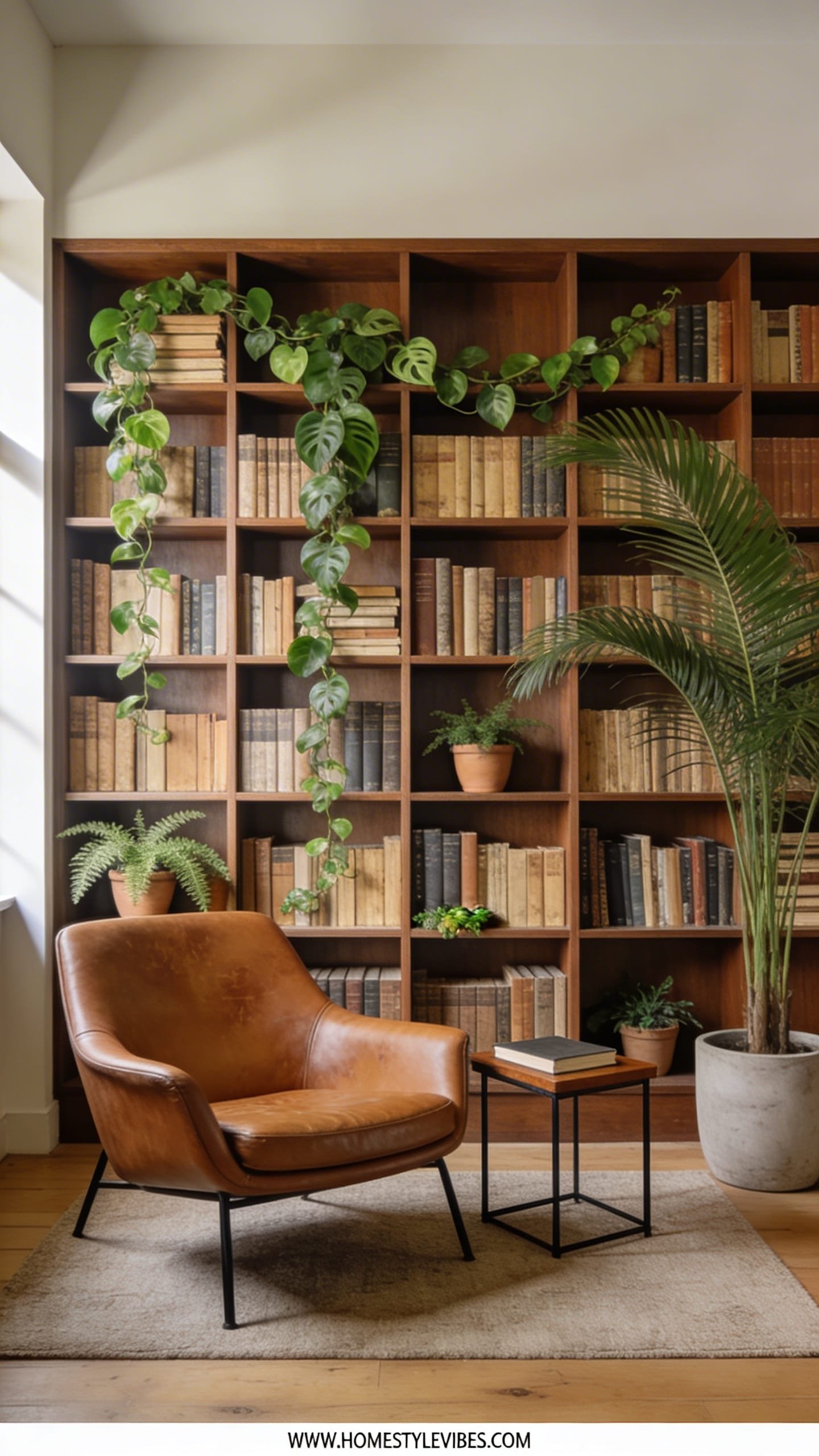
Imagine a wall of books, a caramel leather chair tucked in just right, and an orchestra of plants—vines trailing off shelves, ferns softening corners, and a tall parlor palm swaying like a slow fan. This living room feels like a cultivated greenhouse-meets-library, cozy and intelligent. It suits family spaces and readers who want a room that grows with them—literally.
Why it works: the books bring warmth and color, while plants add movement, softness, and rhythm. Shelving turns into a vertical garden, which saves floor space in small homes. Renter-friendly? Use leaning ladder shelves and picture ledges; attach with removable anchors if needed. For a darker take, paint cabinetry deep bottle green so foliage visually merges with millwork for a luxurious, enveloped feel. Budget version: thrift planters, propagate pothos, and snag cuttings from friends—seriously, free plants taste better.
In photos, this design layers depth like a pro: spines of books create micro-patterns, leaves frame vignettes, and mixed materials—wood, leather, ceramics—give that editorial, lived-in richness. Add a swing-arm sconce and you’ve basically built your dream Sunday morning.
Key Design Elements:
- Main materials: Built-in or freestanding bookcases, leather, ceramic pots, woven baskets
- Color palette: Warm woods, camel, forest green, cream, brass or black hardware
- Lighting strategy: Library sconces, floor reading lamp, picture light over art or shelves
- Furniture silhouettes: Club chair, slim loveseat, ottoman, side table with storage
- Texture layers: Leather, wool throw, ribbed ceramics, woven trays, linen curtain panels
- Accent details: Parlor palm, philodendron micans, trailing pothos, Boston fern, propagation station
How To Recreate This Look:
- Start by organizing shelves with a mix of vertical and horizontal stacks to create pockets for plants.
- Add a comfortable reading chair, ottoman, and a solid side table with a drawer for hiding remotes.
- Layer plants: a tall palm on the floor, trailing vines on upper shelves, and a fern at mid-level.
- Install library-style sconces or clamp lights on shelves for warm spotlighting at night.
- Style with woven baskets, a ceramic catchall, and a small propagation station on a tray.
Why This Looks Expensive: Floor-to-ceiling verticals (books, plants, lighting) create a custom, built-in vibe, while harmonious earth tones feel curated, not random.
Common Mistakes To Avoid: Don’t block airflow to plants crammed between books. Leave a few inches around pots and rotate regularly to prevent one-sided growth.
Pro Styling Tip: Arrange shelf plants along a diagonal drift from upper left to lower right so the eye travels—this visual rhythm looks amazing in photos.
From layered and lived-in to crisp and current—the next design puts planters right into the architecture.
6. Built-In Green Ledge With Modern Modular Seating and Gallery Walls
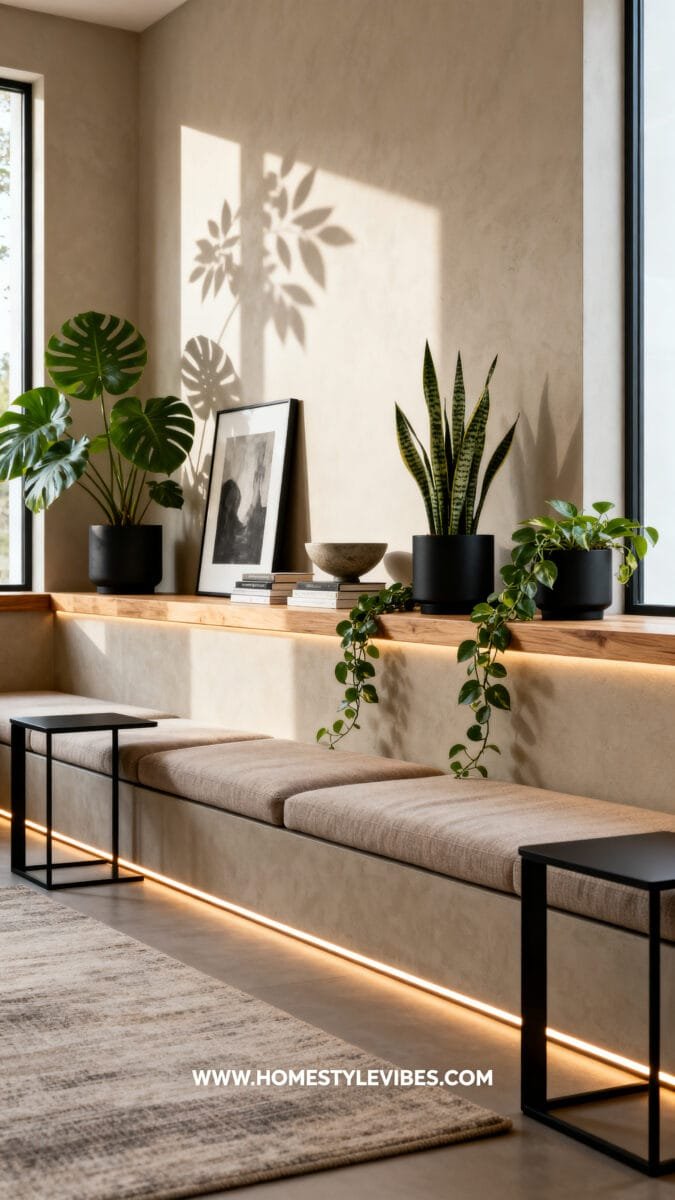
Now for a modern move: build a plant ledge right into your living room architecture. Picture a continuous, waist-high shelf or window ledge running the length of one wall, punctuated with sleek planters, sculptural lamps, and framed art. The mood feels fresh, organized, and design-forward—like your living room just hired a stylist who speaks fluent “editorial.”
This approach works brilliantly in apartments or open-plan homes where you need a focal line without heavy furniture. Modular seating (think low, sectional blocks) keeps the room flexible for guests. Maintenance stays easy because plants sit at waist level; no ladders, no drama. For small spaces, keep the ledge shallow and curated. Renters can fake a built-in with a series of wall-mounted picture ledges or a continuous row of Ikea cabinets with a sealed wood slab on top. Prefer moodier? Paint the ledge to match the wall and let greenery pop against a monochrome field.
In photos, this design creates a magazine-ready horizon line, guiding the eye across vignettes—planter, framed print, stack of books, sculptural bowl. Natural light catches the leaves at a perfect angle, while clean negative space above the ledge keeps everything feeling light and architectural.
Key Design Elements:
- Main materials: Painted MDF or plaster ledge, sealed wood slab, powder-coated planters, framed prints
- Color palette: Warm white or greige base, black or oak accents, monochrome art, saturated green
- Lighting strategy: Window adjacency for daylight, linear LED strip under ledge lip, picture lights
- Furniture silhouettes: Low modular sectional, streamlined coffee table, slim side tables
- Texture layers: Smooth painted surfaces, matte planters, linen upholstery, paper textures from art
- Accent details: Monstera deliciosa, snake plant, cascading philodendron, sculptural table lamps
How To Recreate This Look:
- Start by planning a continuous ledge along your longest wall; aim for 8–12 inches deep.
- Add modular seating positioned opposite or parallel to enhance sightlines to the ledge.
- Layer planters in varying heights with at least one cascading vine to soften the edge.
- Install a subtle LED strip under the ledge or picture lights above to create evening glow.
- Style with framed prints leaned casually, stacked books, and one or two sculptural objects.
Why This Looks Expensive: Integrated architecture always feels custom. The controlled horizon line creates visual order that many luxury spaces use as a signature move.
Common Mistakes To Avoid: Don’t crowd every inch—leave negative space between groupings. Also, skip ultra-glossy finishes that reflect glare and cheapen the look.
Pro Styling Tip: Arrange objects in tight odd-number clusters and repeat planter colors every three feet to create a rhythm that reads cohesive on camera.
Want something bold and lively—almost like your living room’s pulse picked up? The last idea brings color back in a big way.
7. Color-Pop Modern With Tropical Leaves and Graphic Patterns
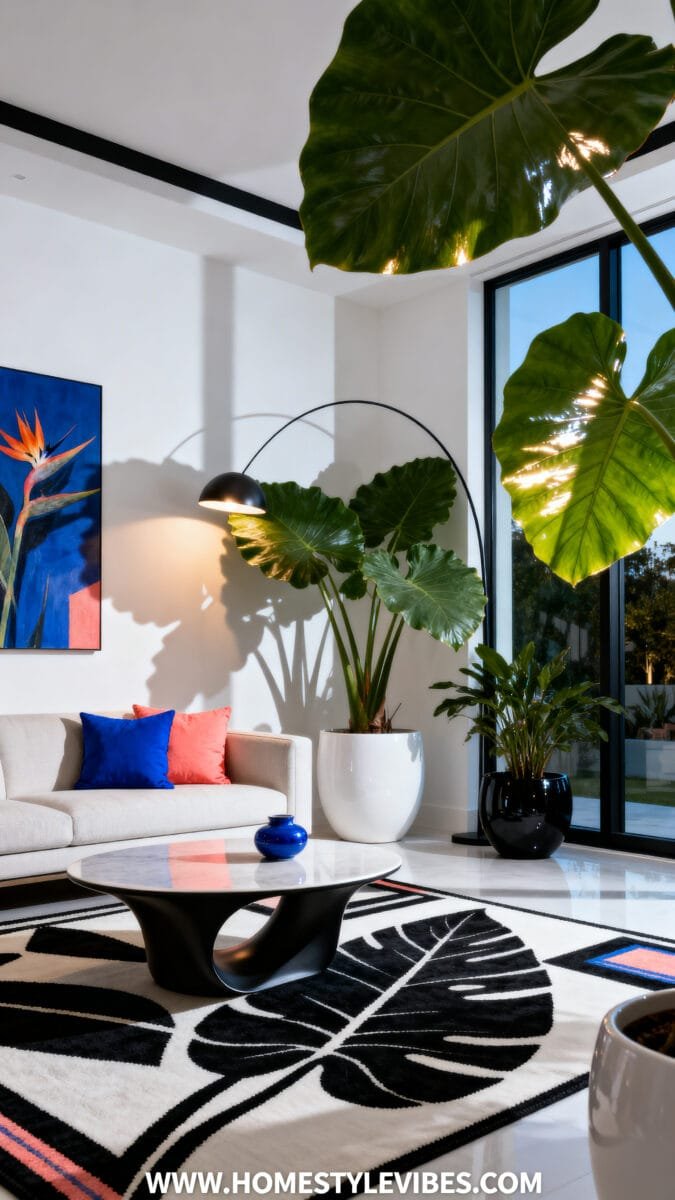
This is your dopamine decor fix: crisp white walls, high-contrast black accents, and bursts of saturated color—think cobalt, coral, chartreuse—balanced by big, tropical leaves. The mood reads energetic, contemporary, and Insta-happy, perfect for entertainers or anyone who wants their living room to feel like a design-forward cocktail. Plants like bird of paradise, alocasia, and philodendron “selloum” deliver high-drama leaves that vibe with graphic patterns on rugs or pillows.
Why it works in real homes: the clean base costs less to maintain and refresh; you can swap accent colors seasonally without starting over. Tropical plants love bright light and reward you with sculptural form. For small spaces, choose one statement plant and echo its shape with a rounded coffee table or an arched floor lamp. Renters can experiment with peel-and-stick graphic patterns or bold art prints—zero commitment, high payoff. Prefer a duskier version? Use off-white or pale gray walls and push color into textiles and art while keeping plants bold and glossy.
In photos, this scheme grabs attention: sharp contrast, large-leaf shadows, and color pops punctuating the greenery. The trick is control; a few strategic hits of color look chic and editorial, while too many read chaotic. Edit, then edit again—trust me, your camera roll will thank you.
Key Design Elements:
- Main materials: Lacquered or matte-painted wood, powder-coated metal, glass, cotton canvas
- Color palette: White, black, plus two accent colors (cobalt, coral, chartreuse, or raspberry)
- Lighting strategy: Strong daylight; arc floor lamp for nighttime sculptural highlights; spotlight for art
- Furniture silhouettes: Clean-lined sofa, round coffee table, graphic rug with bold geometry
- Texture layers: Smooth lacquer, nubby pillows, woven throw, glossy leaf surfaces
- Accent details: Bird of paradise, alocasia, philodendron selloum, bright artwork, playful ceramics
How To Recreate This Look:
- Start with crisp white or soft gray walls and a black accent line (console, frame, or side table).
- Add a streamlined sofa and a round coffee table to echo plant leaf curves.
- Layer one or two big tropical plants in bold planters (glossy white or matte black).
- Install an arc floor lamp to skim light across leaves for sculptural shadows at night.
- Style with a graphic rug and two accent colors repeated in pillows, art, and ceramics.
Why This Looks Expensive: High contrast plus controlled color feels intentional, and large-leaf plants act like sculptural art. Repetition (just two accent colors) signals an edited eye.
Common Mistakes To Avoid: Don’t introduce five accent hues. Pick two and repeat them. Also, avoid tiny patterned pillows that fight your graphic rug.
Pro Styling Tip: Shoot from a lower angle so the tropical leaves overlap wall art; that layering adds depth and makes the space look bigger and bolder.
So, which of these seven living room designs with plants is calling your name? Whether you’re vibing with sun-drenched terracotta warmth, velvet-draped evenings, or color-pop energy, you don’t need a full gut reno to get a fresh, modern home. Start with one idea, anchor it with a hero plant, and let your materials tell a story: limewash that catches the light, velvet that soaks it up, terracotta that glows at golden hour, or pale oak that whispers calm. Texture plus lighting plus restraint equals instant luxury—seriously, it’s the trifecta.
My advice: decide on the mood first, then pick your plant. If you want serenity, go Japandi with a bonsai and linen. If you want architectural punch, choose a built-in ledge and sculptural planters. If you crave drama, go moody with velvet and a fiddle-leaf spotlight. Layer slowly—one rug, one major plant, one lighting fix—and live with each step for a week. You’ll see exactly how the room behaves at 8 a.m. versus 8 p.m., and you’ll style more intentionally because of it.
Most of all, have fun with it. This is your home, not a museum. Let the leaves spill a little, water in an imperfect routine, and rearrange when your eye gets bored. You’ll find that plants don’t just make a living room look better—they make it feel better. And when someone walks in and says, “Whoa, this feels good,” you’ll know you nailed the vibe. Pick your favorite green idea above and start now—your fresh, modern living room is literally one pot away.

About the Author

Krisztina P.Rendes, Founder of Home Style Vibes
Founder of Home Style Vibes
Krisztina Puskásné Rendes created Home Style Vibes as a cozy-modern lifestyle space where homemaking meets inspiration. Her goal is to help women create beautiful, organized, and peaceful homes they truly love — without overwhelm. You’ll find here heart-driven content on home decor, cleaning tips, easy family recipes, organization and decluttering, DIY home projects, plants, and seasonal ideas — all designed to bring more calm, comfort, and style into everyday life.