Vegetable Garden Design Layout Ideas: Simple Plans for Raised Beds and Small Backyards
You don’t need a picture-perfect homestead or endless free time to grow food you’re actually proud of. You need a layout that makes sense. One that fits your yard, your life, and yes—your energy level on a random Tuesday afternoon. This post walks you through vegetable garden design layout ideas that work in real life. Raised beds, small backyards, slightly chaotic schedules… all of it.
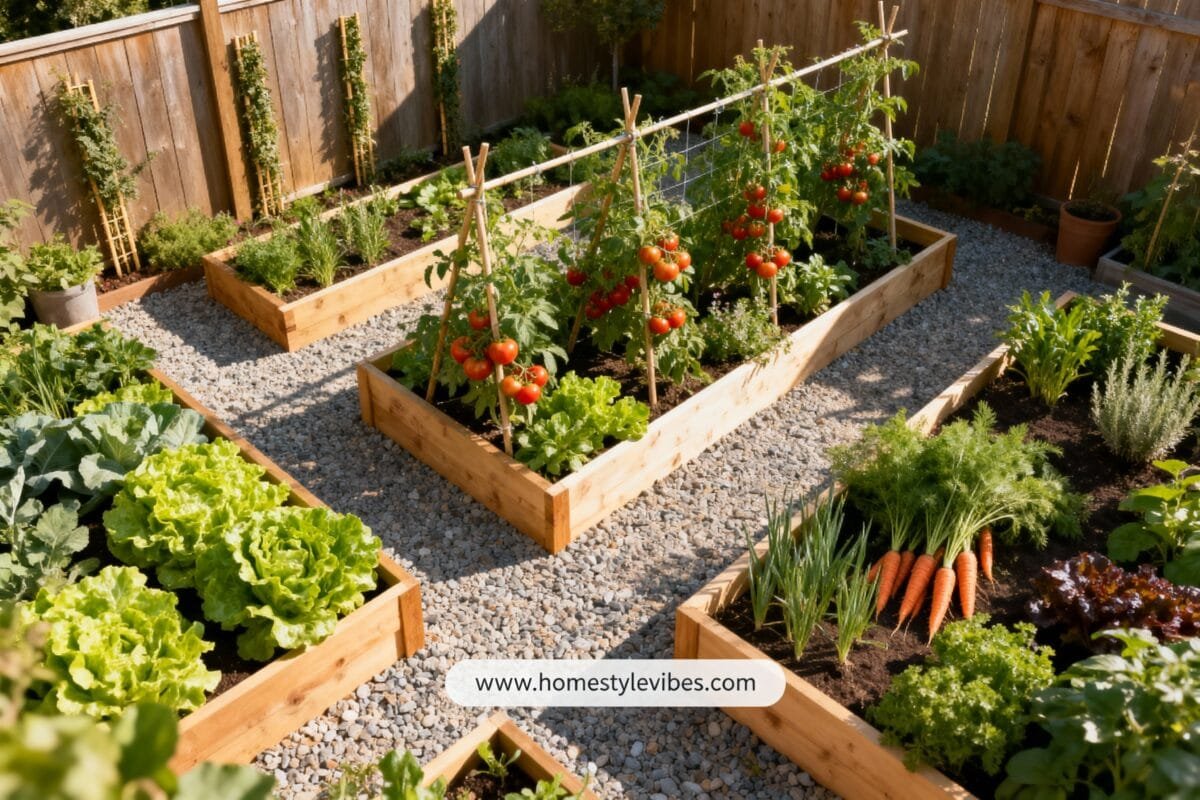
I’ll show you how to think through placement, spacing, and flow without turning it into a full-time job. We’re talking simple setups that still look good, still produce food, and don’t make you mutter “why did I do this” every time you step outside. Promise.
And yes, I’m writing this as someone with a husband, a 15-month-old daughter who says a few words (mostly when she feels like it), and very limited uninterrupted outdoor time. So everything here passes the “can this work with real life?” test.
Why Garden Layout Matters More Than What You Plant
Most people obsess over what vegetables to grow. Tomatoes or peppers? Zucchini or cucumbers? And honestly… that’s not the hard part. Layout is. The way you arrange your garden decides how much you harvest, how often you give up mid-season, and whether the whole thing feels fun or exhausting.
I learned this the annoying way. A few summers ago, I squeezed “just one more” bed into a corner that looked fine on paper. In reality? No airflow, awkward watering, and I had to do this weird sideways shuffle every time I harvested lettuce. It lasted one season. Never again.
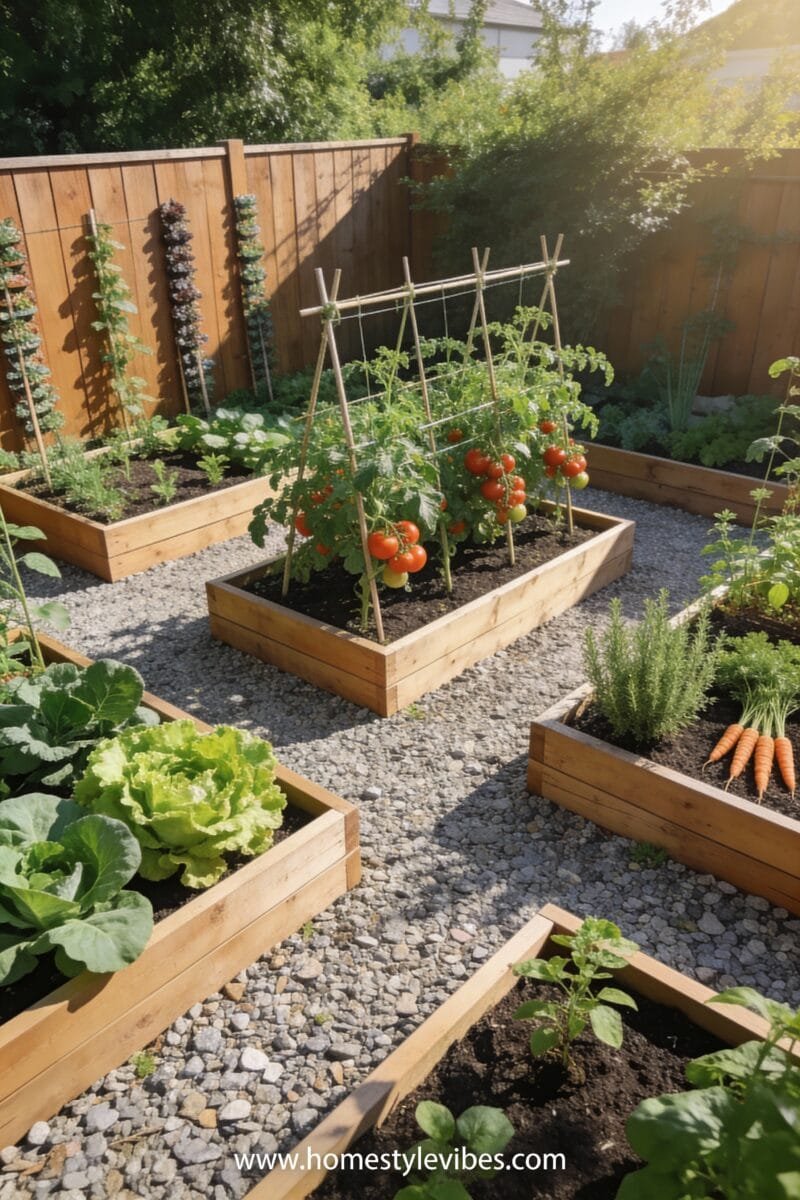
A good vegetable garden design layout does three things at once. It respects how plants grow. It respects how you move. And it respects that you might be tired, distracted, or holding a toddler who really wants the hose.
Honestly, layout is what turns gardening from a chore into something you actually enjoy. And that enjoyment? That’s what keeps you going in July when everything is sticky and slightly feral.
And this matters even more if you’re working with raised beds or a small backyard. Space forces decisions. Smart ones save you effort later.
So before we talk about specific setups, here’s the mindset shift that changed everything for me: design the garden for access first, plants second. You can always swap crops. You can’t magically add a walkway in August.
Up next, let’s talk raised beds—the backbone of simple, high-function gardens.
Raised Bed Layout Ideas That Actually Work
Raised beds get hyped a lot, and for once, the hype is deserved. They warm up faster, drain better, and give you control over soil quality. But layout decides whether they feel elegant or like a wooden obstacle course.
The spacing mistake almost everyone makes
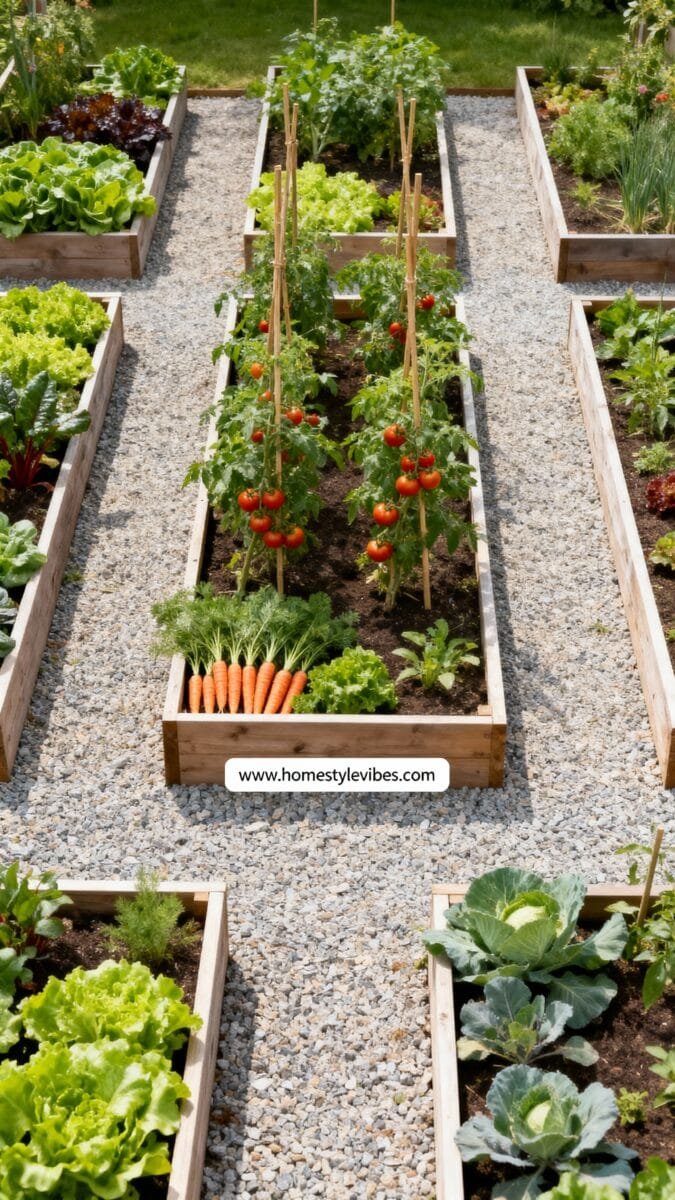
Most beginners place beds too close together. I did it too. It looks efficient, but it backfires fast. Narrow paths turn into muddy trenches, and suddenly harvesting feels like a core workout you didn’t ask for.
Here’s what worked better for us: paths wide enough for a wheelbarrow and a stroller. Yes, really. If you can’t move comfortably, you’ll avoid the garden when life gets busy. And life does get busy.
Concrete numbers help. Aim for about 3 feet between beds. It feels generous at first. Then you realize you can kneel, turn, and carry a basket without knocking over basil. Worth it.
Rectangles beat squares (most of the time)
Square beds look cute online. Rectangular beds work better in practice. Long beds let you group plants by height and water needs. They also make crop rotation way less confusing later.
We switched from square boxes to 4×8 beds last winter. The soil smelled rich, dark, and earthy when we refilled them—one of those small moments that makes you feel oddly competent. And planting felt calmer. More intentional.
If you’re short on space, go narrower instead of shorter. A 3×8 bed beats a chunky 4×4 every time, IMO.
Orientation: the quiet productivity boost
North–south orientation helps taller plants avoid shading shorter ones. It sounds technical, but it’s just common sense once you see it. Put tomatoes on the north side. Let lettuce live its best life in the sun.
And if your yard slopes even a little, follow the slope with your beds instead of fighting it. Water behaves how it wants. You won’t win that argument.
Raised beds shine because they’re flexible. You can start with two. Add one next year. Remove one if it stops serving you. Gardening doesn’t need commitment issues—but it does need forgiveness.
And once you dial in raised beds, small backyards suddenly feel a lot bigger… which is exactly where we’re headed next.
Designing a Vegetable Garden for a Small Backyard
Small yard? Same. And honestly, I’ve grown better food in tight spaces than in big open areas. Less ground to manage. Less walking. More focus.
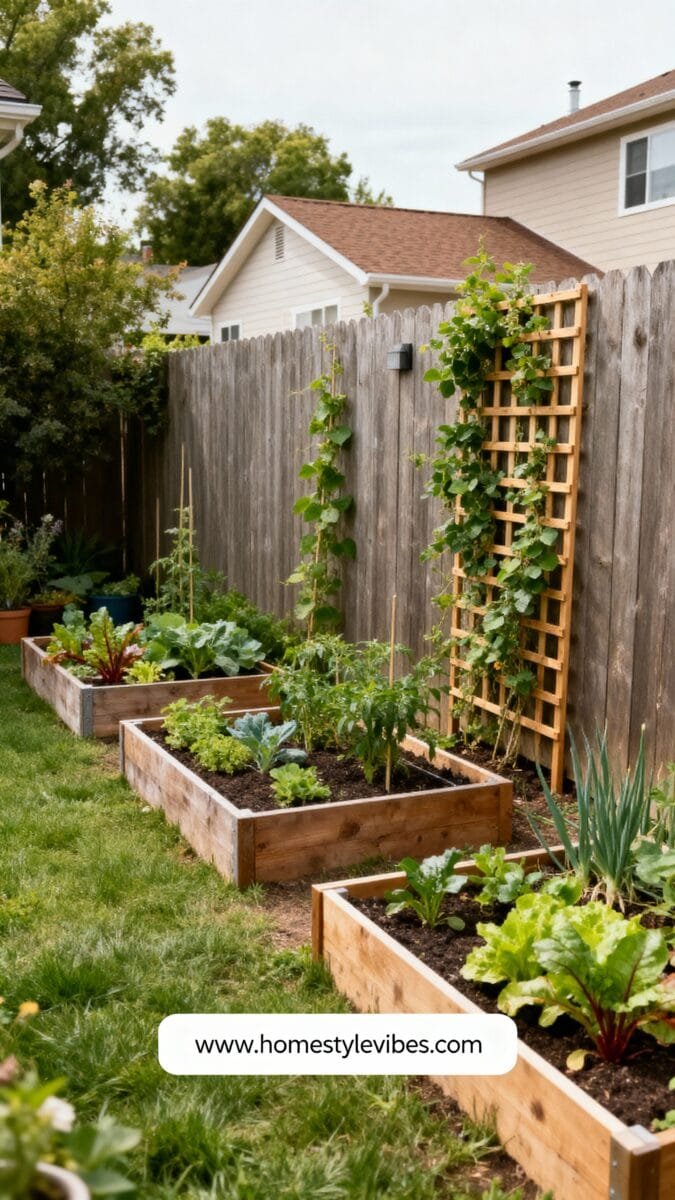
The trick is zoning. Instead of one scattered garden, create one clear growing area. Even if it’s compact, boundaries make it feel intentional, not cramped.
Last spring, we carved out a corner near the fence. Morning sun, partial afternoon shade. I was nervous it wouldn’t be enough light. Actually… scratch that. It worked beautifully. The greens thrived, and I stopped stressing.
Use edges like they’re premium real estate
Fences, walls, even the side of a shed—these spots matter. They give you structure, wind protection, and support for vertical growers.
We ran peas along a simple trellis one year and suddenly doubled our harvest without using extra ground. My husband looked at me like, “You’re serious?” Yup.
Edges also keep the center open, which helps airflow and makes everything easier to reach. And easier means you’ll actually harvest before things bolt or rot. Because life happens, right?
One surface, one job
In small gardens, multitasking kills clarity. Don’t mix herbs, veggies, flowers, and storage in the same tiny zone. Decide what each area does.
I once tucked herbs wherever they fit. It looked charming for about two weeks. Then I couldn’t find anything, and watering became a guessing game. Lesson learned.
Designing small forces honesty. You can’t grow everything. And that’s okay. Grow what you’ll actually eat. Or what makes you weirdly happy when you walk outside at 7 a.m. with coffee.
And when ground space hits its limit, there’s still one direction left…
Vertical Growing: When You Run Out of Ground
Up. That’s the direction. When the ground is full, the fence is your friend, the trellis is your secret weapon, and suddenly your small garden stops feeling small.
I resisted vertical growing at first. It felt… extra. Like one more thing to maintain. Then I tried it anyway because I ran out of space and patience. And wow. The difference was immediate.
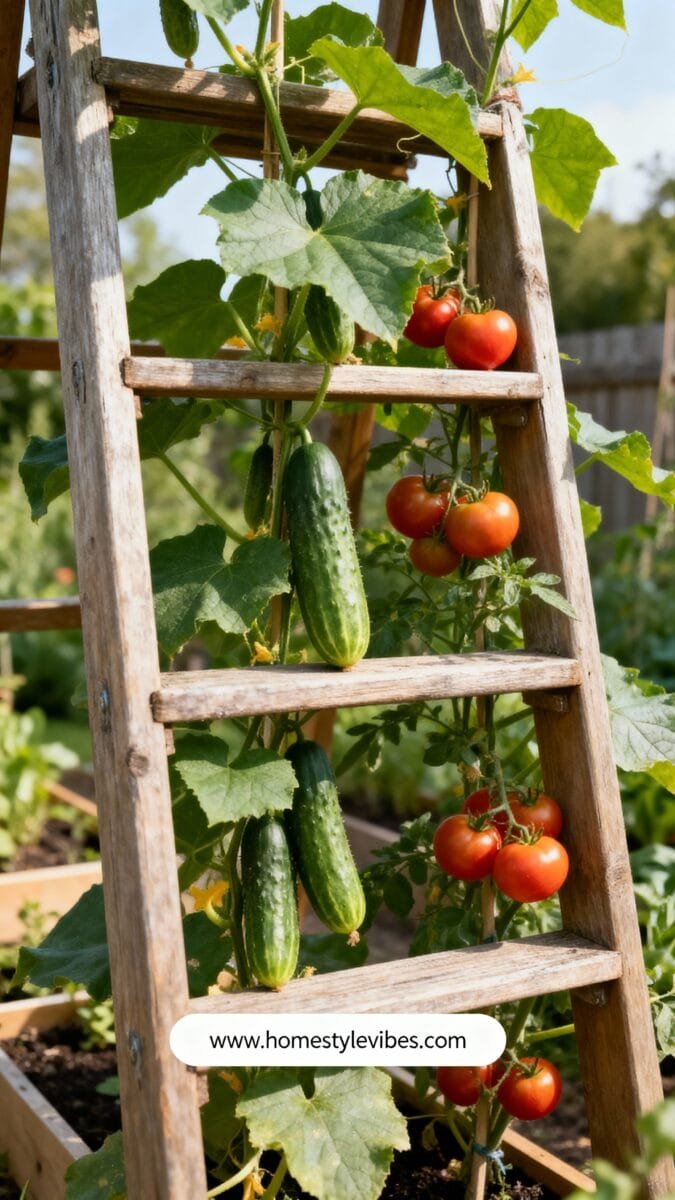
Cucumbers climbed instead of sprawled. Tomatoes behaved better (well, relatively). Harvesting stopped feeling like a jungle expedition. And my back thanked me. Quietly. But still.
The plants that actually love going vertical
Not everything wants to climb, and forcing it is a waste of time. Focus on the natural climbers and flexible growers.
- Cucumbers — they stay straighter, cleaner, and easier to spot.
- Indeterminate tomatoes — cages work, but tall trellises work better.
- Peas and beans — these basically beg for something to grab.
- Small squash varieties — with support, they behave shockingly well.
I tied my first tomato vine with literal kitchen twine because I couldn’t find garden ties (my toddler was screaming, btw). It looked ridiculous. It worked. That’s gardening in real life.
Ladders, arches, and “is this decorative or practical?”
Vertical doesn’t have to look industrial. Ladder gardens, arch trellises, and even repurposed shelving can hold serious weight and still look good.
We added a simple arch between two beds one year. It framed the space, supported beans, and made the whole garden feel intentional instead of accidental. Visitors commented on it. That never happened before.
Vertical elements also help visually divide the garden. In a small backyard, that sense of structure matters more than square footage.
And guess what—it makes companion planting way easier too, which brings us to the part everyone asks about.
Vegetable Pairings That Make Life Easier
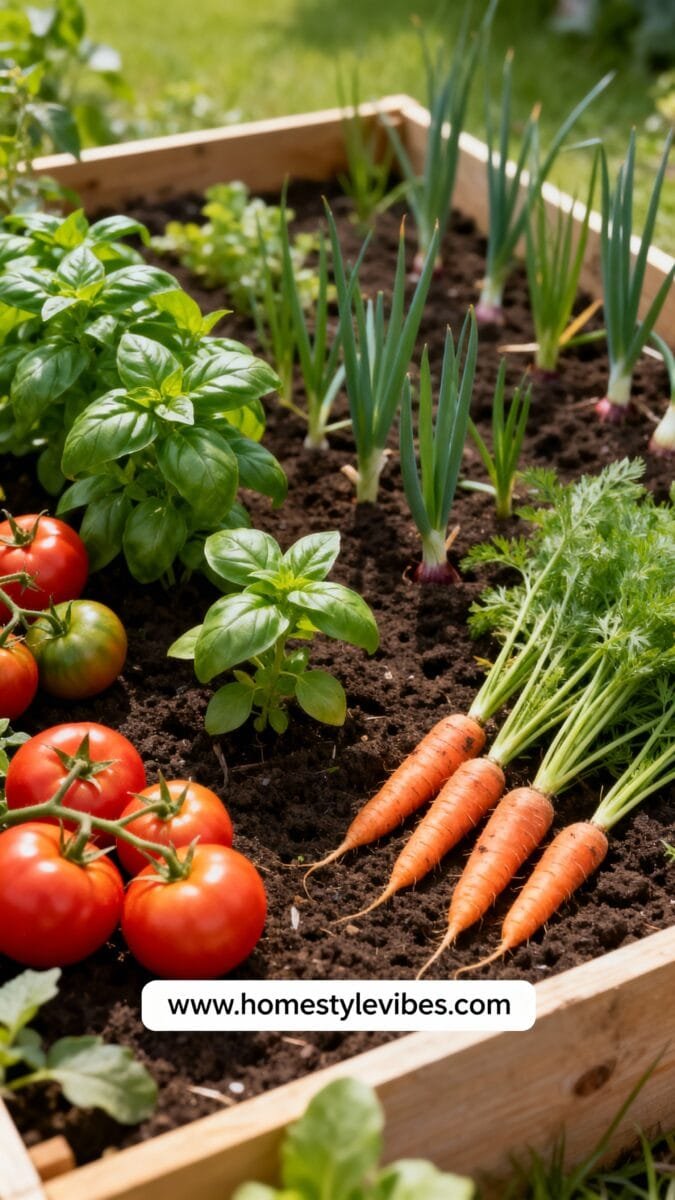
Companion planting sounds fancy. It’s really just common sense plus a little observation. Some plants help each other. Some absolutely do not. The trick is knowing which is which without memorizing a textbook.
I didn’t believe in it at first. Then I planted basil next to tomatoes one summer. The smell alone convinced me something was happening. The plants looked healthier, and the bugs stayed weirdly away. Coincidence? Maybe. But I’ve repeated it every year since. Yes, really. Every. Single. Time.
Pairs that consistently work
These combos earn their keep in almost any vegetable garden design layout.
- Tomatoes + basil — pest deterrence and flavor magic.
- Carrots + onions — they confuse pests with scent.
- Cucumbers + dill — growth support and better yields.
- Lettuce + taller crops — partial shade prevents bolting.
I once ignored this and planted onions next to beans because I ran out of room. Ugh. The beans sulked all season. I deserved it.
What not to plant together (learn from my mistakes)
This part matters just as much.
- Onions near beans or peas.
- Potatoes next to tomatoes.
- Fennel near almost anything (honestly, fennel does what it wants).
Companion planting
Good & bad plant neighbors for your garden.
| Plant | Good companions | Bad companions |
|---|---|---|
| Beans |
Maize
Sunflowers
Lavender
Cabbage
Cucumber
Strawberries
Brinjal |
Onion
Garlic
Fennel |
| Beetroot |
Beans
Onions
Garlic
Lettuce
Cabbage | – |
| Brinjal (Eggplant) |
Calendula
Marigolds
Mint
Peas | – |
| Broccoli / Cabbage / Cauliflower / Kale |
Aromatic plants
Dill
Sage
Rosemary
Potatoes
Beetroot
Celery
Garlic
Onions
Geranium |
Tomatoes
Pole & runner beans
Peppers |
| Calendula |
Tomatoes
Repels tomato worm | General pest deterrent (beneficial) |
| Carrots |
Lettuce
Chives
Leeks
Rosemary
Sage
Peas
Wormwood |
Strawberries
Fennel
Cabbage |
| Chili Pepper |
Cabbage
Maize | Repels cabbage moth; plant on borders to keep flying pests away |
| Comfrey | Fast-growing nutrient accumulator; plant along edges & use leaves for mulch | Compost activator; use leaves to make comfrey tea fertilizer |
| Lettuce |
Carrots
Radish
Strawberries
Cucumber
Beans |
Celery
Parsley |
| Maize (Corn) |
Sunflowers
Amaranth
Beans
Peas & legumes
Pumpkin
Squash
Cucumber
Melons & cucurbits
Parsley |
Cabbage
Tomato
Celery |
| Marigold | Plant freely throughout the garden – repels soil nematodes, aphids, bean beetles & many more | Use marigold leaves to make an organic general insecticide spray |
| Nasturtium |
Tomatoes
Improves flavor | Repels white flies & spider mites |
| Onion / Garlic |
Carrots
Beetroot
Strawberries
Tomatoes
Lettuce
Cabbage |
Peas
Beans
Parsley
Leeks |
| Peas |
Lavender
Carrot
Turnip
Radish
Cucumber
Maize
Beans
Grows well with most vegetables & herbs |
Onion
Garlic |
| Peppers |
Tomatoes
Geranium
Basil
Carrot
Onion |
Beans
Kale
Cabbage family |
| Potatoes |
Coriander
Marigold
Beans
Maize
Cabbage family
Brinjal |
Pumpkin
Cucumber
Squash
Melons
Sunflowers
Tomatoes |
| Rosemary |
Carrots
Cabbage
Sage
Beans | Deters cabbage moth, bean beetles & carrot fly |
| Spinach |
Strawberries
Broad beans
Peas | – |
| Thyme |
Cabbage | Deters cabbage worm |
| Tomatoes |
Basil
Oregano
Parsley
Chives
Nasturtium
Onions
Carrots
Celery
Calendula
Geranium
Borage |
Potatoes
Fennel
Cabbage family |
| Wormwood / Artemesia | Around garden edges | Keeps animals out; also repels white fly |
| Yarrow | Plant freely throughout the garden – repels soil nematodes, aphids, bean beetles & many more | Plant near aromatic herbs to enhance essential oil production |
These combinations compete for nutrients or invite shared problems. If something struggles for no obvious reason, layout might be the culprit.
Okay, mental break for a sec… gardening doesn’t need perfection. It needs observation. Adjustments. And grace for the seasons that flop.
Next, let’s answer the questions people DM me about all the time.
FAQ
How many raised beds do I actually need?
Start with two or three. That’s enough to learn spacing, watering, and harvest timing without overwhelm. You can always add more. Removing beds later feels way worse.
Is it okay to mix flowers and vegetables?
Yes—and sometimes it helps. Just keep structure clear. Flowers on edges or corners work better than scattered chaos. At least that’s what worked for us.
What if my layout doesn’t work?
Then you change it. Gardens are flexible. Nothing is permanent except the lessons you learn.
Wrapping Up
A good vegetable garden design layout doesn’t chase perfection. It chases ease. Access. Flow. The kind of setup that fits your actual life, not a staged photo.
I’ve messed this up plenty. I’ve overplanted, underplanned, and once forgot to water for two days because… well, toddler. But every season got better once I focused on layout first.
So sketch it out. Walk the space. Imagine harvesting with a basket in one hand and coffee in the other. Design for that version of you.

About the Author

Krisztina P.Rendes, Founder of Home Style Vibes
Founder of Home Style Vibes
Krisztina Puskásné Rendes created Home Style Vibes as a cozy-modern lifestyle space where homemaking meets inspiration. Her goal is to help women create beautiful, organized, and peaceful homes they truly love — without overwhelm. You’ll find here heart-driven content on home decor, cleaning tips, easy family recipes, organization and decluttering, DIY home projects, plants, and seasonal ideas — all designed to bring more calm, comfort, and style into everyday life.