When And How To Plant Spring Flowers: Simple Guide For Busy Moms
You want a burst of color the second winter finally chills out, but zero time to fuss with garden drama? Same. Planting spring flowers can be simple, fast, and mom-schedule-friendly. You just need the right timing, the right plants, and a plan that doesn’t involve a six-hour Pinterest marathon. Let’s get those blooms in the ground—with minimal dirt under your nails.
Real talk: my first “spring flower plan” was me standing in the garden center with a coffee, grabbing whatever looked cute, and hoping vibes would do the rest. Spoiler: vibes don’t water plants.
Now I keep it simple on purpose—because if a plan takes more than one nap-length to execute, it’s not happening.
Know Your Goal: Instant Color vs. Future Payoff
Here’s the only question I actually ask myself: do I want instant color this spring, or am I planting for future me?
Future me is always grateful. Present me is always tired. So I usually do a little of both and call it balanced.
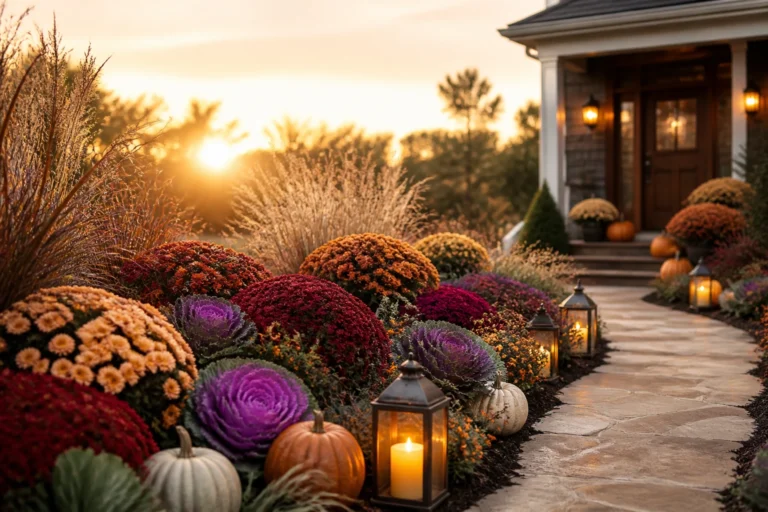
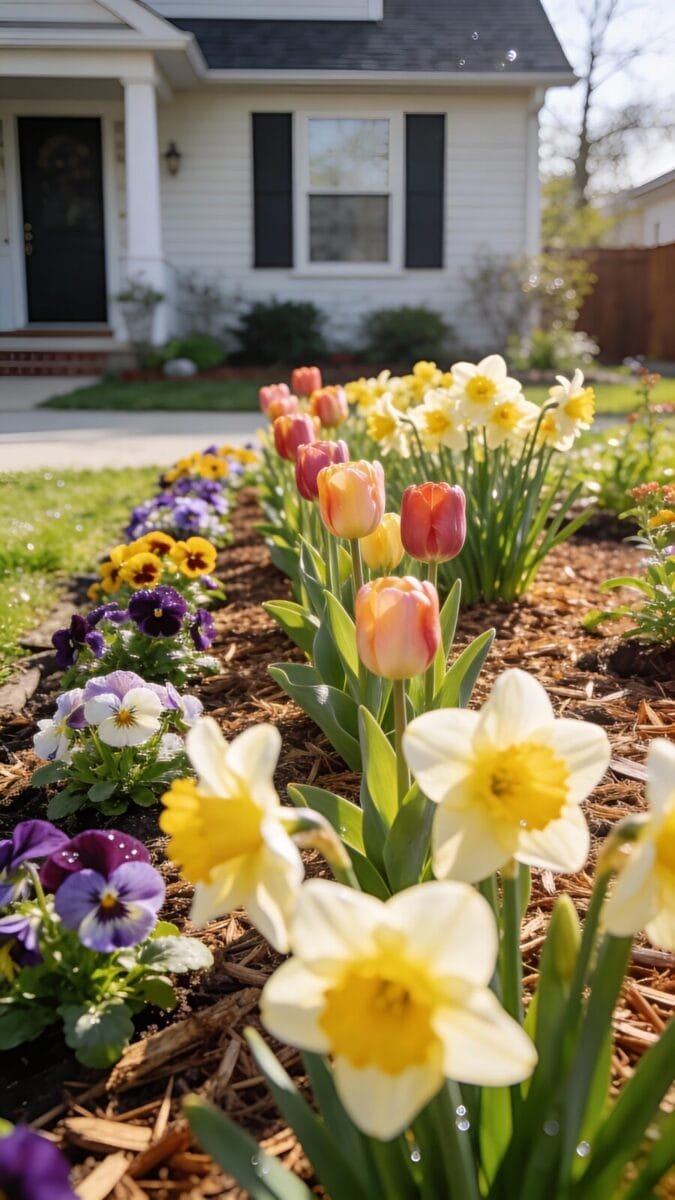
If you want flowers popping ASAP in spring, you’ve got two main routes: fall-planted bulbs and spring-planted annuals/perennials.
Bulbs like tulips and daffodils go in the ground in fall and wake up early on their own. Annuals and perennials get planted in spring once the soil warms up a bit. Not sure what you want?
Do both. Plant bulbs one afternoon in fall (set it and forget it), then top up with bright annuals in spring. Easy win.
Timing 101: When To Plant What
I used to ignore frost dates and then act personally offended when a random cold night took out my flowers. Once I started planting based on the last frost instead of my optimism, my “luck” improved dramatically.
Timing depends on your climate and your frost dates.
If you don’t know yours, search your ZIP code + “last frost date.” It matters more than you think.
Fall (for spring bloomers)
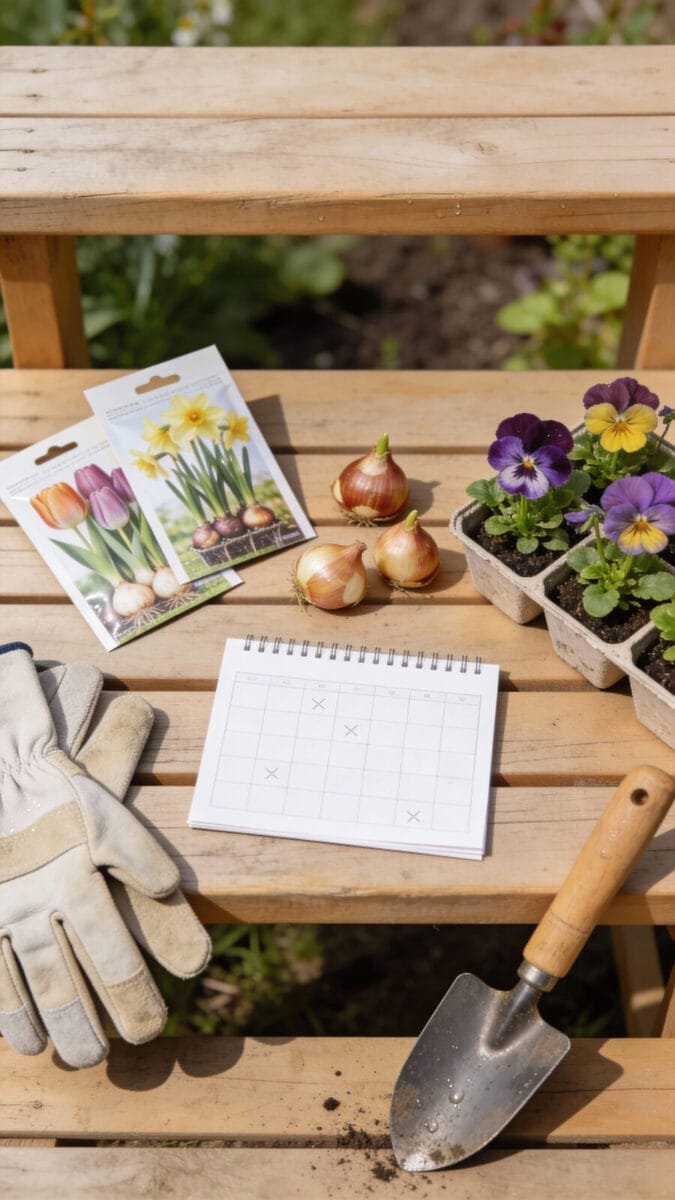
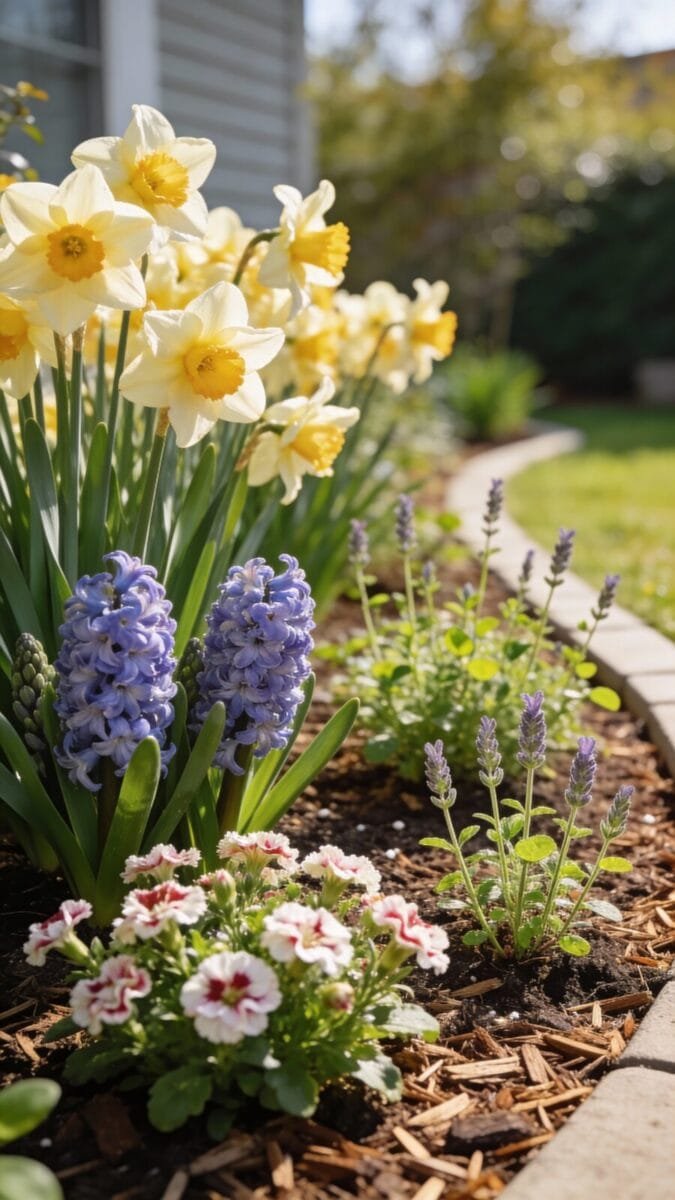
– Best for: Tulips, daffodils, hyacinths, crocus, snowdrops – When: 2–4 weeks before your ground freezes; usually September–November – Why: They need cold to bloom well
Early Spring (cool weather champs)
– Best for: Pansies, violas, primroses, hellebores – When: As soon as the ground thaws and daytime temps hover above 45–50°F – Why: They love chilly air and don’t mind a light frost
Late Spring (after last frost)
– Best for: Geraniums, petunias, marigolds, snapdragons, salvia, dianthus – When: After your last frost date when nights are reliably above 50°F – Why: Tender plants sulk in cold, then they explode in color when it warms up
Pick Your Players: Low-Maintenance MVPs
If you want the easiest win with the least babysitting: pick one bulb, one cool-weather flower, and one warm-weather bloomer. That way something is always happening, even if you miss a week because… life.
Let’s be honest, you don’t want needy plants. You want reliable, colorful, and cheap. Here’s your short list.
Set-and-Forget Bulbs (planted in fall)
- Daffodils: Critter-proof, multiply every year, bloom early
- Tulips: Stunning, but often behave like annuals—replant every 1–2 years
- Hyacinths: Fragrant, bold color, perfect near entryways
- Crocus: Tiny, early, adorable—kids love spotting them
Spring-Into-Summer Annuals (planted after frost)
- Petunias: Nonstop bloomers; go wild in hanging baskets
- Marigolds: Tough, bright, and bug-friendly (the good kind)
- Geraniums: Classic porch pots, forgiving if you skip a watering
- Calibrachoa: Mini-petunias that trail like champs
Perennials You’ll Thank Yourself For
- Bleeding heart: Romantic, shade-friendly, spring star
- Dianthus: Spicy scent, low mound, long bloom time
- Salvia: Hummingbird magnets, drought-tolerant
- Heuchera (coral bells): Colorful foliage that looks good all season
Five-Minute Prep: The Bare Minimum That Works
My rule: prep has to fit in a realistic window—like “20 minutes while the kids are occupied” or “one episode of a show.” If it requires dragging out five tools and a spreadsheet, I’m suddenly “too busy” until next year.
You don’t need a tiller or a soil science degree.
Do this quick prep and call it a day.
Site Check
– Sun: Most flowers want 6+ hours of sun. Shade lovers exist—check the tag. – Drainage: Puddles after rain? Use raised beds or containers. – Access: Close to the hose, not behind the trampoline.
You know why.
Soil Tweaks
– Remove weeds (don’t bury them; they’ll haunt you). – Loosen soil 6–8 inches with a hand fork. – Mix in compost or a bagged garden soil. IMO, compost fixes 90% of problems. – Optional: Add slow-release fertilizer now, so you don’t have to remember later.
Planting: The Cheat-Sheet Version
No multi-step saga here. Just follow the tag and keep it simple.
Tiny tip that saved me: keep a small bucket or tote right next to you. All the empty pots, tags, and random trash go in there instead of blowing around the yard like garden confetti.
Bulbs (fall)
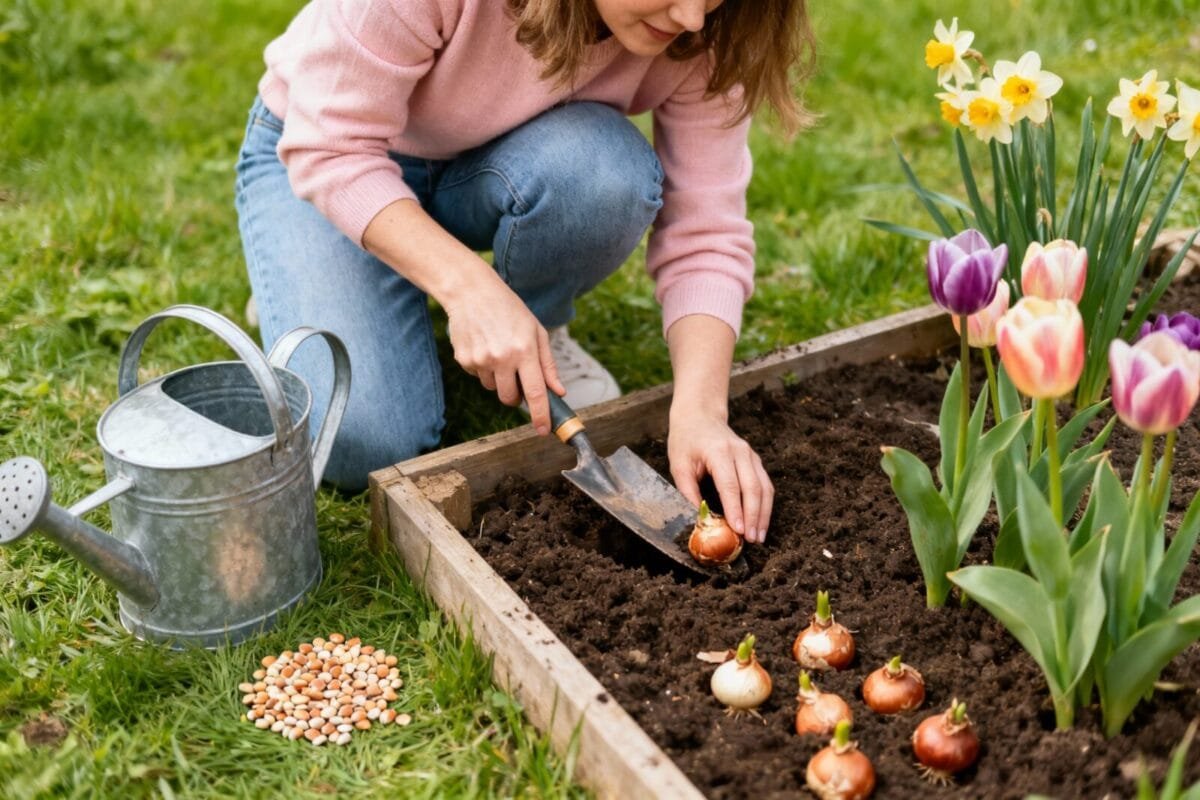
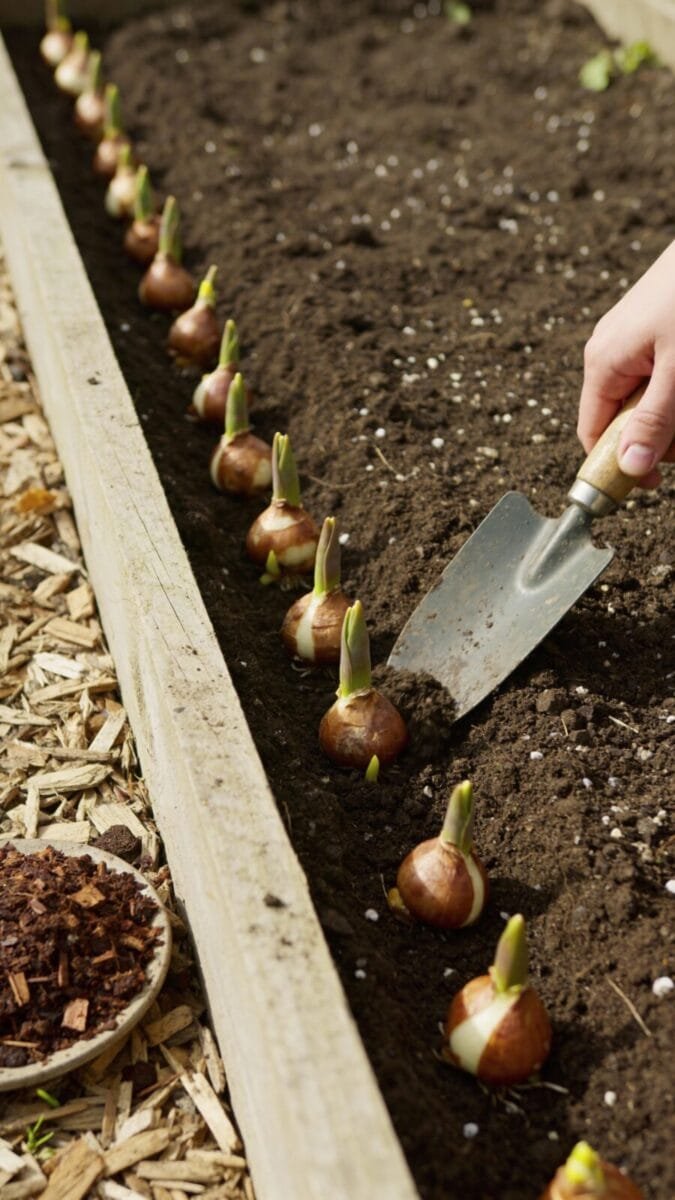
- Depth: Plant at 2–3x the bulb’s height (tulips/daffs ~6–8 inches).
- Pointy side up: If you can’t tell, lay it sideways.Plants figure it out.
- Spacing: Clump them for impact—groups of 5–9 look lush.
- Water once to settle soil. Mulch lightly to prevent weeds.
Annuals and Perennials (spring)
- Soak the pot for a minute so roots slide out easily.
- Dig hole the same depth as the pot, slightly wider.
- Tease roots if they’re circling like spaghetti.
- Backfill and press gently to remove air pockets.
- Water well—like a good drink after a long day.
Watering, Feeding, and Other “I Don’t Have Time” Care Tips
Want low effort? Build habits that require almost zero thought.
Watering That Doesn’t Own You
– New plants: Water every 2–3 days for the first two weeks. – After that: 1 inch per week (rain counts). – Hack: Use a soaker hose on a timer.
I finally put my soaker hose on a timer because my brain is already scheduling approximately 400 other things a day. It’s the most “responsible adult” thing I’ve done for the garden, and it works embarrassingly well.
You, my friend, just automated your garden.
Feeding Without the Fuss
– At planting: Slow-release fertilizer = one and done for months. – Mid-season boost: Liquid feed every 2–3 weeks if blooms slow. – FYI: More fertilizer doesn’t mean more flowers—just more leaves. Snooze.
Easy Maintenance
– Deadhead (snip spent blooms) on petunias and marigolds to keep color coming. – Mulch 2–3 inches to tame weeds and lock in moisture. – Pests: Start with a hose blast or hand-pick. Save sprays for last resort.
Small Space?
Go Container Crazy
Containers = instant color with minimal commitment. Plus, you can move them around like decor.
Container Basics
– Use real potting mix (not garden soil). It drains right and roots can breathe. – Pick drainage holes or drill them.
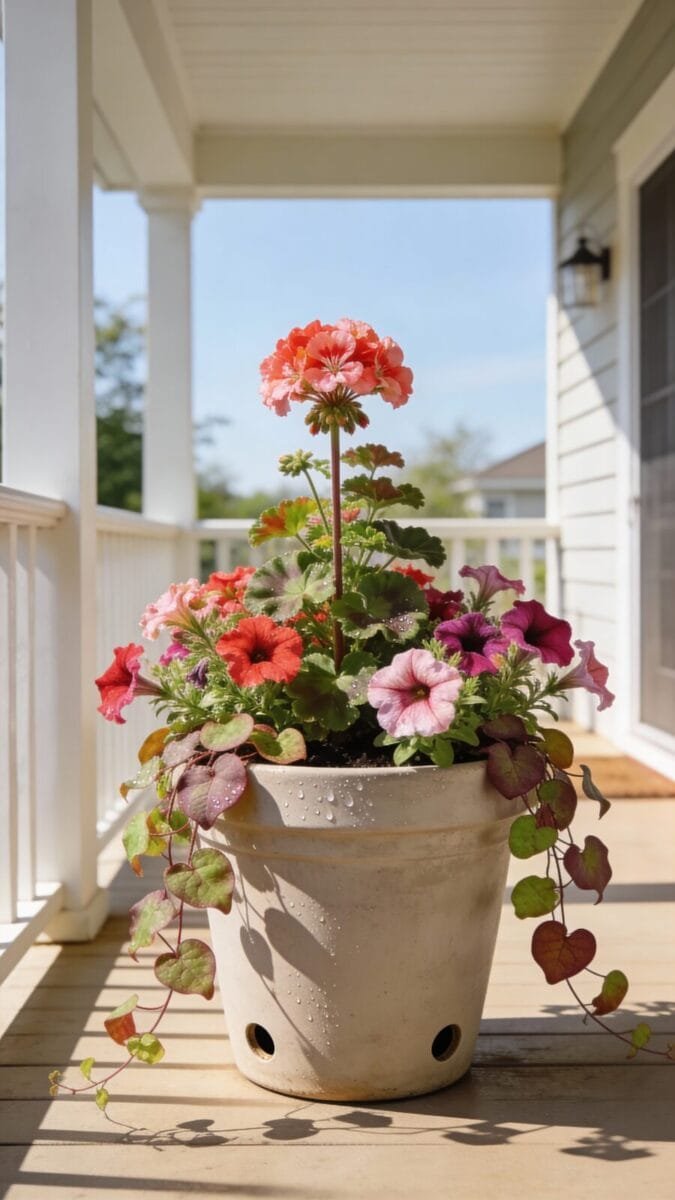
Soggy roots = drama. – Thriller-Filler-Spiller: One tall star, one mid-height workhorse, one trailing plant. Easy formula.
Foolproof Combos
– Sunny: Geranium + petunia + sweet potato vine – Shady: Begonia + coleus + creeping jenny – Fragrant porch vibes: Lavender + calibrachoa + lobelia
My personal favorite for instant “I have my life together” vibes: one big pot by the front door with a tall spiky thriller, a mound of nonstop color in the middle, and something that trails over the edge. It looks fancy, but it’s basically the gardening version of a matching outfit.
Kid-Friendly, Sanity-Saving Ideas
Want help that actually helps? Hand kids the fun jobs. – Let them plant crocus or daffodil bulbs—big, easy, and rewarding. – Give them a watering schedule and a small can.
Control the flood risk, lol. – Start a “first flower” photo tradition. It turns weeding into a scavenger hunt (sneaky, right?).
Pro tip: give them their own tiny pot to plant. It keeps their hands busy, and it stops them from “helping” in the main bed like tiny enthusiastic raccoons.
Quick Planning Templates (Copy/Paste Your Way to Flowers)
Because IMO, simple plans actually happen.
Front Yard Pop (2 hours)
– 9–12 daffodil bulbs in a cluster – 6 tulip bulbs scattered nearby – Spring: add 6 pack of pansies around the edge – Mulch, water, admire
Low-Maintenance Bed (Weekend-Nap Project)
– 3 salvias in the back – 5 dianthus in the middle – 6 marigolds at the front edge – Mulch and a slow-release fertilizer sprinkle
FAQ
Can I plant tulips in spring?
You can, but they won’t bloom this spring. Tulips need winter chill to set flowers.
Plant in fall for best results or buy pre-chilled bulbs if your garden center carries them.
What flowers survive a surprise late frost?
Pansies, violas, and primroses tough it out like tiny warriors. Cover tender plants like petunias or geraniums with a sheet or upside-down bucket overnight if a frost sneaks in.
How often should I water container flowers?
Daily in hot weather, every 2–3 days in spring. Stick your finger in the soil—if the top inch feels dry, water.
Containers dry out faster than garden beds, so don’t be shy.
Do I need fertilizer if I used compost?
Compost boosts soil health, but it doesn’t feed heavy bloomers for long. Use a slow-release fertilizer at planting, then supplement with a liquid feed if flowers fade mid-season. Balance is the vibe.
What’s the easiest way to prevent weeds?
Mulch, mulch, mulch.
Lay 2–3 inches of shredded bark or compost after planting. You’ll block light from weed seeds and keep moisture where it belongs. FYI, landscape fabric under annual beds is overkill and annoying later.
Are deer going to eat everything?
Deer treat tulips like a salad bar.
Plant daffodils, hyacinths, alliums, and salvia to outsmart them. If deer pressure is high, use a repellant spray every few weeks. It’s not perfect, but it helps.
Wrapping It Up
Spring flowers don’t need to steal your weekend.
Also: your garden doesn’t have to look Pinterest-perfect to count. If you get a few happy blooms and a front yard that makes you smile on the school run, that’s a win. Simple beats perfect—especially in spring.
Pick a few sturdy plants, plant at the right time, water on a schedule, and let mulch do half the work. You’ll get color that makes the school run and mail check feel like a garden tour. Short on time?
Same. Short on flowers? Not anymore.

About the Author

Krisztina P.Rendes, Founder of Home Style Vibes
Founder of Home Style Vibes
Krisztina Puskásné Rendes created Home Style Vibes as a cozy-modern lifestyle space where homemaking meets inspiration. Her goal is to help women create beautiful, organized, and peaceful homes they truly love — without overwhelm. You’ll find here heart-driven content on home decor, cleaning tips, easy family recipes, organization and decluttering, DIY home projects, plants, and seasonal ideas — all designed to bring more calm, comfort, and style into everyday life.