Honey Garlic Glazed Salmon Sheet Pan Dinner (Light Christmas Main Course) – Easy, Festive, and Fresh
If you want a holiday main that feels special without weighing you down, this honey garlic glazed salmon is a winner. It’s bright, savory-sweet, and comes together on a single sheet pan. The veggies roast alongside the salmon, picking up the glaze and getting caramelized at the edges.
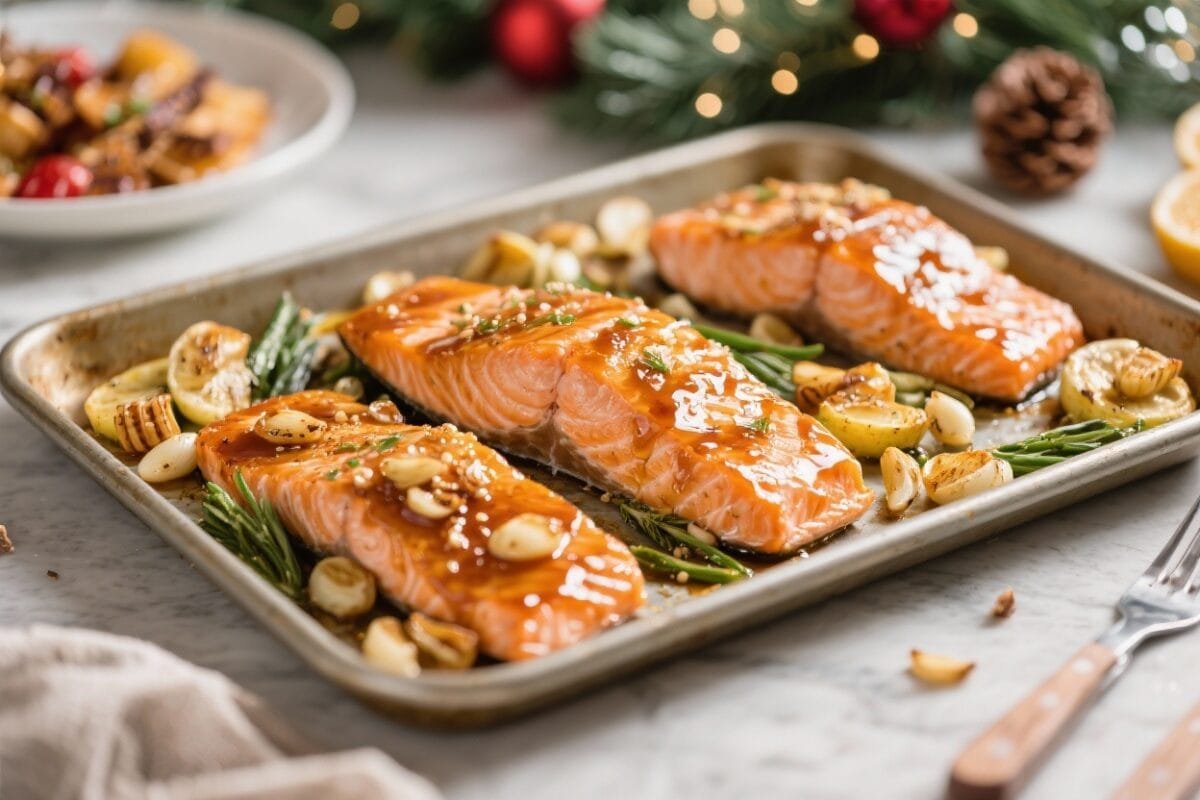
You’ll spend more time enjoying your guests and less time fussing with pots and pans. It’s festive, fast, and perfect for a cozy Christmas dinner for a small group.
What Makes This Recipe So Good
- One pan, minimal mess: Everything cooks together, which means quick prep and easy cleanup.
- Balanced holiday flavors: Honey, garlic, and citrus bring a bright, warm flavor that feels celebratory without being heavy.
- Quick cooking time: Salmon roasts fast, leaving the vegetables tender-crisp and dinner on the table in under 40 minutes.
- Light but satisfying: Rich omega-3s from salmon, fiber from veggies, and a naturally sweet glaze satisfy without weighing you down.
- Flexible: Swap vegetables or adjust spice to match your taste or what’s in the fridge.
What You’ll Need
- For the salmon:
- 4 salmon fillets (about 6 ounces each), skin-on
- 1 tablespoon olive oil
- Salt and black pepper, to taste
- 1 lemon, thinly sliced
- For the honey garlic glaze:
- 3 tablespoons honey
- 2 tablespoons low-sodium soy sauce (or tamari)
- 1 tablespoon fresh lemon juice
- 1 tablespoon rice vinegar (or apple cider vinegar)
- 3–4 garlic cloves, finely minced
- 1 teaspoon fresh grated ginger (optional but lovely)
- 1–2 teaspoons sriracha or red pepper flakes (optional for heat)
- 1 teaspoon cornstarch (optional, for a thicker glaze)
- For the vegetables:
- 1 pound baby potatoes, halved
- 8 ounces green beans, trimmed
- 1 small red onion, cut into wedges
- 1 tablespoon olive oil
- Salt and black pepper
- Fresh rosemary or thyme sprigs (optional)
- To finish:
- Fresh parsley, chopped
- Lemon wedges, for serving
- Sesame seeds (optional)
Step-by-Step Instructions
- Preheat and prep the pan: Heat your oven to 425°F (220°C). Line a large rimmed sheet pan with parchment for easy cleanup.
- Toss the vegetables: Add the potatoes, green beans, and red onion to the pan.Drizzle with olive oil, season with salt and pepper, and toss to coat. If using, tuck in a few thyme or rosemary sprigs.
- Start roasting the vegetables: Spread the vegetables in an even layer and roast for 12–15 minutes, just until the potatoes begin to soften.
- Make the glaze: In a small bowl, whisk honey, soy sauce, lemon juice, rice vinegar, minced garlic, and ginger. For extra heat, add sriracha or red pepper flakes.If you prefer a thicker glaze, dissolve cornstarch in 1 teaspoon water and whisk it in.
- Season the salmon: Pat salmon dry with paper towels. Rub with olive oil, then season both sides with salt and pepper.
- Add the salmon to the pan: Pull the sheet pan from the oven. Push the vegetables to the sides and place the salmon fillets in the center, skin side down.Top each fillet with a lemon slice.
- Glaze generously: Spoon about two-thirds of the glaze over the salmon and drizzle a little over the vegetables. Reserve the rest for finishing.
- Roast to finish: Return the pan to the oven and roast for 8–12 minutes, depending on thickness. Salmon should flake easily and reach an internal temp of about 125–130°F for medium.
- Broil for shine (optional): For a light char and extra caramelization, switch to broil for 1–2 minutes.Watch closely.
- Finish and serve: Brush the remaining glaze over the salmon. Sprinkle with parsley and sesame seeds. Serve with lemon wedges.
How to Store
- Refrigerator: Store leftovers in an airtight container for up to 2 days.Keep salmon and veggies together for easy reheating.
- Reheat gently: Warm in a 300°F (150°C) oven for 8–10 minutes or microwave at 50% power in short bursts to avoid overcooking.
- Freezing: Not ideal for the veggies, but cooked salmon can be frozen for up to 2 months. Thaw in the fridge overnight and reheat gently.
Health Benefits
- Rich in omega-3s: Salmon supports heart health, reduces inflammation, and may boost brain function.
- High-quality protein: Keeps you satisfied while supporting muscle repair and immune health.
- Fiber and antioxidants: Green beans, potatoes, and onions bring fiber, vitamins, and protective plant compounds.
- Balanced plate: Carbs from potatoes, protein from salmon, and healthy fats from olive oil make this a complete, nourishing meal.
- Lower in added sugar: The glaze is lightly sweetened with honey, and you can adjust to taste.
What Not to Do
- Don’t overcrowd the pan: Crowding steams the vegetables and prevents caramelization. Use a large pan or two smaller ones.
- Don’t overcook the salmon: It goes from juicy to dry quickly.Start checking at the 8-minute mark.
- Don’t skip patting dry: Moisture on the salmon stops the glaze from sticking and browning nicely.
- Don’t add glaze too early: Glaze can burn if exposed for too long at high heat. Add it when the salmon goes in.
- Don’t forget the acid: Lemon or a splash of vinegar keeps the dish bright and balanced.
Variations You Can Try
- Maple Dijon: Swap honey for maple syrup and whisk in 1 tablespoon Dijon mustard. Add a pinch of smoked paprika.
- Citrus Herb: Use orange juice and zest in the glaze.Finish with dill and parsley.
- Spicy Sesame: Add extra sriracha and a splash of toasted sesame oil. Top with scallions and sesame seeds.
- Winter Veg Swap: Use Brussels sprouts, broccolini, or carrot coins. Cut to similar sizes so everything roasts evenly.
- Low-Carb: Replace potatoes with cauliflower florets or extra green beans and zucchini.
- Dairy-Free Creaminess: Serve with a quick lemon-tahini drizzle for added richness without dairy.
FAQ
Can I use frozen salmon?
Yes.
Thaw it in the refrigerator overnight and pat dry very well before seasoning and glazing. Frozen fillets can release extra moisture, so drying is key for good browning.
What can I use instead of soy sauce?
Use tamari for gluten-free or coconut aminos for a slightly sweeter, less salty option. Adjust salt to taste since coconut aminos are milder.
How do I know when the salmon is done?
The flesh should flake easily with a fork and look just opaque in the center.
An instant-read thermometer should read about 125–130°F for medium, or 135°F if you prefer it more done.
Can I make the glaze ahead?
Absolutely. Mix the glaze up to 3 days ahead and refrigerate. Give it a quick whisk before using; if it thickens, loosen with a teaspoon of water or lemon juice.
What if I don’t like green beans?
Use Brussels sprouts halves, asparagus, broccolini, or bell peppers.
Just adjust roasting time; denser veggies may need a few extra minutes before adding the salmon.
Is this recipe kid-friendly?
Usually yes. Keep it mild by skipping the sriracha or red pepper flakes. Kids often love the gently sweet glaze.
Can I cook the salmon on a separate pan?
You can.
This helps if your vegetables are very crowded or need extra time. Start the veggies first, then add the salmon on another pan for the final 8–12 minutes.
In Conclusion
This honey garlic glazed salmon sheet pan dinner delivers holiday flavor with weeknight ease. It’s bright, balanced, and light enough to leave room for dessert.
With simple ingredients and flexible swaps, it suits many tastes and dietary needs. Make it for a relaxed Christmas main course, then enjoy the compliments and the quick cleanup.

About the Author

Krisztina P.Rendes, Founder of Home Style Vibes
Founder of Home Style Vibes
Krisztina Puskásné Rendes created Home Style Vibes as a cozy-modern lifestyle space where homemaking meets inspiration. Her goal is to help women create beautiful, organized, and peaceful homes they truly love — without overwhelm. You’ll find here heart-driven content on home decor, cleaning tips, easy family recipes, organization and decluttering, DIY home projects, plants, and seasonal ideas — all designed to bring more calm, comfort, and style into everyday life.