Creamy Tomato Basil Soup (No Cream) – Cozy, Comforting, and Dairy-Free
If you’re craving a silky, comforting tomato soup without the heaviness of cream, you’re in the right place. This version gets its rich body from vegetables and a simple blending technique, not dairy. It’s cozy enough for a chilly night and light enough for lunch.
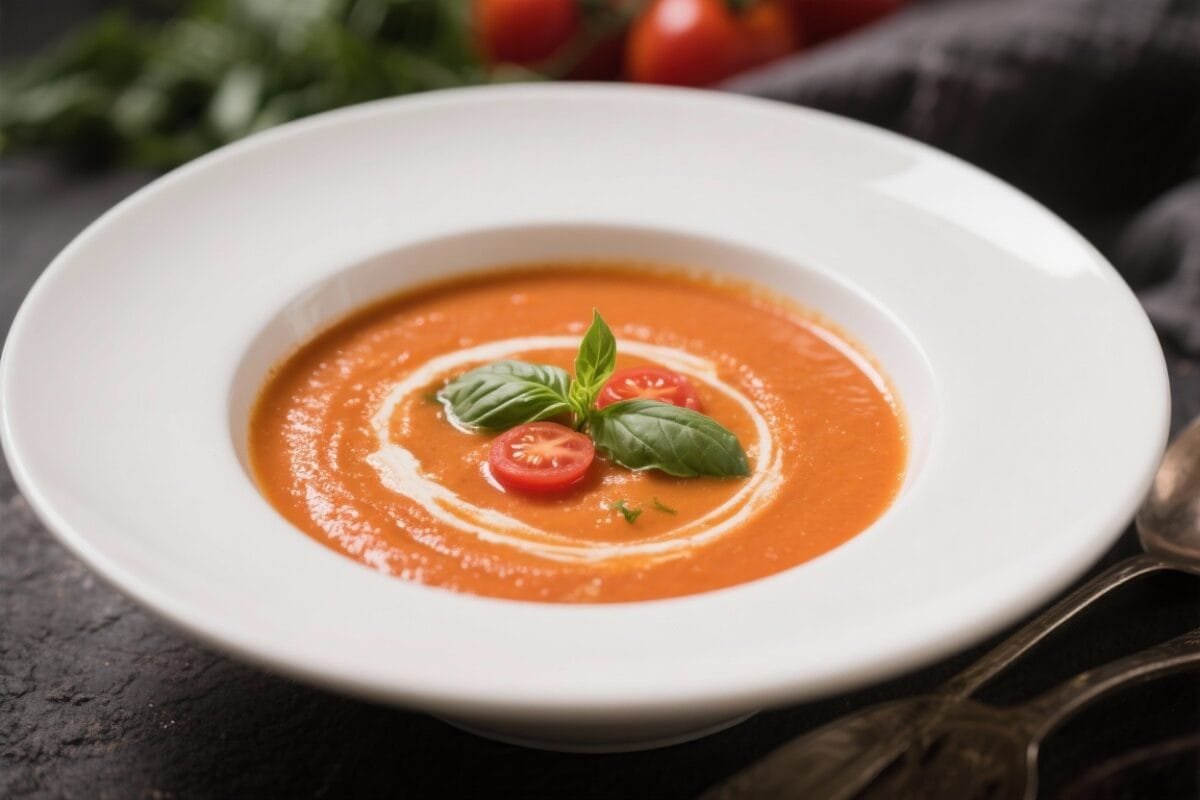
Pair it with a grilled cheese or enjoy it with crusty bread and olive oil. Simple ingredients, big flavor, and zero fuss.
What Makes This Recipe So Good
- Ultra-creamy without cream: A blend of sautéed onions, carrots, and a potato creates a naturally velvety texture.
- Bright, balanced flavor: Sweet carrots and slow-cooked garlic smooth out the acidity of tomatoes. A splash of balsamic ties it together.
- Weeknight-friendly: One pot, pantry staples, and about 40 minutes from start to finish.
- Flexible: Works with canned tomatoes or fresh, with options for vegan, gluten-free, and low-sodium tweaks.
- Meal-prep ready: Tastes even better the next day and freezes beautifully.
Ingredients
- 2 tablespoons olive oil (plus more for drizzling)
- 1 large yellow onion, chopped
- 2 medium carrots, peeled and chopped
- 1 small russet or Yukon gold potato, peeled and diced (about 1 cup)
- 4 cloves garlic, sliced
- 2 tablespoons tomato paste
- 2 cans (28 ounces total) whole peeled or crushed tomatoes, preferably San Marzano
- 3 cups vegetable broth (low-sodium preferred), plus more as needed
- 1 bay leaf
- 1 teaspoon sugar or honey (optional, to balance acidity)
- 1 teaspoon kosher salt, plus more to taste
- 1/2 teaspoon black pepper
- 1/4 teaspoon red pepper flakes (optional, for heat)
- 1–2 teaspoons balsamic vinegar or red wine vinegar
- 1/2 cup packed fresh basil leaves, plus more for garnish
- 3 tablespoons canned coconut milk or cashew cream (optional for extra richness, still dairy-free)
How to Make It
- Sweat the aromatics: Warm the olive oil in a large pot over medium heat.Add the onion, carrots, and a pinch of salt. Cook 6–8 minutes, stirring often, until the onions are glossy and the carrots begin to soften.
- Add potato and garlic: Stir in the diced potato and garlic. Cook 2–3 minutes until the garlic is fragrant but not browned.
- Build the base: Add tomato paste and cook for 1–2 minutes, stirring, until it darkens slightly.This step deepens the flavor.
- Tomatoes and broth: Pour in the tomatoes with their juices and the vegetable broth. If using whole tomatoes, crush them gently with a spoon. Add the bay leaf, salt, pepper, red pepper flakes (if using), and sugar or honey.
- Simmer to tender: Bring to a gentle boil, then reduce to a simmer.Cook uncovered for 20–25 minutes, stirring occasionally, until the potatoes and carrots are very soft.
- Finish with basil: Remove the bay leaf. Stir in the fresh basil and vinegar. Turn off the heat and let it sit 2 minutes to soften the basil.
- Blend until silky: Use an immersion blender to puree directly in the pot until smooth and creamy.For the smoothest texture, transfer to a countertop blender in batches, venting the lid and covering with a towel to avoid splatters. Blend until velvety.
- Adjust and enrich: Return to the pot (if using a blender). If you’d like extra richness without dairy, stir in coconut milk or cashew cream.Add more broth to thin if needed. Taste and adjust salt, pepper, and vinegar.
- Serve: Ladle into bowls. Garnish with torn basil, a drizzle of olive oil, and fresh black pepper.Add crunchy croutons or a grilled cheese on the side.
Keeping It Fresh
- Refrigerate: Store in an airtight container for up to 5 days. The flavors meld and improve by day two.
- Freeze: Freeze up to 3 months. Cool completely, then portion into freezer-safe containers, leaving a little headspace.
- Reheat: Warm gently on the stove over medium-low heat, adding a splash of water or broth to loosen.Avoid high heat to prevent scorching.
- Meal prep tip: Freeze in single-serving portions for easy lunches. Add fresh basil after reheating for the brightest flavor.
Health Benefits
- Lycopene-rich tomatoes: Tomatoes are packed with lycopene, an antioxidant linked to heart health. Cooking tomatoes helps your body absorb it better.
- Fiber-forward: The carrots and potato add fiber, which supports digestion and steady energy.
- No heavy cream: You get a creamy texture without saturated dairy fats.Olive oil brings heart-healthy monounsaturated fats.
- Lower sodium control: Using low-sodium broth and salting to taste keeps the sodium in check.
- Vitamins and minerals: Garlic, basil, and carrots contribute vitamin A, vitamin K, and beneficial plant compounds.
What Not to Do
- Don’t rush the simmer: Undercooked carrots and potatoes won’t blend smoothly. Give them time.
- Don’t skip the tomato paste: It boosts umami and rounds out the canned tomato flavor.
- Don’t blend without venting: Hot soup expands. If using a countertop blender, vent the lid and cover with a towel to avoid splatters.
- Don’t overdo the vinegar: A little brightens; too much makes it sharp.Start small and taste.
- Don’t add dry basil at the end: Fresh basil delivers the signature aroma. If using dried, add it early in the simmer instead.
Alternatives
- Fresh tomatoes: Use 2–2.5 pounds ripe tomatoes, cored and chopped. Add 1/2 teaspoon extra salt and simmer a bit longer to concentrate.
- Roasted flavor: Roast halved tomatoes, onion wedges, and carrots at 425°F (220°C) with olive oil and salt until caramelized, then simmer with broth and blend.
- Herb swaps: Try a mix of basil and oregano or thyme.Add woody herbs during the simmer, and fresh delicate herbs at the end.
- Spice it up: Add a pinch of smoked paprika or Aleppo pepper for warmth and depth.
- Protein boost: Stir in cooked white beans before blending for extra creaminess and plant protein.
- Nut-free richness: Use a small peeled zucchini or an extra potato in place of cashew cream. It blends silky without nuts.
- Grain add-ins: Serve over cooked farro or rice for a heartier meal.
FAQ
Can I use crushed tomatoes instead of whole?
Yes. Crushed tomatoes work well and save blending time.
Choose high-quality canned tomatoes for the best flavor.
How do I make it thicker?
Reduce the broth by 1/2 cup at the start, or simmer a few extra minutes after blending. You can also add a few more chunks of potato and cook until tender before blending.
Is this soup vegan?
Yes, as written with vegetable broth and optional coconut milk or cashew cream, it’s fully vegan.
What if my soup tastes too acidic?
Add a pinch more sugar or a splash of coconut milk. A little extra olive oil can also soften sharp edges.
Simmering a few extra minutes helps too.
Do I need a blender?
An immersion blender is easiest, but a countertop blender gives the smoothest finish. In a pinch, mash well with a potato masher for a rustic texture.
Can I use dried basil?
You can, but add it during the simmer so the flavor infuses. Use about 1–2 teaspoons dried basil and finish with a little fresh parsley for brightness if you have it.
How can I make it kid-friendly?
Skip the red pepper flakes, blend very smooth, and serve with croutons or grilled cheese for fun texture.
What can I serve with it?
Grilled cheese, garlic bread, a simple green salad, roasted vegetables, or a chickpea salad sandwich all pair well.
Wrapping Up
Creamy Tomato Basil Soup doesn’t need cream to taste rich, cozy, and deeply satisfying.
With a smart mix of vegetables, good tomatoes, and fresh basil, you get a silky bowl that feels special any night of the week. Keep this recipe in your back pocket for busy evenings, meal prep, or whenever you need a little comfort that’s light on the stomach and big on flavor. Add your favorite garnishes and make it your own.

About the Author

Krisztina P.Rendes, Founder of Home Style Vibes
Founder of Home Style Vibes
Krisztina Puskásné Rendes created Home Style Vibes as a cozy-modern lifestyle space where homemaking meets inspiration. Her goal is to help women create beautiful, organized, and peaceful homes they truly love — without overwhelm. You’ll find here heart-driven content on home decor, cleaning tips, easy family recipes, organization and decluttering, DIY home projects, plants, and seasonal ideas — all designed to bring more calm, comfort, and style into everyday life.