Pet-friendly “air-purifying” Houseplants: A Guide for Cat & Dog Parents
Your cat rules the windowsills, and your dog thinks the living room is a personal racetrack. You want greenery that cleans the air without turning your home into a four-legged hazard zone. Good news: you can have the jungle vibes and the happy pets at the same time.
Let’s talk pet-friendly “air-purifying” plants that look great, help your space feel fresher, and won’t send you to the emergency vet if your cat decides to taste-test a leaf or your dog mistakes a branch for a fetch toy.
Which Pet-Safe Plant Should You Buy First?
Answer 3 quick questions to find your perfect green match before you read my full guide!
1. What’s the light situation like in your favorite room?
2. How would you describe your pet’s “botanical” personality?
3. How much effort do you want to put into plant care?
My Personal Recommendation:
Wait, do plants actually “purify” the air?

Short answer: A little. Plants can help reduce some indoor pollutants and boost humidity (which is great for your pet’s skin and coat in the winter). They also make your brain happier because, you know, they’re pretty and they lower our stress levels.
Longer answer: Those viral studies often use sealed chambers and a lot of plants per square foot. In a normal home, plants won’t replace a cracked window or a high-end air purifier. But they do contribute to a healthier vibe and can slightly help with things like VOCs over time.
IMO, they’re a nice part of an overall fresh-air strategy—just not the whole strategy. Think of them as the backup singers to your main ventilation.
The Pet-Safe Stars: Plants that won’t bite back
These beauties are non-toxic to cats and dogs according to the ASPCA. Still, monitor your “nibblers,” because upset tummies can happen from excessive snacking, even on safe greens.
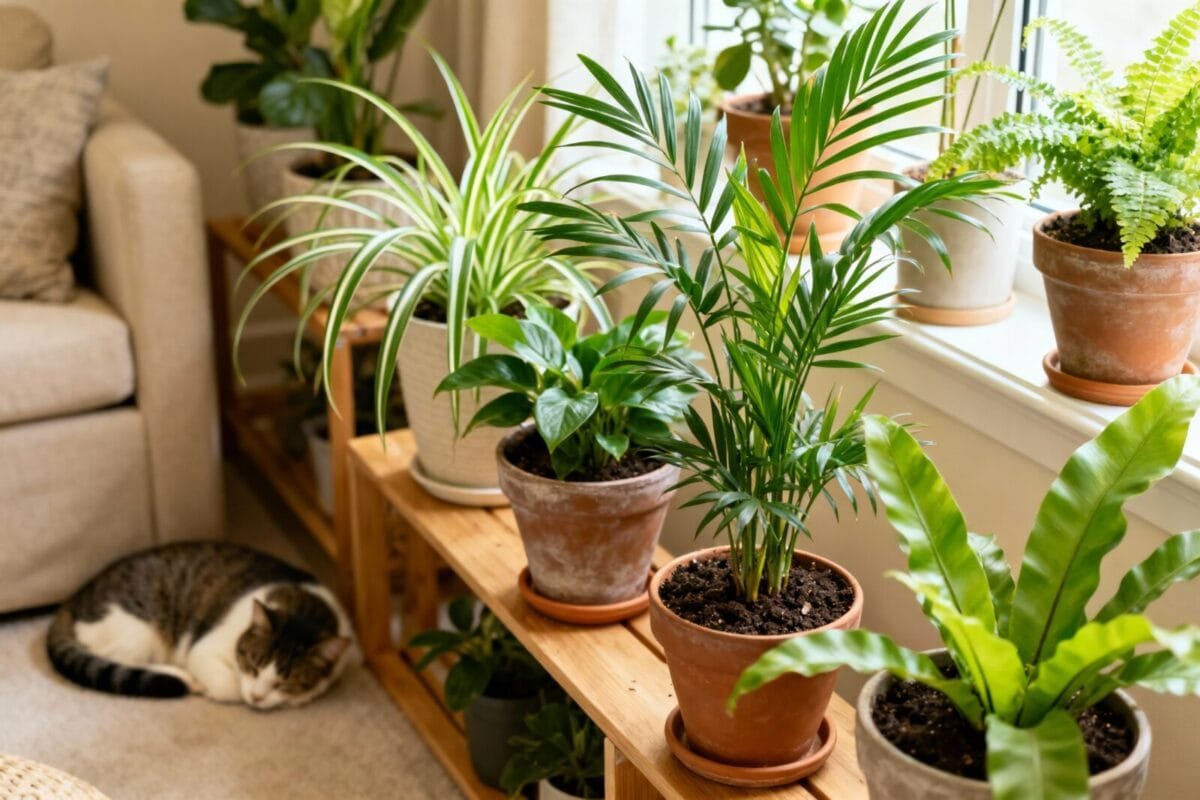
- Parlor Palm (Chamaedorea elegans): Delicate fronds, low fuss, and a soft, tropical look. It handles low light like a champ. It’s also sturdy enough to survive a passing dog’s tail-thwack.
- Areca Palm (Dypsis lutescens): Bigger, bushier, and a solid humidity booster. Place it near a bright window and watch it fluff out. It’s a great “floor plant” for bigger dogs to snooze under.
- Spider Plant (Chlorophytum comosum): A classic. It shoots out baby “spiders,” which helps filter the air. Pro-tip: Cats love to bat at the babies, and dogs might try to catch them. Keep it hanging to save the plant!
- Boston Fern (Nephrolepis exaltata): Lacy, lush, and dramatic. It likes humidity and consistent moisture. It’s your bathroom’s dream date if you have a window.
- Ponytail Palm (Beaucarnea recurvata): Not a real palm, but we don’t gatekeep. The thick trunk stores water, and the curly leaves bring the vibes. It’s low-maintenance and 100% pet-safe.
- Bamboo Palm (Chamaedorea seifrizii): Upright, elegant, and great for bright to medium light. It’s like an “office plant glow-up” that won’t harm your puppy.
- Calatheas (Goeppertia spp.): Bold, patterned leaves that move with the light. Non-toxic, though they are total drama queens about water quality. They prefer humidity and filtered water.
- Peperomia (various species): Compact, colorful, and easygoing. They add texture to shelves where cats can’t reach and dogs can’t bump into them.
- Haworthia & Echeveria: Many succulents are dangerous (like Jade or Kalanchoe), but these two are generally the “good guys.” Just make sure they stay in the sun.
❌Plants to avoid (The “Hard Pass” List)
Sorry, but these are famous for causing mouth irritation, drooling, and vomiting in both cats and dogs:
- Peace Lily, Pothos, Philodendron, Monstera: Contain insoluble calcium oxalates (think of them as microscopic needles).
- Snake Plant: Trendy, but mildly toxic to pets.
- Aloe Vera: Great for your skin, but a big “no” for your pet’s stomach.
- Sago Palm: Extremely toxic. This one is the “final boss” of bad plants. Avoid it entirely.

Light, Water, and “The Tail Factor”
You want plants that fit your light conditions and your pet’s “enthusiasm.”
- Low light? Parlor Palm, Spider Plant, some Calatheas, and Peperomia will manage.
- Bright, indirect light? Areca Palm, Bamboo Palm, and Ponytail Palm thrive here.
- Watering sanity check: * Spider Plant, Parlor Palm, Boston Fern: Keep them evenly moist, never soggy.
- Ponytail Palm & Succulents: Let them dry out completely. Overwatering = root mush.
- Calatheas: They like rainwater or filtered water. Tap water makes them throw a tantrum (brown edges).

Make your pets and plants co-exist (Peacefully-ish)
Animals explore with their mouths. Accept the chaos, then plan around it:
- Elevate or hang: Keep Spider Plants and ferns high up. This stops the cat from hunting the leaves and the dog from using it as a chew toy.
- The “Big Stone” Trick: If your dog likes to dig or your cat thinks the pot is a secondary litter box, cover the soil with large river pebbles.
- Offer decoys: Grow some cat grass (wheatgrass) in a separate pot. It’s safe for dogs too and gives them an “approved” snack so they leave your Areca Palm alone.
- Heavier pots: Use heavy ceramic or stone pots. A “zoomie” session shouldn’t result in a dirt-covered carpet because a plastic pot tipped over.
- Skip the chemicals: Don’t use leaf shine. Your pets groom themselves and don’t need to ingest that stuff.

FAQs
Are all “palms” safe for cats?
Nope. True palms like Areca, Parlor, Bamboo palms are safe. But don’t confuse them with Sago Palm, which is not a real palm and is extremely toxic.
Always check the botanical name before buying.
My cat keeps chewing my Spider Plant. Is that dangerous?
Spider Plants are non-toxic, but they can cause mild stomach upset if your cat eats a lot. They also contain compounds that can mildly stimulate some cats (wild, I know).
Hang it higher or offer cat grass as a distraction.
Which pet-safe plant is best for “air purification” specifically?
Areca Palm and Bamboo Palm show up often in clean-air discussions, and Spider Plants are a classic too. FYI, the impact in a typical home stays modest. Use them alongside ventilation and purifiers for a real difference.
How do I confirm a plant is non-toxic?
Check the ASPCA’s toxic and non-toxic plant database.
Cross-reference the scientific name—not just the common name—since many plants share nicknames. When in doubt, skip it or ask the nursery for the Latin name.
What soil and fertilizer should I use around pets?
Use standard indoor potting mix without added insecticides. For fertilizer, choose balanced, water-soluble options and follow the label.
Wipe any spilled fertilizer, and don’t let pets drink runoff from saucers. Common sense, IMO.
Do I need grow lights?
If your space lacks bright windows, a small, full-spectrum grow light helps a lot. Keep it 12–24 inches above plants, run it 10–12 hours daily, and angle it so your cat can’t stare directly into it like it’s a tiny sun god.
Final thoughts
You can rock a lush, fresh-feeling home and keep your cat and dog safe—no compromises needed.
Choose non-toxic plants, give them the right light, and outsmart your furry friends with smart placement. The mood boost of a green home is real, and honestly, a Parlor Palm next to a napping dog?
That’s peak cozy.

About the Author

Krisztina P.Rendes, Founder of Home Style Vibes
Founder of Home Style Vibes
Krisztina Puskásné Rendes created Home Style Vibes as a cozy-modern lifestyle space where homemaking meets inspiration. Her goal is to help women create beautiful, organized, and peaceful homes they truly love — without overwhelm. You’ll find here heart-driven content on home decor, cleaning tips, easy family recipes, organization and decluttering, DIY home projects, plants, and seasonal ideas — all designed to bring more calm, comfort, and style into everyday life.