7 Tips for Growing Lavender in Pots That Actually Thrive All Year Secrets
Lavender loves to be dramatic. Give it sun, a dry seat, and a little breeze, and it rewards you with color, fragrance, and bee parties. Stick it in a soggy pot with old soil, and it throws shade (then dies). Want pots that actually thrive all year? Here’s how to set your lavender up to win—without turning your balcony into a science lab.
Pick the right lavender (yes, it matters)
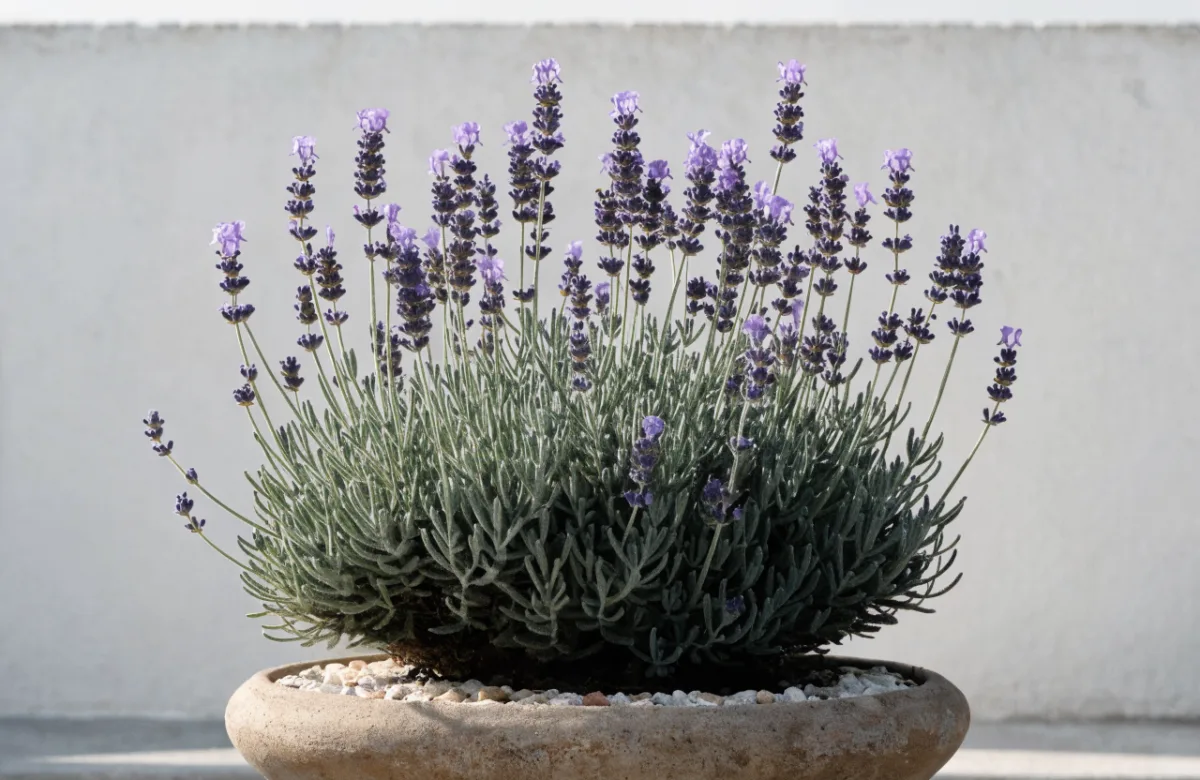
Not all lavender tolerates container life—or your climate. Choose varieties that handle pots and your winters without tantrums.
- English lavender (Lavandula angustifolia): Compact, cold-hardy, classic scent. Great for colder climates (zones 5–8).
- Lavandin (Lavandula x intermedia): Bigger, bolder, great for oils. Needs more space, ideal if you’ve got a sunnier, warmer spot.
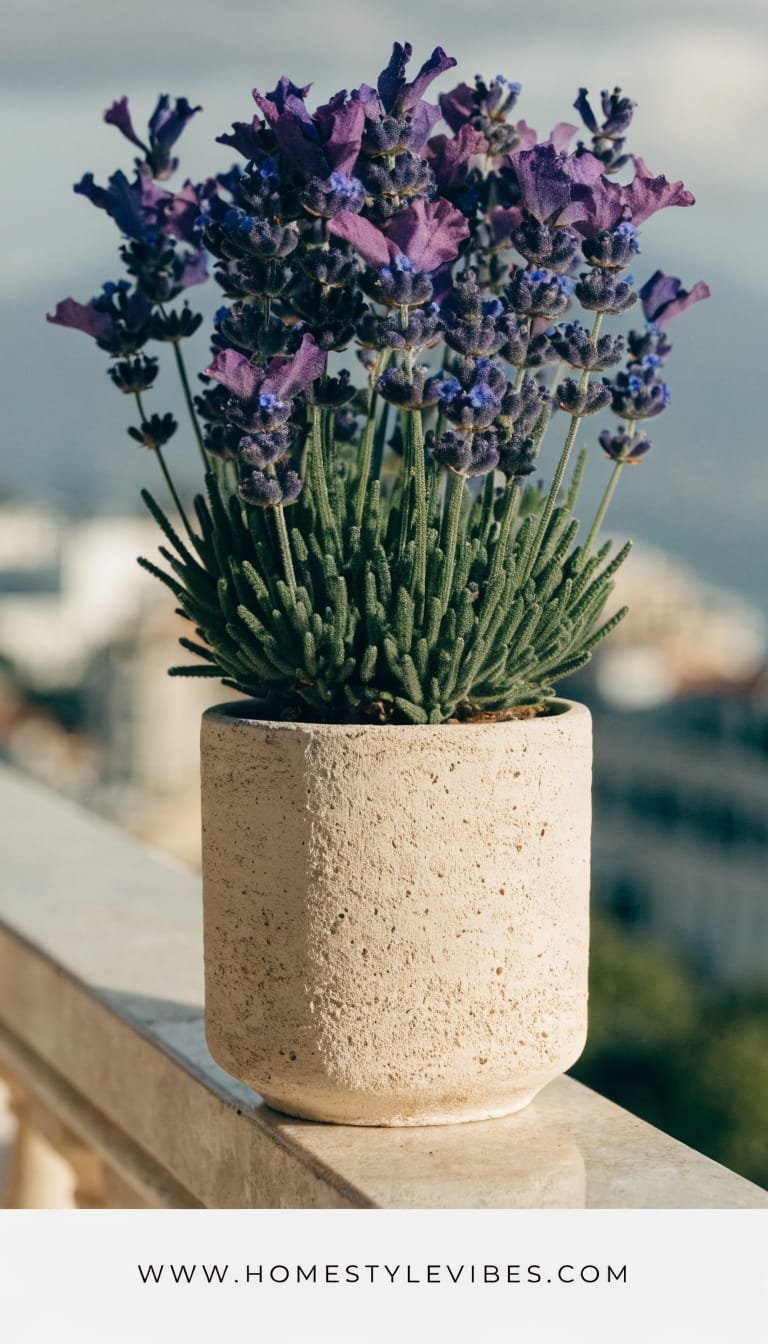
- French/Spanish lavender (L. dentata, L. stoechas): Frilly “bunny ears,” longer bloom, but less cold-hardy. Best for warm climates or as a summertime diva.
Pro tip: match plant to climate
If your winters freeze hard, go English. If you live where citrus trees grow happily, try the showier Spanish types. IMO, start with English lavender in pots unless you’re in a mild, Mediterranean-ish zone.
Use a pot that drains like a champ
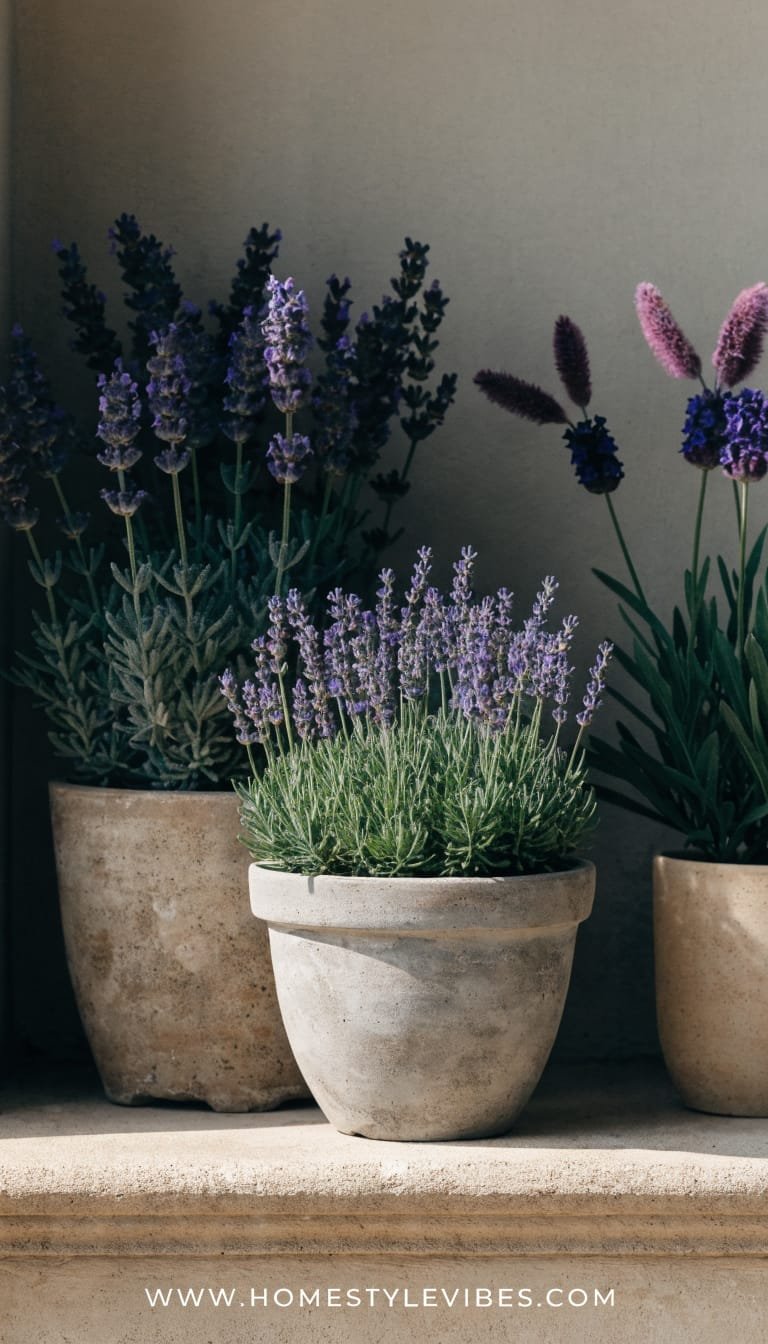
Lavender hates wet feet. It will not negotiate. Choose containers that keep water moving and roots airy.
- Size: Start with a 12–16 inch wide pot for young plants. Bigger is fine—lavender likes room.
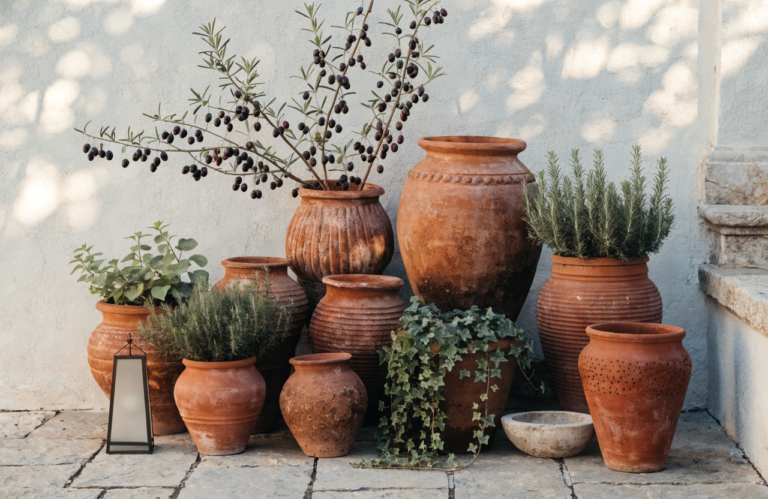
- Material: Terracotta or unglazed clay breathes and keeps roots drier. Plastic retains more moisture—fine if you’re forgetful, risky if you overwater.
- Drainage: At least one large hole (more is better). Skip the gravel myth; it doesn’t help drainage, it just shrinks soil space.
- Feet or risers: Elevate pots slightly so water escapes and air circulates under the pot.
Winter container hack
In cold climates, choose thick-walled pots or double-pot (plastic nursery pot slipped into a prettier outer pot) to insulate roots. Cracked terracotta in February? Been there.
Build a gritty, lean potting mix
Regular potting soil holds too much water. Make a custom blend that mimics lavender’s native rocky slopes.
- Base: 50–60% high-quality potting mix (peat-free if possible)
- Drainage boosters: 30–40% coarse materials like perlite, pumice, or horticultural grit
- Optional: 10% compost for a gentle nutrient bump
- pH sweet spot: Slightly alkaline is best; mix in a small handful of garden lime per pot if your mix skews acidic
FYI: If the mix clumps when wet, it’s too heavy. If water rushes through instantly, you went too gritty. Aim for fast-draining but moisture-retentive enough to not bone-dry in a day.
Water smarter, not more
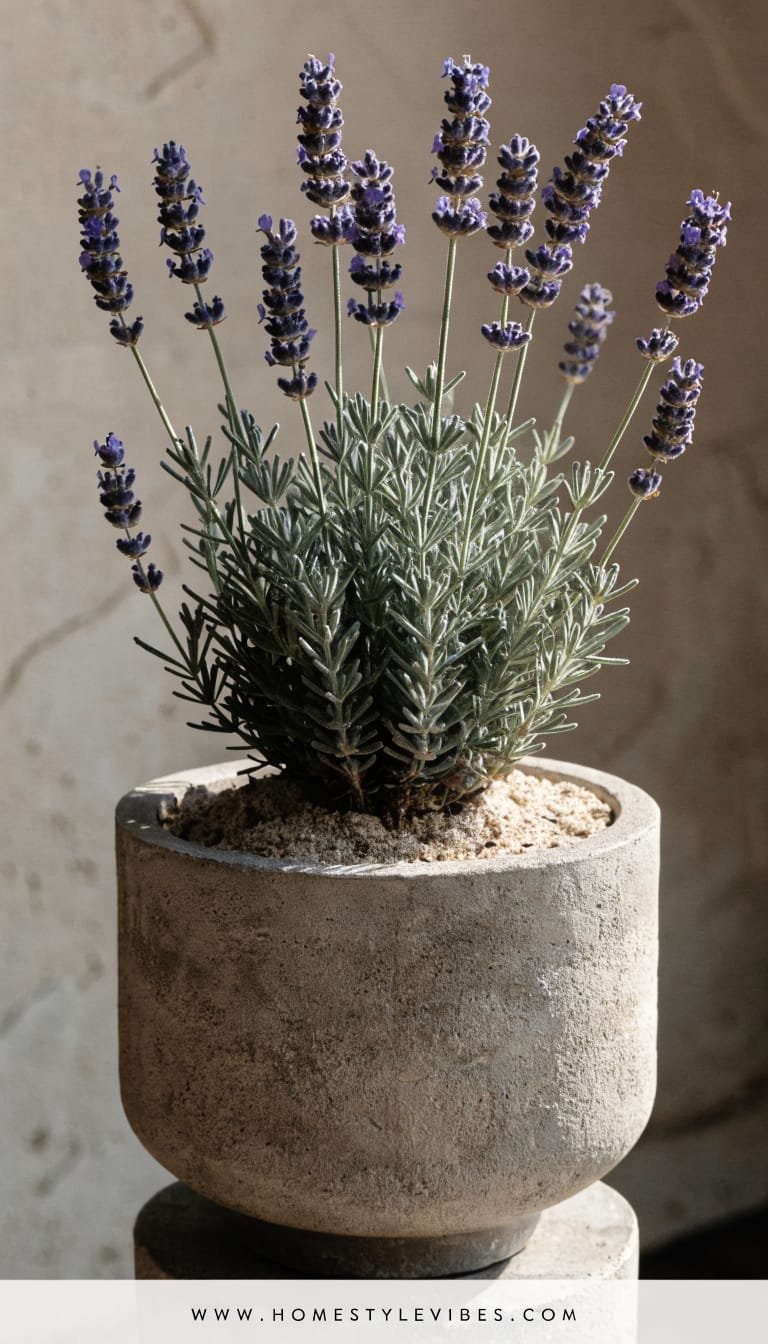
Overwatering kills more lavender than winter ever will. Train your eyes and fingers, not your calendar.
- Deep, infrequent: Water thoroughly, then wait until the top 1–2 inches feel dry before watering again.
- Seasonal rhythm: In summer heat, you may water 2–3 times a week. In spring/fall, weekly or less. In winter, barely—just don’t let it go completely desiccated.
- Signs you messed up:
- Overwatered: yellowing leaves, mushy stems, a whiff of rot
- Underwatered: droopy, crispy tips, light pot weight
Saucer PSA
Never let pots sit in water-filled saucers. Dump them after each watering. Your lavender will not sip politely; it will drown.
Chase the sun and the breeze
Lavender wants a beach vacation: bright, breezy, and hot. Give it 6–8 hours of full sun daily. More sun = more blooms and oils.
- Best spots: South- or west-facing patios, balconies, or porches.
- Airflow: Space pots a few inches apart so foliage dries quickly after watering or rain.
- Indoors? Tough, but possible with a very bright window or a grow light (12–14 hours/day). Rotational sun-cations outdoors help.
Feed lightly and prune with confidence
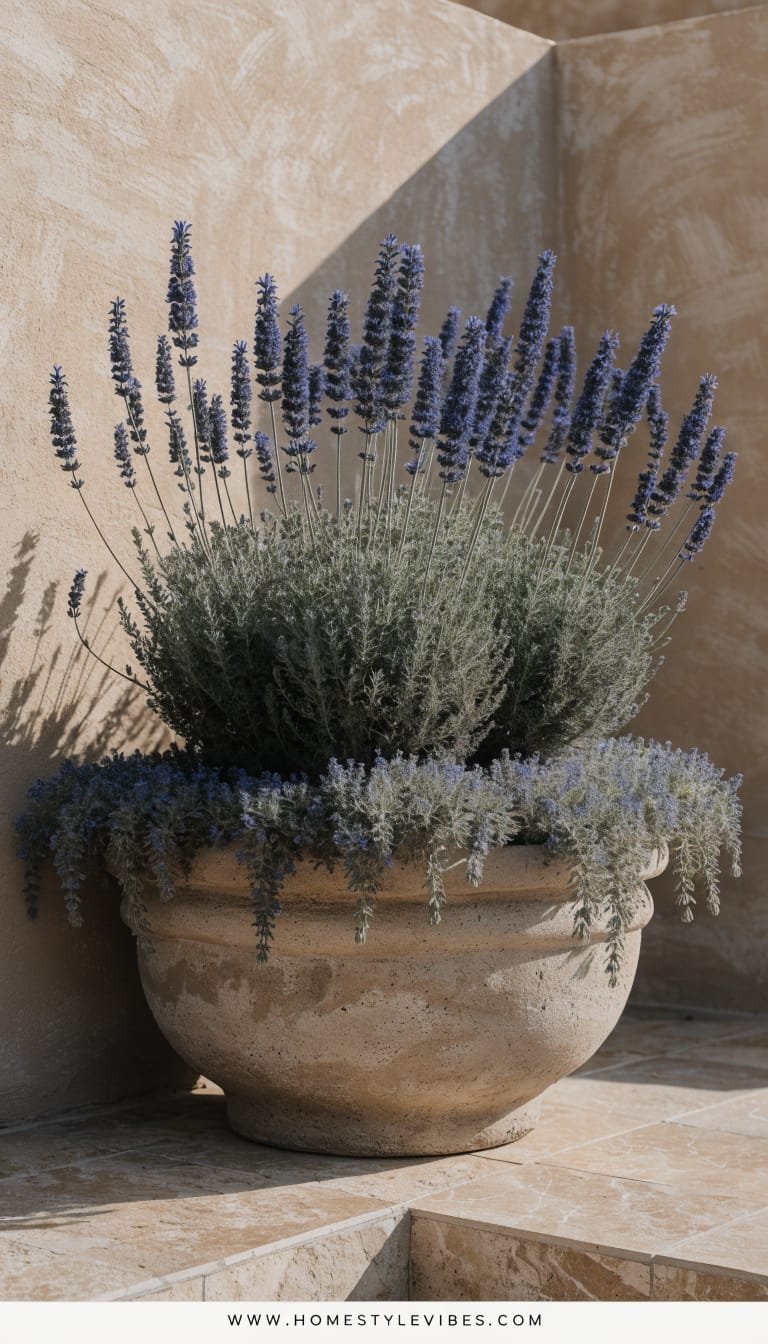
Lavender thrives on neglect, nutritionally speaking. Too much fertilizer = floppy, short-lived plant.
- Fertilizer: In spring, scratch in a tiny amount of balanced, slow-release feed. Or skip it if your mix had compost. That’s not laziness; that’s strategy.
- Deadheading: Snip faded flower spikes to encourage fresh blooms through summer.
- Shape pruning: After main bloom (late summer), trim back the leafy growth by about one-third to keep a compact, mounded shape.
- Hard rule: Don’t cut into old, woody stems with no green leaves. It won’t resprout. Keep cuts to soft, leafy growth.
Spring refresh
Each spring, top-dress with fresh gritty mix and remove an inch of tired soil. If the plant feels root-bound, repot into a pot 1–2 inches wider. Easy win.
Winter like a pro (and keep it alive)
Containers chill faster than ground soil, so winter is the boss level. Tactics vary by climate.
- Mild winters (zones 8–10): Keep outdoors, reduce watering, protect from relentless rain.
- Moderate winters (zones 6–7): Cluster pots against a south-facing wall, add straw or bubble wrap around pots, and raise them off frozen ground.
- Cold winters (zone 5 and colder): Overwinter in an unheated garage, porch, or cold frame with bright light. Water sparingly every 3–4 weeks.
Rain guard trick
If winter brings months of cold rain, tilt pots slightly or move them under an awning. Wet + cold = root rot roulette.
Common oopsies to avoid
Let’s dodge the usual heartbreaks.
- Tiny pots: Dry out in hours, stress roots, stunt growth.
- Dense soil: Holds moisture, invites root rot.
- Shade: Fewer flowers, leggy stems. Kinda defeats the point.
- Overloving: Too much water and fertilizer makes a short-lived mess.
- Fear of pruning: Gentle, regular trims keep it young and lush.
FAQs
How often should I water potted lavender in summer?
Water when the top inch or two of soil feels dry, then water thoroughly until it drains. In hot weather, that might be every 2–3 days. Lift the pot—if it feels light, it probably needs a drink. If in doubt, wait a day. Lavender forgives dryness more than sogginess.
Can I grow lavender indoors year-round?
You can, but it’s tricky. It needs direct, strong light—ideally a south-facing window or a full-spectrum grow light for 12–14 hours daily. Keep air moving, avoid overwatering, and rotate the pot weekly. IMO, giving it outdoor time in warm months makes a huge difference.
Why is my lavender turning brown at the base?
That woody base is normal as lavender ages. Browning plus mushy stems, though, signals overwatering or poor drainage. Improve airflow, check your mix, prune lightly after bloom, and only water when the top soil dries.
What’s the best time to prune?
Lightly prune after the main summer bloom to shape it and encourage fresh growth. In early spring, tidy any winter damage and tip-prune to promote branching. Avoid hacking into old wood with no green leaves—stick to the soft, leafy parts.
Do I need to fertilize lavender in pots?
Only a little. A small dose of slow-release, balanced fertilizer in spring works. Too much nitrogen makes floppy, less-fragrant plants. Lavender evolved to thrive on lean soils—respect the personality.
Which varieties smell the strongest?
English lavenders (like ‘Hidcote’ and ‘Munstead’) and lavandins (‘Grosso’, ‘Provence’) deliver classic, strong fragrance. Spanish types look fancy but smell milder. If scent is your goal, go English or lavandin, FYI.
Conclusion
Give potted lavender sun, drainage, and restraint, and it will thrive like a tiny Mediterranean shrub on your balcony. Choose the right variety, build a gritty mix, water wisely, prune bravely, and protect it in winter. Do those things, and you’ll have flowers, fragrance, and pollinators on speed dial all year. The best part? Lavender rewards minimal fuss—my favorite kind of diva.